
Vox clamantis in deserto
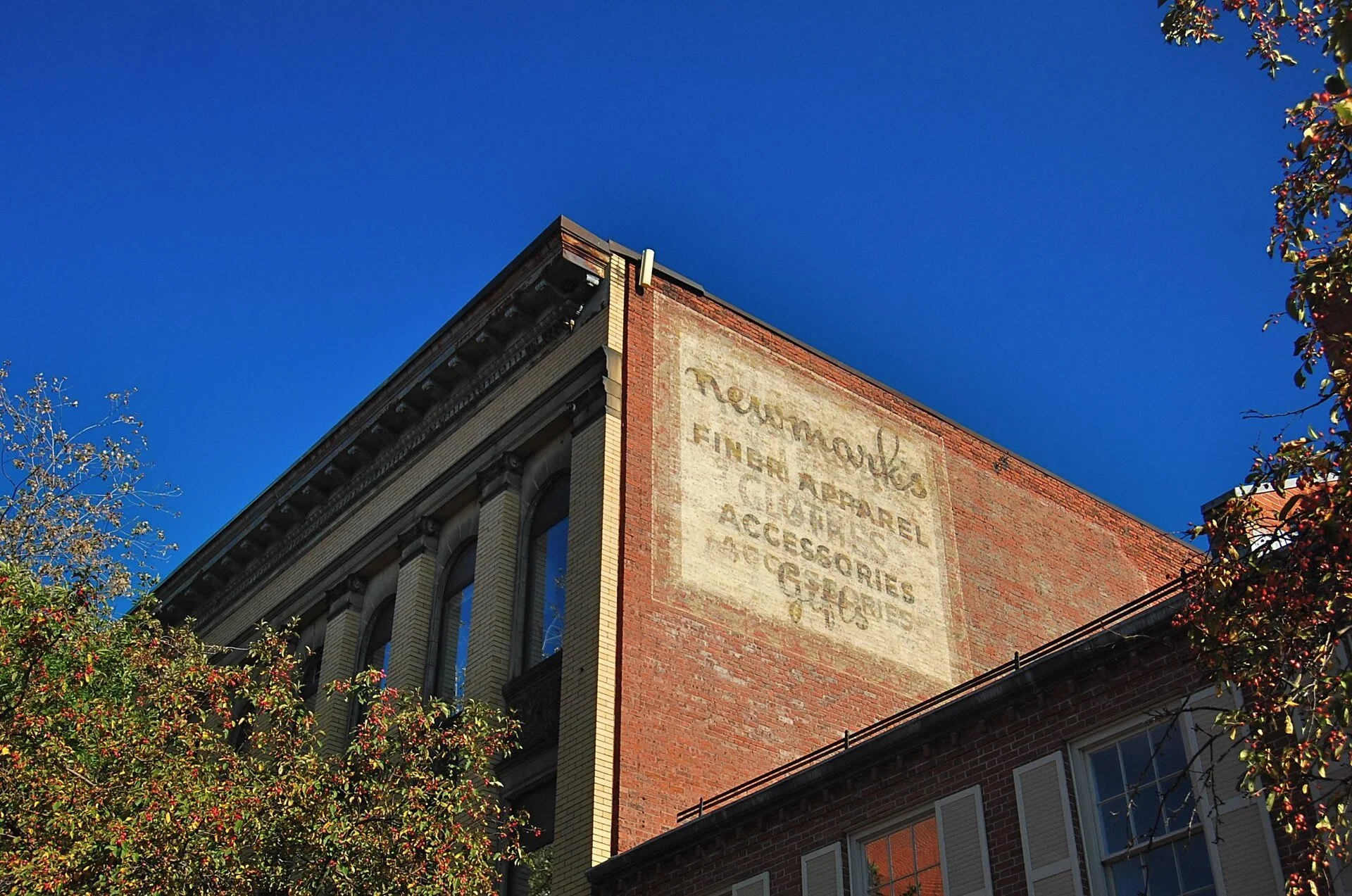









‘Recalled as fragments’
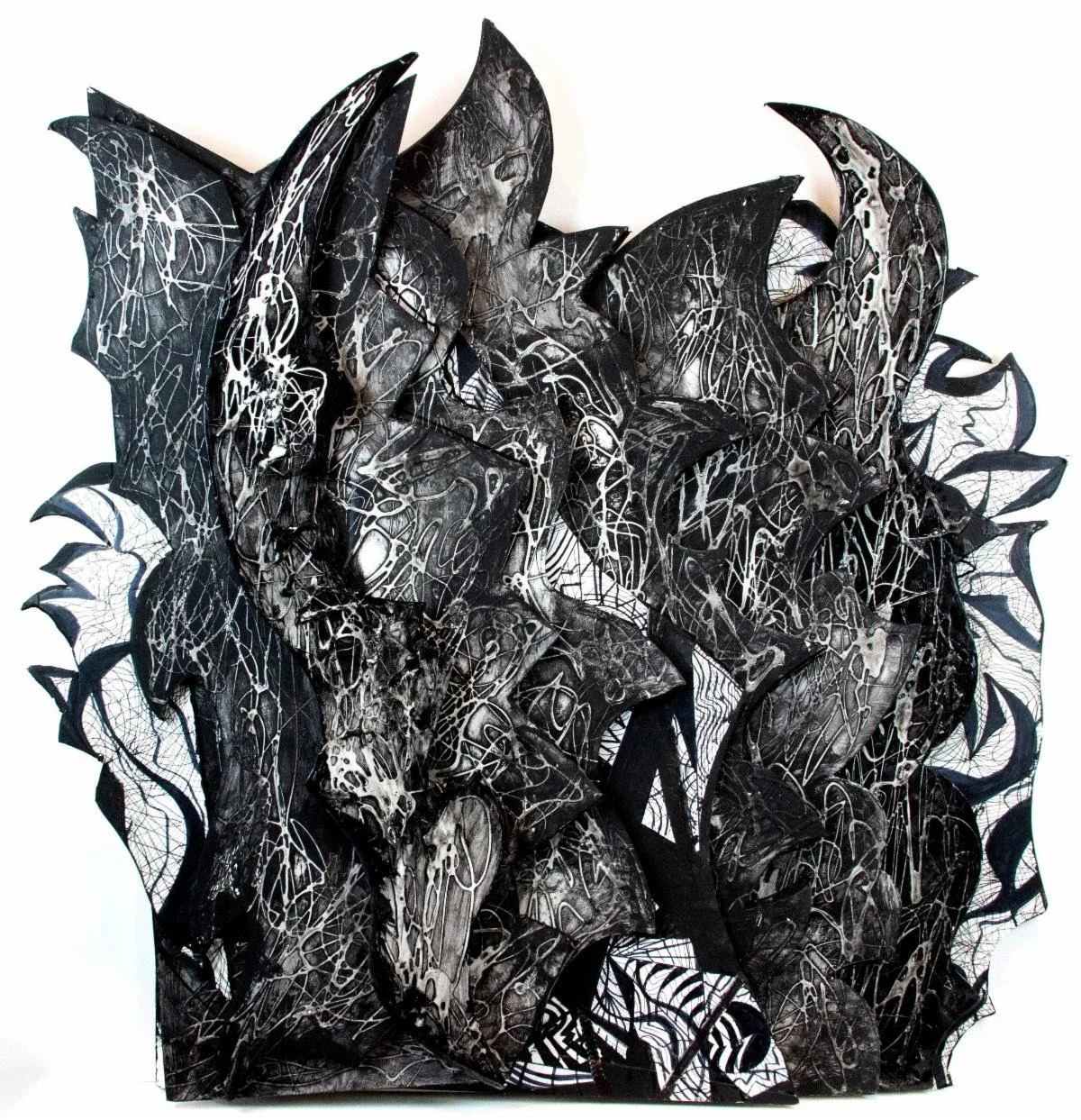
“Total Immersion” (mixed media on sculpted board), by Norman Finn, in his show “Fragments of My Life and Thoughts Past and Present,’’ at Galatea Fine Art, Boston, June 3-26.
He tells the gallery:
"My body of work depicts, in many ways, the events and thoughts that reflect the areas of my life. The images appear and are recalled as fragments. Some of those fragments are developed as what I call ‘Modular Art’. They are pieces applied to the painting that gives it not only depth but a sense of movement and clarity. There is an attempt to put them in order and sequence for they are there vividly. They somehow tumble onto the canvas and I try to hold them on my brush strokes. There are too many in motion, an endless array of life's happenings rushing to the surface. Life is complicated and my work is a vision of that complexity in all its forms. My painting tries to convey that message, for they are only pieces of life's puzzle in a constantly changing vista."
His artist statement says:
“Norman Finn grew up in the domestic shoe industry and worked in Florence, Italy. He became corporate vice president for product development for U.S. Shoe in 1976 and helped take the company to $2.7 billion in revenue. This led to his developing and pioneering better footwear in Asia. In 1987, he started AmAsia International, developing major brands with his son and daughter-in-law. Norman lives in Chestnut Hill, Mass., with his wife. Their grandson, Taylor, is their pride and joy.’’
Holy Cross naming science complex after Fauci

Edited from a New England Council (newenglandcouncil.com) report:
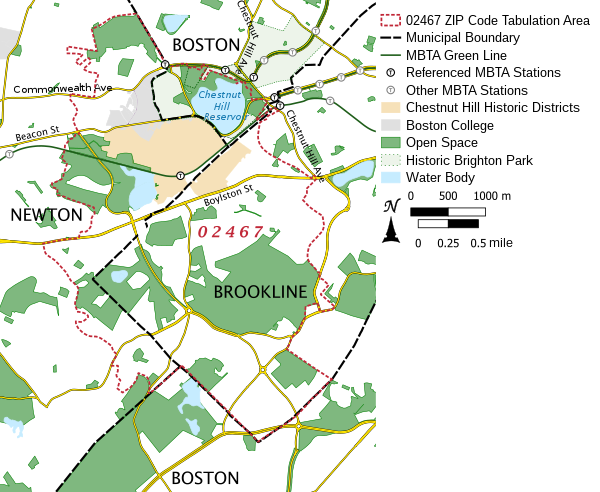
“TheCollege of the Holy Cross, in Worcester, is renaming its Integrated Science Complex after its alumni, Dr. Anthony Fauci. Fauci graduated from Holy Cross in 1962 and has since gone on to help guide top federal officials through the coronavirus pandemic. Now, he is serving as chief medical adviser to President Biden.
“Fauci was one of the lead members of the White House Coronavirus Task Force under then- President Donald Trump in the early days of the pandemic. He has served as an adviser to every U.S. president since Ronald Reagan and has been director of the National Institute of Allergy and Infectious Diseases since 1984. The newly named Anthony S. Fauci Integrated Science Complex will officially be dedicated to the physician during his 60th Holy Cross class reunion weekend.
“We are thrilled to celebrate Dr. Fauci in such a public and enduring way,” said Holy Cross President Vincent Rougeau, in a written statement. “It’s fitting that Dr. Fauci’s name will adorn a complex designed to foster integrated learning across multiple academic disciplines – the kind of broad, collaborative and holistic thinking one needs to manage health crises such as HIV/AIDS, Ebola and Zika, or the current COVID-19 pandemic.”
Blue roof of New England

“Mt. Washington Spring’’ (painting), by Susan Wadsworth, at Southern Vermont Arts Center, in Manchester, May 28-July 17.
Drifting through her thoughts

“On the Saco,’’ (which flows from New Hampshire’s White Mountains to the Gulf of Maine), by Benjamin Champney (1817-1907)
“I drift along aloof,
lost in the currents
of thoughts, floating
through a timeless
memory in the making.’’
— From “Kayaking— Saco River,’’ by New Hampshire-based poet Julie A. Dickson
David Warsh: South Sea Bubble — Economists, historians and journalists -- who has the last word?
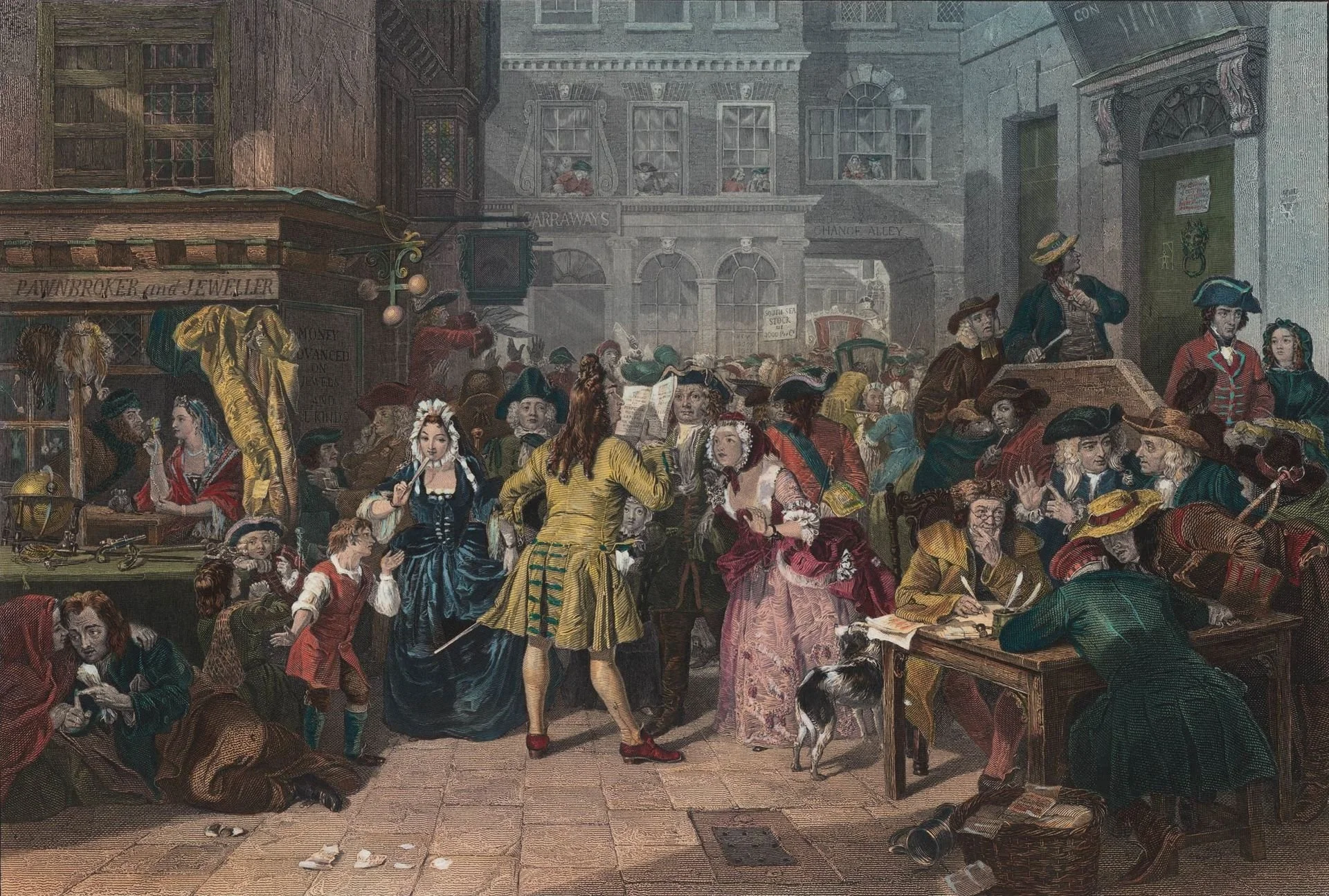
Hogarthian image of the South Sea Bubble from the mid-19th Century, by Edward Matthew Ward.
DURHAM, N.C.
I’m participating in a conference here on one of its favorite topics – the relationship between professional economics and the news business. A few durable themes stand out. One is the susceptibility of market systems to manias, panics, and crashes.
The most interesting draft paper presented here goes back to the beginnings of modern times to ask, what did London newspapers know, and when did they know it, about the disaster we know today as the South Sea Bubble.
In “British Lions Crouched to a Nest of Owls,” Carl Wennerlind, of Columbia University’s Barnard College, describes the episode as “one of the most iconic economic events in history.” In the summer of 1720, shares in the South Seas Company were offered to the public at £170. The stock’s price rose to £1,000, before falling to £200 by September, with ruinous effects on the hopes and dreams of families of London emerging upper middle class. A hundred other lesser public offerings had amplified the boom and turned it into a high fever.
What we remember is the outpouring of scorn and blame dished out after the fever broke – in printed ballads, poems, satirical plays, novels and pamphlets, including works by Jonathan Swift and Daniel Dafoe.
Usually overlooked is the expectation that puffed up the mania – Britain’s entry into new markets for slaves. Realistically speaking, the formation of the South Sea Company was motivated out of practical concerns with the expensive financing. But what remains is the memory of the Crash.
In 2001, historian Julian Hoppit published “The Myths of the South Sea Bubble.” He argued that the effects of the incident had been overblown in those famous accounts in its aftermath. Hoppit identified three commonplace views that showed types of misunderstandings to which the Bubble had been prey.
[F]irst, that investors came from far and wide, but blindly left behind all reason and prudence, skepticism and caution; second, that it produced considerable social mobility by enriching any and impoverishing more still; and, third, that its collapse led to widespread and profound economic dislocation.
Wetterlind himself is author of a well-received book in which the Bubble plays a part: Casualties of Credit: The English Financial Revolution 1620-1720 (Harvard, 2011). His curiosity reawakened, Wetterlind did something no one had done before. He read everything written in London newspapers about financial markets during that fateful year.
His conclusion: newspapers had been slow to share the growing exuberance, but quick to assign blame when it went awry, “Courageous and noble English people had fallen victim to the dark and sinister forces of stock-jobbers,” is how he rephrased the headline that gave him his title. The lead-up to the Bubble he found reported in January-April 1720; the Bubble itself began to inflate in May as the public learned that there would be more shares to be had, and reached its highest level by the end of June. It burst in Auges and continued to deflate throughout September. In October, the aftermath began.
The day-to-day newspaper time-line that Wetterlind produced seemed valuable to me, given the significance that has been assigned to the Bubble for centuries. But a second dividend came clear when I read over Hoppit’s account. The narrative timeline of inside information he assembled from archival sources, seemed top recede information available to newspaper readers by a month or two.
This Robert Harley, the Earl of Oxford, heard from his daughter by letter in March, “The town is write mad about the South Sea, some losers, many great gainers, one can hear nothing else talked of.” A month later, his son reported, “The madness of stock-jobbing is inconceivable. The wildness is beyond my thought” And a month later,” as newspapers began to recognize the Bubble’s beginning, .“The demon of stock-jobbing is the genius of this place. This fills all hearts, tongues, and thoughts. , and nothing is so like Bedlam as the present humour which has seized all parties: Whigs, Tories, Jacobites, Papists and all sects.”
Evidence, of more were needed, that newspapers often lag well behind the insiders in whatever story they are seeking to cover, but well ahead of those who lack newspapers to read. The, as now, journalists wrote the first draft of history. Economists then interpret the available data and fit their findings into pre-existing analytic frameworks
Bu historians, in this case economic historians as well as historians of economics, have the last word in assessing significance. The conference was a promising beginning to a long-range reconnaissance patrol.
David Warsh, a veteran columnist and an economic historian, is proprietor of Somerville, Mass.-based economicprincipals.com, where this essay first ran.

Chris Powell: Abortion deal possible but Democrats prefer acrimony

Soviet poster circa 1925, warning against midwives performing abortions. Title translation: "Miscarriages induced by either grandma or self-taught midwives not only maim the woman, they also often lead to death."
MANCHESTER, Conn.
Both political parties in Congress want to sustain the immigration controversy for partisan purposes more than they want a compromise that could resolve the controversy's two major components -- securing the borders while providing a path to citizenship for longtime illegal residents and their children, whose violation of immigration law was not their fault and who, as a practical matter, know no other home.
The other week in Congress it was the same way with abortion. A majority could have been cobbled together in the Senate in favor of legislation nationalizing a broad but limited right to abortion, but the Democratic caucus in the Senate sought to go way beyond its purported objective of codifying the Supreme Court's 1973 decision in Roe v. Wade. The Democratic majority in the House already had passed a bill extending abortion rights beyond those laid out by Roe.
Among other things, the Democratic bill, supported in the Senate by Connecticut abortion fanatics Richard Blumenthal and Chris Murphy and endorsed by Gov. Ned Lamont, would have left to a doctor's discretion an abortion after the viability of the fetus, forbidden any parental notification requirements for abortions for minors, and forbidden even a 24-hour waiting period between a woman's first medical consultation and her abortion. The bill would have nullified even the lesser restraints of Connecticut's own very permissive abortion law.
The Democratic objective is all abortion all the time and any time, immediately on the spot and right up to the moment of birth.
The bill failed to get a majority of votes in the Senate. Several senators who voted against it indicated that they would support a less expansive bill, but the Democrats were not interested in negotiating such a compromise, even though it would have left them free to keep pressing for a more permissive law and though polls long have suggested that a compromise would reflect national opinion. Few people support unrestricted abortion just as few support prohibiting it -- the extremes that dominate the two parties on the issue.
With their all-or-nothing approach, the Democrats wanted to sustain the acrimonious controversy, perhaps to distract from the roaring inflation, shortages, and social disintegration that are making the Biden administration so unpopular and threatening a Republican takeover of Congress in November's election.
Neither side can acknowledge that the abortion issue is full of fair concerns and complications of law and morality that don't lend themselves to the usual sloganeering and posturing.
xxx
Much complaining in Connecticut politics and journalism has been done lately about the huge share of urban real estate that is exempt from municipal property taxes -- government property and property belonging to nonprofit schools and colleges, churches, social-service agencies, and so forth.
The most recent reminder came the other day from a report in The Hartford Courant, which noted that 51 percent of the value of real estate in the city is tax-exempt even as state government never gives the city all that is supposedly due under the state's payment-in-lieu-of-taxes program, or PILOT.
But the complainers fail to note, as The Courant failed to note, that quite apart from PILOT payments state government already reimburses Hartford and other cities about half their annual budgets.
Nor did the newspaper note that in 2018 under the administration of Gov. Dannel P. Malloy state government assumed Hartford's general-obligation bonded debt of more than $500 million -- a bailout of the city's decades of mismanagement. In effect state government also paid for the minor-league baseball stadium Hartford had just committed to build while on the brink of bankruptcy, and did build with serious delay and cost-overrun.
Connecticut's cities have been failing not because of any lack of money, since state government long has been throwing ever-increasing amounts at them. The cities have been failing because the ways the money is spent -- largely at state government's direction -- perpetuate poverty more than they eradicate it.
Perpetuating poverty, the spending also perpetuates political dependence. The cities never improve but that's OK, since they never stop providing huge Democratic pluralities.
Chris Powell is a columnist for the Journal Inquirer, in Manchester.
Llewellyn King: Censorship isn’t the solution to the ills spread by social media

Censorship came to British America when the governor of Plymouth, William Bradford, learned in 1629 that Thomas Morton, founder of the relaxed settlement of Merrymount (now part of Quincy), had '‘composed sundry rhymes and verses, some tending to lasciviousness.’’ The solution was to send a military expedition to arrest him (above) and stop the good times at Merrymount.
This society, founded in 1879 and dissolved in 1975, pushed to censor material it saw as immoral.
WEST WARWICK, R.I.
Technology is tampering with freedom of speech, and we don’t know what to do about it. At issue are the global platforms Facebook, Twitter and Instagram and the disturbing propaganda, disinformation and lies propagated on them.
The inclination, on the left and the right, is to censor. It is a terrible solution, more toxic and damaging to the body politic than the disease.
The left would like to shut down Fox Cable News and its principal commentator, Tucker Carlson. The right would like to have Twitter sold, presumably to Elon Musk, so that it stops blocking tweets from the right, notably those from former President Trump.
How our society and others deal with the downside of social media — racial incitement, disinformation, mendacity and opinions that are offensive to a minority, whether that is the disabled or an ethnic group — is a work in progress. The instinct is to shut them down, shut them up. The tool — that old monster solution — is censorship.
The first trouble with censorship is that it has to define what is to be eradicated. Take hate speech. The British Parliament is struggling with a bill to limit it. The social networks seek to exclude it, and there are U.S. laws against crimes inspired by it.
How do you define it, hate speech? When is it fair comment? When is it satire? When is it truth taken as hate?
I say if you can untie that knot, go ahead and censor. But I also know you can’t untie it without savaging free speech, doing violence to the First Amendment, arresting creativity and hobbling humor.
The censor is often as much clothed in moral raiment as in political garb. Take Thomas Bowdler and his sister, Henrietta, who in 1807 published an expurgated version of the works of Shakespeare. Henrietta did most of the work on the first 20 plays, later Thomas finished all 36. They expunged sex, blasphemy and double entendre. Thomas was an admired scholar, not a crackpot, although that might be today’s judgment.
Oddly, the Bowdlers are credited with increasing the readership of Shakespeare. People reached for the forbidden fruit; they always do.
Likewise, many a novel would have avoided success if it hadn’t been serially banned, like D.H. Lawrence’s Lady Chatterley’s Lover. The moral censorship of movies by the Hays Office, starting in 1934, didn’t save the audiences from moral turpitude. It just led to bad movies.
The censors often begin with specific words; words, which it can be argued, represent offense to some group or some social standing. So specific words become demonized — whether it is the naming of a sports team or a colloquial word for sex, the urge to censor them is strong.
Jokes, like the English ones about the Welsh or the Scots ones about the English, became victim to a newly minted sensitivity, where political activists sell the idea that the joked about are victims. The only victim is levity, to my mind.
When you start down this slope there is no apparent end. Euphemisms take over from plain speech, and we live in a society in which the use of the wrong word can suggest that you are not fit for public office or to teach. Areas around ethnicity and sexual orientation are particularly fraught.
Until the 1960s and the civil rights movement, newspapers de facto censored people of color: They ignored them — a particularly egregious kind of censorship. At The Washington Daily News, where I once worked, a now defunct but lively evening newspaper in the nation’s capital, some of us once ransacked the library for photos of Blacks. There were none. From its founding in 1927 until the civil rights movement took off, the newspaper simply hadn’t published news of that community in a city that had a burgeoning African-American population.
That was collective censorship as pernicious as the kind that both political extremes would now like to impose on speech.
Alas, censorship — banning someone else’s speech — isn’t going to redress the issue of the rights of those maligned or lied to or excluded from social media. In print and traditional broadcasting, libel has been the last defense.
Libel laws are clearly inadequate and puny against the enormity of social media, but they are a place to begin. A new reality must, and will in time, get new mechanisms to contend with it.
One of those mechanisms shouldn’t be censorship. It is always the first tool of dictatorship but should be an anathema in democracies. For example, it is an open issue as to whether Russian President Vladimir Putin would have been able to invade Ukraine if he hadn’t first censored the Russian media.
On Twitter: @llewellynking2
Llewellyn King is executive producer and host of White House Chronicle, on PBS. He’s based in Rhode Island and Washington, D.C.
Know its futility

Collection, first published in 1891, that made Mrs. Freeman well known.
— Mary Eleanor Wilkins Freeman (1852-1930), New England native, in her story “The Amethyst Comb’’.

Memories of landscape

"Granite in Spring" (painting) by Kathline Carr, in 29 her show “In Awe of Nature,’’ through May 29, at Fountain Street Fine Art, Boston. She lives in The Berkshires.
She tells the Gallery:
“I love hiking, particularly in wild, desolate places, and am fascinated by looking at the way light falls on the landscape when I am out on the trail, creating shapes that are craggy, or geometrical, or diffused—or shifting from one to the other. Sometimes I look at the sky or a mountain pass and try to remember the individual parts of the scene for later, when I will imagine the parts rearranged, the lights and darks reversed, or perhaps just one form that caught my eye. My dream travels take me to treks in Tibet, Alaska, Wyoming—I look at pictures of the landscapes in the places I’d like to go, and those images work their way into what I’m making as well. I am in awe of nature and the colors that exist and arise organically and atmospherically. Although I’m not painting the landscape representationally, my observations and memory of it is ever-present in my work, in some form.’’

A view of The Berkshires in North Adams, Mass.
— Photo by jbcurio
And without billionaires
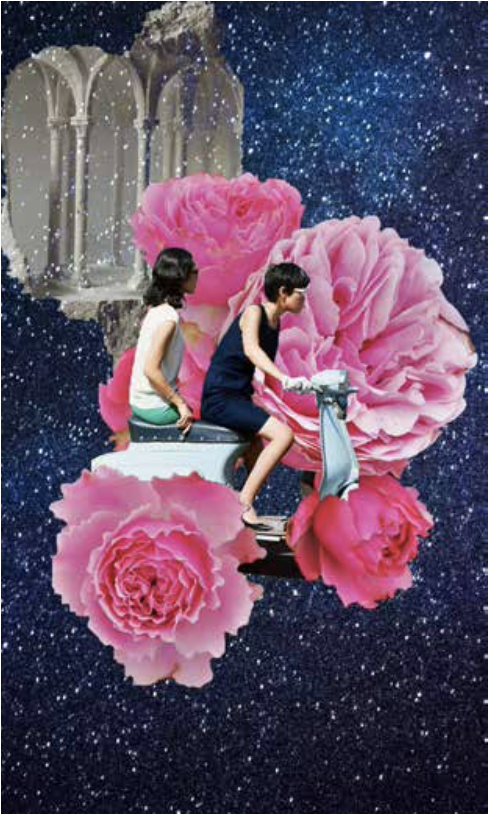
“A Ride Into Space” (digital photo collage), by Jessica TranVo, at Pao Arts Center, Boston
Too libertarian and irascible?

A Sunday edition of the once much feared and admired Manchester Union-Leader, run for many years by far-right publisher William Loeb (1905-1981). A stepdaughter recently accused him of molesting her.
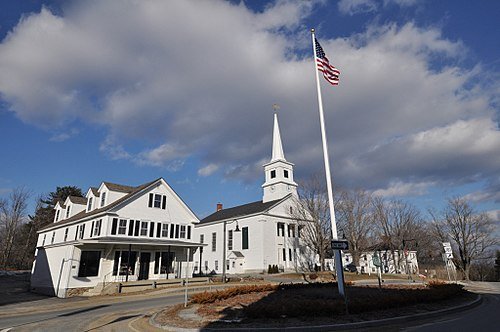
In high and chilly Dublin, N.H.
“There’s little question that Vermont (particularly Vermont), Maine, Boston, and Cape Cod, are, together, responsible for the New England image. New Hampshire just doesn’t fit in.’’
Judson D. Hale Sr., former long-time editor of Yankee Magazine, in “Vermont vs. New Hampshire,’’ in the April 1992 American Heritage magazine. And yet Yankee has always been based in Dublin, N.H.
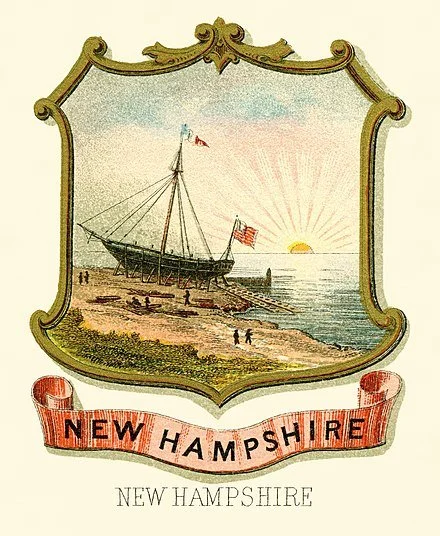
Historical coat of arms of New Hampshire, from 1876 — a reminder that the state has a (very short) seacoast.
Fascinating, complicated and scandal-rich Newport

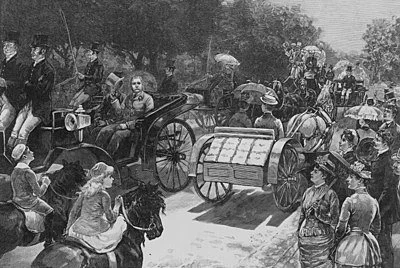
President Chester Arthur tips his hat while vacationing in Newport in 1884. The city has drawn many celebrities each year in the summer since the Civil War.
Adapted from Robert Whitcomb’s “Digital Diary,’’ in GoLocal24.com
The drive to Newport from Providence via Fall River has some dramatic stretches. The Spindle City rises up, with its beautiful old stone mill buildings, looking a bit like an English provincial city and, if you carefully crane your neck on the Braga Bridge, the view down Mt. Hope Bay is spectacular, as is, further south, the view from the Sakonnet River Bridge. If only they could clean up Middletown’s hideous West Main Road commercial strip, which mars the approach to Newport. More trees would help, as would some targeted demolitions.
Then you get into Newport, one of the country’s most interesting cities – dense with class, ethnic, economic, cultural and architectural complexity. Rich, poor, Navy people, current and former spies, engineers, socialites, TV celebrities, etc., etc., and some of the best gossip in the world, enriched with scandals, present and past. Among the most famous:
The late Claus von Bulow’s alleged attempted murder of his late utility heiress wife, Martha “Sunny’’ von Bulow, which led to two sensational trials in the ’80’s (and the movie Reversal of Fortune, a sort of dark comedy) and the late tobacco heiress Doris Duke’s apparent murder (by driving into him at her Newport estate, Rough Point) of an assistant, Eduardo Tirella, in 1966. Some Newporters connected to the city’s upper crust who knew these characters and those around them still talk about these cases, as I discovered last week at a lunch in the City by the Sea.
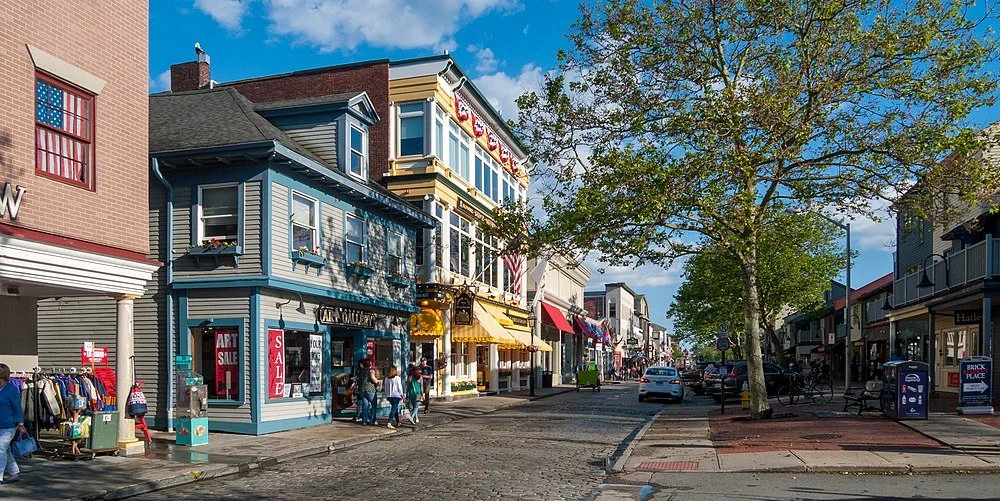
Thames Street, on Newport’s waterfront. In high summer, the street is often mobbed with shop patrons, restaurant and bar goers and just plain tourist/gawkers. Some are sober.
N.E Aquarium collaborating with SeaAhead in incubator project

New England Aquarium Plaza
BOSTON
Edited from a New England Council (newenglandcouncil.com) report:
“New England Aquarium is working with SeaAhead Inc. to create their BlueSwell Incubator program. The program is to support early-stage entrepreneurship in ocean sustainability solutions. BlueSwell aims to bring together founders, ocean experts, industry leaders and venture capitalists to develop bluetech projects.
“There were seven startups who completed BlueSwell’s latest program in March, with each startup having a different area of focus, including sea-urchin farming, data sharing among offshore wind farms, fishing communities and camera-based inventory systems for seafood processors. Now, each startup is working on different goals for the year ahead, from raising seed rounds to finding new clients. Each startup in this program will receive $50,000 in funding to help their projects become commercialization. The startups will also have access to support, including industry, investment, academia, government and NGO mentors.
“‘We are excited for the scientists and technical experts in the Anderson Cabot Center for Ocean Life to continue mentoring these transformational startups to maximize their positive impacts on ocean health,’ said John Mandelman, vice president and chief scientist at New England Aquarium. “Being part of BlueSwell provides invaluable expertise from New England Aquarium scientists with decades of experience guiding industry, policy, and ocean management.”

Juan Cole: Carlson’s ‘white replacement’ theory comes from an anti-American Nazi

The New England Holocaust Memorial, in Carmen Park between Congress, Hanover, Union, and North Streets in Boston, was founded by Stephan Ross, a Holocaust survivor, and designed by Stanley Saitowitz. It was erected in 1995. Each tower symbolizes a different major Nazi extermination camp.
— Photo by Beyond My Ken
Via OtherWords.org
Before a hate-filled 18-year-old murdered 10 and wounded 3 African Americans in Buffalo on May 14, he penned a rambling screed about replacement theory.
The most common version of this whiny idea, imported from the more hysterical fringes of the French far right, holds that Jewish capitalists are importing cheap immigrant labor to replace more highly-paid white workers.
Notoriously, the Nazis who marched in Charlottesville, Va., in 2017 against the removal of Confederate statues chanted “Jews will not replace us.” The shooter who killed 11 Jewish Americans at a Pittsburgh synagogue in 2018 also espoused the idea of the “great replacement.”
This hateful ideology is shamelessly promoted by Fox News. The worst offender is the Lord Haw-Haw of the 21st Century, Tucker Carlson, who exposed his audience to great replacement excrement 400 times in the past year.
Republican legislators across the United States have been passing laws against teaching critical race theory, which hasn’t killed anyone — and which helps us understand the effect of ideas like the great replacement. But they don’t seem to be as eager to legislate against Nazi ideas.
And make no mistake: The great replacement is an explicitly Nazi idea.
The theory originated in Europe and had many exponents of various stripes. But the phrase, and the most extensive elaboration of the theory, originated with the French Nazi René Binet (1913-1957), who served during World War II in the Waffen Grenadier Brigade of the SS Charlemagne, which consisted of French Nazi collaborators.
You don’t get more Fascist than that. The Charlemagne Brigade included the last troops to defend Hitler’s bunker before his suicide.
Binet fulminated after the war against “the invasion of Europe by Negroes and Mongols,” by which he meant the Americans and Soviets who fought the Nazis. A biological racist, he saw all Americans as an impure mestizo “race.”
So this now far-right American nationalist idea actually originated in hatred for Americans and a denigration of their supposed “whiteness” by the European right, which did not see Russians as “white” either.
Unlike cowardly boot-lickers like Binet, the true patriots of the period were the multicultural French. The French Army and then Charles De Gaulle’s Free French Army included thousands of riflemen (or Tirailleurs) from Senegal.
History.net explains: “During World War II the French recruited 179,000 Tirailleurs; some 40,000 were deployed to Western Europe. Many were sent to bolster the French Maginot Line along its border with Germany and Belgium during the German invasion in 1940 — where many were killed or taken prisoner.”
Even after the fall of France, these Senegalese fighters “served in the Free French army in Tunisia, Corsica and Italy, and in the south of France during the liberation.”
I had two uncles who served in World War II, one at the Battle of the Bulge. In my family, we’re not in any doubt that it was the multi-racial Allies who were the good guys. With famous units like the Tuskegee Airmen, who bombed Nazi targets, the Allies drew srength from their diversity — and that gave them the strength to prevail.
People like Tucker Carlson are pitifully ignorant of history and so are wielding an anti-American, highly unpatriotic notion for the sake of their television ratings. Ironically, Tucker’s intellectual forebear, Binet, would have considered him a mongrel.
As defenders of illiberalism and implicitly of hatred of Jews, these useful idiots of the far right are symbolically still deployed around Hitler’s bunker, defending it from the approaching AlliesJuan Cole
Juan Cole is the Richard P. Mitchell Professor of History at the University of Michigan and the founder and editor of Informed Comment (JuanCole.com). This op-ed was adapted from Informed Comment and distributed by OtherWords.org.

'Untenable relationship'

“We're Made of the Same Stuff” (mixed media), by Susan Leskin, in her show ‘‘Feeling the Heat,’’ at Galatea Fine Art, Boston, June 3-26.
She says; "The relationship between humans and nature has become untenable: so very dangerous and so infinitely sad. Regardless, we must summon as much energy and will as possible, and repair what we can. At a basic level, it comes down to what each of us is willing to give up."

Cynthia Drummond: Global warming sends a toxic worm to southern New England

Model of a Hammerhead worm.

And a real one.
— Photo by SREEJITH VISWANATHAN
From ecoRI News (ecori.org)
HARRISVILLE, R.I.
Samantha Young was working in her father’s garden when she saw some strange-looking worms she hadn’t noticed before. What she had found were invasive hammerhead worms.
“The three Hammerhead Worms were all found in my dad’s yard on Round Top [Road] in Harrisville,” she wrote in an email. “I found them while cleaning up around the yard. They were all found underneath stuff like buckets, and rocks.”
Native to Asia and Madagascar, the Hammerhead Worm, or Bipalium Kewense, was transported to Europe and the United States in shipments of exotic plants. It has been in the United States since the early 1900s and is most commonly found in states such as Louisiana, where conditions are warm and humid. But now, as the climate warms, these invasive worms are spreading.
With their distinctive heads and long, flat bodies, hammerhead worms, which are members of a large family of flatworms, or planaria, are easy to identify. They are usually striped, and can grow in length to nearly a foot.
The biggest concern is the damage the carnivorous worms could do to agriculture, because they are predators of earthworms. While the glaciers killed almost all the native earthworms north of Pennsylvania, and most of the earthworm species in the United States were brought here by European settlers, earthworms are important for soil health.
The one thing you don’t want to do if you find a hammerhead worm is touch it, or let your pets, including backyard chickens, eat it.
Hammerhead Worms produce a neurotoxin, tetrodotoxin, which is also found in puffer fish, which are sometimes served in sushi restaurants as “fugu sashi,” where they are prepared by only the most highly skilled chefs.
Josef Görres, formerly of the University of Rhode Island, currently teaches soil science at the University of Vermont and is familiar with hammerhead worms.
“If you read some publications out of Texas, they’re kind of saying, ‘Hey you know, there are really big ones,’ of course, in Texas, they always have bigger things than anybody else, but they’re saying it may actually be a human health concern,” Görres said. “Most of that toxin is near the surface of the worm so you touch it or you play with it, or something like that, it might cause you harm.”
As if toxins weren’t enough, Hammerhead Worms can also transmit harmful parasites to humans and animals. And they have another unpleasant characteristic: they regenerate from segments if they are cut up, so chopping them into pieces will only make more.
Görres said these invasive worms weren’t considered a threat until they began to expand their range.
“On first introduction, there probably weren’t many of them and so now, as they’re spreading, they’re becoming more obvious to people,” he said. “I, certainly, over the last five years, have seen a lot more than even 10 years ago.”
Young said she had to research the three worms she found to identify them.
“I didn’t know what they were until I googled it,” she said. “I left them in a Tupperware container until they died.”
If people can’t handle the worms without protection and they can’t cut them up, what is the most efficient way to kill them? Görres recommends salting, bagging and freezing.
“I read somewhere that in order to kill them, you put them in a bag, you put salt in there and then you freeze them for 48 hours,” he said. “Double overkill. The salt will desiccate them and then freezing them, if anything is left, freezing them will also kill them — 48 hours at minus 20 degrees Celsius, which is what the freezer is at, usually.”
Since they are not perceived as a threat to agricultural crops, Hammerhead Worm research is not well-funded. Concern has instead focused on another invasive species from Asia, the Snake Worm, which devours the surface material or “duff” of the forest floor.
“They consume the forest floor, the duff layer and … by the time all that duff layer is gone, there’s a lot fewer plants in the understory of the forest,” Görres said.
The ecological damage caused by Hammerhead Worms, he said, is minor by comparison, at least so far.
“I am not really 100 percent concerned about them,” he said. “It’s just something I keep on my radar, because they’ve been reported in the Northeast now for a few years and I keep finding them in various places, woodlands as well as gardens.”
Görres also noted dry summers, which are becoming increasingly common in New England, might limit the spread of Hammerhead Worms, which need humidity to thrive.
“Things are getting dryer here,” he said. “They might just be confined to wetlands and areas where people irrigate.”
Cynthia Drummond is an ecoRI News contributor.
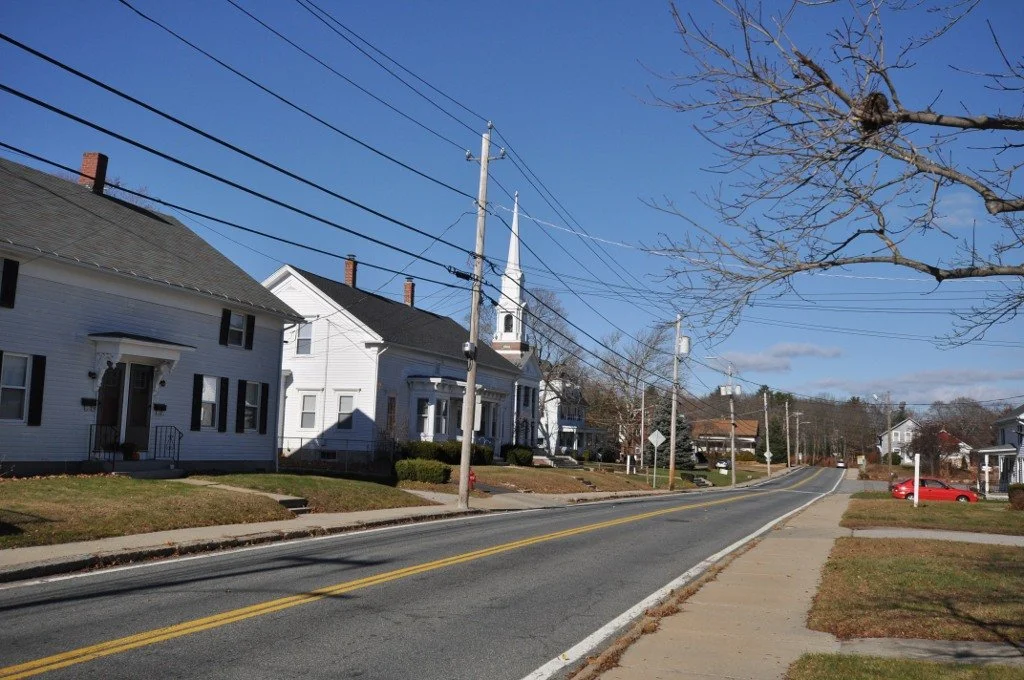
In exurban Harrisville, R.I.
—Photo by User:Magicpiano
'Blurring of life and art making'

From Nat Martin’s show, “Untitled Afternoon,’’ at Kingston Gallery, Boston, June 29-July 31. He lives in the Boston area.
The gallery says:
“This is a collection of small objects made outside the studio, within the orbit of his family. The title of the show suggests a blurring of life and art making, with a practice that is not reliant on the isolation of the art studio. Intimate, poetic, humorous and sometimes mournful, they are made of the stuff of life and family. In Martin’s words: ‘There are many references of our domestic life and what was around us - tipping laundry, toys, birthday cakes, aging, clutter, love, school projects, unfinished projects, marriage, cherubs, joy, sadness, mini golf.’ The work in the show has both a sense of discovery and surprise. They were inspired by the uninhibited creativity of his young kids, who were sometimes also his artistic collaborators.
“Known for his photography, Martin initially had no intentions of exhibiting his sculpture; rather he referred to their fabrication as his playground, a place where there were limitless possibilities of what he could make and the materials he could use. All the work reflects the poetry of everyday life and parenting with all its foibles and triumphs. Home and Art collide. Martin’s 12-year-old child has a memory of Martin at the stove cooking salmon, while melting a wax Minnie Mouse for the next piece.
Visit here for a bio of Nat Martin.
Amy Collinsworth: Amid attacks on Critical Race Theory, UMass Boston launches new institute
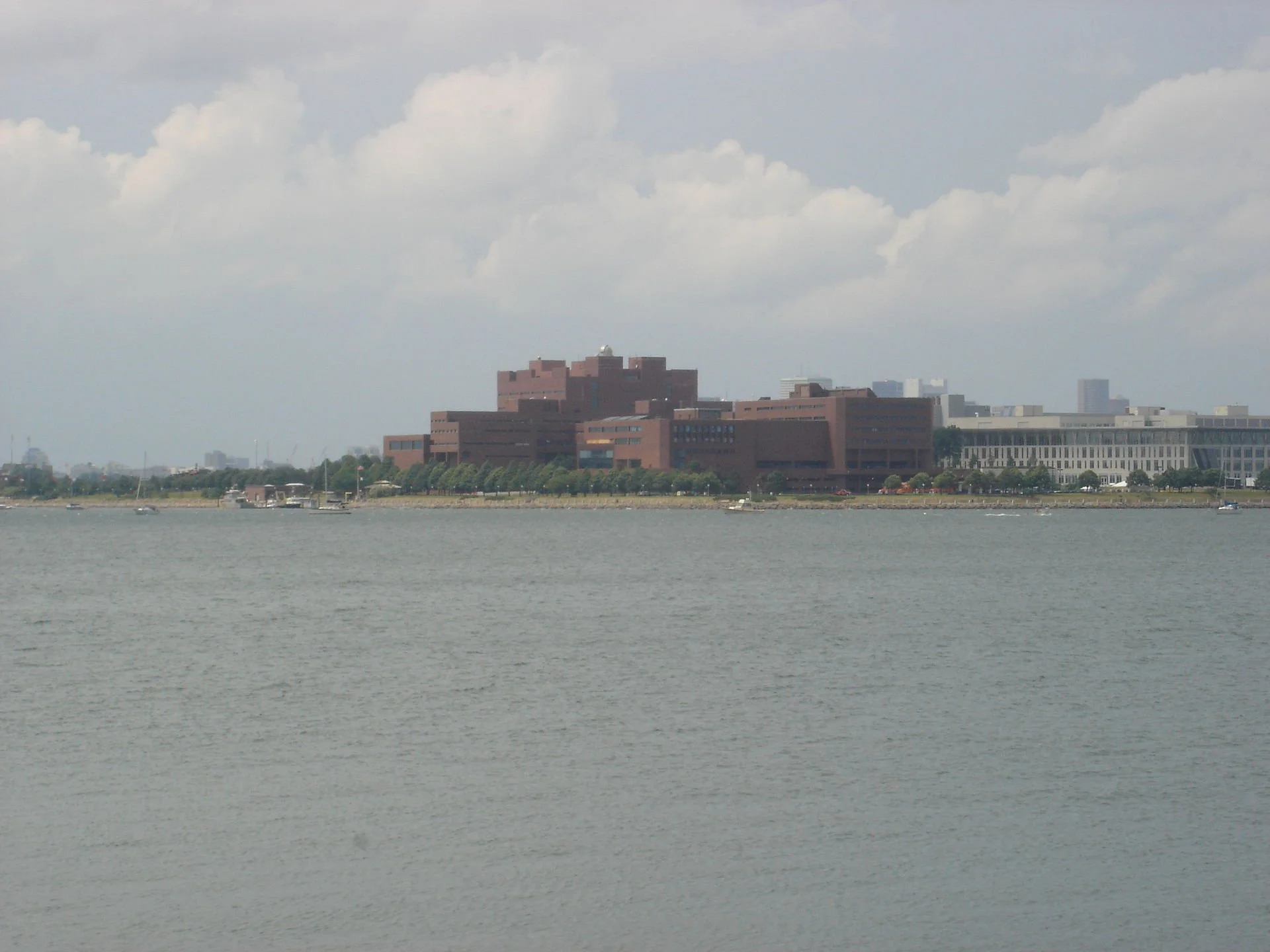
The UMass Boston campus from Squantum Point Park, in Quincy.The brick building in the foreground is Wheatley Hall and the white building to its right is the Campus Center.
— Photo by Fullobeans
From The New England Journal of Higher Education, a service of The New England Board of Higher Education (nebhe.org)
BOSTON
Since the murders of George Floyd, Breonna Taylor, Ahmaud Arbery and Tony McDade in 2020, among countless others, the leadership of the University of Massachusetts at Boston has publicly committed itself to becoming an antiracist and health-promoting university. The university’s stated institutional values and commitments are also intricately tied to an academic freedom that wholly defends the right to teach about race, gender and other equity issues—matters that speak directly to the lived experiences of those in our university and Boston communities.
Currently, more than 30 states have enacted bans or have bans pending related to teaching about Critical Race Theory (CRT), equity and race and gender justice. Additionally, more than 100 organizations have signed the Joint Statement on Legislative Efforts to Restrict Education about Racism and American History, a statement by the American Association of University Professors, PEN America, the American Historical Association and the Association of American Colleges & Universities, which expresses opposition to these legislative bans and emphasizes a commitment to academic freedom that includes teaching about racism in U.S. history.
While anti-CRT legislation is not currently pending in Massachusetts, there have been and remain real threats to racial justice in Boston by entities other than the state. The recent contention in Boston Public Schools about exam school admission and the defunding of Africana Studies at UMass Boston, for example, demonstrate the need for individuals, departments and organizations to commit to racial justice.
For more than 30 years, the Leadership in Education Department at UMass Boston has demonstrated its commitment to social justice in education, in part, by supporting educators for leadership roles in education, policy and community organizations. Our academic programs include Educational Administration (MEd and Certificate of Advanced Graduate Study), Higher Education (PhD and EdD) and Urban Education, Leadership and Policy Studies (PhD and EdD). As a collective, our community of faculty, students, staff and alumni is committed to research and practice that is grounded in equity, organizational change for racial justice and collaborative leadership.
Launching a new institute
As our department reflects on the changes we want to make in relation to community and racial justice, we are excited to start a new initiative that opens our department community beyond the structures of our academic programs: the Educational Leadership and Transformation Institute for Racial Justice. The institute will focus on building capacity and sustainability to transform schools, colleges and universities for racial equity.
This institute aligns with a resolution recently approved at UMass Boston to defend academic freedom to teach about race and gender justice. The institute’s programs and workshops will address issues of racial justice in education, including in teaching, learning, administration and policy. This institute makes actionable our department’s commitment to building capacity for addressing racism, whiteness and racial equity in educational institutions.
The Educational Leadership and Transformation Institute for Racial Justice is an extension of our department’s social and racial justice commitments, responding to the political and policy context in the U.S., our state and our own institution. This context includes attacks on CRT and ethnic studies at all levels and, in our own UMass Boston community, public charges of racism, defunding of our ethnic institutes and disagreement over mission and vision statement drafts on the university’s commitment to becoming an antiracist and health-promoting institution.
In the Leadership in Education Department at UMass Boston, where people of color comprise the majority of students and faculty, academic freedom is understood as central to a racial justice commitment. This is why we recently brought a resolution to our faculty governance process. The resolution, “Defending Academic Freedom to Teach About Race and Gender Justice and Critical Race Theory,’’ received a favorable vote from the UMass Boston Faculty Council. In addition to other efforts to advance racial justice within our department, throughout UMass Boston and in our professional and personal lives, we now turn to what we can do to uphold this resolution as a department through this institute.
Commitment to racial justice
With hundreds of graduates from our programs, many of whom continue to work and live in New England, our students, alumni and faculty truly lead education throughout this region. Many hold roles across public and private education, including as principals, college presidents, deans, consultants, teacher leaders, faculty members, teachers, board of trustee members, directors, elected officials and district and university administrators. As scholar-practitioners, our students explore dissertation topics that center on issues of educational equity.
The same is true of the research and scholarship that our faculty members pursue. Our members conduct research on a variety of equity-focused topics in K-12, higher education and public policy, such as African-centered education; the schooling experiences and educational and life outcomes of Black women and girls; power dynamics and conflict in the academic workplace; how students pay for college; faculty members’ work-life experiences; the design and implementation of equity reforms; critical race theory in higher education; community-engaged teaching, learning and research; developmental education; and identity-conscious leadership. We are a community committed to leadership for change.
In recent years, our department has collaborated in new ways to examine how we want to live in congruence with our social and racial justice values. Since June 2020 and the murder of George Floyd, many members of our department community have gathered as The Cypher. The Cypher is a group of students, staff and faculty who support each other in their work to advance racial justice. In our organic gatherings, we focus on healing, wholeness and taking action against racism and whiteness at the University of Massachusetts Boston.
We continue to engage in activism on our own campus, including building capacity for promoting racial justice by strengthening coalitions with other groups at UMass Boston who are also promoting racial justice. This includes several of the ethnic institutes at UMass Boston and the Undoing Racism Assembly, a university-wide group of students, staff, faculty and administrators who address different racial justice concerns on campus. We also host events for our community, like the recent “Cypher Presents” dialogue between education scholars and policymakers about current matters of educational equity impacting area educational institutions and communities.
The Cypher
We began our work in The Cypher with a document, authored by 70 people, The Cypher Report. In alignment with our administration’s commitment to antiracism and health promotion, this report calls on UMass Boston administration to take specific steps to address institutionalized inequities within our organization. In addition to supporting the restorative justice framework put forth by Africana Studies, The Cypher Report made more than 20 demands, including:
Restoring funding for the Institute for Asian American Studies (IAAS), the Institute for New England Native American Studies (INENAS), the Mauricio Gastón Institute for Latino Community Development and Public Policy, and the William Monroe Trotter Institute for the Study of Black History and Culture and rescinding the glide path toward requiring the institutes to be “self-sufficient.”
Hiring an external consultant to meet individually with each senior level administrator, dean, and department chair to assess their current understanding of the ways racism and whiteness are perpetuated at UMass Boston.
Developing a racial-equity dashboard and report card to monitor and identify inequities to improve campus racial climate and equitable educational/work experiences for the university community.
Restore the Leadership in Education Department to its full-time faculty baseline (specifically, fill the seven faculty vacancies in the department).
Our efforts to institutionalize change for racial equity as a Cypher and department—in response to the larger context highlighted above—are evident through the recent resolution we brought to the UMass Boston Faculty Council, “Defending Academic Freedom to Teach About Race and Gender Justice and Critical Race Theory’’.
Attacks on CRT have been waged through state legislation and the former federal Equity Gag Order that banned federal employees, contractors and grant recipients from addressing concepts including racism, sexism and white supremacy. In the past year, the African American Policy Forum, led by Kimberlé Crenshaw, has asked faculty councils across the U.S. to unite with those affected by this legislation. After presentations from several members of The Cypher and me, the UMass Boston Faculty Council voted to pass this resolution that rejects “any attempts by bodies external to the faculty to restrict or dictate university curriculum on any matter, including matters related to racial and social justice.” (For the full resolution, see the December 2021 Faculty Council meeting minutes.)
The resolution calls us to question what racial and gender justice mean in education, and our institute is one response to that call. Through our programs and workshops in the Educational Leadership and Transformation Institute for Racial Justice, we especially look forward to conversations among and beyond our campus community to explore the ways we engage in this work. For example, how do students feel when their cultures, histories and experiences are represented within courses taught by faculty who use a CRT lens or focus on highlighting matters of racial justice and gender justice in their classrooms? What are the implications for tenure and promotion when faculty do or do not center racial justice, gender justice and intersectionality in their scholarship? For staff members who participate in professional development related to racial and gender justice, how is participation perceived in relation to professional advancement? How often are budget decisions called into question when their focus is on initiatives of racial and gender justice? As educators and community members, we must use critical questions such as these to consider the meaning of our work beyond symbolic or performative actions if we believe equity matters.
Amy E. Collinsworth is graduate program manager and assistant to the department chair in the Leadership in Education Department at the University of Massachusetts Boston, where she is also a doctoral candidate in the Higher Education Program.

At the UMass Boston Campus Center.
Even in the winter?
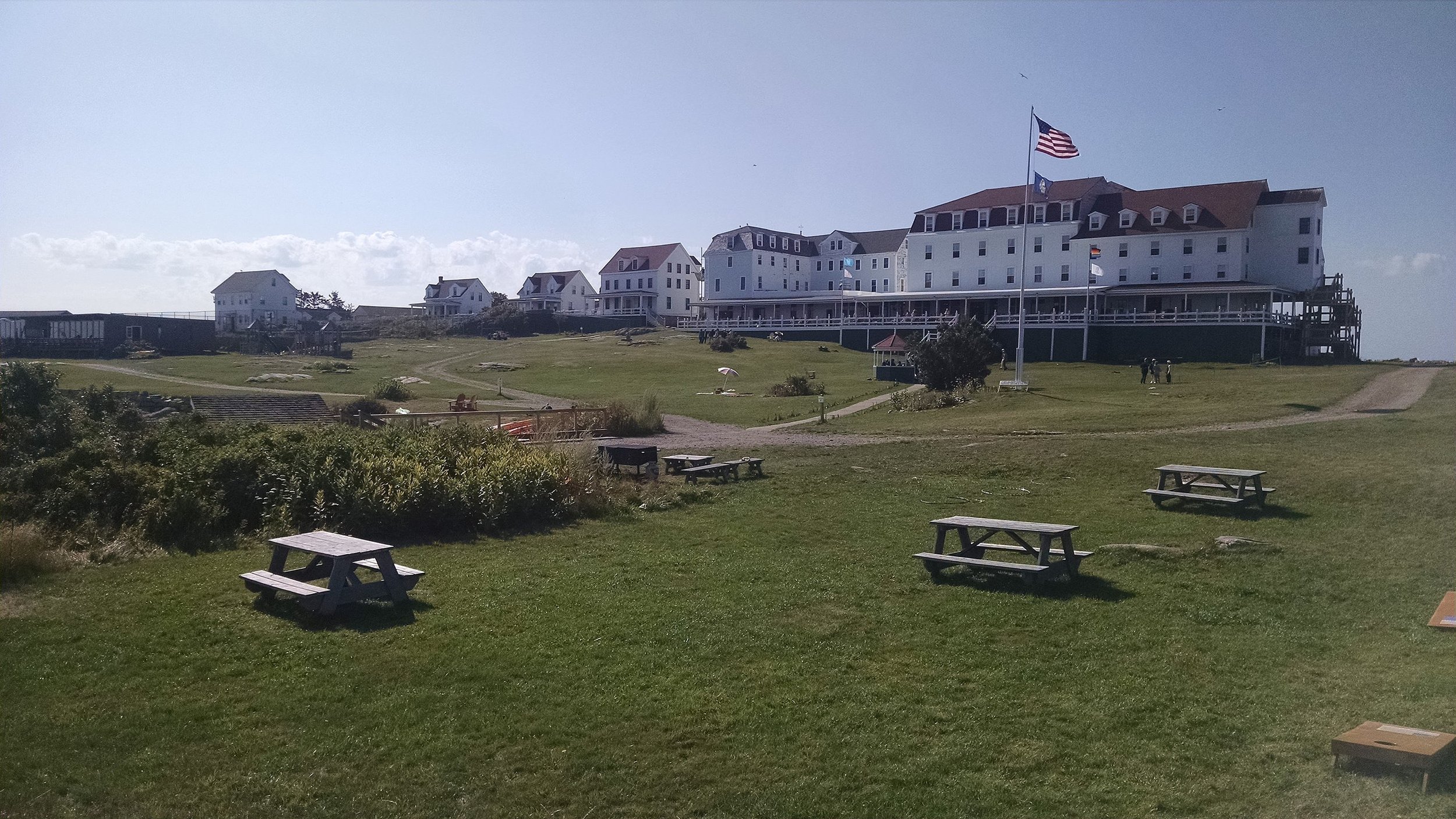
Oceanic Hotel on Star Island in the Isles of Shoals.
— Photo by DavidWBrooks
“The remarkeablest Isles and mountains for Landmarks are these… Smyth’s Isles are a heape together, none neere them, against Accominiticus… a many of barren rocks, the most overgrowne with such shrubs and sharpe whins you can hardly passe them; without either grasse or wood but there or foure short shrubby old Cedars… And of all foure parts of the world that I have yet seene not inhabited, could I have but meanes to transport a Colonie, I would rather live here then any where; and if it did not maintain it selfe, were wee but once indifferently well fitted, let us starve… By that acquaintance I have of them, I may call them my children; for they have bin my wife, my hounds, my cards, my dice, and in totall my best content.”
— English explorer John Smith in 1614 about the Isles of Shoals, off New Hampshire and Maine.
—
Death in Boston

In the Head of Charles Regatta.
“Mary Winslow is dead. Out on the Charles
The shells hold water and their oarblades drag,
Littered with captivated ducks, and now
The bell-rope in King's Chapel Tower unsnarls
And bells the bestial cow
From Boston Common; she is dead….’’
— From ‘‘Mary Winslow,’’ by Robert Lowell (1917-1977)
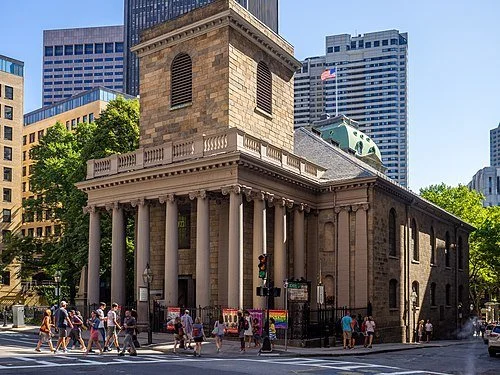
King’s Chapel (built 1754), in Boston.