
Vox clamantis in deserto



David Warsh: The expansion of women’s economic freedom that helped lead to Roe v. Wade


SOMERVILLE, Mass.
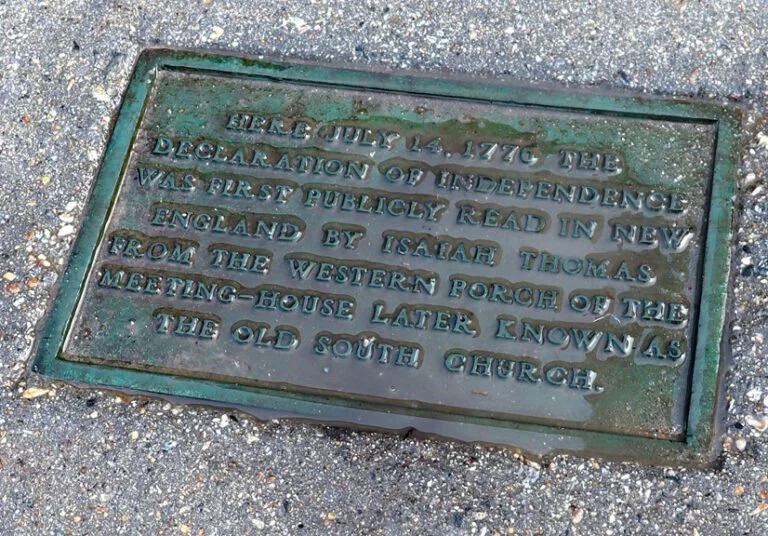
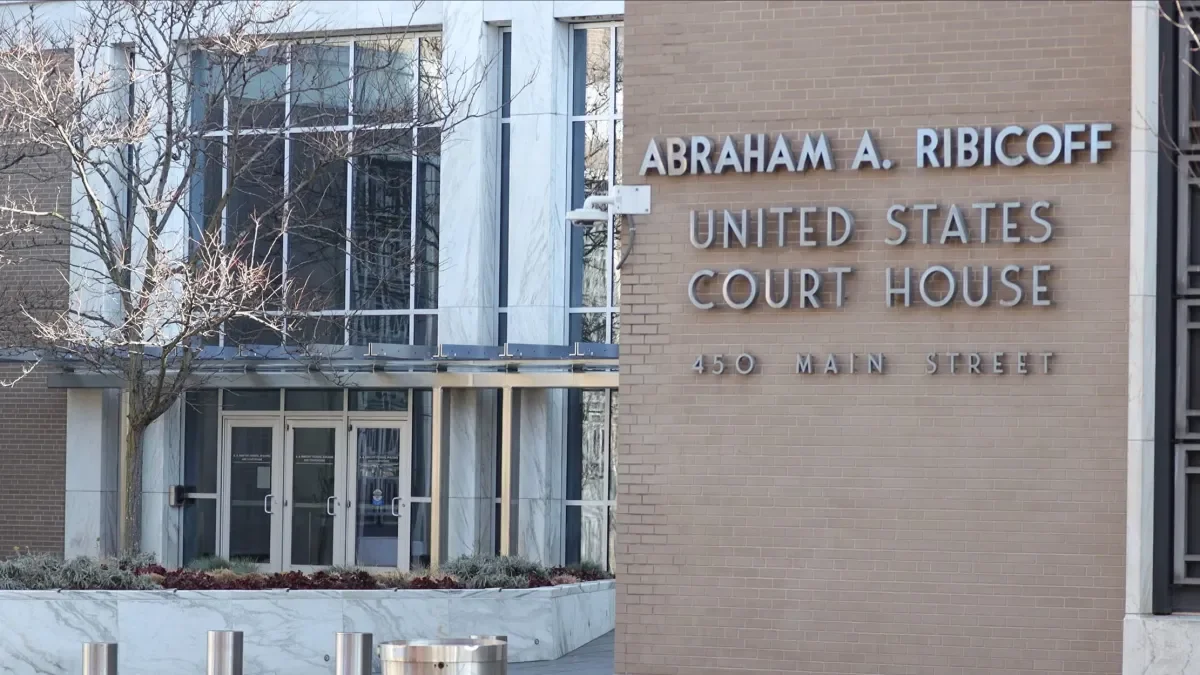
The circumstances that gave rise to the Supreme Court’s 1973 decision in Roe v. Wade, to establish physicians’ right to counsel the possibility of medical abortion, are not easy to recall. There was so much turmoil on the surface of things fifty years ago – Vietnam, Watergate, Richard Nixon’s landslide re-election. In retrospect, one skein of developments stands out as more momentous than the rest: the rapidly changing opportunities available to American women.
For that reason, there is no better place to start than with Harvard economist Claudia Goldin’s Career and Family: Women’s Century-long Journey toward Equity (Princeton, 2021). A distinguished economic historian, Goldin organized her account around the experiences of five roughly defined generations of college-educated American women since the beginning of the 20th Century. Each cohort merits a chapter.
The revolution, Goldin finds, was a technological one: the advent in the Sixties of dependable methods of birth control – the Pill, the IUD and the diaphragm. Women began re-entering the workforce on new terms. After explicating the traditional logic of early marriage – perhaps timeless, evolutionarily speaking – Goldin writes:
Armed with the new secret ingredient, the recipe for success became, “Put marriage aside for now. Add gobs of higher education. Blend with career. Let rise for a decade, and live tour life fully. Fold family in later.” Once this happiness formula was adopted by large numbers of women, the age at first marriage increased, even for college women who did not take the Pill. That reduced the potential cost of long-run cost of marriage delay for any one woman.
With that, the 7-2 majority decision in Roe v. Wade was almost an afterthought. The Supreme Court doesn’t just follow the election returns; they have families, and read the newspapers as well. .
Since 1982, the Federalist Society, conservative legal representatives of that year’s “Silent Majority,” have been working to reverse the decision by fundamentally transforming the judicial interpretation of the U.S. Constitution. You can read historian David Garrow’s triumphant summary of these “originalist” and “textualist” movements here.
Meanwhile, a May 7 Boston Globe story (subscription required) about Sir Matthew Hale, the 17th Century jurist whom Associate Justice Samuel Alito cited more than a dozen times in his 98-page draft opinion, makes equally interesting reading. Reporter Deanna Pan may have surfaced another plausible reason that the draft was leaked.
If experience is any guide, the next twenty-five years will see an avalanche of work on the other side of the argument, produced by legal scholars, historians, economists and other social scientists. Quite apart from whatever the election returns in the coming years might be, a movement to explain changing values and preferences has been underway in economics for years. New views on the joint evolution of institutions and cultures are entering the mainstream.
The Supreme Court is one of those institutions – central banks are another – to which democratic societies have delegated decision-making powers in the hope that in difficult times they will make more far-sighted policy choices than those of the current majority.
The court decided Roe v, Wade correctly in 1973. In all likelihood, it will sooner or later rise to the occasion again, In the meantime, stay calm; plan ahead, and cope with consequences if the expected reversal eventuates. Don’t throw the Supreme Court baby out with the bathwater.
David Warsh a veteran reporter, columnist and economic historian, is proprietor of Somerville-based economicprincipals.com, where this essay first ran.
Transatlantic show

Encaustic diptych on wood panel, by Susan Liddle/Donna Talman, in the show “Transatlantic Fusion 21: A Diptych Project,’’ June 1-11 at The Commons, Provincetown, Mass. It’s a joint exhibition of New England Wax (newenglandwax.com) and European Encaustic Artists.

Jim Hightower: Blame greedy corporate execs for surge in U.S. inflation
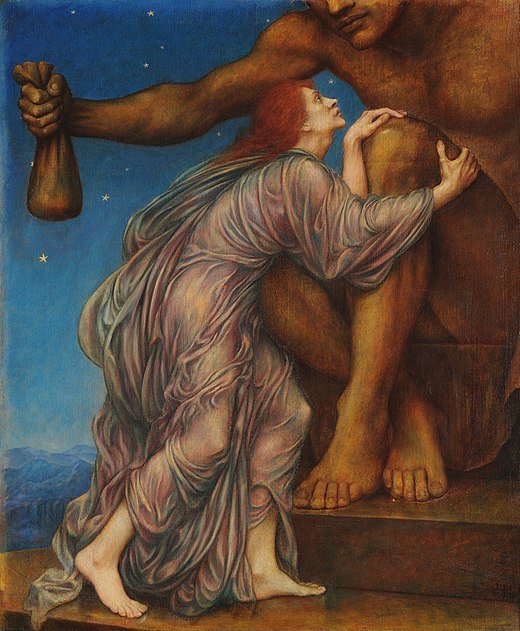
“The Worship of Mammon” (1909), by Evelyn De Morgan
Via OtherWords.org
Today, CEOs of big corporations are playing the tricky “Inflation Blame Game.”
Publicly, they moan that the pandemic is slamming their poor corporations with factory shutdowns, supply chain delays, wage hikes, and other increased costs. But inside their board rooms, executives are high fiving each other and pocketing bonuses.
What’s going on?
The trick is that these giants are in non-competitive markets operating as monopolies, so they can set prices, mug you and me, and scamper away with record profits. In 2019 for example, before the pandemic, corporate behemoths hauled in roughly a trillion dollars in profit. In 2021, during the pandemic, they grabbed more than $1.7 trillion.
This huge profit jump accounts for 60 percent of the inflation now slapping U.S. families!
Take supermarket goliath Kroger. Its CEO gloated last summer that “a little bit of inflation is always good in our business,” adding that “we’ve been very comfortable with our ability to pass on [price] increases” to consumers.
“Comfortable” indeed. Last year, Kroger used its monopoly pricing power to reap record profits. Then it spent $1.5 billion of those gains not to benefit consumers or workers, but to buy back its own stock — a scam that siphons profits to top executives and big shareholders.
Or take the fast-food purveyor McDonald’s. Executives bragged to their shareholders that despite the supply disruptions of the pandemic and higher costs for meat and labor, its top executives had used the chain’s monopoly power in 2021 to up prices, thus increasing corporate profits by a stunning 59 percent over the previous year.
And the game goes on: “We’re going to have the best growth we’ve ever had this year,” Wall Street banking titan Jamie Dimon exalted at the start of 2022.
Hocus Pocus — this is how the rich get richer and inequality “happens.”
OtherWords columnist Jim Hightower is a radio commentator, writer and public speaker.
'Faint music in the woods'

Mayflower
— Jack Kerouac (1922-1969), novelist and luminary of the Beat Generation. From Lowell, Mass., he was of French-Canadian background.
Where he worked
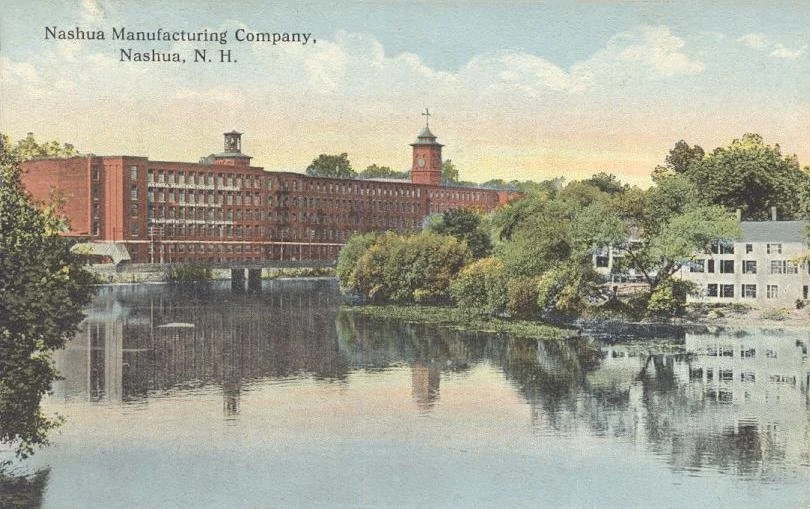
A long-closed textile factory on the Merrimack River in 1909, during its heyday.

“Here are the instruments of the makers,
their testaments of gears and wheels.
This is where men and women are called
To the daily stations of common task,
And so I stand with my father
In a child’s reverent silence.’’
-- From “Sunday Factory,’’ by W.E. Butts (1944-2013), a New Hampshire poet laureate, about a father showing his very young son his place of work

Chris Powell: Teachers politick on the job; ‘The Ukrainian lady’

A gay pride flag
MANCHESTER, Conn.
Connecticut schools deny that they propagandize students, but the other week the state's teachers gloried in their propagandizing on the job. Members of the state's largest teacher union, the Connecticut Education Association, dressed in red to participate in the union's "Red for Ed Day of Action," demonstrating and soliciting support for several school-related bills pending in the General Assembly and endorsed by the union.
The bills weren't controversial but the union's directing its members to campaign for the bills on the job could not have been more political. Students, other school staff members, and parents were to notice the uniformity of color worn by the teachers, to ask about it, and heed the union's appeal. The teachers exploited their jobs for a political purpose and it's unlikely that any school administrators scolded them about it and told them to do their politicking on their own time.
Meanwhile in some towns around Connecticut the political left is trying to propagandize government flagpoles on municipal property, seeking to fly non-government flags on them to endorse various causes. This propagandizing was an issue in Southington, where the Republican majority on the Town Council voted to limit town government flagpoles to government's own flags.
Some people had wanted to put a rainbow "Pride" flag on a pole at Southington Town Hall, celebrating sexual minorities, and they construed opposition as signifying hate and oppression.
Though Connecticut long has been almost completely libertarian about sexual orientation, maybe some opposition to the "Pride" flag was badly motivated. But the argument for the restrictive policy was sound -- that if non-government flags are to be flown on government poles, some agency will always have to deliberate on their suitability and to take sides on their causes. After all, if a "Pride" flag can be flown at town hall, what about a Trump campaign flag or the red and black flag of the fascists who call themselves anti-fascists?
This is the sort of thing that easily turns into civil liberties lawsuits. Better to keep symbols of the state politically neutral and out of the culture war.
Besides, if, as the political left suggests, sexual orientation and even gender itself are entirely matters of the feelings that people are born with, what is there to be proud of? It's not as if sexual orientation and gender are somehow earned. Some people in Connecticut may deplore homosexuality or transgenderism anyway but no one proposes to deny the right of people to live their personal lives as they choose.
Indeed, these days to fly a "Pride" flag on a government flagpole or to parade with one is mostly to be looking for someone to give offense to, as if Connecticut's cordial indifference isn't good enough and, as in totalitarian countries, demonstrations of approval must be compelled.
xxx
Even as the General Assembly, nearing adjournment, whirred furiously under the Capitol dome last week, it couldn't produce Connecticut's publicity stunt of the month. That was achieved a few blocks away, where a downtown Hartford bar changed its name from ‘The Russian Lady’ to “The Ukrainian Lady’’ in support of Ukraine's heroic resistance to Russian aggression.
The name change is to be only temporary. The stolid old lettering on the bar building's frontpiece remains under the blue and yellow banner that has been tied above the door. But for a few weeks patrons may be inclined to toast "Slava Ukraini!" and "Heroiam slava!" before stumbling home.
Unfortunately the war well may continue even after the blue and yellow banner comes down and the bar becomes The Russian Lady again, or maybe, as aggression continues, becomes The Moldovan Lady or The Polish Lady.
But even now bar patrons and everyone else should remember that many Russians are victims of the war, too, and not just the thousands of Russian soldiers killed, wounded or captured in a war few of them wanted. For the war has brought a comprehensive tyranny down on Russia and has cost all Russians what was left of the political liberty they gained with the dissolution of the Soviet Union 30 years ago.
So toast to Ukrainian liberty, but to Russian liberty. too.
Chris Powell is a columnist for the Journal Inquirer, in Manchester.
The real one seems pretty fantastical, too

“Fantasy Worlds 25,’’ by Louisa Chase (1951-2116), in her show “Fantasy Worlds,’’ at the Brattleboro (Vt.) Museum and Arts Center
— Photo by Erin Jenkins.

Llewellyn King: Fighting wildfires with fires

Prescribed burn at the Tall Timbers research site, in Thomasville, Ga.
— Photo by Linda Gasparello
(See New England note below.)
Did the fire at the end of Walt Disney’s iconic animated movie Bambi prejudice the country against forest management with controlled burning? Maybe so.
The United States Energy Association in February presented a virtual media briefing on the fire threat in the West and the Southwest this year. The prognosis, especially from the weather forecasting company AccuWeather, was grim.
Now that prognosis is being borne out as terrible fires again scorch those regions. Fire is now a year-round danger.
Enter forest scientists, who believe the solution to rampant wildfires is scientifically managed, preemptive burning.
But this fire-management practice isn’t without controversy. The memory of Bambi and his father, trapped by a raging forest fire, can spill into politics, with fierce advocates for prescribed burning often at odds with activists who believe fire should be suppressed.
The epicenter of the science of forest management with fire isn’t in the West but in the East – in the Red Hills, stretching from Tallahassee, Fla., to Thomasville, Ga. This is the home to the research stations of the Tall Timbers Institute, which studies and practices prescribed burning to save the long-leaf pine forests and their abundant populations of game birds and other wildlife.
It can be argued that a small game bird, the Northern bobwhite quail, has been responsible for preserving a huge acreage of forest land in the Red Hills. The name Red Hills is more poetic than accurate as the land is undulating rather than hilly. However, the name is enshrined in Martin Luther King Jr.’s “I Have a Dream” speech.
The area is home to some of the largest private estates -- still called plantations -- in the nation. They have been preserved and lovingly tended for hunting since the 19th Century.
Conservation began in the 1920s to preserve the habitat of the quail, fell off in the 1930s, and came roaring back in the 1950s when philanthropist Henry Beadel gave 2,200 acres to establish five ecological-research stations. This has grown to 4,000 acres.
The theory of deliberate burning is that it keeps down the forest-floor “fuel” that makes wildfires so deadly and unmanageable. The prescribed burns are carefully organized, considering the weather, the vegetation and the escape routes for the fauna.
During these burns, the fires sweep through without damaging the soil. The trees are left standing -- because the fires are fast and very hot -- but the forest floor is cleared.
Tall Timbers researchers showed me and a small group of visitors the product of a new burn on the previous day, where there was lingering smoke, and the revived, flourishing areas that were burned one, two, and three years earlier.
These researchers have a passion for their work and their conservation with fire.
The institute is active on more than 500,000 acres in Georgia and Florida and leads the country in remedial burning. California is now tentatively trying to burn on a limited scale, learning from Tall Timbers.
But Tall Timers conservation extends well beyond fire.
They explained the real threat to forests is urban sprawl and they are active, vigorously so, in persuading Red Hills area landowners to write easements into their deeds to preserve what the Nature Conservancy has called one of America’s “Last Great Places.”
And the movement is growing. “We have been working with nonprofits in the West,'' said Morgan Varner, fire research director at Tall Timbers.
Varner said Florida leads the country in preservation of great tracts of untrammeled forest and savannah managed with prescribed burning.
As we toured through Tall Timbers, one could marvel at the resiliency of both the flora and fauna. Animals and birds, which naturally flee fire, also enthusiastically return after the fires have done their work. Bambi went back.
Llewellyn King is executive producer and host of White House Chronicle, on PBS. His email is llewellynking1@gmail.com and he’s based in Rhode Island and Washington, D.C.

Prescribed burning in the White Mountain National Forest.
But fat fieldmice are tasty

“More die in the United States of too much food than too little’’
— John Kenneth Galbraith (1908-2006) economist, author and Harvard professor in The Affluent Society (1958)

“Fieldmouse Pie
5 fat fieldmice
1 cup macaroni
1/2 onion, thinly sliced
1 medium-size can tomatoes
1 cup cracker crumbs
Boil the macaroni 10 minutes. While it is cooking, fry fieldmice long enough to try out excess fat. Grease casserole with some of the fat and put a layer of macaroni on it. Add onion and tomato, then salt and pepper it well. Add fieldmice and cover with the remaining macaroni. Sprinkle the top with cracker crumbs seasoned with salt, pepper, and butter. Bake at 325 for 20 minutes or until mice are well done. (Note: if insufficient mice are available, substitute sausages.)”
— From a 19th Century cookbook created by some Vermont women, who used a lot of unusual sources to keep the wolf from the door.
‘Construct an ending’

“An Interesting Light’’ (oil on canvas), by Julia Purinton, of Warren, Vt., (see below) at Edgewater Gallery, Middlebury Vt.
The gallery says:
Ms. Purinton “blends the distinguishable with the imagined, creating dreamlike landscapes in oil. The context of time and place for each work is gracefully ambiguous allowing the viewer to interpret the composition in a personal way.
“Setting a mood with her soft, subtle palette, Purinton begins a story and leaves the ending for us to construct.’’
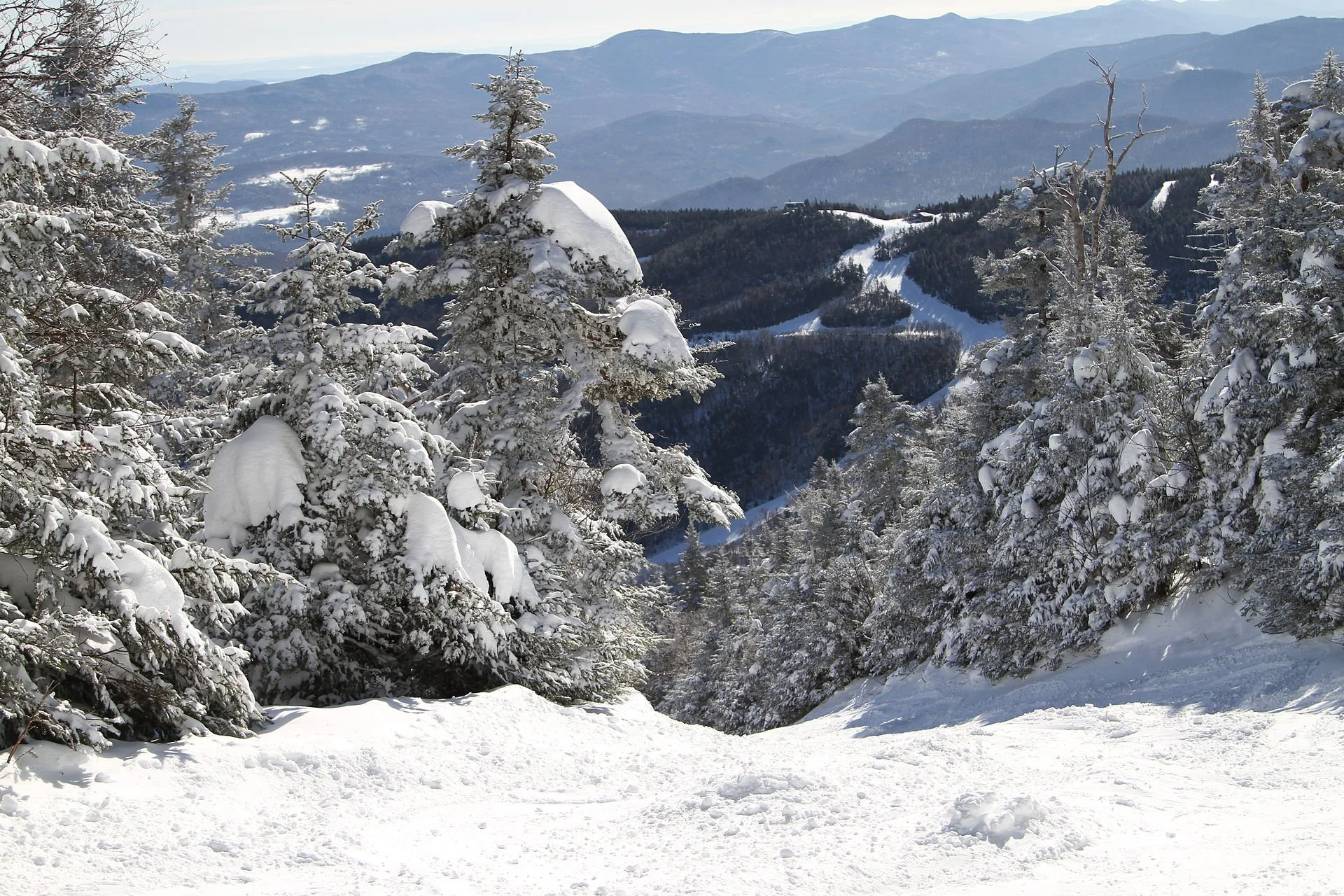
At the Sugarbush ski area, in Warren, in February. The Warren area is a major recreational and second-home area, anchored by Sugarbush. It also has many artists.
— Photo by TaraMGordon -
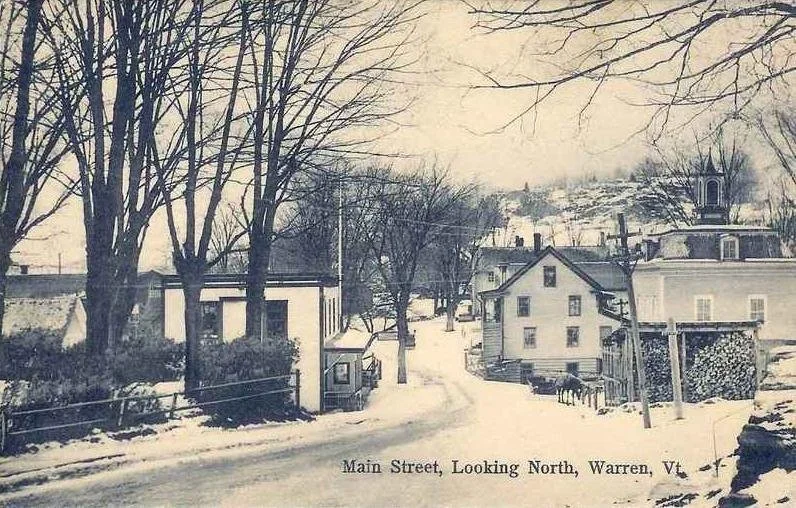
In 1910, way before the ski boom.

The wet look

Sunny day flooding in Miami during a “king tide’’.
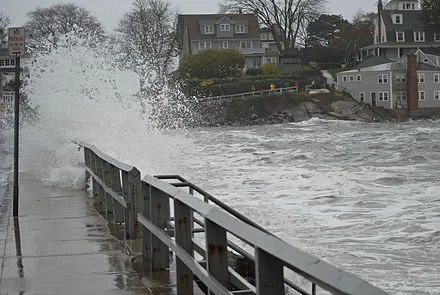
Coastal flooding in Marblehead, Mass., during Superstorm Sandy on Oct. 2012.
Adapted from Robert Whitcomb’s “Digital Diary,’’ in GoLocal24.com
The stuff below is a heavily edited version of some of the remarks I made in a talk a couple of weeks ago and seem to me particularly resonant as we head into summer coastal vacation season:
Most of us are in denial or oblivious when it comes to sea-level rise caused by global warming. For example, Freddie Mac researchers have found that properties directly exposed to projected sea-level rise have generally gotten no price discount compared to those that aren’t, though that may be changing. And some states don’t require sellers to disclose past coastal floods affecting properties for sale. Politicians often try to block flood-plain designations because they naturally fear that they would depress real-estate values.
So the coast keeps getting more built up, including places that may be underwater in a few decades. It often seems that everyone wants to live along the water.
As the near-certainty of major sea-level rise becomes more integrated into the pricing calculations of the real-estate sector, some people of a certain age can get bargains on property as long as they realize that the property they want to buy might be uninhabitable in 20 years. Younger people, however, should seek higher ground if they want to live near the ocean for a long time.
A tricky thing is that real estate can’t just be abandoned—it must pass from one owner to another. Some local governments’ coastal permits require owners to pay to remove their structures when the average sea level rises to a certain point. Absent such requirements, many local governments’ budgets may not be enough to pay for demolition or the moving costs associated with inundation. There are some interesting liability issues here.
What to do?
Administrative mitigation would include raising federal flood-insurance rates and more frequently updating flood-projection maps. More localities can take stronger steps to ban or sharply limit new structures in flood-prone areas and/or order them removed from those areas. And, as implied above, they should implement flood-experience-and-projection disclosure requirements in sales documents.
As for physical answers to thwarting the worst effects of sea-level rise, especially in urban areas, many experts believe that some form of the Dutch polder approach, which integrates hard stone, concrete or even metal infrastructure, and soft nature-based infrastructure, along with dikes, drainage canals and pumps, may have to be applied in some low places, such as Miami and Boston’s Seaport District. Barrington and Warren, R.I., look like polder country.
Polders are large land-and-water areas, with thick water-absorbent vegetation, surrounded by dikes, where the ground elevation is below mean sea level and engineers control the water table within the polder.
Just hardening the immediate shoreline, and especially beaches, with such structures as stone embankments to try to keep out the water won’t work well. That just makes the water push the sand elsewhere and can dramatically increase shoreline erosion.
On the other hand, creating so-called horizontal levees – with a marshy or other soft buffering area backed with a hard surface -- can be a reasonable approach to reduce the impact of storms’ flooding on top of sea-level rise.
Certainly establishing marshes (and mangrove swamps in tropical and semi-tropical coastal communities) can reduce tidal flooding and the damage from storm waves, but that may be a political nonstarter in some fancy coastal summer- or winter-resort places. Then there’s putting more houses and even stores and other nonresidential buildings on stilts, though that often means keeping buildings where safety considerations would suggest that there shouldn’t be any structures, such as on many barrier beaches. Still, it would be amusing to see entire large towns on stilts. Good water views.
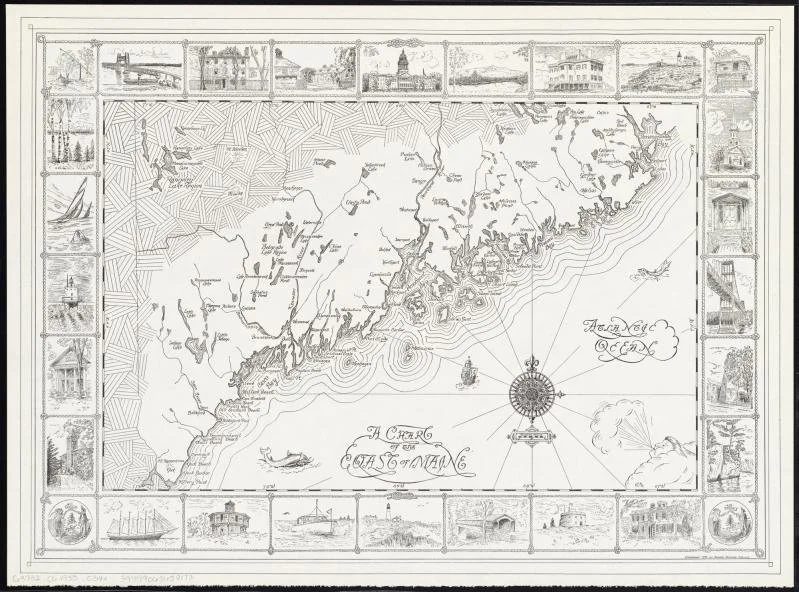
Oyster and other shellfish beds can be developed as (partly edible!) breakwaters. And laying down permeable road and parking lot pavements can help sop up the water that pours onto the land. I got interested in how shellfish beds can act as a brake on flood damage while editing a book about Maine aquaculture last year. Of course, the hilly coast of Maine provides many more opportunities to enjoy a water view even with sea-level rise while staying dry than does, say, South County’s barrier beaches.
In more and more places where sea-level rise has caused increasing ‘’sunny day flooding’’ -- i.e., without storms -- streets are being raised.
I’m afraid that, barring, say, a volcanic eruption that rapidly cools the earth, slowing the sea-level rise, the fact is that we’ll have to simply abandon much of our thickly developed immediate coastline and move our structures to higher ground.
Working-waterfront enterprises -- e.g., fishing and shipping -- must stay as close to the water as possible. But many houses, condos, hotels, resorts and so on can and should be moved in the next few years. If they don’t have to be on a low-lying shoreline, they shouldn’t be there as sea level rises. For that matter, entire large communities may have to be entirely abandoned to the sea even in the lifetime of some people here.
Coastal communities and property owners face hard choices: whether to try to hold back the rising ocean or to move to higher ground. Nothing can prevent this situation from being expensive and disruptive.
Common sense would suggest that we not build where it floods and that we should stop recycling flooded properties. Again, flood risks should be fully disclosed and we need to protect or restore ecologies, such as marshes, shellfish and coral reefs and dune grass, that reduce flooding and coastal erosion.
Nature wins in the end.
New England on the rocks

“Rock Doxology’’ (oil on canvas), by Marsden Hartley (1877-1943), at the Cape Ann Museum, Gloucester, Mass. While Hartley lived in many places, including Europe, he was born in the Maine mill town of Lewiston (where he had an unhappy youth) and died in Ellsworth (near the resort town of Bar Harbor) and in his last decades called himself “The Painter of Maine.’’
Rocks sure are icons of New England!
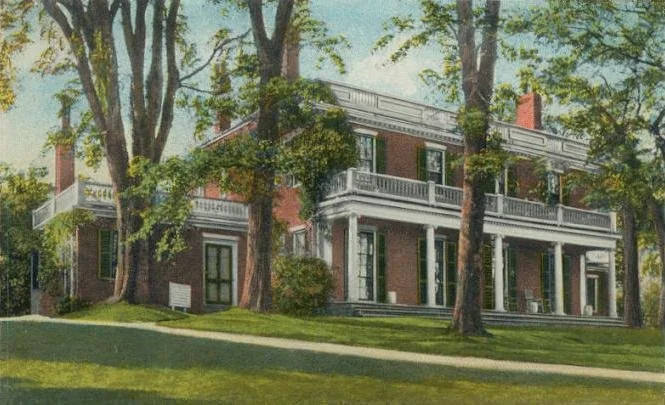
Ellsworth’s Col. John Black House, built 1824–1827 after a pattern book design by Asher Benjamin; now part of Woodlawn Museum. Shipping, shipbuilding, fishing and manufacturing made many people rich on the Maine Coast in the early and mid 19th Century, and many of their gorgeous houses are still standing.

LiAnna Davis: How New England students are improving Wikipedia

Dante holding a copy of the Divine Comedy, next to the entrance to Hell, the seven terraces of Mount Purgatory and the city of Florence, with the spheres of Heaven above, in Domenico di Michelino's 1465 fresco. Wellesley (Mass.) College students have been editing the Wikipedia articles on the masterpiece to highlight the women Dante referenced.
From The New England Journal of Higher Education, a service of The New England Board of Higher Education (nebhe.org), based in Boston.
You probably use Wikipedia regularly, maybe even every day. It’s where the world goes to learn more about almost anything, do a quick fact-check or get lost in an endless stream of link clicking. But have you ever stopped to think about the people behind the information you’re reading on Wikipedia? Or how their perspectives may inform what’s covered—and what’s not?
All content to Wikipedia is added and edited in a crowdsourced model, wherein nearly anyone can click the “edit” button and change content on Wikipedia. An active community of dedicated volunteers adds content and monitors the edits made by others, following a complex series of policies and guidelines that have been developed in the 21 years since Wikipedia started. This active community is what keeps Wikipedia as reliable as it is today—good, but not complete. More diverse contributors are needed to add more content to Wikipedia.
Some of that information has been added by college students from New England, written as a class assignment. The Wiki Education Foundation, small nonprofit, runs a program called the Wikipedia Student Program, in which we support college and university faculty who want to assign their students to write Wikipedia articles as part of their coursework.
Why do instructors assign their students to edit Wikipedia as a course assignment? Research shows a Wikipedia assignment increases motivation for students, while providing them learning objectives like critical thinking, research, writing for a public audience, evaluating and synthesizing sources and peer review. Especially important in today’s climate of misinformation and disinformation is the critical digital media literacy skills students gain from writing for Wikipedia, where they’re asked to consider and evaluate the reliability of the sources they’re citing. In addition to the benefits to student learning outcomes, instructors are also glad to see Wikipedia’s coverage of their discipline get better. And it does get better; studies such as this and this and this have shown the quality of content students add to Wikipedia is high.
Since 2010, more than 5,100 courses have participated in the program and more than 102,000 student editors have added more than 85 million words to Wikipedia. That’s 292,000 printed pages or the equivalent of 62 volumes of a printed encyclopedia. To put that in context, the last print edition of Encyclopedia Britannica had only 32 volumes. That means Wikipedia Student Program participants have added nearly twice as much content as was in Britannica.
Students add to body of knowledge
It’s easy to think of Wikipedia as fairly complete if it gives you the answer you seek most of the time. But the ability for student editors to add those 85 million words exposes this assumption as false. Let’s examine some examples.
Since the COVID-19 pandemic, the public’s interest in vaccines and therapeutics has skyrocketed. Thanks to a Boston University School of Medicine student in Benjamin Wolozin’s Systems Pharmacology class in fall 2021, the article on reverse pharmacology has been overhauled. Before the student started working on it, the article was what’s known on Wikipedia as a stub—a short, incomplete article. Today, thanks to Dr. Wolozin’s student adding a dramatic 17,000 words to the article, it’s a comprehensive description of hypothesis-driven drug discovery.
Medical content is popular on Wikipedia. In fact, Wikipedia’s medical articles get more pageviews than the websites for the National Institutes of Health, WebMD, Mayo Clinic, the British National Health Service, the World Health Organization and UpToDate.
Student editors in Mary Mahoney’s History of Medicine class at Connecticut’s Trinity College improved a number of medical articles, including those on pediatrics, telehealth, pregnancy and Mary Mallon (better known as Typhoid Mary), to name just a few. In the handful of months since students improved these articles, they’ve been viewed more than 932,000 times. As many tenured professors who’ve taught with Wikipedia note, more people will read the outcomes of student work from their Wikipedia assignments than will read an entire corpus of academic publications.
Sometimes their work adds cultural relevance to existing articles. Take Gwen Kordonowy’s “Public Writing” course at Boston University. Before one of her students expanded the article on Xiangsheng, the traditional Chinese performance art, it covered Xiangsheng in mainland China, Taiwan, Hong Kong, and Malaysia—but not in North America. The student added a section on Xiangsheng in North America, noting famous Canadian and American performers.
Many students study Dante’s Divine Comedy as part of their schoolwork, but have you considered the women Dante references? Until Wellesley College’s “Dante’s Divine Comedy” class started working on their Wikipedia articles, you may not have been able to learn much more. The course, taught by Laura Ingallinella, focused on highlighting the women Dante referenced and improving their articles.
Diversifying perspectives
The Wellesley College example is a good one because it’s indicative of a larger challenge of gaps within Wikipedia. Wikipedia’s existing editor base is relatively homogenous: In Northern America, the diversity demographics are grim. Only 22 percent of Wikipedia contributors are women, which directly correlates to content gaps like the ones the Dante class tackled. The race and ethnicity gaps are even worse. Recent survey data revealed 89 percent of U.S. Wikipedia content contributors identify as white.
With an overwhelmingly white, male editor base, content coverage and perspectives can get skewed. That’s where Wiki Education’s work comes in. By empowering a diverse group of college students, the program is able to help shift Wikipedia’s contributor demographics. In Wiki Education’s programs, 67 percent of participants identify as women, and an additional 3 percent identify as non-binary or another gender identity. And only 55 percent of Wiki Education’s program participants identify as white.
By empowering higher education students to address Wikipedia’s content gaps as class assignments, Wiki Education is helping to diversify the contributors to Wikipedia too. Wikipedia’s mission—to collect the sum of all human knowledge—requires participation from a diverse population of participants. Initiatives like the ones run by Wiki Education are key to helping achieve that vision.
When we support higher education students to contribute their knowledge, the story told by Wikipedia becomes more accurate, representative and complete.
LiAnna Davis is chief programs officer at Wiki Education.
Harris Meyer: Mass. pushing back against at pricey hospital group’s empire building

Pen and wash drawing by the malacologist Pierre de Montfort, 1801.
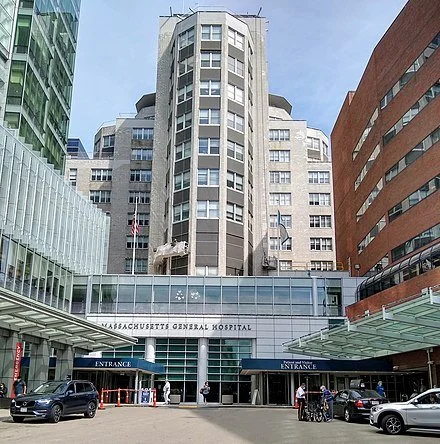
Front entrance of Massachusetts General Hospital.
A Massachusetts health-cost watchdog agency and a broad coalition including consumers, health systems, and insurers helped block the state’s largest — and most expensive — hospital system in April from expanding into the Boston suburbs.
Advocates for more affordable care hope that the decision by regulators to hold Mass General Brigham accountable for its high costs will usher in a new era of aggressive action to rein in hospital expansions that drive up spending. Their next target is a proposed $435 million expansion by Boston Children’s Hospital.
Other states, including California and Oregon, are paying close attention, eyeing ways to emulate Massachusetts’s decade-old system of monitoring health-care costs, setting a benchmark spending rate, and holding hospitals and other providers responsible for exceeding their target.
The Massachusetts Health Policy Commission examines hospital-specific data and recommends to the state Department of Public Health whether to approve mergers and expansions. The commission also can require providers and insurers to develop a plan to reduce costs, as it’s doing with MGB.
“The system is working in Massachusetts,” said Maureen Hensley-Quinn, a senior program director at the National Academy for State Health Policy, who stressed the importance of the state’s robust data-gathering and analysis program. “The focus on providing transparency around health costs has been really helpful. That’s what all states want to do. I don’t know if other states will adopt the Massachusetts model. But we’re hearing increased interest.”
With its many teaching hospitals, Massachusetts historically has been among the states with the highest per capita health-care costs, though its spending has moderated in recent years as state officials have taken aim at the issue.
On April 1, MGB, an 11-hospital system that includes the famed Massachusetts General Hospital, unexpectedly withdrew its proposal for a $223.7 million outpatient-care expansion in the suburbs after being told by state officials it wouldn’t be approved.
That expansion would have increased annual spending for commercially insured residents by as much as $28 million, driving up insurance premiums and shifting patients away from lower-priced competitors, according to the commission.
This marked the first time in decades that the state health department used its authority to block a hospital expansion because it undercut the state’s goals to control health costs.
Other parts of MGB’s $2.3 billion expansion plan also met resistance.
The health department staff recommended approving MGB’s proposal to build a 482-bed tower at its flagship Massachusetts General Hospital and a 78-bed addition at Brigham and Women’s Faulkner Hospital. But they urged rejecting a request for 94 additional beds at MGH.
The department’s Public Health Council, whose members are mostly appointed by the governor, is scheduled to vote on those recommendations May 4.
The health policy commission, which works independently of the public health department but provides advice, has also required MGB to submit an 18-month cost-control plan by May 16, because its prices and spending growth have far exceeded those of other hospital systems. That was a major reason the growth in state health spending hit 4.3 percent in 2019, exceeding the commission’s target of 3.1%.
This is the first time a state agency in Massachusetts or anywhere else in the country has ordered a hospital to develop a plan to control its costs, Hensley-Quinn said.
MGB’s $2.3 billion expansion plan and its refusal to acknowledge its high prices and their impact on the state’s health costs have united a usually fractious set of stakeholders, including competing hospitals, insurers, employers, labor unions and regulators. They also were angered by MGB’s lavish advertising campaign touting the consumer benefits of the expansion.
Their fight was bolstered by a report last year from state Atty. Gen. Maura Healey that found that the suburban outpatient expansion would increase MGB annual profits by $385 million. The nonprofit MGB reported $442 million in operating income in 2021.
The Massachusetts Association of Health Plans opposed the MGB outpatient expansion.
The well-funded coalition warned that the expansion would severely hurt local hospitals and other providers, including causing job losses. The consumer group Health Care for All predicted the shift of patients to the more expensive MGB sites would lead to higher insurance premiums for individuals and businesses.
“Having all that opposition made it pretty easy for [the Department of Public Health] to do the right thing for consumers and cost containment,” said Lora Pellegrini, CEO of the health plan association.
Republican Gov. Charlie Baker, who has made health-care cost reduction a priority and who leaves office next January after eight years, didn’t want to see the erosion of the state’s pioneering system of global spending targets, she said.
“What would it say for the governor’s legacy if he allowed this massive expansion?” she added. “That would render our whole cost-containment structure meaningless.”
MGB declined to comment.
Massachusetts’s aggressive action examining and blocking a hospital expansion comes after many states have moved in the opposite direction. In the 1980s, most states required hospitals to get state permission for major projects under “certificate of need” laws. But many states have loosened or abandoned those laws, which critics say stymied competition and failed to control costs.
The Trump administration recommended that states repeal those laws and leave hospital-expansion projects up to the free market.
But there are signs the tide is turning back to more regulation of hospital building.
Several states have created or are considering creating commissions similar to the one in Massachusetts with the authority and tools to analyze the market impact of expansions and mergers. Oregon, for example, recently passed a law empowering a state agency to review health care mergers and acquisitions to ensure they maintain access to affordable care.
Despite the defeat of MGB’s outpatient expansion, Massachusetts House Speaker Ron Mariano, a Democrat, said the state’s cost-control model needs strengthening to prevent hospitals from making an end run around it. A bill he backed that passed the House would give the commission and the attorney general’s office a bigger role in evaluating the cost impact of expansions. The Senate hasn’t taken up the bill.
“Hospital expansion is the biggest driver in the whole medical expense kettle,” he said.
Meanwhile, cost-control advocates are eager to see how MGB proposes to control its spending, and how the Health Policy Commission responds.
“Unless MGB somehow agrees to limit increases in its supranormal pricing, like a five-year price freeze across the system, I don’t know that the [plan] will accomplish anything,” said Dr. Paul Hattis, a former commission member.
Hattis and others are also waiting to see how the state rules on a bid by Boston Children’s Hospital, another high-priced provider, to build new outpatient facilities in the suburbs.
“For those of us on the affordability side, it’s like the sheriffs rediscovered their badge and realized they really could say no,” he said. “That’s a message to other states that they also should constrain their larger provider systems, and to the systems that they can no longer do whatever they please.”
Harris Meyer is a Kaiser Health News reporter.
The ripple effect

“Wood Neck Sunset” (in Falmouth, on Cape Cod) (archival pigment print), by Bobby Baker.
© Bobby Baker Fine Art
William Morgan: Save downtown Providence's centerpiece

The Industrial Trust Co. building is the fulcrum of the Providence skyline.
— Photo by David I. Jacobson
Saving and rehabbing the Industrial Trust Co. Building is crucial to revitalizing downtown Providence. To imagine the city without the nicknamed “Superman Building,’’ is like contemplating Paris without the Eiffel Tower or London without Big Ben, New York without the Empire State Building or Washington without the Capitol.
Most of the recent discussion of saving the skyscraper, designed by the New York firm of Walker & Gillette and built in 1928, has been about the cost of restoration and who should bear that hefty multimillion-dollar expense. While no small matter, the real issue about preserving and rehabbing Providence’s most prominent urban symbol cannot hinge just on the money. Losing this landmark would be a disaster, one that would cost the city and state immeasurably more than bonded indebtedness or taxpayer pain. It would mean a loss of prestige, optimism, self-confidence and our well-earned reputation as a Renaissance City.

Aerial view of downtown Providence shows keystone position of Industrial Trust Building.
— Photo by Luis Carranza
The limestone-sheathed Art Deco masterpiece at 55 Kennedy Plaza is simply a landmark that we must not lose. More than any other element of the skyline, with the exception of the State House, the Industrial Trust Building is the identifiable icon of the city.
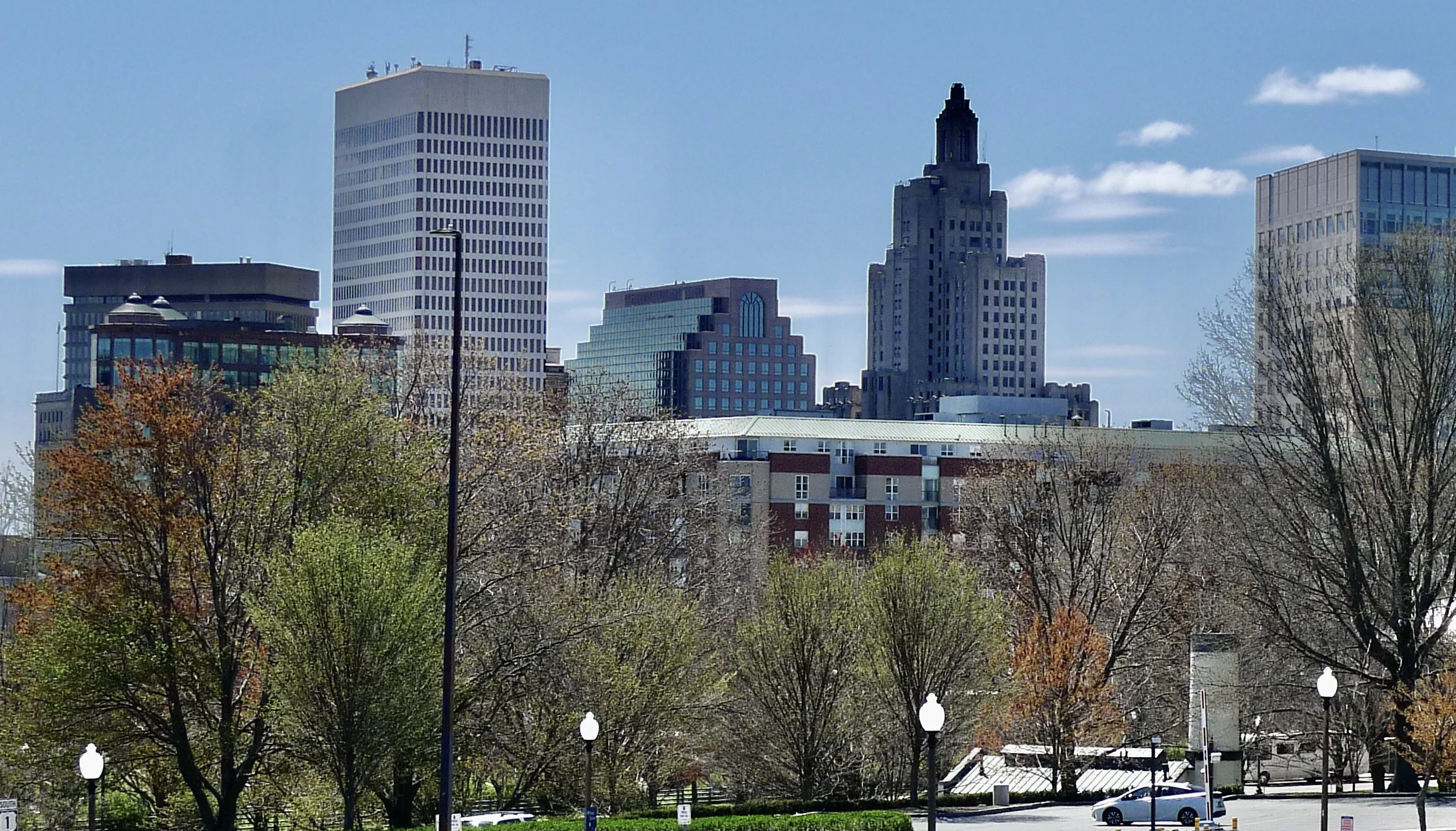
Not just the tallest, but the most attractive element of the downtown skyline.
— Photo by William Morgan
There are significant architectural and historical considerations that favor preservation, not to mention the benefits of an infusion of new downtown inhabitants. Yet, the key role that the Superman Building plays is as a majestic visual fulcrum – a clearly recognized feature, a compass marker, an urban punctuation point much like the Eiffel Tower.

Eye appeal: lantern detail of the top of the building, designed, among other things, to be a port for dirigibles.
— Photo by William Morgan
Unlike a lot of its newer neighbors, the Industrial Trust Building is an artfully decorated architectural masterpiece, and not a boringly repetitious wall of undifferentiated glass. Not just vertical real estate, its mass diminishes as it reaches for the sky–the work of architects who understood beauty, good proportions, scale and civic aspiration.

Compare the Superman Building with the 1973 addition to the Hospital Trust Tower, an uninspiring lump of travertine; in half a century the quality of downtown commercial architecture declined visibly.
— Photo by William Morgan
It is irresponsible to declare that the Industrial Trust Building will be razed if the current financing package cannot be agreed upon: this is a structure for which a use and renovation plan must be found. There is no alternative. As Robert Whitcomb argued recently in GoLocal, tearing down this noble identifier and symbol of the city’s once great commercial prowess would send a terrible message to the world. If we cannot afford to restore this treasure, how likely would we be able to fill in the void left by its destruction? Or as one of my urban-planning mentors, Congressman Charles Farnsley, a sponsor of the 1966 Historic Preservation Act, used to say of such urban mauling: This is like a beautiful woman losing a front tooth in a country with no dentists.
Charles Farnsley, mayor of Louisville, Ky., before working with Lyndon Johnson on preservation, had another phrase that is even more haunting: Americans are the only people who bomb their own cities. In a town known as a preservation success story, that’s not a mantle we should want to wear. Rather, we need to be the city that opened the rivers, removed an interstate highway slicing through its heart, and created a vibrant arts scene. If we can do that, we can figure a way to breathe new life into the Industrial Trust Building.

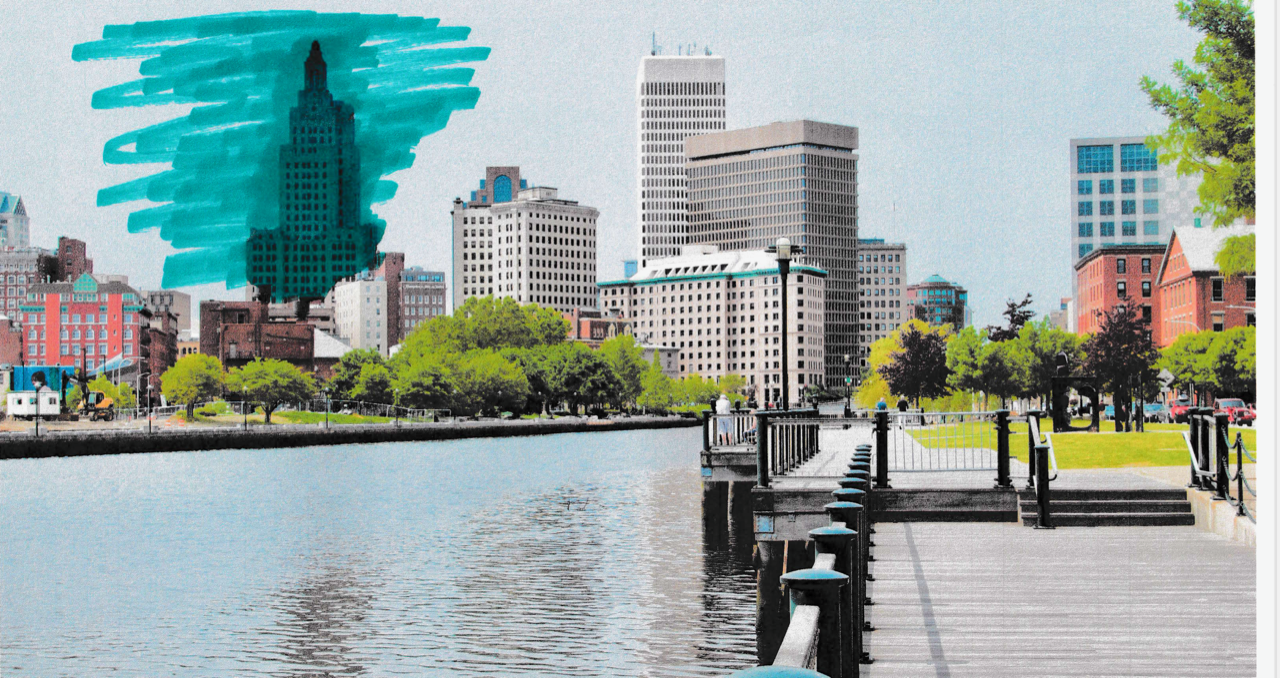
Providence skyline without the Industrial Trust Building.
— Photo by William Morgan
William Morgan is the architecture critic of GoLocalProv.com, as well as a long-time contributor to New England Diary. He’s the author of many books on architecture.
David Warsh: Money follows development and vice versa
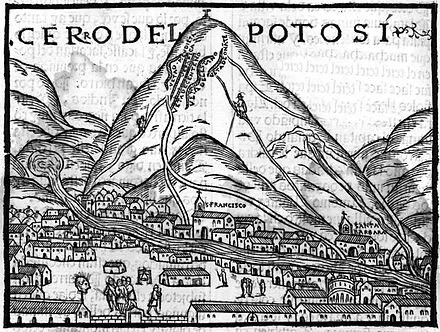
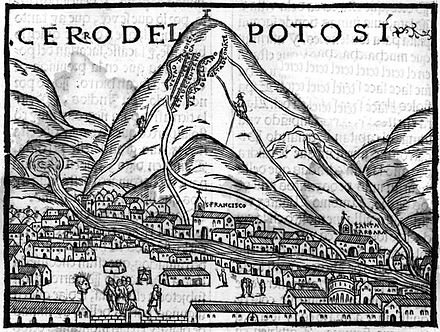
Cerro Rico del Potosi, the first European image, in 1553, of a silver-ore-rich mountain in what became Bolivia. It was heavily exploited by Spain.
SOMERVILLE, Mass.
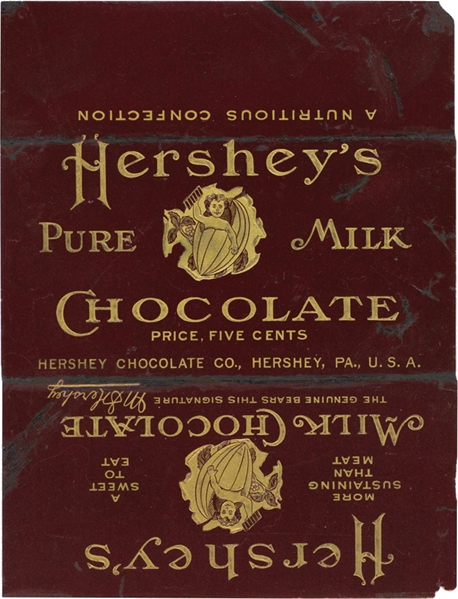
A candy bar that cost a nickel in 1950 today costs $1.25 or so, depending on where you buy it. That, in a paper wrapper, is the price revolution of the 20th Century. Why did it happen? The answer usually given is that the quantity of money increased – too much paper money chasing too few candy bars.
A more satisfying explanation, casual though it may be, is to recognize that the global economy has grown considerably more complex since 1950, and the system of money, banking, and credit more complex along with it. The price of the candy bar wasn’t going to return to its previous level, no matter what the Fed or the candy-manufacturers did.
I’ve believed this for forty years, since writing The Idea of Economic Complexity, which appeared in 1984. While nothing has happened to change my mind, it has been interesting, at least to me, to have spent a few Saturdays thinking about what I have learned since then. Let me sum it up with a last few words of explanation, before putting it away.
At the moment, the jolt to increased economic complexity has to do with Russia’s war on Ukraine, the post-Cold War expansion of the NATO alliance and long-lasting disruptions of world trade stemming from the COVID pandemic. These “cost-push” factors are more fundamental to today’s rising prices, I believe, than whatever misjudgments that monetary authorities have made in responding to them. But arguing about recent events is the wrong way to develop views about phenomena as mysterious as the formation of money prices. For that, long-term developments serve best.
The price revolution of the 16th Century is the best example in the last thousand years of a lengthy, unreversed increase in money prices of everyday things. Its magnitude was modest by current standards; but then, so were monetary systems in those days. Between 1501 and 1650, prices of everyday goods across Europe rose six-fold before leveling off and remaining more or less stable on a new level for the next hundred years.
Practically from the beginning, scholars have argued about whether the discovery of the riches of Spanish America initiated the price revolution, or whether the voyages of discovery were undertaken in response to European events already underway. Jehan Cherruyt de Malenstroit blamed rising prices on shortages of precious metals and the extravagance of kings. In a widely read rejoinder, philosophe Jean Bodin, in 1568, ascribed rising prices to the influence of the treasure of The Americas – such was the beginning of what we have called ever since the quantity theory of money.
Economic historians were still arguing about these matters four centuries later. In American Treasure and the Price Revolution in Spain, Earl Hamilton wrote, in 1934, that an “extremely close correlation” between growth in the volume of gold and silver imports from the New World and commodity prices in Spain “demonstrated beyond question” that the abundance of mines in New Spain was “the principal cause” of the price revolution. In Economic Development and the Price Level, in 1962, Geoffrey Maynard argued the opposite: that money generally adjusts to trade, rather than trade to money. In very different formats, the argument continues today.
“Development” is a bland word with which to describe the difference between the world economy in the time of Columbus and the world today. Economic philosopher David Ellerman has suggested that diversity describes the key difference, grounding his description in information theory; I proposed complexity in that 1984 book. But what is it that has become more diverse or complex? Not until I read “Increasing Returns an Economic Progress” (1928), by Allyn Young, did it occur to me that the growing complexity I had been thinking about were increases, of one sort or another, in the division of labor.
And there I left the subject behind. I was working for a magazine when I began writing about price history, complexity and plenitude, an exotic argument about the tacit assumptions of quantity theory of money, gleaned from reading Arthur O. Lovejoy’s The Great Chain of Being (1936). Magazines are lightweight vessels, quick to maneuver in pursuit of advantage, quick to move on. There was no way I could continue to write about economics.
Fortunately, I made my way to a serious newspaper. I finished the book I had begun, and soon put complexity behind me – until this spring, when I briefly took it out to re-examine it. Meanwhile, I had become an economic journalist, following the profession. I stumble on developments in growth theory, and these, too, eventually became a book, Knowledge and the Wealth of Nations: A Story of Economic Discovery (2006).
So what have I learned? That journalism is about knowing, whereas economics is about proving. A great deal more truth can become known than can be proved, as physicist Richard Feynman once said. Complexity of the division of labor is still out there. Economists will get to it someday. See, for example, Hendrick Houthakker, “Economics and Biology: Specialization and Speciation” (1955). In the meantime, there are other important stories, happening now.
In case you are feeling unsatisfied, though, remember that five-cent candy bar. Are you comfortable with the too-much-money-chasing-too-few-goods story? Do you believe that the Fed could have prevented the rise in its price? And if wasn’t “inflation,” then what was it? The depreciation of money, relative to goods?
As with the 16th Century voyages of discovery, money follows development and development follows money. If you have only the quantity theory of money to rely on, you don’t know what is going on.
David Warsh, a veteran columnist and an economic historian, is proprietor of Somerville-based economicprincipals.com, where this essay first ran.
‘Sluice the gutters bright’

Red maple blossoms
“On a tricyle left in marbletime (in Town,
In Spring), the curbside maples drop slow smiles
Of blossom, sluice the gutters bright. The drift
Of this greengold treemoulting veins the asphalt,
Warming all black decency, adopting all abandoned toys.’’
— From “New England Suite,’’ by Charles Philbrick (1922-1971), a Providence-based poet and professor at Brown University