Vox clamantis in deserto






'Democracy never lasts long'

Document written by John Adams in 1776 and published anonymously.
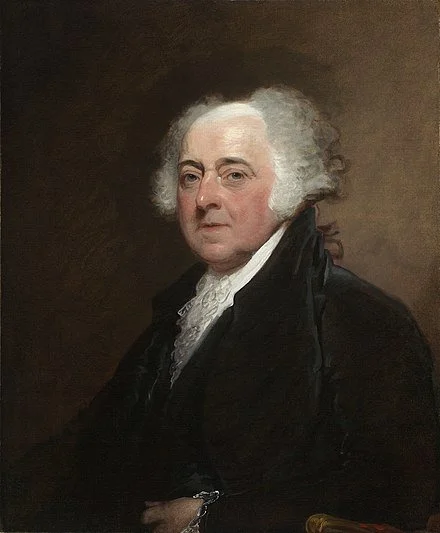
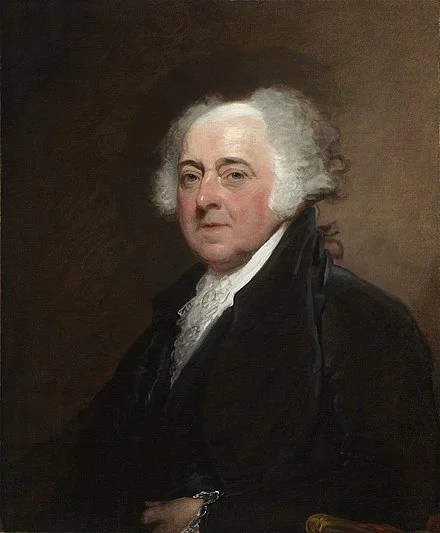
John Adams, by Gilbert Stuart.
“I do not say that democracy has been more pernicious on the whole, and in the long run, than monarchy or aristocracy. Democracy has never been and never can be so durable as aristocracy or monarchy; but while it lasts, it is more bloody than either. … Remember, democracy never lasts long. It soon wastes, exhausts, and murders itself. There never was a democracy yet that did not commit suicide. It is in vain to say that democracy is less vain, less proud, less selfish, less ambitious, or less avaricious than aristocracy or monarchy. It is not true, in fact, and nowhere appears in history. Those passions are the same in all men, under all forms of simple government, and when unchecked, produce the same effects of fraud, violence, and cruelty. When clear prospects are opened before vanity, pride, avarice, or ambition, for their easy gratification, it is hard for the most considerate philosophers and the most conscientious moralists to resist the temptation. Individuals have conquered themselves. Nations and large bodies of men, never.”
— John Adams (1735-1826), American statesman, lawyer, diplomat, political philosopher, writer and a U.S. Founding Father who was the second president of the United States (1797-1801) and its first vice president (1789-1797). He was a loyal native of Massachusetts. His remarks were in a letter to a Virginian, John Taylor, in 1814.
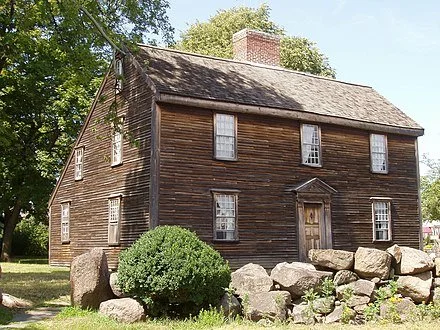
John Adams’s birthplace, in Quincy, Mass.

Higher and higher

Adapted from Robert Whitcomb’s “Digital Diary,’’ in GoLocal24.com
Shoreline access continues to be a stormy issue in Rhode Island and some other coastal states. There’s constant conflict that pits beach walkers, swimmers and sitters from the general public against generally affluent shoreline house owners, who have taken over more and more of the New England coast, with many striving mightily to keep the public as far away from their houses as they can. Understandable!
There’s a measure in the Rhode Island House that attempts to end the old confusions about how high on a beach the public can go without being legally kicked off by irritated owners. (“We paid a lot of money for this place!”) It states that folks can go 10 feet landward beyond a “recognizable high tide line.’’ That’s defined as the mark left “upon tide flats, beaches, or along shore objects that indicates the intersection of the land with the water’s surface level at the maximum height reached by a rising tide.’’ (Lawyerly poetry!) That would often, but presumably not always, mean a line of seaweed, oil, shells or other debris.
None of this means that you could legally climb up the wall in front of someone’s house, whatever passes for the high-water mark.
A not very helpful 1982 state Supreme Court ruling said that the mean high-water mark is the appropriate boundary between the shoreline to which the public has access and private property, but the court said that determining the line requires “special surveying equipment and expertise.’’ What with the changes wrought by waves and storms, it can be mighty hard to find the high-tide mark in any case. Confused and/or nervous beach visitors would thus tend to move down to the low-tide mark (also not always easy to define). The new legislation doesn’t seem on the face of it to make things much easier for beach walkers to follow. And where can beach strollers sit down without being yelled at?
Inevitably, a shadowy group, with the windy title of “Shoreline Taxpayers for Respectful Traverse, Environmental Responsibility and Safety,’’ representing affluent owners, plans to fight the measure with lawsuits. Since the rich generally run America, I’d bet they’ll win; and I suspect that most of the group’s clients are from out of state.
(Some members of this same crowd also try to stop the sand from washing away in front of their houses by putting up hard barriers to catch and hold it. But that just ends up depriving the shores further down the shore of sand. Indeed, it worsens erosion.)
But wait! Rising seas caused by manmade global warming may make this issue more wrought. Estimates are that sea level will rise by almost a foot between now and 2050, and there will be more and worse hurricanes and other storms. That would push the high-tide mark (or marks), and the strolling public, further landward, toward those beach houses.
For that matter, it will also force some landowners to eventually abandon their houses, many of which shouldn’t have been put there in the first place, let alone subsidized by taxpayers through federal flood insurance and frequent repairs to beach roads by states and municipalities. Indeed, permanently removing structures from stretches of the immediate shore will be a rapidly increasing phenomenon in the next few decades. Sad. Most people love being close to the water, as real-estate prices suggest.
Will the Feds be buying out a lot of these properties through the Federal Emergency Management Agency?
Before the rise of the shoreline summer house, spawned by the money from the Industrial Revolution, few people in New England coastal communities built houses right along the shore. It was considered too insecure in the face of storms and flooding. Houses were built much higher up. So you can see that the oldest buildings in New England coastal towns are in village centers or associated with now mostly gone farms.
Part of my family has long lived in Falmouth, on Cape Cod. Some of their 18th and 19th Century houses are still standing near the town green. These people were in farming, boat building, fishing and assorted other trades. On the other hand, most of the houses around the harbors and along the beaches of the town date from the 1870’s and later, when they were built as summer places after the extension of the railroad brought affluent people, including some of my other ancestors, from the Boston area to summer on the Cape. This sort of movement was replicated on coasts, including the Great Lakes, around America.
Occasionally hurricanes or other big storms would damage or destroy the houses, but the owners would usually have enough money and/or insurance (including in the past few decades federal flood insurance) to rebuild in exactly the same insecure places.
In any event, with rapidly rising seas, that can’t go on. Let the great trek inland begin (if only a few dozen yards).
The most ardent
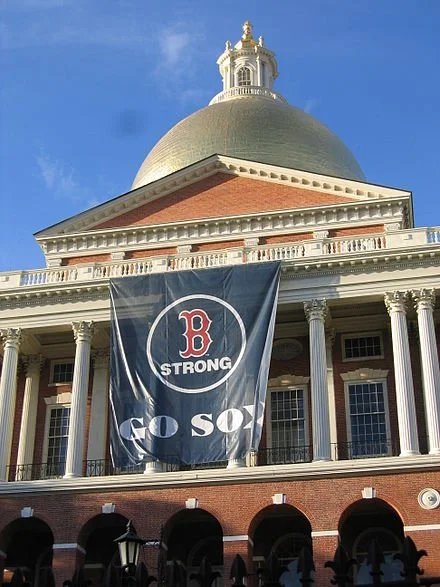
The Massachusetts State House with a banner in honor of the Red Sox's 2013 World Series appearance. "B Strong" was a patch worn by the Red Sox in honor of the victims of the Boston Marathon bombing, which occurred on April 15 that year.
“New York is great, but the New England fans are probably the most knowledge and ardent fans, and not just in baseball, but all sports. But Red Sox nation is Red Sox nation.’’
— Dick Williams (1929-2011), manager of, among other Major League Baseball teams, of the Boston Red, in 1967-1969.
Needs replenishment

“Sustenance’’ (oil on canvas), by Kay Flierl, at Edgewater Gallery, Middlebury, Vt.

Chris Powell: Feds should bar defense contractors from extorting corporate welfare from states; fascism and theft at Yale

A Sikorsky Black Hawk helicopter
MANCHESTER, Conn.
Connecticut may be paying the Sikorsky helicopter division of military contractor Lockheed Martin as much as $250 million to keep its facilities in the state for the next 20 years -- an average of more than $12 million per year -- if the company gets major new helicopter contracts from the U.S. Defense Department.
Gov. Ned Lamont has struck such a deal with Sikorsky, similar to one struck by his predecessor, Dannel P. Malloy. While the General Assembly would have to approve it, legislative leaders of both parties seem to favor it because Sikorsky, based in Stratford, already has about 8,000 employees and 250 suppliers in the state and with the new contracts might hire thousands more.
Even with the subsidy from state government, Sikorsky could relocate to a state that made a better offer, though it might have to repay whatever it had taken from Connecticut.
Under the circumstances the subsidy may be good policy. But it is still corporate welfare, and smiling through it are Connecticut's members of Congress. Instead they should be advocating legislation to prevent recurrence of this kind of thing not just in Connecticut but throughout the country.
States should compete with each other to draw businesses and residents. But the federal government shouldn't take sides in this competition. The federal government should prevent military contracts from being used as leverage to extort corporate welfare from state and municipal governments.
That is, federal law could forbid military contractors from obtaining corporate welfare that is conditioned on the award of a military contract, like the corporate welfare that Connecticut plans to give Sikorsky.
With the Sikorsky arrangement, the leverage of the federal government will be used not for public gain but for corporate gain. What President Eisenhower called the military-industrial complex has enough power, influence and wealth already.
xxx
Yale University, in New Haven, is as renowned as any institution of higher education in the world. But recent events suggest that Yale is overrated.
In recent years Yale has become a center of political correctness as much as education, and on March 10 this political correctness turned again to fascism as more than a hundred students at the university's law school besieged what was supposed to be a forum on civil liberties.
The students interrupted the forum, stood up and held signs, blocking sight lines, and shouted and jeered in objection to the participation of one of the invited speakers, a representative from the Alliance Defending Freedom, which supports the civil liberties of conservatives. Police were needed to escort the speakers away.
While the young fascists are law students, Yale will not punish them, apparently because they noisily left the assembly room and congregated disruptively outside before they were given a fourth warning, a threshold set in student conduct rules.
Neither will Yale give any thought to how such people are getting admitted to the university, nor to why the atmosphere at the university is so intolerant of political disagreement.
Then last week, Jamie Petrone, a former finance official in Yale's School of Medicine pleaded guilty to federal charges that she stole $40 million in electronics equipment from the university over 10 years through the fraudulent purchase and sale of computer equipment and programming.
Yale also has a School of Management, but the student thuggery and colossal theft at the university suggest that it doesn't have nearly enough management.
xxx
Legislation to allow farmers to get state permits to shoot bears and other predatory animals that damage crops and kill or injure livestock failed last week in the General Assembly's Environment Committee on a vote of 18-13.
Connecticut already allows deer hunting to protect agriculture and deer don't attack livestock as bears do, so it is hard to understand the opposition to protecting agriculture against bears.
The bill that was rejected did not authorize a general bear-hunting season in Connecticut. But unless bear hunting is authorized soon to some extent, the continuing explosion in the bear population will put at least several bears in every town. Their cuteness is already wearing off fast.
Chris Powell is a columnist for the Journal Inquirer, in Manchester.

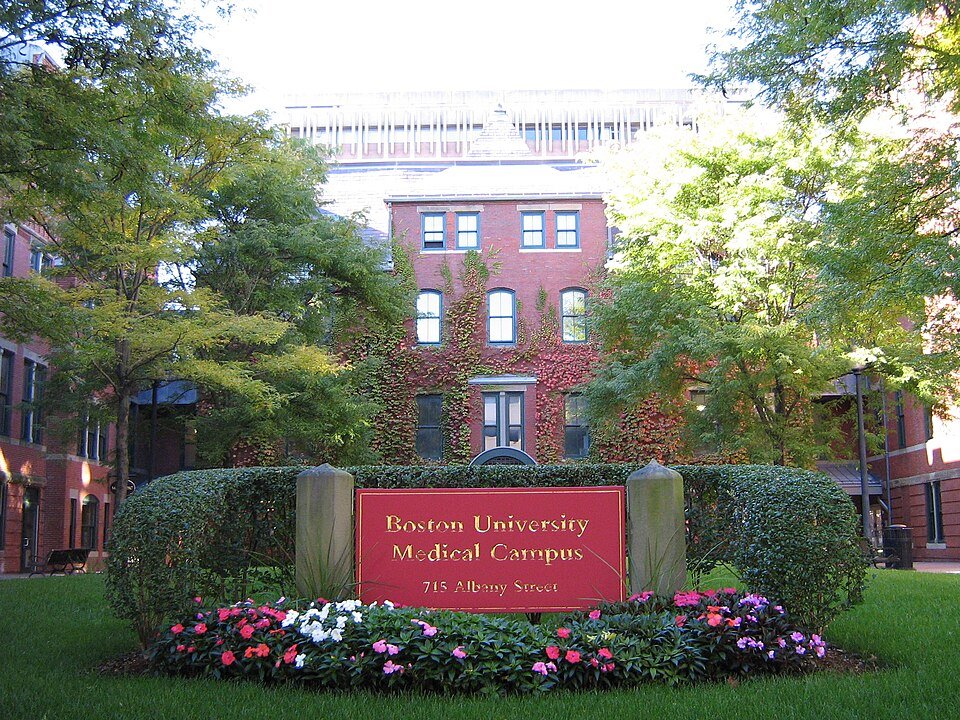
Yale medical diploma awarded Asaph Leavitt Bissell, Class of 1815, signed by school's four professors and Yale President Timothy Dwight IV.
Yes, plenty of shoes are still made in New England
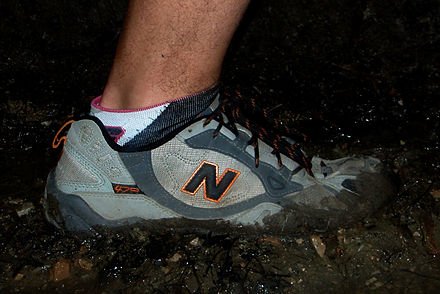
New Balance trail running shoes
Edited from a New England Council (newenglandcouncil.com) report.
“New Balance, the athletic-shoe company, is expanding with a new facility in Methuen, Mass. This factory was opened with Gov. Charlie Baker, U.S. Rep. Lori Trahan and local leaders, to participate in the grand opening of New Balance’s newest manufacturing hub.
“The 80,000-square-foot facility opened for business in January after $20 million in renovations, according to the company. The factory currently employs more than 90 associates producing the brand’s MADE 990v5 running shoe, with plans to more than double the current workforce and production capabilities by the end of the year. Including the new New Balance factory in Methuen, New Balance owns five manufacturing facilities in Maine and Massachusetts where about 1,000 U.S. workers prepare, cut and mold athletic-shoe materials and components and then sew, press and assemble into the final product.
“Manufacturing has always been an important part of our company culture,” said Joe Preston, New Balance president and CEO. “Our associates have proven that high-quality athletic footwear can be produced in the U.S. Their skilled craftsmanship and dedication to continuous improvement will help us meet our significant U.S. and global consumer demand and drive our continued business growth.”

By the late 19th Century, the shoemaking industry had migrated to the factory and was increasingly mechanized. Pictured, the bottoming room of the B. F. Spinney & Co. factory in Lynn, Mass., in 1872.
Furniture like people

“Family Portrait” (pastel), by Joan Baldwin, in the “Spectrum Show,’’ at Kingston Gallery, Boston, through April 30.
Ms. Baldwin is a Boston area painter whose studio is at River Street Artists, part of Waltham Mills Artists Association, in Waltham. She says:
“Over the years I have expressed my ideas in a variety of artistic forms. The medium has been pastels and oil paintings, using furniture with human qualities as the subject matter.’’

Just be an ‘urban mechanic’?

Take care of this.
— Photo by David Shankbone
Adapted from Robert Whitcomb’s “Digital Diary,’’ in GoLocal24.com
Providence mayoral candidate Brett Smiley, who has held high managerial positions in both Rhode Island state government and Providence City Hall, may well have chosen the right approach: Present himself as a version of the late Boston Mayor Thomas Menino – an “urban mechanic’’ who focuses on the basics of local governance – snow plowing, filling potholes, maintaining adequate police and fire protection, addressing various neighborhood quality-of-life issues, such as noise (leaf blowers, loud parties, etc.) and graffiti, repairing schools and public buildings and so on.
He would, apparently, tend to stay away from implementing new social-engineering programs. Good. They are best left to the state and federal governments, which have far greater resources to pay for them, if they actually make sense at all. And remember that cities and towns are legal children of the state. And we already ask such municipal employees as teachers and police officers to do far too much stuff – especially social work – that’s not in their core mission.
It’s too early to know whether Mr. Smiley has the fortitude, creativity, endurance and political coalition-building strength to get elected, and if he’s elected whether he could engender enough loyalty and fear to bend city employees to his will, as Tom Menino was famously able to do.

Michael McAuliff: Insulin bill goes to the Senate

The chances of passing election-year legislation to help diabetics afford insulin — which weeks ago seemed mired in political fighting — are looking brighter as a bipartisan effort to tackle the issue takes root in the Senate.
That effort is still in the early stages, but it is moving forward with the support of Senate Majority Leader Chuck Schumer, who tapped Senators Susan Collins (R-Maine) and Jeanne Shaheen (D-N.H.) to craft a compromise that members of both parties could accept. Adding pressure to the Senate’s efforts was a vote by the House on March 31 to pass a different bill that caps out-of-pocket insulin costs for many patients with insurance at $35 a month.
Collins said in an interview March 30 that the two senators had come up with an outline based on a bill they worked on three years ago that goes beyond capping what diabetes patients pay and aims to bring down the prices drugmakers charge.
“It tackles the broader issue of the high list price for insulin, and the conflicts of interests that occur in the chain from manufacturer to the consumer buying it at the pharmacy counter,” Collins said.
The idea of reducing patients’ out-of-pocket insulin costs is immensely popular, and more than half of the public sees it as a “top priority” for Congress, according to a KFF poll out last week.
It had been a key selling point of President Biden’s Build Back Better plan, but when that legislation stalled, Biden and Schumer gave Sen. Raphael Warnock (D.-Ga.) an open lane to promote a stand-alone measure identical to the House bill that caps insulin costs at $35 a month for people with private insurance and Medicare coverage.
The political climate, however, presented roadblocks. The odds that a bill sponsored by a Democrat facing a tough re-election in the fall could get enough Republicans in the Senate on board seemed slim, and even some Democrats were nervous about stripping the insulin provisions from a possible revised version of the Build Back Better bill. So Schumer embraced a different option from Collins and Shaheen that would include a cap on out-of-pocket costs and possibly draw more votes.
Insulin prices have spiked dramatically since the early 2000s, with Americans paying 10 times what people in other developed countries pay.
Although Collins said details are still being worked out, her legislation would be based on the pair’s earlier bill, the Insulin Price Reduction Act of 2019, which aimed to roll insulin costs back to what they were in 2006. It would have done that by barring rebate payments for insulin to pharmacy benefit managers — those intermediaries who negotiate price breaks for insurance companies and determine which drugs the insurance plans cover.
Collins and other critics of PBMs believe they inflate prices because they favor higher-priced drugs from which they can extract a larger rebate and therefore more profit, which gives drugmakers extra incentive to raise list prices.
Under that 2019 plan, drug manufacturers who agreed to return to 2006 costs could then raise prices each year only at the rate of medical inflation. The senators estimated the plan would lead to a 75% cut in prices from those listed in 2020.
“There’s a very complex system which essentially encourages high list prices, because the pharmacy benefit managers frequently receive a percentage of the list price,” Collins said. “So their incentive is to choose one that is higher-cost. And so we are trying to address that broader issue, as well as looking at the out-of-pocket costs.”
Warnock’s proposal to cap the cost of insulin is silent on list prices and benefit managers, an omission some Democrats complained about even as they voted for the similar bill in the House. They noted that since insurers would likely be forced to absorb the costs no longer paid by patients, the companies would likely raise premiums.
“This bill does not lower the price of insulin by one penny,” said Rep. Lloyd Doggett (D.-Texas). “It just shifts the burden of paying for the insulin off of the shoulders of insured insulin users, and shifts it on to the rest of all of us who are paying insurance premiums.”
Collins also noted that the uninsured would not benefit from the House cap, which applies to Medicare and insurance companies but doesn’t affect drugmakers’ prices.
“It doesn’t help someone who’s uninsured,” Collins said. “When you address the high list price, then it’s going to help more people.”
Collins warned that much could change as lawmakers keep working with various stakeholders on a final bill, including diabetes advocacy groups, the Centers for Medicare & Medicaid Services, and the Congressional Budget Office. And as caps on out-of-pocket expenses and list-price changes start interacting, things get complicated, indeed.
“We’re talking to CBO, which says it’s so complex that they need a new model,” Collins said.
The politics also remains tricky. Collins and Shaheen never got their measure close to the Senate floor in 2019 and 2020 when Senate Minority Leader Mitch McConnell was majority leader. They did attract some praise from both sides of the aisle, and conservative North Dakota Republican Sen. Kevin Cramer was a co-sponsor.
While that opens the door to GOP support, Collins said she was still only at the stage of circulating among her colleagues what she called a discussion draft.
Republicans in the House who voted against the $35-cap bill panned it as a political stunt, saying Democrats should have advanced ideas that had been worked on with Republicans.
Such objections could not block the bill in the House. But in the Senate, Democrats command only 50 votes, and it would take 60 to pass the legislation.
Although GOP members of the upper chamber might also be opposed to Warnock’s bill, one of the House sponsors argued that having the House advance a dramatic cut in insulin costs — with the support of only a dozen Republicans — would raise the stakes for the Senate.
“If 10 Republicans stand between Americans being able to get access to insulin or not, that’s a good question for 10 Republican [senators] to have to answer when they go back home,” Rep. Dan Kildee (D.-Mich.) said ahead of the House vote. “So we’re gonna pass this bill, and this will put the pressure on the Senate to act.”
He and his fellow Democratic co-sponsors also signaled their willingness to take a measure that included the Shaheen and Collins additions.
“Any train that’s leaving the station that gets folks affordable insulin — I’m open to any vehicle,” Kildee said. “We think this is a solution that would work. How it gets to the president’s desk, I’m agnostic on that question. Any way we can get it there.”
Michael McAuliff is a Kaiser Health News reporter.
‘Grief and love within the frame’
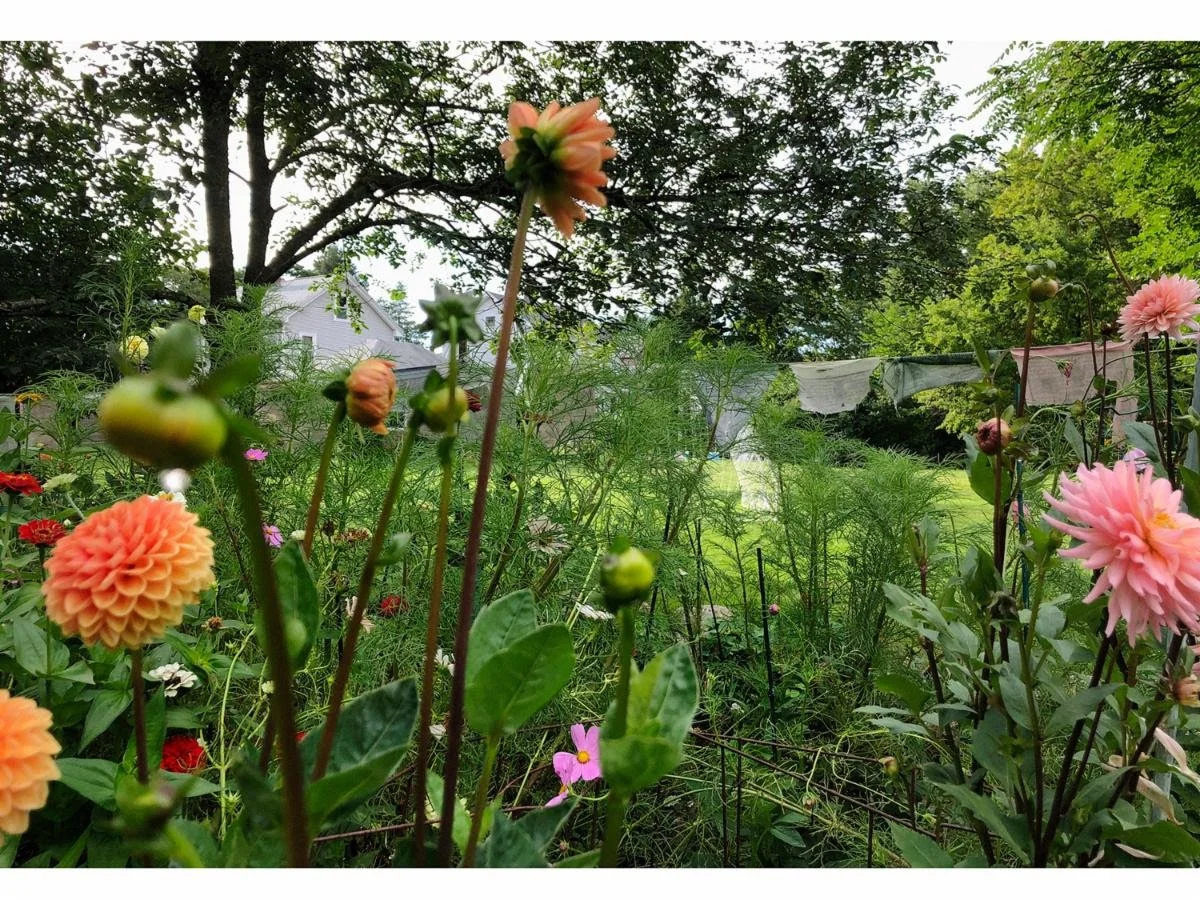
“Through the dahlias, backyard, Auburndale’’ (archival digital print), by Mary Lang, in her show “Farandnear,’’ at Kingston Gallery, Boston, June 1-26. She lives in Auburndale, part of Newton.
The gallery says:
“Mary Lang is known for her large scale, evocative color photographs, and for the groundless feeling of space held within the frame. These new images in ‘Farandnear’ hold space differently, encompassing both near and far in composition and focus. We often feel like we are looking past or through a screen or veil. There is a complexity in the details that both draw the viewer in and at the same time hold us back. Similarly for Lang, the climate crisis feels both far -- in that we can’t fully comprehend the most horrific events yet to come, so we push them away — and unbelievably near, in that mere observation of ice on the Charles River or plants in the garden tell us what is happening before our eyes.
“The exhibition is titled “Farandnear’’ after a Massachusetts Trustees of Reservations property in Shirley, an historic summer home aptly named because it was ‘far’ enough to require a two-day journey by horse to reach, but ‘near’ enough to be a vacation home. Lang’s camera records wild beaver swamps and ordinary urban patches of weeds, as well as images of her garden, in equal measure. The images are lush with growth; even in winter the earth offers an abundance. She says: ‘For me there is no distinction between the beauty of the untouched landscapes or the ones we often overlook because they are ubiquitous. It’s a matter of paying attention. They all hold both grief and love within the frame’’’
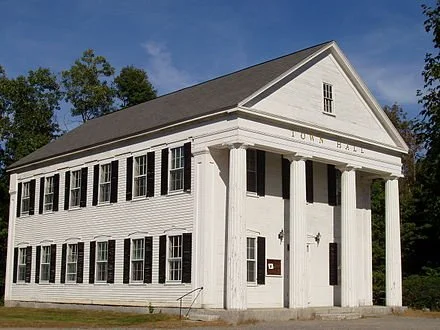
Old Shirley Town Hall
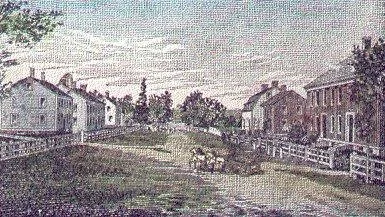
Shirley Shaker Village in 1884
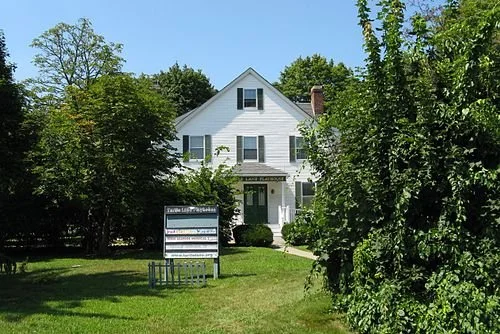
The Turtle Lane Playhouse, in Auburndale
‘136 weathers in 24 hours’
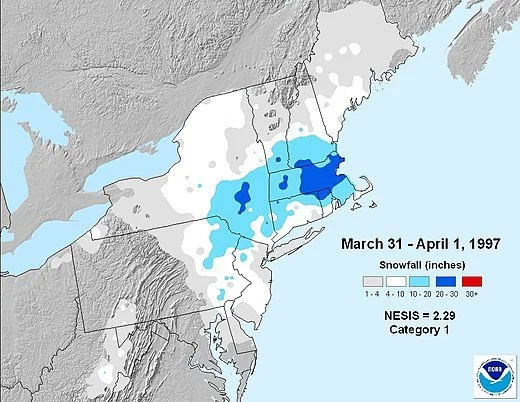
The “April Fool’s Snowstorm’’ of 1997
“There is a sumptuous variety about the New England weather that compels the stranger's admiration — and regret. The weather is always doing something there; always attending strictly to business; always getting up new designs and trying them on people to see how they will go. But it gets through more business in spring than in any other season. In the spring I have counted one hundred and thirty-six different kinds of weather inside of twenty-four hours.’’
— Mark Twain (1835-1910), in his “New England Weather” speech to the New England Society on Dec. 22, 1876. The native of Missouri spent much of his adult life at his grand house in Hartford and spent his last two years at his house in Redding, Conn.
"Vastness and fragility'
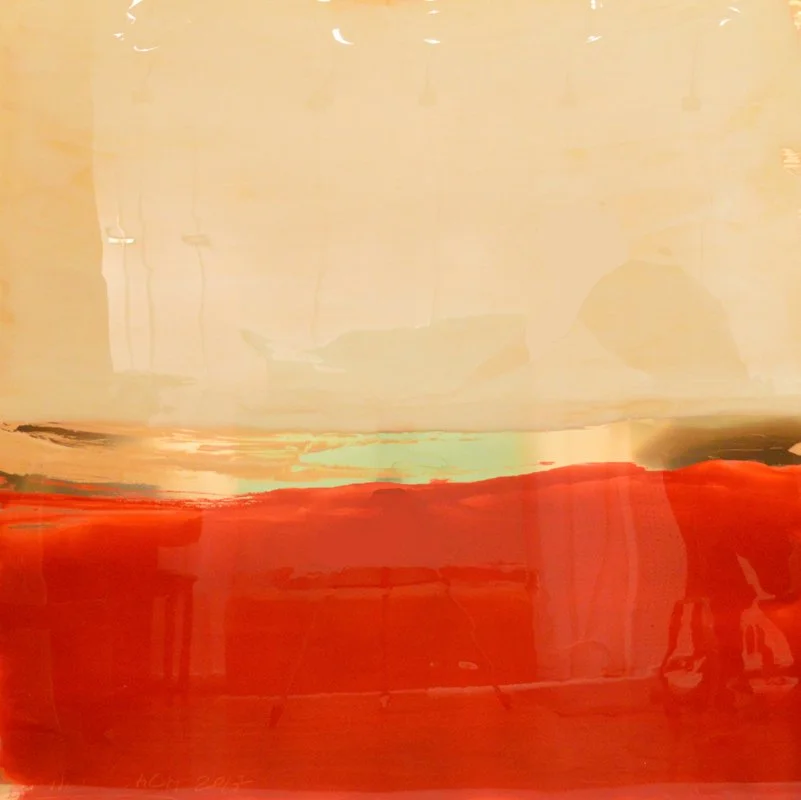
MetalScape 106 (encaustic, anodized copper aluminum, UV resin on panel), by Boston-based Charyl Weissbach
She writes:
“I explore nature’s vastness, simplicity and fragility. These elements emit aesthetic sensations of harmony, expressions of timelessness and feelings of inspiration that transcend space and time. The imagery of my work does not accurately represent nature; rather, I try to unveil an abstraction of its character to raise awareness for the preservation of our world.”
“{My} ‘MetalScape’ paintings represent a dialogue between nature’s expansiveness and its awe-inspiring simplicity. Color and composition are reduced to a minimalist stillness so that form becomes the focus. The imagery of these paintings does not accurately represent nature; rather, they unveil an abstraction of its character, capturing infinite variations of ethereal beauty. …
“Ocean acidification, a deadly threat to marine life, compromises the long-term viability of these ecosystems and impacts an estimated one million species that depend on its coral reef habitat. Half a billion people worldwide depend on coral reef ecosystems for protection, food, and income.”
“Fortunately, assisted organism evolution techniques being performed in marine laboratories here and abroad are well underway, striving to save corals from extinction. Additionally, geo-engineering technologies are helping to reduce atmospheric carbon dioxide and the acidity of our oceans without the need to drastically cut carbon emissions.”
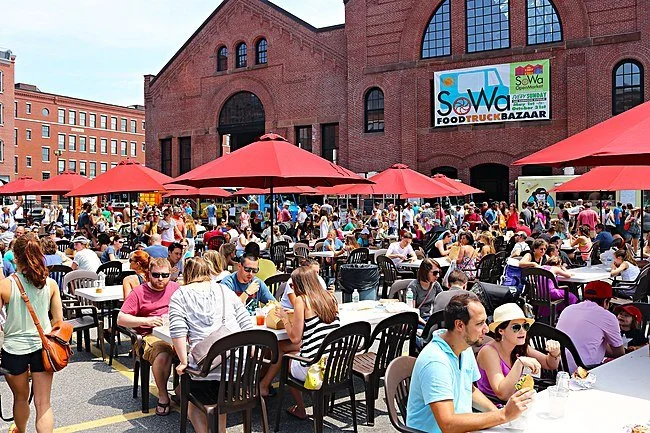
Ms. Weissbach makes her paintings in the SoWa Art & Design District (South of Washington St.) in the South End of Boston. SoWa is a community of artist studios, contemporary art galleries, boutiques, design showrooms and restaurants. Scene above is next to the SoWa open market.

Eat oysters to fight global warming

“Still-Life with Oysters,’’ by Alexander Adriaenssen
From ecoRI News (ecori.org)
Eating oysters is good for the environment, according to a pair of Narragansett Bay-centric experts. Scientists Robinson Fulweiler, of Boston University, and Christopher Kincaid, from the University of Rhode Island’s Graduate School of Oceanography, shared their latest findings during a webinar last fall.
Fulweiler studies the impact that wild and aquaculture oysters have on their surrounding waters. A single oyster can filter up to 50 gallons of water daily. Their most important service, and the one Fulweiler studies most, is removing nitrogen from marine waters that could trigger algal blooms.
“Aquaculture, as well as restored oyster reefs, have high rates of nitrogen removal,” Fulweiler said.
Excessive nitrogen in waters such as Narragansett Bay is dangerous for aquatic habitats and marine life, as it can feed toxic blooms. These events are also linked to low levels of oxygen in the water, which can lead to fish kills like the one in Greenwich Bay in 2003 that killed tens of thousands of fish.
Oysters, including those in aquaculture operations, help out by removing nitrogen and other pollutants from stressed waters. Instead of being biologically available to feed algae growth, the chemical used in fertilizers is released into the atmosphere as nitrous oxide. Aquaculture and restored reefs have a strong impact on denitrification, according to Fulweiler.
“Oyster aquaculture and oyster reefs are behaving similarly in terms of the nitrogen removal process,” she said.
The two biggest greenhouse gases that oysters emit are nitrous oxide and carbon dioxide, and while they are powerful climate emissions, the amounts that oysters release as part of denitrification are negligible. In fact, Fulweiler sees moving toward protein sources from aquaculture as key to reducing emissions generated by land-based farming.
“The take-home message is if you eat a whole bunch of oysters, the amount of nitrous oxide released into the environment is negligible compared to [if you ate] chicken, pigs, sheep or cows,” Fulweiler said.
Kincaid has spent the past 20 years tracking the movements of water and nitrogen in Narragansett Bay. A self-described “coastal plumber,” he is building a predictive computer model to use in the state’s coastal waters. Kincaid cited a 2003 fish kill as a prime reason to examine water quality, nutrient dynamics, and algal blooms.
Low oxygenated areas in the coves, harbors and estuarine waters of Narragansett Bay have “amazingly stable” gyres, or vortexes, that move currents slowly in a clockwise direction. Kincaid and his team use Regional Ocean Modeling Systems to track these currents after accounting for tidal flows.
“We could use [this data] around aquaculture farms and predict how water flows in and out,” he said.
Nitrogen enters Narragansett Bay from the north and south. In the north, much of it comes from wastewater-treatment plants. In the south, it comes in through massive water intrusions from Rhode Island Sound, traveling through the East Passage — the channel of water between Jamestown and Aquidneck Island.
“The amount of water coming in on these intrusions is on average twice the same amount that goes over Niagara Falls every day,” Kincaid said.
The professor of oceanography said he and his research team aren’t entirely sure what else is in some of these East Passage water intrusions besides high levels of nitrogen, but has a future study planned to investigate.
David Warsh: Searching under streetlights for economic answers
SOMERVILLE, Mass.
As a young magazine writer, I was a quick enough study to recognize that, in the discussion of inflation, the bourgeoning enthusiasm for monetary analysis had loaded the dice in favor of the quantity theory of money. New World treasure, paper money, central banking: it was as if monetary policy was a force independent of whatever might be happening in the economy itself. It reminded me a famous New Yorker cartoon, a patient talking to his psychoanalyst: “Gold was at $34 when my father died… it was $44 when I married my wife… now it’s $28, but I have trouble seeing.”
I wanted to suggest a variable that might represent the perspective of real analysis, though I did not yet know the term: the conviction, as I learned Joseph Schumpeter had described it, that “all the essential phenomena of economic life are capable of being described in terms of goods and services, of decisions about them, and relations between them,” and that money entered the picture as just another a technological device. Thinking about all else besides monetary innovation that was new in the world since the 15th Century, I came up with a catch-word to describe what had changed. The Idea of Economic Complexity (Viking) appeared in 1984.
It certainly wasn’t theory: more in the nature of criticism, a slogan with so little connection to the discourse of economics since Adam Smith that it didn’t bother specifying complexity of what. But the word had an undeniable appeal. “Complexity,” I wrote, “is an idea on the tip of the modern tongue.”
Sure enough: Chaos: Making a New Science, by James Gleick, appeared in 1987; Complexity: The Emerging Science at the Edge of Chaos and Order, by M. Mitchel Waldrop; and Complexity: Life at the Edge of Chaos, by Roger Lewin, followed in 1992; and in the next decade, a whole shelf of books appeared, of which The Origin of Wealth: Evolution, Complexity, and the Remaking of Economics, by Eric Beinhocker, in 2006, was probably the most interesting.

Organizational map of complex systems broken into seven sub-groups.
— Hiroki Sayama, D.Sc
But the question remained: complexity of what? The long quote-box on the back of the book jacket had put it this way:
To be complex is to consist of two or more separable, analyzable parts, so the degree of complexity of an economy consists of the number of different kinds of jobs in the system and the manner of their organization and interdependence in firms, industries, and so forth. Economic complexity is reflected, crudely, in the Yellow Pages, by occupation dictionaries, and by standard industrial classification (SIC) codes. It can be measured by sophisticate modern techniques, such a graph theory or automata theory. The whys and wherefores of our subject are not our subject here, however. It is with the idea itself that we are concerned. A high degree of complexity is what hits you in the face in a walk across New York City; it is what is missing in Dubuque, Iowa. A higher degree of specialization and interdependence – not merely more money or greater wealth – is what make the world of 1984 so different from the world of 1939.
Fair enough, for purposes of journalism. There was however something missing in my discussion: to wit, any real knowledge of structure of technical economic thought. I had come across the economist Allyn Young (1876-1929) in my reading, a little-remembered contemporary of Irving Fisher, Wesley Clair Mitchel and Thorstein Veblen, Schumpeter, and John Maynard Keynes. I classified him, with Schumpeter, as a “supply-sider,” in keeping with the controversies of the early ‘80’s, “locating in the businessman’s entrepreneurial search for markets the most profound impulse toward economic growth.” I added only that “We are coming at it from a slightly different direction is this book.”
It wasn’t until I re-read “Increasing Returns and Economic Progress” (for those who have access to JSTOR), in the Economic Journal of December 1928, that it dawned on me that it was complexity of the division of labor that I had been thinking about. A particular passage towards the end of Young’s paper brought it home.
The successors of the early printers, it has often been observed, are not only the printers of today, with their own specialized establishments, but also the producers of wood pulp, of various kinds of paper, of inks and their different ingredients, of type-metal and of type, the group of industries concerned with the technical parts of the producing of illustrations, and the manufacturers of specialized tools and machines for use in printing and in these various auxiliary industries. The list could be extended, both by enumerating other industries which are directly ancillary to the present printing trades and by going back to industries which, while supplying the industries which supply the printing trades, also supply other industries, concerned with preliminary stages in the making of final products other than printed books and newspapers. I do not think that the printing trades are an exceptional instance, but I shall not give other examples, for I do not want this paper to be too much like a primer of descriptive economics or an index to the reports of a census of production. It is sufficiently obvious, anyhow, that over a large part of the field of industry an increasingly intricate nexus of specialized undertakings has inserted itself between the producer of raw materials and the consumer of the final product.
Young, a University of Wisconsin PhD, had taught both Edward Chamberlin and Frank Knight as a Harvard professor, before accepting an offer from the London School of Economics to chair its department, at a time when LSE was looking to further distinguish itself. It was as president of Section F of the British Association for the Advancement of Science that he delivered his paper on increasing returns. Then, on the verge of returning to Harvard, he died at in an influenza epidemic. He was 52.
By the time that I re-read Young’s paper, I had met Paul Romer, a young mathematical economist then at the University of California Berkley, who had been working for years on more or less exactly the same questions that Allyn Young had raised in literary fashion fifty years before. Romer introduced me to the distinction economists made between “endogenous” and “exogenous” factors.
Endogenous were developments within the economic system; exogenous were those apparently outside, to be “bracketed” or put aside as matters the existing system hadn’t yet found ways to satisfactorily explain. Only a few years earlier, Robert Solow, of the Massachusetts Institute of Technology, had been recognized with a Nobel Memorial Prize in Economics for, among other things, his finding that as much of 80 percent of economic growth in a certain period couldn’t be explained by additional increments of labor and capital. Whatever it was, it was to be expressed as a “Residual,” exogenous to the system of supply and demand.
First in “Growth Based on Increasing Return Due to Specialization,” in 1987, then in “Endogenous Technical Change,” in 1990, Romer solved the problem, employing new mathematics he had acquired to describe it. The magic of the Residual, it turned out, was human knowledge, a non-rival good in that, unlike land, labor, or capital, it could be possessed by any number of persons at the same time. I wrote a book about what had happened; Knowledge and the Wealth of Nations: A Story of Economic Discovery (Norton) appeared in 2006. In 2018, Romer, by then at New York University, and William Nordhaus, of Yale University, shared a Nobel Memorial Prize for their work on the interplay of technological development and climate change.
I had been hit by the meatball. I understood why Early Hamilton and John Neff had so little to say to each other, why Milton Friedman and Paul Samuelson didn’t agree: they were men searching under streetlights for answers – different streetlights, separated by areas of darkness that had yet to be illuminated. I understood that economists could be trusted to continue to develop their field,
But there were still plenty of questions to be answered, including the one that had bothered me since the beginning. Why do we call rising prices “inflation?”
xxx
One of the joys of writing about the news is that you ordinarily never know where you’re going from one week to the next – reading as well, I expect. Yet from small beginnings last autumn, I have launched a mini-series about some things I have learned since publishing The Idea of Economic Complexity in 1984. Had I known at the beginning what to expect, I would have announced a series, Complexity Revisited. I do so now.
This week is the fourth installment, counting the first piece – about the 700-year wage and price index of Sir Henry Phelps Brown and Sheila Hopkins – that triggered the rest. There will be four more, eight in all. Each piece subsequent to the first is connected to something I discovered later, in the witings of Joseph Schumpeter, Charles Kindleberger, Allyn Young, Steven Shapin and Simon Schafer, Nicholas Kaldor, Hendrik Houthakker, and Thomas Stapleford.
What’s the point? It all has to do with the nature of money – how we control it, how it is accumulated, saved and disbursed. Banking is already thoroughly digitized; the digitalization of money itself looms in the future. It makes sense to go back to first principles. These have to do with central banking, it turns out, perhaps the least understood of major modern institutions of governance.
The need here to think matters through, at least a little, arose in connection with other projects underway, large and small. I don’t apologize for having undertaken the series. I’ve done it twice before over the years, each time with good results. But there is something about the weekly column that wants to stay close to the news, especially in these turbulent times. I can confidently promise not to do it again. Back to the news next month.
David Warsh, a veteran columnist and an economic historian, is proprietor of Somerville-based economicprincipals.com, where this essay first ran.

— Photo by Acabashi
‘Their last asylum’

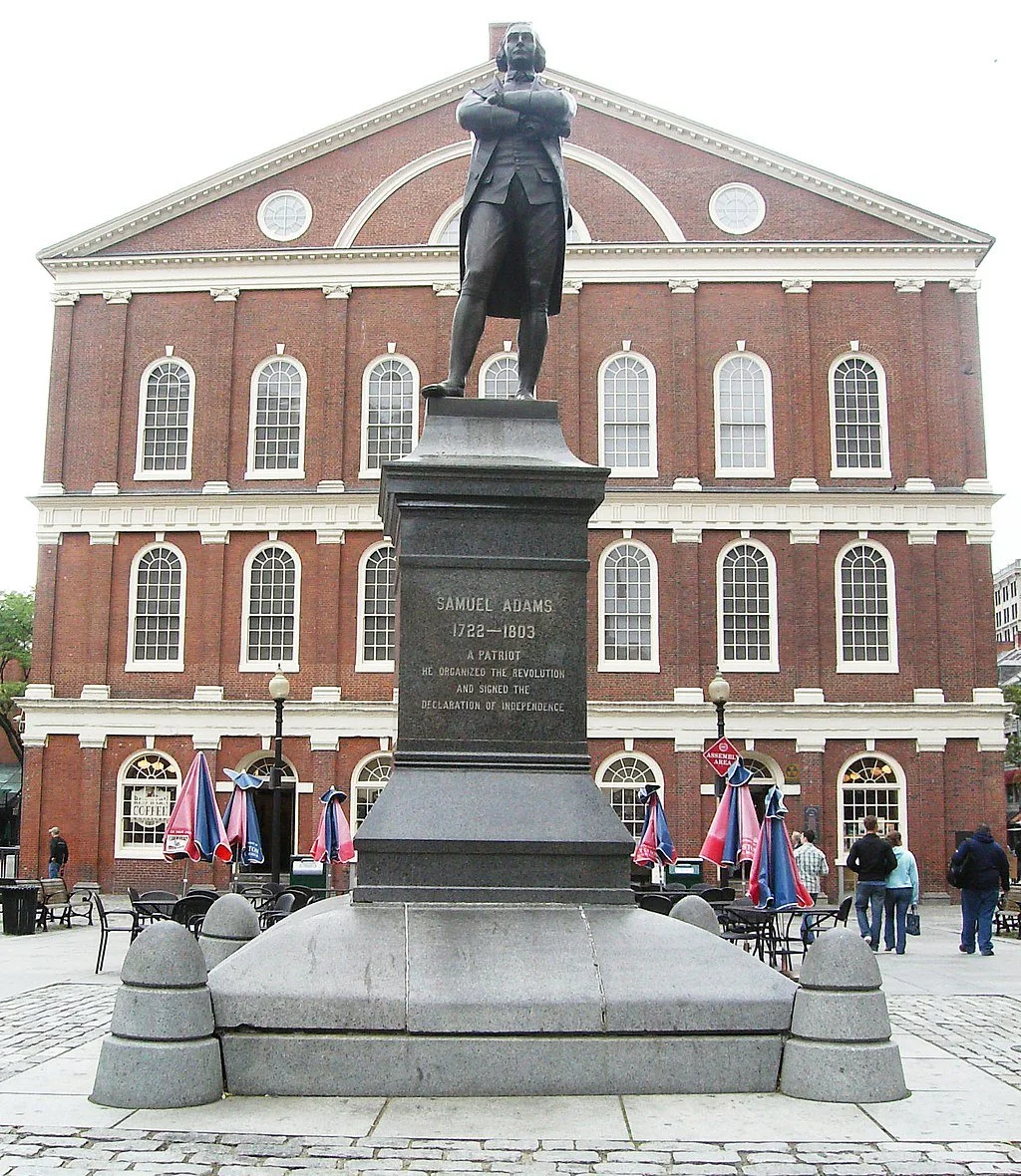
Bronze and granite monument to Samuel Adams, put up in 1880 in front of Faneuil Hall, in downtown Boston. The hall was the home of the Boston Town Meeting, on Sept. 12 and 13, 1768, an extralegal assembly held in response to the news that British troops would soon be arriving to crack down on anti-British rioting.
— Photo by Anne Whitney
“Driven from every other corner of the earth, freedom of thought and the right of private judgment in matters of conscience direct their course to this happy country as their last asylum.”
— Samuel Adams, in “Speech in Philadelphia,’’ on Aug. 1, 1776.
Samuel Adams was an American statesman, political philosopher and one of the Founding Fathers of the United States. He was a politician in colonial Massachusetts, a leader of the movement that became the American Revolution, and one of the developers of the principles of American republicanism. And he served as the Commonwealth of Massachusetts’s fourth governor (1794-1797). He was a second cousin to his fellow (and less radical) Founding Father, John Adams, the second U.S. president.
Manmade and thus disposable
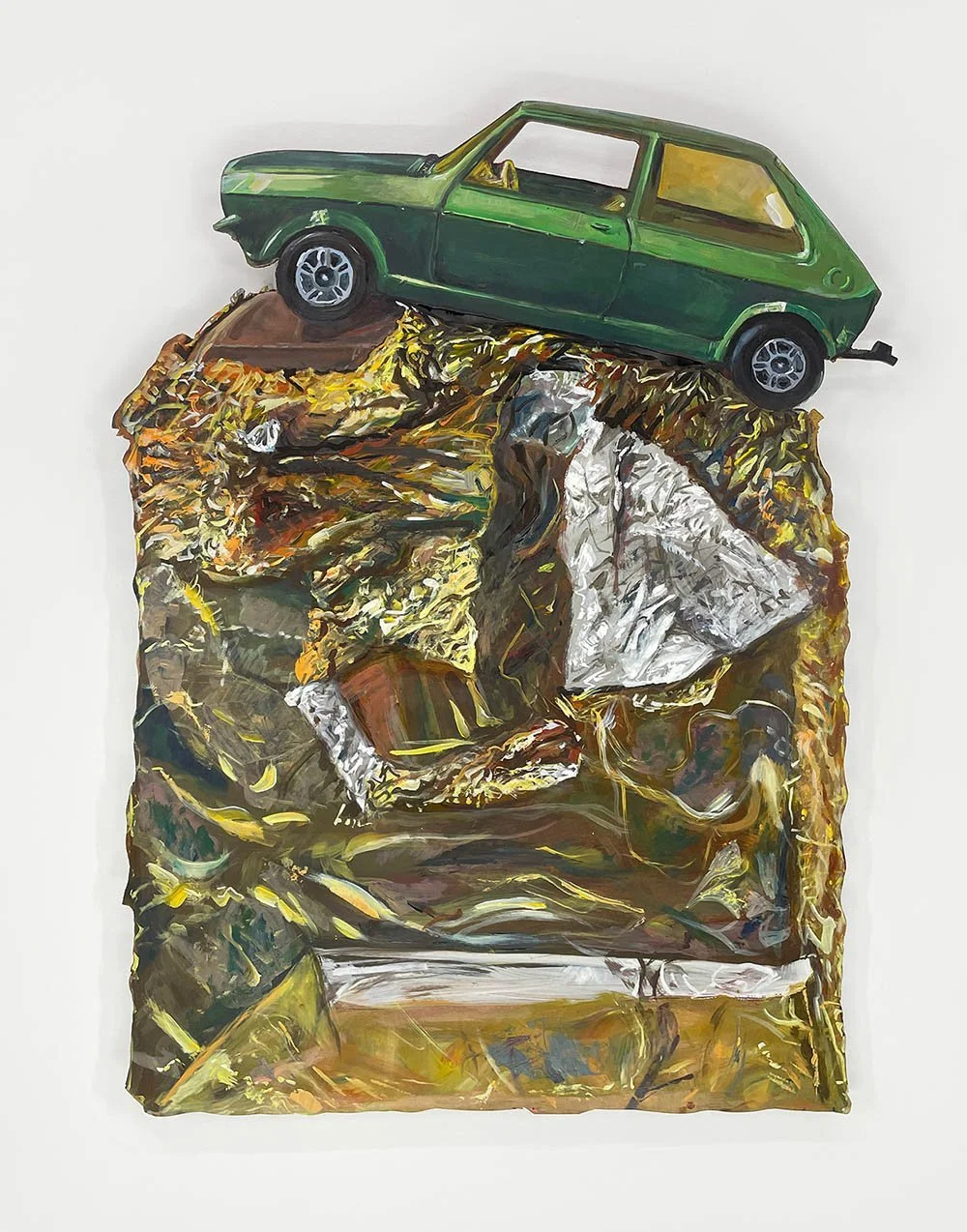
"Car and Candy Bar” (acrylic on panel), by Groton, Mass.-based Caleb Brown, in his show “Playdate,’’ at Bromfield Gallery, Boston, through May 1.
The gallery says that the show consists of still-life paintings of “personal ephemera arranged as on a child’s whim and then left behind, as though a play date has just ended.
“Cut from Masonite panels, the still lifes evoke an unfussy trompe l'oeil style.’’
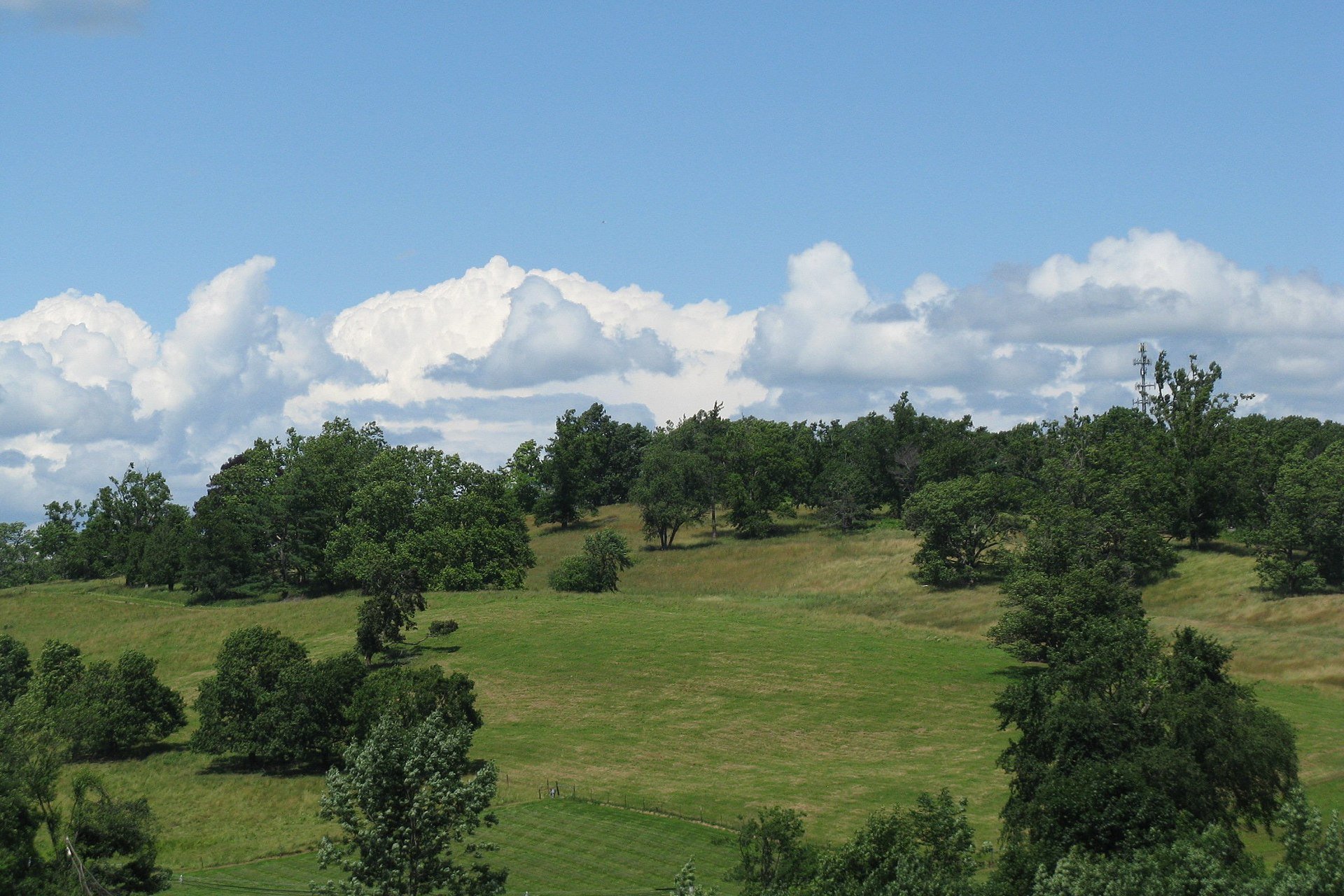
Gibbet Hill in Groton. According to tradition, the name comes from an incident in Colonial times when a Native American was hung at the summit of the hill. Wikipedia: “A gibbet is any instrument of public execution, but gibbeting refers to the use of a gallows-type structure from which the dead or dying bodies of criminals were hanged on public display to deter other existing or potential criminals.’’
— Photo by John Phelan
‘Hubcaps and falling rocks’

Great Falls (at Bellows Falls, Vt.) at high flow under the Vilas Bridge, taken from the end of Bridge Street on the Vermont side, looking upriver. Route 5, not in picture, runs up the Vermont side of the river on the left.
“I left my anger in a river running highway 5
New Hampshire, Vermont, bordered by
college farms, hubcaps, and falling rocks
voices in the woods and the mountaintops’’
—From the song “Jonas & Ezekiel,’’ by The Indigo Girls
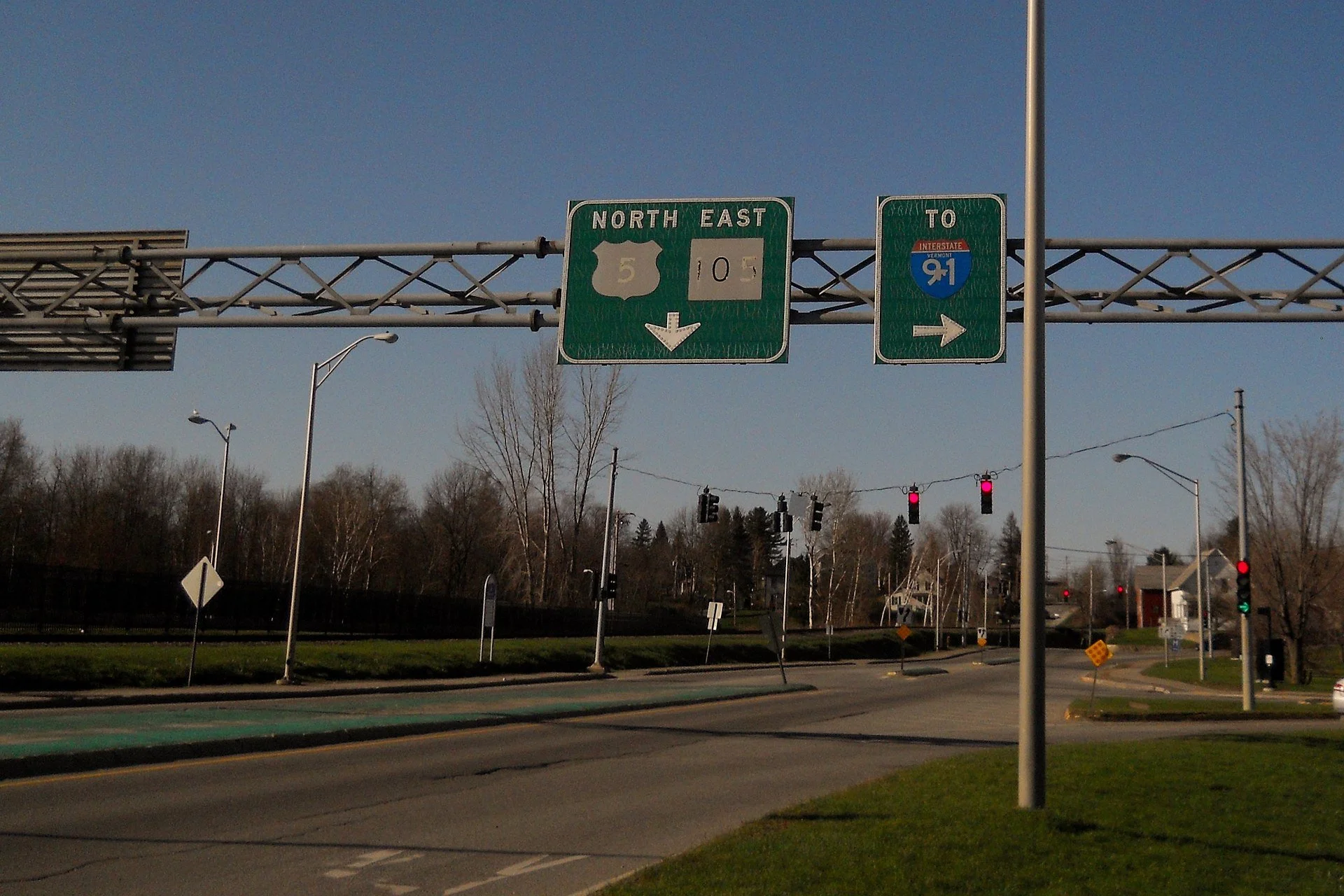

Don Pesci: Conn.’s temporary gasoline-tax cut and trying to repeal economic common sense

Major roads of Connecticut
VERNON, Conn.
The default position of Connecticut’s majority Democrats on the matter of getting and spending has not changed within the past three decades: Tax cuts, infrequently imposed, should be temporary and bravely endured, while tax increases, deployed for the most part to satisfy imperious state-employee-union demands, should be permanent.
The recent temporary suspension of Connecticut’s 25-cent-a-gallon excise gasoline tax conforms to the default position of Democrats who have controlled Connecticut’s General Assembly for the last 30 years: The tax is to be suspended – operative word – “temporarily” from April to July 1.
Connecticut Democrats, it should seem obvious, are reading from a national Democratic script.
The increase in the price of gasoline, they say, is due chiefly to the Russian war of aggression in Ukraine and the greedy oil barons.
The debate in the General Assembly on reducing Connecticut’s gasoline tax centered upon whether the reduction should be temporary or permanent.
“Rep. Sean Scanlon, a Guilford Democrat who co-chairs the tax-writing committee,” one newspaper noted, “said many constituents have been hurting from the rising prices at the pump, which was recently an average of $4.32 a gallon.
“Our constituents did not start a war in Ukraine,’' Scanlon argued. “Our constituents did not contribute to the global supply chain. ... This is a great first step that we can make to give them some affordability, some relief. ... At least we’re doing something.”
The newspaper correctly noted, “The tax cuts are possible partly because the state has large budget surpluses in two separate funds due to increased federal stimulus money and capital gains taxes from Wall Street increases, paid largely by millionaires and billionaires in Fairfield County.”
In the state Senate chamber, also dominated by Democrats, Will Haskell, of Westport, rose to the occasion. Haskell argued that the gasoline-tax cut should not be permanent because providing permanent relief would deliver a “debilitating blow’' to the state’s plans to spend millions of dollars to fix roads and bridges. The paper quoted Haskell: “Gas prices are high, but not because of taxes. It’s because of [Russian dictator Vladimir] Putin.”
The federal government – which prints money, borrows money and acquires money through excessive taxation – is flush with funds now being distributed by the Biden administration to various political receptacles, some say for political purposes. In many instances, states are using the funds to offset business slowdowns caused by, some argue, imprudent decisions made by governors and federal officials that have produced a worker shortage. Common sense tells us that if you provide a living salary to workers not to work, they will not work.
High business taxes, an increase in the supply of money flowing from private pockets to the public purse, and labor shortages have produced too few goods, resulting in inflation – too many dollars chasing too few goods.
The high price of goods and services may also be attributed to a continuing effort by progressives in the United States to repeal a central law of a free-market economy, the law of supply and demand, which holds that when demand is a constant and supply is diminished, prices on all goods and services rise. The rise in prices has less to do with the greed of billionaire CEOs than a Darwinian survival-of-the fittest-impulse in over-regulated markets centrally directed by Washington politicians. Large business can survive a large regulator drag on profits. Higher taxes and an increasing regulatory burden swamp smaller businesses and, of course, make it much easier for the larger fish to swallow the minnows.
The empty shelves in Russian stores during the good old days of the Soviet Union were attributed by underpaid “workers of the world” in Russia to central planning. In the so-called “captive nations,” the necklace of states now threatened militarily by Vladimir Putin, workers used to joke among each other, “We pretend to work, and they pretend to pay us.”
The Democratic Party program runs against the grain of good sense. Every worker in the United States knows that personal debt should be discharged by responsible debt holders willing to cut spending and pay down the debt.
Temporary reductions in taxes are insufficient to pay down a debt in Connecticut that has swelled over the years to about $57 billion. And given past performance, no one in the state can be certain that increased taxes will be put to such purposes by an administrative apparatus, growing daily, that had in the past raided various Connecticut lockboxes to pay for current expenses.
The solution to Connecticut’s most pressing economic problems is disarmingly simple: Enrich the state’s creative middle class by cutting taxes and regulations, pay down debt, and work hard to dissolve the entangling alliances between a tax-thirsty government and an even more tax-thirsty conglomeration of various state employee unions.
Don Pesci is a Vernon-based columnist.
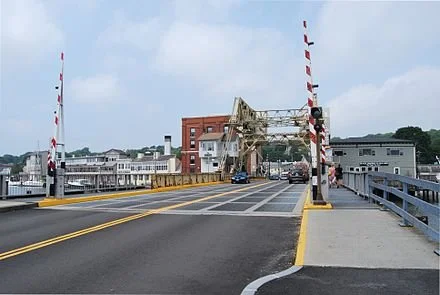
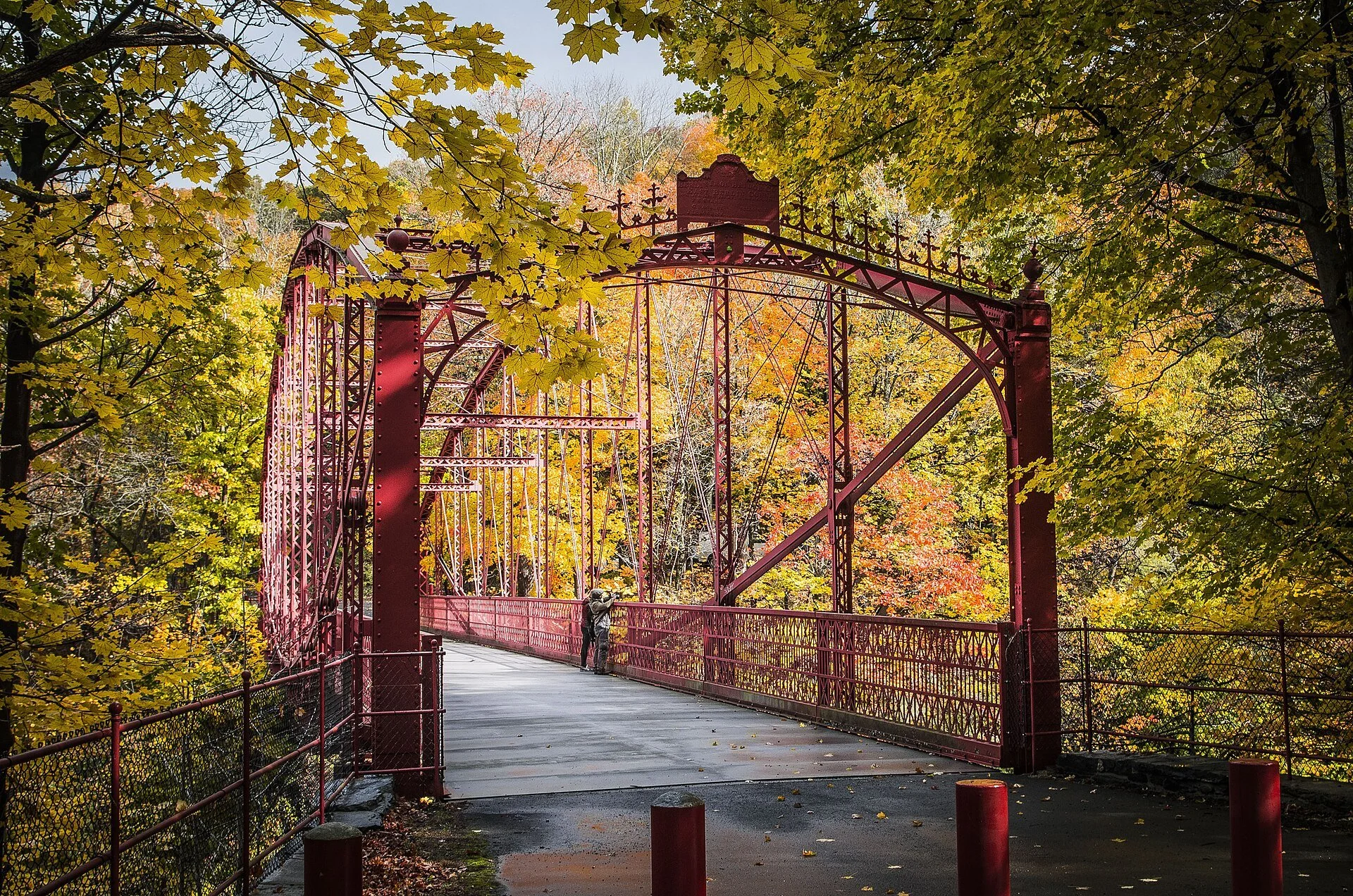
The Mystic River Bascule Bridge, built in 1922, carries US 1 over the Mystic River in Connecticut. The famous span connects Groton with the Stonington.
A grudging month

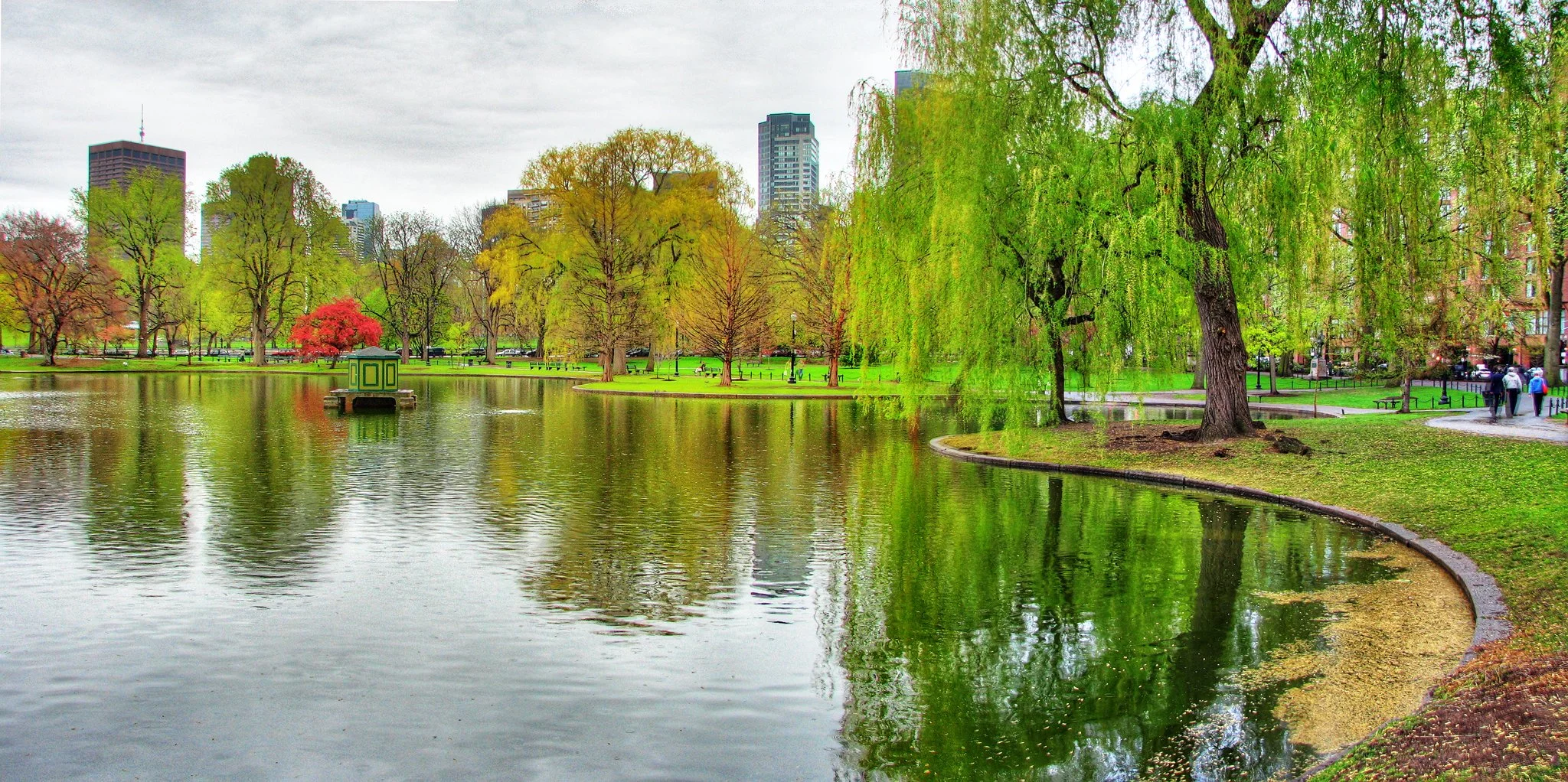
Boston Public Garden in spring
— Photo by Rick Harris
“Poets in other climes may rhapsodize about the vagaries of April weather, its laughter and tears, but in New England the month has inspired few local bards to lyric praise of the region’s early spring weather. With eastern Canada still deep in snow and the coastal waters retaining their wintry chill, northern controls can dominate the meteorological scene with snowfalls and cold lingering through the end of the month. Yet another April might produce a southerly circulation early in the month, bringing …May flowers well ahead of schedule….”
From The Country Journal New England Weather Book (1976) by David Ludlum. New England’s climate has warmed since 1976.