
Vox clamantis in deserto






But you usually can't see the dangerous part

“Floating Island’’ (oil and mixed media on paper), by Kata Hull, in the group show of New England artists titled “Cool” at Bromfield Gallery, Boston, through Aug. 22.
The gallery says:
“Chilly, poised, nerveless, refreshing, brilliant. This exhibition features art work that helps everyone cool of in the heat of the summer.’’
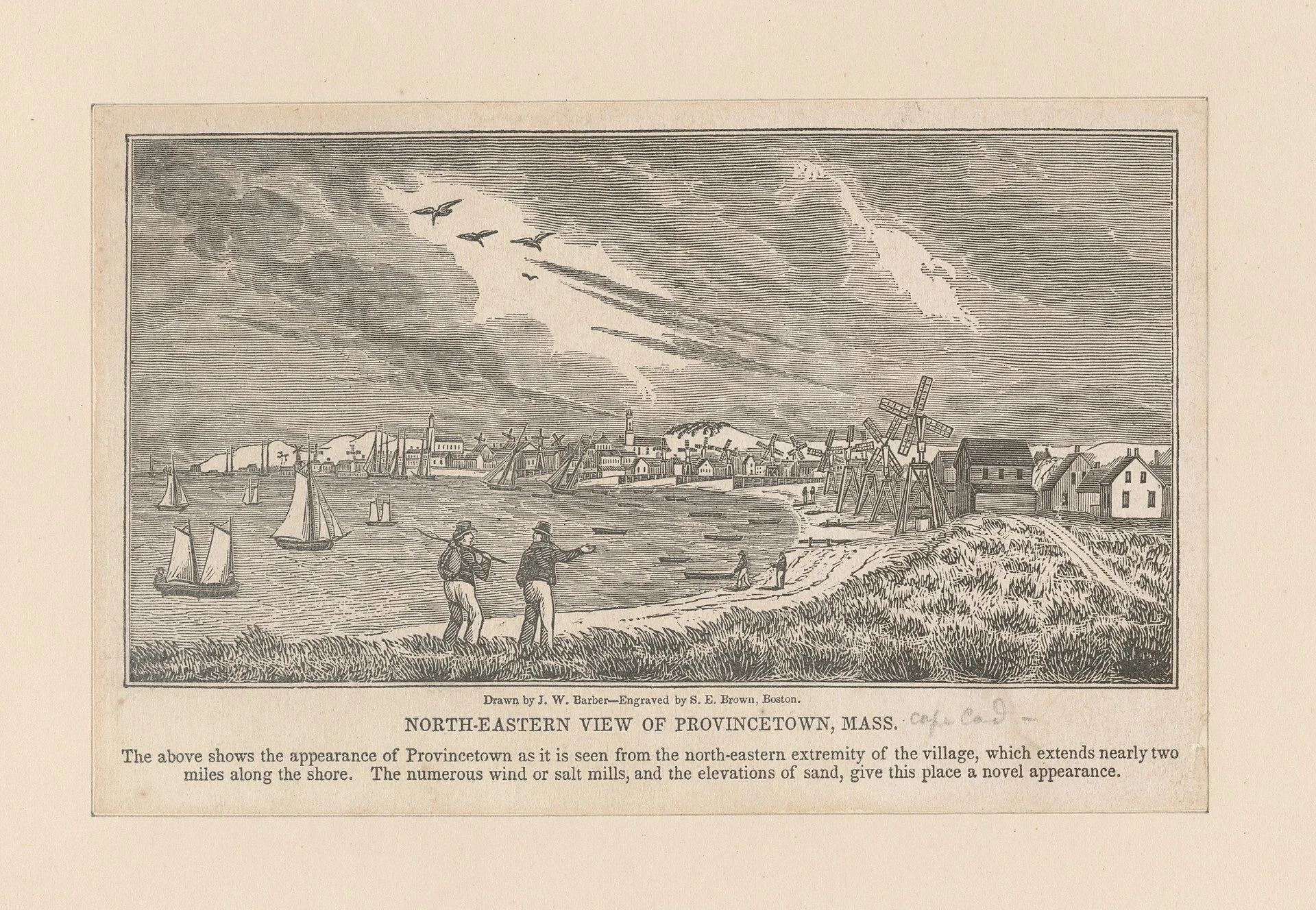
Before the summer folks
Provincetown, at the tip of Cape Cod, in the years when Thoreau walked the peninsula— 1849, 1850 and 1855.
“The time must come when this coast (Cape Cod) will be a place of resort for those New-Englanders who really wish to visit the sea-side. At present it is wholly unknown to the fashionable world, and probably it will never be agreeable to them. If it is merely a ten-pin alley, or a circular railway, or an ocean of mint-julep, that the visitor is in search of, — if he thinks more of the wine than the brine, as I suspect some do at Newport, — I trust that for a long time he will be disappointed here. But this shore will never be more attractive than it is now.”
Henry David Thoreau (1817-1862) in Cape Cod, first published in 1865, soon before railroads started to make The Cape a major summer-resort area.
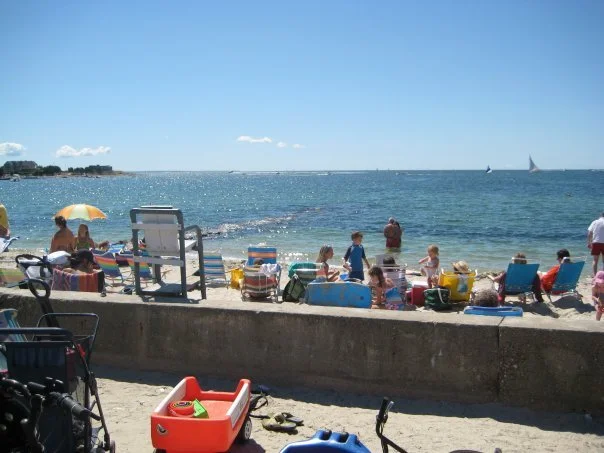
At New Silver Beach, in Falmouth, on the western side of The Cape — probably not quite what Thoreau could have foreseen.

'Insane song'

Loon in Marshfield, Vt.
— Photo by Ano Lobb
,
“Summer wilderness, a blue light
twinkling in trees and water, but even
wilderness is deprived now. ‘What's that?
What is that sound? ‘ Then it came to me,
this insane song, wavering music….’’
— From “The Loon on Forrester’s Pond,’’ by Hayden Carruth (1921-2008), celebrated American poet who lived for years in Johnson, Vt.
Less separation between the sexes, please

Illustration from An Appeal in Favor of that Class of Americans Called Africans, by Lydia M. Child
“The fact is, reasonable and kind treatment will generally produce a great and beneficial change in vicious animals as well as in vicious men.’’
xxx
“The nearer society approaches to divine order, the less separation will there be in the characters, duties, and pursuits of men and women. Women will not become less gentle and graceful, but men will become more so. Women will not neglect the care and education of their children, but men will find themselves ennobled and refined by sharing those duties with them; and will receive, in return, co-operation and sympathy in the discharge of various other duties, now deemed inappropriate to women. The more women become rational companions, partners in business and in thought, as well as in affection and amusement, the more highly will men appreciate home—that blessed word, which opens to the human heart the most perfect glimpse of Heaven, and helps to carry it thither, as on an angel’s wings. . . .’’
— 1843 remarks by Lydia M. Child (1802-1880), author, editor, abolitionist and defender of the rights of Native Americans. She was born in Medford, Mass., and died in Wayland, Mass.
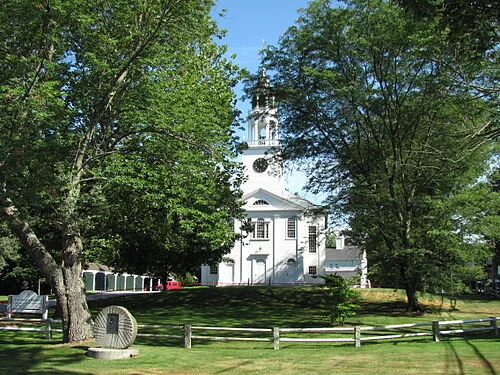
The First Parish Church (Unitarian) in Wayland, Lydia Child’s church there.
We try to avoid it

“Self Scrutiny” (oil on canvas), by James Rauchman, in his show “Self: Reflection,’’ at River Arts in the Folley Hall Gallery, in Morrisville, Vt.
The gallery says the paintings show the Morrisville resident’s experiences “with being an outsider—a gay man and an artist—and reflect on identity within the context of a society not quite able (or ready) to accept him.” The paintings are meant to capture the artist’s identity and experience while blending the physical and abstract; external and internal.
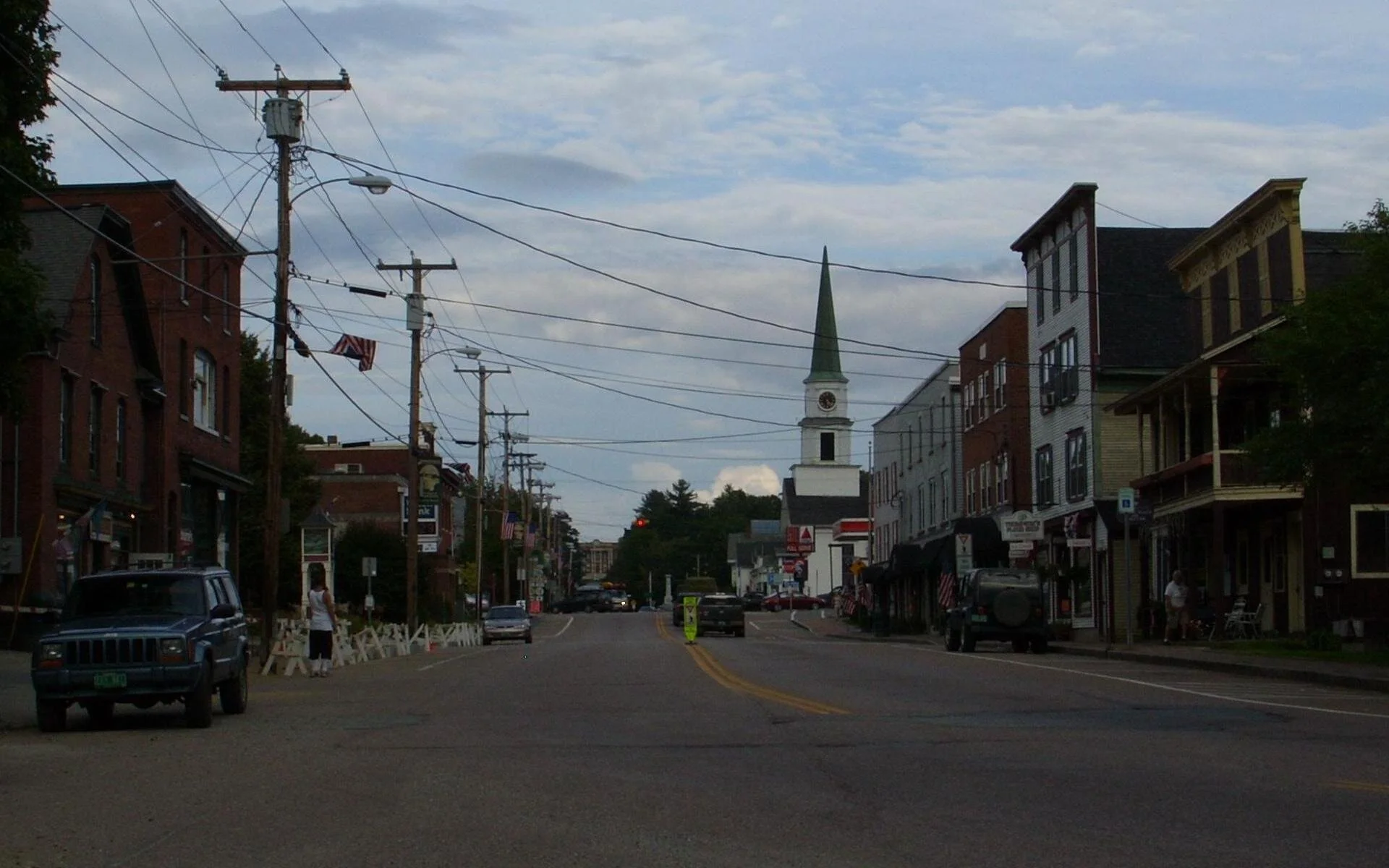
Downtown Morrisville, Vt.
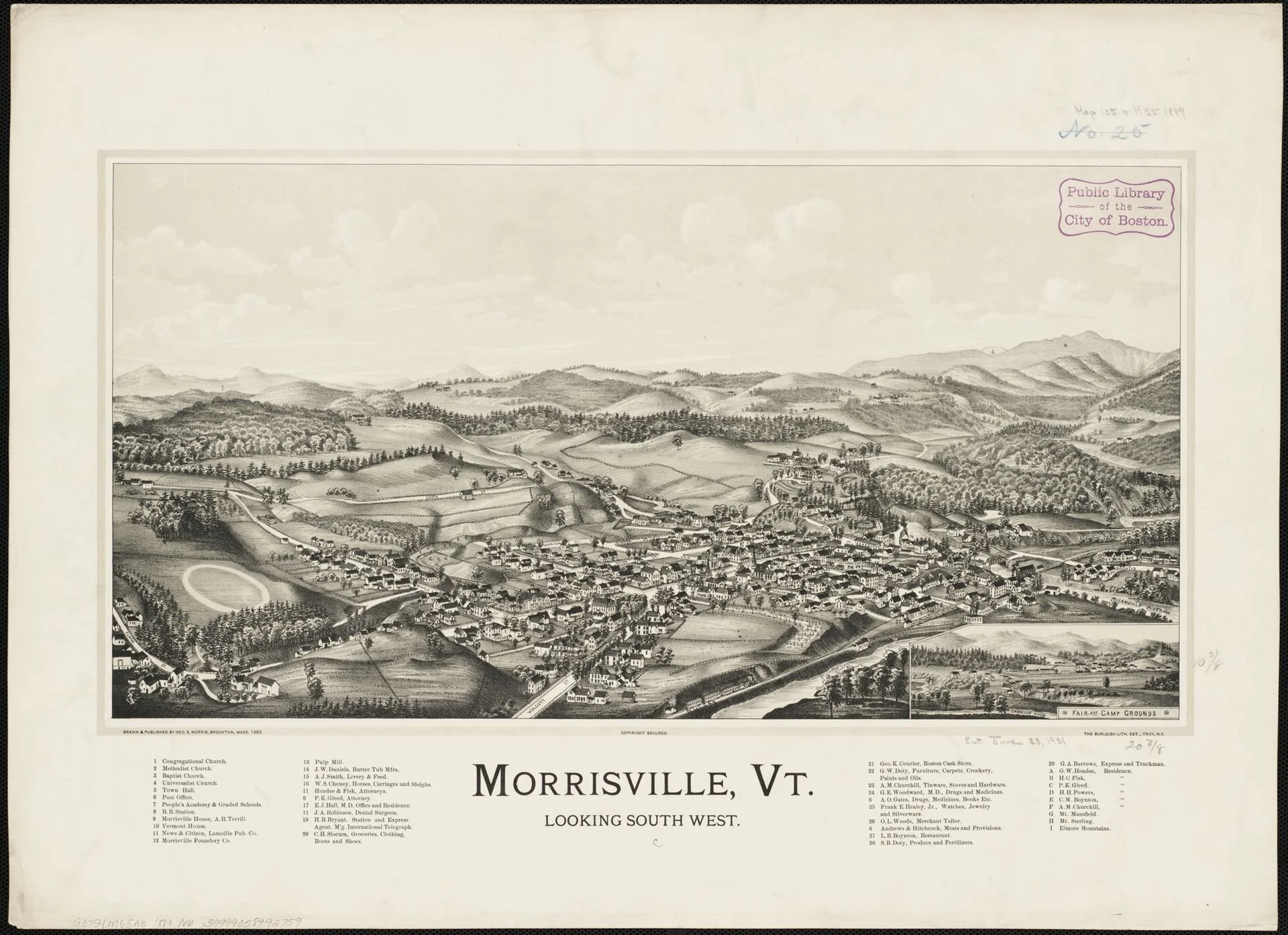
Prosperous Morrisville in 1889.

Llewellyn King: Don’t kid yourself: Solutions to global warming won't be simple
WEST WARWICK, R.I.
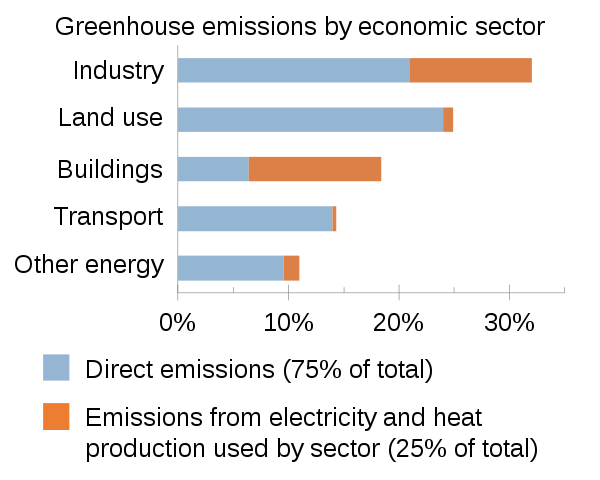
The latest report from the United Nations Intergovernmental Panel on Climate Change gives humanity a simple directive: Get a grip on greenhouse-gas emissions or the dear old planet won’t be the dear old planet we have known and loved down through the millennia.
Sounds simple, huh? Like wearing a face mask or getting a COVID-19 vaccine shot.
That is the trouble. Everyone will have his or her own science and won’t hesitate to inflict it on anyone who disagrees, whether it is verified or not.
Social nagging is about to become a national pastime. I can hear it now: “Why do you drive a gasoline car? You know, your fire pit is a carbon source.” Or “Did you think about the carbon consequences when you booked your vacation in Europe?”
How ghastly the moral superiority of the anti-carbon warriors will be! I can imagine them saying “I can’t imagine why people don’t buy electric cars. We have had one for three years.” Or “Your oil-heated house is a pollution source. We have installed solar rooftop panels. Passive solar houses should be mandated by the government.”
Remember the anti-smoking crusaders? I am afraid that you haven’t seen anything yet. The very real climate threat is going to unleash a whole new tribe of social scolds.
Electric utilities are in the crosshairs and there will be no end to their vilification. Watch out for the environment experts, who once urged the use of coal over nuclear, to take charge of the future with some other counterproductive policy nostrum.
All that said, I believe if we don’t get on top of the greenhouse-gas emissions problem, we soon will be wondering, as Robert Frost wrote, “Some say the world will end in fire,/ Some say in ice.” The way it is going, I say the world will end in devastating floods and heat waves, worsening droughts and accelerating sea-level rise.
The U.N.’s climate change panel has declared a clear and present danger. It is a threat that has been growing and largely laughed off over 50 years. I, for one, first heard of the idea of global warming in 1970, when it seemed very remote and a little crazy. It is neither remote nor crazy now. It is at hand, and it should affect a lot of thinking.
In the near term, common sense would have us ship our natural gas abroad so that China, India and many other countries stop burning coal; not as the anti-carbon warrior would have us close down our production. The best longer-term hope is more science on carbon capture and nuclear power. It is foolish to worry about nuclear waste lasting 10,000 years when, if we keep on the current climate trajectory, life won’t exist in the nearer future on planet Earth.
The fact is that while the science of climate change is well understood, the solutions aren’t. For example, those who would denounce natural gas, which is far less polluting than coal, don’t know the lifecycle costs of the two advocated alternatives, wind and solar.
To build a windmill, you need a large concrete base and a steel tower, both of which are manufactured through carbon-intensive processes. At the end of the life of a turbine, about 25 years, the giant blades, which are mostly made of carbon fiber-reinforced fiberglass, will be disposed of in landfills. The blades can’t be recycled, unlike the steel towers and other components.
Both the manufacture and disposal of solar cells have considerable environmental impact. The impact in making them is known, but the impact of their disposal in landfills isn’t known.
Going forward, the need is to know the science, encourage innovation and not to bow to culture activists who would wish their solutions on the rest of us. When I was a boy, asbestos was the miracle substance, recommended for inclusion in everything because it was fire-resistant. If you didn’t use asbestos, the fire alarmists came down on you. The moral? Beware of simple solutions to complex problems.
Llewellyn King is executive producer and host of White House Chronicle, on PBS. His email is llewellynking1@gmail.com and he’s based in Rhode Island and Washington, D.C.
Web site: whchronicle.com

Solar panels on a house in a Boston suburb. Massachusetts is very big on green energy, at least rhetorically.
— Photo by Gray Watson
Land of intimate businesses
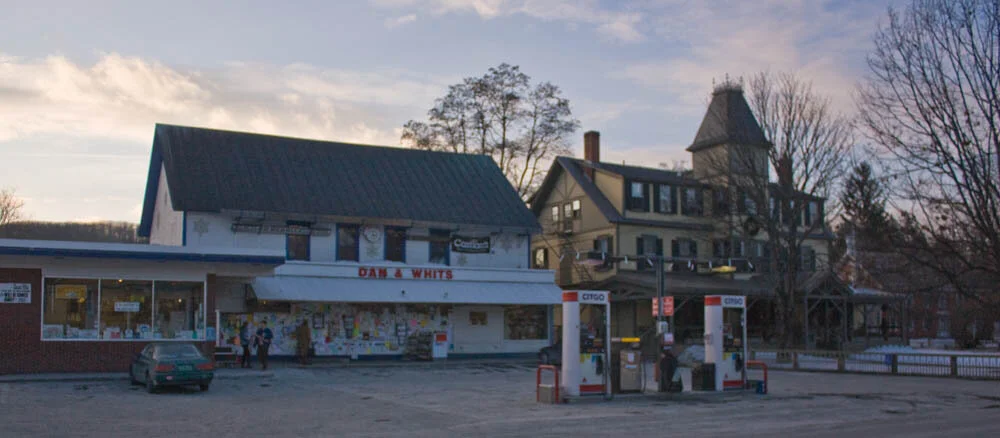
Dan & Whit’s general store, in Norwich, Vt.
— Photo by HopsonRoad
— Vermont Congressman Peter Welch
Searching for a new world
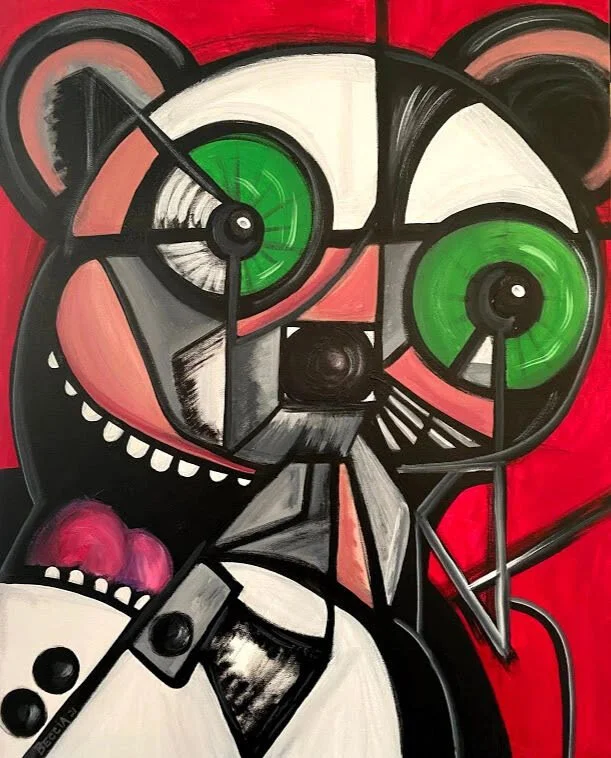
“Metamorphic Mouse” (acrylic on canvas), by Stephen Beccia, in his joint show with Richard Cross at the Loading Dock Gallery, Lowell, Mass., through Aug. 29.
The gallery says the show “explores contemporary figurative art, inspired by the Cubism and Pop movements of the 20th Century with the nuances, icons and mediums of the 21st.
‘‘Strong influences of Basquiat and Picasso appear in Beccia’s work in geometric shapes as well as a look at the surreal and familiar. He explains he’s ‘searching for a world of design and color that does not yet exist.’’’
Seek higher ground!

“Black Sea” (painting), by Peter Watts, in his joint show with Brenda Horowitz, “Truro & Wellfleet Motifs,’’ at Berta Walker Gallery, Provincetown, Aug. 21-Sept. 12

Training by the Boston cops

“Growing up, I think I was arrested 20-odd times by the Boston police. The good news is that I've been able to use those experiences in a lot of my roles, and that has been a blessing.’’
— Mark Wahlberg (born in 1971). The movie actor and businessman was born and raised in Boston’s then mostly gritty Dorchester neighborhood, before gentrification moved in.
Brown University’s big ambitions for cancer center
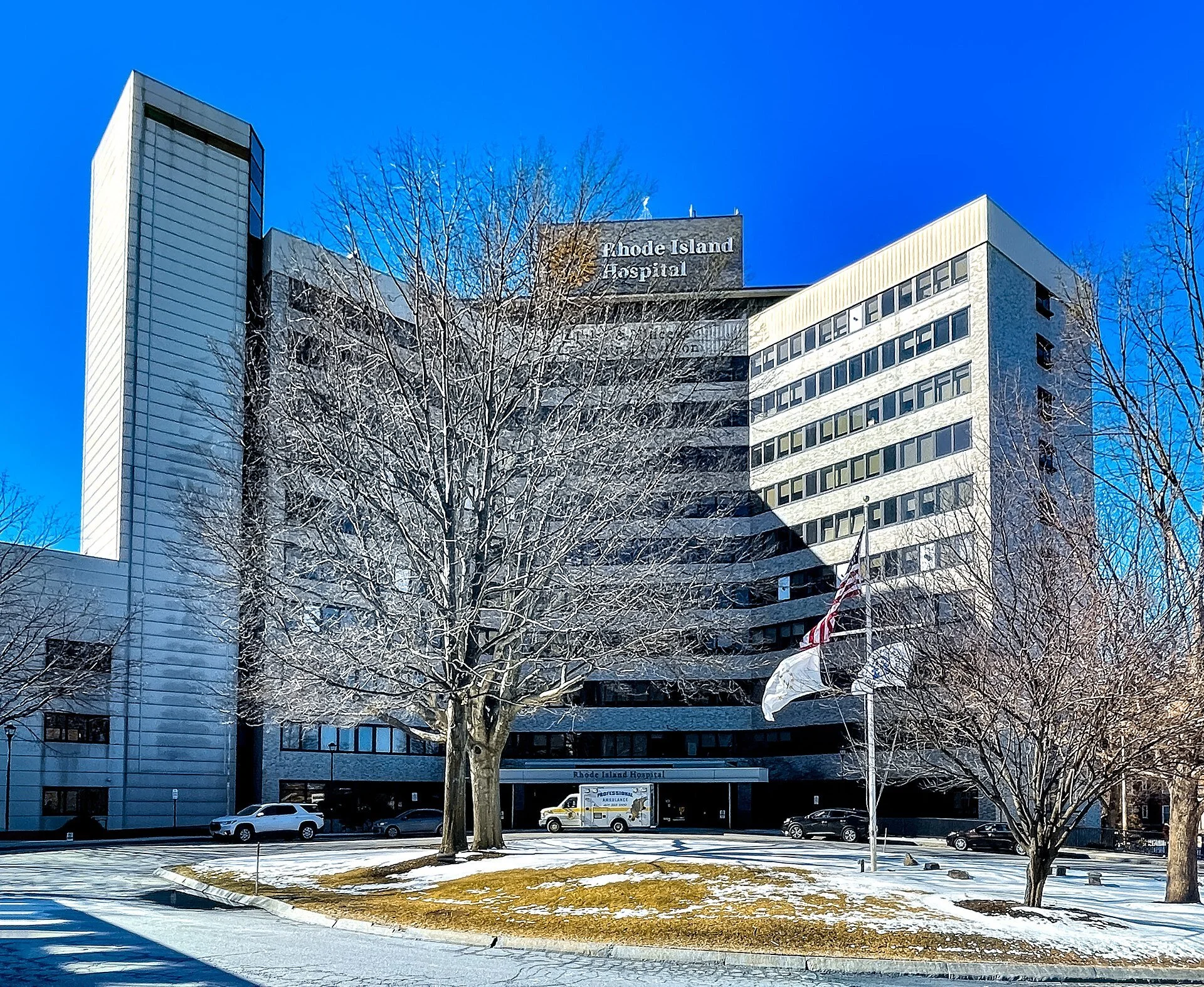
Rhode Island Hospital, in Providence, is the flagship institution of the Brown University-affiliated Lifespan hospital chain.
— Photo by by Kenneth C. Zirkel
From The New England Council (newenglandcouncil.com)
“Brown University has partnered with a local hospital chain with the goal of establishing a state-of-the art cancer-research center in Rhode Island. The university’s research branch has partnered with Lifespan Cancer Institute’s clinical care, with the eventual goal of applying for a National Cancer Institute designation. Such a designation would allow for further funding and increase the type and amount of clinical trials the research institute could conduct.
“Dr. Wafik El-Deiry, the director of the Cancer Center at Brown University, recently spoke to The Boston Globe about his excitement for the development of this program at the university. ‘There really wasn’t too much development yet before [the center] at Brown because there was no story,’ he said. ‘There wasn’t a program… to really make a difference and get to where we need to go, we have to grow. We need to recruit, we need space, and we need resources. And now, with Brown’s support, all of that is really coming together,’ he told The Globe.
“As this program grows, there is optimism that Rhode Island could become a prime cancer-care destination. The program is expected to soon start attracting brilliant individuals who seek to advance the future of medicine and cancer care. This program aims to establish the Ocean State a top location for research, learning, and care.’’
‘Every stone is a skull’
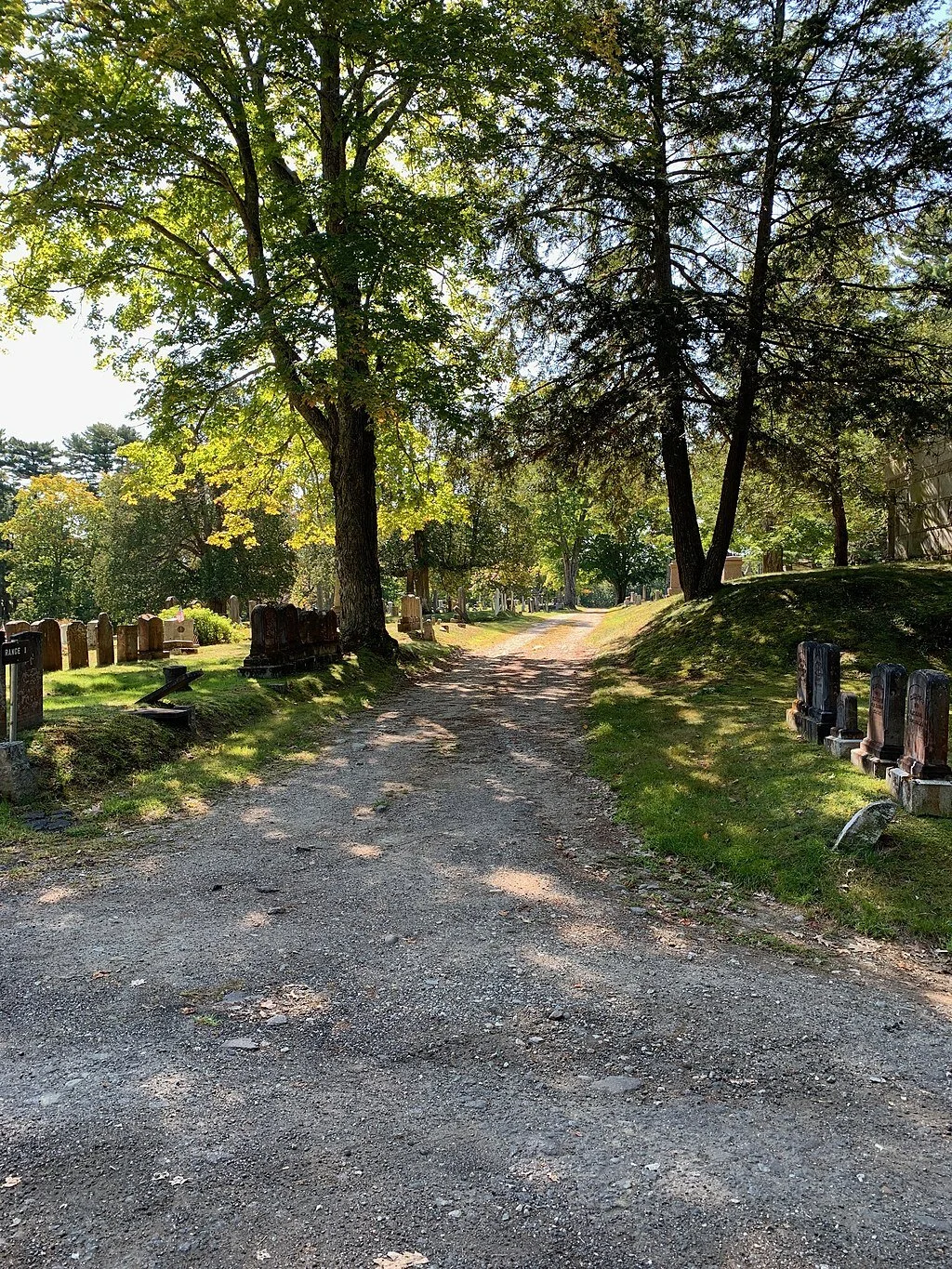
Oak Grove Cemetery, Bath, Maine.
— Photo by Seasider53
“Here, in Maine, every stone is a skull and you live close to your own death. Where, you ask yourself, where indeed will I be buried? That is the power of those old villages: to remind you of stasis.’’
— Elizabeth Hardwick (1916-2007) in The Collected Essays of Elizabeth Hardwick. She spent much time in Castine, Maine, during summers, especially during her marriage to poet Robert Lowell.
‘Enlarging loneliness’

“Summer’,’ by Giuseppe Arcimboldo, 1573
Further in Summer than the Birds
Pathetic from the Grass
A minor Nation celebrates
Its unobtrusive Mass.
No Ordinance be seen
So gradual the Grace
A pensive Custom it becomes
Enlarging Loneliness.
Antiquest felt at Noon
When August burning low
Arise this spectral Canticle
Repose to typify
Remit as yet no Grace
No Furrow on the Glow
Yet a Druidic Difference
Enhances Nature now
— Emily Dickinson (1830-1886), of Amherst, Mass.
‘Even in Massachusetts’

“The Dance Class,’’ by Edgar Degas, 1874
“The average parent may, for example, plant an artist or fertilize a ballet dancer and end up with a certified public accountant. We cannot train children along chicken wire to make them grow in the right direction. Tying them to stakes is frowned up, even in Massachusetts.’’
— Ellen Goodman (born in 1941), Boston Globe columnist.
'Balance in disorder'

“Ever Radiate the Truth Ever” (mixed media), by McKay Otto, in the show “Unconscious Equilibrium,’’ at Atelier Newport (R.I.), Aug. 10-Sept. 12.
The gallery says:
“This featured group of artists finds balance in disorder, influences in opposing forces, harmony in mundane daily tasks, and transcendent practices during chaos. In quiet solitude, these artists gain balance during a time when our world would suggest otherwise.
“Upon further reflection on meditation, and transcendence, the work on view finds a harmony through tessellations, a regular pattern made up of flat shapes repeated and joined together without any gaps or overlaps. These shapes do not all need to be the same, but the pattern should repeat. This work attempts to reflect these rhythmic, natural developing and reoccurring patterns in nature, reflected in tidal and gravitational forces, and how we as humans, react to with these powerful shifts - seasons, moons, tides —and our delicate balance.’’

Chris Powell: Bathos in Bridgeport

“Iranistan,’’ Bridgeport boy and circus impresario P.T. Barnum’s grandiose structure in the city survived only a decade before being destroyed by fire in 1857.
MANCHESTER, Conn.
Connecticut's top elected officials quickly accommodated themselves to the disgrace of Joe Ganim's return to the mayoralty in Bridgeport in 2015 despite his having served eight years in prison upon conviction in federal court for vast corruption in office.
After all, just a year after Ganim was sent away in 2003, Gov. John G. Rowland resigned and pleaded guilty to federal corruption charges as well. Rowland was a Republican and Ganim a Democrat, so together they more or less normalized and bipartisanized betrayal of public office.
Of course, no one in state government could have refused to deal with Ganim in his return as mayor without also disenfranchising all of Bridgeport, Connecticut's largest and most troubled city. But looking away from corruption and failure in Bridgeport, as state government long has been doing, has become a betrayal in itself.
The city's newspaper, the Connecticut Post, notes that federal prosecutors have charged five Bridgeport officials with corruption in the last 10 months. The city's former police chief, Armando Perez, and personnel director, David Dunn, close associates of Mayor Ganim, pleaded guilty to the rigging of the chief's test for promotion. They are in prison. State Sen. Dennis Bradley and Board of Education member Jessica Martinez are charged with campaign-finance fraud. City Councilors Michael DeFilippo is charged with absentee-ballot fraud and has resigned.
The problem in Bridgeport isn't something in the city's water supply. (More than water, Ganim drank expensive wine extorted from city contractors, among other “gifts.”) More likely the problem arises from a lack of political competition in the overwhelmingly Democratic city, the ease of fooling impoverished and disengaged constituents, the corner-cutting hunger for government employment that grows amid poverty -- and the indifference of the governor, state legislators, prosecutors and civic leaders.
For it is hard to find anyone in authority who has spoken out about corruption and failure in Bridgeport, even as there is speculation that federal prosecutors are pursuing more corruption.
The cheating on the police chief test was done to secure the job for Perez, the mayor's crony, and while it may be hard to prove that Ganim directed or knew of the cheating, it is hard to believe that he had no hint about it.
The election fraud charges pending against the other three Bridgeport officials can't be tied to the mayor, but violating election law has become a tradition in Bridgeport.
The attitude at the state Capitol seems to be to keep throwing money at Bridgeport and Connecticut's other troubled cities without ever auditing them for results. This causes unaccountability and colossal waste. No one in authority seems bothered that fantastic amounts appropriated over many years have yet to diminish poverty and mayhem or improve school performance in Bridgeport and the other cities. Contenting the government class that presides over chronic failure seems to be enough.
Has anyone in authority in state government ever contemplated what Bridgeport's restoration of Ganim said about the city -- its demoralization and desperation?
But now with so many corruption charges being brought in Bridgeport in such a short time, someone in authority in state government should be asking why only federal prosecutors investigate such offenses. Have the state police and state prosecutors been given confidential instructions or advice to avoid looking into corruption in state and municipal government? Or are they just afraid or incompetent?
For its own sake as well as the state's, Bridgeport should be under perpetual investigation by a special team of state auditors. But is such investigation impossible under a Democratic state administration because Bridgeport sends the largest delegation to Democratic state conventions and produces enormous pluralities for the party?
If that's why corruption and failure in Bridgeport draw no concern from state government, Democrats are the party of corruption in Connecticut.
After all, Republicans have no power in the state, and while denouncing Donald Trump makes Democrats feel good about themselves, Trump isn't president anymore and bashing him won't clean up Bridgeport or correct any expensive policy failures.
Chris Powell is a columnist for the Journal Inquirer, in Manchester.
‘Abused by a race of fiends’

“In the end, Harriet Beecher Stowe looked at the phenomenon of slavery through the clean moral categories of the Yankee reformer, and what she saw was a race of children being abused by a race of fiends.’’
— Andrew DelBanco, in Required Reading (1997). Stowe, the writer and abolitionist who wrote Uncle Tom’s Cabin, was born in Litchfield, Conn. (now a rich exurb and weekend place of New York City), and died in Hartford, where Mark Twain was a neighbor. He wrote of her in her later years:
“Her mind had decayed, and she was a pathetic figure. She wandered about all the day long in the care of a muscular Irish woman. Among the colonists of our neighborhood the doors always stood open in pleasant weather. Mrs. Stowe entered them at her own free will, and as she was always softly slippered and generally full of animal spirits, she was able to deal in surprises, and she liked to do it. She would slip up behind a person who was deep in dreams and musings and fetch a war whoop that would jump that person out of his clothes. And she had other moods. Sometimes we would hear gentle music in the drawing-room and would find her there at the piano singing ancient and melancholy songs with infinitely touching effect.’’

Commercial blocks on West Street in Litchfield, Conn.
—Photo by Joe Mabel
Hot colors, cold water

“Lake Sky” (oil on canvas), by Kate Graham Heyd, in Galatea Fine Art’s (Boston) August show, “New England Collective XI.’’ She lives in Hopkinton, Mass., which is most famous as the starting point of the Boston Marathon and of the Charles River.


Llewellyn King: Resilience is the key word now as utilities face increasing stresses

Regional transmission organizations in the continental U.S.
— Graphic by BlckAssn
WEST WARWICK
We all know that sinking feeling when the lights flicker and go out. If bad weather has been forecast, the utility has probably sent you advance warning that there could be outages. You should have a flashlight or two handy, fuel the car, charge your cell phone and other electronic devices, take a shower, and fill all the containers you can with water. If it is winter, put extra blankets on beds and pray that the power stays on.
Disaster struck mid-February in Texas. Uri, a freak and deadly winter storm, froze the state’s power grid. It lasted an unusually long time: five terrible days.
There was chaos in Texas, including more than 150 deaths. The suffering was severe. Paula Gold-Williams, president and CEO of San Antonio-based CPS Energy, told a recent United States Energy Association (USEA) press briefing on resilience that the deep freeze was an equal opportunity disabler: Every generating source was affected. “There were no villains,” she said.
Uri wasn’t just a Texas tragedy, but also a sharp warning to the electric utility industry across the country to look to their preparedness, and to take steps to mitigate damage from cyberattacks and aberrant, extreme weather.
This is known as resilience. It is the North Star of gas and electric utility companies. They all have resilience as their goal.
But it is an elusive one, hard to quantify and one that is, by its nature, always a moving target.
This industry-wide struggle to improve resilience comes at a time when three forces are colliding, all of them impacting the electric utilities: more extreme weather; sophisticated, malicious cyberattacks; and new demands for electricity.
On the latter rests the future of smart cities, electrified transportation, autonomous vehicles, delivery drones, and even electric air taxis. The coming automation of everything -- from robotic hospital beds to data mining -- assumes a steady and uninterrupted supply of electricity.
The modern world is electric and modern cataclysm is electric failure.
Richard Mroz, a past president of the New Jersey Board of Public Utilities, who had to deal with the havoc of Superstorm Sandy in 2012, said at the USEA press briefing, “All our expectations about our critical infrastructure, particularly our electric grid, have increased over time. We expect much more of it.”
Gold-Williams said extreme cold and extreme heat, as in Texas this year, put special pressures on the system. She said the future is a partnership with customers, and that they must understand that there are costs associated with upgrading the system and improving resilience. Currently, CPS Energy is implementing post-Uri changes, she said.
Joseph Fiksel, professor emeritus of systems engineering at Ohio State University, said at the USEA briefing that the U.S. electric system “performs at an extraordinary level of capacity” compared to other parts of the world. He said utilities must rethink how they design their systems to recognize the huge number of calamities around the world that have affected the industry.
A keen observer of the electric utility world, Morgan O’Brien, executive chairman of Anterix, a company that is helping utilities move to private broadband networks, believes communications are the vital link. He told me, “Resilience for utilities is the time in which and the means by which service is restored after ‘bad things’ happen, be they weather events of malicious meddling. Low-cost and ubiquitous sensors connected by wireless broadband technologies, are the instruments of resiliency for the modern grid. No network is so robust that failure is impossible, but a network enabled by broadband conductivity uses technology to measure the occurrence of damage and to speed the restoration of service.”
Neighborhood microgrids, fast and durable communications, diversity of generation, undergrounding critical lines, storage and cyber alertness are part of the resilience-seeking future.
As more is asked of electricity, resilience becomes a byword for keeping the fabric of the modern world intact. Or at least repairing it fast when it tears.
Llewellyn King is executive producer and host of White House Chronicle, on PBS. His email is llewellynking1@gmail.com and he’s based in Rhode Island and Washington,D.C.
--
Co-host and Producer
"White House Chronicle" on PBS
Mobile: (202) 441-2703
Website: whchronicle.com
Thanks!
Got it.
Done.
ReplyReply allForward
‘What we most fear’
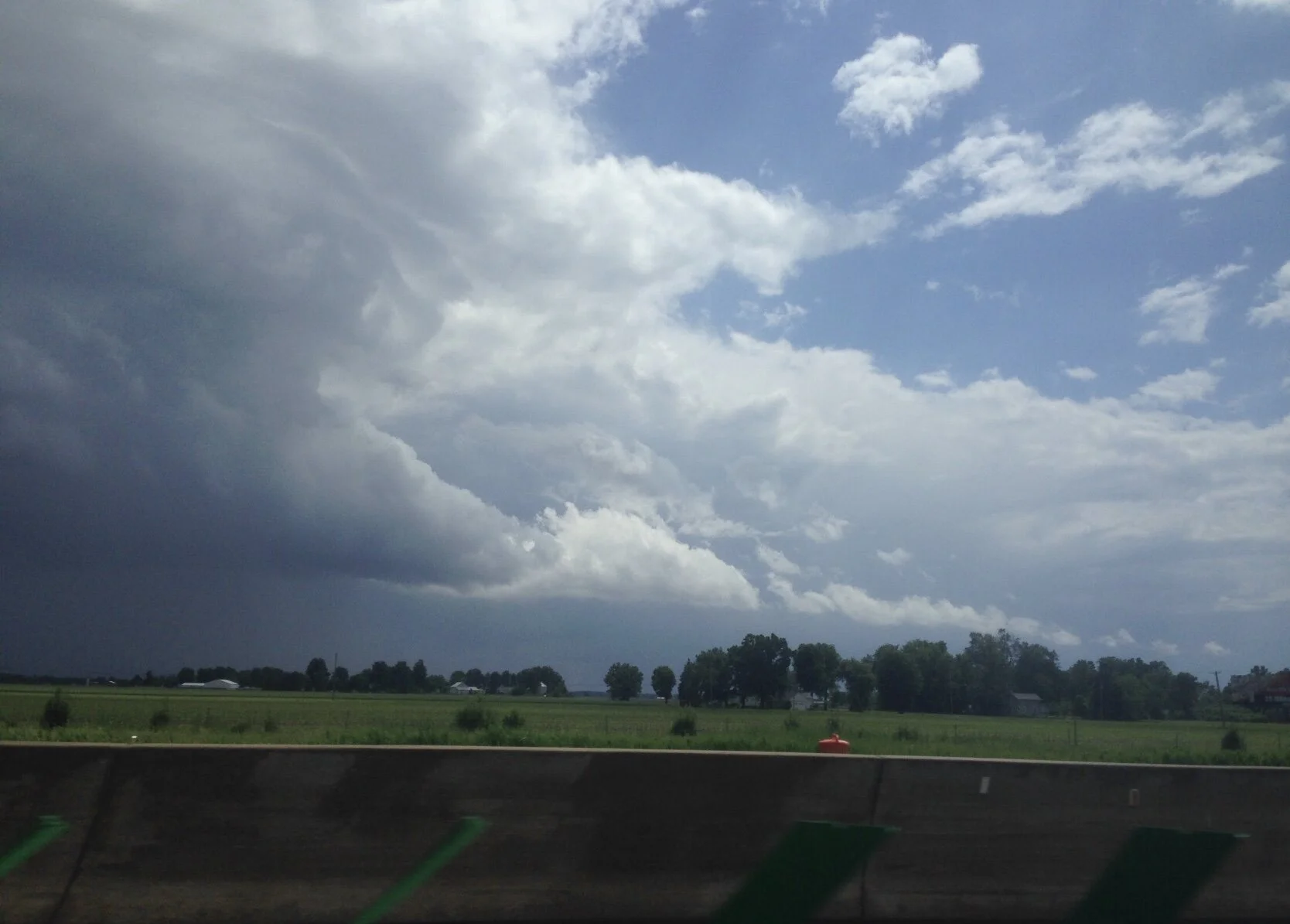
Photo by Ugglewug
“Livid to lurid switched the sky.
From west, from sunset, now the great dome
Arched eastward to lip the horizon edge,
There far, blank, pale….
What most we fear advances on
Tiptoe, breath aromatic. It smiles….’’
— From “Sky,’’ by Robert Penn Warren (1905-1909), American poet, novelist and essayist. A native of Kentucky, he spent much of his adult in Fairfield, Conn., and Stratton, Vt., where he died and is buried.
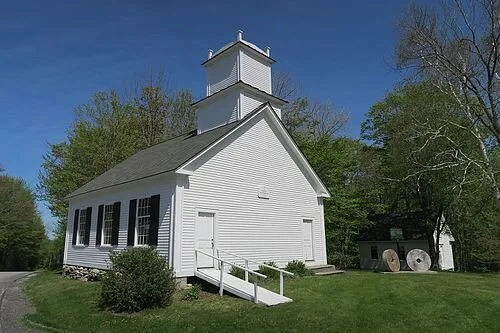
The Stratton Meetinghouse