
Vox clamantis in deserto








New England getting more goats

Milking a goat
Getting Their Goats
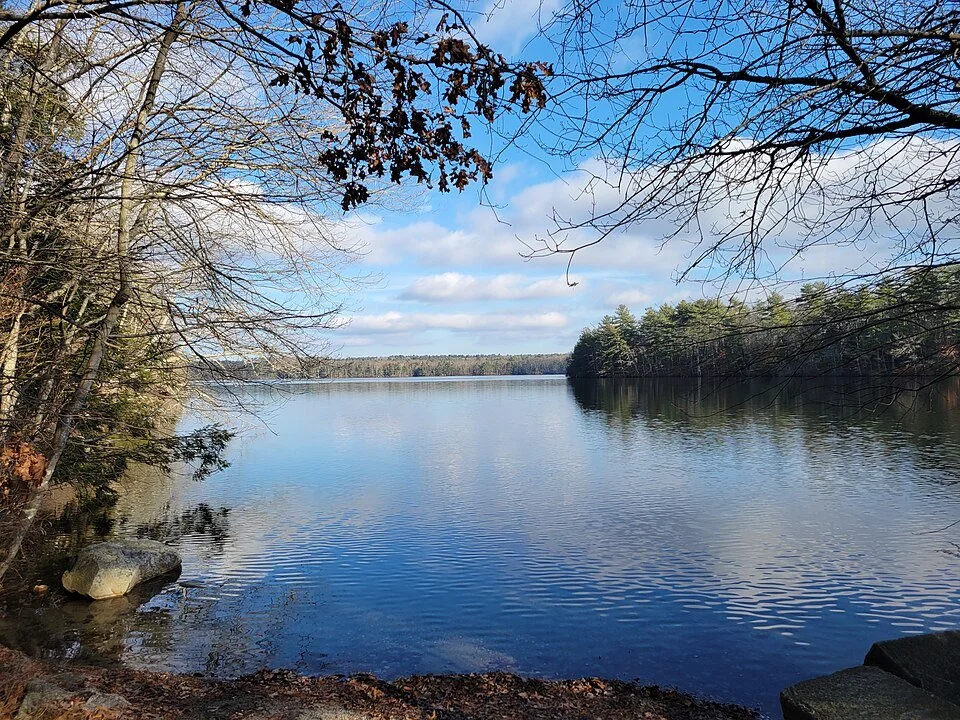
I spend quite a lot of time in rural upland New England, and have seen an increase in the number of farmers supplementing or even replacing the revenue from dairy cows and beef cattle with that from goats raised for their milk. The milk, and the cheese and yogurt made from it, is healthier for you than cows’ milk. And goats require less food and make fewer demands on the environment, including releasing less methane than cows. Further, they’re highly efficient at keeping land open; yes, goats really do feast on stuff that cows won’t touch.
Further, they’re much more entertaining: They have stronger personalities than cows. And look at the baby goat craze!

Goats are remarkably agile; some will climb trees to browse.
— Photo by Elgaard

Look at each other

“‘C.B.’, 2011, Brockton, Massachusetts’’ (photograph printed on weatherproof vinyl) by Mary Beth Meehan, at WaterFire Arts Center, Providence, in her show “Eye to Eye: Photographs and Projects.’’
The gallery explains that Ms. Meehan photographs the diverse American landscape and experience, while urging us to pay attention to each other across differences of race, class, culture and religion. The photographs from the artist’s in-depth projects explore Brockton, Mass.; Providence; Newnan, Ga., and Silicon Valley, California.’’

Frank Carini: Plastic pollution is burying a coastline

Rhode Island beach scene
—Photo by Frank Carini
From ecoRI News (ecori.org)
Dave McLaughlin has been organizing, leading and documenting Rhode Island shoreline cleanups for the past 15 years, and he’s noticed one item, which comes in all shapes, sizes and colors, becoming increasingly prevalent: plastic.
When the Middletown-based nonprofit he leads, Clean Ocean Access, began cleaning up Aquidneck Island’s coastline in 2006, staff and volunteers found bed frames, tires, refrigerators, glass bottles, aluminum cans and lots of fishing gear.
Today, a deluge of plastic now swamps the shoreline. McLaughlin said the petroleum-based tidal wave began about a decade ago. Besides the typical debris of plastic bags, straws, Capri Sun pouches, Styrofoam cups, candy wrappers and omnipresent cigarette butts — most filters are made of cellulose acetate, a plastic — this evolving pollution now features Jewel pods and the explosion of single-use plastics and multilayered packaging.
Multilayered packaging has several thin sheets of different materials, such as aluminum, paper and plastic, that are laminated together. It’s not made for recycling.
This growing amount of plastic packaging is washing up on shorelines worldwide, including along the Ocean State’s 420 miles of coast — arguably the state’s most important economic engine. In 2015, about 45 percent of plastic waste generated globally was from packaging materials, according to a 2018 white paper. A 2017 report found up to 56 percent of plastic packing manufactured in developing countries consists of multilayered materials.
It’s been estimated that every U.S. household uses nearly 60 pounds of multilayered packaging annually. Most isn’t or can’t be recycled, and much, like other plastic-related trash, ends up in the sea or washed up along the coast.
As of 2019, Clean Ocean Access had held 1,171 cleanups and removed nearly 69 tons of marine debris — about 118 pounds per cleanup — from Aquidneck Island’s shoreline and out of its coastal waters. Of the 14 most common items collected on land, half have been predominantly plastic: straws and stirrers; 6-pack holders; food wrappers; caps and lids; bottles; bags; and toys, according to the organization’s 2006-2019 Clean Report.
Of the 13 most common items pulled from the marine waters of Portsmouth, Middletown and Newport, five are plastic heavy: bleach and cleaning bottles; fishing line; sheets and tarps; strap bands; and buoys and floats.
All of these plastic items, on land and in the water, continue to break down into smaller and smaller toxic pieces that work their way up the food chain.
July Lewis, volunteer manager for Save The Bay, has been involved with shoreline cleanups since 2007. She said the one trend that is inescapable is the growing amount of microplastics and “tiny trash” — what she called pulverized pieces of bottle caps, cups and other plastics — that litter Rhode Island’s coastline.
“We are seeing more and more of it every year,” Lewis said. “It’s become part of the ecosystem.”
Peter Panagiotis, the well-known professional surfer better known as Peter Pan, has been surfing in Rhode Island waters, mostly along the coast of Narragansett, since 1963. He told ecoRI News that plastic now litters the coastline.
“There’s more plastic pollution, especially in the winter there is garbage everywhere,” the Pawtucket resident said. “Plastic pollution is the problem. There’s a lot more plastic garbage.”
Plastic debris makes up a growing amount of the material that is picked up annually during Save The Bay coastal cleanups. In 2019, 2,807 volunteers collected 7.8 tons of trash along 94 miles of shoreline — or about 5.5 pounds per person and 166 pounds per mile.
Of the material collected that year, plastic and foam pieces less than 2.5 centimeters long accounted for 27 percent of all the rubbish collected — 42,841 pieces of tiny trash. Microplastics, pieces less than 5 millimeters long (0.5 centimeters), are harder to see and pick up, but they are a growing presence.
The repulsive 2019 haul included plenty of other plastic: candy and chip wrappers (11,136); bags (6,213); straws and stirrers (4,629); lids (1,942); and utensils (1,050).
For nearly a decade, Geoff Dennis has been a one-man cleanup crew for the Little Compton shoreline. Dennis “got a taste for trash” while walking along Goosewing Beach in 2012.
“It really bothers me. The first time I walked with the dog, I came back with over 100 Mylar balloons,” he told ecoRI News in 2017. “If I can start a conversation with people about it, that’s great. But most people just don’t care.”
Between 2012 and 2020, the longtime quahogger picked up 35,607 pieces of trash along the banks of the Sakonnet River and at Goosewing Beach Preserve and a few other places. The vast majority of it was some form of plastic, from bottles to wads for shotgun shells.
In fact, the amount of plastic he has collected just along Little Compton waters is shocking:
Balloons made from the resin polyethylene terephthalate, a clear, strong and lightweight plastic belonging to the polyester family and commonly referred to as Mylar, a registered trademark owned by Dupont Tejjin Films (2012-20): 8,510. That total doesn’t include the 1,194 latex balloons he collected in 2019 and ’20.
Plastic bottle caps (2017 and 2020): 4,107.
Plastic shotgun shells (2017 and 2020): 1,552.
Plastic wads for shotgun shells (2017 and 2020): 527.
Plastic straws (2016-19): 1,526.
Plastic snack bags (2015-2020): 867.
Plastic bags (2018-2020): 440.
Plastic and foam cups (2018-2020): 386.
Plastic coffee cup lids (2020): 94
K-Cup pods (2019 and 2020): 210.
Plastic nips (2020): 207.
Plastic lighters (2017 and 2020): 188.
Plastic bottles and aluminum cans (2012-2020): 15,324.
In some places along Rhode Island’s marine waters, such as Fields Point in Providence, plastic pollution is now part of the shoreline environment. (Save The Bay)
Lewis noted that in some places, such as Fields Point, at the head of Narragansett Bay in Providence, plastic litter is indistinguishable from the natural world. She said most of this shoreline litter is generated from eating, drinking and smoking.
Save The Bay, too, is finding plenty of plastic flotsam and jetsam bobbing in Rhode Island’s coastal waters. The Providence-based organization is playing a leading role in establishing baseline data on the amount of microplastics within the Narragansett Bay watershed. The goal is to highlight this growing problem and draw attention to regional efforts to eliminate single-use plastics, such as cups, straws and bags.
The three staffers — Michael Jarbeau, Kate McPherson and David Prescott — largely responsible for conducting Save The Bay’s trawls for plastic have been surprised by how much they have found in local waters. When they started, they expected some microplastic trawls would come up empty. They’re still waiting for that to happen.
The crew has done more than 24 surface trawls, and every one has produced plastic bits, from nurdles, the raw building blocks for plastic bottles, bags and straws, to microfibers from polyester fleeces and other synthetic clothing to microbeads, which are used in exfoliating scrubs and in some toothpastes.
All of this overused plastic is changing the composition of Rhode Island’s marine waters. These petroleum byproducts don’t biodegrade. They remain in the environment for centuries. Their long-term impacts on environmental and public health aren’t close to being fully understood. Their impact on the natural world, however, has already been well documented.
Plastic bags float in Narragansett Bay, Block Island Sound and the Ocean State’s other marine waters like jellyfish. Turtles, whales and other sea animals often mistake them for food, causing many to starve or choke to death.
Adult seabirds inadvertently feed tiny trash to their chicks, often causing them to die when their stomachs become filled with fake food. As plastic breaks down into smaller fragments — microplastics may contain toxic chemicals as part of their original plastic material or adsorbed environmental contaminants such as PCBs — fish and shellfish become increasingly vulnerable to the toxins these polluted particles collect.
At least two-thirds of the world’s fish stocks are suffering from plastic ingestion, including local seafood favorites striped bass and quahogs.
On the positive side of the Ocean State’s shoreline trash problem, both McLaughlin and Lewis said they are seeing less dumping of big items, such as tires and appliances.
clean-ups by volunteers seem futile, a new batch will soon appear. Why aren't officers of the companies that make these plastics required to clean it up or pay someone to do so?
Frank Carini is editor of ecoRI News.

'Immortal force no longer needed'


— Photo by Neeme Sihv
The farmhouse lingers, though averse to square
With the new city street it has to wear
A number in. But what about the brook
That held the house as in an elbow-crook?
I ask as one who knew the brook, its strength
And impulse, having dipped a finger length
And made it leap my knuckle, having tossed
A flower to try its currents where they crossed.
The meadow grass could be cemented down
From growing under pavements of a town;
The apple trees be sent to hearth-stone flame.
Is water wood to serve a brook the same?
How else dispose of an immortal force
No longer needed? Staunch it at its source
With cinder loads dumped down? The brook was thrown
Deep in a sewer dungeon under stone
In fetid darkness still to live and run—
And all for nothing it had ever done
Except forget to go in fear perhaps.
No one would know except for ancient maps
That such a brook ran water. But I wonder
If from its being kept forever under,
The thoughts may not have risen that so keep
This new-built city from both work and sleep.
“A Brook in the City,’’ by Robert Frost (1874-1963)
—
Chris Powell: Connecticut’s ‘self-defense’ terrorists

Bring them in.
MANCHESTER, Conn.
Connecticut has its own aspiring terrorist and subversive group, and it's not the Ku Klux Klan, the Proud Boys or even al-Qaeda.
No, it's the Self-Defense Brigade of "the Reverend" Cornell Lewis, of Hartford and Power Up Connecticut founder Keren Prescott, of Manchester, who are stomping around the state displaying guns and other weapons to show that they are serious about interfering with anyone they dislike and eventually overthrowing democratic government.
In candid interviews with the {Manchester} Journal Inquirer's Eric Bedner, Lewis and Prescott maintained that they aren't going to follow the laws and rules of decent conduct that apply to everyone else. Their politics elevates them above those things.
The Lewis-Prescott gang first paraded its guns at a protest June 9 at the site of construction of an Amazon warehouse in Windsor, Conn., in which two nooses had been found without any accompanying explanation. "There is nothing like Black people exercising their Second Amendment right to get folks moving," Prescott said. "We are tired of being nice."
Of course flaunting guns is a bit more threatening than whatever those unattended nooses meant.
Two days later on the Windsor town green the Lewis-Prescott gang broke up a "unity" rally against racism. Gang members, supposedly foes of racism, hurled racist taunts at the rally's organizers.
Prescott warns: "We are going to continue to disrupt."
Indeed, Lewis threatens the warehouse project with destruction. "We're going to close it down," he says. "They're not going to be able to work on that site for a while after we're finished with it."
Lewis's ambition goes farther. "Democracy," he says, "has failed the oppressed in this country. I believe democracy gave birth to and continues to nurture the endemic racism that the oppressed face. We must disrupt, dismantle, and then disperse the democratic system because it does not help us in our existential condition and the oppression we live with."
Of course, the country is full of self-obsessed loons who ordinarily are of little importance. The problem with the Lewis-Prescott gang is that state and local government officials, members of the clergy, and other well-meaning people, especially in Windsor and Manchester, have been humoring the gangsters either in the belief that their objectives have merit or out of fear of becoming their next target.
But the more the gangsters are humored, the more threatening they get.
The country and Connecticut are also full of racial disparities arising from pernicious government policies, such as social promotion in schools, subsidies for fatherlessness and exclusive zoning. But the Lewis-Prescott gang's obsession and fetish, the nooses found at the Amazon warehouse, could not be less relevant to racial justice. One of these days the worthies who have been humoring and helping to publicize the gang should find the courage to stop and leave them to the police and FBI.
xxx
For a few days six weeks ago the killing of Henryk Gudelski was a sensation in Connecticut. But it has disappeared from the news and discussion at the state Capitol, where legislators expressed concern about it before adjourning. Gudelski was the 53-year-old New Britain resident run down in the city June 29 by a stolen car apparently driven by a 17-year-old boy with a long criminal record who still had been freed by the juvenile-justice system.
Legislative leaders said they would review juvenile justice procedures but nothing has happened, probably because nobody in authority wants to press the crucial questions, which were implied by a former state legislator and criminal justice expert who discussed the case in a radio interview two weeks ago. Somebody, the former legislator acknowledged, had "really messed up."
Indeed — but exactly who, how, and why, and how can the public and its representatives find out as long as the juvenile justice system remains secret by law? How does that secrecy benefit justice?
Of course it doesn't. Secrecy benefits only the proprietors of the system.
But this secrecy will be preserved because in Connecticut exempting government employees and failed policies from accountability remains more important politically than Gudelski's life — and anyone else's.
Chris Powell is a columnist for the Journal Inquirer, in Manchester.
The mosquito air force

“Taking Flight’’ (mixed media on braced panel), by Fran Busse, at Alpers Fine Art, Andover, Mass. She’s based in West Concord, Mass.

Diversifying a rural N.H. college

The Lyons Academic Center at New England College, in Henniker, N.H.
Via The New England Council (newenglandcouncil.com)
BOSTON
“In a state where colleges and universities struggle to recruit racially diverse student bodies, New England College, whose main campus is in Henniker, N.H., has gained recognition for its commitment to recruiting diverse students. To date, 36.2 percent of the college’s 1,135 resident students identify as African-American, Hispanic, Asian, or more than one race.
“New England College’s success comes as a result of a recruitment strategy overseen by the college’s president, Michelle Perkins. Through this strategy, demographic data provided through standardized testing is purchased and then used to identify and target racially diverse students for recruitment. Moreover, New England College focuses this recruitment tactic on students from working-class communities in locations in and outside of New England, such as Philadelphia, New York and parts of Florida.
“When others doubted President Perkins’s goal of achieving campus diversity in a rural area of predominantly white New Hampshire, her response was simple: ‘I didn’t believe it.’
“‘We’ve invested a lot in identifying students from all over the country. A lot of them are first-generation college students. Usually, when you are a first-generation student, you have financial needs. We are very generous in our scholarship and grant programs,’ she explained.’’

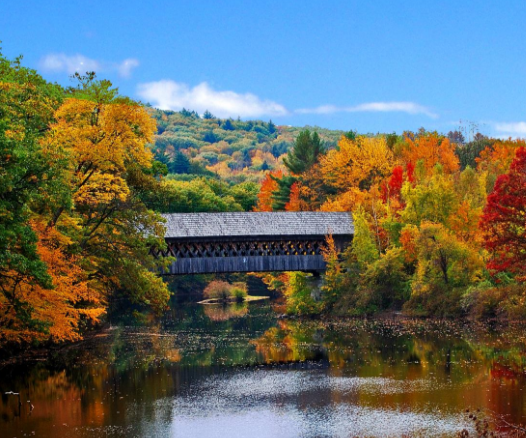
Henniker Bridge, over the Contoocook River, connects the college’s main campus with its athletic fields and the town center and is listed on the New Hampshire State Register of Historic Places.
— Photo by ctchmeifucan

New England College’s Institute of Art & Design in Manchester, N.H.
Seen from (a) space
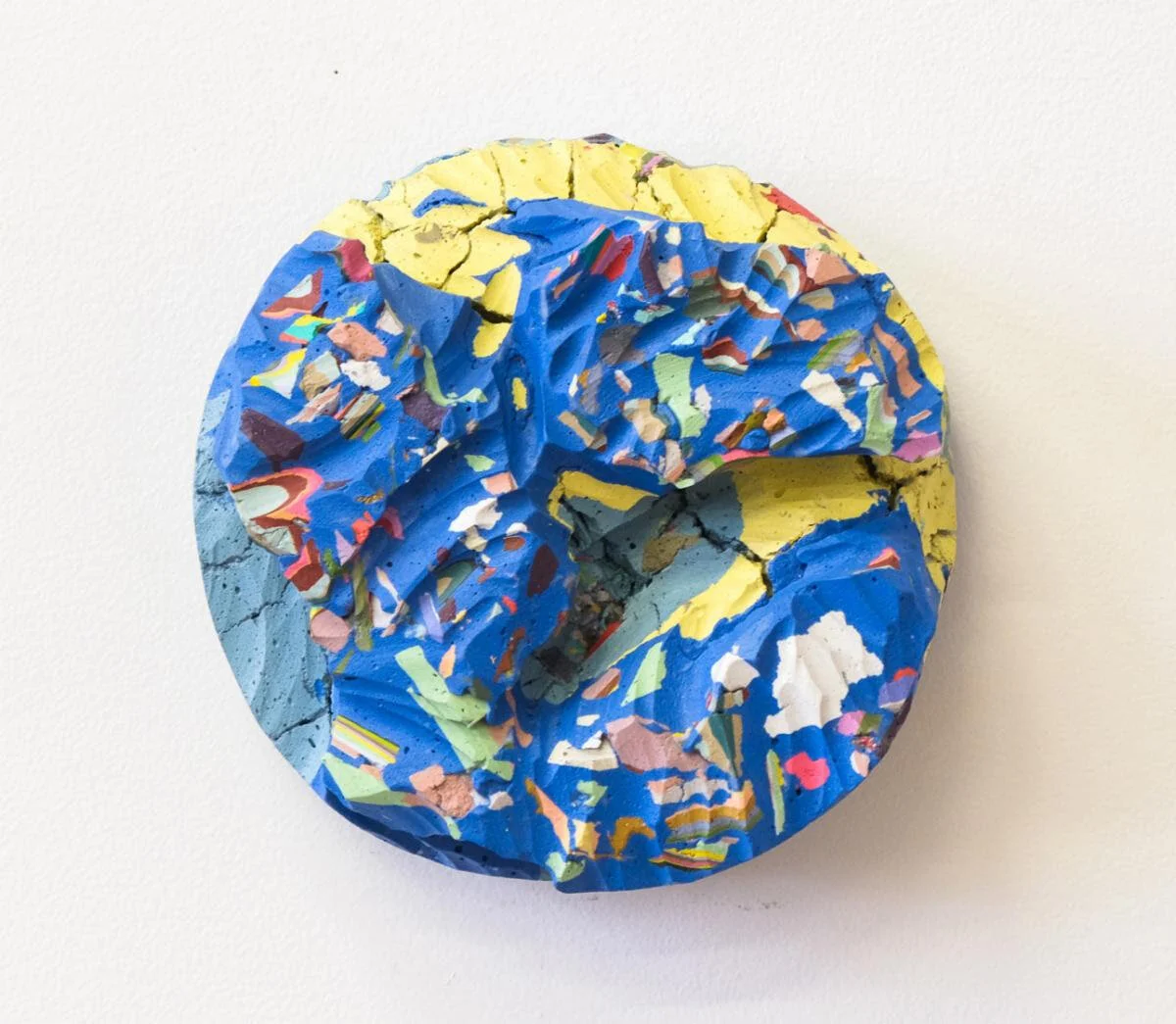
“Lucekke {a surname} Conglomerate” (paint, gypsum powder, resin), by John V. Ralston, in the “New England Regional Collective ‘‘ show at Galatea Fine Art, Boston, Aug. 6-Aug. 29
Black or white only
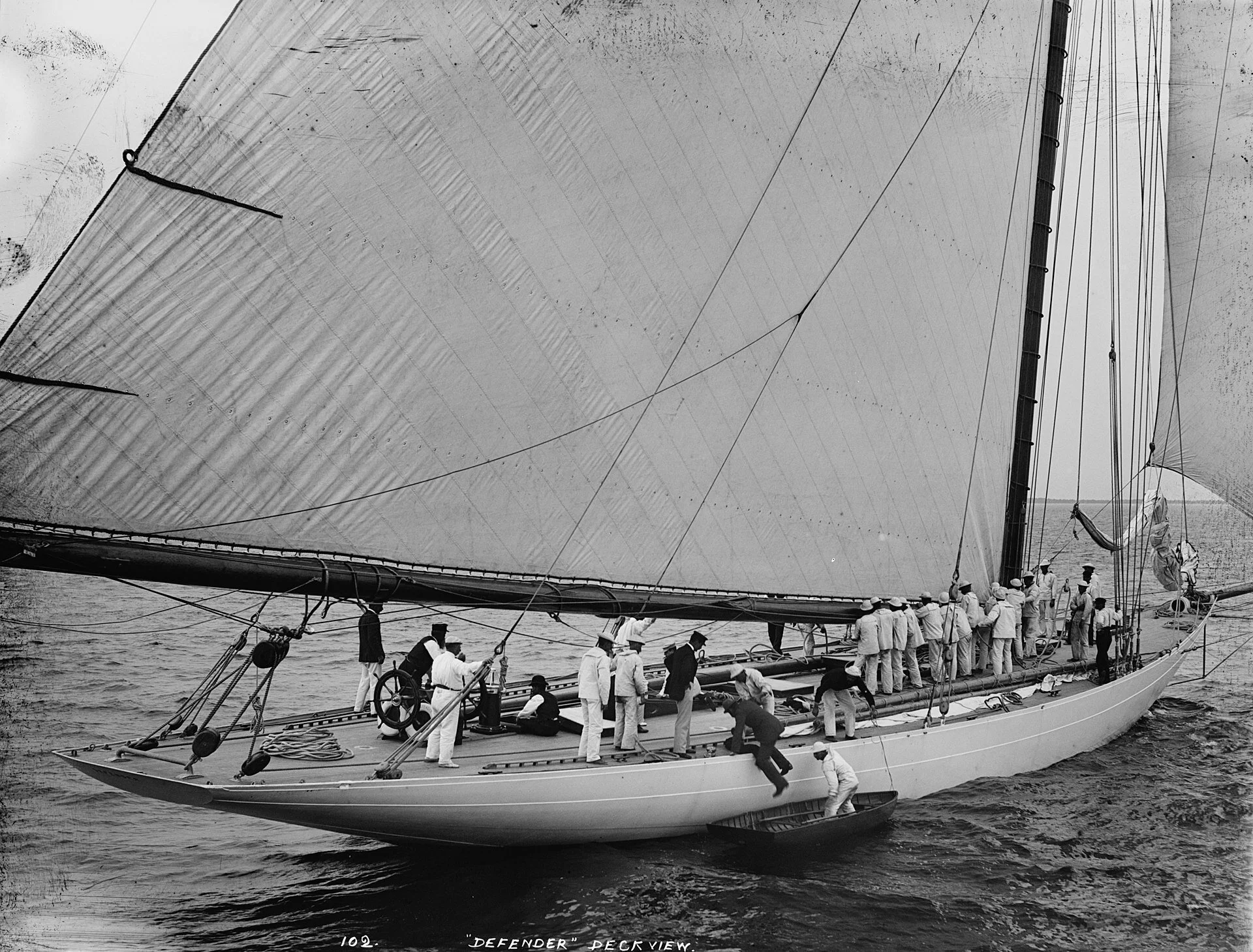
Nathanael Herreshoff climbing aboard Defender in 1895; Herreshoff designed five successful America’s Cup defenders in 1993-1920, including Defender.
-- Photo by John S. Johnston
“There are only two colors to paint a boat, black or white, and only a fool would paint a boat black.’’
— Nathanael G. Herreshoff (1848-1938), famed naval architect. He was born and died in Bristol, R.I. He died on June 2, 1938, thereby missing the great hurricane that wrecked the Herreshoff boatyard in Bristol on Sept. 21 of that year.
Star power

“Star’’ (mixed media), by Paul Resika and the late Varujan Boghosian, in a show at the Berta Walker Gallery, Provincetown, Mass., through Aug. 14.
The gallery’s motto is “the history of American Art as seen through the eyes of Provincetown.’’
Don Pesci: Unstable Democratic coalition is breaking down

— Photo by Heptagon
VERNON, Conn.
Former Vice President Joe Biden may have campaigned for president as a Kennedy Democrat, but his nose ring while in office has been fashioned in a far-left smithy. And whenever Biden feels the tug, he moves inexorably to the left.
When the late Barry Goldwater said “If you lop off California and New England, you’ve got a pretty good country,” he meant that the ideological and historical center of the country should be central to Democrat and Republican politics.
U.S. House Speaker Nancy Pelosi and U.S. Senate Majority Leader Chuck Schumer naturally think differently. The locus of political power within the Democratic Party is precisely that portion of the country Goldwater would have lopped off, the New England states plus New York and California. Pelosi is from California, Schumer from New York.
Since the Obama administration, the national Democratic Party has been able to cobble together a majority by including within its “Big Tent,” more narrowly constricted ideologically than most people realize, an eccentric coalition of the supposed disenfranchised: African Americans, some of whom are now straying dangerously into conservative territory; working women, enfranchised by the 19th Amendment, enacted in 1920, and liberated from their kitchens by World War II; paroled criminals; libertarian drug users; chronic gamblers; citizens of Honduras who have crashed our border with Mexico and who, some mildly assert, may not be prevented from voting in U.S. elections if they are not compelled to produce at poll stations proof of citizenship; Critical Race Theorists who really do believe, solipsistically, that U.S. history has always revolved around a racial- discrimination pole; teachers who would rather stay home than teach; a Coronavirus-sidelined General Assembly that continues to rent out to Connecticut’s governor powers and responsibilities the constitution assigns to legislators; cities, most of them run by Democrats during the past half century, smoldering in violence and crime induced, leftists believe, by ill-mannered, unrestrained cops; and so on and so on…
We are witnessing the breakdown of this temporary and unstable coalition. And the battering rams smashing it are unblinking views of reality.
The mother of a three-year-old child murdered by a 19 year-old kid who couldn’t shoot straight knows, in her heart of hearts, that the politicians who showed up in Hartford to mug for the TV cameras were not there to help, because nothing they had done in the past half century in Hartford had helped to reduce crime or make any Connecticut large city as pleasant and prosperous a place to live as, say, Glastonbury, a suburb of Hartford lately experiencing its own uptick in crime.
In a previous posting, “Politicians And The Memory Hole”, this writer predicted at the time that “it would take politicians who turned up to commiserate with stricken family members – [Connecticut Sen. Dick] Blumenthal, known to show up, as he said, ‘at garage door openings,’ appeared to be absent without a by-your-leave -- only a few hours to forget the child’s name. A 29 year-old woman, walking her dog a few blocks from the murder scene, was asked by a reporter to comment. ‘I was raised in this neighborhood,’ she said, ‘It’s always been kind of a thing, especially when the weather starts to warm up. It’s kind of expected.’”
Along with the dominant Democratic Party in Connecticut, leaning left for a good many years, those who report on politics in the state also are left-leaning. Partly, this is natural. Reporters report on power-players, and the Connecticut GOP, especially in cities, has been unplugged for a long while. Editorial page editors listing left are temperamentally hostile to contrarians, many of them preferring supportive opinion that reaffirm editorial views.
It is human nature to purr at flattery.
“Everyone likes flattery,” Benjamin Disraeli, British prime minister in Victorian days, said, “and when you come to royalty, you should lay it on with a trowel.”
Leading Democrats in Connecticut are the state’s royalty.
Contrarian opinion on op-ed pages is a marker indicating editorial vigor. To put it mildly, one does not find contrarian opinion on matters affecting the state laid on with a trowel in most Connecticut news publications. Then too, it is easier, indeed effortless, to swim with rather than against the current. G. K. Chesterton, a favorite contrarian, tells us that even a dead thing can flow with the current, but only a live body can struggle effectively against the current. Swimming upstream against the current is becoming in Connecticut a rare heroic act.
If Republicans were to capture more seats in the General Assembly, maybe even the governor’s office, Connecticut’s media might, for business reasons, be more open to contrary opinion. And, of course, contrarian opinion just might enliven papers and boost sagging sales.
Don Pesci is a Vernon-based columnist.
Julie Appleby: Biogen launches propaganda campaign to promote its costly Alzheimer’s drug

Cognitive tests such as the Mini–Mental State Examination (MMSE) can help diagnose Alzheimer's disease. In this test instructions are given to copy drawings like the one shown, remember some words, read, and subtract numbers serially.
Do you sometimes lose your train of thought or feel a bit more anxious than is typical for you?
Those are two of the six questions in a quiz on a Web site co-sponsored by the makers of Aduhelm, a controversial new Alzheimer’s drug. But even when all responses to the frequency of those experiences are “never,” the quiz issues a “talk to your doctor” recommendation about the potential need for additional cognitive testing. The drug would cost an estimated $55,000 a year per patient.
Facing a host of challenges, Aduhelm’s makers Cambridge, Mass.-based Biogen and its partner Tokyo-based Eisai are taking a page right out of a classic marketing playbook: Run an educational campaign directed at the consumer, one who is already worried about whether those lost keys or a hard-to-recall name is a sign of something grave.
The campaign — which also includes a detailed advertisement on The New York Times’ Web site, a Facebook page and partnerships aimed at increasing the number of places where consumers can get cognitive testing — is drawing fire from critics. They say it uses misleading information to tout a drug whose effectiveness is widely questioned.
“It’s particularly egregious because they are trying to convince people with either normal memories or normal age-related decline that they are ill and they need a drug,” said Dr. Adriane Fugh-Berman, a pharmacology professor at Georgetown University Medical Center, who wrote about the website in an opinion piece.
The Web site’s “symptoms quiz” asks about several common concerns, such as how often a person feels depressed, struggles to come up with a word, asks the same questions over and over, or gets lost. Readers can answer “never,” “almost never,” “fairly often” or “often.” No matter the answers, however, it directs quiz takers to talk with their doctors about their concerns and whether additional testing is needed.
While some of those concerns can be symptoms of dementia or cognitive impairment, “this clearly does overly medicalize very common events that most adults experience in the course of daily life: Who hasn’t lost one’s train of thought or the thread of a conversation, book or movie? Who hasn’t had trouble finding the right word for something?” said Dr. Jerry Avorn, a professor of medicine at Harvard Medical School who has been sharply critical of the approval.
Aduhelm was approved in June by the Food and Drug Administration, but that came after an FDA advisory panel recommended against it, citing a lack of definitive evidence that it works to slow the progression of the disease. The FDA, however, granted what is called “accelerated approval,” based on the drug’s ability to reduce a type of amyloid plaque in the brain. That plaque has been associated with Alzheimer’s patients, but its role in the disease is still being studied.
News reports also have raised questions about FDA officials’ efforts to help Biogen get Aduhelm approved. And consumer advocates have decried the $56,000-a-year price tag that Biogen has set for the drug.
On the day it was approved, Patrizia Cavazzoni, the FDA’s director of the Center for Drug Evaluation and Research, said the trial results showed it substantially reduced amyloid plaques and “is reasonably likely to result in clinical benefit.”
Describing the Web site as part of a “disease awareness educational program,” Biogen spokesperson Allison Parks said in an email that it is aimed at “cognitive health and the importance of early detection.” She noted that the campaign does not mention the drug by name.
On July 22, in “an open letter to the Alzheimer’s disease community,” Biogen’s head of research, Dr. Alfred Sandrock, noted the drug is the first one approved for the condition since 2003 and said it has been the subject of “extensive misinformation and misunderstanding.” Sandrock stressed a need to offer it quickly to those who have only just begun to experience symptoms so they can be treated before the disease moves “beyond the stages at which Aduhelm should be initiated.”
While the drug has critics, it is also welcomed by some patients, who see it as a glimmer of hope. The Alzheimer’s Association pushed for the approval so that patients would have a new option for treatment, although the group has objected to Biogen’s pricing and the fact that it has nine years to submit follow-up effectiveness studies.
“We applaud the FDA’s decision,” said Maria Carrillo, chief science officer for the association. “There’s a benefit to having access to it now” because it is aimed at those in the early stages of dementia. Those patients want even a modest slowdown in disease progression so they have more time to do the things they want to accomplish, she said.
The drug is given by infusion every four weeks. It also requires expensive associated care. About 40 percent of the patients in the trials experienced brain swelling or bleeds, so regular brain imaging scans are also required, according to clinical trial results and the drug’s label. In addition, patients will likely need to be checked for amyloid protein, which is done with expensive PET scans or invasive spinal taps, according to Alzheimer’s experts.
To educate more potential patients, and customers, Biogen announced it has teamed with CVS to offer cognitive testing, and with free clinics for dementia education efforts.
Biogen is also picking up some of the laboratory costs for patients who get a spinal tap.
Still, the drug faces headwinds: There’s a congressional probe of the drug’s approval, the head of the FDA has called for an independent investigation of its review process, and there’s pushback from policy experts and insurers over its price, which they say could seriously strain Medicare’s finances. Some medical systems, including the Cleveland Clinic and Mount Sinai, say they won’t administer it, citing efficacy and safety data.
None of that is mentioned in Biogen’s campaign.
Instead, the advertisements and Web sites focus on what is called mild cognitive impairment, including a warning that 1 in 12 people over age 50 have that condition, which it describes as the earliest clinical stage of Alzheimer’s.
On its Web site, Biogen doesn’t cite where that statistic comes from. When asked for the source, Parks said Biogen’s researchers made some mathematical calculations based on U.S. population data and data from a January 2018 article in the journal Neurology.
Some experts say that percentage seems high, particularly on the younger end of that spectrum.
“I can’t find any evidence to support the claim that 1 in 12 Americans over age 50 have MCI due to Alzheimer’s disease. I do not believe it is accurate,” said Dr. Matthew S. Schrag, a vascular neurologist and assistant professor of neurology at Vanderbilt University Medical Center, in Nashville.
While some people who have mild cognitive impairment progress to Alzheimer’s — about 20 percent over three years — most do not, said Schrag: “It’s important to tell patients that a diagnosis of MCI is not the same as a diagnosis of Alzheimer’s.”
Mild cognitive impairment is tricky to diagnose — and not something a simple six-question quiz can uncover, said Mary Sano, director of the Alzheimer’s Disease Research Center at the Icahn School of Medicine in New York.
“The first thing to determine is whether it’s a new memory problem or a long-standing poor memory,” said Sano, who said a physician visit can help patients suss this out. “Is it due to some other medical condition or a lifestyle change?”
Carrillo, at the Alzheimer’s Association, agreed that MCI can have many causes, including poor sleep, depression or taking certain prescription medications.
Based on a review of medical literature, her organization estimates that about 8 percent of people over age 65 have mild cognitive impairment due to the disease.
She declined to comment on the Biogen campaign but did say that early detection of Alzheimer’s is important and that patients should seek out their physicians if they have concerns rather than rely on “a take-at-home quiz.”
Schrag, however, minced no words in his opinion of the campaign, saying it “feels like an agenda to expand the diagnosis of cognitive impairment in patients because that is the group they are marketing to.”
Julie Appleby is a journalist with Kaiser Health News.

‘Moxie' —the painting, the drink and the courage

“Moxie” (acrylic on canvas), by William Conlon, in the group show art “Here & There,’’ at Cove Street Arts, Portland, Maine, through Sept. 11. Mr. Conlon lives and works on an island in Portland in the summer and in New York City in the fall.
The show features the work of 16 artists bridging the Pine Tree State and New York City.
The gallery says: “Since the early 1800s, artists have been drawn to Maine for its rugged coastline, its mysterious, primeval-feeling forests, and its magnificent quality of light. Later, Modernists such as Marsden Hartley, John Marin, Max Weber, and Marguerite and William Zorach made their summer homes here, establishing a trend that continued, post-World War II, when Maine became an annual destination for New York artists seeking respite and rejuvenation from the grit and the fast-flashing pace of the city.”
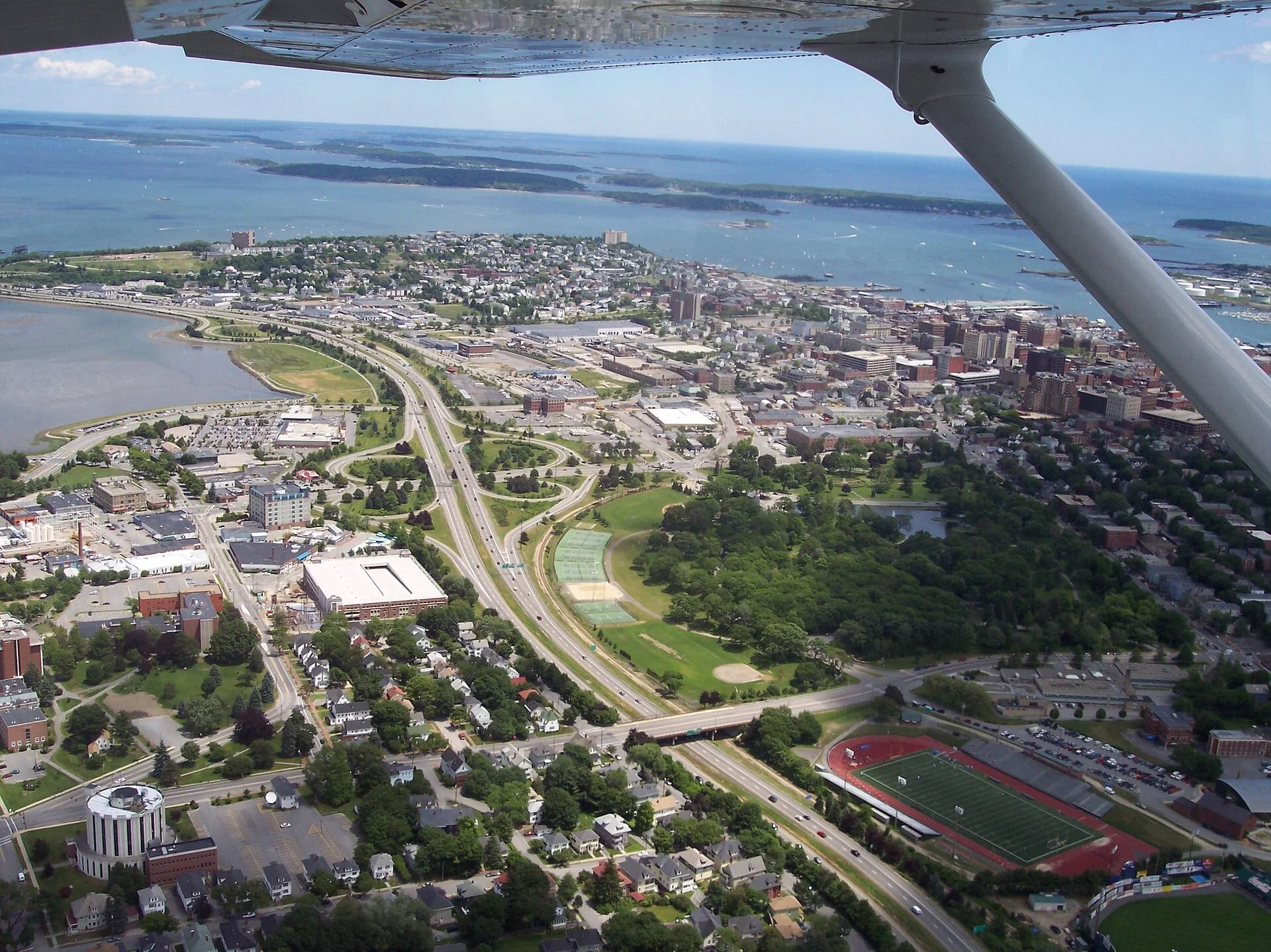
Portland from above, looking north along I-295. Note the islands in Casco Bay.
— Photo by Tye dye 9205

The word “moxie’’ has New England roots. It’s a carbonated beverage brand that was among the first mass-produced soft drinks in the United States. It was created around 1876 by Augustin Thompson (born in Union, Maine) as a patent medicine called "Moxie Nerve Food" and was produced in Lowell, Mass.
It’s flavored with gentian root extract, a very bitter substance commonly used in herbal medicine.
Moxie, designated the official soft drink of Maine in 2005, continues to be regionally popular today, particularly in New England. It was produced by the Moxie Beverage Co. of Bedford, N.H., until Moxie was purchased by The Coca-Cola Co. in 2018.
The name has become the word "moxie" in American English, meaning courage, daring, or determination. It was a favorite word of the ruthless Joseph P. Kennedy, father of the famous political family that included President John F. Kennedy. If he liked someone, he’d say “he has moxie!
'The world as given'
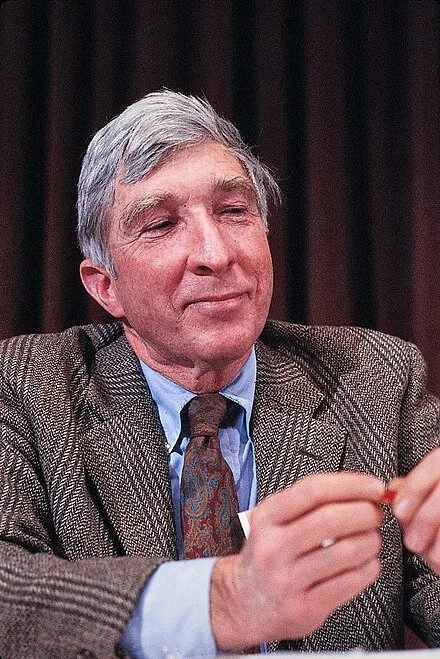
John Updike in 1986
“To say that war is madness is like saying that sex is madness: true enough, from the standpoint of a stateless eunuch, but merely a provocative epigram for those who must make their arrangements in the world as given.’’
— John Updike (1932-2009), in Self-Consciousness, a memoir. Updike was a celebrated novelist, poet, short-story writer, art critic and literary critic. Raised in Pennsylvania, he spent most of his life on the Massachusetts North Shore, including Ipswich, Georgetown andfor his last 30 years, in very affluent Beverly Farms. He came to be considered America’s leading man of letters.

— By Sswonk
Sam Pizzigati: Ego-space-tripping billionaires want more tax breaks
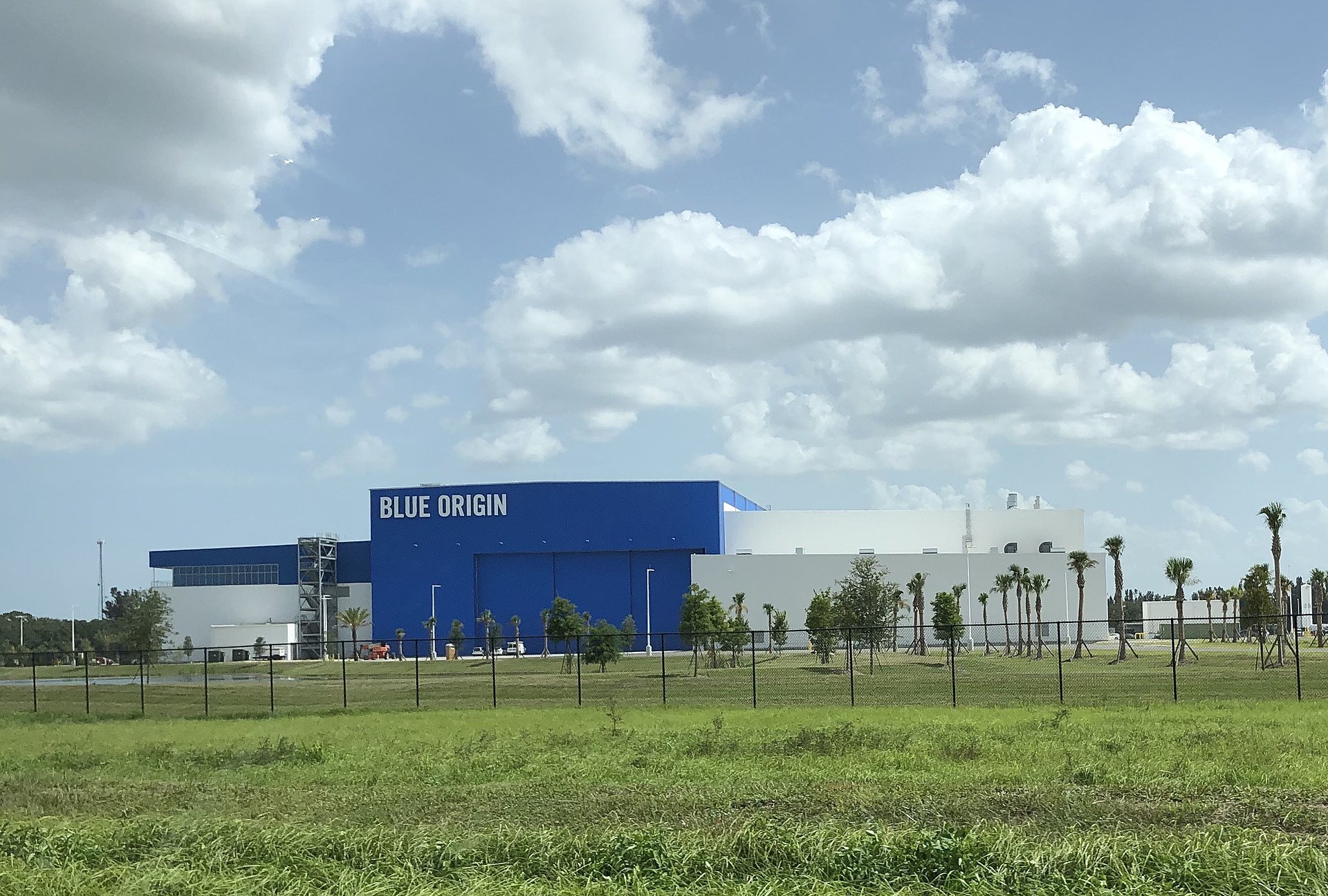
Jeff Bezos’s space-project production facilities near the Kennedy Space Center, in Florida
— Photo by MadeYourReadThis
Via OtherWords.org
BOSTON
Three of the richest billionaires on Earth are now spending billions to exit Earth’s atmosphere and enter into space. The world is watching — and reflecting.
Some charmed commentators say the billionaires racing into space aren’t just thrilling humankind — they’re uplifting us. The technologies they develop “could benefit people worldwide far into the future,” says Yahoo Finance’s Daniel Howley.
But most commentators seem to be taking a considerably more skeptical perspective.
They’re dismissing the space antics of Richard Branson, Jeff Bezos and Elon Musk as the ego trips of bored billionaires — “cynical stunts by disgustingly rich businessmen,” as one British analyst puts it, “to boost their self-importance at a time when money and resources are desperately needed elsewhere.”
“Space travel used to be about ‘us,’ a collective effort by the country to reach beyond previously unreachable limits,” writes author William Rivers Pitt. “Now, it’s about ‘them,’ the 0.1 percent.”
The best of these skeptical commentators can even make us laugh.
“Really, billionaires?” comedian Seth Meyers asked earlier this month. “This is what you’re going to do with your unprecedented fortunes and influence? Drag race to outer space?”
Let’s enjoy the ridicule. But let’s not treat the billionaire space race as a laughing matter.
Let’s see it as a wake-up call — a reminder that we don’t only get billionaires when wealth concentrates. We get a society that revolves around the egos of the most affluent and an economy where the needs of average people don’t particularly matter.
Characters like Elon Musk, notes Paris Max, host of the Tech Won’t Save Us podcast, are using “misleading narratives about space to fuel public excitement” and gain tax-dollar support for various projects “designed to work best — if not exclusively — for the elite.”
The three corporate space shells for Musk, Bezos and Branson — SpaceX, Blue Origin and Virgin Galactic — have “all benefited greatly through partnerships with NASA and the U.S. military,” notes CNN Business. Their common corporate goal: to get satellites, people, and cargo “into space cheaper and quicker than has been possible in decades past.”
Branson is hawking tickets for roundtrips “to the edge of the atmosphere and back” at $250,000 per head. He’s planning some 400 such trips a year, observes British journalist Oliver Bullough, about “almost as bad an idea as racing to see who can burn the rainforest quickest.”
The annual U.N. Emissions Gap Report last year concluded that the world’s richest 1 percent do more to foul the atmosphere than the entire poorest 50 percent combined. Opening space to rich people’s joyrides would stomp that footprint even bigger.
Bezos and Musk seem to have grander dreams than mere space tourism — they’re looking to colonize space. They see space as a refuge from an increasingly inhospitable planet Earth. And they expect tax-dollar support to make their various pipe dreams come true.
How should we respond to all this?
We should, of course, be working to create a more hospitable planet for all humanity. In the meantime, advocates are circulating tongue-in-cheek petitions that urge terrestrial authorities not to let orbiting billionaires back on Earth.
“Billionaires should not exist…on Earth or in space, but should they decide the latter, they should stay there,” reads one Change.org petition nearing 200,000 signatures.
Ric Geiger, the 31-year-old automotive-supplies account manager behind that effort, is hoping his petition helps the issue of maldistributed wealth “reach a broader platform.”
Activists like Geiger are going down the right track. We don’t need billionaires to “conquer space.” We need to conquer inequality.
Sam Pizzigati, based in Boston, is an associate fellow and co-editor of Inequality.org at the Institute for Policy Studies. He’s the author of The Rich Don’t Always Win and The Case for a Maximum Wage.
This op-ed was adapted from Inequality.org and distributed by OtherWords.org.

Ending the day in Gloucester

“Ten Pound Island {in Gloucester, Mass.} at Sunset” (1851) (oil on panel), by Fitz Henry Lane (1804-1865), at the Cape Ann Museum, Gloucester.

David Warsh: Monopolistic Amazon is headed for breakup

The Amazon Spheres, part of the Amazon headquarters campus in Seattle
SOMERVILLE, Mass.
Public sentiment that government should write new rules for the enterprise economy, comparable to the laws of 1892 and 1914, is growing. Firms based on Internet and block chain technologies in the 21st Century are proving comparable to the railroad, electricity and internal-combustion industries that emerged in the 19th (all of them based on the invention of interchangeable parts). Successful entrepreneurs have demonstrated that rules beyond the Sherman and Clayton Acts are required.
Meanwhile, there is Amazon.
One thing we learned from the Microsoft case in 2001 was that potentially successful anti-monopoly actions are possible. What’s required is drop-dead proof that the law has been broken and a remedy easy to understand. US District Court Judge Thomas Penfield Jackson, having ruled for the Justice Department that Microsoft has had deliberately snuffed out Netscape, set out to break Microsoft into two companies, one selling operating systems, the other applications
It didn’t happen; the conservative Washington, D.C., Circuit Court threw out the case on a technicality and politics moved on. But twenty years on, politics are back. It is intuitively obvious that the world would be a better place if the remedy had been effected. The Leviathan would have been forced to compete on two fronts instead of one. .
The Microsoft case is worth remembering when it comes to thinking about what to do about Amazon.
Matt Stoller, an anti-monopoly newsletter writer, thinks that Washington. D.C. Atty. Gen. Karl Racine has identified the smoking gun and filed suit. It’s that “free delivery” promise. It works like this, says Racine: a “most-favored nation” provision written into the Amazon contract requires that vendors not sell their goods for less in other venues, thereby raising aggregate prices to Amazon levels across the board and so harming consumers in the bargain – a violation of the Sherman Act.
For those who don’t want to read the 30-page government complaint (which is itself quite lucid), Stoller describes the argument clearly. It boils down to this: as founder Jeff Bezos himself put it in 2015, “Fulfillment by Amazon is important because it is the glue that inextricably links Marketplace and Prime.” A third of all shoppers abandon their carts when they see shipping charges. Amazon wants customers to think of whatever they have ordered and the promise of free shipping as part of their $119 annual membership fee as a unified “mega-product,” Stoller writes. What Bezos likes to call a “flywheel” exists to make the decision to buy all but inevitable. Indeed, Stoller continues, “Anytime you hear the word ‘flywheel’ relating to Amazon, replace it with ‘monopoly’ and the sentence will make sense.”
It seems clear to me from the government’s complaint that an “everything store” has no business in the delivery business, though it may take a long time to prove it in court. Bezos traveled to the edge of space on July 20, but Amazon is bound for break-up. Running afoul of the Sherman Act is one thing. The problems with Facebook, Google, Apple and Microsoft (and with the banking, pharmaceutical and agricultural industries) are more complicated. They have to do with advertising and big data. These new angles may require new legislation.
With Amazon, the question is what to do next. Nationalize Prime and fold it into the U.S. Postal Service? (Remember, the original charm of the postal system was the fact that purchase of a first-class stamp would insure that the letter would be delivered anywhere in the nation.) Or perhaps force a divestiture and set Prime in competition with United Parcel Service, Federal Express, and DHL? In that case, what to do about the USPS?
For now, it’s a question for the Department of Justice, the National Association of Attorneys General, and the economists they will eventually hire to devise remedies, (It was Rebecca Henderson, of the Harvard Business School; Paul Romer, then of Stanford University’s Graduate School of Business; and Carl Shapiro, of the University of California at Berkeley, who proposed the “ops and apps” remedy in the Microsoft case.)
President Biden still hasn’t nominated an assistant attorney general for Antitrust. Plenty of turmoil has been ongoing behind the scenes. For a reliable guide to the differences among the Chicago School, the Modern approach, and the Populists’ view, see “Antitrust: What Went Wrong and How to Fix It,” by Cal-Berkeley’s Shapiro. It seems fair to say that the whole world is watching.
. xxx
Andreu Mas-Colell, 77, is one of the most widely respected economists in the world, possessing rank as a teacher slightly different from that of a Nobel Prize-worthy researcher. He was a professor at the University of California, Berkeley, then Harvard University, and his microeconomics textbook is widely used in top graduate programs around the world. President of the Econometric Society in 1993, he left Harvard in 1995 to participate in the founding of the University of Pompeu-Fabra in his native Barcelona.
Named secretary general of the European Research Council, in 2009, he resigned a year later to become cabinet minister for the economy of Catalonia, four prosperous provinces in northeast Spain whose longstanding desire for independence has been an especially divisive issue since the restoration of Spanish democracy, in the 1970s. Mas-Colell resigned his post a year before Catalonia conducted a referendum in 2017 and declared itself autonomous in a manner deemed by the Spanish government to have been illegal.
As part of proceedings against 34 former Catalan officials, Mas-Colell was recently accused of misspending funds in pursuit of Catalonia’s independence. Spain’s Court of Auditors, an administrative body that oversees public accounts, imposed penalties of as much as €2.8 million (about $3.3 million) which the accused would have to pay immediately, before they can appeal them in court. Fellow economists around the world, have rallied to Mas-Colell’s defense, kept abreast of matters by his son, Alexandre. a Princeton University economist.
A friend in Barcelona writes:
The Catalan Government is trying to use (indirectly) public funds to post bail for the defendants; the Spanish government will take a careful look to make sure the arrangement is legally correct. Meanwhile, Mas-Colell has published a well-thought-out article stating that it is improper for an administrative tribunal to employ procedures normally the province of the judiciary. I assume all will end well (not for the reputation of the Court of Auditors) Mas-Colell? All through his life he has been willing to take risks and to make sacrifices for causes he thought were good.
Correspondent Xavier Fontdegloria writes in The Wall Street Journal, “Spain’s Socialist Prime Minister Pedro Sánchez is trying to defuse the long-running confrontation with Catalan nationalists by pursuing talks aimed at conciliation.”
David Warsh, a veteran columnist and an economic historian, is proprietor of Somerville-based economicprincipals.com, where this column first ran.

Robert Davey: Film would deconstruct what really happened to TWA Flight 800

Wreckage of TWA 800 being reconstructed at Calverton Executive Airpark, in Riverhead, New York, by the National Transportation Safety Board in May 1997

Flight path of TWA 800. The colored rectangles are areas from which wreckage was recovered.
BRIDGEPORT, Conn.
What would a documentary film about the crash of TWA Flight 800 look like? For more than six years I have been a member of a group of four journalists at a series of meetings (paused by the pandemic) to try to raise something over $1 million to make what we intend will be the definitive account of what really destroyed a 25-year-old Boeing 747-100 and killed its total of 230 passengers and crew, only 12 or so minutes after leaving Kennedy International Airport, in New York City, on an overnight flight to Paris on July 17, 1996. This year marks 25 years since the crash.
Our group is rich in experience. Three are veterans of TV news, while I owe my place on the team to my work reporting on the story for the Village Voice in the late 90s and early aughts. After three years, we were joined by physicist Tom Stalcup, whose own documentary film on the crash, TWA Flight 800, released in 2013, received favorable reviews. That film, directed by former CBS journalist Kristina Borjesson, raised questions about the official conclusion of the National Transportation Safety Board that an electrical fault produced a spark that ignited fuel vapors in the airplane’s almost empty center fuel tank. Tom was keen to join us and help make a second film that would finish the job.
Our film will show that the huge, gentle beast that was that 747, tail number N93119, was perfectly safe, with no hitherto unsuspected ignition sources lurking within its complex systems and miles of wiring.
As part of that effort I am looking forward to being able to demonstrate that the NTSB falsely insinuated that a tiny amount of liquid Jet A kerosene fuel—too little to register on the aircraft’s fuel gauges—could have evaporated inside a vast tank with a capacity of just under 13,000 gallons and then exploded with such force that the 400,000-pound aircraft disintegrated within seconds.
Government research into the flammability of hydrocarbon fuels and gases goes back to work done by the U.S. Bureau of Mines in the 1950s, and continued in the following decades with reports produced by the Navy and Air Force and Federal Aviation Administration. These reports explain that if there is too little fuel vapor per unit volume of air, the mixture will be too lean to burn, and if there is too much, it will be too rich to burn.
In our film it will be satisfying to be able to report that, for example, NTSB investigators were able to ignite a warm mixture of Jet A fuel vapor and air equivalent to what they estimated was contained within TWA 800’s center tank at about 13,700 feet, but only with a spark produced by a current far stronger than any on the 747. Even then, ignition only lasted for a brief moment. A mixture is not technically flammable unless it will burn independently of the ignition source, yet the NTSB’s tests never showed that this was possible with the vapor mixture investigators tested.
For most of its ignition experiments, the NTSB used small laboratory flasks, but the largest-scale and most spectacular of the tests that it showed the public was conducted in what it called a “quarter-scale” tank.
The safety board did not explain for reporters and family members that while its quarter-scale tank had dimensions a quarter of the size of the dimensions of TWA 800’s center fuel tank, its volume was really only one 64th the volume of a full-sized tank, about 200 gallons, although it acknowledged this size difference in a footnote of its report.
Size evidently matters when a mixture of fuel vapor and air is ignited, since some of the military research into fuel flammability established that the larger the container, the smaller the force produced when the military equivalent of Jet A vapor explodes.
The quarter-scale tests were no match for TWA 800’s center tank, which was 64 times larger. But apart from that, the NTSB used in its quarter-scale tests not Jet A vapor, but a mixture of propane and hydrogen and air, and an ignition source much more powerful than any that existed, even as a remote possibility, on any 747.
Yet investigators never demonstrated that the mixture’s explosive characteristics matched those of Jet A, at any altitude. Hydrogen, after all, is highly flammable, and propane is considered so dangerous that supermarkets bar customers from bringing even empty canisters inside the store.
On that question, I’d like to include a comment from a professor at Leeds University, in England, John Griffiths, co-author of Flame and Combustion (Blackie Academic and Professional, Third ed., 1995), who told me, after reviewing a description of the quarter-scale tests, that as the ignited mixture of propane and hydrogen and air encountered structural panels inside the tank, it became “turbulent,” a technical term meaning more rapid and violent. He said he’d be “astonished” if the ignition of a mixture of Jet A vapor and air would have developed in a comparable way.
And I would like our film to make public an incident that occurred in 1995, a little more than a year before its final flight, when N93119 was approaching Rome and was twice struck by lightning. The flight engineer told me the story, and he also showed me a photograph of the airplane after it landed safely at Rome, with its right-wing tip damaged by the lightning strikes. The tail number is clearly visible in the photo. He told me the lightning had charred wiring near the wing fuel tanks on that side. Yet no fire and explosion had happened, and the 747 had landed safely. I looked up the NTSB’s TWA 800 maintenance report, but I could not find any record of the lightning incident and the repairs to the wing, which were visible in a July 29, 1996, Time magazine cover photo of floating debris. Yet a Boeing spokesman told me that the information had been shared with the NTSB.
In a way, the 1995 incident was a bookend to another incident at Rome, in 1964, one that did not end so well, when another TWA Flight 800, a Boeing 707, struck a steamroller on the tarmac as the pilot was attempting to abort his takeoff after an engine failed. A flame traveled down the wing and into the center fuel tank, which exploded into a horrific fire. A total of 51 people were killed and another 23 injured.
The captain of the plane, Vernon William Lowell, wrote a book — Airline Safety Is a Myth — in which he blamed the disaster on the flammable fuel vapor in his almost-empty center tank—a situation uncannily similar to the NTSB’s probable cause for the 1996 TWA 800 explosion, except for the fact that the fuel in his tank was a fuel known as JP-4, a petroleum-derived mixture that was far more volatile than Jet A kerosene. He says that most airlines were already voluntarily switching to Jet A fuel, for safety’s sake, and wonders what was holding the FAA back from banning JP-4, also known as Jet B.
The NTSB, at a session on fuel flammability at its December 1997 TWA Flight 800 hearings, in Baltimore, for some reason never mentioned the earlier TWA 800, but instead focused on the case of PanAm Flight 214, a Boeing 707 that crashed in Elkton, Md., in December 1963 after lightning struck its left wing, a fuel tank containing a mixture of Jet A and Jet B exploded, and the wing fell off.
Lowell, the captain of the 1964 TWA 800, points to partially filled or empty fuel tanks as an unacceptable hazard because the fuel vapor that fills them is flammable. That’s very similar to the NTSB’s message at Baltimore.
Yet, assuming that the safety board was aware of the 1995 lightning incident, someone at Baltimore might have pointed out that N93119, fueled by Jet A kerosene, survived those two mega-voltage jolts with flying colors; but that would not have helped the NTSB’s argument that there had been no improvements in fuel-tank safety since PanAm 214, and that only now, with the TWA 800 crash, were investigators facing up to the dangerously explosive conditions in aircraft fuel tanks that threatened every passenger and crew member.
In an FAA database of fuel-tank explosions, there are none, before TWA Flight 800 (1996), in which a plane crashed because an electric spark produced by the aircraft’s own systems ignited an explosion in a fuel tank containing only Jet A kerosene.
I hope that we meet someone interested in funding our film soon.
Robert Davey is a Bridgeport-based journalist. See: www.robertdavey.com or www.seedyhack. com
His email is rj_davey@me.com
Go back where you came from
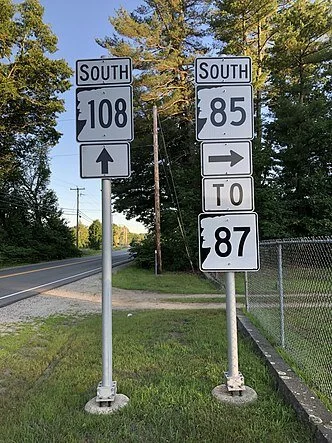
Junction signage in Newfields, N.H., as seen in 2005 (left) and 2019. It’s a beautiful small town to find yourself in, even if you’re lost. See below.
"We don't enjoy giving directions in New Hampshire. We tend to think if you don't know where you're going, you don't belong where you are."
— John Irving (born 1942), novelist who was born and raised in Exeter, N.H.
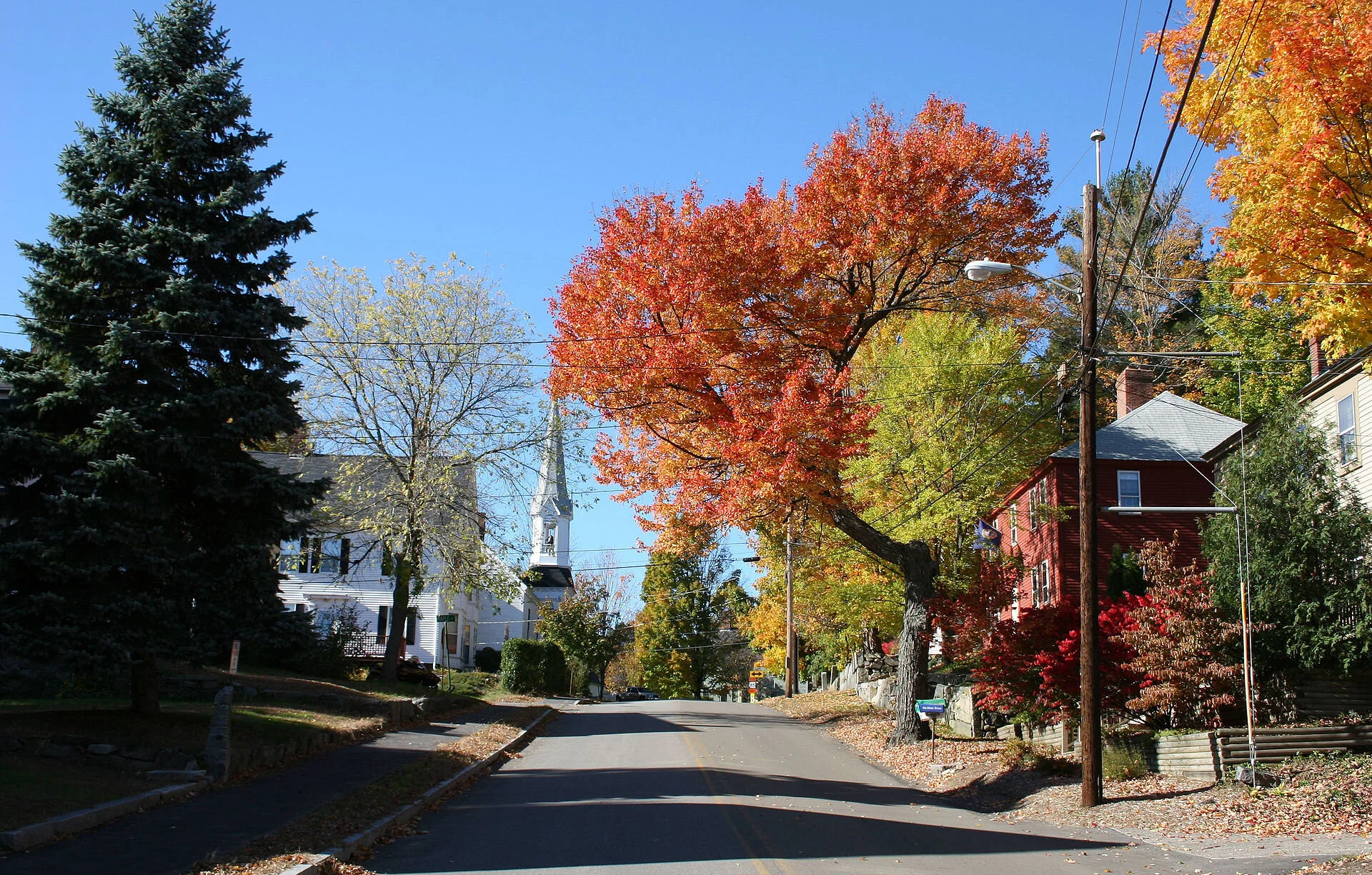
Squamscott Street in Newfields

“Newfields, New Hampshire ‘‘(1917), by Childe Hassam, at the Princeton University Art Museum
Monarch of metroland

“Citadel of the Roach Queen” (dip pen and India ink), by Worcester-based James Dye, in the New England XI, a regional juried exhibition, at Galatea Fine Art, Boston, Aug. 6-29. Mr. Dye grew up in Holden, near Worcester.

Holden Center