
Vox clamantis in deserto








Up against the wall

“New Galaxies,’’ from the self-portrait series Dreaming Gave Us Wings,’’ 2017—present, by Sophia Nahli Allison, at the Museum of Art, Rhode Island School of Design, Providence.
The ecstasy of being in Boston

Luis Tiant outside Fenway Park in the ‘70s.
“When I’m in Boston, I always feel like I’m home. I almost cry I feel so good.’’
— Luis Tiant (born 1940), retired Major League Baseball star, most noted for his association with the Boston Red Sox.
Don't be yourself

The James Merrill House, in Stonington, Conn.
‘‘Freedom to be oneself is all very well; the greater freedom is not to be oneself.’’
— James Merrill (1926-1995) celebrated poet, in A Different Person: A Memoir. His 19th Century house in Stonington, Conn., is now a rent-free writer’s and scholar’s residence.
See:
https://www.jamesmerrillhouse.org/

Inside the James Merrill House

David Warsh: Whatever happened to Decoration Day?

“The March of Time” (oil on canvas), Decoration Day {now called Memorial Day} in Boston, by Henry Sandham (1842-1910), a Canadian painter.
SOMERVILLE, Mass.
Decoration Day began on May 1, 1865, in Charleston, S.C., when an estimated 10,000 people, most of them former slaves, paraded to place flowers on the newly dug graves of 257 Union soldiers who had been buried without coffins behind the grandstand of a race course. They had been held in the infield without tents, as prisoners of war, while Union batteries pounded the city’s downtown during the closing days of the Civil War.
The evolution of Decoration Day over the next fifty years was one of the questions that led historian David W. Blight to write Race and Reunion: The Civil War in American Memory (Harvard, 2001). After Blight’s book appeared, it was quickly overshadowed by the events of 9/11. Eric Foner conveyed its message most clearly in The New York Times Book Review – but only on page 28. Today Race and Reunion is more relevant than ever. For a better idea of what the book is about than I can give you, read Foner’s review.
When I was a kid, May 30, Decoration Day was still ostensibly about remembering the Civil War, but the events of that May day in Charleston were no part of the story (though the POW camp at Andersonville, Ga., certainly had become part of the lore.). The names of veterans of various wars were read on the village green. A bugler played taps. Decoration Day had been proclaimed a day of commemoration in 1868, when the commander of the Grand Army of the Republic ordered soldiers to visit their comrades’ graves. In 1890 it was declared a state holiday in New York.
And by the time that Woodrow Wilson, the first Southerner to be elected president since the Civil War, spoke at Gettysburg, on July 4, 1913, fifty years after the battle itself, the holiday had become national – but the experiences of black Americans had all but dropped out of the narrative. The hoopla was about the experiences of the Blue and the Gray, never mind that many blacks had served in the Union army.
Soon after the war had ended, another war had begun, a contest of ideas about how the meaning of the war was to be understood: the emancipation of the slaves vs. the reconciliation of the contending armies. The politics of Reconstruction – the attempted elevation of Blacks to full citizenship and constitutional equality – ended in defeat. In his book, Blight wrote, “The forces of reconciliation overwhelmed the emancipation vision in the national culture.” Decoration Day gradually became Memorial Day, just as Armistice Day in November became Veterans Day. Americans got what the novelist William Dean Howells said they inevitably wanted: tragedies with a happy endings.
The age of segregation didn’t end until the Sixties. Black leaders such as Frederick Douglass and W.E. B. Du Bois had burnished the vision of emancipation. Educators, writers, and agitators articulated it and put it into practice. A second Reconstruction began in the years after World War II. In the 1960s the Civil Rights Movement reached a political peak. A new equilibrium was achieved and lasted for a time.
So don’t fret about “Critical Race Theory.” A broad-based Third Reconstruction has begun. Blight was an early text, as was Derrick Bell’s Faces at the Bottom of a Well: The Permanence of Racism, which appeared in 1992. The tumult will continue for some time. Rising generations will take account of it. A new equilibrium will be attained. It will last for a time, before a Fourth Reconstruction begins.
In the meantime, the new holiday of Juneteenth is an appropriate successor to the original Decoration Day – a civic holiday of importance second only to the Fourth of July.
David Warsh, a veteran columnist and an economic historian, is proprietor of Somerville-based economicprincipals.com, where this column originated.
\
Still life with house frames

“Two Roses in Stonington {Maine},’’ by Jay Wu, in his show “Flowers, Trees and Other Things,’’ at Galatea Fine Art, Boston, through Aug 1.
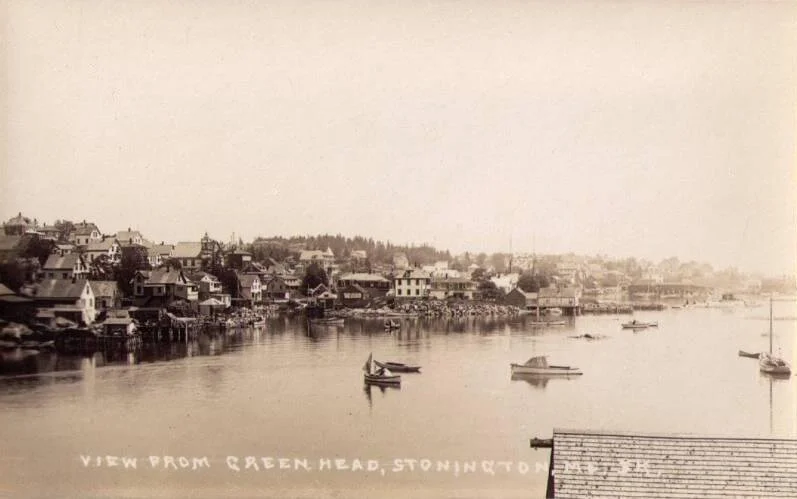
Stonington, on Deer Isle, circa 1915. It remains the biggest lobster port in Maine.

The famously vibrating Deer Isle Bridge

Jill Richardson: Right-wing-run Florida's new law imperils academic freedom there

“Unveiling of the Statue of Liberty Enlightening the World” (1886) (oil on canvas), by Edward Moran, in The J. Clarence Davies Collection at Museum of the City of New York.
Via OtherWords.org
Unveiling of the Statue of Liberty Enlightening the World (1886) by Edward Moran. Oil on canvas. The J. Clarence Davies Collection, Museum of the City of New York.
Florida just passed a law that — to put it mildly — grossly violates academic freedom. Under the new bill, recently signed by Gov. Ron DeSantis, a right-wing Republican and in the past a fervent supporter of Donald Trump, students and faculty will be surveyed about their political views to ensure “intellectual freedom and ideological diversity.”
The real intent appears to be the opposite.
The bill doesn’t specify what will happen with this data once it’s collected. But DeSantis and the bill’s sponsor, state Sen. Ray Rodrigues, have suggested the responses could be used to target schools for budget cuts if politicians find the views of student and faculty objectionable.
This is a gross violation of academic freedom, which is supposed to protect students and faculty and pave the way for the production of knowledge.
As a PhD student who teaches undergraduates, I’m having visions of professors being subjected to forced confessions, as in China’s Cultural Revolution. (Scholars were so scorned then that the word “intelligentsia” — zhishifenzi — became derogatory.)
To see how state interference with academic freedom is problematic, consider Lysenkoism.
In the mid-20th Century, Soviet agronomist Trofim Lysenko rejected Mendelian genetics and instead embraced a pseudoscience of his own creation. Communists governments adopted Lysenkoism as a “Communist” science of agriculture, with disastrous consequences. Stalin executed scientists who disagreed with Lysenkoism, even while Lysenko’s pseudoscience produced famines.
I hope that Florida Republicans — who are so concerned that people like me will turn students into Communists that they’re also now mandating professors teach the “evils of Communism” — will note the irony.
Florida Republicans might also like to know that a court case upholding academic freedom (Adams vs. University of North Carolina Wilmington) was essential to protecting conservative speech as well. In that case, the court sided with Prof. Michael Adams, who’d been denied a promotion over columns he’d written for a right-wing Web site, ruling that his views were protected speech.
The second part of Florida’s bill stipulates that students may not be shielded from “ideas and opinions that they may find uncomfortable, unwelcome, disagreeable, or offensive.” Again, this is not a problem. It doesn’t need fixing. Academic freedom already takes care of it.
Setting aside the irony that legislators seem to want to exclude certain views they disagree with, I also worry that this law will ban professors from managing their classrooms.
I teach controversial topics regularly. They are emotional topics and many students come to class with different, sometimes opposing views. It feels like playing with dynamite because there is a lot to balance in running the class in a way that is fair and conducive to learning for all.
But what do you do when a student endorses genocide during a class discussion? And follows it up with a two thumbs up endorsement for racism? Does curtailing disruptive behavior like this, which prevents others from learning, count as shielding students from uncomfortable “ideas and opinions”?
On the other hand, what do you do when your class wants to use class time to organize for social causes, and your job is to get them to learn an academic discipline, not Rally For Your Political Ideology 101?
Or one student cries because of what other students have said? Or leaves class because it is too emotionally painful for him or her to be there?
Those things have happened in my class. Academics need to have the freedom to manage their classes, and that means finding a balance between protecting their students’ emotions and helping them when emotions get in the way of learning.
Most of all, teachers and students need the freedom to look at ideas academically — and express their views plainly — without fear of retribution from state authorities who insist on “intellectual freedom” even as they seek to stamp it out.
Jill Richardson is pursuing a PhD in sociology at the University of Wisconsin.
Chris Powell: Worried more about crime than PC trivia?

The spiked heads of executed criminals adorned the gatehouse of the medieval London Bridge.
MANCHESTER, Conn.
Lately the administration of Connecticut Gov. Ned Lamont has boasted about closing prisons in the state even as crime has exploded. Of course, the crime wave isn't exclusive to this state. But those in charge seem to think that since the explosion in crime can't be blamed on Donald Trump, it can be largely ignored.
So those in charge should consider the recent primary elections for mayor of New York City, where standards of political correctness are set.
It was no surprise that Curtis Sliwa, founder of the Guardian Angels crime watch group, won the Republican nomination, since Republicans encompass the law-and-order crowd. But there was some surprise in the apparent first-round victory in the Democratic primary of Brooklyn Borough President Eric Adams, a former state senator and police captain.
Adams, who is Black, assembled a coalition of working-class voters from all ethnic groups and boroughs in support of a law-and-order platform. His main point is that public safety is the prerequisite of prosperity.
Could even New York City Democrats care more about public safety than politically correct nonsense like "critical race theory" and transgenderism? And if New York City Democrats can, could voters in Connecticut?
In any case Connecticut is full of criminal cases that should become political issues. The public increasingly sees, even as state government denies, that there is a scandal in the growing number of car thefts and other crimes being committed by teens and young men who know they will never be punished. The General Assembly keeps refusing to reinstate deterrence.
So the other week the 25-year-old suspect in a double shooting in Hartford in which one victim was killed was presented in court and charged with murder. It was the city's 20th murder of the year, against 25 all last year. News reports said that the defendant had been awaiting prosecution on at least five previous charges.
The other week two teens who had been living in a group home broke into and ransacked the senior citizens center in Wolcott. Stealing a car nearby, they crashed into two parked cars and then a utility pole, totaling the stolen car, before being caught. They laughed as police booked them. A judge quickly ordered them released, but after public protests they were put in detention.
And then a man jogging on a sidewalk in New Britain was struck and killed by a car stolen in Hartford. Surveillance video showed two teens running away from the scene. New Britain police located one hiding in a closet at his home and charged him with first-degree assault, reckless driving, and car theft. Though he is only 17, police said, he has been arrested 13 times in the last four years on charges including assault with a knife, narcotics possession, reckless driving, evading responsibility, car theft, and robbery. Still, he was free.
Governor Lamont weakly responded to the crime wave by proposing to spend $5 million more on crime detection. But the problem isn't detection at all but what government does with the criminals it already has detected and apprehended.
Of course, prisons aren't very good at rehabilitation. But then nothing is, and at least prisons are good at incapacitating the unrehabilitated until those in charge discover something in criminal justice that does more than strike a politically correct pose, and until they get even more relevant by asking:
Where are all the messed-up kids coming from?
xxx
Connecticut may hope that Governor Lamont was just joking the other day when asked if, now that the state is legalizing marijuana, he would smoke some. "Time will tell," the governor replied. "Not right now but we'll see."
Yes, drug criminalization has been a failure, but despite Connecticut's new law, marijuana is still prohibited by federal law, and the dignity of his office obliges the governor to obey it.
So does politics. For as a Democrat the governor already has sewn up the stoner vote, and he and his party will fare better if smoking dope can't be used to explain their raising gas taxes and coddling young criminals.
Besides, Connecticut offers much more compelling opportunities for civil disobedience. Why not try, say, buying alcoholic beverages below state-minimum prices or patronizing an unlicensed hypnotist?
Chris Powell is a columnist for the Journal Inquirer, in Manchester.
‘Enough to stay drunk’
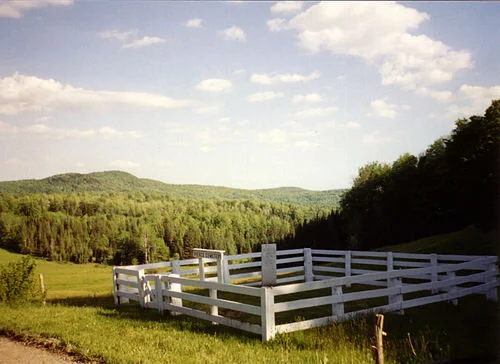
Pierce Cemetery, in Wolcott, Vt.
“The Pikes have come a long way down
since the old man walked to Craftsbury
every day all his life to saw boards.
There’s only Bill and Arnie left as far as I know
and both of them make only enough to stay drunk.’’
— From “The Chain Saw Dance,’’ by David Budbill (1940-2016), a poet and playwright who came to be seen as a bard of Vermont’s Northeast Kingdom.He lived in a small cabin in Wolcott for more than 40 years, where he created the fictional town of Judevine, named after a local mountain, and populated it with local folk, many highly problematic.

In Craftsbury

Worried about water

Still video image from Amy Kaczur’s video series “Messages From the Marsh,’’ at Kingston Gallery, Boston, for July.
The Boston-based artist’s Web site says:
“Amy’s work is grounded in environmental concerns, community and language. Her latest projects are fueled by a sense of urgency related to water issues, specifically coastal flood zones and rising sea levels. Her work resides within the natural world; along with sensory stimulation and deep wonderment, following closely is the sense of perilous climate change and ecological grief. Amy grew up outside Cleveland, with family ties working in farming, food industry, mills, and coal mines in rural Southern Ohio to the edges of Appalachia. Those roots impacted her experience of landscape and environmental issues such as pollution and climate change, and the multilayered struggles between land use and conservation. Along with examining these issues in her art practice, she works at Massachusetts Institute of Technology as the group administrator for two research labs focused on air and water pollution, climate change, and clean energy development and storage. She continuously develops her art practice, supported by relentless research, discovery by experiment, and the pleasure of inquisitive searching.’’

Common reed (Phragmites australis), an invasive species in degraded marshes in New England.
— Wikipedia photp
Oh, for a plate of steamers!

“Today, no summer is really perfect for the New Englander until, napkin under china, he has eaten his fill of fresh steamed clams, dipped in broth and then in melted butter.’’
— From Secrets of New England Cooking (1947), by Ella Shannon Bowles and Dorothy S. Towler.
Alas, it’s much harder these days to find restaurants that serve the disappearing (because of environmental changes) soft-shelled clams that we called “steamers.’’


“Clamming” {in Maine} (1887), by Winslow Homer.

“Clamdigger” (bronze), by Willem de Kooning.

Phil Galewitz: In Maine (and elsewhere) a crisis in finding and keeping home-health-care workers

CASTINE, Maine
For years, Louise Shackett has had trouble walking or standing for long periods, making it difficult for her to clean her house in southeastern Maine or do laundry. Shackett, 80, no longer drives, which makes it hard to get to the grocery store or doctor.
Her low income, though, qualifies her for a state program that pays for a personal aide 10 hours a week to help with chores and errands.
“It helps to keep me independent,” she said.
But the visits have been inconsistent because of the high turnover and shortage of aides, sometimes leaving her without assistance for months at a time, although a cousin does help look after her. “I should be getting the help that I need and am eligible for,” said Shackett, who has not had an aide since late March.
The Maine home-based care program, which helps Shackett and more than 800 others in the state, has a waitlist 925 people long; those applicants sometimes lack help for months or years, according to officials in Maine, which has the country’s oldest population. This leaves many people at an increased risk of falls or not getting medical care and other dangers.
The problem is simple: Here and in much of the rest of the country there are too few workers. Yet, the solution is anything but easy.
Katie Smith Sloan , CEO of Leading Age, which represents nonprofit aging- services providers, says the workforce shortage is a nationwide dilemma. “Millions of older adults are unable to access the affordable care and services that they so desperately need,” she said at a recent press event. State and federal reimbursement rates to elder care agencies are inadequate to cover the cost of quality care and services or to pay a living wage to caregivers, she added.
President Biden allotted $400 billion in his infrastructure plan to expand home and community-based long-term-care services to help people remain in their homes and out of nursing homes. Republicans pushed back, noting that elder care didn’t fit the traditional definition of infrastructure, which generally refers to physical projects such as bridges, roads and such, and the bipartisan deal reached last week among centrist senators dealt only with those traditional projects. But Democrats say they will insist on funding some of Biden’s “human infrastructure” programs in another bill.
As lawmakers tussle over the proposal, many elder care advocates worry that this $400 billion will be greatly reduced or eliminated.
But the need is undeniable, underlined by the math, especially in places like Maine, where 21 percent of residents are 65 and older.
Betsy Sawyer-Manter, CEO of SeniorsPlus in Maine, one of two companies that operate that assistance program, said, “We are looking all the time for workers because we have over 10,000 hours a week of personal care we can’t find workers to cover.”
Caring for an Aging Nation
The number of Americans 65 and older is expected to nearly double in the next 40 years. Finding a way to provide and pay for the long-term health services they need won’t be easy.
For at least 20 years, national experts have warned about the dire consequences of a shortage of nursing assistants and home aides as tens of millions of baby boomers hit their senior years. “Low wages and benefits, hard working conditions, heavy workloads, and a job that has been stigmatized by society make worker recruitment and retention difficult,” concluded a 2001 report from the Urban Institute and Robert Wood Johnson Foundation.
Robyn Stone , a co-author of that report and senior vice president of Leading Age, says many of the worker shortage problems identified in 2001 have only worsened. The risks and obstacles that seniors faced during the pandemic highlighted some of these problems. “COVID uncovered the challenges of older adults and how vulnerable they were in this pandemic and the importance of front-line care professionals who are being paid low wages,” she says.
Michael Stair, CEO of Care & Comfort, a Waterville, Maine-based agency, said the worker shortage is the worst he’s seen in 20 years in the business.
“The bottom line is it all comes down to dollars — dollars for the home care benefit, dollars to pay people competitively,” he said. Agencies like his are in a tough position competing for workers who can take other jobs that don’t require a background check, special training or driving to people’s homes in bad weather.
“Workers in Maine can get paid more to do other jobs that are less challenging and more appealing,” he added.
His company, which provides services to 1,500 clients — most of whom are enrolled in Medicaid, the federal-state health program for people with low incomes — has about 300 staffers but could use 100 more. He said it’s most difficult to find workers in urban areas such as Portland and Bangor, where there are more employment opportunities. Most of his jobs pay between $13 and $15 an hour, about what McDonald’s restaurants in Maine advertise for entry-level workers.
The state’s minimum wage is $12.15 an hour.
Stair said half his workers quit within the first year, a little better than the industry’s average 60% turnover rate. To help retain employees, he allows them to set their own schedules, offers paid training and provides vacation pay.
“I worry there are folks going without care and folks whose conditions are declining because they are not getting the care they need,” Stair said.
Medicare does not cover long-term home care.
Medicaid requires states to cover nursing home care for those who qualify, but it has limited entitlement for home-based services, and eligibility and benefits vary by state. Still, in the past decade, states including Maine have increased funding to groups providing Medicaid home and community services — anything from medical assistance to housekeeping help — because people prefer those services and they cost much less than a nursing home.
The states also are funding home-care programs like Maine’s for those same services for people who don’t qualify for Medicaid in hopes of preventing seniors from needing Medicaid coverage later.
But elder care advocates say the demand for home care far outweighs supply.
Bills in the Maine legislature would increase reimbursement rates for thousands of home care workers to ensure they are being paid more than the state’s minimum wage.
The state does not set worker pay, only reimbursement rates.
It’s not just low pay and lack of benefits that hobbles the hiring of workers, according to experts who study the issue. In addition, home care providers struggle to recruit and retain workers who don’t want the stress of caring for people with physical disabilities and, often, mental health issues, such as dementia and depression, said Sawyer-Manter of SeniorsPlus.
“It’s backbreaking work,” said Kathleen McAuliffe, a home-care worker in Biddeford, Maine, who formerly worked as a Navy medic and served in the Peace Corps. She provides homemaker services for a state-funded program run by Catholic Charities. She usually visits two clients a day to help them with chores like cleaning and scrubbing floors, wiping down bathrooms, vacuuming, preparing meals, food shopping, organizing medicines and getting them to the doctor.
Her clients range in age from 45 to 85. “When I walk in, the laundry is piled up, the dishes are piled up, and everything needs to be put in order. It’s hard work and very taxing,” said McAuliffe, 68.
She makes about $14 an hour. Though the job of taking care of the frail elderly requires broad skills — and training in things like safe bathing — it is generally classified as “unskilled” labor. Working part time, she gets no vacation benefits. “Calling us homemakers sounds like we are coming in to bake brownies,” she said.
The homemaker program serves 2,100 Maine residents and has more than 1,100 on a waitlist, according to Catholic Charities Maine. “We can’t find the labor,” said Donald Harden, a spokesperson for the organization.
The federal government is giving states more dollars for home care — at least temporarily.
The American Rescue Plan, approved by Congress in March, provides a 10 percentage point increase in federal Medicaid funding to states, or nearly $13 billion, for home and community-based services.
The money, which must be spent by March 2024, can be used to provide personal protective equipment to home care workers, train workers or help states reduce waiting lists for people to receive services.
For Maine, the bump in funding from the American Rescue Plan will provide a $75 million increase in funding. But Paul Saucier, aging and disability director at the Maine Department of Health and Human Services, said the money will not make the waitlists disappear, because it will not solve the problem of too few workers.
Joanne Spetz, director of the Health Workforce Research Center on Long-Term Care at the University of California-San Francisco, said throwing more money into home care will work only if the money is targeted for recruiting, training and retaining workers, as well as providing benefits and opportunities for career growth. She doubts significant improvements will occur “if we just put money out there to hire more workers.”
“The problem is the people who are in these jobs always get the same amount of pay and the same low level of respect no matter how many years they are in the job,” Spetz said.
Phil Galewitz is a Kaiser Health News reporter.

Established in 1794 and in the same building (at left) since 1833, the Castine Post Office is one of the United States's oldest post offices in continuous operation.
It's a complicated love affair

“Lovers,’’ by Daniel Ludwig, in his show at Dedee Shattuck Gallery, Westport, Mass., though Aug. 1.
The gallery says: “Daniel Ludwig is an artist who works in oil paint, charcoal and, more recently, acrylic paint on printed digital backgrounds. In his work, dreamlike figurative elements are embedded in a complex web of biomorphic shapes, patterns, and colors. Classically rendered figurative elements interact with echoed silhouettes and textures in a way that portray the ambiguity of a world both deeply tangible and alluringly ephemeral.’’
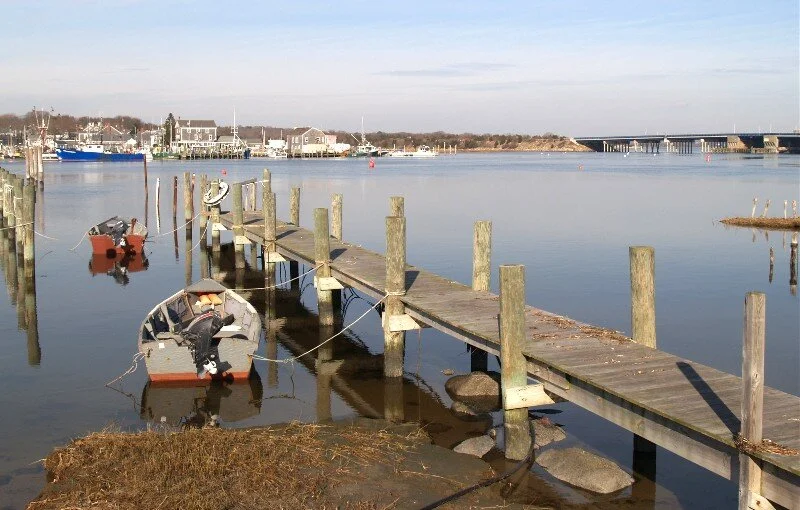
The Westport River in the winter.
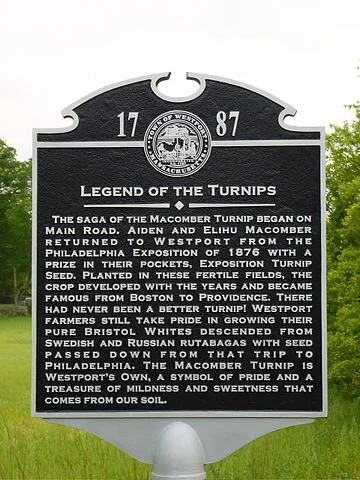
Westport still has a substantial farming sector, including vineyards.
Is elite club crisis silly?

Bailey’s Beach Club in 2012, with “Rejects’ Beach’’ in the foreground, soon after Superstorm Sandy. You can safely predict that a major hurricane will destroy the club’s facilities.
— Photo by Swampyank
From Robert Whitcomb’s “Digital Diary,’’ in GoLocal24.com
The latest controversy over U.S. Sen. Sheldon Whitehouse’s association with the elite, WASPy Bailey’s Beach Club, in Newport, has gone viral after being launched by GoLocal. (I prefer the silly-sounding real name of the club – the Spouting Rock Beach Association.) His wife is a member.
I don’t care much about politicians’ associations in their private life; it’s their public-policy positions that primarily interest me. But I suppose that any story about Newport’s summer creatures, blue-blooded or otherwise, has its allure. Many folks consider Newport an exotic place.
Jack Nolan, Bailey Beach’s general manager, told The Boston Globe that the club’s members and their families have included people of “many racial, religious, and ethnic backgrounds from around the world who come to Newport every summer.” Remarkable, if true…. In any event, for decades the club had reputation of being all white as well as anti-Semitic. Since it’s a private social and recreational organization it presumably doesn’t have to identify its members.
I have no idea what the club’s current diversity is or how it might change. It’s not in my solar system.
The first of a couple of times I went there was as a guest of the late Rhode Island Gov. Bruce Sundlun, who was Jewish. I also remember a couple of kids of color playing on the beach – a member’s grandchildren?
The beach itself is not very attractive – gray sand and, when I was there, ridges of seaweed with bugs flying over them. And the current clubhouse was uninteresting. It will probably be destroyed by the next big hurricane. But all was quiet and low key.
As with most membership clubs, the members clearly like being in a place where they know most everybody, including the staff, which treats them in a way recalling domestic servants. Very cozy and soothing. And for public servants such as Senator Whitehouse it must be pleasant to be in a place whose genteel tradition discourages harassing fellow members over politics or indeed anything else
Back when I was a newspaper editor I noticed that when I had a business lunch with a politician or other public figure, we were less likely to be bothered at a club than at a restaurant. And many people enjoy being taken to a meal at clubs, away from the clatter and crowds of restaurants.
No wonder such institutions are a refuge for the privileged
There are now far fewer clubs around that are overtly discriminatory than a few decades ago. Back then the bias at the old WASP clubs, many of which were founded in the late 19th Century with money made in the Industrial Revolution, led to creation of golf, yacht and other clubs that catered to America’s newer groups. So there were “Jewish country clubs,” “Italian country clubs,” “Irish country clubs,’’ and so on. Of course, racism generally kept Black people out of fancy clubs.
I can remember when Roman Catholics were excluded from many old golf clubs and yacht clubs in New England towns, in one of which I grew up in. The election of John F. Kennedy to the presidency helped open them up. In the end, the old clubs needed the initiation fees and dues money from “new” groups that were rising socio-economically.
Around here, I’ve only been a member of one club – the Providence Art Club, whose 16 co-founders (in 1880) included 10 men, including the distinguished African-American painter Edward Bannister, and six women. I’m no longer a member, though my wife, a painter, is. The club has a public educational and cultural mission, by the way.
Folks will always tend to coalesce into groups with whom they share certain background elements, attitudes and social behaviors. So clubs like Bailey’s Beach won’t go away, though they’ll change their memberships as America’s demographics change. They’ll need the dues money.
Meanwhile, given that the U.S. Senate is mostly a white male millionaires’ club, I’m sure that others besides Sheldon Whitehouse have some connections with exclusive (ethnically or otherwise) institutions. The GoLocal stories might lead media around the country to check into them. The voters can decide how important or trivial these associations are in the broad scheme of things.
‘Life is earnest!’

An 1891 illustration to go with poem
What the heart of the young man said to the Psalmist
Tell me not, in mournful numbers,
Life is but an empty dream!
For the soul is dead that slumbers,
And things are not what they seem.
Life is real! Life is earnest!
And the grave is not its goal;
Dust thou art, to dust returnest,
Was not spoken of the soul.
Not enjoyment, and not sorrow,
Is our destined end or way;
But to act, that each tomorrow
Find us farther than today.
Art is long, and Time is fleeting,
And our hearts, though stout and brave,
Still, like muffled drums, are beating
Funeral marches to the grave.
In the world’s broad field of battle,
In the bivouac of Life,
Be not like dumb, driven cattle!
Be a hero in the strife!
Trust no Future, howe’er pleasant!
Let the dead Past bury its dead!
Act —act in the living Present!
Heart within, and God o’erhead!
Lives of great men all remind us
We can make our lives sublime,
And, departing, leave behind us
Footprints on the sands of time;—
Footprints, that perhaps another,
Sailing o’er life’s solemn main,
A forlorn and shipwrecked brother,
Seeing, shall take heart again.
Let us, then, be up and doing,
With a heart for any fate;
Still achieving, still pursuing,
Learn to labor and to wait.
“A Psalm of Life,’’ by Henry Wadsworth Longfellow (1807-1882). He remains one of the most famous New England poets.

Longfellow’s grave in Mt. Auburn Cemetery, in Cambridge, where many other famous New Englanders are buried.

Llewellyn King: About the border wall: U.S. immigration policy must be ad hoc

Trump stands in front of a section of border wall near Yuma, Ariz., in June 2020
WEST WARWICK, R.I.
Going to the border and harrumphing won’t solve the very real immigration problem, which pits our humanity against our sovereign entitlement to say what kind of people we are.
We are not alone in this struggle.
The world is on the move. Untold millions of people who live south of our border with Mexico want to move north. Equally untold millions who live in Africa would like to move to Europe; and millions in eastern Europe want to live in western Europe.
From the Indian subcontinent, millions would like to move to Europe, especially to Britain. Millions of East Asians have their eyes set on Australia.
Within these areas, people also are on the move. Millions from Venezuela have flooded their neighboring countries. Likewise in Africa, where war and famine are ever present, people try and walk to a marginally better future in another country. In the Middle East, Jordan and Lebanon are flooded with refugees first from Palestine, then from Iraq and Syria.
As The Economist pointed out recently, a slum in Spain is incalculably superior to a slum in Kenya.
The drivers for migration are poverty, violence, crop failure and political collapse. And persecution, ethnic and religious; for example, the Rohingya in Myanmar have sought refuge in Bangladesh.
The goal of the migrant is the same worldwide: a better, safer life.
The political price paid by the stable democracies continues to be huge. It played a role in Donald Trump’s election and will play a role in the next presidential election, whether Trump runs or not. It was the great driver for Brexit and Britain’s seeming self-harming. It has driven the move of Hungary, under Viktor Orban, to autocracy.
It is hard to stop people who have nothing to lose from crossing a frontier if they can. But they aren’t the only migrants. Some, a small number, are opportunists. These are the migrants who overstay student visas, manipulate qualifications for residence, and willfully circumvent the law or contract so called green card marriages.
But they aren’t what the border crisis is about -- any more than it is what the overloaded boats crossing the Mediterranean Sea is about. It is the physical manifestation of desperation.
Because the migration problem is so complex – human problems are almost by definition complex— it isn’t a matter of resolution so much as management. We want, for example, immigrants with high-tech skills, but we are worried about the impact of millions of desperate peasants walking across the deserts.
Now a new driver of migration has opened: global warming. The heat and drought hitting the U.S. West Coast are also hitting Central America and will affect livability.
Adding to the complexity of the immigration conundrum is the labor shortage. Construction depends on immigrant labor, farming on contract labor, and slaughterhouses and chicken processors can’t stay open without immigrants to do the unappealing work.
One small step forward would be a sensible work permit.
It seems to me that the wall -- Trump’s wall – isn’t a bad thing. It is a declaration, a symbol. It won’t deter desperate people and it won’t end smuggling. The latter is going to get worse with drones and even autonomous aircraft that can bring their lethal cargoes deep into the United States.
While there is an insatiable market for drugs here, smuggling will continue and even increase. And while that is so, lawlessness south of the border will accelerate.
Sadly, despite Vice President Kamala Harris’s statements, we aren’t going to repair the countries to our south overnight. But we might look to repairing our drug policy, seeing if that can be adjusted to take the profit out of the trade. Except for the gradual, local legalization of marijuana, we haven’t contemplated drug management, short of prohibition, in a century. A new look is due.
There is no single policy that is going to solve the human misery south of the border which drives so many to risk their lives or, through love, to send their children north.
Therefore immigration policy will never be a total, sweeping thing, but rather an ad hoc affair: We need some immigrants, we don’t want others; we have big hearts, but we fear immigration that is unchecked.
We fear the political, cultural and social change that immigrants will bring, especially if they are of a common language and background. Pain in Central America is political torture in the United States.
Llewellyn King is executive producer and host of White House Chronicle, on PBS. His email is llewellynking1@gmail.com. He’s based in Rhode Island and Washington, D.C.
Web site: whchronicle.com
Loaded for tall tales

“And tall tales they are! There was the man who shot five bears with one bullet, the man who shot one bear for each day of the year, the man who invented the slow bullet, and the man who fashioned a curved rifle barrel so efficient that when he shot from his door he had to pull in his head to escape the bullet coming around the house.’’
— From the WPA’s 1937 book Maine: A Guide ‘‘Down East’’

Hope in the abstract

“Hope Dreams” (mixed media on canvas), by Francois Bonnel, in the French painter and photographer’s show at Lanoue Gallery, Boston, through Aug. 2

Caitlin Faulds: Ammonia from agriculture threatens bays

— Photo by Ben Salter
From ecoRI News (ecori.org)
National regulations are needed to limit harmful ammonia emissions from agricultural sources and prevent knock-on soil and water degradation in sensitive estuary ecosystems, such as Narragansett Bay, according to a study recently published in Atmospheric Environment.
The study, completed by a team at Brown University’s Institute at Brown for Environment and Society, analyzed wet-deposited ammonium, or ammonium incorporated into rainfall, in Providence in 2018 to find that agricultural rather than city-based sources are most likely to blame for recent increases in urban ammonium levels.
“The ammonium we measured in precipitation has a significant non-local contribution, which does seem to be transported from what we believe to be agricultural regions,” said lead author Emmie Le Roy, who conducted research as a Brown University undergraduate and will begin a Ph.D. at the Massachusetts Institute of Technology this fall.
The levels of nitrate deposition, which come from nitroge-oxide emissions, in the Narragansett Bay area have decreased substantially in the past decades because of the federal Clean Air Act and other regulatory changes, according to co-author Emily Joyce, who published another paper on the topic last year.
Improvements in wastewater-treatment systems, too, have reduced nitrogen input to Narragansett Bay by nearly 60 percent, Joyce said. “That was definitely what they needed to focus on” to get a handle on the problem then, she said, but there’s been “nothing done to atmospheric deposition.”
Joyce’s atmospheric measurements, the first done in 30 years, showed ammonium deposition had risen to six times the amount in 1990.
“If there’s more ammonium, then there’s going to be more algae blooms and fish kills,” Joyce said. “And so from a water quality standpoint … you really want to figure out where that’s coming from and try to mitigate that.”
But to mitigate ammonium, regulators need to know where to focus their efforts — and this is what Le Roy’s research sought to address.
Her team studied the stable isotopes, or chemical signatures, of ammonium in more than 200 precipitation samples collected at Brown University from January to November 2018 to determine where the emissions came from.
“You can think of them as being sort of like a fingerprint that is distinct for different source types,” Le Roy said of the isotopic signatures.
Ammonium from close-range, urban sources, namely vehicle emissions and fossil-fuel combustion, would typically have a higher isotopic composition, according to Wendell Walters, Brown University associate professor and a co-author of the study. While ammonium from agricultural sources, including animal waste and fertilizer, would have a lower isotopic composition.
By scouring weather station databases, the team also found storm systems that developed over land carried significantly more ammonium than those originating over marine or coastal areas. This data supported long-range agricultural sources as the origin of ammonium deposits.
During the past seven decades global emissions of ammonia have more than doubled from 23 to 60 teragrams annually — one teragram is a billion kilograms or 2.2 billion pounds. Researchers say the increase is tied to rising ammonia emissions from industrial agriculture. The ability to grow crops depends on nitrogen, a critical plant nutrient. However, an overabundance of nitrogen, in animal waste and in excess fertilizer, can turn into gaseous ammonia.
When ammonia enters the atmosphere, it combines with pollutants — mainly nitrogen and sulfuric-oxide compounds produced by the burning of fossil fuels — to form fine-particle air pollution that can travel long distances.
Though the exact location is hard to pinpoint, Le Roy said wind patterns indicate that ammonium emissions are showering down onto Providence from states as far away as California, or even across the Pacific Ocean.
The wet deposition of ammonium is a global-scale problem, Walters said, and one that needs regulatory attention to prevent further acidification and eutrophication of sensitive ecosystems.
“It’s not something that the city of Providence could tackle on their own since there’s this large intrastate transport phenomenon occurring with the deposition,” Walters said. “But we may need to address the importance of incorporating ammonia regulations in the future — and that would have to be more at the national scale.”...
Caitlin Faulds is an ecoRI News journalist.
A green but dry Vermont

“Rock Bottom” cabin

Low water
From Robert Whitcomb’s “Digital Diary,’’ in GoLocal24.com
I spent much of the week before last mostly alone in a cabin (called “Rock Bottom”) by a trout stream in Vermont. It was sometimes a bit lonely but I did a lot of reading for pleasure, with delightfully little of it any use in work.
The owners of the cabin lived in a house in the woods up the rocky hill from the cabin. They are Mormons and so, as usually the case (at least in my experience) were very nice – available to chat but otherwise busying themselves with grass cutting and other chores on their spread, mostly out of my sight lines. I’d sometimes spot them in the distance reading on a bench by the little river, a scene that reminded me of an Impressionist painting.
The founder of the Church of Latter Day Saints (the Mormons), Joseph Smith, was born and spent some of his boyhood in nearby Sharon, Vt., where his parents were farmers. Many of the first Mormons hailed from rural New England before heading west.
Sadly, there were no trout in the stream, at least so far as I could see. While Vermont (as befits the French origin of its name – Green Mountain) looked verdant, the rivers and lakes were very low, as they are in most of northern New England now, and locals fear a bad forest-fire season. Climate change or natural variability (i.e., “weather’’)?
'Lake Wrong'

“Wrong is nothing and nowhere and takes
Its name from a great black bottomless lake,
The heart of which pranksters once marked with lipstick
On old newspaper nailed to a cane: “No Swimming.
Hunting or Fishing, Lake Wrong, Ha Ha Ha!’’
— From “Right and Wrong,’’ by Kenneth Rosen, a Portland, Maine, area poet and teacher