
Vox clamantis in deserto






Use what you can
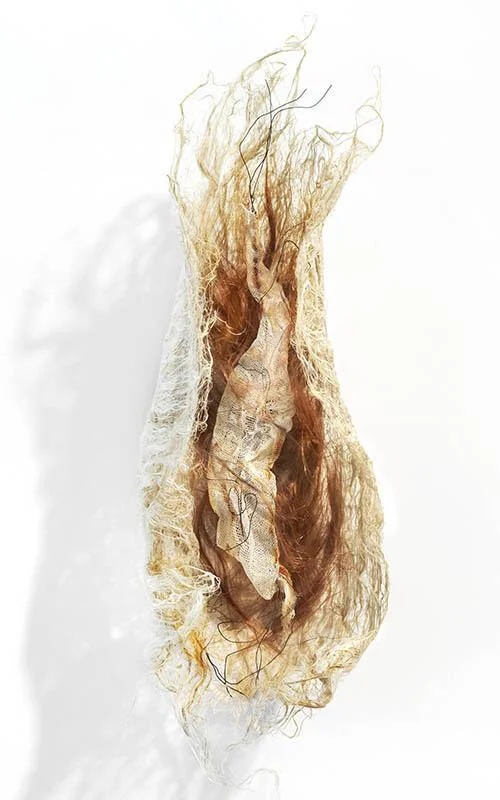
“Untitled 2101” (kozo, flax, tarleton, wire), by Vivian Pratt, in her show “Transforming Fibers,’’ at Bromfield Gallery, Boston, through May 2.
David Warsh: Spence Weart sums up the global-warming crisis that's upon us
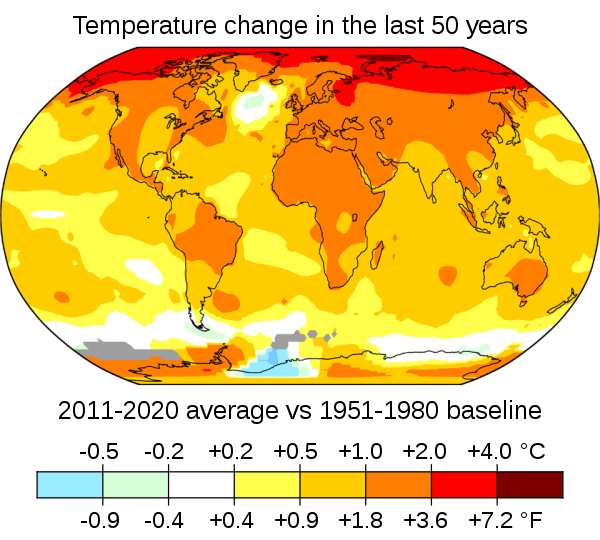
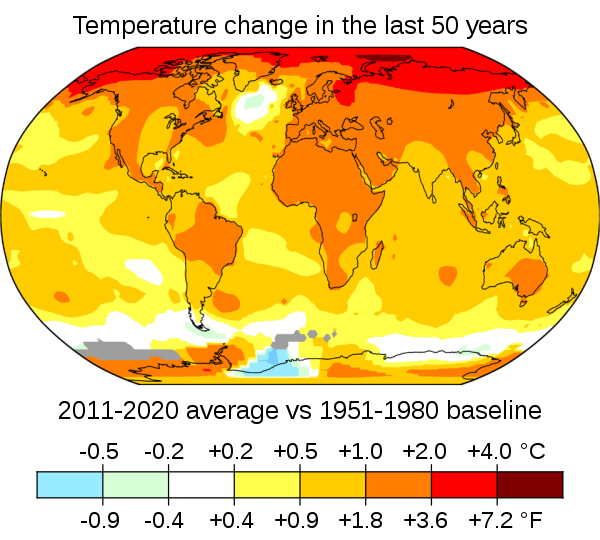
Average surface air temperatures from 2011 to 2020 compared to a baseline average from 1951 to 1980 (Source: NASA)
SOMERVILLE, Mass.
Every April since I first read it, in 2004, I take down and re-read some portions of my copy of The Discovery of Global Warming (Harvard), by Spence Weart. (The author revised and expanded his book in 2008.) I never fail to be moved by the details of the story: not so much his identification of various major players among the scientists – Arrhenius, Milankovitch, Keeling, Bryson, Bolin – but by the account of the countless ways in which the hypothesis that greenhouse-gas emissions might lead to climate change was broached, investigated, turned back on itself (more than once), debated and, eventually, confirmed.
In the Sixties, Weart trained as an astrophysicist. After teaching for three years at Caltech, he re-tooled as a historian of science at the University of California at Berkeley. Retired since 2009, he was for 35 years director of the Center for the History of Physics of the American Institute of Physics, in College Park, Md.
This year, too, I looked at the hypertext site with which Weart supports his much shorter book, updating it annually in February, incorporating all matter of new material. It includes recent scientific findings, policy developments, material from other histories that are beginning to appear. The enormous amount of material is daunting. Several dozen new references were added this year, ranging from 1956 to 2021, bringing the total to more than 3,000 references in all. Then again, all that is also reassuring, exemplifying in one place the warp and woof of discussion taking pace among scientists, of all sorts, that produces the current consensus on all manner of questions, whatever it happens to be. Check out the essay on rapid climate change, for example.
Mainly I was struck by the entirely rewritten Conclusions-Personal Note, reflecting what he describes as “the widely shared understanding that we have reached the crisis years.”
Global warming is upon us. It is too late to avoid damage — the annual cost is already many billions of dollars and countless human lives, with worse to come. It is not too late to avoid catastrophe. But we have delayed so long that it will take a great effort, comparable to the effort of fighting a world war— only without the cost in lives and treasure. On the contrary, reducing greenhouse gas pollution will bring gains in prosperity and health. At present the world actually subsidizes fossil fuel and other emissions, costing taxpayers some half a trillion dollars a year in direct payments and perhaps five trillion in indirect expenses. Ending these payments would more than cover the cost of protecting our civilization.
Plenty else is going on in climate policy. President Biden is hosting a virtual Leaders Summit on Climate on Thursday, April 22 (Earth Day) and Friday, April 23. Nobel laureate William Nordhaus pushes next month The Spirit of Green: The Economics of Collisions and Contagions in a Crowded World (Princeton), reinforcing Weart’s conviction that it actually costs GDP not to impose a carbon tax on polluters. Public Broadcasting will roll out later this month a three-part series in which the BBC follows around climate activist Greta Thunberg in A Year to Change the World. And Stewart Brand, who in 1967 published the first Whole Earth Catalog, with its cover photo of Earth seen from space, is the subject of a new documentary, We Are as Gods, about to enter distribution. There is other turmoil as well. But if you are looking for a way to observe Earth Day, reading Spencer Weart’s summing-up is an economical solution.
David Warsh, an economic historian and a veteran columnist, is proprietor of Somerville-based economicprincipals.com, where this column first appeared.
© 2021 DAVID WARSH, PROPRIETOR

—Graphic by Adam Peterson
Before sliding down the razor blade
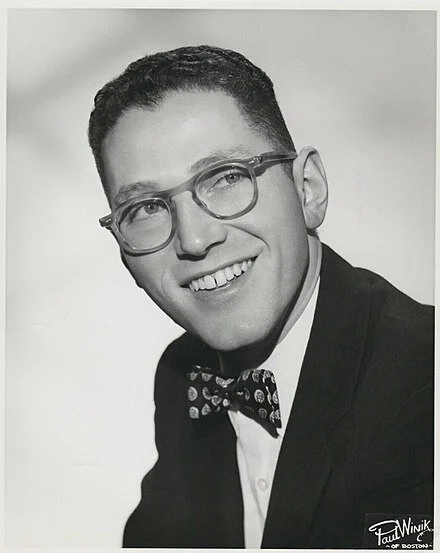
Tom Lehrer in 1957, as he was becoming famous.
Bright college days, oh, carefree days that fly
To thee we sing with our glasses raised on high.
Let's drink a toast as each of us recalls
Ivy-covered professors in ivy-covered halls.
Turn on the spigot
Pour the beer and swig it
And gaudeamus igitur
Here's to parties we tossed
To the games that we lost
We shall claim that we won them some day.
To the girls young and sweet
To the spacious back seat
Of our roommate's beat up Chevrolet.
To the beer and benzedrine
To the way that the dean
Tried so hard to be pals with us all.
To excuses we fibbed
To the papers we cribbed
From the genius who lived down the hall.
To the tables down at Mory's
Wherever that may be
Let us drink a toast to all we love the best.
We will sleep through all the lectures
And the cheat on the exams
And we'll pass, and be forgotten with the rest.
Oh, soon we'll be out amid the cold world's strife.
Soon we'll be sliding down the razor blade of life
O-oh!
But as we go our sordid separate ways
We shall ne'er forget thee, thou golden college days.
Hearts full of youth.
Hearts full of truth.
Six parts gin to one part vermouth.
“Bright College Days,’’ by Tom Lehrer (born 1928), a now retired American musician, singer-songwriter, satirist, mathematician and professor (in which position he taught mathematics and the history of musical theater, among other topics). He’s best known for the often hilarious and sometimes biting songs that he recorded in the 1950s and 1960s, though he had written some of the songs as early as the late ‘40s. A Harvard graduate, he taught there as well as at MIT, Wellesley College and the University of California at Santa Cruz. In his heyday, he starred in numerous concerts, singing his songs as he played them on a piano.
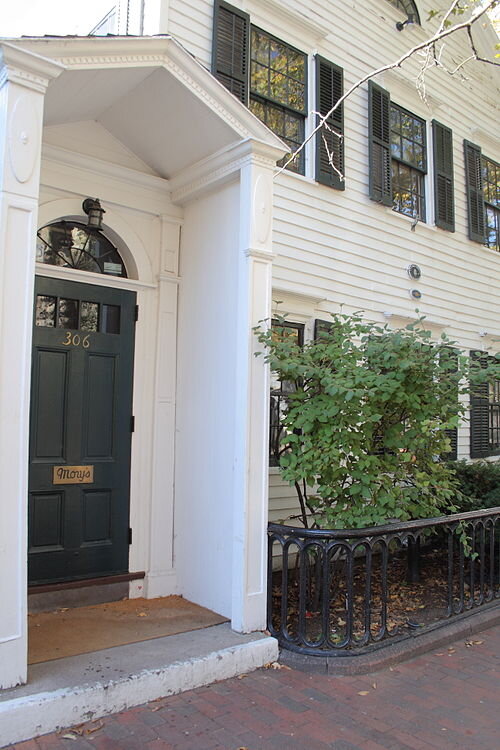
Mory’s, founded in 1849, is a private club/restaurant/watering hole in New Haven whose membership is confined to those with Yale connections. It is virtually on the Yale campus.
'The Painted State'

“September Barrens,’’ by New Castle, N.H.-based Grant Drumheller, in the show “Maine: The Painted State: 2021,’’ at Greenhut Galleries, Portland, through May 29. (One thinks of Maine’s famous blueberry barrens here.)
This biennial exhibit celebrates Maine's place in American art history, and how this tradition carries on into the present day, with reinvention on the way. In this 44th year of the exhibit, 45 contemporary Maine artists depict places very important to them, from lush forests to rocky coastlines. But then, Maine's inspiring landscape that has made drawn great artists throughout history.
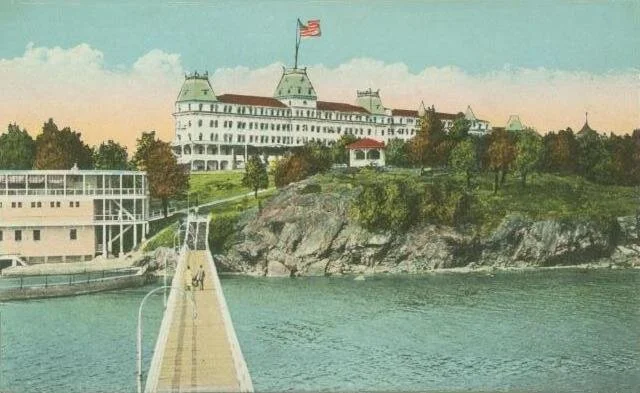
The famous Wentworth-by-the-Sea resort hotel, in New Castle, N.H., in 1920. The Wentworth is still there, in much modernized fashion.

Todd McLeish: Invasive water plants imperil ponds

In less than seven years this Sacred Lotus patch has taken over nearly two acres of 12-acre Meshanticut Pond, in Cranston, R.I.
— R.I. Department of Environmental Management photo
From ecoRI News (ecori.0rg)
When a Cranston, R.I., resident planted a Sacred Lotus in the pond at Meshanticut State Park in memory of a family member in 2014, she didn’t realize that the plant was an aggressive invasive species. The lotus, which features enormous floating leaves that shade out native plants, quickly took over a large area of the Rhode Island pond.
Five years later, 75 volunteers spent 12 hours cutting it back, but they eradicated just 10 percent of the ever-expanding plant, which today covers 1.83 acres of the 12-acre pond.
It’s one of many examples of the challenges the state faces in trying to control and eliminate aquatic invasive species. More than 100 lakes and 27 river segments in Rhode Island are plagued with at least one species of invasive plant, according to the Rhode Island Department of Environmental Management (DEM). These plants pose threats to healthy ecosystems, reduce recreational opportunities, and negatively impact the economy.
“Aquatic invasives are definitely a problem for water quality, but there aren’t a lot of resources dedicated to mapping them and trying to contain them,” said Kate McPherson, riverKeeper for Save The Bay. “The problem is they can show up in really pristine areas of the state for a variety of reasons, and a lot of the plants only need a couple of cells or a leaf to reproduce. They don’t need seeds. So unless you’re really diligent about scrubbing down your boat and other equipment after each use, it’s really hard to prevent their spread.”
In its 2020 fishing regulations, DEM prohibited the transport of invasive plants on any type of boat, motor, trailer, or fishing gear as a strategy to prevent the inadvertent movement of aquatic invasive species from one waterbody to another.
“It’s essentially an incentive for boaters or anglers to clean off their gear to make sure they don’t move any plants unintentionally,” said Katie DeGoosh of DEM’s Office of Water Resources. “It’s part of a national campaign known as Clean Drain Dry to remind anyone recreating on water how they should decontaminate their gear to avoid spreading invasives.”
DEM’s latest effort to combat aquatic invasive species is proposed regulations to ban their sale, purchase, importation, and distribution in the state. Rhode Island is the only state in the Northeast that has yet to regulate the sale of these plants.
The proposed regulations have the support of Save The Bay, the Rhode Island Natural History Survey, and the Rhode Island Wild Plant Society.
Those with aquatic plants in backyard water gardens aren’t the focus of the regulations because those residents aren’t selling the plants, DeGoosh said.
A mat of Water Chestnuts in Olney Pond at Lincoln Woods State Park limits the amount of light available to other aquatic plants, allowing it to quickly displace native species and decrease biodiversity. (DEM)
The proposed regulations list 48 species of aquatic invasive species whose sale would be prohibited. All but one — Sacred Lotus — are included on the Federal Noxious Weed List, are banned by other states in the region, were nominated by the Rhode Island Invasive Species Council or are included in the Rhode Island Aquatic Invasive Species Management Plan.
Among them are Carolina Fanwort, a problem species in numerous locations, such as Stump Pond in Smithfield; American Lotus, which covers 18 acres of Chapman Pond in Westerly; Brazilian Waterweed, which has invaded Hundred Acre Pond in South Kingstown; and common Water Hyacinth, an Amazonian species now found in the Pawcatuck River in Westerly.
Perhaps the worst of them is Variable Milfoil, which has been recorded in 69 lakes and ponds and 19 river segments in Rhode Island.
“Milfoil means a million tiny leaves,” said McPherson, who monitors local rivers for invasive species. “It looks like a submerged raccoon tail, and if you’ve been paddling in any pond in Rhode Island, you’ve probably seen it. A tiny little fragment can spread it.”
In many waterbodies, especially in urban communities, multiple species of aquatic invasives have colonized.
“They’re a problem because they can choke out native species and they may not be as good a food source for animals that eat aquatic plants,” McPherson said. “They’re also indicative of a water-quality problem. We’re seeing them more commonly in areas with too much phosphorous or nitrogen in the water. Areas with pollutants encourage these plants to grow.”
David Gregg, executive director of the Rhode Island Natural History Survey, also noted the impact of pollution in helping aquatic invasives take hold.
“People really care about their lakes, but most lakes in Rhode Island are man-made, shallow, and polluted by surrounding development — lawns, septics, road runoff — and so they grow invasive plants like nobody's business,” he said.
Like at Meshanticut Pond, once the plants become established in a waterbody, they are difficult to eradicate.
“It’s a cyclical problem,” McPherson said. “It’s super satisfying to go as a volunteer to rip it out, and super discouraging to go back a year later and find that it’s still there. If you don’t get all of the root system, it grows back.”
Natural History Survey staff documented the first occurrence of invasive water chestnut in the state in 2007 at Belleville Pond in North Kingstown. They led numerous volunteer efforts to manually remove it every year for a decade, and yet the plant remains. A similar endeavor to battle water chestnut at Chapman Pond in Westerly barely made a dent in the abundance of the plant.
“It’s a big problem,” McPherson said. “We need to get folks to think about how their activities can spread the plants and get them to think about aquatic invasives as a kind of contaminant.”
The proposed regulations, if approved, would be enforced via business inspections by DEM staff. Violators could be fined up to $500 per violation.
Rhode Island resident and author Todd McLeish runs a wildlife blog.

Jim Hightower: The scam of 'trickle-down economics'

Via OtherWords.org
The past year proves that a lot of conventional economic wisdom is neither true nor wise. For example:
1) “We don’t have the money.”
The power elites tell us it would be nice to do the big-ticket reforms America needs, but the money just isn’t there. Then a pandemic slammed into America, and suddenly trillions of dollars gushed out of Washington for everything from subsidizing meatpackers to developing vaccines, revealing that the money is there.
2) “We can’t increase the federal debt!”
Yet Trump and the Republican Congress didn’t hesitate to shove the national debt through the roof in 2017 to let a few corporations and billionaires pocket a $2 trillion-dollar tax giveaway. If those drunken spenders can use federal borrowing to make the likes of Amazon and Mark Zuckerberg richer, we can borrow funds for such productive national needs as infrastructure investment and quality education for all.
3) “The rich are the ‘makers’ who contribute the most to society.”
This silly myth quickly melted right in front of us as soon as the coronavirus arrived, making plain that the most valuable people are nurses, grocery clerks, teachers, postal employees, and millions of other mostly low-wage people. So let’s capitalize on the moment to demand policies that reward these grassroots makers instead of Wall Street’s billionaire takers.
4) “Tax cuts drive economic growth for all.”
They always claim that freeing corporations from the “burden” of taxes will encourage CEOs to invest in worker productivity and — voila — wages will miraculously rise. This scam has never worked for anyone but the scammers, and it’s now obvious to the great majority of workers that the best way to increase wages… is to increase wages!
Enact a $15 minimum wage and restore collective bargaining. Workers will pocket more and spend more, and the economy will rise.
Percolate-up economics works. Trickle-down does not.
OtherWords columnist Jim Hightower is a radio commentator, writer, and public speaker. Distributed by OtherWords.org.
Pushy spectators

“It said that the spectators at Boston will not let you drop out, they just push you back on the course.’’
— John Priester, after the 2002 Boston Marathon
The 125th Boston Marathon will be held on Monday, Oct. 11, assuming that road races are allowed as part of the Massachusetts reopening plan. In pre-COVID-19 times the marathon happened in April and presumably will again.
Nature and abstraction
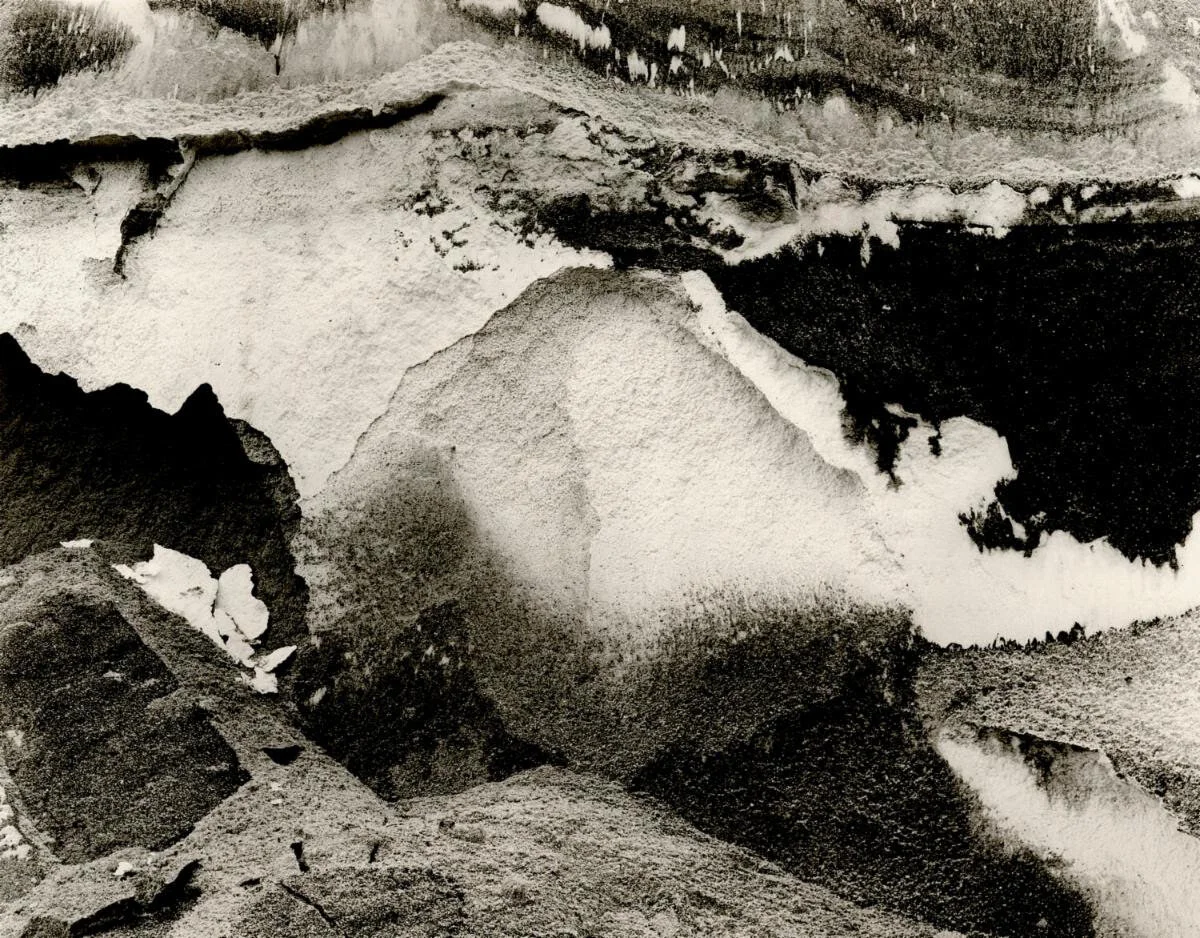
“Portsmouth (N.H.) Harbor Salt Pile’’ (archival silver gelatin print), by Carl Hyatt, a Portsmouth-based photographer, in the group show “Abstract Nature,’’ through April 24 at Cove Street Arts, Portland, Maine
The gallery explains that the show explores “the abstraction of nature through archival and digital prints. The exhibit title seems like a contradiction on the surface: abstraction is a manmade concept, thus nature on its own can't be abstract. However, abstraction as an art form elevates the essence of its subject by manipulating or removing parts of it.’’
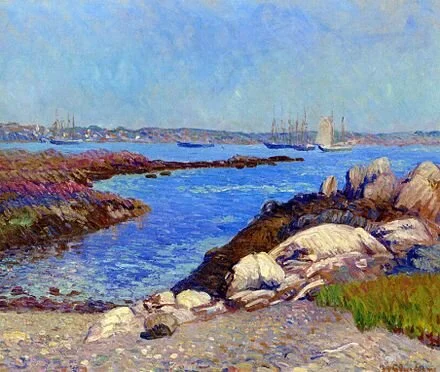
Portsmouth Harbor, New Hampshire by William James Glackens (1909)
Make space


“Asleep on the dunes.
The moon came up so large I rolled aside.’’
— From “The Ocean, Naming it,’’ by Peter Sacks (born 1950), poet and professor at Harvard

Llewellyn King: America’s rare-earth vulnerability

Refined rare-earth oxides are heavy gritty powders usually brown or black, but can be lighter colors as shown here
WEST WARWICK, R.I.
A world commodities rebalancing is underway, and China is in a position of dominance. Take lithium, where China is a major processor and battery manufacturer; cobalt, where China has dominated the supply chains; and rare earths, where China has an almost total monopoly. Taken together, these three commodities are key to the future of alternative energy, electric vehicles, mobile phones, and even headphones.
Having stated that he was “fervently Sinophile,” British Prime Minister Boris Johnson in the House of Commons recently called lithium deposits in England’s rugged southwestern county of Cornwall “the Klondike” of lithium. Johnson is known for his grandiloquence, but he knows about the importance of lithium in the age of the lithium-ion battery, and a big lithium mine will open in Cornwall in 2026.
This kind of economic activity points to the re-evaluation and rebalancing of the world’s vital, non-agricultural commodities, reflecting the need for new raw materials for national survival as the demands of technology have changed.
The rare earth elements — there are 17 of them but only four are in demand — are the great multipliers of the modern electronic age. I have seen how this works with the equivalent of a refrigerator magnet. A traditional magnet has a slight pull toward the metal surface. Try it with a magnet that has been enhanced with one of the rare earths, neodymium, and you will find the attraction to the metal of the refrigerator so strong that the magnet will fly out of your hand — and it will take a muscular tug to remove it.
Enhanced magnetism is what makes wind turbines economically feasible. Wind turbines wouldn’t produce enough electricity to make them economical without that multiplier.
The problem is that 95 percent of the rare earths now mined and processed come from China.
This gives the Chinese the ability to choke off the West’s economies while the struggle to produce the vital elements elsewhere (and they are well distributed throughout the Earth’s crust) is mounted.
David Zaikin, a Ukrainian-born Canadian citizen working in London, knows as much about the world resource line-up and China’s influence as anyone. He is the CEO of Key Elements Group, and an alumnus and founder of the Mining Club at the London Business School.
“China is out there and is trying to win every race globally. The West must do everything it can to subvert its efforts and find alternative nations to work with,” Zaikin says.
“The good news is that there are friendly nations like Canada, Australia, and India that are naturally very rich in rare earths. They are well-positioned to bridge the gap in potential rare earths shortages, or in the event those are weaponized by the PRC,” he says, “The bad news is that it takes a long time to begin commercial production, and the right time to start was yesterday.”
The Mountain Pass mine, in the Mojave Desert in California, is in production after a hiatus. But that doesn’t mean much in terms of our Chinese dependence. The production from California is shipped to China for processing and then shipped back to the United States. The mine has also been financed by the Chinese.
The inhibition to mining for rare earths, as John Kutsch, executive director of the Thorium Energy Alliance, explains, is thorium, which isn’t a rare earth element, but which is found in conjunction with rare earths, especially in the United States.
Thorium is a fertile nuclear material and is classified as such by the Nuclear Regulatory Commission and the International Atomic Energy Agency, so miners have to account for it, and it has to be stored and disposed of as nuclear waste.
Until a national thorium bank is established, as supported by Kutsch and his group, we will be looking elsewhere.
Zaikin says, “As the West pursues green policies and becomes more independent of imported oil, it will reduce the influence that the GCC [Gulf Cooperation Council] and other oil-producing nations have on domestic and international policies.”
He adds, “However, by moving from oil into renewable energy, the West increasingly finds itself at the mercy of China. This is why it is crucial that the West includes nuclear power in its green vision of the future, in order to avoid the weaponization of energy by hostile powers.”
On Twitter: @llewellynking2
Llewellyn King is executive producer and host of White House Chronicle, on PBS. He’s based in Rhode Island and Washington, D.C.
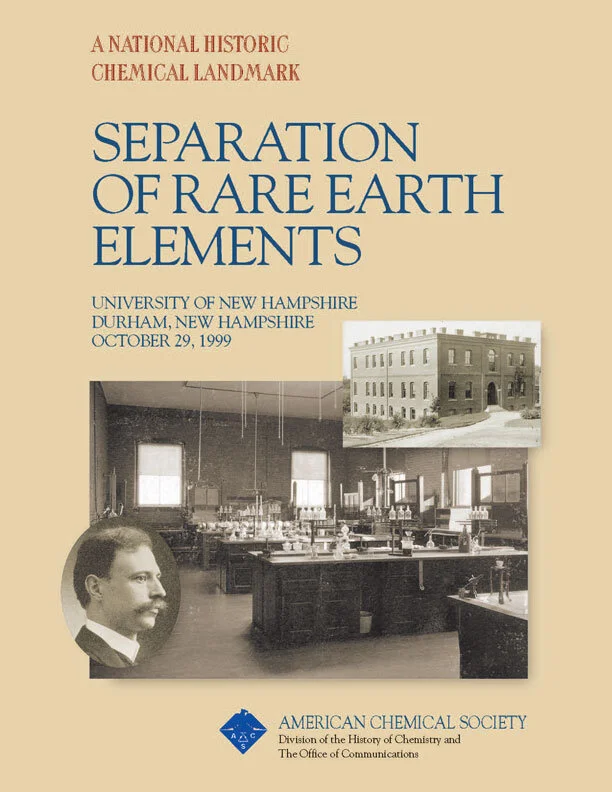
Editor’s note: The technique used to purify rare-earth minerals was developed at the beginning of the 20th Century by chemist Charles James (above) at the University of New Hampshire.
New England, especially New Hampshire, has rocks with rare earth elements
'O tempora o mores!'
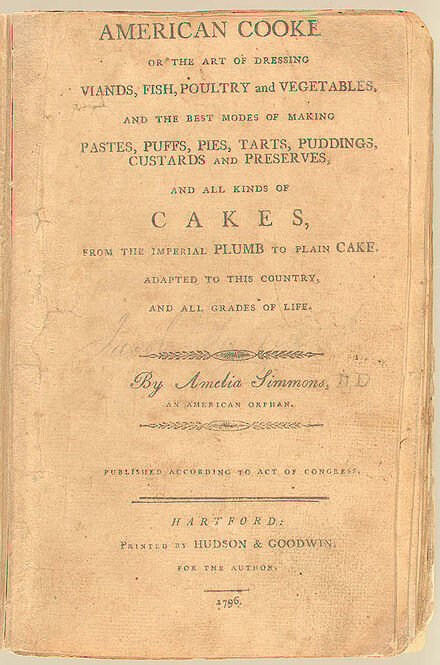
“The world, and the fashion thereof, is so variable, that old people cannot accommodate themselves to the various changes and fashions which daily occur; they will adhere to the fashion of their day, and will not surrender their attachments to the good old way – while the young and gay, bend and conform readily to the tastes of their times, and fancy of the hour.’’
— Amelia Simmons, in American Cookery (1796), which may be considered the first American cookbook. Little is know about Simmons beyond that she lived in Connecticut.

Looking at science and personal story

“War in Heaven” (oil and ink on wood panel), by Boston-based artist Steve Sangapore, in his joint show “Phantasm’’ with Ponnapa Prakkamakul, at Fountain Street Gallery, Boston, through May 2
Mr. Sangapore tells the gallery:
“The superposition oil and ink painting series explores the implications of this idea by splitting the canvas into two halves. On one side of the panel there is the world as we perceive it, which is rendered using oil paint. The delivery is familiar, defined and full of color and emotion. On the other, I employ spontaneous line work in black and white, illustrating the unintuitive, non-locality of the quantum world.
”My aim was to have two visually contrasting approaches for how each of the painting halves were represented. The physical execution of representing a single subject using both abstract line-work and objective realism creates a strong dichotomy for the series. The contrast of the two approaches invites the viewer into a conversation between the two vastly different ideas of how nature works and is experienced.
“The particular subjects chosen for this split-panel execution add an additional dimension to the work. Each piece depicts significant people, places and events in my life. From the Belgian landscape to narratives about loss, each installment to the series is a marriage of my interest in science with personal story and narrative.’’
New MBTA commuter-rail schedule in effect
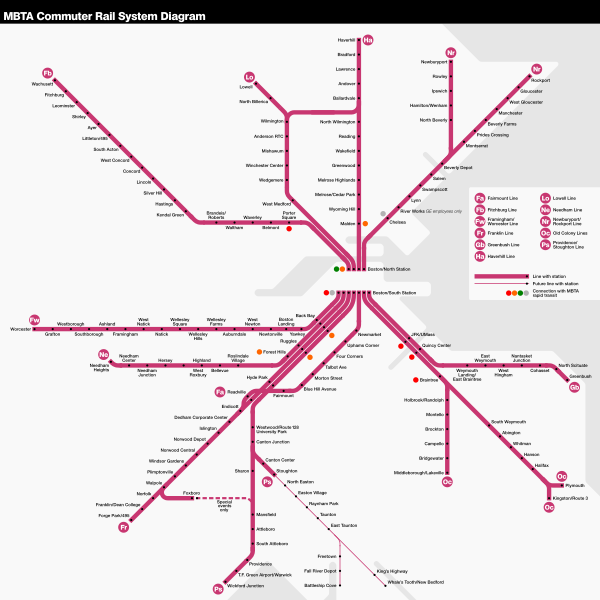
From The New England Council (newenglandcouncil.com)
“Keolis Commuter Services, which operates the MBTA’s commuter rail service, recently announced a new Spring 2021 schedule and improved services in efforts to better meet passenger needs. Some of the plan’s priorities include enhancing train frequency and interval predictability, allowing for greater consistency in train arrivals and departures, and providing extended service hours. In addition, the new changes seek to improve accessibility for essential and transit-critical workers, as well as less frequent riders.
“A collaborative effort between the MBTA and Keolis Commuter Services, the schedule took effect on April 5. It increases service significantly compared to the winter schedule, which had been in place since December 2020. Sanitation and social distancing will continue to be implemented in accordance with COVID-19 guidelines.
“The new Spring 2021 schedule provides options that our passengers have requested and can assist in a strong and equitable economic recovery with regular service across all lines and more consistent service to many gateway cities,” said Keolis Commuter Services CEO and General Manager David Scorey..
“The New England Council applauds Keolis Commuter Services’ commitment to passenger service and equity across all Boston transit lines. Read more from the Keolis Commuter Service press release.’’

MBTA commuter train serving the Providence/Stoughton Line at the Route 128 station
Save us from leaf-blower misery

From Robert Whitcomb’s “Digital Diary,’’ in GoLocal24.com
Spring and fall are of course the prime seasons for leaf blowers in New England. The gasoline-fueled blowers are monsters, creating explosions of sound and copious pollution and dust. They make life miserable for humans and other animals for blocks around, often for hours at a time, creating dead zones. Some homeowners wield them but those “landscaping’’ firms staffed by our friends from South of the Border, many of them not wearing ear and face protection from the shrieking noise and toxic fumes, are responsible for the lion’s share of the devastation. And some of the leaves end up in the street or in someone else’s property.
Time to ban gasoline-powered leaf blowers; electric ones are much quieter. Then there’s that handy tool called the rake. More reasons to reduce the size of lawns and replace them with much more ecologically friendly ground cover.

Christina Cliff: Teaching in the active shooter era

From The New England Journal of Higher Education, a service of The New England Journal of Higher Education (nebhe.org)
I’ve been teaching political science for about a decade now. I teach students about the international system, the functioning of government, foreign policy, national security. My teaching is based on my 12 years of higher education and shaped by my life experiences.
I’m a Cold War kid. In grade school and junior-high classrooms, we had “duck and cover” drills for what to do in the case of a Soviet attack. I grew up in a place considered a strategic attack target, so we likely did these drills more than the average American school kids. I still remember crouching under my desk, staring at the fossilized gum on the underside, waiting for the teacher to tell us the drill was over so we could go out to recess.
Even as a child I knew that we weren’t really likely to be bombed. There had never been a missile attack on the U.S. I believed in my own safety because the threat that I was told was a possibility was never a reality.
This is not to say the experience didn’t affect me. Being a Cold War kid in the U.S. meant that you knew the Soviets—and maybe China—were the enemy. Cold War kids knew that protecting us from those enemies was the primary focus of our government. We knew this because they told us. We mostly believed the politicians, because we stayed safe from the threats they told us they would combat.
When the Cold War kids grew up, some of them became educators. What we were taught, what we learned, was affected by our experiences. And when the Cold War kids grew up, some became politicians. Those childhood memories and experiences informed the way they governed. They believed that the enemies of our childhood were the enemies of our future. This belief shaped our policies, sometimes to our detriment.
We weren’t prepared for 9/11 in large part because our leaders were shaped by their experiences that said that if we would be attacked, it would be by a country. We believed, because of what we thought the Cold War had shown us, that we could deter an attack by using our threat of force or our economic influence. We did not comprehend, even though the Cold War should have taught us this as well, that you can’t deter an ideology, and that our might does not ensure our safety or victory.
A Cold War kid teaching the post-9/11 generation
I now teach classes on political violence, terrorism, international relations, and on global security and diplomacy. I’m a Cold War kid, but my students have a very different frame of reference. My students are now the post-9/11 generation—often too young to remember the actual event, though old enough to enlist in the ongoing wars that were a response to that attack. They don’t really understand why the politicians are so concerned about North Korea.
Today’s college students didn’t have my childhood, so they don’t understand the fear of a nuclear threat. What my students know, unlike the Cold War generation, is that might does not guarantee victory—and that war is endless.
What my students know, what they do remember, and what shapes their perspective, are hate crimes, terrorist attacks and mass shootings. My students know about El Paso, Dayton, Sandy Hook, Virginia Tech, Parkland, Pulse Nightclub, Thousand Oaks, Las Vegas, Tree of Life Synagogue, the Boston Marathon bombing, the Emanuel AME Church, among so many others.
My students didn’t just duck and cover under their K-12 school desks. They learned to tie tourniquets, and have been taught how to block doors, how to stay silent in a coat closet. My students look for all of the exits at a public event, they are cautious at stores and movie theaters. They carry their phones at all times, not because they are checking their social media, but because they want to be able to reach their parents at any moment.
While they do not remember the 9/11 attacks, today’s college students do remember others. Unlike the Cold War generation, they have learned that might does not guarantee safety.
They have now also experienced more than a year of the effects of a global pandemic, which included school shutdowns, virtual learning and catastrophic death tolls. My students have seen Asian people being targeted for hate. During the pandemic, my students watched a Black man die with an officer kneeling on his neck, protests and riots erupt over police brutality. My students saw a violent insurrection storm the U.S. Capitol and kill a police officer in an effort and stop a presidential election.
Thoughts and prayers
With each shooting, with each attack, with each eruption of violence, new debates about gun control, mental illness, hate and terrorism erupt. Sometimes, our representatives enact legislation, but more often they do not. We offer prayers, we offer thoughts. But we do very little.
My students are America’s mass-shooting generation. They have learned that the potential threats may be in their hometown. They do drills in school because the threat has become reality. They didn’t wait for the recess bell to end the drill; they waited to see if it was only a drill. They didn’t stare at fossilized gum—they waited for a shadow to cross in front of the classroom closet they were hiding in.
In many ways, being a Cold War kid defined how I viewed the world and our place in it. During my childhood, the biggest threat was nuclear war that would destroy the planet. But it never happened, and I believed that our government could keep us safe. I think, I had it easier than my students do.
Many of today’s college students are growing up believing that thoughts and prayers are insincere and something that takes the place of action. They don’t believe the politicians, because the politicians haven’t kept them safe. Their generation has become used to the idea that the enemy could be anyone, that they could be anywhere, and could strike at any time.
My students are members of the active-shooter generation, and that means that I have to be prepared to address topics that they have personal experience with as they may arise in the curriculum. I have students who were at the Boston Marathon bombing, and I have students who had family and friends who survived Sandy Hook. In the classroom, I have to understand trauma in order to educate in a way that respects and acknowledges those experiences, an approach that most Cold War kids would have never expected from their teachers.
Someday, my students will be the leaders of the world. I can teach them, but their experiences will shape everything. And I have to ask, after watching the successes and failures of the Cold War kids, what will these future leaders’ policies will look like? What did the Cold War generation leave for our children?
Christina Cliff is an assistant professor of political science and security studies at Franklin Pierce University, in Rindge, N.H.
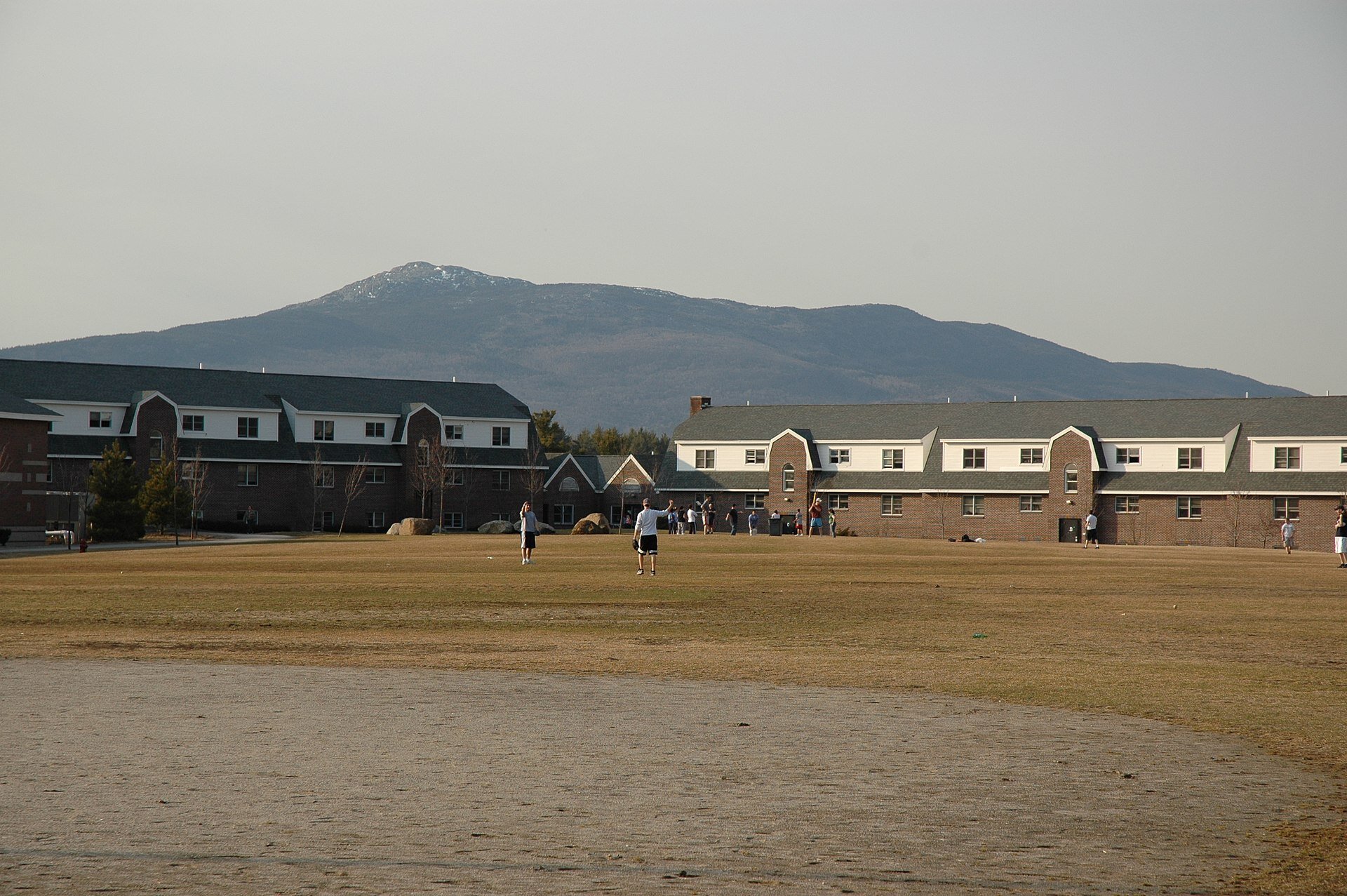
Franklin Pierce’s Mountain View apartments, with Mt. Monadnock looming in the background
— Photo by Fsguitarist
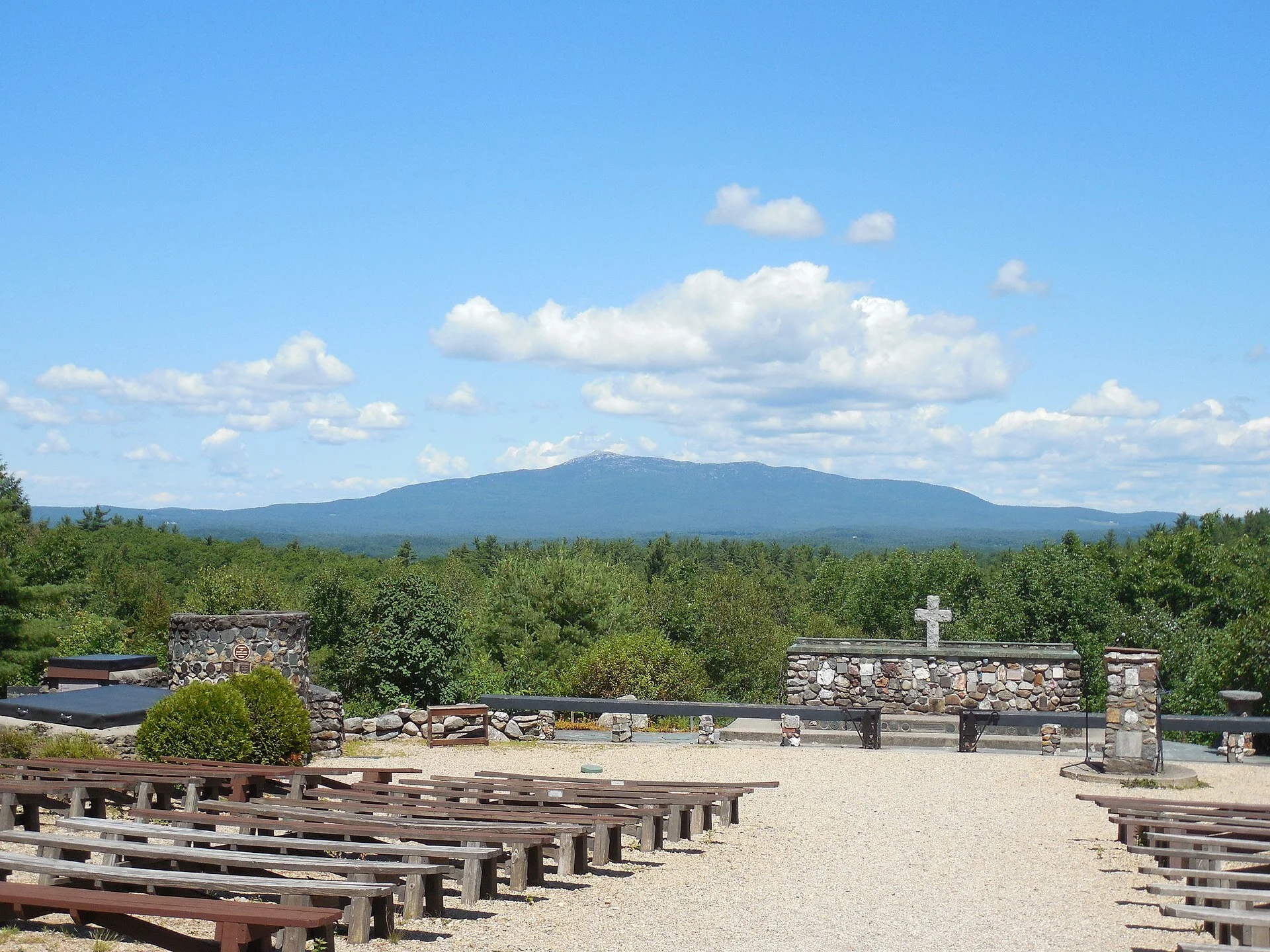
View of Mt. Monadnock from the famous Cathedral of the Pines, in Rindge
— Photo by John Phelan -
Underground interactions

Michele Johnsen, “Wise Woman II” (acrylic on canvas) by Michele Johnsen, in her show “Otherword,’’ at Nightshade Contemporary, in Littleton, N.H., through May 2
The acrylic paintings of Michele Johnsen, a New Hampshire native, are inspired by landscape. She’s particularly interested in the underground interaction among the roots of trees, fungi and other living things in the Granite State’s s forests. The seemingly unnatural colors she uses give her work a fantatical quality that evokes the magic and mystery inherent in this underground communication.
She lives in Colebrook, N.H.
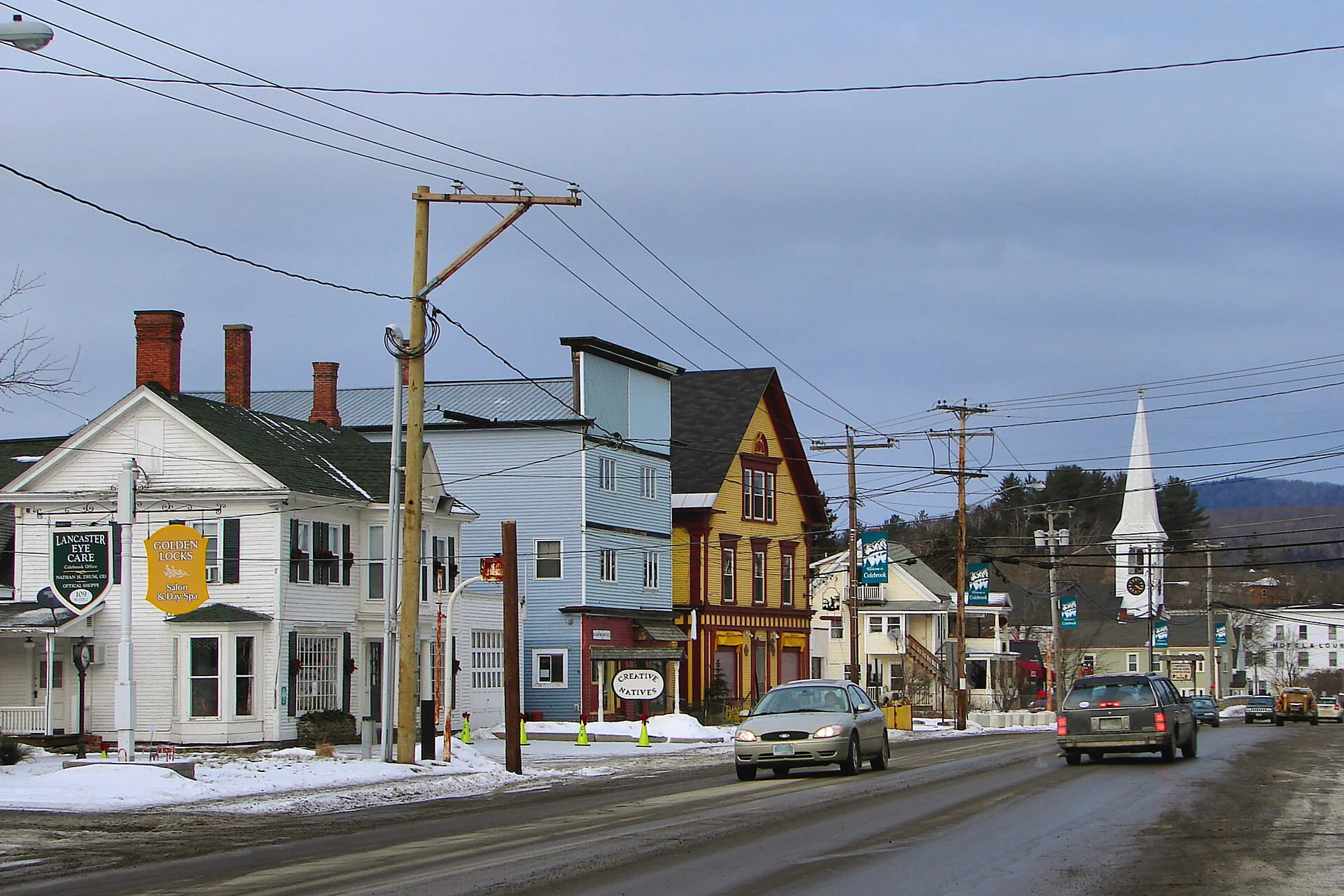
Downtown Colebrook, N.H.
— Photo by P199

The long-gone Monadnock House hotel in Colebrook. The town, on the edge of the White Mountains, started to attract summer visitors seeking relief from the heat and pollution of Northeast cities in the late 19th Century.

'This brave little state'
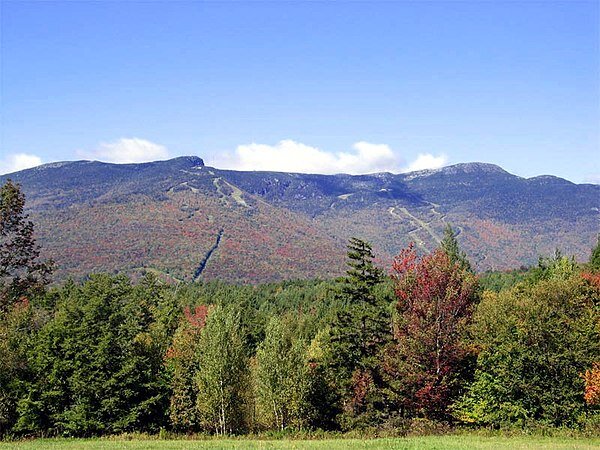
Mt. Mansfield

“I have had an opportunity of visiting again the scenes of my childhood. I want to express to you, and through the press to the other cities of Vermont, my sincere appreciation for the general hospitality bestowed upon me and my associates on the occasion of this journey.
“It is gratifying to note the splendid recovery from the great catastrophe which overtook the state nearly a year ago. Transportation has been restored. The railroads are in a better condition than before. The highways are open to traffic for those who wish to travel by automobile.
” Vermont is a state I love. I could not look upon the peaks of Ascutney, Killington, Mansfield and Equinox, without being moved in a way that no other scene could move me. It was here that I first saw the light of day; here I received my bride, here my dead lie pillowed on the loving breast of our everlasting hills.
“I love Vermont because of her hills and valleys, her scenery and invigorating climate, but most of all because of her indomitable people. They are a race of pioneers who have almost beggared themselves to serve others. If the spirit of liberty should vanish in other parts of the Union, and support of our institutions should languish, it could all be replenished from the generous store held by the people of this brave little state of Vermont.’’
President Calvin Coolidge’s speech at Bennington, Vt., on Sept. 21, 1928. Coolidge (1872-1933) was touring his home state by train to assess progress of recovery following a disastrous flood in 1927. Considered taciturn and nicknamed "Silent Cal," Coolidge demonstrated unusual emotion in delivering his response to the suffering and loss he had witnessed.
David Warsh: Mundell, the enigmatic guru of 'supply-side economics'

Robert Mundell
SOMERVILLLE, Mass.
Email last week brought a copy of The Gypsy Economist: The Life and Times of Colin Clark, by Alex Millmow. Starting in the 1930s, Clark (1905-1989) was an important student of global economic development who, though born in London, spent most of his career in Australia. The same mail brought news, too, of the death of international macro-economist Robert Mundell. He was 88, a Canadian who spent 45 years at Columbia University.
Another decade or two will pass before an even-handed biography of Mundell arrives, but it will be worth the wait. Mundell was a brilliant student of the rapid evolution of the international monetary system in the years after 1960 and was sometimes described as “father of the Euro.” He became the enigmatic guru of “supply side economics,” and plumped for a return to the gold standard as well. As a new Nobel laureate, in 1999, Mundell entertained guests by concluding his banquet speech by singing a few lines of My Way.
While waiting for a thorough, absorbing, and graceful appraisal of a remarkable life (I have in mind, as an example, David Ricardo: A Biography, by David Weatherall, though Mundell was no Ricardo), we have the Nobel Committee’s own explanation. We have as well the testimony of the economist who did more than any other person to make Mundell’s Nobel Prize come about, Rüdiger Dornbusch, of the Massachusetts Institute of Technology. A year after Mundell was recognized, Dornbusch described his contributions in the Scandinavian Journal of Economics
“Mundell’s central claim to fame is to have recast entirely the way we think about the functioning of an economy with an open capital account, including the stark implications for policy. That is the purely intellectual part. But there is also the marketing department: the wonderful skill to capture the story in a few equations, a simple diagram. Just as [Nobel laureate] John Hicks… brilliantly summarized [in 1937] the essence of Keynesian economics in the IS-LM diagram, Mundell’s models likewise reduce to the textbook level a dramatically new view of the open economy.”
Mundell had come to economics at the right time, Dornbusch wrote. He graduated from MIT in 1956, “after two decades of formalization had clarified the distinction between goods and asset markets.” Post-war capital controls were giving way to convertibility under the Bretton Woods system. It helped, too, that Mundell was Canadian. Canada had shifted from fixed to floating rates in the 1950s, offering him a wealth of practical problems to ponder.
Mainly, Mundell entered with alacrity into the policy debates in international trade and finance that heated up as global growth surged in the early 1960s. A two-year stint in the research department of the International Monetary Fund, 1961-63, served him especially well. Two papers in 1963 – “Capital Mobility and Stabilization Policy under Fixed and Flexible Exchange Rates” and “”Inflation and Real Interest Rates” – made his reputation. Mundell arrived at the University of Chicago in 1965, and for the next several years, as the international system of convertibility to gold via dollars under Bretton Woods Agreement gave way to flexible exchange rates, he was, as the saying goes, the straw that stirred the drink. “He did not shy away from the difficult task of setting out a framework for policy thinking,” wrote Dornbusch. “There was no international monetary issue of the 1960s and 1970s in which he was not prominently and decisively involved.”
Departmental friction, probably mainly with Milton Friedman, led Mundell to quit Chicago and accept a position at the up-and-coming University of Waterloo, in southwestern Ontario, starting in 1971. Ricard Caves, of Harvard University, who had recently edited a volume of Readings in International Economics for the American Economic Association, memorably cracked wise: “At last Waterloo has met its Napoleon!”
In 1974, Mundell accepted an offer from Columbia University. Once in New York, he struck up a conversation with the editorial page of The Wall Street Journal. A 1970 lecture to a full house at the University of Chicago – “The Dollar and the Policy Mix” – had “failed to convince,” Dornbusch wrote; there had been no model, no carefully spelled-out assumptions, just assertions – tax cuts would foster growth on the supply side, tight money would diminish inflationary expectations.
But after Princeton’s economic department published the lecture as a pamphlet in 1971, its argument gathered force, especially after WSJ editorial writer Jude Wanniski anointed it as the “Mundell-Laffer hypothesis” in an article in The Public Interest in 1975. (Arthur Laffer had been a Chicago colleague). Mundell had become “guru for a movement that may not have much intellectual appeal,” Dornbusch wrote in 2000, “but it certainly has changed the world.” As for Mundell’s advocacy of gold, Dornbusch added, it was hard to tell if he was serious. But, he continued, Mundell always had an undeniable streak of the enfant terrible.”
Left behind in Chicago in 1972 were Mundell’s students, Dornbusch, Jacob Frenkel and Michael Mussa; his faculty colleagues, Harry Johnson, a fellow Canadian 10 years his senior; Stanley Fischer, Arnold Harberger, and the deeper theorists whose work had influenced Mundell’s conversion from classical Keynesian view to those of a global monetarist. Dornbusch and Fischer moved the next year to MIT and taught two luminaries of the next generation of international economists, Kenneth Rogoff and Maurice Obstfeld, who in turn wrote the text for the generation after that. Frenkel went to the International Monetary Fund and prepared the way for future policymakers at the Bretton Woods institutions, including Fischer, Mussa, Rogoff, Obstfeld, and, in the present day, Gita Gopinath at the IMF and Carmen Reinhart, at the World Bank.
Might the Swedes somehow have diluted Mundell’s contribution? Or turned a blind eye to it altogether? Marcus Fleming, IMF deputy research director, who shared credit for “the Mundell-Fleming model,” died in 1976; Harry Johnson in 1977; Robert Triffin in 1993. Dornbusch argued that the epochal transition to the open-economy world could not be overlooked. With Obsfeld, and Guillermo Calvo, of Columbia University, he organized a 1997 Festschrift conference (published as Money, Capital, Mobility, and Trade); and a campaign among those who had been invited to submit nominations
It worked. Mundell was recognized and went on to 20 years of enhanced celebrity, generating ample material for the later chapters of that future biography.
Dornbusch died of cancer, in 2002, at 60, after a courageous struggle. Interesting as was his life, significant as were his contributions to international economics (his work on exchange rate “overshooting,” as well as that of his student Pentti Kouri, was mentioned in the background information that accompanied Mundell’s prize), he is unlikely to get a biography of his own. He was, however, one of the best-loved economists of his generation. And the story of his service to economics is a reminder of how the profession works.
David Warsh, an economic historian and a veteran columnist, is proprietor of Somerville-based economicprincipals.com, where this column originated.
To be rearranged by global warming
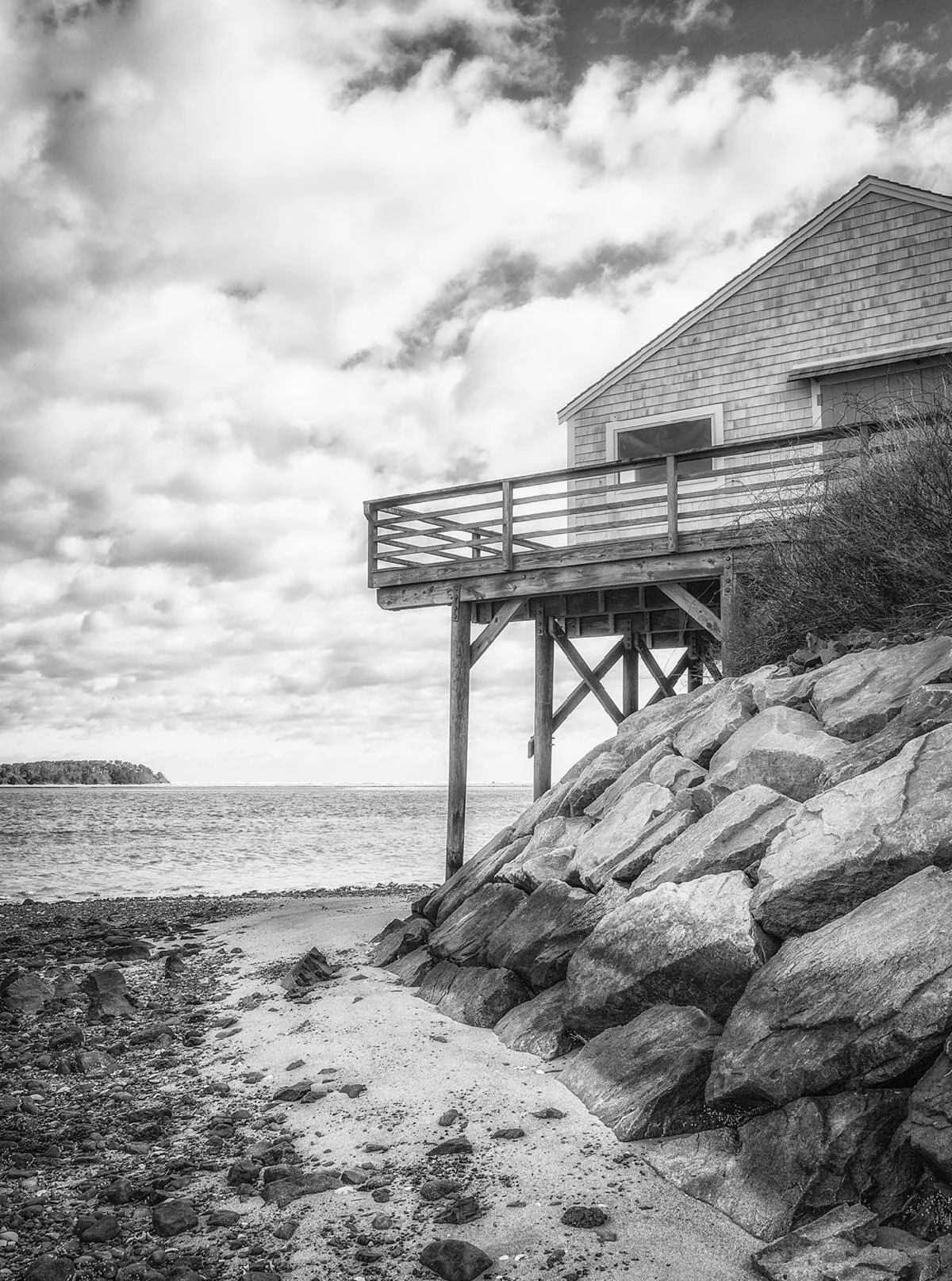
“A Chatham {Mass.) View” (archival pigment print), by Bobby Baker.
© Bobby Baker Fine Art
Don Pesci: Avoid 'cheap grace': Bring migrant kids to Conn.

U.S. Border Patrol officers processing migrant children in Texas

Central American migrants charging their phones in Mexico City on their way to the U.S. border.
VERNON, Conn.
The crisis at the border has now officially become “a border crisis.” A story in The Hartford Courant boldly labels it as such: “Lamont was personally asked by Vice President Kamala Harris recently if Connecticut could provide space for some of the thousands of children who are being kept in detention centers along the Texas border after fleeing from their Central American countries. Their numbers have increased as the federal government is facing a border crisis (emphasis mine).”
“Crisis” is not a term often found waltzing around with the new administration of President Joe Biden. But it has become impossible in recent days for Friends Of Biden (FOBs) to overlook the massive numbers of illegal – shall we, for once, call things by their right names? -- immigrants that have poured over the US border after Biden, a few weeks into his presidency, opened the door to illegal immigration while telling the huddled masses yearning to breathe free in Honduras, Guatemala and Mexico, “Don’t come in just yet. We’re not ready for you.”
They came, in numbers impossible to ignore.
Biden honeymooners scattered throughout the United States have managed thus far to obscure the predictable consequences of Democratic attempts to rid the nation of any trace of Trumpism. Slathering such failed attempts with political slant-ointment has not worked to obliterate the failed results of Biden’s thoughtless border policies. George Orwell taught us that the most difficult thing that writers must do is to notice what is lying right under their noses, and some people in the news business have taken his admonition to heart.
The unmanageable influx of illegal immigrants quickly became a crisis after the Biden administration disassembled Trump’s effective, though imperfect, multiple solutions to illegal border crossings. The Trump protocols included a wall, much derided by anti-Trump Democrats; an arrangement with south-of-the-border states that illegal immigrants passing through other countries on their way to the United States must apply for asylum in the pass-through countries, and tighter border security. All this was washed away, mostly by executive fiats, following Biden’s elevation to the presidency.
The came the deluge. Suddenly everyone was woke.
Now that the immigration horses have escaped the barn, the Biden administration is reconsidering patching breaches in the border wall and bribing – shall we call things by their right names for once? -- South American countries plagued for decades by failed socialist policies, so that the governments of said countries might consider giving the Biden administration a hands-up concerning illegal border crossings.
Answering a plea from Vice President Kamala Harris, Connecticut Gov. Ned Lamont has agreed to lend a hand as well. After all, why should a border crisis that affects the entire nation be borne solely by California, Arizona, New Mexico and Texas, states lying on our country’s mystical borders?
Good question. Is it not a form of cheap grace for progressives in Connecticut to refuse to put their muscle where their mouths have been? This time, Connecticut progressives are not marching in lockstep with their brother progressives in the Biden-Harris administration.
Connecticut progressives are wiggling on the point. Middletown Mayor Ben Florsheim, perhaps the most progressive politician in the history of Middletown {home of Wesleyan University}, expressed reservations. “Taking kids out of cages in the Southwest and moving them into cages in the Northeast, Florsheim said, “is not an immigration policy. This is a literal decommissioned child prison. It’s a detention facility.” Actually, was a detention facility; no one has been detained in the closed Connecticut Juvenile Training School since April 12, 2018. Then too, Harris was not whispering policy prescriptions into Lamont’s ear during her visit to Connecticut. She was begging Lamont to let down a much needed political life line and, really, doesn’t the temporary housing in Connecticut of distressed children merit a soupcon of compassion from the progressive Mayor of Middletown? We are, after all, a nation of immigrants.
The Connecticut Justice Alliance’s executive director Christina Quaranta, said that the former juvenile-detention center “was not built to care for, support, or heal youth — especially youth already going through such significant trauma. Even if all evidence that [the training school] is a maximum security, hardware secure facility is removed, it still remains a large, cinderblock building, with inadequate living space for young people.”
Nope, Lamont said, “I visited there last week. I had no idea what to expect: cafeterias, classrooms, big outdoor recreation, indoor rec areas. I think the federal government would come in and make sure that when it came to where people actually sleep, they can do that in a way that the kids feel safe and feel like they’re at home. It’s secure, but it’s also welcoming.”
And that is the point, isn’t it? Lamont and Harris are right on this one: Connecticut should share the burden of national problems – the sooner the better. Welcoming illegal immigrant children to a facility that easily can be adjusted to meet their needs is no different than welcoming illegal immigrants into Connecticut’s sanctuary cities, and progressives who lodge flimsy objections to this mission of mercy are practitioners of cheap grace.
The crisis elsewhere should come home to roost, if only to show that Connecticut is better than those who pray in the church of cheap grace. Jesus, incidentally, called the practitioners of cheap grace “the tombs of the prophets.”
Don Pesci is a columnist based in Vernon.