
After looking deep inside
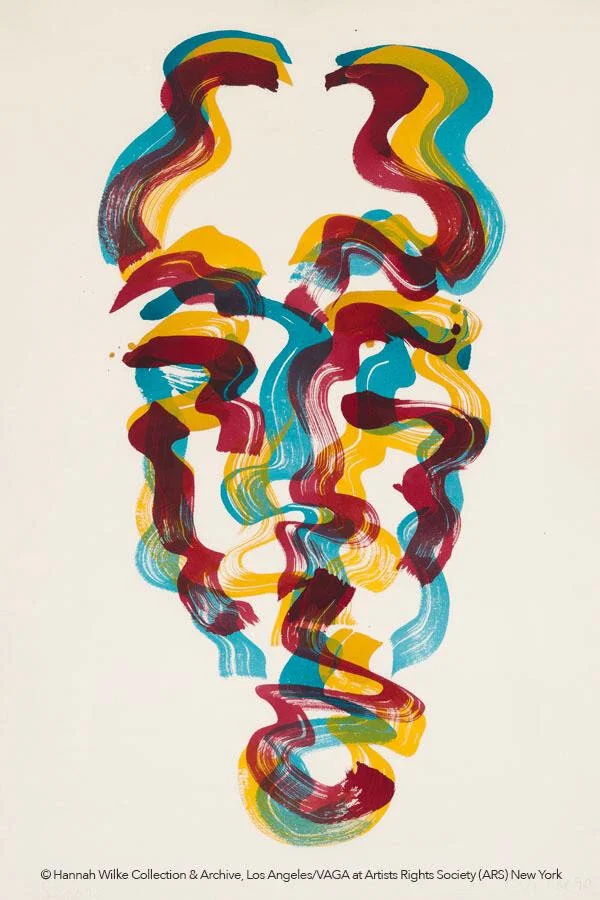
“Self-Portrait (BC Series)’’ (watercolor on Arches paper), by Hannah Wilke (1940-1993), through April 10, at the LaiSun Keane Gallery, Boston.
The ecological empires of oaks, Charter and otherwise
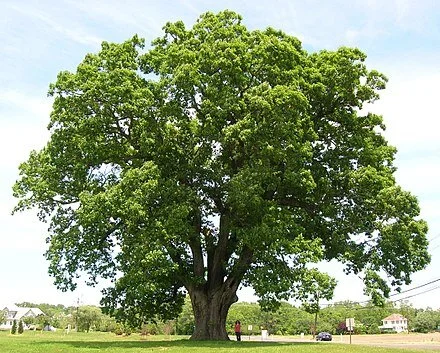
Large white oak
Adapted From Robert Whitcomb’s “Digital Diary,’’ in GoLocal24.com
That Southern New England has so many kinds of trees helps explain much of its ecological richness. Oaks are among the most common. I always thought of them as rather boring, especially because their leaves turn blandly brown in the fall and tend to hang on until spring. (I do have fond memories from childhood of tree houses in them and acorn fights.) But Douglas W. Tallamy, an entomologist at the University of Delaware, talks up oaks in his new book, The Nature of Oaks: The Rich Ecology of Our Most Essential Native Trees.
Mr. Tallamy explains how oaks support more life-forms than any other North American tree genus. They provide food (especially acorns and caterpillars) and protection for birds, mammals (consider squirrels, racoons, bears and bats), insects and spiders, as well as enriching soil, holding rainwater and cleaning the air. And they can live for hundreds of years.
“There is much going on in your yard that would not be going on if you did not have one or more oak trees gracing your piece of planet earth,” he writes in the book, which shows us what’s happening within, on, under, and around these trees.
Mr. Tallamy offers advice about how to plant and care for oaks, and information about the best oak species for your area.
Hug your oak trees and/or plant some. (And if they get uprooted in a storm, they make about the best firewood.) Fewer lawns, more oak trees, please. Now that it’s April, those remaining ugly brown leaves from last year will soon be pushed out and we’ll soon be enjoying the shade under oaks’ expansive canopies.
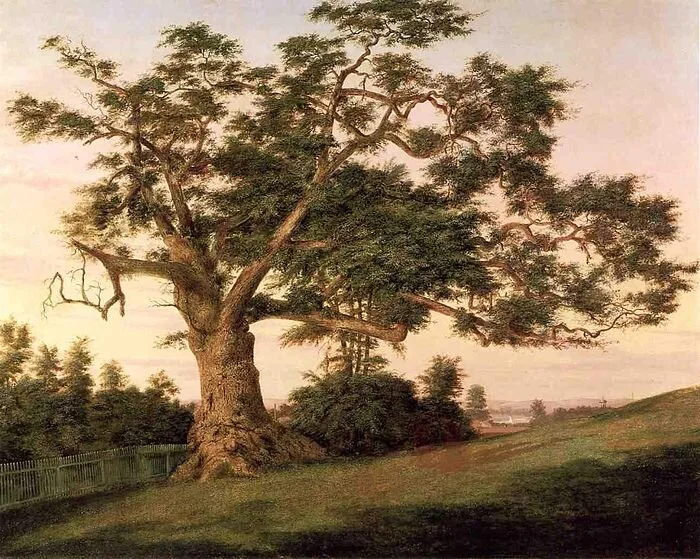
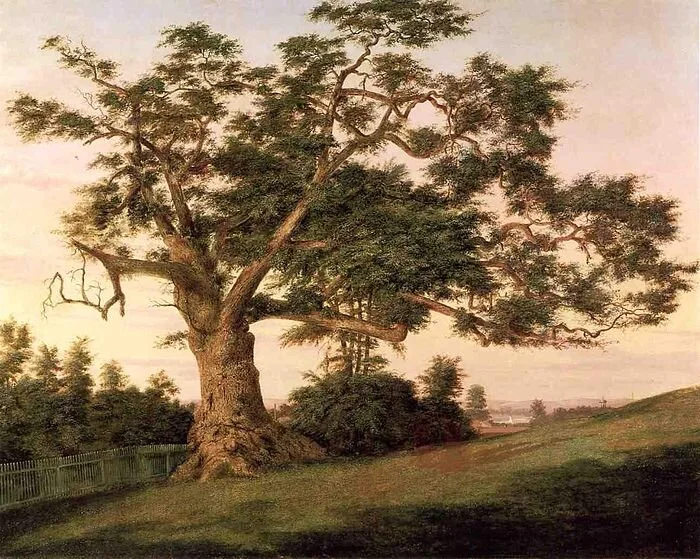
“The Charter Oak” (oil on canvas), by Charles De Wolf Brownell, 1857. It’s at the Wadsworth Atheneum, in Hartford.
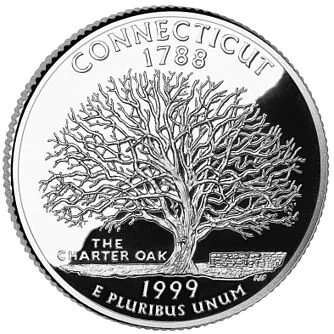
The Charter Oak was an unusually large white oak tree in Hartford. It grew from the 12th or 13th century until it fell during a storm in 1856. According to tradition, Connecticut's Royal Charter of 1662 was hidden within the hollow of the tree to thwart its confiscation by the English governor-general. The oak became a symbol of American independence and is commemorated on the Connecticut State Quarter.

Photos of acorns by David Hill
'Doorway to the sea'

“Christina’s World,’’ by Andrew Wyeth (1917-2009), the very popular American “realist “ painter. The woman in the painting, Anna Christina Olson (1893-1968), had a degenerative muscular disorder that prevented her from walking after she was 30. She refused to use a wheelchair, so she would crawl. The house and barn are in Cushing, Maine, where the Wyeth family had a summer house.
“The world of New England is in that house – spidery, like crackling skeletons rotting in the attic – dry bones. It’s like a tombstone to sailors lost at sea, the Olson ancestor who fell from the yardarm of a square-rigger and was never found. It’s the doorway of the sea to me, of mussels and clams and sea monsters and whales.’’
-- Painter Andrew Wyeth, on the home of his model Christina Olson, in Andrew Wyeth: A Secret Life (1996), by Richard Meryman
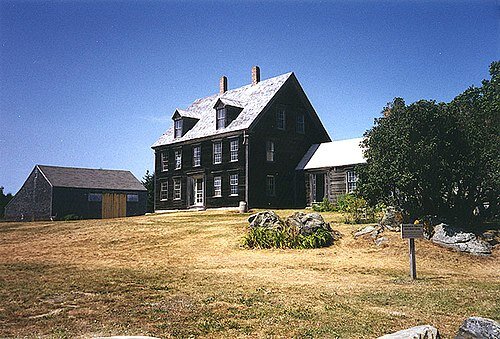
The Olson House in 1995. The house and its occupants, Christina and Alvaro Olson, were depicted in paintings and sketches by Wyeth from 1939 to 1968. The house was designated a National Historic Landmark in June 2011. The Farnsworth Art Museum, in Rockland, Maine, owns the house, which is open to the public.
From 'the inner world'

Burdock, originally from Eurasia, and an invasive weed in North America.
“In the April sun that doesn’t yet smell, brown and red birds declaring hunger,
I appear from the inner world — a hell of beetles and voles — appointed to multiply.’’
— From “Burdock,’’ by Carol Frost (born 1948), Massachusetts-born American poet.
At the Cape Ann Museum, honoring a pioneer in promoting equality for women

John Singleton Copley’s (1738–1815) “Portrait of Mrs. John Stevens” (Judith Sargent, later Mrs. John Murray) (oil on canvas), in the show “Our Souls Are by Nature Equal to Yours: The Legacy of Judith Sargent Murray, through May 2 at the Cape Ann Museum, Gloucester, Mass. This is via the Terra Foundation for American Art, Daniel J. Terra Art Acquisition Endowment Fund. Photography ©Terra Foundation for American Art, Chicago. This portrait was painted in 1770-1772.
The Cape Ann Museum says:
The show is a collaboration by Cape Ann Museum, the Terra Foundation for American Art and the Sargent House Museum, in Gloucester, to celebrate the Sargent House Museum's 100th anniversary. This exhibit is focused on the life and achievements of Judith Sargent Murray (1751-1820), a Gloucester native and civil-rights advocate. While her brothers were tutored in preparation for college, she educated herself and began writing essays, poems and letters.
Her most famous work, On the Equality of the Sexes, argued that men and women experienced the same world, and therefore deserved the same rights. This essay was first published in 1790, a time when women's rights as a political topic was practically unheard of. Murray also wrote about such other topics as education, politics, theology and money. Her outspoken writing paved the way for future advocates of women's rights.
David Warsh: From eugenics to molecular biology
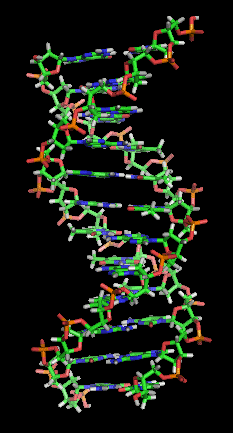
Representation of the now famous “Double Helix’’: Two complementary regions of nucleic acid molecules will bind and form a double helical structure held together by base pairs.
SOMERVILLE, Mass.
It was so long ago that I can no longer remember with any precision the pathways along which the book started me towards economic journalism. What I know with certainty is that The Double Helix: A Personal Account of the Discovery of the Structure of DNA (Athenaeum), by James Watson, changed my life when I read it, not long after it was first published, in 1968. Watson’s intimate account of his and Francis Crick’s race with Linus Pauling in 1953 to solve the structure of the molecule at the center of hereditary transmission was thrilling in all its particulars. I went into college one way and came out another, with a durable side-interest in molecular biology.
Thus when Horace Freeland Judson’s The Eighth Day of Creation: Makers of the Revolution in Modern Biology (Simon and Schuster), came along, in 1979, I marveled at Judson’s much more expansive collective portrait of the age. And when Lily Kay’s The Molecular Vision of Life: Caltech, the Rockefeller Foundation, and the Rise of the New Biology (Oxford) came out in, in 1993, I was quite taken by the institutional background it supplied.
Kay told the story of how the mathematician Warren Weaver in the 1930s decisively backed the Rockefeller Foundation away from its ill-considered funding backing of the fringes of the eugenics movement – human engineering through controlled breeding – by initiating “a concerted physiochemical attack on [discovering the nature of] the gene… at the moment in history when it became unacceptable to advocate social control based on crude eugenic principles and outmoded racial theories.”
Not until 1938 would Weaver describe his campaign as “molecular biology.” In the dozen years after 1953, Nobel prizes were awarded to 18 scientists for investigation of the nature of the gene, all but one of them funded by the Rockefeller Foundation under Weaver’s direction.
For the past couple of weeks I have been reading Code Breaker: Jennifer Doudna, Gene Editing, and the Future of the Human Race (Simon & Schuster, 2021), by Walter Isaacson. Doudna, you may remember (pronounced Dowd-na), shared the Nobel Prize in Chemistry last autumn with collaborator Emmanuelle Charpentier “for the development of a method of genetic editing” known as the CRISPR/Cas 9 genetic scissors. The COVID pandemic prevented the journeys to Stockholm that laureates customary make to deliver lectures and accept prizes. Medalists will be recognized at some later date. At that point, expect the significance of the new code-editing technologies to be emphasized. The new know-how recognized in 2020 Prize in Chemistry is probably the most important breakthrough since the Nobel Prize in Physiology or Medicine went to Crick, Watson and Maurice Wilkins, in 1962. Instead of the sterilization and other forceful measures envisaged by the eugenics movement, CRISPR promises to gradually eliminate hereditary disease.
Three themes emerge from Code Breaker. The first is how much has changed with respect to gender, in biological science at least. X-ray crystallographer Rosalind Franklin died in 1958, four years before she might have shared the prize. (Dead persons are not eligible for the award.) She was cruelly disparaged in Watson’s book, despite the fact that her photographs were crucial to the discovery of the helical structure of the gene.
Opportunities for female scientists had begun to open up by the time that The Eighth Day was published, but women hadn’t yet reached levels of professional accomplishment such that their photographs would appear except rarely in pages dominated by White males. Doudna, born in 1964, and Charpentier, born in 1968, encountered abundant opportunities.
A second theme, less stressed, underscores the extent to which the tables have turned over the last century with respect to the importance attached by scientists to race. Strongly held view about the dispersion of genetic endowments across various populations are nothing new, but, as The New York Times put it a couple of years ago, “It has been more than a decade since James D. Watson, a founder of modern genetics, landed in a kind of professional exile by suggesting that black people are intrinsically less intelligent than whites.”
A third theme, the main story, is Doudna’s decision, as a graduate student in the 1990s, to study the less-celebrated RNA molecule that performs work by copying DNA-coded information in order to build proteins in cells. All this is clearly explained in Isaacson’s book, in relatively short chapters and sub-sections. The effect of this mosaic technique is to briskly move the story along.
After many twists and turns, Doudna and Charpentier showed in June 2012 that “clustered regularly interspersed palindromic repeats” (hence the easy-to-remember-and- pronounce acronym CRISPR), “Cas9” being a particular associated enzyme that did the cutting work, could be made to cut and replace fragments of genes work in a test tube. Within six months, five different papers appeared showing that such scissors would also work in live animal cells.
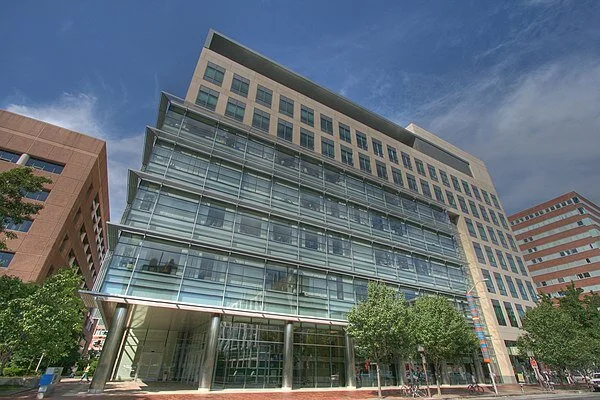
The famed Broad Institute of MIT and Harvard, in Cambridge, where much important biomedical and genomic research is conducted.
An epic patent battle ensued, involving claims to various ways in which CRISPR systems could be used in different sorts of kinds of organisms. A nearly metaphysical argument developed: Once Doudna and Charpentier demonstrated that the technique would work on bacteria, was it “obvious” that it would work in human cells? Rival claimants included Doudna, of the University of California at Berkeley; Charpentier, of Umeå University, Sweden; geneticist George Church, of the Harvard Medical School; and molecular biologist Feng Zhang, of the Broad Institute of MIT and Harvard.
Church and Zhang are colorful characters with powerful minds and different scientific backgrounds. Their complicated competition with Doudna and Charpentier is said to reprise the race of Watson and Crick with Pauling forty years before. Well-disposed toward all four principals, author Isaacson spends a fair amount of effort interpreting their rival claims. At the end of the book, he expresses the hope that Zhang and Church might one day share a Nobel Prize in Medicine for their CRISPR work.
If there is a better all-around English-language journalist of the last fifty years than Isaacson, I don’t know who that might be. Born in 1952, he grew up in New Orleans, went to Harvard College and then Oxford, as a Rhodes Scholar, before beginning newspaper work. He joined Time magazine as a political reporter in 1978; by 1996 he was its editor. To that point he had written two books (the first with Evan Thomas): The Wise Men: Six Friends and the World They Made; (1986); and Kissinger: A Biography (1992).
In 2001 Isaacson left Time to serve as CEO of CNN. Eighteen months later he was named president of the Aspen Institute. There followed, among other books, biographies of Benjamin Franklin (2003), Albert Einstein (2007), Steve Jobs (2011) and Leonardo da Vinci (2017). He resigned from the Aspen Institute in 2017 to become a professor of American History and Values at Tulane University.
As editor of Time, Isaacson took a call in 2000 from Vice President Al Gore, asking on behalf of President Clinton that the visage of National Institutes of Health Director Francis Collins be added to that of biotech entrepreneur J. Craig Venter on the cover of a forthcoming issue. A crash program to sequence the human genome was threatening to break apart after the abrasive Venter devised a cheaper means and formed a private company.
Isaacson consulted his sources, including Broad Institute president Eric Lander, a friend from Rhodes Scholar days, and complied. Science journalist Nicholas Wade wrote the story. At least since then, Isaacson has been involved at the highest levels in the story of molecular biology. He is uniquely well-qualified to describe the most recent segment of its arc, and, in the second half of the book, to lay out the many thorny social choices that lie ahead.
David Warsh, a veteran columnist and an economic historian, is proprietor of Somerville-based economicprincipals.com, where this column first ran. © 2021 DAVID WARSH, PROPRIETOR
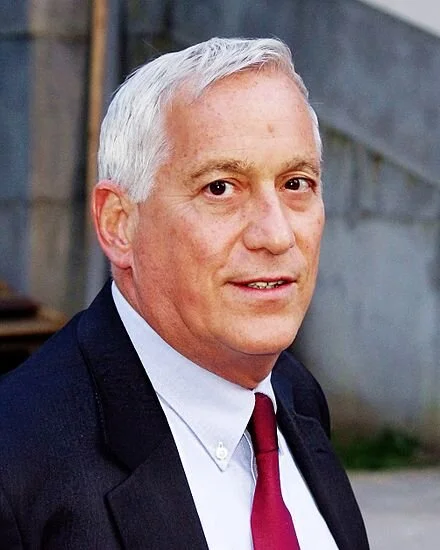
Walter Isaacson
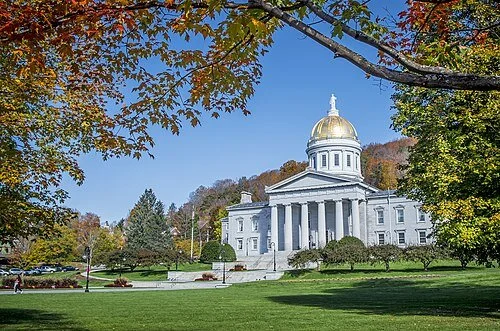
Phil Galewitz: Vermont giving priority to minorities for COVID vaccinations
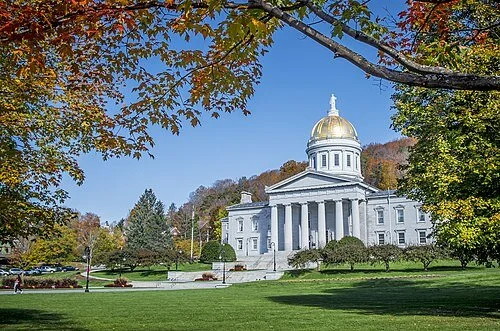
Starting April 1, Vermont has explicitly been giving Black adults and people from other minority communities priority status for vaccinations. Although other states have made efforts to get vaccine to people of color, Vermont is the first to offer them priority status, said Jen Kates, director of global health and HIV policy at the Kaiser Family Foundation (KFF). (Kaiser Health News is an editorially independent program of KFF.)
All Black, Indigenous residents and other people of color who are permanent Vermont residents and 16 or older are eligible for the vaccine.
It will be a short-term advantage, since Vermont opens COVID-19 inoculations to all adults April 19.
Still, Vermont health officials say they hope that the change will lower the risk for people of color, who are nearly twice as likely as whites to end up in the hospital with COVID-19. “It is unacceptable that this disparity remains for this population,” Dr. Mark Levine, M.D.,
Vermont’s health commissioner, said at a recent news conference.
But providing priority may not be enough to get more minority residents vaccinated — and could send the wrong message, some health experts say.
“Giving people of color priority eligibility may assuage liberal guilt, but it doesn’t address the real barriers to vaccination,” said Dr. Céline Gounder, an infectious-diseases specialist at NYU Langone Health and a former member of President Biden’s COVID advisory board. “The reason for lower vaccination coverage in communities of color isn’t just because of where they are ‘in line’ for the vaccine. It’s also very much a question of access.”
Vaccination sites need to be more convenient to where these targeted populations live and work, and more education efforts are necessary so people know the shots are free and safe, she said.
“Explicitly giving people of color priority for vaccination could backfire,” Gounder said. “It could give some the impression that the vaccine is being rolled out to them first as a test. It could reinforce the fear that people of color are being used as guinea pigs for something new.”
Dr. Georges Benjamin, executive director of the American Public Health Association, said that’s why he has opposed using race as a risk factor to determine covid vaccine eligibility.
But he sees signs that vaccine hesitancy is declining nationally and called Vermont’s new approach “admirable.” Still, he said, states should continue to use a range of options to get vaccines to minority communities, such as providing vaccination sites in Black neighborhoods and places that residents trust, like churches.
No state is achieving equity in its vaccine distribution, said KFF’s Kates.
“People of color, whether they be Black or brown, are being vaccinated at lower rates compared to their representation among covid cases and deaths, and often their population overall,” she said.
Blacks make up about 2 percent of Vermont’s population and 4 percent of its COVID infections, but they have received 1 percent of the state’s vaccines, according to KFF.
“Since states are really not doing well on equity, other strategies are welcome at this point,” said Kates.
Yet, there’s another reason public health officials have balked at explicitly giving people of color vaccine priority. “It could be politically sensitive,” she said.
Phil Galewitz is a Kaiser Health News reporter.
Phil Galewitz: pgalewitz@kff.org, @philgalewitz

Chris Powell: Conn. can be a golden state again

MANCHESTER, Conn.
Connecticut's lawns are turning green again. Robins are scouring them for worms, which are returning to the surface despite the high taxes and accusations of racism above ground. Redwings are trilling madly over the ponds, brooks, and marshes.
Daffodils and crocuses are in bloom. Leaf buds on the trees are swelling. Many days are blessedly sunny and mild.
Kids are going back to school -- not that anyone ever will be able to tell from their test scores, but at least they're out of the house again. Virus epidemic restrictions are fading as people get vaccinated. Money for state government doesn't just grow on trees now; it rains down from the heavens as never before.
Indeed, in another month Connecticut, in its natural state, may become, as it does for a while every year, nearly the most beautiful place on Earth, just as it may be climatically the safest and most temperate.
Politically there will be as much to complain about as ever, but consider the alternatives.
Connecticut people wintering in Florida, many of them tax exiles, are planning to return north to escape the summer heat down there, as well as the alligators, Burmese pythons, lizards, and insects as big as pumpkins.
Texas, another state without an income tax that lately has drawn many people from Connecticut, was also without electricity and drinking water for much of February, and soon its heat and humidity may make its Northern transplants miss snow.
Tennessee, which also manages without an income tax, lately has been suffering floods and tornadoes on top of country music.
California, once the "golden state," has been impoverished by bad public policy and is being overwhelmed not just by taxes but also by poverty, homelessness, drugs, illegal immigration, and political correctness. State government there seems oblivious as many middle-class people depart or sign petitions to remove the governor.
Maybe the recent arrivals in Connecticut who hurriedly escaped New York can give their new neighbors some valuable reflections.
Of course no place is perfect, but nothing about geoe agraphy or climate stands in the way of Connecticut's regaining the advantages it had before it succumbed to the old corruption of prosperity -- the belief that prosperity is the natural order of things, not something that had to be earned and must be constantly re-earned. Whether Connecticut can restore its prosperity is entirely a political question, a question of whether its people retain enough civic virtue to discern and assert the public interest over the government class and other special interests.
If glorious spring in Connecticut cannot persuade people that such an undertaking is worthwhile, nothing can. Those who often threaten to leave but haven't left yet should take a bigger part in the struggle.
xxx
WHERE'S THE RACISM?: Maybe the people who are accusing Connecticut's suburbs of being racist will explain how it is racist not to want to be stuck with a school system like Hartford's, whose chronic absenteeism rate among students approaches 50 percent.
It's not the fault of school administrators and teachers. The other day The Hartford Courant reported about the daily circuses being staged by city schools to entice students to show up. The circuses seem to be helping a little, but it is not cynical to ask: Where are the parents of the chronically absent kids? Are racists blockading their homes?
Is the exclusive zoning in many suburbs why so many city kids have been skipping school?
Zoning doesn't know anyone's race. Zoning does have a good idea of people's financial circumstances and the financial capacity of the town that enacted it, and it wonders: How does any town benefit from a large population of unparented and desperately disadvantaged children who run school performance way down and expense way up?
Complaints of "structural racism" don't answer that question. They distract from it and prevent any inquiry into why so many children have no parents and are so neglected.
If structural racism was really the problem in Connecticut, laws long in place would have solved it already. But structural poverty remains to be addressed, and, worse, remains even to be acknowledged.
Chris Powell is a columnist for the Journal Inquirer, in Manchester.
To delight them downstream
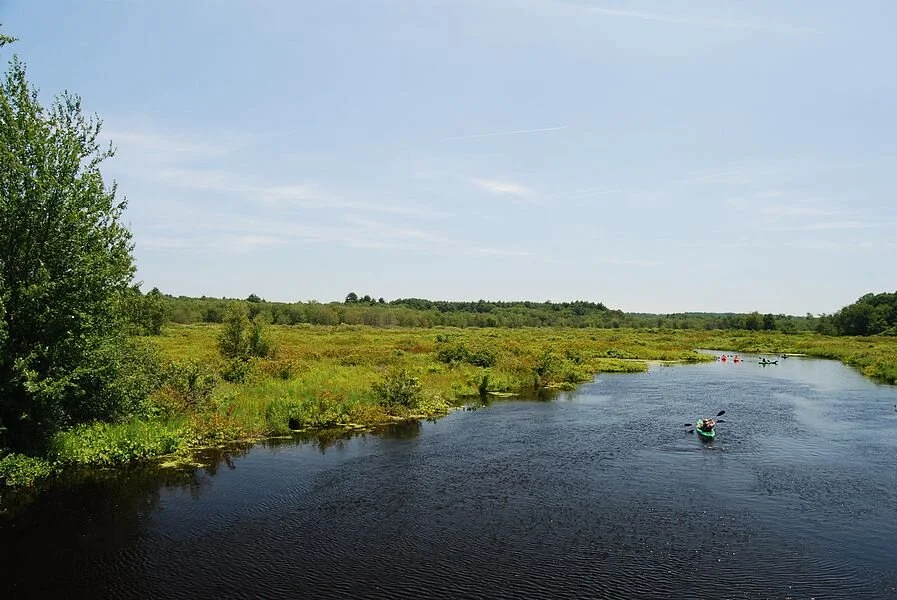
The Charles River at the Medfield-Millis (Mass.) town live
Dark brown is the river,
Golden is the sand.
It flows along for ever,
With trees on either hand.
Green leaves a-floating,
Castles of the foam,
Boats of mine a-boating -
Where will all come home?
On goes the river
And out past the mill,
Away down the valley,
Away down the hill.
Away down the river,
A hundred miles or more,
Other little children
Shall bring my boats ashore.
— “Where Go the Boats,’’ by Robert Louis Stevenson (1850-1894), Scottish novelist, poet and travel writer

Satellite image of the Connecticut River depositing silt into Long Island Sound
'As it really is'
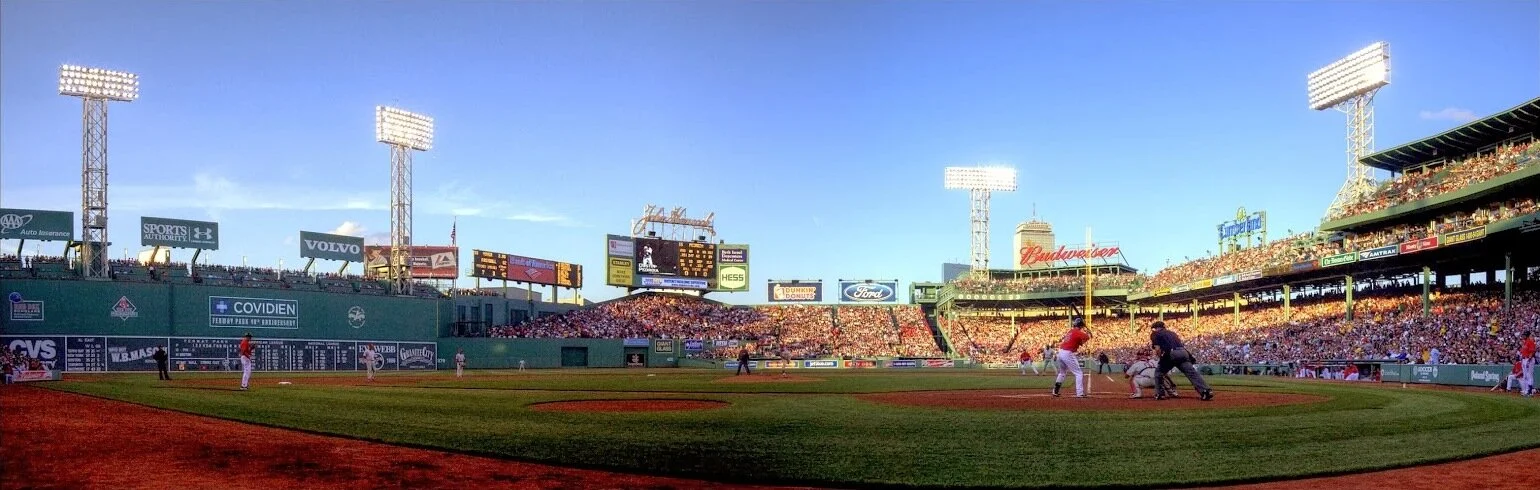
Fenway Park during a 2010 game vs. the Philadelphia Phillies
“For serious looking at baseball there are few places better than Fenway Park. The stands are close to the playing field, the fences are a hopeful green and the young men in their white uniforms are working on real grass, the authentic natural article; under the actual sky in the temperature as it really is. No Tartan Turf. No Astrodome. No air conditioning. Not too many pennants over the years but no Texans either.’’
— From crime writer Robert B. Parker’s (1932-2010) novel Mortal Stakes (1975)
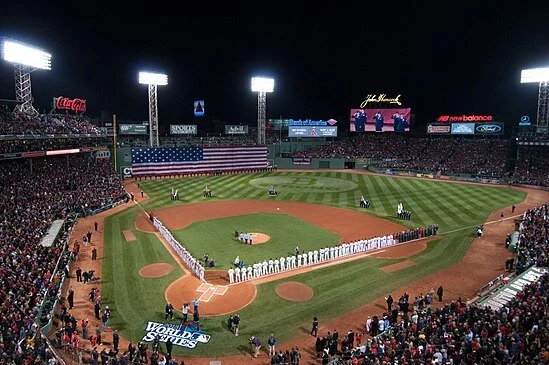
Fenway Park during the 2013 World Series pregame events
If you're ever in a jam, here I am

“Getting to Know You’’ (encaustic painting), by Nancy Whitcomb
Good place to scare people from

Stephen King’s rather spooking-looking house in Bangor, Maine, one of many mansions built in the city during Bangor’s 19th Century heyday as a lumber center
“I think one of the reasons that Stephen King’s stories work so well is that he places his stories in spooky old New England, where a lot of American folk legends come from.’’
— Ted Naifeh, American comic-book author and illustrator

Paul Bunyan statue in Bangor


Llewellyn King: Electrification and the Great American reset

Independent (electric grid) system operators and regional transmission operators
WEST WARWICK, R.I.
It is underway. It has huge momentum, and it will change everything we do — work, leisure, health care, education, use of resources — and, as a bonus, how the world sees us.
It is the Great American Reset, where things will be irreversibly changed. It is a seminal reset that will shape the decades to come, just as the New Deal and World War II shoved the clock forward.
The reset is being driven in part by COVID-19, but in larger part by technology and the digitization of America. Technology is at the gates, no, through the gates, and it is beginning to upend the old in the way that the steam engine in its day began innovations that would change life completely.
Driving this overhaul of human endeavor will be the digitization of everything from the kitchen broom to the electric utilities and the delivery of their vital product. Knitting them together will be communications from 5G to exclusive private networks.
President Biden’s infrastructure proposals could speed and smooth the innovation revolution, facilitate the digital revolution, and make it fairer and more balanced. Biden’s plan will fix the legacy world of infrastructure: roads, bridges, canals, ports, airports, and railroads. It will beef up the movement of goods and services, supply chains, and their security, even as those goods and services are changing profoundly.
But if Biden’s plan fails, the Great American Reset will still happen. It will just be less fair and more uneven — as in not providing broadband quickly to all.
Technology has an imperative, and there is so much technology coming to market that the market will embrace it, nonetheless.
Think driverless cars, but also think telemedicine, carbon capture and utilization, aerial taxis, drone deliveries, and 3D-printed body parts. Add new materials like graphene and nano-manufacturing and an awesome future awaits.
We have seen just the tip of digitization and have been reminded of how pervasive it is by the current chip shortage, which is slowing automobile production lines and thousands of manufactures. But you might say, “You ain’t seen nothing yet.” The future belongs to chips and sensors: small soldiers in mighty armies.
Accompanying digitization is electrification. Our cars, trucks, trains, and even aircraft and ships are headed that way. Better storage is the one frontier that must be conquered before the army of change pours through the breach in a great reshaping of everything.
Central to the future — to the smart city, the smart railroad, the smart highway, and the smart airport — is the electric supply.
The whole reset future of digitization and sensor-facilitated mobility depends on electricity — and not just the availability of electricity going forward, but also the resilience of supply. It also needs to be carbon-free and have low environmental impact.
An overhaul of the electric industry’s infrastructure, increasing its resilience, is an imperative underpinning the reset.
The Texas blackouts were a brutal wake-up call. Job one is to look into hardening the entire electric supply system from informational technology to operational technology, from storm resistance to solar flare resistance (see Carrington Event), from catastrophic physical failure to failure induced by hostile players.
The electric grid needs survivability, but so do the data flows which will dominate the virtual utility of the future. It also needs a failsafe ability to isolate trouble in nanoseconds and, essentially, break itself into less vulnerable, defensive mini-grids.
Securing the grid is akin to national security. Indeed, it is national security.
Electricity is the one indispensable in the future: The future of the great reset.
Klaus Schwab, the genius behind the World Economic Forum, called this year from his virtual Davos conference for a global reset to tackle poverty and apply technology and business acumen to the human problems of the world. We are on the cusp of going it alone.
In the end, the route to social mobilization is jobs. The Great American Reset will throw these off in an unimaginable profusion, as did the arrival of the steam engine a little over 300 years ago.
On Twitter: @llewellynking2
Llewellyn King is executive producer and host of White House Chronicle, on PBS. He’s based in Rhode Island and Washington, D.C.
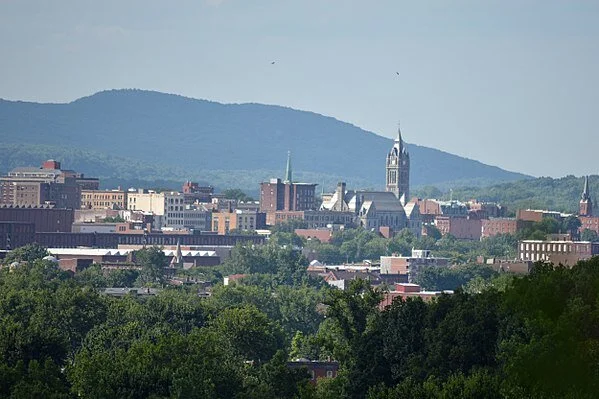
The New England electric grid is managed by ISO New England from Holyoke, Mass., whose skyline is seen here. Note the clock tower of City Hall and the Mount Tom Range in the background,
In search of fast transit

“Boxcar Getaway” (oil on panel), by Bruce Ackerson, in his show “Birds-Eye Views,’’ at the University of Massachusetts at Amherst’s Hampden Gallery, through May 14.
The gallery says:
“From a birds-eye view, the artist presents narrative scenes which are an imaginative take on popular culture, modern life and the hidden world of the human psyche.’’
Mr. Ackerson is based in Northampton, Mass.
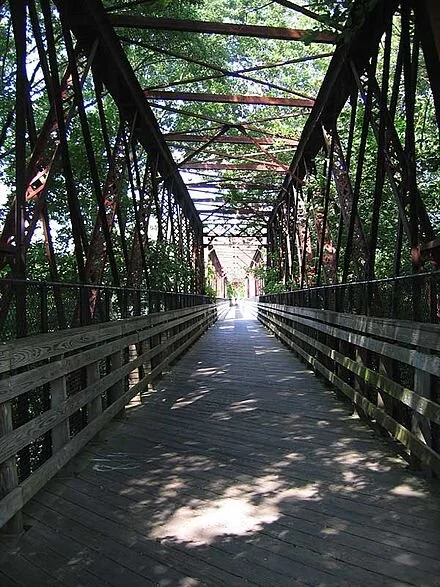
The Norwottuck Rail Trail Bridge across the Connecticut River at Northampton. The Norwottuck Branch Rail Trail, formerly the Norwottuck Rail Trail, is an 11-mile-long bicycle/pedestrian paved right-of-way running from Northampton through Hadley and Amherst, to Belchertown, all in Massachusetts. It opened in 1992, and is part of the longer Mass Central Rail Trail.
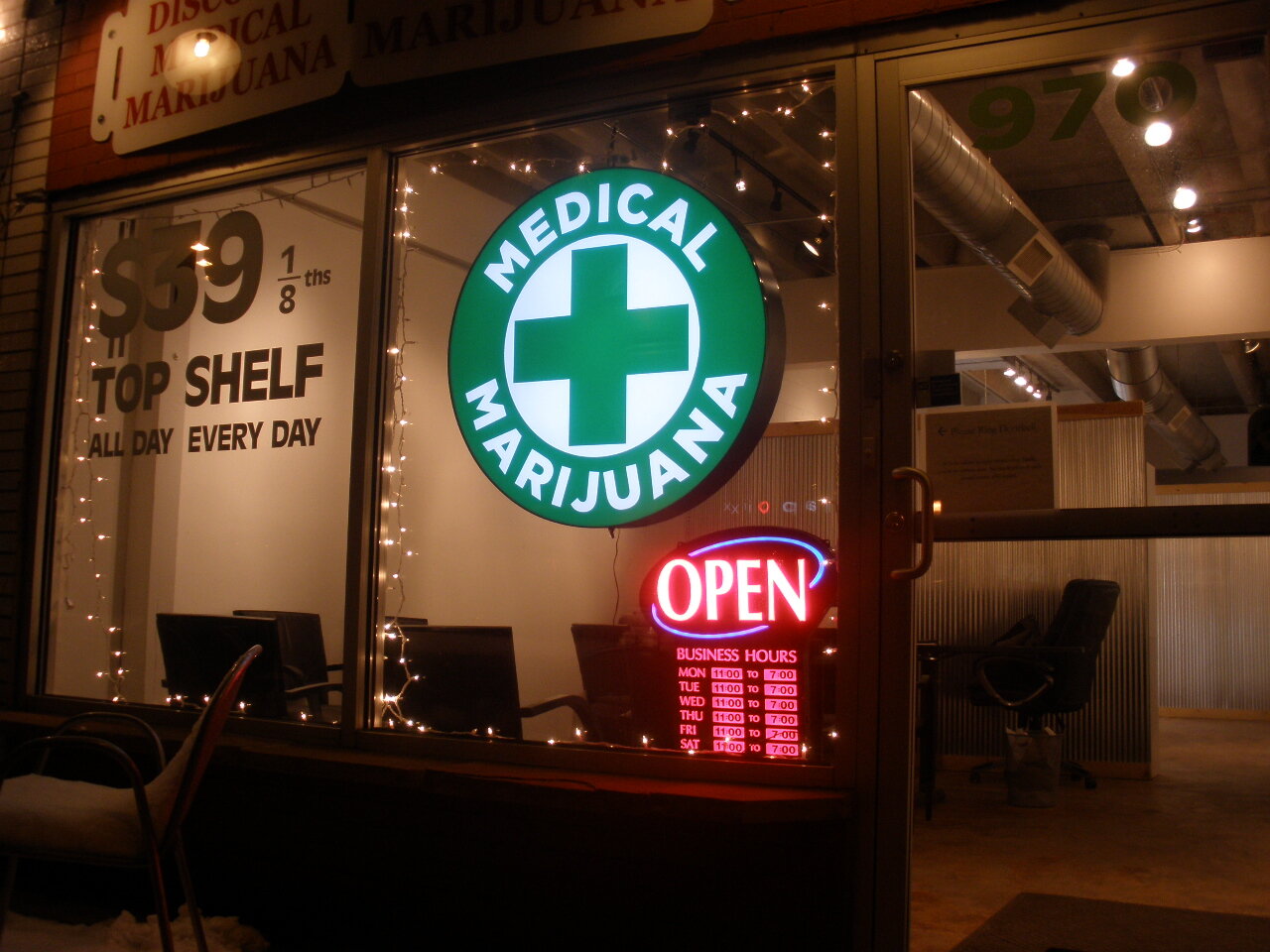
N.E. Council lobbies for financial services for pot firms
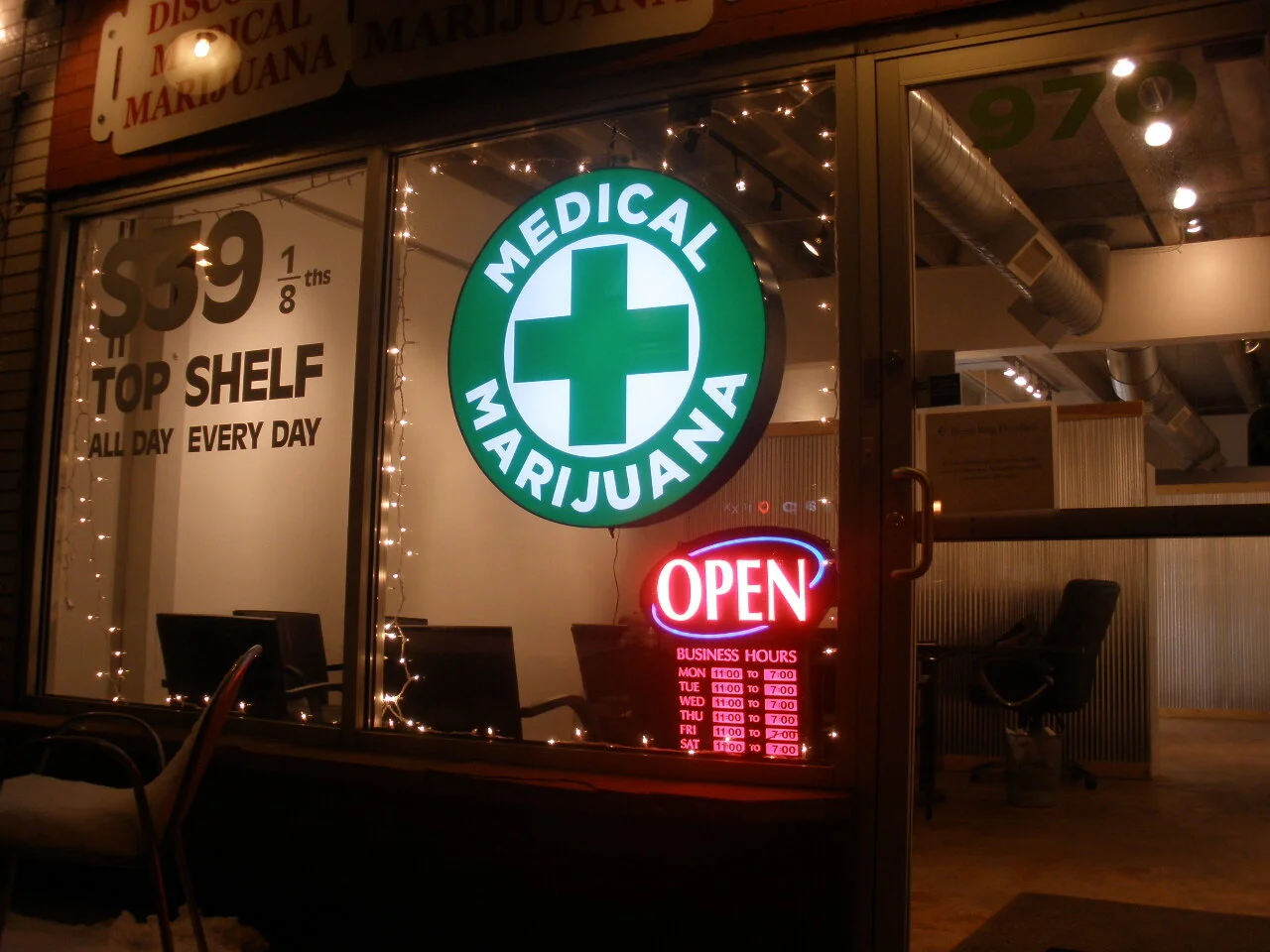
— Photo by O’Dea
BOSTON
The New England Council (newenglandcouncil.com) has sent this letter to New England’s congressional delegation, signed by president and CEO James T. Brett:
Dear New England Delegation,
On behalf of The New England Council, I write to express our members’ support for the Secure and Fair Enforcement (SAFE) Banking Act of 2021. This bipartisan legislation creates protections for depository and insurance institutions that provide financial-related services to legal cannabis-related businesses and their service providers. As every state in New England now allows medicinal cannabis {marijuana}, and three states have legalized adult recreational use, the discrepancy between state and federal law is a concern across the region.
Currently, providing banking and insurance services to legitimate, state-licensed marijuana businesses is a challenge for financial institutions. Because marijuana is illegal under federal law, funds generated by cannabis-related businesses are subject to extraordinary reporting requirements under federal anti-money laundering regulations. Therefore, institutions face significant legal and regulatory risks for serving these local businesses. The result has been that legal cannabis businesses and their employees operate primarily on a cash-only basis, creating opportunities for tax evasion, money laundering, robbery and other crimes that could negatively impact the region. The discrepancy between state and federal law also poses a challenge for those who seek to purchase cannabis products for medical purposes.
Medical marijuana has been found an effective treatment for a variety of medical conditions, including cancer, Alzheimer’s disease, ALS, epilepsy, and chronic pain, just to name a few. However, access to these products is significantly limited by the inability to use alternative payment options.
The SAFE Banking Act, which was reintroduced in both the House of Representatives and the Senate earlier this month, would help address these challenges. If passed, this legislation will give those operating legitimate marijuana businesses access to banking services available to other industries. By no longer restricting the industry to cash, the law will make the cannabis industry more safe, transparent, accountable, and accessible by ensuring compliance with current regulations and norms. The New England Council’s mission is to identify and support federal public policies and articulate the voice of its membership regionally and nationally on important issues facing New England. Given that cannabis-related businesses have been legalized and are an expanding segment of the economy in many communities across the region, we feel that if this legislation is passed it would protect the businesses and communities in which they operate. It is our hope that with your support in the House/Senate, Congress will work diligently to advance the SAFE Banking Act in the coming weeks.
‘‘The New England states have each enacted policies that allow for the legal sale of cannabis products, and as a result we are seeing significant growth in this new sector in our region’s economy,” said Council President & CEO James T. Brett. “However, due to the discrepancy between state and federal law, these businesses are unable to access banking and insurance services, and their customers are limited in payment options. We urge Congress to take action to address this discrepancy and make the cannabis industry more safe, transparent, accountable, and accessible.”
The bill was originally introduced during the 116th Congress, and was passed by the House of Representatives in September 2019, but was never taken up in the Senate. The legislation was reintroduced in the House (H.R. 1996) on March 18, 2021, and in the Senate (S. 910) on March 23, 2021. Already, 11 New England Senators and six New England Representatives have signed on as co-sponsors, and the Council’s goal in sending letters is to increase support for the bill among the region’s delegation.

Don Pesci: What Biden may have learned from Connecticut, a progressive Petri dish

Petri dish
VERNON, Conn.
In mid-August 2020, relying largely on then presidential nominee Joe Biden’s Democratic Party platform, I noted that the Biden Administration, in both foreign and domestic policy, would be a repeat of the Obama administration, in which Biden, of course, served as vice president.
This prediction was a bit off-point. The policy prescriptions adopted by the Biden administration indicate that he has bypassed Obama and now postulates Obama prescriptions raised to the third power. Socialist Bernie Sanders, it may be recalled, was more than satisfied with the Democratic Party platform he helped construct.
Biden was sworn in as president on Jan 20. During an unusually long honeymoon, U.S. House Speaker Nancy Pelosi, Senate Majority Leader Chuck Schumer and Biden have used a narrowed split in the House and a fifty-fifty split in the Senate to consolidate their triumph over former President Trump and Republicans both moderate and conservative.
Just as Roman emperors used to debase their predecessors by a form of cultural evacuation, so the Biden administration has sought to deprive Trump of any lingering accomplishment by reversing his policies, however efficacious and popular. Some inexpungible policies were retained by the Biden administration; there are no signs at present that Biden-Pelosi-Schumer intend to scotch Trump’s successful effort to bring Coronavirus vaccines on line as quickly as possible by throwing overboard some time-consuming federal regulations. But successful policies of much resented predecessors may be allowed to die on the media vine through benign neglect. You lightly touch your predecessors virtues, if at all, and pound like a madman on the vices.
To mention one notable instance, Biden has reversed Trump’s border policies. And the reversal has reignited a huge onrush of border jumpers seeking to avoid a cumbersome legal-immigration process. Once again, the U.S. border with Mexico has become little more than a demarcation line on a map. The bums-rush of the U.S. southern border by Hondurans, Guatemalans and Salvadorans following Biden’s Trump purgation means, minimally, two things: One, Trump border policies were successful in stemming illegal immigration; and two, unintended consequences often attend the spiteful reversals of prior policies the new regime considers useful for election purposes.
There is, Americans will have noticed during the past few decades, a profound difference between electing battalions of Democrats to Congress and proper governing.
Then too, no one, friend or foe of Democrats, can have failed to notice that the media honeymoon period enjoyed by Biden has been far more prolonged than that of his predecessor Trump, whose honeymoon with a hostile media was as short as the flickering of a firefly’s light at midnight.
Pelosi’s daughter sized up her mother well when she said, “She’ll cut your throat, and you won’t even know you’re bleeding,” a sentiment that might have applied equally to Lucretia Borgia. Years spent in the House seeking to upend Republican majorities have focused Pelosi’s mind wonderfully. Eliminating the filibuster at a time when the House is split almost evenly between Democrats and Republicans and a faltering attempt to halt federal aid to states that persist in cutting taxes is the political equivalent of the Borgia bad habit of spiking the drinks of political opponents with arsenic, strychnine, cantharidin and aconite, poisons used effectively by the millionaire, politically well-placed Borgias.
If you can silence the opposition – regularly done in Connecticut by marginalizing the Republican minority – you need not argue the fine points of constitutional law or the untoward consequences of ruinous policies. What used to be known in healthy, vigorous and necessary media as contrarian opposition simply disappears, both in the General Assembly and in the pages of an increasingly partisan media. Opposition that has no tongue cannot seed the political ground with inconvenient truths. Such truths are strangled in their cribs, or aborted early enough so that an unborn opposition may cause no problems to the ruling class, a potpourri of progressive Democrats allied with a permanent administrative apparatus untouched by moderation and serving always as a permanent fortification against a disappearing “loyal opposition.”
Connecticut, for the last three decades, has been a Petri dish in which progressive policies have flourished. Progressives, programmatically different from liberals, have been most successful in the state’s larger cities, controlled by Democrats, former Republican gubernatorial challenger Bob Stefanowski never tires of pointing out. Stefanowski has incurred the wrath of Democratic-mayors-for-life in the state’s larger cities because the majority party knows that retaining votes in cities is important to all Connecticut Democratic officeholders. With three of the most populist cities in their clutches, Democrats know they have an insuperable advantage over Republicans in a state in which Democrat voters outnumber Republicans by a two to one margin.
The Biden-Pelosi-Schumer triumvirate seeks to repeat on a national stage the “victory” of sorts won by Democrats in Connecticut’s petri dish.
Don Pesci is a Vernon-based columnist.
'Ready to be freed'


An Eastern Bluebird
It snowed in spring on earth so dry and warm
The flakes could find no landing place to form.
Hordes spent themselves to make it wet and cold,
And still they failed of any lasting hold.
They made no white impression on the black.
They disappeared as if earth sent them back.
Not till from separate flakes they changed at night
To almost strips and tapes of ragged white
Did grass and garden ground confess it snowed,
And all go back to winter but the road.
Next day the scene was piled and puffed and dead.
The grass lay flattened under one great tread.
Borne down until the end almost took root,
The rangey bough anticipated fruit
With snowballs cupped in every opening bud.
The road alone maintained itself in mud,
Whatever its secret was of greater heat
From inward fires or brush of passing feet.
In spring more mortal singers than belong
To any one place cover us with song.
Thrush, bluebird, blackbird, sparrow, and robin throng;
Some to go further north to Hudson’s Bay,
Some that have come too far north back away,
Really a very few to build and stay.
Now was seen how these liked belated snow.
The fields had nowhere left for them to go;
They’d soon exhausted all there was in flying;
The trees they’d had enough of with once trying
And setting off their heavy powder load.
They could find nothing open but the road.
So there they let their lives be narrowed in
By thousands the bad weather made akin.
The road became a channel running flocks
Of glossy birds like ripples over rocks.
I drove them under foot in bits of flight
That kept the ground, almost disputing right
Of way with me from apathy of wing,
A talking twitter all they had to sing.
A few I must have driven to despair
Made quick asides, but having done in air
A whir among white branches great and small
As in some too much carven marble hall
Where one false wing beat would have brought down all,
Came tamely back in front of me, the Drover,
To suffer the same driven nightmare over.
One such storm in a lifetime couldn’t teach them
That back behind pursuit it couldn’t reach them;
None flew behind me to be left alone.
Well, something for a snowstorm to have shown
The country’s singing strength thus brought together,
That though repressed and moody with the weather
Was none the less there ready to be freed
And sing the wildflowers up from root and seed.
“Our Singing Strength,’’ by Robert Frost (1874-1963)
Walk into 'collective memory'

“Memory Gates,’’ by Syrian-born Kevork Mourad, at the Cantor Art Gallery of the College of the Holy Cross, Worcester, through April 11.
The gallery says:
“Using his signature style of spontaneous drawing and printmaking techniques, artist Kevork Mourad created the site-specific immersive installation ‘‘Memory Gates ‘‘ during a residency at the Cantor Art Gallery in February. The work, a series of doors and passageways that visitors can pass through, explores themes of cultural plurality and collective memory. Co-sponsored by the Cantor Art Gallery and Arts Transcending Borders.’’
Jim Hightower: Are you a 'low-quality voter'?
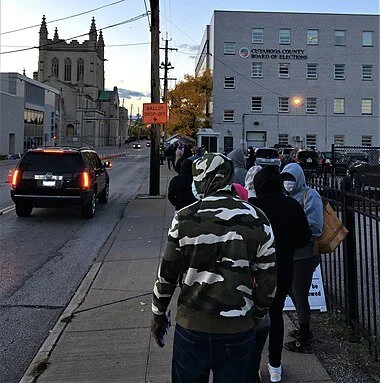
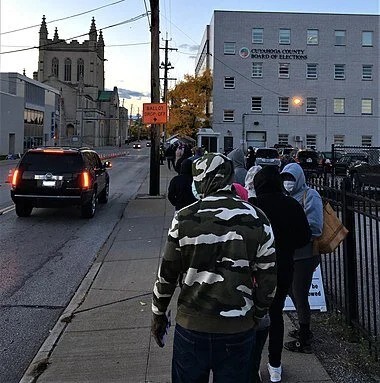
People lining for early voting last October in Cleveland
— Photo by THD3
Via OtherWords.org
Hey, you, get away from those polling places! We don’t want your kind here! Scram!
That’s a stupid, shameful, and ultimately self-defeating political message, yet it’s being pushed as the official anti-voter electoral strategy of Republicans. Admitting that they can’t get majorities to vote for their collection of corporate lackeys, conspiracy theorists, and bigoted old white guys, the GOP hierarchy’s great hope is to shove as many Democratic voters as possible out of our elections.
They’re banking on a blitz of bureaucratic bills they’re now trying to ram through nearly every state legislature to intimidate, divert, and otherwise deny eligible voters their most fundamental democratic right. Their main targets are people of color, but they’re also pushing to keep students, senior citizens, union households, and poor communities of any color from voting.
Unable to come up with any actual need for these autocratic restraints, the GOP vote thieves are fraudulently exclaiming in mock horror that millions of illegal immigrants, dead people, Chinese, and even pets are voting! “Lock down the polls!” they cry.
Again and again, these absurd claims have been thoroughly investigated — even by Republican judges, committees, and media — and repeatedly they’ve proven to be, well, absurd.
Let’s be blunt: You’re more likely to find Bigfoot than you are to find a case of mass vote fraud in America.
Even some GOP politicos have quit pretending that they’re searching for The Big Cheat, instead bluntly making an overt, right-wing ideological argument for subverting democracy: “Everybody shouldn’t be voting,” explained Rep. John Kavanaugh, the Republican chair of Arizona’s election committee.
Slipping deeper into doctrinaire doo-doo, he asserts that it’s not just the number of votes that should matter in an election — “we have to look at the quality of votes,” too.
Call me cynical, but I’m guessing that most Democratic voters would fall into his “low-quality” category. The ugly truth is that Republican officials no longer support democracy.
OtherWords columnist Jim Hightower is a radio commentator, writer and public speaker.
Find safer places for homeless
From Robert Whitcomb’s “Digital Diary,’’ in GoLocal24.com
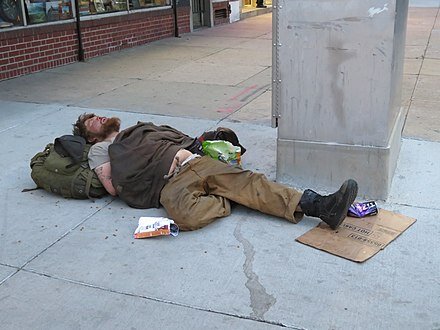
“Tent cities” of homeless people are all over the place. A particularly noticeable one was the camp just closed down in Pawtucket on the west bank of the Seekonk River to make way for a soccer-stadium project, which might actually get built.
Many, probably most, of the people at this camp are mentally ill. In these places they might find kindred spirits but they also face such dangers as exposure to the elements, assaults and thefts. And the atmosphere is conducive to alcohol and drug abuse.
These tent cities have been common since the de-institutionalization movement that got going in the late ‘60s, when officials hoped that new psychotropic medications would allow many of the mentally ill to be released from state mental hospitals, saving taxpayers money. But for many mentally ill people this didn’t work out because they didn’t like the side-effects of these meds for such illnesses as schizophrenia and manic-depression (aka bi-polar disease). For that matter, some of these people like feeling “crazy.’’
Or some have not been given adequate guidance on how to use the meds or don’t have a way to pay for them or can’t get to pharmacies to get them.
I think that we need more mental hospitals for long-term care. As for those people, mentally ill or not, who actually prefer to live in settings like tent cities, the states and localities should consider setting aside permanent places for them on public land, or rent space from private landowners, where the “campers’’ could be better monitored by police, social workers and public-health agencies. Moveable tent cities pose too many dangers. And be they temporary or permanent, they should not be near regular residential or commercial areas; they are too disruptive.
Folks seeking help with serious mental-health and/or substance-abuse problems might want to look at this Rhode Island state Web site to find available spaces at institutions.