
Vox clamantis in deserto





Todd McLeish: Frozen frogs are thawing out for spring but face death on the roads

Wood frog
— Photo by Brian Gratwicke
From ecoRI News (ecori.org)
The onset of the coronavirus pandemic a yer ago coincided with the annual migration of frogs and salamanders to their breeding ponds, a trek that often results in mass mortalities as they cross roads trying to reach their preferred waterbody. The lockdown during the early stages of the pandemic last year gave a significant reprieve to amphibian populations, reducing roadway mortalities by as much as half, according to a New England researcher.
But this year, with traffic back to near normal levels, frogs and salamanders aren’t likely to fare as well. And wood frogs will likely be at the top of the list of roadkill victims.
In southern New England, wood frogs are one of the first signs of spring, according to herpetologist Mike Cavaliere, the Audubon Society of Rhode Island’s stewardship specialist. They are the first species to emerge from their winter hibernation, typically in mid to late March. And as soon as they awaken, he said, they hop to their breeding pools to seek a mate on the first night it rains.
“What’s particularly amazing about wood frogs is that they can produce a natural antifreeze that allows them to almost freeze completely solid in winter,” Cavaliere said. “This antifreeze is produced when the frogs start to feel ice crystals begin to form in late fall.”
Unique among frogs in the Northeast, the wood frog’s antifreeze is a chemical reaction between stored urine and glucose, which protects a frog’s cells and organs from freezing while allowing the rest of its body to freeze.
“Its brain shuts down, its heart stops, its lungs stop, everything stops for months. It’s like they’re in suspended animation,” Cavaliere said. “And once spring comes, they thaw out and the heart starts beating again. After about a day, they start hopping around, eating and mating right away. It’s an amazing feat of evolution that they’ve developed.”
Wood frogs are often joined by spring peepers and spotted salamanders in migrating to their breeding pools during rainy nights in March, but it’s the frogs that are killed in the greatest numbers.
“Road mortality is one of the great seemingly unassessed sources of pressure for amphibians,” said Greg LeClair, a graduate student at the University of Maine who coordinates The Big Night, an amphibian monitoring project to quantify the roadkill of frogs and salamanders during their spring migration. “We know that disease and climate are affecting amphibians, but road mortality has long been suspected to be a serious problem, though there is no data to quantify population declines.”
LeClair said that road mortality can be as high as 100 percent in some areas when traffic is high during the one night of the season that most migration takes place.
“The average is 20 percent of amphibians at any road crossing will get nailed by a car in a given year,” he said. “That’s devastating for some species.”
During The Big Night, volunteers at 300 sites around Maine typically find two living amphibians crossing the road for every one dead one. But last year, with far fewer vehicles on the road because of the pandemic, twice as many frogs and salamanders survived the journey. In fact, a study by the Road Ecology Center found that pandemic lockdowns last year spared millions of animals from roadway deaths.
“We had record survival, but we’ll never be able to replicate that data again,” said LeClair, noting the impossibility of experimentally reducing region-wide traffic levels like happened with the pandemic.
While last year’s reduction in road mortality probably resulted in a short-term increase in amphibian populations, LeClair said that doesn’t mean there will be more breeding activity this year, since it takes several years for amphibians to grow to adulthood and begin breeding.
“It will take a couple years to determine if amphibian populations benefitted from the pandemic. My suspicion is leaning toward no benefit,” he said. “Most amphibian populations are driven by juvenile survival more than adult survival, so impacts to juveniles have stronger impacts than impacts to adults. Dispersing juveniles last summer likely encountered normal-level traffic as they left the pool to find a territory.”
Whether wood frogs and other amphibians benefitted from the pandemic shutdowns, their increased survival rate last spring almost certainly benefitted other wildlife.
“Their eggs and tadpoles are a major food source for other animals in spring,” Cavaliere said. “It’s one of the first sources of protein available, so spotted turtles and other reptiles and amphibians will eat them, as will any other scavenger who’s hungry in spring and looking for protein.”
Those interested in helping scientists gather data about frog populations in Rhode Island should sign up to participate in FrogWatch through the Roger Williams Park Zoo. Online training for the program is available through March 31.
Rhode Island resident and author Todd McLeish, an ecoRI News contributor, runs a wildlife blog.
'Shape-shifting magic'
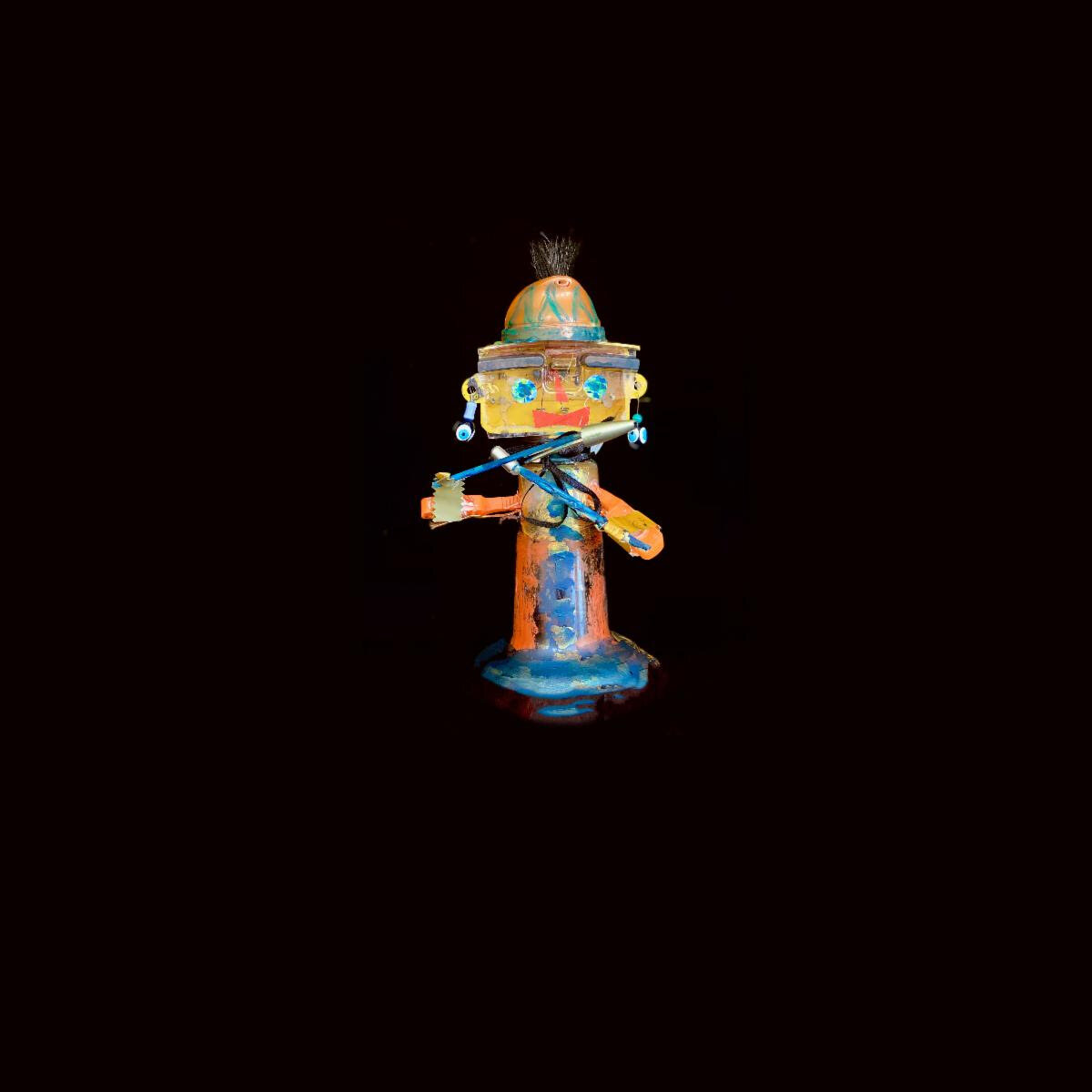
“Lock” (photo), by Ayşe Goloğlu Soyer, M.D., in her show Korondaşlar, at Kingston Gallery, Boston, May 5-30.
Dr. Soyer is a retired neurologist who has never exhibited before.
The gallery says of her:
“Because she grew up immersed in the art world in Turkey, one wouldn’t label her work outsider art, yet she works with a fresh, unselfconscious inventiveness. Her artist statement is a fanciful imagined conversation between the creator and her creations, her Korondaşlar, laden with memories of her WWII childhood in Istanbul. ‘That’s how it was. The war crept on. There were days we went without electricity, water, sometimes food. Not saying I miss that part. What I’m saying is that it led me to the great discovery that not having toys didn’t mean not having anything to play with, why I have no memories of being idle or bored. We had our shapeshifting folded paper boats, our origami salt shakers, cups, magical boxes in different sizes that, when need be, changed into dollhouses and cars, those cast-off buttons that when threaded on string became bracelets, when put against metal became musical instruments. And if our old torn socks were too worn to be unraveled and re-knitted, they were dolls ready to be stuffed and stuffed animals to be made. And we, gathering them up and placing them on the blue plastic muşamba were able to sail them on a baby blanket from the Marmara to the North Sea. The creativity that sprouted within us from the seed of paucity grew into abundance. It didn’t leave time for boredom.’
“The expressive figures populating the center gallery, fashioned during the isolation of the pandemic from cast-off materials scavenged from the streets and her household, and represented in large photographs on the walls of the gallery, share that same shape-shifting magic.’’’
Alternate ways of seeing
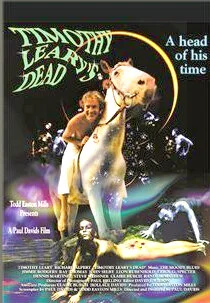
Movie poster for Timothy Leary's Dead
“Women who seek equality with men lack ambition.’’
— Timothy Leary (1920-1996, the Springfield, Mass.-born American psychologist and writer known for his strong advocacy of psychedelic drugs.
As a clinical psychologist at Harvard University, Leary worked on LSD and mushroom studies, resulting in the Concord Prison Experiment and the Marsh Chapel Experiment. The scientific legitimacy and ethics of his research were questioned by other Harvard faculty because he took psychedelics along with research subjects and pressured students to join in. Harvard fired him in 1963.
After that, he continued to publicly promote the use of psychedelic drugs and became a famous figure of the counterculture of the 1960s and after. He popularized such catchphrases as "turn on, tune in, drop out", "set and setting” and "think for yourself and question authority".
He spent much time in jail and on the lecture circuit before dying of prostate cancer in California.

Llewellyn King: In the post-talking-on-phone era, cell phones get ever snazzier

Still triumphant iPhones

Scrapped, superseded mobile phones
— Photo by MikroLogika
WEST WARWICK, R.I.
Delve into your bank account or find a credit card that isn’t maxed out and do it. You know you want to. You know you must. You know you can’t resist. You want, must have, to hell with the expense, the latest cell phone.
Of course, the cell phone you have is perfectly good and does everything you want. That isn’t the point. When you are in need of a technology fix, utility isn’t a consideration.
Your old cell phone, truth be told, was such a whizzy little computer that you could ask it to read your e-mail aloud or you could surreptitiously enjoy watching old television shows such as Mister Ed. Now it must be cast out. You have read the CNET review that details pixel counts, camera capacity and battery longevity. The new phone, the one that you may have to raid your child’s college fund to acquire, is a must-have.
Here is a tip: Google until you are bug-eyed. It is lazy just to buy the top Android from Samsung or the latest iPhone from Apple. There are about 120 companies making cell phones. There are a dozen you can buy without going to China.
Imagine that if you have a phone that is unique, the opportunity for one-upping your pals is limitless. Think of these conversations just waiting:
“Bill, is that a new iPhone? I just bought a Blankety Blank. Actually, it is superior. You should see how I mapped a trajectory for a Mars flight on it.”
Or “Susan, you got the latest from Samsung? I guess it is great, but I really need extra functions. I can shoot and edit a feature film on this little beauty from Blankety Blank. It writes the script, too.”
Warning: When you have made one of these asinine comments, move away.
You can spend more than $3 million on a cell phone. An Australian businessman commissioned such a phone. It was replete with a 22-carat gold case, rubies and diamonds. I wonder what it weighed. More, I wonder if it worked. I don’t expect to find that model at Walmart. But don’t be downcast, if you have just $2.5 million to blow on a phone, there are several in your price range. Of course, these have nothing to do with telephony, they are pure fashion -- like those watches that cost millions and are made in Switzerland, the home of great watches, with humble, Chinese-made moving parts.
Even if you hold onto your old instrument or buy the latest, it seems the one thing you won’t be doing is making phone calls.
We are living in the post-phone age. If, God forbid, we are to speak to someone on the phone, an appointment has to be set up by email or text (a cell phone capacity actually used). So a simple phone call becomes work, something to cause tension, apprehension, dread. I don’t think anyone ever made an appointment to call you to tell you that you are coming into money or to tell you they have accepted your marriage proposal.
I have lived through the ages of the telephone, as defined by an instrument connected to similar that enables you to talk to someone else.
The first age was the party line. I call it the public line because you could listen to anyone on the same line.
Then there was the age of the rotary. Dial, dial, dial. If, like me, you had to make a lot of phone calls, it was hell. We had pencils with rubber-blob ends to insert into the dial to ease the finger labor. The pushbutton was nirvana. A huge advance in user-friendliness.
Then came the age of the answering machine. It was the thin end of the wedge which subtracted years from lives because it led inexorably to those automatic phone systems that won’t let you speak to a human being, whether it is a doctor or a manager about your, yes, telephone account.
No doubt there will be sociologists writing about the death of talking on the telephone. I, for one, always loved a ringing telephone, before robocalls, of course, because that call might be something that, as Omar Khayyam said, transmutes “life’s leaden metal into gold.”
Sometimes phone calls (RIP) did that.
Llewellyn King is executive producer and host of White House Chronicle, PBS. His e-mail address is llewellynking1@gmail.com and he’s based in Rhode Island and Washington, D.C.
'Cynicism is fear'

Ken Burns
“I think we too often make choices based on the safety of cynicism, and what we’re led to is a life not fully lived. Cynicism is fear, and it’s worse than fear; it’s active disengagement.’’
—Ken Burns (born 1953) celebrated maker of documentary films on topics in American history. His production company is Florentine Films, based in Walpole, N.H. The company’s name came from co-founder Elaine Mayes’s hometown of Florence, Mass. Burns attended Hampshire College, in nearby Amherst, Mass.

The Walpole, N.H. Town Hall

Before Spring's color explosion

“Hiatus No. 2" (encaustic & mixed media on 30" panels), by Robin Luciano Beaty, at Lanoue Gallery, Boston
The Boston-based artist writes:
“My work is driven by the intuitive journey of discovering the reminiscent through process rather than rendering an explicit space. My intention is to spark personal recollections in the viewer from an unconventional perspective using unexpected materials. I’m communicating more of a memory than a representation with the use of texture, neglected everyday objects and forgotten mementos of the past. Though the fluvial and sculptural qualities of wax , I navigate memory. Scraping, tearing, building up and burning down multiple layers to reveal internal compositions brought out only by this tactile and physical experience.
“In my most recent work, I strive to capture the universal and emotional connection to water embedded within our life memories. Oceans, rivers and lakes are instilled in our subconscious scrapbook, creating an undeniable feeling of nostalgia and escape. I am able to reclaim these memories in a significantly more personal way by incorporating vintage photographs, letters, textiles and found objects. By repurposing forgotten objects within my own private retrospective process, I bring back to life the very intimate recollections of another, along with igniting the viewers’ own.”

John O. Harney: New England and other experts address racial and economic reckoning'

Logo of the Color of Change reform group
BOSTON
From The New England Journal of Higher Education, a service of The New England Board of Higher Education (nebhe.org)
Even in this time when people presume to be having a “racial reckoning,” signs of enduring racial inequity pop up everywhere. From nagging disparities in health—Black, Indigenous and People of Color (BIPOC) die at higher rates than other groups from COVID-19 and are underrepresented in medical research (except in vile experiments such as in the Tuskegee study) … to the steep declines in Black and Latino students submitting the Free Application for Federal Student Aid (FAFSA) … to Black food-service workers experiencing disproportionate short-tipping for enforcing social-distancing rules … inequality reigns. These persistent forces should be a big deal for New England’s Historically White Colleges and Universities, which are rarely called out as HWCUs.
Some help is on the way. Beside targeting $128.6 billion for the Elementary and Secondary School Emergency Relief Fund, $39.6 billion to the Higher Education Emergency Relief Fund, $39 billion for child care and $1 billion for Head Start, the new $1.9 trillion coronavirus relief plan does other less visible things to begin to address structural racism. For example, the package provides Black farmers with debt relief and help acquiring land. Black farmers lost more than 12 million acres of farmland over the past century, attributed to systemic racism and inequitable access to markets.
I’ve been trying to monitor the racial-equity conversation mostly via Zoom since the pandemic began. This mention of aid to Black farmers reminded me of something I heard Chuck Collins say at a webinar convened last month by MIT’s Sloan School of Management via Zoom titled “The Inclusive Innovation Economy: Amplifying Our Voices Through Public Policy’’.
Collins is the director of inequality and the common good at the Institute for Policy Studies and a white man. He told of his uncle getting a 1 percent fixed-rate mortgage in 1949 to buy an Ohio farm—a public investment that led his cousins to get on “America’s wealth-building train.” Black and Brown people did not get the same benefits. Collins suggested that systems such as CARES relief should be examined with a racial-equity lens, as should policies such as raising the minimum wage or forgiving student loans. Unquestionably, Black students struggle more than whites with student debt. But with Capitol Hill debating the right amount of debt to forgive, Collins suggested we need to test how well these changes would affect racial inequity.
Dynastic wealth
Noting that we’re living through an updraft of “dynastic wealth,” Collins asked why the U.S. taxes work income higher than income from investments. He pointed out that “50 families in the U.S. that are now in their third generation of billionaires coming online and that represents a sort of Democracy-distorting and market-distorting concentration of wealth and power.”
That distortion could be partly cushioned with a “dignity floor,” said Collins. “It’s not a coincidence that a society like Denmark has much higher rates of entrepreneurship than the U.S. per capita because they have a social-safety net and because they have social investments that create a decency floor through which people cannot all. So if you want to start a business, you know you can take that leap and not end up living in your car.”
We need to disrupt the narrative of “everyone is where they deserve to be,” said Collins. So many entrepreneurs tell their story from the standpoint of I did this. We need to talk about the web of supports and multigenerational advantages behind their ability to take the step they took.
Color-coded
An audience member asked if a bridge could be built to connect the rich and poor. To this, one of the conversation moderators, Sloan School lecturer and former chief experience and culture officer at Berkshire Bank Malia Lazu, quipped that in the U.S., there’s another dimension: The sides of the bridge are “color-coded.”
Lazu and co-moderator Fiona Murray, associate dean for innovation and inclusion at Sloan, agreed that ironically this is how the policies were designed to work. That’s why we need to change how the systems are wired.
It’s not that Black people are less likely to get loans from banks, but that banks are less likely to give loans to Black people, explained Color of Change President Rashad Robinson. Shifting the subject that way, he said, has led to remedies like financial literacy programs for Black people, rather than changes in the policies of big banks.
Color of Change was formed in the wake of Hurricane Katrina, which, like COVID-19, disproportionately hurt Black and Brown people. Narrative is not static, Robinson said, reminding the audience of what people might have unabashedly said in the workplace about LGBT people just 15 years ago.
Moreover, budgets are “moral documents,” Robinson pointed out. So if you say you’re going to prosecute more corruption crimes than street crime, that has to be reflected in budgets. People of color are not vulnerable, they’ve been targeted, added Robinson, who is working on a report that will look at not only Black pain, but also Black joy and how BIPOC are portrayed in stories on TV.
An audience questioner asked which policies actually embed structural racism. Lazu pointed to the U.S. Constitution’s original clause declaring that any person who was not free would be counted as three-fifths of a free individual. For a more modern example, Robinson noted minimum-wage laws that exclude certain kinds of work, originally farm workers and domestic workers, now work usually done by people of color and women. Structural racism is rooted in how our economy is designed, said Robinson. “An equity focus means we’re not just trying to undo harm but we’re trying to create systems and structures that actually move us forward.”
Afraid to bring children into the world
Also last month, the Boston Social Venture Partners convened a Zoom webinar with affiliates in San Antonio and Denver to discuss how nonprofit leaders have struggled to implement strategies that funders require for diversity, equity and inclusion.
The conversation was moderated by Michael Smith, executive director of the Obama Foundation’s My Brother’s Keeper Alliance, based in Washington, D.C. The alliance was created in 2014 in the aftermath of the killing of Trayvon Martin and aimed at addressing opportunity gaps. It works today against the backdrop of the COVID pandemic and resulting school closures, an economic downturn and police violence in communities of color.
Another Obama fellow, Charles Daniels, the executive director of Boston-based Father’s Uplift, explained: “We have a shortage of clinicians of color in this country—sound, qualified therapists who are able to provide that necessary guidance,” he said. “One of the main requests of single mothers bringing their children to us or fathers entering our agency is that they want a clinician of color, someone who looks like them,” he said. “There are conversations they don’t know necessarily how to have with their loved ones about racism, about oppression, about maintaining their dignity and self-respect.”
Daniels noted that constituents are grappling with what to tell sons about getting pulled over by the police and daughters about what their school may say about hairstyles. “These are conversations that people of color dread this day and age. They wake up trying to parent their inner child and also parent the child who they brought into this world.” He notes that some constituents are actually afraid of having children for these reasons.
A young Black man told Daniels that if he had a choice to be white, he would take it: “I wouldn’t have to worry about my life every time I go to school,” the child suggested, or “an administrator being on my back in school because she’s assuming I’m not doing my work because I don’t care as opposed to me not being able to feed my stomach because I’m hungry.” Daniels said these are real-life situations that young men and single mothers struggle with on a daily basis.
When the federal government recently sent relief stipends, many men of color were left out for not paying child support as if they just didn’t want to pay, when the real reason was they couldn’t afford it.
Growing up as a person of color, you’re taught that you have to be near perfect. You can’t get away with things other populations can, said Daniels. He added: “If someone of color who you’re vetting sends an email with an error, it doesn’t mean they’re incompetent; it probably means they’re doing more than one thing or wearing two hats.” He said he likes funders who offer technical support, as well as authentic conversation, and who don’t avoid the word “racism.”
Giant triplets
Meanwhile, the Quincy Institute, led by retired U.S. Army colonel and noted critic of the Iraq War-turned Boston University professor Andrew Bacevich, held a virtual “Emergency Summit” of public intellectuals to reflect on America Besieged by Racism, Materialism and Militarism—the “giant triplets” identified by Martin Luther King, Jr. in his 1967 speech “Beyond Vietnam.”
Against the backdrop of the Jan. 6 Capitol insurrection, Bacevich began by asking the panelists how those triplets continue to threaten democracy.
One panelist, New York Times contributing writer Peter Beinart, noted that one of the triplets, materialism, while an enormous cultural problem, might not rank as one of the three main ones today because, unlike in the 1960s when people assumed that American living standards would be going up, many today suffer from a lack of materialism and hold very little hope that their situations will improve.
Militarism and racism, however, do persist. As a foreign-policy term, however, “militarist” has been replaced by euphemisms such as “muscular” or “tough-minded.” But militarism is plain to see in the degree to which domestic policing has been affected by military equipment, and veterans return home without decent healthcare. (As an aside, the military has been lauded for well-run coronavirus vaccine sites while the civilian counterparts are often cast as failures. Asked why this is on a recent television news show, Alex Pareene, a staff writer for The New Republic, offered a simple explanation: The U.S. has never disinvested in the military.)
One panelist, the Rev. Liz Theoharis, who is co-chair with Rev. William Barber, of the Poor People’s Campaign, said she would add to King’s triplets, two more demons: ecological devastation and emboldened religious nationalism evidenced on Jan. 6.
Regarding militarism, Theoharis noted that while there’s no military draft per se, there is a “poverty draft” because for many young people, it’s the only way to put food on their table and get an education. Yet, they come home to a lack of opportunity. The majority of single male adults that are homeless in our society are veterans. The military system is “not about the ideals of a democracy and opportunity and possibility and freedom for all, it’s sending poor people, Black people and Latino people to go and fight and kill poor people in other parts of the world,” she said, noting that the U.S. has military bases in more than 800 places. The coronavirus threat has spread in the fissures that we faced before in terms of racism and inequality, which were already claiming lives before the pandemic.
Neta C. Crawford, a professor and chair of political science at Boston University, said democracy is the antidote to militarism, extreme materialism and racism. Members of Congress are tightly connected to military bases and defense contractors in their districts based on the belief that the military-industrial complex creates good jobs. Crawford said we need break this misconception with solid analysis that shows military spending actually produces fewer jobs and what we could be doing instead.
Daniel McCarthy, editor of Modern Age: A Conservative Review and editor-at-large of The American Conservative, noted the irony that U.S. military adventures abroad are framed as antiracist. When he opposed the Iraq War, he was accused of being against Arab democracy and therefore racist. He lamented that we need to find something for the part of industrial America that has been declining, not necessarily related to militarism but to make things that people want to buy.
Justice and belonging in New England
This webinar surfing spree came as NEBHE renewed its focus on diversity, equity and inclusion. The terms “justice” and “belonging” are sometimes also added to the collection of values that used to be disparaged as so much p.c. Moreover, “diversity” is not enough on its own because, as one New England college president recently told his colleagues, people can feel welcomed but also disadvantaged. NEBHE has also looked at the concept of “reparative” justice as a way to recognize that fighting racial oppression should not be responsive to specific past wrongs, but rather, driven by the understanding that the past, present and future exist together.
To be sure, New England will thrive only if its education systems promote inclusion and excellence for learners of all backgrounds, cultures, age groups, lifestyles and learning styles in an environment that promotes justice and equity in a diverse, multicultural world.
John O. Harney is executive editor of The New England Journal of Higher Education.
Chris Powell: A corrupt and ridiculous tribal casino duopoly

— Photo by Ralf Roletschek
MANCHESTER, Conn.
Gambling and intoxicating drugs mainly transfer wealth from the many to the few and the poor to the rich, so it is sad that state government is striving to get into the business of sports betting, internet gambling, and marijuana dealing. That's how hungry state government always is for more money.
Even so, Connecticut Gov. Ned Lamont may deserve some credit for the deal he seems about to achieve with Connecticut's two casino Indian tribes. The tribes long have claimed that the casino gambling duopoly state government conferred on them in the 1990s also gives them exclusivity on sports betting and internet gambling in the state.
Under the governor's plan the tribes drop their claim to exclusivity and share the sports betting and internet gambling business with state government via the Connecticut Lottery. The Mohegan tribe has fully accepted the plan while the Mashantucket Pequot tribe appears to have yielded on exclusivity and to be quibbling only about a percentage point or two in taxes.
So Connecticut may be glad that this much of its sovereignty would be recognized and that the governor didn't give the store away.
But just as this outcome could be worse, it could be better too. For state government has shown no interest in inquiring whether it really needs the Indian tribal duopoly to run casinos -- inquiring whether the casino exclusivity the state has conferred on the tribes in exchange for 25 percent of their slot machine revenue reflects the full value of the state's grant of duopoly.
After all, the duopoly has never been put out to bid. Would other enterprises pay the state more for the privilege of operating casinos and sports betting parlors in, say, Bridgeport, New Haven, and Hartford, locations far closer to heavily populated areas than the Indian properties in southeastern Connecticut's woods? Casino operators in those cities, much closer to more gamblers, might gladly pay state government more than 25 percent of their slot machine take, or their 25 percent tribute might produce more money because they had more customers.
This potential for greater revenue is implied by the complaint of Sportstech, operator of the state-licensed horse and greyhound racing and jai alai betting parlors throughout Connecticut. The company is threatening to sue the state because it hasn't been invited into the gambling expansion plan with the casino Indians. No other potential operators seem to have been solicited either.
So the governor's plan will preserve gambling in Connecticut as a business for privileged insiders -- the two tribes, which have come to control enough legislators in their part of the state to block state government from following the ordinary good business practice of soliciting bids.
The gambling situation in Connecticut is not just essentially corrupt but ridiculous as well, as indicated by the crack taken last week at the Mohegans by the chairman of the Mashantucket Pequots, Rodney Butler, who was sore that the Mohegans didn't wait for the Pequots before agreeing to the governor's plan. "It opened up wounds between our tribal nations that go back centuries," Butler said, referring to the alliance of the Mohegans with the English colonists in the war with the Pequots nearly 400 years ago.
Can ethnic hatreds really endure that long when the ethnicities have been so absorbed by the larger culture? Can a distant descendant of Chief Sassacus and a distant descendant of Chief Uncas really resent each other after their intermediary generations have lived in raised ranches and worked at Electric Boat like nearly everyone else where the tribes of old lived? Aren't these people with tiny fractions of Indian descent more likely to dispute each other over the Yankees and the Red Sox or Biden and Trump?
Or is the revival of the Pequot War just a pathetically opportunistic defense of lucrative privilege?
Connecticut is full of people who are suffering serious disadvantages arising from all sorts of things that were not their fault, disadvantages far greater than a tiny bit of relation to the tribes of old. Indeed, for decades that relation has been no disadvantage to anyone. State government offers these truly disadvantaged people nothing special.
While some of them soon may be given marijuana-dealing licenses, if Connecticut were to be run on ethnicity, they would deserve casinos far more than the people who have them now.
Chris Powell is a columnist for the Journal Inquirer, in Manchester.
Swampy sight

Skunk cabbages are among the first plants to show new life in New England swamps in late winter.
“A New Hampshire swamp is full of attractions at all seasons.’’
— Frank Bolles (1856-1894) in At the North of Bearcamp Water
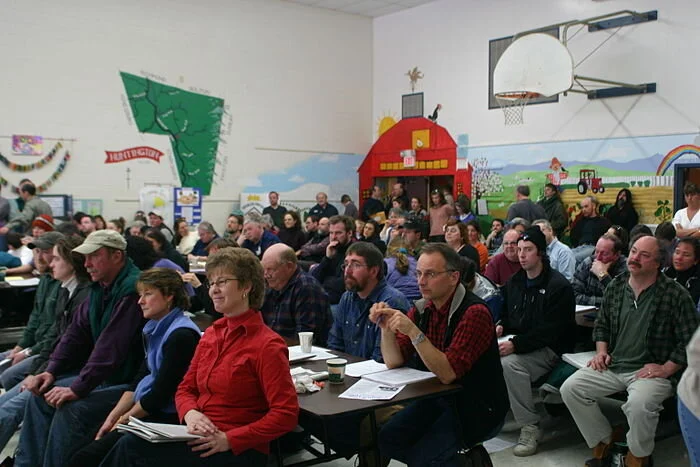
Will in-person town meetings Zoom away?
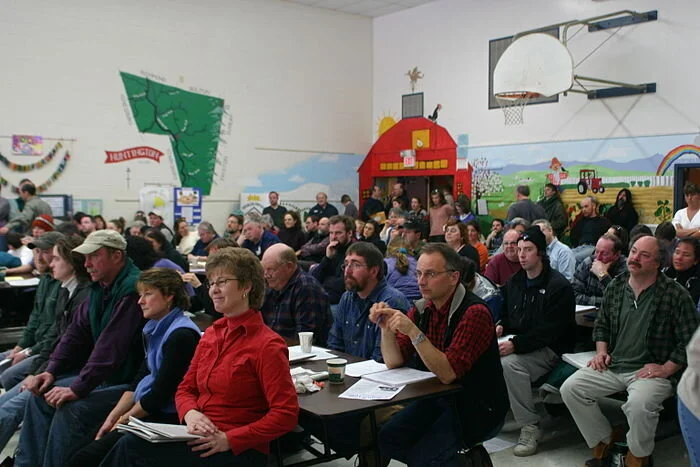
Town meeting in Huntington. Vt.
From Robert Whitcomb’s “Digital Diary,’’ in GoLocal24.com
March is New England town meeting time, but this year many – most? -- such proceedings have been virtual, by Zoom, etc. I suppose that in some towns the in-person meeting may never come back. That’s in part because so many people have gotten so used to inter-acting most of the day on screens, and attending virtual meetings is easier for many people than going there physically. But easier doesn’t necessarily mean better. (Is the long lack of in-person encounters making some people more timid?)
I’ve attended town meetings over the years in various communities. It’s hard to beat the up-close-and-personal encounters and voting in person, if you’re looking for basic democracy. At many of them, votes are taken by voice or a show of hands. Seeing the body language, and hearing the informal chats before and after the meetings, the often entertaining free-form debates, the droll, sardonic remarks of the town moderators, and reading the paper documents explaining the proposals to be voted on – all good stuff.
And there’s something seasonally heartening about town meetings. They come as winter is losing its grip, there’s a smell of thawing earth in the air and the sunlight is brighter. They’re a marker of spring.

The Town House of Marlboro, Vt., was built in 1822 to be used for town meetings, which had previously been held in private homes. It is still in use today.
Frost in Bennington
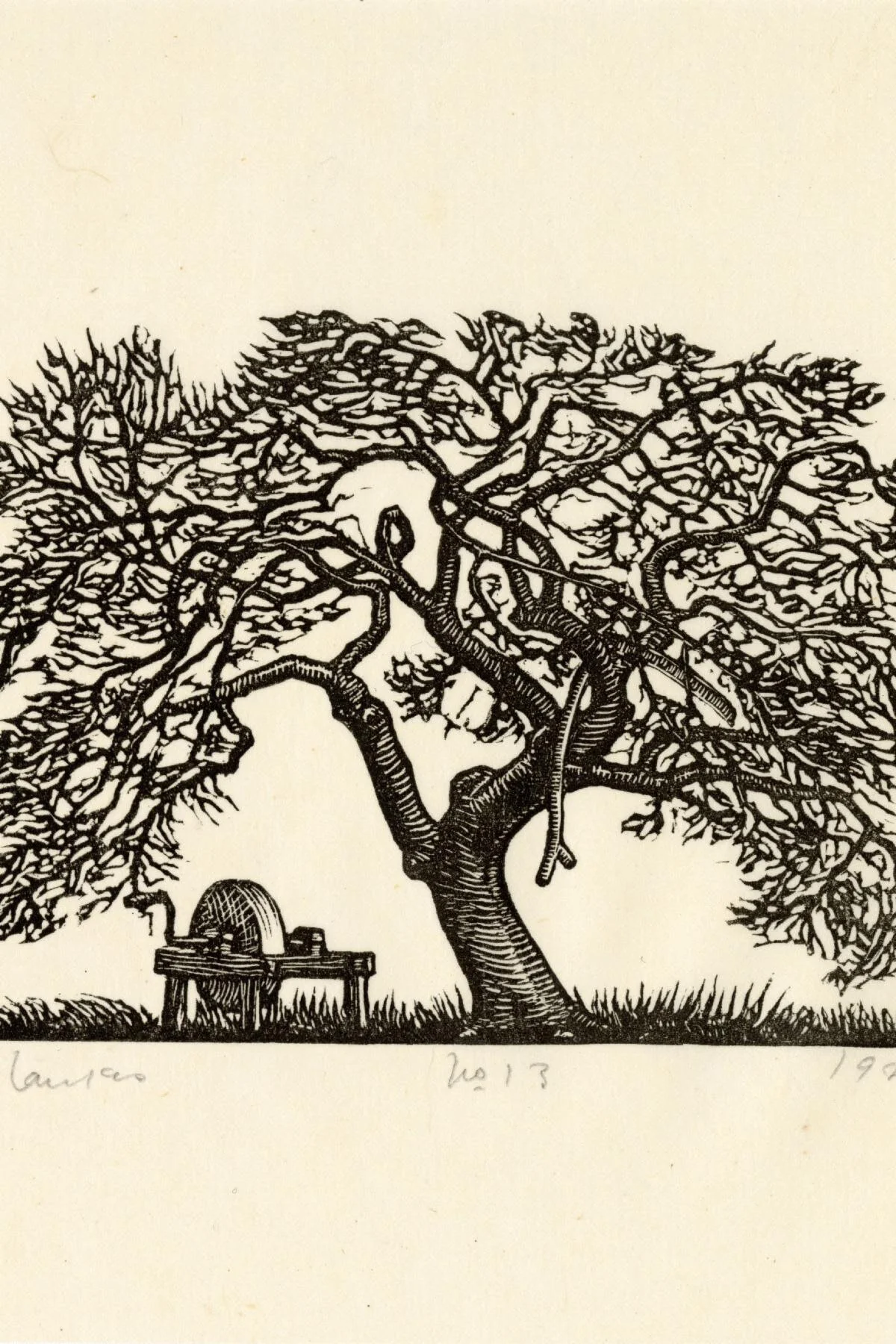
“Apple Tree & Grindstone” (1923, wood engraving), by J.J. Lankes (1884-1960), in the Bennington (Vt.) Museum’s show “At Present in Vermont,’’ opening in April.
(Courtesy Rauner Special Collections Library, Dartmouth College.)
The museum says:
A century ago “Robert Frost arrived in Bennington County, where he lived from 1920 to 1938. Coming in April to Bennington Museum, a new major exhibit… explores Frost’s life and work as an artist and farmer and celebrates the New England legacy of America’s most beloved poet.’’
Ho-Jo fried clams were addictive too
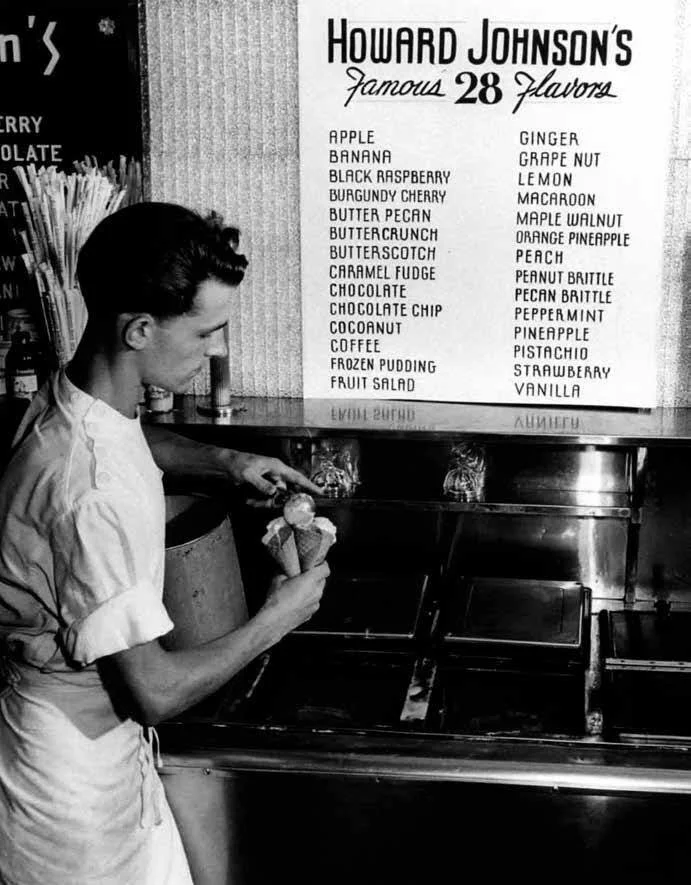
Founded in Quincy, Mass., in 1925, this was by far the most famous restaurant chain to come out of New England.
Almost enough to make you forget

‘‘The first demure newcomer’’
The sun falls warm: the southern winds awake:
The air seethes upwards with a steamy shiver:
Each dip of the road is now a crystal lake,
And every rut a little dancing river.
Through great soft clouds that sunder overhead
The deep sky breaks as pearly blue as summer:
Out of a cleft beside the river's bed
Flaps the black crow, the first demure newcomer.
The last seared drifts are eating fast away
With glassy tinkle into glittering laces:
Dogs lie asleep, and little children play
With tops and marbles in the sun-bare places;
And I that stroll with many a thoughtful pause
Almost forget that winter ever was.
“In March, by Archibald Lampman (1861-1899), Canadian poet

Don Pesci: Time to pivot in Connecticut

The neo-classical City Hall in Bridgeport, like all Connecticut cities heavily Democratic
— Photo by Jerry Dougherty

The Connecticut state seal. The Latin motto means “He Who Transplanted Still Sustains"
VERNON, Conn.
Optimists who believe in free markets – the opposite of which are unfree, illiberal, highly regulated markets – knew, shortly after Coronavirus slammed into the United States from Wuhan, China, that the virus and the free market were inseparably connected. The more often autocratic governors restricted the public market, the more often jobs would be lost, and the loss of jobs and entrepreneurial capital everywhere would necessarily punch holes in state budgets. In many cases, the holes were prepunched by governors and legislators who, before the Coronavirus panic, had failed to understand the direct connection between high taxes, which depletes creative capital, and sluggish economies. For the last thirty years, it has taken Connecticut ten years to recover from national recessions.
The dialectic of getting and spending is a matter of simple observation and logic: the more governments get in taxes, the more they spend; the more they spend, the greater the need for taxation. Excessive spending – more properly, the indisposition to cut spending – takes a toll on capital formation and use, which leads to business flight and all its attendant evils, such as high unemployment, entrepreneurial stagnation and lingering recessions.
There would come a time, post-Coronavirus, free-market optimists thought, when states would begin to pivot from artificially constricting the economy by means of gubernatorial emergency power declarations to a much desired return to organic normalcy. That pivot already has been put in motion by governors in many conservative woke states.
The entire Northeast has for many years been the victim of the past successes of Democrat politics, which involves harvesting votes by buying them, usually by dispensing tax dollars and power-sharing to reliable political constituencies. Large cities in Connecticut – Hartford, Bridgeport, New Haven, have been held captive by Democrats for nearly a half century. During the last few elections – President Donald Trump’s 2016 election, disappointing to Clintonistas, being the most conspicuous exception to the rule – Democrats have been able to cobble together epicentric majorities in most power centers in the Northeast, relying upon large cities to carry them over the election goal line. This strategy has had, until now, little to do with political ideology and a great deal to do with campaign acumen and a leftward lurch on social issues long abandoned by Connecticut Republicans. Presence in politics has always been more important than little understood ideologies, and Connecticut Republicans have been absent without leave on social issues for decades.
Over time, Democrats, by focusing on social issues, have managed to move what used to be called the “vital center” in national politics much further to the left. And this ideological shift has hurt 1) Republicans who seem unable or unwilling to gain a foothold on important social issues, 2) liberal “{John} Kennedy” Democrats now caught in political limbo following a recent neo-progressive upsurge, and 3) disadvantaged groups, once the mainstay of liberal politics in the ‘”Camelot” era of President Kennedy, now frozen politically and socially in empathy cement, finding no way forward into what once had been a robust middle class.
There is no question, even among progressives who wish to move money from privileged, disappointingly white millionaires to despairing non-white urban voters, that a vibrant economy lifts all the boats. The distribution of zero dollars is zero, and there simply is not enough money in the bulging bank accounts of Connecticut’s millionaires to finance the state’s welfare system for more than a few years – even if it were possible for eat-the-millionaires, white, privileged, neo-progressives to expropriate all the surplus riches of Connecticut’s “Gold Coast” millionaires and send the dispossessed to work in re-education farms in West Hartford. No middle class tide, no lift. Yesterday, today and tomorrow, it will be Connecticut’s dwindling middle class that will carry the “privileged” white man’s burden.
Like other governors in the Northeast, Connecticut Gov. Ned Lamont, who stumbled into Nutmeg State politics without much political experience, has become, thanks to Coronavirus and the inveterate cowardice of legislators, a plenary governor the likes of which the Republic has not seen since American patriots – the word “patriot” was first used as a reproach against benighted revolutionaries by monarchists – chased agents of King George III out of their country.
Both Lamont and his friend New York Gov Andrew Cuomo have worn their plenary powers well, but the Coronavirus scourge is receding, and Cuomo has “slipped in blood.” Worst of all, representative government in some states appears to be making a comeback, and people are beginning to resent facemasks and gubernatorial edits as signs and symbols of their own powerless assent to a very un-republican subservience.
Politicians across the state and nation would be wise to step in front of a populist republican reformation before they are carted off in revolutionary tumbrils.
Pivot now. Later will be too late.
Don Pesci is a Vernon-based columnist.
David Warsh: Of Biden in '72, Trump now and economic engineering
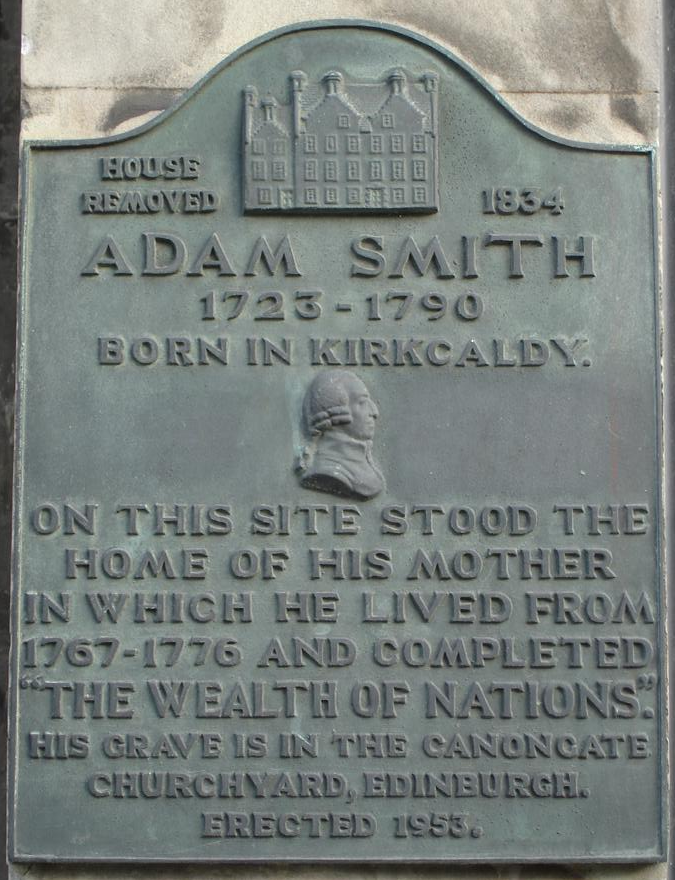
Reading The Wealth of Nations was a revelation for David Warsh
Calibrate v, trans. to determine the caliber of; spec. to try the bore of a thermometer, or similar instrument, so as to allow in graduating it for any irregularities; to graduate a gauge of any kind with allowance for its irregularities.
Nearly fifty years ago, I showed up as a new employee at the Wilmington (Del.) News-Journal on election night, 1972, the evening that New Castle County Councilor Joe Biden was elected to the U.S. Senate. Biden was 29, I was 28. The second-floor newsroom bubbled with intoxicating excitement and indignation. (President Richard Nixon had carried 49 states). But when Biden was elected president last autumn, I felt as though I had somehow turned the page.
I don’t know whether it was four years of Donald Trump, twelve months of COVID-19, the passage of nearly twenty years since I last worked for a newspaper, or faint memories of New Castle County politics, but a week ago I found the column I was working on, about economics and engineering, more interesting than the prospects of Biden’s presidency. I recognized late in the day that I hadn’t found a way to make it interesting to readers of Economic Principals, my Web site. So I put the topic aside and took a bye. Walking home, I remembered the title of Albert Hirschman’s little book Shifting Involvements: Private Interests and Public Action.
On the other hand, as a copyboy at Chicago’s City News Bureau in 1963, my second assignment had been to cover a Walter Heller press conference at the Palmer House hotel. Heller was then chairman of the Council of Economic Advisers. My attendance at the session was perfunctory; the news desk didn’t want a story. But from the Palmer House on, I was looking someplace other than City Hall in which to invest my interests.
That was all the more so after I returned to college to read history of social thought. Just five authors were on the calendar of the sophomore tutorial that year: Alexis de Tocqueville, Karl Marx, Emile Durkheim, Max Weber and Sigmund Freud. That was the year they omitted Adam Smith altogether and his Inquiry into the Nature and Causes of the Wealth of Nations, perhaps because of the temper of the times (this was 1970-71). When a couple of years after that, in the course of another assignment, I went back to read Smith for myself, it was a revelation. I have been fundamentally interested ever since in the stories we tell (and don’t tell) about economics.
Take that column about economic engineering. I found myself thinking over the last few days not so much about the conclusion of an independent market monitor that the operator of Texas’s power-grid had overcharged residents as much $16 billion during a cold snap last month as about Gov. Greg Abbott’s decision to end the state’s mask mandate and permit businesses to reopen at 100 percent capacity.
The decision to permit the highest legal rates to apply for as much as 32 hours longer than warranted was been reviewed Friday by the Texas Electricity Reliability Council, which declined to reverse the charges, even though the principles would seem to be well-established among specialists. “It’s just nearly impossible to unscramble this sort of egg,” the new chair of the Public Utility Commission said during a commission meeting.
But principles for telling people when and where to wear masks are anything but well-understood and universally agreed-upon. They have something to do with what we call culture. As economist David Kreps said of his 2018 book, The Motivation Toolkit: How to Align Your Employees’ Interests with Your Own: “My colleagues here [at Stanford University and its Graduate School of Business] don’t think this is economics, but it is.” I cannot seem to put that book away.
Economic Principals, says in its flag, “Economic Principals: a weekly column about economics and politics, formerly of The Boston Globe, independent since 2002.” Economic Principals has written frequently about politics for the last five years. Going forward, I hope put the subject mostly on autopilot.
The Trump presidency was accidental. It happened only because so many voters deemed inappropriate a Hillary Rodham Clinton presidency. Trump’s tenure proved to be a turning point, a climax, a crisis that slowly will resolve.
How close he came to re-election! How desperately he fought to hold on to office, even after he lost! The sharpest student of Trump’s career I know, who follows the literature much more widely than I do, believes it was because the now-former president understands that he is facing ruin. Suspicion of money laundering for Russian purchasers of apartments is at the heart of the case.
What I expect to happen is this: the Republican Party will gradually rebuild itself, election by election, as new generations – Gen X (b. 1961-1981) and the Millennials (b. 1982– 2004) take over from the Boomers (b. 1943-1960). The Democratic Party will take advantage of a strong economy and threats posed by the rising great-power competitor that is China to deliver the country into a new era. Congressional elections will be closely fought every two years, but I am guessing that the Democrats may remain in the White House until 2032, though only the Republicans have won the presidency three straight times since Harry Truman.
Meanwhile, I’ll return to engineering and economics next week, and try again to find something interesting to say about blueprints, instruments, and toolkits. Plenty of other columns are already in line. Re-calibration complete!
David Warsh, a veteran columnist and an economic historian, is proprietor of Somerville, Mass.-based economicprincipals.com, where this column first ran.

MBTA revisioning its trains

MBTA commuter train at South Station, Boston
From Robert Whitcomb’s “Digital Diary,’’ in GoLocal24.com
The MBTA will soon be changing its commuter-train and subway and bus schedules to not only save money but also to reflect how the lives of so many of us have been permanently changed by the pandemic.
Rush-hour commuting has much diminished in the pandemic and won’t return to its pre-COVID levels. That’s because many people will continue to work at home post-pandemic. Employers have found that they can get at least as much productivity out of their people working remotely as they could in company offices, while saving a lot in office costs. (Unfortunately, some of those costs are thrown onto the employees.) Further, many, maybe most, employees dislike commuting, which has been infamously unpleasant in Greater Boston. But some folks like commuting, for the solitude and thinking time it can give them.
Laboring at home has eroded the old 9-5 job routines, meaning for many longer but more fragmented working hours – and making many homes less of a psychological refuge.
In any event, train and subway travel will be more spread out during the day, and more of it will be non-work-related.
Commonwealth Magazine reports that the plan is to spread MBTA service out across the day at “regular, often hourly intervals rather than concentrating it at morning and evening peak periods.’’ Say hourly or half-hourly rail service between Providence and Boston and hourly service between Worcester and Boston. And some have suggested extending commuter-rail lines from Boston, say all the way out to Pittsfield and Springfield, or to Bourne, on the edge of Cape Cod.
Happily, the agency is dropping a plan to cut off commuter rail service at 9 p.m. weekdays, instead it will continue service until 11 p.m., important to, for example, many people attending a game or other evening event in Boston.
Whatever, as travel opens up with fading of the pandemic, let’s hope that the public-transit cutbacks that it has caused can be mostly reversed, to avoid a massive increase in automobile traffic, much of it with one person per car.
To read more about the MBTA changes, please hit this link.
'Sharp differentiation'
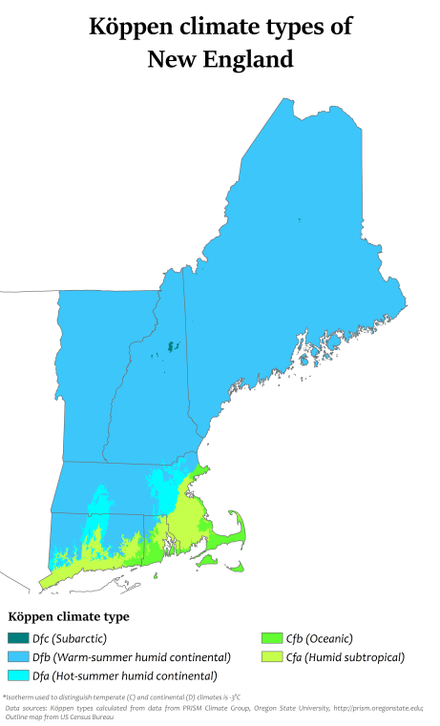
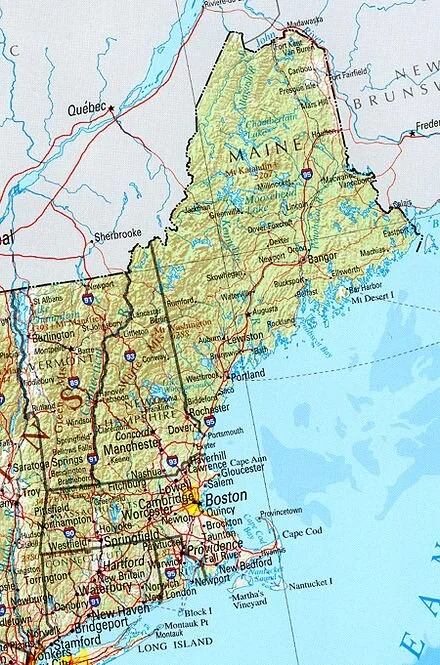
“In New England we have but to step across the border of the adjoining state to feel at once the sharp differentiation, the geological cut-off which expresses itself in the general aspect of the land and in the thousand and one simple facts of its topography, its flora, its fauna, its people, its customs, its coast, its climate, and its industries.’’
— Helen Henderson, in A Loiterer in New England (published in 1919)
Aboriginal art

“Tjapaltjarri” (c. 1935/40-2002) “Men's Maliyarre (Initiation) Ceremony’’ (acrylic on linen), by Clfford Possum, at LaiSun Keane gallery, Boston, through March 28, in the group show “Kinship: Art of Australia.’’
These canvas paintings , all by Australian Aborginal artists, depict the culture, history and customs of that group ,whose ancestors lived for 50,000 years on the continent before the arrival of English colonizers, in 1788. The gallery says that these paintings “contain important narratives passed down through generations, yet these are disguised in abstract patterns to protect their cultural secrets and keep them sacred.’’
A kid Zombie goes to Witch Town

This was printed as a result of the Salem Witch Trials of 1692-1693
“Without really analyzing it, I grew up in Massachusetts, so the Salem Witch Trials were always something that I was around. The average kindergartner probably doesn't know about it, except that in Massachusetts, you do, because they'll take you on field trips to see reenactments and stuff.’’
— Robert Bartleh Cummings (born 1965), known professionally as Rob Zombie, an American singer, songwriter, filmmaker and voice actor. He was born and raised in Haverhill, Mass.

“The Worshipping Tree,” in Haverhill, in 2012. It’s where 17th Century English colonists are said to have conducted their Calvinist ceremonies.
A waffle or the Texas electrical grid?

”Slanting Grid” (acrylic and beeswax on muslin with canvas, polyester fiber and thread), by Meg Lipke, in her show “In the Making,’’ at Burlington City Arts, Burlington, Vt,. through May 15.
The gallery says that Ms. Lipke seeks to challenge conventional notions of painting by drawing on “20th Century modernism, past craft traditions and memories of her mother and grandmother's creative practices to create soft paintings and totemic sculptures of canvas and cloth. She works with her chosen materials to create forms that resemble long, disembodied limbs, pushing the limits of contemporary abstraction.’’
Part of her upbringing was in Burlington but she now lives and works in Brooklyn.

The Church Street Marketplace in Burlington