
Vox clamantis in deserto




Lonely in the universe
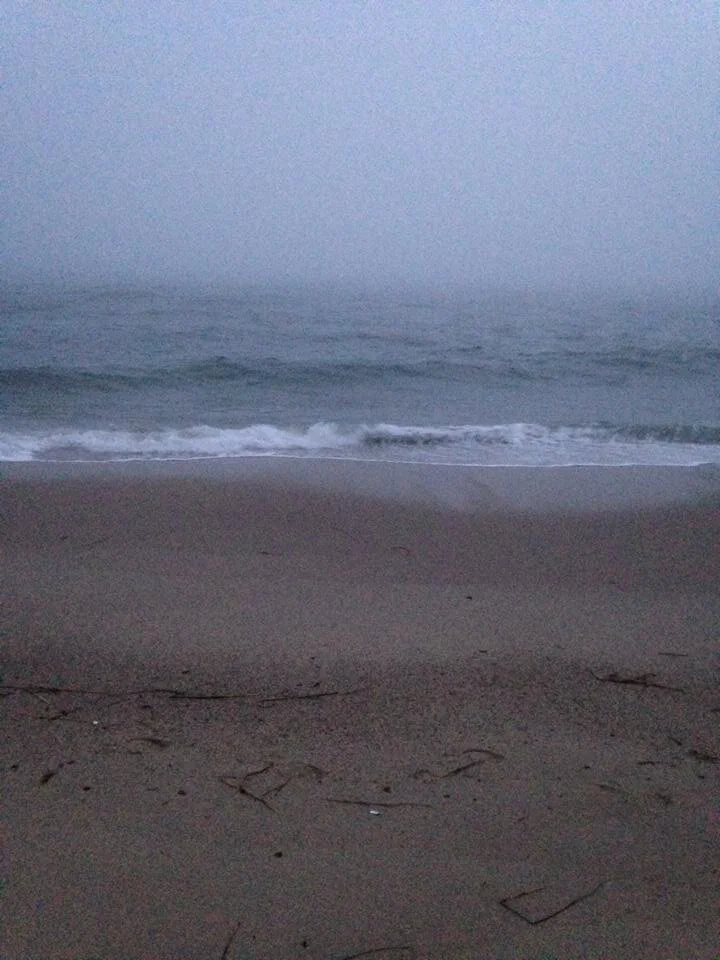
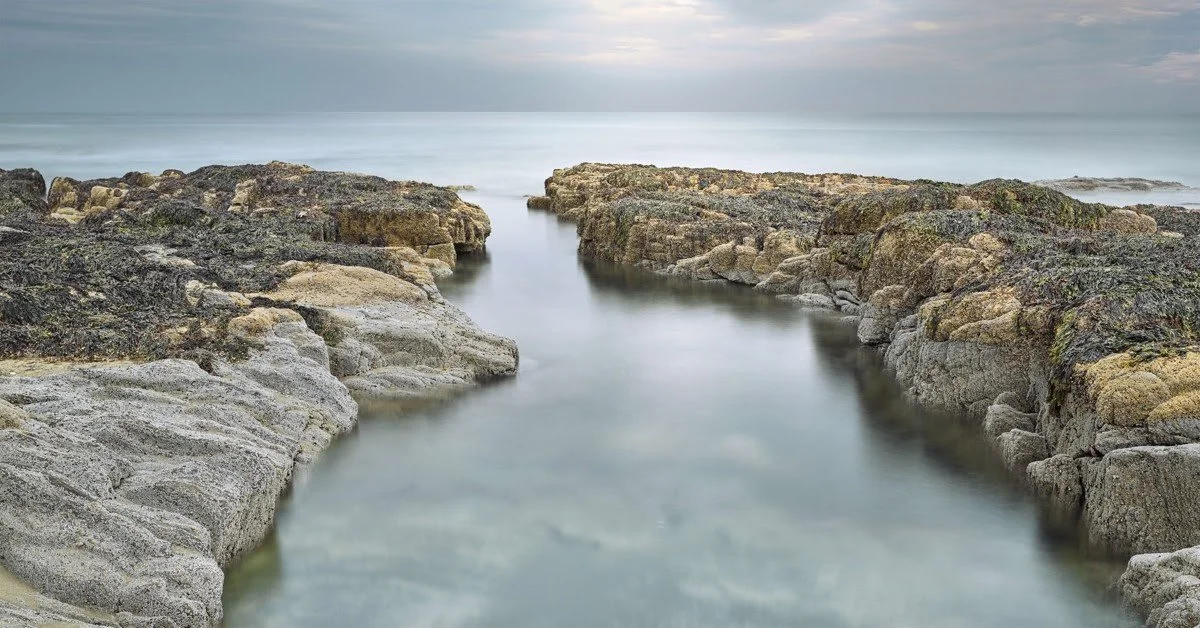
Tideline in North Truro
Photo by Hqfrancis
….this is just one sea
on one beach on one
planet in one
solar system in one
galaxy. After that
the scale increases, so
this not the last word,
and nothing else is talking back.
It’s a lonely situation.’’
— From The Sea Grinds Things Up,’’ by Alan Dugan (1923-2003), a Pulitzer Prize-winning poet. He lived in Truro, on Outer Cape Cod. The town, as with Provincetown, just to the north, has long drawn artists of various kinds, along with other exotic tribes, such as New York City psychoanalysts.
Rae Ellen Bichell: Live free and die in your county if you wish, but not in my hospital
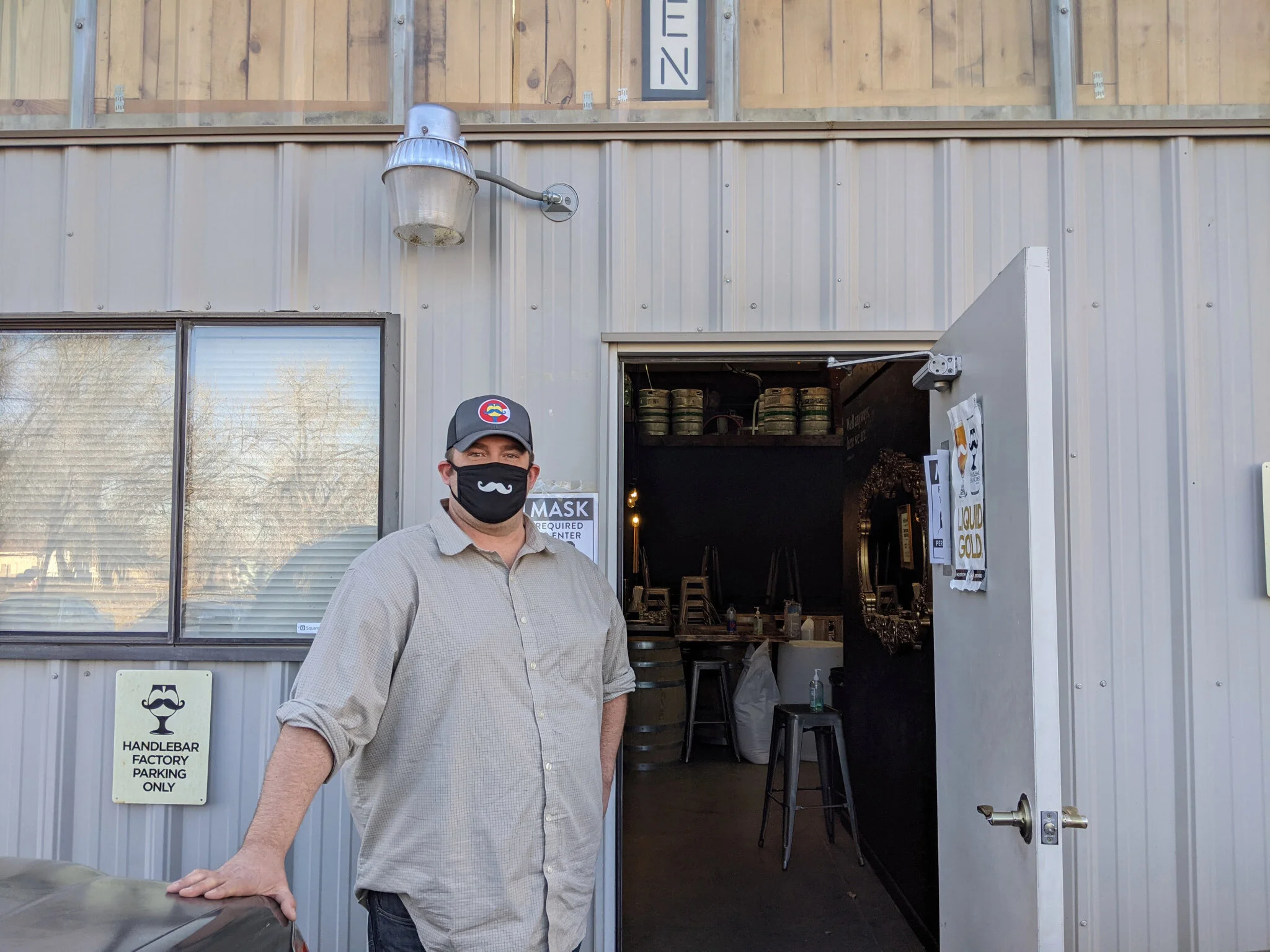
Adam Baker, chief operating officer of The Old Mine, a cidery and restaurant that has a taproom called the Handlebar Factory, stands at the empty taproom on a December afternoon. The taproom is in Boulder County, where indoor dining is not allowed. The restaurant, just a short walk away, is in Weld County, where officials have said they “will not enforce a rule demanding restaurants close their indoor dining areas.” The company decided to follow the more restrictive guidelines of Boulder County, regardless of the restaurant’s location.
— Photo by Rae Ellen Bichell, Kaiser Health News
ERIE, Colo.
Whenever Larry Kelderman looks up from the car he’s fixing and peers across the street, he’s looking across a border. His town of 28,000 straddles two counties, separated by County Line Road.
Kelderman’s auto-repair business is in Boulder County, whose officials are sticklers for public health and have topped the county website with instructions on how to report COVID violations. Kelderman lives in Weld County, where officials refuse to enforce public health rules.
Weld County’s test positivity rate is twice that of its neighbor, but Kelderman is pretty clear which side he backs.
“Which is worse, the person gets the virus and survives and they still have a business, or they don’t get the virus and they lose their livelihood?” he said.
Boulder boasts one of the most highly educated populations in the nation; Weld boasts about its sugar beets, cattle and thousands of oil and gas wells. Summer in Boulder County means concerts featuring former members of the Grateful Dead; in Weld County, it’s rodeo time. Boulder voted for Biden, Weld for Trump. Per capita income in Boulder is nearly 50% higher than in Weld.
Even their COVID outbreaks are different: In Boulder County, the virus swirls around the University of Colorado. In Weld County, some of the worst outbreaks have swept through meatpacking plants.
The town of Erie, Colorado, straddles two counties with opposite views on how to approach COVID-19. (Rae Ellen Bichell/KHN)
It’s not the first time County Line Road has been a fault line.
“I’ve been in politics seven years and there’s always been a conflict between the two counties,” said Jennifer Carroll, mayor of Erie, once a coal mining town and now billed as a good place to raise a family, about 30 minutes north of Denver.
Shortly before the coronavirus hit Colorado, Erie’s board of trustees extended a moratorium on new oil and gas operations in the town. Weld County was not pleased.
“They got really angry at us for doing that, because oil and gas is their thing,” Carroll said.
Most of the town’s businesses are on the Weld side. To avoid public health whiplash, Carroll and other town leaders have asked residents to comply with the more restrictive stance of the Boulder side.
The feud got ugly in a dispute over hospital beds. At one point, the state said Weld County had only three intensive care beds, while Weld County claimed it had 43.
“It made my job harder, because people were doubting what I was saying,” said Carroll. “Nobody trusted anyone because they were hearing conflicting information.”
Weld’s number, it turned out, included not just the beds in its two hospitals, but also those in 10 other hospitals across the county line, including in the city of Longmont.
Longmont sits primarily in Boulder County but spills into Weld, where its suburbs taper into fields pockmarked with prairie dog holes. Its residents say they can tell snow is coming when the winds deliver a pungent smell of livestock from next door. Longmont Mayor Brian Bagley worried that Weld’s behavior would deliver more than a stench: It might also deliver patients requiring precious resources.
“They were basically encouraging their citizens to violate the emergency health orders … with this cowboy-esque, you know, ‘Yippee-ki-yay, freedom, Constitution forever, damn the consequences,’” said Bagley. “Their statement is, ‘Our hospitals are full, but don’t worry, we’re just going to use yours.’”
So, “for 48 hours, I trolled Weld County,” he said. Bagley asked the city council to consider an ordinance that could have restricted Weld County residents’ ability to receive care at Longmont hospitals. Bagley, who retracted his proposal the next day, said he knew it was never going to come to fruition — after all, it was probably illegal — but he wanted to prove a point.
“They’re going to be irresponsible? Fine. Let me propose a question,” he said. “If there is only one ICU bed left and there are two grandparents there — one from Weld, one from Boulder — and they both need that bed, who should get it?”
Weld County commissioners volleyed back, calling Bagley a “simple mayor.” They wrote that the answer to the pandemic was “not to continually punish working-class families or the individuals who bag your groceries, wait on you in restaurants, deliver food to your home while you watch Netflix and chill.”
“I know we’re all trying to get along, but people are starting to do stupid and mean things and so I’ll be stupid and mean back,” Bagley said during a Dec. 8 council meeting.
In another Longmont City Council meeting, Bagley (who suspects the commissioners don’t know what “Netflix and chill” typically means) often referred to Weld simply as “our neighbors to the East,” declining to name his foe. The council shrugged off his statement about withholding medical treatment but demanded that Weld County step up to fight the pandemic.
“We would not deny medical care to anybody. It’s illegal and it’s immoral,” said council member Polly Christensen. “But it is wrong for people to expect us to bear the burden of what they’ve been irresponsible enough to let loose.”
“They’re the reason why I can’t be in the classroom in front of my kids,” said council member and teacher Susie Hidalgo-Fahring, whose school district straddles the counties. “I’m done with that. Everybody needs to be a good neighbor.”
County Line Road is not just a street cutting through Erie, Colorado. It represents a fault line between local governments with very different views on the pandemic. (Rae Ellen Bichell/KHN)
Josh Kelderman works with his father, Larry, at the family’s auto repair business, Integrity Products, on the Boulder County side of Erie, Colorado. Weld County is just across the street. (Rae Ellen Bichell/KHN)
The council decided Dec. 15 to send a letter to Weld County’s commissioners encouraging them to enforce state restrictions and to make a public statement about the benefits of wearing masks and practicing physical distancing. They’ve also backed a law allowing Democratic Gov. Jared Polis to withhold relief money from counties that don’t comply with restrictions.
Weld County Commissioner Scott James said his county doesn’t have the authority to enforce public health orders any more than a citizen has the authority to give a speeding ticket.
“If you want me as an elected official to assume authority that I don’t have and arbitrarily exert it over you, I dare you to look that up in the dictionary,” said James, who is a rancher turned country radio host. “It’s called tyranny.”
James doesn’t deny that COVID-19 is ravaging his community. “We’re on fire, and we need to put that fire out,” he said. But he believes that individuals will make the right decisions to protect others, and demands the right of his constituents to use the hospital nearest them.
“To look at Weld County like it has walls around it is shortsighted and not the way our health care system is designed to work,” James said. “To use a crudity, because I am, after all, just a ranch kid turned radio guy, there’s no ‘non-peeing’ section in the pool. Everybody’s gonna get a little on ’em. And that’s what’s going on right now with COVID.”
The dispute is not just liberal and conservative politics clashing. Bagley, the Longmont mayor, grew up in Weld County and “was a Republican up until Trump,” he said. But it is an example of how the virus is tapping into long-standing Western strife.
“There’s decades of reasons for resentment at people from a distance — usually from a metropolis and from a state or federal governmental office — telling rural people what to do,” said Patty Limerick, faculty director at the Center of the American West at the University of Colorado-Boulder, and previously state historian.
In the ’90s, she toured several states performing a mock divorce trial between the rural and urban West. She played Urbana Asphalt West, married to Sandy Greenhills West. Their child, Suburbia, was indulged and clueless and had a habit of drinking everyone else’s water. A rural health care shortage was one of many fuels of their marital strife.
Limerick and her colleagues are reviving the play now and adding COVID references. This time around, she said, it’ll be a last-ditch marriage counseling session for high school classes and communities to adopt and perform. It likely won’t have a scripted ending; she’s leaving that up to each community.
Rae Ellen Bichell is a Kaiser Health News reporter.
Rae Ellen Bichell: rbichell@kff.org, @raelnb
Our water wonders
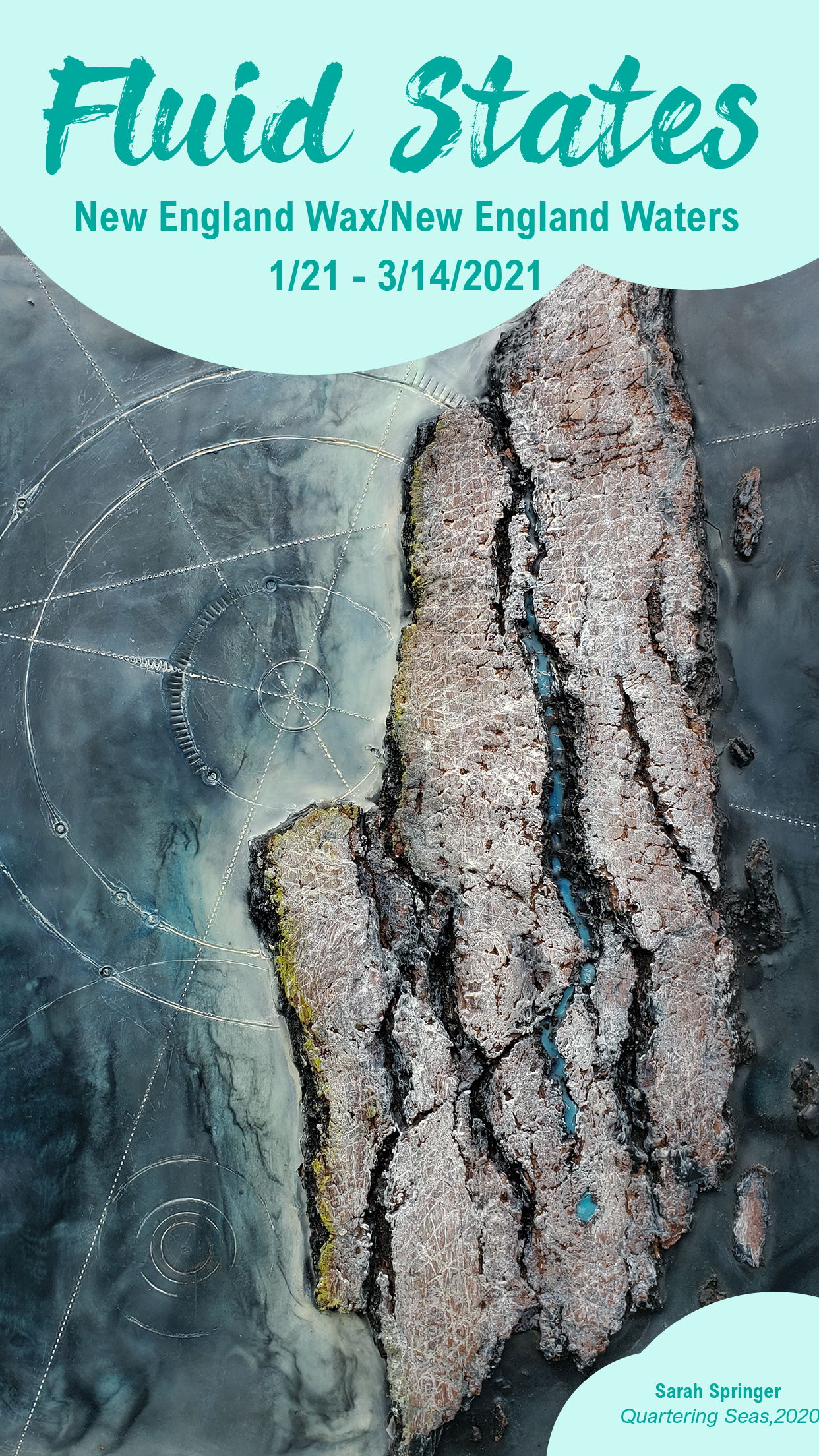
At The New Bedford Art Museum, Jan. 21-March 14
(Timed-Ticket Reception: 3/13/2021, 12 – 2 PM)
Featuring: Willa Vennema, Stephanie Roberts-Camello, Pamela Dorris DeJong, Lola Baltzell, Nancy Whitcomb, Lia Rothstein, Deborah Peeples, Kay Hartung, Marina Thompson, Angel Dean, Lelia Stokes Weinstein, Ruth Sack, Sarah Springer, Charyl Weissbach and Camille Davidson
“Fluid States: New England Wax/New England Waters’’ highlights encaustic artworks inspired by New England’s historic and awe-inspiring coasts. Themed around the fluidity seen in both wax and water, Fluid States explores New England’s ecological richness and fragility. Protecting our water and the life that depends on it is an urgent necessity. In this exhibition, the artists address this urgency as they work to express water’s sheer beauty through innovative approaches to an ancient medium.
New England Wax (N.E.W.), founded in 2006 by Kim Bernard, is a professional organization of artists living and working in the six New England states. Since its inception, N.E.W. has sought to provide opportunities to exhibit, share technical information and aesthetic ideas, and build a network of like-minded artists working in the ancient medium of encaustic. The mission of N.E.W. is to promote excellence in fine art made with encaustic, educate the general public and collectors, raise awareness of the medium, and challenge its members to grow as artists.
All democracies commit suicide
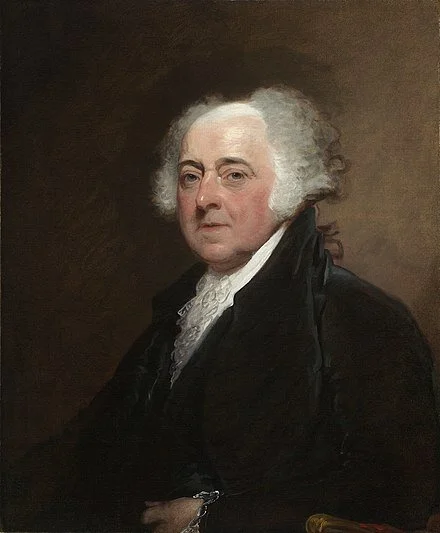
Remember, democracy never lasts long. It soon wastes, exhausts, and murders itself. There never was a democracy yet that did not commit suicide.”
— John Adams (1735-1826), one of the most important American Founding Fathers and the second president
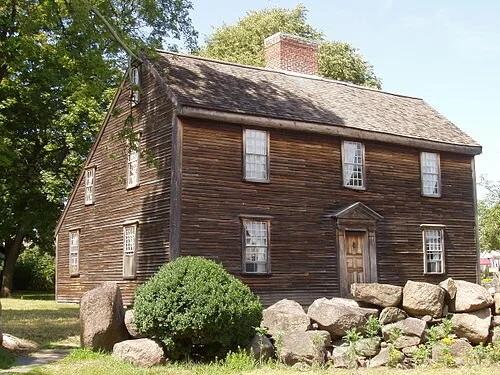
John Adams’s birthplace, at the Adams National Historical Park, in Quincy, Mass.

Urban uplift

Downtown Providence in 1844
Adapted from Robert Whitcomb’s “Digital Diary,’’ in GoLocal24.com
Providence officials, aided by professional planners, are trying to envisage how to improve the city’s downtown by stitching it together more tightly after car-dependent, suburban impulses have tended to fragment it.
Manuel Cordero, co-founder of the nonprofit DownCity Design, said “The idea is to create spaces that are welcoming and vibrant, and to address some of the longstanding issues, such as lighting and accessibility, to create a better set of interconnected spaces for our downtown.’’
Of course, every city needs to try to implement the best design ideas to adjust to changing demographics, technology, architecture, engineering and economics. But that might be even trickier than usual now because of the uncertainties of COVID-19. How might the pandemic permanently change how we live in, work in and visit cities?
To read ecoRI News’s report on this, please hit this link
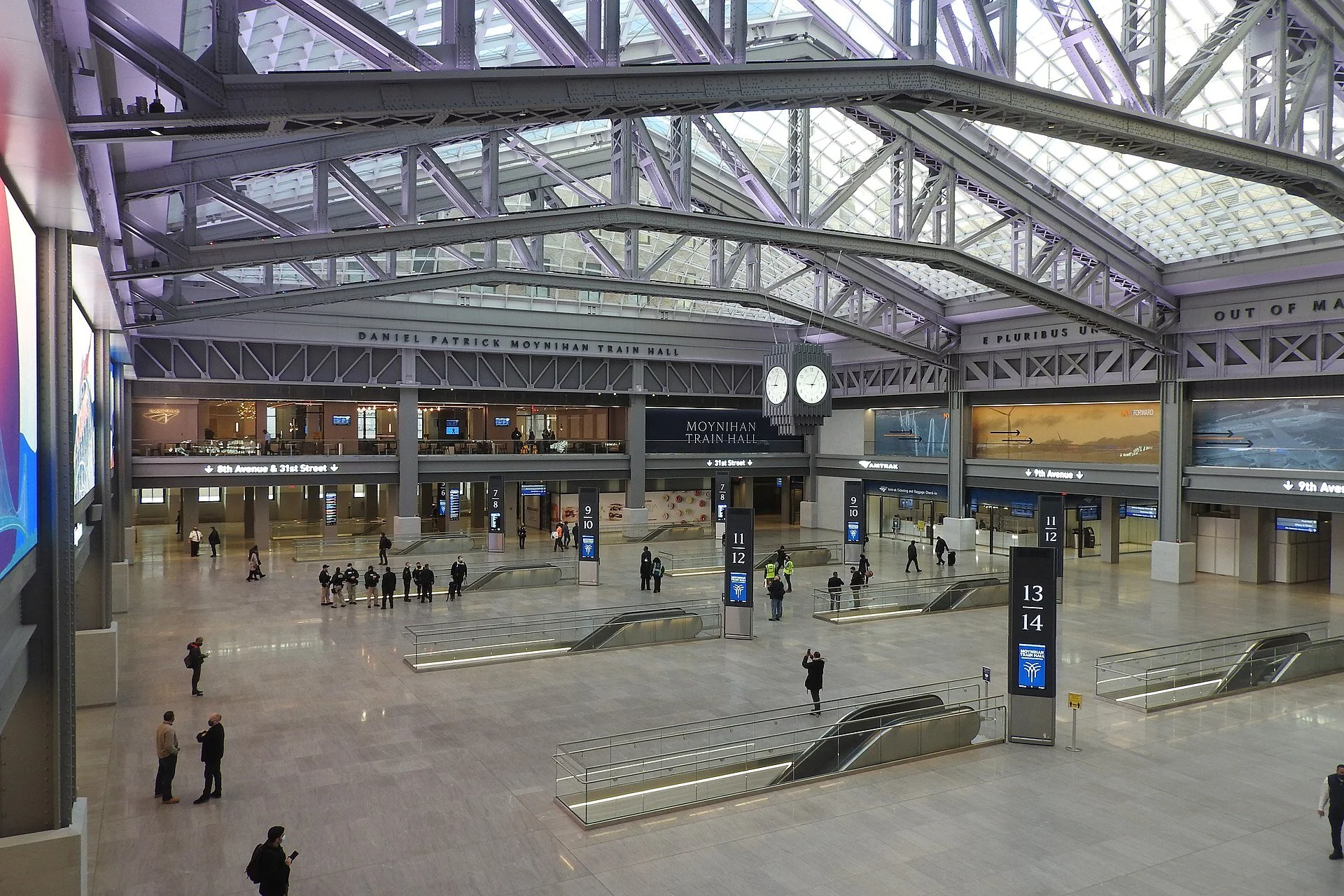
The new Amtrak train hall in the Pennsylvania Station complex.
— Photo by Jim.henderson
One very good piece of urban news, especially for those of us in the Northeast Corridor: A new, natural-light-filled train hall opened Friday in New York’s Penn Station complex. It has 92-foot-high ceilings and glass skylights and recalls the glorious masterpiece that was the Beaux-Arts Pennsylvania Station, opened in 1910 and torn down in ‘60’s. It was replaced by the hideous cavelike, dank, dark and overcrowded Penn Station that we all hate – the busiest train station in America.
The new hall is in the James A. Farley Post Office building, across Eighth Avenue from the main Penn Station, which is under Madison Square Garden.
The facility will only serve Amtrak and Long Island Railroad passengers, at least initially. Subway and other riders/victims must continue to use the old station. But more changes are planned in the passenger-rail complex – by far America’s busiest – in coming years.
What a nice way for New York City, which suffered much from the COVID catastrophe in 2020, to start the new year. And maybe it will inspire the political will to fix a lot more of America’s decayed transportation infrastructure. Big things can still be done, even in mostly gridlocked America, with strong and brave leadership.
The Yale architectural historian Vincent Scully (1920-2017) famously bemoaned the destruction of the 1910 Pennsylvania Station: “Through Pennsylvania Station one entered the city like a god. Perhaps it was really too much. One scuttles in now like a rat.”
Safer than in person
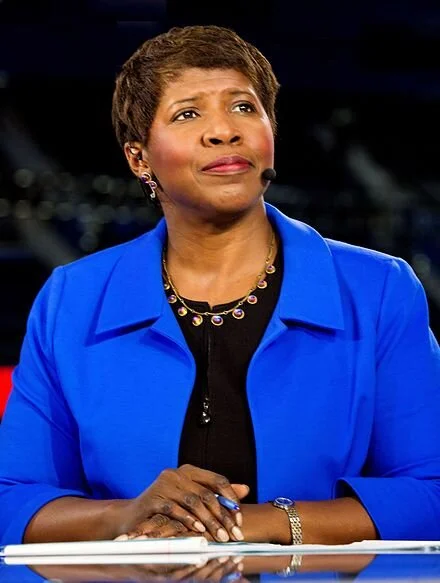
“I learned how to cover race riots by telephone. They didn't pay me enough at my first newspaper job to venture onto the grounds of South Boston High School when bricks were being thrown. Instead, I would telephone the headmaster and ask him to relay to me the number of broken chairs in the cafeteria each day.’’
— Gwen Ifill (1955-2016), best known for her work as a PBS journalist, on her reporting of the Boston school-desegregation crisis for the old Boston Herald American in the late ‘70s. She graduated from Springfield Central High School and Simmons College, in Boston.
Better have that rash looked at
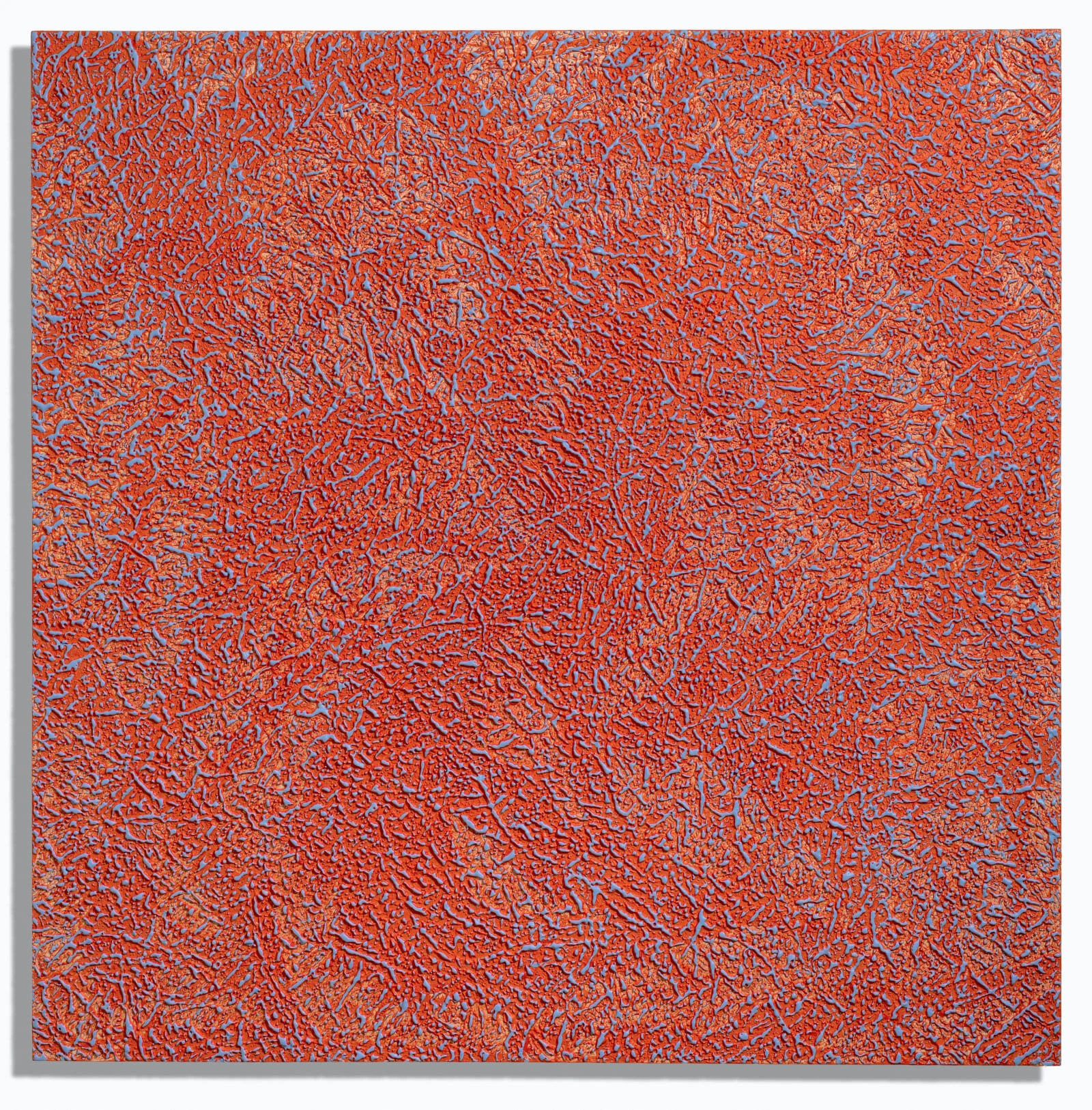
Encaustic painting from Martin Kline’s show “Allover,’’ at Heather Gaudio Fine Art, New Canaan, Conn., Jan. 23-March 6.
The gallery says:
“Throughout the course of his career, Kline has examined systems of historicism and presentation, his focused and disciplined approach creating bodies of works in series, each with their distinctive visual language. Among his many investigations, Kline has looked to notions of authenticity, sincerity and originality, and, as he states, there comes a point when an artist ‘cannot escape Jackson Pollock’ For this exhibition, Kline presents his newest group of paintings entitled “Allover,’ inspired by the drip technique he used in “Dream of Pollock’’ (for Kirk Varnedoe) back in 2007.
The multi-colored “Allover’’ series consists of, for the most part, strictly monochromatic abstractions. Created in a looser, automatist fashion, these paintings have a more fluid sensibility, with random thread-like rivulets of pigment networked in and out of broader, purposeful bands of color. Unlike previous series, these paintings lack compositional focal points, nor do they possess narrative characteristics seen in his Hammocks assemblages. The viewer’s eye is free to wander all over and engage with the painted surface indiscriminately.
”While Kline may be revisiting the spontaneous technique for which Pollock became famous, the approach to painting with the panel positioned horizontally has been very much decidedly his own from early on. Kline has mostly worked on his surfaces laid horizontally, typically on a tabletop—his signature additive approach to painting requiring the pull of gravity to fasten the pigments in situ while drying. For the most part, Kline’s hand has had a direct touch through the use of a paintbrush on the paper, panel or canvas. In the Allover paintings, Kline is still working horizontally but he has severed the traditional anatomical connection, distancing himself from the surface even more by placing the panels on the floor. This increased space relinquishes control for the drips and pours to act more randomly and allow for elements of surprise to occur. Most of the panels in this series lack confining frames and the sides are free of splashed pigments that reveal the process. The resulting suggestion is that the drips and thicker gestures of color travel beyond the picture plane. It is as if the viewer is getting a snapshot, a window into elements that exist outside the painting’s boundaries.’’
Squeeze out some more

Looking toward Calais, Maine, across the St. Croix River from St. Stephen, New Brunswick
“In Maine, there is a deeply ingrained sense that you can always get a little more use out of something.’’
— Tim Sample (born 1951), in Maine Oddities, Curiosities and Roadside Attractions, longtime New England regional humorist
He lives in Calais, Maine, far Downeast.
On June 16, 1809, Plantation Number 5 PS was incorporated as Calais, named after Calais, France, in honor of French help during the American Revolution. The St. Croix River provided the mill town with water power for sawmills, clapboard and shingle mills, two planing mills, a saw factory, two axe factories and four grain mills! There were foundries, machine shops, granite works, shoe factories and a tannery. Other businesses produced bricks, bedsteads, brooms, carriages and plaster. Not bad for a community that now has only about 3,100 people! There’s still a lot of fishing in the area but most of the other industry is long gone.
Calais and the neighboring Canadian town of St. Stephen have long been remarkably friendly. Consider that during the War of 1812, the British military provided St. Stephen with a lot of gunpowder for protection against the enemy Americans across the St. Croix River in Calais, but St. Stephen's town elders gave the gunpowder to Calais for its Fourth of July celebrations.
Calais hosted the first railroad built in Maine, the Calais Railroad, incorporated by the state legislature on February 17, 1832 and built to transport lumber from a mill on the St. Croix River.
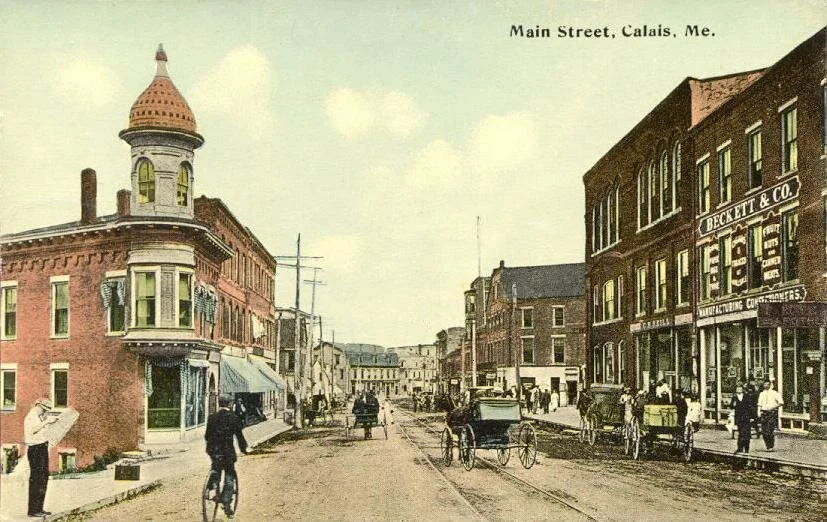
Main Street in Calais in 1913 — more prosperous than now
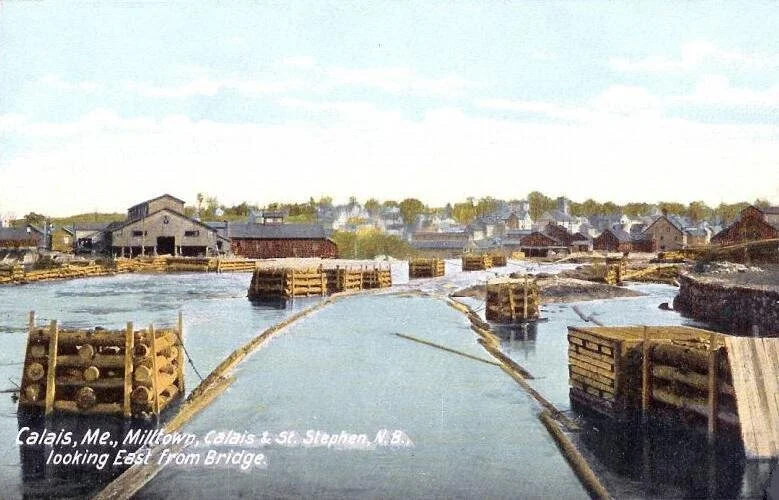
1908 postcard. Note the lumber being transported.
—
Deal with the emptiness

“You keep entering empty cities.
Birds fly out of open doors.
Please: appear in every window;
whisper to the leafless trees.’’
— From “Lonesome Is a Curious Word,’’ by Lesley Dauer, a New England-educated poet now living in California
JFK speech on N.E. economic problems in 1954; region’s industries very different now!

At the now long-gone Fore River Shipyard, in Quincy, Mass., about the time of this Kennedy speech
Text of remarks by Sen. John F. Kennedy on “The Economic Problems of New England’’ June 3, 1954, in the U.S. Senate
Mr. President: Since my discussion before the Senate exactly one year ago of the economic problems of New England and their alleviation, considerable progress has been made in meeting those problems, including the organization of the twelve New England Senators in response to the call of the senior Senator from Massachusetts (Mr. Saltonstall) and myself. These 12 Senators, regardless of party, have been working faithfully on behalf of New England's needs.
But more effective action by the Executive Branch is necessary. The disappointing failures to meet many of New England's economic needs, too easily overlooked in our drive for psychological confidence, cannot be justified by recent trends. In these twelve months since my Senate speeches, unemployment in New England – which is above the national average – has increased by more than 125%* until insured unemployment has reached approximately 180,000. Manufacturing** has declined in all six New England states for a total loss of 133,000 jobs, highlighted by the 48,000 job decline in the textile industry which is now approximately 60% of its February 1951 strength. Our leather, shoe, rubber, apparel, and other non-durable goods industries have also declined; as have the more publicized machinery, metal and other durable goods industries. New England's steel fabricating mills operated in the first quarter of 1954 at 62% of capacity, 30% less than a year ago. Reports from The New England Council and the Boston Federal Reserve Bank indicate that declining defense orders will increase the difficulties of New England's electronic, aircraft, shipbuilding, and equipment manufacturers.
The battle against recession is now more nationwide in scope than it was one year ago, and it involves many legislative issues to be discussed subsequently on this floor, including taxation, credit and interest, public works, housing, farm income, and world trade, in addition to the items which I shall mention; but permit me to outline those steps which the administration should take promptly in order to help restore prosperity in New England and other similarly situated areas, and in order to complement the effectiveness of the New England members of Congress.
1. Restore bid-matching to Defense Manpower Policy No. 4, the program for channeling defense contracts to labor surplus areas. This program, both widely hailed and condemned when announced six months ago, has had only a negligible effect because of its elimination of the bid-matching features under which New England labor surplus areas had previously obtained $14 million in defense contracts. During the new policy's first full quarter of operation***, not a single contract went to a New England surplus labor area as a result of this preference, and only two "distressed areas" in the rest of the country received contracts totaling only $163,159. Moreover, only two of New England's labor surplus areas received any defense contracts at all in the first quarter; and New England's share of all defense contracts declined instead of increasing.
2. Expand the application of the administration's new policy of tax amortization certificates of necessity for industries in labor surplus areas. The delay in initiating this policy, the restrictions placed upon it, and the fact that it provided only an extra percentage for that declining number of industries already eligible for emergency amortization, have made this program of little value; and as of April 15, only two certificates under this policy had been awarded to one New England community, covering a capital investment of only $250,843. Only ten such certificates were awarded throughout the entire country. During this same period under the regular tax amortization program, the number and value of certificates of necessity awarded to all firms in all New England states continued to lag behind New England's proportionate share and defense contribution.
3. Revitalize and broaden the authority of the Small Business Administration. The establishment of this agency to strengthen the economy by aiding small business was of particular interest in New England, which has a higher proportion of small business than any other region in the United States, and where the rate of business failures is higher this year than last. But as a result of legislative ceilings and administrative delays, the Small Business Administration as of May 13 had approved in its 7½ months of operation only six loans, for a total of only $204,000 in all six New England states. Indeed, as of April 30, SBA had disbursed less than $1.2 million on thirty-seven loans throughout the nation (as compared with administrative expenses on March 30 totaling nearly $2.4 million).
4. Eliminate discrimination and confusion in New England transportation rates. I have previously pointed out examples of such discrimination and confusion in rail, truck, and ocean shipping rates, and this subject is now under review by the New England Senators Conference. ICC decisions during the past twelve months have intensified this situation. Division 2 of the Commission recently denied to New England, and its railroads and ports, the opportunity to enjoy rates on iron ore shipped by rail to the interior steel-producing areas, comparable to the rates enjoyed by the Ports of Philadelphia and Baltimore. In January, a Commission decision denied adequate service in inter-coastal shipping between the Port of Boston and the West Coast. Other recent ICC decisions affecting shipments of New England goods by truck have continued this discrimination.
5. Plug tax loopholes which contribute to improper industrial migration. The House Ways and Means Committee, in its deliberation on the tax revision bill, originally decided to plug one of the most flagrant of such loopholes by removing the immunity from "industrial development" bonds issued by states and municipalities in order to build tax-free factories as a lure to industry; but, the Committee reversed this decision and instead voted to deny the use of rentals on such factories as business deductions. The Senate Finance Committee has now voted to eliminate even this substitute, which is ineffective whenever such factories are given or cheaply sold to the migrant industry. I am hopeful that the Senate Committee or the Senate, with the administration's backing, will reinstate at least this modified version before the bill is finally passed, and eliminate this unjustifiable abuse of public credit.
6. Request legislative and administrative action to correct substandard wage competition. It is my hope that the President will reexamine his decision not to seek an increase in the minimum wage or to extend its coverage at this time; that his administration will ask Congress to modify or repeal the Fulbright Amendment to the Walsh-Healey Act which has stymied effective application of adequate nationwide minima on defense contracts; and that the Department of Justice will act more vigorously in pending litigation under the Fulbright Amendment which has delayed the adoption of realistic wage standards for the textile industry. I am particularly hopeful that this year's budget for Labor's Wage and Hour Enforcement Division will rectify last year's error, when this budget was cut 27% below the previous appropriation, thus making it possible to inspect only one out of twenty-two establishments covered by the law, requiring the complete elimination of eight southern regional offices, and making possible the review of wages in Puerto Rico only once in every seven years for each industry.
7. Initiate a program to revive the shipbuilding industry. Such a program, much discussed but not as yet forthcoming, is of particular interest in New England and other areas dependent upon this vital industry. An essential part of such a program would be to make more effective those defense manpower policies applicable to the shipbuilding industry, inasmuch as the third Forrestal-type aircraft carrier was awarded to a shipyard with increasing employment and substantial naval projects, instead of the Fore River shipyard at Quincy, Massachusetts, where employment had already dropped by more than 25%, and where seven out of its ten shipbuilding ways will be idle by this fall.
8. Support the Saltonstall-Kennedy Bill to aid research and market development in the fishing industry. The active opposition by the Department of Agriculture with the approval of the Bureau of the Budget to this measure, which seeks only to allocate to our fishing industry its fair share of tariff receipts, has handicapped its passage without restrictive amendments. I am hopeful that the administration will reverse this position, and support this bill which is of great importance to New England's hundred million dollar fishing industry.
9. Seek more effective social insurance against the ills of unemployment and forced retirement. In order to maintain community purchasing power and individual living standards, New England requires improvements in the existing Social Security Program, which improvements are only partly contained in the recommendations of the President, particularly with respect to our disabled citizens. It is especially important to strengthen our unemployment compensation program by extending coverage, providing federal reinsurance for states with low reserves and by establishing through congressional action – not, as the President asked in vain, through individual state action – minimum standards for unemployment insurance benefits and their duration. As a first step, the administration should withdraw its support, even though it is substantially modified, of the House-passed Reed Bill which would undermine the basic strength of our jobless insurance program. The bill introduced today by myself and several other Senators would far more adequately meet the needs of New England and the nation.
10. Accord equal treatment to New England and all other areas in federal programs, including those for resource development. Last year, the original budget request for the New England-New York Inter-Agency Survey of Water Resources was set at $1,200,000 in order that that survey might be completed by the end of fiscal 1954, inasmuch as its original termination was fiscal 1952. The revised budget, however, when finally enacted into law, cut this figure exactly in half, thus delaying completion by at least another year. This stepchild treatment of New England by a Federal Government which has provided direct grants for the establishment of power facilities in other areas already enjoying cheaper power rates, should be reversed by the present administration, for the recommendations of the Budget Bureau and Army Engineers are generally conclusive on such items. New England's share of the Army Civil Functions Appropriation Bill is less than that received by some two dozen individual states, practically all of whom contribute less in tax revenues than Massachusetts alone; and therefore the request for adequate funds with which to survey our potential resource development is not excessive.
It is my hope, Mr. President, that the administration will take prompt action on the 10-point program which I have outlined above, and that we in Congress – with the assistance of the twelve New England Senators who have indicated their active concern for these problems – will be able to follow through on legislation to restore economic strength and expand employment in New England and all other parts of the country.
* As measured by the average weekly insured unemployment under state programs, May 1953-May 1954.
** March 1953 to March 1954, latest available Bureau of Labor Statistics surveys.
*** Defense Department release based upon contracts of $25,000 value or more, $10,000 for Navy.
What I want after the pandemic

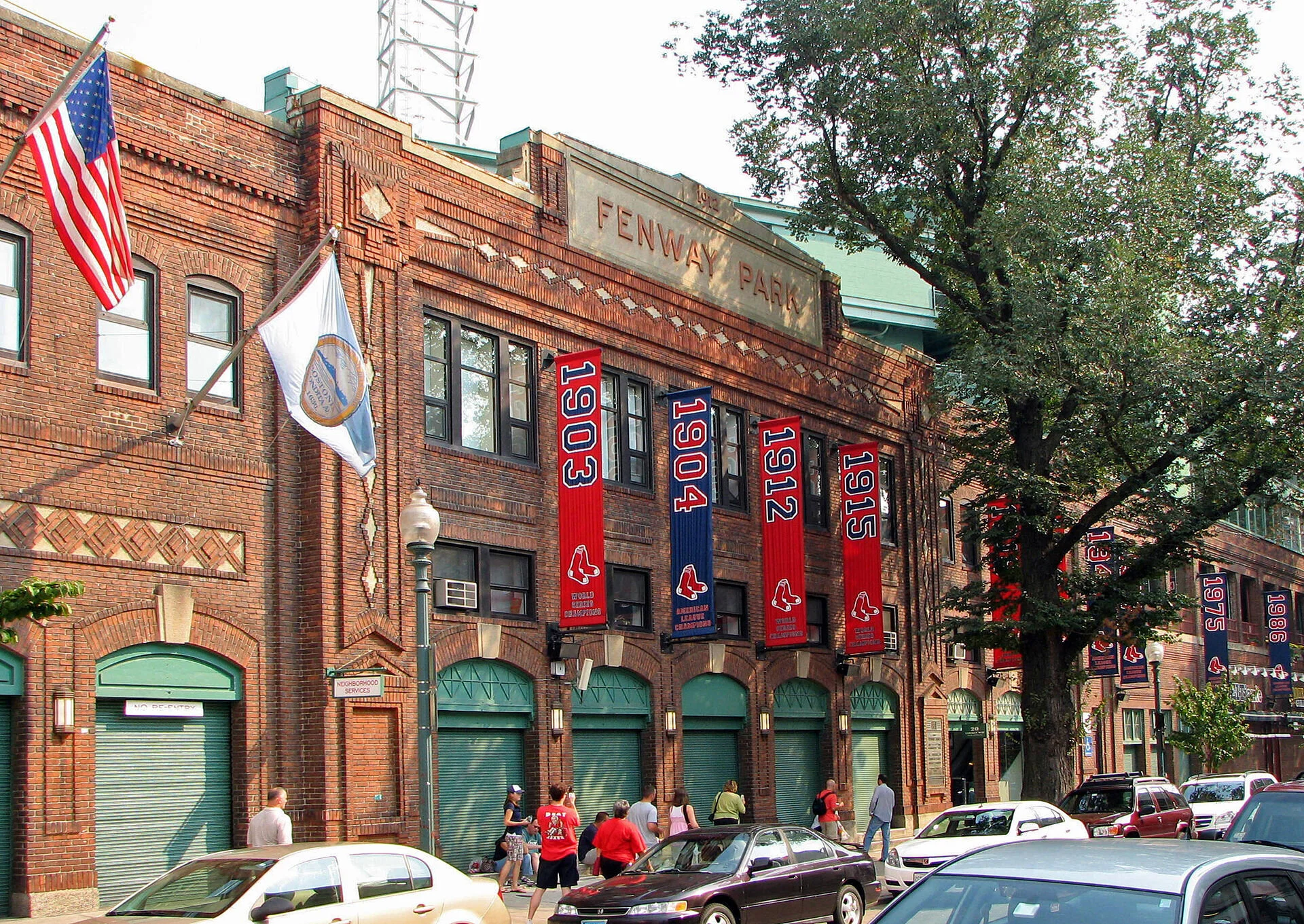
— Photo by Bernard Gagnon
Jersey Street at the main entrance to Fenway Park. It was formerly called Yawkey Way, after the Red Sox owner from 1933 to 1976, Tom Yawkey. But because of complaints about Yawkey’s racism in the management of the Sox, the City of Boston changed it back to its original name, Jersey Street, in 2018.
“Forget the frank, the hot dog —
Give me the Fenway sausage.
Landsdowne or Yawkey,
Just give me the street, the crowds, the carts.’’
— From “Sausage,’’ by Raymond Foss (born 1960). Trained as a lawyer, he’s now mostly a poet. He lives in Barrington, N.H.
Barrington is now a bedroom community with farms and lots of woodland.
Back in the early 19th Century its primary industry was iron-ore smelting. The Isinglass River, together with its tributaries, provided water power for grist and saw mills for many decades.

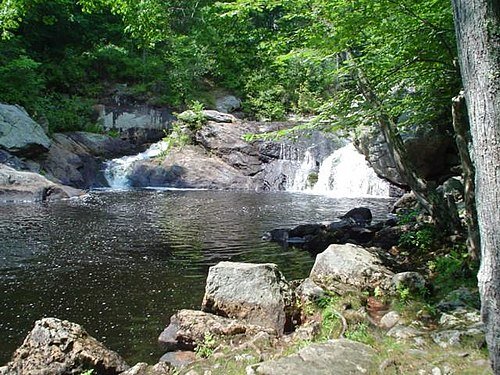
Locke's Falls on the Isinglass River in Barrington
The colorful and complex life of a great physician and art patron

From Robert Whitcomb’s “Digital Diary,’’ in GoLocal24.com
fWe’re also lucky that New England is so welcoming to the arts, with Rhode Island and Boston the centers. You get a good sense of this reading the new autobiography in the form of a graphic novel called Chazan!: Unfiltered about the Ocean State’s leading patron of living local artists, Joseph Chazan, M.D.
Joe Chazan, who is now 85, is a physician, scientist and very successful businessman (kidney-dialysis services) and has been a big figure around here for a long time. His often humorous, larger-than-life personality has energized civic culture.
Besides the exciting (funny, sad, educational and a lot in-between) story of Dr. Chazan’s life from its very modest beginnings, the book serves as a panoramic view of the local art scene, showing the work of many artists, some well known, some not. With art work by Erminio Pinque, script/story work by Lenny Schwartz, story work by Bradley Starr and help from others, the book entertains even those who may have known nothing about Dr. Chazan’s decades of supporting local artists, including, for example, helping to start AS220, the downtown Providence arts center. (Full disclosure: My wife, a painter, is one of the many artists listed in the book.)
All too often, rich people chase status by only buying the work of famous artists. But Joe Chazan seeks out little known but promising artists and helps some of them become well known. He knows that there are plenty of hidden treasures around here.
Hit this link for more information about the book, including how to buy it.
Clothing vs. figures

“Sisters With Pearls“ (acrylic), by Catherine Adams Burton, in the show “This is Us: Regional Portraiture Today,” at Springfield (Mass. Museums
The museum says that there is “ample paradox in Burton’s work, between the pageantry of the women’s clothing and the hard-cut outlines of their figures; between blended color and crisp definition of form. ‘Sisters with Pearls’ transcends regionalism, achieving the universal recognition of shared experience."
Right: Catherine Adams Burton, Sisters with Pearls, 2019, acrylic.
Chris Powell: Lamont cheerleading belies damage to Conn. economy; Yellen made a killing out of office
MANCHESTER, Conn.
Few may begrudge Connecticut Gov. Ned Lamont the cheerfulness of his "state of the state" address upon the opening of the General Assembly last week. As he noted, since last March Connecticut has produced much heroism in confronting the virus epidemic. That heroism includes the governor's own.
For nobody runs for governor to preside over the destruction of the state's economy amid mass sickness and death. The epidemic has been overwhelming, and even Lincoln acknowledged being overwhelmed in office. "I claim not to have controlled events," the president wrote, "but confess plainly that events have controlled me." They have controlled the governor too.
But the governor's pep talk conflicted a bit too much with reality. He boasted that the attractiveness of Connecticut is so great that many people have been moving here in recent months. Of course some people have relocated here from New York City and thereabouts, but just days before the governor spoke, the Census Bureau and a moving company reported a net exodus from Connecticut for the year just ended. For many years the state has been losing population relative to the rest of the country.
Responding to the governor's address, Senate President Pro Tem Martin M. Looney, D-New Haven, and the Senate's Democratic majority leader, Bob Duff, of Norwalk, avoided cheerleading. The epidemic, the senators said in a joint statement, "has impacted everyone in our state, caused untold loss, and fundamentally changed daily life. The 2021 legislative session will be like no other and our focus will be to protect the public's health and help people recover economically, physically, and mentally."
The agenda of the legislature's Democratic majorities, enlarged by the November election, likely will include raising taxes. Last week government employee unions rallied at the state Capitol in support of taxing the rich more to reduce pressure to economize with government employees.
The governor's address said nothing about raising taxes, and he lately has opposed raising taxes except when they can be hidden in wholesale gasoline prices. But the governor spoke favorably about legalizing marijuana and sports and Internet gambling, which would be heavily taxed. Legal marijuana and more gambling, the governor noted in justification, are happening throughout the country. But these things are less signs of human progress than of the financial desperation of state government as it lacks the courage necessary to control costs.
Amid his cheerleading the governor could manage only a single reference to the thousands of state residents who for months have been lining up for free food. Meanwhile business closings and bankruptcies have been increasing.
Maybe the new national administration will send the states trillions more dollars in remediation, but there are serious risks in that, since the dollar's international value is already falling sharply and some experts are musing about hyperinflation, which will harm the working class most even as property owners profit from it. Restoring the economy is likely to take a long time.
xxx
THE NEW OLD BOSS: Anyone hoping for a big change in the federal government's economic and market regulation policies should take a close look at President-elect Biden's nomination of former Federal Reserve Chair Janet Yellen for U.S. Treasury secretary.
The nomination has raised concerns because it seems like a merger between the Treasury Department and the central bank, whose independence of the frankly political side of the government long has been touted as a principle of central banking.
But it turns out that in the three years since Yellen resigned from the Fed she has been paid at least $7 million in speaking fees by the big banks and investment houses that the Fed and Treasury regulate and occasionally rescue financially. Yellen probably received more than $7 million, since it appears that she has not yet fully reported her income from banking and investment interests.
Rejoicing in what seems to be their party's capture of a narrow majority in the U.S. Senate, some Democratic congressmen are promising to enact another cash bonus to every citizen of as much as $2,000. But with Yellen at Treasury, will the big banks and investment houses already have assured themselves of far more than that?
Chris Powell is a columnist for the Journal Inquirer, in Manchester.
New camera might save Right Whales

Right Whale with her calf
From ecoRI News (ecori.org)
The beginning of the calving season for North Atlantic Right Whales, one of the rarest marine mammals, is looking promising with four newborn calves observed in December. But the outlook for the species, whose global population is estimated at only 360 individuals, remains grim. Between fishing-gear entanglements and collisions with ships, more whales have died in recent years than were born.
A new technology on the horizon may help to reduce one of those threats, however. A smart-camera system invented by a team of scientists and engineers at the Woods Hole Oceanographic Institution (WHOI) in Massachusetts is being tested in local waters and could be deployed on vessels traversing the East Coast to reduce the threat of ships striking Right Whales.
“The idea is simple,” said WHOI assistant scientist Daniel Zitterbart, who is leading the project. “We took a commercial thermal imaging camera, highly stabilized for roll and pitch, and a computer algorithm that looks at images and tries to tease out what’s a whale compared to what’s a wave or a bird or whatever.
“The key part is, if you’re in a large vessel and you know there’s a whale 300 yards in front of you, it’s probably too late for you to turn away from it. Our aim is to push the detection range as far as we can, which makes things difficult on a rocking boat. But getting the range we need to make a difference for the animal is the objective.”
A prototype of the smart-camera system was tested last summer on a research vessel in the Stellwagen Bank National Marine Sanctuary, in Massachusetts Bay, about midway between Gloucester and Provincetown, where humpback whales congregate to feed each year. A similar land-based installation was also deployed at a busy shipping channel in British Columbia traversed by endangered southern resident Killer Whales. The initial tests were promising.
“If you’re talking about very large vessels like tankers or cargo vessels, they may not be maneuverable enough for the detection ranges we get, but for cruise vessels, ferries, and fishing vessels that are more maneuverable, it definitely can make a difference,” Zitterbart said.
A little larger than a half-gallon milk carton, the camera system must be installed at least 15 feet above the water line to be effective. Within seconds, it can detect the presence of whales a mile or more away and alert the captain in time for the vessel to slow down or change course.
Unlike human observers or spotter planes, which are occasionally used in the United States and Canada to watch for Right Whales and alert nearby ships, the camera system can spot whales in daylight and darkness with little effort.
James Miller, an ocean-engineering professor at the University of Rhode Island, invented a forward-looking sonar device about 20 years ago that could be used to detect whales, reefs, and other obstacles to navigation beneath the water’s surface. He commercialized the product by founding FarSounder Inc., a Warwick,R.I.-based company with clients around the world. The company’s sonar devices can scan up to 1,000 meters in front of a ship moving at speeds of up to 25 knots to detect underwater obstacles.
“Dr. Zitterbart's technology for detecting whales at the sea surface can be an important part of the solution for reducing ship strikes, one of the leading causes of death for large whales,” Miller said.
Zitterbart said sonar is a better detection method for sensing static objects beneath the surface, but he believes his thermal camera system is more effective at detecting moving objects such as whales that may only be noticed for a few seconds. Both technologies can be hampered by challenging environmental conditions.
The recipient of the 2019 Young Investigator Award from the U.S. Office of Naval Research for his work on whale detection, Zitterbart previously developed a thermal imaging system for protecting whales and other marine mammals from underwater noise produced by air guns used in seismic surveys.
Assuming that his tests are successful this year, Zitterbart plans to deploy his camera system on a number of vessels without his development team aboard to ensure that remote troubleshooting can be conducted effectively. Eventually, he hopes to find a company interested in commercializing the technology.
“Thermal imaging systems are a powerful new tool in real-time whale detection,” he told Ocean Insights. “Used alone or in conjunction with acoustic monitoring, this technology could significantly reduce the risk of vessel strikes.”
Todd McLeish is a Rhode Island resident and nature writer .
'It all thrills me'

“Near The Cone Of Uncertainty” (oil, diptych), by Ed Chesnovitch, in his show “Man on the Marsh,’’ at the Cape Cod Museum of Art, in Dennis, Mass.
The show features the oil paintings of local artist Chesnovitch, who first visited Cape Cod nearly 30 years ago, when he was quickly struck by the landscape. Twelve years ago, he bought a cottage along Scorton Creek, in East Sandwich. It was a big change from his previous home, in Pennsylvania. He found it full of complexity and life, yet peaceful and meditative. "The late afternoon light of a cold October day pouring across the golden marsh grass, or the quiet hush of an early morning bathed in soothing pinks," he says, "It all thrills me." The museum says he walks for hours through the marsh, stopping from time to time to sketch. And he spends hours seeking to juxtapose and elevate colors and build up layers of paint to create depth, lushness and vibrancy.

The East Sandwich Friends (Quaker) Meeting House. Cape Cod has had a strong Quaker presence since the 1660’s.
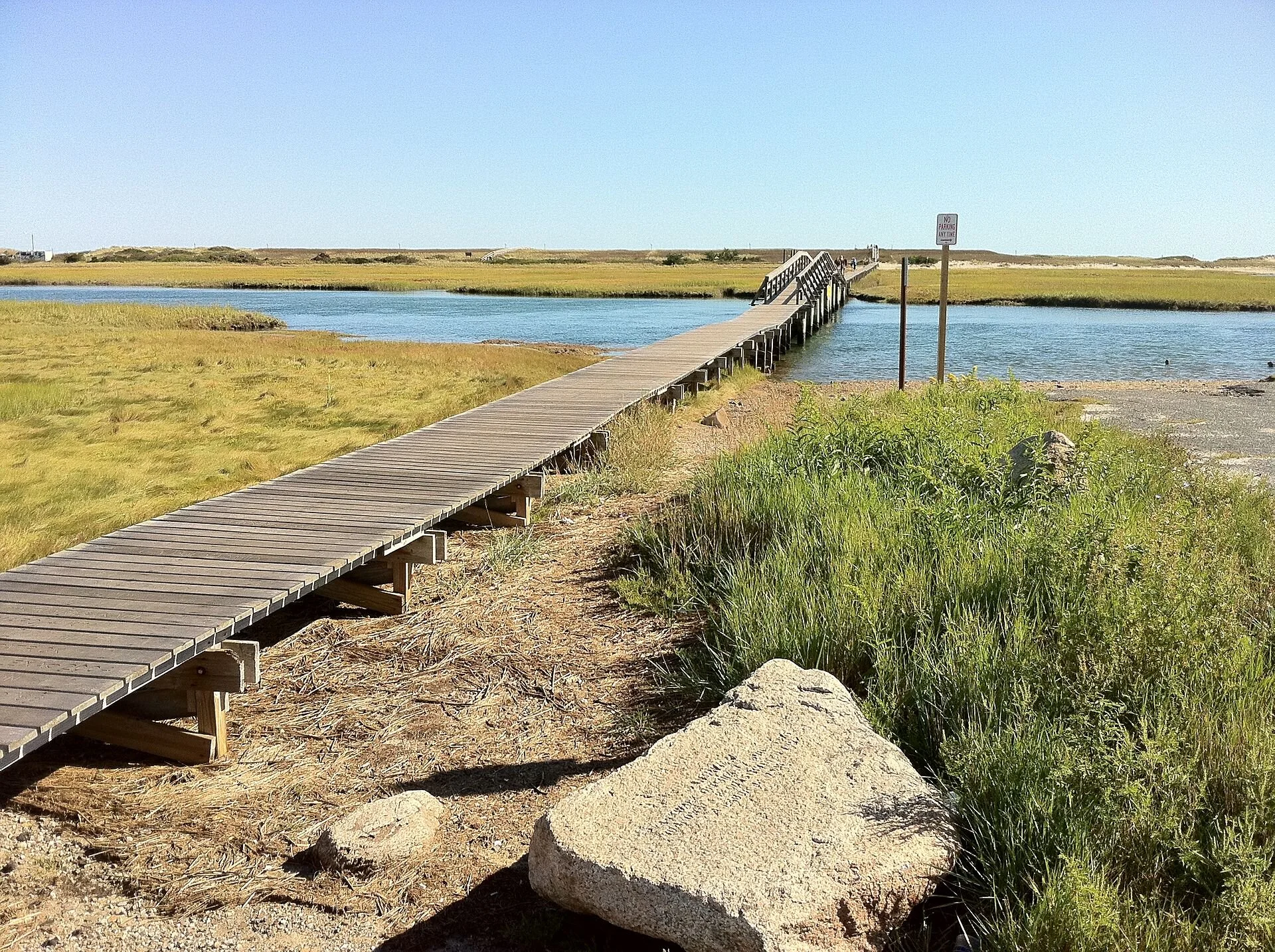
Boardwalk over marshes in Sandwich
— Photo by Andrewrabbott
Loads of roads

Various Via Francigena signposts
From Robert Whitcomb’s “Digital Diary,’’ in GoLocal24.com
Happy New Year! It’s good to see 2020 slink away.
The other week I accidentally came upon a TV series on PBS called The Road to Rome, about eight British personalities of varying faiths and nonfaiths, ages and physical conditions walking on the ancient Via Francigena pilgrimage route to the Eternal City. It’s part of a wider series on the network about religious pilgrimages.
(I’ve known a couple of people who completed (by foot -- a real pilgrimage) the famous El Camino de Santiago pilgrimage in Spain. Neither told me that they got a religious experience out of it, but they much enjoyed some of the life stories of their fellow pilgrims.)
The pilgrimage-to-Rome series is a colorful travelogue, most of it outdoors. It’s very engaging, sometimes funny and sometimes a little melancholic. It got me thinking that many of our lives are frequently interrupted pilgrimages to something, though we often don’t know to where, until, maybe, the end.
T.S. Eliot wrote in “Four Quartets: “Home is where one starts from. As we grow older/ The world becomes stranger, the pattern more complicated….’’
But “In my end is my beginning.’’
Everyone sees himself/herself as the center of their own universes in a narrative mostly invisible to others. And that narrative involves erratic internal and external movement. We are all “road stories”.
I’m not crazy about school reunions, in part because they are partly fund-raising events, and breathed a sigh of relief last spring when my 50th college reunion was cancelled because of you know what. It was provisionally postponed to next June, but who knows if that will happen? Still, such reunions have value as venues where you learn about the narratives/pilgrimages of others while helping you better understand your own. You discover things about classmates you never knew and hear life stories of classmates whom you might not have known at all while in school
And you’re reminded of the confusions of time, how it goes forward and then seems to circle back and speeds up and slows down.
Anyway, 2021 might well be better than 2020, though it could be worse. Will we experience time in 2021 much differently than we did in slow, locked-down 2020, with its boredom and claustrophobia tempered by flashes of anxiety and even unexpected pleasures? Will it become (relatively) broad, sunlit uplands or just clearings in the woo
'Loved most a blizzard'

“He loved winter more than the other seasons, loved a tender snowfall, loved the savage north wind and the blinding light off a frozen lake, loved most a blizzard, which he faced head-on like a bison. He would not admit these things, however, because in his superstition he believed that by revealing desires among sacred subjects, such as weather and seasons, you would likely receive the opposite of what you wanted.’’
-- Ernest Hebert (born 1941), in The Dogs of March (1979) . He is best known for the Darby Chronicles Series, a series of seven novels written between 1979 and 2014 about modern life in a fictional New Hampshire town as it changed from relative rural poverty to becoming more upscale, almost suburban. He was born in, and spent many years in and around, Keene, N.H. It’s a very pleasant small city in southwest New Hampshire.
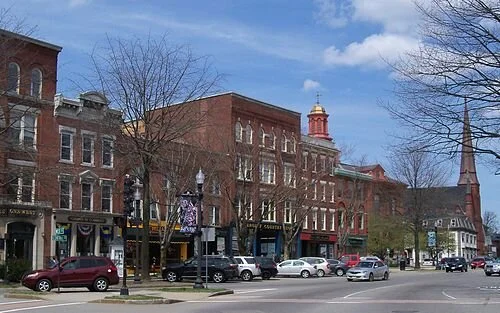
Central Square, in Keene
The gift and trauma of tech
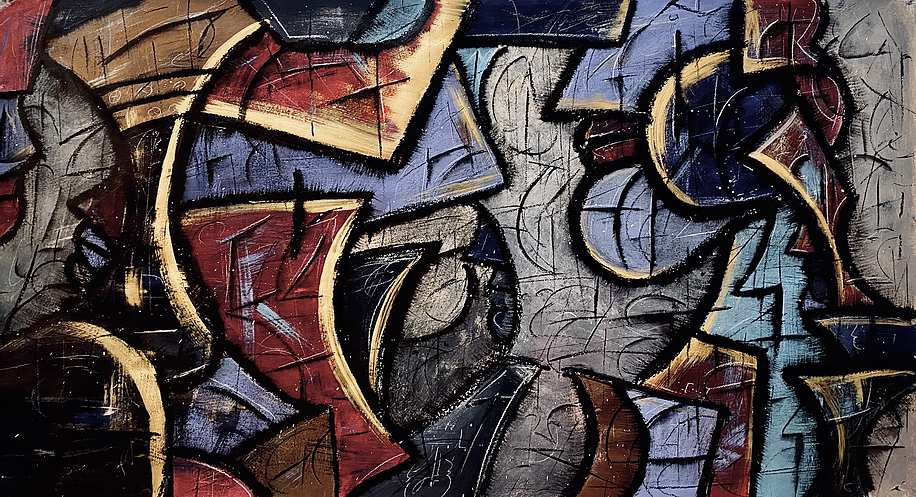
“Collaboration” (mixed media on paper), by Joe Taveras (Robojoebot), roboticist and artist, in his show “American Futurism,’’ at his Robojoebot Studio, in Boston’s SOWA arts district.
Artscope quotes him as saying that "I am inspired by everything I come into contact with as well as the predictions of future technologies that arise within my mind." The magazine continues: “Much of his artwork in American Futurism consists of fragmented figures made with dark lines, representing the global atmosphere of uncertainty and the detrimental effects of innovation without ethics. However, the brightness and colors present speak to positivity and the idea that the future can be better than the present.’’
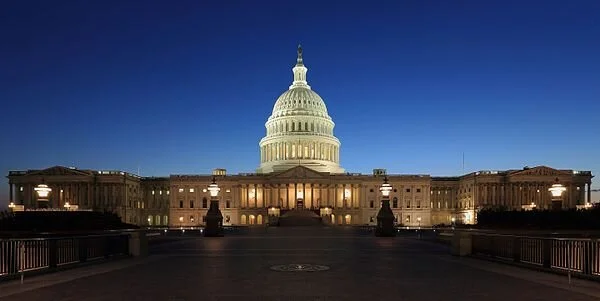
Llewellyn King: Trump and his terrorists have desecrated our temple to democracy, where I had spent many happy hours
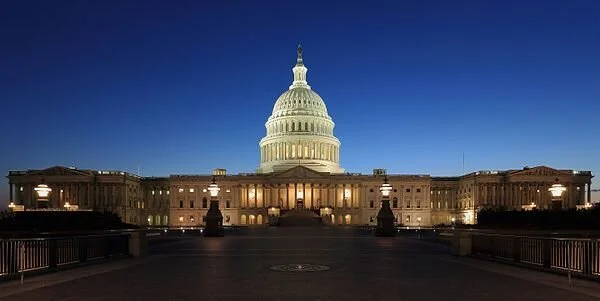
The East Front of the Capitol at dusk
WEST WARWICK, R.I.
Cry, the beloved building.
I have been lucky and have walked the halls of the Houses of Parliament in London, visited the Elysée Palace, in Paris, the Bundestag, in Berlin, and the Kremlin, in Moscow.
Still, it is the Capitol, the building on a hill in Washington, that fills me with awe, but it isn’t awesome or frightening, and doesn’t exalt in power.
The Capitol is at once romantic, imposing and egalitarian. Ever since I first set foot on Capitol Hill, the building has been for me, an immigrant, the elegant expression of everything that is best about America: open, accessible and shared.
Until terrorism changed things, anyone could walk into the Capitol without security checks. Taxis could draw up and let you out under the arches that designate the Senate or House entrances.
It hurt me in profound ways to see a mob, inspired by the rogue president and his lickspittle enablers, trash that hallowed place; try to lay waste to the temple of American tolerance, freedom, excellence and uniqueness; to treat it as an impediment to their coup, to their lies-fed catechism of overthrow.
To see any great building desecrated is painful, but to see it happen to the Capitol is to witness heresy against democracy, against Americanism, against our better angels and highest aspirations.
When the Cathedral of Notre Dame, in Paris, was engulfed in flames, I realized that the building was a prayer: the elegant stone, wood and plaster embodiment of man’s search for God. By that measure, the Capitol is the embodiment of man’s search for fairer government.
As a reporter, the first thing you notice about the Capitol when you go there is how open it is once you have gotten through the metal detectors at the entrances. You walk the halls, ride the elevators and the little trains that run between the Capitol and the House and Senate office buildings, and eat in the cafeterias. The members have privileges, like their own entrances, reserved elevators and reserved train seats. But you can see legislators in the corridors and snack bars, conferring with aides, and often those who are there to get help or to lobby for a cause.
The work of government is at its most accessible to outsiders in the Capitol. Although there are tours, it is still best to roam the building alone, from the tunnels in the basement (where you end up when you take the elevator or stairs and go down too far) to the glory of the Rotunda. The tiled floors, paneling, frescoes, paintings and statuary are all art of the voice of the people, cobbled into a great building.
There are secret places in the Capitol, too. I once had lunch with Sen. Bennett Johnston (D.-La.), then chairman of the Senate Energy Committee, and The Wall Street Journal’s Paul Gigot in a dining room assigned just to the chairman of that committee — one that neither of us guests even suspected existed. The old Joint Committee on Atomic Energy had a near-secret set of offices accessible through a discreet elevator, unmarked and looking as though it might carry freight instead of nuclear secrets.
But mostly the work of the Congress, which is carried on in the Capitol and its adjacent office buildings, is surprisingly open, accessible and, in that, democratic.
My fervent hope is that freedom, which has been somewhat eroded over the years with new layers of security, isn’t further eroded after the Jan. 6 assault.
Looking forward, maybe the horror of government by the Great Lie will be held at bay. While we will never see an end to politicians’ fibs, we can hope that politicians will be called out for them, won’t have them respected as an alternative truth, which is the ignominious and extraordinary achievement of the Trump administration.
Trump laid the fire before the election, declaring there would be fraud, perhaps certain that he would lose. He lit it on Jan. 6.
The mob that stormed the Capitol isn’t to blame. The blame rests with those who have assaulted the truth over the past four years.
Blame Trump and castigate his enablers, from the talking heads of television to members of Congress like Republican senators Ted Cruz, Josh Hawley and Marco Rubio. They don’t deserve to sit under the Capitol dome. That is for those who care about America. It is a noble mantle.
On Twitter: @llewellynking2
Llewellyn King is executive producer and host of White House Chronicle, on PBS. He’s based in Rhode Island and Washington, D.C.