
Vox clamantis in deserto

A nation of 'gullible dolts'
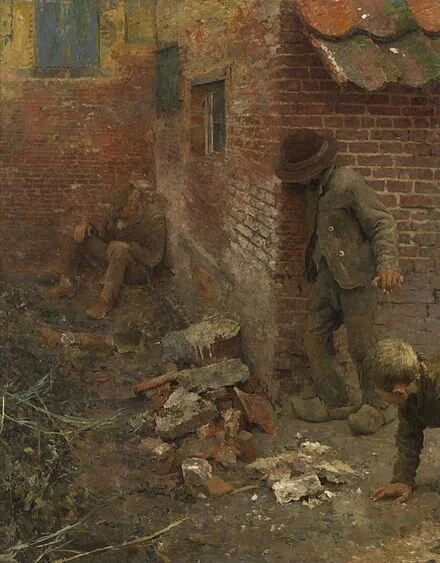
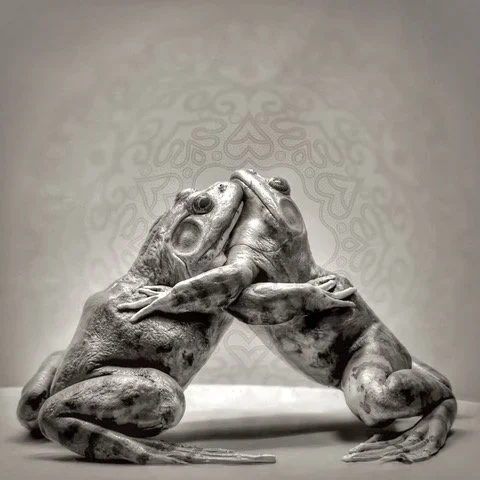
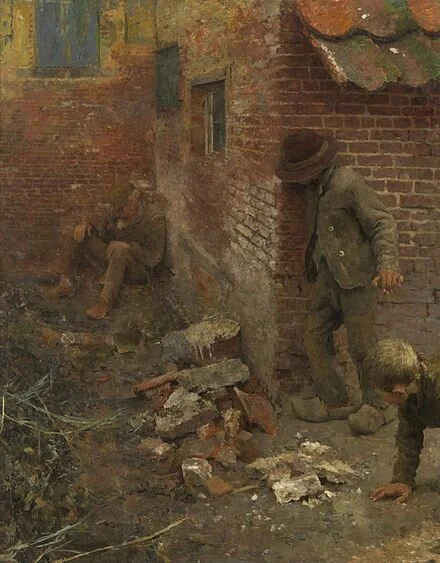
“The Idiot ,’’ by Evert Larock (1892)
“Widespread ignorance bordering on idiocy is our new national goal….The ideal citizen of a politically corrupt state, such as the one we now have, is a gullible dolt unable to tell truth from bullshit. An educated, well-informed population, the kind that a functioning democracy requires, would be difficult to lie to, and could not be led by the nose by the various vested interests running amok in this country.’’
— Charles Simic (born 1938), Serbian-American essayist and Pulitzer Prize-winning poet as well as a professor emeritus of literature and creative writing at the University of New Hampshire. He lives in Strafford, N.H.
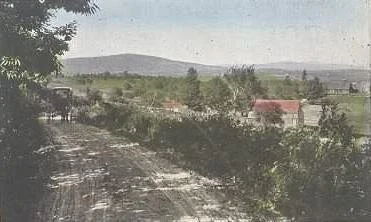
In Strafford circa 1910: The Blue Hills and the Job Hills from Northwood Road
Shrimp and few people

Maine shrimp, above and below
“As far as I’m concerned, there are exactly two great things about living on the Maine Coast in January: 1) empty 2) shrimp.
Leslie Land, in “Everybody Loves Maine Shrimp,’’ in the January 1995 issue of Yankee magazine
Sadly, harvesting Maine shrimp is now banned to try to conserve what’s left of the long-depleted stocks of the tasty creatures in the Gulf of Maine.

Chris Powell: Close down the ‘doctor’ racket; when beggars die
MANCHESTER, Conn.
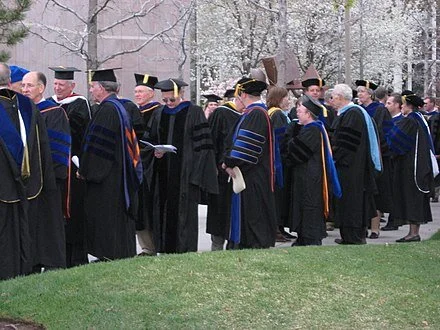
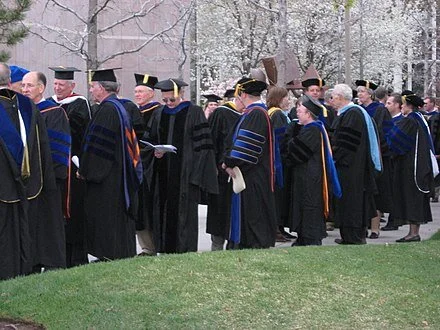
Legions of the politically correct are insisting that President-elect Joe Biden's wife, Jill, be given the honorific title "Doctor" because she holds a doctoral degree in education, which she received largely on the basis of a mediocre term paper. Objections to her honorific are being denounced as sexist and anti-intellectual, an insult to all women with doctoral degrees, as if men haven't gotten such degrees and claimed the title too, and as if all doctorates signify learning and service commanding special respect.
But journalistic style long has been to confer "doctor" only on those holding degrees in medicine and dentistry, and the reason for this was hilariously demonstrated last March, when television show hostess Whoopi Goldberg remarked on The View that she hoped that if Joe Biden were elected president he would appoint his wife surgeon general.
“She's a hell of a doctor," Goldberg said. "She's an amazing doctor.”
Of course, Mrs. Biden has no more qualifications to practice medicine than Goldberg has to pontificate on TV while advertising her ignorance.
The problem is that people generally associate "doctor" with medical authority, so conferring the title on those with other degrees causes misunderstanding.
But with the explosion of what likes to call itself higher education there are now millions of people around the world with non-medical doctorates who like to style themselves "Doctor" to pose or intimidate, though their usefulness may be less than that of elevator operators and lamplighters.
The higher-education industry long has thrived on this pretension, though elements of the working class quickly caught on to it, as was indicated by an episode of the Dobie Gillis television show in the early 1960s.
Having advanced from high school to junior college, Dobie tells his skeptical father, a grocer, why a certain professor is so great: because he has a doctorate, a Ph.D.
Dobie's father asks: "What kind of doctor is that?"
Dobie explains: "You know, Dad -- a doctor of philosophy."
Dobie's father knowingly replies: "Oh, yeah -- the kind that don't do nobody no good."
Back in the days of Dobie Gillis a Connecticut educator of working-class origin, an Army veteran of combat in World War II who never would have gotten to college without the GI Bill, became a Ph.D himself and sought to democratize higher education for the working class. He had seen the "doctor" racket up close and he was not too pompous to acknowledge it. He said that the title was most useful for getting restaurant reservations. He was my father, Theodore Powell.
(Editor’s note: Here’s Theodore Powell’s obit.)
xxx
When beggars die there are no comets seen.
The heavens themselves blaze forth the death of princes.
As it was in Julius Caesar's time and Shakespeare's, it remains today in Connecticut.
Last week Devon Dalio -- eldest son of Connecticut's richest resident, investment-fund manager, Ray Dalio -- was killed in a car crash in Greenwich and it became international news. Gov. Ned Lamont issued a statement mourning the loss, since Ray Dalio and his wife, Barbara, are prominent philanthropists and his neighbors in Greenwich.
Three days later the Connecticut Post reported that four young men had been shot at a bar in Bridgeport, two of them fatally. In Waterbury the Republican-American reported that shootings in that city have more than tripled this year and people in some neighborhoods are afraid to go outside. And The Hartford Courant and (Manchester) Journal Inquirer examined the great increase in drug-overdose deaths in the state this year.
Neither the governor nor anyone else in authority issued any special lament for these losses. After all, such stuff is all normal now. Its casualties are nobodies, practically beggars, not princes.
Of course, some of this social disintegration can be attributed to the virus epidemic and the closing orders that disproportionately impoverish the working class, people less able to work from home. But this disintegration was under way in Connecticut long before the epidemic and state government has undertaken no inquiry into its causes -- and isn't likely to do so as long as the people who suffer most from it keep providing the huge pluralities that sustain the power of the oblivious, indifferent, ineffectual and self-serving.
Chris Powell is a columnist for the Journal Inquirer, in Manchester, Conn.
Regional one-liners
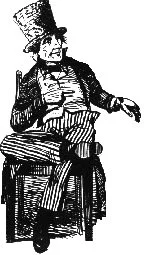
Brother Jonathan, a 19th Century personification of a New England Yankee, as drawn by Thomas Nast.
“New England humor more or less starts … with the lost tourist or city person asking directions of some grizzled old Maine or Vermont country native and and receiving in return a devastating one-liner.’’
Judson D. Hale Sr. in Inside New England (1982)
We have faith in you
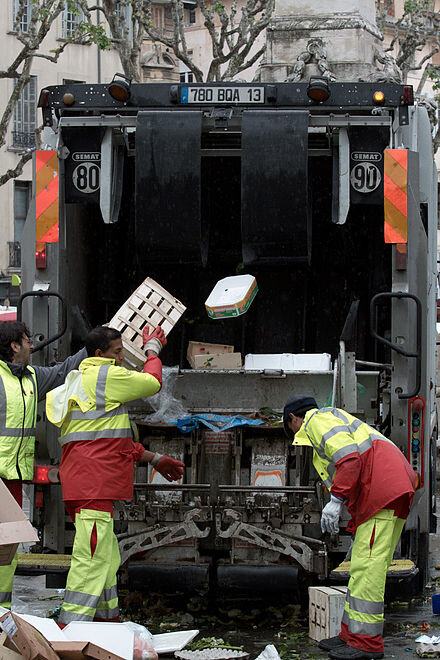
“O garbage men,
the New Year greets you like the Old;
after this first run you too may rest
in beds like great warm aproned laps
and know that people everywhere have faith:
putting from them all things of this world,
they confidently bide your second coming.’’
From Philip Appleman’s “To the Garbage Collectors in Bloomington, Indiana, the First Pickup of the New Year’’
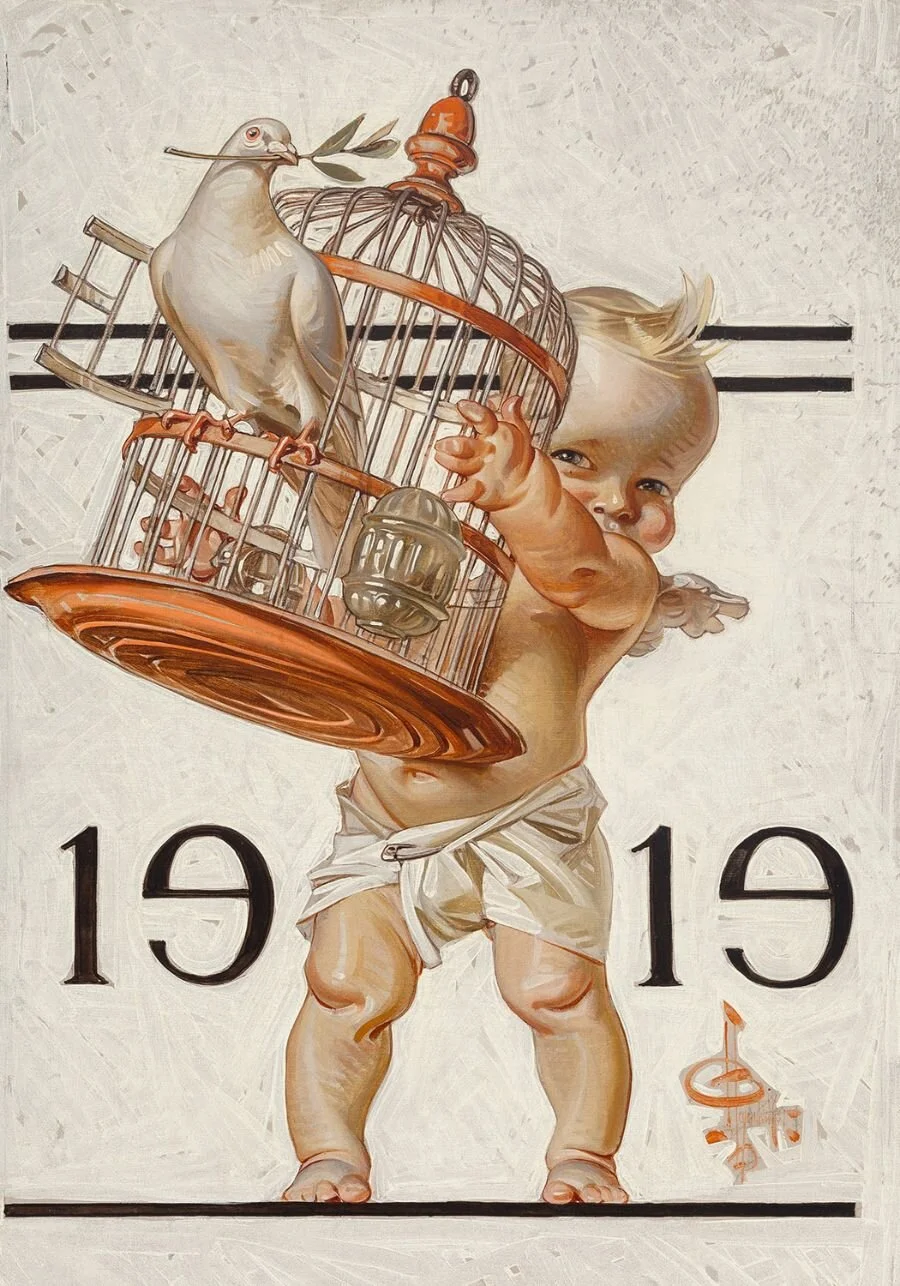
An earlier pandemic New Year's
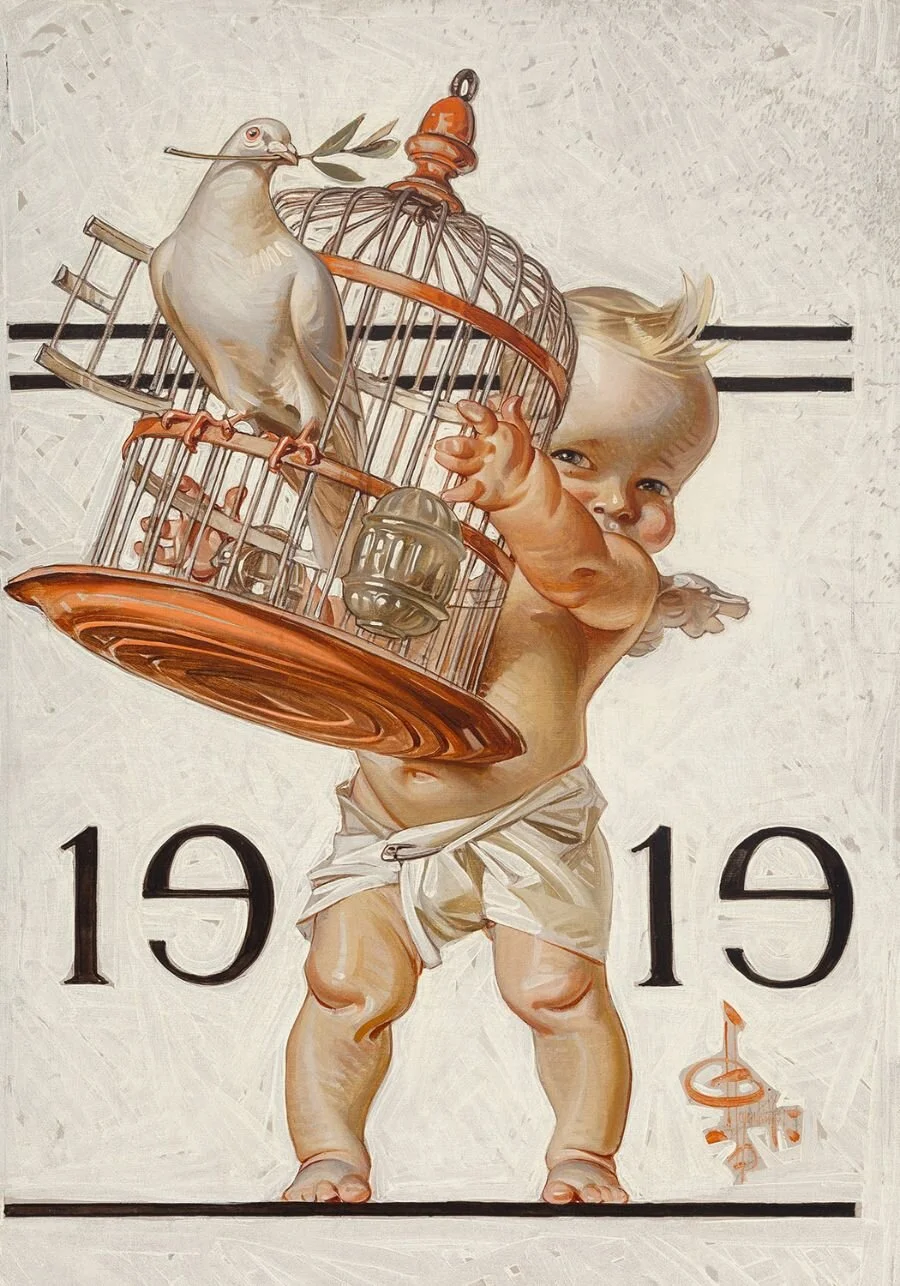
“New Year’s Baby 1919 (Dove Released from Cage)’’ (oil on canvas) by J. C. Leyendecker (1874-1951), for the Dec. 28, 1918 cover of The Saturday Evening Post. The picture ran only a few weeks after the end of World War I and during the horrific flu epidemic of that time.
(c) 2020 Image courtesy of the National Museum of American Illustration, Newport, RI, and the American Illustrators Gallery, New York, NY.
Podcasts: Tough and innovative oyster farmers are adapting to the challenges of Maine’s fast-changing and storied coast

The links here will take you to podcasts about the fast-changing face of the dramatic coast of Maine and the tough and ingenious oyster farmers who are part of the change.

Pick a direction

Logo of The Amazing World of Dr. Seuss Museum, in his hometown of Springfield, Mass.
“You have brains in your head.
You have feet in your shoes.
You can steer yourself
any direction you choose.’’
— Theodor Seuss Geisel (1904-1991, aka Dr. Seuss) in Oh, the Places You’ll Go! He became perhaps the world’s most famous children's author and illustrator. But he was also a controversial political cartoonist, as well as an animator and filmmaker.
Geisel was born and raised in Springfield, Mass., the son of Henrietta (née Seuss) and Theodor Robert Geisel. His father managed his family’s brewery and was later appointed to supervise Springfield's public park system after the brewery had to be shut because of Prohibition. Mulberry Street in Springfield, made famous in his first children's book, And to Think That I Saw It on Mulberry Street, is near his boyhood home, on Fairfield Street.
You can visit the Amazing World of Dr. Seuss Museum, in Springfield.

Mulberry Street in Springfield
Of varying utility

“Orsis,’’ by Marjorie Forte, a Cambridge-based artist, at Brickbottom Artists Association, Somerville

Fishers are expanding into areas thick with humans
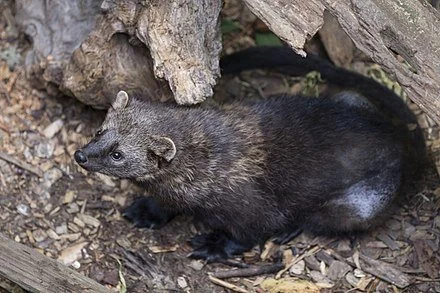
Fishers are powerful predators.

A fisher photographed in Topsfield, Mass.
From ecoRI News (ecori.org)
University of Rhode Island scientists have begun a three-year effort to capture and track fishers throughout western Rhode Island to better understand their population numbers and movement as the animals expand into more developed areas of the state.
Funded by the Rhode Island Department of Environmental Management, the project aims to gather data about the secretive predators, which are members of the weasel family, so that they can be managed more effectively.
“It’s fascinating to me to see how this creature that was once known as a deep dark forest-dwelling animal is now living in people’s backyards and in urban settings,” said Laken Ganoe, a University of Rhode Island doctoral student who is leading the project along with assistant Prof. Brian Gerber. “It’s a unique landscape for us to study a creature that we don’t know much about.”
Fishers are carnivorous mammals found throughout the forests of the northern United States and Canada. Extirpated from Rhode Island when forests were cleared for agriculture in the 1700s and 1800s, they have returned in recent decades and appear to be expanding their range in the region. They feed primarily on small mammals such as chipmunks and squirrels, though in more northerly regions their preferred prey is snowshoe hares.
In Rhode Island, fishers are legally trapped for their fur by licensed trappers during a 25-day trapping season in December.
Ganoe will use trail cameras set up at 200 sites in Providence, Kent and Washington counties to document where the animals are found. She also plans to capture up to 20 fishers in each of the next three years and place tracking collars on them to monitor their movements and activity levels throughout the day.
“We hope to learn how fishers are interacting with their environment in this matrix of urban and forested landscape,” Ganoe said. “Are they spending more time out and about in urban areas at night while being more active at dusk and dawn in forested areas?”
The name fisher may have originated from the French word fitchet, fitche, or fitchew used to describe the European polecat that has similar characteristics to the fisher.
“Tracking individual fishers for the winter will get a really fine scale idea about how they cross roads, what forests they are selecting for, what areas they’re avoiding,” Gerber said. “If we do it right and we’re lucky, we’ll be able to estimate how many fishers there are in certain regions of Rhode Island.”
A native of Clarion, Pa., Ganoe earned a master’s degree at Pennsylvania State University and studied fishers in the Sierra Nevada Mountains of California before enrolling at URI. She became interested in the animals as a teenager, when she watched as a fisher caught a chipmunk and ran up the tree from which she was hunting and ate it right beside her.
“There are a lot of misconceptions about fishers; they have a bad reputation,” Ganoe said. “We want to learn more about them so we can educate people about them. And because there is a trapping season for them, we want to inform future management decisions about bag limits and season lengths so we can properly manage the species.”
This is one of two research projects Gerber is leading that focus on learning more about Rhode Island’s mid-sized predators. The other is investigating the distribution of beavers, muskrats, and river otters in the state.

Llewellyn King: Leave Big Tech alone while it’s still innovating
WEST WARWICK, R.I.
When it comes to invention, we ain’t seen nothing yet.
The chances are good, and getting better, that in the coming year and the years after it, our world will essentially reinvent itself. That revolution already is underway but, as with most progress, there are political challenges.
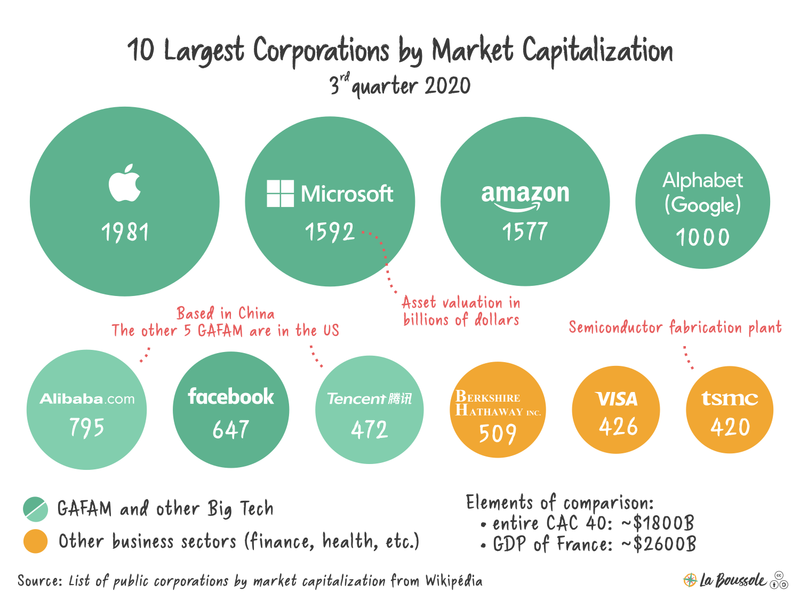
Congress needs restraint in dealing with the technological revolution and not to dust off old, antitrust tapes. With the surging inventiveness we are seeing today across the creative spectrum -- inventiveness that has given us Amazon, Tesla, Uber, Zoom, 3D printing and, in short order, a COVID-19 vaccine – you may wonder why the government is using antitrust statutes to try and break up two tech giants.
Conservatives think big social media companies are unfair to them. Liberals worry about the financial power of the Big Tech companies: The five largest have a market value of over $7 trillion.
The Justice Department has filed an antitrust suit against Google, and the Federal Trade Commission has filed one against Facebook. The only tools it has are outdated, anti-competition statutes -- some passed over a century ago. Sometime in the future, it may be desirable to disassemble Big Tech companies, but not when they are bringing forward new technologies and whole new concepts such as autonomous vehicles and drone deliveries. These need to happen without government shaking up the creators.
Antitrust laws on the books don’t address the internet age when global monopoly is often an unintended result of success; hugely different from Standard Oil seeking to have absolute control over kerosene.
Policy, though, may want to examine the role of Big Tech in relation to startups: the proven engines of change. When today’s tech giants were in their infancy, it was the beginning of the age of the startup as the driver of change. It went like this: invent, get venture-capital financing, prove the product in the market, and go public. The initial public offering (IP)) was the financial goal.
But the presence of behemoths in Silicon Valley has changed the trajectory for new companies. Rather than hoping for a pot of gold from an IPO, today’s startups are designed to be sold to a big company. Venture capitalists demand that the whole shape of a startup isn’t aimed to public acceptance but rather to whether Google, Apple or Amazon will buy that startup.
The evidence is that acquisitions are doing well in the Big Techs, but that doesn’t mean that they won’t be stifled in time. Conglomerates have a checkered past.
Big companies have a lifespan that begins with white-hot creativity, followed by growth, followed by a leveling of creativity, and the emergence of efficiency and profitability as goals that eclipse creativity. Professional managers take over from the innovators who created the enterprises; risk-taking is expunged from the corporate culture.
That is when government should look at the Big-Tech powerhouses and see whether it is in the national interest to break them up, not on the old antitrust grounds but because they may have become negative forces in the innovation firmament; because whether they are still creative or whether they are just drawing rents on previous creations or acquisitions, they will still be hoovering up engineering talents who might well be better employed in a smaller, more entrepreneurial endeavors or, ideally, as part of a startup.
The issue is simple: While the big companies are still creating, adding to the tech revolution which is reshaping the world, they should be left to do what they are doing well, from creating autonomous, over-the-road trucks to easing city life with smart-city innovation.
The time to move against Big Tech is when it ceases to be an engine of innovation.
Innovation needs an unruly frontier. We have had that, and it should be protected both from government interference and corporate timidity.
Happy and innovative New Year! Hard to believe in this time of plague, but much is changing for the better.
Llewellyn King is executive producer and host of White House Chronicle, on PBS. His email is llewellynking1@gmail.com and he’s based in Rhode Island and Washington, D.C.

'Round and round'
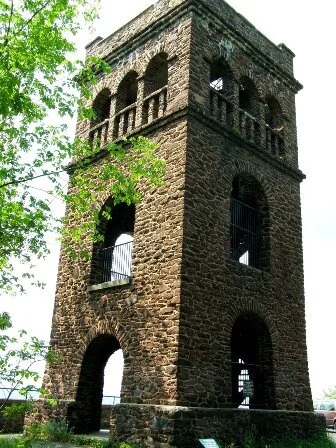
Poet's Seat Tower is a 1912 sandstone observation tower in Greenfield, Mass., named to honor a long tradition of poets being drawn to the spot, in particular, Frederick Goddard Tuckerman. By 1850, Tuckerman, in a journal entry, called it "Poet's Seat."
An earlier wooden tower was erected at the site in 1879. This first structure was built, along with a public drinking fountain and a road accessing the site, under the auspices of The Greenfield Rural Club.
Roll on, sad world! not Mercury or Mars
Could swifter speed, or slower, round the sun,
Than in this year of variance thou hast done
For me. Yet pain, fear, heart-break, woes, and wars
Have natural limit; from his dread eclipse
The swift sun hastens, and the night debars
The day, but to bring in the day more bright;
The flowers renew their odorous fellowships;
The moon runs round and round; the slow earth dips,
True to her poise, and lifts; the planet-stars
Roll and return from circle to ellipse;
The day is dull and soft, the eave-trough drips;
And yet I know the splendor of the light
Will break anon: look! where the gray is white!
“Roll on Sad World,’’ by Frederick Goddard Tuckerman (1821-1873), a poet, lawyer and amateur botanist and astronomer. Born in Boston, he spent his last decades in Greenfield, Mass.

View in 1917 of Greenfield from Poet’s Seat Tower
The real New England
“Most people, when they imagine New England, think about old colonial homes, white houses with black shutters, whales, and sexually morbid WASPs with sensible vehicles and polite political opinions. This is incorrect. If you want to get New England right, just imagine a giant mullet in paint-stained pants and a Red Sox hat being pushed into the back of a cruiser after a bar fight.”
— Matt Taibbi, journalist and former athlete in Spanking the Donkey: Dispatches from the Dumb Season. He grew up in Greater Boston and attended fancy Concord Academy, in Concord, Mass.


William Morgan: A haunted grandstand in Pawtucket

The stands of what had been Narragansett Park
— Photo by William Morgan
Just off the unspeakably grim Newport Avenue strip, in Pawtucket, R.I., an abandoned colossus reminds us of once glorious days of thoroughbred horse racing patronized by swells from Newport and New York. This enormous structure was once part of a 200-acre complex with barns that housed 1,000 horses.
Narragansett Park opened in 1934, after the state’s official airport was declared to be Hillsgrove Airfield (now T.F. Green Airport), in Warwick, instead of Pawtucket’s What Cheer Airport, and pari-mutuel betting was reinstated after a 30-year ban; it folded in 1978 after a disastrous fire that killed three-dozen horses. The grandstand then became Building #19, the odd-lots warehouse, or "America's laziest and messiest department store," as its founder Gerry Elovitz dubbed it.
The slide from society amusement (thoroughbreds such as Whirlaway and Seabiscuit raced here on its mile-long oval), and a "Retail Derby" against the big-box stores, to inevitable decay, reverberates with the last days of our totally corrupt, would-be Nero-style emperor. Reminding us of Rome's Circus Maximus, home of the great chariot races, Narragansett Park's haunted grandstand is apt metaphor for the end of 2020.
William Morgan is a writer, architectural historian and photographer based in Providence. He has written on stock-car racing for The New York Times. His latest book is Snowbound: Dwelling in Winter.

Postcard photo of Narragansett Park in the 1950s
And now what?
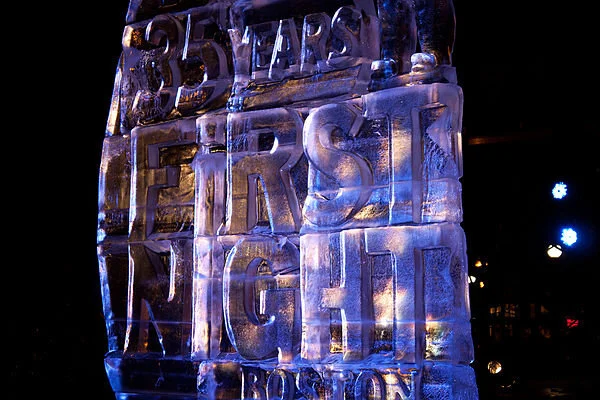
A First Night ice sculpture in Boston
From Robert Whitcomb’s “Digital Diary,’’ in GoLocal24.com
On and about New Year’s Day we talk about time more than usual – past, present and future. But what is the present since we’re always moving through time?
So what have we learned, or relearned, in this crummy year? Well, on the list might be:
That there are far too many variables in heaven and earth to confidently make predictions about big stuff. You can only try to mitigate your vulnerability to an infinite number of risks. And most of us have big failures of imagination -- e.g., the possibility that a bunch of terrorists could fly airlines into skyscrapers and that we’d have the biggest pandemic since 1918 -- and so we don’t adequately prepare for many disasters that are inevitable but whose timing can’t be known.
(I’m waiting for a really big earthquake hereabouts.)
That in-person communication is almost always better than via a screen.
That many of us have learned to appreciate more than we had certain small pleasures that we had too often ignored before, such as walking outside on a mild, sunny morning.
That, generally, sitting in restaurants with your friends is better than getting takeout.
That global warming and its effects are moving along at a faster pace than expected.
That our ability to pollute the earth grows ever wider – consider that microplastics have been found in the placentas of babies, with unknown health risks – and that thrown-away face masks are making a mess on land and in the water.
That reading a book – especially a good, solid hardcover one -- can be much more satisfying than watching TV.
That investing in dry-cleaning stores is unwise.
That having lots of locally based shops and eateries within walking distance of where you live is a gift and that it’s worth supporting them as much as possible.
That sidewalks should be widened so that more of our social and commercial life can take place outdoors.
That America needs more trades people – plumbers, electricians, roofers, carpenters, etc. – and the apprentice programs and vocational schools to train them -- than it needs more college graduates. Indeed, bring back “shop’’ classes in the public schools. Our COVID house arrests have reminded millions of how many things need fixing in our homes and how few people are available to fix them.
That, as we’ve seen in who shows up on TV as victims in the COVID crisis, there are far too many single-family households, led only by the mother. America needs a revival of marriage and of holding fathers economically and otherwise responsible for the children they help create.
That so many Americans own big expensive cars, especially SUVs -- even poor people lining up in their cars for food pantry stuff.
That tens of millions of Americans will devoutly follow a sociopathic/psychotic demagogue, whatever the easily ascertainable extent of his lies and viciousness, suggests that the future of the American democratic experiment may be in deep peril.
That science’s ability to save us is vast (consider the super-fast invention of COVID-19 vaccines!) even as science applied by evil people can threaten us.
xxx
Let’s hope for a grand reopening by June, anti-vaxxers permitting.
And maybe the best New Year’s resolution is to decide to tolerate who we have become and to look at the roads that brought us here more clinically than emotionally.
xxx
I have a pile of old magazines – Life, Look, etc. -- from the ‘50s and ‘60s that I like to browse from time to time. It’s a bit of an education in cultural change, both the ads – lots of them are for cigarettes and gasoline and now bizarre- looking health products – and the often stilted language of the articles.
Too bad that most print magazines have died. People 50 years from now would enjoy seeing in a physical format what Americans in 2020 were like.
Justin Life's 'fractal structures in everyday life'

Photo by Justin Life in his show at Fountain Street Fine Art, Boston, for January. The gallery says that his recent artwork comes from photos he took while exploring wooded areas in Boston and Chapel Hill, N.C. “He transforms and reverses the photos to inspire scratch-board drawings. In these works, he improvises mandala-like images that connect the fractal structures found in everyday life with structures found in representations of the universe and Baroque figurative painting.’’

We're the worst killers
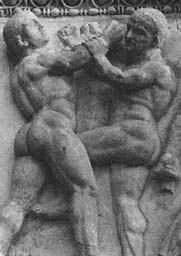
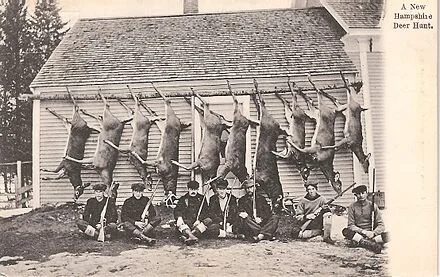
After a New Hampshire deer hunt in 1910
‘‘Our permanent enemy is the noted bellicosity of human nature. Man, biologically considered, and whatever else he may be in the bargain, is simply the most formidable of all beasts of prey, and, indeed, the only one that preys systematically on its own species. We are once for all adapted to the military status. A millennium of peace would not breed the fighting disposition out of our bone and marrow, and a function so ingrained and vital will never consent to die without resistance, and will always find impassioned apologists and idealizers.’’
— William James (1842-1910), psychologist, philosopher and Harvard professor, in The Atlantic Monthly. He was the brother of novelist Henry James.

William James and Josiah Royce, near James's country home in the Chocorua area of Tamworth, N.H., in September 1903. James's daughter Peggy took the picture. On hearing the camera click, James cried out: "Royce, you're being photographed! Look out!’’ Royce (1855-1916) was a close friend of James as well as a philosophical antagonist and a Harvard professor.

Mt. Chocorua, with its famous vaguely Matterhornish top. It has long been a favorite subject for painters.
Enough with metro metaphors
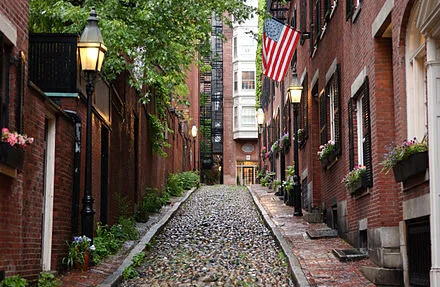
Cobblestoned Acorn Street, in Boston’s Beacon Hill neighborhood
“Down the cobbled streets….
When I was still, I heard
city birds, maybe pigeons
or mourning doves cooing….
my reaction was to leave
the metaphor city, after all….’’
“Metaphor City,’’ by Julie A. Dickson, a New Hampshire-based poet