
And now what?
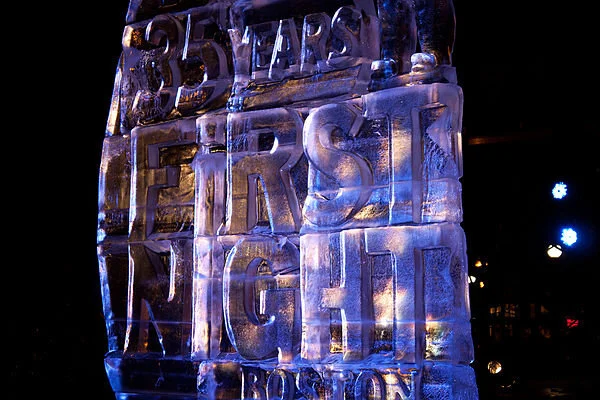
A First Night ice sculpture in Boston
From Robert Whitcomb’s “Digital Diary,’’ in GoLocal24.com
On and about New Year’s Day we talk about time more than usual – past, present and future. But what is the present since we’re always moving through time?
So what have we learned, or relearned, in this crummy year? Well, on the list might be:
That there are far too many variables in heaven and earth to confidently make predictions about big stuff. You can only try to mitigate your vulnerability to an infinite number of risks. And most of us have big failures of imagination -- e.g., the possibility that a bunch of terrorists could fly airlines into skyscrapers and that we’d have the biggest pandemic since 1918 -- and so we don’t adequately prepare for many disasters that are inevitable but whose timing can’t be known.
(I’m waiting for a really big earthquake hereabouts.)
That in-person communication is almost always better than via a screen.
That many of us have learned to appreciate more than we had certain small pleasures that we had too often ignored before, such as walking outside on a mild, sunny morning.
That, generally, sitting in restaurants with your friends is better than getting takeout.
That global warming and its effects are moving along at a faster pace than expected.
That our ability to pollute the earth grows ever wider – consider that microplastics have been found in the placentas of babies, with unknown health risks – and that thrown-away face masks are making a mess on land and in the water.
That reading a book – especially a good, solid hardcover one -- can be much more satisfying than watching TV.
That investing in dry-cleaning stores is unwise.
That having lots of locally based shops and eateries within walking distance of where you live is a gift and that it’s worth supporting them as much as possible.
That sidewalks should be widened so that more of our social and commercial life can take place outdoors.
That America needs more trades people – plumbers, electricians, roofers, carpenters, etc. – and the apprentice programs and vocational schools to train them -- than it needs more college graduates. Indeed, bring back “shop’’ classes in the public schools. Our COVID house arrests have reminded millions of how many things need fixing in our homes and how few people are available to fix them.
That, as we’ve seen in who shows up on TV as victims in the COVID crisis, there are far too many single-family households, led only by the mother. America needs a revival of marriage and of holding fathers economically and otherwise responsible for the children they help create.
That so many Americans own big expensive cars, especially SUVs -- even poor people lining up in their cars for food pantry stuff.
That tens of millions of Americans will devoutly follow a sociopathic/psychotic demagogue, whatever the easily ascertainable extent of his lies and viciousness, suggests that the future of the American democratic experiment may be in deep peril.
That science’s ability to save us is vast (consider the super-fast invention of COVID-19 vaccines!) even as science applied by evil people can threaten us.
xxx
Let’s hope for a grand reopening by June, anti-vaxxers permitting.
And maybe the best New Year’s resolution is to decide to tolerate who we have become and to look at the roads that brought us here more clinically than emotionally.
xxx
I have a pile of old magazines – Life, Look, etc. -- from the ‘50s and ‘60s that I like to browse from time to time. It’s a bit of an education in cultural change, both the ads – lots of them are for cigarettes and gasoline and now bizarre- looking health products – and the often stilted language of the articles.
Too bad that most print magazines have died. People 50 years from now would enjoy seeing in a physical format what Americans in 2020 were like.
Justin Life's 'fractal structures in everyday life'

Photo by Justin Life in his show at Fountain Street Fine Art, Boston, for January. The gallery says that his recent artwork comes from photos he took while exploring wooded areas in Boston and Chapel Hill, N.C. “He transforms and reverses the photos to inspire scratch-board drawings. In these works, he improvises mandala-like images that connect the fractal structures found in everyday life with structures found in representations of the universe and Baroque figurative painting.’’

We're the worst killers
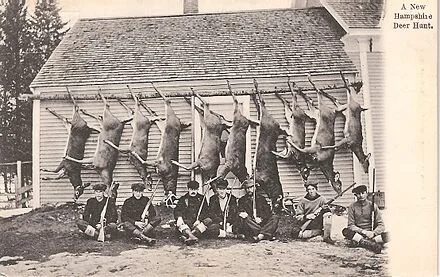
After a New Hampshire deer hunt in 1910
‘‘Our permanent enemy is the noted bellicosity of human nature. Man, biologically considered, and whatever else he may be in the bargain, is simply the most formidable of all beasts of prey, and, indeed, the only one that preys systematically on its own species. We are once for all adapted to the military status. A millennium of peace would not breed the fighting disposition out of our bone and marrow, and a function so ingrained and vital will never consent to die without resistance, and will always find impassioned apologists and idealizers.’’
— William James (1842-1910), psychologist, philosopher and Harvard professor, in The Atlantic Monthly. He was the brother of novelist Henry James.

William James and Josiah Royce, near James's country home in the Chocorua area of Tamworth, N.H., in September 1903. James's daughter Peggy took the picture. On hearing the camera click, James cried out: "Royce, you're being photographed! Look out!’’ Royce (1855-1916) was a close friend of James as well as a philosophical antagonist and a Harvard professor.

Mt. Chocorua, with its famous vaguely Matterhornish top. It has long been a favorite subject for painters.
Enough with metro metaphors
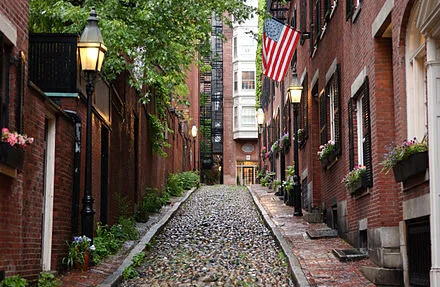
Cobblestoned Acorn Street, in Boston’s Beacon Hill neighborhood
“Down the cobbled streets….
When I was still, I heard
city birds, maybe pigeons
or mourning doves cooing….
my reaction was to leave
the metaphor city, after all….’’
“Metaphor City,’’ by Julie A. Dickson, a New Hampshire-based poet
Right after the winter flood

“Spring Flood” (graphite, ink, gouache and acrylic on paper), by Emily Leonard Trenholm, in her Jan. 1-30 show at Bromfield Gallery, Boston, entitled “Painting in the Woods’’ The show is inspired by the the abandoned feldspar quarry behind her home, in Brunswick, Maine.

Perched on crystallized, white feldspar is an upright aquamarine crystal.
N.E. post-election policy briefings looking at 2021

Along the water in downtown Boston
From The New England Council (newenglandcouncil.com)
BOSTON
“In the weeks since the Nov. 3 election, The New England Council has hosted a series of ‘Post-Election Policy Outlook’ briefings for our members. Each of these virtual sessions has focused on a different industry or issue area, featuring presentations by council members with relevant subject matter expertise, each offering their insights on the outlook for federal policy under the incoming Biden administration and the 117th Congress.
You can find more information on each of these informative and engaging sessions using the links below:
“We are grateful to the many council members who presented during these sessions, as well as to those who participated. Recordings of each session are available upon request.’’

Largest self-reported ancestry groups in New England. Americans of Irish descent form a plurality in most of Massachusetts, while Americans of English descent form a plurality in much of the central parts of Vermont and New Hampshire as well as nearly all of Maine.

David Warsh: I look forward to ‘The Crown’s’ take on Brexit
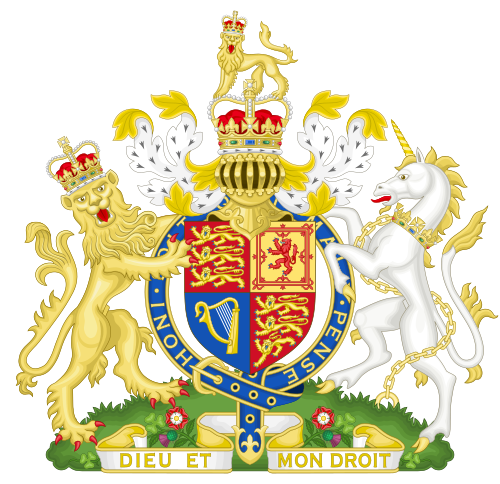
Coat of arms of the British Royal Family
SOMERVILLE, Mass.
I’ve been been working my way through The Crown, an hour an evening, starting with its first episode. The Netflix series is a remarkably deft telling of British history since 1936, when Edward VIII abdicated in favor of his brother, George VI, placing George’s elder daughter in line to become Queen Elizabeth II, upon her father’s death, in 1952. I haven’t yet arrived at Season Four, in which Gillian Anderson plays Margaret Thatcher.
Another season or two will be required before show-creator Peter Morgan and his team arrive to tell the story of the 2016 vote to leave the European Union. I’m looking forward to the season after that, the one whose story-line begins next week now that Brexit is finally taking place. Another 20 years or more may be required for the nation to regain its equanimity.
Of this much, at least, economicprincipals.com is certain: Given the Arthurian legends, The Canterbury Tales, the plays of Shakespeare, the novels of Jane Austen and Charles Dickens, Churchill’s speeches, the BBC’s Upstairs, Downstairs and now The Crown, there will, indeed, Always Be an England. For those who have finished the series, comedy, too. Happy holidays!
David Warsh, an economic historian and a veteran columnist, is proprietor of Somerville-based economicprincipals.com, where this essay first appeared.
Barbara Ann Fenton-Fung: Broaden outreach to reach more in the urban core in the pandemic

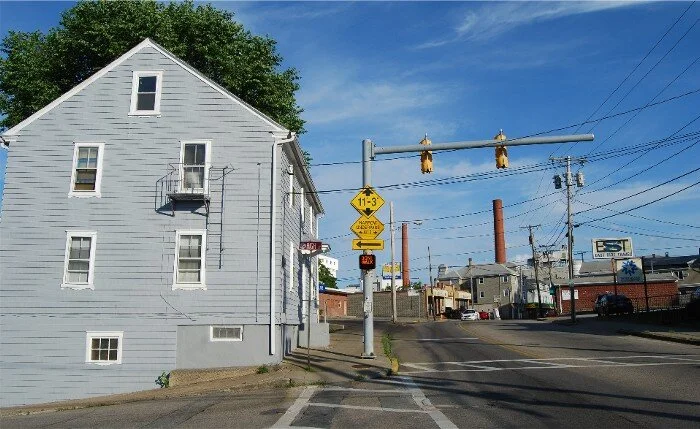
Broad Street in Central Falls
While medical professionals stare down Round #2 of our COVID-19 nightmare, the arrival of a vaccine in Rhode Island is like the bright stars on top of our trees this holiday season. Indeed, it is a beacon of hope for so many whose loved ones have been afflicted by the disease and for those who have cared for those patients for the past 10 months.
So it is imperative that we learn from the bumps in the road in testing rollouts earlier this year. When negative national headlines surrounded such communities as Central Falls, where the consequences of socio-economic disparities created a horrific storm of disease transmission, government was on its heels when trying to right the ship to create buy-in for the vaccine's distribution and use in our very diverse communities.
This is particularly a challenge in urban-core neighborhoods, where there is a large non-native English-speaking population and where many use languages that do not use Latin-based alphabets. Very few and far between are the official government communications in Khmer script for our Cambodian residents, or Chinese pictographs, or Arabic for our neighbors from the Middle East. My own mother-in-law's native language is Cantonese, and I can remember her not quite understanding the full scope of COVID as it hit Rhode Island. But once my husband, Allan Fung, who had to deal with some of these issues as Cranston’s mayor, laid it out in her native language, she became the biggest promoter of guidance from our public-health leaders. To have better outcomes, we need to go the extra mile in different languages via digital video communications, mailers and multilingual media entities to reach those we didn't reach the last time around.
And effective communications also include having the right messenger. That, in some cultures, may not be a government official. Indeed, the cultural aspects of medicine are often overlooked in the midst of a pandemic when time is of the essence. Yet revered religious leaders or well-known community organizers might be the best people to connect with marginalized communities and work through cultural hesitations towards medical treatments.
As we look toward mass vaccination, let’s start now in connecting with these influencers in our faith communities and social organizations to create a more cohesive and effective community response. Government officials need to engage with, and empower, other community leaders here, and not act as if they alone had the right answers.
We all can agree that 2020 was a year of challenges, including many that will stick around in 2021. As we enter the new year, we should vow to be smarter and more inclusive in our approach to beating the COVID-19 pandemic to ensure that we lift everyone, in communities from rich to poor, up and across the finish line.
Barbara Ann Fenton-Fung (MSPT) is a physical therapist, whose expertise includes the cultural aspects of medicine. She is also a Republican state representative-elect from Cranston.

Some COVID-19 symptoms
'Tangled floor'
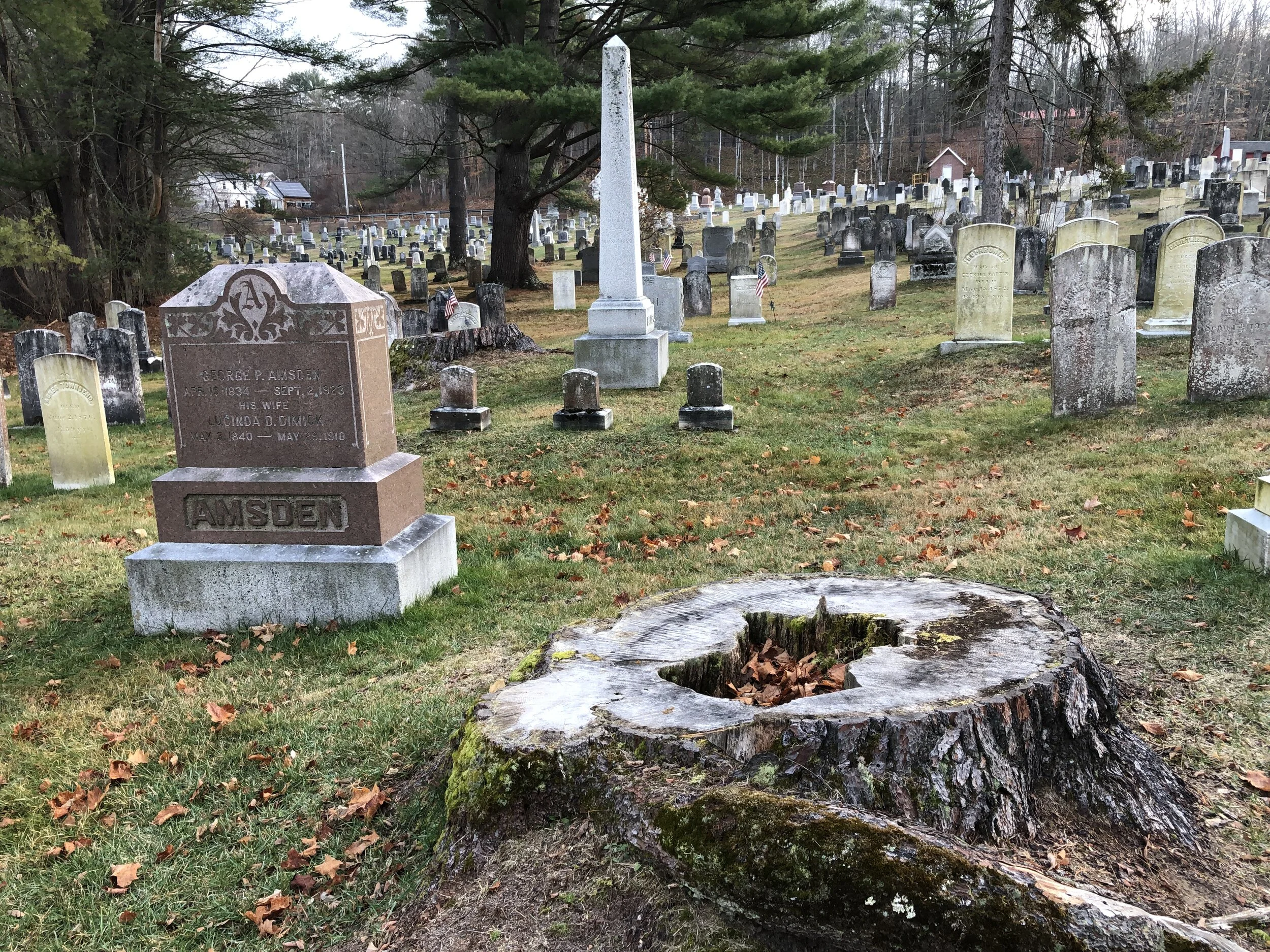
In the graveyard of Lyme, N.H.
—Photo by William Hall
A stand of trees
you know the kind,
a golden grove,
a farmer’s pride.
Are now but stumps
with greening sprouts
that struggle upward
to find some light.
Gone the careful line
along the lane
the cluster’s done
and so the shade.
I oftentimes came
to sense the souls
that rested there deep
below those pines.
More than trees
they seemed to me
a hiding place
for things I need.
I’ll not be dreaming
among those trees
with hands on bark
looking up.
There’s nothing left
but tangled floor
and nothing gained
but these metaphors.
“Epitaph,’’ by William Hall, a Rhode Island-Florida-Michigan-based painter and writer
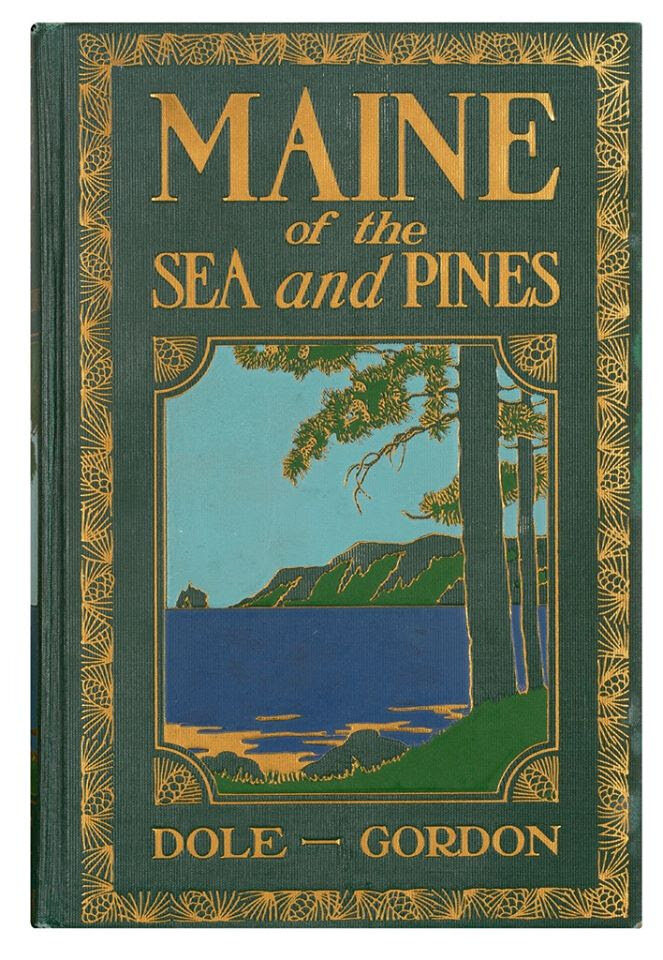
Those gorgeous book covers

Maine of the Sea and Pine, by Nathan Haskell Dole and Irwin Leslin Gordon; cover design likely Decorative Designers, Boston: L.C. Page & Company, 1928, printed by C. H. Simonds Company, first edition.
The Farnsworth Art Museum, in Rockland, Maine, is showing through March 21 “Transforming the Ordinary: Women in American Book Cover Design’’. It shows book covers from the 1890s-1930s — considered the heyday of book-cover design. The Art Nouveau and Arts and Crafts movements heavily influenced how artists, many of them women, created these book covers.
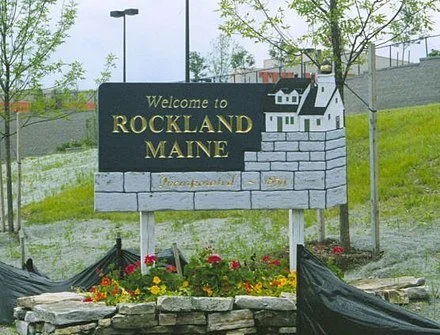
The sign includes a reference to the area’s granite-quarrying industry. Lime and shipbuilding were also important.
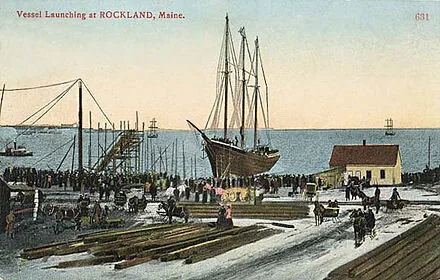
Launching a commercial sailing ship in 1900 in Rockland
Not simple Shaker art

“A Type of Mother Hanna's Pocket Handkerchief” (1851, ink and watercolor on paper), by Polly Jane Reed, in the show “Anything but Simple: Shaker Gift Drawings and the Women Who Made Them,’’ at the New Britain (Conn.) Museum of American Art through Jan. 10.
The show presents rare "gift" or "spirit" drawings made by members of the Hancock Shaker Village religious community, based in Hancock, Mass., in 1843-1857. Women created all these drawings, both the 25 in the exhibit and 175 others that still exist, making them a unique piece of American history. It is thought that there were once hundreds more of these drawings, but that the Shakers destroyed them when their creators died. “Anything but Simple’’ displays among the finest of these drawings, and explores how they relate to women’s spiritual and other roles in the mid-19th Century Shaker communities, most of which were in New England.

Shakers dancing

The Round Barn at Hancock Shaker Village

Jill Richardson: How do we get skeptics to get COVID shots?

U.S. airman Ramón Colón-López receives Pfizer COVID-19 vaccine at Walter Reed National Military Medical Center this month.
Via OtherWords.org
With the new COVID-19 vaccine available, Dr. Anthony Fauci says Americans can begin to achieve herd immunity by next summer. Herd immunity occurs when so many people are immune to the virus that it can’t spread, because an infected person won’t have anyone left to spread it to.
Yet as of last month, four in ten Americans said they definitely or probably won’t get the vaccine (although about half of that group said they would consider it once a vaccine became available and they could get more information about it).
Why, after living in quarantine for almost 10 months while the economy and our mental health crashes around us, after over 300,000 Americans are dead, is getting the vaccine even a question?
There are two ways to approach this question. The first is to dismiss it: Call vaccine skeptics derogatory names, post memes on social media about how stupid they are, and make rules requiring the vaccine.
The second way to approach the question is to try to understand vaccine skepticism in order to address Americans’ concerns.
Sociologist Jennifer Reich tied vaccine refusal to messages that treat health like a personal project, in which consumers must exercise their own discretion, and a culture of individualism in a world where there is not enough of anything to go around — jobs, money, health care, etc.
In this view, everyone must look out for themselves so they can get ahead, and that’s more important than doing your part to achieve herd immunity for our collective wellbeing.
Reich’s research on anti-vaxxers comes from before the current pandemic. She studied parents who refused to vaccinate their children for preventable diseases like measles. But it’s still worth considering in this new context. Reich believes it is unsurprising that some people do treat vaccines like a consumer choice and disregard that when they decline a vaccine, they endanger others too.
Another take on COVID vaccine refusal comes from Zakiya Whatley and Titilayo Shodiya, who are both women of color with PhDs in natural sciences. They focus on Black, Latinx and indigenous communities, who often distrust doctors. Their suspicion is not unfounded, given how much racism in medicine has harmed people of color, historically and in the present.
Scientists hold the power to define what is true and what is not in a way that non-scientists do not. Consider the power relations within medicine: When a patient goes to the doctor because they are ill, the doctor assesses their symptoms, makes a diagnosis, and prescribes a treatment.
Scientists determine what is recognized as a diagnosis and which treatments are available. Powerful financial interests (like pharmaceutical and insurance companies) play a major role too. The patient’s power is more limited: they can look up their symptoms on WebMD, accept or refuse the treatment prescribed, or go to a different doctor.
Sometimes lay people react to being on the less powerful end of the relationship by simply refusing to believe scientists. They might resist by embracing conspiracy theories or “barstool biology” that uses the language of science but not the scientific method.
Natural scientists have done their part by creating vaccines that are safe and highly effective. To get people to take the vaccine, we need social science. We must learn how to rebuild trust with people who have lost it. And we will do that by listening to them and understanding them, not by calling them stupid.
Jill Richardson, a sociologist, is an OtherWords.org columnist.

Headquarters of a COVID-19 vaccine inventor and maker, Moderna, in Cambridge, Mass. Greater Boston is one of the world’s centers of biotechnology.
Grace Kelly: The bumpy road to R.I.’s East Bay Bike Path
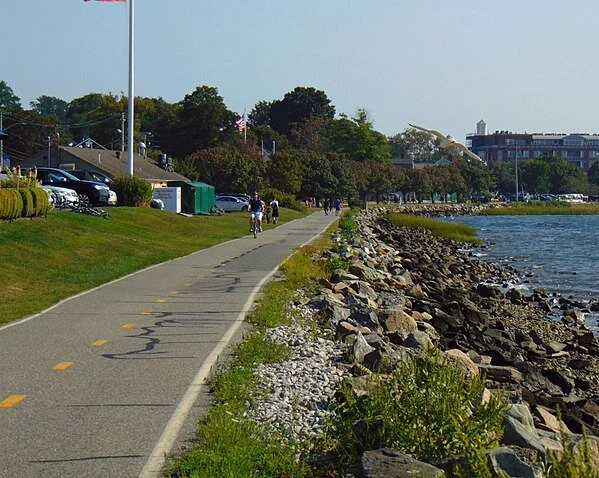
Facing south near the East Bay Bike Path's southern terminus, in Bristol
From ecoRI News (ecori.org)
“These days it’s hard to find someone who thinks creating the East Bay Bike Path was a foolish idea.” So begins a Providence Journal article written in 1999 by Sam Nitz, which chronicled the bike path’s beginnings and eventual completion.
The same could be said in 2020, a year when a pandemic forced people to get creative with their time. They took to the outdoors when the weather turned warm, with many dragging a set of wheels to a Rhode Island bike path that runs from Providence to Bristol.
I cruised along this path myself, dodging hand-holding couples, bold squirrels, and the occasional toddling roller-skater.
A map of the East Bay Bike Path from a 1984 pamphlet. Construction of the trail took place from 1987-92.
While looking at the path today might give the impression that it was a beloved idea all along, as Nitz noted in his article, “the path’s beginnings in the early 1980s were fraught with controversy and rancorous political debate.”
The 14.5-mile stretch of asphalt was hardly a shoo-in. In fact, it was met with raucous opposition, German shepherds, and even a letter to a high-level staffer of President Reagan begging for federal intervention.
But we’re getting ahead of ourselves.
The story of the East Bay Bike Path starts with an old stretch of railroad that connected Providence to Bristol, with stops in Riverside and Warren and a connecting line that went to Fall River, Mass. It was a handsome railway, with postcards and old photos depicting almost modern-looking platforms and stations — one particular image of the rail near the future Squantum Association, a private club in East Providence, could be from the 2000s.
But as automobiles began to capture the American spirit, the railway slowly faded into disuse and the passenger line ended in 1938. In 1976, the State of Rhode Island acquired the right of way for the old Penn Central line, the section that ran from East Providence to Bristol.
It would also be automobiles that would inspire Bristol state Rep. Thomas Byrnes Jr. in the late 1970s, to lead the charge to create a bike path on the old Penn Central line.
“When I started at the State House in ’78, the oil shortage was … tough,” said Byrnes in a 2002 interview with his daughter Judith. “People were driving bombers around and they were having a hard time keeping their cars filled with gas. So, they were talking about looking into alternative means of transportation to cut our use of oil.”
And one idea that came up: bicycles.
In the ’70s, the United States experienced a bicycle boom, with some 64 million Americans using bicycles regularly. A 1971 article in Time magazine noted that America was having “the bicycles biggest wave of popularity in its 154-year history.”
So, at the time when Byrnes started thinking about alternative methods of transportation, bicycles were everywhere, and other states such as Maryland were starting to investigate turning old railways into bike trails.
In March 1980, Byrnes and Matthew Smith, who was the Rhode Island speaker of the House at the time, wrote a joint bill that called for a study of bicycling as an alternative form of transportation and as an energy saver. The idea of the East Bay Bike Path was born.
What happened next was years of pushing through heated resistance.
“There was a lot of opposition, a lot of opposition,” said Robert Weygand, who was the chairman of the East Providence Planning Board in the early ’80s, and who later went on to be a U.S. congressman and Rhode Island lieutenant governor. “In every community there were people that came out opposed to it.”
Weygand became involved in the project through his work on the East Providence Planning Board and later as part of a group called Friends of the Bike Path. He saw its creation as a way to help restore East Providence’s once-rich history of activities and attractions along the water.
“We heard about what Tom [Byrnes] had been proposing for a bicycle trail along the railroad tracks … and we were in East Providence, which had a long history of having amusement parks and various venues along the railroad tracks,” Weygand said. “So we were interested in trying to reinvigorate the idea of having activities along the waterfront, which had been abandoned for a very, very long time.”
The East Bay Bike Path had plenty of fierce opposition, but had the support of the Rhode Island Department of Transportation and its then-director Edward Wood.
The wheels were now set in motion, and in 1982, Gov. J. Joseph Garrahy and the Rhode Island Department of Transportation (DOT), which was then led by Edward Wood, who died this year, threw their support behind the project and hired an engineering firm to research feasibility and design.
“The biggest thing that really helped us along the way was governor Joe Garrahy … he really embraced it,” Weygand said. “And also, there was a fella that was the head of the Department of Transportation, Ed Wood.”
But though Wood and Garrahy supported the project, many in their own circles were firmly against it.
“Even Wood at DOT ran into opposition by his own staff,” Weygand said. “They wanted to preserve the East Bay railroad track system … potentially for freight traffic and rail traffic … so his own staff was fighting him because they thought, if we give up the railroad tracks, we'll never get them back.”
Meanwhile, Byrnes, Weygand, a man named George Redman — you’ll find his name and portrait on the section of the bike path that crosses Interstate 195’s Washington Bridge — and a group of others were busy fighting their own battle on the ground to win the people of the five municipalities over on the idea.
“We constantly met, talked about different opportunities, did public hearings and meetings … and we’d get together periodically to share war stories about what was going on,” said Weygand, with a chuckle. “There was some real opposition. We had a public hearing in 1983 at the Barrington YMCA, and people were yelling and screaming and swearing at us, saying that all the criminals from Providence would use this bike path to come down and steal things from their homes. It was terrible.”
One vivid memory Weygand has of the resistance was when he helped organize a walk of the proposed area to give people a feel for what it could be like.
“One of the things that happened that day that we had this walk was, we had about 50 or so people go along the path … and in notifying all of the abutting owners, one of the owners was Squantum Club,” Weygand recalled. “We had invited them to join us along the way, and when we got to the Squantum Club, the manager was there with German shepherds and cars to prevent us from passing anywhere near their property.”
James W. Nugent, who was a member of the Squantum Association at the time, even went as far as to write a letter to James A. Baker III, a friend of his who was the chief of staff of President Reagan.
“At a time when the nation is looking for ways to cut expenditures and increase income, I thought it appropriate to call to your attention an expenditure that to me, and to many residents of Rhode Island, seems almost frivolous,” Nugent’s letter reads. “When there is publicity about people going hungry and dangerous federal deficits, the logic of expanding over $1 million on a bicycle path escapes me — especially when so many people along the route of the path object strongly to it. They fear increased vandalism and housebreaks from the transient traffic when their properties become more easily accessible.”
Nugent goes on to ask Baker to sway the federal government to withhold funds for the project.
Though opposition was strong, there were supporters who should not be discounted. One of them was Barry Schiller, who was the on the transportation committee of the environmental group Ecology Action.
In a 1984 letter to Wood, Schiller wrote, “This should be an ideal bikeway, scenic, safe and relatively flat that will become the pride of the East Bay.”
Schiller’s words were prophetic in some ways. Instead of being a so-called crime highway, the East Bay Bike Path has become a place where friends and families gather and exercise. Instead of negatively affecting home values, living near the bike path is considered an asset. It’s also inspired other Rhode Island municipalities to build their own bike paths; there are eight today, according to DOT.
In the end, the proponents won out, and on May 22, 1986 ground was broken at Riverside Square, and the East Bay Bike Path became a reality.
“It seems like a long time ago, but it really wasn’t,” Weygand said. “It was absolutely wonderful, breaking ground and seeing it constructed.”
Construction took place from 1987-92, and today when Rhode Islanders cruise by on its blacktop, many are likely unaware of all it took for it to get done. But those who were there, those who helped push it through, they remember.
“Every time I ride the East Bay Bike Path, it gives me the inspiration to keep going, because I knew it took persistence in the face of strong opposition to get it done,” Schiller said. “It’s a lesson for all of us to not give up.”
Grace Kelly is an ecoRI News reporter.
New England's aromatic mix

The James Merrill House in Stonington, once the home of the famed late poet of that name (1926-1995) and now a temporary place for writers to live and work in
“The aroma of New England is a mix of mulchy leaves, the hearth, cider, and crisp cold sea.’’
— L.M. Browning (born 1982) is a Connecticut-based writer and journalist. She grew up in Stonington, a wealthy waterfront town at the eastern end of Long Island Sound that’s well known for the writers, photographers and painters it has long attracted, especially from New York City.
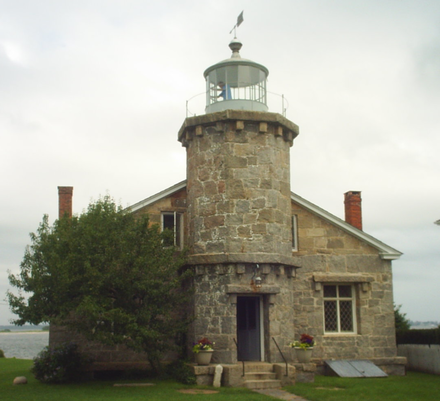
Stonington Harbor Light
Christmas tree shell game
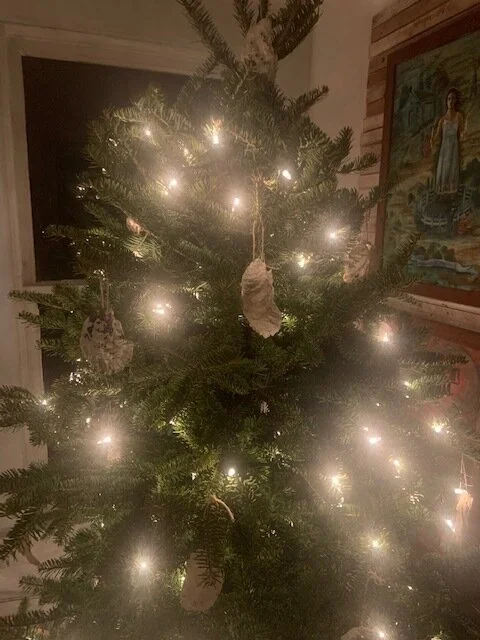
Tree decorated with bleached oysters in Barnstable, Mass., which has many oyster and clam beds

Barnstable’s oldest building, the Goodspeed House, built in 1653
— Photo by John Phelan

‘The burden of the work’ evaporates in the Vermont sunshine
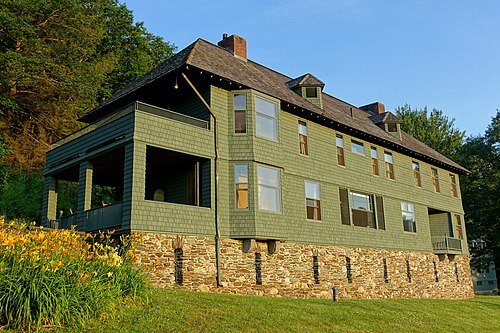
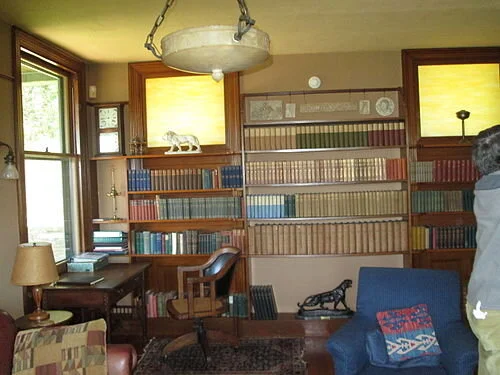
The Rudyard Kipling House in Dummerston, Vt. It’s owned by a nonprofit preservation trust and you can pay to stay there. Photo of the library below.
“Here we become angry at an overcast day and accept God’s light as though it were in the nature of things – as indeed I am beginning to believe that it is. The special beauty of the weather is that one can work largely, longly and continuously and the burden of the work evaporates in the sunshine so that a man can do much and yet not feel that he is doing anything.’’
— Rudyard Kipling (1865-1936), the great English writer, on his time living in Vermont (1893-1896)
In the house that he had built in Dummerston, near Brattleboro, he wrote Captains Courageous, The Jungle Book, The Day’s Work and The Seven Seas while also working on Kim and The Just So Stories. He called the house Naulakha, after a building in India, where he was born and spent stretches of the first part of his life. Indeed, he considered himself Anglo-Indian.
Kipling and his wife left Vermont abruptly because of a fight with his wife’s brother. They tried to return in 1899 but Mrs. Kipling’s illness prevented that. Still, he loved his Vermont house more than any other place he lived and of course wrote much of his most famous work there.
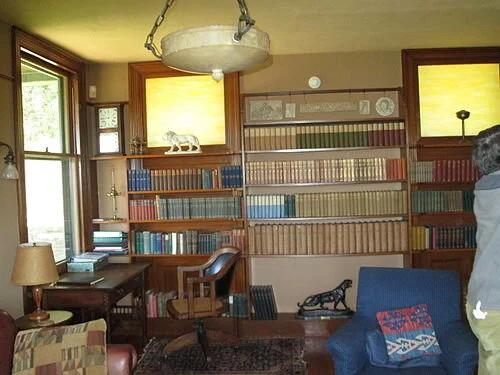
The house contains this library of Kipling's works, some of which he owned when he lived there.
Llewellyn King: We impatiently await an extra Christmas coming in a few months with VV Day

British Prime Minister Winston Churchill waving to the joyous crowds from Whitehall on May 8, 1945, which marked the end of World War II in Europe
WEST WARWICK, R.I.
I reckon that there are two Christmases: the one we celebrate on Dec. 25, and the one that happens when something goes terribly right in our lives. Those rare but wonderful days of pure golden joy when something has gone too right to have been anticipated, when you hoot and holler, jump up and down for joy, and run around your house or office or down the street.
Well, I know when my Christmas next year will come. I can’t tell you the day or hang out decorations or send invitations to the party, at least not yet.
But it is coming, that second Christmas, and it is going to be big, like the end of World War II or the moon landing or when the Super Bowl was won by your team.
I can just remember the end of the World War II, when Hitler was defeated — Victory Europe -- and the huge public celebration with lots of kissing and hugging and embracing strangers. For me it was quite innocent and I wish it had all happened, especially the kissing, 10 years later, but you take what you can get when you can. Even at age 5, I realized this was big stuff. That day in Cape Town, I saw the handsomest sailor in the world in his dress uniform, my dad, and I celebrated his survival.
The first time I got published in an adult newspaper as a contributor, that was unscheduled Christmas, and I ran around in an intoxication of joy, as excited as it is possible to be. I thought I had scaled the ramparts and would never come down. I came down. But the celebration was fantastic, a Christmas for sure.
Sometimes it becomes us to think of Christmas past, not those of Dickens’s Scrooge, but those things that happened. Perhaps it was the day when Cupid’s arrow found its mark, and you knew your life was changed for the better when you didn’t expect it -- or felt you didn’t deserve it.
This is a somber Christmas in 2020. But there will be a day of joy in the not too far-off future. That will be when it is clear that Covid-19 will no longer be on its killing spree; when we will have had our jabs, restrained our human contact, worn our masks and celebrated Christmas in a tender but reduced way, thinking on the meaning, on the happiness we have and not what we are postponing. Likewise, New Year’s will be subdued but as anticipatory as ever.
There won’t be just one day, alas, when we ring the bells, blow horns, and hug strangers. But there will be a day sometime next year when we can believe that the wicked witch is dead, that the virus is vanquished, and that life may return to what will be a new normal but nonetheless so welcome.
I wish it were all to happen on the same day, but it won’t. However, I think a day, one day, should be designated when it is clear that Covid-19, like polio, is in the rear-view mirror.
I yearn for that day: when I can go out to dinner, when I can see the faces of the noble clerks in the supermarket, embrace those who have borne the battle, manning the ambulances, the hospitals, and the nursing homes. A day when we remember those we have lost and celebrate those we have.
I would suggest we have a new national day of remembrance: VV Day, for Victory Virus. Happy, safe holidays to you.
Llewellyn King is executive producer and host of White House Chronicle, on PBS. His email is llewellynking1@gmail.com. He’s based in Rhode Island and Washington, D.C.

An appeal to the Chinese dictatorship

The letters are below this press release
Benedict Rogers, co-founder and Chief Executive of Hong Kong Watch, will stage a 24-hour fast and hunger strike on Christmas Eve in solidarity with prisoners of conscience and persecuted people throughout China. He has published an Open Letter to Xi Jinping and an Open Letter to “all peoples suffering under the Chinese Communist Party’s repressive rule”, outlining 12 “demands” for the Chinese Communist Party regime and the international community.
Mr Rogers had originally intended to hold a 12-hour protest in a cage outside the Chinese Embassy in London on Christmas Eve, with a seasonal theme based on the “12 Days of Christmas”. He called for “12 Hours of Protest” outside Chinese embassies around the world. However, due to new COVID-19 restrictions in London, he postponed that plan and is instead publishing his Open Letters and undertaking a fast and hunger strike.
His 12 Demands outlined in his Open Letters focus on a range of human rights concerns in China, detailed as follows:
1. Free Hong Kong and all Hong Kong political prisoners, especially Jimmy Lai, Joshua Wong, Agnes Chow, Ivan Lam and the 12 Hong Kong youths imprisoned in Shenzhen
2. Stop Uyghur Genocide
3. Stop atrocities in Tibet
4. Stop persecution of Christians and Falun Gong in China
5. Stop Forced Organ Harvesting
6. Free Gui Minhai, the Chinese-born Swedish national abducted from Thailand and serving ten years in prison in China
7. Free Michael Kovrig and Michael Spavor, the two Canadian hostages detained in China
8. Free Li Ming Che, a Taiwanese human rights activist jailed in China
9. End Slave Labour in Global Supply Chains and say #NoGenocideTrade
10. End Torture in China
11. To the free world - stop #CCP bullying
12. To the free world – Buy Australian Wine and stand up to CCP bullying
“I cannot be with my mother this Christmas, due to the pandemic. But there are many people throughout China who are separated from their families and loved ones because of the Chinese Communist Party regime’s inhumane repression,” said Benedict Rogers.
“This Christmas there are people in prison in Hong Kong and throughout China who can’t be with their parents, spouses, wives, relatives and friends – and worse, are languishing in dire conditions and subjected to physical and mental torture and slavery. I cannot, in good conscience, enjoy Christmas celebrations without remembering my Hong Kong, Tibetan, Uyghur, Christian, Falun Gong and Chinese dissident brothers and sisters. The very least I can do is sacrifice a few hours of my Christmas Eve in a symbolic gesture of solidarity and to call on the world to speak up for them and to confront the Chinese regime’s atrocious human rights violations. I hope others will join me around the world, at least in spirit, in these demands.”
In his Open Letter to Xi Jinping, Mr Rogers says the purpose of the action is “to let the peoples of China – and especially those imprisoned by your regime – know that they are not forgotten and not alone. And as they sit in their prison cells or concentration camps in different places across China this Christmas Eve, I hope they may know in their spirits that there are people in the free world speaking their names, calling for their release, ensuring that the world does not ignore their cries: Free Jimmy Lai, Joshua Wong, Agnes Chow, Ivan Lam, Andy Li, Free the 12 Hong Kong Youths jailed in Shenzhen, Free Gui Minhai, Free Li Ming-che, Free Michael Kovrig and Michael Spavor, Free Pastor Wang Yi … and all the others whose names we do not know or cannot record here.”
He adds: “In addition to all the individual prisoners of conscience across China, there are the big picture tragedies that keep my soul and conscience awake at night too: the genocide of the Uyghurs, the atrocities in Tibet, the persecution of Christians, Falun Gong practitioners and other religions, the repression of civil society, lawyers, bloggers, journalists, whistleblowers and dissidents, the broken promises and dismantling of freedom in Hong Kong, the barbaric forced organ harvesting, torture and slave labour. These things must stop.”
In a call to the international community, Mr Rogers says: “I want to awaken the world. Your regime, Mr Xi, not only represses its people, it threatens the free world. But we must not allow this to continue. Your regime is a bully, Mr Xi, and if there’s one thing every kid in the world knows in the school playground, it is to stand up to bullies. So this Christmas I urge everyone everywhere around the world – after fasting or hunger striking with me – to buy as much Australian wine as you can, and ONLY Australian wine, and enjoy it.”
Benedict Rogers co-founded Hong Kong Watch in 2017, after being denied entry to Hong Kong on the orders of the regime in Beijing. He is also the co-founder and Deputy Chair of the Conservative Party Human Rights Commission, and a member of the advisory board of the Inter-Parliamentary Alliance on China (IPAC, the advisory board of the Stop Uyghur Genocide Campaign and the advisory board of the International Coalition to End Transplant Abuse in China (ETAC)”.
For further information or interviews please contact Benedict Rogers on ben@hongkongwatch.org
A copy of the two Open Letters can be found below:
A CHRISTMAS OPEN LETTER TO XI JINPING AND THE LEADERS OF THE CHINESE COMMUNIST PARTY REGIME
24 December 2020
Xi Jinping
General Secretary of the Communist Party of China
Zhongnanhai
Beijing
People’s Republic of China
Cc: Carrie Lam, Chief Executive of the Hong Kong Special Administrative Region
Cc: Liu Xiaoming, Ambassador of the People’s Republic of China to the United Kingdom
Dear General Secretary Xi Jinping and leaders of the Chinese Communist Party regime throughout the People’s Republic of China,
I am writing firstly to wish you a peaceful and blessed Christmas and New Year.
There are some who say “Christmas is cancelled”, but the truth is that Christmas – in its truest sense – can never be “cancelled”: not by pandemics, nor by brutal, inhumane, mendacious and corrupt dictatorships, for “Christmas” is not simply a material event, but an event in history which lives on in the hearts and minds of those who choose to believe it. The Christmas story – and the values and message it represents – is about birth, life, love and liberation, and while you can repress these values with actions that cause death, hate and repression, as your regime does to all your peoples each and every day, you can never imprison or kill the spirit of Christmas. So, I wish you a merry Christmas.
Secondly, I want to say that I love China and its peoples, and I wish all the peoples of China a blessed Christmas. They have suffered so much for so long under the repressive rule of the Chinese Communist Party regime, and yet have developed an economy that has grown with dynamic and impressive speed. It is not your regime, Mr Xi, that is responsible for China’s economic growth, but rather the entrepreneurialism and talent of the Chinese peoples. Imagine how much greater and more prosperous China could be if it were free.
I first went to China when I was 18 years old. I lived and taught English for six months in Qingdao. I made many friends there, and returned many times. I have travelled often in China, from Shanghai to Kunming, from Guilin to Shenyang, from Suzhou and Hangzhou to Yangshuo and Dali, from Guangzhou and Shenzhen to Beijing and Nanjing. I have been to the birthplace of Confucius in Qufu and climbed Taishan. I began my working career in Hong Kong, living in that great city for the first five years after the handover. It is because I love China and the peoples of China that I devote my energies to advocating for their basic rights and dignity. I want China to take its rightful place as a great nation on the world stage – but it can only do so when its regime stops repressing its own people, committing crimes against humanity and flagrant breaches of international treaties, and stops its aggression against its critics beyond its borders too.
It is in that spirit that I had intended to hold a 12-hour vigil and protest outside the Chinese Communist Party regime’s embassy in London on Christmas Eve. I had planned it with the theme of the “12 Days of Christmas” in mind – 12 hours of protest, with 12 demands. I had intended to sit outside your embassy in a cage, and I know others, including Uyghurs, Tibetans, Falun Gong practitioners and Hong Kongers had planned to join me at different times.
Due to the COVID-19 pandemic and the new restrictions we are under, I have had to change plans. But I am not abandoning the essence of what I had planned. Instead of sitting in a cage outside your embassy, I will be at home. Instead of a 12-hour protest, I will stage a 24 hour fast and hunger strike. I call it both a fast and a hunger strike because both terms carry meaning. ‘Fasting’ is a spiritual act, accompanied by prayer. A ‘hunger strike’ is a political act, accompanied by protest. I want to do both. So I will do 12 hours of fasting and prayer and 12 hours of hunger strike and protest.
And with what purpose? To let the peoples of China – and especially those imprisoned by your regime – know that they are not forgotten and not alone. And as they sit in their prison cells or concentration camps in different places across China this Christmas Eve, I hope they may know in their spirits that there are people in the free world speaking their names, calling for their release, ensuring that the world does not ignore their cries: Free Jimmy Lai, Joshua Wong, Agnes Chow, Ivan Lam, Andy Li, Free the 12 Hong Kong Youths jailed in Shenzhen, Free Gui Minhai, Free Li Ming-che, Free Michael Kovrig and Michael Spavor, Free Pastor Wang Yi … and all the others whose names we do not know or cannot record here.
And in addition to all the individual prisoners of conscience across China, there are the big picture tragedies that keep my soul and conscience awake at night too: the genocide of the Uyghurs, the atrocities in Tibet, the persecution of Christians, Falun Gong practitioners and other religions, the repression of civil society, lawyers, bloggers, journalists, whistleblowers and dissidents, the broken promises and dismantling of freedom in Hong Kong, the barbaric forced organ harvesting, torture and slave labour. These things must stop.
Finally, I want to awaken the world. Your regime, Mr Xi, not only represses its people, it threatens the free world. But we must not allow this to continue. Your regime is a bully, Mr Xi, and if there’s one thing every kid in the world knows in the school playground, it is to stand up to bullies. So this Christmas I urge everyone everywhere around the world – after fasting or hunger striking with me – to buy as much Australian wine as you can, and ONLY Australian wine, and enjoy it.
So, Mr Xi, in keeping with the theme of the ’12 Days of Christmas’, I present my 12 demands.
1. Free Hong Kong and all Hong Kong political prisoners, especially Jimmy Lai, Joshua Wong, Agnes Chow, Ivan Lam and the 12 Hong Kong youths imprisoned in Shenzhen
2. Stop Uyghur Genocide
3. Stop atrocities in Tibet
4. Stop persecution of Christians and Falun Gong in China
5. Stop Forced Organ Harvesting
6. Free Gui Minhai, the Chinese-born Swedish national abducted from Thailand and serving ten years in prison in China
7. Free Michael Kovrig and Michael Spavor, the two Canadian hostages detained in China
8. Free Li Ming Che, a Taiwanese human rights activist jailed in China
9. End Slave Labour in Global Supply Chains and say #NoGenocideTrade
10. End Torture in China
11. To the free world - stop #CCP bullying
12. To the free world – Buy Australian Wine and stand up to CCP bullying
Mr Xi, I know this Christmas letter is not short. But it’s shorter than the 12 Days of Christmas. And it’s not as long as some of your speeches to the National People’s Congress. And it’s far more comprehensible than Xi Jinping Thought.
In 1949, Chairman Mao declared that the Chinese people had stood up. In 2020 it is up to those of us who have freedom to stand up for the Chinese people – and that’s what I am doing this Christmas Eve. I hope others around the world will stand up with me for the peoples of China and against your repressive and mendacious rule, and that the real spirit of Christmas – the spirit of love and liberation – will enflame our hearts and minds and spread quicker than the virus your irresponsible regime failed to contain, and with much more positive effect.
With my prayers and love for China,
Benedict Rogers
A CHRISTMAS OPEN LETTER TO ALL PEOPLES SUFFERING UNDER THE CHINESE COMMUNIST PARTY’S REPRESSIVE RULE
24 December 2020
To everyone throughout China, Hong Kong, the Xinjiang Uyghur Autonomous Region (XUAR) better known as East Turkestan, Tibet, Inner Mongolia and beyond – to every prisoner, to every activist, to every religious believer, to every blogger, to every journalist, to every lawyer, to every ordinary person who yearns to be free:
I am writing firstly to wish you a peaceful and blessed Christmas and New Year.
There are some who say “Christmas is cancelled”, but the truth is that Christmas – in its truest sense – can never be “cancelled”: not by pandemics, nor by brutal, inhumane, mendacious and corrupt dictatorships, for “Christmas” is not simply a material event, but an event in history which lives on in the hearts and minds of those who choose to believe it. The Christmas story – and the values and message it represents – is about birth, life, love and liberation, and while regimes, restrictions and viruses can restrict our activities, movements and interactions, they can never imprison or kill the spirit of Christmas. So, I wish you a merry Christmas.
Secondly, I want to say that I love China, its culture and peoples, and I wish all the peoples of China and everyone living under the Chinese Communist Party regime’s rule a blessed Christmas. You have suffered so much for so long under the repressive rule of this regime, and yet you have developed an economy that has grown with dynamic and impressive speed. It is your entrepreneurialism and talent that has grown the economy of China, not Xi Jinping or the Chinese Communist Party regime’s. Imagine how much greater and more prosperous China could be if it were free.
I first went to China when I was 18 years old. I lived and taught English for six months in Qingdao. I made many friends there, and returned many times. I have travelled often in China, from Shanghai to Kunming, from Guilin to Shenyang, from Suzhou and Hangzhou to Yangshuo and Dali, from Guangzhou and Shenzhen to Beijing and Nanjing. I have been to the birthplace of Confucius in Qufu and climbed Taishan. I began my working career in Hong Kong, living in that great city for the first five years after the handover. It is because I love China and the peoples of China that I devote my energies to advocating for their basic rights and dignity.
I want China to take its rightful place as a great nation on the world stage – but it can only do so when its regime stops repressing its own people, committing crimes against humanity and flagrant breaches of international treaties, and stops its aggression against its critics beyond its borders too. The regime that rules China is rapidly losing friends and reputation in the world, but the people of China will never lose friends or reputation. Let’s learn to distinguish between the two and stand on the side of the people.
It is in that spirit that I had intended to hold a 12-hour vigil and protest outside the Chinese Communist Party regime’s embassy in London on Christmas Eve. I had planned it with the theme of the “12 Days of Christmas” in mind – 12 hours of protest, with 12 demands. I had intended to sit outside the embassy in a cage, and I know others, including Uyghurs, Tibetans, Falun Gong practitioners and Hong Kongers had planned to join me at different times.
Due to the COVID-19 pandemic and the new restrictions we are under, I have had to change plans. But I am not abandoning the essence of what I had planned. Instead of sitting in a cage outside the Chinese embassy, I will be at home. Instead of a 12-hour protest, I will stage a 24 hour fast and hunger strike. I call it both a fast and a hunger strike because both terms carry meaning. ‘Fasting’ is a spiritual act, accompanied by prayer. A ‘hunger strike’ is a political act, accompanied by protest. I want to do both. So I will do 12 hours of fasting and prayer and 12 hours of hunger strike and protest.
And with what purpose? To let you, the peoples of China, Hong Kong, Tibet and East Turkestan (peoples under Chinese Communist Party rule) – and especially those imprisoned by the Chinese Communist Party regime – know that they are not forgotten and not alone. And as they sit in their prison cells or concentration camps in different places across China this Christmas Eve, I hope they may know in their spirits that there are people in the free world speaking their names, calling for their release, ensuring that the world does not ignore their cries: Free Jimmy Lai, Joshua Wong, Agnes Chow, Ivan Lam, Andy Li, Free the 12 Hong Kong Youths jailed in Shenzhen, Free Gui Minhai, Free Li Ming-che, Free Michael Kovrig and Michael Spavor, Free Pastor Wang Yi … and all the others whose names we do not know or cannot record here.
And in addition to all the individual prisoners of conscience across China, there are the big picture tragedies that keep my soul and conscience awake at night too: the genocide of the Uyghurs, the atrocities in Tibet, the persecution of Christians, Falun Gong practitioners and other religions, the repression of civil society, lawyers, bloggers, journalists, whistleblowers and dissidents, the broken promises and dismantling of freedom in Hong Kong, the barbaric forced organ harvesting, torture and slave labour. These things must stop.
Finally, I want to awaken the world. The regime that Xi Jinping leads not only represses its people, it threatens the free world. But we must not allow this to continue. The Chinese Communist Party regime is a bully, and if there’s one thing every kid in the world knows in the school playground, it is to stand up to bullies. So this Christmas I urge everyone everywhere around the world – after fasting or hunger striking with me – to buy as much Australian wine as you can, and ONLY Australian wine, and enjoy it.
So, friends, in keeping the theme of the ’12 Days of Christmas’, I present my 12 demands.
1. Free Hong Kong and all Hong Kong political prisoners, especially Jimmy Lai, Joshua Wong, Agnes Chow, Ivan Lam and the 12 Hong Kong youths imprisoned in Shenzhen
2. Stop Uyghur Genocide
3. Stop atrocities in Tibet
4. Stop persecution of Christians and Falun Gong in China
5. Stop Forced Organ Harvesting
6. Free Gui Minhai, the Chinese-born Swedish national abducted from Thailand and serving ten years in prison in China
7. Free Michael Kovrig and Michael Spavor, the two Canadian hostages detained in China
8. Free Li Ming Che, a Taiwanese human rights activist jailed in China
9. End Slave Labour in Global Supply Chains and say #NoGenocideTrade
10. End Torture in China
11. To the free world - stop #CCP bullying
12. To the free world – Buy Australian Wine and stand up to CCP bullying
Friends, I know this Christmas letter is not short. But it’s not as long as some of Xi Jinping’s ridiculous speeches to the National People’s Congress or Carrie Lam’s absurd Policy Address. And it’s more comprehensible than Xi Jinping Thought or Carrie Lam’s statements.
In 1949, Chairman Mao declared that the Chinese people had stood up. In 2020 it is up to those of us who have freedom to stand up for the Chinese people – and that’s what I am doing this Christmas Eve. I hope others around the world will stand up with me for the peoples of China and against the Chinese Communist Party’s repressive and mendacious rule, and that the real spirit of Christmas – the spirit of love and liberation – will enflame our hearts and minds and spread quicker than the virus which the irresponsible regime failed to contain, and with much more positive effect.
With my prayers and love for you all,
Benedict Rogers