
Vox clamantis in deserto



Tough like the Blue Jay
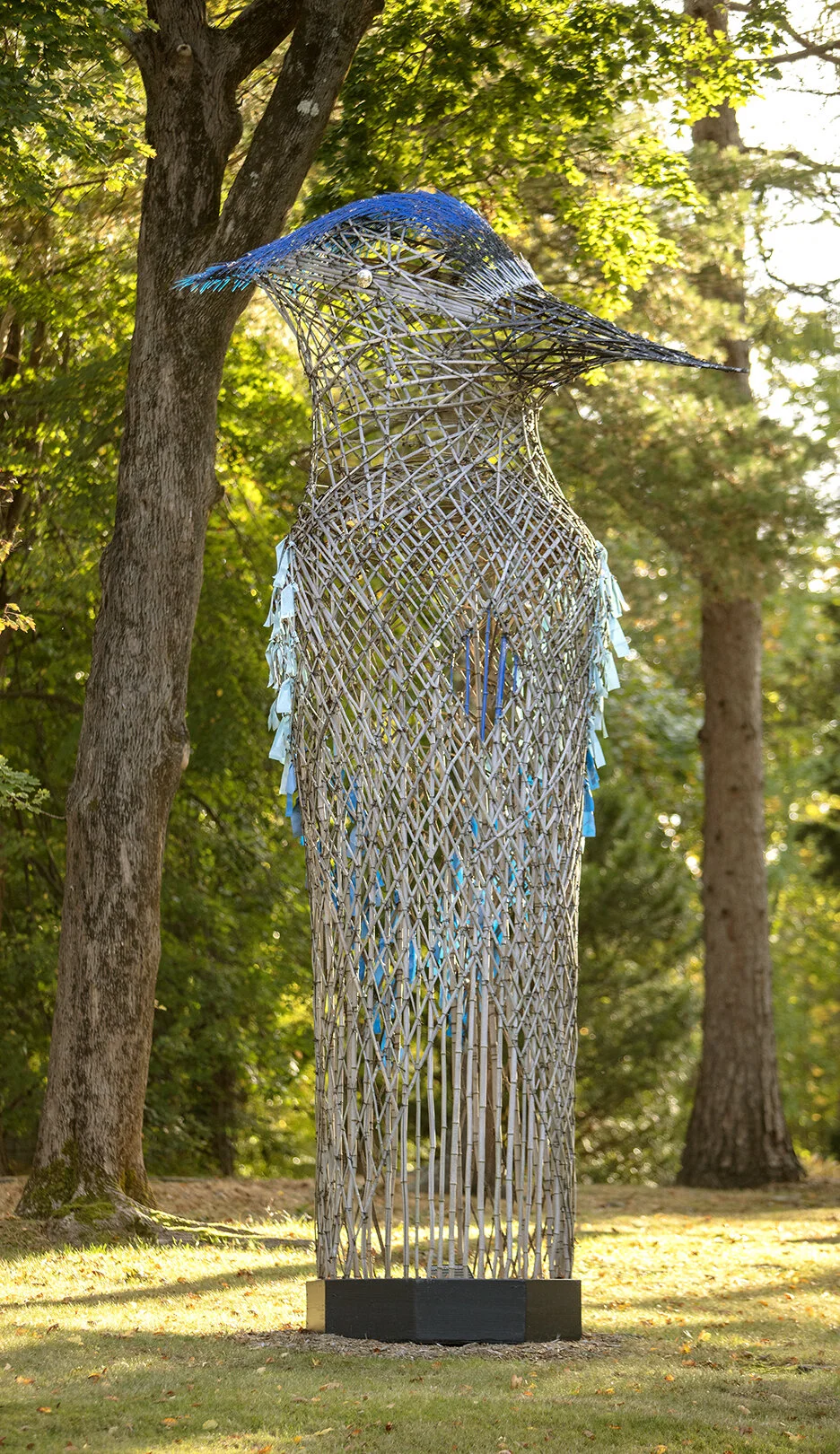
From the Art Complex Museum, in Duxbury, Mass.:
“In 2019, on the grounds of The Art Complex Museum, Donna Dodson and Andy Moerlein installed ‘Seeking Higher Ground.’ This is the second outdoor sculpture that the museum has been lucky to display. According to folklore, the Blue Jay is symbolic of clarity of thought and taking action. ‘Seeking Higher Ground’ is a clarion call to heed the warning signs of climate change. It reflects a hope that humans can unite to affect those changes needed to adapt and survive - like the Blue Jay.’’
“To see more of their work and to watch a short video they have created please

Don Pesci: My Journal of the plague year, continued

Thank God for such friends.
October 25, 2020
VERNON, Conn.
Life goes on. {My wife} Andree’s brother Ernie died in Florida. Titan, Andree’s guide dog for the last dozen years, died as well. And my cousin, the city mouse, writes to tell me: “There are two kinds of cynics among us, Republican cynics and Democrat cynics. The Democrats are better able than Republicans to dress their cynicism in gorgeous, empathetic cloth. They are here, they want us to know, to help with the problems they have caused. It all reminds me of a quip by Karl Kraus on psychoanalysts – they are the disease they purport to cure”
In an earlier letter, he wrote, “Whatever the problem is, you may be sure that a political solution to it can only make matters worse.”
And he wonders why cultural antibodies in the United States have not yet produced an Aristophanes or a Lucian, author of the biting satirical play The Sale of Philosophers. Instead we are confronted daily with unintentionally comic politicians. And our too, too serious politics has murdered comedy. Lincoln could never have survived this poisonous sobriety.
Fall has arrived. Brown leaves are scattered across the property. I’m waiting for the wind to do the work of raking. The wood pile and the furniture out front and down by the lake, now sprinkled with a bib of leaves, have been covered with tarpaulins. We are waiting on winter. Certain as the arrival of dawn and midnight, it will come and cover all in a blanket of purist white silence.
Andree is having some difficulty in attaching the new dog’s name, Dublin, to her commands, and the commands too have changed. Thank God and Fidelco for Dublin, a sleek and attentive, male German Shepard with large eyes and silver-tipped fur. Andree mentions to the many strangers who pause to comment on the dog, “He is the only Irish German Shepard in Connecticut.”
Every so often, Titan’s name is mentioned. This is usual; in our naming and our prayers, we cling to a safe and bountiful remembered past. I have had two dreams in which my father was a presence. This is very unusual for me. One does not dream of the center joist of a house. It is simply there in one’s life, preventing the whirlwind from carrying away all treasures; for that is what a home is – a bank of treasures much more reliable than bank notes.
The pandemic, the city mouse tells me, is useful primarily as a political hobgoblin to frighten people into an attitude of compliance and submission, not to say that it is not a serious threat.
He certainly has his finger on something there.
Did I watch the last presidential debate, he asks?
God no!
To the country mouse,
Well then, you missed a gaudy show, a significant part of it – Hunter Biden’s delinquencies, and his father’s memory lapses -- unreported by Connecticut’s left of center media. Trump was his usual solipsistic best. Biden looked as if he had been biting bullets for weeks while hunkering down in his bunker. The less one sees of Biden, the more popular he becomes. His is the first “front-porch-campaign” the nation has seen since the McKinley’s 1896 campaign and the advent of 24/7 news.
The opposite is true, of course, with {Connecticut} Governor Ned Lamont. As befits an autocrat, he is seen everywhere, rearranging the constellations in the sky, crowing up the sun, destroying yet another business, citing for the hundredth time the death toll in Connecticut, 60 to 70 percent of which is attributable to bad political decisions made by the autocratic governor.
There will come a time when even the most insensate retailer of fact in Connecticut realizes that Coronavirus is not responsible for a single business closure in the state – all of which have been shuttered by politicians, not a virus – and that our economic malady is every bit as serious AND DEADLY as Coronavirus.
But not yet. Perhaps after the November elections have been concluded to the satisfaction of the state’s dominant left of center party, the truth may once again resurfaced and break the hard-shelled exterior of campaign propaganda.
My city cousin certainly is right there. Coronavirus is a viral infection, not a politician, and viruses, unlike governors out rigged with plenary powers, are powerless to close by gubernatorial edict a school or a nail salon.
A Hartford Courant front page, above the fold, headline screams, “Just how bad could the latest spike get?”
About a week and a half before Election Day, Lamont, it would appear, has hoisted himself on his own petard. Connecticut’s Coronavirus numbers, though still far below spring numbers, are rising steadily. Connecticut is now “on the pathway to being bad.”
“I am concerned,” Lamont said. “I take nothing for granted.”
Sure, sure, but when will be pull the lockdown trigger?
“We need to slow the resurgence right away,” a Courant editorial barks this Sunday. Clamp down on the number of people allowed at indoor gatherings; stop playing softball with coaches and sport parent; order all schools to revert to hybrid learning models, and stop saying the surge was “expected.”
Find a hole, jump into it, pull the hole in over your head. Don’t worry about Connecticut’s economy. The state is in arrears in payments to its public employees by about $68 billion; we are among the highest taxed, most progressive states in the nation; businesses have fled the state for greener pastures elsewhere; clamorous state employee unions are still petted by the progressive politicians they help to re-elect; and the only sunbeam shining through the darkness is that the real-estate sector is flourishing, because whipped millionaire New Yorkers are fleeing that state and settling in Connecticut’s Gold Coast, abandoned by companies such as GE and Raytheon Technologies, formerly United Technologies.
Lucian, where are you?
... to be continued
Don Pesci is a columnist based in Vernon.
Words, words!

“Never better, mad as a hatter,
right as rain, might and main,
hanky panky, hot toddy,
hoity-toity, cold shoulder,
bowled over, rolling in clover….’’
— From “Sweater Weather: A Love Song to Language,’’ by Sharon Bryant (born 1943), a New England-based poet who teaches creative writing at Lesley University, in Cambridge, Mass.

‘On behalf of all humanity’

The Montreal Biosphère, formerly the American Pavilion of Expo 67, a geodesic dome designed by Buckminster Fuller, on Île Sainte-Hélène, Montreal.
“Dare to be naive.’’
— Richard Buckminster Fuller (1895-1983), inventor of , most famously, the geodesic dome and the Dymaxion car, futurist and theorist, in Moral of the Work
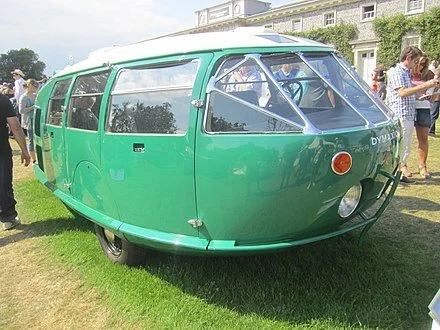
A 1933 Dymaxion prototype
He was born of an old Massachusetts family and was the grand-nephew of Margaret Fuller, an American journalist, critic and women's rights advocate associated with the American transcendentalist movement, which was based in the Boston area. He was mostly known by his middle name, Buckminster, an ancestral family name. But many called him “Bucky.’’
He wrote in the year of his death:
“I am now close to 88 and I am confident that the only thing important about me is that I am an average healthy human. I am also a living case history of a thoroughly documented, half-century, search-and-research project designed to discover what, if anything, an unknown, moneyless individual, with a dependent wife and newborn child, might be able to do effectively on behalf of all humanity that could not be accomplished by great nations, great religions or private enterprise, no matter how rich or powerfully armed.
xxx
Margaret Fuller, for her part, once wrote in her diary: “Genius will live and thrive without training, but it does not the less reward the watering pot and the pruning knife.’’

The only known daguerreotype of Margaret Fuller (by John Plumbe, 1846)
Glory 'contained'
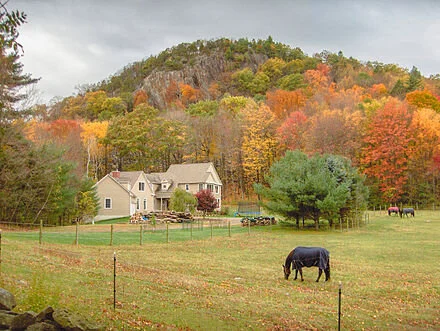
October scene in Granby, Conn.
“It was a radiant October day. Connecticut suggested an outrageous show-off, the low hills overflowing with autumnal brilliance, eruptions of golden leaves, friezes of crimson, the pines maintaining their sober greenness amid the blaze like sentinels.
“All this last glory of the growing season was nevertheless contained, neat, firmly — for centuries now — under control: this was New England.’’
From the novel A Stolen Past (1985), by John Knowles (1926-2001)
Joshua Cho: Even in Pennsylvania, opposing fracking isn't 'political suicide'
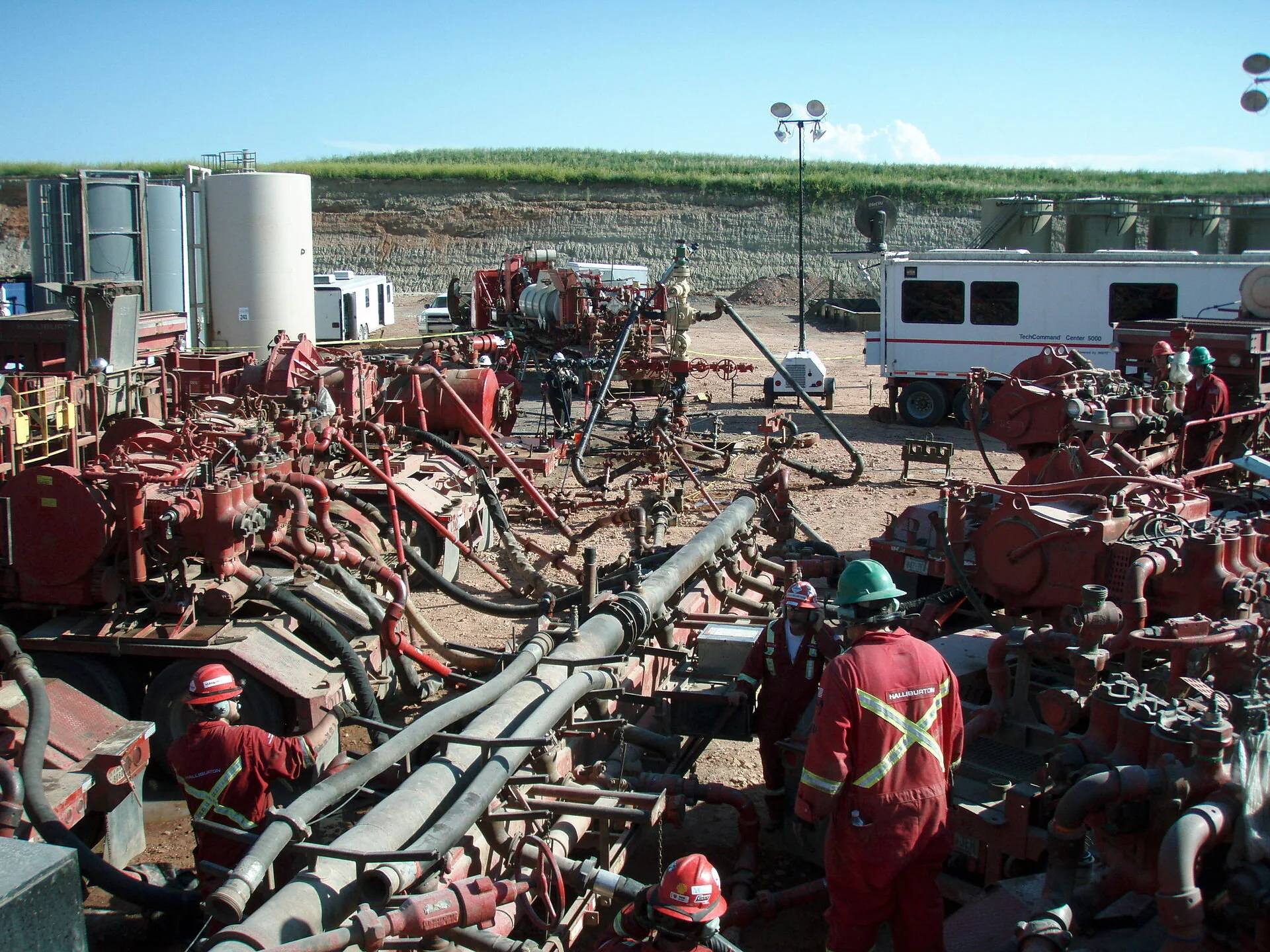
Fracking in progress
Via OtherWords.org
In this year’s vice presidential debate, Sen. Kamala Harris reiterated Democratic nominee Joe Biden’s rejection of a fracking ban, despite her earlier call for one when she was a presidential candidate.
“I will repeat, and the American people know, that Joe Biden will not ban fracking. That is a fact,” Harris said.
Whenever there are discussions about banning fracking, media coverage seems to prioritize potential “risks” to Democrats’ electoral prospects, or potential economic downturns. Unfortunately, a lot of this coverage is quite sloppy.
For instance, The New York Times quoted absurd claims that a fracking ban would mean “hundreds of thousands” of Pennsylvanians would be “unemployed overnight.” In reality, about 26,000 people work in all of Pennsylvania’s oil and gas sector.
Still, The Times suggested that any presidential candidate who supports a national fracking ban would risk losing Pennsylvania, calling the issue “a political bet.” A fracking ban “could jeopardize any presidential candidate’s chances of winning this most critical of battleground states — and thus the presidency itself,” the paper wrote.
NPR likewise made dubious pronouncements on the opinions of swing-state voters the focal point of the story, reporting that “aggressive” climate action “could push moderate voters in key swing states to reelect President Trump,” and even cited — without rebuttal — a claim from the U.S. Chamber of Commerce that a fracking ban would eliminate 17 percent of all U.S. jobs.
Soon after the debate, Quartz explained that Biden and Harris don’t support a fracking ban because it “tempts political suicide in swing states like Pennsylvania and Ohio where fossil fuels still rule.” And the Los Angeles Times described Biden’s opposition to a fracking ban as a “nuanced position.”
There are two big problems with these arguments.
First, as journalist David Sirota pointed out, “the idea that a fracking ban is political poison in Pennsylvania” simply “isn’t substantiated by empirical data.”
A January poll of Pennsylvania voters found that more registered voters support a fracking ban (48 percent) than oppose it (39 percent). A later CBS/YouGov poll in August found 52 percent of Pennsylvania voters supporting a fracking ban. These numbers hardly suggest “political suicide.”
Second, there’s simple climate science.
In 2018, the U.N. announced that carbon pollution needs to be cut by 45 percent by 2030 to prevent irreversible planetary devastation.
Unfortunately, fracking releases large amounts of methane into the atmosphere, which can warm the planet 80 times more than the same amount of carbon dioxide over a 20-year period. And recent reporting has suggested that fracking is an even bigger contributor to global warming than previously believed.
At the debate, Harris emphasized that Biden “believes” in science.
She claimed he “understands that the West Coast of our country is burning” and “sees what is happening on the Gulf states, which are being battered by storms,” and that he has “seen and talked with the farmers in Iowa, whose entire crops have been destroyed because of floods.”
But on this issue, the science clearly points in one direction: away from fracking.
Finally, banning fracking doesn’t need to mean eliminating jobs. Environmental and labor activists, economists, and scientists have for years discussed the need for a full employment program based on green jobs to serve as a just transition for workers. Green industries could employ many, many more workers than fossil fuels.
There is no reason for a fracking ban to be “political suicide” — except, maybe, for the fossil fuel industry.
Joshua Cho (@JoshC0301) is a writer based in Virginia. This op-ed was adapted from a longer piece at FAIR.org and distributed by OtherWords.org.
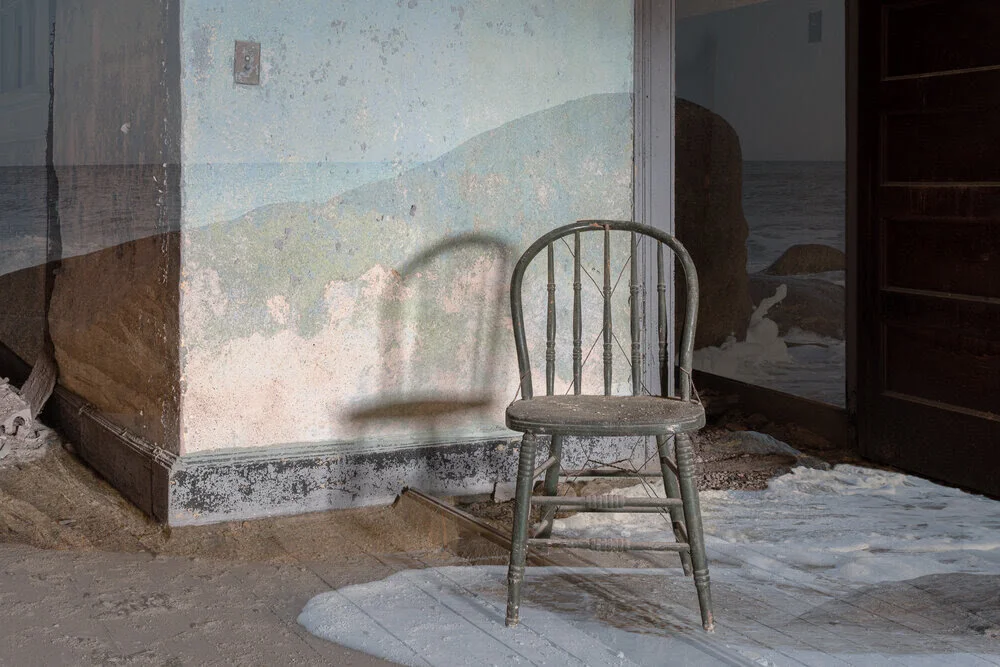
Metaphors for climate change
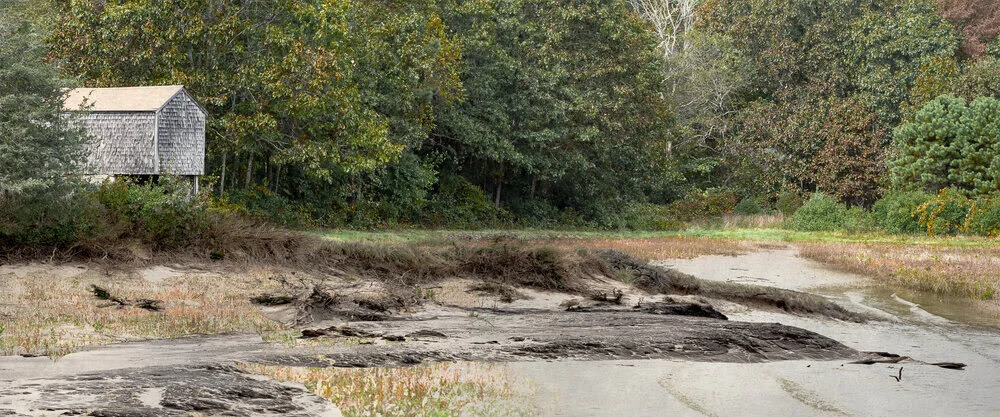
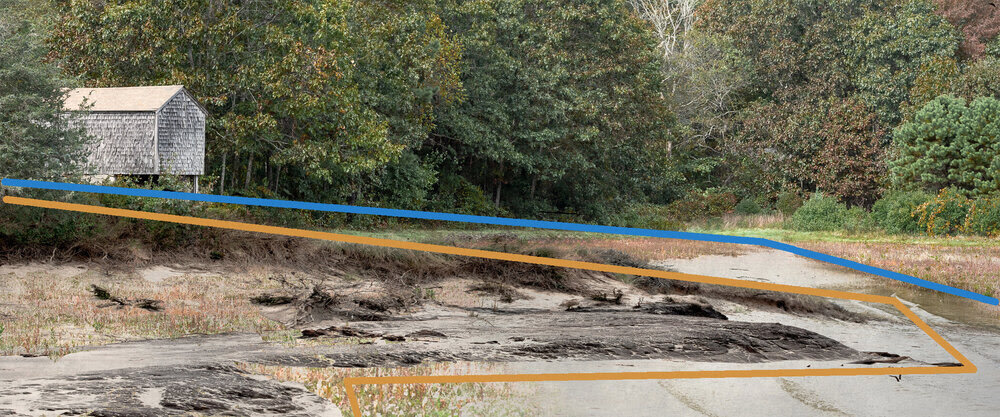
See Vicki McKenna’s show “Geology and the Physical World,’’ at Fountain Street Fine Art, Boston. Sadly, the show closes Oct. 25.
She says:
“Trained as a geologist, I see rocks as telling a story if you know how to interpret them. Photographs also require interpretation for they are the ingredients of a story rather than the story itself. The viewer assembles them into a narrative that is personally important.
“My works are photo illustrations that combine multiple photographs and are intended to collapse present and future into one image. All my previous work has been straight photography. I’ve captured an image in the camera, edited, and printed it. My use, here, of editing software to create a composite image is a departure that seemed justified by the challenge of incorporating the element of time into the final image.
“I was motivated by considering the effects of rising sea level. Each image is a montage of two or more photographs. I have merged one photograph representing the current environment with other photographs representing a possible future. The composite image isn’t meant to be a scientific thesis, but a metaphor for a possible result of climate change. In some images it is easy to identify the elements of the individual photographs. In others, the blending of photographs creates an image that almost seems realistic. The ambiguities of scale and detail in the montage are intended to create a sense of discontinuity or unease.’’
See:
https://www.fsfaboston.com/growingagallery/2020/10/23/geology-and-the-physical-world-vicki-mckenna?mc_cid=37b6bc98f3&mc_eid=296ccbd81d
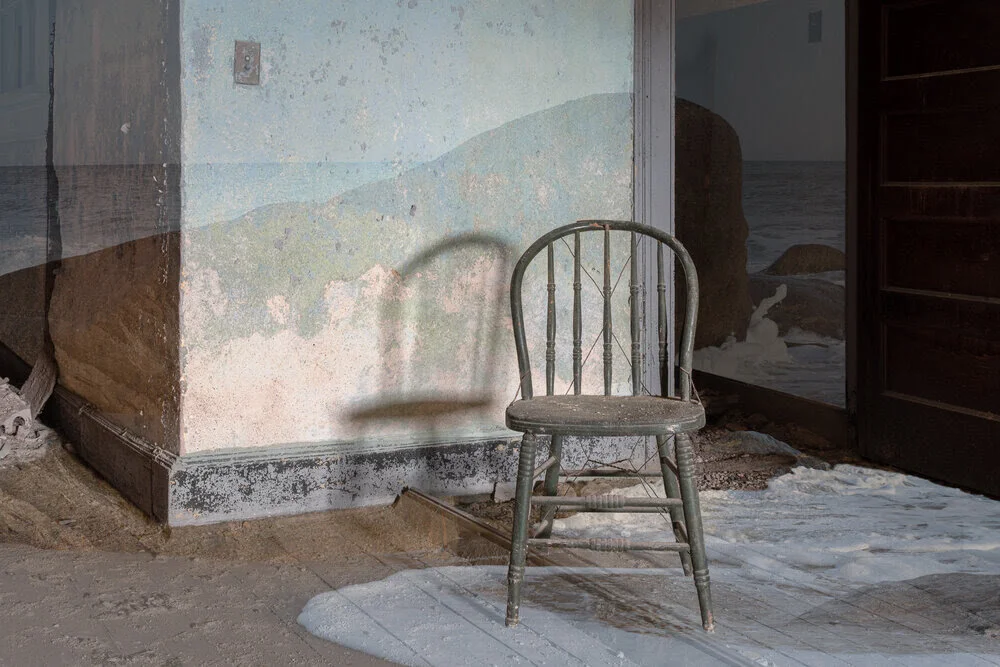
New Bedford, Mass.

Llewellyn King: Can NYC recover its swagger after COVID-19?

In the energy of midtown Manhattan
NEW YORK
Alistair Cooke, the great British journalist who wrote his weekly “Letter from America” – a paean to the United States -- for 58 years, reserved some of his most lavish praise for Manhattan. When Nikita Khrushchev, the Soviet leader, visited America and wanted to see Disney World, Cooke told him he’d never see anything as extraordinary as the Manhattan skyline.
I was reminded of this long-ago admonishment recently, when I had the opportunity to see Manhattan from the water, cruising around the island on a friend’s yacht, looking at that skyline, those fingers of buildings, thrusting toward heaven in a forest of architectural and engineering creativity that has no equal on earth. Dubai may aspire but it doesn’t compete.
Manhattan is awe on steroids.

I’ve savored and, at times, detested it for decades. I suffered its awfulness at the bottom when many newspapers closed and I, an immigrant with no resources, found work as a busboy at the Horn & Hardart on 42nd Street – one of the food-service automats which were once a feature of New York City. They were where the hapless could sit unbothered for long hours without buying anything beyond coffee; where they could stay warm and sheltered in the winter.
I’ve also savored Manhattan in good times, staying at the Carlyle Hotel, one of the best hotels in the world, up there with the Ritz in Paris and Brown’s in London.
It was said when I lived there in the 1960s, that New York was a city for the extraordinarily rich and the extremely poor. I found work in Washington and stayed south; New York became a place to visit.
If it was a hard place to be poor in 1965, the extremes of poverty and wealth only increased with time.
More great buildings, enabled by engineering that allowed them to be planted in smaller plots of land, sprouted in Manhattan. Spindle apartment buildings and sprawling waterfront office developments were built with money that flowed in from hedge funds, tech companies, Russian oligarchs, Chinese billionaires, and Middle Eastern oil-garchs.
On Sept. 11, 2001, the Big Apple felt its vulnerability to a hostile, premeditated attack. Now it is facing its greatest crisis, one that will wound it mortally if not fatally: COVID-19.
New York City has an uncertain future. People are moving out, selling their expensive co-ops at a loss, and buying in less-crowded places on Long Island, in the Hudson Valley, Connecticut, and even farther afield.
As I looked in wonder at the city of striving people, epitomized by its buildings that themselves seem to strive to go ever higher, I wondered whether New York is over, destined to a slow death; its apartments in the clouds likely to be abandoned, and its trove of office space to sit empty as a new generation grows into the idea that working from home — home far away — is the norm, the new way to think about work.
The New York Times has looked at the problem and its writers can’t, it seems, bring themselves to answer the question: Is it over?
The city’s impending tragedy will be played out in other cities, but it is in New York that it will be most visible, most painful; the dream most shattered.
Sure, you might say, it was built on greed and now it must pay the price. But it was also built on much else: immigration, diversity, financial acumen, theater, fine art, sweat and toil -- and that most human of emotions: aspiration.
I hope that the new normal will allow cities to recover and New York to swagger forward as it has in the past: difficult to live in and difficult to live without. It’s a miracle of a city, a big shiny apple.
Llewellyn King is executive producer and host of White House Chronicle, on PBS. His email is llewellynking1@gmail.com. and he’s based in Rhode Island and Washington, D.C.
Website: whchronicle.com

In Korea Town, one of New York’s many ethnic neighborhoods

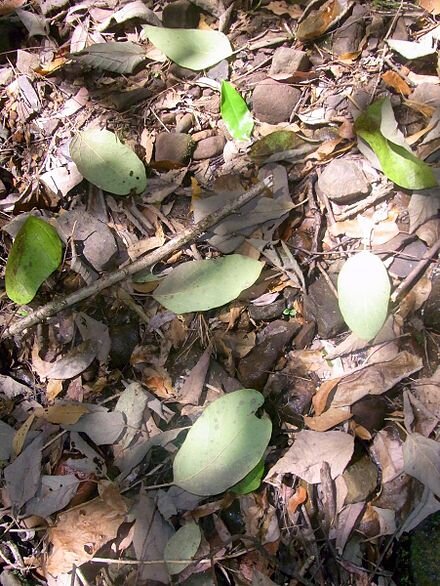
Leave fallen leaves
From Robert Whitcomb’s “Digital Diary,’’ in GoLocal24.com
It’s been good to read lately a pushback against the American obsession with lawns, which has been a slow-motion environmental disaster, however pretty they can be. To maintain lawns, as opposed to other ground covers, vast quantities of pesticides and toxic fertilizers are used, polluting bodies of water (and ground water) and killing all sorts of creatures. And the erosion from lawns can be severe.
I particularly think of this now, what with leaves covering lawns and homeowners tempted to get the blowers or rakes going and remove all traces of leaves from their lawns. But in fact, decomposing leaves are good for the soil, including the dirt that grass grows in. They add nitrogen and other important nutrients, keep down weeds and harbor microbes and insects that are good for plants and birds.
Mulch the fallen leaves with a lawn mower if you think that they’re getting too thick. If you have a composter put the excise leaves there or let it decompose in a pile in the corner of your yard.
One very unpleasant aspect of autumn life in areas like ours with lots of falling leaves is when homeowners and/or hard-working yard crews (often illegal immigrants), wield shrieking and heavily polluting leaf blowers to clear their lawns. They often blow the leaves into the street, where they clog drains. Many are blown into piles and then trucked to landfills to take up space at those overloaded sites.
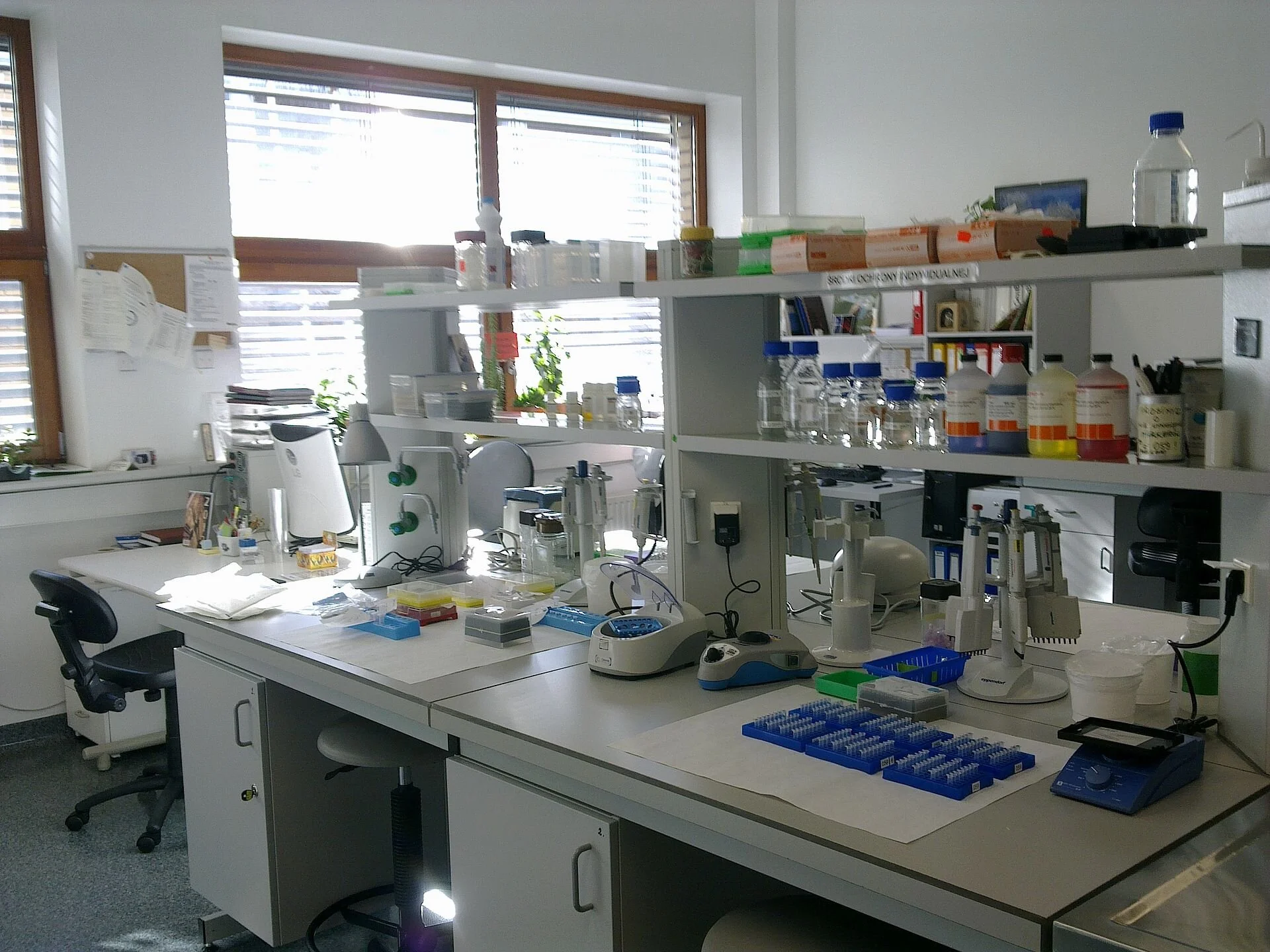
Boston high schools sent lab kits for distance learning
— Photo by Zuzanna K. Filutowska
From The New England Council (newenglandcouncil.com)
BOSTON
“Mass Insight Education and Research has partnered with manufacturer miniPCR bio to deliver 225 individual lab kits to high schools across Boston. The ‘Science from Home: Lab Kits for Distance Learning’ program is being piloted in by Advanced Placement (AP) biology classes in eight Boston high schools this fall.
“The Mass Insight program is partially supported by the Massachusetts Life Sciences Center (MLSC) and seeks to support AP biology students with the ability to complete lab assignments from home. The labs are designed to give students a safe, grade-level appropriate lab experience, and will allow students to investigate vital biological processes with minimal equipment.
“Leslie Prudhomme, Mass Insight’s senior content director for AP Sciences and a former AP biology teacher, has spearheaded the effort to get lab kits into students’ hands. ‘The kids are our top priority,’ Ms. Prudhomme said. ‘The question wasn’t are we going to be able to help them get the quality science education they need in the fall semester, it was how are we going to get this done?’’’
'Three aspects of time'

“Under the Juniper Tree’’ (encaustic) by Boston-based painter Lola Baltzell, in the “Brilliance and Celebration” show at Galatea Fine Art, Boston, through Oct. 31. She is a member of New England Wax (newenglandwax.com).
She says:
"This piece represents the past, the present and the future. Three panels, three aspects of time. Mostly I try to stay in the present. I feel like a refugee who has fled the homeland. I now live in a world that feels so foreign. The past — does it exist? It feels like ‘the old world’: The future? I'm trying to hold a sense of possibility."
The gallery says: “Lola Baltzell's works are uninhibited, yet carefully structured. It is not imposed, but appears as a reflection of natural order. Microbes, cells, direction of energy all serve to inform the surface of her works.’’
See:
galateafineart.com
Todd McLeish: Looking for a rare salamander

Marbled salamander
From ecoRI News (ecori.org)
RICHMOND, R.I.
After dark at a well-hidden vernal pool, Peter Paton shined his flashlight back and forth at the moss-covered ground around the nearly-dry pond basin. He was searching for marbled salamanders, the only autumn-breeding salamander in New England, and one that is seldom seen except on rainy fall evenings. It didn’t take him long to spot one.
“I got one,” he called out. “Over here.”
Marbled salamanders, which grow to about 3.5-4.25 inches, are the second-largest salamander in the region — after only the spotted salamander — and their attractive black-and-white patterning makes them unmistakable. The one Paton found, a male, was on his way out of the pond basin, indicating that the animal had completed his mating duties and was headed to the forest to spend the winter underground.
Female salamanders were likely hidden in the sphagnum moss around the pond, where they remain for a month or more to guard their eggs until rain fills the pond and the eggs are protected from predators and the elements. The eggs hatch within days after being covered in water, and the larvae overwinter in the pond.
Paton, a professor of natural resources science at the University of Rhode Island, was confident of finding marbled salamanders at the Richmond site, since it was a place he studied and monitored in 2000 and 2001, when he and colleagues conducted an amphibian survey of 137 vernal pools around the state. Marbled salamanders were found in just four of the pools, however, making it one of the rarest pond-breeding amphibians in the region.
Previous efforts in the 1980s and ’90s by Chris Raithel, a wildlife biologist at the Rhode Island Department of Environmental Management, documented as many as 50 marbled salamander breeding sites in the state, mostly in Kent and Washington counties. There are no records from Bristol County or from areas adjacent to Narragansett Bay and few from the Blackstone Valley.
“The present localized distribution of marbled salamanders in Rhode Island may be related to habitat fragmentation and patch isolation,” Raithel wrote in his 2019 book Amphibians of Rhode Island. “If this effect is real, the species is secure only in the larger contiguous habitats of southern and western Rhode Island, and additional range retraction should be evident to future generations.”
Marbled salamanders require a very specific habitat for breeding: ponds that are surrounded by sphagnum moss and dry up in the summer, keeping fish and large dragonfly larvae from inhabiting the pond and preying on the salamander larvae.
“They tend to like relatively small ponds, and there aren’t many sites available that fill their habitat requirements,” Paton said.
In addition to habitat fragmentation, road mortality is also a significant concern for the species, because they are often crushed by vehicles as the adults cross roads to reach their breeding ponds or as juveniles disperse to find territories.
On the other hand, Paton said it’s possible that the changing environmental conditions associated with the warming climate may make southern New England more favorable to marbled salamanders in the future. Their current range extends as far south as northern Florida and eastern Texas, and populations in warmer climates tend to be considerably larger than those in Rhode Island.
“They aren’t very tolerant of the cold, so we’re at the northern limits of their range,” Paton said. “The larvae don’t grow much in the winter because it’s too cold, but once wood frogs arrive to breed in early spring, the salamander larvae feed on the frog tadpoles as their main fuel source to undergo metamorphosis.”
After metamorphosis, the salamanders leave their ponds and spend the rest of their lives in the forest, except for brief breeding periods each fall.
Marbled salamanders require a very specific habitat for breeding and they are not very tolerant of the cold.
Despite how few marbled salamander breeding sites were found during the last amphibian survey, a recent graduate student at the University of Massachusetts at Boston thinks a new survey method may detect the salamanders more effectively than traditional sampling methods.
Jack He, who graduated in May, used eDNA — environmental DNA collected from water or soil — to detect the presence of marbled salamanders even when the animals could not be seen.
“Everything sheds DNA in one form or another, like from skin cells or blood, and they release it into the environment,” He said. “Ideally, we can collect water or soil samples containing those cells and extract that DNA and sequence it to determine what species are present.”
He detected marbled salamander DNA in a number of water and soil samples from vernal pools in western Massachusetts. He calls it a less labor-intensive method of determining if the salamanders are present at a site than using dipnets to capture larvae in the spring, which is how Paton conducted his survey.
“I’ve done dipnet studies and compared them to eDNA, and I found that eDNA was a bit more effective,” He said.
Paton, however, isn’t convinced.
“My impression is that larvae are relatively easy to find, but I could be biased,” he said. “Maybe they’re in there and I missed them a lot. But however you do it, I suspect that marbled salamanders are still fairly rare in Rhode Island.”
Rhode Island resident and author Todd McLeish runs a wildlife blog. He’s a frequent EcoRI News contributor.
Chen Shih-chung: COVID-19 shows importance of Taiwan being admitted to WHO
WHO emblem
Our friends in the Taiwan representative office in Boston forwarded this to us.
— Robert Whitcomb
Since the COVID-19 pandemic began, there have more than 40 million cases and more than one million deaths around the world. The virus has had an enormous impact on global politics, employment, economics, trade and financial systems, and significantly impacted the global efforts to achieve the United Nations Sustainable Development Goals (UN SDGs).
Thanks to the united efforts of its entire people, Taiwan has responded to the threats posed by this pandemic through four principles: prudent action, rapid response, advance deployment and openness and transparency. Adopting such strategies as the operation of specialized command systems, the implementation of meticulous border-control measures, the production and distribution of adequate supplies of medical resources, the employment of home quarantine and isolation measures and related care services, the application of IT systems, the publishing of transparent and open information, and the execution of precise screening and testing, we have been fortunate enough to contain the virus. As of Oct. 7, Taiwan had had just 523 confirmed cases and seven deaths; meanwhile, life and work have continued much as normal for the majority of its people.
The global outbreak of COVID-19 has reminded the world that infectious diseases know no borders and do not discriminate along political, ethnic, religious or cultural lines. Nations should work together to address the threat of emerging diseases. For this reason, once Taiwan had stabilized its containment of the virus and ensured that people had sufficient access to medical resources, we began to share our experience and exchange information on containing COVID-19 with global public-health professionals and scholars through COVID-19-related forums, the Asia-Pacific Economic Cooperation group’s (APEC) High-Level Meeting on Health and the Economy, the Global Cooperation Training Framework, and other virtual bilateral meetings. As of June 2020, Taiwan had held nearly 80 online conferences, sharing the Taiwan Model with experts from governments, hospitals, universities and think tanks in 32 countries.
Taiwan’s donations of medical equipment and anti-pandemic supplies to countries in need also continue. By June, we had donated 51 million surgical masks, 1.16 million N95 masks, 600,000 isolation gowns, and 35,000 forehead thermometers to more than 80 countries.
To ensure access to vaccines, Taiwan has joined the COVID-19 Vaccines Global Access Facility (COVAX) co-led by GAVI — the Vaccine Alliance — and the Coalition for Epidemic Preparedness Innovations. And our government is actively assisting domestic manufacturers in hopes of accelerating the development and production of successful vaccines, bringing them to market as quickly as possible and putting an end to this pandemic.
To prepare for a possible next wave of the pandemic as well as the approaching flu season, Taiwan is maintaining its strategies of encouraging citizens to wear face masks and maintain social distancing, and strengthening border quarantine measures, community-based prevention and medical preparedness. Furthermore, we are actively collaborating with domestic and international partners to obtain vaccines and develop optimal treatments and accurate diagnostic tools, jointly safeguarding global public-health security.
The COVID-19 pandemic has proven that Taiwan is an integral part of the global public-health network and that Taiwan Model can help other countries combat the pandemic. To recover better, WHO needs Taiwan. We urge WHO and related parties to acknowledge Taiwan’s longstanding contributions to global public health, disease prevention, and the human right to health, and to firmly support Taiwan’s inclusion in WHO. Taiwan’s comprehensive participation in WHO meetings, mechanisms and activities would allow us to work with the rest of the world in realizing the fundamental human right to health as stipulated in the WHO Constitution and the vision of leaving no one behind enshrined in the UN SDGs.
Chen Shih-chung is minister for health and welfare for Taiwan (Republic of China)
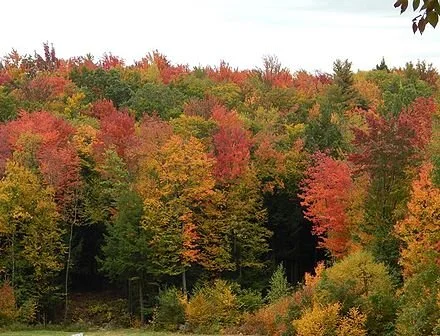
Flaming near the frost
Swamp maples
“It takes adversity or coming close
To trouble and hard times to make them glow,
Then they really flower as swamp maples
Flower on the edge of frost and snow.’’
— From “New Englanders Are Maples,’’ by Robert P.T. Coffin (1892-1955), a native and long-time resident of Brunswick, Maine, and a Pulitzer Prize-winning poet

The long-gone Merrymeeting Park Casino and amusement park in Brunswick, circa 1905

Chris Powell: Census issue hypocrisies, theocratic fascism and Hunter Biden

MANCHESTER, Conn.
When it comes to the country's decennial census, the U.S. Constitution could not be any clearer. The census must count "the whole number of persons in each state, excluding Indians not taxed."
It's not fair that this credits people who have entered the country illegally toward representation in the U.S. House and state legislatures, rewarding those states and cities -- mainly jurisdictions run by Democrats, including Connecticut -- that obstruct enforcement of federal immigration law and encourage illegal immigration, but that's what the text requires.
So the Trump administration, a Republican one, is trying to violate the Constitution by removing people who have entered the country illegally from the count, and the issue has gone to the Supreme Court. Connecticut and other immigration law nullifiers have sued, and last week the Supreme Court agreed to hear the case.
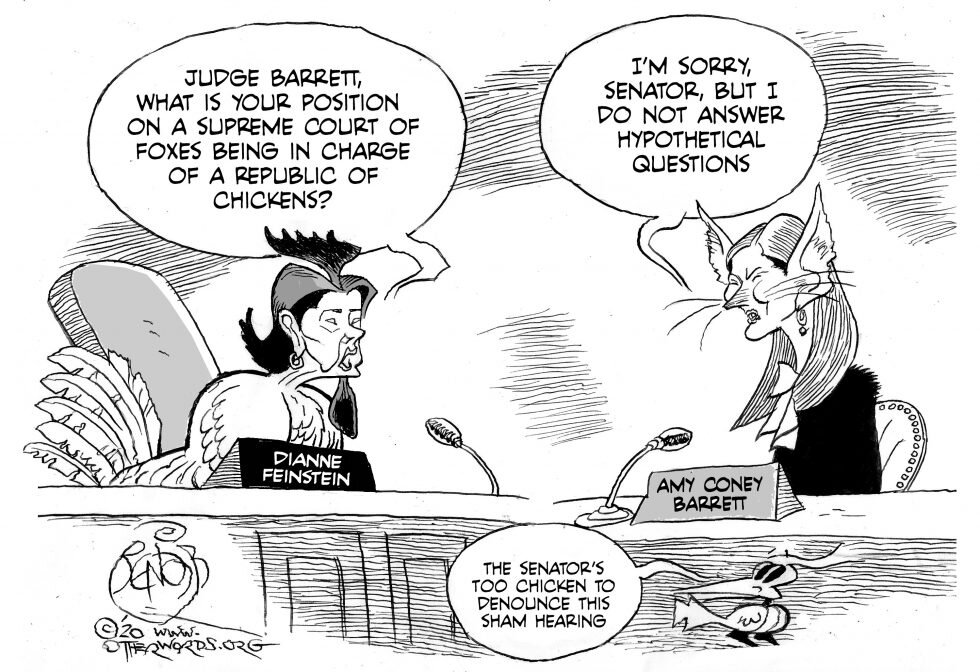
The spectacular irony here is that while Democrats are scorning President Trump's Supreme Court nominee, Amy Coney Barrett, for being an "originalist" -- someone who claims to construe the Constitution according to its text and what it meant when it was enacted -- in the census case the Democrats are the originalists and the Republicans are the ones who want to rewrite the Constitution by executive fiat.
Of course, no constitution can specifically address all circumstances that may become legal disputes over time. At most a constitution can establish mechanisms and principles for government, and applying those principles to new circumstances may induce courts to make some assumptions, even as taking assumptions too far becomes legislating, which courts are supposed to leave to legislatures.
But if constitutions don't mean what they say and what they meant when adopted, they aren't really constitutions at all. The political hypocrisy in the census case suggests that neither side is terribly sincere about its supposed constitutional principles.
xxx
Last week's atrocity in France, the beheading of a teacher by an immigrant religious fanatic, is a reminder of why the United States should get serious about controlling immigration. The teacher had just taught a lesson about freedom of expression under secular government and some of his students and their parents, themselves religious fanatics, took offense and alerted the perpetrator.
This kind of thing has been happening for years throughout Europe because of its failure to control immigration, especially immigration from areas afflicted by theocratic fascism. While the United States enjoys greater distance from those areas, it still has admitted many people who want to overthrow democratic and secular culture.
President Trump has often demagogued the issue, but because their party gains political representation from illegal immigration, most Democrats oppose immigration law enforcement. If the choice is between immigration enforcement with some demagoguery and no enforcement at all, even Trump should prevail.
xxx
It doesn't matter too much whether the laptop computer supposedly abandoned at the repair shop in Delaware was Hunter Biden's and whether the emails supposedly found on it are genuine. While some national news organizations seem unable to put aside their propagandizing and covering up for Hunter's father so they can investigate the matter, the essential point about the Bidens already has been established for anyone who reads closely enough.
That is, when Joe Biden was vice president he helped his dissolute son enrich himself through a business deal in Ukraine, and perhaps in China, deals for which the son had no qualifications except for peddling influence with his father. The vice president took his son with him on official trips for that purpose. While President Trump's business empire posed many conflicts of interest that should have disqualified him before he was nominated and elected, it turns out that Biden was corrupt while in office.
People may find Trump's demeanor, instability and megalomania so outrageous and dangerous, quite apart from his administration's policies, as to excuse the corruption at the top of the Democratic ticket. Indeed, national politics now is so corrupt and demagogic that the public's only defense may be the fastest possible rotation in office between the parties. But whoever wins this election, journalistic fairness and integrity will have been fatal casualties of the campaign.
Chris Powell is a columnist for the Journal Inquirer, in Manchester.
Turtle kingdom
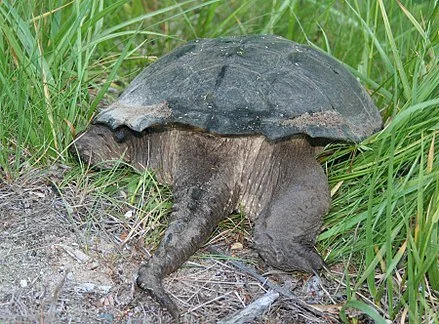
Back end of a snapping turtle
“I have very fond memories of swimming in Walden Pond (in Concord, Mass.) when we lived in Boston. You'd swim past a log and see all these turtles sunning themselves. Slightly disturbing if you thought about how many more were swimming around your toes, but also rather wonderful.’’
— Mark Haddon, English novelist
The romance of Quincy
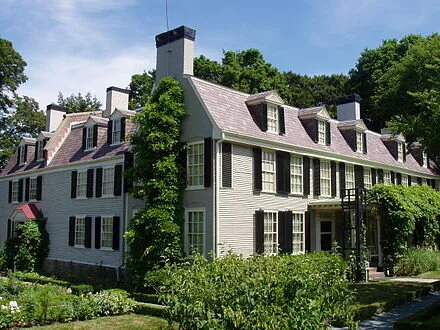
“Peacefield,’’ the main house at the Adams National Historical Park, in Quincy, Mass., which was the Adams family homestead. The preserves the home of Presidents John Adams and John Quincy Adams, of U.S. Ambassador to Britain Charles Francis Adams, and of writers and historians Henry Adams and Brooks Adams.
“My father and my mother have departed. The charm which has always made this house to me an abode of enchantment is dissolved; and yet my attachment to it, and to the whole region, is stronger than I ever felt before.’’
John Quincy Adams (1767-1848) in his diary entry for July 13, 1826, during his presidency. He was the sixth president; his father, John Adams, the second.

Sam Pizzigati: Biden tax plan would reduce inequality

“The tax collector's office,’’ by Pieter Brueghel the Younger (1640)
Via OtherWords.org
BOSTON
Want to know where the 2020 presidential election is heading? Don’t obsess about the polls. Pay attention to tax lawyers and accountants.
These experts in reducing rich people’s tax bills understand what many Americans still haven’t quite fathomed: The nation’s wealthiest will likely pay significantly more in taxes if Joe Biden becomes president.
Why? Because the massive tax cuts for corporations and the rich that Trump and the GOP passed in 2017 may soon be shredded.
If these rich don’t take immediate steps to “protect their fortunes,” their law firms are advising, they could lose out big-time. “We’ve been telling people: ‘Use it or lose it,’” says Jere Doyle, a strategist at BNY Mellon Wealth Management.
At first, these concerns may appear overblown. Under Biden’s plan, the tax rate on America’s top income tax bracket would only rise from 37 percent back up to 39.6 percent, the Obama-era rate.
But the real “backbreakers” for the rich come elsewhere.
Among the biggest: a new tax treatment for “investment income,” the money that rich people make buying and selling assets.
Most of this income currently enjoys a super-discounted tax rate — just 20 percent, far lower than what most working people pay on their paycheck income. The Biden tax plan ends this favorable treatment of income from “capital gains” for taxpayers making over $1 million. It would also close the loophole where wealthy people simply pass appreciated assets to their heirs.
Biden is also proposing an overhaul of Social Security taxes. The current 12.4 percent Social Security payroll tax — half paid by employers, half by employees — applies this year to only the first $137,700 in paycheck earnings, a figure that gets annually adjusted to inflation.
That means that a corporate exec who makes $1 million this year will pay the same amount into Social Security as a person who makes $137,700.
Biden’s plan would apply the Social Security tax to all paycheck income over $400,000, so America’s deepest pockets would pay substantially more to support Social Security. Meanwhile Americans making under $400,000 would continue to pay at current levels.
Corporations would also pay more in taxes. Biden would raise the standard corporate income tax rate from 21 to 28 percent, set a 15 percent minimum tax on corporate profits, and double the current minimum tax foreign subsidiaries of U.S. companies have to pay from 10.5 to 21 percent.
Among other changes: Big Pharma companies would no longer get tax deductions for what they spend on advertising. Real estate moguls would no longer be able to depreciate the rental housing they own on an accelerated schedule, and fossil-fuel companies would lose a variety of lucrative tax preferences.
Together, these ideas could measurably reduce inequality.
The Institute on Taxation and Economic Policy has crunched the numbers: In 2022, under Biden’s plan, the nation’s top 1 percent would bear 97 percent of the direct tax increases Biden is proposing. The next most affluent 4 percent would bear the remaining 3 percent.
Despite some misleading Republican talking points to the contrary, no households making under $400,000 — the vast majority of Americans — would see their direct taxes rise.
Even if Democrats win the Senate, actually passing this plan will take grassroots pressure — the only force that has ever significantly raised taxes on the rich.
Wealth inequality remains an even greater challenge, and the Biden plan includes no wealth tax along the lines of what Senators Bernie Sanders and Elizabeth Warren, two of Biden’s primary rivals, advocated. But more pressure could also shove that wealth tax onto the table.
If that happens, we might finally begin to reverse the staggering levels of inequality that Ronald Reagan’s 1980 election ushered in.
Sam Pizzigati, based in Boston, is the co-editor of Inequality.org and author of The Case for a Maximum Wage and The Rich Don’t Always Win.
John O. Harney: Pressing on through the pandemic
BOSTON
From The New England Journal of Higher Education, a service of The New England Board of Higher Education (nebhe.org)
A little of what we’ve been following …
Counting heads. New enrollment figures show higher education reeling under the weight of COVID-19 and a faltering economy on top of pre-existing challenges such as worries that college may not be worth the price. A month into the fall 2020 semester, undergraduate enrollment nationally was down 4 percent from last year, thanks in large part to a 16 percent drop in first-year students attending college this pandemic fall, according to “First Look” data from the National Student Clearinghouse Research Center. In New England, the early data suggest New Hampshire and Vermont were among the handful of U.S. states enrolling more undergraduates than last fall, while Rhode Island reported a nearly 16 percent drop.
At community colleges, freshman enrollment sunk by nearly 23 percent nationally, the clearinghouse reports.
Interestingly, before COVID hit and when so-called “Promise” programs were in full stride, 33 public community college Promise programs across the U.S. showed big enrollment success with their free-college models, according to a study released recently in the Educational Evaluation and Policy Analysis, a peer-reviewed journal of the American Educational Research Association. Such programs were “associated with large enrollment increases of first-time, full-time students—with the biggest boost in enrollment among Black, Hispanic and female students,” the study found, adding, “The results come as the economic impact of the Covid-19 pandemic is leading states to tighten higher education budgets, as low-income students are forgoing their postsecondary plans at higher rates this fall than their wealthier peers, and as community colleges are experiencing larger enrollment declines than four-year universities.”
On the other hand, a report from our friends at the Hildreth Institute examines 22 statewide, free-tuition programs established in the past decade, and finds that most do not address the real barriers that prevent many students from getting a higher education credential. The report notes that tuition and fees represent just 24 percent of the cost of attending a community college and 40 percent of the cost of attending a public four-year university. Beyond tuition, students struggle with necessities like textbooks, computers, software, internet access, housing, food and transportation. Moreover, “the lower the income of a student, the less likely they are to benefit from existing tuition-free programs, known as ‘last-dollar’ scholarships, which cover only the portion of tuition and fees that are not covered by existing financial aid,” the Hildreth report notes.
Digital futures. The ECMC Foundation awarded the Business-Higher Education Forum (BHEF) $341,000 to fund the Connecticut Digital Credential Ecosystem Initiative, in partnership with NEBHE. A network of companies, community colleges, government agencies and other stakeholders, led by BHEF, will develop new pathways to digital careers, particularly for individuals unemployed due to COVID-19. BHEF will help community colleges issue industry-validated credentials to support transparent career pathways across Connecticut and the surrounding region. Participating employers will approve the knowledge, skills and abilities for these credentials, thus building recruitment and hiring links for students who complete the credential. The idea owes much to the work and recommendations of NEBHE’s Commission on Higher Education & Employability.
Organizing. I was happy to attend the virtual annual conference of the Hunter College National Center for the Study of Collective Bargaining in Higher Education and the Professions, its 47th annual conference, this time held virtually due to COVID. The topic was “Inequality, Collective Bargaining and Higher Education.” It was a goldmine of perspectives on equity, antiracism and labor rights.
Among bright spots, talk of a possible student loan debt jubilee and increasing moves by campus CEOs to resist pay raises. Bill Fletcher, former president of the advocacy group TransAfrica and senior scholar with the Institute for Policy Studies, recounted the formation of labor organizing in the U.S. from America’s original sins of annihilating Native Americans and enslaving Africans through the birth of trade unionism and social justice efforts like Occupy and the National Education Association’s Red for Ed. We don’t need white allies, he added, but rather white comrades like John Brown on the frontlines.
Touting Joe Biden’s higher-education platform, Tom Harnish, vice president for government relations at the State Higher Education Executive Officers Association and a faculty member at George Washington University, offered basic advice: If you want better higher-education policy, get out and vote and put better people in office.
In a session on the evolution of labor studies, speakers noted that many labor-education programs have been folded into management schools or sometimes taught under the guise of the history of capitalism so as to attract students. We have to warn students that this is not the place if you’re aspiring to an HR position, one said.
Purdue dropping program in Lewiston, Maine. No higher-education models seem immune to COVID-19. Recently, Purdue University Global announced it is dropping its physical presence in Lewiston, Maine, when its lease expires in March. In spring 2017, Purdue University acquired most of the credential-granting side of the then-for-profit Kaplan University, as part of the Indiana-based public research university’s effort to engage the fast-growing adult student market. Kaplan had about 32,000 students taking courses online or at one of more than a dozen physical campus locations, including Lewiston and Augusta, Maine. The Lewiston building had been empty due to COVID. The Augusta building reportedly will continue to house the nursing program. Kaplan University, by the way, converted to nonprofit status as part of the deal.
See you in better times …
John O. Harney is executive editor of The New England Journal of Higher Education.