
Vox clamantis in deserto






'Indignation meeting'
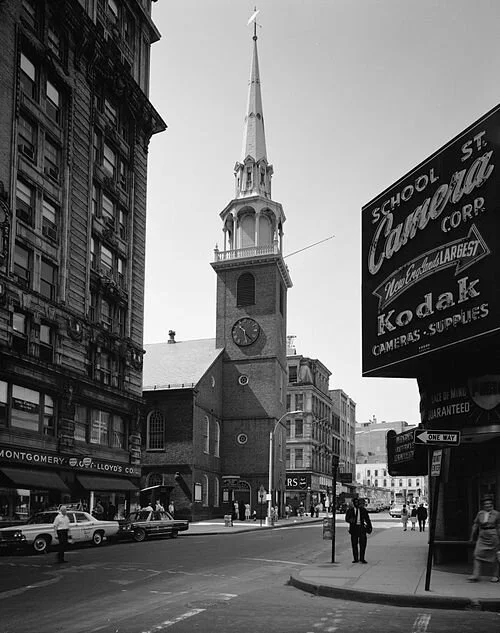
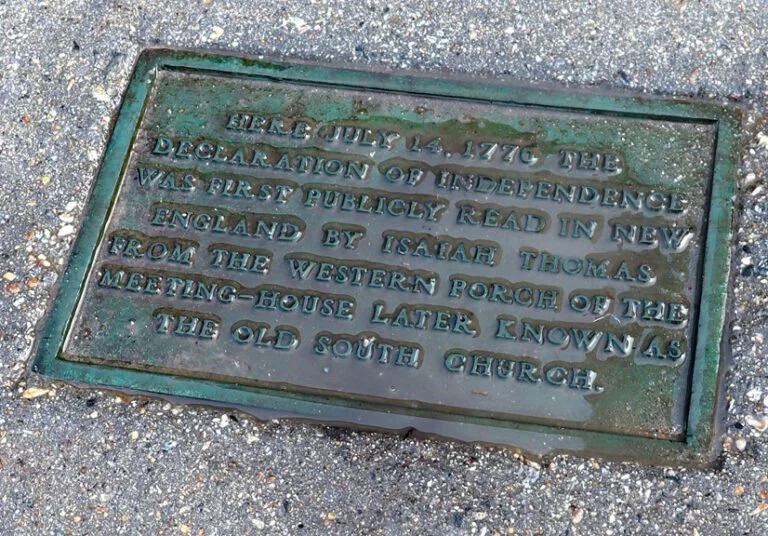
Old South Meeting House (built in 1779) back in 1968
“The next night an indignation meeting was held in Boston’s Old South Meeting House, a prime example of one of the most original and durable of New England colonial institutions: the church considered not only as a place of worship but as a court of law and a social center and the very hub of political life.’’
— Author and BBC commentator Alistair Cooke (1908-2004) on the response to the Boston Massacre (March 5, 1770) in America (1973)

Chris Powell: The hyper-hypocrisies of exclusionary zoning
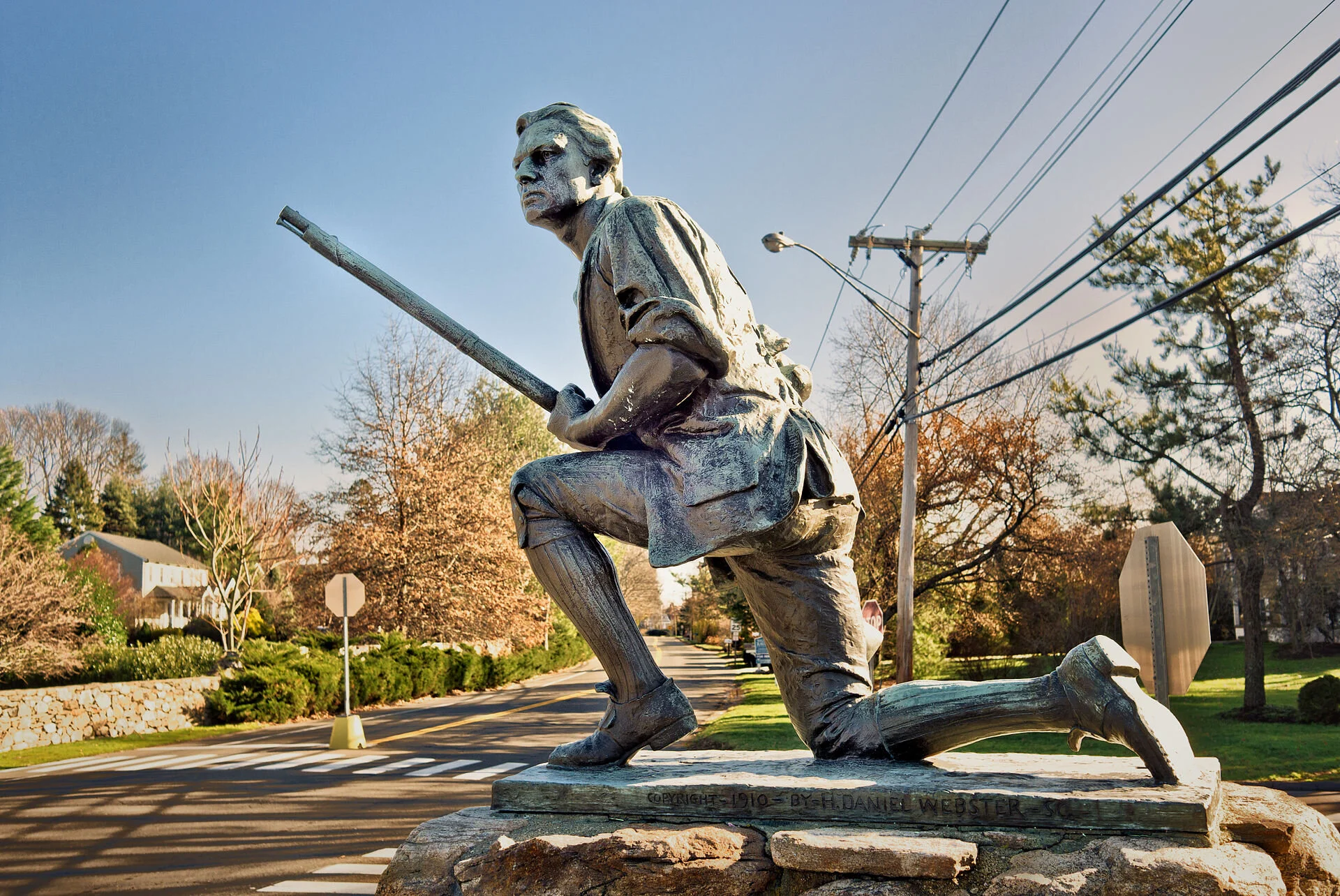
Minuteman Statue in the exclusive Compo Beach section of the rich Fairfield County, Conn., town of Westport
— Photo by WestportWiki
MANCHESTER, Conn.
Nearly everybody wants some peace and quiet at home, so naturally enough residential real estate is often about exclusivity. "Park-like setting" may be the most appealing part of advertisements for housing, followed closely by location in a successful school district.
Since only the rich can guarantee such housing for themselves with their own funds, buying not only the housing but also the park to go with it, municipalities have used zoning regulations to separate residential from industrial and commercial areas. There is nothing wrong with that. But as Connecticut knows only too well, municipalities also use zoning for exclusion -- to keep people out generally and the poor particularly, since the poor cost government more than they pay in taxes and are disproportionately disruptive.
While exclusive zoning goes too far, Connecticut long has failed to curtail its excesses, and so the suburbs are always producing hypocritical controversies about what should be only ordinary housing development. Such controversies recently broke out in Westport and Vernon.
In Westport a Superior Court judge has overturned the Planning and Zoning Commission's rejection of an 81-unit apartment complex that neighbors say will diminish safety in the neighborhood. The neighbors insist that they are not against less-expensive housing or more people from minority groups in town; they just don't want such housing near them, what with the extra traffic and all.
The argument is similar in Vernon, where neighbors petitioned against a plan to build 56 apartments on a street with both single-family and multifamily housing. Besides raising traffic and safety concerns, the neighbors contended that there is already too much multifamily housing in the area.
Too much multifamily housing for whom? There's not too much for people looking for housing in a state whose housing costs are already high and long have been pricing people out of many towns. Indeed, while homeowners celebrate rising property values, renters and people seeking to set up their own households don't, any more than homeowners celebrate rising prices for food and medical insurance. For housing is a necessity of life just as those other things are.
The more that is claimed by necessities from personal incomes, the less discretionary income people have and the more they are just surviving, not living.
The traffic argument against housing is always weak if not ridiculous, since of course there can be no new housing without traffic, and the housing in which the opponents of new housing live increased traffic itself.
People raise traffic concerns about housing only when they are already comfortably settled. Nobody thinks of himself as constituting too much traffic and nobody declines to move into an area because he will be increasing traffic for others.
Until the radical environmentalists take over and impose brutal population controls like China's, population and economic growth will continue to go hand in hand in the United States and require more housing. Connecticut can't achieve economic class and racial integration without it.
More housing in the suburbs isn't the only way of achieving economic class and racial integration. That also might be achieved by acknowledging the failure of Connecticut's welfare and urban policies to elevate the poor and members of racial minorities and improve the cities in which most of them live. Then the middle class might want to return.
But the interests that are invested in the failure of welfare and urban policy and the failure of the cities themselves remain too influential in state politics. If the cities were not perpetually poor -- essentially poverty factories operated by government and controlling the tens of thousands of votes cast by both the poor and the legions ministering to them at government expense -- Connecticut's majority political party would lose its decisive pluralities in state elections.
Government has much less patronage to bestow when the private sector is prosperous and people are well educated, skilled, and self-sufficient. As a political matter, that can't be allowed.
So for the time being Connecticut might do well just to reflect that it’s a good thing the Indians never had zoning. Otherwise there'd never have been any integration and there would be no one to lose money at their casinos.
Chris Powell is a columnist for the Journal Inquirer, in Manchester.
Too late!
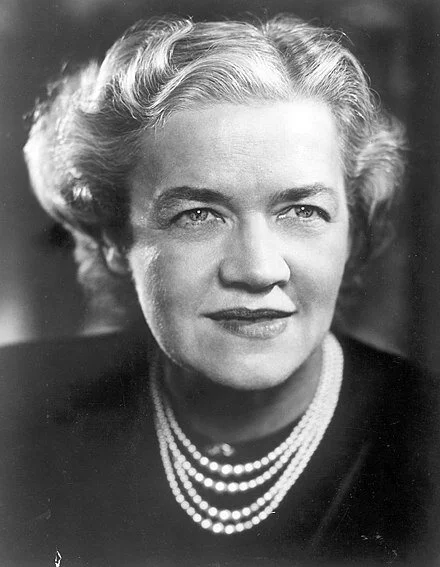
Margaret Chase Smith
“I do not want to see the Republican Party ride to political victory on the Four Horsemen of Calumny — fear, ignorance, bigotry and smear.’’
— Margaret Chase Smith (1897-1995). She was a moderate Republican U.S. congresswoman (1940-49) and U.S. senator (1949-73). She was the first woman to serve in both houses of Congress, and the first woman to represent Maine in either. She was born and died in Skowhegan.
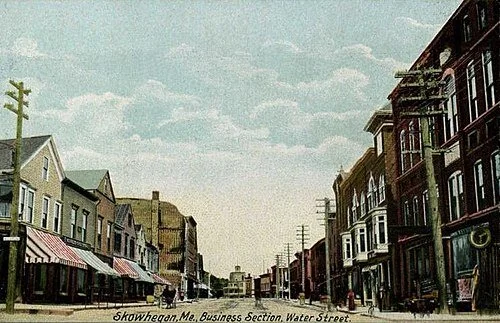
Downtown Skowhegan in 1906, in an era when the town, on the Kennebec River, was the site of numerous mills, along with occasional labor unrest.
Awesome acorn

The Maine Crafts Association is making available to see and buy online handmade craft objects made by hundreds of Maine artists. Purchases directly support Maine craft artists and the Maine Crafts Association.
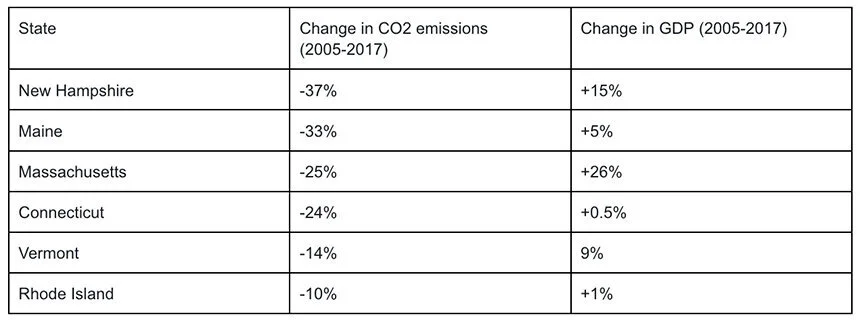
Janine Weisman: States can grow their economies AND cut emissions

How New England’s six states have done in reducing climate emissions and growing the economy, according to data from a recent World Resources Institute report.
— Janine Weisman/ecoRI News
From ecoRI News (ecori.org)
All the New England states have cut their energy-related carbon emissions while growing their economies in the past two decades, according to a new analysis that offers proof that climate action can actually be a good return on investment.
For years, the narrative about low-carbon technologies such as wind and solar power was that their high costs and subsidies couldn’t compete with fossil fuels. But renewable-energy storage technologies have improved and dropped precipitously in price while jobs in this sector have been growing at a faster pace than overall employment. That has made low-carbon technologies competitive with conventional fossil fuels, which are heavily subsidized, and also good for the economy, according to the 66-page white paper released in July by the World Resources Institute (WRI).
“There’s a lot of myths that are out there about climate change and we wanted to debunk some of those myths,” said the paper’s co-author Joel Jaeger, a research associate in WRI’s Climate Program.
The rapid deployment of wind and solar power, a shift from coal to natural gas in the power sector, and progress in vehicle-emissions standards helped drive a 12 percent drop in U.S. carbon emissions from 2005 to 2018, during which the nation’s Gross domestic product (GDP) increased 25 percent, according to the organization’s research.
“This is not just a year here or there — this is sustained transformation of the world’s largest economy,” according to the report.
The Washington, D.C.-based global research nonprofit ranked 41 states and the District of Columbia that have decoupled their emissions from economic growth during the 12 years studied. The list covers states both large and small in all major geographical regions. Nine other states, however, saw their emissions grow over that period of time, though much slower than state GDP in most cases.
Rhode Island cut carbon emissions by 10 percent between 2005 and 2017 at the same time its GDP increased 1 percent, according to the report’s data.
Rhode Island ranked 37th, trailing the other five New England states. New Hampshire, which cut carbon emissions by 37 percent while growing its GDP 15 percent, led the region and ranked second in the nation after Maryland, according to the report.
Massachusetts ranked 12th nationwide with a 25 percent emissions decrease and a 26 percent increase in GDP. Connecticut in 16th place saw a 24 percent emissions decrease and a 0.5 percent increase in GDP.
“Rhode Island is in many ways one of the leaders on climate action, even though it doesn’t appear that way on this decoupling metric,” Jaeger said. He noted that the smallest state has the lowest per capita energy consumption.
“Decoupling is measuring progress,” he said. “Rhode Island, it’s actually harder for it to make progress because it was already on the leading edge of having lower emissions.”
Rhode Island is among the 25 states that joined the U.S. Climate Alliance to uphold the Paris Agreement goals of reducing greenhouse-gas emissions by at least 26 percent to 28 percent below 2005 levels by 2025. Participating states have grown their GDP per capita twice as fast and have reduced their emissions per capita faster than the rest of the country, according to the alliance’s 2019 annual report. Every New England state except New Hampshire is an alliance member.
If the WRI analysis had studied the decade from 2004 to 2014, Rhode Island would have been in the top 10, said Kenneth Payne, an energy and regional planning policy expert who served as head of the Rhode Island Office of Energy Resources from 2010 to 2011.
In 2004, the General Assembly enacted a Renewable Energy Standard (RES) initially set to achieve 16 percent renewable energy by 2019 and later updated in 2016 with a statewide target of 38.5 percent renewable energy by 2035. Then, in 2014, the Resilient Rhode Island Act set an aspirational goal of reducing the state’s climate emissions by 45 percent by 2035.
But the political mood has changed along with federal support, according to Payne.
“Maybe I would describe it as, ’Well we’ve done enough for now. Let’s see how it works,’” he said. “And that’s putting it generously.”
With its less carbon-intensive service economy and low manufacturing output, Rhode Island already has low emissions per capita, making it challenging to continue achieving significant reductions, according to University of Rhode Island assistant professor in environmental and natural resource economics Simona Trandafir. Other states with energy-intensive heavy industry have higher baseline emissions and significantly more decarbonization opportunities, she noted.
“Those states have begun to take the lowest hanging fruit and they’re making huge emissions reductions because they switched from coal to natural gas, which we’ve been free of coal for several years,” Trandafir said. “For us it’s really hard right now, because we’re already the best.”
There are, however, two significant areas where Rhode Island could improve when it comes to reducing climate emissions. The transportation sector accounts for about 40 percent of the state’s greenhouse-gas emissions. Heating homes and businesses generates about 30 percent of Rhode Island's carbon emissions. Getting individual motorists out of their vehicles by improving public transit and switching from high-polluting oil- and natural gas-fired furnaces and hot-water systems to heat pumps and carbon-neutral replacement fuels would go a long way to further curbing the state’s climate-changing emissions.
WRI cited Rhode Island and Massachusetts along with Illinois and Washington, D.C., for providing incentives for low- and moderate-income households to access community solar programs.
Janine Weisman is an EcoRI News contributor.
Wanderer for whales

“Wanderer,’’ probably rounding Cape Horn, coming from or going to whaling in the Pacific. Watercolor and gouache by William Hall.
Wanderer, last of New Bedford’s once glorious fleet of square-rigged whaling vessels, was built in a Mattapoisett shipyard and launched in 1878. It came to a sad end in 1924, when it grounded off Cuttyhunk in a storm.
Needing office esprit de corps
From Robert Whitcomb’s “Digital Diary,’’ in GoLocal24.com
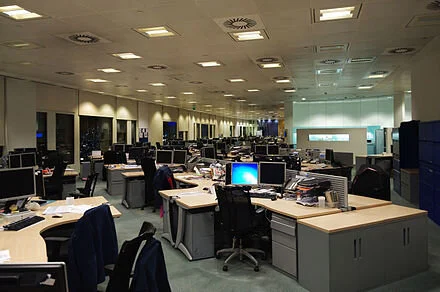
The office you leave your home to go to work in will not die, and indeed will stage a comeback when the COVID crisis fades. Many kinds of work are much more productive when people can collaborate in the same physical space. Sharing space encourages idea-sharing and esprit de corps. The experience of the past few months has vividly shown the strengths and weaknesses of Zooming and Skyping job work.
Less stressful than Disney World
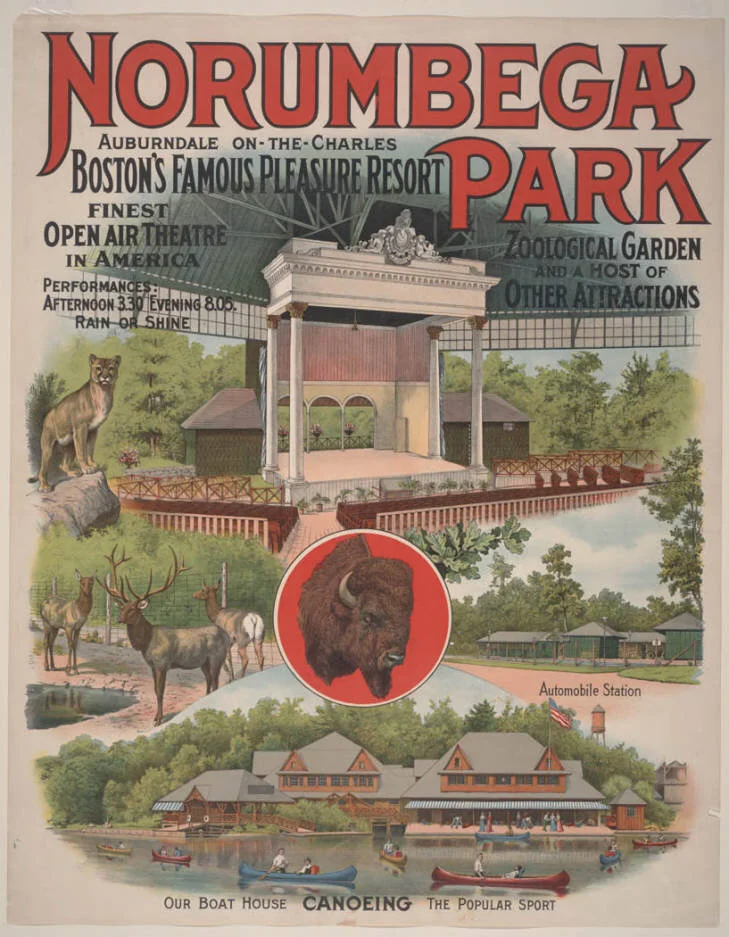
Norumbega Park, in the Newton, Mass., village of Auburndale, near (not in!) Boston, opened in 1897 and closed in 1963.

Some are very nice
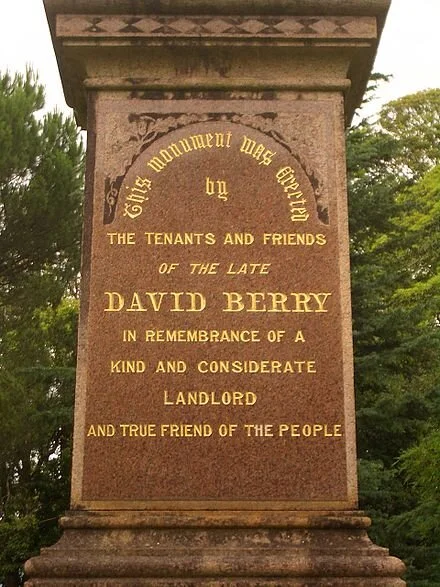
David Berry (1795-1889) was a Scottish-born horse and cattle breeder, landowner and benefactor in colonial Australia.
From Robert Whitcomb’s “Digital Diary,’’ in GoLocal24.com
Being threatened with eviction from your home because you’ve lost job, as has happened to so many people in the COVID crisis, can obviously be traumatic. But the denunciations of landlords as a class can be very unfair, and the eviction suspensions that some politicians promise are dangerously simplistic.
Many landlords are small-business people, for whom the loss of rent can be devastating, enough to drive many of them out of business. When that happens, the effect may be to decrease the available housing and drive up rental prices.
And while the image of landlords, at least to many people, may be negative, most are honest people trying to balance making a profit and being responsive to their tenants.
Being a landlord can be pretty unpleasant. Some tenants are irresponsible or worse, blithely damaging property, delaying their rent payments even if they have the income to pay, having loud parties and otherwise being a pain in the neck.
After my wife and I moved out of our old (built 1835) two-family house in a then rather marginal part of Providence to work abroad, we rented out the place for a few years. In that time, we saw a pretty wide range of tenant behavior, from highly responsible custodians to deeply irresponsible and selfish ones, including somebody who sawed through an antique door to create a cat entrance. We eventually moved back to the house, taking all of it over, but then, after a couple of years, moved a dozen blocks away to a single-family house because there was too much drug-related crime in the neighborhood at the time. (It’s much better now.)
Anyway, in the current public-health and economic anxiety, let’s not demonize whole economic classes, though I might make an exception when it comes to private-equity billionaires….
A better networking app than Zoom?
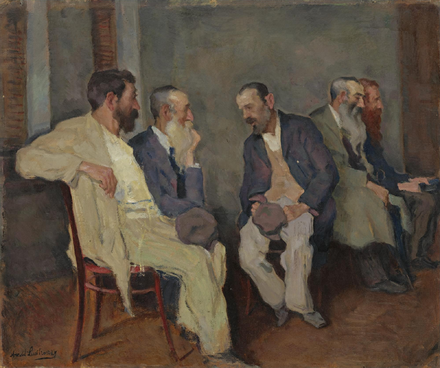
“The Conversation” (circa 1935), by Arnold Lakhovsky
From The New England Council (newenglandcouncil.com)
Northeastern University and the Massachusetts Institute of Technology have developed an app to allow for causal networking. Minglr, a video conferencing app, seeks to replicate the experience of conference attendees bouncing ideas off each other in the real world.
Thomas Malone, founding director of the MIT Center for Collective Intelligence, worked with MIT Sloan doctoral student Jaeyoon Song and Chris Riedl, an associate professor at Northeastern’s D’Amore McKim School of Business, to create the app. Currently, the Minglr is a fairly simple program, with users inputting their primary interests and selecting individuals to talk to. If the selection is mutual, a chat window will be opened. The team hopes that Minglr will allow conference goers to participate in the informal flow of ideas characteristic of conferences and innovation.
“It was so much better than being in just one giant Zoom meeting,” said Malone, who tried out the system at MIT’s Collective Intelligence 2020 virtual conference in June. “I had all the kinds of conversations you’d have in the lobby of a conference.” A survey of attendees who tested Minglr found that 86 percent liked the system and wanted it made available for future conferences, he said.
The New England Council congratulates MIT and Northeastern on their innovative work to tackle one of the many unique challenges created by the COVID-19 pandemic. Read more from the Boston Globe.
Porches and morale
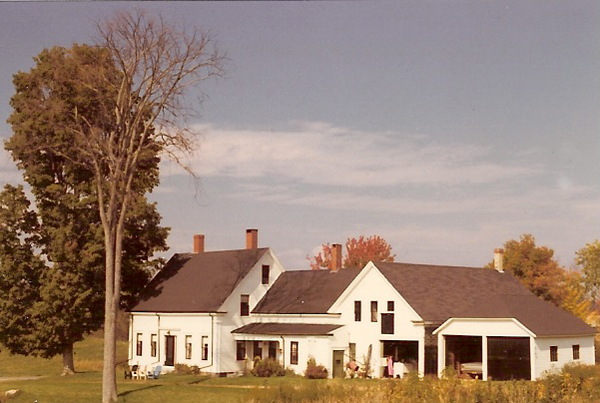
Old farmhouse in Windham, Maine
“Yankees traditionally build porches that will sag after a decade, and tack them on houses built to stand a century. I think it is a custom smiled upon by church fathers, because it ensures that the porch will be a barometer of the morale of whatever occupants may be therein….New England is a harsh climate not only for crops but for neighbors and porches as well. Any flagging of morale – any passing of days skulking indoors in a state of depression …any slacking of righteousness – and down goes the porch.’’
-- Mark Kramer, in Three Farms (1980)

We know who pulled off the Gardner heist

Joe Gibbons
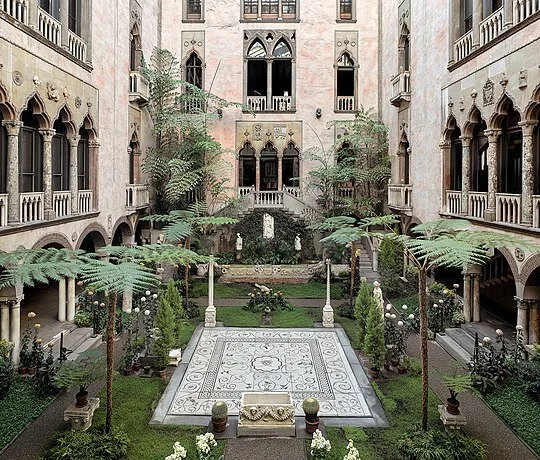
The famous courtyard of the Isabella Steward Gardner Museum
In 2015, my partner, Pam Wall, and I became convinced about who had robbed Boston's Isabella Stewart Gardner Museum in 1990, in what remains the greatest art theft in history. Thirteen works of art were stolen, including paintings by Vermeer, Rembrandt, Degas and Manet.
I'd used the Gardner theft as the backdrop for my 2013 novel, Irreplaceable, in which I made the thieves art students. Given the facts of the theft (81 minutes in the museum, thieves not armed, every painting removed from its frame, jimmying a candy machine) art students seemed far more plausible than the mobsters whom law-enforcement claimed were responsible.
After difficult experiences with law enforcement and the museum itself, we've realized that the only way to close out the theft and see the art recovered is to go public with our story.
Please see/listen to the videos linked below, on which Pam and I were guests. And read the article in the Providence Daily Dose.
In any event, far more people know about the museum and the art that was stolen than ever would have had the theft not occurred.
The shows:
Episode One (7/28/2020)
Episode Two (8/11/2020)

Spalding Gray interview with Joe Gibbons in 1985. Hit this link to see/hear it:

New life to found objects

“Abstract Boy” ( painted wood and found material); “Musician II” (painted wood and found material); “Troubled Mind” (painted wood and found material), in Shawn Farley’s show “Chance Encounters: Mixed Media Constructions,’’ at the Michele and Donald D’Amour Museum of Fine Arts, Springfield, Mass., through March 7.
The museum says Farley “endeavors to give new life to found objects such as old foundry molds. Each work seem to have its own personality in its construction, as the obsolete objects that make them up meld together to create a new identity.’’
National Grid's incentives for installing electric-vehicle charging stations

From The New England Council (newenglandcouncil.com)
National Grid has launched the Take Charge program, which provides incentives for businesses, families, and properties to build electric-vehicle-charging stations. The stations will provide easy access to power for electric vehicles and allow customers to embrace eco-friendly transportation.
The Take Charge program will completely fund all of the electrical infrastructure for approved charging- station installations. National Gird will also help customers select whatever station equipment is right for their home and business, and will provide rebates for the charging-station equipment costs.
The New England Council applauds National Grid for helping New Englanders move away from fossil fuels and increasing access to sustainable transportation. Read more from the National Grid brochure and fact sheet.
Winding and funky

Acorn Street in Beacon Hill, Boston
“It’s {Boston} such a great city, visually. You can’t get that kind of look in Canada that you can get in Boston: the old brick historical buildings, the winding streets, the old but funky neighborhoods like Southie and Somerville {actually a separate city}. You can’t get that elsewhere. It’s a very unique place in that way.’’
-- Brad Anderson, film director

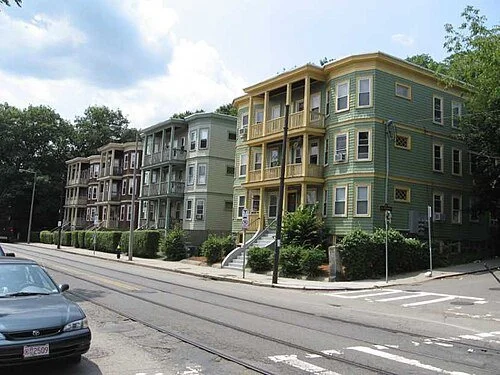
In Somerville, which has rapidly gentrified the past two decades.
'Police beat my mother'

“When I looked out the window, I saw my mother in an angry confrontation with the police. One of the officers lifted his billy club and hit her in the face with it. He busted her eye and she staggered back…I was deeply upset by what I had witnessed. I mean, I was only ten and I had just seen the police beat my mother in the face.’’
Robert Barisford Brown, aka Bobby Brown (born Feb. 5, 1969), singer, songwriter, rapper, dancer and actor. He grew up in Boston’s predominately African-American Roxbury neighborhood.
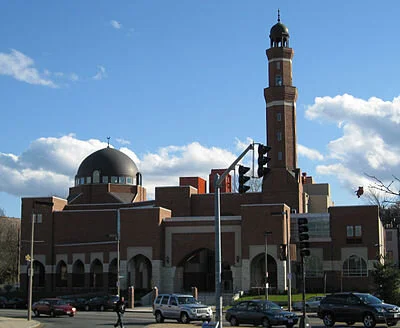
Mosque in Roxbury

Community garden in Roxbury
— Photo by Wilber Reyes01
Dangling but delightful

“Grotesque: A Different Kind of Beauty” (detail, felt installation, by Carolann Tebbetts, in the group show “8 Visions’’, at the Attleboro (Mass.) Arts Museum, through Aug. 28.
See:
https://attleboroartsmuseum.org/
'Echo from the past'

“A word, a tune, a known familiar scent
An echo from the past when, innocent
We looked upon the present with delight
And doubted not the future would be kinder
And never knew the loneliness of night.’’
— From “Nothing Is Lost,’’ by Noel Coward (1899-1973)
The urgent need for in-person instruction at N.E. colleges
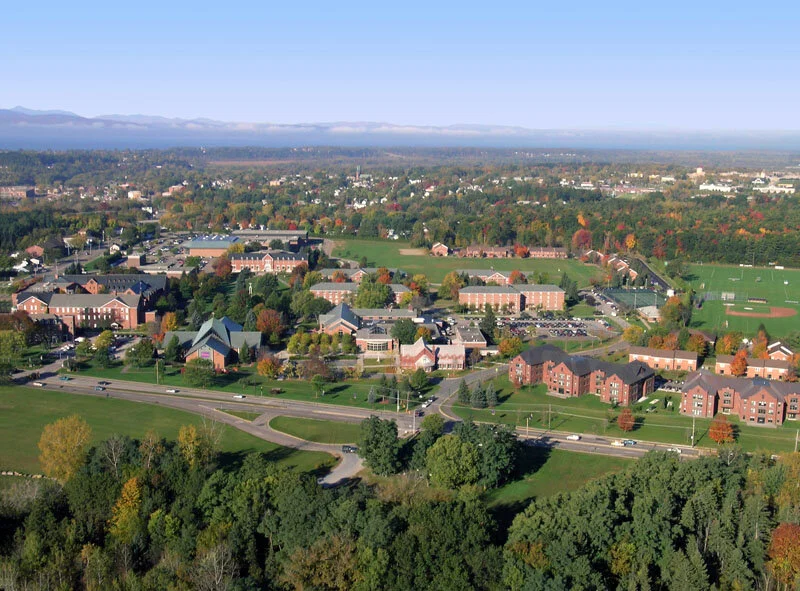
St. Michael’s College, in mostly bucolic Colchester, Vt.
BOSTON
This essay is from The New England Journal of Higher Education, a service of The New England Board of Higher Education (nebhe.org). It was written by NEBHE President and CEO Michael K. Thomas in conjunction with leaders and representatives of public and private institutions in all six New England states, including: Mark E. Ojakian, president of the Connecticut State Colleges and Universities; Jennifer Widness, president of the Connecticut Conference of Independent Colleges; Dannel P. Malloy, chancellor of the University of Maine System; Daniel Walker of the Maine Independent Colleges Association; Richard Doherty, president of the Association of Independent Colleges and Universities in Massachusetts; Debby Scire, president of the New Hampshire College and University Council; Daniel P. Egan, president of the Association of Independent Colleges and Universities of Rhode Island; Suresh Garimella, president of the University of Vermont, and Susan Stitely, president of the Association of Vermont Independent Colleges. This essay first appeared in The Boston Globe.
New England colleges and universities are admired for their ability to marshal smart minds to tackle complex problems. This capacity has been evident throughout the pandemic, as their research, teaching and commitment to public service have demonstrated what they do best—chart new paths in the face of uncertainty.
Analysis by the New England Board of Higher Education, an organization supporting students and institutions in the region, indicates that 65 of New England’s colleges and universities plan to provide on-campus and in-person instruction this fall. Ninety-eight will provide a hybrid of in-person and virtual learning, while 35 will support students all virtually. Each institution’s decision was made in response to the risk factors it faces as leaders do their best to respond to the unprecedented health emergency.
We recognize the importance of colleges and universities, both public and private, in the region that will reopen campuses in the coming weeks. These institutions have thoughtfully crafted plans for reopening that, while subject to some risks, will allow them to provide significant benefits to students, institutions, communities and economies. Are there COVID-related risks to reopening? Yes. While such risks cannot be completely eliminated, they can be intelligently managed in a science-supported way.
Leaders of New England colleges and universities have done their COVID homework. They are well prepared to advance their missions of educating students and conducting research and to lead in demonstrating how institutions can begin to carefully move forward in a new environment.
Since March, higher education leaders in all six states have put the full weight of their institutions behind planning, preparation and investment in reopening. This includes plans for robust virus testing, securing adequate personal protective equipment, obligatory mask-wearing, regular health monitoring, contact tracing, quarantine and isolation capacity, regular disinfection, changes to dorms and other campus facilities, limits on group gatherings, training for faculty, students and staff, signed conduct codes, accommodations for those at risk, contingencies for closing campuses or increasing virtual learning—and much more.
These plans have been developed in close collaboration with state government and public health leaders based on science, expert-vetted guidelines and best practices. Many institutions remained open since the start of the pandemic to house and feed students unable to return home or without a safe place to call home. This experience, as well as lessons learned from phased summer re-openings that provided safe access to labs, equipment and clinical experiences will guide the further repopulating of campuses in the coming weeks.
We also support New England institutions that have chosen to offer fully virtual programs this fall. And we support parents and students opting to not return to campus. No single answer is right for all and no option is risk-free. Pursuing a variety of institutional responses in New England can pay important dividends for the region and nation—providing valuable lessons to other institutions and as we reopen other parts of the economy.
The decision to reopen with only remote learning may mitigate some risks, but not all, including possible adverse impacts on individuals, local communities and economies that higher education seeks to serve. We cannot afford a “lost generation” of learners, particularly underrepresented, low-income and minority students—some of whom may not enroll or are at risk of dropping out if on-campus opportunities are reduced. For some such students, the campus provides the only food and housing security they know and staying home may both limit opportunity and increase risk of exposure to the virus.
Delaying or discouraging students’ educations could lead to clogs in the talent pipelines that drive growth for the region’s employers and our innovation-dependent economies. Finally, local communities, already beset by the pandemic’s disruption, will be further deprived of the economic benefits of open institutions and their students. Each of these will have long-term economic and social effects.
We look forward to the time when life on and off campus returns to normal. To do all that is possible to move closer to that goal, we must support colleges and universities in doing what they do best: tackling complex problems with brainpower, innovation and the application of science-based solutions to real-world challenges. Our colleges and universities are engines of innovation because of their ability to explore boundaries. New England institutions are prepared to lead in this time of significant challenge.
Sarah Anderson: The fox is still in the Postal Service henhouse
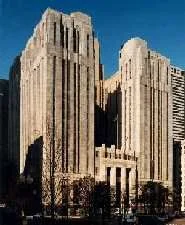
The John W. McCormack Post Office and Courthouse, an historic building at 5 Post Office Square, in downtown Boston. The 22-story skyscraper was built in 1931-1933 with an Art Deco and Moderne structure. The building was renamed for the late Mr. McCormack, a long-time Massachusetts congressman who was U.S. House speaker in 1962-71. Its original name was the United States Post Office, Courthouse, and Federal Building.
Via OtherWords.org
Skyleigh Heinen, a U.S. Army veteran who suffers from rheumatoid arthritis and anxiety, relies on the U.S. Postal Service for timely delivery of her meds to be able to function. She was one of thousands of Americans from all walks of life who spoke out recently to demand an end to a forced slowdown in mail delivery.
The level of public outcry in defense of the public Postal Service is historic — and it’s having an impact.
Shortly after Postmaster General Louis DeJoy took the helm in June, it became clear that the fox had entered the henhouse. President Trump had gained a powerful ally in his efforts to decimate the public Postal Service.
Instead of supporting his frontline workforce, DeJoy has made it harder for them to do their job.
For example, he banned overtime, ordering employees to leave mail and packages behind if they could not deliver it during their regular schedule. Until this point, postal workers had been putting in extra hours to fill in for sick colleagues and handle a dramatic increase in package shipments.
As the mail delays worsened, more than 600 high-volume mail sorting machines disappeared from postal facilities. Blue collection boxes vanished from neighborhoods across the country. Postal managers faced a hiring freeze.
President Trump threw gas on the fire by gloating that without the emergency relief he opposes, USPS couldn’t handle the crisis-level demand for mail-in voting.
Outraged protestors converged outside DeJoy’s ornate Washington, D.C., condo building and North Carolina mansion, and they flooded congressional phone lines and social media. Political candidates held pop-up press conferences outside post offices.
At least 21 states filed lawsuits to block DeJoy’s actions, while Taylor Swift charged that Trump has “chosen to blatantly cheat and put millions of Americans’ lives at risk in an effort to hold on to power.”
After all this, DeJoy announced he’s suspending his “initiatives” until after the election.
This is a victory. But it’s not enough.
DeJoy’s temporary move does not address concerns about the threats to the essential, affordable delivery services that USPS provides to every U.S. home and business, or the decent postal jobs that support families in every U.S. community. These needs will continue long past November 3.
Second, DeJoy has made no commitment to undo the damage he’s already done. And he promised only to restore overtime “as needed.” Will he replace all the missing mail-sorting machines and blue boxes? Will he expand staff capacity to handle the backlog he’s created and restore delivery standards?
Third, DeJoy makes no mention of the need for pandemic-related financial relief. USPS has not received one dime of the type of emergency cash assistance that Congress has awarded the airlines, Amtrak, and thousands of other private corporations.
While the pandemic has been a temporary boon to USPS package business, the recession has caused a serious drop in first-class mail, their most profitable product. Postal economic forecasters predict that COVID-related losses could amount to $50 billion over the next decade.
DeJoy has proved he cannot be trusted to do the right thing on his own. Congress must step in and approve at least $25 billion in postal relief — and legally block actions that undercut the ability of the Postal Service to serve all Americans, both today and beyond the election.
For the American people, this is not a partisan fight. We will all be stronger if we can continue to rely on our public Postal Service for essential services, family-supporting jobs, and a fair and safe election.
Sarah Anderson directs the Global Economy Project at the Institute for Policy Studies. More research on the Postal Service can be found on IPS site Inequality.org.