
What July is

“July is hot afternoons and sultry nights and mornings when it’s joy just to be alive. July is a picnic and a red canoe and a sunburned neck and a softball game and ice tinkling in a tall glass. July is a blind date with summer. ‘‘
— Hal Borland (1900-77), American writer and naturalist and long-time resident of Salisbury, Conn., in the foothills of the Berkshires, which he often wrote about.

— Photo by Mary Kane
Llewellyn King: The virus and the debt bomb
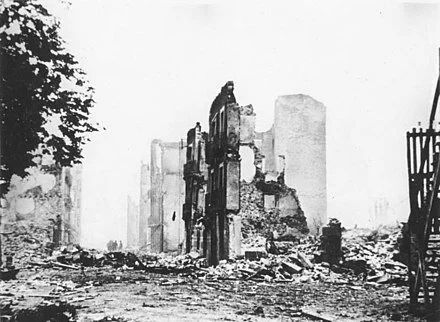
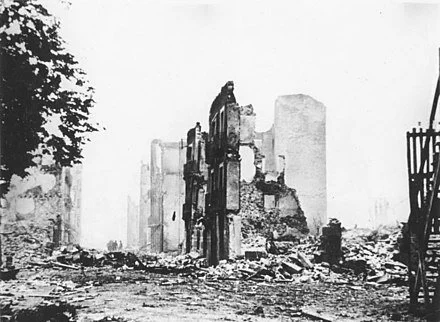
We are in the shadow of an economic collapse of 1930s proportions. That is the awful reality of the current and relentless surge in COVID-19 infections. What looked bad a few weeks ago now looks worse.
The first horror is the coronavirus itself. The second is the devastated economic and social order it will leave behind: a landscape where the structures of society are leveled and will have to be replaced not by the old, broken structures but by new ones.
The economy won’t come roaring back in a classic V, as so many hope and even believe.
Parts of the economy are undergoing massive leveling of near-biblical proportions. Tens of millions of us are raring to get back to work, to resume where we left off. But for many, there will be nowhere to return to: They will be economic refugees, contemplating a swath of destruction where their jobs used to be. They’ll find there is no there there.
Jobs in retailing, restaurants, bars, hotels, cinemas, sports facilities, and travel have already vaporized. Behind those subtractions from the economy are their supply chains. Visible jobs lost are just the beginning. When economic collapse begins, it spreads as devastatingly as COVID-19 in a crowded barroom.
There is brutal irony when, after the virus, the second subject on the national agenda is the plight of minorities. Sadly, they are overrepresented among the workers at the low end of the economic food chain. It is those who make the minimum wage or just above, those who live off tips, day work, commissions, pick up assignments -- the whole shaky lattice that makes up the employment pyramid -- who are set to be hurting badly when unemployment runs out.
Every damaged industry, like retail, has its collateral damage. Close a mall and the hurt spreads after the clerks and warehouse workers are gone, from cleaners to building maintenance workers, to supply chain workers, to advertising professionals and the newspapers where those ads might have appeared. Like the coronavirus itself, economic contagion spreads wide and fast.
Politicians and social engineers keep trying to promote the working class to the middle class, but they remain at the bottom -- those who feel every bump in the economic road.
Across the nation, a debt bomb is about to explode with huge consequences for those who are now or about to be jobless -- and by extension the whole economy. Delayed rents are going to come due with a concurrent wave of evictions affecting millions. Credit cards -- the modern slavery for those with little money -- must be paid, except they won’t. At almost 30 percent interest, which is what many are paying, the debt will overwhelm the users. In time, as accounts fall into arrears and payments cease, it will begin to drag down the issuers.
An incendiary component of the debt bomb is health care. People rushed to hospitals are going to have medical bills in the tens of thousands of dollars. They won’t be able to pay. No money, no pay, no choice. If the pandemic goes on long enough, the insurers, for those who are insured, will begin to hurt.
But mostly, it will be the hospitals that will go after the patients for payment because they’ll have no choice. Real inability to pay is the fuse that will light the debt bomb. Multiply this by those who need other health care and are not insured.
Most thinking in the political class has revolved around an expectation that come the fall, there will be a vaccine that will be available and affordable by all and it will turn night into day, ending the horror. That isn’t assured. Already, to be sure, we are finding therapies for use in infected patients, the steroid Dexamethasone, for example, and other off-label uses of existing drugs. But that doesn’t immunize the population, and whether immunization is possible and how fast it will come isn’t known.
What is known is the unfolding economic catastrophe for tens of millions of Americans and their possibly permanent loss of jobs.
When Europe lay in ruins after World War II, the United States stepped in with the Marshall Plan and wrought an economic resurrection. A Marshall Plan for America? I think so. The need will be very great.
Llewellyn King is executive producer and host of White House Chronicle, on PBS. His email is llewellynking1@gmail.com and he’s based in Washington, D.C., and Rhode Island.
Linda Gasparello
Co-host and Producer
"White House Chronicle" on PBS
Mobile: (202) 441-2703
Website: whchronicle.com
New England's only NASCAR site to reopen

At the New Hampshire Motor Speedway
From The New England Council (newenglandcouncil.com)
“With most major sports leagues having had their seasons curtailed due to the COVID-19 pandemic, the NASCAR circuit will be returning to New Hampshire Motor Speedway in Loudon, N.H., {in Lakes Region} this summer. Governor Chris Sununu recently gave the “green light” to allow race fans at New England’s only NASCAR site with proper precautions to ensure fans maintain social distancing requirements among other health considerations. The racing world’s attention will turn to New Hampshire for the race on Aug. 2. Read more at the New Hampshire Motor Speedway.’’
Chris Powell: Hartford mayor confronts the mob while legislators pander
MANCHESTER, Conn.
Maybe black lives matter a little more now, but mainly, it seems, when they are taken by white cops. When they are taken by anyone else, that seems to be nobody's business.
For where are the protests of the murder of New Haven high school basketball star Kiana Brown, 19, shot to death a week ago as she slept at her home, apparently killed by a stray bullet fired from outside? And who is protesting the fatal shooting of Luis Nelson Perez, 27, on a New Haven street a few days later?
New Haven may be the most indignant city in the world but it gives its own social disintegration a pass. Indeed, the social disintegration underlying most wrongful deaths in Connecticut gets a pass not only in New Haven but throughout the state amid the clamor to end racism and defund the police.
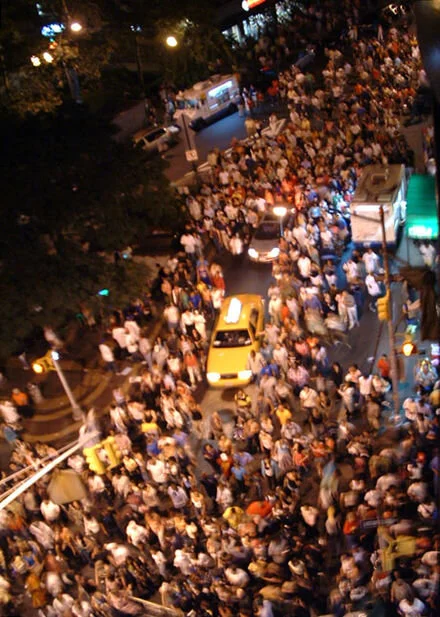
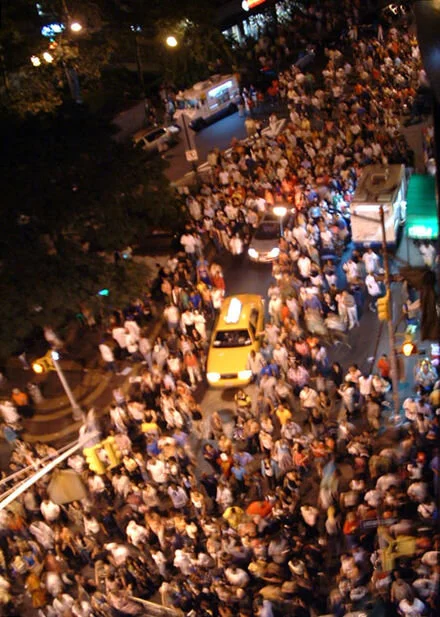
At least Hartford Mayor Luke Bronin last weekend became the first elected official in Connecticut to talk back to the mob. Hundreds of protesters descended on his home, demanding that he take their wrath out on the city's cops. The mayor tried to explain why law enforcement should not be abolished but he was interrupted, jeered, and largely drowned out. The protesters wanted only to intimidate.
But Bronin's plan to create a civilian agency to respond to seemingly noncriminal incidents such as mental breakdowns and drug overdoses, eliminating police response, won't appease the mob and is not realistic anyway. For the mentally ill and the druggies are not always harmless. They quickly can become violent.
Does the mayor not remember the nearly fatal stabbing of a Hartford police officer two years ago as she responded to a commotion caused by a mentally ill woman resisting eviction from her apartment? Any social worker or therapist responding to the incident would have faced the same threat. Police already try to reduce tensions at incident scenes. Their authority to use force is more a help than a handicap. Social workers and therapists get less respect.
While Bronin got the mob treatment, Connecticut's state legislators are being let off too easily -- and not just by the protesters to whom they have been pandering. Nobody is asking legislators who was in charge while Connecticut's police became so unaccountable and social disintegration worsened, especially in the cities.
Last week state Senate President Pro Tem Martin M. Looney, D-New Haven, at least was asked if legislators would do anything about the provision in the state police union contract that allows concealment of brutality complaints. Looney replied that the current contract can't be revised but the law might be changed someday to forbid similar provisions in future contracts.
This was a dishonest dodge. For the General Assembly and Governor Lamont could nullify the secrecy provision by repealing the law authorizing state employee union contracts to supersede the open-government law, as the state police contract does. Then the contract wouldn't have to be changed. The legislature and governor also could repeal collective bargaining for the state police. Such a threat might induce the union to concede the secrecy provision immediately.
No one asked Looney how the state police contract provision came about and how it so easily got past the governor and those legislators who now are insisting that black lives matter. Just whom were the governor and legislators serving when they agreed to conceal complaints of police brutality? Not the public.
Feigning impotence, Looney and his colleagues still think that the contentment of government employees matters more than black lives.
Chris Powell is a columnist for the Journal Inquirer, in Manchester.
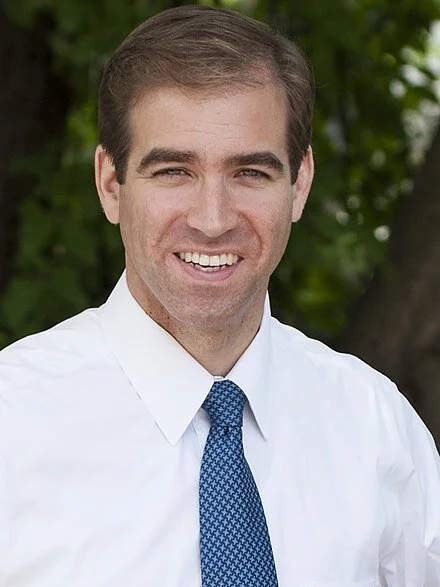
Mayor Luke Bronin

Explosive evenings

M-80
From Robert Whitcomb’s “Digital Diary,’’ in GoLocal24.com
Residents of Providence are being increasingly disturbed by fireworks and firecrackers being set off for hours every night, especially in poorer neighborhoods. Lots of these are being illegally used, since in Rhode Island only ground fireworks and sparklers can be legally ignited – in other words, quiet displays -- with firecrackers, rockets and mortars or other devices that launch projectiles banned, except, I assume, for professionally run public fireworks displays that we used to enjoy on special occasions, especially The Fourth and New Year’s Eve.
The racket, injuries and fire threat from illegally used fireworks is one of those quality-of-life issues, like graffiti, that can drive people away from a city. The police must crack down hard. And the explosives are hurting the sleep we need, especially in these tenser-than-usual times. If some folks see the fireworks as an expression of personal or political liberation many more see them as reminders of entrapment in an urban dystopia.
Knock it off.
Ah, if only people were as interested in reading the Declaration of Independence as in making a lot of noise.
The fireworks frenzy is happening in other cities, too. Please hit this link.
The year-round fireworks dilutes the excitement that we used to feel as we approached the public celebrations of the Glorious Fourth of July, which I suppose won’t happen this year in most places. When I was a kid we lived on the coast and so most of the fireworks spectacles we enjoyed were on beaches. But we also, probably illegally, had our private shows, mostly involving devices such as M-80s, cherry bombs and Roman candles, in backyards – with the nearby thick woods muffling the noise a bit. But that was only on the Fourth, when the local cops, who seemed to know everyone in town, would look the other way.
My father would stock up several years worth of fireworks in Southern states, where laws were lax. (Now the laws are very lax in New Hampshire — Live Free and Blow Off Your Hand.
Then there was the little cannon he set off every year on the Fourth. We had a loud old time for several hours.
A few boys would light and throw M-80s and cherry bombs at each other (but only on The Fourth!), displaying the same sort of idiocy as in the BB-gun wars they had through the year, in which it was possible to lose an eye or two. Cheap thrills indeed!
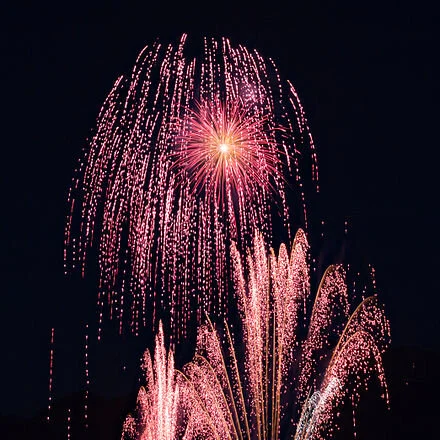
Early morning gull

See www.nivaartwork.com and galateafineartcom
“Lobster Co-Op in Stonington {Maine} ‘‘ (oil) , by Niva Shrestha in Galatea Fine Art’s online gallery. This text ran with it:
“The first sound one hears is the gull calling the morning. It has been a long work day, and it seemingly was never over. The dawn calls to duty, to awaken todoing-ness, sleep and rest a dim memory. But the day is a blessing, a legacy to generations past and future.’’

Rocket science
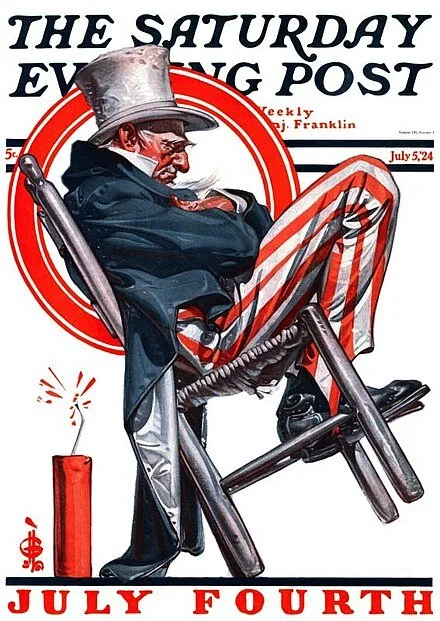
“Freedom is a rocket,
isn’t it, bursting
orgasmically over
parkloads of hot
dog devouring
human beings….’’
— From “Fourth of July,’’ by John Brehm
From away
“I find it funny how people from Boston and New York hate each other because of pro teams. But, like, everyone on the Red Sox is a random millionaire athlete from somewhere else.’’
— Julian Casablancas, musician

Invasive little pet turtles

Red-Eared Sliders
From ecoRI News (ecori.org)
They are the most popular pet turtle in the United States and available at pet shops around the world, but because Red-Eared Sliders live for about 30 years, they are often released where they don’t belong after pet owners tire of them. As a result, they are considered one of the world’s 100 most invasive species by the International Union for the Conservation of Nature.
Southern New England isn’t immune to the problems they cause.
“I hear the same story again and again,” said herpetologist Scott Buchanan, a wildlife biologist for the Rhode Island Department of Environmental Management. “‘We bought this turtle for a few dollars when Johnny was 8, he had it for 10 years and now he’s going to college, so we put it in a local pond.’ That’s been the story for hundreds and thousands of kids in recent decades.”
Red-Eared Sliders are native to the Southeast and south-central United States and northern Mexico, where they are commonly found in a variety of ponds and wetlands. Buchanan said they are tolerant of human disturbance and tolerant of pollution, and they are dietary generalists, so they can live almost anywhere. And they do. They breed throughout much of Australia as a result of pets being released, and in Southeast Asia they are raised as an agricultural crop and have displaced numerous native species. In the Northeast, they live in the same habitat as Eastern Painted Turtles, one of the area’s most common species, but they grow about 50 percent larger. Numerous studies suggest that sliders outcompete native turtles for food, nesting, and basking sites.
Despite concerns about their impact on native turtle populations, red-eared sliders are still legal to buy in Rhode Island and most of the United States, though Buchanan said that in the Ocean State they may only be sold by a licensed pet dealer and can’t be transported across state lines. Those who buy a slider must keep it indoors and must never release it into the wild, including into a private pond.
“But people often aren’t aware of the regulations, or they don’t bother to look at them, or they just don’t follow them,” Buchanan said. “We see lots of evidence of sliders, especially in parts of the state where there are lots of people. The abundance of Red-Eared Sliders in Rhode Island is tied to human population density, which means mostly Providence and the surrounding communities. But I’ve also found them in Newport and Narragansett and elsewhere.”
Sliders are especially common in the ponds at Roger Williams Park, in Providence, and in the Blackstone River.
While conducting research for his doctorate at the University of Rhode Island from 2013 to 2016, Buchanan surveyed ponds throughout the state looking for spotted turtles, a species of conservation concern in the region. During his research, he also documented other turtle species, including many red-eared sliders.
“The good news was that while spotted turtles can occupy the same habitat as red-eared sliders, I found a greater probability of occupancy by spotted turtles at the opposite end of the human density spectrum as I found sliders,” he said. “Spotted turtles tend to occur where human population density is low, so at least at this moment in time, we would not expect red-eared sliders to be directly competing with populations of spotted turtles.”
Nonetheless, Buchanan advocates what he calls a “containment policy” to keep the sliders from expanding their range in the state.
“It’s mostly about public education,” he said. “We want to make sure people know not to release them in their local wetlands. If we found sliders in an important conservation area — Arcadia, for example — we might consider removing them, though we’re not doing that now.
“They’re well-established in Rhode Island now, so the thought of eradicating them does not seem like a feasible management solution. We just have to live with them, but we also have to try to minimize their spread and colonization of new wetlands.”
No other non-native turtle from the pet trade besides the Red-Eared Slider has been found to be a common sight in the wild in Rhode Island, though Buchanan said he recently had a report of a Russian tortoise — another popular pet — that was discovered wandering around Coventry.
For those who want to get rid of a pet Red-Eared Slider, Buchanan doesn’t offer any easy alternatives.
“You’ve got to be committed to housing that turtle for 30 or 40 years until it dies,” he said. “That’s why this is such a problematic issue. It’s easy to buy a teeny turtle for ten bucks and think it’s no big deal, but that animal is going to live for a long time. When you purchase it, you have to be responsible for it for the rest of the turtle’s life.”
Rhode Island resident and author Todd McLeish runs a wildlife blog.
Little towns that made things

In Haverhill. The town has become an arts center in recent years.
— Photo by Magicpiano
From Robert Whitcomb’s “Digital Diary,’’ in GoLocal24.com
While driving up and down the Upper Connecticut River Valley the other week I came through several towns – Orford and Haverhill, N.H., stand out the most – with grand houses, beautiful churches and lovely commons. And they were all developed in the late 18th and early 19th centuries very soon after people arrived to take land long used by Native Americans! How did they afford it?
Well, because these very entrepreneurial and energetic Yankees used the region’s natural resources to maximum benefit – its good grass for sheep raising for the burgeoning wool trade, the wood from its forests (especially white pine to make buildings), its very arable land along the river and its water power --- to very early on create thriving businesses. Consider that by 1859, when Haverhill had 2,405 inhabitants, it had 3 gristmills, 12 sawmills, a paper mill, a large tannery, a carriage manufacturer, an iron foundry, 7 shoe factories, a printing office, and several mechanic shops! Those industries helped finance well run local schools and cultural institutions.
The lesson is that it’s good to have nearby enterprises that make things.

“The Mall,’’ in Orford, in 1907
New Bedford ‘Kinetic Grid’

“Kinetic Grid Over New Bedford,’’ by Bobby Baker. Copyright Bobby Baker Fine Art.
Artist note: “What may appear to be a double-exposure image is really just the artist seizing the opportunity to create a piece featuring both the unique art exhibit, ‘Kinetic Grid,’ and New Bedford architecture all in one space. This piece was created using late-day light and what would normally be considered bothersome reflections in the glass store front surrounding the exquisite work of artist of Soo Sunny Park. The distinct reflections are that of the building across Union Street, on the corner of Purchase Street.’’
Self-portraiture in the pandemic

From Ashley Pelletier’s show “Reflections,’’ at Periphery Space @ Paper Nautilus, Wayland Square, Providence. through Aug. 15.
The gallery says:
“Because of the coronavirus pandemic, we have all had to figure out how to deal with feelings of stress that isolation has caused. For many artists, time in the studio has been a way to cope. Pelletier found that creating work during this time has expanded her practice of self-portraiture. The 14 paintings in “Reflections’’ show her process as it starts with the exterior of the body and goes to the interior — from the representational to the abstract.’’
Sacrilege
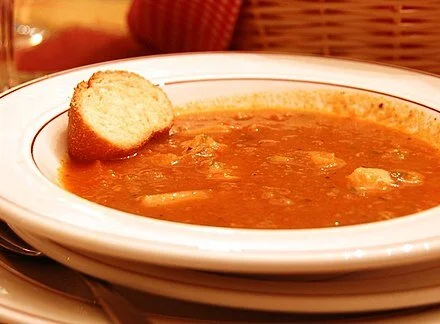
Manhattan Clam Chowder — fake chowder
“There is a terrible pink mixture (with tomatoes in it and herbs) called Manhattan Clam Chowder that is only a vegetable soup, and not to be confused with New England Clam Chowder, nor spoken of in the same breath. Tomatoes and clams have no more affinity than ice cream and horse radish. It is a sacrilege to wed bivalves with bay leaves, and only a degraded cook would do such a thing.’’
— Eleanor Early, in A New England Sampler (1940)

New England Clam Chowder — a real chowder
'Too damn cold'

Old Orchard Beach in 1914
“{It’s) the only fault I have with Maine, the water is just too damn cold.’’
— Arthur Griffin, in New England: The Four Seasons (1980)
Editor’s Note: But the Gulf of Maine is now one of the world’s fastest-warming bodies of salt water. Still, the water on the south coast of New England (particularly Buzzards Bay) can be as much as 20 degrees warmer than the Gulf of Maine in the summer.
The absurdity of mowing

“Shoving such a machine
around a fairway of dandelions,
it is easy to feel absurd.
The average lawn, left alone
one hundred years, could become
a hardwood forest. ‘‘
—From “Mowing,’’ by Robert Wrigley
Treating ‘air hunger’

From The New England Council (newenglandcouncil.com):
“A new study published by Harvard University in conjunction with Beth Israel Deaconess Medical Center (BIDMC), in Boston, shows the importance of treating ‘air hunger,’ or severe breathlessness, in COVID-19 patients. The paper debunks the myth that sedation—such as that used for patients on ventilators—eliminates air hunger and offers solutions to truly relieve the often-traumatic feeling of severe breathlessness. Read more here.’’
“Massachusetts General Hospital (MGH) has launched a COVID-19 hotline for patients who have any questions regarding the virus, believe they may have been exposed, or need treatment. In addition to providing advice and offering telemedicine service, the hotline is available in several languages to accommodate non-English-speaking residents of Boston. Read more.’’
David Warsh: Democracy vs. autocracy -- what's ahead?
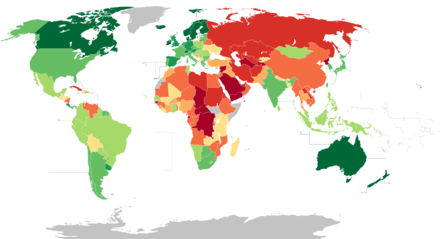
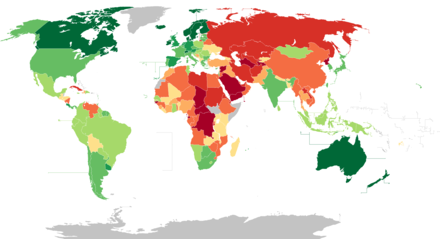
Dark green: Most democratic (closest to 10)
Red: Least democratic (closest to 0)
Democracy's de facto status in the world as of 2019, according to Democracy Index by The Economist.
SOMERVILLE, Mass.
The Decline and Rise of Democracy: A Global History from Antiquity to Today (Princeton, 2020), by David Stasavage, of New York University, gives the impression of being an easy read. Three hundred pages of text present a powerful narrative delivered with disarming clarity, with no showier claim to authority than the precision of its arguments.
But then come 37 pages of notes and a bibliography of 850 items, adding another hundred pages to the book. Stasavage has mastered so much history, and located it so deftly in recent controversies of social science, that he covers nearly everything that I have so much as glimpsed going on as an economic journalist these past 50 years, and a great deal more that I hadn’t. No wonder I missed on the couple of previous swings I took at it. I’ve got a bead on it now.
We won’t know for a while, but my hunch is that Decline and Rise will turn out to be the most compelling work on grand strategy since The End of History, by Francis Fukuyama, and The Clash of Civilizations and the Remaking of World Order, by Samuel Huntington, in the euphoria of the early ’90s. Since then there’s been Destined for War: Can America and China Escape Thucydides’ Trap? (2017), by Graham Allison, but that was somehow less helpful than the much earlier The Weary Titan: Britain and the Experience of Relative Decline 1895-1905 (1988), by Aaron Friedberg. Meanwhile, Decline and Rise is differently grounded from the agendas of realists such as John Mearsheimer (The Great Delusion: Liberal Dreams and International Realities, 2018) and Stephen Walt (The Hell of Good Intentions: America’s Foreign Policy Elite and the Decline of U.S. Primacy, 2018). The Narrow Corridor: States, Societies, and the Fate of Liberty (2019), by Daron Acemoglu and James Robinson, is somewhat similar to Decline and Rise.
Stasavage begins by rehearsing the narrative familiar to anyone who has taken a course in world history: how democracy was invented in Greece, and how it died out after a very short time – “about as much time as the American republic has existed.” Resurrected in such Italian city republics as Venice and Genoa, after more than a thousand years, thanks to the rediscovery of Aristotle; and in the England of Magna Carta, democracy then resumed its long slow evolution to the present day.
That takes no more than a paragraph. The “problem with this story,” Stasavage writes (a phrase that occurs many times in the book) is that it is highly misleading. When Europeans in the 16th Century began fanning out across the world they often found themselves dealing with systems of government in which consent of the governed played a greater role than the ones that prevailed at home. These included tribes like the Huron people, of southwest Ontario, whom Jesuit missionaries studied intently; and the Tlaxcala people, of Mesoamerica, whose government Hernan Cortez described as resembling that of Genoa or Pisa, because there was no king.
These early democracies, as Stasavage calls them, flourished wherever states were weak, which as recently as five hundred years ago, was most of the Earth. They involved tribal chiefs who ruled collectively with the aid of assemblies and councils that constrained their power. These bodies were in turn responsive to the ordinary people whom they led, at least a subset of them, and they were to be found all over the world in communities that shared three characteristics: small scale; leaders who lacked knowledge of what their subjects were producing; and an option for the disaffected to flee into the forest or otherwise “light out for the territory.” Fans of the saga of King John and Robin Hood will recognize the situation. Leaders who lacked dependable tax systems were more likely to govern consensually.
Early democracies existed in contradistinction to autocracies, which prevailed wherever a state could get a leg up on the citizenry, chiefly by knowing whom to tax and how much, in settlements from which there was no easy exit. China, with its fertile plateau of loess soil, was the first state. From at least the beginning of the second millennium BCE, dynasties in northwest China were able to support armies and build proto-bureaucracies by levying taxes on farmers whose productivity was more or less visible. Rulers were hereditary. Councils had no say in the matter. Other autocracies emerged out of similar geography: the Third Sumerian Dynasty of Ur, the Aztec Triple Alliance, the Incas, the Mississippian chiefdoms, the Azande kingdom in central Africa. Islam inherited a state when it burst out of Arabia to conquer the Sasanian Empire in the Fertile Crescent. Islam retained the local bureaucracy and converted it to its use.
Then came “the great divergence.” Everyone seems to agree that the different economic trajectory that Europe pursued began with representative government. But if the economic divergence has political origins, where did the politics come from? Representative government in Europe stemmed from the backwardness of its state bureaucracies, Stavasage argues. Rulers had no alternative but to seek consent from Europe’s growing towns. China and the Islamic world were far better off than Europe for five centuries or more; autocracy served development well. But at a certain point the Renaissance commenced, followed by the Enlightenment and the Industrial Revolution.
Modern democracies had their beginnings in England, not the Dutch Republic, as has often been argued, England borrowed many Dutch institutions, so what made England different? A new kind of parliamentary government, in which representatives could be bound by voter mandates, nor were they required to report back to their constituencies before making decisions. The Dutch retained institutions that permitted vested interests to forestall technological innovations; England sprinted ahead economically.
If the English went halfway to modern democracy, building a centralized state in which kings had powers as well as the newly-animated parliament, American colonists took the process to the next level, creating the broad suffrage for white males as a means of maintaining the consent of the governed necessary to the existence of a strong executive state. But the same conditions that produced democracy for European immigrants produced slavery for Africans and disaster for native American peoples. Stasavage is especially acute on the forces binding today’s Americans together – and those driving them apart.
The picture that emerges is of a world divided into two deep traditions, democracy and autocracy, the U.S., the European Union, India, Japan, on the one hand; China and Russia on the other, neither system innately superior to the other in all times and circumstances. A lengthy contest portends, not a cold war so much as an economic competition with values at its core.
A great deal has happened in the last 30 or 40 years that favors Stasavage’s cross-regional perspective. It may not be too much to speak of a second golden age of social science. The 19th Century was the first: We remember Smith, Tocqueville, Marx, Durkheim, Weber, and Freud, in particular. And the second? The departments of knowledge have become more complex and deepened considerably. A great many streams have begun to flow in parallel. Almost all have one thing in common: they began to flow after Darwin had a chance to sink in.
There are, of course, other pathways to thinking about America’s place in the world. One of the best is biography. As it happened, I spent part of last week reading The Inevitability of Tragedy: Henry Kissinger and His World (Norton, 2020) by Barry Gewen. Same questions, different methods, a high degree of skill applied in each case. Same answers. Social theory may point the way to peace, but the life of politics requires action. For a skeptical view, see Thomas Meaney .
David Warsh, an economic historian and veteran columnist, is proprietor of Somerville-based economicprincipals.com, where this column first ran.
Blogs
Bookshelf
Letters
Search for:
And crossing fingers
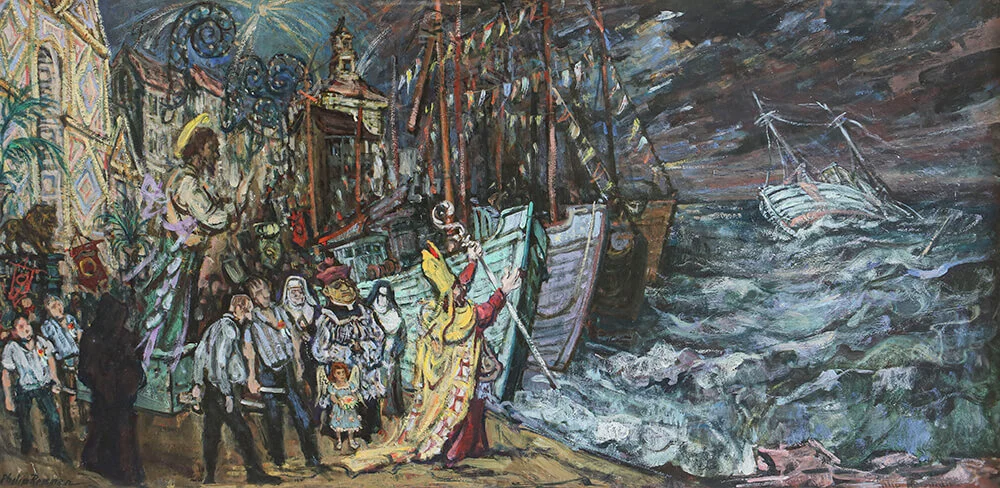
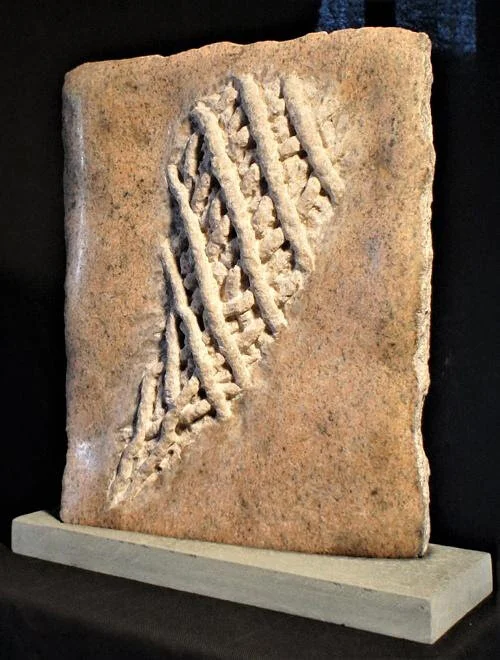
“Blessing the Fleet,’’ (oil on panel), by Philip Riesman (1904-1992) in the Collection of the Cape Ann Museum. Gloucester.