
Vox clamantis in deserto





Corrupting our 'intrinsic purity'

“King of Air’’ (oil on canvas), by Somerville-based James Cole, at Galatea Fine Art, Boston
See:
www.jamesaustincole.com
and:
galateafineart.com
This text ran with it:
“Anyone familiar with the movie Metropolis will recognize the figure ascending from the pyramid. This is the prototype of the innocent woman of good intentions, who is transformed into a metallic faithless, soulless icon of herself. It is the plunging of ourselves into the realms of survival and industry that corrupts our intrinsic purity at times.’’
George McCully: Higher education in crisis and a paradigm shift
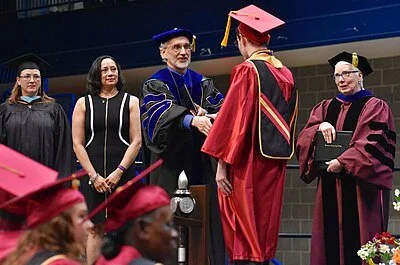
Via The England Journal of Higher Education, a service of The New England Board of Higher Education (nebhe.org)
BOSTON
Discussions of the problematic future of higher education were already an exploding industry before COVID-19, producing more to be read than anyone could possibly keep up with. Their main audience was academic administrators and a few faculty, worrying where their institutions and careers were headed, and wanting guidance in strategic decision-making—helping to identify not only where they actually were and were going, but also where they might want to go. Experiments were everywhere, momentous decisions were being made, and there were no signs of any problem-solving consensus.
Into that pre-coronavirus maelstrom came Bryan Alexander’s Academia Next: The Futures of Higher Education (Johns Hopkins UP, 2020). Alexander, whose doctorate is in English literature, took care to detail his qualifications and previous experience in futurist studies, and is described in the flyleaf as “an internationally known futurist, researcher, writer, speaker, consultant, and teacher,” currently senior scholar [adjunct] at Georgetown University, founder of the online “Future of Education Observatory” and author of The New Digital Storytelling: Creating Narratives with New Media, and Gearing Up for Learning Beyond K-12.
We note the plural “Futures,” which is commendable because Alexander addresses the wide variety of institutions, from major research universities and state university systems to community colleges and the full range of private liberal arts colleges, each group with its own distinctive future. Alexander’s stated preference for the word “forecast,” as with weather, over “prediction,” as with science, is also appropriate. The method and structure of his book is presented as conventional futurism: to identify “trends,” from them to artfully project multiple “scenarios,” from which to draw conclusions. This is clearly not science—but more about methodology to follow.
The strongest part of the book is the first, which exhaustively details “trends,” or more accurately “innovations,” for whether they are actually historical “trends” is not critically addressed. Moreover, nothing is said about the central issue of scholarship itself, widely recognized as being a major problem—for example, the obsolescence of traditional (mostly 19th Century) multiversity academic disciplines in this century, and the innumerable searches for new strategies and structures. The temporal range of Alexander’s forecasting vision is short: 10 to 15 years, but even so, the imagined “Scenarios” section suffers from rhetorical excess and a lack of carefully analyzed pathways telling us how the innovations might become “trends,” and those might become “scenarios.” The weakest part is the last, purportedly on conclusions, but failing to connect today to tomorrow, or to reach any very helpful conclusions.
Subverting all this however are two fundamental flaws, which the book shares with conventional futurist methodology: first, its tacit assumption that historical change is a consistently evolutionary process; and second, the lack of a precise understanding of historical causation.
Futurist studies arose as a field in the last half of the 20th Century, a relatively stable postwar historical period. Alexander’s assumptions reflect this: “In general, the future never wholly eradicates the past. Instead, the two intertwine and influence each other.” This approach is less well suited, and sometimes not suited at all, to periods of revolutionary change, especially if that is widespread and accelerating, as it is today.
Stable periods of history, whether in particular fields (e.g., sciences, technologies, business, scholarship, higher education, etc.) or in general, derive their order from paradigms, that is, established models governing mature fields of activity. Revolutionary change occurs when a paradigm is overthrown or replaced by unordained means, producing an alternative, incompatible one—in politics for example by an unconstitutional change in the constitution of a polity. This distinctive kind of historical change—”paradigm shift”—usually concerns only individual fields, but in the 21st Century we happen to be living in a highly exceptional entire period of paradigm shifts, powered by the revolution in information technology (IT)—computers and the internet. In higher education, paradigms were shifting even before the pandemic, already invalidating forecasts.
Periods of paradigm shift
Periods of paradigm shift are rare—by my count only four in 2,500 years of Western history. The first was the rise of Classical Western civilization itself, extending roughly from Periclean Athens to the fall of Rome—about 1,000 years. The second was the rise of medieval Christian civilization extending from there to the Renaissance and Reformation—another 1,000 years. The third was the “early-modern” period from the Renaissance to the Enlightenment (also incidentally driven by an IT revolution—Gutenberg’s), including the scientific revolution, global discoveries, the emergence of nation-states and secularization—about 300 years, codified by the familiar 19th Century formulation that Western history had three main periods: ancient, medieval and modern.
Today, however, we are entering a fourth great period—signaled by the ubiquity of paradigm shifts and the fundamental issues it is raising, for example, with AI, robots and what it is to be human. The character of our new age is not yet defined as it is still taking shape, but it may become relatively established in only decades, owing to the vastly increased and accelerating power of technology. In short, even before the pandemic, higher education as an emphatically information-intensive field was undergoing its own IT-revolutionary paradigm shifts, amid other paradigm shifts all around it. For such a period, conventional futurist methodology and forecasting are not well suited; Anderson’s book is unaware of all this.
Causation: how it works
A second fundamental flaw is revealed by the book’s tendency to skip over transitional processes—how innovations become trends, trends yield scenarios, and scenarios reach conclusions. We are not told how these happen, or how they work as historical bridges. Nor are the transitions informed by any disciplined understanding of causation, both as a phenomenon and as an instrument of influence or management. The lack of thought about causation is understandable because it is common even among historians, who tend to be more empirical than theoretical because history is so complex. Nonetheless, a deeper and more precise understanding may clarify this discussion.
Consider: Everything and everybody in the world is an element in history—participating in events and developments, what historians study. Each is defined by a limited range of possible roles or activities, to which it is inclined to be conducive, exerting influence. Chairs, tables, boats, tools, chickens, etc., are known by us according to what they are and do, both actually and potentially. They both exist and are potentially conducive to qualifying or influencing their circumstances in the world around them.
Combinations of historical elements therefore also have limited ranges of mutual cooperation—where their respective potentials and influences overlap, and to which they are mutually conducive. Mutual influences—alliances, collaborations, cooperations—are generally more powerful than individual influence. People and institutions are more powerful together than apart. A chair and table in the same room with a person are more likely to be used together than separately or not at all.
Therefore when combinations occur in time and place, the probabilities that their mutual influences will actually happen increase, other things being equal. This is significant for leadership and management, because it means that by intentionally combining elements—”piling up the conducives”—we can increase our influence on events, promoting and helping to cause certain intended results to happen.
Causation in history may therefore be defined as the “coincidence of conducive conditions”, which produces the result studied or sought.
There are several fairly obvious caveats, however: a) elements and combinations vary in power and potential; and b) elements and combinations thereof can be partially or totally opposed to each other as well as mutually reinforcing. History and its study are extremely complex.
Therefore every historical event or development results from complex combinations of influential factors—causes, qualifiers and impediments. Historians identify and describe the activities and influences of various factors in order to illuminate and explain how events and developments happened. Planners, strategists and managers can likewise identify and use the relevant factors, to make desired events happen, to produce desired results—piling up the conducives and qualifiers, and eliminating, neutralizing, or avoiding the impediments, while ignoring the immaterial. Current events in our country and in higher education offer rich examples for this.
In the midst of one or more paradigm shifts, strategic and tactical planning are further complicated by the fact that the normal processes of change are themselves being violated—avoided, transformed and superseded. Thomas Kuhn, who coined the idea with reference to the Copernican Revolution in science, believed that the results of paradigm shifts are impossible to predict until late in the process—often too late for management. We should also acknowledge that the complexity of history has not yet been reduced to systematic scientific understanding; the study and understanding of history is still more an art than a science.
Higher education in crisis
But now let us consider the already deeply problematic crisis of early 21st Century higher education, into which came coronavirus—a universal disrupter par excellence, leaving no institution or custom unchanged, imposing radical doubts about the future, and in particular forcing re-inventions of traditional practices under new and still unsettled current and future constraints.
There is a key difference between the pre-corona paradigm shifts and those imposed by COVID-19: Whereas the former are a reconstructive phenomenon, driven by the overwhelming power of the IT revolution in every information-intensive field, COVID-19 is an entirely destructive phenomenon, offering no constructive alternative to its victims. What happens when two transformative “conducives”—one constructive, one destructive—collide, especially in an age of paradigm shifts?
So far, the combined effects have been mixed—containing both constructive and destructive parts, as the two forces increasingly coincide. Certainly the rapid and forceful push of often-recalcitrant faculty into socially distanced online instruction is an acceleration of a clearly developing trend under the new IT; but as its effects ramify throughout the problematic business models, residential systems, admissions processes, courses, curricula and even architecture, of diverse colleges and universities, academic administrators have no reliable idea yet what or how viable new institutions might rise from the rubble.
Education vs. training
We need to be clearer than we have been about what values and issues are at stake. Not so long ago, back in the day when I was a student, we had a clear distinction between “education” and “training.” The former referred to the ancient tradition of liberal education, whose focus was self-development, for human fulfillment. Training, by contrast, was the development of technical knowledge and skills, with a focus on professional employment. “Higher education” came after school education, to prepare students for who they would become as human beings in later life; training prepared students for what they would become professionally in jobs and careers—what occupational and societal roles they would play. Undergraduate years were to be devoted to “higher education” and postgraduate studies to focus on professional technical training—law, medicine, architecture, business, research, teaching, etc.
That paradigmatic distinction and practice has obviously been blurred since then by commercialization. Soaring tuition costs and student loan indebtedness tied ever more closely to preparation for future jobs and problematic careers in an increasingly “gig” economy, have forced the flow of student enrollments and funding away from liberal education and the humanities to more immediately practical and materialistic courses, disciplines, curricula and faculty jobs. This has led students and their parents to see themselves as retail consumers, calculating cost-effectiveness and monetary return-on-investment in the training marketplace. Terminology has followed, so that gradually “higher education” and “training” have become virtually synonymous, with training dominant.
The forced mass movement to online learning and teaching involves radically different participation, financing and business models. It is increasingly clear that their concurrence and connection with artificial intelligence, big data and the gig economy—and with course offerings often segmented for practical convenience—has been building an extremely powerful “coincidence of conducives” that might complete the transit from education to training that has been going on for the last half-century. If so, this could spell for all practical purposes an end to higher education for all but a few very wealthy institutions.
This paradigm shift has operated to the detriment of both education and training, but more dangerously for education. Recent surveys have shown that from 2013 to 2019, the portion of adults regarding college education as “very important” has declined from 70% to 51%; a majority of younger adults ages 18 to 29 now consider getting a job to be the primary purpose of earning a college degree, and they, who are purportedly its beneficiaries, are also the most likely to question its value. Moreover, because online instruction is more readily suited for training than for education, institutions of higher education face stiff competition in credentialing for jobs from specialized for-profit corporations and employers themselves, in effect shoving colleges and universities aside, rendering their dominance in the crucial years of early adult maturation superfluous and obsolete.
Conflict resolution
In short, the “coincidence of conducive conditions” for the demise of what used to be called “higher education” is now actively in place, and with the power of the pandemic behind it, the timing is ripe. Reversal is now impossible. We need to ask whether survival is still possible, and if so, how to cause it—how to identify and mobilize sufficient counter-conducives and qualifiers at least to avoid destruction and to achieve some sort of synthesis of both training and education.
The range of possibilities and probabilities is huge, far wider than can be summarized here. But one strategic possibility might be opportunistically to take advantage of the universal disruptive flux as opening up previously foreclosed possibilities—specifically, to reinstitute the traditional distinction between training and education and to combine both at the college level in courses and curricula. The value of the traditional definitions is that they constitute an inevitable complementary and mutually reinforcing bonded pair—developing both who and what students will necessarily become for the rest of their lives. How to combine them will be an unavoidable faculty responsibility, empowered and reinforced by administrative reforms in financial and business models. The result will constitute a radical re-invention of colleges and universities, featuring a rebirth, at long last, of humanistic higher education.
George McCully is a historian, former professor and faculty dean at higher education institutions in the Northeast, then professional philanthropist and founder and CEO of the Catalogue for Philanthropy.
Trump’s huge and absurd lie about COVID-19 testing
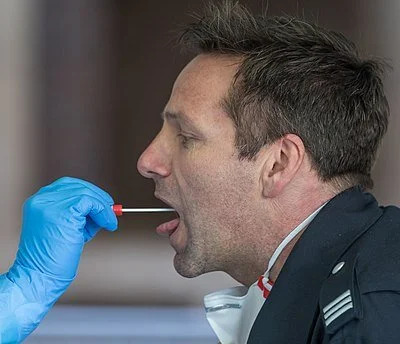
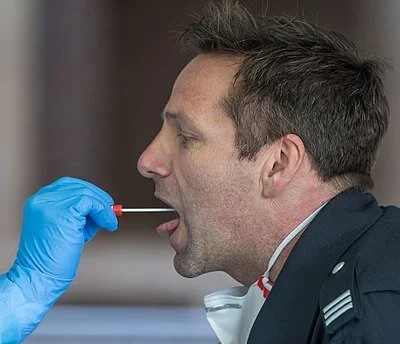
Demonstrating the use of a throat swab in COVID-19 testing
This story was produced in partnership with PolitiFact.
“If we stopped testing right now, we’d have very few cases, if any.”
— President Trump in remarks during a June 15 roundtable discussion
President Trump sought to downplay the numbers associated with COVID-19 in the United States — which have passed 2 million confirmed cases and are nearing 120,000 lives lost — by arguing that the soaring national count was simply the result of superior testing.
“If you don’t test, you don’t have any cases,” Trump said at a June 15 roundtable discussion at the White House. “If we stopped testing right now, we’d have very few cases, if any.”
It’s a talking point the administration is emphasizing. Vice President Mike Pence reiterated it during a phone call to Republican governors that evening, recommending they use the argument as a strategy to quiet public concern about surging case tallies in some states. It’s also a variation on a tweet the president sent earlier in the day.
With that in mind, we wanted to dig deeper. We reached out to the White House for comment or clarification, but we never heard back. Independent researchers told us, though, that the president’s remarks are not only misleading — they’re also counterproductive in terms of thinking through what’s needed to combat the coronavirus pandemic.
Essentially, the president is arguing that the United States is finding more cases of COVID-19 because we are testing more — and that our increased testing makes it appear the pandemic is worse in the U.S. than in other countries.
“We will show more — more cases when other countries have far more cases than we do; they just don’t talk about it,” he added.
But that isn’t true.
The numbers paint a stark picture. The United States has recorded 2.1 million cases of the novel virus so far, about a quarter of the global total and more than any other country. To Trump’s point, the country is testing more now than it did at the start of the outbreak — per capita, the U.S. is in the top 20 percent of countries when it comes to cumulative tests run.
This beefed-up testing still likely reflects an undercount in cases, though. The problem is that the U.S. outbreak is worse than that of many other countries — so we need to be testing a higher percentage of our population than do others.
To best understand this, consider the number of tests necessary to identify a positive case. If it’s easier to find a positive case, that suggests the virus has spread further and more testing is necessary to track the spread of COVID-19.
For instance, statistics from the United States and the United Kingdom are fairly similar in terms of how many coronavirus tests are done daily per million people. But those tests yield far more positive cases in the United States. That suggests the outbreak here requires more per capita testing than does the U.K.’s.
“We have a much bigger epidemic, so you have to test more proportionately,” said Jennifer Kates, a senior vice president at the Kaiser Family Foundation.
Put another way, a larger health crisis means — even after controlling for population size — that the United States will have to test more people to find out where and how the virus has spread.
And while the U.S. has ramped up its testing since March, many parts of the country still don’t have sufficient systems in place — from facilities to staff to medical supplies — for diagnosing COVID-19, researchers told us.
What If We Stopped Testing?
And what about the president’s assertion that “if we stopped testing right now, we’d have very few cases” or none at all?
On its literal phrasing, it’s absurd, experts said.
“The implication that not testing makes the problem go away is completely false. It could not be more false,” said Dr. Joshua Sharfstein, vice dean for public health practice and community engagement at the Johns Hopkins Bloomberg School of Public Health in Baltimore. That’s because testing doesn’t create instances of the virus — it is just a way of showing and tracking them. (The president made a similar point during the same White House roundtable event.)
But even if you take it figuratively — the idea that our expanded testing resources have inflated our sense of the epidemic — it’s still misleading.
“We’re seeing a lot of cases because we’re testing? It just doesn’t ring true,” Kates said. “The U.S. has made a lot of progress for sure. But that job is not finished.”
The president’s claim is part of a larger re-election strategy, argued Robert Blendon, a health-care pollster at the Harvard T.H. Chan School of Public Health. The idea is to suggest that the health crisis is mostly exaggerated — and that things are getting better, and Americans should feel comfortable going back to work. “If the economy takes off, the president has a chance of re-election,” Blendon said. “If it contracts as a result of expansion of cases, and the only way we know how to respond is restriction of economic activity, he’s gone.”
But the problem, Blendon added, is that COVID-19 counts are still climbing in multiple states. And people are still dying of the virus.
That gets at another point: Diagnostic testing isn’t the only data source to reveal the pandemic’s existence. Let’s not forget about hospitalization rates and death counts. The number of deaths continues to rise, and hospitalizations are higher than they would be in the virus’s absence.
Our Ruling
Trump argued that the nation’s high count of COVID-19 cases is simply a result of our expanded testing capacity. His point is entirely incorrect.
The most relevant data suggest that the U.S. isn’t testing enough to match the severity of the pandemic. Even with our higher testing ratio, we’re probably still undercounting compared with other countries.
Testing doesn’t create the virus. Even without diagnostics, COVID-19 would still pose a problem. We just would know less about it.
And, in fact, eliminating testing may alter the public’s perception of the pandemic but it wouldn’t conceal it. If anything, it would likely worsen the crisis, since the public health system wouldn’t know how to accurately track and prevent the spread of the coronavirus.
The president’s claim has no merit and seriously misrepresents the severity of the public health crisis. We rate it Pants on Fire.
SOURCES:
C-SPAN, “President Trump Roundtable Discussion on Seniors,” June 15, 2020
The New York Times, “Pence Tells Governors to Repeat Misleading Claim on Outbreaks,” June 15, 2020
Email interview with Emily Gurley, an associate scientist in epidemiology, Johns Hopkins Bloomberg School of Public Health, June 16, 2020
Our World in Data, Coronavirus Pandemic Data Explorer, accessed June 16, 2020
Telephone interview with Jennifer Kates, senior vice president and director of global health & HIV policy, KFF, June 16, 2020
Telephone interview with Joshua Sharfstein, vice dean for public health practice and community engagement, Johns Hopkins Bloomberg School of Public Health, June 16, 2020
Telephone interview with Robert Blendon, Richard L. Menschel professor and senior associate dean for Policy Translation and Leadership Development, Harvard T.H. Chan School of Public Health, June 17, 2020
Jim Hightower: Unmasking a Trumpian face-mask profiteer

Via OtherWords.org
Everyone should wear a protective medical mask — but some ought to be in ski masks, like those favored by bank robbers and muggers.
Take Zach Fuentes, a former deputy chief of staff for Donald Trump.
He resigned from the White House in January, looking for some sort of lucrative entrepreneurial future. Then, the pandemic hit, and as Trump’s incompetent government quickly caused it to spread, Fuentes thought: Aha, opportunity!
By April, he had set up a corporate façade for hustling contracts to provide medical supplies to government agencies. Only 11 days after he opened for business — bingo! — the former Trump aide won a $3 million deal from the Department of Health to ship respirator masks to Navajo Nation hospitals that were being overrun by hundreds of COVID-19 cases.
Fuentes was awarded the contract with little competitive bidding, even though he had no knowledge about medical supplies or experience in federal contracting, and even though his price of $3.24 per mask was triple the pre-pandemic cost of one dollar each.
Oh, he also had no masks, so he bought a batch from China — a bit hypocritical, since Trump is frantically trying to blame Chinese officials for his own massive screw-ups in handling the pandemic in our country.
Worse, the bulk of Chinese masks Fuentes procured turned out to provide inadequate protection, were unsuitable for medical use, or were not the type he promised to deliver. So, the Navajo people didn’t get the help they urgently needed, Fuentes and the supplier each made off with a bundle, and we taxpayers got mugged.
This is what happens when the government is turned over to insider profiteers. At least these bungling bandits should have to wear scarlet masks, so we can point them out to our children and say, “Don’t let them control your future.”
OtherWords columnist Jim Hightower is a radio commentator, writer, and public speaker.
A green foothold

At the Teales’ “Trail Wood’’ farm.
“The greater the threat of the far-away to the near-at-hand, the more precious grows this green and pleasant foothold on the Earth. Each morning we breathe what the urban man thinks of as ‘that wonderful vacation air.’ Here we have found the simple, the good, the satisfying life – not for everyone, perhaps, but certainly for us. No other time, no other place would suit us better.’
-- Edwin Way Teale (1899-1980), in A Naturalist Buys an Old Farm, about the Hampton, Conn., farm he and his wife, Nellie, bought and moved to and named “Trail Wood’’.

Mr. Teale’s writing cabin at Trail Wood
Urban, but less so

Hanover Theatre for the Performing Arts, in Worcster
Photo by Truthanado
From Robert Whitcomb’s “Digital Diary,’’ in GoLocal24.com
Some people are deciding, with the impetus of COVID-19 and, perhaps, recent public protests, to move out of big cities such as Boston. I suppose most of them will move to the sprawl and car culture of the suburbs. But I think that some others will move to smaller cities not far away from the big ones to try to keep some of the benefits of urban life, such as the proximity of services, cultural institutions and so on.
In southern New England that would include Providence, Worcester and New Haven, all of which, whatever their flaws, have many lovely neighborhoods, cultural assets, some dating back to their 19th Century economic apogees and some to the (incomplete) urban renaissances of the past couple of decades. Even troubled Hartford has many attractions. Then there’s the too often overlooked New London, with its colleges and dramatic location on Long Island Sound and the Thames River and ferry service to the East End of Long Island. And there are gorgeous old towns nearby.
I look forward to seeing what kind of inter-urban migration develops over the next year or two.
It might be considered a bit ghoulish at this point for smaller cities to try to recruit residents from the big metros but I’m sure it can be done politely.
David Warsh: Democracy and slavery in America
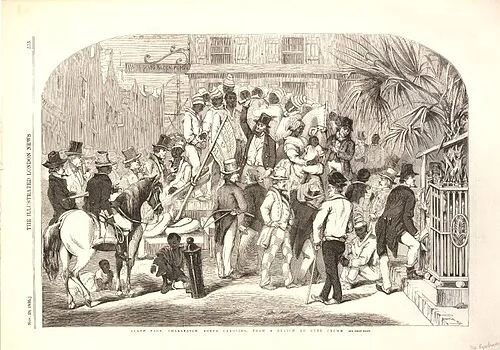
Slave sale in South Carolina in 1856
SOMERVILLE, Mass.
I opened The Decline and Rise of Democracy: A Global History from Antiquity to Today, by David Stasavage, of New York University (Princeton, 2020), hoping to find insights on the prospects for democracy in Russia and China. And so I did, in the form of his observation that autocracy is a very robust form of government if the state gets a jump on democracy. I also closed the book with a transformed understanding of American history.
The author occupies a lofty position at NYU, an entrepreneurial university with a reputation for paying top dollar for star players. Among the economists on its roster, for example, are Thomas Sargent, Michael Spence and Paul Romer. Stasavage is a clear writer and a deep thinker who is writing towards the end of thirty or forty years of remarkable advances in the social sciences. Previous books include Taxing the Rich: A History of Fiscal Fairness in the United States and Europe (2016); States of Credit: Size, Power, and the Development of European Polities (2011); and Public Debt and the Birth of the Democratic State: France and Great Britain 1688-1789 (2003), My hunch is that Decline and Rise will prove to be a classic of the modern literature of government.
It was the concluding paragraph of the chapter “Democracy – and Slavery – in America” that reshaped the way I understand the arc of American history:
[U]nlike other countries that eventually made the transition [to broad manhood suffrage] modern democracy in the United States would for very long remain incomplete – it would not be for 350 years after 1619 that African-Americans would enjoy the same voting rights as others. This was not a conquest that occurred as the result of a single watershed moment; it was instead the result of what some scholars have called a long and unsteady march. Ultimately the achievement of the vote by African-Americans points to another important property of American democracy; precisely because it espouses to make political participation universal, within this form of government the excluded have a powerful argument for demanding the same rights as others. Early democracy lacked this feature.
Like any daily newspaper, The New York Times makes occasional mistakes. Most definitely not among them was the essay for which Nikole Hannah-Jones was recognized earlier this year with a Pulitzer Prize for Commentary, for her introduction to the paper’s 1619 Project. I was raised on the story of 1620, the Plymouth Colony and all that, as our national birth date. (The 1607 story of Jamestown and the 1630 story of the Massachusetts Bay Colony seemed less relevant when I was eight.) I have now lived long enough in America to understand that the introduction of commercial slavery to the British colonies of North America in 1619 is an equally salient fact.
I grew up, too, on stories of the Civil War, and gradually came to understand the deep insight of Yale historian David Blight in Race and Reunion: The Civil War in American Memory (2002). The stagy annual joint encampments of veterans of the armies of the Union and the Confederacy were a particularly potent means of once again relegating African-Americans to second-class citizenship. The naming of major Army bases for Confederate heroes was very much part of this process.
Not until Gunnar Myrdal’s An American Dilemma: The Negro Problem and American Democracy appeared in 1944 was the paradox of racial inequality despite the bold assertions of the Declaration of Independence so thoroughly illuminated as to become inescapable. Twenty tumultuous years were required to resolve the contradiction, at least in principle, with the passage of the Voting Rights Act of 1965.
The 1965 Voting Rights Act is the third cardinal fact of American democracy, which, Stasavage identifies with an archer’s accuracy, along with 1607/1620/1630 and 1619.
This is my third attempt to convey the reasons for my enthusiasm for Fall and Rise. It is, I believe, a brilliant book. I failed again, mostly for reasons of eye fatigue. Back next week with reduced ambitions.
David Warsh, an economic historian and veteran columnist, is proprietor of economicprincipals.com, where this column originated.
The first 'gerrymander'
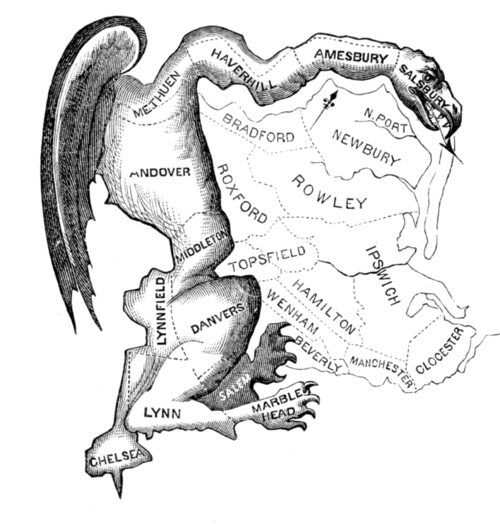
This March 1812 political cartoon was drawn in reaction to the newly drawn state senate district of South Essex, in Essex County, Mass., created by the state legislature to favor the Democratic-Republican Party candidates of Gov. Elbridge Gerry over the Federalists. Federalist newspaper editors and others at the time likened the district shape to a salamander, and the word gerrymander was a portmanteau of that word and Governor Gerry's last name.
-- Jeffrey Toobin, lawyer and journalist
‘Light masculine’
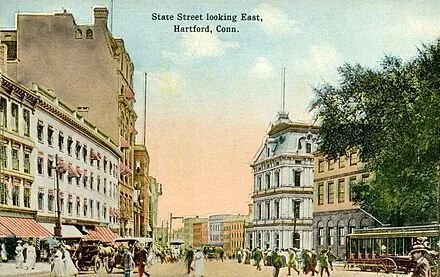
State Street, Hartford, in 1914. The city long called itself “The Insurance Capital of the World’’.
It is Hartford seen in a purple light.
A moment ago, light masculine,
Working, with big hands, on the town,
Arranged its heroic attitudes.
But as in an amour of women
Purple sets purple around. Look Mater,
See the river, the railroad, the cathedral..."
— From “Of Hartford in a Purple Light,’’ by Wallace Stevens (1879-1955), Hartford-based poet and insurance executive
The perfumes of Maine

Boothbay Harbor
On that Italian hilltop, winter after winter, i have been almost insupportedly homesick for Maine scenes and scents: for the fresh, fragrant sea breeze, compounded of the essences of cool damp sand and moist brown seaweed; for the keen perfume of dying sweet grass in the haying season; for the springtime odors of lilacs, mallow and young willow trees; for a smooth gray beach at the mouth of a tide river, and the raucous screams of mackerel gulls above it, hunting sand-eels; for the scent of autumn leaves, the sound of a bird-dog ranging an alder swale, the thunder of a rising partridge; for a lamp-lit kitchen and the steamy, appetizing odor of baked beans and new bread.’’
—- Kenneth Roberts (1885-1957, American writer, best known for historical novels

Grace Kelly: What's meant by the 'blue economy'?

The area within red is Narragansett Bay.
From ecoRI News (ecori.org)
Blue is the new green.
The term “blue economy” has been popping up in headlines and economic outlines with increasing frequency during the past 10 years. But what exactly does blue economy mean? And what does it specifically mean for Rhode Island, the self-proclaimed Ocean State? And, to further complicate matters, what does it mean in a COVID-19 world?
A report released in March by the University of Rhode Island Graduate School of Oceanography, URI’s Coastal Resources Center, and Rhode Island Sea Grant attempts to answer the first two questions — the coronavirus pandemic hadn’t yet emerged during the report’s research period.
Jennifer McCann, director of coastal programs at the Coastal Resources Center, said that state government asked her team to define Rhode Island’s blue economy.
“So I Googled it, of course, and you get the definition from the U.N. and from other big, global programs and from different countries, and then you look at the definitions from different states like California and Michigan, and then you can go down further, and even Cape Cod has a definition of the blue economy,” she said. “Then our team looked at what data was out there, and we interviewed more than sixty people to figure out what they thought Rhode Island’s blue economy is, and so now we have a different definition than anyone else.”
Turns out Rhode Island’s blue economy, which the report defines as “the economic sectors with a direct or indirect link to Rhode Island’s coasts and ocean — defense, marine trades, tourism and recreation, fisheries, aquaculture, ports and shipping, and offshore renewable energy” — has a boatload of potential.
According to the 86-page report, 6 percent to 9 percent of Rhode Islanders work within the state’s ocean-based economy, which is valued at more than $5 billion.
Each sector listed in the report’s definition brings its own strengths to the table.
Ocean-based tourism raked in a whopping $703.6 million in 2018.
According to a 2019 study by Bryant University, the shipping industry at the Quonset Business Park generates nearly 7 percent of the state’s gross domestic product.Narra
The defense industry in Rhode Island uses certain areas of Narragansett Bay as testing grounds for new underwater technologies.
“The U.S. Navy owns an underwater tracking range located in Narraganset Bay. It is a testbed for undersea technology prototypes,” Molly Donohue Magee, executive director of the Middletown-based Southeastern New England Defense Industry Alliance, wrote in an email to ecoRI News. “The Naval Undersea Warfare Center has hosted an annual event, Advanced Naval Technology Exercise (ANTX) where companies can demonstrate their technology and prototypes to Navy engineers and the fleet.”
She goes on to note that ocean technology is the next big thing, and it will provide the state with an opportunity to strengthen its blue economy.
“Rhode Island is the hub of undersea technology,” she wrote. “It’s the home of the Naval Undersea Warfare Center, the Department of Defense’s research laboratory for undersea technology. There are many companies in Rhode Island and the region with unique technology related to the undersea environment. The ocean is the next frontier.”
Catherine Puckett is the owner of the Block Island business Oyster Wench, a shellfish and kelp farm operation. (Coastal Resources Center)
Deep blue economy
In addition to the obvious sectors of the blue economy, McCann made sure to note there are parts of it that might not seem so apparent, like advocacy groups such as Save The Bay or state agencies such as the Coastal Resources Management Council (CRMC).
“[Y]ou can’t forget about the marine-focused advocacy and civic groups,” McCann said. “And then you look at the role our government agencies have been playing whether it be Real Jobs RI working directly with marine trades and defense and building capacity, or CRMC who is designing our coast so we can have a pristine environment as well as a working waterfront.”
A big takeaway from the recent report, as well as from the state’s most-recent long-term economic development plan, which was approved in January, is that there is room for improvement.
During a January Rhode Island Commerce Corporation meeting that discussed the long-term economic development plan, titled Rhode Island Innovates 2.0 and written by Bruce Katz, Gov. Gina Raimondo is quoted as saying, “Basically, his analysis is: ‘Listen, you’ve made a lot of progress the past few years. But still a relatively small portion of our economy is what I would call advanced — high wage, high skill.’”
The governor went on to say that the state needs to do more to advance the education and skill of the average Rhode Islander.
Tide is high
While growing the blue economy was already seen as somewhat of an uphill battle, the coronavirus pandemic has thrown another obstacle in the way.
For instance, as of April 24, Discover Newport, a nonprofit dedicated to promoting the city of Newport and its ocean-centric tourism industry, had laid off 18 of its 22 employees, and expects to see a fall in annual revenue from $3.7 million to a little over a $1 million.
A variety of organizations that fall within the blue economy, such as Rhode Island Marine Trade Association, the Rhode Island Hospitality Association, Polaris MEP, and the Southeastern New England Defense Industry Alliance, have recently banded together to try to revive the economic momentum lost.
For McCann, this collaboration was always essential to a thriving blue economy, even before the virus took its economic and public-health toll.
“We need to work together,” she said. “That’s the way we are going to sustainably grow our state. If we just focus on economics or higher-ed, we’re not efficiently moving forward for sustainable growth in our state.”
Grace Kelly is an ecoRI News reporter.
Friendly or not?

“Moon and Islands’ (oil on panel), by Lucy Clark, in the group show “A Season of First Landings,’’ at Berta Walker Gallery, Provincetown, Mass.
Troubled June night
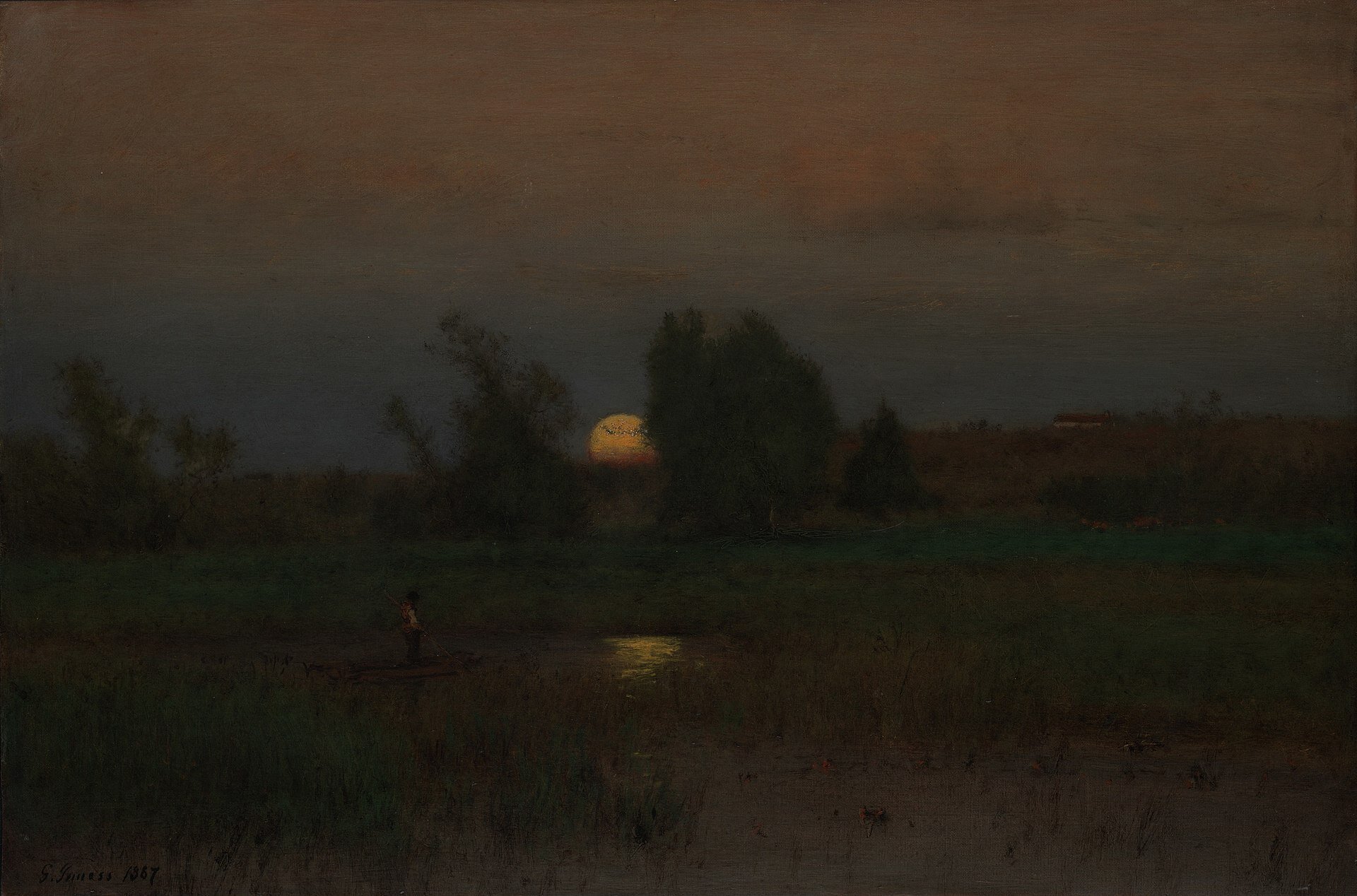
“Moon Rising’’ (oil on canvas), by George Inness (1825-1894)
Oh Earth, you are too dear to-night,
How can I sleep while all around
Floats rainy fragrance and the far
Deep voice of the ocean that talks to the ground?
Oh Earth, you gave me all I have,
I love you, I love you,—oh what have I
That I can give you in return—
Except my body after I die?
“June Night,’’ by Sara Teasdale (1884-1933; she was a suicide)
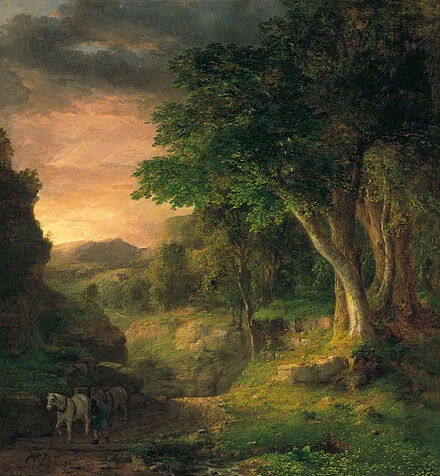
“In The Berkshires” (oil on canvas), also by George Inness
'City of sand'

Dune shack in Provincetown
“Provincetown is by nature a destination. It is the land’s end; it is not en route to anywhere else. One of its charms is the fact that those who go there have made some effort to do so. Provincetown is three miles long and just slightly more than two blocks wide. Two streets run its entire length from east to west: Commercial, a narrow one-way street where almost all the businesses are, and Bradford, a more utilitarian two-way street a block north of Commercial. Residential roads, some of them barely one car wide, run at right angles on a semiregular grid between Commercial and Bradford streets and then, north of Bradford, meander out into dunes or modest hollows of surviving forest, as the terrain dictates. Although the town has been there since before 1720 (the year it was incorporated) and has survived any number of disastrous storms, it is still possible that a major hurricane, if it hit head-on, would simply sweep everything away, since Provincetown has no bedrock, no firm purchase of any kind. It is a city of sand, more or less the way Arctic settlements are cities of ice.”
― Michael Cunningham, in Land's End: A Walk in Provincetown

On Commercial Street, in Provincetown

Until the late 19th Century, East Harbor opened into Provincetown Harbor, and there were no roads into Provincetown. East Harbor was diked in 1868, making way first for the railroad and then the automobile.
Or just brooding?

“The Sullen Sea” (oil on Masonite), by Mary Shore (1912-2000), at the Cape Ann Museum, Gloucester, Mass.
Ricky Riley: Riots are very American

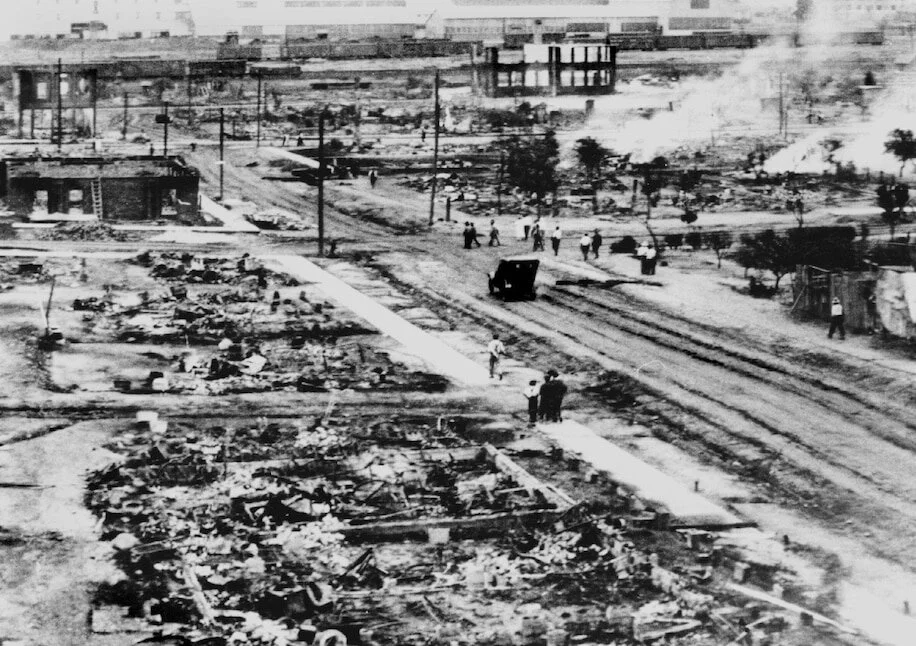
The aftermath of the riot by whites in Tulsa, Okla., in 1921, in which whites massacred hundreds of black people and destroyed much of their property.
Via OtherWords.org
Following the police killings of George Floyd and Breonna Taylor, national unrest has brought millions of protestors out from coast to coast. Most have been peaceful — but not all.
Cop cars and police precincts have been set ablaze, stores looted and vandalized, statues memorializing racists toppled. The police themselves have been repeatedly caught on video instigating violence and using military-grade weaponry against protesters.
Critics of the protests have focused entirely on the looting, often ignoring police brutality. They’ll tell people to protest more like Martin Luther King, Jr., perhaps forgetting that he called riots “the language of the unheard” — and that King himself was assassinated.
These complaints lack a basic understanding of American history. Historically, peaceful protests are rare. And as a political act, they’re fairly new.
Looking back at the early days of the American republic, riots, rebellions, and acts of insurrection — from the Whiskey Rebellion under George Washington to Fries’s Rebellion under John Adams — were so commonplace that the Insurrection Act of 1807 had to be passed to suppress them.
From 1800 to 1850, race riots between freed African Americans and new immigrants like the Irish were frequent. An estimated 250 slave revolts were suppressed by extreme force. Meanwhile white Americans also found time to riot over rent, taxes, and land disputes.
The next 50 years were no different. Anti-immigrant and anti-Catholic “Know-Nothing” riots cropped up from Baltimore to New Orleans in the 1850s, while the Colfax massacre in Louisiana saw 100 black men killed by a white militia in 1873.
The labor movement brought further clashes. Chicago’s historic Haymarket Square riots of 1886 called for the eight-hour workday, while the May Day riots of 1894 shook Cleveland over extremely high unemployment. Throughout the early 1900s, police clashed repeatedly with steelworkers, mineworkers, and other unionists.
Black Americans were terrorized by whites all the while, including in two of the most notorious race riots in history: Florida’s Rosewood massacre and the destruction of Tulsa’s Black Wall Street.
Peaceful protests were not widely employed as a legitimate form of protest until the suffrage movement. But even then, peaceful protests were often met with the same vitriol as “violent” ones — especially when those protests were by people of color.
At the height of the civil rights movement in 1966, two-thirds of Americans had an unfavorable view of MLK in 1966. By the time he was assassinated, about 75 percent disapproved, according to a 1968 Harris Poll.
What followed? Riots. A wave of uprisings overtook 100 U.S. cities in wake of the slaying of King. But sometimes, riots work — these “Assassination Riots” in April 1968 led to the direct passage of the Civil Rights Act and Fair Housing Act.
The next year, a transformative LGBTQ civil rights movement began with the Stonewall Riot.
For a more recent example, former 49ers quarterback Colin Kaepernick attempted to resurrect an MLK-esque peaceful protest and was effectively blackballed from the NFL. The right ridiculed him and denounced his followers with extreme vitriol.
However, as the George Floyd protests unleashed a wave of anger, major cities announced plans to move funds out of their racist police departments. Other reforms followed, with Minneapolis even announcing plans to disband its police altogether.
But debating the effectiveness or morality of riot-like protests isn’t as important as examining who can riot historically and who can’t. White men achieved many political goals through rioting. And rioting by white sports fans is often less demonized than even peaceful protests by black and brown communities.
The real problem may be that some Americans don’t want marginalized people engaging in protests at all — “peaceful” or not.
Ricky Riley is an Atlanta-based journalist and educator.
Tough times for colleges
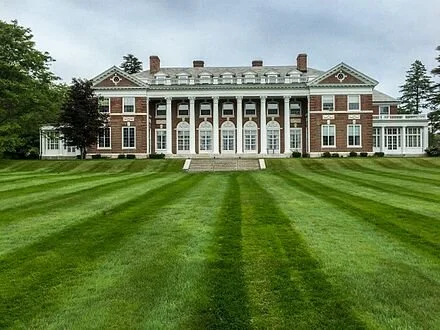
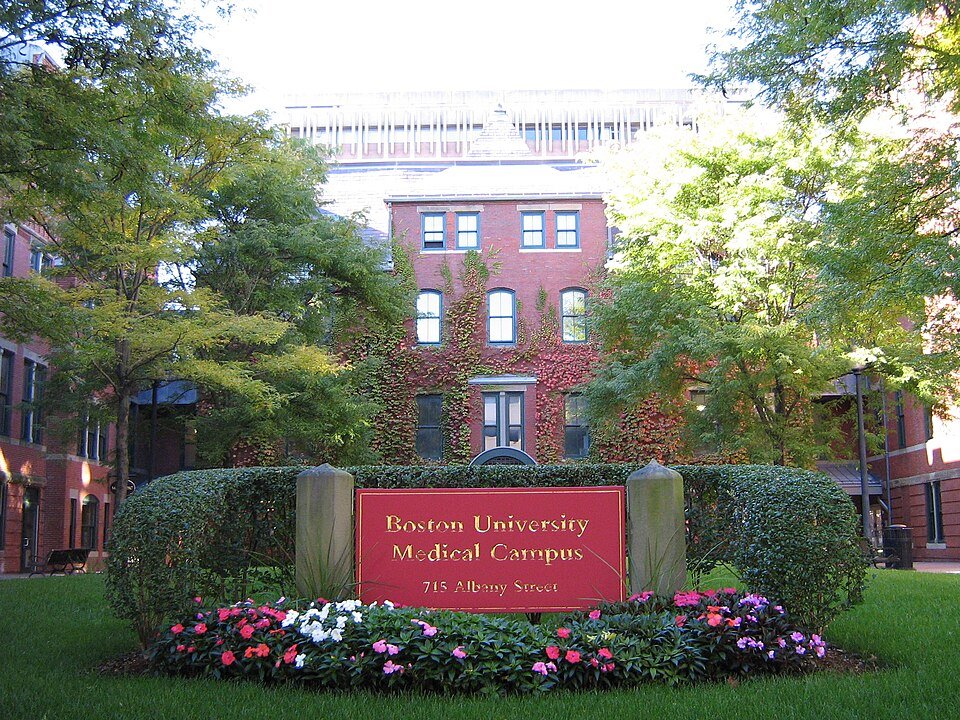
Whither small private institutions such as Stonehill College, in North Easton, Mass., one of whose buildings is seen above?
From Robert Whitcomb’s “Digital Diary,’’ in GoLocal24.com
Some students are suing, in class-action lawsuits, several New England colleges for refunds after these institutions shifted to remote (e.g., via Zoom and Skype) teaching as they stopped on-campus courses because of COVID-19.
I can’t say that I blame them, considering the astronomical cost of college these days. Screens are nowhere as good a learning setting as in person – learning from professors and fellow students. Among the institutions being sued are Brown University, Boston University and the University of Connecticut. Apparently small private colleges that may well soon go out of business are being left alone for now. Why drive the last nails into their coffins and then try to collect damages? Some of them were already on very thin ice because of declining demographics. You can guess their names in this region.
As colleges and universities agonize over whether to reopen their campuses for in-person instruction in the fall, they’ll bear in mind their legal exposure.
‘Twists and turns’
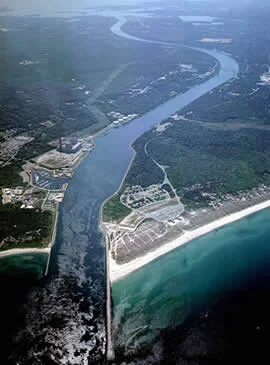
The East End of the Cape Cod Canal and Scusset Beach State Reservation
“I could not paint a better picture,
Than the one in front of me,
Of twists and turns of the canal,
Bordered by endless trees. ‘‘
— From “Herring Run at the Cape Cod Canal,’’ by Judith Kerttula
Llewellyn King: History shows that reform is highly perishable

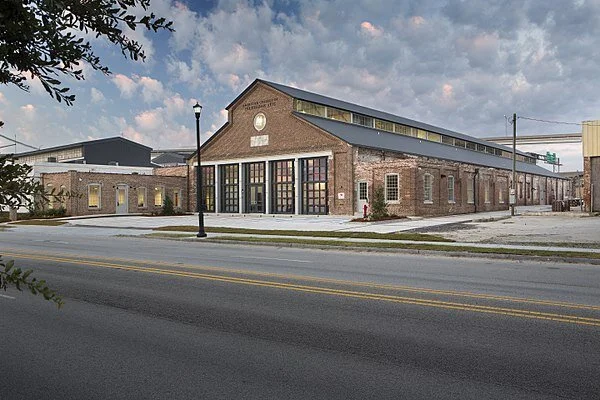
Beacon of learning, practicality and hope: American College of the Building Arts, in Charleston, S.C.
WEST WARWICK, R.I.
Reform is in the air. Beware of it. Often it evaporates as the generation that spawned it moves on.
I take you back to the 1960s, when reform was everywhere. We came out of that tumultuous decade with high hopes for a better deal. Some reform movements left a lasting impact, but others faded away.
Here, in no order, are what I see as the seminal reforming events of the ’60s.
The anti-Vietnam War movement; the environmental movement; the civil- rights movement; the women’s movement, and the prison-reform movement. Considering what’s happening on the streets of America now, it can be argued that the biggest disappointment was in civil rights, despite what’s been achieved.
To be sure, schools, including colleges, were integrated, and big institutions offered some colorblind promotion. Legislation guaranteeing civil rights, including voting rights, and banning overt segregation in housing, for example, was passed.
But social integration failed. After the riots of 1968, triggered by the assassination of Martin Luther King Jr., whites accelerated their exit from cities in droves for the suburbs, in “white flight.”
Much of the civil-rights legislation over time has been whittled away, particularly that associated with President Lyndon Johnson’s Great Society. It was often replaced with harsh policing and an attack on welfare.
It became a myth that The Great Society failed. It didn’t. The Great Society wasn’t given a fair shake before it was replaced with The Great Lockup Society.
Fear of drugs and related crime was greeted in the 1970s and 1980s with a philosophy that it was best to lock people up for a long time with mandatory sentencing and zero tolerance. The burden fell disproportionately on young African-American and Hispanic men.
The young people who’d marched around the White House in opposition to the Vietnam War, and belonged to what was called at the time “the new class,” were going to bring in a new society. They were articulate idealists who wanted a better world.
However, as other problems gripped the national attention, such as energy, the new class matured into the old class. They forgot the heady hopes of the ’60s when they’d dreamed of utopia.
Our politics hardened, too. The whole political apparatus moved to the right. If blacks were thought of at all by whites, it was as though their problems had been solved: Heck, there were black people all over television.
The big issues of health care and education weren’t addressed and if they were, the answer was unhelpful: private health care and private education.
We started graduating an almost unemployable class through the broken public-school systems. Then we said, “See, they’re unemployable, ignorant, and only fit for a few minimum wage jobs like hamburger flipping.” If you are born into poverty and have little enlightened parenting at home, failure is nearly guaranteed.
Not only are we graduating students who can hardly read, but we aren’t telling them what reading is about: living a whole life.
My wife and I were filming a television program at the American College of the Building Arts in Charleston, S.C., a few years ago. This private college should be a template for the future of small colleges. Students study liberal arts in tandem with a trade: blacksmithing, carpentry, classical architecture, plaster, stone carving and timber framing.
One student we interviewed -- who was a little older than most college students (like most of the student body) -- was an African-American who had served in the Marine Corps. “What do you like about college?” I asked. “Dickens,” he replied. He loved the literature component of the liberal arts education. Then, with a winning smile, he added, “They don’t teach that sort of thing in the high schools around here [Charleston].”
Students with a trade tend to start businesses. We were told that about a third of ACBA graduates start a small business within five years of graduation. Business is within the grasp of anyone who has a trade to sell, such as l carpentry, stone carving or metal-working.
Dignity is beyond price and it comes with success in small business. The key is the right kind of education: teaching downhome skills while lighting up the mind.
Llewellyn King is executive producer and host of White House Chronicle, on PBS. His email is llewellynking1@gmail.com, and he’s based in Rhode Island and Washington, D.C.