Or just brooding?

“The Sullen Sea” (oil on Masonite), by Mary Shore (1912-2000), at the Cape Ann Museum, Gloucester, Mass.
Ricky Riley: Riots are very American

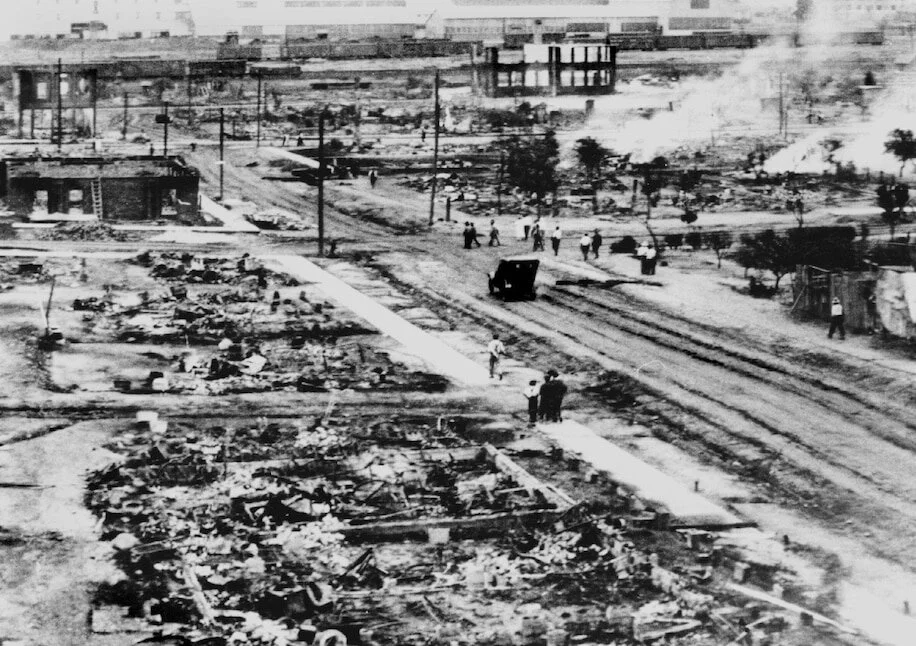
The aftermath of the riot by whites in Tulsa, Okla., in 1921, in which whites massacred hundreds of black people and destroyed much of their property.
Via OtherWords.org
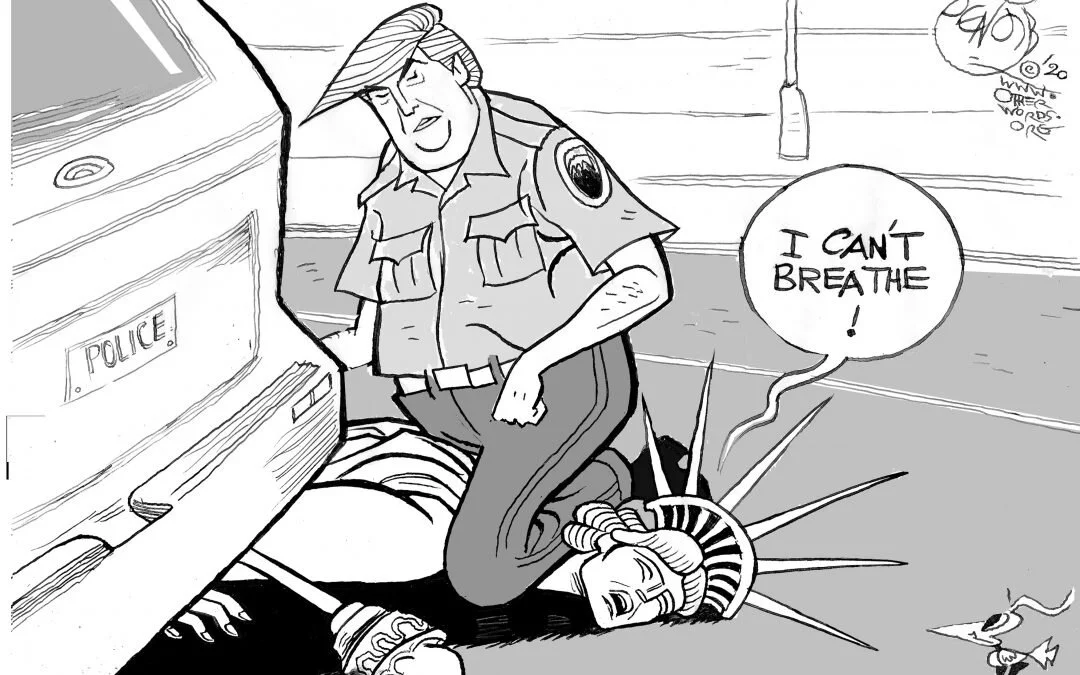
Following the police killings of George Floyd and Breonna Taylor, national unrest has brought millions of protestors out from coast to coast. Most have been peaceful — but not all.
Cop cars and police precincts have been set ablaze, stores looted and vandalized, statues memorializing racists toppled. The police themselves have been repeatedly caught on video instigating violence and using military-grade weaponry against protesters.
Critics of the protests have focused entirely on the looting, often ignoring police brutality. They’ll tell people to protest more like Martin Luther King, Jr., perhaps forgetting that he called riots “the language of the unheard” — and that King himself was assassinated.
These complaints lack a basic understanding of American history. Historically, peaceful protests are rare. And as a political act, they’re fairly new.
Looking back at the early days of the American republic, riots, rebellions, and acts of insurrection — from the Whiskey Rebellion under George Washington to Fries’s Rebellion under John Adams — were so commonplace that the Insurrection Act of 1807 had to be passed to suppress them.
From 1800 to 1850, race riots between freed African Americans and new immigrants like the Irish were frequent. An estimated 250 slave revolts were suppressed by extreme force. Meanwhile white Americans also found time to riot over rent, taxes, and land disputes.
The next 50 years were no different. Anti-immigrant and anti-Catholic “Know-Nothing” riots cropped up from Baltimore to New Orleans in the 1850s, while the Colfax massacre in Louisiana saw 100 black men killed by a white militia in 1873.
The labor movement brought further clashes. Chicago’s historic Haymarket Square riots of 1886 called for the eight-hour workday, while the May Day riots of 1894 shook Cleveland over extremely high unemployment. Throughout the early 1900s, police clashed repeatedly with steelworkers, mineworkers, and other unionists.
Black Americans were terrorized by whites all the while, including in two of the most notorious race riots in history: Florida’s Rosewood massacre and the destruction of Tulsa’s Black Wall Street.
Peaceful protests were not widely employed as a legitimate form of protest until the suffrage movement. But even then, peaceful protests were often met with the same vitriol as “violent” ones — especially when those protests were by people of color.
At the height of the civil rights movement in 1966, two-thirds of Americans had an unfavorable view of MLK in 1966. By the time he was assassinated, about 75 percent disapproved, according to a 1968 Harris Poll.
What followed? Riots. A wave of uprisings overtook 100 U.S. cities in wake of the slaying of King. But sometimes, riots work — these “Assassination Riots” in April 1968 led to the direct passage of the Civil Rights Act and Fair Housing Act.
The next year, a transformative LGBTQ civil rights movement began with the Stonewall Riot.
For a more recent example, former 49ers quarterback Colin Kaepernick attempted to resurrect an MLK-esque peaceful protest and was effectively blackballed from the NFL. The right ridiculed him and denounced his followers with extreme vitriol.
However, as the George Floyd protests unleashed a wave of anger, major cities announced plans to move funds out of their racist police departments. Other reforms followed, with Minneapolis even announcing plans to disband its police altogether.
But debating the effectiveness or morality of riot-like protests isn’t as important as examining who can riot historically and who can’t. White men achieved many political goals through rioting. And rioting by white sports fans is often less demonized than even peaceful protests by black and brown communities.
The real problem may be that some Americans don’t want marginalized people engaging in protests at all — “peaceful” or not.
Ricky Riley is an Atlanta-based journalist and educator.
Tough times for colleges
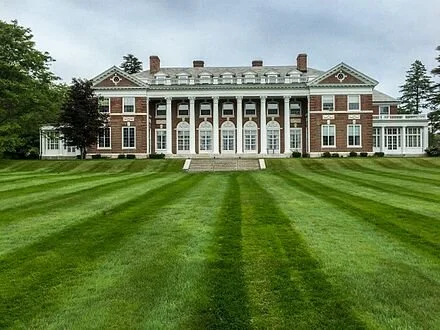
Whither small private institutions such as Stonehill College, in North Easton, Mass., one of whose buildings is seen above?
From Robert Whitcomb’s “Digital Diary,’’ in GoLocal24.com
Some students are suing, in class-action lawsuits, several New England colleges for refunds after these institutions shifted to remote (e.g., via Zoom and Skype) teaching as they stopped on-campus courses because of COVID-19.
I can’t say that I blame them, considering the astronomical cost of college these days. Screens are nowhere as good a learning setting as in person – learning from professors and fellow students. Among the institutions being sued are Brown University, Boston University and the University of Connecticut. Apparently small private colleges that may well soon go out of business are being left alone for now. Why drive the last nails into their coffins and then try to collect damages? Some of them were already on very thin ice because of declining demographics. You can guess their names in this region.
As colleges and universities agonize over whether to reopen their campuses for in-person instruction in the fall, they’ll bear in mind their legal exposure.
‘Twists and turns’
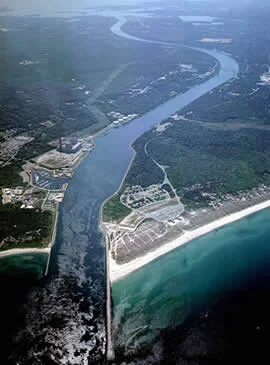
The East End of the Cape Cod Canal and Scusset Beach State Reservation
“I could not paint a better picture,
Than the one in front of me,
Of twists and turns of the canal,
Bordered by endless trees. ‘‘
— From “Herring Run at the Cape Cod Canal,’’ by Judith Kerttula
Llewellyn King: History shows that reform is highly perishable

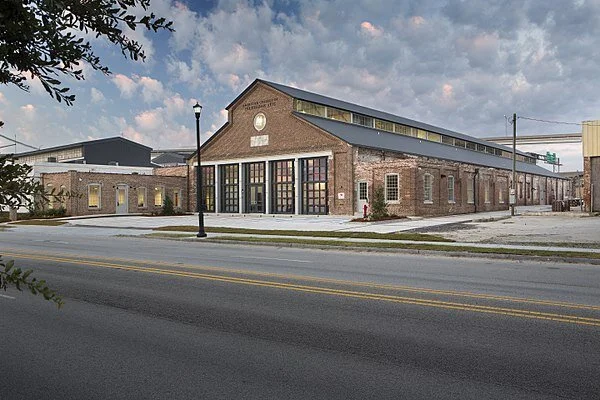
Beacon of learning, practicality and hope: American College of the Building Arts, in Charleston, S.C.
WEST WARWICK, R.I.
Reform is in the air. Beware of it. Often it evaporates as the generation that spawned it moves on.
I take you back to the 1960s, when reform was everywhere. We came out of that tumultuous decade with high hopes for a better deal. Some reform movements left a lasting impact, but others faded away.
Here, in no order, are what I see as the seminal reforming events of the ’60s.
The anti-Vietnam War movement; the environmental movement; the civil- rights movement; the women’s movement, and the prison-reform movement. Considering what’s happening on the streets of America now, it can be argued that the biggest disappointment was in civil rights, despite what’s been achieved.
To be sure, schools, including colleges, were integrated, and big institutions offered some colorblind promotion. Legislation guaranteeing civil rights, including voting rights, and banning overt segregation in housing, for example, was passed.
But social integration failed. After the riots of 1968, triggered by the assassination of Martin Luther King Jr., whites accelerated their exit from cities in droves for the suburbs, in “white flight.”
Much of the civil-rights legislation over time has been whittled away, particularly that associated with President Lyndon Johnson’s Great Society. It was often replaced with harsh policing and an attack on welfare.
It became a myth that The Great Society failed. It didn’t. The Great Society wasn’t given a fair shake before it was replaced with The Great Lockup Society.
Fear of drugs and related crime was greeted in the 1970s and 1980s with a philosophy that it was best to lock people up for a long time with mandatory sentencing and zero tolerance. The burden fell disproportionately on young African-American and Hispanic men.
The young people who’d marched around the White House in opposition to the Vietnam War, and belonged to what was called at the time “the new class,” were going to bring in a new society. They were articulate idealists who wanted a better world.
However, as other problems gripped the national attention, such as energy, the new class matured into the old class. They forgot the heady hopes of the ’60s when they’d dreamed of utopia.
Our politics hardened, too. The whole political apparatus moved to the right. If blacks were thought of at all by whites, it was as though their problems had been solved: Heck, there were black people all over television.
The big issues of health care and education weren’t addressed and if they were, the answer was unhelpful: private health care and private education.
We started graduating an almost unemployable class through the broken public-school systems. Then we said, “See, they’re unemployable, ignorant, and only fit for a few minimum wage jobs like hamburger flipping.” If you are born into poverty and have little enlightened parenting at home, failure is nearly guaranteed.
Not only are we graduating students who can hardly read, but we aren’t telling them what reading is about: living a whole life.
My wife and I were filming a television program at the American College of the Building Arts in Charleston, S.C., a few years ago. This private college should be a template for the future of small colleges. Students study liberal arts in tandem with a trade: blacksmithing, carpentry, classical architecture, plaster, stone carving and timber framing.
One student we interviewed -- who was a little older than most college students (like most of the student body) -- was an African-American who had served in the Marine Corps. “What do you like about college?” I asked. “Dickens,” he replied. He loved the literature component of the liberal arts education. Then, with a winning smile, he added, “They don’t teach that sort of thing in the high schools around here [Charleston].”
Students with a trade tend to start businesses. We were told that about a third of ACBA graduates start a small business within five years of graduation. Business is within the grasp of anyone who has a trade to sell, such as l carpentry, stone carving or metal-working.
Dignity is beyond price and it comes with success in small business. The key is the right kind of education: teaching downhome skills while lighting up the mind.
Llewellyn King is executive producer and host of White House Chronicle, on PBS. His email is llewellynking1@gmail.com, and he’s based in Rhode Island and Washington, D.C.
'Vermontiness'
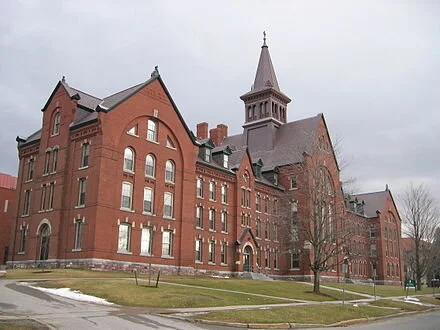
The University of Vermont’s Old Mill building, in Burlington
“In Burlington, I can call anyone anyone and learn from their experience. The degrees of separation are lessened here. There’s a shared Vermontiness.’’
— Marguerite Dibble, founder of Burlington-based GameTheory
View of Lake Champlain and the Adirondacks from the Burlington waterfront
Study: Most Boston area COVID-19 infections came from Europe
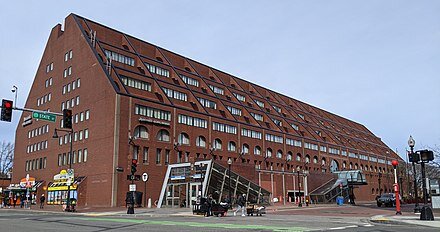
The Marriott Long Wharf Hotel in Boston, the site of a Biogen international meeting on Feb. 26-28 to which most early COVID-19 cases in Massachusetts have been traced.
From The New England Council (newenglandcouncil.com)
“Researchers at Massachusetts General Hospital (MGH) have published a draft of a new report tracing the beginnings of the outbreak of COVID-19 in the United States, especially in the Boston area. The report concludes that, in Greater Boston, most infections came from Western Europe. Read more from WBUR.’’
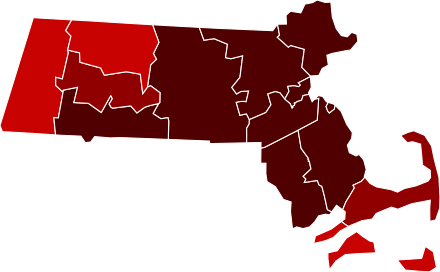
Map of the outbreak in Massachusetts by confirmed infections per 100,000 people (as of June 10). The darker the color, the more intense the case load.
‘Complacent in her captivity’
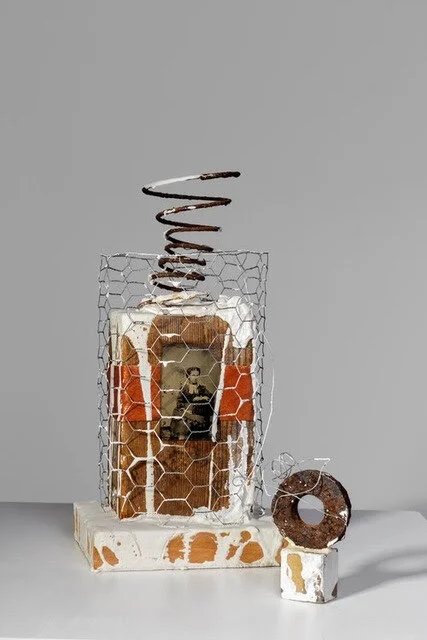
“Emily’’ (mixed media), by Joe Caruso, in Galatea Fine Art’s (Boston) online gallery.
This text runs with it:
“She stares out of a prison of an unknown making, complacent in her captivity. The woman's image in this construction seems unaware that time is passing. Once she was young and the world was open. Now she guards hidden memories.’’
Mr. Caruso lives in the Charlestown section of Boston, though his studio is in South Boston. Charlestown is the oldest part of Boston, having been originally laid out in 1629.
See:
joe-caruso-jwkc.squarespace.com
And:
galateafineart.com
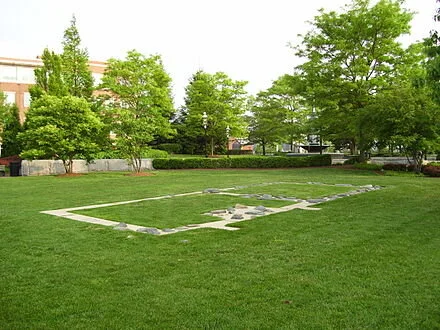
1629 site of the "Great House" of Puritan leader and the Massachusetts Bay Colony’s leading founder, John Winthrop (1587-1649) in City Square, Charlestown, uncovered during the Big Dig
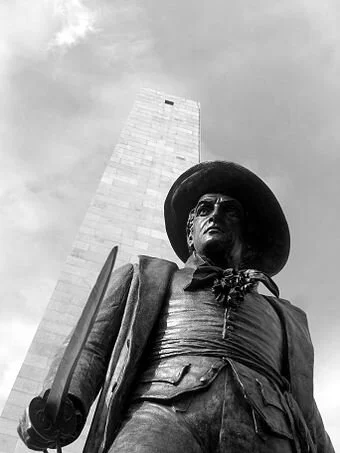
The Bunker Hill Monument and William Prescott Statue, in Charlestown. Prescott ( 1726 - 1795) was an American colonel in the Revolutionary War who commanded the Patriot forces in the Battle of Bunker Hill. Prescott is known for his order to his soldiers, "Do not fire until you see the whites of their (the English) eyes".
From weapon making to shopping

From “Work in Progress,’’ by Chantal Zakari, at Kingston Gallery, Boston, Oct. 21-Nov. 15.
The show explores, says the gallery, “the intertwined histories of the Watertown Arsenal, of the buildings and especially of the people who worked there. It is a visual metaphor of the overlap of the past history infused with the idea of war and the present transformation of the campus into a large shopping mall. The installation at Kingston Gallery has several components, including works on walls, video projections and an artist’s publication that will be concurrently distributed at the new arsenal.’’
See www.kingstongallery.com
The arsenal, on the north side of the Charles River, was operated from 1816 to 1968.

1919 map of the Watertown Arsenal

Building #71 at the arsenal
Health-care behemoth coming for a tiny state?

Behemoth as depicted in the Dictionnaire Infernal
From Robert Whitcomb’s “Digital Diary,’’ in GoLocal24.com
Good out of bad? Lifespan and Care New England, Rhode Island’s two big “nonprofit’’ hospital systems, have had to tightly coordinate their responses to the COVID-19 crisis – an experience that has led them to revive merger or at least “collaboration’’ plans. A merger might save on administrative and other costs borne by the public and enable the state to have a system big and strong enough to compete with the Boston health-care behemoth by maintaining a full-range of medical services and research in the Ocean State and by strengthening its only schools of medicine and public health, at Brown University. A merger might preserve a lot of jobs in Rhode Island. But at the same time, many jobs would presumably be lost as the merged company eliminated redundancies.
Of course, such a large and powerful merged entity would have to be carefully regulated. As Michael Fine, M.D., warned last week in GoLocal, such mergers have tended to raise health-care consumers’ costs because of the monopoly pricing-power created. And I wonder what gigantic golden parachutes, paid for indirectly by the public, would go to Lifespan and Care New England senior executives in a merger.
To read Dr. Fine’s comments, please hit this link.
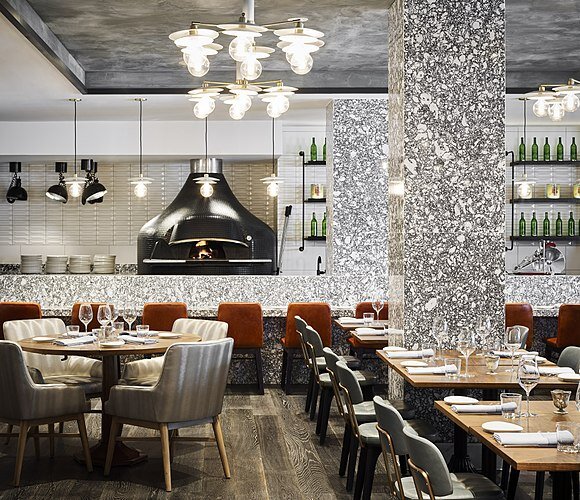
Don Pesci: Conn.'s desperate restaurant owners wonder when...

How long?
VERNON, Conn.
On June 20, Connecticut will once again be open for business – sort of. The road to the grand opening has been a bumpy one full of false turns, sudden cul-de-sacs, and the driver of the bus headed towards a reopening of the state, now nursing a potential budget deficit of close to $1 billion, appears to be navigating irresolutely.
Will restaurants in Connecticut be fully opened on the date set by Gov. Ned Lamont, June 20, or not? Rhode Island Gov. Gina Raimondo, with whom Governor Lamont of has of late been having a Coronavirus shut-down bromance, already has turned the corner. Restaurants in Rhode Island, having got the jump on Connecticut, already are opened for business – sort of.
In a June 3 story, Hearst news noted that Connecticut restaurant owners were clamoring for an earlier opening date for indoor dining: "Some 550 businesses signed a petition by the Restaurant Association calling for a return to indoor dining on June 10. They include companies operating nearly 40 restaurants in New Haven and 30 in Stamford, from chains such as Buffalo Wild Wings, with locations in Stamford, Danbury, Milford and North Haven, to local haunts like Galaxy Diner in Bridgeport and upscale options such as Mediterraneo in Norwalk and Greenwich.”
Executive director of the Connecticut Restaurant Association Scott Dolch wrote to Lamont, “This is not hyperbole. Just this week and only steps from the Capitol, Firebox Restaurant in Hartford closed after 13 years in operation. They simply could not hold out any longer. Right now, every day counts for our industry.”
Tic Toc.
And then, as an aside that in some fashion must have penetrated Lamont’s soft shell, “Dolch noted that Rhode Island has already resumed indoor dining service, and that Connecticut’s coronavirus case count is better than that of New York and Massachusetts.”
Well, Lamont drawled, “Everybody wants to get going yesterday — I appreciate that,” Lamont said. “I am going to be a little cautious in terms of what the next round is. ... Maybe we can accelerate that a little bit.”
And then, as an aside that in some fashion must have penetrated Lamont’s soft shell, “Dolch noted that Rhode Island has already resumed indoor dining service, and that Connecticut’s Coronavirus case count is better than that of New York and Massachusetts.”
"’I've just seen tens of thousands of people protesting in New York City — thousands more in Boston. Neither of them have opened up any of their restaurants - they haven't even opened for outdoor dining that I know of as yet,’ Lamont said. ‘So I want to be very careful before we open our restaurants and invite people from the whole region here.’"
That’s a NO to Dolch and his 550 business petitioners.
Dolch and Connecticut restaurant owners really have nowhere else to turn for succor. In ordinary times, Dolch’s petitioners might have curried support among a dwindling number of legislators in the General Assembly who do not want Connecticut to be eating Rhode Island’s dust, but the General Assembly has put itself in suspended animation until it once again is called into service by the governor, and Lamont’s extraordinary autocratic powers do not lapse until September. Already – someone is keeping count – Lamont ranks fourth in the nation among governors who have issued the most executive orders, and he has three months to go before he runs out of autocratic gas.
Other problems may be looming on Connecticut’s dark horizon.
On June 4, the Lamont administration sent a notice around to Connecticut’s media that his administration is establishing a program, called the Connecticut Municipal Coronavirus Relief Fund Program, in which the state will reimburse city and town governments for expenses related to the COVID-19 pandemic, according to a story in The Day of New London.
The program, administered through the Connecticut Office of Policy and Management, is setting aside $75 million to be distributed to municipalities in Connecticut, “part of $1.4 billion in Coronavirus Relief Funds the state has gotten from the federal government.”
The Connecticut Conference of Municipalities, according to The Day’s story, “said it is appreciative of the announcement but noted that federal guidelines recommend that 45 percent of the total $1.4 billion in Coronavirus Relief Funds, which would be $630 million, be spent on municipalities with populations below 500,000.”
There is, a reader who has successfully passed fourth grade exams in basic math will notice, a considerable difference between the $630 million the Feds expect Connecticut to distribute to its towns in Coronavirus Relief Funds and the planned Lamont distribution of $75 million. Some sharp-eyed accountant in Washington, D.C., is likely to notice the disparity and – maybe – cut Coronavirus funding to the Connecticut proportionally.
The national government now has a debt of some $26 trillion, and every penny helps.
Don Pesci is a Vernon-based columnist.
Reasonably tough

“Your true Yankee is always reasonable — always — even at the moment of unsheathing his sword, or pulling a hair trigger.’’
— John Neal (1793-1876), in The Down Easters. He was a Portland, Maine-based writer, critic lawyer and architect.
MFA to buy works of 2 dozen contemporary artists
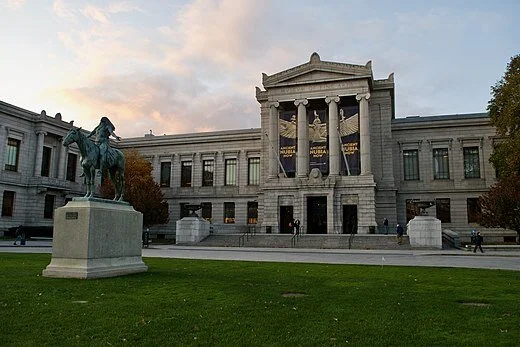
The front of the Museum of Fine Arts, Boston
The New England Council (newenglandcouncil.com) reports:
“Despite remaining closed to visitors, The {Boston} Museum of Fine Arts (MFA) has pledged to purchase the works of two dozen artists to grow its contemporary art exhibitions.
“All of the 24 artists selected live in the United States, with more than half of them originally from the Boston area. In addition to expanding the number of works in the museum’s contemporary art collections, the new works will offer new perspectives within each of their practices. Further, the initiative will support the work of emerging artists in the area. The museum will begin acquiring the pieces this month.
“‘Contemporary artists are part of the fabric of our community, and essential to who we are as an institution. Their commitment, innovation and engagement with the world inspires us in times of challenge,’ said Matthew Teitelbaum, the MFA’s director.
“We need artists’ voices to enhance the stories we share in our galleries and the connections we make with our visitors. With lifetime memberships for artists in our collection, we underscore the importance of artists in the life of our museum and our communities.”
“The New England Council congratulates the MFA for this expansion and for supporting artists during a time of financial hardship. Read more in The Boston Globe.’’

At the MFA, “The Fog Warning” (1885), by the American (and particularly New England) painter Winslow Homer (1836-1910).
'Or an Eastern dream'

THESE things I remember
Of New England June,
Like a vivid day-dream
In the azure noon,
While one haunting figure
Strays through every scene,
Like the soul of beauty
Through her lost demesne.
Gardens full of roses
And peonies a-blow
In the dewy morning,
Row on stately row,
Spreading their gay patterns,
Crimson, pied and cream,
Like some gorgeous fresco
Or an Eastern dream.
Nets of waving sunlight
Falling through the trees;
Fields of gold-white daisies
Rippling in the breeze:
Lazy lifting groundswells,
Breaking green as jade
On the lilac beaches,
Where the shore-birds wade.
“A New England June,’’ by Bliss Carman (1861-1929), a once famous Canadian poet who spent much of his life in New England.

Researchers study effects of warming water on lobsters, sea scallops off Northeast

From ecoRI News (ecori.org)
Researchers have projected significant changes in the habitat of commercially important American lobster and sea scallops along the continental shelf off the Northeast. They used a suite of models to estimate how species will react as waters warm. The researchers suggest that American lobster will move further offshore and sea scallops will shift to the north in the coming decades.
The study’s findings were published recently in Diversity and Distributions. They pose fishery management challenges as the changes can move stocks into and out of fixed management areas. Habitats within current management areas will also experience changes — some will show species increases, others decreases, and others will experience no change.
“Changes in stock distribution affect where fish and shellfish can be caught and who has access to them over time,” said Vincent Saba, a fishery biologist in the Ecosystems Dynamics and Assessment Branch at the Northeast Fisheries Science Center and a co-author of the study. “American lobster and sea scallop are two of the most economically valuable single-species fisheries in the entire United States. They are also important to the economic and cultural well-being of coastal communities in the Northeast. Any changes to their distribution and abundance will have major impacts.”
Saba and colleagues used a group of species distribution models and a high-resolution global climate model. They projected the possible impact of climate change on suitable habitat for the two species in the large Northeast continental shelf marine ecosystem. This ecosystem includes waters of the Gulf of Maine, Georges Bank, the Mid-Atlantic Bight, and southern New England.
The high-resolution global climate model generated projections of future ocean bottom temperatures and salinity conditions across the ecosystem, and identified where suitable habitat would occur for the two species.
To reduce bias and uncertainty in the model projections, the team used nearshore and offshore fisheries independent trawl survey data to train the habitat models. Those data were collected on multiple surveys over a wide geographic area from 1984 to 2016. The model combined this information with historical temperature and salinity data. It also incorporated 80 years of projected bottom temperature and salinity changes in response to a high greenhouse-gas emissions scenario. That scenario has an annual 1 percent increase in atmospheric carbon dioxide.
American lobsters are large, mobile animals that migrate to find optimal biological and physical conditions. Sea scallops are bivalve mollusks that are largely sedentary, especially during their adult phase. Both species are affected by changes in water temperature, salinity, ocean currents, and other oceanographic conditions.
Projected warming during the next 80 years showed deep areas in the Gulf of Maine becoming increasingly suitable lobster habitat. During the spring, western Long Island Sound and the area south of Rhode Island in the southern New England region showed habitat suitability. That suitability decreased in the fall. Warmer water in these southern areas has led to a significant decline in the lobster fishery in recent decades, according to NOAA Fisheries.
Sea-scallop distribution showed a clear northerly trend, with declining habitat suitability in the Mid-Atlantic Bight, southern New England, and Georges Bank areas.
“This study suggests that ocean warming due to climate change will act as a likely stressor to the ecosystem’s southern lobster and sea scallop fisheries and continues to drive further contraction of sea scallop and lobster habitats into the northern areas,” Saba said. “Our study only looked at ocean temperature and salinity, but other factors such as ocean acidification and changes in predation can also impact these species.”

Chris Powell: Self-righteousness, platitudes in Floyd protests change nothing as huge underlying problem is ignored

George Floyd in 2016
MANCHESTER, Conn.
Horrible as the murder of George Floyd, a black man, by a white police officer in Minneapolis was, the explosion of chest-thumping self-righteousness is making it worse.
People are demanding change, but what change exactly? Minneapolis today is not like darkest Mississippi and Alabama 60 years ago, where the rules of decency were lacking or mere formalities and most white people were indifferent even to the murder of black people. In Minneapolis the necessary rules long have been in place and most people are outraged by Floyd's murder. The officer who killed him was fired and charged criminally within hours.
There always will be misconduct in every occupation. Now that video cameras are almost everywhere, getting away with it is much harder for police. But no rules would have prevented Floyd's murder. A cop simply decided to break the rules.
"Stop killing us," black people demand of the police. But black people are a thousand times more likely to be killed by other blacks than by police or white people. Even as the protests of Floyd's murder convulsed the country, scores of blacks were being killed by other blacks in the poverty factories of the cities. The occasional neighborhood rallies against violence there make the storefront preachers feel important with their bullhorns but the murders continue anyway.
Blacks and whites alike chant, "Black lives matter," but this is insipid, since hardly anyone disagrees. After all, not long ago the country twice elected a black president, and it well might elect another one if the major parties could stop nominating their most repulsive, corrupt, and insentient leaders.
In response to Floyd's murder many people are parading what they imagine to be their moral virtue, perhaps silliest among them the members of the University of Connecticut's women's basketball team, who issued a statement deploring oppression, endorsing justice and love, and concluding self-righteously and laughably, "We are woke." Congratulations, Ladies, but platitudes delivered from your mountaintop of college privilege change nothing either.
Not just silly but also dangerous was the statement from UConn men's basketball coach Dan Hurley. "All I can feel is sorrow," Hurley said, "and, because I am a white man, I also feel incredibly ashamed." Hurley should be ashamed for reviving the concept of racial loyalty and racial responsibility, as if every white person shares guilt for every white person's crime and every black person shares guilt for every black person's crime. Racial guilt is bigotry that leads back to darkest Mississippi.
The proximate problem in Minneapolis and elsewhere is police administration. But the underlying problem is far bigger, and no, it is not "systemic" or "institutional" racism, for most systems and institutions today are politically correct to the point of dogma and paranoia.
The underlying problem remains poverty and social inequality. Despite progress blacks and Hispanics are still disproportionately poor, less educated, less healthy and less able to get ahead. This pushes them into more trouble with the law, and police brutality is not its cause but a mere symptom. The cause is something else -- the long failure of poverty, welfare, education and public-health policies and the refusal to acknowledge that failure. It's the same problem underlying the disproportionate minority casualties in the virus epidemic.
This problem would remain if Floyd had not been murdered, and the pious posturing in response to his murder suggests that nothing about the problem will be changing any time soon.
Chris Powell is a columnist for the Journal Inquirer, in Manchester, Conn.
Bright beach days
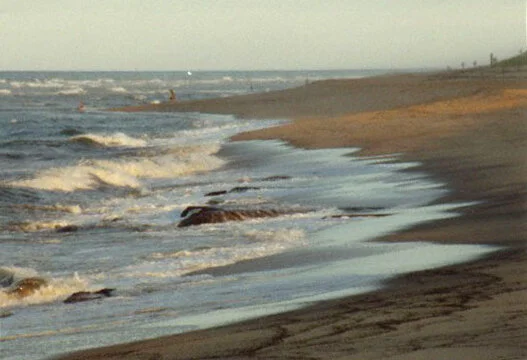
At the Cape Cod National Seashore
“Bring back the long summer after fourth grade
with stinging cold waves that crashed on the Cape….
the future assuredly bright…’’
— From “Album,’’ by Gardner McFall
'Strength and resilience'

“Mount Katahdin {in Maine} from Millinocket Camp,’’ by Frederic Edwin Church, 1895
“In the spring of 2015, Warren started the Appalachian Trail in Georgia. At age sixty-five, he was a walking contradiction. His white beard clashed with his youthful eyes, his soft, round stomach opposed his rectangular rack-solid calves, and his welcoming smile conflicted with his focused gaze. A finish in Maine would mark his eighteenth thru hike of the 2,189 mile footpath. The circumference of the earth is 24,903 miles; Warren had recorded over 36,000 miles between Springer Mountain {the trail’s southern end) and {Mt.} Katahdin {its northern end}.”
― Jennifer Pharr Davis, in The Pursuit of Endurance: Harnessing the Record-Breaking Power of Strength and Resilience