
Vox clamantis in deserto





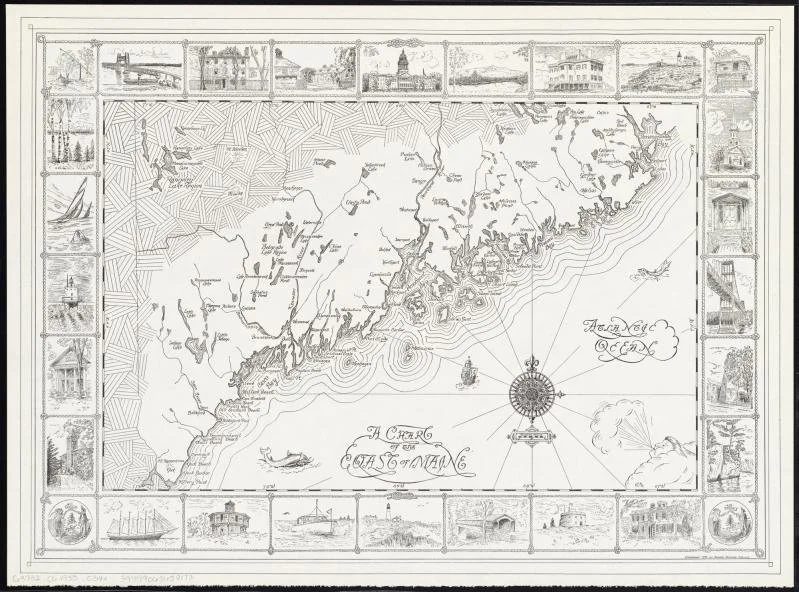
'Strength and resilience'

“Mount Katahdin {in Maine} from Millinocket Camp,’’ by Frederic Edwin Church, 1895
“In the spring of 2015, Warren started the Appalachian Trail in Georgia. At age sixty-five, he was a walking contradiction. His white beard clashed with his youthful eyes, his soft, round stomach opposed his rectangular rack-solid calves, and his welcoming smile conflicted with his focused gaze. A finish in Maine would mark his eighteenth thru hike of the 2,189 mile footpath. The circumference of the earth is 24,903 miles; Warren had recorded over 36,000 miles between Springer Mountain {the trail’s southern end) and {Mt.} Katahdin {its northern end}.”
― Jennifer Pharr Davis, in The Pursuit of Endurance: Harnessing the Record-Breaking Power of Strength and Resilience
You won't get seasick

The USS Constitution (aka “Old Ironsides”) near its home port, the Charlestown (Mass.) Navy Yard, fires a (harmless) salvo back in 2014.
From The New England Council (newenglandcouncil.com):
“The USS Constitution Museum is offering daily tours on its social-media accounts while the museum remains closed. Hosted every morning, the tours have allowed more than 2 million visitors from across Boston and the country to learn the history of “Old Ironsides”.
‘Everything will come out now’
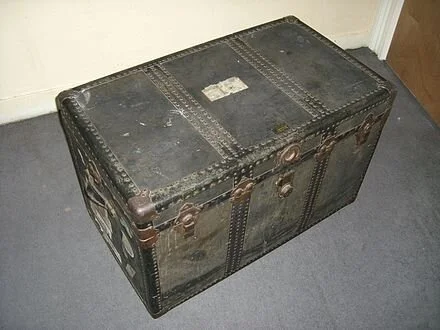
“Everything that’s been placed in him
will come out, now, the contents of a trunk
unpacked and lined up on a bunk in the underpine light.’
— From “The Summer-Camp Bus Pulls Away the Curb,’’ by Sharon Olds. She divides her time between Pittsfield, N.H., and York City,
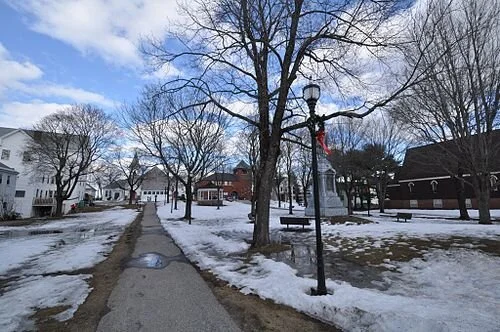
The common in Pittsfield, in the south-central part of the Granite State

The Suncook River, in Pittsfield, in about 1908.
The town’s founder, John Cram, built gristmills and sawmills in Pittsfield in the late 18th Century, and since 1901, Globe Manufacturing has made protective clothing for firefighters there.
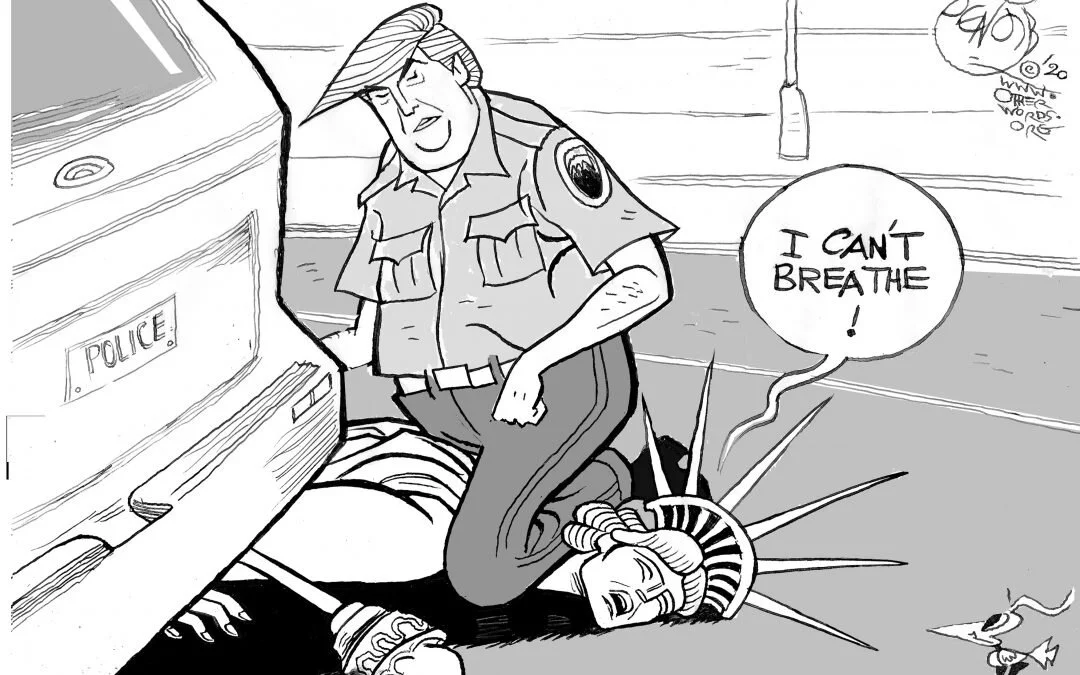
Llewellyn King: The sum of America’s frustrations
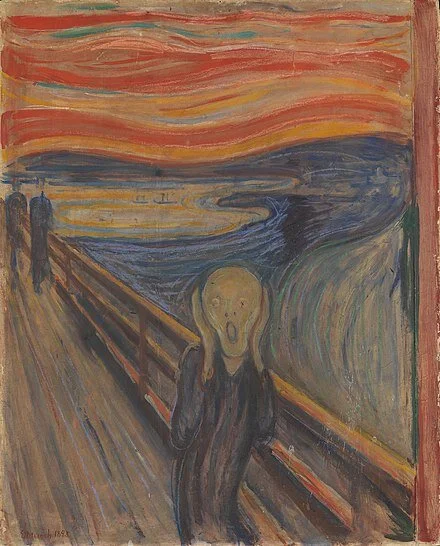
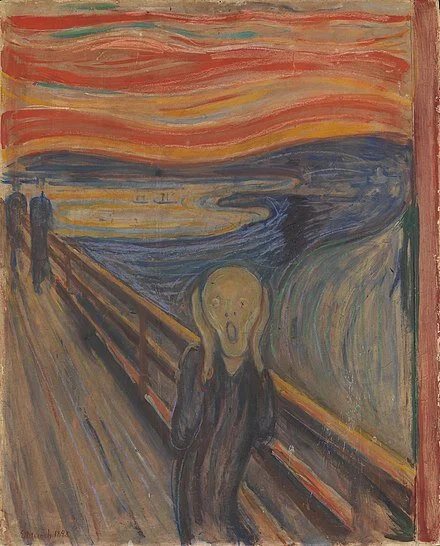
“The Scream’’ (1893, oil, tempera and crayon on cardboard), by Edvard Munch. The title was the popular name given to the picture, and wasn’t Munch’s.
WEST WARWICK, R.I.
There is disquiet in the soul of America.
It has been expressed night after night on the streets of over 100 towns and cities. That number of urban sites, with all those tens of thousands of people, are a cry from the hurting heart of America -- yes, over the death of George Floyd, the proximate cause, but it is about more.
The demonstrations are the sum of multiple grievances that roil America: grievances over police excess; over the plight of those at the bottom with poor wages, little or no health care, and crushing debt from credit cards which they will never earn enough money to pay off in all of the years of their lives. John Butler, professor at the University of Texas at Austin’s McCombs School of Business, describes this debt as “technological sharecropping.”
It is the frustration that is the underside of the American Dream; the frustration that however hard one works, one will never escape the vise of debt, the squalor and degeneration of poverty with its cramping of the spirit and breaking of the will.
It is a well-founded sense of victimhood, for there are real victims --not only the victimhood of race, but also the pervasive victim status that settles upon all on the lowest rung of the economic ladder and even many rungs above, reaching well into the struggling middle class.
It is about despair: despair over money, despair over jobs, despair over squalor. It is about agony that morphs into anger at not being heard, at being used but not respected -- being the target of economic opportunity for those who own the corporations that seem to exploit, from the usurious pay-day lender to the large corporations that hide behind technology for comfort, to avoid confrontation, and to present any dispute as an assault on their right to do as they wish. In this vein, it is the phone company that makes it onerous to report a fault on the line, the cable company that overcharges for its services, taking advantage of its natural monopoly status.
It is about the insurance company that sends you a computer- generated letter, assuring that you will not be able to deal with an individual, speak to a human being. (Bank of America will not give out phone numbers for officers.) The wretched must go in person to get near anonymous help.
It is knowing that the rich have numbers to call, specialists to see, detours around difficulties, and the glorious knowledge that they will have the more questionable of their deeds shielded from scrutiny.
It is about the rigorous greed of the few who must ensure their wellbeing through droves of lobbyists. It is about the taxes that the wealthy do not pay, and the unfortunate do pay.
It is about politicians who talk about freedom but perfect the freedom not to hear the whimpers of need from their constituents: their need for health care, employment security, affordable housing and functioning schools. It is about a whole stratum of our society, from the very bottom to the middle, that feels that society has robbed them of everything, from respect to a hearing to simple dignity.
I have covered demonstrations, from those for self-government in colonial Africa to those against nuclear armament in London to the riots on the death of the Rev. Dr. Martin Luther King Jr. in Washington and Baltimore (they also went nationwide) to the repeated protests against the Vietnam War and the bombing of Cambodia. There is in a demonstration a kind of camaraderie, a feeling of fellowship, a sense of human warmth and kindness that is powerful and invigorating -- and, yes, intoxicating, which can trigger bad behavior. Sadly, if violence erupts, the demonstrators hand over the keys to their futures to those they are protesting.
The people in the streets are there not only because of police brutality, injustice, and economic anguish but also in protest against the president of the United States. Donald Trump has fanned the embers of differences between people, emboldened excesses in police forces and encouraged conflict over harmony, ridicule over appreciation, and introduced the vernacular of the street into the political dialogue.
It is oddly appropriate that it is in the street that Trump’s presidency is being reviled and where it may founder.
Llewellyn King is executive producer and host of White House Chronicle, on PBS. His email is llewellynking1@gmail.com and he’s based in Rhode Island and Washington, D.C.
Two coming-of-age novels

1909 advertisement
Adapted from an entry in Robert Whitcomb’s “Digital Diary,“ in GoLocal24.com
A Stolen Past, by John Knowles, is a 1983 novel as told by a former Yale undergraduate, about his friendship with and mentorship in college by a famous writer (based on Thornton Wilder, who died in 1975) and a family of Russian nobility/aristocracy living in a somewhat decayed but grand house on the Hudson north of New York City years after fleeing their motherland after the Bolshevik Revolution. The mysterious theft of a huge diamond plays a major role in this very atmospheric (including the weather itself) narrative. Like much of Knowles’s best work, it focuses on how unexpected and complicated experiences, inspiring and disillusioning, form maladjusted young characters’ sense of themselves and their relationship with others.
Knowles’s first book, A Separate Peace, published in 1960, has stayed his most famous and is considered a classic and an example of his skill in crafting coming-of-age stories. I didn’t read it until the’ 70s, although I was quite familiar with its setting, an elite New England (then) all-boys boarding school based on Phillips Exeter Academy, in Exeter, N.H. It has always surprised me that a book with such characters and, in a way, exotic setting, and what seems to be a gay subtext, has been so enduringly popular.
The Russians in the book reminded me a little of Vanya Vosoff, a Russian émigré or exile (he had been an officer in Czar Nicholas II’s army) who married a previously married WASP lady whose family owned a company in the shoe industry. The Vosoffs, with her grandson, lived next door to us in a Massachusetts town in the ‘50s and into the ‘60s.
Mr. Vosoff’s English was somewhat eccentric and incomplete but I remember him telling me about some of the plants and animals of the countryside of his motherland. He always seemed to be doing projects in the yard but otherwise didn’t seem to have a job. I wish I had been old enough to ask him about Russia under the old regime, the revolution and the horrifying civil war that followed it. It wasn’t all that many decades before then that those cataclysmic events took place.
There’s sometimes a lot of history next door.
Boston street music in the '50s
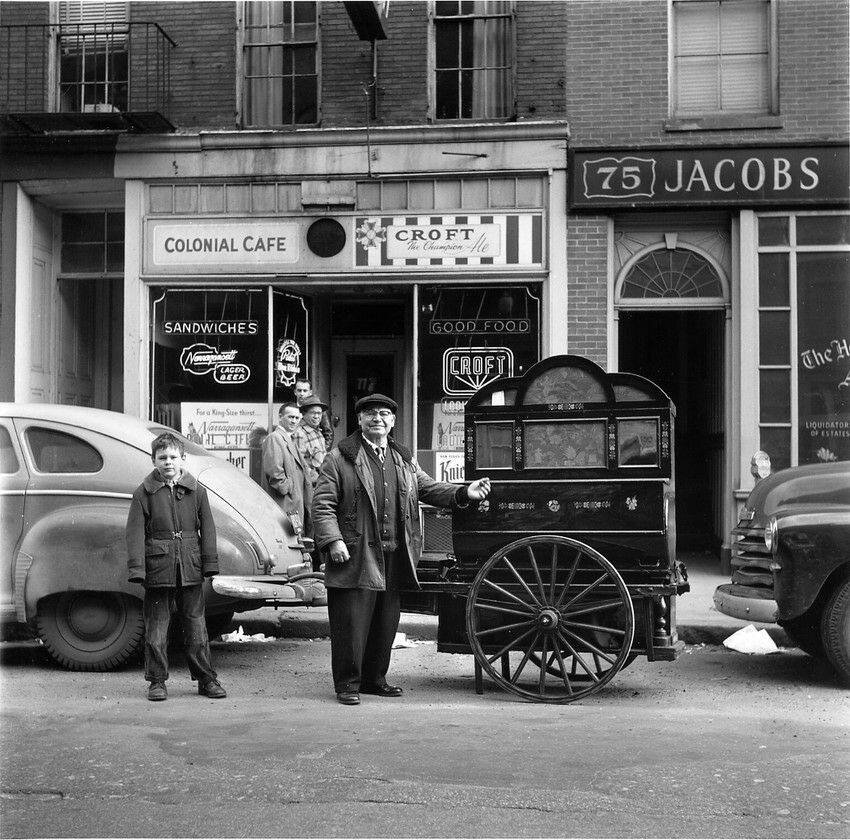
Photo and caption material forwarded by David Jacobs of The Boston Guardian
Do you remember this sort of thing in downtown Boston in the ‘50s?
Marino Antonio Persechini (center) is seen on Charles Street with his hurdy-gurdy, a musical device that, owing to its use of a pinned cylinder to operate levers and play notes, was designed to be mobile enough to play in the street. The cylinders used were heavy, and often held only a limited number of tunes, which could not easily be upgraded to play the latest hits. Songs it did play included “My Wild Irish Rose,’’ “Helena Polka,’’ “Down at Coney Island,” “Torna a Surriento’’ and “La Paloma’’.
The photo is on Charles Street in front of the Colonial Cafe, now The Sevens Bar, and on the right are the antique shop and real estate and mortgage office of William M. Jacobs, with a young admirer on the left and a few of the cafe patrons standing in the cafe doorway listening to the music.
Line up to be remembered
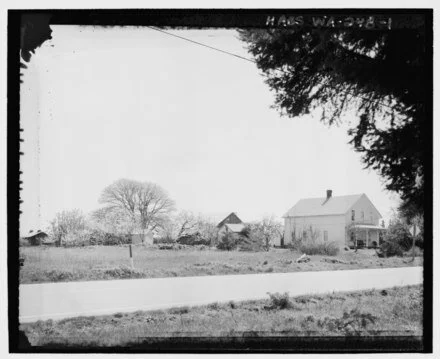
“One gets used to everything
it’s painful to recognize
the skill we have at it
what we really desire
is to be alive in somebody’s eyes
we line up to be remembered’’
— From “Moving from Williston, {Vt.}’’ by John Engels (1931-2007), Vermont-based poet and teacher
Every year is extreme

Bullough's Pond, a former mill pond in now-suburban Newton, Mass.. The pond is a popular place for bird watching and ice skating. In the 19th Century, before man-made refrigeration, and when winters were colder than now, it was the site of a commercial ice business. In 18th Century New England many ponds were created by building dams on streams to create reservoirs to power small mills to grind grain.
“There are no ordinary seasons in New England, only years that are unusually rainy, or abnormally hot, or remarkably cold.’’
Historian Diana Muir, in her book Reflections in Bullough’s Pond: Economy and Ecosystem in New England
‘Marble and mud’
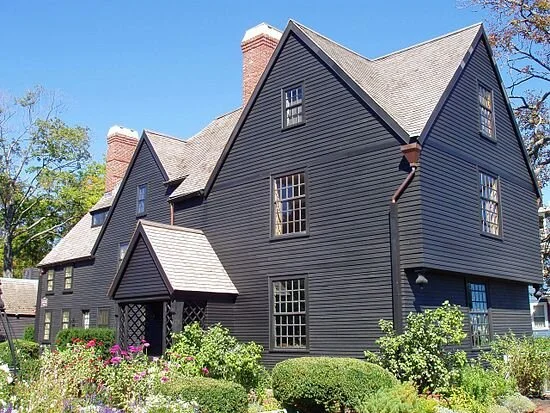
The House of the Seven Gables, in Salem, Mass., made famous by Nathaniel Hawthorne in his 1851 novel. The earliest part of the house was built in 1668. The building is now a non-profit museum, with an admission fee for tours, and has programs for children. It was built for Captain John Turner, in whose family it remained for three generations.
“Life is made up of marble and mud.’’
— Nathaniel Hawthorne, in his novel House of Seven Gables
Chris Powell: Hugely paid Conn. trooper goes bonkers as he approaches pension-racket trough
MANCHESTER, Conn.
No wonder state Connecticut state Trooper Matthew Spina hates his job, just as he told the motorist he abused with five minutes of crazed rage during a traffic stop in New Haven two weeks ago, a tirade famously captured on cellphone video, posted on the Internet, and viewed internationally:
The trooper screamed at, bullied and threatened the motorist, searched his backpack, handcuffed him, and stomped on his possessions before uncuffing him and letting him go without arresting or ticketing him for anything, since the motorist had done nothing illegal.
In the video Spina expresses contempt for the public he polices, and he rejoices that he has only 14 months to go until retirement. These remarks invite a review of his payroll records at state Comptroller Kevin Lembo's wonderful OpenCT internet site. It turns out that in at least the last five years Spina has been working so much that his overtime earnings have nearly equaled or exceeded his base annual salary of almost $100,000:
https://openpayroll.ct.gov/#!/year/2020/employee/9F1B517080F4571F5AABFA4741065909
Last year Spina made $99,000 in regular pay, $97,000 in overtime, and another $7,000 in miscellaneous pay, presumably private-duty pay, another sort of overtime, for a total of $203,000. Forty percent of Spina's earnings of $76,744 so far this year has been overtime, so he is on track for another $200,000 year -- if he can maintain some semblance of sanity, if his supervisors don't see that overwork may be impairing his fitness, and if he is not suspended or dismissed for his misconduct, which has spectacularly besmirched the state police.
Why might Spina drive himself crazy with overwork? It's probably so he can participate in the part of state government's pension system that has become a racket. The system offers troopers pensions that are payable immediately upon 20 years of service, and it calculates pension payments by taking half the average of the salaries of a trooper's three highest-earning years.
Thus Spina seems close to qualifying for an annual pension of about $100,000. The Yankee Institute for Public Policy says more than 1,600 retired state employees already enjoy pensions that large.
This is even better than it looks. For Spina seems to be only middle-aged, and achieving pension entitlement by middle age through government employment and not retiring but instead taking other employment for 15 years or so has become a hallowed and lucrative tradition in Connecticut. The pension system is often used not just for a secure retirement but also for accumulation of great wealth during a second career, long before a beneficiary stops working.
But if Spina does not complete 20 years of service as he plans to do next year, he will not qualify for a state pension until he turns 65. In that case he probably would have to keep working another 15 or 20 years in a different job.
So how will the state police department handle the Spina case?
The trooper has been transferred to desk duty while his misconduct is under investigation. Given the department's habit of concealing or minimizing misconduct by troopers, Spina may receive no serious discipline at all, or the department may delay any discipline until Spina completes the 14 months he needs for his 20-year qualification, thereby making discipline meaningless.
The bigger issue here is whether, now that state government's finances have been devastated by the virus epidemic as well as by pension obligations, and many state residents have been ruined financially, Connecticut can afford a pension system that allows its beneficiaries to use it not just for secure retirement but for a life of luxury.
Chris Powell is a columnist for the Journal Inquirer, in Manchester.
Tracey L. Rogers: Gun-toting quarantine protesters called 'good people,' Floyd protesters 'thugs'
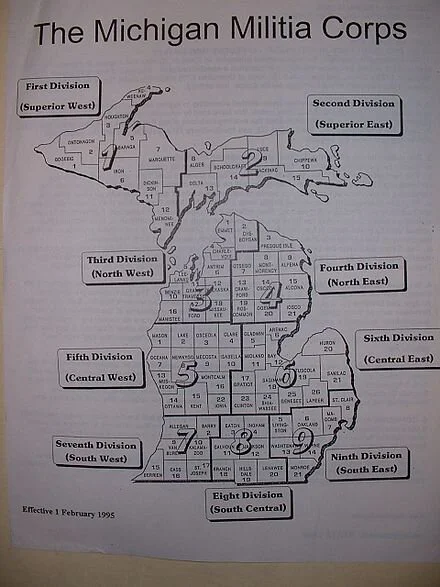
Units of the paramilitary Michigan Militia
From OtherWords.org
As protests and riots spread like wildfire across the nation in response to the death of George Floyd and other black people at the hands of white police officers, I cannot help but recall an old African Proverb:
“The child who is not embraced by the village will burn it down to feel its warmth.”
Protests and riots are a part of this country’s history, from the Holy Week Uprisings that occurred after the assassination of Dr. Martin Luther King, Jr., to the Los Angeles riots that took place after police were acquitted of severely beating Rodney King in 1992.
Of course, I do not condone the looting and violence that often follow public gatherings of unrest. But as a black woman living in a racist society, I know the pain and frustrations of those who are sick and tired of being sick and tired.
Dr. King once said in a speech that, “A riot is the language of the unheard.” For far too long, Black Americans have gone unheard.
The injustices that plague us become especially unbearable when you compare the mostly peaceful organizing by black activists seeking justice for George Floyd to the white protestors who entered the state capitol building in Michigan last month, armed with rifles, confederate flags, and other symbols of the slave-owning south, to reject — of all things — COVID-19 stay-at-home orders.
President Trump tweeted his support for those protestors. “These are very good people,” he said, “but they are angry. They want their lives back again, safely!”
But when unarmed black people took to the streets for Mr. Floyd, Trump tweeted, “These THUGS are dishonoring his memory, and I won’t let that happen.”
What the president and others don’t realize is that we’re not just protesting the death of George Floyd (or Breonna Taylor, or Ahmaud Arbery, or Eric Garner, or Alton Sterling, or Philando Castile). We are also protesting the racist culture embedded in police precincts throughout the nation — and the brutality that comes with it.
When Sacramento police shot and killed Stephon Clark in 2017, 84 people were arrested in a subsequent peaceful march against police violence. Just last month in New York, Shakheim Brunson was beaten and pinned to the ground by police after being asked to disperse in compliance with social distance orders.
And of course, peaceful, unarmed protesters are being violently attacked by police across the country today — most recently so Trump could enjoy a photo-op outside a Washington, D.C. church.
This is the infamous tale of two Americas.
Black protestors get pegged as “Black Identity Extremists” by the FBI and can be prosecuted as domestic terrorists.
If you’re a real-life white identity extremist, on the other hand, you can actually join the ranks of the law enforcement. “There is a long history of the military, police, and other authorities supporting, protecting, or even being members of white supremacy groups,” wrote Rashad Robinson in The Guardian last year.
All this comes around the 99th anniversary of the Tulsa Race Massacre that took place in 1921, when white mobs rampaged against black people and black-owned businesses. Private planes from a nearby airfield even dropped firebombs on black neighborhoods, wiping out a district then known as “Black Wall Street.”
Who were the “thugs” in this incident?
And, as Dr. King asked in his speech on riots, “What is it that America has failed to hear?”
This injustice is precisely why we march. This is why we protest. This is why we chant, “no justice, no peace.
Tracey L. Rogers is an entrepreneur and activist living in Philadelphia.
Growing for The Glorious Fourth

“No New England garden was considered a success if it did not furnish a large mess of green peas for Fourth of July dinner. If the season were a late one, the whole family watched the rows of peas anxiously. If the season were early, the peas were left on the vine to be sure of enough to go with the fresh salmon and lemon sherbet.’’
— Ella Shannon Bowles and Dorothy S. Towle, in Secrets of New England Cooking (1947)

Trump serves them well
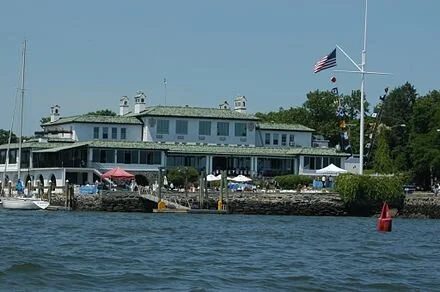
Indian Harbor Yacht Club, in Greenwich
From Robert Whitcomb’s “Digital Diary,’’ in GoLocal24.com
There was a terrific article recently in The New Yorker magazine about how rich Republicans in Greenwich, Conn., once known for their moderate, modest, honest, civic-minded “Eisenhower Republican” ways, signed on as Trump supporters. For a simple, amoral reason: He promised to make these already rich people richer by cutting their taxes and slashing regulations and did so. And Trump and “Moscow Mitch” McConnell plan to offer them even more goodies. In short, it’s all about appeals to pure selfishness, which work very well with this crowd: Vast sums have been flooding into Trump’s campaign coffers from Greenwich plutocrats.
The author, Evan Osnos, who used to live in Greenwich himself, also noted the increasing separation of these people from their communities. Look at how so many of them in places like Greenwich have installed very high, menacing walls around their estates, replacing the low stone walls and picket fences that were common around mogul/CEO estates back before the rise of Baby Boomer mega-greed and wealth exhibitionism starting in the ‘80s. I lived in Connecticut in the ‘60s and have noticed the change in Greenwich and other affluent Fairfield County towns since then.
Of course, pretty much all of us look out for Number 1 but some take that to extremes.
To read the piece, please hit this link.
'Human spiders'
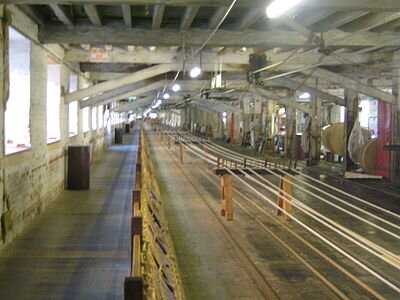
A ropewalk
In that building, long and low,
With its windows all a-row,
Like the port-holes of a hulk,
Human spiders spin and spin,
Backward down their threads so thin
Dropping, each a hempen bulk.
At the end, an open door;
Squares of sunshine on the floor
Light the long and dusky lane;
And the whirring of a wheel,
Dull and drowsy, makes me feel
All its spokes are in my brain.
As the spinners to the end
Downward go and reascend,
Gleam the long threads in the sun;
While within this brain of mine
Cobwebs brighter and more fine
By the busy wheel are spun.
Two fair maidens in a swing,
Like white doves upon the wing,
First before my vision pass;
Laughing, as their gentle hands
Closely clasp the twisted strands,
At their shadow on the grass.
Then a booth of mountebanks,
With its smell of tan and planks,
And a girl poised high in air
On a cord, in spangled dress,
With a faded loveliness,
And a weary look of care.
Then a homestead among farms,
And a woman with bare arms
Drawing water from a well;
As the bucket mounts apace,
With it mounts her own fair face,
As at some magician's spell.
Then an old man in a tower,
Ringing loud the noontide hour,
While the rope coils round and round
Like a serpent at his feet,
And again, in swift retreat,
Nearly lifts him from the ground.
Then within a prison-yard,
Faces fixed, and stern, and hard,
Laughter and indecent mirth;
Ah! it is the gallows-tree!
Breath of Christian charity,
Blow, and sweep it from the earth!
Then a school-boy, with his kite
Gleaming in a sky of light,
And an eager, upward look;
Steeds pursued through lane and field;
Fowlers with their snares concealed;
And an angler by a brook.
Ships rejoicing in the breeze,
Wrecks that float o'er unknown seas,
Anchors dragged through faithless sand;
Sea-fog drifting overhead,
And, with lessening line and lead,
Sailors feeling for the land.
All these scenes do I behold,
These, and many left untold,
In that building long and low;
While the wheel goes round and round,
With a drowsy, dreamy sound,
And the spinners backward go.
“The Ropewalk,’’ by Henry Wadsworth Longfellow (1807-82), a Portland, Maine, native and later a professor at Harvard. During some of his career he was America’s most famous poet. Ropewalks, where rope was made, especially for New England’s maritime-related businesses, were common enterprises even into the 20th Century. They tended to be sweat shops.
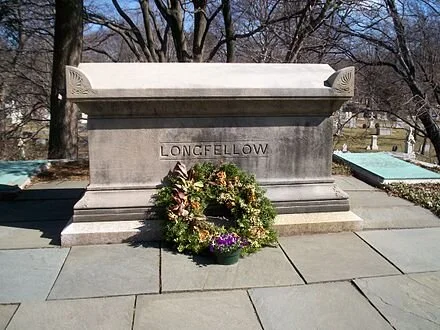
Longfellow’s grave in Cambridge, Mass.’s famous Mount Auburn Cemetery
Sad or happy tune?
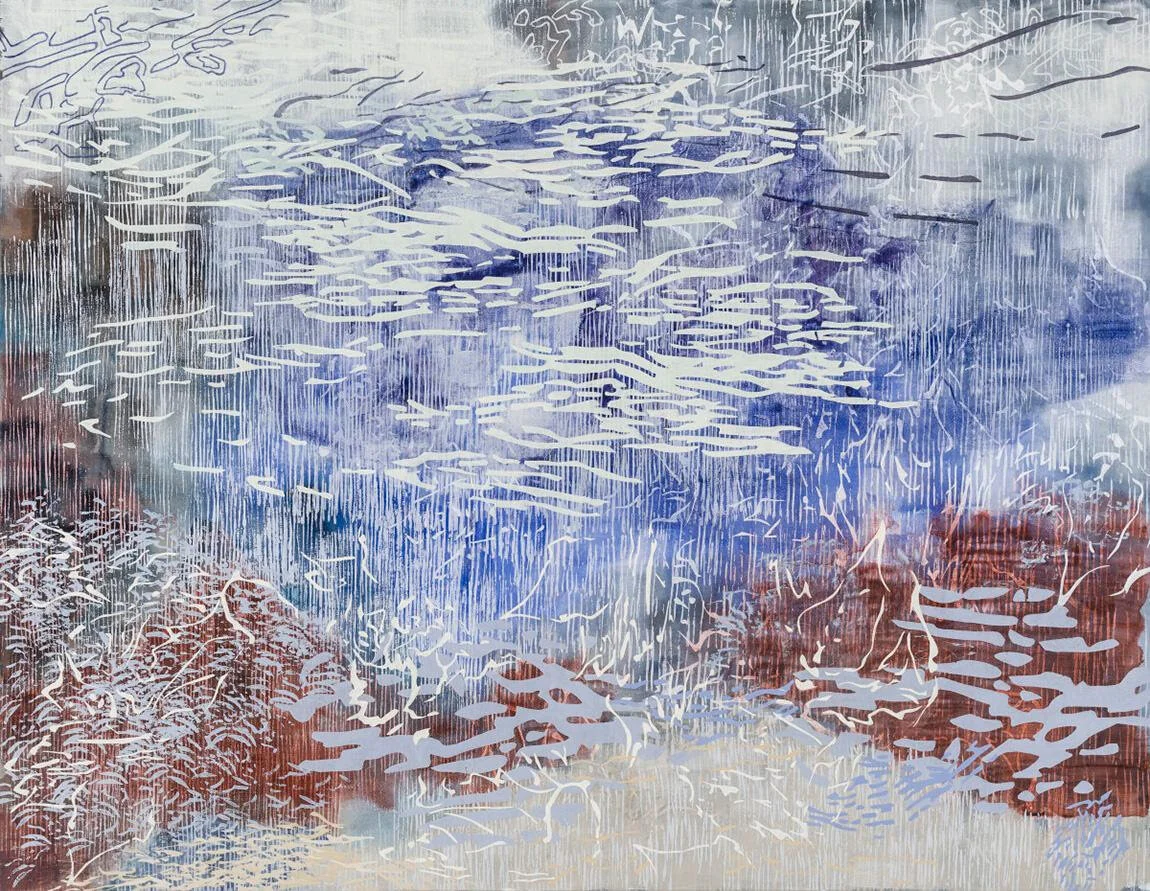
“Earth Song” (acrylic & Japanese paper on canvas), by Laura Fayer, at Lanoue Gallery, Boston, through July 18. See lanouegallery.com
A gray world
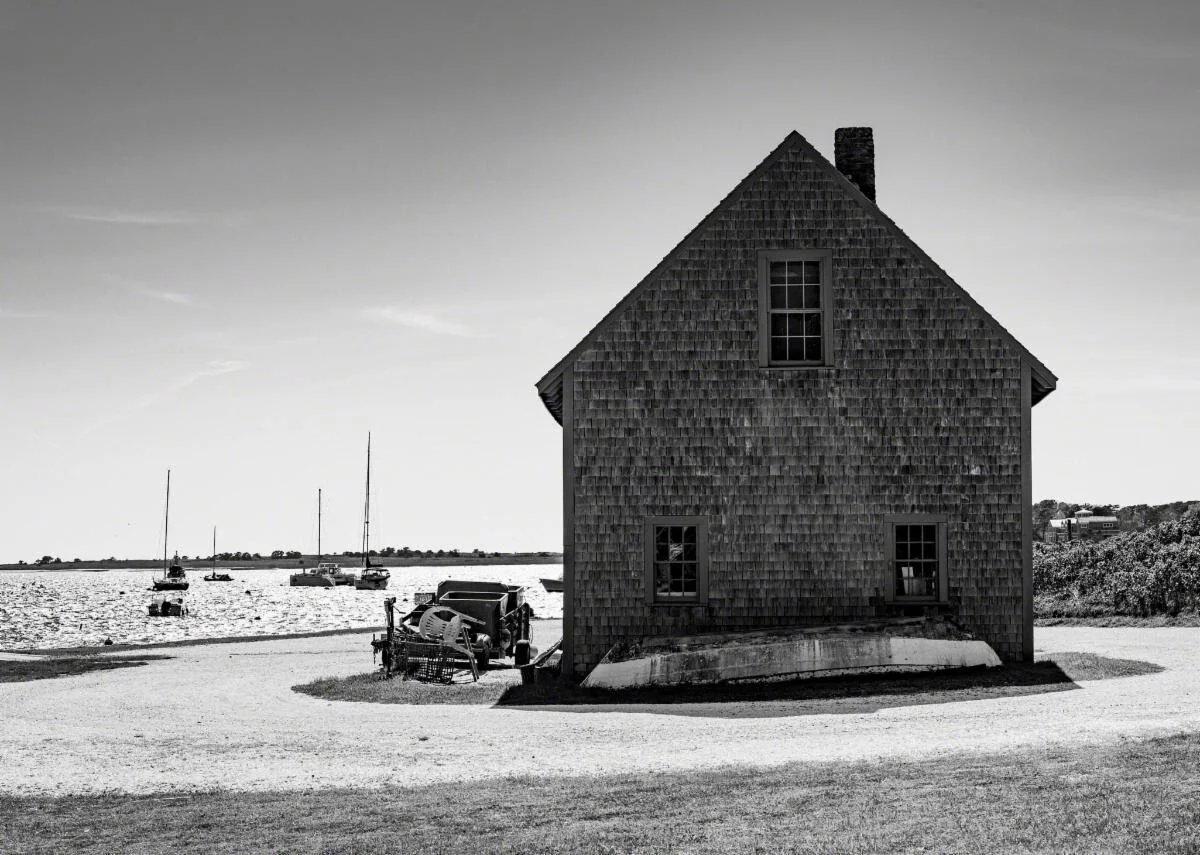
“At Stage Harbor, Chatham, Cape Cod” (archival pigment print), by Bobby Baker. Copyright Bobby Baker Fine Art.
Start rebuilding; battling bike bathos
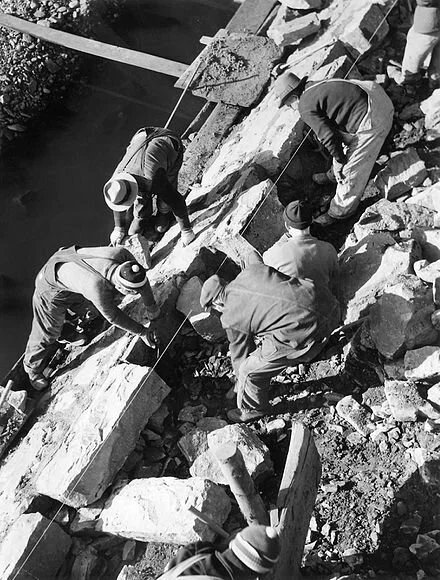
WPA road project in the ‘30s
From Robert Whitcomb’s “Digital Diary,’’ in GoLocal24.com
The upside of disaster. The COVID-19-caused lack of traffic has let road and utility work, such as replacing century-old gas lines in Providence’s Federal Hill neighborhood, be done much faster than anyone could have anticipated a few months ago. Which is a reminder that fixing America’s decrepit infrastructure in a sort of WPA-style program would not only employ some of the people who have lost their jobs in our open-ended economic crisis; it would also make us more competitive over the long haul.
Bucking the Bike Bathos Redux
How to bring back rental-bike-and-scooter companies to Providence, firms that have left because of thefts and vandalism?
For one thing, JUMP, Lime and other “micro-mobility” companies must do what they failed to do before – properly staff their services for oversight, which they have tried to do on the cheap. For another, all these vehicles should be locked in racks between use, and in very open and visible places, so that the police are more likely to monitor them. And surveillance cameras should be installed wherever possible. And as I’ve written before, there should be more serious punishments for stealing and vandalizing these vehicles.
Finally, enforce the traffic laws for bike and scooter users for a change!! Stop riders from going the wrong way on one-way streets, running stop signs and red lights, and keep them in their lanes. Will it take a couple of these wild riders getting slammed by a car or truck, and maybe killed, to get the city’s attention and start enforcing the law?
xxx
Meanwhile, Providence, like many other towns and cities, has closed off blocks of streets to most vehicular traffic in response to the pandemic, turning them into walkways, which I guess many people like, especially now that warm weather is here and after months of COVID claustrophobia. But how is it working out for deliveries, especially now that Amazon is everywhere? How do people living along these closed-off streets (though they can come and go) like it? And will these closures cause traffic jams as more people start driving around on our mostly narrow streets as the pandemic controls are gradually lifted?
Trying to rebuild trust in public transport
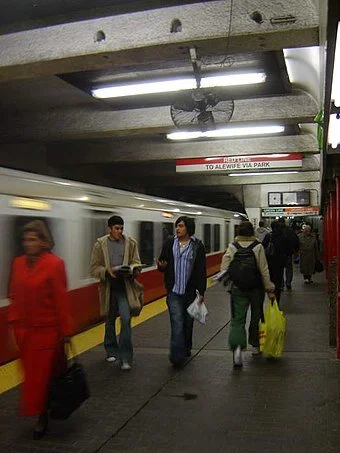
On an MBTA Red Line platform at Boston’s Downtown Crossing station
From The New England Council (newenglandcouncil.com):
“Keolis was highlighted in Intelligent Transport for its role in providing and operating public transport in 15 countries worldwide in the age of a pandemic.
“In New England, Keolis operates the MBTA’s Commuter Rail system, which serves eastern Massachusetts and parts of Rhode Island. In the interview, CEO Bernard Tabary discusses the effects of the pandemic on transport and what Keolis is doing to rebuild public trust in transport solutions and the future of transportation worldwide.’’