
Vox clamantis in deserto
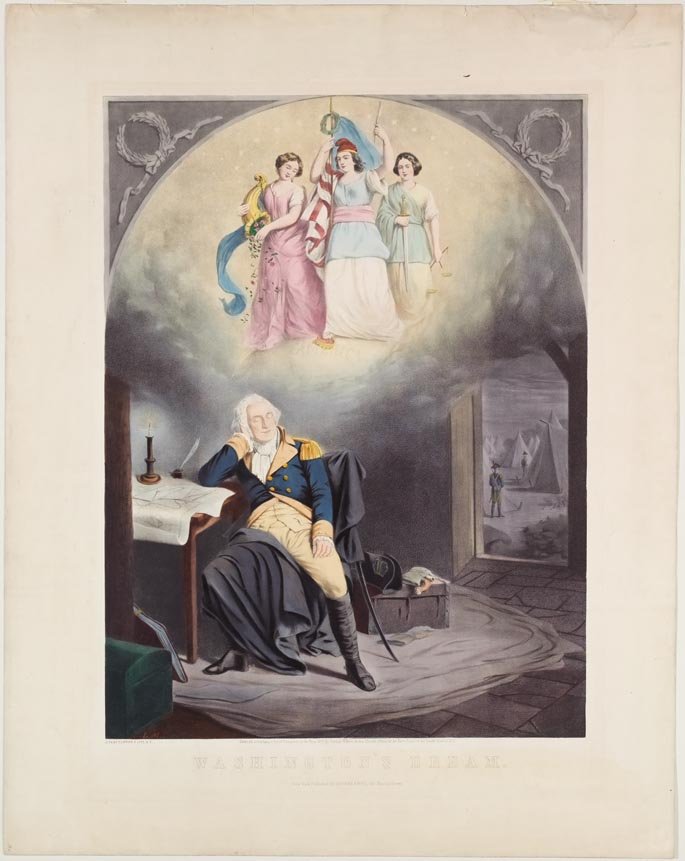




A liberating wardrobe
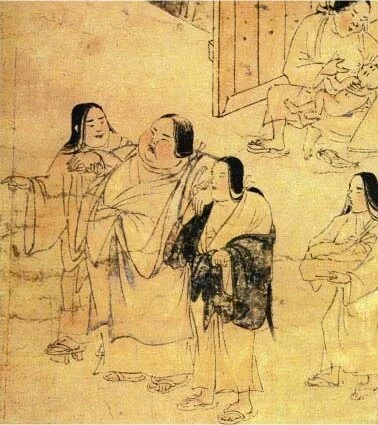
She ate and drank the luscious treats--
Restraint had taken flight--
She knew that she was far from slim
And that her clothes were tight--
She bought some caftans, shawls, and capes
And now her spirit sings
Despite her girth--What liberty
A loosened wardrobe brings —
— Felicia Nimue Ackerman (a Providence poet and philosophy professor)
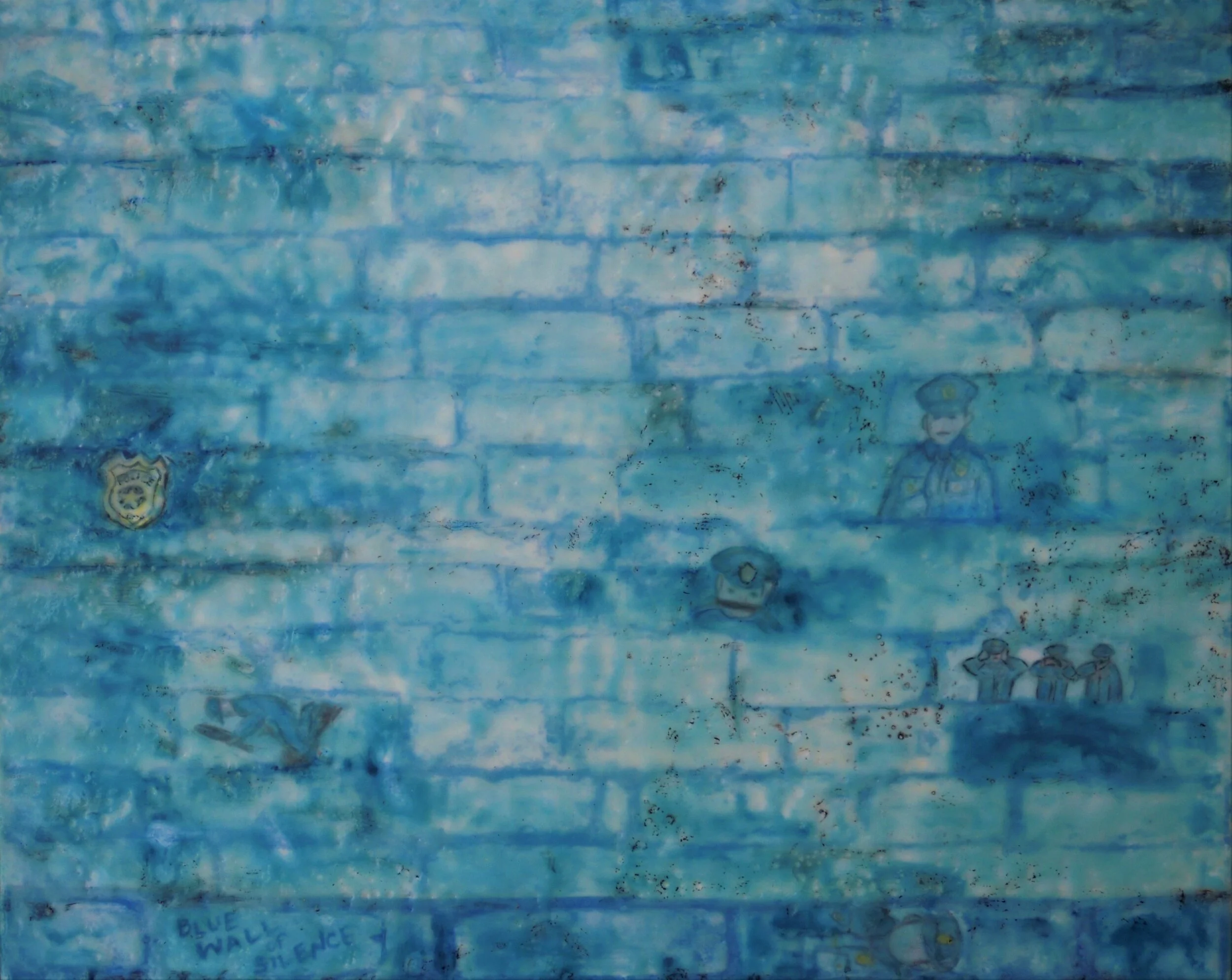
Left doors unlocked
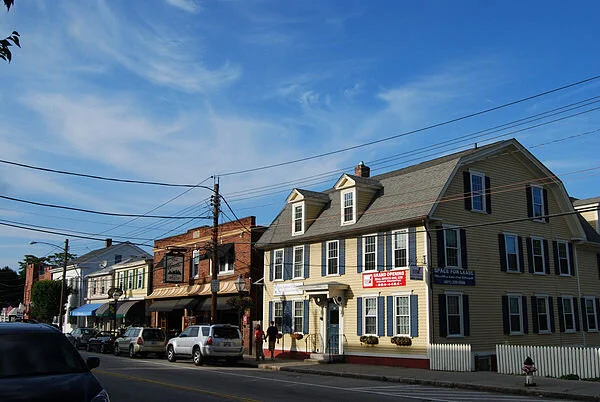
In the old-fashioned downtown of East Greenwich, R.I. on Narragansett Bay
“We moved around a bit when I was younger, but I grew up primarily in Rhode Island, in a beautiful seaside community called East Greenwich. It was a small town, and so safe that we rarely locked our doors at night.’’
— Michelle Gagnon, crime novelist
Giving the land a voice

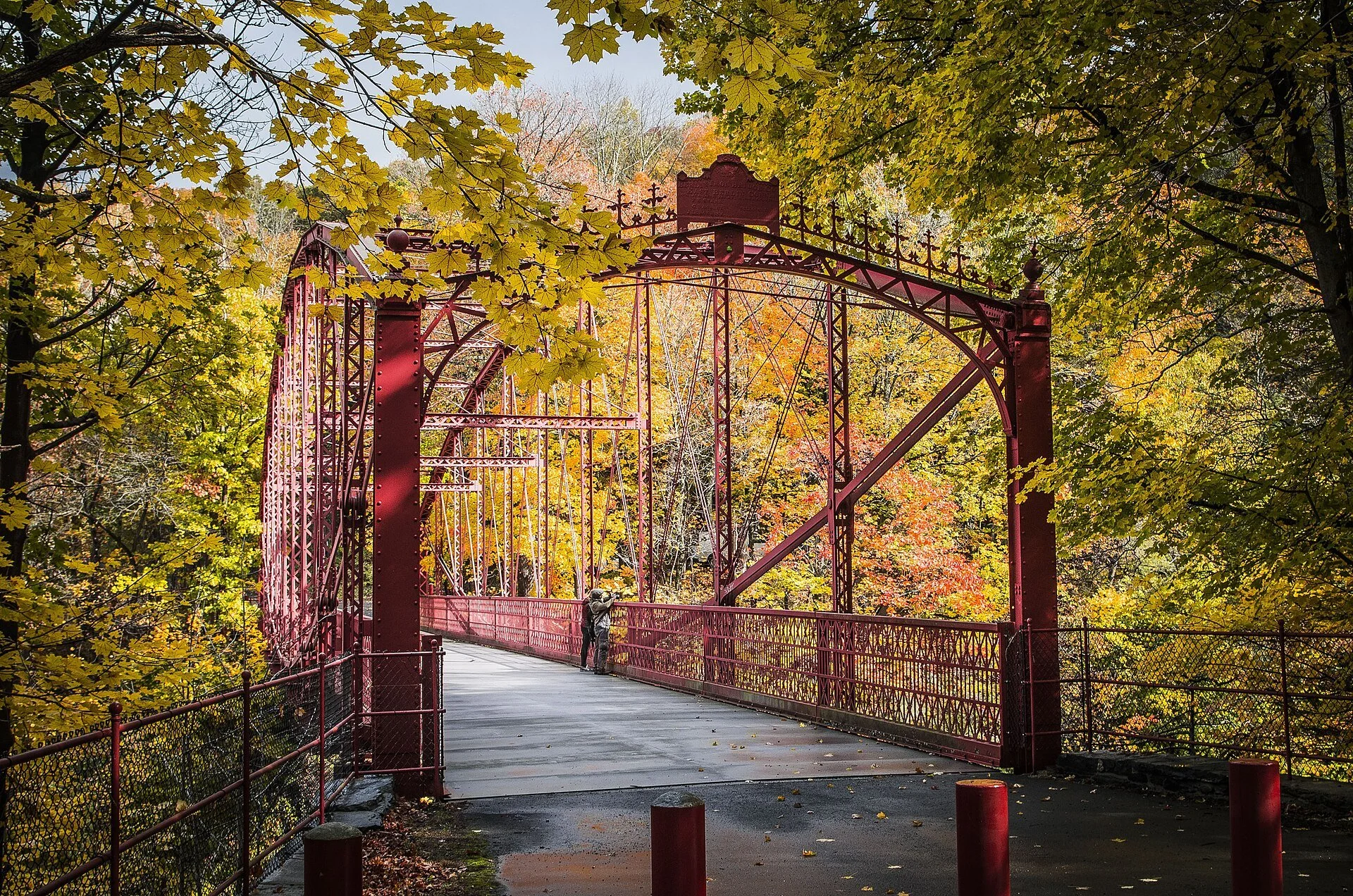
Kent Falls, in the Litchfield Hills, foothills of the Berkshires
“New England waterfalls like this one {in Kent Falls State Park, Kent., Conn.}, with their white plumes spilling downward from step to step, remind one of the age and gentleness of New England mountains, and, where they flow, they give the land a voice….Even those less vast than the enormous cataracts of Niagara or Yosemite have their own prodigy and their own cadence — and if you listen carefully…you can hear the white voice of New England among the green.’’
From “New England Waterfall,’’ by novelist and critic Robie Macauley (1919-95, in Arthur Griffin’s New England.
Gone groping underground?
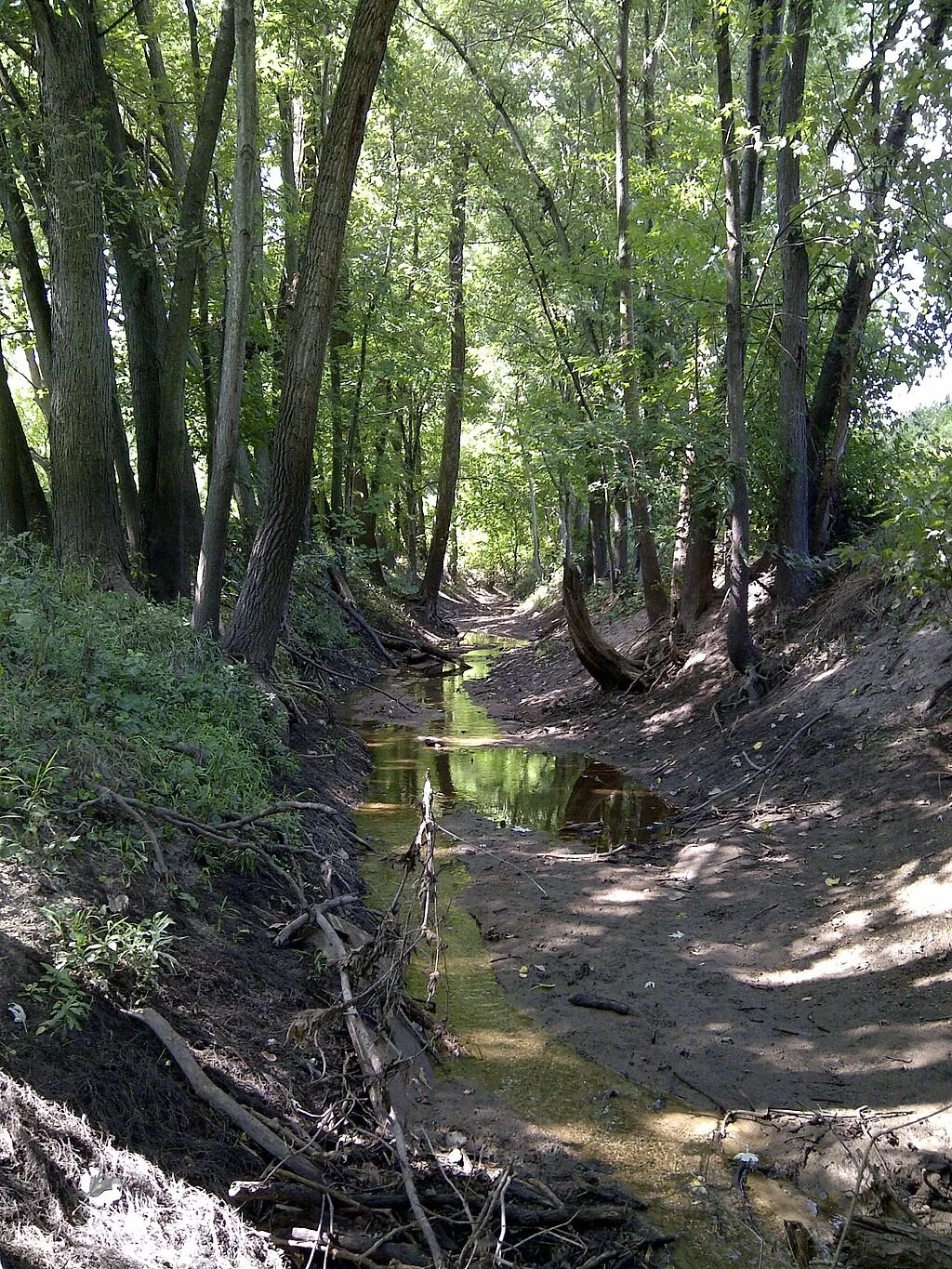
— Photo by J. Pinto
By June our brook’s run out of song and speed.
Sought for much after that, it will be found
Either to have gone groping underground
(And taken with it all the Hyla breed
That shouted in the mist a month ago,
Like ghost of sleigh-bells in a ghost of snow)—
Or flourished and come up in jewel-weed,
Weak foliage that is blown upon and bent
Even against the way its waters went.
Its bed is left a faded paper sheet
Of dead leaves stuck together by the heat—
A brook to none but who remember long.
This as it will be seen is other far
Than with brooks taken otherwhere in song.
We love the things we love for what they are.
— “Hyla Brook,’’ by Robert Frost
Llewellyn King: Pandemic will bring harvest of innovation

WEST WARWICK, R.I.
A plow breaks up the soil, turns it over. If seed is put down, that sprouts along with any other seed that happens to be there, weeds and other wild plants.
The new normal will be a plowed field where all sorts of innovations will spring forth. It will be a time of innovation, creativity and the growth of new products and ideas, as well as a few weeds (bad or greedily exploitive ideas).
Many who had what they believed to be steady jobs will become self-employed, dragooned by circumstance into the gig economy. And they will be the shock troops in an invasion of new inventions. At least that is my belief, and it is supported by empirical evidence that when there is turmoil, there is innovation.
Innovation has been on many lips since good things started to come out of Silicon Valley decades ago. The road to riches and to national predominance, it appeared, was through innovation. The rush was on. But it is one of those things, like happiness, that becomes harder to find the more you seek it.
Universities are busy designing courses in innovation. That is predictably opportunistic but probably futile. Imagine a professor teaching this basic innovation course: Quit your job, survive rejection, and work night and day on a hunch. Most people teaching are teaching because they are not risk-takers, and innovation is about risk-taking writ large.
Research, management and procedure are where the formal setting -- the university -- has its place. But none of the great innovators felt the need to study innovation, from Henry Ford and Thomas Edison to Steve Jobs and the reigning king of innovation, Elon Musk.
It is from desire and necessity that that innovation comes; before the venture capitalist has reached for a calculator, somewhere, somehow someone has been working on an idea.
The great challenge of innovation in times of adversity is not creativity but money. Many great ideas are stillborn because money is harder to raise at such times. Financiers are not as brave as innovators. Still a plethora of good things came out of the 1930s, from musical theater to the Polaroid camera. These days there is more mobility of thought and, therefore, there will be more innovation.
In recent years, innovation has come to mean something to do with computing but that is not an exclusive path.
Sometimes innovation is simply seeing a better idea. In 1969, Neil Armstrong walked on the moon. That was an achievement involving a lot of vision, drive, innovation and money. The next year, something huge happened that involved none of the consuming effort of the space program: Wheels were added to luggage.
In 1984, Lee Iacocca produced the minivan. It was a classic example of exaptation -- a term used in evolutionary biology to describe a trait that has been co-opted for a use other than the one for which natural selection has built it. That was true for the minivan: It was a regular van modified and repurposed.
Likewise, one of the few great, modern fortunes not associated with computers came from Greek yogurt. No invention there. The Greeks did that thousands of years ago. It was a good idea from a Turkish immigrant, Hamdi Ulukaya, founder and chief executive officer of Chobani.
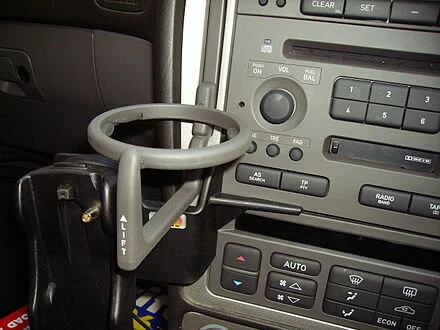
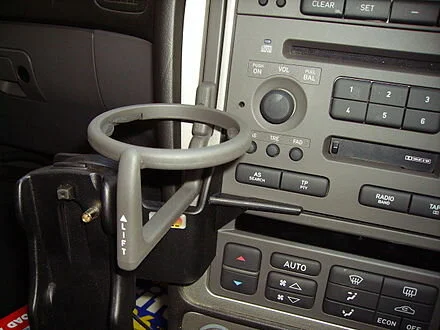
Good ideas are the simplest and most direct way to innovation. Take cupholders in cars. It is extraordinary but true that cupholders began when the convenience store chain 7-Eleven started selling plastic brackets that affixed to your window to hold coffee. In no time, car companies were marketing cars based on the number of built-in cupholders. Not in luxury cars, not in great carriages had so simple a feature been added. That, too, was innovation. Of course, another invention, the throw-away beverage cup, helped.
The lesson is you can innovate, create Uber or Airbnb, if you understand computers. But you can also look around, as with wheels on luggage, cupholders and Greek yogurt, and the true innovator will find products and services aplenty.
The message is, I believe, the true innovator looks around inside the box before venturing outside of it.
Tens of millions of Americans will be ferreting around seeking new and better ways to do things. Some will innovate in ways that will change things forever.
Llewellyn King is executive producer and host of White House Chronicle, on PBS. His email is llewellynking1@gmail.com and he’s based in Rhode Island and Washington, D.C.
MIT, Biogen team up to help students in underrepresented neighborhoods
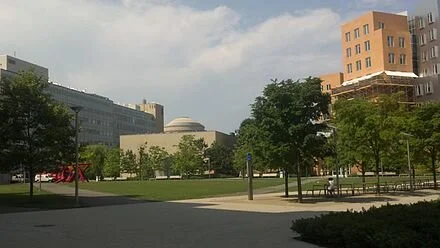
On main campus of MIT, Cambridge
From The New England Council (newenglandcouncil.com):
”Biogen, the international biotech company, and the Massachusetts Institute of Technology, both in Cambridge, have launched a new online learning program targeted at high school students in historically underrepresented communities. Students in the program will participate in lab simulations and mentorship opportunities for free in order to encourage them to pursue careers in science, technology, engineering, and math (STEM) fields.’’
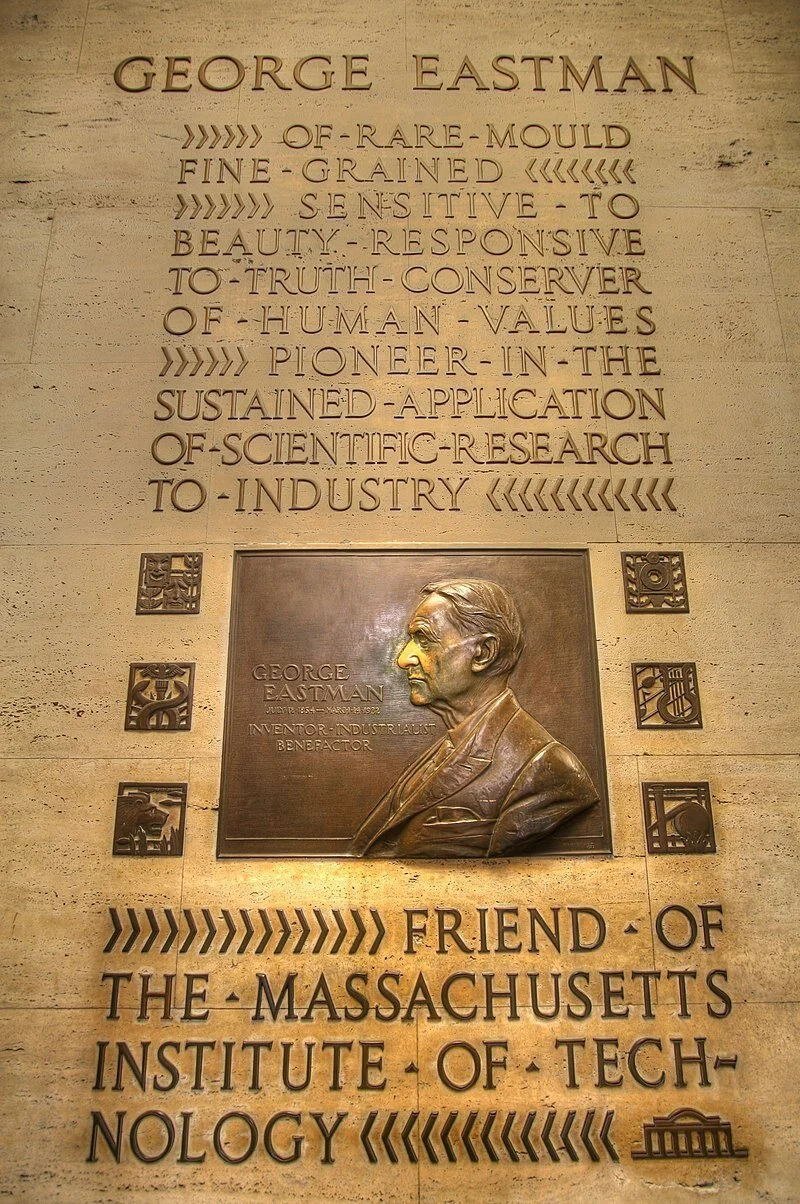
Plaque in MIT’s Building 6 honoring George Eastman, founder of Eastman Kodak, who was revealed as the anonymous "Mr. Smith" who helped maintain MIT's independence.
Bittersweet in jeans at Holy Cross
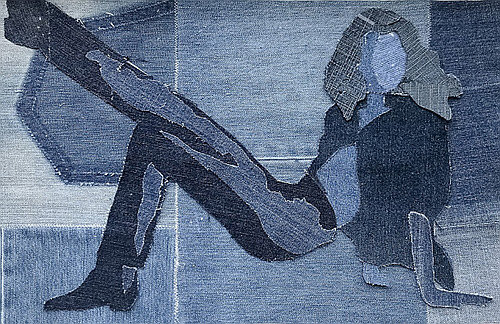
“1980 In My Calvins’’ ( recycled denim and thread), by Murphy Grady, in the College of the Holy Cross’s (in Worcester)2020 Senior Concentration Seminar Exhibition, moved online by COVID-19.
The exhibit is titled "énouement," chosen by the students to represent the bittersweet feeling of having arrived at the future and wishing to tell one's past self what that future would entail.
Waltz evenings and polka nights
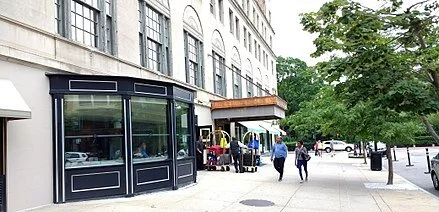
The Newbury Street side of The Newbury Boston, a landmark building across from the Public Garden. The hotel used to be called the Ritz-Carlton, which was opened in 1927 and, along with the Parker House, has long been considered one of New England’s most prestigious hotels.
“Gaining access to the inner sanctum of Yankee society was a vital aspiration for Joseph and Rose Kennedy, but by the 1970s these old longings had become anachronistic. To outsiders, the exclusive Brahmin waltz evenings at the Ritz {Hotel} in Boston became equivalent to the polka nights at the Polish clubs.’’
— Richard D. Brown, in Massachusetts: A History

The Public Garden, created in 1837, was the first public botanical garden in America.
Showing evolution of color despite COVID-19

From “Invisible Language,’’ by Suelllen Guerreiro, in the University of Massachusetts at Lowell’s (now online only) Spring BFA exhibition. titled “Resilience’’. Guerreiro’s work is a graphic-design project that explores the evolution of color and how our experience of it has changed over time.
”Resilience’’ displays artwork created by the school's BFA candidates and tells how they rose to the challenge of finishing their graduation projects in the midst of the pandemic.
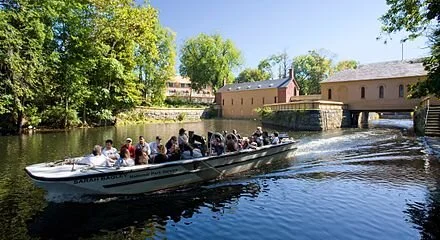
Boat tour in the Lowell National Historic Park, dedicated to the rise of the city as a pioneer of the American Industrial Revolution.


Don Pesci: In the pandemic, separating science and political science

Treating a patient on a ventilator in a hospital’s intensive-care unit
VERNON, Conn.
How scientific is science in the matter of Coronavirus?
There’s science and there’s political science. The one thing we do not want in any confluence of the two is confusion and mass hysteria, which can best be avoided by observing this rule: Politicians should decide political matters and medical scientists should decide medical matters. Occasionally, politicians decide that mass fright can better able convince the general population than rational argument.
The answer to the above question is simple: In the case of new viruses, science, as defined above, must be silent. There can be no “scientific” view of Coronavirus because it is a new phenomenon, the recent arrival of a stranger on the medical block. Concerning Coronavirus, there are, properly speaking, multiple views of different scientists, many of whom will disagree with each other on important points.
Does Coronavirus remain on surfaces for long periods? A couple of months ago, we were told by politicians, relaying the news from “science”, that hard surfaces were repositories of Coronavirus, and that contamination from hard surfaces was as likely as person-to-person contamination. That notion has withered on the vine now that we know Coronavirus is most often spread person to person.
Do adults spread Coronavirus to children, or are children the Bloody Marys? This is an important datum because if children, who are much less likely than adults to die or be seriously ill from Coronavirus, spread the virus to adults, the wholesale closing of schools might be a protective measure.
But if adults pass the virus to children, the current view of many scientists, remediation efforts would be far different. We are told that love covers a multitude of sins including, Agatha Christie advises us, murder. The word “science” misapplied covers, we have seen, a multitude of political sins.If we can learn from our past mistakes, we need not carry our mistakes into the future.
If the question is, “Have politicians in the Northeast made a mistake in trusting to some scientists?” the question is wrongly put. It’s not quite as simple as that. It will always be better to take advice from the horse’s mouth rather than from the horse’s posterior. But in the process, politicians must not allow differing scientists to determine the political course of a state.
Politicians, in the face of a pandemic, should not stop being politicians. That is what we have seen in Northeast states, where Coronavirus has dug in its heels. Here legislative activity has been shut down, and Connecticut Gov. Ned Lamont has been festooned with extraordinary – some would say unconstitutional -- powers.
Like his counterpart in New York, Andrew Cuomo, Lamont has resorted to state-wide business shutdowns and sequestration. But inducing a long-lived recession in Connecticut, sequestration and data collection are not curative, however “necessary” they seem to be to some politicians who are masters in the art of spreading fear.
A vaccine may cure Coronavirus. What is called herd-immunity may reduce infestation. Certain people, in many cases younger people, catch the virus and develop a natural immunity, foreshortening the mass of people fatally exposed to the virus. We know that Coronavirus has spread like a wildfire in nursing homes, because clients in nursing homes are older and subject to other infirmities that in their cases have dramatically increased the fatality rate in Connecticut and New York.
“Science” – real science – warned us of this at the very beginning of the infestation. We knew of a certainty that older people with compromised systems were especially vulnerable. So, knowing this, why did not the governors of Connecticut and New York direct more of their resources to nursing homes? That is a question that must be answered by our “savior politicians.”
Home sequestration, we have been told, helps to flatten the Coronavirus curve. What can this mean if not that sequestration prolongs the time during which the sequestered may in the future be exposed to the virus? Flattening the curve is not curative. Ask any scientist.
The Coronavirus pandemic has been Hell, but it is very important that we should not return from Hell with empty hands.
In Connecticut more than 60 percent of deaths “associated with” Coronavirus occurred in nursing homes; the figure is similar in New York. Cuomo recently acknowledged he was surprised to discover that a sizable majority of people in New York infected with Coronavirus had been sequestered at home. His surprise is surprising.
We are told that business re-opening will occur in Connecticut in three stages, somewhat like a rocket on its way to the moon. But surely business opening should be determined with reference to sections of Connecticut that have been severely or mildly affected by Coronavirus, and the distribution of Coronavirus throughout the state has been mapped by Johns Hopkins University ever since the virus penetrated the United States from its point of origin, Wuhan, China.
These are political decisions that should have been codified in law by a quiescent General Assembly. Political science – yes, there is such a thing – would tell us that we no longer enjoy in Connecticut a republican, small “r”, constitutional government. Instead, Governor Lamont has become our homegrown Xi Jinping, China’s communist tyrant who has now provided Connecticut both with a deadly virus and PPEs, the means of thwarting some of its effects.
Don Pesci is a Vernon-based columnist.
Granite State an outlier
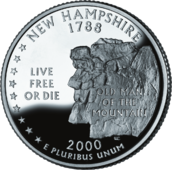
“There’s little question that Vermont (particularly Vermont), Maine, Boston, and Cape Cod, are, together, responsible for the New England image. New Hampshire just doesn’t fit in.’’
— Judson D. Hale Sr. , of Yankee Magazine, in “Vermont vs. New Hampshire, in the April 1992 American Heritage magazine

Shailly Gupta Barnes: In crisis, pols focus on helping the rich

Via OtherWords.org
The COVID-19 pandemic has revealed fundamental inequalities in this country.
With millions of us hurting — especially the poor and people of color — there’s been widespread public support for bold government action to address long-standing social problems. Unfortunately, our lawmakers haven’t met the overwhelming need to focus on the poor and frontline workers.
Instead, trillions of dollars have been released to financial institutions, corporations, and the wealthy through low-interest loans, federal grants, and tax cuts — all without securing health care, wages, or meaningful income support for the unemployed. This is all unfolding as we enter the worst recession since the Great Depression.
As Callie Greer from the Alabama Poor People’s Campaign reminds us, “This system is not broken. It was never intended to work for us.”
This system treats injuries to the rich as emergencies requiring massive government action, but injuries to the rest of us as bad luck or personal failures. It reflects the belief that an economy that benefits the rich will benefit the rest of us, because it is the rich who run the economy.
It is easy to see how this plays out in policies that directly favor Wall Street, corporations, and the wealthy. But we see it even in policies that appear to be more liberal and equitable.
The CARES Act, for example, provided free testing for coronavirus, but not treatment. It offered unemployment insurance for some who’ve lost their jobs, but not living wages for those still working. It identified essential workers, but didn’t secure them essential protections.
The failure to fully care for workers and the poor is the flip side of the belief that the rich will construct a healthy economy out of this crisis. We see it directly as politicians slash money from public programs during this crisis while refusing to touch the accumulated wealth of the few.
In New York state, Gov. Andrew Cuomo passed an austerity budget that will cut $400 million from the state’s hospitals. In Philadelphia, Mayor Jim Kenney revised the city’s five-year budget to include government layoffs, salary cuts, and cuts to public services. Neither Cuomo’s nor Kenney’s budget made the proactive decision to tax the wealthy.
The same is true in Washington state, where Gov. Jay Inslee has been cutting hundreds of millions from state programs, anticipating major declines in tax revenue. This in a state that’s home to two of the wealthiest people in the world, Jeff Bezos and Bill Gates.
Of course, the rich are not the driving economic force in the country. It has become crystal clear during this pandemic that poor people, including frontline workers, actually fuel this economy. “We may not run this country,” said Rev. Claudia de la Cruz back in 2018, “but we make it run.”
But now we see the early rumblings of people coming together to assert this reality and challenge our faith in the rich.
Health-care workers, students, child-care givers, food-service workers, big-box-store employees, delivery drivers, mail carriers, and others are taking action to call out gross inequities and organize our society differently. Demands to cancel rent and to secure housing for all, universal health care, living wages, guaranteed incomes, and the right to unions are being heard all across the country.
Meeting these demands would not only secure the lives and livelihoods of millions of people — it would begin to release our economy from the suffocating grasp of the wealthy and powerful. Instead of waiting for wealth to trickle down, we would revive our economy by raising up the poor.
When you lift from the bottom, everybody rises.
Shailly Gupta Barnes is the policy director for the Kairos Center and the Poor People’s Campaign: A National Call for Moral Revival.
Inn a 'dreamlike atmosphere'

“Inn on the Harbor’’ (oil painting), by Niva Shrestha, of Arlington, Mass., as seen at Galatea Fine Art’s (Boston) online gallery. Galatea says the painting “has a humorous, almost carnival-like quality to it. The buildings seem to stand alone in a sun-washed, dream-like atmosphere. The artist plays with shadows and light; the buildings are treated as if they were pure form, and the deliberate juxtaposition of these angular forms create a Mondrian-like sensibility.’’
See:
and:
galateafineart.com
'And in the end defeat -- '

The waist is larger than the belt --
For put them side by side --
The one the other will exceed
With ease -- it cannot hide --
The foot is wider than the shoe --
For try them inch by inch --
The one the other won’t fit in --
Without a mighty pinch --
The mouth is greater than the will --
For show them something sweet --
The one the other will defy --
And in the end defeat—
—”The Waist Is Larger Than the Belt,’’ by Felicia Nimue Ackerman, a Providence poet and philosophy professor
Dooley a great URI president

The Chester H. Kirk Center for Advanced Technology at the University of Rhode Island main campus, in Kingston
— Photo by Kenneth C. Zirkel
David Dooley has been a great president of the University of Rhode Island. He’ll retire in June 2021.
He’s helped bring in the strongest and most diverse student body and faculty the university has ever had, who have done widely recognized research in URI’s nationally, and in some cases internationally, known centers of excellence. He’s overseen construction of functionally superb and architecturally important new buildings while improving the aesthetics of the already bucolic campus. He’s been very adept at raising money to steadily raise the university’s stature.
What makes the achievements of Mr. Dooley, a chemist by training, all the more impressive is that his tenure started in July 2009, a very difficult time because of the Great Recession. He’ll face new and familiar issues as he helps guide the university and his anointed successor through the next year, which is bound to be very difficult one for American academia. The university is lucky that he’ll be in charge as this crisis rolls on
Todd McLeish: Threats to Rhode Island's rare plants

Salt-marsh pink
From ecoRI News (ecori.org)
Only two populations of salt-marsh pink are left in Rhode Island, and they are at risk from sea-level rise.
David Gregg worries that not enough is being done to protect Rhode Island’s rare plants.
“There are a lot of plant species that we’re monitoring out of existence,” said Gregg, the executive director of the Rhode Island Natural History Survey. “We check them every year, and there are often fewer of them each year. The best-case scenario is that they stay the same, but many populations are getting smaller and smaller.”
He believes that conservationists must be bolder during the climate crisis if native wild plants are going to survive in the coming decades. Rather than simply monitoring the status of rare plants in Rhode Island, he is advocating for the use of more active strategies to boost plant populations.
“There’s been a big debate among biologists about how active we should be in trying to save rare species,” Gregg said. “Are we going to end up gardening nature? Aren’t we bound to make faulty decisions? If we get involved in active management of rare species, aren’t we doomed to screw it up?”
With little left to lose in some cases, the Natural History Survey has chosen to partner with the Rhode Island Department of Environmental Management and the Native Plant Trust — formerly the New England Wild Flower Society — on an effort to propagate select species of rare plants and transplant them into the wild to augment existing wild populations and establish new populations.
The “Rhode Island At-risk Plant Propagation Project” is an outgrowth of the Rhody Native program, which was established a decade ago to help commercial plant growers propagate native plants for retail sale. At its peak, the program was growing 50 different species, but eventually just one species became dominant, a salt marsh grass used in restoration projects.
“Rhody Native became a commodity growing project, and that’s not our business,” Gregg said. “Our strength is in rare species — learning to propagate them and experimenting with them.”
The Natural History Survey’s “Propagation Project” began last year with the selection of four plants to propagate to test the concept: salt-marsh pink; wild indigo; wild lupine; and several varieties of native milkweed. The lupine and indigo were selected in part because they are the food plant for a rare butterfly, the frosted elfin. Just two populations of salt-marsh pink are left in Rhode Island, and they are at risk from sea-level rise.
“Our populations of marsh pink have very few plants, and we’re worried about inbreeding,” Gregg said. “The idea is to take plants from a Connecticut restoration site, cross pollinate them with plants from Rhode Island to reduce inbreeding, and then return some to Connecticut and use the others to reinforce the Rhode Island populations.”
The big challenge with this kind of project is learning how to propagate the plants in a greenhouse setting.
“These aren’t domesticated plants we’re working with,” said Hope Leeson, a botanist for the Natural History Survey who led the Rhody Native program. “We have to imitate the environmental conditions the plants are adapted to — the temperature, humidity, soil, water, and other factors.”
Salt-marsh pink is a particularly challenging example. It’s an annual species that produces a large quantity of seeds in a good year, but the seeds are extremely small — Leeson described them as “dust-like” — and they don’t tolerate drying, so they can’t be stored over the winter.
“We collected seeds in October and had to sow them immediately,” she said. “In the wild, they grow in a band of vegetation along the top of a salt marsh, where it’s a moist sandy soil mixed with peat. Periodically it floods as the tide comes in and then drains. I’ve got to come up with a soil mixture that’s like the natural conditions to make the plant happy.”
Wild indigo, on the other hand, is very drought tolerant and doesn’t grow well in moist or humid conditions. Its seeds, like those of wild lupine, must be scarified before they will germinate.
“A lot of species in the pea family have a hard seed coat that keeps them from taking in water until conditions are right for germinating,” Leeson said. “In the wild, lupine grows in sandy, gravely soil, so the seeds are likely to get abraded by the sand over the winter, allowing it to take in water to trigger the process of coming out of dormancy.”
To get lupine and indigo seeds to germinate, Leeson must first scratch them with sandpaper to simulate the natural scarification process.
Leeson and volunteers from the Rhode Island Wild Plant Society are raising many of the target plants in greenhouses at the University of Rhode Island’s East Farm and at a private site in Portsmouth.
Gregg said the project is being undertaken on a shoestring budget to demonstrate it’s potential.
“We hope someone will realize that we have this unique capacity to do research propagation of rare plants, and maybe that will help us find some funders to support the project,” he said.
Rhode Island resident and author Todd McLeish runs a wildlife blog.
'Disguished as stones'

‘‘Watching the Breakers” (1891), by Winslow Homer
“In the beginning were the Words of God, disguised as stones:
like hard, black pupils dropped into the faithful’s eyes, these stones.
Waves hunched in worship shake the granite shore beneath my feet
as once it shuddered under the soles that colonized these stones.’’
— From “New England Ghazal,’’ by John Canaday, a poet and teacher who lives in Arlington, Mass.

Arlington’s famous municipal water tower was built by the Metropolitan Water Works between 1921 and 1924 in the Classical Revival style, to provide water storage for Northern Extra-High Service area, consisting of Lexington and the higher elevations of Belmont and Arlington. The design is said to have been inspired by the rotunda from the Samothrace temple complex, in Greece.
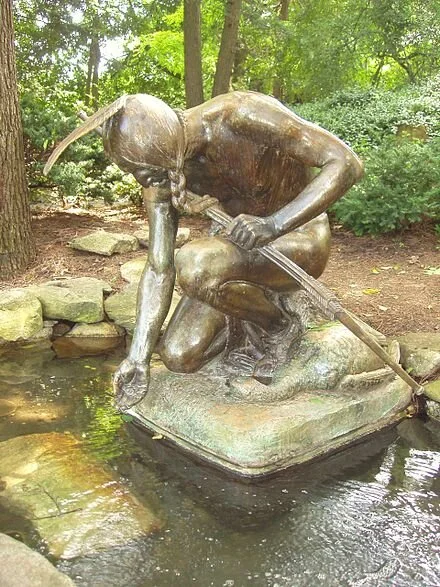
Menotomy Indian Hunter in Arlington Center, by resident Cyrus E. Dallin (1911)
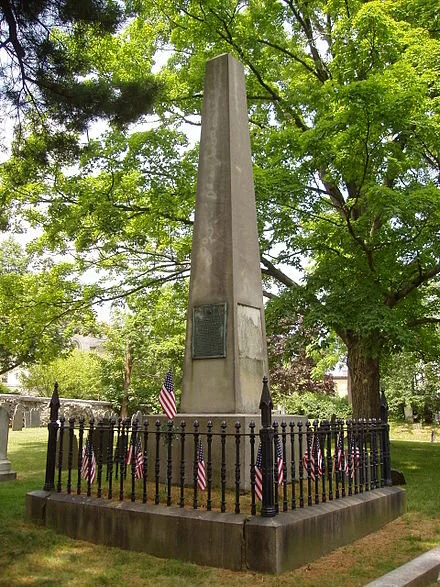
Patriots' Grave in the Old Burying Ground in Arlington
Through the foliage
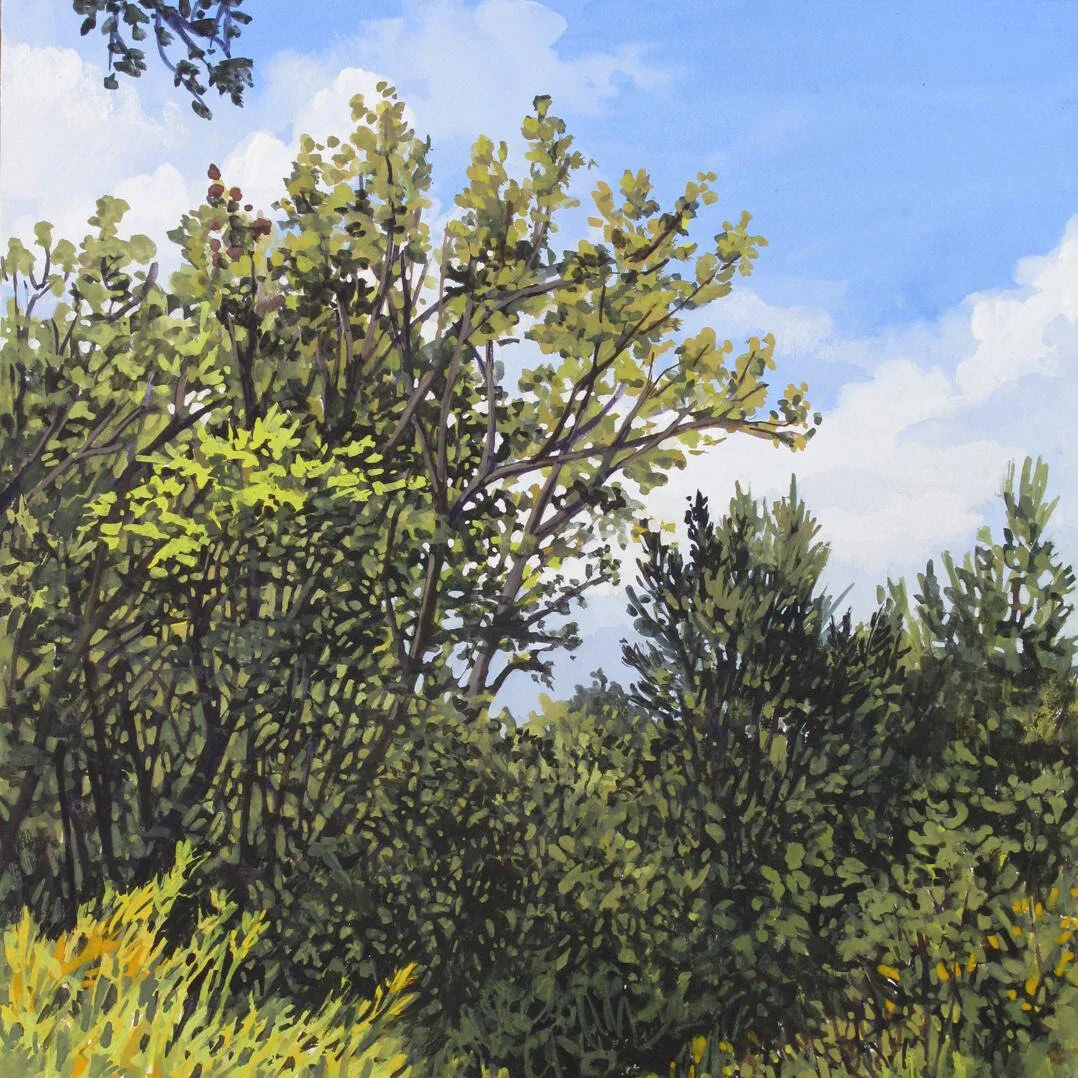
“Looking Up” (gouache on panel), by Vicki Kocher Paret (of Cambridge, Mass.), at the online gallery of Galatea Fine Art, in Boston.
Galatea’s text goes: “.A forest clearing can be detected somewhere in this mass of growth. The viewer is invited to find it. This painting by Vicki Kocher Paret beckons discovery as the eye is drawn to the horizon of the treetops. The sun chooses its illumination among the texture cast by leaves and branches.’’
See:
vickikocherparet.com
and:
galateafineart.com