
The light is always changing
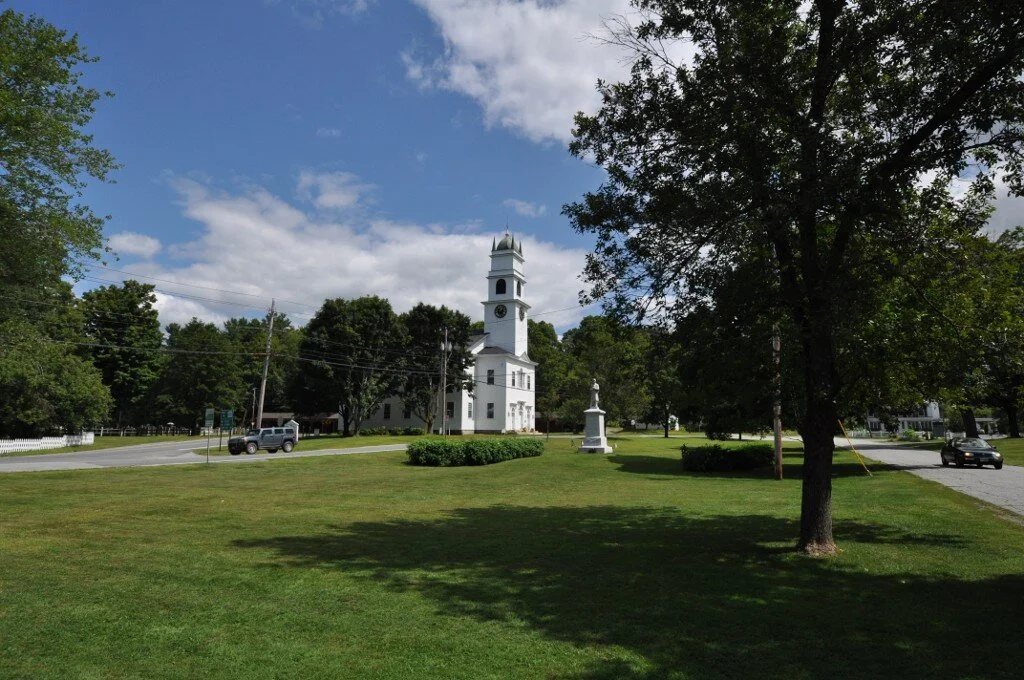
The common of Lyme, N.H.
— Photo by Magicpiano
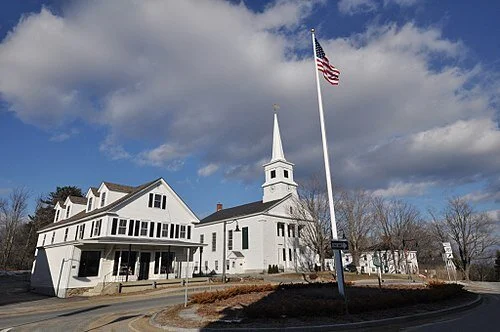
“Downtown’’ Dublin, N.H., the highest town in New England and the headquarters of Yankee Inc., which owns Yankee Magazine.
“I have lived in New Hampshire nearly forty years, and I am still discovering places and moments of beauty that surprise me. Sometimes it may be seeing the same setting — a country road, a hillside, a meadow — in a different light or in a different season.’’
— Mel Allen, editor of Yankee Magazine
Chris Powell: 'The indifference of the majority'

MANCHESTER, Conn.
How laughable that state legislators from both parties are starting to express annoyance with Connecticut Gov. Ned Lamont -- some about the pace of reopening commerce amid the virus epidemic, others about financial issues.
For the governor did not adjourn the General Assembly when he declared an emergency amid the epidemic and claimed the special powers allowed to him by state law. No, the legislature adjourned and scattered itself and has remained adjourned even as all sorts of "essential" workers remain on the job enduring close contact with others, from nursing home aides to supermarket employees to postal carriers.
If those workers can stay on the job, legislators should be able to do the same. Otherwise legislators proclaim themselves inessential.
In the unprecedented circumstances of the epidemic the governor will never be able to please everyone in his pursuit of public safety, and everyone remains free to complain about his executive orders. But unlike ordinary citizens, legislators are free not only to complain about government policy but also to do something about it. Legislation could restrict the governor's powers, undo his orders, and begin to cover the huge state budget deficit caused by the epidemic.
As long as they fail to reconvene, legislators who complain about the governor will only be posturing, not working.
xxx
Meanwhile Local 2001 of the Service Employees International Union, a state employee union, is preparing a publicity campaign to counter criticism that Connecticut's state employee pension system is too expensive and unaffordable amid the huge costs of the epidemic.
According to the union, the expense of the pension system is not even a fair issue. In a message to members seeking volunteers to write letters for publication in newspapers, the union says: "When you open up the paper all you see is a coordinated effort to distort the truth."
That's union-speak for people who dare to disagree with the union. They must be dishonest.
The SEIU message continues: "Are you willing to be involved in the upcoming elections? The state representatives and senators running locally are the ones who make decisions about your health care and pensions. Let's be a part of electing the right people, but we can do that only if you get involved."
Of course government employee union members have the same political rights as everyone else. But unlike everyone else, the unions use those rights nearly every day. They have lobbyists at the state Capitol and, as the SEIU notice suggests, their members staff most legislative campaigns for candidates nominated by the majority party. Their success rate in elections long has been high, for, as the journalist James Reston wrote long ago, the first rule of politics is the indifference of the majority.
So is the SEIU really worried that the damage to state government's finances may be great enough to threaten union control of the legislature and the governor's office?
Does the union really suspect that to restore state government's finances the governor might try to exact from the government class a sacrifice resembling the sacrifice the epidemic has exacted from the private sector?
Does the union really fear that the governor might feel bad that the incomes of government employees have been completely protected during the epidemic while tens of thousands of private-sector workers have lost their jobs and may face higher taxes anyway?
Could the majority in Connecticut actually be induced to care about this disparity and prove Reston wrong for once?
Chris Powell is a columnist for the Journal Inquirer, in Manchester.
You can be a writer too

Main reading room of the Boston Public Library, one of the world’s greatest libraries and research centers.
— Photo by Brian Johnson
“In the Boston Public Library on Boylston Street, where all the
bums come in stinking from the cold,
There was one who had a battered loose-leaf book he used to
scribble in for hours on end.’’
-- From “The Critic,’’ by C.K. Williams (1936-2015)
Cities broken but optimistic

“Broken Earth” (mixed media), by Susan Leskin, as seen in Galatea Fine Art’s (Boston) online gallery.
The text with it says: “There is an architectural component to this piece by Susan Leskin. Cities seem to grow out of a miasma of uncertainty. Bits and pieces take off and float away into a night becoming day. There is an optimism in this work reflected by the energetic candor of the composition.’’
See:
and:
galateafineart.com
Ducks for peace
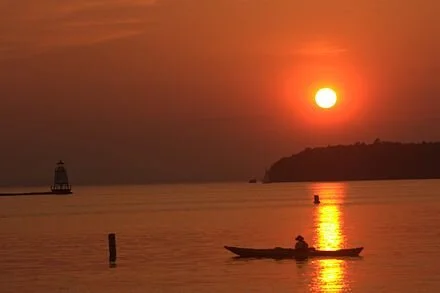
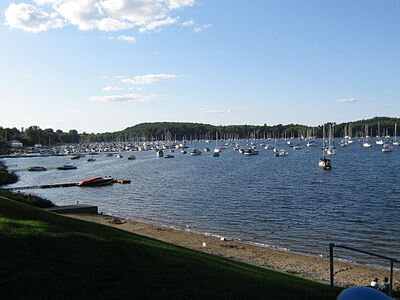
View of Malletts Bay (part of Lake Champlain) from Bayside Park near the center of Colchester. Vt., home of St. Michael’s College.
‘'Now she’s mesmerized by a duck & drake
teaching paddling, oblivious fledgling
how to play follow-the-leader.
A peace sign spreads in their wake.’’
From “A Wake on Lake Champlain,’’ by Greg Delanty, an Irish-born American poet who lives in Burlington, Vt., and teaches at nearby Michael’s College.
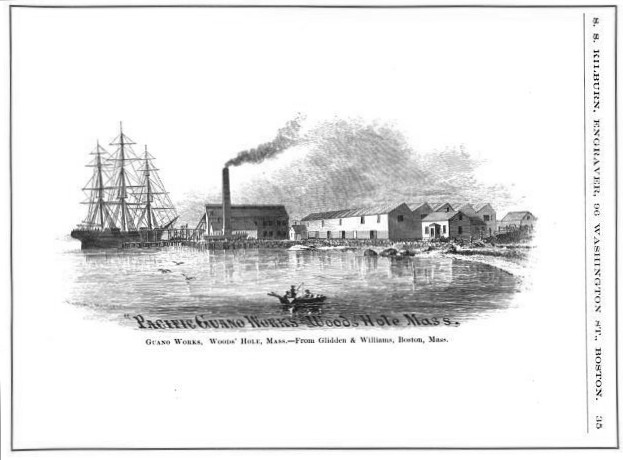
North Country nice; guano mogul?
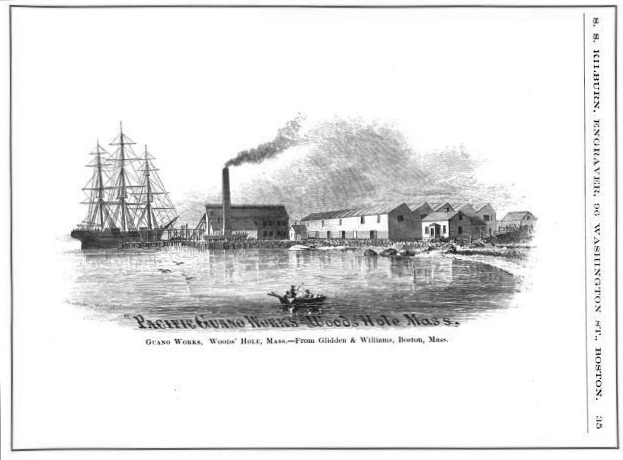
From Robert Whitcomb’s “Digital Diary,’’ in GoLocal24.com
The three northern New England states – Vermont, New Hampshire and Maine – have had low rates of cases and deaths in the pandemic, especially Vermont. That’s partly because of their mostly rural and exurban character. But it’s also because of good state governance, strong civic sensibility and the stability of communities.
Creative Destruction 101
When seeing the decline of, say, the newspaper business, I think of the disappearance, or at least decline, of businesses my family were in after the Civil War: A great-grandfather’s company made ladies’ riding gloves; another was a partner in a company that shipped guano from South America to make fertilizer (!); other ancestors were in the Midwest iron ore and steel business; some built large wooden boats; one was a partner in a big department store selling stuff to the new rich of Minnesota, and some grew up on farms as recently as the late 19th Century. The economy marches on.
To 'reclaim the commons'

Land’s Sake Farm in Weston, Mass.
“We must rebuild functioning communities with closer ties to the land not just in nostalgic fantasy, not just in token preservation but in substantial daily practice. We must reclaim the commons.’’
Brian Donahue, in Reclaiming the Commons: Community Farms and Forests in a New England Town. The town is Weston, a very affluent suburb west of Boston.
Fred Schulte: Misappropriating Native American culture to scam health-insurance seekers
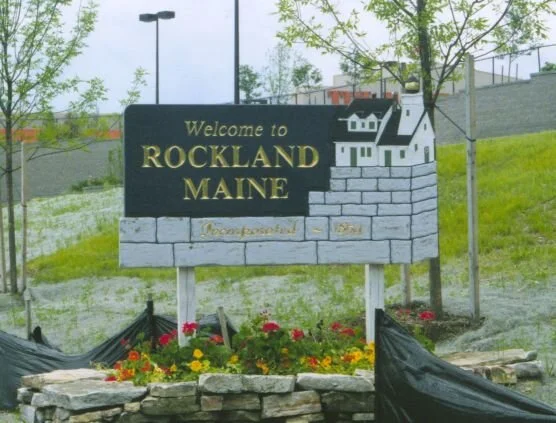
Rockland is on the MidCoast of Maine.
After paying more than $9,000 in premiums and fees over 13 months to O’NA HealthCare, Jill Goodridge says, she could not get O’NA to cover her family’s medical bills. Frustrated, the Rockland, Maine, resident complained to state regulators in summer 2018. “It almost seemed like we were just spending the premium money every month for really not much,” she says. (Shelby Knowles for KHN)
Jill Goodridge was shopping for affordable health insurance when a friend told her about O’NA HealthCare, a low-cost alternative to commercial insurance.
The self-described “health care cooperative” promised a shield against catastrophic claims. Its name suggested an affiliation with a Native American tribe — a theme that carried through on its Web site, where a feather floats from section to section.
The company promises 24/7 telemedicine and holistic dental care on its Web site. It says it provides more nontraditional options than “any other health care plan,” including coverage for essential oils, energy medicine and naturopathic care. All of that and conventional care, too.
It struck Goodridge as innovative. She signed up for a high-deductible plan, paying more than $9,000 in premiums and fees over 13 months, she said. Yet she could not get O’NA to cover her family’s medical bills. For example, O’NA applied only a small portion of more than $6,000 in hospital-related bills against her $10,000 deductible.
“It almost seemed like we were just spending the premium money every month for really not much,” said Goodridge, whose family runs a Rockland, Maine, restaurant that is temporarily shuttered because of the coronavirus pandemic.
A year-long investigation by the state insurance agency prompted by her complaint concluded she was right, uncovering a business scheme operating in the gray areas of insurance regulation and tribal law to appeal to patients looking to save money on health care.
Hers is a cautionary tale for anyone looking for cut-rate coverage at a time when the cost of commercial insurance is rising and a wide range of alternatives are on offer.
Tempting low premiums may mean skimpy coverage with huge out-of-pocket expenses.
“Health insurance is getting so expensive people are looking for other options,” Maine insurance Supt. Eric A. Cioppa said. “We tell everybody that if you do business over the Internet to call us first and make sure it’s licensed.”
O’NA stood out, with a polished Web site featuring its story of holistic health and sun-dappled photographs. The sales pitch: “We’re here to guide you to a new way for your mind, body, and soul.”
Goodridge felt led astray.
The company claimed Native American ties that would exempt it from state insurance regulations because of tribal sovereignty, which gives federally recognized tribes the authority to self-govern outside of state or federal law. O’NA claimed it did not have to adhere to federal insurance requirements, such as guaranteeing standard coverage or maintaining a designated level of funds in reserve to pay claims.
O’NA HealthCare appears to be the first insurer to claim that Native American status exempted it from oversight, according to the National Association of Insurance Commissioners.
The company advertised it was “comfortably nestled under a Native American tribal corporate umbrella” and “protected by the many rights and privileges that Native American Indians enjoy today.”
It sent its customers a “tribal membership ID & benefits card.” And it said it derived its status from an affiliation with the United Cherokee Nation-Aniyvwiya. That tribe is not one of the three federally recognized Cherokee tribes.
But the troubles with O’NA went deeper than that, Cioppa and his team discovered during a year-long investigation. Along with serious doubts that anyone involved with O’NA had valid Indigenous roots, there were financial irregularities, allegations of embezzlement and phony professional credentials.
“The more we found out,” Cioppa said, “the more we wanted to keep digging.”
There was much about Goodridge’s new coverage that seemed unorthodox to the investigators.
She paid a tribal membership fee of $165, which the company said was a tax-deductible contribution to an unspecified Native American tribe. In addition to traditional medicine, O’NA said, its members could seek care at “Native American Tribal Healing Centers” nationwide, though it did not identify the centers or their locations. Goodridge also paid a family premium of $751 a month for 13 months before canceling, according to her testimony before the Maine Bureau of Insurance.
Stranger still, investigators found that O’NA required physicians to pay $485 a year to join its network. Her doctor declined.
On top of that, Goodridge testified, the plan did not pay out when needed, including much of that $6,000-plus hospital bill.
It turned out, that was not uncommon for a company that describes its services as “low cost, high value.” According to a state inspection of O’NA’s unaudited books in fall 2019, the plan spent an “unusually low” amount of the $2.5 million it collected in premiums to cover customers’ medical bills — just 13% or less. Under federal law, most insurers spend 80% or more on benefits for subscribers.
“However low its prices may be, the value it delivers is even lower,” Cioppa wrote in his December order.
Cioppa told KHN that state investigators could not determine the full scope of the operation, partly because O’NA, which boasted an “open provider network across all 50 states,” refused to tell them how many members it had signed up nationwide. It covered only 27 people in Maine.
O’NA’s bookkeeping also turned out to be suspect. Maine investigators observed that in 2019 O’NA paid few medical bills and didn’t keep enough cash on hand to handle even a couple of catastrophic illness claims, a violation of state insurance regulations.
Ultimately, Cioppa ruled that O’NA had illegally operated an insurance company, falsely advertised its benefits and failed to set aside adequate reserves to pay claims.
O’NA’s CEO, L.J. Fay, said the company is working hard to overcome past mistakes, noting: “We plan to make everything right. That is the ultimate goal.”
But in the meantime, Cioppa has prohibited O’NA from selling policies in the state.
The People Behind O’NA
Over the years, Benjamin Zvenia has presented himself at various times as a doctor, a lawyer and a tribal judge. O’NA was described by the United Cherokee Nation-Aniyvwiya as Zvenia’s “brainchild,” according to the Maine insurance bureau order.
He has a paper trail of criminal and civil infractions dating to the early 1990s, government records show.
In a sworn statement filed in Maine, Zvenia said he was a member and “administrative tribal judge” of the Nottoway Tribal Community Meherrin Band of North Carolina. That tribe is not among the 573 recognized by the federal government.
Zvenia also told Maine officials he served on the board of directors of Tribal Active Management Services, O’NA HealthCare’s parent company, but had not been paid for his “voluntary” services and had no responsibility for day-to-day operations. In a sworn statement, Zvenia denied playing a major role in O’NA. He did not respond to repeated requests for comment for this story.
Zvenia, in fact, has a criminal conviction in Nevada for practicing medicine without a license, which prohibits him from overseeing an insurance company, according to Maine officials. He was sentenced to six years in prison, court records show.
In his statement, Zvenia wrote, “There was a crime, and I did the time. My previous history may be public information, but it is not part of my accomplishments today.”
Zvenia’s legal work also has drawn scrutiny. In March 1999, the Nevada Supreme Court removed him from a list of non-attorney arbitrators, citing his undisclosed criminal conviction. A State Bar of Nevada investigation found Zvenia had applied to practice in immigration court, claiming to hold a law license issued by the Supreme Court of the Federated States of Micronesia. But the state bar checked with Micronesia, and it could not verify his claims.
Zvenia also told a state bar investigator that he graduated from the Kensington College “School of Law” in California. The college said Zvenia had applied in June 1994 but “never completed enrollment,” according to an exhibit filed with the Nevada Supreme Court order.
Jill Goodridge took a chance on a nonprofit “health care cooperative” sold online by a Native American company called O’NA HealthCare. After paying more than $9,000 in premiums and fees over 13 months, Goodridge says, she could not get O’NA to cover her family’s medical bills. (Shelby Knowles for KHN)
A founder of O’NA HealthCare was Alan Boyer, a Utah musician who said he was a member of the Cherokee Nation. He was born in West Yorkshire, England, and emigrated to the U.S. in 1998, when he was nearly 40 years old.
Boyer was a founder of a British-style brass band in Utah but also dabbled in the holistic healing arts and naturopathic products before his death in December 2018 from cancer at age 59. In one promotional video for O’NA, Boyer, who spoke with a pronounced British accent, said the word O’NA means “new beginnings.”
“One of Alan’s greatest achievements in his later years was acceptance as a sovereign member of the great Cherokee Nation,” reads an online obituary entered into the record in the Maine proceeding.
Maine regulators had their doubts: “It does not appear from the record that any Native Americans have been involved at any time in the establishment, management or operation of O’NA,” reads the state order.
Lisa Hughes, the former CEO of O’NA and a resident of the Salt Lake City area, also raised Maine regulators’ eyebrows. Investigators found Hughes’ online résumé shows more than a decade of experience in rocket engineering and consulting work in Utah. She recently told Maine officials she had been hired at O’NA because of her prior experience in “systems development and cashflow analysis.”
In an affidavit and other legal filings filed in January, Hughes asserted she worked for O’NA for several years “with no or very reduced salary” before the company suspended her in July 2019 amid a corporate power struggle. The next month, O’NA sent her a letter from a law firm accusing her of embezzling $295,000, filings in the Maine investigation show.
In her affidavit, Hughes said O’NA concocted the embezzlement accusations “for purposes of smearing me and making me the scapegoat for O’NA’s legal formation and structure.”
Lessons Learned ― Or Not
In his December order, Cioppa gave the insurer until Jan. 21 to create a $100,000 fund to satisfy any outstanding medical claims. O’NA failed to do so, and now state officials are seeking a $450,000 penalty, though they aren’t optimistic about collecting it.
Today, O’NA has promised to reinvent itself as a “different type of insurance company,” according to CEO Fay. She said in an affidavit that it is anticipating a capital infusion of as much as $120 million and has $500,000 in reserves in a money market account in a Salt Lake City bank. She also indicated the company would file for a license to legally operate in Maine. So far, that has not happened.
Zvenia is still active online, offering professional and consulting services through Zvenia and Associates in Las Vegas, which says on its Web site that it is a “law firm guided by Benjamin Zvenia, Dr PH, JD.” The site posts a disclaimer: “All Nevada State legal matters are referred out; our lawyers & advocates are not licensed to practice Nevada State law.”
O’NA presents a new wrinkle in an ongoing conflict: The states regulate insurance but the internet allows for nationwide sales, leaving consumers basically on their own.
Goodridge, the Maine consumer who sparked the investigation, said in an interview that she holds little hope of getting any money back. But she has kept other Mainers from the same troubles.
Though O’NA health plans are still available in many states, its website notes that coverage is “not available in Maine.”
Fred Schulte is a Kaiser Health News reporter.
The gods of the hills and valleys

“Rather than fail I will retire with my hardy Green Mountains Boys to the desolate caverns of the mountains, and wage war with human nature at large.’’
xxx
“The gods of the valley are not the gods of the hills, and you shall understand it.’’
—- Ethan Allen (1737-1789), leader of the “Green Mountains Boys,’’ who fought the British in the Revolutionary War. He was the prime founder of Vermont, a politician, farmer, land speculator, philosopher, writer and lay theologian. He most famous military exploit was his role, along with Benedict Arnold, in the capture of Fort Ticonderoga in 1775.
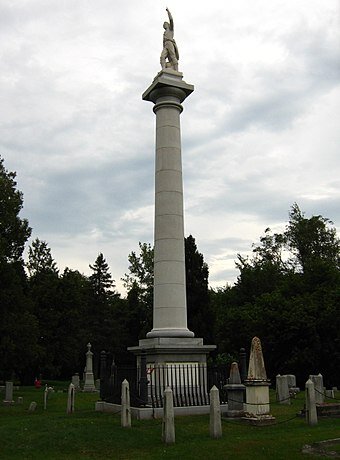
Ethen Allen’s resting place, in Green Mount Cemetery in Burlington, Vt.

Looking south over the Green Mountains from the summit of Mt. Mansfield, at 4,396 feet above sea level the highest mountain in the state.
It signals resilience
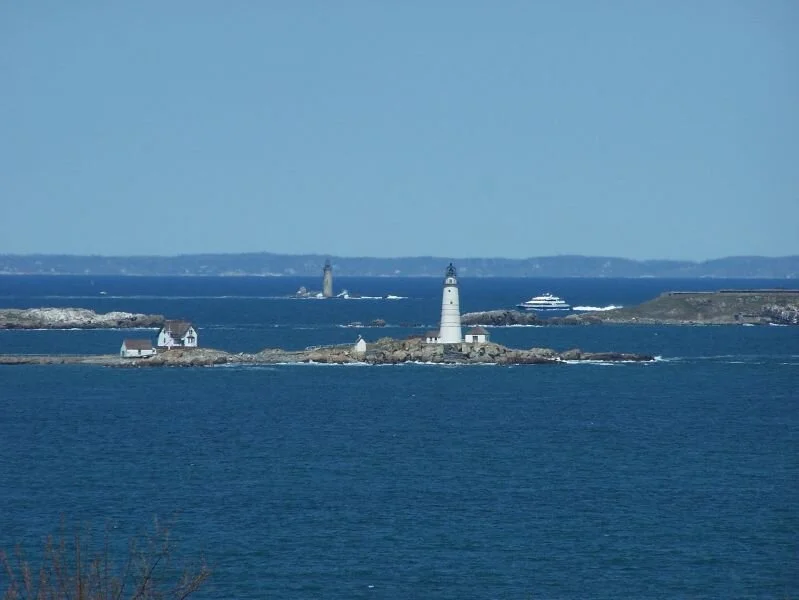
Boston Light with The Graves Light behind and a Provincetown ferry between them on the right.
— Photo by Stephen Gore
From Robert Whitcomb’s “Digital Diary,’’ in GoLocal24.com
Wanna buy a lighthouse? How about Boston Light, on Little Brewster Island, in Boston Harbor? The first version of the lighthouse went up in 1716 and the current one in 1783! Now the Feds want to find a “new steward’’ of the dramatically sited structure to take over and preserve the lighthouse.
Maybe the buyer will be somebody like philanthropist Bobby Segar, who bought Minot’s Light, about a mile off Scituate and Cohasset, Mass., in 2014.
The Boston Globe quoted Kathy Abbott, the CEO and president of Boston Harbor Now:
“This beloved National Historic Landmark is steeped in our country’s history dating to the American Revolution and is as relevant today as an icon of our strength and resilience. Continued public access to this historic American treasure is critical to the public’s ability to enjoy its beauty and history.” Indeed, the lighthouse’s endurance is a reminder that we’ve been through much, much worse times than now.
'Eaten far in Concord'

Walden Pond, in Concord, Mass., most famous for its association with Henry David Thoreau (1817–1862), whose two years living in a cabin on its shore provided the foundation for Walden; or, Life in the Woods.
Comestible, comprehensible.
Heaped up in digestible portions
Thoreau had eaten far in Concord
And still this knoll
With its floor of puce-colored leaves
under May’s green mist
feeds the visitor….’’
-- From “Walden Once More,’’ by Robert Siegel (1939-2012), American poet and novelist. He spent much of his life in his native Mideast but in his later years he lived in South Berwick, Maine
Reminders of connection

“Interior 45” (oil on wood panel ), by Carolyn Letvin, a Plainville, Mass., artist who’s showing her work in the Galatea Fine Arts (Boston) online gallery. This text went with it:
“The light splashes in. This interior has seen so many days. There are the remnants of coffee cups clinking, laughter as stories are being told; the chairs take on human characteristics, in conversation, holding the moments of daily life being experienced and cherished.’’
See:
and:
galateafineart.com

Annie Sherman: Expect warmer and wetter

From ecoRi News (ecori.org)
Did you notice that it snowed so little last winter that you barely shoveled, plus it never turned brutally cold? Or that the daffodils bloomed a few weeks earlier this spring? And that there were scores of jellyfish in April, while we typically don’t have to avoid them until summer?
While you might have relished the lack of shoveling and the premature blooms, these regional weather events weren’t random occurrences. They are ongoing evidence. Weather experts across the globe have been citing warmer weather and its consequences for decades, so the four straight warmer-than-normal months — December through March — in the Northeast shouldn’t come as a surprise.
Since 1998, the country has experienced the 10 warmest years on record, and seasonal snowfall from Washington, D.C., to Boston is 1-2 feet below average, according to the National Centers for Environmental Information at the National Oceanic and Atmospheric Administration (NOAA).
This year claimed the second-warmest January-February on record, marking the end of the second-warmest winter on record, trailing the 2016 high by only half a degree, according to NOAA. The average global land and ocean surface temperature for January-February was 2.09 degrees Fahrenheit higher than the 20th-century average of 53.8 degrees.
These numbers indicate a New England winter that was particularly warm for myriad reasons. While global warming tops the list of culprits, we also can blame an erratic jet stream that trapped cold air in the polar region, creating the frequent phenomenon called Arctic oscillation.
“When we have mild winter conditions, it’s driven by a positive phase due to the jet stream position — narrow, fast-moving air currents at 30,000 feet. Currents flow west to east circling the planet, so this winter the jet stream shifted north, trapping cold air in the high latitudes,” said Isaac Ginis, an oceanographer, hurricane expert and professor at the University of Rhode Island. “It was a warm winter everywhere. They brought in fake snow for Moscow’s new year celebrations. Ski resorts were closed in Asia. It was a very odd winter, but we have seen it before.”
A similar phenomenon causes many of our weather events, including cold, rainy springs and blistering-hot summers. Last summer, the jet stream wobbled again, trapping warm air here that led to an extended heat wave; while earlier this month, the jet stream pushed down a lobe of cold air, causing unusually brisk May nights.
This fluky weather, which is common to New England, can be influenced by global warming, Ginis said. Since the jet stream is maintained by temperature differences between the cooler polar vortex in the Arctic and warmer air masses to the south, the jet stream is stronger when this temperature difference is large, and it’s weaker when the variance is slight. Some studies suggest that the jet stream will become wavier, and we’ll have more frequent instances of colder winters and hotter summers. Though Ginis said the jet stream meanders all the time, it’s unusual for it to stay in the same place for months, as we saw this winter, and it’s doing so more frequently, which points to a greater climate shift.
“Although we still don’t fully understand the increased waviness of the jet stream that causes severe weather, it is likely to be associated with global warming,” Ginis said. “But this is the area of active research; computer models are still not very good at predicting longer-term changes in weather.”
Storm clouds on horizon
While NOAA reported that the Northeast was 3.8-4.1 degrees above normal this winter, it also reported one of the wettest winters, with 0.92 inches above average rain accumulation. April continued the wet trend, according to the Northeast Regional Climate Center at Cornell University. The National Weather Service has predicted above-normal precipitation and temperatures for April through June. So, while most of us in Rhode Island anticipate a chilly, damp spring, we hope for more than 12 days a month of clear skies.
“I didn’t think this spring would be this cold. And we were in a pattern that every two or three days we got rain. It’s good because it’s kept the reservoirs up, but Scituate Reservoir is full,” said Lenny Giuliano, state meteorologist and atmospheric scientist for the Rhode Island Department of Environmental Management. “My concern is when we get a three-inch-plus rain event. The Scituate Reservoir can handle an inch every three days, but if we get a whopper, it puts more water in the reservoir and they have to let more water out, which floods the Pawtuxet River. It’s not a very deep river, so it could flood low-lying neighborhoods.”
Giuliano has recorded the state’s weather impacts for 27 years, and advises Gov. Gina Raimondo for best practices during snow storms and hurricanes. He confirmed the NOAA reports that each decade since 1930, average temperatures have risen 0.3 degrees and precipitation has increased at a rate of nearly 1 inch. He warned that these small increments of warmer temperatures and additional precipitation might not be much if they occur just once, but they add up to shocking environmental shifts year over year.
“Temperatures are warming, and warm air can hold more moisture than cold air, so that means a warmer world is a wetter world,” Giuliano wrote in his annual climate report. “Rhode Island has already experienced increased rainfall and more frequent heavy precipitation events, with corresponding increases in river and stream flooding. Ocean water temperatures are warming, which can result in storms being stronger and more intense than they otherwise would be. Plus, sea level is rising, which means coastal flooding will occur more frequently and likely will be worse than otherwise would be the case for a given severity of storm. The combination of sea level rise and beach erosion dramatically increases the vulnerability along the coast, which translates into the potential for more damaging storm surge-driven coastal flooding; and development along the coastline places more property and people at risk.”
Janet Freedman is concerned also. As a coastal geologist for the Rhode Island Coastal Resources Management Council, she has evaluated coastal resiliency and flood mitigation, policy, and practice for more than two decades. While she isn’t an expert on jellyfish or Arctic oscillation, she understands quite well what can happen when we repeatedly get more weird weather than our coastal state can handle.
Though Rhode Island hasn’t experienced a really big storm yet this year, she said we are seeing more nuisance flooding, also called high-tide flooding, which happens when we get the type and frequency of precipitation that April brought — it rained every few days, accumulating to nearly 6 inches, which raised the Ocean State’s water table. And when we get a hurricane, she said, the rising sea will make the flood threat dire.
“We are seeing more and more frequent extreme high-tide events,” Freedman said. “We often have a predicted high tide, around a full or new moon, but it’ll actually be a foot or two higher, so low areas like Oakland Beach in Warwick or Market Street in Warren flood.”
Flooding through stormwater infrastructure is another issue, Freedman said. When the sea level is already high, it moves backwards through stormwater systems, so incoming rain has nowhere to go and backs up onto city streets.
“Right now, we’re seeing it several times a year, and we expect to see more,” she said.
The domino effect doesn’t stop there. The state is doing more testing to show how local marine species and waters are impacted by more frequent rainfall. Since so much of Rhode Island’s land is paved or covered by other impervious surfaces, all that water drains directly into Narragansett Bay, dumping contaminants such as fertilizers, petrochemicals, and pet waste into the state’s most important economic resource.
“When I was a kid, we had sprinkles. Now we get torrential downpours that cause flooding on local streets. That has a big impact on water quality,” said Dave Prescott, Save The Bay’s South County coastkeeper. “Bigger precipitation events wash more pollutants into the bay and salt ponds, which compromises the health of marine animals like oysters and flounder, but also our own health, because we swim and kayak all over the place.”
Sign of the times
During his daily rounds of the local watersheds in April, Prescott noticed blue crabs common in the Chesapeake Bay and scup from as far as South Carolina that have been invading local waters for years, while more tropical fish such as bigeyes, striped burrfish and filefish are more recent southern refugees.
Meanwhile, the bounteous lobsters that Prescott was accustomed to seeing in our usually cold waters are no longer in such plentiful supply. Seeing these species fluctuate is an alarming notion for Prescott, and if we continue with this warming trend, he said, we’ll see big swings of southern species making a permanent home here.
“All taken separately, it’s not much. But these small changes are connected. And that’s the piece that is a little troublesome,” he said. “Some of these storms hitting the Gulf of Mexico are so intense because the water is so warm. And then we have winters that are next to nothing, which leads to ticks and mosquitoes. To suppress the tick population, we need a cold winter with a heavy frost. In addition, they are already spraying Chapman Pond in Westerly for mosquitoes, and last year they sprayed everywhere for mosquitoes. It’s already an issue, and as it warms up, this will get worse.”
You might be wondering what flooding and ticks have to do with a warm winter and early daffodil blooms?
These experts say these issues are dependent on one another. Freedman said a rainy April and sea-level rise are connected. Giuliano said the rise in pesky insects are directly attributed to a warmer winter. Ginis said these changes can be due to a warming of the earth’s atmosphere.
So as global land and ocean surface temperatures continue to rise, the effects are more widespread than we might initially realize — from certain fish arriving earlier in the season to global warming-stimulated jet streams bringing warmer winters and more frequent and extreme rain storms that cause local flooding and erosion to skyrocketing tick and mosquito populations.
“Be aware of your surroundings, be aware that things are changing,” Prescott said. “The sun is coming out now but over the past two days we had 1.5 inches of rain. More rainfall means more runoff, means more potentially polluted water. Understand that our climate is changing, and there may be some positives, but there will be some negatives that can impact our lives.”
Annie Sherman is an eco RI News contributor.
'Great army' of trees
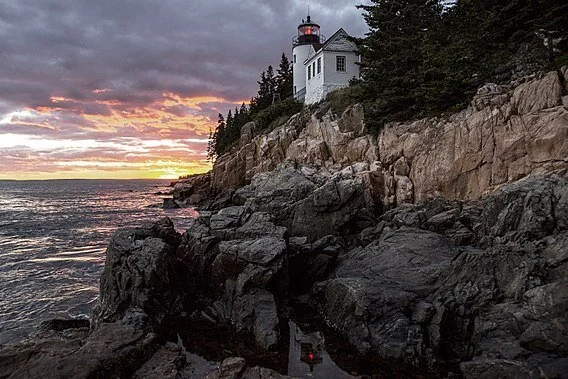
Bass Harbor Head Light in Acadia National Park, Maine.
“We were standing where there was a fine view of the harbor and its long stretches of shore all covered by the great army of the pointed firs, darkly cloaked and standing as if they waited to embark. As we looked seaward among the outer islands, the trees seemed to march seaward still, going steadily over the heights and down to the water’s edge.’’
-- Sarah Orne Jewett (1849-1905), in Country of the Pointed Firs, a novel, or more like a series of sketches, of life on the Maine Coast
Stones in charge
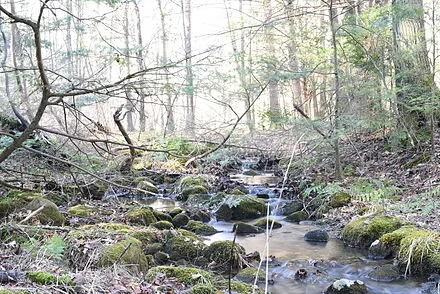
Brook in Southbury, Conn.
‘‘Fact that all this green is second growth…
This is of course New England now and even the brook
…Can never run clear of certain stones….’’
— From “One of Our Walks,’’ by John Hollander (1929-2013), Connecticut-based poet
David Warsh: On Russia saga, what did the ambassador say?

Sergey Kislyak in December 2016, when he was Russian Ambassador to the U.S. and talking with Trump man Michael Flynn.
SOMERVILLE, Mass.
In a 2017 book, Because They Could: The Harvard Russia Scandal (and NATO Expansion) after Twenty-Five Years, I argued that the U.S. had unwisely bullied Russia for 25 years, chiefly by extending NATO to its borders. I was therefore sympathetic to Atty. Gen. William Barr’s assertion earlier this month that National Security Adviser-designate Michael Flynn had been within his rights in talking to the Russian ambassador five times on Dec. 29, 2016.
That was the day the Obama administration announced new sanctions in retaliation for Russian cyber meddling in the American election. Apparently Flynn urged Putin not to respond. Putin didn’t.
But that was before it became known that Flynn had been present at a Trump Tower meeting earlier in December at which Trump son-in-law Jared Kushner asked Russia’s ambassador about the possibility of setting up a secret communications channel using Russian diplomatic facilities, in an apparent attempt to shield their communications from monitoring by U.S. officials. It was before the U.S. Intelligence Community’s joint statement on the scope of Russian interference in the 2016 U.S. presidential election was released; before Flynn lied to Vice President Pence, denying he had discussed the sanctions; before Trump fired FBI Director James Comey; before the White House photo-session with Foreign Minister Sergei Lavrov and Ambassador Sergey Kislyak the next day; before Michael Cohen’s revelations of Trump’s Russian business dealings; before the extent of Trump associate Roger Stone’s connections with WikiLeaks founder Julian Assange were exposed; before the investigation of Trump’s Deutsche Bank holdings was paused; before Putin’s ambitious overture of a possible US-Russian anti-hacking treaty came to nought.
In “The Vindication of Michael Flynn,” editorialists at The Wall Street Journal stated that Barr’s motion to drop the government’s case against Flynn “further undermines the credibility of James Comey’s FBI, Special Counsel Robert Mueller, and the entire ‘Russia collusion’ investigation.” None of that seems right to me. Mueller delivered a credible investigation of the narrow point and found no explicit collusion. Instead it uncovered conflicts galore.
Trump’s conduct of Russia policy has been so inept that it almost seems fair that Attorney General Barr is attempting to give him a do-over – despite the damage Barr has been doing to long-standing Justice Department traditions. Barr’s life story is related here and here, His philosophical suppositions are clear, if unconvincing. A finished presentation of his argument awaits the submission of another invited reviewer’s re-examination of the entire Russia investigation.
The only thing that will vindicate Flynn – or fail to vindicate him – is the release of the transcripts of his conversations with Ambassador Kislyak. Although he has declined to do so before, U.S. District Court Judge Emmet Sullivan apparently has the power to require their disclosure.
Meanwhile, what about the problem of establishing an appropriate baseline for U.S.-Russian relations? It remains all jumbled up. The COVID-19 pandemic is hard in Russia, too. A realistic and proper reset awaits the pre-inaugural beginnings of the next administration.
David Warsh, an economic historian and a veteran columnist, is proprietor of Somerville-based economicprincipals.com, where this essay first appeared.
N.E. Council letter to congressional delegation on infrastructure needs
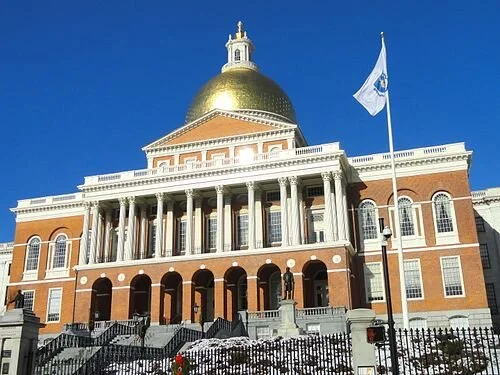
Massachusetts State House
BOSTON
May 5 letter from New England Council President and CEO James T. Brett to the New England congressional delegation:
On behalf of the New England Council, I would like to thank you and your staff for all that you have done in the face of this national emergency to help address the health effects and the economic impacts attributed to the coronavirus outbreak. Our region is fortunate to have such effective leaders advocating on our behalf during this unprecedented time. We are grateful for the relief and economic stimulus measures that have been included in the CARES Act, as well as in the interim supplemental funding measure that was passed just a couple of weeks ago.
This aid will go a long way toward supporting our region’s healthcare providers, as well as the many businesses across an array of industries that have been negatively affected by the coronavirus pandemic.
As Congress continues to work towards mitigating the immediate effects of the coronavirus outbreak, it is necessary to look to ways in which the House and Senate can help lessen the long-term economic implications of this national emergency, while building on your outstanding efforts to date. The New England Council believes that one way to help accomplish this goal is to pursue a job-creating, economy-boosting infrastructure package that addresses a variety of needs for all manner of business, health, education, energy and transportation sectors.
We are heartened that many in Congress share the view that a major infrastructure proposal should be considered, and the New England Council believes the following components should be included in whatever infrastructure package Congress puts together.
Roads & Bridges: The American Road and Transportation Builders Association (ARTBA) recently reported that in 2019, there were 1,513 structurally deficient bridges in New England out of 18,129 bridges. That’s roughly 8.4 percent of bridges in our region, where the national average of structurally deficient bridges is 7.5 percent. We also have a pressing need to fix our roadways to accommodate the increased traffic we’ve seen over the years, not just for carpools and individual drivers but to put roads in a condition that can incentivize bus-rapid-transit (BRT). A state of good repair keeps vehicle maintenance costs down, improves the flow of traffic, enhances safety, reduces gasoline usage, and helps the region attain air quality requirements.
Public Transit: A significant number of residents in our region count on transit to provide a safe, affordable and reliable means of commuting. For others, transit is their only or primary option to get from place to place. The CARES Act included substantial federal assistance for transit, however that funding will address losses attributed to the sudden disruption of daily transportation. When the nation emerges from this pandemic, Americans will still need to be able to count on transit systems. Besides addressing years of transit maintenance backlogs, an investment by Congress to bolster transit can help ensure greater access for commuters, decrease congestion on our roads and improve air quality.
Airports: The CARES Act provided $10 billion in federal assistance to our nation’s airports to meet current needs related to the coronavirus pandemic and the sudden loss of significant amounts of revenue. Pre-pandemic figures showed that airline travel (and thus, airport usage) was expected to proceed on an upward trajectory, but a potential slow recovery from the coronavirus may limit such growth for the foreseeable future. As such, additional considerations may have to be met in the months ahead should losses continue to mount throughout this sector of our economy.
Also, as growth returns to the industry as previously predicted, there will be a need for facility upgrades and new construction to accommodate millions of passengers each day. Ports: The CARES Act also addressed the status of the Harbor Maintenance Trust Fund (HMTF) to help ensure greater utilization of our ports. It is unclear, though, if there will be a requirement for further measures at this point to help increase harbor utilization.
However, as trade with existing partners resumes, and new economic relationships bring heightened activity to our shores, it will be necessary to have enhanced on-shore facility capabilities and channels that can accommodate the vessels that will bring those goods and allow for exports.
Drinking Water and Wastewater Upgrades: Water infrastructure needs across the region constantly demand attention, whether it is for drinking water systems or wastewater treatment facilities. Besides the need to meet new requirements for a growing region, our aging systems – some approaching or surpassing a century old – need replacing as well. Taken together, these needs add up to billions of dollars’ worth of critical expenditures throughout New England. As water quality is enhanced, it ensures health concerns are ameliorated, reduces storm runoff, and keeps our region’s waterways clear of pollution.
Broadband Access: A high priority for any infrastructure bill must include provisions to facilitate and expedite the deployment of broadband. This should include siting proposals that maximize the use of existing infrastructure to accelerate the private sector build-out of wireless 5G networks and funds to install additional infrastructure across the nation, particularly in some of the more remote locations in New England (including western Massachusetts and the northern border regions of Maine, New Hampshire and Vermont). Furthermore, telework, telehealth, and remote learning needs will only increase following the example set forth in this coronavirus pandemic further emphasizing the need for robust wireless and wired connectivity. Finally, any effort on broadband expansion should include all Americans.
Energy Systems: Energy reliability is one of the key requirements for our economy and for our overall way of life. Indeed, energy reliability is required “to make sure the lights stay on.” It is also essential to pursue cost beneficial grid modernization investments that will enable the grid to safely and reliably accommodate new clean energy resources that reduce greenhouse gas emissions. These distributed generation and distributed energy resources include electric vehicle charging stations that will enable a clean transportation revolution, affordable utility-scale solar power, energy storage facilities and technology, as well as offshore wind development.
Rail: Amtrak’s Northeast Corridor is a key component of interstate transportation between Boston, New York and Washington and locations in between. Maintaining this vital rail link helps to alleviate congestion on our roads and provides another transportation option to the traveling public. The Northeast Corridor received nearly $500 million in the CARES Act, however that will not cover the long-range requirements necessary to expand this crucial transportation link. Congress needs to provide the necessary maintenance to the rail infrastructure in our region as well as those regions that feed into New England. Moreover, Congress should give serious consideration to funding regional rail expansion to help relieve congestion, enhance air quality, and spark economic development beyond traditional hub centers.
Hospitals: If the coronavirus outbreak has demonstrated one thing, it is that hospitals must be considered as a part of our national infrastructure. While many of America’s big city hospitals are being stretched to their limits in this emergency, some communities in our nation have no (or limited) hospital resources at their disposal. A Congressional infrastructure package should give consideration to the inclusion of funds for the construction and renovation of hospitals to ensure we have the ability to adequately manage future potential health catastrophes in our cities and towns alike. Moreover, our nation’s veterans should receive ample consideration as hospital expansion progresses.
Pipeline Safety: The Pipeline Safety Act is past-due for reauthorization and supplemental funds to continue its programs will run out by the end of September. Members of the New England delegation, including those serving on the House Transportation and Infrastructure Committee and other committees, have advocated for the renewal of this law. In addition to establishing safety as paramount, we urge Congress to also consider aging pipeline replacement, security, and capacity concerns.
Education: A Congressional infrastructure package should include federal support for capital needs on public and private higher education campuses as well as for elementary and secondary schools. Such investment will be crucial to keeping our education infrastructure modern and able to accommodate students on updated campuses. Additionally, Congress should consider the inclusion of technology infrastructure, including audio and visual infrastructure in classrooms for remote video and participation, virtual desktop infrastructure, learning management systems, broadband, hardware and software, as well as tools that will assist students with disabilities.
Research: Support for our nation’s research infrastructure is necessary to cement our overall research capabilities and boost our competitiveness for years to come. We urge Congress to include such priorities as high-speed computation, easily accessible and large-scale research data repositories, laboratory and research working environments with greater resiliency to pandemics, and core facility upgrades to modernize shared instrumentation and equipment to increase research capabilities, services, and efficiency. Work at such research facilities would put American researchers at the cutting edge of developing cures and treatments for possible future pandemics.
To maximize federal investments in infrastructure, Congress should include in legislation incentives and programs to foster better adoption of digital technologies in the planning, design, construction management and operations of infrastructure. These technologies can help accelerate project delivery, reduce project costs, enhance construction safety, minimize waste and lead to more innovative and sustainable infrastructure for our nation.
Also, whether it’s new construction or necessary upgrades, climate resiliency must be a requisite consideration for project designers and managers alike. Further, it should be fundamental that any new or upgraded infrastructure component requires elements of cybersecurity protection as a core necessity. Additionally, for some state and local governments hit hard by coronavirus, it may be necessary for Congress to give flexibility when considering the economic abilities of non-federal partners to meet cost-sharing requirements on project awards. These are some of the infrastructure priorities that our members have identified, and in the weeks ahead, others may emerge that our members may wish to have addressed.
The Council may seek to reach out further should it become necessary or beneficial to discuss those with you. Both the House and the Senate have already put forth substantive infrastructure proposals, and we urge the members of both chambers to look towards those proposals as you work towards a compromise infrastructure bill; one that will create jobs, boost the economy, and meet existing and anticipated infrastructure needs. Many have dubbed such an effort as a “Marshall Plan for Infrastructure” and that is clearly what the United States can and should accomplish in the wake of this pandemic. Again, on behalf of our members, thank you for all your efforts to date to help combat this virus and help stabilize our region. .
Philip K. Howard: Misdiagnosing why America is a failed state
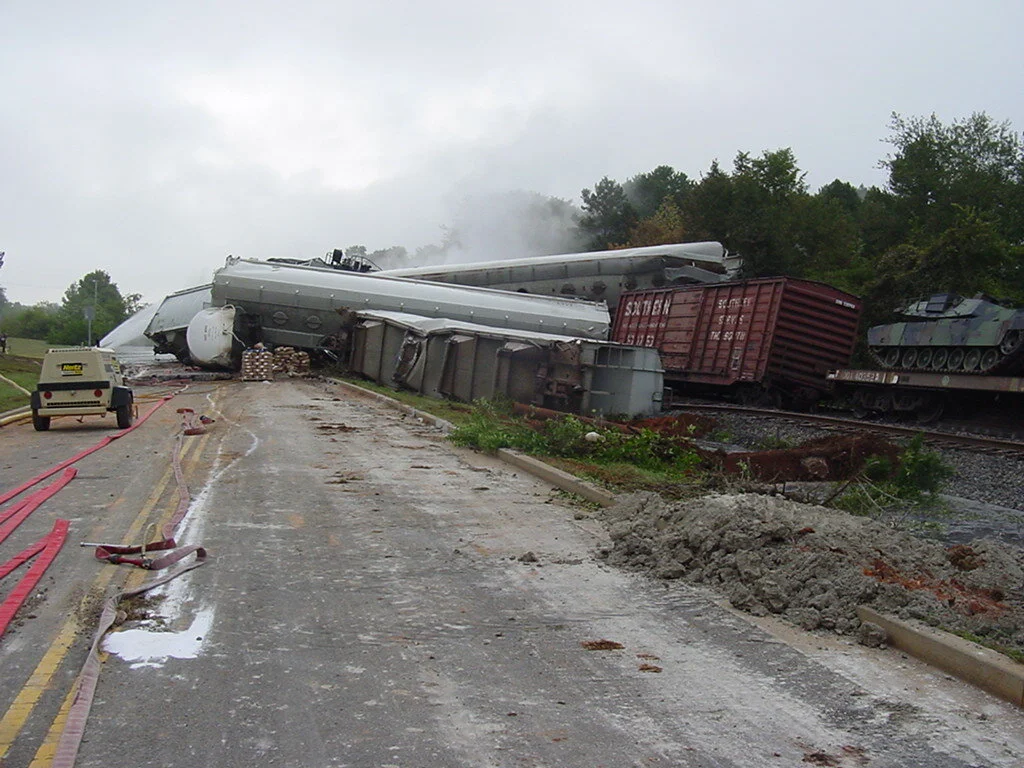
— Photo by Jblackst
NEW YORK
People want answers for what has gone wrong with America’s response to the COVID-19 pandemic—from lack of preparedness, to delays in containing the virus, to failing to ramp up testing capacity and the production of protective gear. But almost nowhere in the current discussion can one find a coherent vision for how to avoid the same problems next time or help restore a healthy democracy.
Bad leadership has been identified as a primary culprit. The “fish rots from the head,” as conservative columnist Matthew Purple puts it. There’s plenty to blame President Trump for, but stopping there, as, say, former New York Times critic Michiko Kakutani does, ignores many bureaucratic failures. Cass Sunstein gets closer to the mark by focusing on how red tape impedes timely choices, but even he sees the bureaucratic structures as fundamentally sound and simply in need of some culling.
Sunstein suggests that “it might be acceptable or sensible to tolerate a delay” in normal times, but not in a pandemic. Tech investor Marc Andreessen sees a lack of national willpower, an unwillingness to grab hold of problems and build anew. Prominent observers such as Francis Fukuyama, George Packer and Ezra Klein blame a broken political system and a divided culture; they offer little hope for redemption, even with new leadership.
All misdiagnose what caused government to fail here, and they confuse causes with what are more likely symptoms. Fukuyama rightly identifies a critical void in American political culture: the loss of a high “degree of trust that citizens have in their government,” which countries like Germany and South Korea enjoy. But why have Americans lost trust in their government?
No doubt, after this is all over, a report will catalog the errors and misjudgments that allowed COVID-19 to shut down America. The report will likely begin years back, when officials refused to heed warnings about pandemic planning. It will expose the wishful thinking of President Trump, who for almost two months said that the coronavirus was “totally under control.” Errors of judgment like these are inevitable, to some degree—they happened during Pearl Harbor and 9/11, too—and with luck, they will inform future planning. The light will then shine on the operating framework of modern government, revealing not mainly errors of judgment, or cultural divisions, but a tangle of red tape that causes failure. At every step, officials and public-health professionals were prevented from making vital choices by legal obstacles.
Andreessen is correct that Americans have lost the spirit to build, but that’s because we’re not allowed to build. A governing structure that takes upward of a decade to approve an infrastructure project and ranks 55th in World Bank assessments for “ease of starting a business” does not encourage individual and institutional initiative. Of course Americans don’t trust government—it gets in the way of their daily choices, even as it fails to meet many national needs.
Our response to the COVID-19 missteps should not be to wring our hands about our miserable political system, or about the cynicism and selfishness that have infected our culture. We should focus on why government fails in making daily choices. What many Americans see clearly—but most public intellectuals cannot see—is a system that prevents people from acting on their best judgment. By re-empowering officials to do what they think is right, we may also reinvigorate American culture and democracy.
The root cause of failed government is structural paralysis. What’s surprising about the tragic mishaps in dealing with COVID-19 is how unsurprising they were to the teachers, nurses, and local officials who are continually stymied by bureaucratic rules. A few years ago, a tree fell into a creek in Franklin Township, New Jersey, and caused flooding. A town official sent a backhoe to pull it out. But then someone, probably the town lawyer, pointed out that a permit was required to remove a natural object from a “Class C-1 Creek.” It took the town almost two weeks and $12,000 in legal fees to remove the tree.
In January, University of Washington epidemiologists were hot on the trail of COVID-19. Virologist Alex Greninger had begun developing a test soon after Chinese officials published the viral genome. But while the coronavirus was in a hurry, the Food and Drug Administration (FDA) was not. Greninger spent 100 hours filling out an application for an FDA “emergency-use authorization” (EUA) to deploy his test in-house. He submitted the application by email. Then he was told that the application was not complete until he mailed a hard copy to the FDA Document Control Center. After a few more days, FDA officials told Greninger that they would not approve his EUA until he verified that his test did not cross-react with other viruses in his lab, and until he agreed also to test for MERS and SARS. The Centers for Disease Control (CDC) then refused to release samples of SARS to Greninger because it’s too virulent. Greninger finally got samples of other viruses that satisfied the FDA. By the time they arrived, and his tests began, in early March, the outbreak was well on its way.
Regulatory tripwires continually hampered those dealing with the spreading virus. Hospitals learned that they couldn’t cope except by tossing out the rulebooks; other institutions weren’t so lucky. For example, after schools were shut down, needy students no longer had meals. Katie Wilson, executive director of the Urban School Food Alliance and a former Obama administration official, secured an agreement in principle to transfer federal meal funding to a program that provides meals during summer months. But red tape required a formal waiver from each state, which in turn required formal waivers from Washington. The bureaucratic instinct was relentless: school districts in Oregon were first required to “develop a plan as to how they are going to target the most-needy students.” Meantime, the children got no meals. New York Times columnist Bret Stephens, interviewing Wilson, summarized her plea to government: “Stop getting in the way.”
What’s needed to pull the tree out of the creek is no different than what’s needed to feed school kids: responsible people with the authority to act. They can be accountable for what they do and how well they do it, but they can’t succeed if they must continually pass through the eye of the bureaucratic needle.
Reformers are looking in the wrong direction. Electing new leaders won’t liberate Americans to take initiative. Nor is “deregulation” generally the solution for inept government; the free market won’t protect us against pandemics. The only solution is to replace the current operating system with a framework that empowers people again to take responsibility. We must reregulate, not deregulate.
American government rebuilt itself after the 1960s on the premise of avoiding human error by replacing human choice. That’s when we got the innovation of thousand-page rulebooks dictating the one-correct-way to do things. We mandated legal hearings for ordinary supervisory choices, such as maintaining order in classrooms or evaluating employees. We replaced human judgment with rules and objective proof. Finally, government would be pure—almost like a software program. Just follow the rules.
For 50 years, legislative and administrative law has piled up, causing public paralysis and private frustration. Almost no one has questioned why government prevents people from using their common sense. Conservatives misdiagnose the flaw as too much government; liberals resist any critique of public programs, assuming that any reform is a pretext for deregulation. In the recent Democratic presidential debates, no one asked how to make government work better.
Experts have it backward. Polarized politics, they say, causes public paralysis. While hyper-partisanship certainly paralyzes legislative activity, the bureaucratic idiocies that delayed everything from Covid-19 testing to school meals had nothing to do with politics. Paralysis of the public sector came first, leading to polarized politics. By the 1990s, broad public frustration with suffocating government fueled the rise of Newt Gingrich.
The growth of red tape made it hard to make anything work sensibly. Schools became anarchic; health-care bureaucracy caused costs to skyrocket; getting a permit could require a decade; and Big Brother was always hovering. Is your paperwork in order? Americans kept electing people who promised to fix it—the “Contract with America,” “Change we can believe in,” and “Drain the swamp”—but government was beyond the control of those elected to lead it. What happens when politicians give up on fixing things? They compete by pointing fingers—“It’s your fault!”—and resort to Manichean theories and identity-based villains. Public disempowerment breeds extremism.
A functioning democracy requires the bureaucratic machine to return to officials and citizens the authority needed to do their jobs. That necessitates a governing framework of goals and principles that re-empowers Americans to take responsibility for results. Giving officials, judges, and others the authority to act in accord with reasonable norms is what liberates everyone else to act sensibly. Students won’t learn unless the teacher maintains order in the classroom. New ideas by a teacher or parent go nowhere if the principal lacks the authority to act on them. To get a permit in timely fashion, the permitting official must have authority to decide how much review is needed. To enforce codes of civil discourse—and not allow a small group of students to bully everyone else—university administrators must have authority to sanction students who refuse to abide by the codes. To prevent judicial claims from becoming weapons of extortion, judges must have authority to determine their reasonableness. To contain a virulent virus, public-health officials must have authority to respond quickly.
Giving officials the needed authority does not require trust of any particular person. What’s needed is to trust the overall system and its hierarchy of accountability—as, for example, most Americans trust the protections and lines of accountability provided by the Constitution. There’s no detailed rule or objective proof that determines what represents an “unreasonable search and seizure” or “freedom of speech.” Those protections are nonetheless reliably applied by judges who, looking to guiding principles and precedent, make a ruling in each disputed situation.
The post-1960s bureaucratic state is built on flawed assumptions about human accomplishment. There is no “correct” way of meeting goals that can be dictated in advance. Nor can good judgment be proved by some objective standard or metric. Judgments can readily be second-guessed, as appellate courts review lower-court decisions, but the rightness of action almost always involves perception and values. That’s the best we can do.
The failure of modern government is not merely a matter of degree—of “too much red tape.” Its failure is inherent in the premise of trying to create an automatic framework that is superior to human choice and judgment. We thought we could input the facts and, as Czech playwright and statesman Vaclav Havel once parodied it, “a computer . . . will spit out a universal solution.” Trying to reprogram this massive, incoherent system is like putting new software onto a melted circuit board. Each new situation will layer new rules onto ones already short-circuiting.
Nothing much will work sensibly until we replace tangles of red tape with simpler, goal-oriented frameworks activated by human beings. This is a key lesson of the Covid-19 crisis. It’s time to reboot our governing system to let Americans take responsibility again.
Philip K. Howard, a lawyer, writer, photographer and New York City civic leader, is founder of Common Good. His latest book is Try Common Sense: Replacing the Failed Ideologies of Right and Left. This piece first ran in citylab.com
Stone life
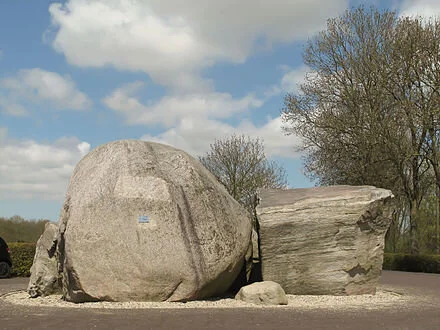
“Behind the suburban development
in a boulder-strewn field
Where imagination animates
Erratic granitic herds
Of hippos half-submerged….
a man, like a ‘barber’….
mows the grass around
A knelling elephant of stone….’’
“Megaliths, ‘’ by Robert Chute, a Maine-based biologist and poet