
Todd McLeish: First wild lizard found in Rhode Island!

Five-lined skink
— Photo by Kris Kelley
From ecoRI News (ecori.org)
Rhode Island’s herpetological community is bursting with excitement at the discovery of the first confirmed lizard sighting in the state. A five-lined skink (Plestiodon fasciatus) of uncertain origin was found in South County on April 22.
Emilie Holland, an environmental scientist with the Federal Highway Administration and president of the Rhode Island Natural History Survey, made the discovery and immediately contacted other National History Survey board members with expertise in identifying lizards.
“I was just poking around when I saw the little guy,” she said. “I thought it was a salamander at first, and I grabbed it really fast. When I opened my hand, I thought it was going to be a mole salamander, but it didn’t move as fast as a mole salamander normally would.”
When University of Rhode Island herpetologist Nancy Karraker received a text and photo of the lizard from Holland, she was in the middle of a virtual meeting.
“My initial reaction was, how quickly can I get out of this meeting and go find Emily to see it,” Karraker said.
The five-lined skink is typically found throughout the Southeast and Midwest, where it’s quite common. Small numbers are also found in the Hudson Valley of New York and into western Connecticut and western Massachusetts. But with the exception of a few unconfirmed observations, they have never been recorded in Rhode Island.
Growing about 6 inches long with distinct brown and cream-colored stripes, the skinks have blue tails as juveniles, and adult males have a reddish throat. The one Holland found was a juvenile.
“The blue tail is a defense mechanism,” said herpetologist Lou Perrotti, director of conservation at Roger Williams Park Zoo. “A predator is going to attack the brightest piece of the animal, and the lizard can drop its tail to get away. It gives them a protection advantage.”
The big question is how it arrived in Rhode Island: Did it arrive naturally on its own, or was it brought to the area by humans, either intentionally or unintentionally? Since it was found near railroad tracks and a lumberyard, many possibilities are being considered.
“Skinks love rocky woodlands where there’s lots of fallen timber,” Perrotti said. “And they love railroad corridors because they’re typically lined with rocks that are great for thermoregulation. Lizards love to climb out on the rocks.
“Was it a stowaway on a train? Was it transported up here in lumber or mulch? We don’t know. We need to find more specimens. Is it possible there’s a population here? Absolutely. But unless you really look for them, they’re really hard to find.”
Scott Buchanan, a herpetologist with the Rhode Island Department of Environmental Management, has contacted a colleague who studies Italian wall lizards that have dispersed up the Northeast rail corridor, but no skinks are known to have been found along the tracks.
Holland hopes it arrived in Rhode Island on its own.
“The child side of my brain says, ‘How cool would that be,’” she said. “But when I stop to think about it, the likelihood is that it somehow got imported here.”
Karraker agreed.
“It’s not a range extension in the sense that it marched its way east to Rhode Island,” she said. “My immediate thought is that it came in somebody’s mulch — or some eggs did — or in a load of wood. There are enough people like me and Lou and Scott and all my students who are constantly running around Rhode Island looking for stuff, rolling over logs. If they were broadly distributed in Rhode Island, we’d know about it.”
Another possibility is that the skink was released by someone who kept it as a pet.
“Pretty much every animal is in the pet trade, but I’ve spent time perusing Craig’s List and I had my students investigating pet shops this semester, and I don’t think this species turned up in anyone’s records,” Karraker said. “They’re not something that tames easily, they’re very sensitive to people being around, and they hide, so they don’t make a good pet.”
Because the skink probably survived here in the winter, it raises additional speculation. David Gregg, executive director of the Natural History Survey, wonders whether the changing climate may have played a role in its survival in the state.
“If further research shows this is a breeding population and not just a lone escapee, then however this particular population of skinks got to Rhode Island, they never could have survived here before but now they can,” he said.
But Karraker noted that some native populations of the skink in New York are nearly as far north as the Adirondack Mountains, where it’s often colder than Rhode Island, so she isn’t convinced climate change has played a role.
“I don’t think it has anything to do with climate,” she said. “Something got moved and the skink was in it, and Rhode Island isn’t a bad place to be. The skink detected that there weren’t any other lizards here to compete with, and it survived.”
The next step for the group of herpetologists is to search the area for additional specimens to determine how large the local population may be. Buchanan will be screening the first specimen for diseases and conducting a genetic analysis to determine from where it originated.
But for now, the skink lives in an aquarium at Karraker’s house, where she is feeding it termites.
“I didn’t want to release it,” she said. “That’s a decision for DEM to make, not me. So I’m just waiting to make the handoff to DEM to take charge and figure out what to do with it.”
Rhode Island resident and author Todd McLeish runs a wildlife blog
'The Trout Pool Paradox'
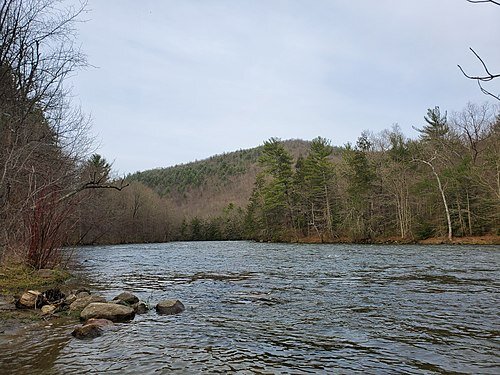
The Housatonic River in Cornwall, Conn., on the edge of the Berkshires
“Right here at my feet is what I’ve come to think of as the trout pool paradox….The trout pool is a place for solitary contemplation, for romantic love, for a sense of reconnection with lost wilderness. And yet paradoxically, the pristine trout pools of western Connecticut nurtured the most noisome and alienating developments of the American industrial revolution – factory towns, foundries, mass production, the modern armaments and aerospace industries.’’
-- From The Trout Pool Paradox: The American Lives of Three Rivers, by George Black. The book explores the histories of the Housatonic River and two of its tributaries — the Naugatuck, which for a long time was a dumping place for toxic industrial byproducts and human waste, and the Shepaug, known for its fine fishing. The editor of this site, Robert Whitcomb, lived near the Naugatuck in the ‘60s and remembers the river often changing colors depending on what the factories along it were dumping and pouring directly into it, much of it poisonous in varying degrees.

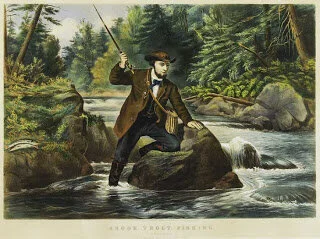
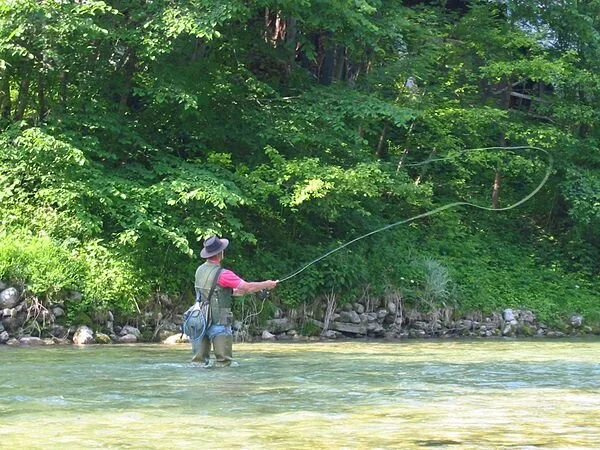
Trout fishing with fly rods became popular in New England in the 19th Century even as industrialization began to pollute many of them of the region’s streams.
Boston health heroine stern and generous
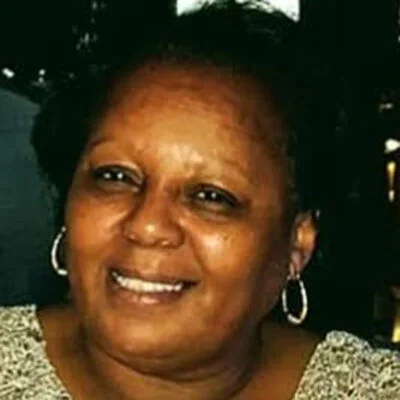
—Photo courtesy of Teadris Pope)
From Kaiser Health News’s “Lost on the Frontline’’ series
Rose Taldon
Age: 63
Occupation: Nurse
Place of Work: New England Baptist Hospital, in Boston
Date of Death: April 12, 2020
Rose Taldon was just 5 feet tall. But when she bellowed out the window, her kids ran right home.
“She didn’t take any crap,” said her daughter, Teadris Pope.
Taldon raised three children with her husband on the street where she grew up in the Dorchester section of Boston. She was respected as a strong black woman, earning a nursing degree while working in public transit for 23 years. Described as stern, she still was quick to tickle her eight grandkids.
Taldon was generous: Even as she lay in a hospital in April, exhausted from the coronavirus, she arranged to pay bills for an out-of-work friend, her daughter said.
It’s unclear whether Taldon caught the virus at her hospital, Brigham and Women’s Hospital, designated for non-COVID patients. Hospital officials said three patients and 22 staff have tested positive.
Once her mother was hospitalized, Pope couldn’t visit. On Easter morning, a doctor called at 2 a.m., offering to put Taldon on a video call.
“I just talked until I had no words,” Pope said. “I was just telling her, ‘We’re so proud of you. You worked so hard raising us. … You’ve gone through a hell of a fight.'”
An hour later, her mother was gone.
'On my skin'
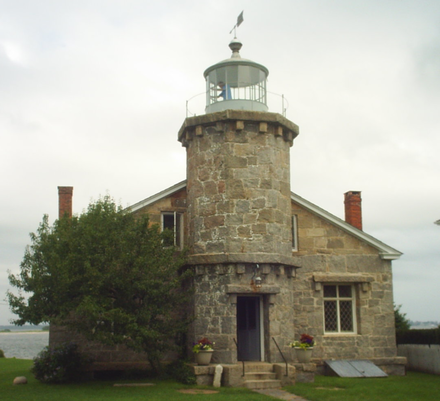
Lighthouse in Stonington
“The shades of New England are here on my skin. Brine in the blood, grit in the bones, sea air in the lungs.’’
— L.M. Browning, in Fleeting Moments of Fierce Clarity: Journal of a New England Poet. She grew up in Stonington, Conn., on Long Island Sound
Don Pesci: Abby's Barbershop: A Parable
VERNON, Conn.
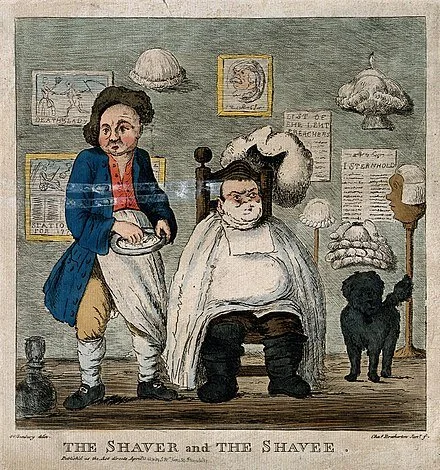
G.K. Chesterton somewhere writes that all barbers are would-be philosophers under the skin. The trade has changed over the years. Barbers used to be surgeons at a time before pharmacology and modern medicine branched off and began to produce physicians who knew a little more about human healing than the barbarous barbers who painted their poles red and white. In medieval Europe, barbers, not doctors, performed surgery, and the pole was a sign that indicated the blood and napkins used in their business, the barber’s most frequent customers being soldiers whose bodies had been shattered on the field of battle.
Barbers left off surgery, but not philosophizing.
The philosophizing is a result of customer immobility and peculiar circumstances familiar to every barber and dentist. If you have gone into a barber shop for a haircut and shave, you will understand how much like a confessional or a psychologist’s couch the barber chair is. And the best barbers tend to be on the loquacious side because they wish to keep their customers coming back. Experiencing a haircut and a shave without chatter is too much like waiting for the guillotine to drop. People who are immobilized with foam on their faces and a straight-edge razor glinting above them generally will be in the mood for calming small talk. The best philosophy is small talk writ large, and the good barber, like Socrates, will have had a good deal of experience in chatting up his customers.
So it is at Abby’s Barber Shop. The proprietor, Abby, is gentle, chatty on subjects that do not wound her clients and, above all, agreeable. It is chancy disputing on difficult subjects with someone wielding a scissors and a razor. The secret to success in barberology is to put all disputants at ease, disarming them and so leaving them helpless in the face of the barber’s superior weaponry. Accomplished barbers are practiced in the fine art of agreeing to disagree on disagreeable propositions. It also helps a good deal when the customer is satisfied with the barber’s work, and customer satisfaction generally involves, during the first few visits at least, a good deal of inquiry and negotiation.
Some of Abby’s older customers are abrupt and set in their ways. “What should I do if a customer is rude?” her assistant asked her.
“Put on your most agreeable tone and ask him to move his chin a little to the left. It will not hurt if he glimpses the razor or the scissors.”
After her father died, Abby inherited the barbershop from her brother, 20 years her senior, who had retired early and moved to Tennessee.
Other barbers, and I suppose dentists, sometimes take advantage of their victims' incapacitation.
John the Barber: You’re married right?
Victim: (A hot towel across his face in preparation for a straight-razor shave) Mufftt..
John: Thought so. You probably have children. I’d rather have warts myself. Kids are always a problem, right?
Victim: Mufftalm.
John: Ah, three! Triple trouble. Girls are better than boys, though they are expensive propositions when given away in marriage to loathsome sons-in-law. No decent father wants to give his girl up to such beasts.
This kind of friendly-hostile badinage would never have occurred in Abby's shop, which -- I say it to shame shameless politicians – will be closing before Connecticut’s politicians decide that the 75-year-old barbershop is a necessary pleasantry, even though barbers no longer perform surgery. For that matter, surgeons in Connecticut no longer may perform elective operations in the shutdown-state, because room must be made in hospitals to accommodate empty beds.
Customer: So, you’re closing shop. What a shame.
Abby: Yes, and moving too. But this is not a decision of ours. We have been forced to it by politicians who have never seen the inside of this shop. But that is the nature of politics in the state. When you grow old, the good book tells us, someone will tie a rope around your waist and take you where you do not wish to go.
Customer: That shouldn’t happen.
Abby: No. Some of my customers, the older ones, believe that winter should not happen. But here we are, and the snow is falling outside.
Customer: Some of these people who make laws ….
Abby: We live in a state in which both political parties are divided by a common purpose: how to provide for the common good, and none of them understand that the common good is best served when they are no longer in command. But all that has come to a stop. The legislature, fearing the plague, has put itself into suspended animation, and now all the important decisions are being made behind closed doors by the governor.
Customer: A good man. All this mess was thrown into his lap….
Abby: Well, I certainly will miss our little chats (brandishing her razor). Could you turn your head a bit to the left please? I want to get at your neck.
A subtle barber was Abby. She now has moved to Tennessee, where her brother has opened a barbershop, for the business of scraping necks with straight razors is a lifetime pursuit, full of secret pleasures.
Don Pesci (donpesci@att.net) is a Vernon-based columnist
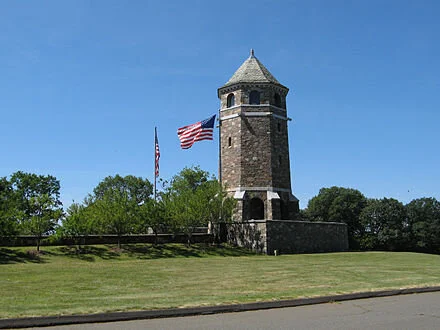
The War Memorial Tower in Vernon
Sort of safe to go in

“Love That Dirty Water,’’ by Nils Johnson, a Lyme, N.H.-based painter (among this accomplished renaissance man’s various talents). The top layer of this painting is oil and the under-painting acrylic.
The title is a reference to a line from the popular 1965 song “Dirty Water,’’ a jovially sarcastic paean to Boston and the then infamously polluted Charles River and Boston Harbor. In the past couple of decades a celebrated cleanup has made it relatively safe to swim in the river. Bless those pesky regulations and state and federal taxpayers.
Mr. Johnson’s Web site is: nilsjohnsonartist.com.

William Morgan: Public art — banality and grandeur

Rhode Island Gov. Gina Raimondo commissioned a poster that would honor the dedication, sacrifice and nobility of medical workers during the COVID-19 pandemic.
That the Sheppard Fairey poster, entitled "Rhode Island Angel of Hope and Strength," has been maligned by Republicans, who see it as "an image of Communist propaganda,’’ is less surprising than that it was commissioned by the state's canny chief executive.

Workers Monument in front of the Soviet Pavilion at the 1937 Paris Expo
State-sponsored art is rarely memorable, whether a monument to heroes of the Soviet Union or an official presidential portrait (remember the 1965 painting of Lyndon Johnson by Peter Hurd, which LBJ declared "the ugliest damn thing" he'd ever seen). Our postage stamps and coinage are generally nothing to write home about either.
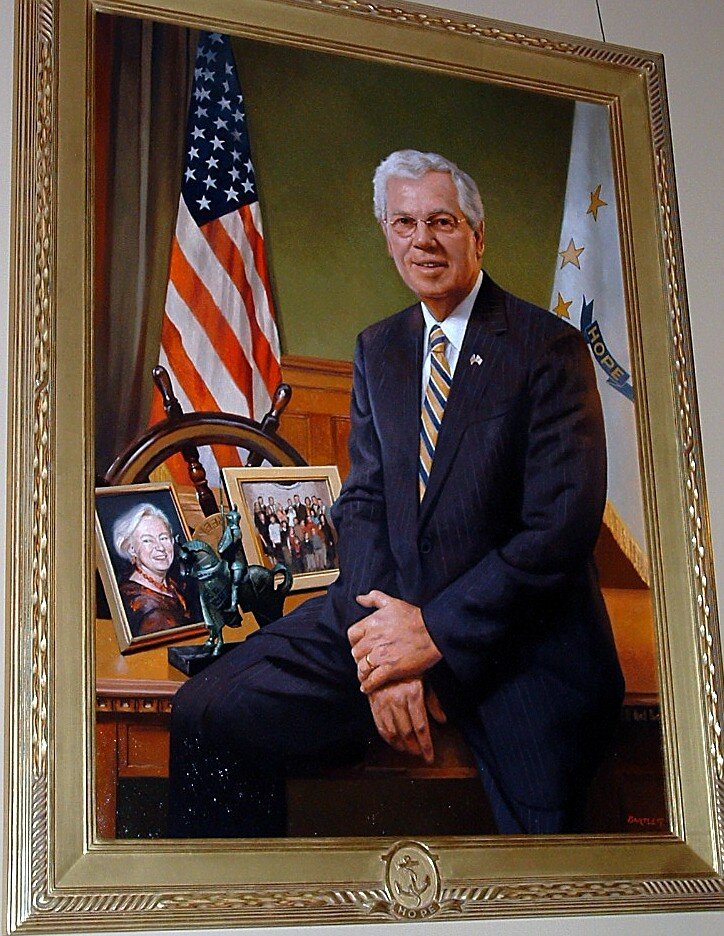
Official portrait of former Rhode Island Gov. Donald Carcieri, which is so realistic that it looks like a photo; the various trappings of office and private life are displayed, as if the man alone were not enough.
Rhode Island School of Design alumnus Fairey is best known for his now iconic 2008 Obama campaign poster, simply labeled HOPE. The Rhode Island Angel's graphic style comes from a long tradition of jingoistic American posters, particularly those from World War I. (“Hope” is the official Rhode Island motto.)

1918 War Bonds poster.
Our COVID-19 angel is pretty tame, especially compared to the public art produced by totalitarian regimes. Both Fascists and Communists almost always revert to the same sort of school textbook realism.

The similarity of different totalitarian regimes' art: Hitler and Stalin as benign fatherly figures.
The issue here is not really one of a partisan polemic (workers of all political stripes wear similar jackets and caps) but the unfortunate tendency of governments to support a flaccid realism.

Irish Famine Memorial in downtown Providence is a tribute to banality – the most simplistic imagery.
— Photo by William Morgan
It may be that government-supported public art, particularly statuary, is oxymoronic. But if we are going to have it, it needs to rise above triteness — for example, of the proposed Dwight Eisenhower monument in Washington — and at least aim for something noble or transcendent.

Proposed statuary for the Eisenhower Memorial in Washington. This D-Day tableau is modeled after a photograph, but this lacks that famous image's immediacy and poignancy.

Red Army Memorial in Sofia, Bulgaria. This has a lot more life than the proposed Eisenhower statute; It’s Soviet Realism at its powerful best.
The curse of such memorials is a sense of literalness, although we get some credit for quickly abandoning the European precedent of portraying our leaders in classical garb.

George Washington in the North Carolina Capitol, by the Italian neoclassical sculptor, Antonio Canova, 1821.
— Photo by William Morgan
It seems unlikely that the sort of politico that conflates flag waving with patriotism will actively encourage any sort of abstraction, as so unlikely but did brilliantly happen with the Vietnam Memorial in Washington.
In an age of all kinds of visual media, perhaps it is time to search for more eloquent and sophisticated expressions of commemoration and grief.
Until that time, we can remember the golden age of public art in this country, the period from the Civil War (which demanded a lot of statuary) to the Great War.
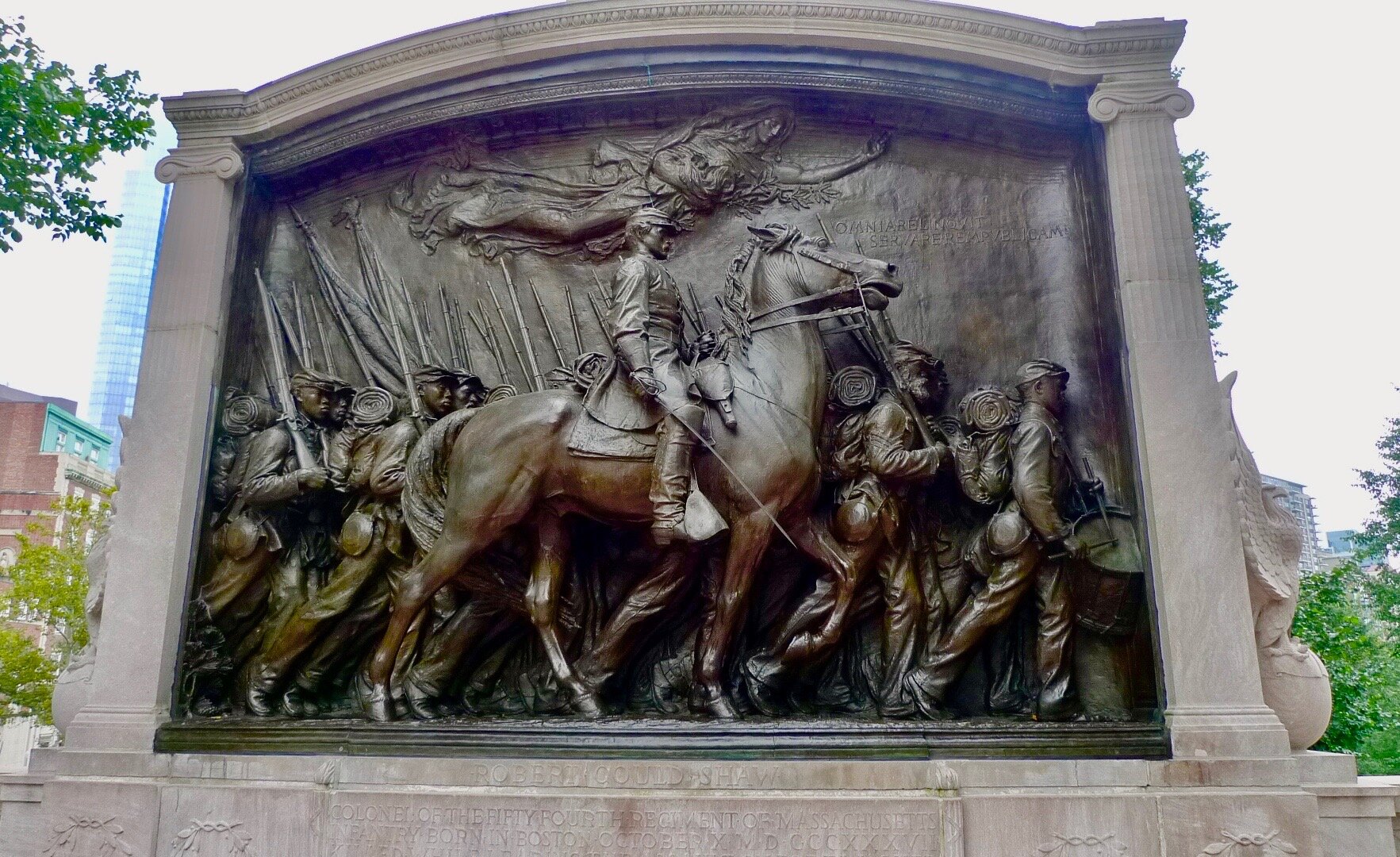
Augustus Saint-Gaudens, Shaw Memorial, Boston, 1884-97.
— Photo by William Morgan
Augustus Saint-Gaudens, arguably the greatest sculptor whom American has produced, understood the difference between verisimilitude and a powerful naturalism. Saint-Gaudens's monument to Col. Robert Gould Shaw and the black soldiers of the 54th Massachusetts Regiment opposite the State House in Boston remains one of the most moving works of American art.

Shaw Memorial, detail.
— Photo by William Morgan
Saint-Gaudens also designed the so-called "double eagle" $20 gold piece at the behest of his friend Theodore Roosevelt. Liberty depicted on the coin – and soaring above Colonel Shaw – is the distant ancestor of the Rhode Island Angel of Hope.

William Morgan is a Providence-based architecture writer. His next book, Snowbound: Dwelling in Winter, will be published by Princeton Architectural Press this autumn.
Llewellyn King: The case for continuous scientific research

Oxford’s Jenner Institute laboratories seen from the atrium
WEST WARWICK, R.I.
There is something fabulously exciting about watching science riding to the rescue. The gloom about the coronavirus pandemic began to lift dramatically in the past several days as good news about vaccines came out.
Out front Oxford University, with a well-established history in vaccines, announced that it had started trials on people and that it might have a vaccine by September. It has a manufacturing partnership with AstraZeneca, a giant European pharmaceutical company, and it is hoped that a million doses can be produced by September, even as there is not absolute certainty that it will work. Sarah Gilbert, professor of vaccinology at Oxford’s Jenner Institute, says she is “80 percent” certain that it will.
Incidentally, some of tests on rhesus macaque monkeys were done at the National Institutes of Health’s Rocky Mountain Laboratories, in Hamilton, Mont.
Labs in all major countries are in close pursuit of Oxford. What does seem certain is that the time when a viable vaccine can be brought to market is shrinking. The next challenge will be to manufacture proven vaccines in the hundreds of millions of doses needed.
To me the big thing is not who finds a vaccine, but rather how science answers the call to arms when the challenge is there – and financial support is provided. Much critical research in many of the coronavirus vaccine efforts has been provided not by governments, but by the Bill and Melinda Gates Foundation.
There is reason to wonder why Gates has been out in front of many governments, including the United States. This points to government failure to adequately support research and to prepare non-military defenses. Not every threat a modern nation faces comes from national armed forces.
Across the spectrum of research, private money is raised to do the work which should be in the government’s purview. Money for science is a struggle: There are competing philosophies, political and scientific, about research. To begin with, all research is messy. The scientific method, as Michael Short of MIT reminded me recently, is based on try, fail, try again; test, prove, then proceed.
Conservatives have tended to be skeptical about a lot of science, pooh-poohing the study of obscure microbes and what they see as dubious investigation. They have consistently demanded quantifiable results from the government’s scientific establishment, looking for practical applications and unhappy about research for its own sake. They have forgotten the real driver of all science: to know.
Liberals have favored, as you would expect, the social sciences over the hard ones. They are more prepared to treat social studies as science than high-energy physics.
What is lacking is something which we used to have in Congress: the Office of Technology Assessment which was the scientific equivalent of the Congressional Budget Office. As with the often-quoted CBO, the OTA was a tool for members of Congress; a means for them to get complex scientific issues right and help them to understand the budgeting for those.
The OTA was created in 1972 and looked to be a firm part of the support system of Congress. But the Newt Gingrich-led House axed it in 1995. There have been several attempts to bring the OTA back in the House; last year a bill was introduced that would have reestablished it at a modest $6 million, but no action was taken.
The OTA provided a valuable service in saving members of Congress from themselves; advising them when they come back from their constituencies believing hearsay as scientific fact -- the same thing that has bedeviled President Trump in his briefings on the COVID-19 crisis.
I was well acquainted with the OTA and I always thought its greatest value was not in its formal advice, but rather in its informal help to members -- who often confuse what they are told by sources as disparate as their children and lobbyists -- from saying something about science that did not hold up.
As it is, we are all standing where we can see the scientific cavalry saddle up and ride out. This is heart-pumping, reassuring and confirms that science should not be neglected for budget or other reasons. To have a viable scientific infrastructure is to be defended from non-military attack, ranging from cybersecurity to a virus. Scientists agree on this: There will be more.
Llewellyn King is executive producer and host of White House Chronicle, on PBS. His email is llewellynking1@gmail.com and he is based in Rhode Island and Washington, D.C.
Meeting as a 'restatement'

Polaroid 80B Highlander instant camera, circa 1959
“I find each new person whom I meet a complete restatement of what life and the world are all about.’’
— Edwin Land (1909-81) inventor and the founder (in Cambridge, Mass., in 1937) of Polaroid and long considered the leading statesman of New England technology
Wise watercolor

“The Sentinel’’ (watercolor), by Jeanette Fournier. It’s part of her show scheduled for The Gallery at WREN, in Bethlehem, N.H., Sept 4-29. We’ll see if the pandemic lets it happen.
Ms. Fournier is a watercolor painter and graphite artist whose work is driven by a love of nature and the creatures that live in it.
She says: "The compositions of my work are meant to be intimate, close-up portraits of the animals, birds and other creatures with which we share this world," especially those she sees around her Littleton, N.H., studio and in the nearby White Mountains.
Her Web site:

In Bethlehem, looking toward the snow-capped White Mountains.
— Photo by Stevage

The Littleton Public Library, with statue of Pollyanna
— Photo by Doug Kerr
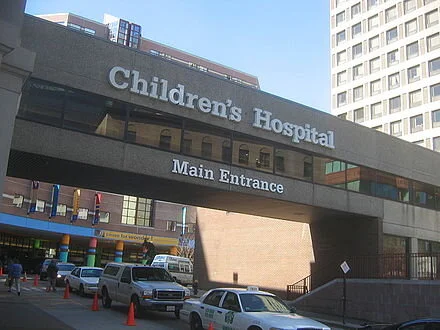
Children's Hospital to study COVID-19 mystery; Assumption College holds to plan to train PA’s
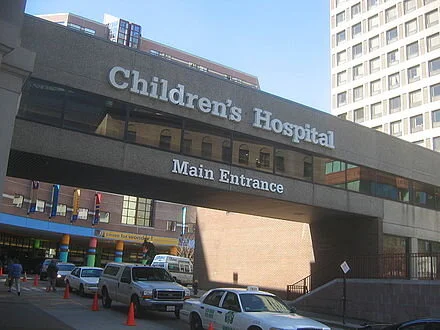
Boston Children’s Hospital
From The New England Council (newenglandcouncil.com):
As our region and our nation continue to grapple with the Coronavirus Disease (COVID-19) pandemic, The New England Council is using our blog as a platform to highlight some of the incredible work our members have undertaken to respond to the outbreak. Each day, we’ll post a round-up of updates on some of the initiatives underway among Council members throughout the region. We are also sharing these updates via our social media, and encourage our members to share with us any information on their efforts so that we can be sure to include them in these daily round-ups.
You can find all the Council’s information and resources related to the crisis in the special COVID-19 section of our Web site. This includes our COVID-19 Virtual Events Calendar, which provides information on upcoming COVID-19 Congressional town halls and webinars presented by NEC members, as well as our newly-released Federal Agency COVID-19 Guidance for Businesses page.
Here is the April 29 roundup:
Medical Response
Boston Children’s Hospital Launches Study on COVID-19 in Pediatric Patients – To better understand why few children infected with COVID-19 become severely ill, Boston Children’s Hospital has initiated a national study of 800 infected children. The study will examine patients with varying levels of symptoms to identify what protects children from severe symptoms that older patients lack. WBUR has more.
Blue Cross Blue Shield of Massachusetts Deploys 100 Employees to Support Boston Response – Blue Cross Blue Shield of Massachusetts (BCBSMA) is re-assigning 100 of its employees to aid Boston’s response to the pandemic. Workers from BCBSMA will support the city’s contact tracing efforts and care efforts at Boston Hope field hospital. Read the press release here.
Massachusetts General Hospital Partners with Boston to Identify Asymptomatic Residents – Massachusetts General Hospital (MGH) and the City of Boston have partnered to launch new initiative to evaluate community exposure to COVID-19 using antibody testing and. MGH and the city will randomly select residents in the hardest-hit parts of Boston to guide future allocation of resources. Read more from WBUR
Economic/Business Continuity Response
Assumption College Continues Developing Physician Assistant Program – Despite the pandemic suspending most plans, Assumption College is moving forward with its new physician assistant program. Leaders of the new program are hoping the outbreak can even inform the new program’s focus on care during a pandemic. The school is still planning to enroll students in January 2021 while awaiting accreditation and building clinical partnerships. Read more in MassLive.
Partners HealthCare Requires Rapid COVID-19 Testing on Admission in Hospitals – At all of its acute care hospitals, Partners HealthCare is requiring all admitted patients to undergo a COVID-19 test. The new regulation is designed to gather data about the spread of the virus within the provider’s facilities to inform decisions surrounding protective equipment orders and floor layouts—as well as to protect patients and staff. Read more from WBUR.
Community Response
Tufts Health Plan Announces $345,000 in Funding for Relief Efforts – As part of its commitment to support relief measures targeting older people, Tufts Health Plan has pledged $345,000 to organizations focusing on housing insecurity in New England. The organization is also accelerating payments to current community partners and matching employee donations, raising an additional $55,000 for the organizations. Read more.
Holy Cross Uses Day of Giving Funds to Support Students Affected by Pandemic – The annual day of giving at the College of the Holy Cross raised $2.47 million to support current students and staff at the school. The school community prioritized donations to causes—such as its Emergency Relief Fund to offset short-term costs for unanticipated technology, housing, and travel costs for students—that will support those at the school most significantly impacted by the pandemic. Read more here.
Stay tuned for more updates each day, and follow us on Twitter for more frequent updates on how Council members are contributing to the response to this global health crisis.
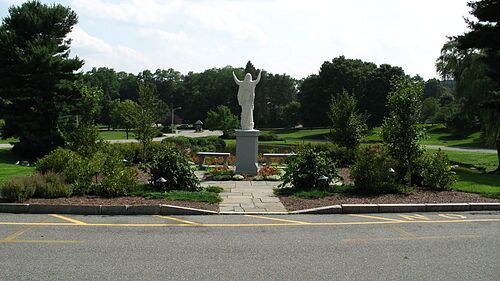
View of the entry to Assumption College and of the Blessed Virgin from the La Maison building
'Lives because it dies'
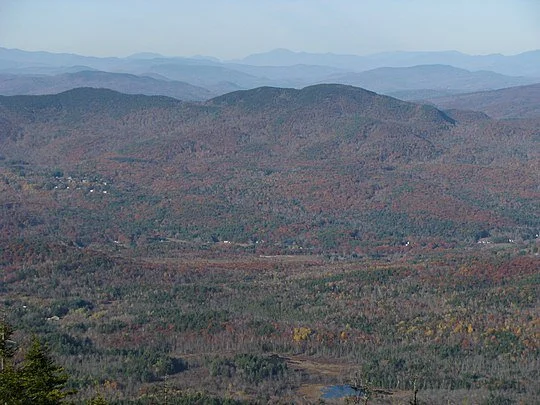
Ragged Mountain as seen from Mount Kearsarge, in central New Hampshire, where Donald Hall lived in the tiny town of Wilmot.
“Ragged Mountain was granite before Adam divided. Grass
lives because it dies. If weary of discord
we gaze heavenward through the same eye that looks at us,
vision makes light of contradiction:
granite is grass in the holy meadow of the soul’s repose.’’
— From “Granite and Grass,’’ by Donald Hall (1928-2018)

What I 'expected Maine to look like'
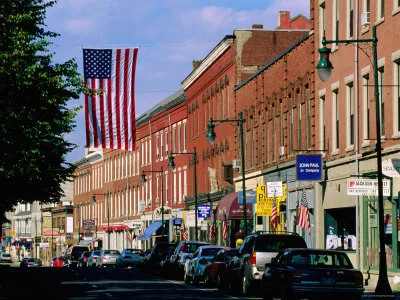
Downtown Rockland in the summer, when it’s a major tourist center
“Catawamteak,” meaning “the great landing,” is what the Abenaki Indians called the early settlement that became Rockland, Maine. Thomaston and Rockland can be bypassed by Route 90, an eight-mile shortcut which I frequently used as a midshipman, but our bus stayed on the main road and stopped to let passengers on and off in both places. At one time Rockland was part of Thomaston, called East Thomaston, but the two towns have long since separated, having very little in common. In the beginning, Rockland developed quickly because of shipbuilding and limestone production. It was, and still is, an important fishing port. Lobsters are the main export and the five-day Maine Lobster Festival is celebrated here annually. The red, three-story brick buildings lining the main street of Rockland, give it the image of an old working town. I have always been impressed by the appearance of these small towns, because to me this is what I had expected Maine to look like.’’
— Capt. Hank Bracker, in his book Salty & Saucy Maine: Sea Stories From Castine
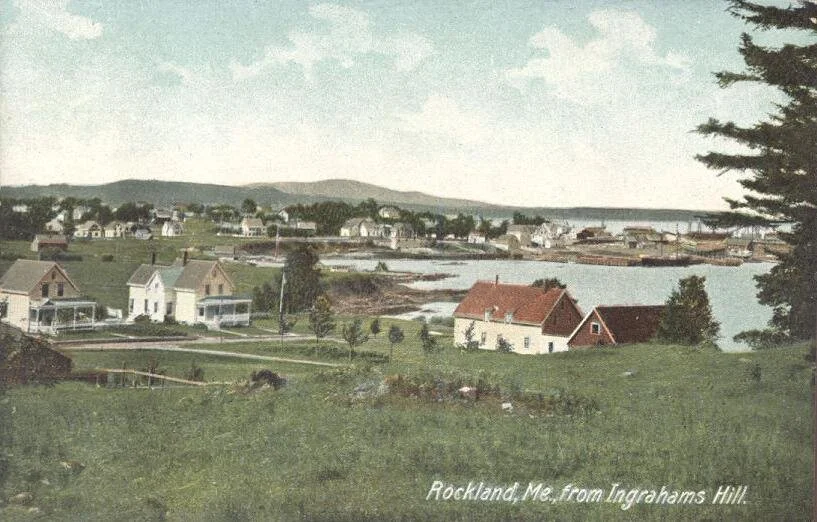
Rockland in 1908
The Silver Age

Looking across the head of Narragansett Bay to Providence from the East Providence shoreline.
— Photo by William Morgan
Don Pesci: Is Blumental holding off Biden endorsement on principle?

Sen. Richard Blumenthal
VERNON, Conn.
As of April 28, U.S. Sen. Richard Blumenthal, the Connecticut Democrat, has not yet endorsed his party’s likely presidential nominee, Joe Biden. Blumenthal’s continued non-endorsement cannot be the result of an oversight. Most prominent Democrats, even those engaged in the Democratic primary – including Massachusetts Sen. Elizabeth Warren and Vermont socialist Sen. Bernie Sanders – have offered their endorsements. Former President Obama, after a little hectoring from bigwigs in his own party, has issued a late but fulsome endorsement.
No one seems to know for certain what may be holding up the Blumenthal endorsement, but theories are making the rounds.
May 11 will mark the one year anniversary of the publication of a piece that appeared in the New York Post titled “The troubling reason why Biden is so soft on China” written by investigative journalist Peter Schweizer, the author of “Secret Empires: How the American Political Class Hides Corruption and Enriches Family and Friends.” Some are nursing the theory that Blumenthal may have speed-read the piece and, a man of conscience, it disturbed his political equipoise.
How could any self-respecting Democrat endorse as president and the nominal head of the Democratic Party a politician who is “soft on China,” particularly now when China is importing stolen, proprietary data from companies in the United States that supply military equipment to the arsenal of democracy while exporting Coronavirus to the Western world?
Schweizer believes that the all but certain presidential nominee of the Democratic Party may be soft on China in part because China may have purchased his affections by providing money and golden opportunities to his son, Hunter Biden. The devil, we are told, is in the details. In the Schweizer piece the Devil’s details are hauled out of the shadows.
“In 2013,” Schweizer writes, “then-Vice President Joe Biden and his son Hunter Biden flew aboard Air Force Two to China. Less than two weeks later, Hunter Biden’s firm inked a $1 billion private equity deal with a subsidiary of the Chinese government’s Bank of China. The deal was later expanded to $1.5 billion. In short, the Chinese government funded a business that it co-owned along with the son of a sitting vice president.”
The Post piece dots all its “i’s” and crosses all its “t’s” with a superfluity of details. It is, as we sometimes say in the business, convincing – absent an equally convincing response from Biden.
One of the Devil’s details cited by Schweizer stands out like a sore thumb. “Hunter Biden’s father, the vice president, met with Chinese President Hu Jintao in Washington as part of the Nuclear Security Summit,” Schweizer writes. Twelve days after Hunter Biden “stepped off Air Force Two in Beijing, his company [Rosemont Seneca Partners LLC] signed a historic deal with the Bank of China, the state-owned financial behemoth often used as a tool of the Chinese government. The Bank of China had created a first-of-its-kind investment fund called Bohai Harvest RST (BHR). According to BHR, one of its founding partners was none other than Rosemont Seneca Partners LLC.”
Rosemont, the Biden-Archer firm, became “increasingly involved with China. Devon Archer became the vice chairman of Bohai Harvest (BHR), helping [to] oversee some of the fund’s investments…. In December 2014, BHR became an ‘anchor investor’ in the IPO of China General Nuclear Power Corp. (CGN), a state-owned energy company involved in the construction of nuclear reactors. In April 2016, the U.S. Justice Department would charge CGN with stealing nuclear secrets from the United States — actions prosecutors said could cause ‘significant damage to our national security.’”
Asked what he knew and when he knew it concerning the China/Hunter Biden connections detailed by Schweizer, Joe Biden implausibly claimed he and his son never discussed Hunter Biden’s business relations. The Schweizer piece, some note, will have been in the public stream for a year in May and yet has not proven an obstacle to Biden’s march to the White House. None of the details were discussed during the sometimes contentious Democrat Primary, and the media has devoted little attention to it.
Why should we not suppose it is a dead letter – old news?That is always possible, but not likely in mano a mano debates between President Trump – who, whatever his failings, knows how to make news – and Biden who, most will acknowledge, is not William Jennings Bryant on the stump.
However, the question immediately before the house is: Why has Blumenthal not yet endorsed Biden? The answer to that question most flattering to Blumenthal may be: Perhaps Blumenthal is a man of strong ethical principles after all. Given the Schweizer analysis, which has not been disputed by Biden or Blumenthal, how it is possible to maintain a view that Trump is too cozy with China, roughly Blumenthal’s position, while extending a hearty endorsement of Biden, whose son Hunter has been woven into the Chinese tapestry in a fashion some might consider compromising?
Don Pesci is a Vernon-based columnist.
Gloria Oladipo: Rural hospitals' unique challenges in the pandemic
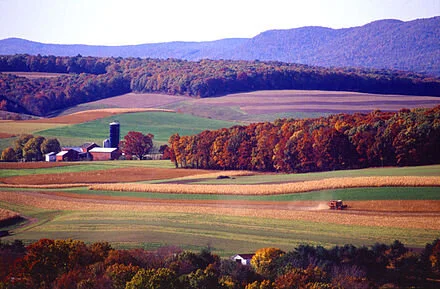
From OtherWords.org
As the COVID-19 pandemic spreads, many rural communities are in a uniquely difficult position.
According to Kaiser Health News, nearly 80 percent of rural America is categorized as a “medical desert,” meaning the nearest hospital is more than 60 minutes away. These hospitals are also much harder pressed to come up with ventilators and personal protective equipment for practitioners — and not to mention COVID-19 tests, which are in short supply everywhere.
Health care in rural America was in crisis well before the outbreak, with higher uninsurance rates in the countryside limiting access to care and financially undermining health facilities. Despite legislation giving financial relief to some hospitals, over 350 rural hospitals remain at high risk of closing.
Rural communities are at risk of severe outbreaks for other reasons as well.
For one, many rural communities lack reliable broadband connections. With so much COVID-19 information being transmitted via the internet, some rural residents may miss out on key updates.
Rural residents are also typically older, putting them at higher risk of dying from COVID-19. And they disproportionately lack access to healthy food and other necessities, which have become only more scarce in the pandemic.
Given the various risk factors associated with rural communities, a coronavirus outbreak in rural communities would be catastrophic. However, some government officials have not shown urgency.
For one, despite warnings from the Centers for Disease Control and Prevention (CDC) on a potential “second wave” of COVID-19 infections, some governments are easing social-distancing mandates. For example, Georgia Governor Brian Kemp is allowing non-essential businesses to reopen.
Meanwhile, the federal response to COVID-19 has utterly failed. In addition to failing to expand severely limited U.S. testing supplies, the White House has not kept its promises to provide more protective equipment or control misinformation.
Indeed, it’s been issuing a steady stream of its own misinformation, prompting warnings from health officials that no, you should not inject bleach to treat coronavirus. A direct consequence of Trump’s carelessness has been a steady increase of emergency room visits and poison control calls for bleach ingestion.
Rural communities cannot afford to be neglected during the COVID-19 pandemic. Governments at all levels must coordinate their efforts to educate, protect, and care for rural residents during this uncertain time.
In addition to continuing and strengthening local social distancing orders, local governments must continue making resources — like food, shelter, and medical supplies — accessible and free. Accurate information on COVID-19 must also be made accessible, especially for rural residents without an internet connection.
In addition to government help for rural hospitals, temporary and affordable clinics should be created in high-risk areas with limited hospitals. Nationally, testing and protective equipment such as masks and gloves should be readily available regardless of one’s location.
The response to COVD-19 will be a true test in capability, resilience, and crisis-planning for all those in positions of power. The neglect of rural communities during this pandemic is yet another way this nation’s COVID-19 response continues to fail.
Gloria Oladipo writes for OtherWords.org.
Fresh visions in close quarters, too

“Owl's Head, Penobscot Bay, Maine,’’ by Fitz Henry Lane, (1804-65), at the Museum of Fine Arts, Boston.
Layla Bermeo is the MFA’s Kristin and Roger Servison Associate Curator of Paintings, Art of the Americas. She had this comment on the painting:
‘‘….My attention always lingers on the lone figure in the bottom left, standing with his back turned, holding a pole. Even with the sense of stillness that pervades the canvas, I feel a tension between his immobility and the movement of the ships, which seem to drift away from his gaze, shrinking in the background. This tension is echoed in Lane’s own biography, as he lived with a disability that limited his mobility but spent his career painting ships that traveled very far, very fast.
“As we try to reduce the spread of COVID-19 by restricting our movements, we can feel frozen, watching the rest of the world swirl around us, if not from a shore, then on a screen. But Lane’s work suggests that smaller environments—those we can encounter in a short car drive or neighborhood walk, or even within our own basements or closets—hold greater possibilities than we often notice.
“When scholars reference Lane’s disability, they usually mention what he could not do—he could not study in Europe like other American artists; he could not explore the wilderness like other landscape painters. But he could walk with crutches or a cane, and he did travel across the coasts of Maine and Massachusetts, bringing a fresh vision to the familiar ports of Gloucester, Salem, and Boston. If we stop thinking in terms of what we cannot do, like Lane may have done, how might we see our surroundings differently?”

Time will teach you

The mayflower is the state flower of Massachusetts.
No hay pájaros en los nidos de antaño.*
--Spanish proverb
The sun is bright, the air is clear,
The darting swallows soar and sing,
And from the stately elms I hear
The blue-bird prophesying Spring.
So blue yon winding river flows,
It seems an outlet from the sky,
Where waiting till the west wind blows,
The freighted clouds at anchor lie.
All things are new; the buds, the leaves,
That gild the elm-tree's nodding crest,
And even the nest beneath the eaves;
There are no birds in last year's nest!
All things rejoice in youth and love,
The fulness of their first delight!
And learn from the soft heavens above
The melting tenderness of night.
Maiden, that read'st this simple rhyme,
Enjoy thy youth, it will not stay;
Enjoy the fragrance of thy prime,
For O! it is not always May!
Enjoy the Spring of Love and Youth,
To some good angel leave the rest;
For Time will teach thee soon the truth,
There are no birds in last year's nest!
“It Is Not Always May,’’ by Henry Wadsworth Longfellow (1807-82), New England poet, professor and translator
*In last year's nests there are no birds now
07-82
Winter's last joke

“The sounds coming through our bedroom window were ominous. We recognized the “crack-crash” punctuating the almost tangible silence as the noise of snapping, falling limbs. Two decades of New England woodland living had accustomed my wife and me to the winter ice storms and clinging wet snows that ‘trim’ the pine trees. But this was early May in Massachusetts – a time of lilacs and apple blossoms.’’
Robert C. Cowen, in The American Land, on the infamous May 9, 1977 snowstorm
Three springs

1910 postcard
From Robert Whitcomb’s “Digital Diary,’’ in GoLocal24.com
As the leaves push out, I think of three memorable springs, for me, anyway. The first is the spring of 1966, when we seniors were rapidly heading for graduation at our boarding school at the edge of the lovely Litchfield Hills, in Connecticut. While we faced the pressure of final papers and exams, and saw the Vietnam War looming, all in all, it was a delightful time. One reason is that a nice youngish married couple – the Woods -- with a couple of kids lived in a house down the road. They were friends of one of my classmate’s parents.
A bunch of us, ranging from four people to seven, would often bicycle to their rambling white 19th Century house, in nearby Middlebury, and hang out. On a couple of occasions, they had us to dinner, where illegally (?) they served us wine, and everyone would smoke in their backyard, whose spring lushness and freshness I still recall. Thus, we enjoyed the pleasures of adulthood without its responsibilities. It got better and better as the leaves thickened and we luxuriated in the first hot days. It may have just been the fact that it was a time of transition for us, and so everything seemed intensified, but I can’t remember a more beautiful spring.
Finally, a few days before graduation, which I was slightly dreading because as the head of the student government I had to speak before the commencement multitudes, the Woods gave us a farewell dinner, which I found moving. That was the last time that our group all met together. And, not surprisingly, several of us have been dead for years.
Then there was the spring of 1970, during my senior year at college, when everything was disrupted by partial college closings associated with protests against the war in Vietnam and Cambodia. The proximate cause was the fatal shooting of four anti-war student demonstrators at Kent State University, on May 4. Many colleges, including mine, Dartmouth College, decided (wrongly, in my view) to let everyone take all courses pass/fail and took other measures that turned the final weeks of that academic year into an excuse to have a hypocritically good time. As President Nixon reduced our military in Vietnam, and then the draft was ended, the protests faded, whatever was happening to the Vietnamese.
In any event, the Upper Connecticut Valley was much warmer than average that year and gorgeous. That late spring almost felt like summer camp. Frisbees flying everywhere. I left with only vague ideas of what I’d be doing next.
And now, half a century later, the Class of 2020 has had its in-person commencement postponed to June 2021, as the black swan of COVID-19 flies over. I wonder how many graduates will make it to that one.
The third spring I vividly remember came in 1972, as I was preparing to get my master’s degree at Columbia University, which was then still recuperating from the student unrest of the previous few years. Although graffiti-splattered-New York City was then in decline because of old industries leaving and/or shrinking, corporate headquarters fleeing to Connecticut, crime, labor strikes and municipal mismanagement, “The City’’ to many young people was still the most exciting and alluring place to be in America, and not all that expensive compared to most of the stretch from the ‘80s to the last couple of months, when COVID-19 has driven down housing and other prices.
I remember how easy it seemed to get a job, which I did before commencement, and the bright prospect of adventures to come. I felt, briefly, fancy free, as I strolled through Riverside Park up to Columbia, at 115th Street, from the big apartment at West 88th Street I shared with, numbers depending on the month, three to five people directly or indirectly connected with the movie and TV business. The rather ugly, city-tough, plane trees were unfurling and I smelled the inexplicable scent of wet bread. The city seemed full of promise, and it will again.