
Sea urchins may be a climate-resilient aquaculture crop for R.I.

Atlantic Purple Sea Urchin
From ecoRI News (ecori.org)
NARRAGANSETT, R.I.
Atlantic purple sea urchins are common in coastal waters along the East Coast, and University of Rhode Island scientist Coleen Suckling believes that the Ocean State could become the home of a new industry to raise the spiny marine creatures for consumption in Japan and elsewhere.
She has teamed with a company called Urchinomics, which is pioneering urchin ranching around the world. Suckling is testing a sea urchin feed the company developed in Norway to see if Rhode Island’s urchins will eat the product and, in turn, become commercially appealing.
“Sea urchins are generally good at coping with climate change; they appear to be resilient to warming and ocean acidification,” said Suckling, URI assistant professor of sustainable aquaculture. “So they’re a good species to turn to for commercial harvest. And you can get a good return on your investment from them.”
The global sea urchin market is valued at about $175 million annually, with about 65 percent to 70 percent of the harvest being sold to Japan. Urchins are primarily used for sushi, though they are also an ingredient in a variety of other recipes.
Red urchins and Pacific purple urchins are harvested in California, Alaska and British Columbia, while green urchins are captured in Maine and Atlantic Canada. Little is known about how successfully Atlantic purple urchins would compete in the marketplace, but Suckling is taking the first steps to find out.
The edible part of the sea urchin is its gonad tissue — which chefs refer to as roe or uni and Suckling describes as tasting “like what you imagine a clean ocean smells like” — but the tissue must be firm and bright yellow or orange to get the best prices.
“Wild urchins typically have small gonads and the color isn’t great, so commercial harvesters are collecting wild-caught urchins and feeding them an enriched finishing diet in cages in the open water for a few months to allow them to grow larger gonads and develop good color,” Suckling said.
At URI’s Narragansett Bay Campus, undergraduates Max Zavell, Anna Byczynski and Alli McKenna are undertaking a three-month food trial on purple urchins caught in Rhode Island waters. The animals are being fed a variety of foods to see how well they grow and if they become marketable. The students monitor water quality and regularly weigh and measure the urchins, and by February they should have preliminary results.
“If they become marketable, then it opens up a whole interesting range of potential options,” Suckling said. “Under future climate conditions, there may be a need to diversify what we produce in the seafood sector. And since urchins are good at coping with acidification, this could be a good opportunity here in Rhode Island to exploit sea urchins.”
Even if the formulated diet works as expected, many additional questions remain to be answered before urchins could be raised commercially in the state.
“It’s a local species, so we can potentially grow them here, but is it something the Coastal Resources Management Council and the Department of Environmental Management would be interested in?” Suckling asked. “Are there aquaculture farmers interested in growing them? Can we ranch them reliably? We’re just taking the first step to see if it’s worth the effort to answer these other questions.
“Part of my role is to try to understand what seafood we may need to turn to in a sustainable manner so we can maintain food security and economic security in the future.”
Digital love: The safest variety

“Unrequited Love 2,’’ by Jeroen Nelemans, in the group show “Love Letters,” at Helen Day Art Center, Stowe, Vt. — COVID-19 permitting.
The gallery says that the show “examines love by focusing on individual relationships and love past, love lost and love lived. The artists explore the theme of love as it exists beyond preconceived notions and societal structures, viewing it as an action, an emotion and a driving force. In the artwork of ‘Love Letters,’ love is memory, honor, hope and so much more. The concept of love is one of the rare truly universal aspects of humanity, and ‘Love Letters’ taps into that universality, framing it in the context of the much newer concept of the digital era.’’
Llewellyn King: Thank God for electricity, especially now; but the grid is always under threat

WEST WARWICK, R.I.
Nothing will be the same again
Those are words that that challenge the heart and the imagination. The heart because, as in a death or the loss of a job, some things will be very missed. The imagination because it needs inspired speculation to know how the present crisis will reshape the way we live; how we are governed, how we educate, how we do business and how we play.
Some losses are somewhat predictable. Most of us may never sit in a movie theater again because there may be no movie theaters. They were already having a hard time with the competition from streaming services, now many may just not reopen. Question: What will be done with those buildings? They are mostly part of shopping centers where many of the tenants for restaurants and specialty shops will also go out of business.
Here’s my answer: In that glorious time when we have licked COVID-19, many new entrepreneurs will get their start in those empty shells. A myriad of yet-unknown businesses will crop up, coming out of these times of ultra-difficulty. Failing shopping centers offer habitat to startups.
We are in a state of war and in war, despite its horror, there is invention. As we try to defeat this pandemic, there will be inventions aplenty.
War has always spurred creativity, in art and in science, and in its aftermath, a time of optimism and opportunity. Catastrophe shakes up society and reorients it. There is a high price but a great reward
Needs must, there will be a re-evaluation of values and the goods and services which are essential. High on that list will be electricity. Over and over again we will be asking ourselves if the electric grid is safe and if so, how safe?
As Morgan O’Brien, co-founder of Nextel and now CEO of Anterix, which offers utilities secure communications systems, told me, “The coronavirus pandemic is putting more stress on the infrastructure which keeps our society functioning. Critical infrastructure like the electric grid will be more stressed as it is the essential lifeline for Americans sheltering in place.”
A loss of all or part of the grid is an existential fear that has had experts worried since the first computer hackers had a go at it. Utility presidents have told me that it is grid security that keeps them awake at night. It should. CPS Energy, the utility in San Antonio, gets more than 2 million hits a day, I believe.
Late last year the president’s National Infrastructure Advisory Council warned strongly of the dangers of cyberattack. It said the electric utility industry is good at tackling small, short-term outages but it is essentially unprepared for catastrophic outages lasting a long time.
Earlier this year James Woolsey, a former CIA director and an honorary co-chair of the Secure the Grid Coalition, wrote to the Federal Energy Regulatory Commission demanding it order more physical security for transformers, pylons, etc. Woolsey cited a lack of improved physical security since that became an issue with the sophisticated disabling of Pacific Gas & Electric’s substation in Metcalf, Calif., in 2013.
John Savage, professor emeritus of computer science at Brown University, who is writing a book on cybersecurity, raises a less-mentioned dimension of threat to the grid: the role of GPS. With the advent of global positioning satellites, he explained, the utility industry switched from using atomic clocks to using GPS timing as the basis for its nationwide synchronization.
Savage told me, “Dependence on GPS for timing is a security risk. If GPS timing signals are distorted or lost, serious damage may be done to the grid.
“GPS signals can be lost due to a local jamming, blackouts, produced by a solar flare, or spoofing. A GPS anomaly alone or a cyberattack combined with one can cascade and bring down a large portion of the grid for an extended period of time.”
Gen. James Jones, a retired Marine commandant and NATO commander, told me, “For the past several years, I have been preoccupied by the proximity of threats, particularly in the cyber realm.”
Much will change, but the need for reliable electricity will remain paramount.
Llewellyn King is executive producer and host of White House Chronicle, on PBS. His email is llewellynking1@gmail.com, and he’s based in Rhode Island and Washington, D.C.
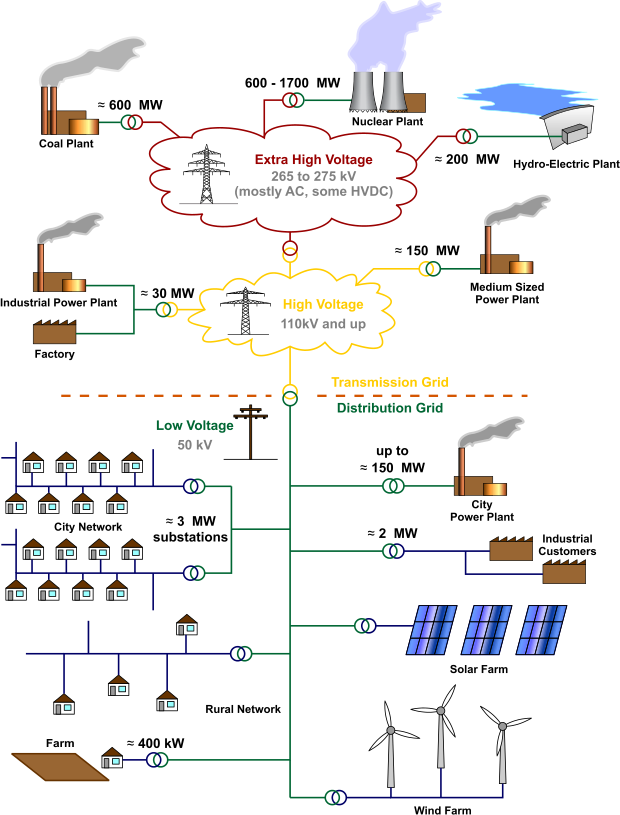
Ready for mill work
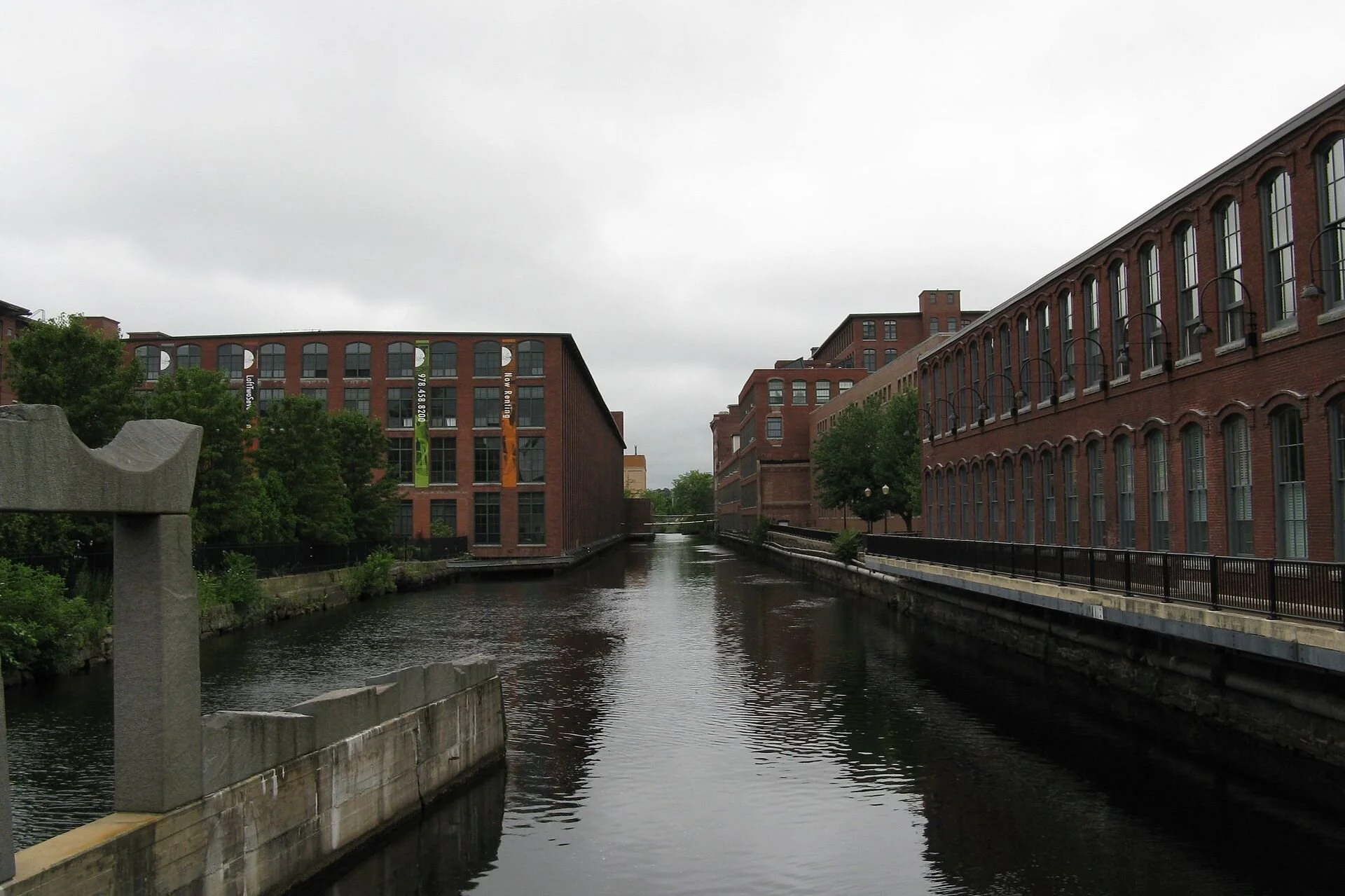
The Pawtucket Canal in Lowell, Mass., lined with old mill buildings
— Photo by John Phelan
“The New Hampshire girls who came to Lowell {to work in its new textile mills in the early and mid 19th Century} were descendants of the sturdy backwoodsmen who settled that state….Their grandmothers had suffered the hardships of frontier life…when the beautiful valleys of the Connecticut and the Merrimack were threaded with Indian trails from Canada to the white settlements. Those young women…were earnest and capable, and ready to undertake anything that was worth doing.’’
From A New England Girlhood (1889)

Don Pesci: Time to cut the regulatory kudzu

VERNON, Conn.
Kudzu, everyone knows, is a perennial vine native to much of eastern Asia that destroys growth by wrapping itself around native plants and trees and shadowing them so that they do not receive the proper sunlight to grow and flourish. Unnecessary regulatory schemes are to the economy what Kudzu is to vegetation. The operative political rule should be – less is better.
At some time in the future COVID-19 will have petered out. We know this not from any assurances of politicians, their brows moist with concern. COVID-19 will be whipped when the United States can be shown on a bell curve marking the progress of COVID-19 to have reached past the top of the curve in a descending mode. People who measure epidemics and pandemics call this process the flattening of the curve. Just as surely as the sun rises in the morning and sets in the evening, pandemics have their ups and downs – always, without exception.
But pandemics leave in their wake medical and economic disruptions that last far beyond the flattening of bell curves. And they leave behind as well gaping holes in the hearts of people whose lives have been torn apart by death and sorrow. For these reasons it would be best for politicians to adopt as a working moral presumption an instruction found in Hippocrates’s work Of the Epidemics – “First, do no harm.”
Looking towards the future, the Yankee Institute, one of the most thoughtful think tanks in Connecticut, has proposed meeting the long-term effects of COVID-19 by cutting the kudzu. After thanking Gov. Ned Lamont for his efforts in battling the virus, Yankee notes, “The collapse of the financial markets and the closure of businesses and schools are certain to cause long-term economic problems for the country and, in particular, Connecticut.” Voices proclaiming that much of the data underlying the measures taken by politicians thus far is, at best, unreliable are few and unnoticed.
So, what can we do additionally to allow the sun to bring forth new economic growth to the state while, at the same time, avoiding harm?
Yankee praises the governor for having issued “executive orders waiving certain occupational regulations for pharmacists, face-to-face interview requirements, expanding telemedicine coverage for Medicaid recipients and [allowing] the Department of Economic and Community Development to defer loan payments for 800 or so small businesses that have loans from the state,” all positive measures that will breathe new life into an economy racked by COVID-19. Some of these measure surely should be adopted permanently.
In addition, the state should issue a temporary “hold harmless” provision to small businesses -- restaurants, gyms, child-care facilities and numerous others -- that have been forced to lay off employees due to the COVID-19 virus. In the normal course of business, layoffs expose such businesses to a more costly state unemployment insurance tax. Temporarily, wave the higher taxes. “Gov. Lamont,” Yankee notes, “has already eliminated the requirement that an individual receiving unemployment benefits demonstrate they are searching for a job. A similar waiver or exemption of the unemployment tax on affected small businesses should be considered as well.” Why not grant tax deferrals to freelance or other self-employed individuals impacted by temporary government business shutdowns? The U.S. Treasury already is offering such deferrals without interest or penalty to individuals and small businesses affected by a government-enforced slowdown.
Occupational-licensing requirements and filing fees should be waved for an extended range of services. Colorado allows immediate licensing for medical professionals licensed in other states. Gov. Jared Polis, Yankee notes, has “expedited the licensing process for those seeking medical licenses, reducing the amount of time and requirements it takes for qualified individuals seeking to practice medicine to join in the response to fight the virus.” Additionally, he has “expanded the ability of people to administer the virus test to include retired, semi-retired or professionals whose license has lapsed to be reactivated easily and efficiently so that testing can be conducted on a larger scale.”
Why haven’t Connecticut’s leaders suspended for one year the state’s increase in the minimum wage? Shouldn’t we remove all regulatory impediments to “distance learning” for school children ordered by the state not to attend school?
First, do no harm. But if harm there must be, the state that has caused the harm should offer reasonable mitigations. After the war on COVID-19 has been concluded -- and all the shelves have been restocked with toilet paper – Connecticut’s politicians must bind up the wounds they have caused. And the binding can start right now.
Don Pesci is a writer who lives in Vernon, Conn.
E-mail: donpesci@att.net
'Not to think so far away'

Oh, give us pleasure in the flowers to-day;
And give us not to think so far away
As the uncertain harvest; keep us here
All simply in the springing of the year.
Oh, give us pleasure in the orchard white,
Like nothing else by day, like ghosts by night;
And make us happy in the happy bees,
The swarm dilating round the perfect trees.
And make us happy in the darting bird
That suddenly above the bees is heard,
The meteor that thrusts in with needle bill,
And off a blossom in mid air stands still.
For this is love and nothing else is love,
The which it is reserved for God above
To sanctify to what far ends He will,
But which it only needs that we fulfill.
“A Prayer in Spring,’’ by Robert Frost (1874-1963)
Nordic dreams

“Fjord’’ (fiber; triptych), by Agusta Agustsson, at Galatea Fine Art, Boston (closed for the time being by COVID-19)

John H. Fitzhugh: A plan for America to reopen for business

Ironically, New York might be one of the first places to reopen for business in the COVID-19 pandemic.
President Trump has been widely criticized for expressing a desire that Americans return to work by Easter. He later modified his remarks to say that reopening of businesses would depend on such local factors as population density and infection rates for the COVID-19 virus.
I am a “Never Trumper” but in this case applaud the president for raising two critical issues: one, how we decide when to return to work, and two, the importance of work.
The current strategy of fighting this virus, based on current medical advice, is to distance ourselves from each other, thus “flattening the curve” of infection to better use our limited medical resources, such as hospital beds and ventilators. This approach, we are told, will lengthen the period during which people are at risk for infection but save innumerable lives.
Some areas of the country have been better at this than others or, because of population density, are simply already “socially distanced.” New York City, unfortunately, is not, it being one of the most densely populated cities in America. Its attack rate (ratio of those infected to those tested) is very high, which means that the infection period will be shorter but potentially more deadly than elsewhere in the U.S.
Ironically, this also means that New York City may be one of the first places that could reopen for business because most residents will have been infected and either recovered or unfortunately passed away.
But now let’s turn to the importance of resuming business, and how we decide to do so.
American business is, with some notable exceptions, closed for business. It is dead in the water, to use a nautical expression. Critical industries are still functioning, either with limited staffs or on-line, but most are idle. This is especially true of small businesses, retail shops and many service industries. My guess is that the gross domestic product (GDP) overall is not 20 percent of what it should be, or was before the virus shutdown.
Congress has passed legislation directing some $2 trillion to offset this shutdown. The Federal Reserve has made an additional $4 trillion available. This is the largest financial bailout ever and, it is said, will help for maybe “a few months.” In my opinion, already one crucial month has passed. Now, I’m not an economist, but I don’t think that even the federal government has the wherewithal to do such a recovery effort a second time. If it tried to do so, I believe, it would lead to hyper-inflation, a drastically lower stock market, and even violent social protest. Thus we have one opportunity to get this right before a much greater catastrophe engulfs us.
The bottom line is that to sustain America the way we know it, or knew it before March 1, Americans must get back to work, the quicker the better.
So then, how do we decide when that is, or even, who decides? Is it the president, Congress, state legislators, governors? Health officials, business owners? The people themselves? And what are the criteria?
One thing to me is clear. We can’t wait until everyone has been infected or until the last person with the infection has died. That would be months into the future. We must accept the risk, in fact the likelihood, that some persons will sicken and die after we resume working. That is certainly unfortunate, but the economic consequences of not resuming work are even more dire to our society.
Here are my suggestions, but they should be examined by statisticians and epidemiologists because these decisions are largely data driven:
First, employers must decide individually the risk to their enterprise, employees and customers from reopening. What are the COVID-19 trends in the community in which they operate? How well have they been able to function on line? How has the virus affected their market? (For example, if your business model depends on a large crowd of people gathering, it may take months for people to feel comfortable doing it.)
Second, how well have the local hospitals been handling those who need treatment? If they are overwhelmed, and people are dying from lack of care rather than from the virus itself, it’s hard to support a general reopening of business that runs the risk of increasing the number of patients.
Clearly one size does not fit all. It may be prudent to reopen business in Nebraska or Texas, for example, but not in New York or Los Angeles. Then again, if the infection rate is soaring in New Hampshire but the worst is over in New York, it might make sense to resume operations in New York but not New Hampshire.
When it comes to government oversight, our 50 governors have a better handle on local COVID-19 conditions than our national government. Working with the local businesses, I think that governors using their emergency public-health powers can individually decide when and who should reopen. This power could extend, as it does now, to in-state operations of large multi-state or international enterprises. Governors can give a go-ahead but it will be up to each business how to respond.
The federal government can provide resources and coordination. The president can use his bully pulpit to set the general direction ( as he has done by broaching the subject of return to work). What would help a lot is a computer model that considers for each enterprise the risks to itself and its customers and community of reopening its business. Certainly mathematicians and economists now have time and reason to build such models. Governors or private groups could then set markers for when resumption of business is prudent.
John H. (“Josh”) Fitzhugh is chairman of Montpelier, Vt.-based Union Mutual Insurance Co. as well as journalist and farmer. He was founding editor of the National Law Journal and was legal counsel to former Vermont Governors Howard Dean and Richard Snelling.
Linda Gasparello: Some soothing Southern cuisine for stressed Rhode Islanders in the COVID-19 crisis

Shrimp gumbo with pieces of okra: industrial-strength Southern cooking

Watergate Salad!
As I surveyed what remained on the shelves at the supermarket I frequent in Rhode Island, I was reminded of the saying, “One man’s trash is another man’s treasure.”
Hurricane or coronavirus pandemic, Rhode Islanders — as befits the Italian heritage and food preference of many of them — had cleared the shelves and frozen food cases of pasta (except that made with chickpeas), canned and jarred tomato sauce, and frozen pizza.
Expectedly all the standard frozen and canned foods (except the dreaded whole and sliced beets), milk, butter, eggs, tuna, soup, bread, cookies and snack food had been cleared out, too.
What to buy? I viewed the rejected food not as Italian-American Rhode Islander, but rather as a Virginia transplant to the state. And I found heaps to buy.
Many of the ingredients for classic Southern dishes were still on the shelves and the frozen food cases. Here are some ingredients I saw and some ideas for what to do with them:
— Shrimp and grits: Buy frozen wild or farmed shrimp and grits (look on the bottom shelves in the breakfast cereal aisle). Yo, Italian-Americans up North! If you like polenta, you’ll love grits. “I ga-ron-tee!” as the late Cajun chef and humorist Justin Wilson used to say.
— Okra: If you live in the North, it will be the only vegetable left in your supermarket’s frozen-food case. Dip it in buttermilk, dredge it in a seasoned cornmeal-flour mixture and fry it until it reaches that beautiful golden brown. Okra tastes like eggplant: In fact, you can make parmigiana with it.
— Jarred pimentos: When life gives you pimentos, make pimento cheese. Southerners call it “pate du Sud” (Southern pate). It’s a dip, a spread, but mostly it’s chopped pimentos mixed with mayonnaise and cheddar cheese. As Jeremy, the bigger and funnier of the two Jeremys who used to fix things around our house in Virginia, said of pimento cheese, “Put that on top of your head and your tongue would beat your brains out trying to get to it.”
— Stone-ground cornmeal: Cornbread. Nuff said.
— Instant pistachio pudding: You could make Shut the Gate Salad, also known as Watergate Salad. I first ate this salad in college in Washington in the mid-1970s. This salad was never served at the Watergate complex, site of the June 17, 1972, break-in of Democratic Party headquarters during the Nixon administration; the origin of its name remains obscure.
“But the particular mix of ingredients that became the standard Watergate Salad likely originated with the Jell-O brand, which introduced a line of pistachio pudding mix in 1976. This was two years after President Richard Nixon resigned, and the Watergate scandal was still fresh in Americans’ minds. (A spokesperson for Kraft, which now owns Jell-O, once said that pistachio mix was introduced in 1975),” NPR said in a Weekend Edition Sunday broadcast.
Salad in the South is often devoid of leafy green vegetables. The green food coloring in the pudding legitimizes eating this pudding, Cool Whip, crushed pineapple, toasted pecan and mini marshmallow concoction as a vegetable serving. (Sound of incredulous gasping in the North.)
The supermarket checkout lines were long, so I only picked a few items off the shelves, including the despised and rejected canned beets and chickpea pasta. And, yes, I was tempted to grab the makings for Watergate Salad: A little Southern comfort food in the time of COVID-19.
My husband says we should try barbecue sauce on the chickpea pasta.
Linda Gasparello is producer and co-host of White House Chronicle, on PBS. This first ran on InsideSources.com.
Let it wave unbound

Breathes there the cat with tail so long
That it gets twisted up all wrong
And knotted, tangled, coiled, and curled,
Instead of splendidly unfurled?
If such there be, release it well
And let its glory grow and swell
Till once again it waves unbound,
Untied, unfettered, and unwound.
— “A New Twist,’’ by Felicia-Nimue Ackerman
COVID-19 update from New England Council
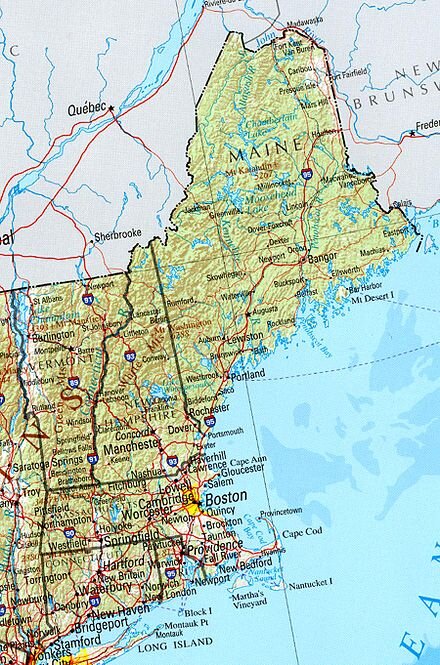
From The New England Council (newenglandcouncil.com):
“As our region and our nation continue to grapple with the COVID-19 pandemic, The New England Council is using our blog as a platform to highlight some of the incredible work our members have undertaken to respond to the outbreak. Each day, we’ll post a round-up of updates on some of the initiatives underway among Council members throughout the region. We are also sharing these updates via our social media, and encourage our members to share with us any information on their efforts so that we can be sure to include them in these daily round-ups.
“You can also check our COVID-19 Virtual Events Calendar for information on upcoming COVID-19 related programming – including Congressional town halls and webinars presented by NEC members.
“Here is a roundup:
Medical Response
* Southern New Hampshire University Opens State’s First Hospital Overflow Space– A gym at Southern New Hampshire University’s campus in Manchester, NH, became the first “clinical flex area” in the state, holding as many as 250 beds as hospitalizations due to COVID-19 increase. The gym will be used by Catholic Medical Center and other area hospitals to accommodate patients who have improved or are not facing complications as a result of infection. The Union Leader has more.
Dartmouth-Hitchcock Develops COVID-19 Test – Dartmouth-Hitchcock has developed and prepared for use its own test to screen for COVID-19 that can produce results in as few as six hours. At present, the team at Dartmouth-Hitchcock can run about 100 tests per day; the number is expected to increase to over 1,000 by next week. Read more in the Union Leader.
Economic/Business Continuity Response
National Fire Protection Association Issues Reminder on Building Safety – As businesses around the world shutter to mitigate the spread of COVID-19, the National Fire Protection Association (NFPA) has issued new guidance to officials on the importance of building and fire safety regardless of occupancy. The NFPA stresses that essential safety measures should not be ignored as to avoid adding to the existing strain on emergency services. NFPA also included a list of recommendations to ensure safety even as buildings empty. Read the guidance here.
General Electric Partners with Ford, 3M to Produce Protective Equipment for Healthcare Workers – General Electric (GE) is collaborating with Ford and 3M to speed up production of face masks, face shields, and other personal protective equipment (PPE) for workers directly working in fields affected by the novel coronavirus. In addition to this commitment to new PPE, General Electric has partnered with Ventech to increase production of ventilators. Investors
Community Response
Blue Cross Blue Shield of Massachusetts Commits Funds, Resources to Massachusetts Resiliency and Nonprofit Organizations –Blue Cross Blue Shield of Massachusetts (Blue Cross) has committed to aiding its community through $300,000 in donations to local non-profits and charities. . Ranging from donations to the Boston Resiliency Fund to online giving platforms for Pine Street Inn, the resources from Blue Cross will be deployed across Massachusetts to provide relief efforts to those in need. Read the press release here.
AT&T Supports First Responders and Crisis Response – FirstNet, AT&T’s network designed specifically for emergency management and first responder personnel, has utilized its systems to optimize networks, support quarantine zones, and strengthen public safety’s command of connectivity as they communicate vital information. Read more.
“Stay tuned for more updates each day, and follow us on Twitter for more frequent updates on how Council members are contributing to the response to this global health crisis.’’
The latest New England campus architecture
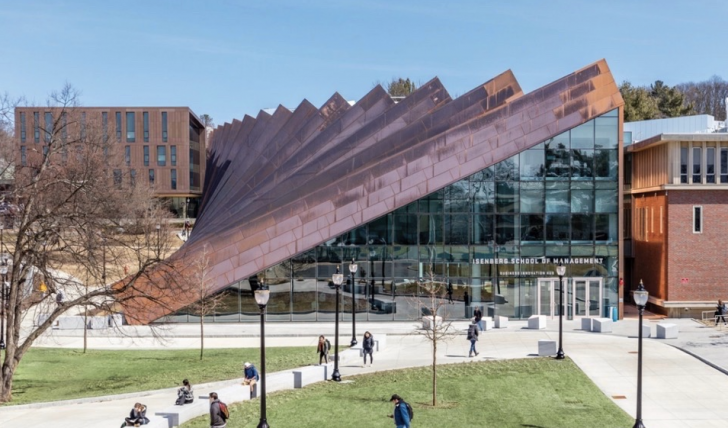
Business Innovation Hub at UMass, Amherst; new Design Building to the left.
Photo by Bjarke Ingels Group
Architectural critic and historian Willliam Morgan has written an exciting column, with splendid photos, in GoLocal24.com about some new campus architecture in New England. It’s a very nice tour d’horizon.
To read Mr. Morgan’s piece, please hit this link.

M. Gabriela Torres/Claire Buck/Cary Gouldin: At Wheaton College, making the sudden leap from in-person teaching to virtual

Panorama of Wheaton College’s campus, in the small town of Norton, south of Boston
From The New England Journal of Higher Education, a service of The New England Board of Higher Education (nebhe.org)
As our computer screens filled with tiny squares of faces of students and faculty alike, we watched them fidget with their chairs and screens and heard their voices ring in our earphones … Social distancing measures took hold at Wheaton College, in Norton, Mass., forcing the same screen encounters that are now spreading across higher education nationwide.
In the wake of the effort to control the rapid spread of COVID-19, the conversations we have been having with students and faculty are not as different as you might imagine. Both groups described new contexts in which they would be learning: now sharing confined spaces at home with others, unable to have all the answers they needed to understand the future of their work, working through the differences among themselves and the others who now inhabited their unexpectedly virtual classes.
The virtual technologies for connection have included many tools that are now ubiquitous in higher education such as Google Meet and Zoom, a doubling down on course-management system use (in our case, Moodle), shared documents and worksheets, as well as immediate connection tools such as slack and project management tools like Trello.
But perhaps most importantly, this transition has enabled us to see continuity in three key issues that Wheaton’s Center for Collaborative Teaching and Learning (CCTL) has been addressing since it launched a year ago: inclusion and diversity, the educator as learner, and the strategic importance of centers for teaching and learning in the educational mission of colleges and universities.
When students were surveyed about their access to technology, their ability to focus on school projects in their relocated settings and changes in their autonomy to manage their schedule, the inequalities were stark. While some students had stable connections and multiple devices, others were only able to access phones and had no privacy. Similarly, as we got a sense of faculty familiarity with technology and how the changes compelled by social distancing affected child and elder care, it became clear that the move to remote teaching and learning was fraught with inequities.
Differences in access arising from a wide variety of inequalities are always present in higher education, and the transition to our work in the cloud only clarified these. Our work in a close-knit liberal arts college with a social justice bent moved us to pay attention to inclusion. The CCTL was already mandated in its mission to focus on inclusion. To this end, we regularly work with the educators in our college to maximize the access for all learners in classrooms and co-educational spaces such as peer advising and residential life leadership trainings. We work based on the idea that to enable inclusive teaching, we begin by viewing ourselves as learners.
In the past two weeks, we have lost our ability to ignore how much we need to learn about technology and the changing world, but most importantly, to learn about one another. Reframing educators as learners central to our mission was no longer a difficult sell. In the transition to remote teaching, learning to sustain connections with our students is critical as we manage the need for physical distance. A college like ours that has for the past 186 years prided itself as being a community where relationships between faculty and students are fostered and valued is remaking itself anew driven by the need to sustain our connections—albeit, now at a distance. To honor our legacy, our work in teaching and learning is focused on the intentional creation of connection and community. Today, in the midst of physical distancing measures that have been misnamed as “social distance,” and the isolation of lockdowns, this heritage is more important than ever.
A humanized virtual experience
Strategically, our problem became less about learning the tools to make us virtual and more about creating courses where students and faculty alike have the possibility of being successful through a rapidly morphing global crisis. In other words, our problem was how to create a more humanized virtual educational experience that enables our students and us to withstand the unknowns that are to come.
To provide a sustainable and humanized educational experience, the work of the CCTL is grounded on our values: We view our students as full persons, we prioritize our relationships and collaboration with each other, and sustain our commitment to thoughtful and impactful teaching.
In practice, this has meant that, in less than a week, we consulted individually with 25 percent of our faculty with more consultations scheduled in the weeks ahead. We have also facilitated a network of colleagues willing to support their peers with learning new technologies—relationships that we hope will yield as much community as they do technological capacity. Our approach is based on the understanding that proficiency in software tools is not the same as knowing how to use tools to further pedagogical goals. Next week, we begin communities of practice where we can discuss pedagogical strategies as they emerge. Pedagogical practices will require sharing, problem solving and iterative revision as we transition to remote teaching that communities of practice enable. Before COVID-19, Wheaton College did not offer any online courses with regularity. Supporting educators as fully social persons at a time of physical distance, we believe will yield fruit in the student experience.
Though the strategic work of our CTL has moved quickly constructing offerings curated tools, a menu of pedagogical strategies in the span of a week, and one-on-one support, our pre-existing toolkit focused on inclusion, collaboration and connection has been invaluable to our rapid take off.
We have worked to assuage what one college termed “the pressure of feeling that you have to go at it alone.” This work has involved colleagues at all stages of online-readiness. We work with colleagues who have decades of excellence in teaching but who are now just learning to turn on the camera on their computers, as well as with colleagues who are ambitiously trying to recreate classroom discussions through novel use of collaborative mapping tools such as Mural. In both cases, the work we do together revolves around core values: how to teach effectively and compassionately, and keeping the varied student experience that each approach will yield at the center of our concern.
The value of a pedagogy focus offered to colleges and universities by centers for teaching and learning has, in our experience, provided a sense of calm and clarity. Instead of fearing new technologies, our one-to-one approach to a pedagogy-centered transition gave faculty members we heard from the agency they had originally thought they had lost in moving to the cloud. Enabling colleagues to repurpose their expertise as teachers, albeit in a different venue, empowered one colleague to now feel that she can “continue to find the right balance for my students.” Finding balance can sometimes be a challenge, one that she realized she is familiar with in a face-to-face class. In both settings, online and traditional, we balance tools to best support our students’ learning.
M. Gabriela Torres, Claire Buck and Cary Gouldin are co-directors of the Center for Collaborative Teaching and Learning at Wheaton College.
'New leaves for the benediction'

Hosta Bressingham Blue, a Hosta cultivar
“Seeing, in April, hostas unfurl like arias,
and tulips, white cups inscribed with licks of flame,
gaze feverish, grown almost to my waist,
and the oak raise new leaves for benediction,
I mourn for what does not come back.’’
— From ‘‘Celebration,’’ by Grace Schulman
Growing old chestnuts

Bill Bryson repeats the cliche about New England farms. Some stretches are flat, fertile and have few rocks, such as the Pioneer Valley, along the Connecticut River, above. And the weather is more severe in the Midwest than in New England.
“If you were going to be farmer, you could hardly choose a worse place than New England. (Well, the middle of Lake Erie maybe, but you know what I mean.) The soil is rocky, the terrain steep, and the weather so bad that people take actual pride in it.’’
-- From Bill Bryson’s humorous book A Walk in the Woods (1998) about hiking the Appalachian Trail
About the way MBTA stations look now
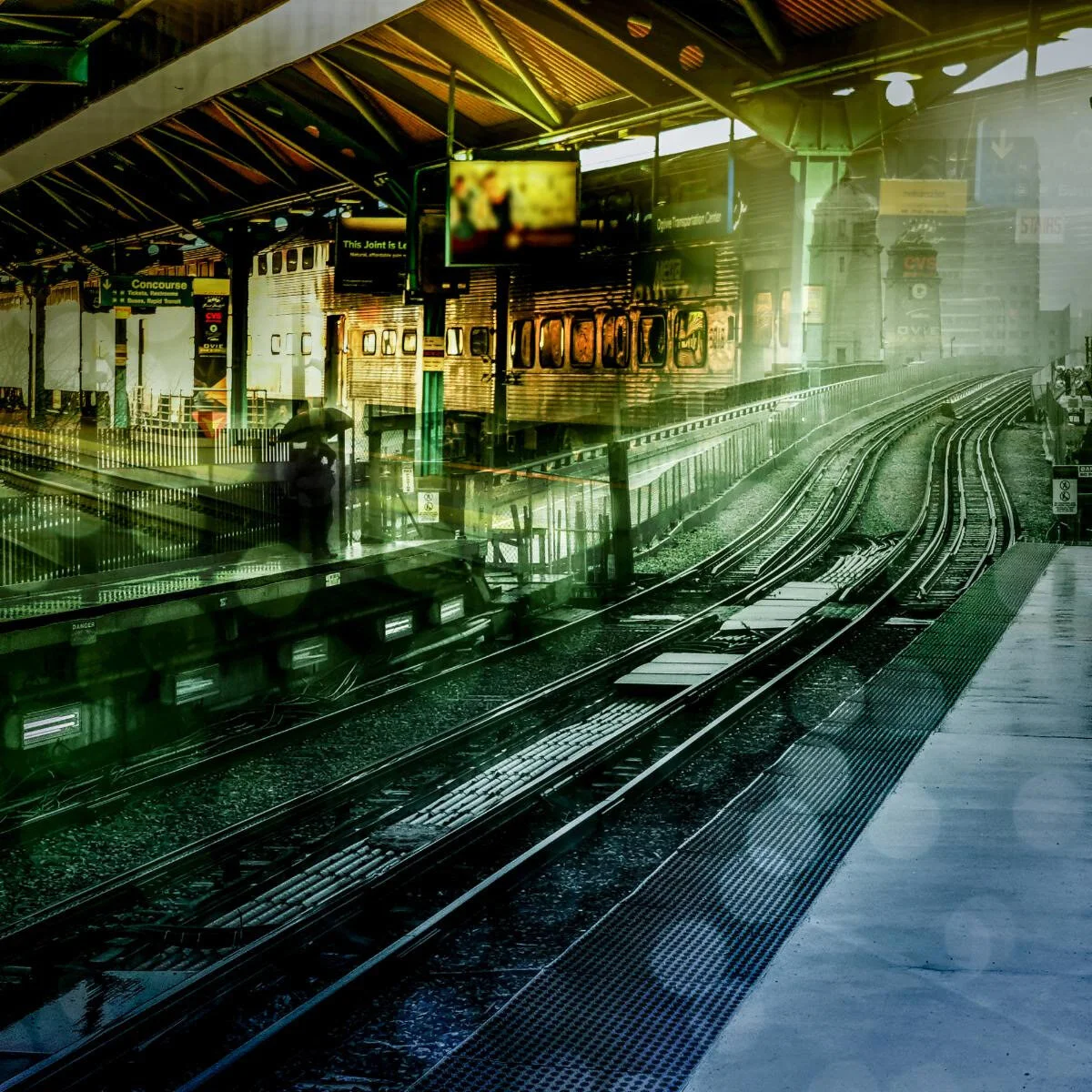
“Interlude’’ (composite photograph on aluminum), by Steven Bennett, at Galatea Fine Art, Boston. The gallery will be closed through April 29 because of the pandemic.

Jill Richardson: Stay at home and stay angry

Via OtherWords.org
Social distancing is hard, and it’s not fun.
I don’t question that we are doing what is necessary. Until better testing, treatment, and prevention are available, it is. But quarantining us in our homes separates us at a time when we need connection.
And you know what? It’s okay to feel angry about that. It’s important to remember we’re doing this in part because the people at the top screwed up.
Trump fired the pandemic response team two years ago, even though Obama’s people warned them that we needed to work on preparedness for exactly this in 2016. Unsurprisingly, a government simulation exercise just last year found we were not prepared for a pandemic.
Later on, even after the disease had come to the U.S., infectious disease experts in Washington State had to fight the federal government for the right to test for the coronavirus.
It gets worse.
Now we know that North Carolina Sen. Richard Burr was taking the warnings seriously weeks before any real action was taken — and all he did was sell off a bunch of stock, while telling the public everything was fine. Meanwhile, Trump didn’t want a lot of testing, because he wanted to keep the number of confirmed cases low to aid his re-election.
The people we trusted to keep us safe didn’t do that. Now the entire economy’s turned upside down, people are dying, and we’re all cooped up at home.
It sucks. We should be angry.
I’m young enough that I probably don’t have to worry much about the likelihood of a serious case if I get sick. But I’m staying home, because I don’t want to get it and accidentally spread it to someone more vulnerable than myself.
I’m also aware of the sacrifice that many of us are making for the sake of others. Some lost their jobs, while others put themselves at risk working outside the home because they can’t afford not to — or, in the case of health care workers, because they’re badly needed.
Entire families are cooped up together and I’ve heard jokes that divorce lawyers will get plenty of business after this. Parents are posting memes about how much they appreciate teachers now that they are stuck with their kids all day. I’m entirely alone besides a cat.
I worry about the college seniors graduating this year and trying to find a job. What about people prone to anxiety and depression? How much will this exacerbate domestic abuse? What about people in jails, prisons, and detention centers?
Our society is deeply unequal. So while the virus itself doesn’t discriminate, this bigger crisis will hit people unequally. Some don’t have health insurance. Some are undocumented. Some are more susceptible to dying from the disease.
The people in power who screwed up are wealthy enough that they can work from home, maintain their income, and access affordable health care. Others will feel the full brunt of this, not them. It’s not fair.
I’m supportive of doing all we can to prevent the virus’s spread and to protect vulnerable people, but anger at the people whose incompetence put us in this position is justified. We deserve better.
Jill Richardson, a sociologist, is an OtherWords.org columnist.
(Mostly) nonelectronic home entertainment

Victorian pump organ
From Robert Whitcomb’s “Digital Diary,’’ in GoLocal24.com
‘One of my innumerable regrets is not learning how to play a musical instrument. When I was growing up, many kids in our town took outside lessons, or were taught by their parents, to play the piano. Both my parents played, though my father was better. With a little more practice, perhaps in a crunch he could have played in a cocktail lounge. We had a borrowed baby grand for years. My father also had a ukulele, which he’d play on the weekends, often with a cigarette in his mouth. It’s a strong memory I have of that kindly but rather cryptic man.
We even had an old pump organ, bought in a sort of junk and antiques store in Marshfield, Mass., called Reed’s Ark. My father would play songs from the turn of the 20th Century on it.
Marshfield’s Wickedlocal noted of Reed’s Ark, a dusty firetrap in which you entered the 19th Century:
“Some 50 years ago, there was a fascinating store near the middle of Marshfield. You could prowl among antique junk or books or tools and occasionally find something worth actually buying.’’
Playing musical instruments and reading were primary middle-class home attractions, and, unlike with much of our electronic life now, active, not passive activities. (My God, we got a lot of magazines! Maybe eight a week, all jammed with ads.)
I’m thinking of this these days because we’re all spending a lot more time at home, whether we want to or not.
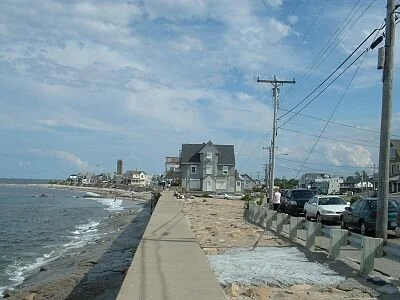
In the Brant Rock section of Marshfield.
The town is named for its many salt marshes. There are three rivers: the North, along the town’s northern border, the South, which branches off at the mouth of the North River and heads south through the town, and the Green Harbor River, which flows just west of Brant Rock and Green Harbor Point at the south end of town.
Marshfield is named for the many salt marshes which border the salt and brackish borders of the town. There are three rivers: the North (along the northern border of the town), South (which branches at the mouth of the North River and heads south through the town) and the Green Harbor River (which flows just west of Brant Rock and Green Harbor Point at the south of town).

Chris Powell: Yes, anti-COVID-19 campaign could do more damage than the virus

Plague doctor in 1656
As Connecticut Gov. Ned Lamont and other governors curtail more commerce, industry, employment and ordinary life in the name of containing the new virus sweeping the world, people are starting to question whether the precautions are going too far. Is containing the virus worth crippling the economy, bankrupting so many businesses, throwing millions out of work and pushing their households into insolvency, destroying retirement savings, and exploding the national debt?
The official response is making the virus sound like the plague that killed half of Europe in the 1300s. But many people sense that it may not be that bad, may be no worse than ordinary influenza, which kills tens of thousands of people in the United States every year without setting off any alarm. Indeed, ordinary flu in Connecticut this year already had hospitalized more than 1,300 people and killed more than 60 before the new virus infected its first hundred people and killed anyone in the state. The state Department of Public Health noticed the flu's toll but only in a statistical sense. Except for the families of those who died, nobody else seems to have noticed, though "social distancing" a few months ago might have prevented many of those deaths.
Few notice how traffic fatalities add up either -- more than 35,000 every year in the United States, even as most could be prevented by "lockdowns" like those now being imposed because of the new virus.
Despite all the hysteria, financial loss and inconvenience generated by closing orders, most people diagnosed with the new virus find it anticlimactic. That is, for most a positive test for the virus prompts no hospitalization or special medical intervention at all. Instead most people are just told to go home, get well soon, and call back if they don't, just as they would be told upon diagnosis for the flu or a bad cold. Sure enough, they go home and most get well soon.
Doctors and governors warn that for every diagnosis with the new virus there may be a hundred undiagnosed people carrying it but not showing symptoms, and even the asymptomatic may infect others. Or the asymptomatic may not infect anyone and may never suffer any symptoms at all. Indeed, last week a Nobel prize-winning Israeli scientist speculated that half the population may be naturally immune to the new virus, and Chinese research has suggested that blood type may correlate with susceptibility. So while the mere number of infections may sound scary, it is not so important.
What may be most important is the percentage of people infected who die or require hospitalization. As of March 22 in Connecticut, the fatality rate from infections with the new virus was just 2½ percent and the hospitalization rate about 18 percent. Frail elderly people were most at risk of dying in Connecticut and most deaths elsewhere from the disease have involved either the frail elderly or those with already weakened immune systems. Hard-hit Italy reported last week that 99 percent of its fatalities were from these high-risk groups.
Of course, if infection spreads widely enough, even an 18 percent hospitalization rate would overwhelm the medical system. So widespread testing and quarantining as necessary, as South Korea has done, might be the best response. A government more devoted to public health generally than to fantastically expensive and stupid imperial wars might help too. But since, as flu and traffic fatalities show, life is always a judgment call about risk, and since it is known who is most vulnerable to the new virus, why not just isolate them rather than everyone else? For as the self-inflicted economic damage becomes catastrophic, the cure may be worse than the disease.
Chris Powell is a columnist for the Journal Inquirer, vin Manchester, Conn.
N.E. Council asks for federal aid for colleges and universities
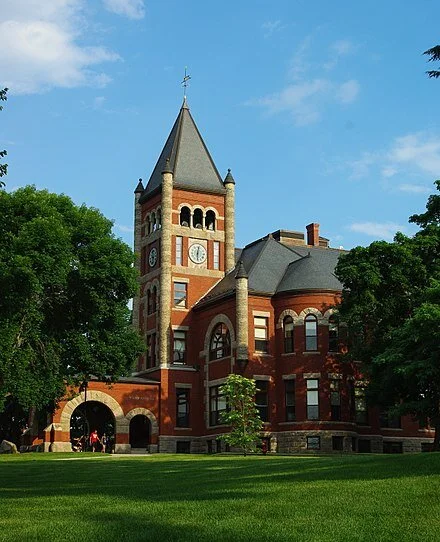
Thompson Hall, at the University of New Hampshire, in Durham
From The New England Council (newenglandcouncil.com)
BOSTON
“The New England Council is calling on Congress to provide relief to colleges and universities in light of the COVID-19 public health crisis that has forced them to close their campuses to students. In a letter sent to each New England senator, as well as the Senate leadership, on March 20, the council stressed the important role our region’s higher-education institutions play in the region’s economy, and outlined the devastating impact the crisis is having on the schools themselves, as well as on their students directly.
The letter outlined several areas where the federal government could provide support to colleges and universities, including:
Financial support for students and institutions
Housing and meal assistance
Technology for remote learning
Title IV Relief’’