
Chris Powell: Kick religion excuse out of the childhood-vaccination question
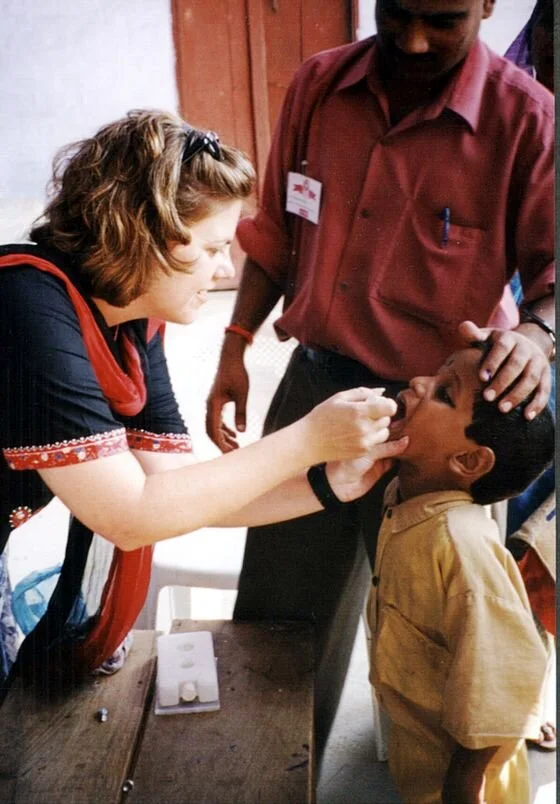
Child being given oral polio vaccine
Despite the nastiness the other day at the marathon hearing on the bill in the Connecticut General Assembly to repeal the religious exemption for vaccination of schoolchildren, there are fair and even compelling questions about vaccination policy. Unfortunately the discussion gets detoured by silly denials that the government has the right to regulate not only health standards in public schools but also parental treatment of children.
Too much is claimed for “freedom of religion’’. It does not authorize spreading communicable diseases any more than it authorizes disciplining children by lashing or caging them or denying them medical care. Crucial as parents are, they are not the ultimate guardians of children -- the government is. Indeed, Connecticut is full of child neglect and abuse, which are the primary causes of the state's social problems, including educational failure, mental and physical illness, and crime. That's why the state maintains its Department of Children and Families and its medical insurance for poor kids.
"My child, my choice," a slogan of the anti-vaxxers, is nonsense.
If government's ultimate responsibility for children can't be acknowledged, the vaccination argument is over. But if government's responsibility could be acknowledged and if people could lower their voices, there might be a lot to discuss.
For example, while vaccines are said to be perfectly safe, they're not. They are overwhelmingly safe but a few people do suffer bad reactions to them, even disabling reactions, as did a young East Hartford, Conn., woman whose story was reported at length by the Journal Inquirer's Will Healey last October. That's why federal law exempts vaccine manufacturers from liability for bad reactions to properly made vaccines and why a federal agency compensates people injured by them.
So it is fair to ask how much vaccination is worth how much risk.
Since there are many vaccines, some for diseases that are more severe than others, the entire vaccination schedule for schoolchildren is fairly questioned too. Are all the vaccines on the schedule essential for "community immunity" and individual health, or are some merely desirable? The General Assembly seems to have accepted the state Public Health Department's recommendations without any review of its own. Experts should be heard but questioned too.
Additionally, some vaccines are more effective than others, a variable that affects their desirability and necessity -- another issue that could be worth legislative review.
But issues involving the safety and efficacy of vaccines are not really religious in nature and thus don't properly fall under the legal exemption being claimed for them. That claim is a convenient pretext for those who consider vaccines too dangerous.
The use of fetal tissue from elective abortions in the invention of some vaccines is also cited for a religious objection. But this objection argues that knowledge obtained through a bad act should be disqualified for use in a good purpose. The Catholic Church, a leading religious opponent of abortion, approves vaccination despite the distant connection.
After all, the world would lose much if inventions were allowed or banned according to the character or purposes of inventors.
If the opposition to the vaccination of schoolchildren dropped the religious pretext and concentrated on safety and necessity, it would deserve a more sympathetic audience.
Chris Powell is a columnist for the Journal Inquirer, in Manchester, Conn.
-END-
Nimbys vs. needed new housing
Maybe not that much union these days
From Robert Whitcomb’s “Digital Diary,’’ in GoLocal24.com
Newton, Mass., has provided a strong example of why housing costs are so high: It’s tough for developers who propose projects that would increase local density in a nation where many still see the ideal as the one-family house.
While 60 percent of voters in Newton (an affluent and very liberal town) supported, in a referendum, the Northland Newton project, which will provide 800 units of housing, 140 of which will be classified as “affordable,’’ the road to the development has had a lot of potholes. Although the City Council also supported it, the developers had to go through an 18-month permitting process, and make many concessions, among other torments. Such delays drive away many developers and thus prevent the construction of new housing that could moderate housing costs by increasing supply, especially in places like Greater Boston and the San Francisco region, where these costs are astronomical.
In a Boston Globe essay, Katherine Levine Einstein and Maxwell B. Palmer, assistant professors of political science at Boston University, wrote:
“Across Massachusetts towns, from 2015 to 2017, only 14 percent of those speaking at permitting meetings about multifamily housing were in favor of the development. As the Northland referendum shows, true public support is much higher.’’ Opponents tend to be older and richer.
“Indeed, recent election results underscore an unfortunate liberal inconsistency on housing policy. On Super Tuesday, Democratic primary voters flocked to the polls to endorse candidates with robust plans to improve and increase the nation’s housing stock. The platforms of former vice president Joe Biden and Senators Bernie Sanders and Elizabeth Warren all advocate for housing policies that would make it easier to build more housing. In Newton, more than 90 percent of voters cast a vote in the Democratic primary. A sizable portion of those voters opposed those same principles when it came to their own backyards: At least 35 percent of Newton Democratic voters opposed the Northland project.’’
“Sanders’s positions illustrate this disjoint between national and local housing preferences. Sanders’s housing plan outlines regulatory and funding measures that would increase the supply of national housing for residents at a variety of income levels. Yet, he opposes local housing developments and endorses politicians in local races who fight critical zoning reform.’’
It’s a variant of the old “don’t tax me, don’t thee, tax the man behind the tree.’’
Forget rent control, which worsens housing costs by discouraging construction and expansion of multifamily owner-occupied or rental property. The way to control housing costs is to build more housing.
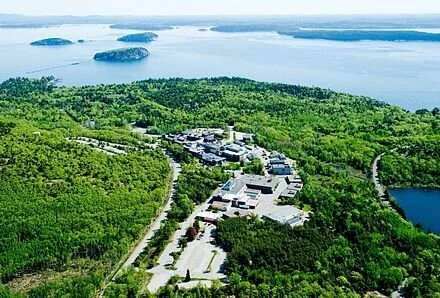
Jackson Lab partnering to build employee housing on expensive tourist mecca Mount Desert Island
From The New England Council (newenglandcouncil.com):
“The Jackson Laboratory, the world-famed biomedical research institution, is partnering with Developers Collaborative, based in Portland, Maine, to build employee apartments near the laboratory’s Bar Harbor, Maine, facility, on Mount Desert Island.
“Because of the close proximity to Acadia National Park, tourism in the area has driven real estate prices up, making affordable housing for employees scarce on the island. The first phase of development, called the Schooner Head Housing Project, will consist of five buildings with 44 apartments, and is expected to be complete by the summer of 2021. The finished project will include 100 additional units. Developers Collaborative has overseen other housing projects in the Hancock County area, including a 50-unit complex completed in 2018 and fully occupied by mid-2019.
“I go to every new employee coffee [gathering] in Bar Harbor,” says Catherine Longley, Jackson Lab’s Chief Operation Officer, “And the No. 1 issue the employees say is, ‘I can’t find a place to live.’”
Llewellyn King: Now that the pandemic has shut us in what will we do with our time?
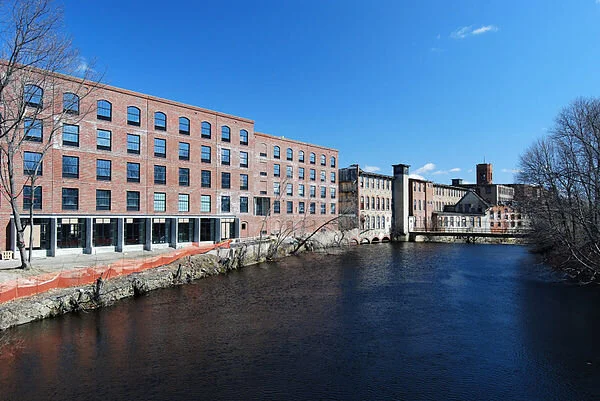
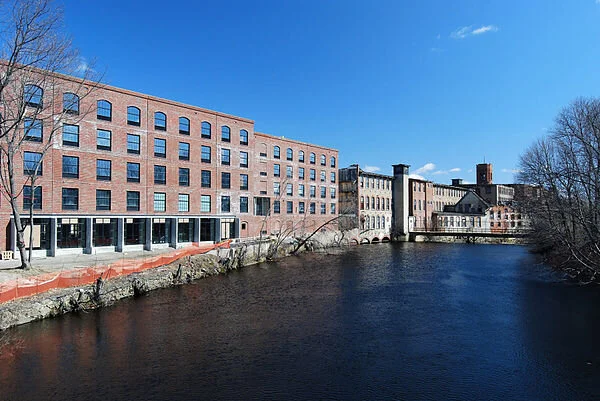
Centreville Mill, on the Pawtuxet River, in West Warwick, R.I. Llewellyn King lives in a converted mill on the same river in West Warwick.
For more than a decade, I’ve been writing about the isolated, the lonely, the abandoned: Those who feel that the world has no place for them. Now all of us will know something of their isolation and, in the case of people who live on their own, loneliness.
Those I’ve been writing about are the luckless hundreds of thousands in the United States – millions around world -- who suffer from Chronic Fatigue Syndrome, now known as Myalgic Encephalomyelitis (ME). They are sentenced to live separately by their illness and its debilitating fatigue. They are a kind of living dead. Now I have a glimmer, no more to be sure, of how it must be every day for these sufferers
What will it be like for the rest of us in two weeks when we’ve exhausted the pleasures of home life and yearn to see our friends, go to a restaurant, a play or a concert? Just to live normally?
I’ve always tried to console myself with what I call “adventure therapy.” Like most pop psychology it isn’t very profound, but it does help. Will it help now? I have no idea.
Anyway, the therapy is that you try to find the adventure in any situation you’re in, which can include some hairy ones, like facing surgery. (Who will you meet? What’s all the equipment? How will they perform the surgery? Do the doctors like doctoring? What kind of life do the nurses live?)
In my own home -- mercifully which I share with my ever-cheerful wife -- I wonder where the adventure lies in this crisis.
First, I know I won’t write the Great American Novel or any work of fiction. I won’t write my life story, as I’m constantly advised to do. My ego is robust, but I’m not sure it’s robust enough for that.
Oscar Wilde worried about “third-rate litterateurs” picking over the lives of dead writers. Of course, it seems to me some lives are lived with an eye to posterity.
I’m always amazed at people who in the middle of great trauma or great events have time to sit down and write what they think and feel. I’m glad they do, but I don’t think we’re entitled. The world loves Shakespeare’s works and knows little about him.
We know too much about people of minor achievement whom we call celebrities. We watch them and their petty lives with the attention of a fakir watching his snake. Yeah, I’m no better. I want to know what’s to become of Meghan and Harry, where will Lindsay Lohan settle and, only somewhat less trivially, what are the late-night comedians doing with their spare time now that we learn that they need huge staffs to be funny?
I do think that we need a record of our times, often informed by memoirs. Unfortunately, and inexcusably, when the Trump era is behind us, we’ll know too little about what went on in the inner councils of the White House. President Trump has shown near contempt for the Presidential Records Act, inspired by the fall of President Richard Nixon. Trump writes little and destroys much that it written, we’re told.
One has always dreamed of a time when there was enough leisure to read, maybe plow through Tolstoy, give Proust another go, or try to understand Chinese literature. But I think that won’t happen. I’ll read the same kind of books I always read: biographies and crime stories. Most likely I’ll read a bit more, curse television a bit more, and squander my time watching and reading the news about COVID-19.
As I struggle to avoid the temptations of the refrigerator and that reproving word processor (It whispers, “Write a book.”), I’ll wonder about those who existed before this pandemic in a long, dark tunnel of isolation without hope of light at the end: Those who can hardly hope to break out one day into what Winston Churchill called the “sunlit uplands.”
Llewellyn King is executive producer and host of White House Chronicle, on PBS. His email is llewellynking1@gmail.com. He’s based in Rhode Island and Washington, D.C.
It's safe: Fewer than 10 screens together

“Opecean Wounds & We Are Still Alive Like Hydrogen and Oxygen” (multi-channel video), by Kasem Kydd, at the Thompson Gallery of the Cambridge School of Weston, Weston, Mass., March 23-June 11, virus permitting.

And we loved those little umbrellas!

Ah, those prices in the ‘50s! Bob Lee’s Islander was a very popular Boston restaurant back then.
Using eminent domain to drive folks from flood zones

Watch Hill Harbor, on the coast of southern Rhode Island, which is very vulnerable to flooding, especially in hurricanes
— Photo by Stephg82988
Adapted from Robert Whitcomb’s “Digital Diary,’’ in GoLocal24.com
The New York Times reports that the Trump administration is commendably letting the Army Corps of Engineers tell localities to use the threat of eminent domain to get people to move away from increasingly flood-prone areas or else lose federal flood-mitigation money.
This is part of a shift toward the Corps paying local governments to buy and demolish homes at clear risk of flooding.
The Corps, with the agreement of the administration, realizes that building sea walls, levees and other protections, such as ordering that houses be put on stilts– for which the Corps pays two-thirds of the cost and localities and states the rest – is very expensive and often have to be repeated. Better for safety, and the taxpayers, that people be forced from these places, which are increasingly inappropriate for buildings because of global warming’s effects. But people naturally love being along the water, so such threats get much pushback.
The barrier beaches of South County would be places where we could expect the Corps to get tough like this. Whatever Trump’s manmade-global-warming denials, it’s heartening that his administration is taking this unpopular but needed approach.
But what will they do about such urban flood-prone places as Boston’s Seaport District?
To read The Times’s story, please hit this link.

New England Council update on the response to COVID-19

Beth Israel Deaconess, in Boston, is teaming up with Johnson & Johnson to work on COVID-19 vaccine.
From The New England Council (newenglandcouncil.com):
BOSTON
“As our region and our nation continue to grapple with the Coronavirus Disease (COVID-19) pandemic, The New England Council has been heartened to learn of the incredible steps that so many of our member businesses and organizations are taking to address the crisis and its impact in our communities. If there is one thing that we have learned over the years, it is that in times of crisis, the New England business community never fails to step up to the plate and to draw on its knowledge and expertise to develop innovative strategies and solutions to address the problem at hand.
“And so, we will be using our blog as a platform to highlight some of the incredible work our members have undertaken to respond to the COVID-19 outbreak. Each day, we’ll post a round-up of updates on some of the initiatives underway among Council members throughout the region. We’ll also be sharing these updates via our social media, and encourage our members to share with us any information on their efforts so that we can be sure to include them in these daily round-ups.
“Check back here each day for new updates and you can follow us on Twitter @NECouncil, where we will post a link to the daily update, as well as individual stories.
“Here is the March 16, 2020 roundup:
Beth Israel Teams up with Johnson & Johnson on Novel Coronavirus Vaccine; Provides Glossary of Terms – Beth Israel Deaconess Medical Center (BIDMC) is partnering with the drug-producing branch of Johnson & Johnson (Janssen Pharmaceutical) to develop a potential vaccine for the new coronavirus. Using a common cold virus that delivers coronavirus antigens to stimulate an immune response, BIDMC hopes it will be successful in developing a vaccine for the virus. Read more in the Boston Globe.Also from BIDMC, Doctor Kathryn Stephenson of the Center for Virology and Vaccine Research provided a comprehensive glossary of terms used in describing the novel coronavirus.
Jackson Laboratory Becomes Crucial in Developing Treatments – Jackson Laboratory (JAX) in Bar Harbor, ME, has been “overwhelmed with requests” for mice that produce the protein that the virus is using to enter cells. Originally bred for SARS research, the mice born at Jackson Labs are in high demand, with around 50 labs from around the world ordering more than 3,000 mice for use in their efforts to combat COVID-19. Nature has more.
South Shore Health Provides Information on Exposure to the Virus – South Shore Health has been updating its patients on how those who have been exposed to the virus are notified and how they’re working to keep their patients and community healthy.
Boston Hospitals Prepare for COVID-19 – Boston hospitals—from Beth Israel to Massachusetts General to Tufts Medical Center—are training workers, readying rooms, monitoring supplies in preparation for the continued spread of the novel coronavirus. “We really have been preparing for an outbreak like this for the last five years or more,” one doctor said.
Sanofi Also Ramps up to Begin Testing Drug to Treat COVID-19 – Sanofi, along with Regeneron Pharmaceuticals, is testing whether or not drugs used for patients with immune disorders already on the market—such as their own arthritis drug—can be effective in treating the novel coronavirus.
Northeastern Lab Uses Location as a Case Study in American Response – At Northeastern University’s Emergent Epidemics Lab, researchers are using Boston’s unfortunate status as one of the major sites of novel coronavirus infection to begin early predictions on the scope of the virus’ spread and aid hospitals in estimating what supplies they’ll need as infections spread
“Have your own news you’d like us to highlight? Please email eheisig@newenglandcouncil.com with information.’’
It only looks contagious

Work by Kay Hartung — encaustic monotype, encaustic, pastel on panel on wood panel. This artist lives in Acton, Mass.
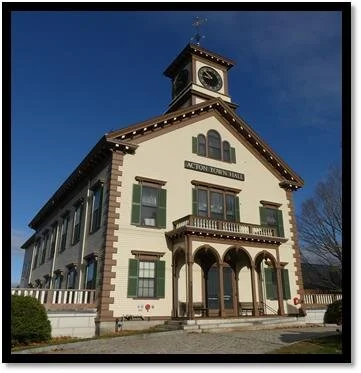
Acton Town Hall
Among the attractions of Acton, an affluent town northwest of Boston: The Discovery Museums, which are two separate science museums on the same site. The Children's Discovery Museum has exhibits for younger children, while the Science Discovery Museum focuses on older ones. The location is guarded by Bessie, the large dinosaur statue and museum mascot, in the front grounds.
Iron Work Farm: Settlement of South Acton; ‘'Iron Work Farm in Acton, Inc.'‘ is a non-profit, historical corporation that operates two historic houses: Jones Tavern and Faulkner House. Each is open to the public on the last Sunday of the month from May to October. The facilities are also open as part of the local Patriots' Day holiday observance each April (probably cancelled this year).
Hosmer House: This Revolutionary War-era home, owned and maintained by the Acton Historical Society, is typically open to the public on Patriots' Day, on Sept. 27 ('‘Crown Resistance Day’'), as well as on May 27 and June 24, from 2 to 4.

Children’s Discovery Museum, in Acton
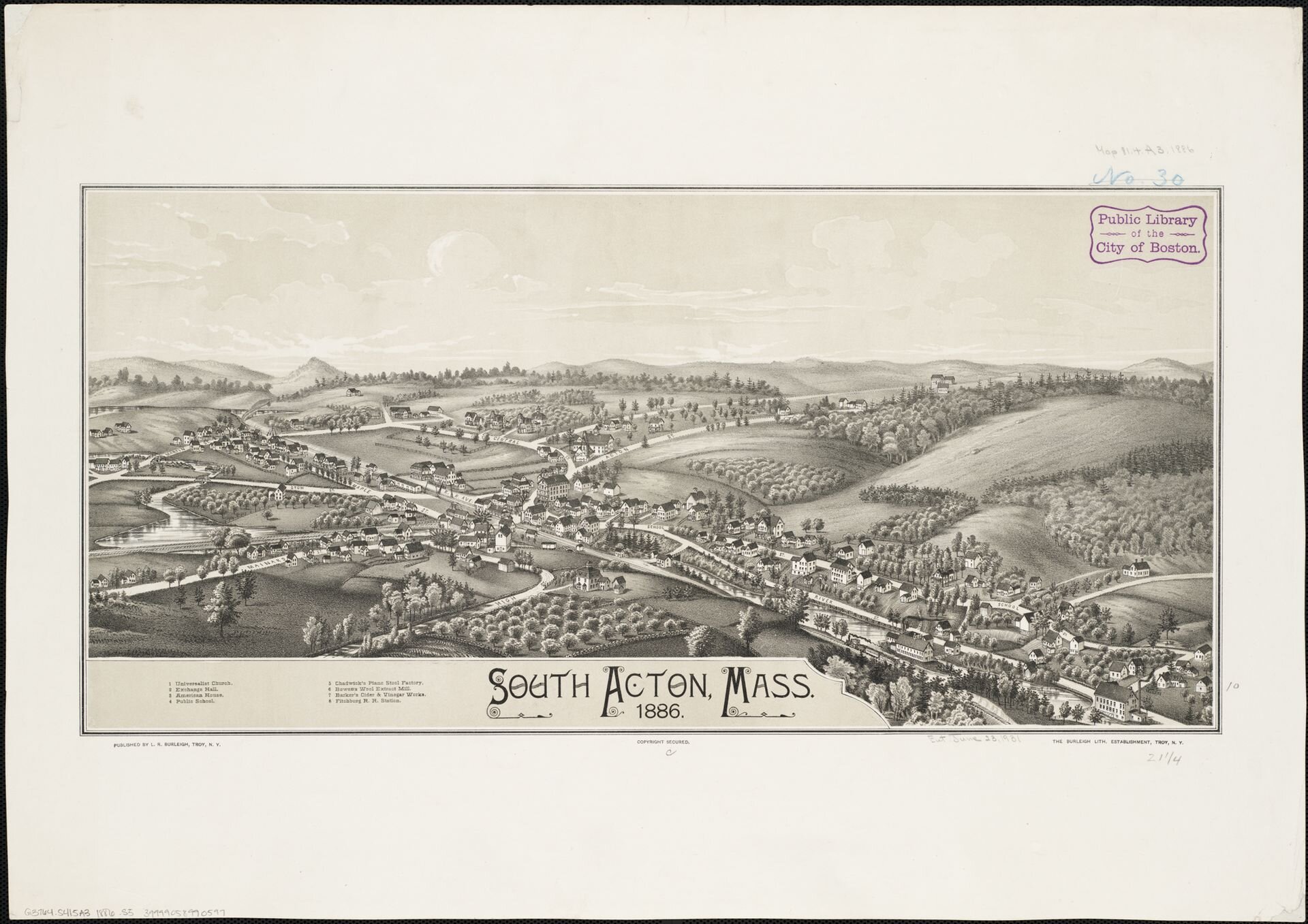
— Map by J.R. Burleigh
Green hell

“There are bogs and bogs but none to equal a Kennebec {Maine} spruce swamp. Whoever has walked in one will find the hot asphalt of Tophet {Hell} a pleasant lawn.’’
— From “Kennebec,’’ by Robert P. Tristram Coffin (1937)
'Grubs all day'

”….he screeches, this is my no-good, barren,
motel-infested spit of sand—on which
he neither toils or spins, but grubs all day
on webbed feet and clever back-hinged knees,
now skittishly sidestepping a gusty
piece of plastic blown against his legs,
hopping to get it off, now shaking it
once or twice to make sure it's worthless
before he turns his face to the wind,
letting it smooth those fine fractious feathers.’
— From “Gulls in the Wind,’’ by Betsy Sholl, a former Maine poet laureate
”…he screeches, this is my no-good, barren,
motel-infested spit of sand—on which
he neither toils or spins, but grubs all day
on webbed feet and clever back-hinged knees,
now skittishly sidestepping a gusty
piece of plastic blown against his legs,
hopping to get it off, now shaking it
once or twice to make sure it's worthless
before he turns his face to the wind,
letting it smooth those fine fractious feathers.’’
—From “Gulls in Wind, ‘‘ by Betsy Sholl
Can only be worn inside

“Intervisible,’’ installation (detail), (hand-dyed cotton batting, watercolor paper, thread, string), by Caroline Rufo, at Bromfield Gallery, Boston, through March 29.
Michael Zimmerman: Dying to protect Trump's ego
From OtherWords.org
My granddaughter’s school had planned a trip to Thailand.
Two things worried me. First, that she or her classmates might be exposed to or catch the coronavirus. Second, that if they did, President Trump would try his best to keep them from returning to the United States.
In my view, if any of them became sick, the first priority should be getting them home where they can have access to the best medical care. In Trump’s view, the first priority is to make things look good for him, no matter what happens to the people he’s stranded.
Therefore he fought having Americans who were stuck on the Grand Princess cruise ship off Japan return home to the United States. His concern? How the number of infected Americans would make him look. “I like the numbers being where they are,” he candidly (and shamelessly) explained.
National health professionals believe that COVID-19 is a serious threat. Every state that’s had an outbreak takes it seriously. So do cities, schools, event organizers, airlines, shipping companies, bus and train operators, museums, and businesses of all kinds — and not to mention the stock market.
Everyday life is changing across the country as millions of Americans adjust to the possible presence of the virus. But facing harsh realities isn’t in Trump’s skill set. “It’s going to all work out,” he assures us instead. “We have it under control. It’s going to be just fine.”
Indeed, he has gone so far as to call the coronavirus threat a “hoax.”
In Trump’s view, it’s all part of a great conspiracy to make him look bad. That real people might die if we fail to face the problem squarely — because no scientist believes COVID-19 is “under control” — doesn’t seem to count for much with him.
The idea that real scientists should guide our response to the pandemic is unacceptable to Trump, because who knows what they might say? Instead, he has made Vice President Mike Pence, a man with little experience in public health, the head of the coronavirus task force.
And consistent with Trump’s main priority — making sure that he looks good no matter what is really happening — U.S. government health officials and scientists have been barred from making public statements about the disease unless okayed by Pence’s office. This is called “controlling coronavirus messaging.”
In one recent instance of “controlled messaging,” the White House overruled a CDC recommendation that the elderly not fly on commercial airlines because of the virus. That would sound too much like there’s a crisis, and Trump is running for re-election on the assertion that everything is wonderful in our country, and it’s all thanks to him.\
Better that more seniors be put at risk of Covid-19 than that the virus be seen as a grave, unfolding danger.
Of course, this is not the only — and probably not the most serious example — of the lethal dangers flowing from Trump’s rejection of inconvenient science. That distinction rests with the other catastrophe Trump calls a “hoax,” climate change. But in either crisis, the worst is yet to come.
Perhaps my granddaughter’s school will cancel their trip. But Covid-19 is already here at home, and it’s not about to disappear just because Trump pretends everything will be “just fine.” She and all of us remain at risk wherever we may be.
Trump says that by April, “when it gets a little warmer,” the virus “miraculously goes away.” Waiting for a miracle when faced with a pandemic is not leadership — it’s insanity. But as long as Trump is in charge, praying for miracles might be the best we can hope for.
Mitchell Zimmerman is an attorney and author of Mississippi Reckoning, a thriller and historical novel about the death penalty and the civil rights movement.

The lack of ornamentation, or other breaks along the surface, on Boston’s 200 Clarendon Street (aka Hancock Tower) skyscraper here, the city’s tallest, is said to worsen the local wind-tunnel effect.
From Robert Whitcomb’s “Digital Diary,’’ in GoLocal24.com
What a nice feeling it is after a windy cold morning to feel the sun on your face after the wind drops off.
Boston is the windiest major city in the United States, partly because it’s on a stretch of ocean frequented by intense storms. The blasts sure hit you in the wind-tunnel effect in the mix of skyscrapers and much older buildings downtown, and in the growing but perhaps eventually imperiled-by-sea-level-rise Seaport District. Very off-putting. The wind-tunnel effect is serious enough that building codes and designs may have to be adjusted in downtown Boston. Architects and city planners are working on the problem. I love many skyscrapers but…
Call him provincial, but...

The Somerset Club, on Beacon Street, Boston, remains a center of Boston Brahmin life.
“Boston is a good place to live in, taken all in all. Probably the best place in this neurotic world, with the possible exception of London, although I am not even sure about this. At any rate, it is the only place I care to live in.
— From The Late George Apley, by John P. Marquand (1937). This novel in the form of a memoir is a satire of Boston Brahmin (WASP upper class) life in the first part of the 20th Century.

David Warsh: Why conservative Caldwell denounces 1964's Civil Rights Act

President Lyndon B. Johnson signs the Civil Rights Act of 1964. Among the guests behind him is Martin Luther King Jr.
— Photo by Cecil Stoughton
Presidential campaigns are built on webs of contingency. If Joe Biden’s candidacy had failed at some stage, Amy Kobuchar or Pete Buttigieg might have run the table against Bernie Sanders. Or Sanders might have run the table against one of them. Or Mike Bloomberg might have gained the Democratic Party’s nomination.
But U.S. Rep. James Clyburn’s speech endorsing Joe Biden before the South Carolina primary established a two-person race practically overnight and vaulted Biden into the lead. “I know Joe,” Clyburn said. “We know Joe. Most important, Joe knows us.” To better understand how 11 words could have been so powerful, I turned to The Age of Entitlement: America since the Sixties, by Christopher Caldwell (Simon and Schuster, 2020.)
Caldwell, a contributing editor to the Claremont Review of Books and an occasional opinion columnist for The New York Times, is one of a handful of authors I follow hoping to understand what has happened to the Republican Party. Myriad streams of opinion influence Republican position-taking, of course. I am interested mainly in those that can be described as revisionist history.
They don’t come much more revisionist than Caldwell. Globalization and technology have little do with the polarization of the present day, according to him. The vile mood stems instead from the passage of the Civil Rights Act of 1964.
What was intended to be “a transitional measure leading to a stable, racially mixed society,” metastasized into the template of a bill of rights for women, immigrants, LGBTs, the handicapped, the aged, and environmentalists, Caldwell says. Courts and bureaucracies have replaced democracy. The ideology of civil rights, relabeled human rights, hardened into a body of legislation and case law that today amounts to a second constitution, according to Caldwell, at odds with the version of 1788.
Those who lost most from the new rights-based identity politics were white men, he writes, because the new laws helped everybody but them. “They fell asleep thinking of themselves as the people who had built this country, and woke up to find themselves occupying the bottom rung of an official hierarchy of races.”
In this telling, the U.S. Constitution’s Fourteenth Amendment, with its guarantees of equal protection and due process under the law, was a bridge too far, passed in the wake of Abraham Lincoln’s assassination. The Thirteenth Amendment, abolishing slavery, would have been enough. The Supreme Court’s decision in Brown vs. Board of Education, in 1954, was a mistake, in that it “put certain public bodies under surveillance for racism.” Rosa Parks was not a weary seamstress looking for a place to sit down on a bus; she was trained agitator, an intellectual leader of the Montgomery, Ala., chapter of the NAACP, a soldier in what Harry Kalven Jr., a long-ago University of Chicago professor of law, described as “an almost military assault on the Constitution.” Robert Bork was “a towering figure in American legal philosophy” for expressing his misgivings about the constitutionality of civil rights legislation. And 1992 presidential candidate Pat Buchanan was a seer, for having run the first campaign against globalization. (For a fuller account of The Age of Entitlement, see Johnathan Rauch’s incisive review.)
Today, Caldwell concludes:
Democrats, loyal to the 1964 constitution, [cannot] acknowledge, (or even see) that they owed their ascendancy to a rollback of the basic constitutional freedoms [of association] Americans cherished most. Republicans, loyal to the-1964 constitution, [cannot] acknowledge (or even see) that the only way back to the free country their ideals was through the repeal of the civil rights laws.
It’s a coherent position, vigorously argued. Its resentment of elites of all sorts, real and imagined, is certainly the tacit position of President Trump. Surely it is a distillation of views opposition to which inspired Rep. Clyburn’s endorsement of Senaor Biden.
David Warsh, an economic historian and veteran columnist, is proprietor of Somerville-based economicprincipals.com, where this column first appeared.
Slicing out a season

There “used’’ to be a winter in New England,
This time of the year.
Pretty soon people will be complaining,
About getting any snow at all.
When Summer and Fall,
Seem to rush to connect with Spring.
— From “There Used to Be a Winter in New England,’’ by Lawrence S. Pertillar
Wards off viruses if you put over your face
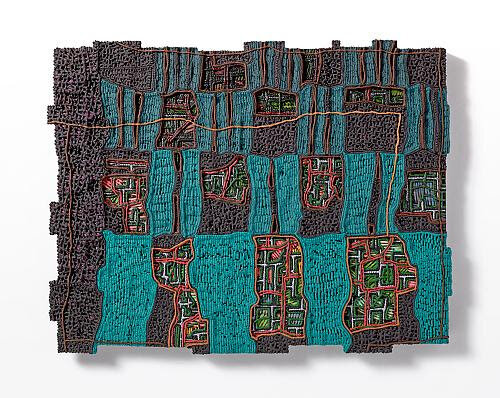
“Up, Over and Around” (acrylic medium, acrylic pigment, wood burning), by Erica Licea-Kane, in her show “Half Spaces,’’ at Kingston Gallery, Boston, through March 29.

Todd McLeish: Pandemics threaten amphibians, too

Green frogs
— Photo by Todd McLeish
From ecoRI News (ecori.org)
As frogs and salamanders emerge from winter hibernation and migrate to their breeding ponds, herpetologists throughout the region are paying close attention to the growing number of diseases threatening amphibians in the Northeast.
The most worrisome is an infectious fungal disease called chytridiomycosis, or chytrid, which has caused major die-offs of frog populations in the tropics and elsewhere and is blamed for numerous frog extinctions in Latin America.
According to University of Rhode Island herpetologist Nancy Karraker, chytrid grows on the skin of frogs, and when it’s found on their drink patch — a site on their belly where they absorb water into their bodies — the fungus makes it impossible for the frogs to regulate how much water they absorb, causing them to become desiccated and die.
“Chytrid has been found in multiple species of frogs in the Northeast, but we haven’t seen massive die-offs here,” said Karraker, a University of Rhode Island associate professor of natural resources science who has studied frogs around the world. “But that doesn’t mean that die-offs haven’t occurred, just that they haven’t been at the scale we’ve seen in South America. So we can’t say it’s not a problem here, and it certainly could become a serious problem.”
Some scientists believe that the disease originated in African clawed frogs, which were shipped around the world for use in human-pregnancy tests from the 1940s to the ’60s. Many of the frogs escaped from captivity and could easily have spread the disease to native frogs in many places. Other scientists believe the fungus was ubiquitous around the globe and that, initially, the only frogs that died were those with compromised immune systems.
“I don’t know where the greatest weight of support is for those ideas today,” Karraker said. “But maybe our frogs aren’t as susceptible because they’re not facing the kinds of stressors that may have impacted frogs in other places. Or it could be something to do with their natural history. We just don’t know, and that’s partly why I’m worried.”
In 2010, Antioch University New England graduate student Mandy Gaudreau, working in collaboration with Lou Perrotti, conservation director at Roger Williams Park Zoo, in Providence, swabbed 47 frogs and toads at 11 sites in Rhode Island and detected chytrid in 21 percent of the samples.
“What struck me about her results is that most of the ponds where she found chytrid were manmade ponds — farm ponds, retention ponds,” Perrotti said. “Why was it in those and not in the natural wetlands?”
He also wonders whether climate has an effect.=
“Frogs in Panama got wiped out. Costa Rica got wiped out. It seems like it’s worst at that certain temperature range,” Perrotti said. “Maybe our winters knock it back and keep it from becoming prevalent. Tropical frogs don’t have the seasonality that we have here.”
Chytrid, however, isn’t the only disease threatening amphibians and reptiles in the Northeast.
Scott Buchanan, a herpetologist at the Rhode Island Department of Environmental Management’s Division of Fish and Wildlife, is particularly concerned about ranavirus, an infectious disease that has caused die-offs of reptiles, amphibians, and fish in 20 states, including box turtles in the Northeast.
In frogs and toads, it especially affects the tadpole stage, causing skin hemorrhages, erratic swimming, buoyancy problems, and the inability to right themselves in the water.
“We know it’s here, it’s in our environment, but if and when it becomes active is hard to predict,” he said.
Buchanan is also tracking a fungal disease in snakes, a herpes virus in turtles, and chytrid in salamanders.
“Salamander chytrid has had devastating effects on salamanders in Europe over the last five to ten years, and it’s considered an eventuality that it will be brought into the U.S. one way or another and run through our salamanders,” he said. “The eastern U.S. is a global hot spot of salamander diversity, and a lot of research is going on now to determine how virulent it is, are particular species susceptible, and what are their natural defenses.”
“What’s notable for us,” Karraker said, “is that it’s usually really hard to change the rules for importing animals for the pet trade, but in 2016, legislation was passed that prevented the import of 201 species of salamanders to prevent the introduction of the disease into the U.S. That’s a landmark bit of legislation to protect our native species.”
Buchanan said it’s up to biologists and others working in area wetlands to follow strict protocols to prevent the spread of the diseases, such as regularly disinfecting their boots, equipment, and tools as they move from site to site around the region.
“We have to be vigilant about potentially transferring diseases from one wetland to another,” he said. “Because we move from one wetland to the next throughout the day and throughout the season, there’s real potential that we could move it around with us, and we often go to the most important sites and monitor the most sensitive species.
“It’s something we take really seriously. We know how quickly things can change here, we know disease pandemics can happen quickly, move around quickly, and cause devastating impacts on populations. And if it doesn’t wipe them out completely, it can take decades for them to recover.”
Todd McLeish, an ecoRI News writer, also runs a wildlife blog.

Tadpoles