
Greentown and Vineyard Wind partner for offshore-windpower innovation

From The New England Council (newenglandcouncil.com):
“Greentown Labs has partnered with Vineyard Wind to develop an accelerator program for offshore wind innovation.
“Based in Somerville, Mass., Greentown Labs is a clean-tech incubator, and oversaw its first clean-energy program launch in 2015. Through this partnership, Greentown will support startups working to develop offshore wind and marine-mammal technology. An oft-overlooked facet of offshore wind, marine data-monitoring technology—which provides important information on environmental conditions necessary for offshore wind projects—is integrated into the partnership. The partnership will also provide ‘resources, training, and expert mentorship’ to startups. Greentown’s previous launch programs focused on areas such as solar, hydrogen and digital energy.
“‘We’re thrilled to add Vineyard Wind to our network of launch partners, and we know offshore wind presents a tremendous opportunity to bring more clean energy to homes and businesses across the Northeast region and beyond,’ said Greentown Labs CEO Emily Reichert. ‘We’re confident that by working closely with Vineyard Wind, we’ll be able to help deploy solutions to advance the industry and protect the environment.’

Don Pesci: 2 pro-abortion-rights senators seem to see no limits

Even the universe has borders and limits, both perhaps undiscoverable; so we are told by science. The big bang theory has not only a beginning but an end.
Charles Schumer, of New York, and Richard Blumenthal, of Connecticut, are two U.S. senators who fervently believe that abortion should be borderless, not hemmed in by reasonable regulations, such as those that they believe should govern the exercise of the Second Amendment to the U.S. Constitution. Laws are limits to human behavior that, we deduce from bank robberies, rapes and murders, may be overridden in some ungovernable people. The law is a red line saying thus far you may go but no further -- without risking some painful sanction.
Blumenthal knows, perhaps better than most, that one way to set limits to the sometimes audacious behavior of businesses is through the establishment of regulations. As attorney general of Connecticut for more than 20 years, Blumenthal earned his political spurs by applying a legal birch switch to the backsides of Connecticut businesses and others.
When Blumenthal vacated his sinecure to make a successful run for the U.S. Senate, he left behind more than 200 unsettled cases quickly dismissed by the next attorney general, George Jepsen. Blumenthal’s victims, hung out to dry on hooks in the attorney general’s offices for many years, were now free to resume pursuing the American dream if – big “if” – they had not been driven into penury by some of Blumenthal’s punishing tactics, the most successful of which was to encumber a business’s assets until the business compliantly acceded to terms dictated by Blumenthal.
Blumenthal is well known in Connecticut for his unyielding opposition to abortion regulation and two Trump appointed justices of the U.S. Supreme Court, Neil Gorsuch and Brett Kavanaugh. But Blumenthal, the “Senator from Planned Parenthood” has now been trumped by Schumer. Hectoring a crowd of abortion advocates on the steps of the U.S Supreme Court, and sounding a bit like Huey Long at his boisterous worst, Schumer said this: “I want to tell you, Gorsuch; I want to tell you, Kavanaugh. You have released the whirlwind, and you will pay the price. You won’t know what hit you if you go forward with these awful decisions.”
Schumer’s harangue was intended as a threat; it was directed as a threat to two specific Supreme Court Justices; and it was received as a threat by Chief Justice John G. Roberts Jr., who responded with great temperance in a written statement, “Justices know that criticism comes with the territory, but threatening statements of this sort from the highest levels of government are not only inappropriate, they are dangerous. All Members of the Court will continue to do their job, without fear or favor, from whatever quarter.”
Schumer later blamed his threat to the court justices on Brooklyn, according to the New York Post, – “Sen. Schumer cites his NYC roots in non-apology over Supreme Court squabble: 'We speak in strong language’”.
Speaking from the floor of the U.S. Senate, Schumer offered, “I should not have used the words I used yesterday. They didn’t come out the way I intended them to. I’m from Brooklyn. We speak in strong language. I shouldn’t have used the words I did, but in no way was I making a threat. I never — never — would do such a thing.”
Schumer accused Republicans of “manufacturing outrage” over his own threats to Justices Gorsuch and Kavanaugh. That fish won’t fly.
In an opinion piece in the New York Post, George Conway III, a lawyer and adviser to the Lincoln Project, an anti-Trump super PAC, wrote “Schumer’s words, however, were unmistakably intimidating: ‘I want to tell you, Gorsuch.’ ‘I want to tell you, Kavanaugh.’ ‘You (emphasis original) will pay the price.’ ‘You won’t know what hit you if …’ The emphasis is mine, but the meaning is clear: If you don’t do as we say, something bad will happen to you….”
There is some talk of censure in the air. Would Blumenthal support the censure of a fellow senator who has threatened two Supreme Court justices -- not of course with body harm, but with political repercussions -- if the high court failed to decide a pending case related to abortion in a way that did not satisfy abortion-rights extremists?If Blumenthal has been asked the question, his answer to it has not appeared anywhere in Connecticut’s media. Perhaps the media feels it might be indelicate to put such a question to Blumenthal who so far has resisted every effort, however reasonable, to regulate Big Abortion. Blumenthal spearheaded the effort to deny the Supreme Court placement of both Gorsuch and Kavanaugh. Schumer’s threatening remarks, it may be argued, simply carries the Blumenthal effort a logical step forward.
Don Pesci is a Vernon, Conn.-based columnist.
Save our dairy farms

From Robert Whitcomb’s “Digital Diary,’’ in GoLocal24.com
Over the last half century, New England has lost most of its dairy farms, most of them small. Most rural towns had at least one such farm. The rural/suburban town I lived in as a boy had several, including one across the road from our house. We used to go over there and try to irritate the bull. Now there are only about 125 dairy farms in the state, though much of Massachusetts remains rural west of Worcester.
It’s tough to compete with huge agribusiness dairy operations that are outside New England; they can usually produce milk and other dairy products more cheaply. But besides the aesthetic/psychological rewards to us of their beautiful open green spaces, New England’s dairy farms offer some local security by ensuring a supply of nearby food as a buffer against transportation and other supply-chain problems of far-away agribusinesses in the Midwest and elsewhere. (The Coronavirus reminds us of supply-chain dangers.)
And I’m not just talking about dairy. Many New England farms also sell fruits, vegetables, maple syrup and so on, and some are also growing solar energy – all that full-sunlight land for panels.
Let’s help keep as many of these farms open as possible, first off by buying more of their stuff.
'The Long March' of March

“It’s March, the longest month of the year….The Long March. The Death March. The March of Time, the March of Doom, the maddening thump-thump-thump of days in 4/4 time. No wonder we go a little crazy, or a lot, at this time of year. Our March entertainments have a desperate, hysterical character.’’
--Tim Clark, in “March Madness, in the March 2002 Yankee magazine.
Sword play

“Rock After Excalibur (cocktail swords and rock), by Matt Garrison, in the show “A Horse Walks Into a Bar,’’ at the Hampden Gallery at the University of Massachusetts at Amherst through April 12
The gallery says the show displays the work of “artists who continue to push the boundaries of fine art toward humor and wit.’’
Peter Certo: So capitalism naturally goes with democracy? Do some research

Medicare is a socialistic idea.
From OtherWords.org
For decades, Republicans have painted anyone left of Barry Goldwater as a “socialist.” Why? Because for a generation raised on the Cold War, “socialist” just seemed like a damaging label.
And, probably, it was.
You can tell, because many liberal-leaning figures internalized that fear. When Donald Trump vowed that “America will never be a socialist country,” for instance, no less than Sen. Elizabeth Warren agreed.
But while older Americans retain some antipathy toward the word, folks raised in the age of “late capitalism” don’t. In Gallup polls, more millennial and Gen-Z respondents say they view “socialism” positively with each passing year, while their opinion of “capitalism” tumbles ever downward.
As a result, it’s not all that surprising that self-described democratic socialist Senator Bernie Sanders tops Trump in most head to head polls.
Still, old propaganda dies hard. What else could explain the panicky musings of Chris Matthews, the liberal-ish former MSNBC host, who recently wondered aloud if a Sanders victory would mean “executions in Central Park”?
Nevermind that Sanders is a longtime opponent of all executions, as any news host could surely look up. The real issue is a prejudice, particularly among Americans reared on fears of the Soviet Union and Maoist China, that “socialism” implies dictatorship, while “capitalism” presumes democracy.
Their Cold War education serves them poorly.
Yes, it’s easy to name calamitous dictatorships, living and deceased, that proclaim socialist or communist commitments. But it’s just as easy to point to Europe, where democratic socialist parties and their descendants have been mainstream players in democratic politics for a century or longer.
The health-care, welfare, and tax systems built by those parties have created societies with far greater equality, higher social mobility, and better health outcomes (at lower cost) than we enjoy here. These systems aren’t perfect, but to a significant degree they’re more democratic than our own.
But we don’t have to look abroad (or to Vermont) for a rich social democratic history.
Milwaukee Mayor Daniel Hoan — one of several socialists to govern the city — served for 24 years, and built the country’s first public busing and housing programs. And ruby-red North Dakota is, even now, the only state in the country with a state-owned bank, thanks to a socialist-led government in the early 20th Century. Today, dozens of elected socialists hold office at the state or municipal levels.
While plenty of socialists embraced democracy, plenty of capitalists turned to dictatorship.
In the name of fighting socialism during the Cold War, the U.S. trained and supported members of right-wing death squads in El Salvador, genocidal army units in Guatemala, and a Chilean military regime that disappeared or tortured tens of thousands of people while enacting “pro-market reforms.”
Only last year, the U.S. government was cheering a military coup against an elected socialist government in Bolivia. And in 2018, The Wall Street Journal praised far-right Brazilian leader Jair Bolsonaro, an apologist for the country’s old military regime, for his deregulation of business.
Even here at home, our capitalist “freedoms” have co-existed peacefully with racial apartheid, the world’s largest prison system, and the mass internment of immigrants and their children.
Sanders has been clear his socialist tradition comes from the social democratic systems common in countries like Denmark, with their provisions for universal health care and free college.
Should Matthews next wonder aloud if candidates who oppose Medicare for All or free college also support death squads, genocide, mass incarceration, or internment camps? If that sounds unfair, then so should the lazy fear mongering we get about “socialism.”
The sobering truth is that all political systems are capable of either great violence or social uplift. That’s why we need resilient social movements, whatever system we use — and why we’re poorly served by propaganda from any corner..
Peter Certo is the editorial manager of the Institute for Policy Studies and editor of OtherWords.org.
'Time learns its impotence'

You got lucky as well: where else, save perhaps in a snapshot perhaps,
will you forever remain free of wrinkles, lithe, caustic, vivid?
Having bumped into memory, time learns its impotence.
Ebb tide; l smoke in the darkness and inhale rank seaweed.’’
From “Brise Marine,’’ by Joseph Brodsky (1940-96), Russian-American poet

Shefali Luthra: How insurers sank plan for 'public option' in Connecticut

Headquarters of the huge insurance company Cigna in Bloomfield, Conn
Health-care costs were rising. People couldn’t afford coverage. So, in Connecticut, state lawmakers took action.
Their solution was to attempt to create a public health insurance option, managed by the state, which would ostensibly serve as a low-cost alternative for people who couldn’t afford private plans.
Immediately, an aggressive industry mobilized to kill the idea. Despite months of lobbying, debate and organizing, the proposal was dead on arrival.
“That bill was met with a steam train of opposition,” recalled state Rep. Sean Scanlon, who chairs the legislature’s insurance and real estate committee.
Through a string of presidential debates, the idea of a public option was championed by moderate Democrats ― such as former South Bend, Ind., Mayor Pete Buttigieg, Minnesota Sen. Amy Klobuchar and former Vice President Joe Biden ― as an alternative to a single-payer “Medicare for All” model. Those center-left candidates again touted the idea during the Feb. 25 Democratic debate in South Carolina, with Buttigieg arguing such an approach would deliver universal care without the political baggage. (Buttigieg and Klobuchar have since ended their presidential bids.)
The public option has a common-sense appeal for many Americans who list health-care costs as a top political concern: If the market doesn’t offer patients an affordable health care insurance they like, why not give them the option to buy into a government-run health plan?
But the stunning 2019 defeat of a plan to implement such a policy in Connecticut — a solidly blue, or liberal-leaning, state — shows how difficult it may be to enact even “moderate” solutions that threaten some of America’s most powerful and lucrative industries. The health-insurance industry’s fear: If the average American could weigh a public option — Medicare or Medicaid or some amalgam of the two — against commercial plans on the market, they might find the latter wanting.
That fear has long blocked political action, said Colleen Grogan, a professor at the University of Chicago’s School of Social Service Administration, because “insurance companies are at the table” when health care reform legislation gets proposed.
To be sure, the state calculus is different from what a federal one would be. In the statehouse, a single industry can have an outsize influence and legislators are more skittish about job loss. In Connecticut, that was an especially potent force. Cigna and Aetna are among the state’s top 10 employers.
“They became aware of the bill, and they moved immediately to kill it,” said Frances Padilla, who heads the Universal Health Care Foundation of Connecticut and worked to generate support for the public option.
And those strategies have been replicated at the national level as a national coalition of health industry players ramps up lobbying against Democratic proposals. Beyond insurance, health-care systems and hospitals have joined in mobilizing against both public option and single-payer proposals, for fear a government-backed plan would pay far less than the rates of commercial insurance.
Many states are exploring implementing a public option, and once one is successful, others may well follow, opening the door to a federal program.
“State action is always a precursor for federal action,” said Trish Riley, the executive director of the National Academy for State Health Policy. “There’s a long history of that.”
Virginia state delegate Ibraheem Samirah introduced a new public option bill this session. In Colorado, Gov. Jared Polis is spearheading an effort. And Washington state is the furthest along — it approved a public option last year, and the state-offered plan will be available next year.
But in 2019, Connecticut’s legislators were stuck between two diametrically opposed constituencies, both distinctly local.
Health costs had skyrocketed. Across the state, Scanlon said, small-business owners worried that the high price of insurance was squeezing their margins. A state-provided health plan, the logic went, would be highly regulated and offer lower premiums and stable benefits, providing a viable, affordable alternative to businesses and individuals. (It could also pressure private insurance to offer cheaper plans.)
A coalition of state legislators came together around a proposal: Let small businesses and individuals buy into the state employee health benefit plan. Insurers’ response was swift.
Lobbyists from the insurance industry swarmed the Capitol, recalled Kevin Lembo, the state comptroller. “There was a lot of pressure put on the legislature and governor’s office not to do this.”
State ethics filings make it impossible to tease out how much of Aetna and Cigna’s lobbying dollars were spent on the public option legislation specifically. In the 2019-20 period, Aetna spent almost $158,000 in total lobbying: $93,000 lobbying the Statehouse, and $65,000 on the governor’s office. Cigna spent about $157,000: $84,000 went to the legislature, and $73,000 to the executive.
Anthem, another large insurance company, spent almost $147,000 lobbying during that same period — $23,545 to the governor, and $123,045 to the legislature. Padilla recalled that Anthem also made its opposition clear, though it was less vocal than the other companies. (Anthem did not respond to requests for comment.)
A coalition of insurance companies and business trade groups rolled out an online campaign, commissioning reports and promoting op-eds that argued the state proposal would devastate the local economy.
Lawmakers also received scores of similarly worded emails from Cigna and Aetna employees, voicing concern that a public option would eliminate their jobs, according to documents shared with Kaiser Health News. Cigna declined to comment on those emails, and Aetna never responded to requests for comment.
Connecticut’s first public option bill — which would let people directly buy into the publicly run state employee health plan ― flamed out.
So lawmakers put forth a compromise proposal: The state would contract with private plans to administer the government health option, allowing insurance companies to participate in the system.
The night before voting, that too fell apart. Accounts of what happened vary.
Some say Cigna threatened to pull its business out of the state if a public option were implemented. Publicly, Cigna has said it never issued such a threat but made clear that a public option would harm its bottom line. The company would not elaborate when contacted by KHN.
Now, months later, both Scanlon and Lembo said another attempt is in the works, pegged to legislation resembling last year’s compromise bill. But state lawmakers work only from February through early May, which is not a lot of time for a major bill.
Meanwhile, other states are making similar pushes, fighting their own uphill battles.
“It really depends on whether there are other countervailing pressures in the state that allow politicians to be able to go for a public option,” Grogan said.
And, nationally, if a public option appears to gain national traction, Blendon said, insurance companies “are clearly going to battle.”
They’re going to go after every Republican, every moderate Democrat, to try to say that … it’s a backdoor way to have the government take over insurance,” he said.
Still, when President Barack first proposed the idea of a public option as part of the Affordable Care Act, it was put aside as too radical. Less than a decade later, support for the idea ― every Democratic candidate backs either an optional public health plan or Medicare for All ― is stronger than it ever has been.
So strong, Grogan said, that it is hard for people to understand “the true extent” of the resistance that must be overcome to realize such a plan.
But in Connecticut, politicians say they’re up for a new battle in 2020.
“We can’t accept the status quo. … People are literally dying and going bankrupt,” Scanlon said. “A public option at the state level is the leading fight we can be taking.”
Shefali Luthra is a Kaiser Health News reporter.
Would Grandma have approved?

“Paint Me to Match My Grandma's Drapes’’ (oil and acrylic on canvas), by Mia Cross, in her joint show with Daniel Zeese, “The Outlanders,” April 1-April 26, at Fountain Street Fine Art Gallery, Boston.
Forget poems about spring here

“The people of New England are by nature patient and forbearing, but there are some things which they will not stand. Every year they kill a lot of poets for writing about ‘Beautiful Spring.’ These are generally casual visitors, who bring their notions of spring from somewhere else, and cannot, of course, know how the natives feel about spring. And so the first thing they know the opportunity to inquire how they feel has permanently gone by.’’
— Mark Twain, in a speech at a New England Society dinner on Dec. 22, 1876
But at least they can't get COVID-19

“Too Close” ( wall installation sails, welded steel), by Andy Zimmermann, in his show “Sailing to the Edge,’’ at Boston Sculptors Gallery, through March 29.
Mr. Zimmermann uses translucent materials to filter light. He also works with recycled materials, which has led him to use old weathered sails as his preferred materials. The installation in this show includes 12 sections of sails and metal sculpture, creating a maze-like space that can be reconfigured with every installation.

Kristin J. Demoranville: Feeding corn to deer can kill them

A white-tailed doe
From ecoRI News (ecori.org)
Christian Floyd, a natural-resource scientist at the University of Rhode Island, spotted an unusual white-tailed deer carcass while birding on the South County Bike Path in mid-January.
Floyd went into the woods for a closer look at the carcass. His inspection revealed that this wasn’t a hunting fatality or natural death; the deer’s stomach looked as if it had exploded. The animal’s stomach was enlarged and bursting open with partially digested corn grains. The cause of the deer’s death was familiar to Floyd, who recalled a scene from his childhood, “I knew that rumen acidosis was responsible because my favorite goat, Maria, succumbed to the same fate after devouring the chicken feed.”
Ruminants, including deer, goats, and cattle, are a group of animals named after their specialized digestive system that allows them to eat large amounts of nutrient-poor plant material such as grass and woody shrubs. In this specialized digestive system, food first enters a chamber called the rumen, which is home to the microbial community — bacteria, protozoa, and fungi — solely responsible for breaking down the large quantities of ingested fibrous plant material.
Shifting away from their normal fibrous diets can disrupt a ruminant’s microbial community and have fatal consequences, a process called rumen acidosis, which occurs when a ruminant suddenly gorges on carbohydrate-heavy meals of corn or other grain. In response to this meal, the number of carb-feasting microbes in the rumen dominate the microbial community to cope with the carbohydrate overload. These carb-feasting microbes ferment the ingested corn causing a build-up of lactic acid. The lactic acid lowers the pH of the rumen, causing an acidic environment that destroys the animal’s ability to digest and absorb nutrients.
At this stage, an animal will stop feeding because its gut is too full. However, the animal is functionally starving because of its inability to process the leftover corn present in the rumen. At the same time, the excess lactic acid leaks from the rumen into the animal’s bloodstream, damaging cells and tissues throughout the body. Muscle groups are usually too damaged to function, and an animal may be seen staggering or unable to stand.
Rumen acidosis causes the animal’s death within one or two days of its grain-heavy meal.
Dylan Ferreira, a senior wildlife biologist with the Rhode Island Department of Environmental Management’s Division of Fish and Wildlife, noted that rumen acidosis is a concern for Rhode Island’s white-tailed deer population. He said it’s one of the reasons why the state informs people not to feed or bait deer.
Feeding white-tailed deer can be detrimental to entire populations, since feeding can cause large congregations of deer that facilitate the spread of contagious diseases such as chronic wasting disease.
Feeding wildlife can be tempting because it creates seemingly special wildlife viewing opportunities. However, feeding white-tailed deer often harms these animals by disrupting their natural diet and altering their normal behavior.
Kristen J. DeMoranville is a Ph.D. candidate in the Physiological Ecology, Natural Resources Department at the University of Rhode Island.
Life sciences in New England

Bioreactors
From The New England Council (newenglandcouncil.com):
On Tuesday, April 7, 2020, The New England Council will host the sixth event it its popular “New England Innovates” series. “New England Innovates: On the Cutting Edge of Life Sciences,” will feature keynote remarks from Udit Batra, CEO of MilliporeSigma. Headquartered in Burlington, Mass., MilliporeSigma is the life sciences business of Merck KGaA, which develops and manufactures products focused on scientific discovery, biomanufacturing and testing services.
Following Dr. Batra’s remarks, a panel of NEC members representing a diverse array of life sciences businesses and organizations in the region will highlight some of the incredible innovation taking place right here in New England, and will discuss some of the key challenges as well as opportunities for continued growth in this thriving industry.
Launched in 2016, “New England Innovates” is a periodic series presented by The New England Council to promote an ongoing dialogue in the region about how we maintain our reputation as a global innovation hub. Each event focuses on a specific sector or issue affecting innovation in the region, and highlights the role that New England Council members are playing to drive innovation across various sectors of the economy. The goal of each forum is to explore challenges and opportunities for continued innovation and growth, and to examine how policy makers at the local, state, and federal level can support innovation in New England. Past programs have explored such topics as cybersecurity, FinTech, autonomous vehicles, and workforce development.
“New England Innovates: On the Cutting Edge of Life Sciences” will take place at The Hampshire House in Boston on Tuesday, April 7, 2020, from 8:00 a.m. to 10:00 a.m. For more information, contact Emily Heisig at eheisig@newenglandcouncil.com or Sean Malone at smmalone@newenglandcouncil.com.
'Spacetime' at Emerson College

“The Dancer “ (detail), by Nicole L’Huillier, in the show “Spacetime (x, y, z+ t)’’ at Emerson College’s (Boston) Media Art Gallery through March 15.
In the show she and fellow artists Katherine Mitchell DiRico, Monika Grzymala, Zsuzsanna Szegedi and Sarah Trahan use, the gallery says, “unconventional, multi-dimensional works of art to explore the dynamic relationships between objects and how ideas and concepts can travel across time, media and location. Rather than existing in ‘space’ and ‘time,’ the artwork in this exhibition resides in the entity called ‘spacetime,’ an idea demonstrated by Albert Einstein that contends that the two concepts are one and the same.’’

Part of Emerson College, in downtown Boston














Those old wavering boundaries

1794 map of York, Maine
From Robert Whitcomb’s “Digital Diary,’’ in GoLocal24.com
There’s an entertaining boundary dispute underway between Kittery and York, Maine, that reminds us how old New England is. The origins of the dispute go back to at least 1653, when Puritan invaders from Massachusetts drew a straight line to mark part of the two towns’ boundary with each other.
But, reports The Boston Globe, “property {ownership} changes and long-forgotten handshakes had incorporated wobbles and bumps into what became an accepted, meandering boundary from Brave Boat Harbor to the present-day Town of Eliot, which borders both Kittery and York.’’]
The argument commenced in 2018, when York developer Duane Jellison had bought property on Route 1 that he believed “was evenly divided between York and Kittery. His surveyor concluded, instead, that the majority of the property is in York,’’ The Globe said.\
I suspect that there are grounds for similar disputes all over New England, especially those parts settled by Europeans (and taken from the Indians) in the 17th and 18th centuries. Let the litigation spread, giving us all some fascinating history lessons
To read The Globe’s story, please hit this link.

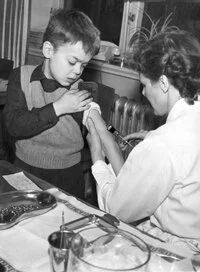
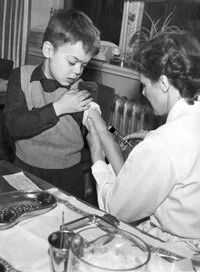
Patty Wright: Maine keeps new law that ends nonmedical exemptions for vaccinations
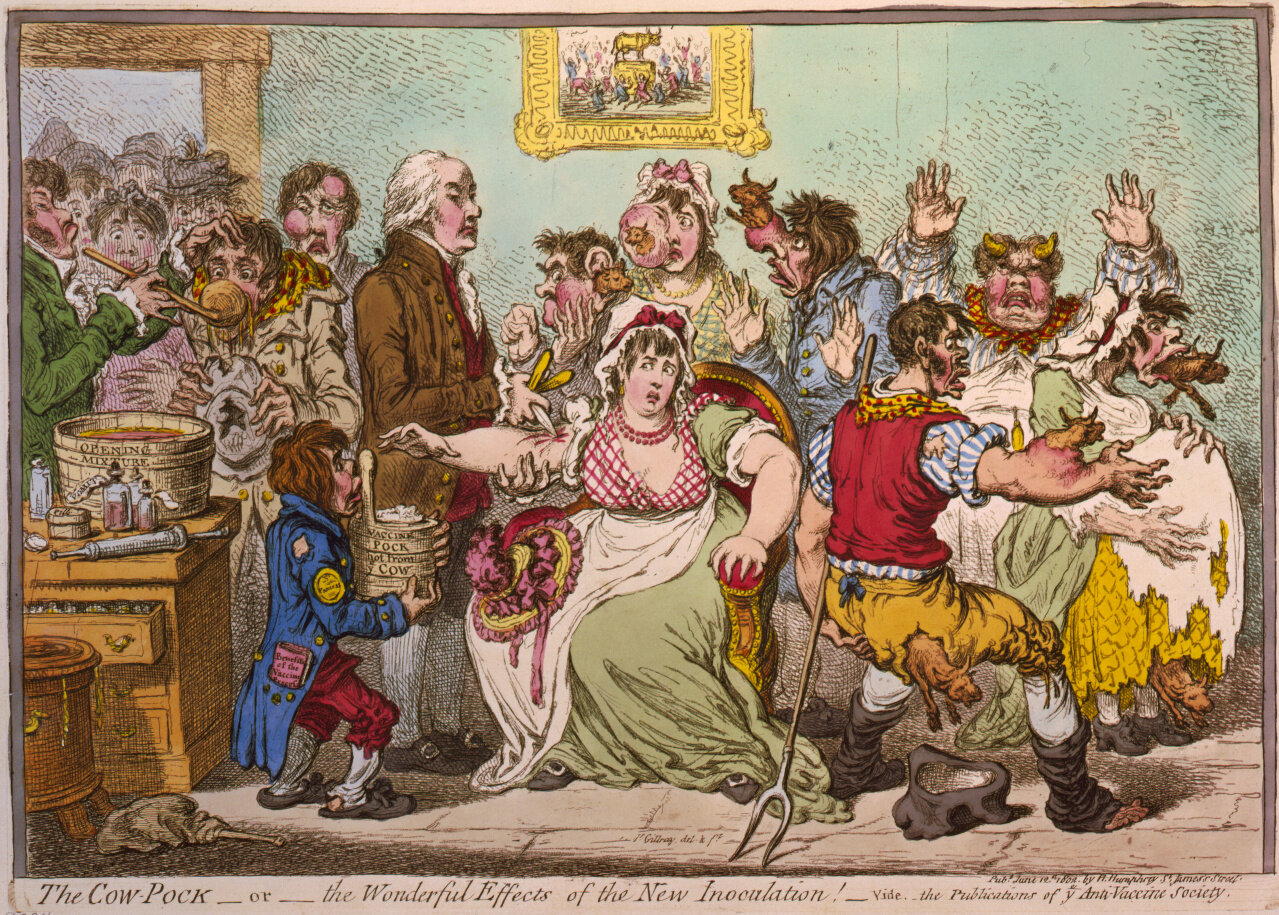
James Gillray's “The Cow-Pock—or—the Wonderful Effects of the New Inoculation!,’’ an 1802 caricature of vaccinated patients who feared it would make them sprout cowlike appendages.
Maine voters on Super Tuesday decided to affirm, by a huge 74 percent majority, a new law that eliminates religious and philosophical exemptions for childhood vaccines.
Molly Frost of Newcastle wanted the new law to stay. Her 11-year-old son, Asa, has a compromised immune system. He was diagnosed with Hodgkin’s lymphoma at age 5. The cancer has gone in and out of remission, Frost said, relapsing three times. Asa’s treatment has included several rounds of chemotherapy, radiation and, most recently, a stem-cell transplant.
“He at this point has no immunity against any of the things he was vaccinated for in the past and could get very sick from those diseases were he to catch them,” she said.
That worries Frost, especially because her family lives in a coastal county where vaccine-exemption rates are at least 9 percent — among the state’s highest rates. She was glad when the Maine legislature passed the law last year intended to protect kids like her son. It aims to boost immunization rates of kids entering school by eliminating nonmedical exemptions. It’s not in effect yet, but if opponents have their way Tuesday, it never will be.
“It’s a huge infringement on personal freedoms,” said Cara Sacks, co-chair of the group that put the repeal on the ballot. “On medical freedom in particular.”
The repeal group included such parents as Angie Kenney who wanted to keep the philosophical exemption for vaccines. Kenney has used the philosophical exemption to refuse immunizations for her kids — ever since her older daughter had an adverse reaction after receiving the chickenpox vaccine at 18 months old.
“She could not crawl,” Kenney said. “She couldn’t walk. She couldn’t even feed herself. And this went on for almost a year.”
Her daughter was diagnosed with ataxia, a brain injury listed by the Centers for Disease Control and Prevention as a rare adverse event after chickenpox vaccination. Kenney said she received a payment from the National Vaccine Injury Compensation Program. Her daughter has recovered and is now a teenager. But Kenney also has a 4-year-old and doesn’t think the state should force her to get either girl vaccinated: “I am not sacrificing my child for the greater good of the community.”
Across Maine, though, physicians and health organizations say the new law is needed to protect public health because more and more parents are using exemptions.
More than 5 percent of kindergartners in Maine now have nonmedical exemptions, more than double the national average. That has pushed vaccination rates for many diseases below 95 percent — the critical threshold to achieve herd immunity and avoid spreading a disease to kids with compromised immune systems, like Asa Frost. Pediatrician Dr. Laura Blaisdell said she has daily conversations with parents about vaccines but has felt helpless as she’s witnessed immunization rates drop.
“We have gotten to a point where there are no other solutions,” Blaisdell said.
Maine has the second-highest rate of pertussis in the country. And Blaisdell said she worries that outbreaks of measles in other states could easily arrive through the millions of tourists who visit each summer.
“That sort of traffic is exactly the sort of traffic that diseases like measles would just love,” she said.
More than $1 million was spent on the referendum battle. The campaign to preserve Maine’s new law received its initial support largely from doctors, nurses and health organizations. In the latest campaign filings, the group got a $500,000 boost from pharmaceutical companies Pfizer and Merck & Co. The trade organization Biotechnology Innovation Organization, which represents the biotech industry, also contributed $98,000.
The campaign to repeal the law, Yes on 1 for Maine, adopted “Reject Big Pharma” as its primary slogan. Much of the early support came from individual donations and chiropractors. More recently, the Organic Consumers Association contributed $50,000. The Minnesota-based group has been criticized for stoking vaccine fears and causing a measles outbreak in the state’s Somali community three years ago.
The backlash that has erupted over Maine’s new law doesn’t surprise Alison Buttenheim, an assistant professor of health policy at the University of Pennsylvania who studies vaccine hesitancy and state exemptions. She said when states eliminate entire categories of exemptions, some people perceive that as parental rights being sacrificed for public health.
“And you sort of wonder, could Maine have taken a different policy step? Maybe making those exemptions harder to get and accomplish the same goal of coverage and disease protection without having to go through a big repeal effort.”
Maine joins four other states that don’t allow any nonmedical exemptions for vaccinations: California, New York, Mississippi and West Virginia.
Patty Wright is a reporter with Maine Public Radio.
This story is part of NPR’s reporting partnership with Maine Public Radio and Kaiser Health News.
Of fading old clubs and three martinis

The 10th hole at the Metacomet Golf Club
From Robert Whitcomb’s “Digital Diary,’’ in GoLocal24.com
Nearby, in East Providence, and on higher ground, is the lovely Metacomet Golf Club, which has been in a financial crisis, and apparently is being sold to a development company called Marshall Development. That firm plans to turn the site into a mixed-use property. Might that include a gated community? How about with a nine-hole golf course? A three-hole one? A putting green?
Metacomet encompasses 105 acres – lots of open land to play with!
Fewer people seem to have the time or the inclination these days to spend the hours necessary to play 18 holes anyway. And golf is a very expensive sport.
Further, the population is aging. Even with golf carts, there are more and more people for whom even golf is physically too much.
And America has a housing shortage. A lot of that land now taken up by golf courses is enticing to build on. After all, the land is mostly open.
Other old clubs, usually originally created primarily for men, also are struggling. Fewer successful people can, or want to, take the time for a leisurely lunch, and it’s long been unfashionable to drink at lunch. That activity used to be major attraction of club lunches. But tax changes under Reagan and Bill Clinton reduced the deductibility of what used to be called “the three-martini business lunch.’’

I remember with a pang the boozy “business” lunches I had in New York and Paris; I usually drank little or nothing, but most of my table mates knocked back the stuff. One of these people offered me a job, which I took. Later on, one of my bosses in Paris insisted on my joining him for frequent vinous lunches at a restaurant near the office to “plan.’’ I’d be lucky to escape in two hours to rush back to my deadline work. Toward the end of the meal, the very patient waiter would ask my boss “Another Irish {coffee), monsieur?’’=
When back in the early ‘70s, I was briefly an intern at Business Week magazine, in New York, two editors took me to lunch several times at a famous restaurant called Sardi’s. They always ordered a bottle of wine, and one of them a cocktail. Then, after an hour-and-half lunch, we’d straggle back to the office, where one of them, the executive editor, would light his pipe and run the daily editors meeting with great skill and astonishing memory for economic data. The other went to sleep in his office.
But the most impressive three-martini lunch man I broke bread with was a college classmate and an account executive for a big ad agency who seemed to spend most of his waking hours in overpriced Manhattan restaurants. He often paid for our lunches on his expense account, although as a young newspaper editor I was in little position to help his agency. “Let’s just call it business development,’’ he told me.
It was all very unhealthy but often great fun.