
Vox clamantis in deserto









Night falls on Andover

At Alpers Fine Art, Andover, Mass.: Above, “Ignite the Night” (mixed media on canvas), by Debra Corbett, below, “Sundowner” (oil painting), by Sue Charles

'Geological strata'

“Compression 2” (books and wax), by Jessica Drenk, in her show “Jessica Drenk: Second Nature,’’ at Heather Gaudio Fine Art, New Canaan, Conn., Nov. 23-Jan 11.
The gallery says:
“For Drenk, the material is the starting point of her artistic inquiry, an exploration that takes her from simple notions and ideas to complex expressions of information, systems and patterns. She reconfigures every-day materials such as books, pencils, plastic bags, even PVC pipe, drawing on their physical properties to re-contextualize them into visually compelling and thought-provoking sculptural outcomes.
“The exhibition will feature a new body of work emerging from mass-produced utilitarian and readily discarded objects: plastic bags. Spliced and organized by color, they are transformed into banded formations, layers resembling geological strata. Repurposing this product into a structure resembling its material origins, plastic as a by-product of petroleum, Drenk's reconfiguration timely questions the reverberations of our every-day consumption and its long-lasting environmental impact.’’

Llewellyn King: Will Democrats break their Christmas present?

Historical sea level reconstruction and projections up to 2100 published in January 2017 by the U.S. Global Change Research Program for the Fourth National Climate Assessment.
The Democrats have no need to fret about what they’ll get for Christmas this year. Their worry shouldn’t be the gift, but rather how they choose to open it.
The gift is global warming.
Don’t call it climate change; that fuzzies the issue. Call it for what it is: global warming. It is heat that is melting the polar ice cap, stripping Greenland of its ice sheet, opening Arctic shipping lanes and sinking Venice, one of the jewels of civilization.
Global warming isn’t an existential threat but a real problem that is here, real and now. It is happening today, this hour, this minute, this second.
President Trump has taken his stand. He said of the rising seas and wild weather, which are science-supported evidence of global warming, “I don’t believe it.”
That is a political gift, shimmering and alluring. That is a target affixed to Trump. That is an image as evocative as Nero’s fiddling or Canute’s apocryphal ordering the waves from the incoming tide to stop. That is an opening wide enough for the Democrats to drive a truckload of election victories through.
Democratic strategists need to tell their candidates, “The climate, stupid!” All they must do is to hammer the Republicans and the administration relentlessly on the matter of global warming.
But this gift, looking so unassailable, may be undermined by the current stars on the left of the party. They have a sledgehammer approach and they may do damage to the gift before it is unwrapped.
Their passion is for the simplistic-but-seductive Green New Deal. It defines the problem as fossil fuels and wants to ban them. Then it prescribes the fixes. Bad move.
The cost and disruption of the fixes are ignored. That is why former Secretary of Energy Ernie Moniz -- a man who knows a lot about both politics and energy -- is pushing a concept he calls the Green Real Deal, which aims not to eliminate all fossil fuel use but to move to “net zero.” It means that many technologies will be used, including nuclear power and carbon capture and storage. It means that some fossil fuels will be used so long as their impact is mitigated by gains elsewhere.
These finer points of energy policy and environmental mitigation are too complicated for an election debate. They give too many opportunities for opposition ridicule. Too many handles for the Ridiculer in Chief and his acolytes to grab.
The Democrats need to repeat that the Republicans denied global warming even as the seas are rising. They need to sound the alarm that Boston, New York, Charleston and Miami may be headed for disaster very soon. They need to repeat it over and over, and then some more.
When running an election, a simple, repeatable message, without the details of how the goal will be achieved, wins the day. Clinton’s message served up by James Carville, “The economy, stupid!” won the day. Trump’s enticing “Make America Great Again” cry resonates.
The Democrats need only to dwell on rising sea levels and that the Republicans have repudiated the science. “The seas are rising and we’re going to do something about it,” is a reasonable Democratic message.\
Nixon showed us the effectiveness of framing the problem and hinting at a solution. “I have a plan,” he said about Vietnam. He didn’t mention it included bombing Cambodia.
The Democrats can win on a strong climate message. The seas are rising, wildfires ravage California year after year, Puerto Rico and other islands have been devastated by high-category hurricanes, and we may lose Venice.
A slam dunk in 2020? Don’t count on it. The Democrats likely will lard the message with social concerns, impossible marketplace tinkering and, in so doing, smash their winning gift as they open it. The Democrats are good at that, fatally so.
Llewellyn King is executive producer and host of White House Chronicle, on PBS. His email is llewellynking1@gmail.com and he’s based in Rhode Island and Washington, D.C.
New proto-centrist party in Mass.
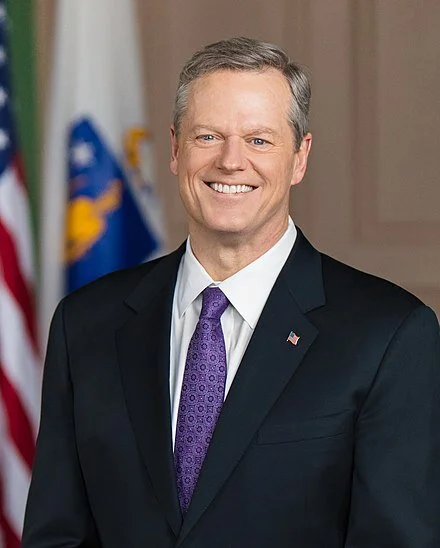
Charlie Baker
Perhaps the country’s most interesting political development right now is in Massachusetts, where Gov. Charlie Baker, a moderate Republican, is supporting a sort of proto-new party called Massachusetts Majority that gives money to candidates of both parties whom Mr. Baker, currently America’s most popular governor, support. As Ed Lyons wrote in CommonWealth Magazine:
‘’By all appearances, Massachusetts Majority is the engine of a new statewide political party, targeting that sizeable majority of largely unenrolled voters who support Charlie Baker and his politics but are not being served by loud partisans to the left and right. These voters do not want to choose between supporting the positions of Donald Trump or progressive purists. Massachusetts Majority is specifically designed to be the organization they can finally support.
“Can Charlie Baker be the most popular governor in America, govern as a Republican, and also be the detached head of a third party here that supports Republican and Democratic candidates? It’s remarkably non-binary of him, and I think people in this state will be OK with that. After all, it is strict binary choices, and the accompanying polarization, that is destroying American politics. Here in Massachusetts, more than half want non-binary choices.’’
Can the newish organization be part of a foundation for a thoughtful new center or center-right national party? The old Slave States are probably off limits but perhaps something like the Massachusetts Majority can spread to large areas of the Northeast, Middle Atlantic, Upper Midwest and West Coast. The Northeast and Upper Midwest were the original heartland of the Republican Party – a party now dominated by the political descendants of the old Southern Democrats in the great 180-degree political party turn of the last half century.
To Mr. Lyons’s piece, please hit this link.
Shefali Luthra: Do 160 million people 'like' their health care? Kind of

Articulating his proposal for health-care reform, former Vice President Joe Biden emphasized the number of Americans who, he said, were more than perfectly satisfied with the coverage they have.
“One hundred sixty million people like their private insurance,” Biden said during the November Democratic presidential primary debate.
That argument is at the heart of many moderate Democrats’ criticism of the “Medicare for All” proposal backed by two presidential candidates from New England — Senators Bernie Sanders (I-Vt.) and Elizabeth Warren (D-Mass.). We decided to take a closer look.
We reached out to the Biden campaign for comment. The campaign directed us to his next point — that people who don’t like their private coverage could, under his health plan, opt into government-sponsored coverage.
160 Million, And Some Squishy Polling
The figure appears to refer to the number of Americans who receive health benefits through work — so-called employer-sponsored health insurance. Under Medicare for All that would no longer be an option.
On first blush, polling seems to suggest that most people with employer-sponsored coverage like it.
Polling done earlier this year by the Kaiser Family Foundation with the Los Angeles Times found that most beneficiaries are “generally satisfied” with this insurance. (Kaiser Health News is an editorially independent program of the foundation.)
But that doesn’t get at the whole story.
“Most like their policy, but not all,” said Robert Blendon, a health-care pollster at Harvard T.H. Chan School of Public Health.
The context matters.
In the same KFF/L.A. Times poll, about 40% of people with employer-sponsored coverage said they had trouble paying medical bills, out-of-pocket costs or premiums. About half indicated going without or delaying health care because — even with this coverage — it was unaffordable. And about 17% reported making “difficult sacrifices” to pay for health care.
Beneficiaries who have higher-deductible plans — that is, they are required to pay larger sums of out-of-pocket before health coverage kicks in — are also less likely to be happy with their coverage, and more likely to report problems paying for health care.
And it’s also worth noting that these high-deductible plans have grown increasingly common, even for the 160 million Americans who get insurance from work, though that trend may now be losing steam. Research from the Commonwealth Fund, meanwhile, notes that increasing numbers of “underinsured” people do, in fact, have employer-sponsored health insurance. Underinsured people are those who have coverage but delay care because they still can’t afford it.
Meanwhile, other polling, such as a January Gallup survey, suggests that about 7 in 10 Americans believe the nation’s health-care system is in crisis.
So while Americans may individually not express frustration with their specific private plans, more are learning that, when they try to use that coverage, it doesn’t meet their health needs..
These findings cast significant shade on the idea that all 160 million Americans with employer-sponsored coverage actually like it.
Biden argued that “160 million people like their private insurance.”
A cursory look at polling would suggest that most of the people he’s talking about — Americans who get coverage through work — are happy with their plans.
But once you dig a little deeper, that narrative gets more complicated. Even while Americans say they like their plans, large proportions indicate that the private coverage they have still leaves meaningful gaps, requiring them to skip or delay health care because they cannot afford it.
Biden’s argument is technically correct, but it leaves out important context and relies on a somewhat squishy number. We rate it Half True.
Shefali Luthra is a reporter for Kaiser Health News.
Shefali Luthra: ShefaliL@kff.org, @Shefalil
And ready for winter

“Empty Nesters” (branch and gold leaf), by Karen Loomis, at Hampden Gallery, Amherst, Mass., through Dec. 6.
Paul Armentano: Beware unregulated CBD

An example of beverages said to contain CBD in a Los Angeles grocery store
Via OtherWords.org
One in seven Americans say they use CBD products, according to Gallup.
The rising popularity of these products — which range from oils and gummies to topical salves and most everything in between — is staggering, especially when one considers that much of the public had never even heard of CBD two or three years ago.
CBD stands for cannabidiol, one of over 100 distinct compounds found in the marijuana plant. Unlike THC, it is not significantly mood-altering. Instead, many consumers believe the compound helps treat pain, anxiousness, and other ailments.
But Americans’ exuberance for CBD could well be short-lived. That’s because many products currently marketed under the CBD banner are of low or variable quality.
Back in 2017, the Journal of the American Medical Association reported that only 31 percent of commercially available CBD products contained percentages of cannabidiol that accurately reflected the products’ labeling. Since then, little has changed.
An October 2019 analysis of 30 leading CBD products by the watchdog group LegitScript.com reported that two-thirds possessed significant deviations in CBD content from what was advertised. Typically, these products contained far lower percentages of CBD than the manufacturer promised — a finding that is woefully consistent with prior analyses.
Investigators also reported that some of the products evaluated in the LegitScript analysis tested positive for either solvent residue or elevated levels of heavy metals — findings that are also similar to those of prior reports.
Other analyses have identified even more problematic issues. Some CBD products, for instance, have tested positive for the presence of THC, the primary psychoactive constituent in cannabis, despite being advertised as “THC-free” — an oversight that could cost customers their jobs if they fail a drug test they expected to pass.
Most concerning, some CBD products have tested positive for added psychotropic adulterants — such as dextromethorphan or synthetic cannabinoid agonists. Exposure to these latter agents, typically found in illicit so-called “synthetic marijuana” products like Spice, can lead to serious health consequences.
All this is rapidly creating a “buyer beware” environment for consumers — and potentially placing them at risk.
This situation persists because the federal government — and the Food and Drug Administration in particular — doesn’t regulate either the manufacturing or testing of these products. Despite the presumption of most Americans, the commercial CBD market is entirely unregulated by the FDA.
This is because, until recently, federal law defined all cannabis-derived products as illicit. Now, the FDA and other agencies are playing catch up, with the federal regulators estimating it could take years before the FDA finalizes rules governing the commercial CBD market.
This intransigence is no longer acceptable.
Currently, the heavy burden of overseeing the CBD marketplace falls solely on state regulators in jurisdictions that have legalized cannabis use. But these regulations are not consistent from state to state, and are often far from comprehensive.
Further, state-specific regulations typically only govern CBD products that are sold in licensed dispensaries or retail outlets that exclusively sell cannabis products. They may not cover products sold online or at gas stations, which are subject to virtually no oversight.
Congress facilitated the growth of the commercial CBD market by passing legislation in 2018 that, for the first time, recognizes the production and distribution of certain hemp-derived CBD products. But without federal rules, standards, and oversight, this new market is a wild west — rife with questionable players hawking low-quality or even fraudulent products upon a largely unsuspecting public.
The tens of millions of Americans soliciting this market deserve better. It’s time for federal officials to set appropriate standards to govern this industry — so consumers can be assured, once and for all, they are getting what they pay for
Paul Armentano is the deputy director of NORML, the National Organization for the Reform of Marijuana Laws. He’s the co-author of Marijuana Is Safer: So Why Are We Driving People to Drink? and author of The Citizen’s Guide to State-By-State Marijuana Laws.
Creative CommonsExcept where otherwise noted, content on this site is licensed under a Creative Commons Attribution-No Derivative 3.0 License.

Now leave

“...you don't actually have to go to Maine. And this is finally great news for me again, because I don't want to see you there. The spirit of Maine has infected me. I gave you your goddamned wood, now get the fuck out of here.”
― John Hodgman, from Vacationland: True Stories from Painful Beaches
What does it mean?

Historical coat of arms (1876)
“these days
sometimes you sleep
in a purple T-shirt
that says Massachusetts
which means something
in an older language
I can never remember.’’
— From “Poem for Massachusetts, by Matthew Zapruder
“Massachusetts’’ is an Algonquin word that roughly translates to “large hill place” or “at the great hill.”
The word refers to Great Blue Hill, in Milton, an ancient volcano last active over 400 million years ago. It’s now part of a park that includes a famous and historic weather observatory and a ski area.

Great Blue Hill

The weather observatory atop Great Blue Hill
— Photo jameslwoodward
— P{j
—
Organically screened

“Gathering #1” ( horse chestnut hulls & waxed linen thread), by Ann Wessmann, in her show at Kingston Gallery, Boston, through Dec. 1

Lauren Carson/Terri Cortvriend: R.I. must face the challenge of coastal erosion

From ecoRI News (ecori.org)
You may have heard about the Charlestown, R.I., man who is suing the town of South Kingstown and one of its police officers over his arrest in June on a trespassing charge while he was collecting seaweed along a beach.
The charge was dismissed, but the act itself was, in part, intended to call attention to unresolved questions about shoreline access here in Rhode Island, a right enshrined in our state constitution. A 1982 Supreme Court ruling attempted to clarify the issue by saying the public’s right ends at the mean high-tide line, but since that line is a calculation of averages over an 18.6-year cycle, there’s no way for a beachgoer to identify it.
Further complicating matters is that the line will continually move inland as sea level rises, most of the time gradually, but at times heaving large chunks off dunes and other coastal features. With sea rise, property owners and members of the public whose shoreline access is constitutionally guaranteed will continue losing ground.
After Hurricane Sandy destroyed properties along the coasts of New York and New Jersey, there was an uptick in discussion about whether some particularly at-risk coastal properties should even be rebuilt. Many were, in fact, abandoned there, because increasingly violent weather events and rising seas have rendered them too much of a risk for repeated loss.
As much as we value the right of landowners, there may well be properties in our state, too, that are similarly unjustifiable risks for flooding, destruction, and even loss of life.
As the Ocean State, we should be much more proactive when it comes to resiliency along our shores. We should be exploring the actual risk to each coastal community and each property using current technology that models expected risks. We must continue to train our municipal planning and zoning boards on the risks of sea rise so they have the tools they need to make sound decisions that don’t jeopardize property investments and keep the shoreline open to the public under their constitutional rights.
There’s little doubt that, in general, homeowners are less than ideally prepared for flood risks, particularly the increasing risks associated with rising seas in the coming decades. Only about 15,000 Rhode Island properties in the flood zones carry flood insurance, and only those with mortgages are actually required to have it. Those with enough cash to buy a beach home without a mortgage aren’t. While they may have the means to risk property destruction in the event of a major disaster, are they putting public assets and people’s lives at risk?
The risk isn’t limited to private property. Doubtlessly, many state and municipal assets are also in areas that are already prone to flooding, or whose risk is increasing. Stewards of public resources have a responsibility to understand and defend those assets from potential damage, and must face the reality that the most prudent step might be to move them elsewhere.
Our state needs a more robust action plan for protecting public and private properties from the ever-increasing risk of coastal flooding, and that plan must include an accounting of where the high-tide line is, and how it’s projected to move.
The creation of this plan should include an audit of properties to determine what the real risks are, and it should also bring in real-estate professionals, insurers, and lenders, because they help determine the price of ownership of such properties, and should be sure that those prices accurately reflect the real cost of ownership, including potential destruction.
The Ocean State must face the fact that the more of our state is becoming part of the ocean with each passing year. Leaders and property owners must take much more concrete steps to predict the encroachment and protect our assets from it.
Rhode Island state Rep. Lauren Carson is a Democrat who represents District 75 in Newport. Rep. Terri Cortvriend is a Democrat who represents District 72 in Portsmouth and Middletown.
New England still makes (expensive) things

Bright red locates Framingham
From The New England Council (newenglandcouncil.com)
“Sanofi opened the doors of its 100,000-square-foot digital bio-manufacturing facility in Framingham, Mass., on Oct. 15. The French drug-manufacturing company is one of Massachusetts’s largest life-science employers.
Sanofi’s new facility is among the first digitally enabled continuous manufacturing sites, making the building itself about a fifth the size of traditional facilities {in the sector}. The new building features state-of-the-art technology that connects the production process with research and development to better improve the commercialization of important medicines. The acceleration of their production capabilities is a key pillar in Sanofi’s ambition to establish “the gold standard in the bio-pharmaceutical industry.”
“‘We have been investing for some years to prepare for Sanofi’s future. Our Framingham facility leads the way in delivering the next generation of biologics manufacturing, leveraging intensified, continuous processing in a fully integrated digitally powered facility,’ said Philippe Luscan, executive vice president for global industrial affairs at Sanofi. ‘This opening demonstrates we are at the leading edge of innovation and manufacturing excellence, helping us to shape the future of both our company and the industry.”’
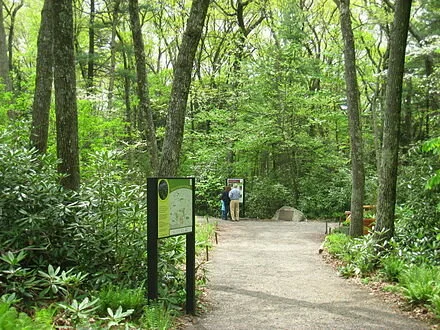
Garden in the Woods, overseen by the New England Wild Flower Society, features the largest landscaped collection of native wildflowers in New England. It is in Framingham’s Nobscot section, off Hemenway Road.
Religion and geopolitics

The Battle of White Mountain (1620) in Bohemia was one of the decisive battles of the Thirty Years' War that ultimately led to the forced conversion of the Bohemian population back to Roman Catholicism from Protestantism.
To members and friends of The Providence Committee on Foreign Relations (thepcfr.org; pcfremail@gmail.com)
On Thursday, Dec. 5, The Providence Committee on Foreign Relations (thepcfr.org; pcfremail@gmail.com) will welcome as its dinner speaker Dr. Elizabeth H. Prodromou, who directs the Initiative on Religion, Law, and Diplomacy, and is visiting associate professor of conflict resolution, at The Fletcher School of Law and Diplomacy at Tufts University. She titles her talk "God, Soft Power, and Geopolitics: Religion as a Tool for Conflict Prevention/Generation".
Dr. Prodromou is also a non-resident senior fellow and co-chair of the Working Group on Christians and Religious Pluralism, at the Center for Religious Freedom at the Hudson Institute, and is also non-resident fellow at The Hedayah International Center of Excellence for Countering Violent Extremism, based in Abu Dhabi.
Dr. Prodromou is former vice chair and commissioner on the U.S. Commission on International Religious Freedom and was a member of the U.S. Secretary of State’s Religion & Foreign Policy Working Group. Her research focuses on geopolitics and religion, with particular focus on the intersection of religion, democracy, and security in the Middle East and Southeastern Europe. Her current research project focus on Orthodox Christianity and geopolitics, as well as on religion and migration in Greece.
Schedule:
6:00 - 6:30 PM: Cocktails
6:30 - 7:30: Dinner (salad, entree, dessert/coffee)
7:30 - 8:30 (or less): Speaker presentation
8:30 - 9:00: Q&A with speaker.
For information on the PCFR, including on how to join, please see our Web site – thepcfr.org – or email pcfremail@gmail.com or call 401-523-3957
'Go play'

“Outside is the failure to stay in touch
or, really, to ever be in touch. I didn't
ever know them (my neighbors) well.
In winter you are handed a white tray
with a few tiny rock walls, short lines drawn with a ruler,
an indent for where a cellar hole could be
a hyperlink to once go once more to the lake
and told to go at it, go play.’’
From “Deconstructing New England,’’ by Alexandria Peary, a New Hampshire-based poet who grew up in Maine
Use your own materials

Robin with nest-marking material
“Eschew the skylark and the nightingale, birds that Audubon never found. A national literature ought to be built, as the robin builds its nest, out of the twigs and straws of one's native meadows.”
― Van Wyck Brooks, from The Flowering of New England
Memories of landscapes

“West Hill,’’ by Phil Young, in his joint show with Kimberly Stoney at Concord (Mass.) Center for the Visual Arts through Nov. 24. The gallery says:
“West Hill,’’ by Phil Young, in his joint show with Kimberly Stoney, at Concord (Mass.) Center for the Arts through Nov. 24. The gallery says Mr. Young uses “landscapes as inspiration for his paintings, exploring the various places he's been through color and form.’’ His bio says "he is a colorist and his work is more impressionistic and abstract than representational. His works are made from equal parts memory and imagination, creating a new world out of the familiar one.’’

The Old Manse, in Concord. The house was home to Ralph Waldo Emerson and later Nathaniel Hawthorne. Concord was a center of American literary and, more broadly, intellectual life in the 19th Century.

Marker on Egg Rock, in Concord
Who is stoned on the road?

From Robert Whitcomb’s “Digital Diary,’’ in GoLocal24.com
I’ve been worried a long time about the increasing number of people driving around here stoned on marijuana in varying degrees, with outlets selling “medical marijuana,’’ as well as illegal sales of “recreational” pot, in Rhode Island, and with recreational, as well as medical, marijuana legal in Massachusetts. (The Feds have some different ideas about all this.) A big problem is that unlike with alcohol, there seems to be no precise metric to measure when somebody might be impaired by pot.
The issue was front and center in a Nov. 6 Providence Journal story, “Judge ponders: Can impairment by pot be measured,” involving Marshall Howard, charged with driving under the influence, death resulting, in the 2017 death of David Bustin. Mr. Howard’s car hit Mr. Bustin after he had stepped into the street. A blood test showed that Mr. Howard had THC, the mind-altering ingredient in marijuana, in his system at the time. Mr. Howard also had fentanyl and heroin in his car; Mr. Bustin, for his part, was apparently drunk.\
Inebriated America? Are that many people in need of psychic or physical relief?
The story, by Katie Mulvaney, quoted the Superior Court judge in the case, Daniel Procaccini, as saying:
“We don’t have any way to correlate any amount of a substance {such as THC} in a person’s blood to impairment. With alcohol we do.’’ This is a national problem, which we’d better address as throngs hit the road after toking up.
Thank God cars themselves are much safer now than a few decades ago since drivers seem to be ever more distracted.
To read the Massachusetts angle on this, please hit this link.
Chris Powell: Latest Conn. immigration case reveals subversive goal
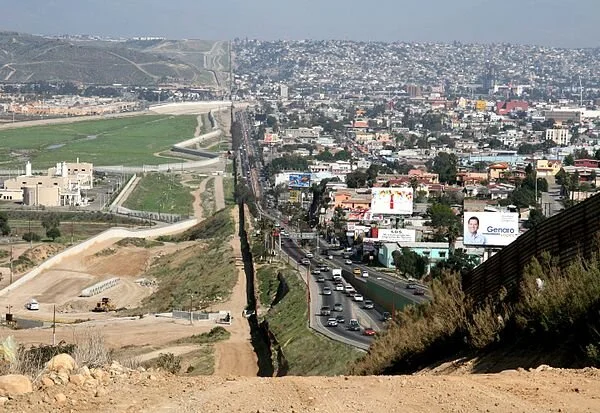
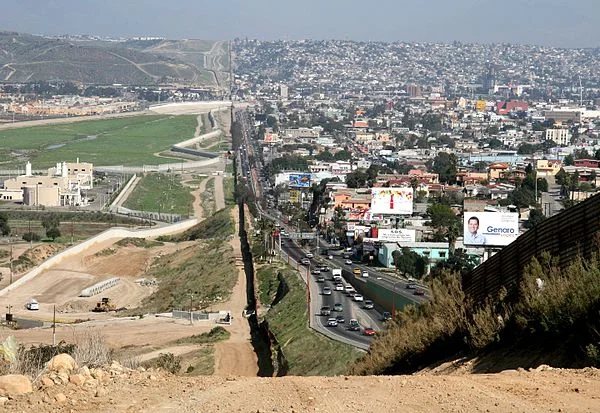
With the border wall separating them, to the left lies San Diego, Calif., and on the right Tijuana, Mexico.
Nobody denies that Domar Shearer, a 23-year-old man from Jamaica, is in the United States illegally, having overstayed a visa three years ago. Nobody denies that he was recently arrested in a domestic disturbance with his wife in Ansonia. Nor does anyone deny that he has been working illegally at a restaurant in Bridgeport.
But Shearer is the latest cause celebre of Connecticut's immigration law nullification movement, enjoying support not just from a New Haven-based organization of immigration law obstructors, Unidad Latina en Accion, but also the state Judicial Department, the state public defender's office, a U.S. senator, and newspapers.
Shearer became a cause the other day when federal immigration agents went looking for him at the courthouse in Derby as he arrived to resolve his criminal charges. The public defender's office let him hide there for hours until court closed and the agents left. Then the nullifiers escorted him to a "safe house" in New Haven, home to thousands of other illegal immigrants, many holding identification cards issued by the city to facilitate their lawbreaking.
The nullifiers portray as an injustice the pursuit of illegal immigrants at courthouses. They say it discourages illegals from seeking justice. But then the people being pursued aren't entitled to be in the country in the first place and the immigration agents would not pursue them at courthouses if those weren't good places to find them.
Of course the nullifiers' idea of justice has no room for federal immigration law. Their premise, which has been largely incorporated into Connecticut law, is that anyone who is in the country illegally and makes it to Connecticut should be exempt from immigration law enforcement unless he is a terrorist.
That is, the objective of the nullifiers is open borders, the end of the United States.
Thanks to the Shearer case, at least this objective must be admitted now. One of the newspapers celebrating Shearer's escape to the underground, the New Haven Independent, even published a photo of him with his rescuers holding revealing signs. One reads, "Erase all borders." Shearer himself holds a sign bearing, in Spanish, an obscenity about immigration agents.
Connecticut U.S. Sen. Richard Blumenthal, who issued a statement supporting Shearer against the agents, should contemplate those signs. Legalizing people who long have lived in the country illegally but productively and without committing offenses is a worthy objective of immigration law reform along with securing the borders. Both liberal and conservative presidents, including Ronald Reagan, have supported it. So is legalizing people who were brought into the country illegally as children and know no other home. But in assisting people who want to erase the country's borders and degrade immigration agents, the senator has forgotten his oath of office.
xxx
ABORTION COMES FIRST: The Connecticut Catholic Conference's annual report on abortion in the state, published this month, shows that Connecticut continues to nullify the law in another way.
That is, the report says Connecticut abortion clinics are attracting minors from states that require parental notification for abortions -- this state has no such law -- and that abortion clinics here increasingly violate state law's requirement to report the ages of abortion recipients.
That is, the report is a reminder that Connecticut law considers abortion more compelling than protecting children against rape.
Chris Powell is a columnist for the Journal Inquirer in Manchester, Conn.

Karen Gross: As school shootings continue, college students must ask if they're next

Scene at Sandy Hook Elementary School, in Newtown, Conn., on Dec. 14, 2012, when heavily armed 20-year-old Adam Lanza shot to death 26 people, including 20 children between six and seven years old, and six adult staff members. Before driving to the school, he shot to death his mother at their Newtown home. As first responders arrived at the school, Lanza committed suicide by shooting himself in the head.
From The New England Journal of Higher Education, a service of The New England Board of Higher Education (nebhe.org)
In a matter of seconds, a student at a high school in Santa Clarita, Calif., injured and killed a handful of his fellow students and then shot himself. He died shortly thereafter. We read about such incidents and lament their happening. We see television footage and peruse articles and social media postings. We mourn for the students injured and killed and worry about their families and friends.
And we wonder why this shooting happened. And we wonder why so many shootings happen.
Despite the usual outpouring of support for survivors and displays of empathy, those of us in higher education often don’t reflect on how all these K-12 shootings can and likely will affect us directly. We don’t consider how high school shootings will impact the college students we now have and the students we will have in the future—especially if we are geographically separated. It is as if we see the K-12 shootings as something that happens “over there” with “younger” students; meanwhile, we worry about a myriad of issues on our own campuses including potential shootings on campus, but also drug overdoses and sexual harassment.
The story that struck a chord
One particular story in the Los Angeles Times that got my attention. It was about how the shooting at the high school in Santa Clarita affected the students at a nearby elementary school. These younger students were preparing for a Thanksgiving pageant. The image of youngsters in their Pilgrim costumes crying upon learning of the shooting and being held in place at their school is fraught with irony: a supposed celebration of freedom and togetherness (even if sanitized by a retelling of our history with Native Americans) is disturbed by violence. No “Thanks” in this planned Thanksgiving pageant. While the emotions differed among the younger and somewhat older students at the elementary school, they were affected, as were their parents, according to the article and other reports.
Thinking about that story made me realize that many in higher education (with some exceptions of course) do not realize that trauma travels with a student forward in time. And it is as if trauma were in a suitcase and with the passage of time, that suitcase grows. As and when new traumas occur or there are new triggering events, the trauma suitcase expands and the holder of the suitcase experiences their autonomic nervous system on high alert.
As one author quoted in a recent article on student mental health stated, trauma sits in an invisible backpack that a student carries. What is in that suitcase/backpack affects not just the student him or herself; it affects those around the student, including those who teach them. That’s where secondary and vicarious trauma occur.
In sum, the reach of shootings is wide and deep and continuous.
Trauma and college students
The students who have experienced shootings will, one hopes, someday enter postsecondary education. But the institutions that will be serving them need to know that the trauma of the applicants, and later of enrolled students, does not get parked at the proverbial gate to higher education. And for those entering a residential college, with the transition into a dorm, the challenges are even greater: new roommate, new living situation, new location. For all new college students, there is a sense of disquiet when the new collegiate experience starts, and they are the “newbies,” even if they are enthusiastic, engaged and willing to learn.
We often use orientations at the start of college to inform students on a wide range of matters, including sexual policies, drug use, alcohol and mental health. We provide IDs, and paperwork is completed. We give out swipe cards. There are financial aid or bursar meetings. Residential assistants hold get-togethers. There are often placement tests.
And, sadly, we think students are absorbing all this, even when tempered with “get-to-know-you games.”
What is happening for many students is that their autonomic nervous systems are on high alert. They cannot really hear, absorb and process what they are being told. They are trying to find their way to the bathroom and are worried about their interpersonal and academic success. They may think they flunked the placement test. They didn’t really understand the financial aid repayment options. They wonder if there were people there who would like them. They may be lonely or feel separation anxiety.
While student life personnel may deal effectively with some of these issues, faculty tend to just launch right into their subjects as if being in college is anticipated, expected and everyone is ready to roll ahead in the disciplines of the courses they select. Then students receive a syllabus, which is often long and the name itself is off-putting for some. We assign massive reading and ask questions to which students don’t know the answers or are reluctant to answer.
And that’s just the first week.
Transitions are not our strong suit
Here’s my point: Going to college is a transition and if you have ever been traumatized in your past, that event was your first transition. You transitioned from not being traumatized to being traumatized. And, once traumatized, other transitions kick off negative signals since the first transition was bad, and tell the autonomic nervous system to be on high alert.
For students who have been traumatized in the past, who have experienced attachment disorders or other trauma symptomology, there is unease. Whether or not students recognize what is happening to them, something is happening inside of them. And those adults within the college (not the new students who are adults of which there are a growing number) are often unaware of or unable to recognize trauma symptomology. They attribute what they see to a myriad of other factors, including that the quality of students is declining with the need to have better high school preparation and the decline of values in a generation. Perhaps the students are too “snowflaky” and their parents too involved.
One shooting, many consequences for students
The students in Santa Clarita have been traumatized by the shooting; the impact of the shooting on each student will differ depending on their background in terms of family stability and family dysfunction, prior trauma from other events including death, illness, accidents and injuries. The degree of closeness to the deceased and injured and the shooter are all issues that will affect these students. How the trauma and its symptoms are handled by their school and within their community are issues too, particularly when the school reopens and the details of the events are disclosed.
And anniversaries will occur and recur. Those are inevitabilities.
I worry a lot about those students who will head off to college soon, whether from Santa Clarita or elsewhere. Will this tragedy change where they apply? Will it change how they feel about leaving home? And once they choose a school, how easy will it be to adjust? Do they need a year off to work and reflect and process? Will they feel safe in a new place and space? Will they feel cared about by some adult? Will they have an outlet in which to share how the memories of the shooting keep flooding back at different times of day and night? Will they want a seat at orientation near a door? Will they want a dorm room on a high floor or a low floor?
Then, consider these possible other reactions of the survivors. Will they not want to attend classes in the morning (around the time of the shooting)? Where will they sit in the classroom? Will they be looking for exits? How will they respond to dorm alarms and other loud sounds and future drills? Will these survivors be able to manage stress? What if a student on their new campus is injured or killed or becomes ill? When the shooting occurred, what were they doing actually and can they do whatever that was again? Will a quadrangle ever feel totally safe?
As to the elementary school students, they will proceed through the educational pipeline and hopefully, many will land in colleges at some point in the next decade or so. They will not have forgotten the shooting or if they have, they have only forgotten it in their conscious memory. What has happened to them in the decade between the shooting and entering college? Any more trauma? Yes, of course. There will be other school shootings and deaths and injuries and car accidents.
Our trauma suitcases travel with us
Here’s the point: The school shooting will eventually land on college campuses in the invisible backpacks of students. Regrettably, most colleges are not trauma-informed nor trauma-responsive. And folks will be shocked when these students struggle or barely stay in school or drop out or stop out. Their learning, their memories, their engagement can all be impacted.
It’s time to see the trauma around us and how it affects education. And we need educators who can and will be ready, willing and able to be trauma-responsive at the university level. Are you confident that will happen? I’m not. That’s why this shooting makes the need to address trauma across the educational pipeline not a luxury, but a necessity.
The time to start is now.
Karen Gross is former president of Southern Vermont College and senior policy adviser to the U.S. Department of Education. She specializes in student success and trauma across the educational landscape. Her new book, Educating for Trauma, will be released in June 2020 by Columbia Teachers College Press.