
Challenging your perceptions

By Nancy Jenner. in her show “World News: Alternate Views,’’ Jan. 31-March 1, at BabsonART’s (part of Babson College) Hollister Gallery, in Wellesley, Mass.
Her two installations challenge the perceptions of environmental pollution and how political turmoil affects families. She works with different media, such as archival paper and gouache, to build a visual narrative on each topic. Today's media-rich culture allows a person to consume only the news media that confirm their own biases, and Jenner's installations aim to offer a new perspective for the viewer to challenge those biases.
Mapping stone walls from above
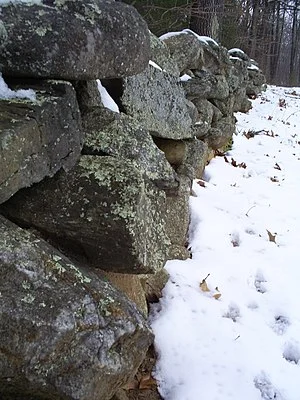
Stone wall at what had been Robert Frost's farm in Derry, N.H., a wall he describes in his famous poem "Mending Wall".
From Robert Whitcomb’s “Digital Diary,’’ in GoLocal24.com
The Concord (N.H.) Monitor ran an intriguing story on Jan. 15 headlined “Crowdsourcing New Hampshire’s love affair with stone walls’’. Stone walls, built mostly by English colonists and their descendants, most of them farmers, from the 17th to the early 19 centuries, are one of our region’s most beloved features – and a reminder of how hard earlier New Englanders had to work to wrest a living from a rocky soil.
The Monitor’s David Brooks reports how an aerial mapping system called LIDAR has eased the mapping old stone walls, many hidden in woods that have long since enveloped open fields. “The state has uploaded a zoomable image of most of New Hampshire taken by airplanes using LIDAR, which operates like sonar but uses light waves and produces a more detailed image,’’ even from a mile in the air.
“Members of the public can search through the black-and-white image and if they find what appears to be a stone wall, notable for unnatural straightness amid meandering hills or streams, they can mark it with a drawing tool that creates a thin pink line. These lines will create a map and database of the state’s stone walls. The online map includes a ‘progress to date’ link keeping a running tally of how many miles of walls have been marked.”
The project could improve our understanding of land-use patterns that developed since Europeans started to move en masse into New England. It’s always useful to know where we’ve been, which can help tell us where we’re going.
To read Mr. Brooks’s story, please hit this link.
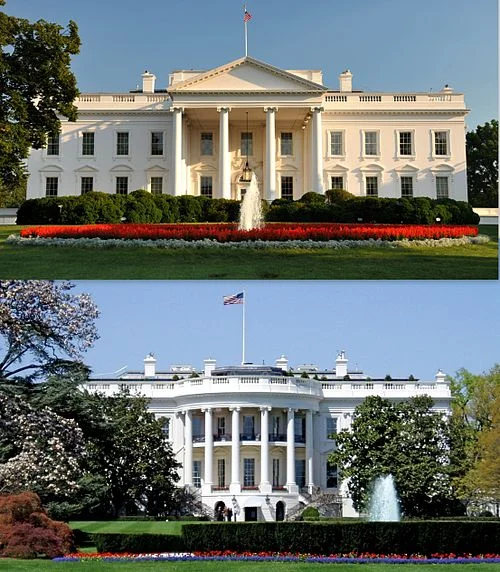
Llewellyn King: The women who would be president
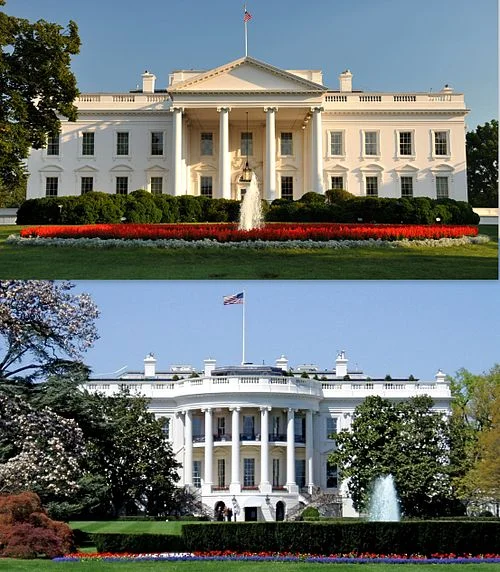
Good morning class, draw near and listen ever so closely.
So, you all want to be president of the United States, arguably the most difficult and demanding job in the world?
Clearly, you feel that you have unique talents which will promote peace and prosperity and block injustice, racism and men hitting on women.
You are sure that you will be able to curb, gently, the imperial instincts of China and its canny leader, Xi Jinping.
And you have a sure-fire plan to contain Russian President Vladimir Putin’s ambitions in eastern Europe, Asia and the Middle East and to persuade our shaken allies that it is worth standing firm with us.
You might want to know what to do about Africa’s soaring population and declining prospects.
You, also, I trust have given thought to the future as the so called Fourth Industrial Revolution unfolds with huge consequences for the future of work (artificial intelligence taking away jobs); the future of transportation (autonomous vehicles, ships and airplanes); and remote farming (farms operated from city desks).
If you are all set on those things, we can get down to the ones which may decide the election: the social issues, including abortion, education, gender equity and gender equality, gun control, access to healthcare, immigration and income inequality.
You might want to tell people how you will turn back the tides and solve global warming. Rich people are starting to worry about their oceanfront homes; that means it will become a fashionable topic with those who have been indifferent screaming for action
Now, ladies, step forward for little individual tutelage.
Elizabeth Warren: You have the pole position as the racers line up, but already there are troubling things. Ms. Warren, you must stop taking President Trump’s bait. How the devil did you get into getting your DNA analyzed? Bad move. Lead the debate, do not join it.
Kamala Harris: A few good notices and you are off and running. Just wait until the opposition research pulls apart the cases you prosecuted when you were a district attorney in San Francisco -- and the things you said in court. Two former prosecutors, Rudy Giuliani and Chris Christie, have tarnished the brand.
Kirsten Gillibrand: The announcement on The Late Show with Stephen Colbert was, well, weak. It looked like you were there because you had just published a children’s book called something like Snuggles the Rabbit.. Bold statesmanship was not to be heard. It is hard to look presidential on a comedy program. Looking presidential is worth a lot in the polls, especially at the beginning. Now to those giant flip-flops on guns and abortion. Were you not a darling of the NRA? What about your switching from pro-life to pro-getting-elected? Explain your double epiphany.
Tulsi Gabbard: Step forward and salute. Major, you are the only declared candidate with military service: the only candidate in sight who has worn your country’s uniform and seen active duty. Bravo! That is going to be a huge credential, but not quite enough to outweigh the fact that you are too exotic: born in American Samoa, raised in Hawaii and a Hindu. At 38, you have got time, lots and lots of it. Beware hopefuls. This lady may not be for turning.
To the whole class of four: Have you ever run a large organization? Have you a big scandal you think you can keep hidden (you cannot)? Do you know enough people to staff the cabinet? Do you know how you will find 1,200 people to fill the positions that must be confirmed by the Senate? How is your golf game?
Three of you are senators, Gillibrand, Harris and Warren, and Gabbard is a member of the House. Hard to run against Washington when you already have contracted Potomac Fever.
Suggestion: Get a big idea and run with that. Keep out of the granular social stuff, it will bring you down. Prepare to be vice president and bide your time.
House, Senate, White House, America’s women are on the move, and may the best woman win.
Llewellyn King is executive producer and host of White House Chronicle, on PBS. His email isllewellynking1@gmail.com. He’s based in Rhode Island and Washington, D.C.

'Wings of fright'

In downtown Chelsea.
“The refugee’s run
across the desert borderlands
carved wings of fright
into his forehead,
growing more crooked
with every eviction notice
in this waterfront city of the north.’’
— From “Mi Vida: Wings of Fright
Chelsea, Massachusetts, 1987,’’ by Martin Espada
Chelsea is a gritty old manufacturing town next to Boston.
Mr. Espada, an English professor at the University of Massachusetts at Amherst, lives in very bucolic Leverett, Mass., well known for its Buddhist New England Peace Pagoda and the many babbling brooks coursing down its hills.

The New England Peace Pagoda, in Leverett.

Saw Mill River Falls near Rattlesnake Gutter, in Leverett.
The January thaw

Slush in January.
Adapted from Robert Whitcomb’s “Digital Diary,’’ in GoLocal24.com
January obviously sometimes has a bleak beauty, but….
When I lived in New Hampshire some of the locals, to sort of justify living in a place with a, well, rigorous climate, noted that you were much more likely to get sick down south, where the year-round warmth helps bacteria and viruses to thrive far more than in New England. It reminds me of my former colleague Sam Abt, who smoked a couple of packs of Pall Malls every day and yet who never seemed to get sick even as everyone around him was coughing and sniffling. “No bugs can live down there’’ (in his lungs), he asserted.
To me January is about slowly lifting darkness and taking people to hospitals on roads covered with black ice. So bring on the January thaw, the seed catalogs and the annual beach-pass dues.
The New England Weather Book, by David Ludlum and the editors of the now long-departed Blair & Ketchum’s Country Journal, wrote of the thaw: “{R}esearch has demonstrated that the thaw is a reality and most frequently occurs between January 20 and 26….Although the thaw does not come every year, it has put in an appearance often enough to establish its place as a singular factor of the New England climate.’’
Apparently our January thaw this year will come on Jan. 23-24, unfortunately with rain.
We’ll take it!
Climate change complicating global marine governance
From ecoRI News (ecori.org)
KINGSTON, R.I.
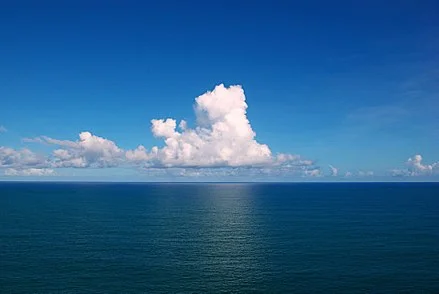
The international governance of marine areas beyond national jurisdictions is an issue of growing importance as temperatures increase, sea levels rise, islands become submerged and artificial islands are built. As territorial boundaries change, conflicts are arising that no one envisioned in the 1970s and ’80s when the United Nations Convention on the Law of the Sea was negotiated.
It’s a complex subject to which Elizabeth Mendenhall is paying close attention. The assistant professor of marine affairs and political science at the University of Rhode Island said the United States could play a crucial role in how the Law of the Sea is interpreted under changing circumstances. But the United States is one of very few nations that hasn’t ratified the agreement, and it doesn’t appear likely to do so any time soon.
“The Law of the Sea is a big agreement that still prevails as the legal framework for managing the ocean, but at the time it was negotiated we didn’t know anything about global warming, ocean acidification, or sea-level rise,” said Mendenhall, a native of Kansas who joined the URI faculty in 2017. “How did anyone think it would work when it was negotiated before we really understood the ocean we were trying to govern?”
Mendenhall studies how international law and international institutions succeed or fail as the global environment changes.
“As I see it, we created this regime of norms and principles of governing the oceans, but it’s a static law in a changing world,” she said. “How can that law be built in such a way that it’s flexible and adaptive? And if it’s built that way, how can we make sure those features are being used? Right now, we’re being reactive to the changes taking place, and we’re reacting very slowly.”
A major focus of Mendenhall’s work is examining the legal implications of sea-level rise on the 200-nautical-mile exclusive economic zones of nations when islands become submerged and coastlines change. When an island disappears, a nation may lose economic control of the maritime territory around the island.
“What happens legally as sea levels rise impacts our ability to achieve peace, stability, and sustainability in the century to come,” she said during a TEDx Talk at URI last February.
The question becomes even more complex now that technology enables nations to build artificial islands, which China and other nations are doing in the South China Sea, either to expand their control over a wider swath of the sea or to defend their legal claims.
“China doesn’t legally get to claim that maritime space,” Mendenhall said. “I believe the U.S. should better utilize legal arguments to challenge China’s maritime claims. We could easily make a positive contribution to the interpretation of the Law of the Sea by making declarations and getting other nations to make similar declarations that territorial claims around artificial islands should not be respected.”
Mendenhall is also closely following U.N. negotiations for a treaty to address how biodiversity is managed beyond national jurisdictions in the middle of the oceans. She and a group of colleagues attend all of the negotiations in New York City and interview the delegates.
“The hot-button issue is the question of marine genetic resources,” she said. “There are rules for patenting genetic sequences on land and in coastal waters, but there are no rules that apply to the middle of the ocean. If you go to a hydrothermal vent in the middle of the ocean and sequence the DNA of a creature living there, can you patent it? Previous agreements say that all nations control those resources together. So who gets the profits? That has taken up a lot of conversational space.”
Mendenhall is also being encouraged to get into the middle of the public debate about the growing problem of plastic debris in the oceans. She has already published a paper that catalogs scientific research about the topic and lists questions in need of answers before effective policies can be made.
While the media has reported extensively on the effort by The Ocean Cleanup to create a technology that can autonomously extract plastics from the oceans, Mendenhall believes the project is the wrong approach.
“That approach is all about cleaning up at the end of the chain, rather than fixing the problem at its beginning,” she said. “First, it’s a nonprofit funded by donations, which is allowing governments to say that the nonprofit world is handling the problem so they don’t have to do anything about it. I also fear it will be a green-washing for the plastics producers so they don’t have to address their role in the problem.
“It’s a real challenge internationally because the source of the problem is in sovereign national territory while most of the consequences are in shared space in the middle of the ocean. It’s hard to come up with an international agreement that tells you what you have to do domestically.”
The URI professor hopes to address other issues in what she calls “the global commons” as well, including territorial disputes in the Arctic.
‘An old year thrown off’

“A January thaw, country
roads turned chocolate pudding
our boots with sucking sounds
clambering over the still-
intact oak leaves
pages of an old diary
an old year
thrown off.’’
— From “January Thaw,’’ by Marge Piercy

David Warsh: Addition by subtraction in climate debate

SOMERVILLE, Mass.
An op-ed in The Wall Street Journal last week, “Economists’ Statement on Carbon Dividends,’’ appeared under a headline reflecting the latest conventional wisdom on how to frame the issue of coping with atmospheric pollution (don’t call it a “carbon tax”). The bipartisan endorsement called for a revenue-neutral tax on carbon emissions, its proceeds to be returned to citizens in equal quarterly rebates, ensuring a progressive structure, administered by the Social Security Administration as an entitlement.
The proposal was signed by 27 laureates, including Robert Solow, Robert Lucas, Amartya Sen and Thomas Sargent; all four living chairs of the Federal Reserve Board (Paul Volcker, Alan Greenspan, Ben Bernanke, and Janet Yellen), and fifteen former chairmen of the Council of Economic Advisers, including Michael Boskin, Martin Feldstein, N. Gregory Mankiw, Glenn Hubbard, Jason Furman, Austan Goolsbee, Christina Romer, and Laura Tyson. Former Treasury Secretary Lawrence Summers signed on as well.
Too fresh from their recognition last month to join in (or too obvious) were William Nordhaus and Paul Romer, both supporters. The signatories thus joined forces with a blue-ribbon group of multinational corporations and public interest organizations formed last summer as a Climate Leadership Council.
The economists’ list naturally invited a search for the missing.
Conspicuous by their absence among laureates were Joseph Stiglitz and Paul Krugman. Krugman earlier explained that he favored more salable policies. That the plan for carbon taxation was devised by George Shultz, Secretary of State under Ronald Reagan, and James Baker, who succeeded him under George H. W. Bush, may also account for some of their lack of enthusiasm.
A little less obviously missing were laureates James Heckman (absorbed in early childhood investment), and Vernon Smith (energy saving and CO2 sequestration, per the recommendation of the Copenhagen Consensus Center). Oliver Williamson, approaching 90, is less of a force than formerly. Christopher Pissarides and Jean Tirole stayed away from the issue, Tirole because he favors regulation by systems of cap-and-trade.
That leaves Robert Mundell, of Columbia University, recognized in 1999 for his work on exchange rates regimes and currency areas; and Edward Prescott, of Arizona State University and the Federal Reserve Bank of Minneapolis, who shared the economics prize in 2004 for work on business cycles. Both are favorites of the WSJ, having often expressed the view that raising taxes discourages economic growth, but neither has been involved to any great extent in the climate controversy. That leads in turn to WSJcolumnist Holman W. Jenkins, Jr., who has taken on the job of skeptic-in-chief.
Jenkins, 59, is a dependably lively presence on the editorial pages, a frequent skirmisher against views on climate change he considers wooly-headed or worse. Last week he was at it again, under the headline Big Names Bake a Climate Pie in the Sky. He disparaged the view that carbon emissions pose an immediate threat to global well-being; expressed skepticism of the motives of politicians and corporate lobbyists alike; and hinted at the existence of a proposal for tax reform, including a carbon tax, “to replace taxes that depress work, saving,” such that new technologies would develop to do things in less carbon-intensive ways. Presumably that is the subject of a future column.
At the moment, the editorial board of the WSJ is pretty much the only voice among the mainstream press, of skepticism about climate change in general; in opposition to carbon tax proposals in particular. In The Global Tax Revolt last month, the editorialists took note of the rejection of various attempts to impose a local carbon tax – in France, in Canada, in Washington State – and concluded,
[A]fter decades of global conferences, forests of reports, dire television documentaries, celebrity appeals, school-curriculum overhauls and media bludgeoning, voters don’t believe that climate change justifies policies that would raise their cost of living and hurt the economy.
On its weekly show on Fox New, editorial page editor Paul Gigot went further: he acknowledged elliptically that that “some of our friends” think that strong measures are required to address atmospheric pollution, “and even in theory, if you think about it from a free market point of view, a carbon tax would be the most efficient way of trying to actually slow down carbon emissions… but that seems to be something that the public really isn’t buying.” There is, he said, “a disconnect between elites and average voters that don’t trust the elites”
As usual, editorial page columnist Kimberly Strassel went further still. “Yes, intellectually, from a very wonky point of view,” she said, a carbon tax “may be an efficient way of raising revenues. But no one buys that you are actually get rid of other taxes if you institute a carbon tax, so they see it as an additional tax … There also not a belief that money raised from such a tax would actually be put into any kind of renewable energy or investment strategy for a smarter climate; they know it going to get redistributed and be a new pot for the Washington spenders to put into their own priorities…
What would a carbon tax actually cost ordinary consumers? That’s a question for another day – for many other days, starting with the 2020 elections, and in the decade beyond. In the meantime, the populist editorial page of the WSJ stands pretty much alone amongst elite opinion in America against carbon taxation as the major instrument of climate policy. Over the long haul, we’ll see what difference that makes. Reports of the demise of the establishment Republican Party may have been exaggerated.
David Warsh, an economic historian and veteran columnist, is proprietor of Somerville-based economicprincipals.com, where this first ran.
'Single emptiness'

— Photo by Lumulus
“It is deep January. The sky is hard.
The stalks are firmly rooted in ice.
It is in this solitude, a syllable,
Out of these gawky flitterings,
Intones its single emptiness,
The savagest hollow of winter-sound.”
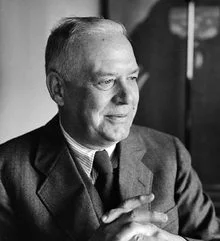
Wallace Stevens.
― Wallace Stevens, (1879-1955) was a Hartford-based poet, insurance executive and lawyer. He’d walk most days to and from his house, below, to his office at the Hartford Accident & Indemnity Co. Another big name in the arts who was an insurance executive was Charles Ives (1874-1954), who was raised in Connecticut and became one of America’s greatest composers.
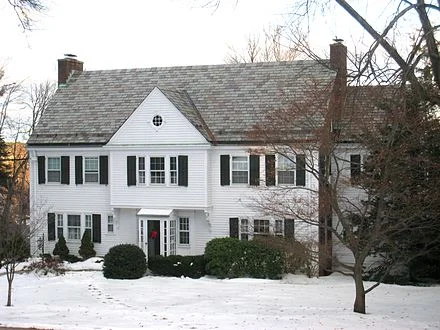
The house of the late Wallace Stevens.
Images from Out West
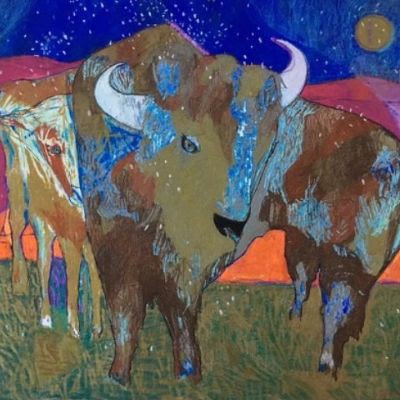
One of the works by Nan Darham in her show at the Russo Gallery at Dartmouth College, Hanover, N.H., through Feb. 9. She is from Bozeman, Mont.
Her artwork and stories chronicle the culture, landscape, wildlife and characters that populate her life in the West. She configures a changing geography that includes immense historical and contemporary issues of the Greater Yellowstone ecosystem.
Move the FDA to Boston?
]
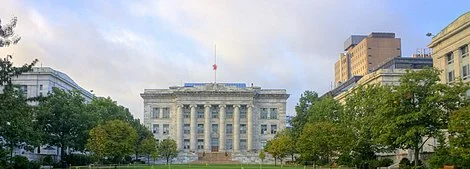
Harvard Medical School quadrangle in Longwood Medical Area, Boston.
Adapted from Robert Whitcomb’s “Digital Diary,’’ in GoLocal24.com:
One of the most intriguing of the ideas in \Philip K. Howard’s new book – Try Common Sense: Replacing Failed Ideologies of the Left and Right -- is to move a lot of federal operations out of Washington to get them away from the entrenched lobbyist-run corruption there and closer to the people and in some cases to outstanding local expertise. Such moves would liberate more federal employees to take decisions in the public interest.
The crux of Mr. Howard’s books is that people should exercise more individual judgment and take on more responsibility instead of turning over so much of their lives to regulations and legalism. They should be encouraged to exercise common sense.
“All the ligaments and tendons of Washington’s permanent apparatus – civil servants, lobbyists, lawyers, contractors, media and politicians – are conditioned to play their roles in its giant bureaucratic apparatus.’’ (I happen to think that the civil servants are the best of the lot….)
So Mr. Howard writes: “How can we govern sensibly or morally when officials in Washington refuse to change direction? The answer is that we can’t. …Why fight this culture head on? Start moving agencies out of Washington to places where people are not afraid of taking responsibility.’’ Big companies move all the time. Why not agencies? And some could be moved to places with considerably lower operating costs than metro Washington.
Mr. Howard suggests, for example, that the Food and Drug Administration’s headquarters could be moved to Boston or California, where there are many, many physicians, biologists and others in health-care-related fields. Or the Department of Housing and Urban Development could go to Detroit. Consider that the Centers for Disease Control and Prevention works well with its Atlanta headquarters.
This redistribution would also more fairly share the vast wealth associated with the federal government, which is so heavily concentrated in the Washington, D.C., region, which vies with San Francisco as the richest metro area in America.
Whether or not you agree with Mr. Howard on this or that policy proposal, you have to give him credit for, as he told me, “trying to change how people think about’’ government and civil society/citizenship in general. That has to be the start.
Oh yes, let’s move all or part of the National Oceanic and Atmospheric Administration to the great ocean research center of Woods Hole.
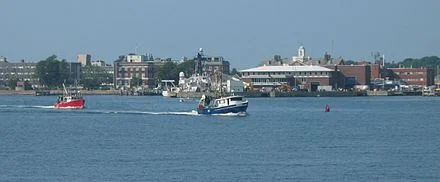
A view of downtown Woods Hole from the water, including Marine Biological Laboratory and the Woods Hole Oceanographic Institution.
'The artifacts within'

Part of the show “Joe Caruso: Gods, Totems and Tricksters,’’ at Laconia Gallery, Boston, Feb. 1-March 24.
The gallery says:
“With references to the field of archaeology, Joe Caruso’s recent work which consists of painting, sculptural assemblage and combinations of both, explores the themes of discovery, time and transformation, and also draws inspiration from ancient mythology.
“In his sculpture, Caruso uses objects reclaimed from the street, from bins on trash day, from thrift shops and from his studio. Some are made of weathered wood or rusted metal, suggesting age and a time gone by and other objects are no longer needed, discarded and perhaps forgotten. They become a starting point for something new and re-emerge, transformed into fresh compositions, given new life and meaning.
“Just as the archaeologist’s exploration involves destruction and reconstruction, the surfaces of Caruso’s paintings and painting/sculpture combinations are worked and reworked over time, a process of applying paint and then scraping it off, digging and finally consolidating and solidifying when heat is applied. Materials in his painting practice include oil, wax, sand, glass, shells and minerals. Sometimes using shards of plaster, remnants from the sculptural assemblages. Some have impressions and indentations that remind one of fossils. The painting surfaces are rough and crude on the one hand and have a hint of sparkle on the other that call to mind weathered walls with flicks of sunlight. Lines crisscrossing the surfaces are dug deep and might be viewed as large drawings.
“A third dimension is sometimes created by adding sculptural elements to the painting surfaces or by placing them on an attached shelf. These combination pieces are often wrapped in wire in the configuration of a grid resembling a window, inviting the viewer to come up close to discover the artifacts within.’’
Close it for trash pickup
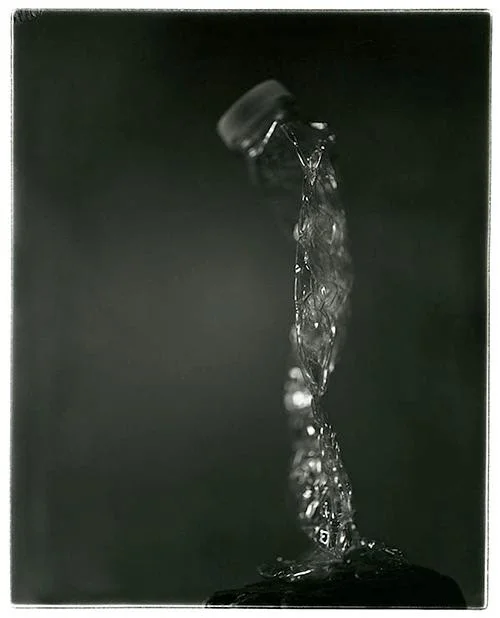
“Closing the Sea 1’’ (black and white silver print), by Patricia Kelliher, in her show "Closing the Sea,’’ which highlights ocean pollution through semi-abstract black and white photos, at Bromfield Gallery, Boston, through Jan. 27.
Patricia Kelliher, Closing the Sea 1, black and white silver print, 20" x 16", 2018.
From January 2⎻27, Bromfield Gallery presents the two winners of the SOLO 2019 competition, juried by Howard Yezerski. "Between the Lines" by Christopher Sullivan uses painting's elements to probe relationships; "Closing the Sea" by Patricia Kelliher highlights ocean pollution through semi-abstract black and white photos. The opening reception is Friday, January 4, from 6:00 p.m.⎻8:30 p.m.

Stephanie Suarez: Foreign students' big economic impact on New England

Source: NEBHE analysis of data from Open Doors: Report in International Educational Exchange, published annually by IIE and the U.S. Department of State’s Bureau of Educational and Cultural Affairs. www.iie.org/opendoors
From The New England Journal of Higher Education (NEJHE), a service of The New England Board of Higher Education (nebhe.org)
New England faces a concerning dip in its higher education enrollment, due in significant part to declines in the region’s birth and high school graduation rates that are both projected to continue through 2029. Despite these trends, New England’s postsecondary institutions continue to attract a large number of international students to the region, according to the 2018 Open Doors report released by the nonprofit Institute of International Education (IIE) and the U.S. Department of State’s Bureau of Educational and Cultural Affairs (ECA). The report shows:
• The number of international students in New England has increased every year since 2012 and the region’s growth on this measure now outpaces the nation. In the 2017-18 academic year (AY), the region enrolled 6.3% more international students than the previous academic year. This figure compares to a national increase of only 1.5% during the same period. Both public and private nonprofit institutions in New England saw a 61% rise in the number of foreign students over a five-year period from AY 2012-13 to AY 2017-18, which is comparable to the national growth in the international student population over the same period.
• In 2018, by far the largest share (31%) of international students matriculating at New England colleges and universities originated from China. Nationally, two-thirds of all foreign students come from Asia, and one-third of the total population of international students are from China alone. The other countries rounding out the students’ top five places of origin in the region include India (14.6%), Canada (5.9%), South Korea (4.4%), and Saudi Arabia (3.4%).
• International students represent a big economic injection for New England. In AY 2017-18, international students contributed $39.4 billion to the overall U.S. economy, with $4.2 billion added to the New England economy alone. Between 2012 and 2018, international students contributed a total of $21.3 billion to the New England economy.
• International students have helped forestall a nationwide enrollment crisis. The total higher education population in the U.S. topped out in 2010 at about 21 million students and has been slowly declining since then. The decline in New England is especially acute. This has been countered to some extent by growth of the foreign student population, coupled with a rise in online enrollment, which together comprise almost a quarter of the nation’s students.
• International students help make college more accessible to Americans. Because international students generally pay significantly higher international tuition and fee rates, the recent influx of foreign students has provided a much-needed boost to many college campuses’ bottom lines. The additional revenue generated by the higher fees paid by foreign students helps subsidize the tuition and fees of low-income domestic students who could otherwise not afford to attend college. As the Washington Post recently reported, “contrary to perceptions that foreign students take spots that belong to Americans, at many schools they’re enabling more American students to get a degree.”
What can we expect in 2019?
Despite the economic and cultural value foreign students add to our college campuses and our workforce, New England’s strong international enrollment figures may be in jeopardy in 2019. In particular, over the next year, the region’s colleges and universities may need to prepare for a potential decline in the number of students originating from China. The fragile dependence on Chinese students may soon crack for a number of reasons.
• China’s deepening economic downturn has begun to raise serious concerns in academic admissions offices, as this slowdown threatens to decelerate the influx of Chinese students who have flocked to American campuses to study and bolstered institutions’ bottom lines for the past decade.
• The federal government has begun targeting and encouraging the closure of Confucius Institutes, Chinese government-funded centers for Chinese language and cultural education hosted by over 500 college campuses worldwide, with more than 100 of them in the U.S. These programs have recently come under intense scrutiny by counterintelligence experts, political figures from both sides of the aisle, and those within academe, who argue that the Institutes constitute a broader effort by the Chinese government to conduct espionage, influence American academics, silence free speech and stifle critical analysis of China. Following the passage of a national defense spending law in late 2018 that prohibits the use of appropriated funds for Chinese language instruction at colleges that house a Confucius Institute, several campuses have terminated the program, including the University of Rhode Island (URI), which in December 2018 became the sixth U.S. institution to announce the end of its partnership with the Confucius Institute. A URI representative linked the decision to terminate the program specifically to the potential loss of federal funding.
• In December 2017, the White House released a National Security Strategy plan that stated the U.S. government would consider “restrictions on foreign STEM students from designated countries” as a measure to protect intellectual property. The new screening instructions, which went into effect June 11, 2018, affect the visas of Chinese students pursuing a graduate degree in robotics, aviation or advanced manufacturing, reducing the periods of validity from five years to one year.
Economic impact by state
Connecticut. There were 15,278 international students enrolled at Connecticut institutions in AY 2017-18, which represents an increase of 4% over the previous year and a 63% increase since 2012. In AY 2017-18, Connecticut ranked second in New England and 24th in the U.S. in terms of international student enrollment. Between AY 2012-13 and AY 2017-18, Yale University and the University of Connecticut took the top spots as the universities with the largest share of international students in Connecticut. Foreign students contributed an estimated $584 million to Connecticut’s economy in the past year.
Maine. There were 1,343 international students enrolled in Maine colleges and universities in AY 2017-18, a 0.2% increase from the previous year, and a 7% increase since 2012. Maine has the lowest number of international students in New England, and it ranks 49th in the nation. Between 2012 and 2017, the University of Maine held the top spot for enrolling the greatest share of international students. International students at Maine’s four-year colleges and universities generated a total of $49 million in economic activity for the state in 2017-18.
Massachusetts. There were 68,192 foreign students enrolled in Massachusetts colleges and universities in AY 2017-18, which represents an 8.4% jump over the previous year and a 65% increase over the past five years. In AY 2017-18, Massachusetts ranked first in New England and fourth in the U.S. in terms of international student enrollment. Northeastern University has consistently enrolled the largest share of international students in the Bay State over the past five years. Foreign students contributed an estimated $3 billion to the Massachusetts economy in the past year.
New Hampshire. There were 4,391 international students enrolled in New Hampshire colleges and universities in AY 2017-18, a 6% decrease from the previous year, and a 33% increase over the past five years. New Hampshire ranks 39th in the U.S. in enrolling international students. Every year between 2012 and 2018, Dartmouth College enrolled the largest share of international students in the state. In 2017-18, international students contributed a total of $155 million in activity for the state.
Rhode Island. A total of 5,748 international students enrolled in Rhode Island colleges and universities in AY 2017-18, which represents an increase in enrollment of 2% over the last year, and an increase of 8% since 2012. Rhode Island ranks 33rd in the U.S. in terms of international student enrollment. Between 2013 and 2015, Johnson & Wales University enrolled the largest share of international students in Rhode Island, and in 2012, 2016, and 2017, Brown University took the top spot. Rhode Island’s economy has received a total impact of $256 million from these students in AY 2017-18.
Vermont. A total of 1,870 international students enrolled in Vermont colleges and universities in AY 2017-18, which represents a 6% increase from the previous year, and a 40% increase over the past five years. Vermont has the second lowest enrollment of international students in New England and is fourth from the bottom nationally. Between 2012 and 2017, the University of Vermont enrolled the greatest number of international students. Vermont’s economy received a total of $88 million from this international enrollment in 2017-18.
Stephanie Suarez is a master’s candidate at the Harvard Graduate School of Education and NEBHE policy intern.
'One long syllable'

“The language of the howling wind allows an endless
Tale of winter to be told in one long syllable,
Here where this sea of flowing air has become a mere
Glaring of diffuse and mindless light…’’
— From “Grounds of Winter,’’ by John Hollander (1929-2013), a Connecticut-based poet.
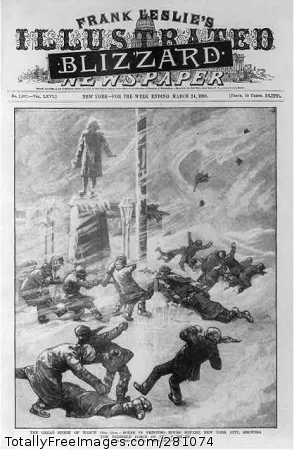
Keep manufacturing in New England cities' mix

From Robert Whitcomb’s “Digital Diary,’’ in GoLocal24.com:
‘A healthy economy includes a mix of services, technology and manufacturing. Such a mix of sectors, each with somewhat different business cycles, can better maintain their regions’ stability than if they had to depend on just one type of business.
But rising rents and other local costs can drive out manufacturing from rich regions, as a Jan. 5 Boston Globe story reports in focusing on the challenges of soaring rent facing CommonWealth Kitchen, a Boston food-startup incubator and a food manufacturer. As The Globe’s great Jon Chesto notes:
“Sure, Boston stands to gain when new apartments, offices, and labs sprout out of shabby old industrial properties: more workers to feed the tech economy, maybe, or more taxes for the city’s coffers. But Boston loses something important, too.’’
And, at least until the robots kill the humans, we’re going to need food. So food companies would seem to be a strong part of our economic future and relatively resistant to recessions. Let’s encourage them. All this is a reason why United Natural Foods’s moving its headquarters to Providence from Dayville, Conn., in 2009 was very good news for Providence’s economy.
To read Mr. Chesto’s article, please hit this link.
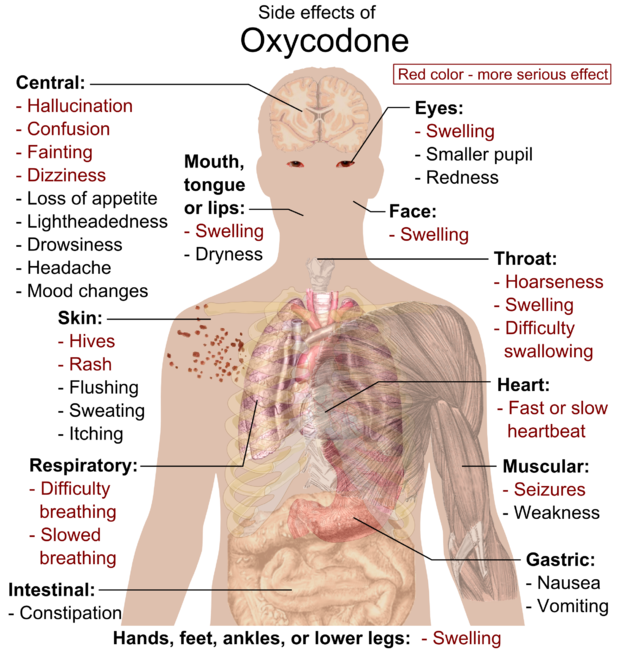
Victoria Knight: The more opioid marketing, the more overdose deaths
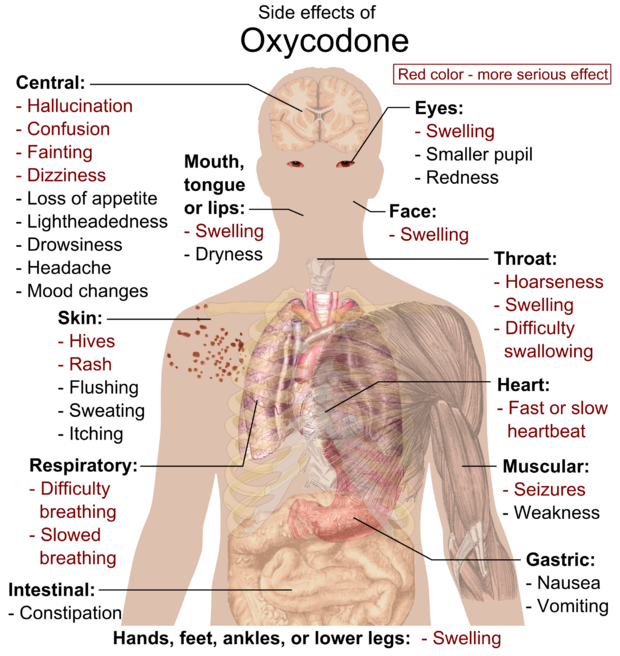
By VICTORIA KNIGHT
Researchers sketched a vivid line on Jan. 18 linking the dollars spent by drugmakers to woo doctors around the country to a vast opioid epidemic that has led to tens of thousands of deaths.
The study, published in JAMA Network Open, looked at county-specific federal data and found that the more opioid-related marketing dollars were spent in a county, the higher the rates of doctors who prescribed those drugs and, ultimately, the more overdose deaths occurred in that county.
For each three additional payments made to physicians per 100,000 people in a county, opioid overdose deaths were up 18 percent, according to the study. The researchers said their findings suggest that “amid a national opioid overdose crisis, reexamining the influence of the pharmaceutical industry may be warranted.”
And the researchers noted that marketing could be subtle or low-key. The most common type: meals provided to doctors.
Dr. Scott Hadland, the study’s lead author and an addiction specialist at Boston Medical Center’s Grayken Center for Addiction, has conducted previous studies connecting opioid marketing and opioid prescribing habits.
“To our knowledge, this is the first study to link opioid marketing to a potential increase in prescription opioid overdose deaths, and how this looks different across counties and areas of the country,” said Hadland, who is also a pediatrician.
Nearly 48,000 people died of opioid overdoses in 2017, about 68 percent of the total overdose deaths, according to the Centers for Disease Control and Prevention. Since 2000, the rate of fatal overdoses involving opioids has increased 200 percent. The study notes that opioid prescribing has declined since 2010, but it is still three times higher than in 1999.
The researchers linked three data sets: the Centers for Medicare & Medicaid Services Open Payments database that shows drugmakers’ payments to doctors; a database from the CDC that shows opioid prescribing rates; and another CDC set that provides mortality numbers from opioid overdoses.
They found that drugmakers spent nearly $40 million from Aug. 1, 2013, until the end of 2015 on marketing to 67,500 doctors across the country.
Opioid marketing to doctors can take various forms, although the study found that the widespread practice of providing meals for physicians might have the greatest influence. According to Hadland, prior research shows that meals make up nine of the 10 opioid-related marketing payments to doctors in the study.
“When you have one extra meal here or there, it doesn’t seem like a lot,” he said. “But when you apply this to all the doctors in this country, that could add up to more people being prescribed opioids, and ultimately more people dying.”
Dr. Andrew Kolodny, co-director of opioid policy research at Brandeis University’s Heller School for Social Policy and Management, said these meals may happen at conferences or industry-sponsored symposiums.
“There are also doctors who take money to do little small-dinner talks, which are in theory, supposed to educate colleagues about medications over dinner,” said Kolodny, who was not involved in the study. “In reality this means doctors are getting paid to show up at a fancy dinner with their wives or husbands, and it’s a way to incentivize prescribing.”
And those meals may add up.
“Counties where doctors receive more low-value payments is where you see the greatest increases in overdose rates,” said Magdalena Cerdá, a study co-author and director of the Center for Opioid Epidemiology and Policy at the New York University School of Medicine. The amount of the payments “doesn’t seem to matter so much,” she said, “but rather the opioid manufacturer’s frequent interactions with physicians.”
Dr. , who is the co-director of the Johns Hopkins Center for Drug Safety and Effectiveness and was not affiliated with the study, said that the findings about the influence of meals aligns with social science research.
“Studies have found that it may not be the value of the promotional expenditures that matters, but rather that they took place at all,” he said. “Another way to put it, is giving someone a pen and pad of paper may be as effective as paying for dinner at a steakhouse.”
The study says lawmakers should consider limits on drugmakers’ marketing “as part of a robust, evidence-based response to the opioid overdose epidemic.” But they also point out that efforts to put a high-dollar cap on marketing might not be effective since meals are relatively cheap.
In 2018, the New Jersey attorney general implemented a rule limiting contracts and payments between physicians and pharmaceutical companies to $10,000 per year.
The California Senate also passed similar legislation in 2017, but the bill was eventually stripped of the health care language.
The extent to which opioid marketing by pharmaceutical companies fueled the national opioid epidemic is at the center of more than 1,500 civil lawsuitsaround the country. The cases have mostly been brought by local and state governments. U.S. District Judge Dan Polster, who is overseeing hundreds of the cases, has scheduled the first trials for March.
In 2018, Kaiser Health News published a cache of Purdue Pharma’s marketing documents that displayed how the company marketed OxyContin to doctors beginning in 1995. Purdue Pharma announced it would stop marketing OxyContin last February.
Priscilla VanderVeer, a spokeswoman for the Pharmaceutical Research and Manufacturers of America, or PhRMA, said that doctors treating patients with opioids need education about benefits and risks. She added that it is “critically important that health care providers have the appropriate training to offer safer and more effective pain management.”
Cerdá said it is also important to consider that the study is not saying doctors change their prescribing practices intentionally.
“Our results suggest that this finding is subtle, and might not be recognizable to doctors that they’re actually changing their behavior,” said Cerdá. “It could be more of a subconscious thing after increased exposure to opioid marketing.”
KHN’s coverage of prescription drug development, costs and pricing is supported in part by the Laura and John Arnold Foundation.
Victoria Knight: vknight@kff.org, @victoriaregisk
'A child's imagination'
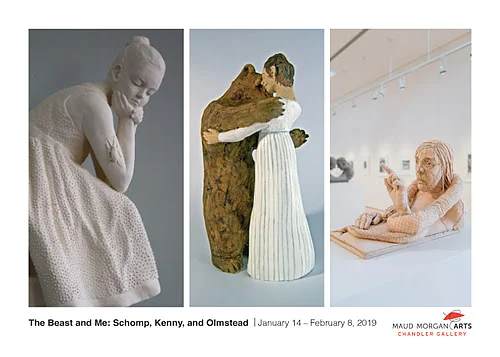
"The Beast and Me," the current show at the Chandler Gallery, in Cambridge, is, the gallery says, ““replete with scenes of a child's imagination. In their execution, the sculptures and drawings by Leslie Schomp, Andrea Scofield Olmstead and Mary Kenny feel lifelike, but their subjects are touched with the whimsy, curiosity and tenderness common in childhood fantasies.
”In one sculpture, a woman in a white gown wraps her arms around the waist of a large brown bear, his claws hovering tentatively over her shoulders; it's an embrace or slow dance frozen in time. In another, a small lion rests gently on a boy's head as he closes his eyes. His expression is so tranquil that he seems lost in a dream. ‘‘