On 'False Flags' in Stamford

Still from Theodore Darst’s “This Machine Makes Fascists,’’ in the show “False Flag: The Space Between Paranoia and Reason,’’ at Franklin Street Works, Stamford, Conn., through Jan. 6.
The gallery explains:
“‘False Flag: The Space Between Paranoia and Reason,’ refers to false flags,’ or situations where a segment of the population accuses the government of staging a traumatic event in order to push an agenda. With videos, sculptures, paintings and photographs the exhibiting artists allow the viewer to formulate their own view of the contemporary and vast subject matter of paranoia, philosophical position and psychological state.’’
Northeast fights air pollution regionally
From Robert Whitcomb’s “Digital Diary,’’ in GoLocal24.com
Louis Brandeis, the late Supreme Court justice, famously called states "laboratories of democracy," describing how a "state may, if its citizens choose, serve as a laboratory; and try novel social and economic experiments without risk to the rest of the country."
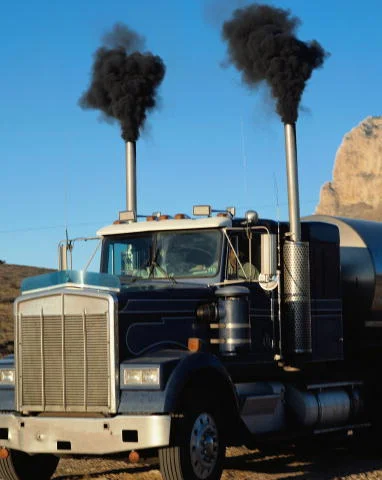
We now have a new and happy example of this in an agreement by Massachusetts, Rhode Island, Connecticut, Vermont, Delaware, Maryland, Pennsylvania, New Jersey, Virginia and the District of Columbia to impose regionwide limits on transportation emissions, which are America’s largest source of carbon pollution. New York and Maine are expected to soon join the compact. It’s unclear if New Hampshire will.
Under the plan, the states would have a year in which to create a system to cap total emissions, a system that would include requiring gasoline and diesel distributors to buy pollution permits for some of the carbon they’re partly responsible for putting into the air. The money would be used for such “greener’’ transportation projects as public transit, subsidies to speed the use of electric vehicles, carpooling and new bike lanes. Besides the environmental elements, the program would make the participating states more economically competitive over the long run: Rapidly growing tech companies and their employees want nearby public transit and other ways of avoiding dependence on cars. That’s one reason that Amazon and Google are expanding so much in very expensive and crowded New York City.
That much of the region to be covered by the pact is heavily urbanized makes such projects seem particularly apt. Also, New England would probably benefit the most environmentally from this plan since the prevailing wind is southwest
xxx
With the Trump regime, dominated by such fossil-fuel interests as the Koch Brothers, the states have to step in to address pollution and global warming, as California, under outgoing Gov. Jerry Brown, has been doing for some years. Given the Golden State’s size and economic clout, this tends to force the rest of America to eventually take similar actions
xxx
Watch for collapsing ice sheets
For all the turmoil in Washington, the single most interesting recent item I read was a News and Comment story in Science about something that happened 125,000 years ago. During a 13,000-year interlude of warming between two ice ages, temperatures were only slightly higher than they are today. Nevertheless an Antarctic ice shelf fell into the sea.
By the end of the period, sea levels around the world were 6 to 9 meters higher than today. Why? According to new evidence reported last week at the American Geophysical Union, in Washington, D.C., the West Antarctic Ice Sheet collapsed. Something of the sort is feared possible today.
If you believe the science (and I certainly do), then further evidence of the peril posed by carbon pollution will be forthcoming. A welter of expert testimony and a few hot summers haven’t been enough. A cataclysmic event may be required to galvanize nations, the U.S. in particular, to action. Yes, important discoveries will be made in the decades ahead. But if we don’t act on what we already know, a world of trouble lies ahead.
David Warsh is proprietor of economicprincipals.com, based in Somerville, Mass.
No wonder he grins

How doth Professor Superstar
Pursue his shining quest.
His glory awes us from afar.
He dwells atop the crest.
How cheerfully he seems to grin,
How neatly wields his clout,
To welcome all his cronies in
And keep outsiders out.
— Felicia Nimue Ackerman
Charles Pinning: An exciting Christmas miracle.
It was rock-splitting cold. For two weeks, the furnace ran continuously and cars groaned and didn’t want to start. The bottoms of your sneakers got hard as soon as you stepped out the door and all the ponds were frozen two feet thick.
We were members of the Sachuest Skating Club, which used the outdoor rink on the hilltop at St. George’s School, in Middletown, R.I., and as we got off the ice we rushed into the “hot house” to take off our skates and snuggle into our shoes. Pulling out of the dirt parking lot, my mother said, “Do you want to go look at Christmas lights?”
Of course I did. Back at home there wouldn’t be much to do. TVs only got three channels back then, plus we could cruise around in our new Pontiac station wagon. Well, not completely new, but new to us. It had originally been custom-made for Count Reventlow, who lived on the Ocean Drive, in Newport, and when it appeared on the used-car lot at Bove Chevrolet, my father, a car aficionado, snapped it up immediately.
It was a gorgeous two-tone navy blue and cream, the roof and hood and lower half of the sides cream, the upper half of the doors and the full tailgate, navy. It had whitewall tires and an impressive amount of chrome. The inside upholstery was also cream and blue and the radio was tops.
We took the usual route around Washington Square Park, in downtown Newport, then we rumbled down the cobblestones of Thames Street, magical beneath swags of colored lights and displays in the store windows. We turned up Mill Street and climbed the hill to the stately houses around Touro Park, where the Old Stone Mill sat in the center.
From there it was down Bellevue Avenue past the Art Association, The Redwood Library, The bright white Muenchinger-King Hotel and the big brick Hotel Viking, then a right down Kay Street.
We were having fun. The heater was blasting and WBRU out of Brown University in Providence was playing the Beatles. Instead of turning onto our street, we continued along to Kay Boulevard and up the hill to Bliss Mine Road.
“Drive My Car,” came on and my mother said, “That’s appropriate,” and I took that as a sign I could crank up the volume.
Bouncing up and down on the sumptuous bench seat, unfettered by seatbelts which had yet to become standard equipment, we turned on Green End Avenue and barreled down the hill singing “Baby you can drive my car….”
“But whose car is it? His or hers?” asked my mother in a raised voice.
“What do you mean?” I’d never thought of that before.
“It’s not clear whose car it is,” she said.
And it was just at that moment taking a curve that we fishtailed and flew right into the driveway of my mother’s former piano teacher, Pearl Stevens, who had to be at least 90, who was reading in front of her Christmas tree, oblivious as we spun by the side of her house missing it by inches. My mother cut the wheels and hit the brakes which only increased our speed and we propellered down Pearl Stevens’s sloping backyard toward Green End Pond.
“Whoooaaa….” cried out my mother, sounding like a teenager. I held my breath as we slid over the embankment onto the pond, whizzing across it like a hockey puck, finally coming to rest in the middle.
My mother lowered the radio and looked at me. The moon glistened off the ice. It was so pretty.
“Are you OK?” she gasped.
“Yeah,” I said. “That was cool!”
Slowly she drove across the pond to the low embankment just below my grandparents’ lane, then gunned it to make the grade and the tires caught some of the rocks and we were up.
“Wait’ll Dad hears about this!”
“No, sweetheart. Dad doesn’t need to hear about it. He might think I hurt the car. Do you think I hurt the car?”
“Nah. It’s fine. Where to now?”
“Straight home, sweetie. We’ve had our Christmas miracle.”
Charles Pinning is a Providence-based writer.
Kentridge at Exeter

From the show “William Kentridge: Universal Archive,’’ at the Lamont Gallery, at Phillips Exeter Academy, Exeter, N.H., Jan. 11-March 9. The gallery says:
Renowned South African artist William Kentridge shares new work inspired during the writing of his Norton Lectures at Harvard in 2012. In this expanding series, a familiar personal iconography is revisited - coffee pots, typewriters, cats, trees, nudes and other imagery; an intimate thematic repertoire appearing in art and stage productions throughout the artist’s career. Meticulously based on ink sketches, over 75 linocut prints shift from identifiable subject matter to deconstructed images of abstract marks.’’
Phillips Exeter is one of the two most famous American prep schools, the other being its great rival, Phillips Academy, in Andover, Mass. The first is usually just called “Exeter,’’ the second “Andover’’.
The two schools were founded by the Phillips family, Andover by Samuel Phillips, Jr., in 1778, and Exeter by his uncle John Phillips, in 1781. The two schools are 37 miles apart and share similar seals and mottoes as well. The novel A Separate Peace was inspired by writer John Knowles’s days as a student at Exeter in the 1940s.
‘A chant sublime’
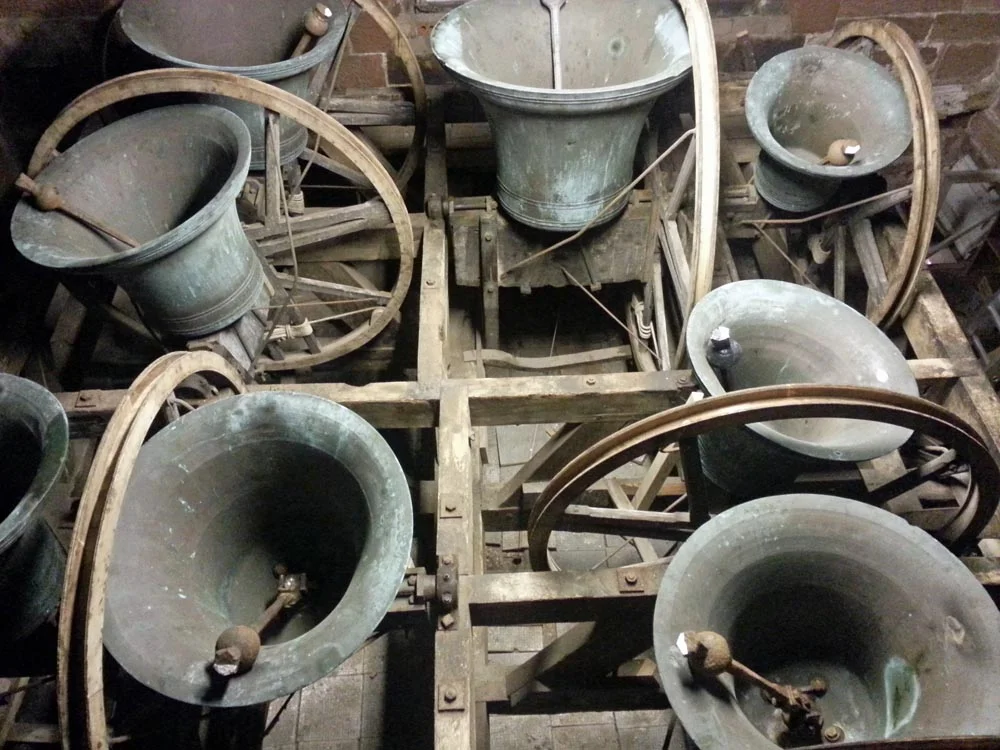
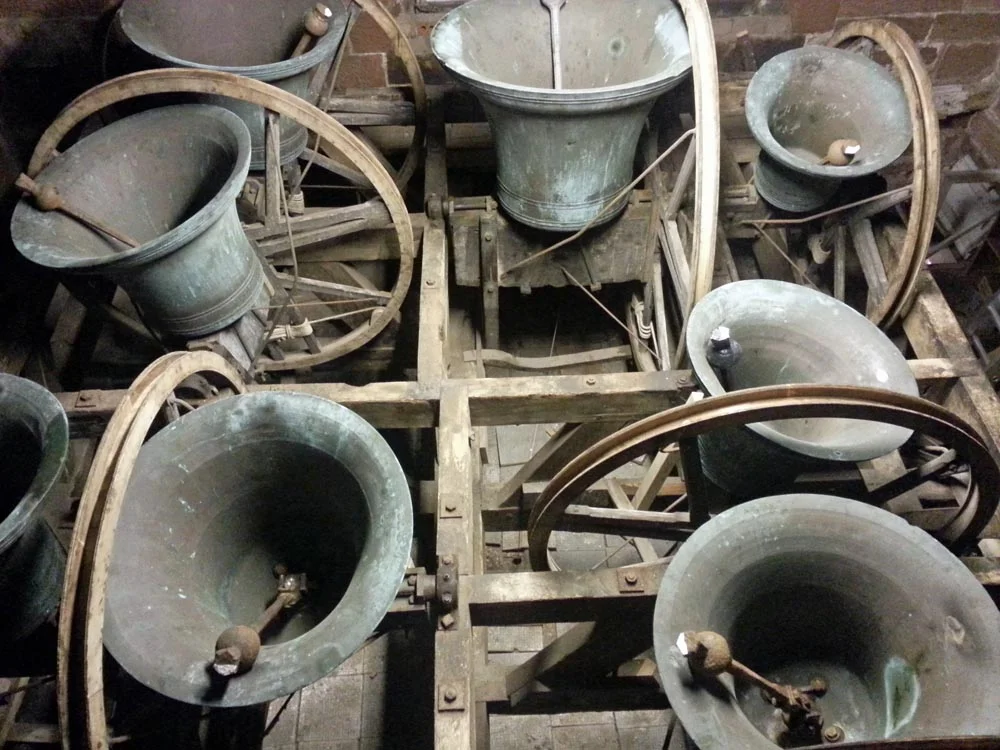
“I heard the bells on Christmas Day
Their old, familiar carols play,
And wild and sweet
The words repeat
Of peace on earth, good-will to men!
And thought how, as the day had come,
The belfries of all Christendom
Had rolled along
The unbroken song
Of peace on earth, good-will to men!
Till, ringing, singing on its way,
The world revolved from night to day
A voice, a chime,
A chant sublime
Of peace on earth, good-will to men!
Then from each black, accursed mouth,
The cannon thundered in the South,
And with the sound
The carols drowned
Of peace on earth, good-will to men!
It was as if an earthquake rent
The hearth-stones of a continent,
And made forlorn
The households born
Of peace on earth, good-will to men!
And in despair I bowed my head;
'There is no peace on earth,’ I said ;
‘For hate is strong
And mocks the song
Of peace on earth, good-will to men!’
Then pealed the bells more loud and deep:
’God is not dead; nor doth he sleep!
The Wrong shall fail,
The Right prevail,
With peace on earth, good-will to men!"‘
— “Christmas Bells,’’ by the New England poet Henry Wadsworth Longfellow. It was written in 1863, during the Civil War, and first published in 1865.

Martha Bebinger: An outrageous air ambulance bill for a Mass. patient

BOSTON
Kristina Cunningham was in stable condition on an evening in June, when EMTs lifted her gurney into a medical flight, bound for Boston.
The 34-year-old couldn’t use her right arm or speak clearly after a stroke six days earlier, and still had two blood clots at the base of her brain. Cunningham’s dad, Jim Royer, remembers doctors at the small hospital in Wichita, Kan., where Cunningham had attended a family wedding, saying she needed to see a neurosurgeon.
“There was discussion of flying her to St. Louis, there was discussion of flying her to Chicago, there was discussion of flying her to Dallas,” Royer recalled, but “we don’t have family in any of those locations.”
So the doctors arranged to transfer Cunningham, via an Angel MedFlight Learjet, to Massachusetts General Hospital, where she would be diagnosed with a rare blood vessel disease of the brain. MGH is about an hour from Cunningham’s home in Berlin, Mass. — and her 7-year-old son. Cunningham’s doctors and her insurer, CareFirst BlueCross BlueShield, based in Maryland, agreed the transfer was medically necessary.
“We assumed it would be [covered],” Royer said, “because it was supposedly pre-approved by the insurer before any flight took place.”
Royer said he and Cunningham didn’t think about the Angel MedFlight piece of her health scare again until a letter arrived in August. It was a one-page “explanation of benefits” with a jaw-dropping total in a column labeled “other amounts not covered.”
“When I got the bill for $474,725, I’m thinking six or seven flights, and you can buy a whole new jet,” Royer said with a wry laugh.
That nearly half-million dollars is the total of four items, the largest of which is a per-mile charge. That figure, $389,125, breaks down to $275 a mile.
“It’s larger than any surprise medical bill I’ve personally seen,” said Chuck Bell, program director for the advocacy division at Consumer Reports. “It’s really outrageous.”
In a study last year, Consumer Reports detailed some of the reasons excessively high air ambulance bills have become more common. Use of air ambulances is rising as more rural hospitals close, Baby Boomers age and the use of telemedicine increases.
“The industry has really grown by leaps and bounds over the last 15 years and prices have doubled or tripled,” Bell said. “Most of the operators of air ambulances now are for-profit, Wall Street-type corporations reporting very large profits to investors.”
The Association of Air Medical Services (AAMS), a trade group, counters that it is not unique, that many hospitals and health insurers across the country are also for-profit and that some are owned by private equity firms.
AAMS said a key reason bills for patients with private insurance plans are often high is this: Companies have to make up for the money they lose transporting other patients.
“Medicare pays about 60 percent of the cost of the flight. Medicaid pays 35 percent or less. Self-paid patients pay a few cents on the dollar. And that has led to a crisis of being able to sustain the service,” Christopher Eastlee, AAMS vice president for government relations, said in a statement, stressing that he has cost data only for emergency helicopter transports, not jets like the one in which Cunningham traveled.
In 2018, Medicare paid $8.65 per mile for a fixed-wing aircraft like the Learjet that transported Cunningham. That’s a stark contrast to Angel MedFlight’s $275 charge per mile. There are no guidelines for determining reasonable charges in this case.
Cunningham’s insurer, CareFirst, initially paid $14,304.55, leaving about $460,420 unpaid. In Massachusetts, a ground-based ambulance could not demand that Cunningham pay the balance, as state law doesn’t allow so-called balance billing. But air ambulances are governed by federal aviation laws. There are numerous cases of companies demanding payments from patients. A few states have tried to intervene but been unsuccessful, with courts saying that federal law prevails.
Cunningham has been focused on recovering her speech and preparing for surgery. In January, she will meet with her doctors to decide which type of surgery they recommend for removing or bypassing the blood clots at the base of her brain.
But Cunningham and her father have another worry: what the mail may bring.
“I don’t know, we’ll see,” Cunningham said, with a shrug.
“It’s a big bill to be sitting out there wondering what’s going on,” said Royer, who contacted KHN-NPR’s Bill of the Month on his daughter’s behalf. “It would force her into bankruptcy.”
Angel MedFlight COO Andrew Bess told WBUR the company is negotiating with CareFirst and will not demand payment from Cunningham.
“We’re quite confident we’ll come to a clear resolution despite the insurer placing the patient in the middle of the dispute,” said Bess.
Royer said it was a letter from Angel MedFlight that sounded threatening. As he read it, the company told Cunningham she must sign over the rights for Angel MedFlight to negotiate with CareFirst or risk being held liable if the insurer did not pay. Cunningham signed the request.
Bell, with Consumer Reports, said agreeing to such terms can be risky. Some air ambulance companies ask for detailed information about the patient’s personal finances, information they then use to determine how much the patient can pay if the insurance reimbursement is deemed inadequate.
During inquiries for this story, CareFirst told WBUR it would increase the proposed payment to Angel MedFlight. The insurer said it had discovered an error in its initial reimbursement to Angel MedFlight. CareFirst is now proposing to pay $70,864.90, or about one-seventh of the original charge.
“Unfortunately, exorbitant charges like these by air ambulance providers are not uncommon,” said Scott Graham, a spokesman for CareFirst, in an email. “This is an issue because companies like Angel MedFlight typically do not contract with health insurers on negotiated rates.”
WBUR forwarded this update to Bess, who called it a “meaningful offer” in his emailed response.
“We provide a valuable service, and for that providers should be fairly compensated and reimbursed,” Bess said. “We strive to work with our patients and advocate on behalf of them to get coverage rightfully owed to them under their insurance plans.”
Royer, a retired Air Force air traffic control systems manager, knows something about the cost of operating jets. To him, it looks like Angel MedFlight inflated the bill, hoping the insurer would agree to a generous settlement.
“I guess that the way things work nowadays. You ask for the moon and if you only get a large island, that’s what you get,” Royer said.
Bess responded to Royer’s claim in a statement.
“Staffing what is essentially an Intensive Care Unit at 30,000 feet presents unique medical and aviation challenges that may not be apparent to those outside of the medical aviation industry,” Bess wrote. “The amount we receive per flight is a fraction of the billed charge.”
Patients caught up in an air ambulance billing dispute can file a complaint with the U.S. Department of Transportation.
A recent push for stricter federal billing regulations was stripped out of the Federal Aviation Reauthorization Act, passed in October. The legislation did establish a council of industry representatives, including air ambulance providers and insurance company representatives, among others, to write and re-evaluate consumer protections, including balance-billing practices. It did not add a requirement for more price and other data transparency called for in a Government Accountability Office report on the air ambulance industry.
The National Association of Insurance Commissioners says federal legislation is needed so that states can intervene to oppose unreasonable air ambulance charges. Lawmakers from rural states, including Sen. Jon Tester, a Montana Democrat, said they’ll reintroduce such legislation.
The air ambulance trade group says any such change would create “borders in the sky” that would interfere with lifesaving air rescues across state borders.
This story is part of a partnership that includes WBUR, NPR and Kaiser Health News.
Martha Bebinger, WBUR: marthab@wbur.org, @mbebinger
'Roused to Christmas mirth'

The Examination and Trial of Father Christmas, (1686), published after Christmas was reinstated as a holy day in England.
’’When gloomy gray Decembers are roused to Christmas mirth,
The dullest life remembers there once was joy on earth,
And draws from youth’s recesses
Some memory it possesses,
And, gazing through the lens of time, exaggerates its worth,
When gloomy gray December is roused to Christmas mirth.’’
—- From “Christmas Fancies,’’ by Ella Wheeler Wilcox (1850-1919), a Connecticut poet.
The future of the MBTA
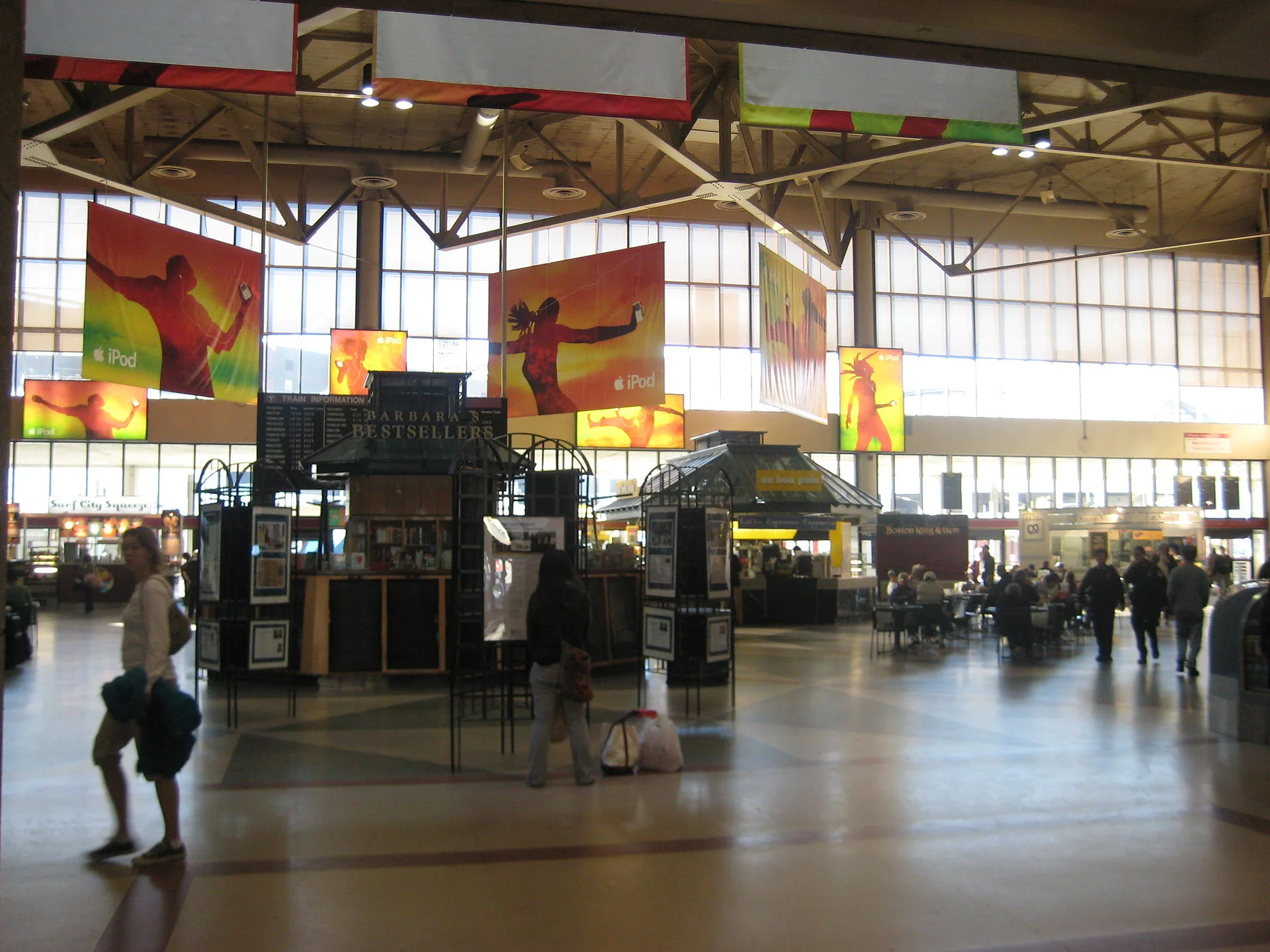
lnside South Station, Boston, the major MBTA commuter rail hub.
From Robert Whitcomb’s ‘Digital Diary,’’ in GoLocal24.com
Rhode Island and Massachusetts readers would do well to read The Boston Globe’s Dec. 5 article “Mass. officials have big ideas – and big decisions – for the MBTA commuter rail’’. Bay State transportation officials are pondering how the system should change over the next few decades, including route and station additions, service frequency, fare structures and equipment. The many Rhode Islanders who commute on the MBTA to and from Boston, mostly from Providence but some from points south, should read the piece. Please hit this link
'Winter and summer'
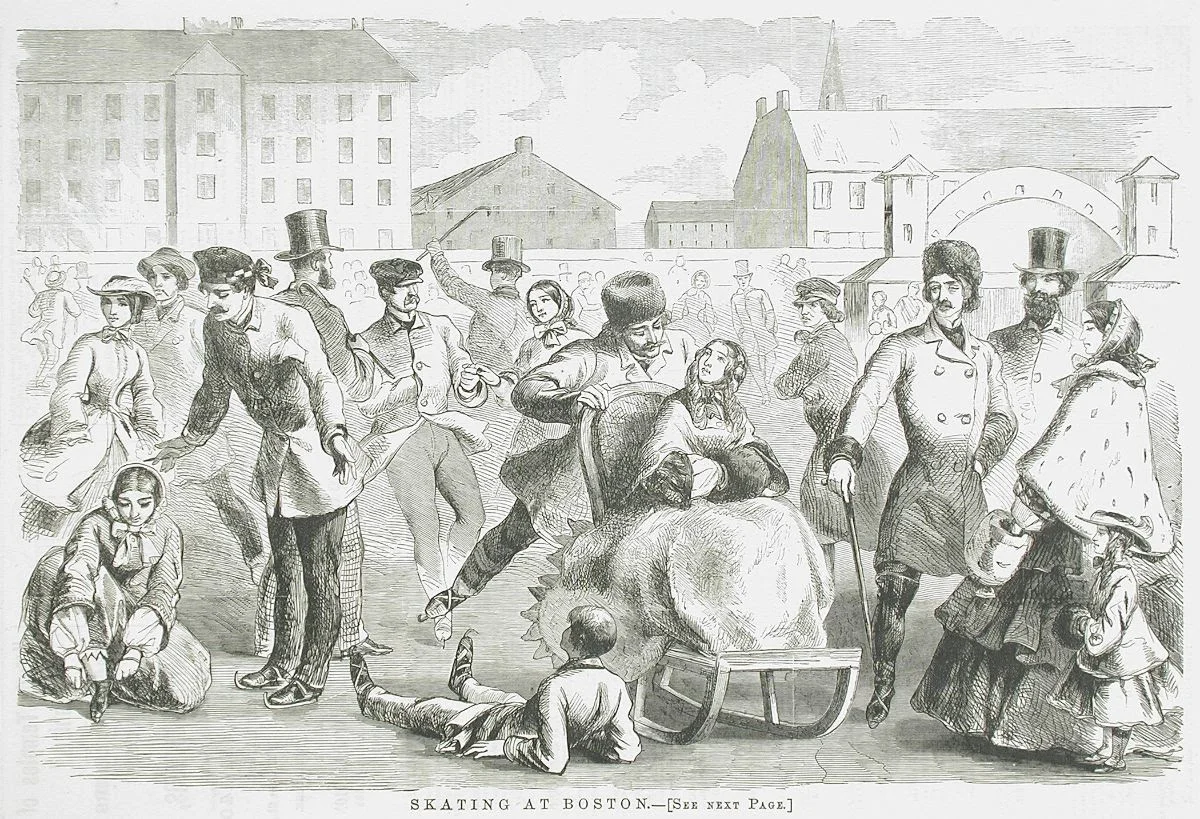
“Winter was always the effort to live; summer was tropical license. Whether the children rolled in the grass, or waded in the brook, or swam in the salt ocean, or sailed in the bay, or fished for smelt in the creeks, or netted minnows in the salt marshes, or took to the pinewoods and the granite quarries, or chased muskrats and hunted snapping turtles in the swamps or mushrooms or nuts on the autumn hills, summer and country were always sensual living, while winter was always compulsory learning. Summer was the multiplicity of nature; winter was school.
”The bearing of the two seasons on the education of Henry Adams was no fancy; it was the most decisive force he ever knew; it ran though life and made the division between its perplexing, warring, irreconcilable problems, irreducible opposites, with growing emphasis to the last year of study. From earliest childhood the boy was accustomed to feel that, for him, life was double. Winter and summer, town and country, law and liberty were hostile, and the man who pretended they were not was in his eyes a schoolmaster—that is, a man employed to tell lies to little boys.’’
— From The Education of Henry Adams, by Henry Adams (1838-1918), his posthumously published memoirs. The book, by a member of Massachusetts’s most distinguished family, won the Pulitzer Prize and is considered a great classic.
UNH School of Law seeks to offer mostly online degree focusing on intellectual-property law

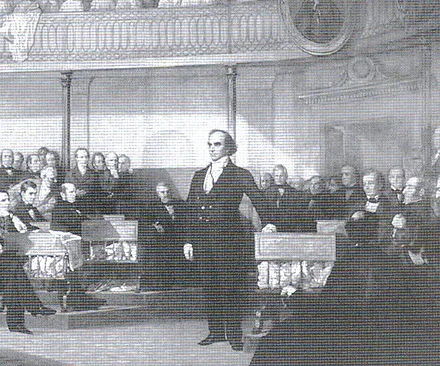
The University of New Hampshire School of Law named its honors program after the great Massachusetts U.S. senator, secretary of state and orator Daniel Webster, a New Hampshire native.
The New England Council (newenglandcouncil.com) reports:
The University of New Hampshire School of law, in Concord, recently forayed into the online-education industry. If it gets permission from the American Bar Association, UNH will create the nation’s first specialized law degree.
“If given the approval to proceed, the online law degree from UNH will focus on intellectual property, covering topics from patents and trade secrets to privacy. The degree will take three and a half years to complete, and will likely start in the fall of 2019. The school would require the students to be in Concord only three or four weeks each year, and most classes will be taught online. The hope is that the American Bar Association will make an exception to their rule, which says law degrees can offer at most one third of total credit hours through distance learning, with the rest taking place on campus. Only three of the accredited law schools in the country, including Syracuse University, in New York State, Southwestern University, in Los Angeles, and Mitchell-Hamline University, in Minnesota, have applied for and received approval to offer an online JD degree.
“Dean Megan Carpenter said in a statement that, ‘Intellectual property is a perfect area for this. It is the law of innovation, so we should think about ways to innovate in legal education while teaching it. . . It’s satisfying to use a technology when you’re learning about law that supports that technology.’
“The New England Council congratulates UNH on this exciting new initiative and commends them for working to make law school more accessible.’’
In the off-season

“Isle’’ (watercolor on paper), by Connie Glore, at Alpers Fine Art, Andover, Mass.
Waterbury 'tougher than New York’
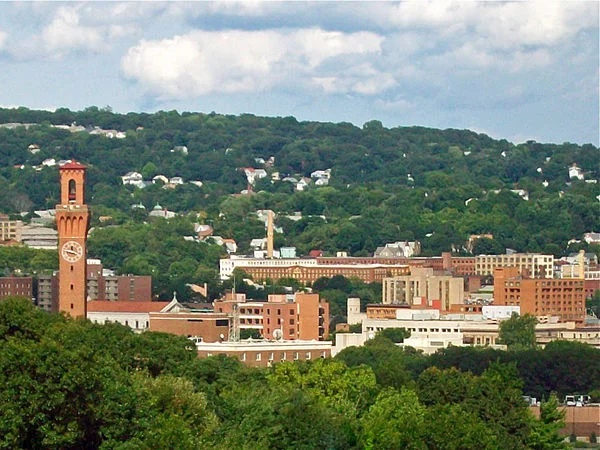
Waterbury from the west, with Union Station clock tower at left.
“My past is not pleasant; I grew up in a very tough town, Waterbury, Connecticut. I grew up in New York {City}, too, but Waterbury was tougher.’’
— Dylan McDermott, TV actor
Editor’s note: He’s right. I lived near Waterbury for four years and it’s a tough town, although the communities around it are fairly sedate and bucolic. Waterbury is an old manufacturing city, once nicknamed “The Brass Capital of the World.’’ It was a major center for making watches and clocks (think Timex) as well as most anything made of brass.
The Naugatuck River flows through the middle of it, a major reason for its rise to prominence; the river provided the power for the first factories. I well remember the river’s vivid changing colors depending on which toxic chemicals companies were pouring directly into the Naugatuck. No EPA then!
Floods from Hurricane Diane, in 1955, did tremendous damage along the river.
Despite the city’s rather gritty reputation, it has a fine museum, the Mattatuck.
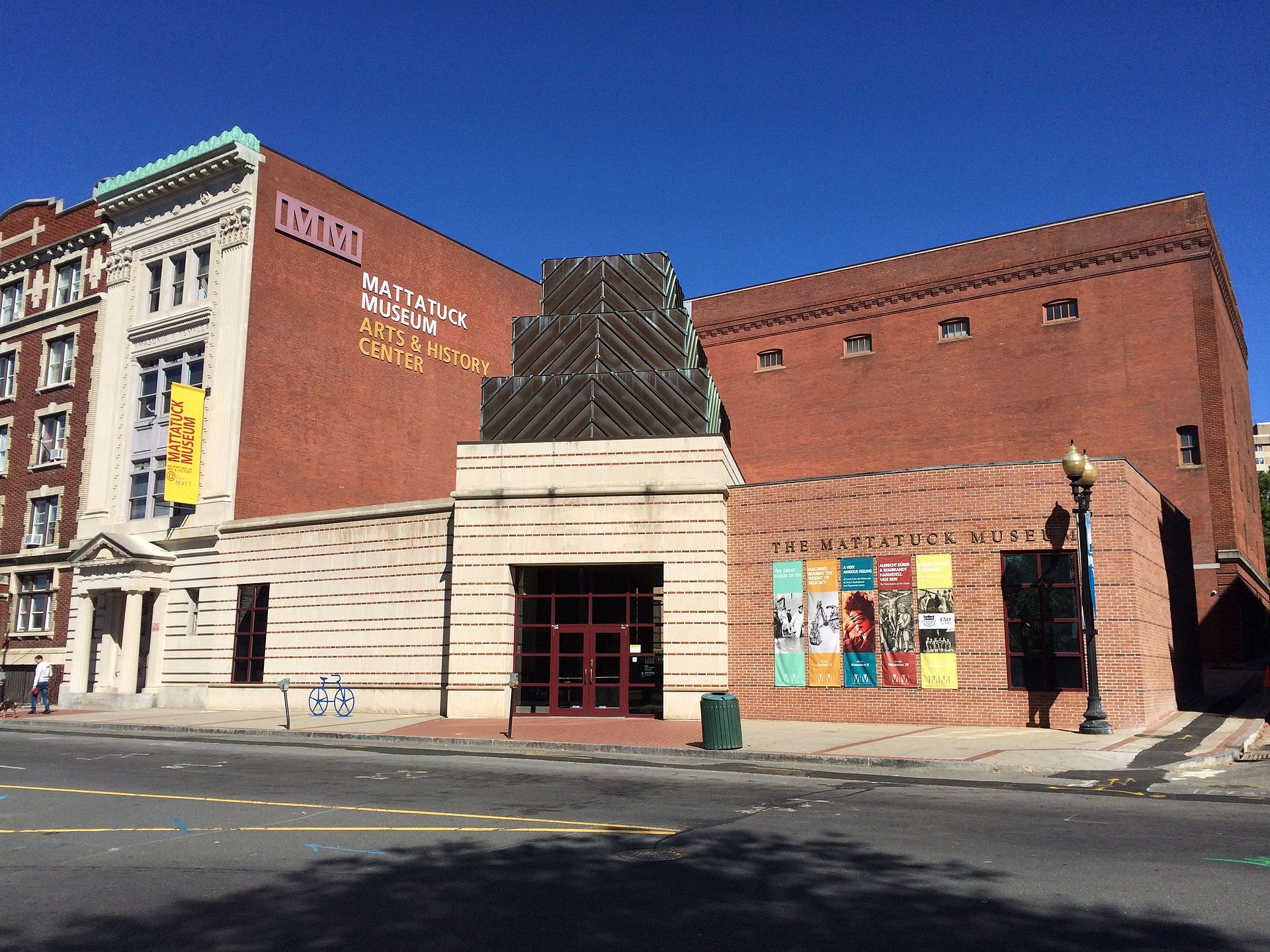
— Photo by JLLM06
Llewellyn King: For neckties and against AI, airline bosses and hedge funds in 2019
WEST WARWICK, R.I.
No New Year’s resolutions this year. Nary a one. Instead I am throwing myself, body and soul, into campaigns -- campaigns designed to halt the slide in civilized life.
Here are my campaigns:
1. Rescue the necktie: More and more men are going around naked about the throat but wearing a pocket square. Now I love pocket squares, very useful if you should meet one of those famous actresses who is always in tears. Whip it out, get it soaked and presto! It goes on eBay.
The thing is that neckties are disappearing. Only businessmen on the perp walk and some politicians wear them. Even former President Barack Obama appears to have abandoned them almost entirely -- a serious regression.
Ties are important. They conceal protruding Adam’s apples, turkey necks and dirty shirt fronts. Also, they are used to wipe eyeglasses and to twirl when listening to people who go on and on.
2. I am pushing to get airline executives to ride “basic coach” on at least one 10-hour flight. They will learn that they are the agents of physical cruelty and weird perversity.
They have ordained travel without luggage because the fees for luggage on “basic” are so high you would be paying for another class of service if you take a suitcase.
The airline bosses should be squeezed into the amazing shrinking toilets (too small for grownups); they should have their knees in their faces and have to sit up as straight as a drill sergeant. They should then try to stand up after hours of contortion.
3. I want a punitive tax for banks who will not speak to you but will put you through hours of automated telephone hell, in the hope that you will give up and leave them alone (with your money and their fees with which they steal that money).
4. Hedge funds that shred the lives of workers and deny customer service in the name of “shareholder value” should be prosecuted for hate speech for those words. “Shareholder value” can be roughly translated as “We’re going to screw you.” How about “customer value” or a little “social value”?
You have been on the line for hours and are begging the artificial-intelligence recording to let you hear a live human voice, even if it is originating from a faraway country and its owner is speaking English as a third language. The machine says, “Do you want to hear the main menu again?” You slide to the floor, defeated, crazed and suicidal.
I want it to be a federal crime to have a machine with a woman’s voice. They are cursed routinely with foul expletives that even a machine should not have to hear, let alone one that thinks it is a woman. #MeToo should get on this one and demand that the programmer gets the sack without pension.
5. I will be working for honesty from automated systems. I do not want my computer to “welcome” me when I turn it on. I believe that it does not care, that it is not sincere and that it is, to this point in time, inanimate and has no feelings. Therefore, when machines say things like “Have a nice day,” even “thank you,” they are lying.
This will change as artificial intelligence is given artificial emotions and machines talk to us in ways so crafty we will not know whether it is a machine or a person. We may not even know if the damned thing has captured the affections of our loved ones. Some states still have an “alienation of affections” common law tort that allows the thwarted lover to sue for stolen love.
Already, you may have a good case for filing a lawsuit against Facebook for running off with your children. Albeit in plain sight.
Happy New Year.
Llewellyn King is executive producer and host of White House Chronicle, on PBS. His email is llewellynking1@gmail.com and he’s based in Rhode Island and Washington, D.C.

'Glacial arrogance'

Bubble Rock, in Acadia National Park, Maine. It was left there by the last Ice Age. Such ‘‘glacial erratics’’ cam be found all over New England.
“The forest floor is white,
but here & there a boulder rises
with its glacial arrogance
& brooks that bubble
under the sheets of ice
remind us that the tundra of the soul
will soften
just a little
towards the spring.’’
— From “New England Winter,’’ by Erika Jong
A cover for Christmas

Based on “Christmas Carolers’’ (oil on canvas), by J.C. Leyendecker, for the Dec. 21, 1907 Collier’s magazine cover at the National Museum of American Illustration, Newport. This takeoff features Judy Goffman Cutler, museum director and co-founder; Laurence S. Cutler, chairman/CEO and co-founder, and Jill Perkins, museum shop manager/interior administrator.
Heating from the woods
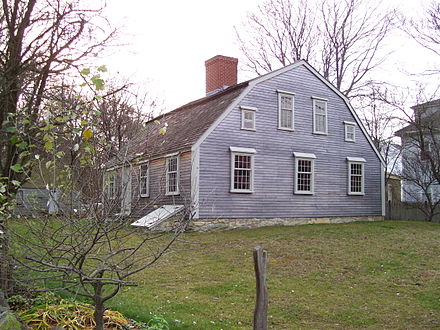
“My wife, Daniela, and I live in an old house from 1810 with three fireplaces at the end of a dead-end dirt road on Cape Cod, so I turn the trees into firewood for us and a friend of mine sells the rest.’’
— Sebastian Junger, famed bestr-selling book author (The Perfect Storm, etc.) and journalist. He lives part of the year on the Outer Cape.
Trump's push for dirtier water
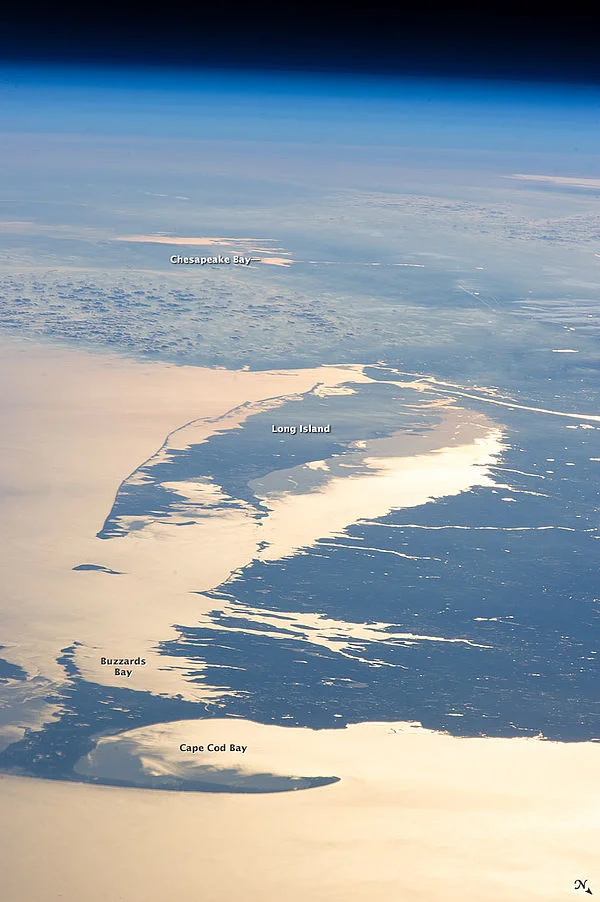
Northeast bays from space.
From Robert Whitcomb’s “Digital Diary,’’ in GoLocal24.com
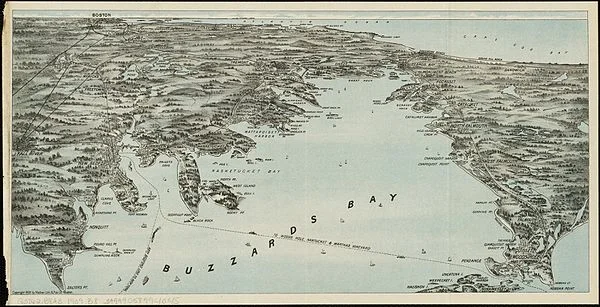
Of course, the Trump administration wants to roll back federal protections under the Clean Water Act to please mining, agribusiness and real-estate-development interests! If this actually happens, you can expect more pollution, including of public drinking water, as well as damage to fish stocks and other wildlife in wetlands, rivers and lakes. Trump’s plan would harshly affect such coastal bodies of water as Narragansett, Buzzards and Chesapeake bays.
The Trump mob likes to say that the move would return needed power to the states to make determinations on water quality and how to protect it. But many states, especially in the South, that are basically run by big business interests, would simply engage in a race to the bottom of regulations, leaving more environmentally responsible states downstream to handle the new pollution.