
Vox clamantis in deserto




Chris Powell: Social, economic policies, not plastic guns and 'ghost guns,' at root of urban violence

The “Liberator’’ — a 3D-printable single shot handgun, the first such printable firearm design made widely available online.
Maybe someday enough people in Connecticut will realize that pose-striking by politicians solves no problems but their own need for attention, but that day didn't come the other week.
Instead the pose striking got more ludicrous as Bridgeport Mayor Joe Ganim gathered his police chief, state legislators, City Council members, and other gullibles while he signed a city ordinance purporting to outlaw homemade plastic guns and guns without serial numbers, "ghost guns."
"As a city, we are taking a stand against gun violence," Mayor Ganim said, as if state and federal laws haven't done that for centuries already and as if a piddling city ordinance will deter anyone who isn't deterred by those laws.
Homemade plastic guns are the target of the latest hysteria contrived by the political left. Theoretically such guns might be smuggled through metal detectors onto airplanes. But though Bridgeport owns the small airport in Stratford next door, it has no scheduled commercial flights and doesn't plan any.
In any case homemade plastic guns can't fire accurately or even repeatedly. As for "ghost guns," almost any ordinary gun can be turned into one by filing off its serial number.
But the main drawback of homemade plastic guns is the expense of making them. They require a computerized machine that molds plastic. Except for the chance of slipping it past a metal detector, why would anyone bother getting a homemade plastic gun when tens of millions of ordinary metal guns are already available cheap throughout the country?
Of course those are the guns used in nearly all crime, and there are probably a million crimes committed with ordinary metal guns for every crime committed with a homemade plastic gun.
Besides, guns aren't even the big problem with crime, and especially not in Bridgeport. No, the gun problem is just part of the demographic problem in Bridgeport and other cities -- the steady impoverishment and proletarianizing of the population by government's mistaken social and economic policies. There is little gun crime in middle-class and prosperous suburbs, where people have enough education and family upbringing to go on to support themselves honestly.
But where there are few parents, little incentive at home for children to become educated, no job skills, and plenty of "social programs" purporting but failing to remediate those catastrophic conditions -- that is, wherever there is an environment like Bridgeport's -- crime, drugs and guns are a way of life.
Of course if he wants to win election again Mayor Ganim can hardly acknowledge that Bridgeport's problem is the people who live there, his own constituents. City politicians need scapegoats.
Ganim's scapegoats were homemade plastic guns and "ghost" guns. A few weeks earlier the mayor was railing against immigration-law enforcement. Soon he will return to complaining about what he will call inadequate state financial aid to Bridgeport, though state government reimburses about half the city's budget, as it reimburses half the budgets of most cities, and though the more the cities get, the worse their living conditions become.
But Connecticut's cities actually do well at what they are really supposed to do -- to separate the underclass from the middle class enough so no one with any political awareness is prompted to wonder why state government's most expensive policies profit only those in charge of implementing them.
Chris Powell is a columnist for the Journal Inquirer, in Manchester, Conn.

Street scene in Bridgeport, once a thriving industrial town and still, despite its many woes, Connecticut’s largest city.
Rooted in transience
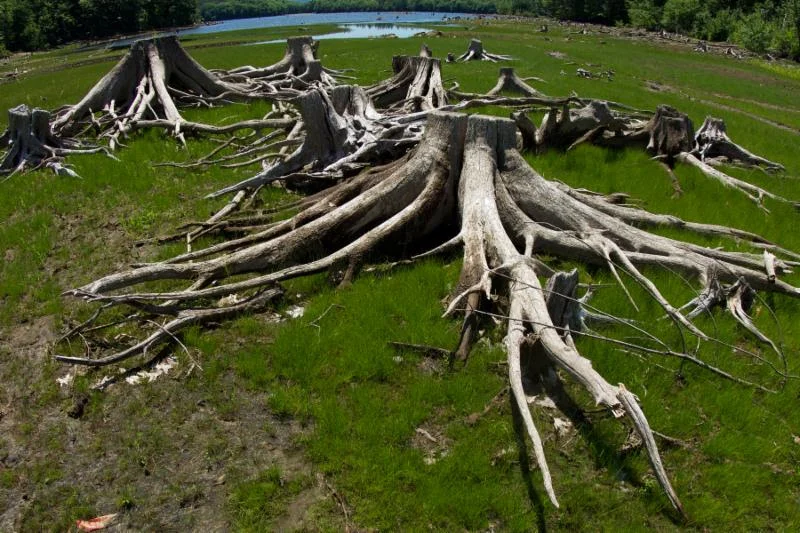
“Child's Bog” (a digital capture), by Justin Freed, a Boston area photographer and filmmaker, in his show “Sacred Tree Habitat,’’ at Galatea Fine Art, Boston, Oct. 31-Dec. 2.
Frank Carini: On the path to a great beech

Rhode Island arborist Matt Largess recently led a tour of Wingover Farm’s forest. He was impressed with what he saw.
— Frank Carini/ecoRI News photos
From ecoRI News (ecori.org)
To see the video and more photos with this article, please hit this link.
TIVERTON, R.I.
The “oohs and aahs” and “oh my gods” were followed immediately by one or more superlatives from among “amazing,” “cool,” “awesome,” “incredible” and “wow.”
“If you could leave this for 100 years people would come from around the world to see it because everything else is going be gone. Just think of it that way,” Matt Largess, a respected Rhode Island arborist who has studied East Coast forests from Maine to the Florida Keys, said near the end of an hourlong walk in the woods on a 72-acre farm not far from the coast. “If Rhode Island could start to think that way, if they saved their places where people come as ecotourists to see the forest. I know its sounds farfetched but in 100 years it’s going to be that crucial, not only to see our leaf colors but just come to be in a forest near our ocean. Rhode Island is one of the great environments. We have these beautiful forests right up to the ocean, but they’re diminishing rapidly.”
During an Oct. 18 tour of Wingover Farm’s “unique” forestland, the leaves of Rhode Island’s state tree, the red maple, were turning color and Largess and two colleagues, Daryl Ward and Kara Discenza, were constantly pointing out trees of all shapes, sizes, and ages.
During the 60-minute tour, they counted nearly two dozen different types of trees, including American beech, American holly, black and white oaks, yellow and white pines, black tupelo, yellow and paper birches, sassafras, black cherry, and bigtooth aspen.
And not just individual trees, but stands of black birch, groups of teenage and adult red maple growing together, and baby holly trees sprouting from the forest floor. Largess said having birch, holly, and beech together in one place was special. He used the word “special” a lot. He said the forest has an “impressive understory.” He noted that some of the tallest hollies documented in North America are in Tiverton and Little Compton. He said native forests of American beech are shrinking rapidly, especially in Connecticut and Rhode Island.
With the population of the region’s American beech decreasing, Largess was thrilled to discover a large beech tree he repeatedly called “the mother tree.” He said the tree must be 300-400 years old and was surrounded by younger beeches, 150 or so years old, waiting to be the next mother. He pointed out beechdrops, a wildflower that lacks chlorophyll and produces brown stems on which small white and purple flowers appear July through October, growing under the forest’s majestic beech tree.
The property’s other vegetation included, among many others, mountain laurel, a broadleaf evergreen shrub; sweet pepperbush, a shrub with fragrant white or pink terminal flower spikes in late summer; and winterberry holly, a shrub with copious amounts of bright-red berries that shine in the fall and winter landscape.
Largess called the layered and biodiverse property, which includes a pond alive with frogs and fish, “a balanced ecosystem.” He said it would be an excellent location for the Rhode Island Natural History Survey to hold a BioBlitz, would make a wonderful outdoor classroom for local students, and could be a great future ecotourism site, as it could be tied into nearby Weetamoo Woods.
Julie Munafo invited the Largess Forestry professionals on the tour to better understand what could be lost should the property be developed into an 11-megawatt solar facility.
Munafo’s family has owned the Crandall Road property since the 1970s, but a pending sale could lead to some 40 acres of solar panels. The buyer’s proposed project would inevitably decimate forestland, ruin farmland, and destroy wildlife habitat.
The family is torn by the pending sale of the property — Munafo, for one, doesn’t want to see the farm reduced to acres of solar panels. But the family was unable to come to an agreement with the local land trust or find a buyer interested in farming and/or preservation, according to Munafo. She said she believes the property is selling for about a million dollars.
Largess, who has become a leading spokesmen for the preservation of trees and old-growth forests, said the farm’s open space is unique, as it features, in this order, open fields, young woodlands, and a mature forest. He was impressed with the property’s mix of vegetation, most notably its diverse collection of tree species. He noted that forestland like this “needs to be protected,” not turned into an energy facility, subdivision, or an office park.
In fact, the staunch conservationist believes that trees deserve more respect, which is why his company is “dedicated to the preservation, restoration, and education of the the Earth’s forests while enhancing awareness and knowledge of the natural world.”
“Trees are the No. 1 tool to battle climate change,” Largess said. “But my work as an arborist is less about planting trees and more about cutting them down, because cars are getting dirty or someone wants to see the water.”
Like many following the ongoing debates across Rhode Island on where to site solar projects, Largess doesn’t understand why so many are gung-ho to clear-cut forests. Like others who have weighed in on the controversial topic, he believes Rhode Island can deal with the issues of interconnection, infrastructure, incentives, property rights, and economics without sacrificing priceless open space. (A city in eastern China is building the world’s first photovoltaic highway.)
The will, both public and political, however, needs to be there. The state, its 39 municipalities, its 1.06 million people, and a host of nonprofit organizations have been grappling with the issue for two years. The town of Tiverton, for instance, is pondering a solar moratorium until it can craft an ordinance that better addresses the siting of utility-scale solar energy.
Munafo, who, like Largess, supports renewable energy, at least those projects sited responsibly, has been a vocal proponent of the moratorium. She believes the project proposed for her family’s property doesn’t mesh with the town’s comprehensive plan or even Tiverton’s current solar ordinance. In a letter to the editor recently published in the Sakonnet Times, the Jamestown resident asks: “How is wiping out a historic farmhouse, prime farmland and a special forest for a massive solar plant consistent with the comprehensive plan?”
Site work in the woods of Wingover Farm, likely done to determine the property’s ability to host an industrial-scale solar project, has already claimed a number of trees, including a small stand of American holly.
Once the trees are cut down and the solar panels installed, Largess said the development will clear a path for Russian olive, oriental bittersweet, and other invasive species to take root.
“All these trees will be gone and the whole ecosystem will change,” Largess said. “This place is special. It’s hard to find green spaces like this anymore. This property is a classic example of the problems we are having.”
Frank Carini is editor of ecori.org
The smell of work
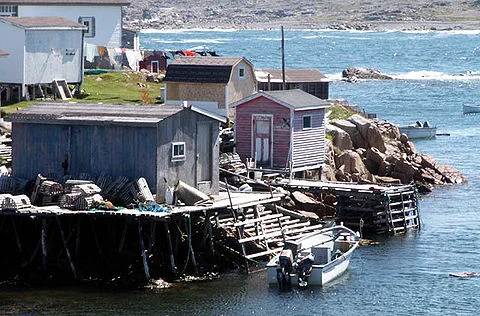
“Although it is a cold evening,
down by one of the fishhouses
an old man sits netting,
his net, in the gloaming almost invisible,
a dark purple-brown,
and his shuttle worn and polished.
The air smells so strong of codfish
it makes one’s nose run and one’s eyes water.’’
— From “At the Fishhouses,’’ by Elizabeth Bishop (1911-1979), a native of Worcester.

Preserved codfish.
CVS may be a leader in health-care transformation

Adapted from Robert Whitcomb’s “Digital Diary,’’ in GoLocal24.com
Woonsocket-based CVS’s purchase of Aetna, the huge insurance company, could at least start to make fragmented and exorbitantly expensive U.S. health care a bit more coherent as well as cutting costs for consumers, both in medical-visit bills and insurance premiums. (We’ll see if that happens in our profit-obsessed system.)
Of course, other pharmacy chains and insurers will also tie the knot.
By putting together the insurance function and the direct provision of care, the merger will help create better, more complete patient medical records, thus facilitating better, especially preventive, care. And by helping to make many CVS drugstores even more of the primary-care/preventive-care centers that they’ve been becoming the past few years, the merger should take the pressure off astronomically expensive hospital emergency rooms, whose overuse is one reason that America’s health-care system is so expensive and inefficient.
Much of the treatment in CVS’s Minute Clinics is provided by nurse practitioners and physician assistants, who are less expensive than U.S. physicians -- the world’s highest paid. The American Medical Association has opposed the merger in part because it fears that the competition will cut doctors’ pay.
Importantly, the merger will strengthen CVS in negotiating with drug makers, which, protected by massive lobbying operations in Washington, charge by far the highest prices in the world – indeed sometimes engage in price-gouging. Those prices are yet another reason why health-care costs threaten to bankrupt the country.
(Happily, Trump signed two bipartisan bills into law last week to ban so-called gag clauses at the pharmacy counter. The bills, the Patient Right to Know Act and the Know the Lowest Price Act, would let pharmacists tell patients that they could save money by paying cash for drugs or try a lower-cost alternative. The existence of gag clauses was an outrage.)
We won’t know for several years what the full effects of the CVS-Aetna merger will be but it’s obvious that this experiment could profoundly affect many millions of Americans.
Will consumers benefit, as well as CVS senior executives and other shareholders?
David Warsh: U.S. foreign policy and the hell of good intentions

The Unisphere, in the New York city borough of Queens.
SOMERVILLE, Mass.
The single hardest thing to understand about Donald Trump is that his dominating foreign-policy concerns are probably shared by a substantial majority of Americans, though not in any detail. Two of these matters are trade and immigration policies, but more fundamental than either is America’s overall posture vis-a-vis China and Russia – its “grand strategy.” The quintessential Manhattan real estate dodger turned television personality turns out to have a pretty good feel for American politics.
Two new books that seek to make sense of Trump’s victory have appeared recently: The Great Delusion: Liberal Dreams and International Realities (Yale, 2018), by John Mearsheimer; and The Hell of Good Intentions: America’s Foreign Policy Elite and the Decline of U.S. Primacy (Farrar, Straus and Giroux), by Stephen Walt. So far, they have been thoroughly ignored. A third book, similarly oriented, by Andrew Bacevich, No Solid Ground: America after the Cold War (Metropolitan) will appear next year.
There is not a great deal of difference between Walt’s and Mearsheimer’s basic views of American foreign policy. This is unsurprising, since the two collaborated on The Israel Lobby and U.S. Foreign Policy, a book published in 2007 after several years of controversy in the making. Then their target was what they considered the disproportionate influence on American foreign policy of the American Israel Public Affairs Committee (AIPAC), which had been a forceful enthusiast of the war in Iraq. This time their target is the foreign policy community in general.
But instead of trying to make sense of the views of the current occupant of the White House – Walt writes, “[Trump] lacked the acumen, discipline and political support to pull off a judicious revision of U.S. foreign policy, and his inept handling of these issues has undermined US influence without diminishing America’s burdens” – they zero in from different angles on the period between 1993 and 2017, when the Clinton, Bush and Obama administrations, each in control of foreign policy for eight years, pursued a policy that the authors call “liberal hegemony.”
These were the years of “the end of history” and “the unipolar moment,” when, boasting of having won the Cold War, the U.S. sought to spread its own values around the world. Balance-of-power considerations that had animated US foreign policy for the previous 50 years were put aside. Invasions, humanitarian interventions, and regime change became new instruments of policy. The result, the authors argue, were seven wars, a depleted treasury, a run-down military, and, most of all, diminished US influence around the world.
Mearsheimer, of the University of Chicago, is a political theorist, and his book is more thorough and austere, with a good deal of attention paid to philosophical matters and the history and logic of nation-states. He makes a closely reasoned case for the virtues of restraint.
Walt, of Harvard University’s Kennedy School of Government, is a scrapper. The Hell of Good Intentions is a manifesto for what he calls “off-shore balancing.” Give up on trying to remake the world in America’s image, he advocates; concentrate instead on maintaining a balance of power in three key regions in the Northern hemisphere: Europe, East Asia, and the Persian Gulf.
Two outsiders have tried and failed to reorient foreign policy along these lines, Walt says – first Obama, now Trump. Why has it been so difficult to change course? Political leadership has something to do with it: Bill Clinton, Madeleine Albright, George W. Bush, Dick Cheney, Hillary Clinton and John Kerry. Looking beyond political parties, Walt says, is an amorphous foreign- policy establishment consisting of Foreign Service professionals, multinational corporations, foundations, associations of various sorts, think tanks, and journalists specializing in foreign affairs. Ben Rhodes, who served as Obama’s deputy national security adviser, called it “the Blob.” In Because They Could I called it “the Generation of ’91.”
Walt writes: “The foreig- policy establishment will not embrace a strategy that would diminish its own power, status, and sense of self-worth.” And indeed, after 25 years, the hegemony of the liberal hegemonists is pretty complete. As Walt points out, as of 2017, the only editorial columnists at major U.S. newspapers who espouse non-interventionist views of U.S. foreign- policy were Steve Chapman, of the Chicago Tribune, and Stephen Kinzer, of The Boston Globe.
“[I]nstead of being a disciplined body of professionals constrained by a well-informed public and forced by necessity to set priorities and hold themselves accountable, today’s foreign policy elite is a dysfunctional caste of privileged insiders who are frequently disdainful of alternative perspectives and insulated both professionally and personally from the consequences of the policies they promote.’’
How to change the current mindset? Walt says the only way to broaden public debate is to “create a countervailing set of organizations and institutions that can do battle in the marketplace of ideas…. Needless to say,” he continues, “this effort will require significant financial resources drawn from Americans who worry that continuing to pursue liberal hegemony will do serious long-term damage to the United States.”
So it’s not without interest that both Mearsheimer and Walt have been supported by the Charles Koch Foundation, that arch-bugaboo of the liberal establishment. But no one who has read Know Your Enemy: The Rise and Fall of America’s Soviet Experts (2009), by David Engerman, will doubt that America’s foreign-policy establishment needs rebuilding from the ground up. In this respect, strength to at least one arm of the Koch brothers’ political activities, the Charles Koch Institute.
My hunch is that a Post-Trump Generation will take over sometime in the next six years, and gradually remake U.S. politics. The foreign-policy establishment will follow. “Offshore balancing,” after all, is just a new name for an old doctrine — what, in an earlier age, was known as foreign policy realism. Devised through trial and error by Democrat Harry Truman in the early years of the Cold War, it became the animating principle of Republican presidents from Dwight Eisenhower and Richard Nixon to Ronald Reagan and George H. W. Bush.
Could a return to realism come from the Republican Party? Perhaps, though current GOP leadership seems to have been pretty thoroughly hollowed out by its obsequiousness to Trump. A young Democratic Party candidate could campaign successfully on a program of offshore-balancing – but grooming such a candidate takes time. Those interested in defeating Donald Trump in 2020 should consider compromising on Joe Biden, especially if he pledges to serve a single term.
Only a candidate who understood himself to be more a stop-gap than a standard-bearer would make such a pledge, forfeiting an enormous amount of leverage. But Biden is old and wise enough to remember the immense service President Gerald Ford performed in similarly tumultuous circumstances nearly 50 years ago.
David Warsh, an economic historian and long-time columnist, is proprietor of Somerville-based economicprincipals.com, where this piece first appeared.
Paying proper respect
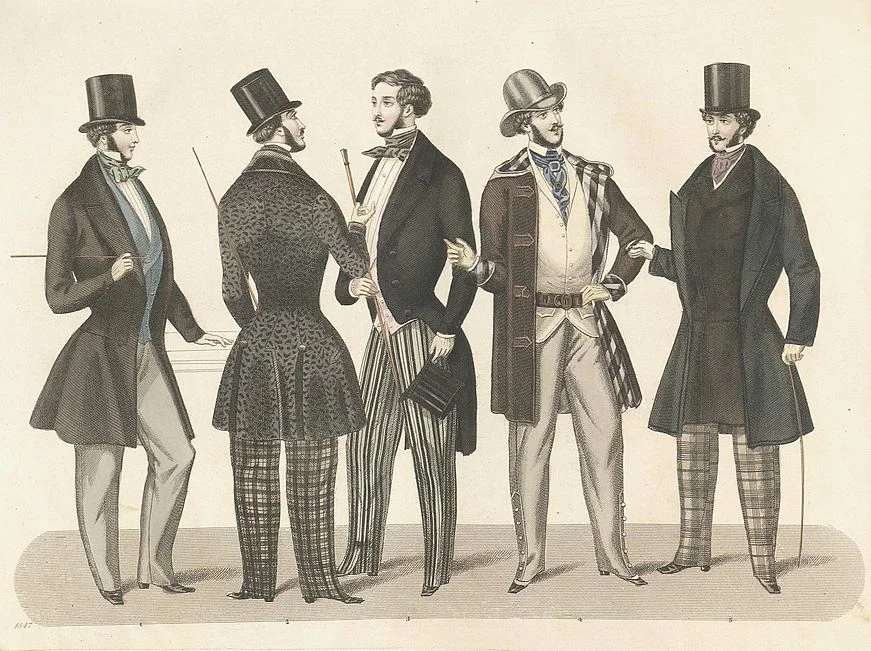
“Even in our democratic New England towns the accidental possession of wealth, and its manifestation in dress and equipage alone, obtain for the possessor almost universal respect.’’
— Henry David Thoreau (1817-1862)
“Whenever Richard Cory went down town,
We people on the pavement looked at him:
He was a gentleman from sole to crown,
Clean favored, and imperially slim.
And he was always quietly arrayed,
And he was always human when he talked;
But still he fluttered pulses when he said,
"Good-morning," and he glittered when he walked.
And he was rich – yes, richer than a king –
And admirably schooled in every grace:
In fine, we thought that he was everything
To make us wish that we were in his place.
So on we worked, and waited for the light,
And went without the meat, and cursed the bread;
And Richard Cory, one calm summer night,
Went home and put a bullet through his head.’’
— “Richard Cory,’ by Edwin Arlington Robinson, a native of Maine.
Don Pesci: In Conn., expenditure always rises to exceed income

Connecticut’s gubernatorial “debate” – Where are Lincoln and Douglas when you need them? -- between Ned Lamont and Bob Stefanowski appears to be stuck on a single “how” question: How will Stefanowski implement his campaign pledge to eliminate Connecticut’s income tax, once considered a final solution to the state’s debt problems, now a millstone around the neck of Connecticut.
The media coverage of the debates has been diverting, but most reports have been stuck in a single groove, playing over and over the same starkly abbreviated section of a larger unheard song, rather as if inconvenient questions launched in Lamont’s direction will upset the balanced apple cart that has been constructed over a period of three decades by the Democrat General Assembly hegemon in charge of state finances. Stefanowski has said his pledge to eliminate the income tax within the space of eight years is an aspirational goal that will become operational two years into his gubernatorial administration, which means, yes, Stefanowski will reduce taxes and – much more importantly – reduce spending.
Spending in Connecticut has increased threefold within the space of four governors: present Gov. Dannel Malloy, a progressive Democrat, two Republican governors, Jodi Rell and John Rowland, who, it will be recalled, pledged during his first run for governor to axe the tax – Rowland had second thoughts once he had been elected – and Lowell “instituting an income tax during a recession would be like pouring gas on a fire” Weicker, a nominal Republican who was in fact more Democrat than the Democrat pope of Connecticut at the time, then Sen. and now movie industry big shot Chris Dodd.
Stefanowski's idea is this: Taxing and spending are causally connected. If you increase taxes, spending increases will follow. In fact, that has been the rule in Connecticut’s economy ever since Weicker in 1991 poured gas on the fire. The Weicker tax saved state legislators the necessity of reducing spending, and the gals and guys in the state legislature – dominated for the last 30 years by progressive “we need more” Democrats – are very grateful indeed.
The good times now are gone. Businesses in the state have fled a government that cannot reverse its perilous race towards the yawning abyss; companies in Connecticut are looking towards a barren future under unappeasable tax-starved progressives, which further will reduce company profits – the surplus money that makes it possible for businesses to expand, hire more workers, increase wages and contribute a “fair share” in taxes to Connecticut’s dwindling state coffers. As a consequence of runaway spending, Connecticut’s economic growth is now the laughing stock of the nation.
So then, here are five “how” questions rarely, if ever, put to Lamont by Connecticut’s strangely incurious media:
1) How will Lamont curb spending, permanently and long term, in Connecticut? We have passed the point at which the state’s economy will respond positively to revocable tax credits, or to bribes given to homegrown companies to remain in the state, or to seed money given to outside companies to put down shallow roots in the state’s parched ground. A voting public that has come of age in the age of pointless political effusions made by politicians trolling for votes has, one hopes, developed an internal resistance to political posturing. Since spending is driven by ever increasing taxation – which is, in a nutshell, the whole history of Connecticut since 1991 – would Lamont favor legislation requiring a super-majority in the General Assembly to increase taxes? No effusions please. A “yes” or “no” will be sufficient.
2) Lamont has winkingly proposed a toll tax on heavy trucks in Connecticut to provide money for the transportation fund, which – big surprise – is out of cash – big surprise -- because a Democrat controlled General Assembly has raided dedicated funds across the state to satiate its largely political need to provide salaries and benefits to state workers in return for votes. Border toll installations, as Lamont well knows, cannot be re-erected without costing the state more money in penalties than his tolls on trucks would bring in. Therefore, any tolling in Connecticut must be congesting tolling, which means mucho tolling gantries throughout the state. Assuming the tolling infrastructure has been assembled, how long does Lamont think it would take before tolling is applied to grandma in her 1991 Chevy? One month? Two months?
3) Isn’t the precipitating cause of increased taxation in Connecticut the unhinged appetite among non-Stefanowski progressive legislators to move entrepreneurial capital from the private to the public sphere, the better to satisfy the insatiable appetite of state unions for salary and benefit increases? How will Lamont curb this appetite? Remember, largely owing to the pro-union efforts of Malloy in SEBAC agreements, salary increases are “fixed” until 2027, and Governor Lamont will not be able to use threatened layoffs as a bargaining chip in his negotiations with state unionized workers. Connecticut is one of the few states in the union that sets state worker salaries and benefits through negotiations between its governor and union honchos. Should the legislature present Lamont with a bill that sets salaries and benefits through legislation instead, will he sign it?
4) Over a period of three decades and more, “fixed costs” in the state – those costs over which the General Assembly has unconstitutionally abandoned all control – have steadily increased; so that, presently, the General Assembly has effective governance over only half of its expenditures, according to a Yankee Institute study. How will Lamont increase this figure to, say, 100 percent?
5) Finally, how do Lamont’s policy prescriptions differ from those of the departing governor Malloy, approval rating 21 percent, which is 21 points lower than that of President Trump at 42 percent?
Don Pesci is a Vernon, Conn.-based columnist.
'Digital biopsy' in Cambridge

Sculpture by Cindy Lu, in her show “Data Collection: Work by Cindy Lu,’’ at Maud Morgan Arts Chandler Gallery, Cambridge, Mass., through Nov. 23
The gallery says:
”First, picture the human body. Then, as if a camera were zooming in closer, go through all layers of skin, muscle, and bone right down to the tiniest molecule. What once appeared simple has a new level of complexity, of many small parts working together on a larger scale. That describes both the intricacy of molecular/cellular biology and the work of Cindy Lu, whose background in the subjects inform her artistic style in many ways.’’
Ms. Lu explained:
"In this age of big data and artificial intelligence, we are continually subjected to digital biopsy to feed the growth of entities that seek to monetize and control our behavior.’’
Coastal Chronicle
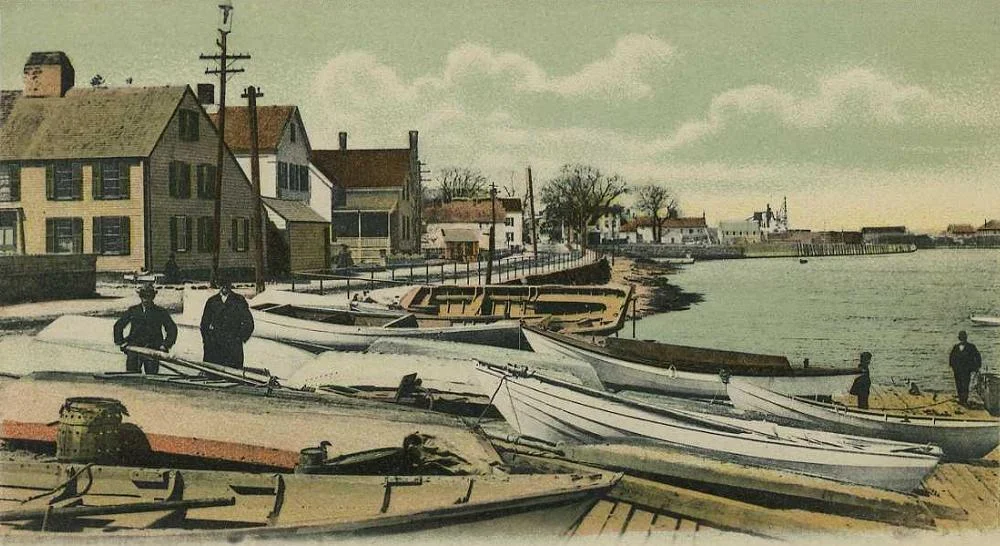
Joppa Landing, in Newburyport, Mass., once a major China Trade port.
From Robert Whitcomb’s “Digital Diary,’’ in GoLocal24.com
Coastal New England: Its Life and Past, by William F. Robinson, is the best popular history I’ve read of our shoreline and its offshore from Eastport, Maine, to Greenwich, Conn., from about 1500 to the 1980s. This coffee-table tome tells sociological, political, economic and environmental stories with scholarly rigor combined with mass market accessibility and droll (and sometimes dark and snarky) humor, showing the beautiful (such as coastal vistas and artists) and the ugly (wars, slaves, smugglers, drownings, etc.) and the full range between. It has a delightful assortment of illustrations – maps, illustrations and photos.
Jim Hightower: GOP is hard at work suppressing the vote
Via OtherWords.org
At last, Nov. 6 is coming: Time to vote! Let’s all join the majestic panorama of democracy in action!
Well… calling America’s electoral process “majestic” is overdoing it, for millions of our citizens will not be allowed to vote.
That’s because a consortium of national, state, and local officials of Republican persuasion — along with their corporate ringleaders — have mounted a tawdry campaign over the past decade to slam the ballot box shut on entire segments of America’s electorate.
In a concerted effort, these rabidly partisan officials have targeted African Americans, students, Latinos, the elderly, union households, the poor, immigrants, and other communities of qualified voters to shoo them away on Election Day.
Why? Because such citizens tend to vote for Democrats and progressive ballot initiatives.
So the GOP’s grand strategy is not to “win” by getting the most votes, but to keep from losing by aggressively (and shamefully) shutting out millions of Americans who might vote against their plutocratic, autocratic, kleptocratic candidates and agenda.
Consider voting day itself. It’s a Tuesday — a workday — automatically eliminating people working two or three jobs who can’t afford to take off a couple of hours or more to get to the polls and wait in line to vote. Move elections to weekends, make it a holiday, vote by mail… make democracy easy!
Instead, in a depraved, anti-democratic grab for partisan gain, Republican officials have frenetically been planting thick briar patches of ridiculous rules, logistical barriers, intimidation tactics, ballot deceptions, and outright voter bans in targeted precincts across the country.
These thugs are stealing the people’s most valuable civic property: Our votes. Shouldn’t they at least have to wear ski masks on Election Day so everyone can see who’s doing this to us?
Jim Hightower, an OtherWords columnist, is a radio commentator, writer, and public speaker.
'Ironic rainbow'
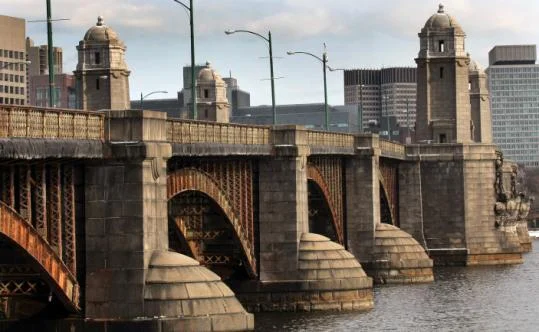
The Longfellow Bridge over the Charles River, nicknamed “The Pepperpot (or Pepper Pot) Bridge.
‘‘….winter drifts to where
The Pepperpot, ironic rainbow, spans
Charles River and its scales of scorched-earth miles
I saw my city in the Scales, the pans
Of judgment rising and descending. Piles
Of dead leaves char the air –
And I am a red arrow on this graph
Of Revelations. Every dove is sold.
The Chapel's sharp-shinned eagle shifts its hold
On serpent-Time, the rainbow's epitaph.’’
— From “Where the Rainbow Ends,’’ by Robert Lowell (1917-1977)
'The China Mission'

To members and friends of the Providence Committee on Foreign Relations (thepcfr.org):
Daniel Kurtz-Phelan, executive editor of Foreign Affairs, will talk about his exciting new book, The China Mission: George Marshall’s Unfinished War, 1945-1947, at 4 p.m. to 5:30 p.m. on Tuesday, Oct. 30, at the Joukowsky forum at Brown University, on Providence’s East Side. There will be a book signing and reception to follow.
The book is about General Marshall’s excruciatingly difficult and ultimately doomed effort to end the civil war between Mao Zedong’s Communists and Chiang Kai-shek’s Nationalists right after World War II.
William Morgan: In a N.H. town, an oasis of high artistic creativity
The MacDowell Colony, a 400-acre artists' retreat in the woods in Peterborough, N.H., represents one of the most notable gatherings of creative energy anywhere. It is a refuge, an oasis, a special place where writers, musicians, and all kinds of visual artists, come to create. It provides, its mission statement declares, “an inspiring environment” in which artists can produce “enduring works of the imagination.” Despite its many famous alumni, MacDowell is successful because it is virtually inaccessible to the world beyond.
Artists, ranging in age from 25 to 80, are “here because they want to be,” says the resident director, David Macy. Competition is fierce for a place to work alone all day in the silence of the forest, in sight of Mount Monadnock. One thousand applications are received for just the summer session. The reputation of MacDowell is such that a MacDowell residency bestows an immediate career boost. (MacDowell alumni have garnered 65 Pulitzer Prizes.) The sole criterion for acceptance is artistic excellence.
Since the colony’s founding, in 1907, by composer Edward MacDowell and his pianist wife, Marian, over 8,000 artists have traveled far from New York lofts and ateliers around the globe (a tenth of the residents are from abroad) to make art there. Around 300 colonists come to MacDowell every year, and are blessed with housing, a place to work, good food, and the precious gift of time. Thirty-two studios provide working space from anywhere from two weeks to three months, but the average fellowship is for a month.
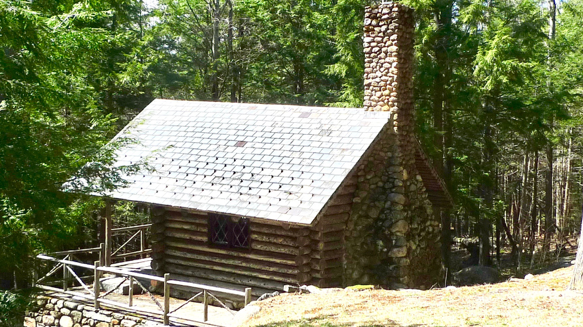
Edward MacDowell's composing cabin.
Thornton Wilder wrote Our Town, which some call the greatest American play, at the MacDowell. Peterborough was apparently a partial model for the town — called Grover’s Corners in the play. Leonard Bernstein and Aaron Copland found the quiet to compose here, while MacDowell provided succor and sanctuary to such writers as Willa Cather, Toni Morrison and James Baldwin. Were their privacy not so carefully guarded, this demi-Eden might have become a magnet for celebrity watchers.
The colony welcomes the public only one day a year when its awards the MacDowell Medal. Medalists have included Edward Hopper, Georgia O’Keeffe, Norman Mailer, Isamu Noguchi, Merce Cunningham and Stephen Sondhiem, among others. In 1997, the colony itself was awarded the National Medal of the Arts, America’s highest honor for an artist or an art patron.

One of the musician’s cabins.
A stay at MacDowell can feel a bit like visiting your favorite grandmother on the family farm. This kind of idyll, however, is hard won. Running a community with 30-some residents at all times, an equal number of staff, and a spread out physical plant requires extraordinary management skills. Despite an endowment, millions of dollars need to be raised every year to keep the colony going. Director Macy, who dropped out of biomedical engineering to go to art school, has been the ideal colony shepherd for almost a quarter of a century.
This is a campus like few others. Colony Hall, the administrative hub and center of post-studio social life (residents have breakfast and dinner here, but lunch is delivered to the individual studios), was repurposed from a late 18th-century barn. Concord, N.H., architect Sheldon Pennoyer renovated the building a decade ago to comply with current building codes. Although reminiscent of the main hall at one’s childhood summer camp, no attempt was made to hide the changes or make it overtly rustic. Pennoyer was also responsible for the recent renovation of a hundred-year-old music studio
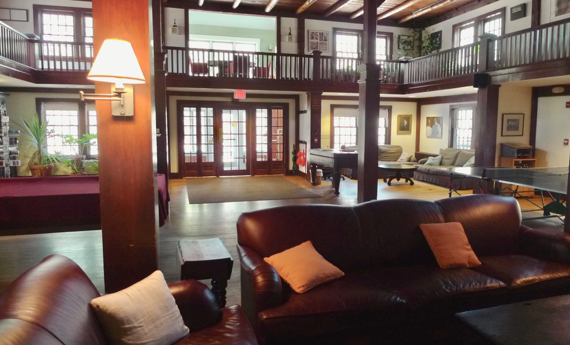
Colony Hall.
That same frugal but playful spirit infused the other studios, most of which are scattered deep in the woods; some are in outbuildings and barns. The progenitor was small log retreat that Marian built for her ailing husband. After his death in 1908, she began building a series of non-pretentious workspaces. There are painting studios with high ceilings and lots of light, musicians have pianos, and suitable equipment is supplied for sculptors. The emphasis is decidedly woodsy, and the studios have fireplaces and rocking chairs. All display “tombstones,” wooden tablets inscribed with the names and dates of everyone who has worked in that particular studio.
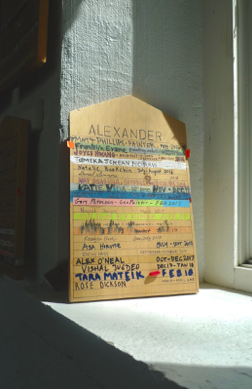
A tombstone in Alexander studio.
The MacDowells, who met while studying in Germany, had a favorite monastery in Switzerland that provided inspiration for most the most impressive studio. The widow of the noted American portrait painter John White Alexander built this stone “chapel” as a gallery. Although impractical as an exhibition hall, it is now a most sought-after studio, with tall ceilings, exposed beams, and a giant north window.
A major part of the work of running MacDowell is maintaining and updating the mostly early 20th-Century studios; they are in constant use, but they also needed to be made more energy- efficient.Ca
A few years ago MacDowell decided “to combine comfortable vernacular forms with architecturally sophisticated ones,” remarks New York University architectural historian and colony board member, Carol Krinsky. Cambridge, Mass., architects Charles Rose and Maryann Thompson designed an interdisciplinary arts studio, but it awaits funding. Calderwood Studio, designed as a writer's haven by Burr and McCallum Architects, of Williamstown, Mass., is a contemporary tribute to its predecessors. Many of the early cottages were built for summer use and have had to be retrofitted for year-round use. So, Calderwood, a writer’s was built, says Macy, “to be indestructible,” with a two-story high living room and a long view across a meadow.
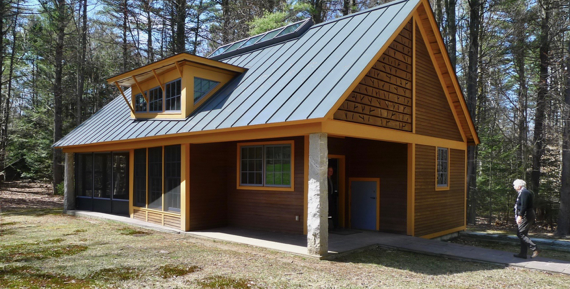
Calderwood Studio.
The 1926-28 stone library by the fashionable Boston architects Strickland, Blodget & Law is similar in its memories-of-medieval-Europe-style to the Alexander studio. Its single 1,000 square-foot, timber-trussed room outlived its role as repository for colony archives and residents' manuscripts, scores, and paintings. In 2013, a 3,000-square-foot addition by Tod Williams Billie Tsien Architects of New York, designers of the Barnes Foundation in Philadelphia and the Obama Library in Chicago, provided a home for such valuables as a first edition of Willa Cather’s Death Comes For the Archbishop, inscribed to Marian MacDowell. This gem of black Québec granite has been sensitively grafted to the meadow and woods by the equally exceptionable landscape architects, Reed Hilderbrand, of Cambridge, Mass.
Announcing its quiet presence is an outdoor fireplace that stands like an ancient stele, honoring the theme of the studio hearths. The selection committee liked that the design was “both harmonious and deferential to the older building,” Professor Krinsky recalls. It was “beautiful, sturdy outside, calm, light, and expansive inside.”
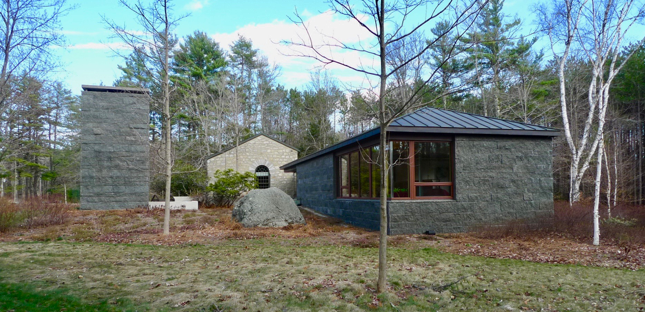
Outdoor fireplace, original library and new library.
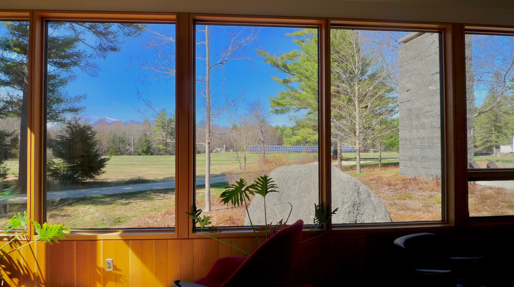
View from the library.
Like the colony itself, the library wears the names of its famous designers lightly. This maybe one of the handsomest pieces of architecture in New England, but it is modestly tucked away, there to reinforce the MacDowell Colony’s role as an incubator of genius.
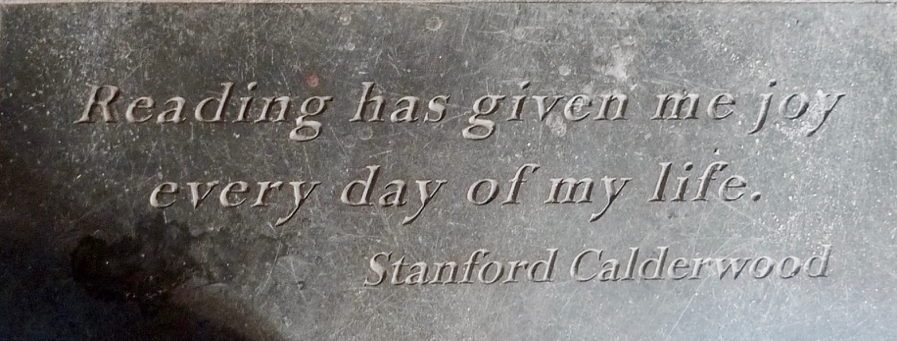
William Morgan is a Providence-based architectural historian and essayist. He conducted an historic resources study of Peterboro in 1971-72, and is the author, among other books, of Monadnock Summer: The Architectural Legacy of Dublin, New Hampshire.
A teen's suicide and a football coach in Portsmouth, R.I.

Student-created mural at Portsmouth High School.
Here’s the executive summary of a report, by lawyer Matthew T. Oliverio, on the death by suicide of 15-year-old Nathan Richard Bruno, a student at Portsmouth High School. The Newport Daily News continues to press for more information on this case.
newportri.com
EXECUTIVE SUMMARY
A. Scope of Assignment
At the direction of the Portsmouth School Committee, I have investigated the facts and circumstances relating to a complaint filed by Richard Bruno, parent of the late sophomore NB. In summary, Mr. Bruno contends that Head Football Coach Ryan Moniz, and others, intentionally or unintentionally placed an undue amount of mental and emotional stress upon his son in the weeks and days leading up to his tragic death causing the 15-year-old NB to feel isolated, shamed and bullied to the point where his only escape from the pressure was to end his life on February 7, 2018.
The scope of my investigation was to determine if any teacher, coach, staff member or member of the administration violated any current policies, procedures and protocols in their interactions with NB, and in particular those interactions with NB once it was determined that he was involved in a pattern of harassing conduct directed toward Coach Moniz. My assignment was not to determine the cause of NB's death, although officially it has been ruled a suicide. I have interviewed 36 individuals; other individuals had been contacted for information, but for reasons undisclosed refused to speak with me or never returned my call to schedule an appointment. Many of those interviewed were friends or acquaintances of NB, and some of them are members of the high school football team. In all cases, I insisted on meeting or speaking with the minor students in the presence of their guardian or parent. My investigation also consisted of reviewing memos, numerous, relevant email communications, text messages, Codes of Conduct, Student Athlete Handbook, Superintendent interview summaries, letters of complaint regarding Coach Moniz, letters of support regarding Coach Moniz, Professional Development summaries, school district policies, performance evaluation forms, educational records and autopsy report.
A consistent theme expressed by parents of students whom I interviewed was a concern that their participation could lead to retaliatory measures or adverse actions against their child by a coach, the football community or anyone else affiliated with the athletic program. I assured them that by participating in this investigation, it would be against the law for the school district or any elected or appointed town official or its agents to retaliate in any form. Accordingly, this summary and my comprehensive Confidential Report come with the firm admonition that no retaliatory measure can be taken for one's participation in this investigation .
B. Summary of Findings and Analysis
Another common theme emerged among the individuals l interviewed: Coach Moniz can be a polarizing figure. He is either revered, primarily by the supporters of the "Gridiron Club" or he is despised and loathed. Many of the parents/grandparents I interviewed expressed that the coach could be vulgar and abusive at games, disrespectful, over aggressive in language and demeanor, and unwittingly engaged in bullying-type behavior. ln other words, some of these parents find that the coach takes advantage of his position of authority over these adolescents to drive a wedge between various players and to belittle or demean the less talented students or those who do not show the same level of commitment that others possess. What may be construed as motivational behavior on the part of the coach is really controlling, egotistical, manipulative behavior. The supporters of the Portsmouth Gridiron Club, and particularly a football family who was willing to be interviewed, tell a different story. They find the coach to be totally selfless, demonstrating an unwavering commitment and devotion to all players and the football program in general. "Coach Moniz exhibits the type of motivation, knowledge and leadership qualities that make our program the envy of all others around the state."
The Coaches' Code of Conduct is not merely an aspiration, it is a pact between a coach and the players over whom he/she has responsibility and authority, the players' families and the community as a whole. It is not to be taken lightly or used to manipulate a player(s) or to compel adverse behavior to serve the self-interests of a coach. Some of the more relevant provisions include:
"Teachers have a duty to assure that their sports programs promote important life skills and the development of good character....’’
COMMUNITY — In our PHS Community our coaches will:
• Be worthy of trust........... and teach student-athletes the importance of integrity, honesty, reliability and loyalty.
• Model good character.
• Promote sportsmanship not gamesmanship.
ACHIEVEMENT — in order for our student-athletes to achieve our coaches will:
Be a worthy role-model.
• Strive to provide a challenging, safe, enjoyable, and successful experiences for the athletes.
RESPECT — Coaches will:
• Treat all people................ with respect all the time and require the same of student-athletes.
• Be a good sport, teach and model class.
• Use positive coaching methods to make the experience enjoyable, increase self-esteem and foster a love and appreciation for the sport.
EXCELLENCE — In order for our student-athlete to excel our coaches will:
• Teach student-athletes positive life skills and always strive to enhance their physical, mental, social, and moral development.
SUCCESS — Our student-athletes will have success as our coaches:
• Enforce the guidelines set forth by RIIL regulations and the PHS Student-Athlete Handbook including this Code of Conduct and adhering to the levels of play consistently in all activities and venues even when the consequences are high.
• Assure that student-athletes understand that participation in interscholastic sports programs is a privilege, not a right and that they are expected to represent their school, team, and teammates with honor, on and off the field.
• Require student-athletes to consistently exhibit good character and conduct themselves as positive role models.
Based on the content of the text messages received by Coach Moniz, he believed that a former player was responsible for the inappropriate conduct directed toward him in the form of incessant, harassing phone calls and text messages at night. He had a natural curiosity to ascertain the identity of the individual. Despite the fact that he was aware in early January that NB was the primary culprit (by rumor and by police investigation), he opted to pursue another avenue for outing any other offenders - enlist the services of the existing team players. He wanted to quash any dissension existing among the football players and believed he was justified in doing so under the mantra of"integrity, trust, honesty, reliability and loyalty." He pursued this by calling a meeting on January 10 during which he alerted his team to his personal situation and asked that the team inform him of any knowledge they may have about the prank calls. Accordingly, I find his team meeting held on January 10, although somewhat self-centered, exaggerated and immature by certain players' accounts, did not offend the Coaches Code of Conduct or any other policy.
It was only after the NB came forward to accept responsibility and agreed to apologize on February 2, 2018 where the coach's conduct turned suspect and violated aspects of the Code. First, his text messages by and between Mr. Bruno are most revealing: after having agreed to meet with NB and his father to accept an apology and move forward, on February 6 he reversed course and outright refused to meet with NB and his father unless "NB...provides me with the other two names involved ...provides me with the other two names involved."
“Sorry about the delay. Detective Carlino has reached out to me and told me, like you did, there were two others involved. Unexpectedly, he also told me that two others were current members of our football team. In all honesty, I'm shocked, disappointed, and hurt by this. I put my full effort in building our program which above all else, including providing a positive outlet and to build character in the process. I have never had any issues like this in 8 seasons as the head coach. I need all of the information so I can assess how to move forward from this. I can't move forward without this information. In light of this, I am only agreeing to meet with NB if he provides me the other two names involved.
Thank you, Ryan Moniz.’’ (Emphasis added.)
This simple highlighted statement, tantamount to a threat, unwittingly placed pressure on a father to urge his son "rat out" friends, a person who was trying to do the right thing by coach and son, namely have his son take responsibility, apologize and serve his penance. More importantly, this statement underscores the immaturity of a 39-year-old adult, charged with exhibiting a good example as a role model. Coach Moniz utterly failed in this regard. He knew or should have known that such a threat would have placed a 15-year old adolescent in a compromised or vulnerable position to be disloyal to his friends. In so doing the coach was not a worthy role model and did not enhance NB's physical, mental or social well being and development. Although Coach Moniz professes that no one is at fault, nor could anyone have foreseen these tragic consequences, it cannot be overemphasized that Coach Moniz was cognizant of the influence he had over NB and the pressure that would befall him. Although he denied it, his email communications to NB's father reveal otherwise: "I called for a team meeting after school today. Sorry to put NB and the other two on the clock but this is how I am choosing togo forward with it." (Emphasis added.) This statement exhibits a knowing indifference to the impact that such a and threatening message can have on an adolescent. It clearly implies that NB and two others will be shunned or isolated, unless NB comes forward. To alert NB and his father that all such information will now be shared with many other friends, students and athletes pits NB against his peers. Clearly, these actions did not create or ensure a "safe, enjoyable and successful experience" for NB or his fellow students. This statement is also consistent with the credible accounts of other student/athletes who have stated that the coach had a propensity for encouraging them to disassociate with students whom he considers "quitters" or "bad influences."
Perhaps the most egregious conduct occurred during the course of the team meeting later that day, described in great detail throughout my comprehensive Confidential Report. The reality is that Coach Moniz was short, angry and upset with his team. He was well aware that the vast majority of his student/athletes viewed him as a "father figure, " with trust, confidence, and respect; where winning was paramount . He was by all accounts a tough taskmaster, and those athletes would follow his lead and do as he asked. When he threatened to resign and abandon the team, leaving the room to have them "figure it out," he knew or should have known that such an unwelcome consequence, resignation, would have evoked action on the part of those trusting athletes. Though Coach Moniz did not verbally communicate that the team should use any means, including a visit to NB's home to "figure it out," the implied message was the same. He used his position of power, authority and influence over emotionally charged adolescent students to resolve an adult problem - Coach Moniz 's problem, not the team's problem. In so doing, he knew or should have known that he was causing a schism between members of the team, NB and NB's friends, and he manipulated those relationships to satisfy his own personal interests, despite the fact that NB had stepped forward and was willing to take responsibility.
C. Recommendations
l. Refrain from reappointing Mr. Moniz from serving in any capacity as a coach in the Portsmouth School District for the 2018-19 school year, and until such time as he receives appropriate training, at the Superintendent's discretion, so that he may successfully comport himself to the Coaches' Code of Conduct, the purpose of which through good role modeling is to promote positive experiences in a safe environment and to assist student athletes with important life skills and the development of good character.
This Executive Summary is respectfully submitted to Ana Riley, M. Ed, Superintendent of the Portsmouth School District, on this 6th day of June, 2018.
After all, everyone I interviewed, including the coach, acknowledged that Portsmouth has been infamously dubbed ‘‘Sportsmouth" because sports in general, and the football program in particular, is considered a cult.
'A comely thing'
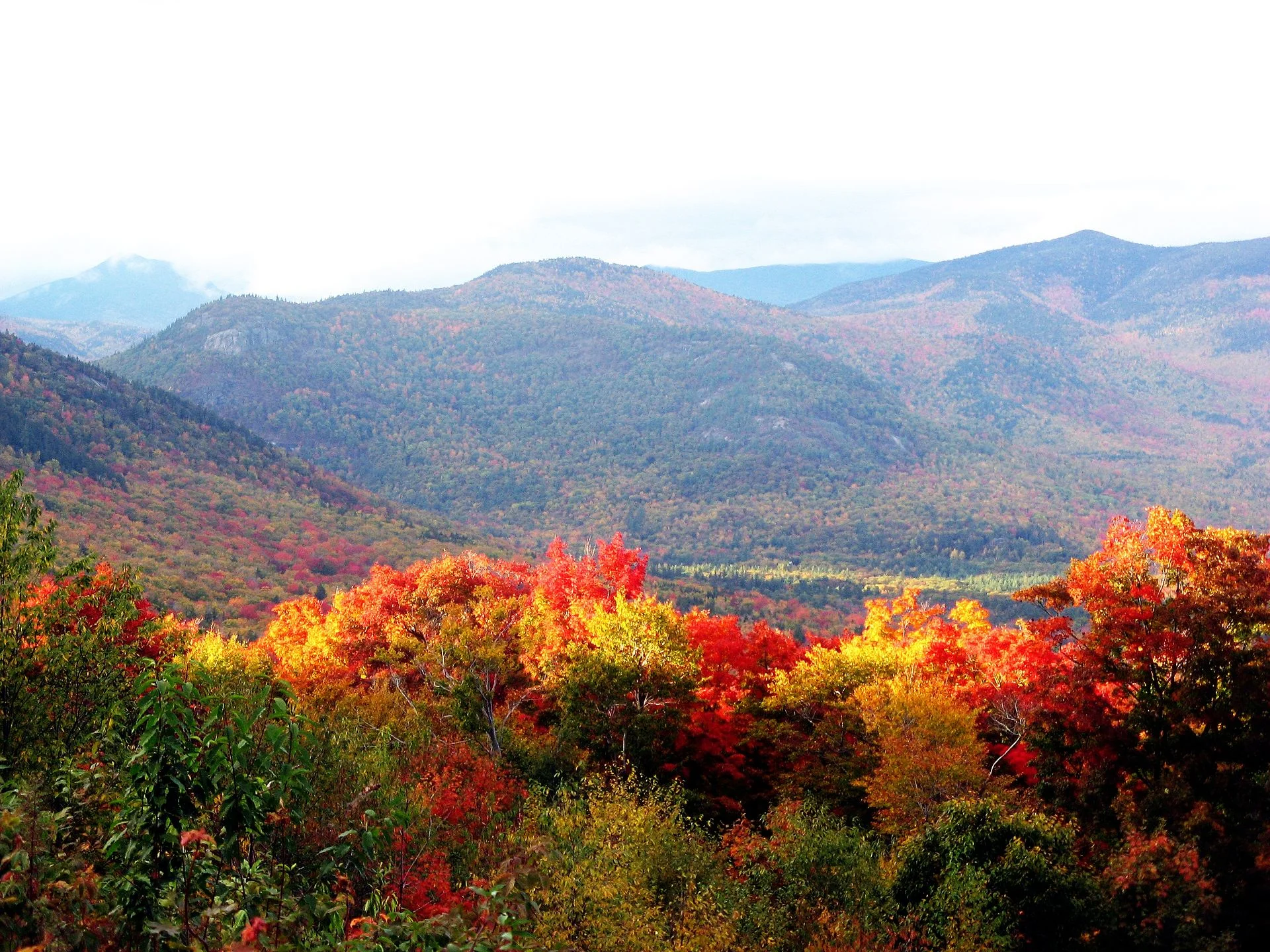
In New Hampshire.
Know'st thou not at the fall of the leaf
How the heart feels a languid grief
Laid on it for a covering,
And how sleep seems a goodly thing
In Autumn at the fall of the leaf?
And how the swift beat of the brain
Falters because it is in vain,
In Autumn at the fall of the leaf
Knowest thou not? and how the chief
Of joys seems—not to suffer pain?
Know'st thou not at the fall of the leaf
How the soul feels like a dried sheaf
Bound up at length for harvesting,
And how death seems a comely thing
In Autumn at the fall of the leaf?
— “Autumn Song,’’ by Dante Gabriel Rossetti

Alex Parnia: A survival kit for small colleges

Nichols College, in Dudley, Mass., with about 1,500 students. The author served as provost there.
Via the New England Board of Higher Education (nebhe.org)
The future looks very bleak for many small and medium-sized colleges and universities in the U.S. According to a report published in Inside Higher Education, the high school graduation rate is expected to drop over the next seven years, and the numbers are aggravated by up to 4.5 million fewer babies being born since the financial crisis of 2008.
U.S. colleges and universities can no longer meet their operational budgets and can finance expansion only by continuing to increase tuition, which is not sustainable. Furthermore, colleges and universities have poured millions of dollars into marketing and advertising in the past 15 years, which has fueled massive competition to attract domestic students; these initiatives have resulted in stiff competition for market share in different regions of the country. Adding insult to injury, Clayton Christensen, the Harvard guru on disruptive innovation, predicts that 50 percent of American colleges and universities will close within the next 10 years. Amid all the gloom and doom, though, there is one strategic opportunity for small to medium-sized universities: incorporating carefully designed international student recruitment into the overall recruitment plan for the next five to seven years.
The landscape of international recruitment has been changing rapidly. Up until 15 years ago, there was a steady stream of international students to the U.S., meaning that some small and medium-sized universities and colleges were able to attract international students to their campuses
In the 1990s and early 2000s, the United Kingdom and Australia made strategic forays into international recruitment. In 2000, the percentage of international students in these countries stood at 5 percent of total higher education students. Today, both nations have reached a 20 percent figure and are probably at their limits. In August 2018, the United Kingdom government decided to include international students in overall immigration numbers to slow down the intake of international students.
In the meantime, Canada has emerged as the next favorable destination for international students, and recent comments from the Trump administration have accelerated the rate of international students heading to Canada by scaring students away from the U.S. Most colleges and universities in Canada are bursting at the seams with international students; therefore, sooner rather than later, the pace of international students choosing to study in Canada will slow.
As a result, the U.S. remains an attractive destination for international students, and the ratio of international students in higher education remains at about 5 percent. However, there is one new hurdle for U.S. colleges and universities: the emergence of multinational companies that have entered into the international student recruitment market in the U.S.
These multinationals, such as Kaplan, Navitas, Shorelight and INTO, and a few other smaller firms are now guiding many students toward attending large public, private, and nonprofit universities. These companies are not interested in working with small to medium-sized liberal arts universities, but they have certainly become a major force in recruiting students on a large scale. This new environment has reached a tipping point in market share, which makes it more difficult for small and medium-sized universities and colleges to recruit directly on their own given their limited resources.
A series of articles in Inside Higher Education revealed a massive infusion of commissions by these corporate recruitment companies, which makes it almost impossible for any small to medium-sized university to mount and sustain long-term international recruitment efforts and compete effectively.
In addition, international recruitment remains a treacherous road. Stories abound of university presidents traveling overseas and coming back empty-handed. There are plenty of land mines, with many fly-by-night agents and bad apples in the mix of overseas recruiting agencies. Consequently, international recruitment requires seasoned staff, who come with expensive price tags.
That’s why it is realistically almost impossible for any small to medium-sized college or university to put together an international recruitment team. In addition, international recruitment requires a substantial upfront investment in marketing, which is impossible to stage. Several colleges coming together to form a recruitment partnership is an idea that faces the same obstacles as the individual universities, such as a lack of expertise, limited resources and the massive upfront marketing and other investments that are required to recruit in more than 100 attractive international markets.
Therefore, the solution lies in forming partnerships with reputable private-sector companies with strong track records that specialize in recruiting for small to medium-sized colleges. There are only a handful of these companies, and they must be vetted and selected carefully to make sure they are the right fit for a specific institution. It is very important that colleges and universities consider forming quality recruitment partnerships with private international companies, given that such partnerships can generate new revenue streams and contribute to campus diversity.
Forming a partnership is the first of many steps that must be taken to internationalize a campus. It is a strategy that requires careful planning; institutions must work closely with the partnering entity to outline successful strategies for bringing international students to campus and orienting them to campus life. The partnership development is the foundation for determining how to serve the international students while also benefiting the host higher education institution. Though not a panacea for the ills of higher education, small to medium-sized American colleges and universities must consider international recruitment as part of their overall strategy for a sustainable future.
Alex Parnia is the executive chairman of Global Education Access, LLC. He previously served as president of EC Higher Education from 2016 to 2018. He was president at Pacific Oaks College & Children’s School from 2012-2015. He also served as provost of Nichols College, in Dudley, Mass,, and executive vice president at Cambridge College, which is now in Boston.
In Braintree, plants seen as 'intelligent beings'

By Debra Claffey, in the show “Tipping Point: Changing Paradigms,’’ at Thayer Academy’s Thayer Art Gallery, in Braintree, Mass., through Nov. 8.
The exhibition features the art of Elemental, an all-female art collective made up of Debra Claffey, Patricia Gerkin, Donna Hamil Talman and Charyl Weissbach. The gallery says: “Each artist uses encaustic wax and mixed media to convey the connection between all living things and humanity's responsibility to help our planet. As Debra Claffey says, ‘We must begin to restore the balance in the relationship of human to nature. My daily reminder is that plants and trees are intelligent beings that we have disrespected in so many ways, and we must find ways to reconnect."‘
Braintree was the birthplace of presidents John Adams and his son, John Quincy Adams, as well as statesman John Hancock. Gen. Sylvanus Thayer, the "father of West Point", was also born in the town. The academy, conceived in 1871 at the bequest of General Thayer, who was also founder of the Thayer School of Engineering at Dartmouth College, was established in 1877.
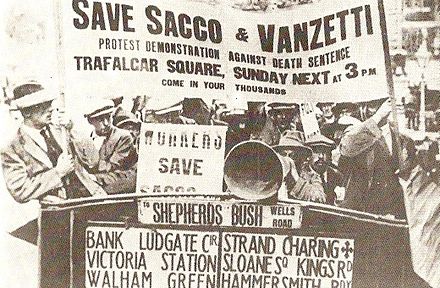
Braintree was also the site of the internationally famous/infamous case in which Nicola Sacco and Bartolomeo Vanzetti, Italian-born American anarchists, were controversially convicted of murdering a guard and a paymaster during the April 15, 1920 armed robbery of the Slater and Morrill Shoe Company in Braintree. They were convicted and executed.
Bigger bridges, bigger traffic

The Bourne Bridge and the Cape Cod Railroad Bridge in the sunset.
From Robert Whitcomb’s “Digital Diary’’ in GoLocal24.com
The Feds are considering replacing, in the next few years, the two highway bridges – the Bourne and Sagamore (there’s also a quaint railroad bridge) over the Cape Cod Canal, necessitating mini-Big Dig construction on the approaches on each side of the canal. Each new bridge would, as with the bridges now, have two lanes in each direction, but with an additional lane at each end to, it is hoped, ease merging.
Prepare for massive summer traffic jams during construction, when, you’d hope, the two existing bridges, built in the Depression, would continue to be open.
But get ready for even bigger summer traffic jams than now after the “improvements’’. Highway expansions quickly serve to lure more traffic, in a variant of Parkinson’s law: Expenditure rises to meet income. The fragile, eroding, increasingly suburbanized giant sandbar will get chewed up even more by development. And officials of its towns will probably feel compelled to widen local roads to deal with more cars coming over the bridges.
Far better if a lot of people could travel to and from the Cape by train. And how about, for example, trains to take people to Woods Hole and Hyannis to meet the ferries to Nantucket and Martha’s Vineyard?
Frank Carini: How to start blocking catastrophe

From ecoRI News (ecori.org)
History will not be kind to many of us, most notably Baby Boomers, Millennials, the Joneses and Gen Xers. We’ll be remembered for savaging the planet even though we knew better. We’ll be synonymous with selfishness. Our hubris will be infamous.
The latest projections from the U.N.’s Intergovernmental Panel on Climate Change (IPCC) aren’t pretty: widespread drought, food shortages, and a mass die-off of coral reefs, perhaps as soon as 2040. Our collective modus operandi will be to ignore the report’s facts, discredit its science, and blame more frequent and intense storms and raging wildfires on everything but the burning of fossil fuels, our unrelenting procreation, and human arrogance, from flatulent bovines to the pesky sun.
We’ve been ignoring climate change for generations. Even though our 140-character attention span was recently increased to 280, the issue is too big for our selfie society to take the time to understand. Plus, if we did, we’d actually have to change our behaviors and reduce our consumption.
The future other generations — and many of us — are facing will be even crueler to the desperate and will be more devoid of biodiversity. More people will suffer and more species will be lost. And you know what, the sad truth is we don’t give a damn — at least not enough of us, at least not yet.
The daily news cycle largely ignores the topic of climate change, because it doesn’t change much from day to day. It can’t be measured in polls, there aren’t many sexy soundbites, and it doesn’t get good ratings. Plus, much of the media can’t be bothered to focus on a slow-motion crisis that impacts everyone and everything on the planet.
The IPCC’s recent report, which was released Oct. 8, warns that world governments have only a dozen years to take meaningful action. The reaction so far to the latest climate warning? You can hear what’s left of the world’s crickets chirping.
With recent climate-change projections being more dire than previously thought, heading off disaster and suffering will require a massive effort from governments around the world. Unfortunately, generations’ worth of evidence shows there’s little reason to believe that humanity is up for the challenge.
The kind of political will and movement away from partisan pandering required to make the necessary changes could be driven by a nagging public, but that sort of pressure depends on the collective public diverting its attention away from the latest iPhone, the escapades of real housewives, the D.C. follies, and the fortunes of sports teams. The odds are against that, which is exactly what the profiteers want. We’re easily distracted when the status quo yells “squirrel.”
For instance, the recent U.N. report, which stresses the need to protect and restore forests, was released two weeks after more than 200 organizations, elected officials, and scientists unveiled their Stand4Forests campaign. The nationwide effort demands the protection of forests as a vital climate solution and warns against false technology solutions such as bioenergy with carbon capture and storage. The campaign’s message has largely been ignored.
“Climate science shows that we cannot stop a climate catastrophe without scaling up the protection of forests around the world,” according to Stand4Forests supporters.
In Rhode Island, the ongoing debate surrounding the protection of forestland provides a microcosm of the world’s larger problem. During the past several years, Rhode Island has clear-cut forest, both young and oldish, to build a casino and an office park, and to accommodate other revolutionary ideas, such as a fossil-fuel power plant. There’s a current rush intensifying to chop down forests to build solar arrays, to help power our growing collection of mobile devices and televisions. To defend this shortsighted practice, some profiteers have argued that this sacrifice is necessary to protect the environment. They ignore the land we have already ruined for use as potential solar fields.
Just because renewable energy is much cleaner than fossil fuels doesn’t mean that such projects have the right to be sited irresponsibly.
The current recorded amount of carbon dioxide in the atmosphere is nearly 406 parts per million (ppm) — well beyond the 350 ppm that climate scientists have deemed safe for humans, never mind most of the planet’s other living inhabitants.
Nevertheless, the U.S. forest industry, for one, is rapidly replacing much of the nation’s mature forests with younger forests and commercial tree plantations. Degraded and fragmented woodlands are far less effective at storing carbon than old-growth forests, they are more vulnerable to wildfires, and they aren’t nearly as helpful when it comes to flood prevention.
Forests, especially mature ones, also provide clean air and fresh water, are home to thousands of species of plants and animals, and are a vital necessity when it comes to addressing climate change — should we ever really decide to.
Part of a true action plan, according to the Stand4Forests campaign, should include:
Ending subsidies for false solutions such as industrial-scale bioenergy and genetically engineered trees.
Investing in forest protection as a resiliency and adaptation strategy for communities vulnerable to the impacts of pollution and climate change.
Developing just economic transition strategies for communities dependent on an extractive forest economy and provide more options for landowners and municipalities to keep forests standing and thriving.
Rhode Island could also start doing its part, beyond signing toothless executive orders, ignoring policy recommendations, and supporting schemes such as voluntary compliance.
The time is now for Rhode Island and the rest of the world to reflect on our behaviors, actions, and attitudes that are bankrupting the future. The only real answer to mitigating our life-changing impacts is sacrifice. It starts with you.
Frank Carini is the ecoRI News editor.