
Vox clamantis in deserto




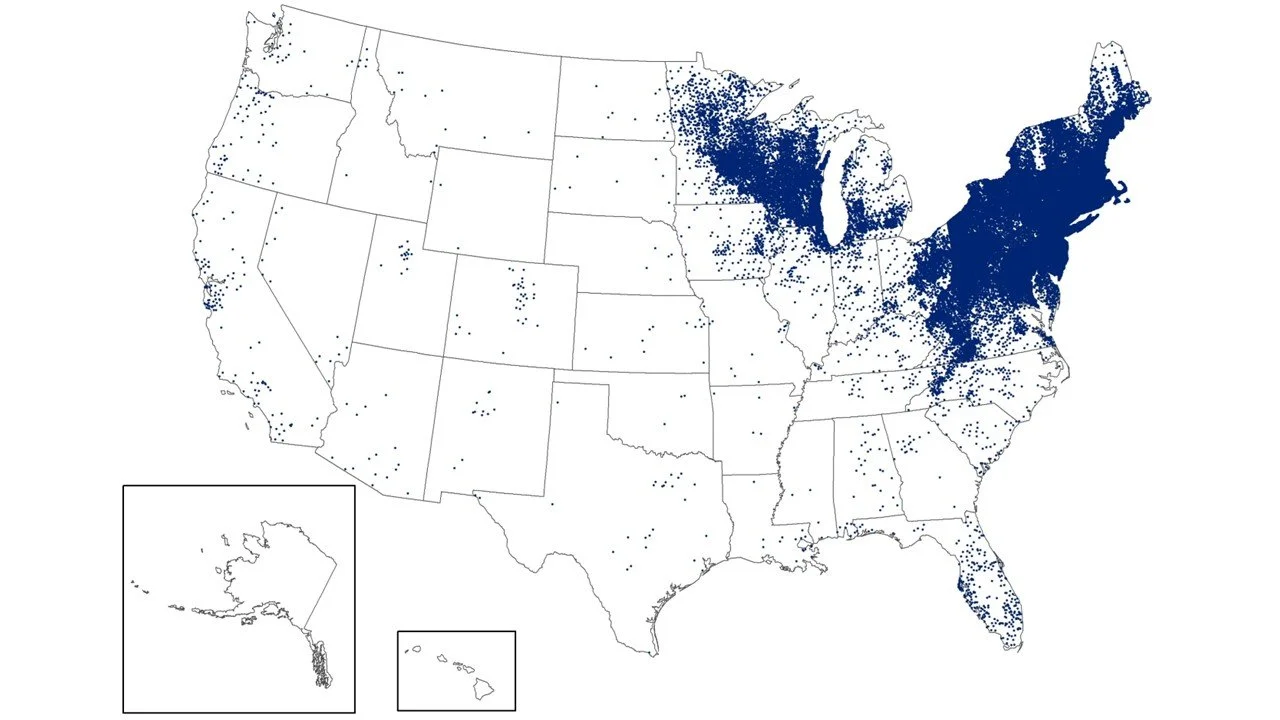
New England's passion for record-keeping

The American Antiquarian Society building, in Worcester, where many old New England documents can be found.
“The starting point for the new history, both in Europe and America, has been the record of births, marriages, and deaths, which most literate societies preserve in one form or another. In colonial America, surviving records of this kind - as of every other kind - are most abundant for New England.’’
—- The late historian Edmund Morgan
Llewellyn King: Develop a skilled trade to start a small business
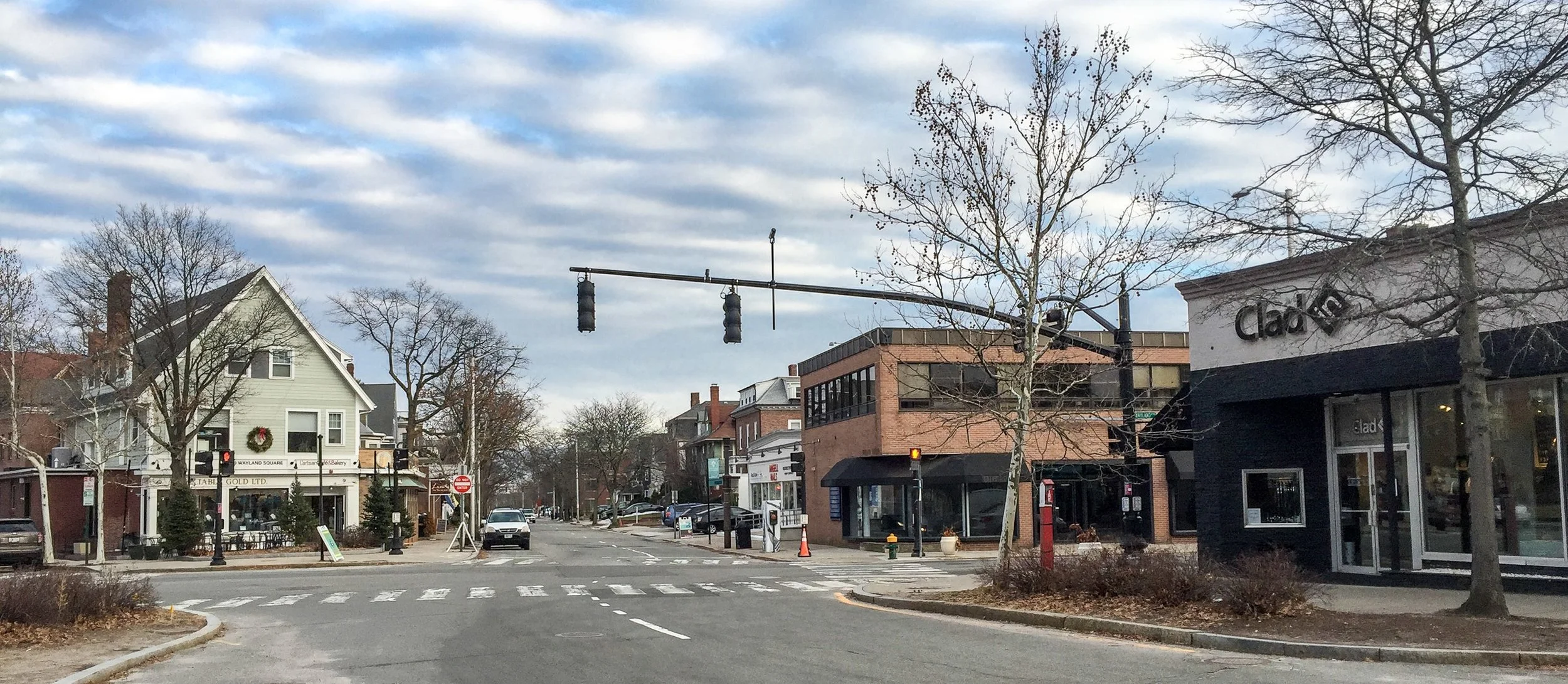
Wayland Square, an neighborhood with many small businesses, in Providence.
WEST WARWICK, R.I.
I love little business. I say “little business” because “small business," like "family farm," has suffered politicization to a point of abstraction. Even the Small Business Administration doesn’t have a precise definition for small business. They define it either by revenue or by number of employees -- and that can range up to a whopping 1,500 in some industries. I begin at five or more.
Politicians love small business and applaud it, but do they care? They listen acutely to big business through its lobbyists, who crowd Capitol Hill in Washington, D.C. and every state capital.
If you’re stitching the cloth in a tailor’s shop and you have a problem with government, just stitch away because nobody is listening. Size does matter, alas.
Yet little business is the vital regenerator of the economy. It’s the fresh oxygen supply which keeps the economy fed with work and ideas.
For me, little businesses begin with moms-and-pops. They could be anything from a computer repair shop to a bowling alley, from a plumbing company to a bakery, from a convenience store to an optician, and from a service station to a painting contractor.
If the business is, say, a drycleaner which uses chemicals, or anything else that discharges into the air or water, government will be all over it. But Bryan Mason, owner of Apollo Consulting Group, based in Newport, R.I., says there are plenty of problems for small businesses that don’t involve government.
“One of the big issues for the small business with, say, 50 employees, is that the owner-operator doesn’t know how to price his or her product or how to market it. You can’t undercut the big chains, so you have to offer real value and real quality,” says Mason.
As to strategy, Mason cites a bowling alley he advised. The bowling alley sold time on the lanes in two-hour blocks. The result was that patrons were keen to get their money’s worth by bowling for the whole period and not stopping to chat and, vitally important, not spending money at the concession stand on drinks and food.
Mason had them remove the time limit on the lanes, and profitability went up. Like cinemas, the money was in the concessions.
Little business — I owned and operated a newsletter-publishing company with 20 employees for over 30 years — is usually in direct relationship to the skill of the founder. A woman who worked in a florist may start her own shop, or an auto mechanic might start a service station. A construction worker might start a house-renovation business, and a stone mason might set out to chisel and sell headstones.
Herein is a unique challenge for our society. It’s the artisans and people with skills who start businesses: a gardener, a landscaping service; a short-order cook, a food truck; and a hairdresser, a salon.
Left out of this progression are many liberal arts graduates who have skills that are suited to big organizations like schools, hospitals, government departments and giant corporations. You can’t start a sociology shop, a history wholesaler or a political science emporium.
If you have the itch to be self-employed, you might want to get a hands-on trade.
Some colleges are now sensitive to this need and are adding a practical course. I’ve been especially impressed with a little college in Charleston, S.C., the American College of the Building Arts, in which students take traditional liberal arts courses and spend two-and-a-half days each week in apprentice labs, learning one of six areas of craft specialization: architectural carpentry, architectural stone, forged architectural ironwork, masonry, plasterwork and timber framing.
The college aims to graduate “educated artisans,” but what they get is entrepreneurs: approximately one-third of their graduates have started businesses based on their artisanal training,
Owning a business is a fundamental part of the American Dream, and the quickest way to do it is to market a skill which you already have from dog walking to jewelry making, from furniture hauling to well drilling.
Steve Jobs, who grew his little business to enormousness, said, “Don’t be afraid, you can do it.”
Llewellyn King, based in Rhode Island and Washington, D.C., is executive producer and host of White House Chronicle, on PBS. His email is llewellynking1@gmail.com.
Cheshire now and in memory

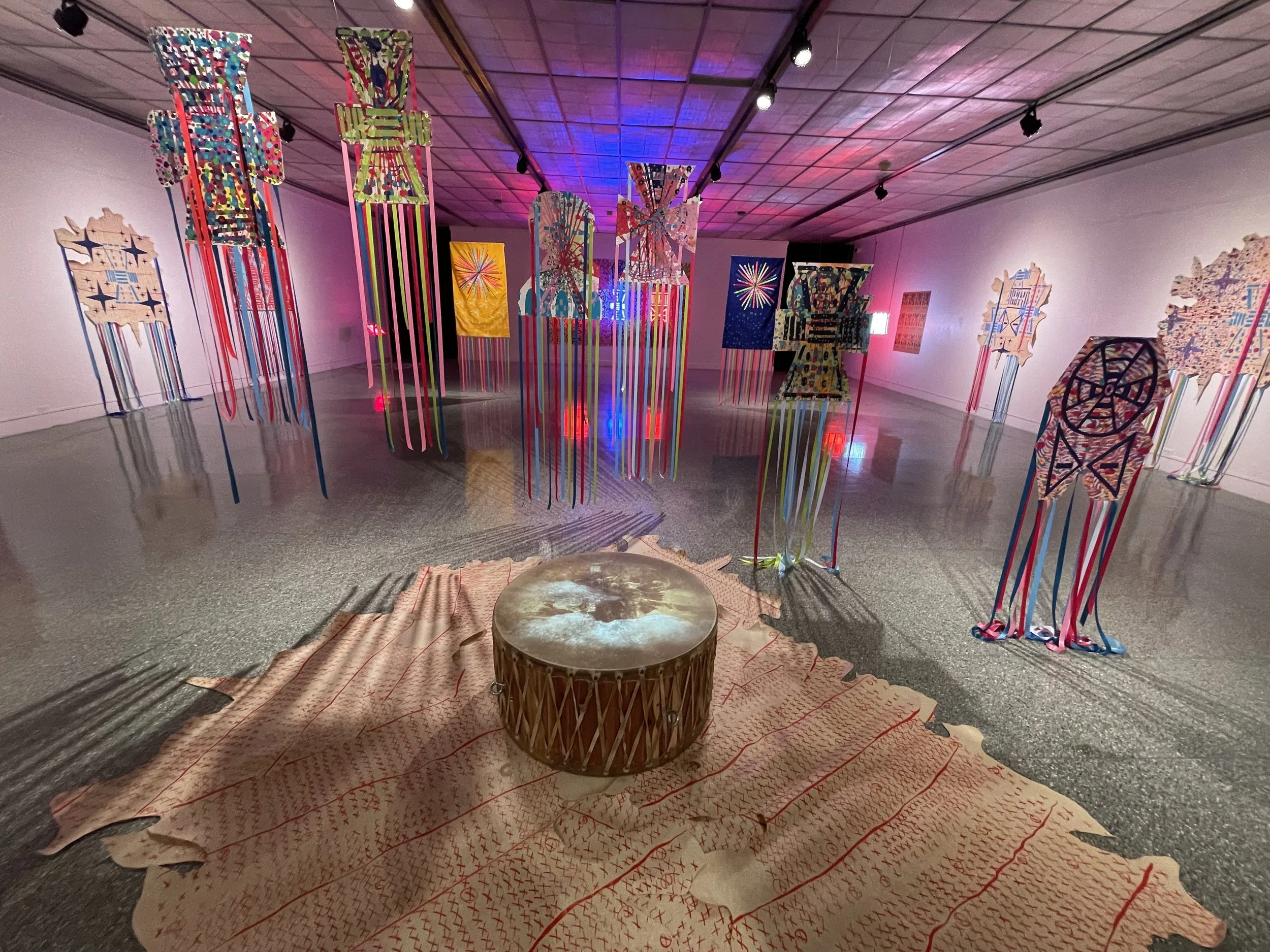
“As Fire to the Sun no,. 2 2018,’’ by Pete Hocking, in the show “To Look and Look Again,’’ at the Chazan Gallery at the Wheeler School, Providence, through Oct. 13. The two-person show (Hocking and Sam Allerton Green) focuses on the artists’ perception of time and space. Hocking’s work depicts landscapes from his childhood home in Cheshire, Conn. He melds the current landscape with his childhood memories of the town.

Roaring Brook Falls, in Cheshire, as seen in late October.

The First Congregational Church in Cheshire.
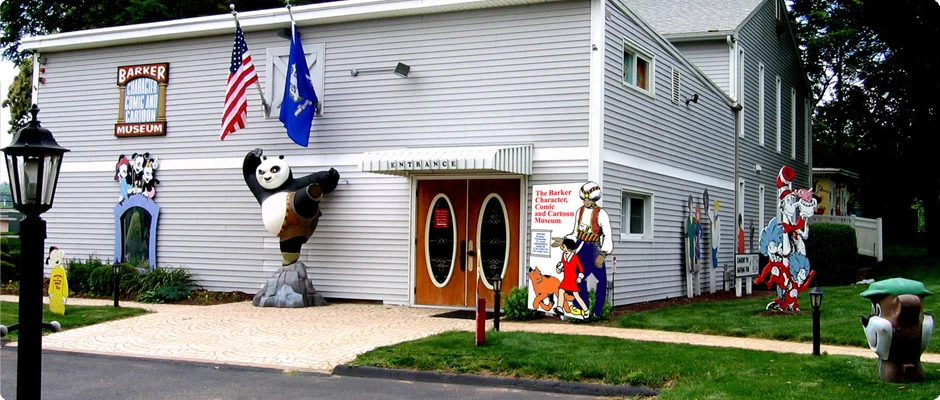
The Barker Character, Comic and Cartoon Museum, in Cheshire.
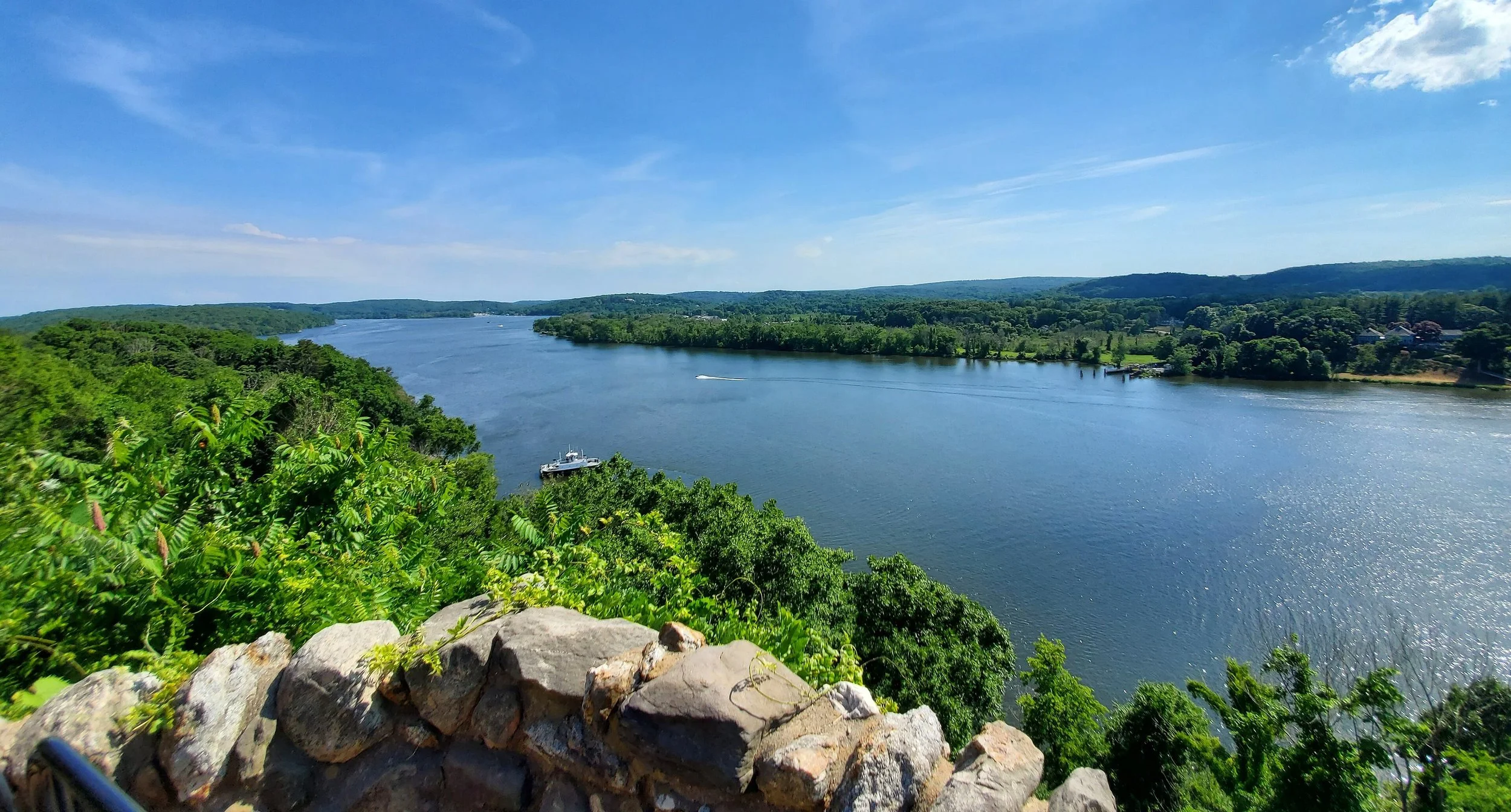
While Cheshire has around 30,000 residents, and is close to New Haven, there remains something approaching countryside in parts of this exurban/suburban town. Sadly, it is best known for the horrific murders that took place there on July 23, 2007, when Jennifer Hawke-Petit and her two daughters were raped and murdered, and her husband, Dr. William Petit, was severely injured, during a home invasion.
The murders, Steven Hayes and Joshua Komisarjevsky, are serving life sentences.
Cheshire hosts the Barker Character, Comic and Cartoon Museum, with its large collection of memorabilia, novelties and such ephemera as lunch boxes and Pez dispensers bearing the likenesses of characters from television, cartoons and comics.
There’s also a Cold War fallout shelter near an AT&T cell tower. What with Putin, Kim and Xi, perhaps it should be renovated.
Gritty and gorgeous New Bedford

Looking over old houses and factories toward New Bedford Harbor.
— Photo by Gerrydincher
New Bedford Confidential
From Robert Whitcomb’s “Digital Diary,’’ in GoLocal24.com
Down at the Docks (Pantheon), by Rory Nugent, is an unvarnished look at, by turns, gritty and beautiful New Bedford and particularly the hard and often disorderly lives of fishermen there. Drug smuggling and other crime, organized and otherwise, the history of the industry that made the city famous – whaling – the city’s resilient romantic aspects amidst its decay as its textile industry imploded – it’s all in the book.
As Nugent notes, New Bedford is no longer exactly what Herman Melville, author of Moby Dick, called “the dearest place to live in, in all New England,’’ but it ain’t boring. Read the book and then go check out the Whaling Museum, the port and some great 19th Century mansions.


Lobsters and rock
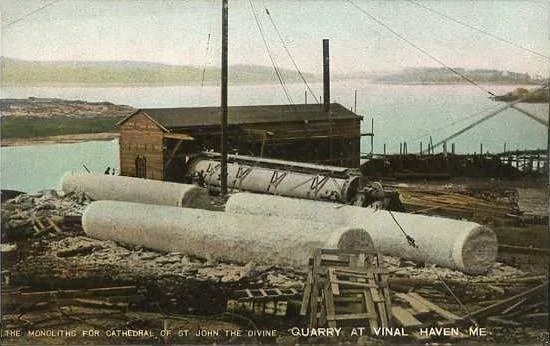
In Vinalhaven, Maine, columns quarried for the Cathedral of St. John the Divine, in New York (installation completed in 1904). Many large and small buildings were made from granite quarried on the Maine Coast.
“It was a Maine lobster town –
each morning boatloads of hands
pushed off for granite
quarries on the islands,
and left dozens of bleak
white frame houses stuck
like oyster shells
On a hill of rock….’’
-- From “Water,’’ by Robert Lowell
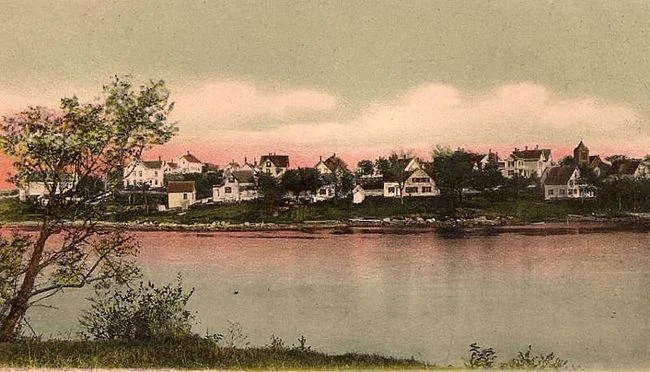
Colorized photo of the East Side of Vinalhaven in 1905.
Beauty and restraint in Newfane

The Windham County Court House, in Newfane, Vt.
— Photo by Daderot
“The glory of Newfane {Vermont} is in the architecture. The inn, the Grange Hall, the church, are all excellent and beautifully related to each other. And in the center is the {Windham County} court house, a superbly proportioned reminder of a {Christopher} Wren church….Lesser communities would have one inhabitant who would proclaim his personality by painting his house yellow with green trim. With us, none does. The beauty of Newfane comes also from the beauty of its citizens.’’
-- From “Small That Is indeed Beautiful,’’ an essay by the late economist and writer John Kenneth Galbraith in Arthur Griffin’s New England: The Four Seasons (1980). Mr. Galbraith, a Harvard professor, summered in Newfane.
'Autumn people'

“That country where it is always turning late in the year. That country where the hills are fog and the rivers are mist; where noons go quickly, dusks and twilights linger, and midnights stay. That country composed in the main of cellars, sub-cellars, coal-bins, closets, attics, and pantries faced away from the sun. That country whose people are autumn people, thinking only autumn thoughts. Whose people passing at night on the empty walks sound like rain.”
― Ray Bradbury
Faking it as a teacher
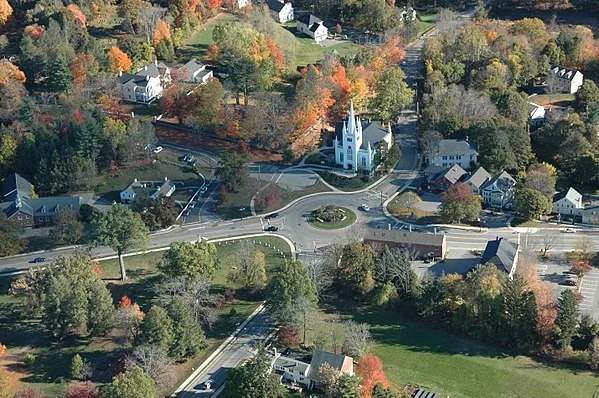
The Old Center of North Andover, Mass.
Adapted from Robert Whitcomb’s “Digital Diary,’’ in GoLocal24.com
Fifty years ago, in 1968, I spent the fall teaching in public high school in North Andover, Mass., in a program called A Better Chance, in which poor kids, minority and white, from the South and elsewhere lived in a kind of group home, presided over by a teacher and spouse, in towns with good public and/or private schools. I learned a lot that fall, which I remember as notably windy and wet. One lesson was that a firm, er, loud, voice in a class with 30 kids can to some degree offset the vulnerability of someone, like me, of small stature teaching restless and sometimes rowdy teens many of whom were bigger than me. And that you need eyes behind your head. Performance art.
I assume that teaching in that high school was tougher than teaching in the Brooks School, an elite boarding school in the same town, where there were rarely more than 10 students in a classroom — and most were very well behaved.
Making space for spring

Migration Reflection II (oil on canvas), by Pamela R. Tarbell, at the current “Fall Art Exhibit,’’ at Mill Brook Gallery and Sculpture Garden, Concord, N.H.
''Nature’s first green is gold,
Her hardest hue to hold.
Her early leaf’s a flower;
But only so an hour.
Then leaf subsides to leaf.
So Eden sank to grief,
So dawn goes down to day.
Nothing gold can stay.'
-- "Nothing Gold Can Stay'', by Robert Frost
Henrik Totterman: What would higher education look like if it were run by IKEA?
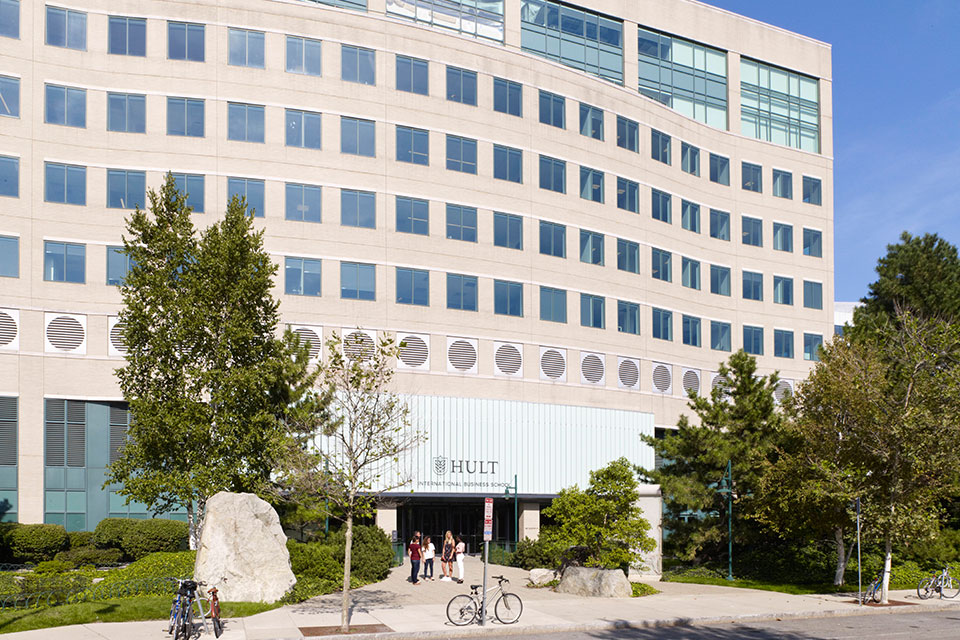
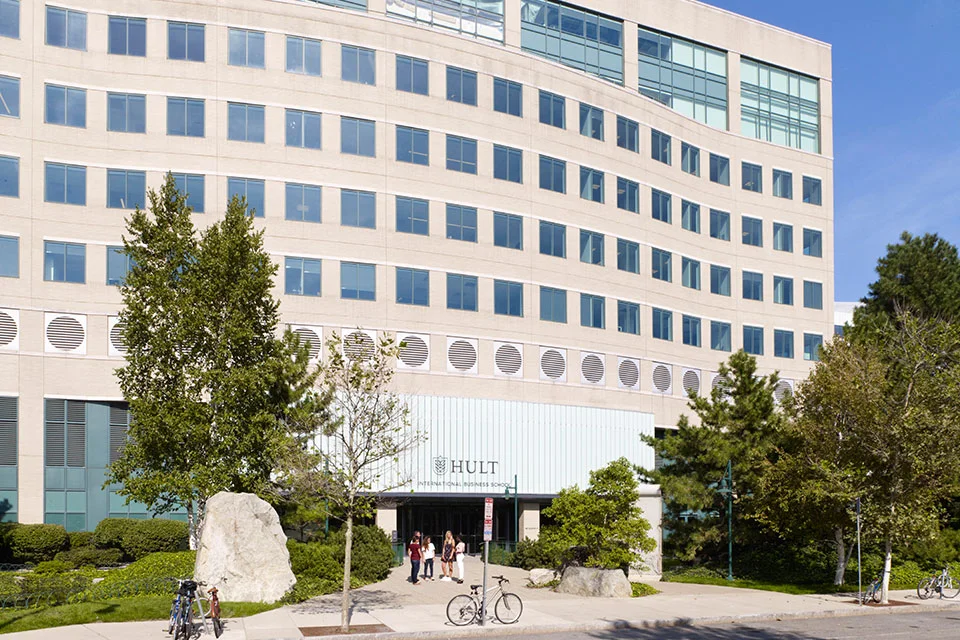
Hult International Business School’s U.S. facility, in Cambridge. The school also has operations in San Francisco, London, Dubai and Shanghai.
From the New England Board of Higher Education (nebhe.org)
As a professor of entrepreneurship and management, who received his master’s and doctoral degrees in northern Europe, I often come to think of IKEA as one of the most mission- and value-driven examples of disrupting an industry and the way people live globally today.
Most of us have experienced the “mile-long IKEA walk” through the second floor furniture haven, to end up with a pyramid of meatballs on the plate in the store restaurant. Once culinarily satisfied, our journey has continued toward the increasingly automated cashiers, where consumers line up to pay for tightly packed furniture boxes and an amazing range of household accessories. Before exiting the building, we have routinely visited the IKEA food store to buy some Nordic delicacies and sweets. We do this primarily to bribe ourselves through the inevitable struggle of IKEA furniture assembly using the magic hexagon key, leading us toward the ultimate satisfaction of Nordic design interiors.
So the question is, what if anything, can higher education learn from a Swedish furniture manufacturer?
International higher education is facing increasing competition and pressure from new market entrants, who are introducing disruptive models of delivering more affordable education on scale. Higher education is definitely more than ever at a crossroads in terms of securing its future existence, which is why it becomes essential for academic leaders to benchmark and recalibrate their strategies, operational models and academic programs for survival and long-term relevance.
Higher education is often criticized for high tuition prices, outdated curriculum design and poorly scalable delivery formats. Typically, institutions operate in a regulated regional setting with voluntary international quality controls through self-governance, peer-assessment and university rankings. Despite all the hype around globalization of higher education, most institutions remain fairly small or at least regional with few examples of a true global reach.
Interestingly, IKEA has built its global presence in a complex and regulated market by addressing challenges similar to those higher education institutions are facing today. To support its success, IKEA’s corporate values build on offering decent quality for an affordable price, enabled by efficient logistics, strict quality and process control, and engaging strongly the target audience in delivering the brand promise. IKEA relies on extensive quality testing, and always aims to scale and increase efficiencies over time. This is done to reduce the price for the consumer, without scarifying the user experience.
In contrast to many higher education institutions, the IKEA journey is a unique experience that feeds creative minds, enables problem scoping and culminates in the collection and enrichment of core essentials and beyond. The educational journey across universities, schools and programs increasingly resemble one another. This is at least partially due to the ease of global benchmarking and the influence of international accreditations, government regulations and rankings that standardize the norms of education.
The IKEA customer is typically equipped with a curious mindset and a willingness to engage socially in constructing the journey, with enough guidance and ease of access to make it worthwhile and part of their lives. Where IKEA has succeeded in bringing costs down through operations on scale, in favor of their customers, very few institutions of higher education are actively engaged in a paradigm shift to reconfigure their operations to reach more favorable terms for their students and alumni.
Similar to higher education, the IKEA experience builds on a feeling of belonging—a social gathering of likeminded people. This enriching experience ensures that there is something for everyone, both in terms of education and building a network. However, in contrast, IKEA focuses especially on price-quality conscious young urban people, who typically appreciate affordability, functionality and flexibility to support their lifestyle and careers.
As with traditional higher education, the physical building space and printed product catalogs remain key for IKEA's success. Peculiarly, as for most higher education institutions, the online presence came late to IKEA and has only gradually increased over time. The challenge for higher education is twofold: how to build virtual social and career networks, while ensuring that engagement in the educational journey remains at the core. In many countries, faculty have strong academic freedom, but struggle with intellectual property-related issues in terms of course content ownership. On the flip side, higher education is currently defining the future in an increasingly digitalized educational space, without proper curriculum oversight and means for controlling content quality.
Here is how faculty and leaders in higher education can build on the values of IKEA to ensure their future prosperity:
In general, institutions should be more ambitious in driving tuition prices and costs down, while embracing academic quality and operations excellence in terms of resource allocation, service delivery and measuring outcomes.
Avoid offering one-size fits all pedagogy, and instead introduce real-world, problem-based learning. The modern form of problem-based learning starts from a real-world issue that needs to be addressed, in this case by students. In some European programs, learning is primarily based on students signing up for research/client consulting projects, and faculty then facilitate rather than lecture the learning. One such example is Academic Business Consulting, an incorporated company solely operated by graduates at Hanken School of Economics, as part of their capstone project.
Create unique study paths by allowing students to take detours from the norm; a good example is Northeastern University's cooperative-education program, which allows students to satisfy their educational desires by working for an extended time in a practical business context with strong academic ties.
In addition to small and exclusive classroom experiences, design learning activities with reach, access and scalability in mind, like Harvard University Extension School’s HELIX learning pedagogy. HELIX implies that a faculty member teaches simultaneously students in a class and online.
Institutions should emphasize unique educational approaches, true to their mission and values, like Hult International Business School offering a global, responsive and practical education in line with the ambition of being the most relevant business school.
Another example from Hult is topping the core educational experience with electives teaching essential tools and practices, along with offering lifelong learning opportunities through complimentary electives and innovative ways of aligning scholarly activities with the educational mission.
Finally, higher education would benefit from more transparency and objectivity in the way educational outcomes are measured. For instance, a company like Linkedin has comprehensive and fairly accurate data to compare the quality of incoming students and the impact of received education on alumni, in terms of career progression and importantly depth and breadth of their professional networks.
Henrik Totterman is professor of practice, entrepreneurship and management at Hult International Business School, a member of the teaching faculty at Harvard Extension School, and president of LeadX3M LLC.
Spinning blades of offshore wind turbines found to create little noise
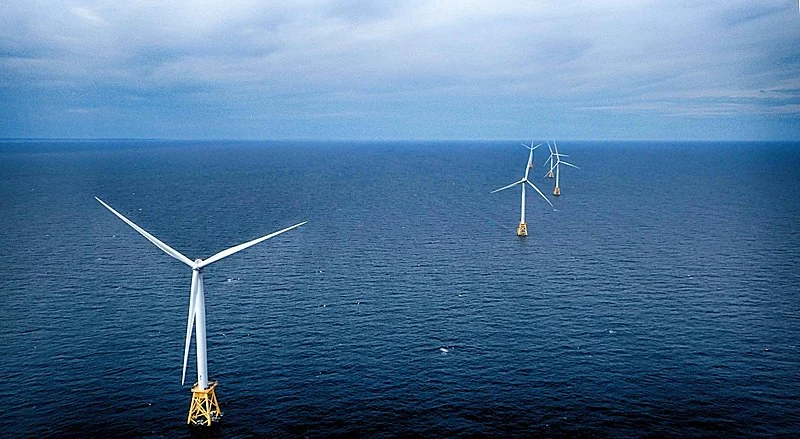
Block Island Wind Farm.
From eco RI News (ecori.org)
New research lead by the University of Rhode Island has concluded that offshore wind facilities produce minimal noise above and in the water while the blades are spinning. But the noise and vibrations from building them are a concern.
The research, funded through the Bureau of Ocean Energy Management, began with the construction of Deepwater Wind’s Block Island Wind Farm in September 2015. It continued when the five turbines began spinning in late 2016.
Through acoustic monitoring, James Miller, URI professor of ocean engineering and an expert on ocean sound propagation, found that the sound from the turbines was barely detectable underwater.
“You have to be very close to hear it. As far as we can see, it’s having no effect on the environment, and much less than shipping noise,” Miller said.
Working with a team of specialists from Woods Hole Oceanographic Institution, Marine Acoustics Inc. of Newport, and others, Miller heard ships, whales, wind, and fish. But noise measurements 50 meters from the turbines was hardly audible. Above the waterline, the swish of blades was barely heard, according to Miller.
The noise was monitored using hydrophones in the water and geophones, which measure the vibration of the seabed, on the seafloor.
The vibrations from the pile driving of the turbine’s support structure is a bigger unknown. Miller said the vibrations on the seabed had a surprising intensity that may harm bottom-dwelling organisms such as flounder and lobsters, which have a huge economic value in the state.
“Fish probably can’t hear the noise from the turbine operations, but there’s no doubt that they could hear the pile driving,” Miller said. “And the levels are high enough that we’re concerned.”
To minimize the aquatic impacts, the pile driving started with minimal sound to allow marine life to move away. Pile driving was also prohibited between Nov. 1 and May 1 to protect migrating North Atlantic right whales, which are critically endangered. The pile driving was also limited to daytime so that spotters could search for nearby whales.
This kind of monitoring will continue once construction starts on other Deepwater Wind offshore wind farms such as the Skipjack Wind Farm, off the coast of Ocean City, Md. Additional research will be conducted in the federal offshore wind energy area between Massachusetts and Rhode Island.
In addition to the acoustic impacts, the researchers looked at the impacts of offshore wind facility construction and operations on fishing, habitats and seabed scaring and healing. Studies will eventually be published from that research.
URI expects to study and provide data for the nearly 1,000 offshore wind turbines that have been proposed for installation in the waters between Massachusetts to Georgia in the coming years.
“We’ve become the national experts, which has added to Rhode Island’s reputation as the Ocean State,” Miller said.
REITs are a major force in region's economy

Part of the Assembly Row development in Somerville owned by a Real Estate Investment Trust.
This from The New England Council (newenglandcouncil.com):
The New England Council, the nation’s oldest regional business organization, has released a new report, ‘The Economic Impact of REITs in New England’. The report, developed with economic data and content compiled by Nareit, details the various ways that Real Estate Investment Trusts (REITs) are contributing to the New England economy, ranging from employment, to assets, to community revitalization.
REITs (Real Estate Investment Trust) own, operate or finance income-producing real estate. Modeled after mutual funds, REITs provide all investors the chance to own an interest in valuable real estate, present the opportunity to access dividend-based income and total returns, and help communities grow, thrive and revitalize.
Across the six New England states, REIT-owned properties include everything from commercial properties like office buildings, shopping centers, hotels, data centers, and recreational and entertainment facilities; residential properties such as apartment complexes and rental homes; as well as consumer and commercial storage facilities, over 3,000 telecom towers and nearly one million acres of timberland. In total, there are over 13,000 REIT-owned properties in New England, which represent $94 billion in gross assets, and support over 100,000 jobs.
‘From apartment complexes to office buildings, telecom towers to data storage facilities, REITs are all around us in New England,’ said James T. Brett, president and CEO of The New England Council. ‘As this report details, these businesses are having a tremendous impact on our region’s economy, ranging from community revitalization to supporting tens of thousands of jobs thought the six New England states. We hope that this report will provide stakeholders and policy makers with a better understanding of the role these companies play in our region’s economic well being.’
‘By investing in our communications infrastructure, American Tower is pleased to help bring connectivity to New Englanders which is now essential to all aspects of our work, education, health care and play,’ said Jim Taiclet, Chairman, president and CEO of American Tower Corp.
‘We are proud to call Boston home and to support the New England economy with 20 facilities and more than 800 employees across the six New England states, including our global headquarters,’ said William L. Meaney, president and CEO, Iron Mountain Inc.
The report draws upon data from Nareit’s December 2017 study ‘Economic contribution of REITs in the United States…’. The New England Council report supplements the data for the six New England states with profiles of some of the REITs operating in the region, including New England Council members American Tower Corporation and Iron Mountain—both headquartered in Boston — as well as Boston Properties’ 888 Boylston St. in Boston; Federal Realty’s Assembly Row in Somerville, Mass.; Weyerhaeuser’s timberlands in Maine; Ventas Inc.’s South Street Landing in Providence, and EPR Properties’ various recreational properties throughout New England.
Macaulay in hip Montpelier
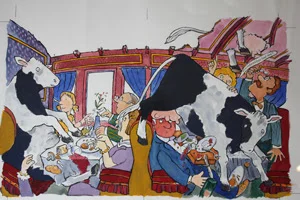
“Why the Chicken Crossed the Road,’’ by the famed David Macaulay, in the show “Macaulay in Montpelier: Selected Drawing and Sketches,’’ though Nov. 2 at the Spotlight Gallery at the Vermont Arts Council.
David Macaulay, now a Vermonter but previously a Rhode Islander, is a British-born illustrator and writer whose books have sold over 3 million copies in the United States and have been translated into a dozen languages. According to Macaulay, the featured works were "selected in the dark from hundreds of illustrations and at least five times as many sketches," representing "a tiny sliver of the vast amount of flotsam left in the wake of each book.’’

State Street, in downtown Montpelier.

Downtown shops, not surprisingly including yoga.

Montpelier in 1884. Note the domed state capitol.
Montpelier, in the Green Mountains, while the smallest state capital, is a remarkably hip city with good restaurants (Sarducci’s is terrific), galleries and other small-scale retailing. In the 19th and 20 centuries the city also had a good number of small manufacturers.
The city also hosts the the Vermont College of Fine Arts and the New England Culinary Institute, the latter helping to explain the presence of good restaurants. The main drawbacks are the long winters and the Winooski River, which, while scenic, from time to time floods part of the downtown.
Tough town, Newport

The Breakers, in Newport.
From Robert Whitcomb’s “Digital Diary,’’ in GoLocal24.com
I’ve been chatting with Newporters a bit more than usual lately. It’s an exciting and complicated, sometimes bizarre place, with great natural and manmade beauty. But the routes to get there are problematical. The Route 114 commercial strip in Middletown to the Newport city line is one of the ugliest I’ve seen – where were the town planners and zoners? -- and there often seems to be an accident or other problem on the Pell Bridge, a toll span. If only there was much more ferry service between Providence and Newport to reduce some of the congestion.
And society, especially “high society,’’ while often entertaining, can be quite vehement. Consider the Preservation Society of Newport’s successful multi-year campaign to build a “welcome center,’’ with restaurant, on the grounds of The Breakers, the Vanderbilts’ former over-the-top seaside mansion on Ochre Point Avenue, close to famed Bellevue Avenue. Some powerful Newporters argued that if such an “amenity’’ were to be built at all it should have been across the street. What ensued was a upscale civil war with neighbors; some of the protagonists still don’t speak to each other.
Some Newporters fear that the Preservation Society might try to put restaurants in some of its other properties, too, in effect turning into a restaurant chain, which would displease some neighbors (street-parking paranoia) as well as for-profit eateries in town that might be hard-pressed to compete with the powerful nonprofit.
Anyway, the city could use a Truman Capote, Edith Wharton, Gore Vidal or Tom Wolfe to do an updated zoological study of the Bellevue Drive/Ocean Drive swells, which include such nouveau riches as Larry Ellison, Jay Leno and Judge Judy as well as “old money,’’ some of which can be traced back to crooks in the 19th Century Gilded Age.
(The old response, attributed to various recipients of charitable donations over the years, about “tainted money’’ was that the only problem was that ‘’taint enough of it’’.)
There’s something about the mix of deep history, commercial and recreational port, aesthetics, social drama and intrigue, a rich stew of ethnicities, Navy, ex-spies and other government types and location at the southern end of an island that keeps new people coming to rejuvenate the place.
Olivia Alperstein: Trump to roll back limits on methane

The fracking process.
Via OtherWords.org
September 11 is already an annual day of mourning. But while the nation grieved over victims of the 9/11 terrorist attacks, the Trump administration’s Environmental Protection Agency announced a plan future generations may well grieve as a tragedy in its own right.
While Americans attended memorial services, the EPA announced plans to roll back regulations on methane — a powerful greenhouse gas that damages the world’s climate and threatens human health.
Methane carries up to 36 times more warming potential than carbon dioxide.
More methane emissions mean more lethal heat waves, extreme storms, rising sea levels, drought, and floods. They mean worsening air quality, water quality, and crop damage. They mean certain crops will lose nutritional value, and pest- and waterborne diseases will spread.
Specifically, the White House wants to kill the Obama administration’s 2016 New Source Performance Standards, which require oil and gas drillers to limit emissions of methane during fracking and flaring (the process of burning off gas that won’t be captured and transported).
It’s yet another big present to the oil and gas industry. Meanwhile, ordinary working families will pay the price, and so will their health. Children, the poor, the elderly, and those with a weak or impaired immune system are especially vulnerable.
The EPA itself agrees: Its own analysis concludes that the new proposed rules could send hundreds of thousands more tons of methane into the atmosphere. The EPA acknowledges further this would hurt thousands of people and rack up a huge cost in health care and agricultural damage.
There are short-term threats, too. Both fracking and flaring pose serious risks to nearby communities, including possible methane leaks.
Methane leaks are frequently accompanied by volatile organic compounds (VOCs), which are known to be toxic and/or carcinogenic to humans.
VOCs carry a boatload of negative health impacts. For example, when combined with particulate matter in the presence of sunlight and heat, VOCs form ground-level ozone, a pollutant that aggravates chronic lung diseases, pre-existing heart problems, and asthma.
Put simply, they’re terrible for the air you breathe and the water you drink and the ground you walk on.
Fracking itself poses a danger. This past March, Physicians for Social Responsibility and Concerned Health Professionals of New York released a report showing that fracking increases the risk of serious medical conditions such as asthma, birth defects, and cancer.
A study by the Environmental Defense Fund found that the U.S. oil and gas industry emits 13 million metric tons of methane from its operations each year — nearly 60 percent more than currently estimated by the EPA.
This attempt by the EPA to roll back the methane rule undermines the health and safety of families and communities. It flies in the face of scientific and medical evidence that methane poses serious hazards to our climate and health.
We need more regulation of methane, not less.
The EPA is directly tasked with creating policies that protect human health and the environment. It’s reckless and irresponsible to weaken a rule that directly fulfills that mission.
Olivia Alperstein is the Media Relations Manager for Physicians for Social Responsibility
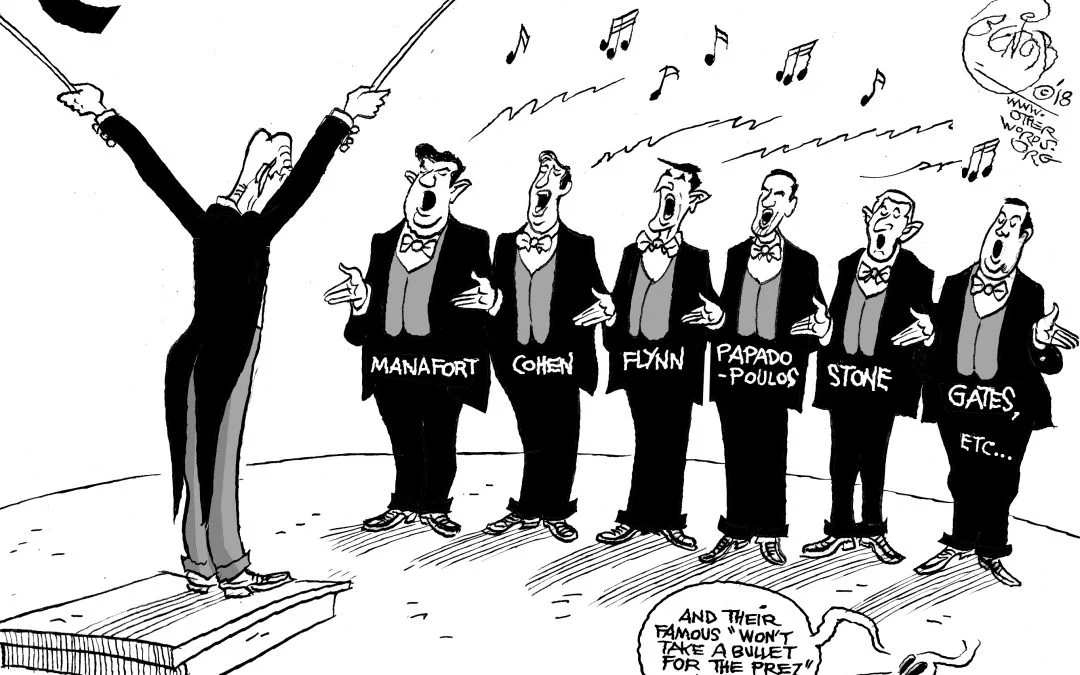
David Warsh: Lessons from times before the FED
SOMERVILLE, MASS.
Ben Bernanke told an attentive Brookings Institution audience earlier this month, that, after he became chairman of the Federal Reserve Board, in 2006, “Literally one of the first things I did was to ask the staff to give me the handbook or what you do in the case of a financial crisis, and they provided me a little notebook, typed on a manual typewriter and mimeographed, about four pages in it, and it said, ‘Open the discount window.’ And that was about it…. Tim Geithner had a similar experience at the New York Fed, and so we went into one of the complicated and consequential crises in human history with very little in the way of playbook for thinking about how to address the crisis.”
The Brookings conference earlier this month, organized by Bernanke, former Federal Reserve Bank of New York President and then Treasury Secretary Timothy Geithner and former Treasury Secretary Henry Paulson, showcased 15 technical papers written by their lieutenants about the problems they faced and, to some degree, solved, during five desperate weeks in the autumn of 2008. Meanwhile, Bernanke, Geithner and Paulson contributed an op-ed article to The New York Times forcefully pointing out that Congress had stripped future crisis managers of several of the powers that proved crucial in the last.
A central lesson is that the next global financial crisis won’t be like the last. The reason is that financial innovation proceeds within the regulatory framework no matter what, until at some point the authorities face a landscape so different from the expected one as to be essentially unfamiliar. “Open the discount window,” the general principle that animated central banks and treasuries in the 2008 panic, is a shorthand expression of Walter Bagehot’s dictum of 1873 for the Bank of England – lend freely to troubled institutions, at a slight penalty rate, against good collateral. The authorities learned in 2008, as they struggled to make sense of sale and repurchase agreements (repo), different forms of commercial paper, derivative securities, and stock-lending practices, that there must be something more to engineering “bailouts” than that.
A perspicacious friend last week asked, as policy–makers might ask their staffs in leisured times, for the name of a book on the history of “monetary events” in the U.S. and how they shaped the evolutions of monetary institutions and policies. She wanted to know more about such events as the 1907 panic that was mentioned here last week.
As it happens, that book appeared Sept 21:. Fighting Financial Crises: Learning from the Past (University of Chicago, 2018), by Gary Gorton and Ellis Tallman (University of Chicago), is a vital addition to crisis literature because it compares what happened in 2008 to the ways in which U.S. bankers dealt with panics on their own in the years before there was a Fed.
Gorton is an economic historian who, with director Andrew Metrick, founded the Center for Financial Stability at Yale University’s School of Management, which co-sponsored the Brookings project with the Hutchins Center for Fiscal and Monetary Policy. Tallman is research director of the Federal Reserve Bank of Cleveland. Gorton and Tallman pursued their graduate studies, years apart, at the University of Rochester, whose economics department has traditionally emphasized the connection between theory and practice.
Their collaboration started as a lengthy study of the panics of the U.S. National Banking era, 1863-1914, both their sources and the means taken to combat them. Those fifty years constitute, they write, a laboratory in which to differentiate, for example, “between arguments that government policies cause financial crises (e.g., moral hazard, ‘too-big-to-fail,’ etc.) from the underlying causes that the government policies aim to address.” They soon realized they couldn’t demonstrate cause and effect by the high standards of present-day econometric practice. Hence the book instead of a paper, history instead of statistics.
The authors trace the development of clearing house associations, owned by member bank, from their roots in 18th Century England. Originally no more complicated than daily luncheon meetings at which representatives of member banks “cleared, or settled, claims made on one another by their customers and reconciled accounts. By the 19th Century, banks were no longer paying currency and coin across the table. They had devised certificates to settle claims within the clearing house – short term IOUs.
After the Panic of 1866, the second such event to spread internationally (1857 was the first), journalist Bagehot (he was editor of The Economist) wrote Lombard Street: A Description of the Money Market to convince the Bank of England that it must take over responsibility for the suppression of panics when they occurred, as “the lender of last resort.” He succeeded, and the Panic of 1893 was well contained in Britain, though it produced a serious depression in the United States, where the clearing house associations had continued to do their best. Bankers learned many lessons along the way.
Twice before Congress had created a central bank to manage the American banking system; twice their charters had been allowed to expire amid arguments about the merits of centralization and local control. The Panic of 1907, a three-week event in which the stock market fell fifty percent, was the last straw. This time the baffling feature was the role of the newly-invented trusts. The crisis, which began with the failure of New York’s Knickerbocker Bank, the city’s third largest, spread across the nation as depositors lined up to withdraw their funds from regional banks, and small country banks simply closed their doors. Only after J.P. Morgan organized a syndicate of his fellow bankers was the New York Association able to quell the rampant fear. The financial system became orderly.. Five years later Congress established the Fed.
Gorton and Tallman narrate all this in a dozen chapters with surprising clarity, drawing perspectives from history on the modern crisis, illuminating lessons learned after 2008 by showing how they were intuitively understood by practitioners of an earlier day. In a concluding chapter they offer five “guiding principles” for dealing with financial crises in the future.
Find the short-term debt. Manage the information environment (that is, suppress bank-specific information). Open emergency lending facilities (that is, follow Bagehot’s rule). Prevent systemically important institutions from failing during the crisis. And consider that certain laws and regulations need not be applied during a financial crisis.
All of these were applied in 2008, though seldom masterfully. It took more than two weeks for the Treasury Department to come up with a plan to render opaque the condition of the banking system overall – by forcing healthy banks to accept emergency TARP loans along with the weak. Secrecy had been no part of Bagehot’s playbook, perhaps because discretion was so deeply embedded in British banking traditions as to be taken for granted. Regulators had to find a way to reinvent a practices that had been a standard part of the clearing house playbook. With illustration, analysis, and nuance on every page, Fighting Financial Crises is around 150 years better than Lombard Street.
David Warsh, a longtime business and political columnist, is proprietor of economicprincipals.com, where this first appeared.
Don Pesci: Conn., a tax 'donor' state, sure does well with military contracts
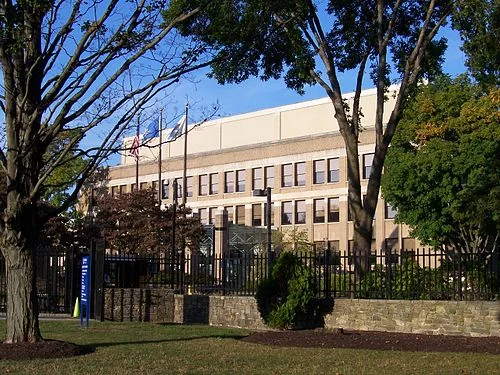
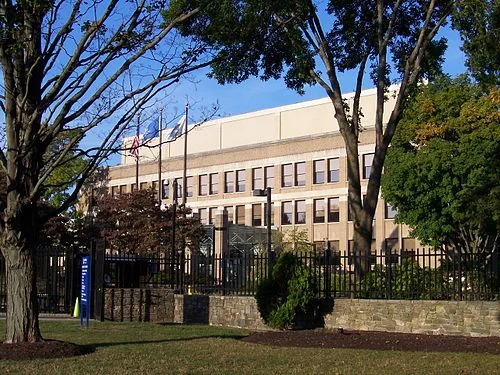
Headquarters of military and nonmilitary airplane-engine maker Pratt & Whitney, in East Hartford, Conn. Pratt & Whitney, like Electric Boat, in Groton, Conn., is a unit of General Dynamics.
Some time ago, a Connecticut Trumpeter confessed to this political writer that he had been having a recurrent nightmare.
Military procurements during the Obama administration were slender. Connecticut is still referred to in some corners as “the provision state” because, since the Revolutionary War, Connecticut has provided the national military with provisions. It continues to do so; Pratt & Whitney, Electric Boat and Sikorsky are very much going concerns.
Obama’s military budget was considerably more modest than Trump’s, as the president never tires of reminding the country. Dollars spent on the military are, to no one’s surprise, good for Connecticut. Federal dollars spent on military procurements produce Connecticut jobs, which produce funds that replenish the state’s treasury -- all good, all the time.
This was the nightmare: The additional federal funding would produce additional state treasury dollars, since more job holders produce more tax revenue, and these blessings would allow Trump’s bitterest critics in Connecticut – every member of Connecticut’s all Democratic congressional delegation, plus outgoing Democrat Gov. Dannel Malloy and his retinue -- to claim fraudulently that the state’s ruinous progressive tax and spend policies were responsible for the additional jobs and revenue. Malloy, et al., would point with pride to the job-production figures, attributing the good fortune to his wealth-reduction policies. And this would help his protégé, millionaire Ned Lamont, capture the governor’s office.
According to a recent story in CTMirror, "'Donor state’ Conn. gets more than its fair share of federal contracting dollars,” the Trumpeter’s nightmare has now become a daytime soap opera: “At the beginning of September, Connecticut companies and non-profits had received more than $11.8 billion in federal awards. Electric Boat is in final negotiations for the next block of Virginia-class submarines, which could, with other pending Pentagon contracts, give the state a big boost this year.”
Economic adviser to the Connecticut Business & Industry Association Peter Gioia is happy: “We’ll probably have a record year on defense.”
And he is not alone. U.S. Democrat Rep. Joe "Two Sub" Courtney’s 2nd District already has received about 5.4 billion of the federal contracting dollars that were spent in the state last year. Electric Boat, in Courtney’s district (in eastern Connecticut), we are told, “is in final negotiations for the next block of Virginia-class submarines. [The contract] “would allow for the construction of 10 Virginia-class subs, with the possibility of adding an additional two, at an estimated purchase price of about $3.2 billion per boat.”
Rep. Rosa DeLauro’s 3rd congressional district will scoop up about 3.7 billion Trump dollars, and “Rep. John Larson’s 1st District, home of engine-maker Pratt c& Whitney” will pocket about $2.5 billion. Not a bad haul from a president the entire Democratic congressional delegation would like to see impeached, principally for his bad manners. The chatter about impeachment quickly died down after polls showed it was not a winning gambit for Democrats, and the endless chatter about Russian collusion is showing signs of vaporization, even as special counsel Robert Mueller secures convictions and plea deals from Trump associates that have little or nothing to do with Russian collusion. Judicial Watch revealed a while back that the Chinese had recovered all the emails on Secretary of State Hillary Clinton’s illegal private server in real time; that means the Chinese were picking up all the Clinton emails, some of which contained secret and top secret information – AS SHE WAS TYPING THEM.
The Clintons' fast friend U.S. Sen. Dick Blumenthal and his junior partner, U.S. Sen. Chris Murphy, have yet to threaten suits or other actions against Saint Hillary, their attention having been diverted to killing, by any means necessary, the nomination of Judge Brett Kavanaugh to the U.S. Supreme Court. Blumenthal, who virulently opposed all Trump nominations to the high court before Kavanaugh emerged as Trump’s nominee, may have been partly responsible for the Antifa-like opposition displayed by political maenads during and after the prelude to the hearings. Still searching for impeachable high crimes and misdemeanors under Trump's bed, Blumenthal will ironically, along with other Democrat members of the state's congressional delegation, be the beneficiaries of the Trump business bump in Connecticut.
Could Otto von Bismarck have gotten it right? “There is a Providence,” he said “that protects idiots, drunkards, children and the United States of America.” Adjusted to fit modern times, Bismarck’s aphorism might read “There is a Providence that protects idiot congressmen -- see Twain above – drunkards and opium eaters, children, but not late term abortion babies, and the United States of America as viewed by progressive Democrats.”
Don Pesci is a Vernon, Conn.-based columnist.