
Vox clamantis in deserto








Harv Hilowitz: Social entrepreneurship goes to college

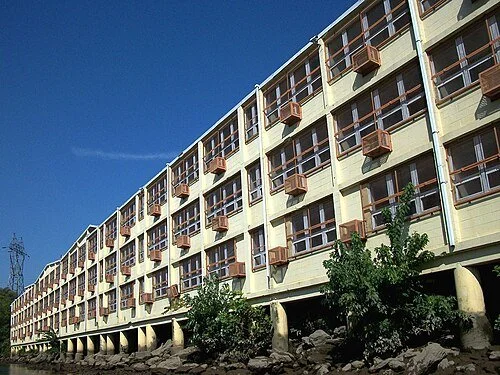
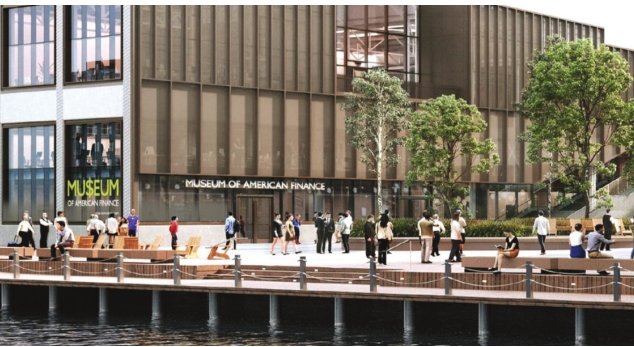
Cole Memorial Chapel at Wheaton College, in Norton, Mass., which got a $10 million gift from the Diana Davis Spencer Foundation of Bethesda, Md., to establish an endowed Professorship in Social Entrepreneurship and provide for the renovation of a business department building on campus to house SE studies at Wheaton.
Via the New England Board of Higher Education (nebhe.org)
Today, many higher education institutions are faced with declining enrollment, increasing tuitions and calls to infuse their degree tracks with more practical experiences for students, leading more directly to meaningful careers. At the same time, college students are searching for programs offering practical, academically rigorous work-related experiences that tie into their social consciousness as citizens of the world. Social entrepreneurship (SE) education, on campus and online, may offer a solution.
SE 101. Social entrepreneurs are people who create businesses with the core intention to help mitigate a social problem, using the proceeds and spinoff services derived from that business. An example of an SE enterprise is the local thrift store operation that also acts as a women’s center, training and hiring the supported women in the retail and outreach roles, while cycling the proceeds into the center’s general operations. SE’s can be for-profit, nonprofit or hybrid operations, depending on the entity’s mission.
Social impact investing, meanwhile, is most often a corporate form of SE, wherein existing companies or institutions provide funding for socially oriented projects or “cloud-seeding” funds for other SE operations. The Newman’s Own philanthropy model is a well-known form of successful social investment.
Origins. In the late 1800s, some noteworthy businessmen embraced novel approaches to combine making money with what they thought were socially transformative products. Among the trailblazers were flour mill operators J.H. Kellogg, C.W. Post, nutritionist James Caleb Johnson, inventor of granula (now Granola), and Sylvester Graham, inventor of the famous Graham Cracker. These idealists sought new food products to feed the nutritionally (and morally) starved workers caught in the horrors of the early Industrial Revolution. The social entrepreneurship concept caught on, gradually gaining traction with the social work movement of the 1880s. Today, SE is moving onto campuses as a subset of business, sustainability and other majors, educating students in the principles and practices of SE, while also potentially enhancing campus recruitment yields and student-retention rates.
The term “social entrepreneur” was coined in 1953 in Howard Bowne’s book Social Responsibilities of the Businessman. The idea certainly existed but had no special identity prior to that. Amplified in the 1990s by business consultant Charles Leadbeater, the concept has now melded with growing e-commerce and social media innovations to become a global phenomenon.
Going global. Social entrepreneurship has evolved from healthy cereals into the corporate suite, becoming the platform for a wide variety of social ventures. Muhammad Yunus’s Grameen Bank developed his microloan concept in Asia in 1983, winning the Nobel Prize in 2006. Fair Trade is another well-known branch of social entrepreneurship. Starting after World War II by religious groups and NGOs, it blossomed in the 1970s, now accounting for nearly 2% of total global sales (7.88 Billion Euros) of major agricultural commodities coffee, cocoa, tea, fruits, sugar, flowers and numerous handicraft items. And corporate philanthropy seeds the clouds of hundreds of social entrepreneurship ventures globally.
Higher education takes the hint. Since 2008, the Harvard Business School has developed MBA-level courses entitled Social Impact Investing, the Social Innovation Lab, Public Entrepreneurship, and Investing for Social Impact. Harvard regularly holds major conferences on social entrepreneurship and has published over 300 books, studies, theses and cases on the topic since 1997.
Oxford University’s Saïd Business School offers MBA core courses and fellowships at its Skoll Centre for Social Entrepreneurship. Classy.org, an online platform, lists 19 universities offering degrees, certifications and courses under the SE umbrella, including the Wharton School, Yale, Stanford and Cornell. In India, several universities are jumping on board, with MBAs in Social Entrepreneurship offered at Indira Gandhi National Open University, Sri Guru Granth Sahib University, and Bangalore University’s Seshadriuram Institute of Management Studies.
Acting as a facilitator of SE best practices, training and curricula for higher education institutions, the nonprofit Global Center for Social Entrepreneurship Network (GCSEN) Foundation has been working with college partners to accelerate offerings of social entrepreneurship courses, degrees, boot camps and internships. GCSEN provides curricula, resources, best practice advice and support services to colleges interested in offering innovative programs for budding social entrepreneurs. Students working in GCSEN boot camps have already started up a number of small businesses having social ventures, such as creating a Latino community center, bringing wireless internet service to schools in Nepal, and building an on-line app for isolated and depressed college students.
Founded in 2015 by Mike Caslin, a venture consultant and lecturer at SUNY New Paltz and professor at Babson College, GCSEN recently was instrumental in helping Wheaton College, in Norton Mass., secure a $10 million gift from the visionary Diana Davis Spencer Foundation of Bethesda, Md. The gift established an endowed Professorship in Social Entrepreneurship and provides for the renovation of a business department building on campus to house SE studies at Wheaton.
Benefits of SE ed. GSCEN’s research has conclusively shown that SE education results in significant content knowledge gains retained by students; shows significant gains in self-confidence; is ranked highly as “life-changing” by students; and is highly recommended by students to their peers. Additionally, SE gained a business formulation rate near 50 percent, by students participating in GSCEN programs.
Caslin says his organization’s goal in 10 years is, “To make social entrepreneurship courses and degrees available on every college and university campus around the world.” Still, the programs face administrative hurdles—obstacles that Caslin thinks GCSEN can overcome with its innovative internship program, blended learning online courses and social entrepreneur boot camps, as well as its model SE curricula that can be easily absorbed into any college’s existing business or liberal arts programs.
“All the data shows that students are looking for skills that enhance their careers,” says Caslin. “Our SE coursework and Social Venture Internship program gives them practical business startup knowledge and field experience, as they work on their own business and social venture. The program is a career and resume builder, offering practical experience and professional references. GCSEN programs emphasize the “Four P Impacts” on People, Profit, Planet and Place, so students can jump-start right into action. Colleges offering SE programs will attract highly motivated students who want to work in the real world, and also make a difference.”
It’s clear that SE and its altruistic mission is growing steadily on and off campus. The key: millennials. By 2025, this cohort of 80 million will be 75 percent of the entire workforce. Although millennials have not been breaking any records when it comes to general entrepreneurship, they have taken to the social consciousness concept in a big way.
Millennials get it. A global conference titled "Prac-ademic Social Entrepreneurship for a Sustainable World" held at Belgium’s Namur University in 2017 was packed with faculty and administrators hailing from more than 200 Jesuit business schools and colleges. Business publications such as Forbes tout the youth movement in SE with annual feature articles, such as “Meet the Thirty Under Thirty Social Entrepreneurs Bringing Change in 2017” highlighting “young people who are all working tirelessly to creatively solve some of the world's toughest problems.”
Maybe social entrepreneurship is an answer to the lagging admissions, lack of student retention and flat-out lack of relevance our campuses are currently facing.
As Caslin says, “It is vital that a new generation of business-oriented, socially conscious millennials emerge on campus, creating with purpose a “4-P Impact” with people, profit, planet and place, to make meaning, make money and move the world to a better place.”
Harv Hilowitz is director of strategic development at the Global Center for Social Entrepreneurship Network (GCSEN) Foundation.
For Amazon HQ2 pitch, cities needed to promote their REGION
Worcester
-- Photo by Viking 1943
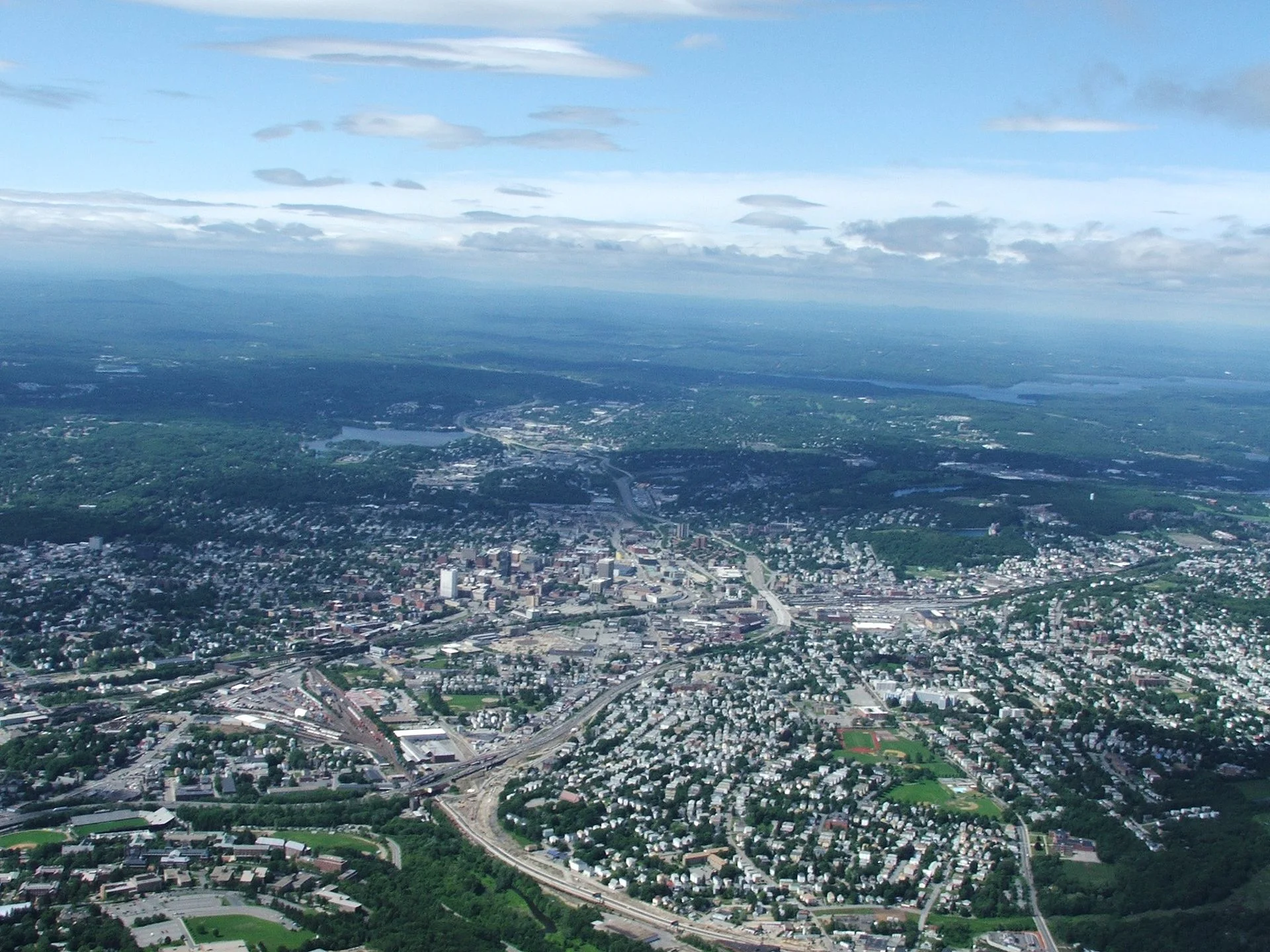
"For small cities like Worcester, bids like this are a missed opportunity not because small cities are not eligible, but because many misunderstand how to sell themselves to large employers. The video that Worcester produced to entice Amazon HQ2 shows off some of the city’s shining stars, such as its medical school, its hockey team and Union Station, but fails to showcase the regional workforce—let alone any other regional assets. When an organization chooses a site, the city name in its address is of less importance than the complete network of resources accessible to the organization from that location. Worcester’s application represented a missed opportunity to leverage the full potential of its regional situation. The failure to act regionally for economic development goes well beyond the Amazon proposal, however.''
From Chris Steele, COO and president (North America) of Investment Consulting Associates, Worcester. One of 238 first round proposals to try to lure Amazon's "Second Headquarters'' that was eliminated.
From "Righting the Wrongs of Amazon,'' in City Lab. To read it, please hit this link.

Frank Carini: R.I. is turning blue-green as we ravage the planet in many ways
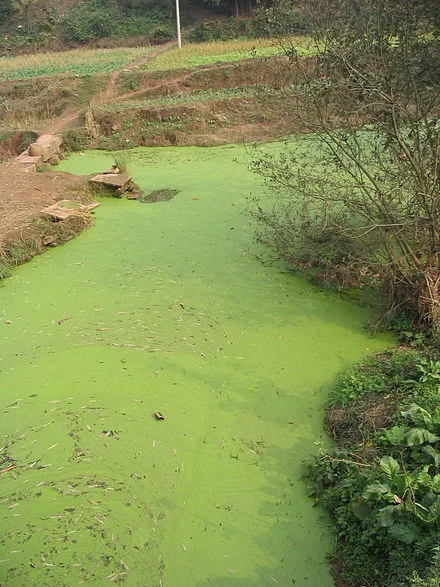
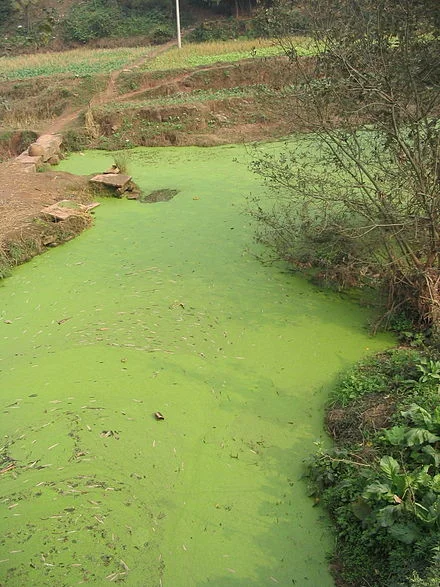
Algae bloom toxifies water.
From ecoRI News (ecori.org)
Rhode Island isn’t a blue state. It’s a blue-green one, in honor of toxic bacteria that regularly closes beaches to swimming and other water bodies to recreational fun and puts public health in jeopardy.
In fact, we can stop labeling states as simply red or blue. They’re all turning shades of blue-green-red. Outbreaks of potentially toxic algae are rising sharply this summer in lakes, rivers, and streams across the United States, according to the Environmental Working Group’s ongoing tracking of algae outbreaks.
The Washington, D.C.-based nonprofit has counted 144 algae outbreaks from California to the Northeast so far this year, compared to 169 in all of last year.
This pollution problem isn’t restricted to fresh waters. Florida has been hit particularly hard by toxic algae this summer. A total of 267 tons of marine life, including 72 goliath groupers and a 21-foot whale shark, have washed up on Florida beaches since July, thanks to a catastrophic red tide.
Here in the Ocean State this summer the Rhode Island Department of Health (DOH) and Department of Environmental Management (DEM) have recommended that the beach at Larkin Pond Campground in South Kingstown be closed to swimming after high bacteria counts were found in the water. Two other beaches on the pond — Camp Hoffman and Kingston’s Camp — were closed for the same reason.
Beaches at Echo Lake Campground in Glocester and Goddard Memorial State Park and the Kent County YMCA in Warwick have been off-limits to swimming.
The DEM has advised people to avoid contact with Mashapaug Pond and Roosevelt Lake in Providence. DOH has recommended the closing of Bonnet Shores Beach Club in Narragansett.
State officials have advised people to avoid contact with water from Turner Reservoir, Central Pond, Omega Pond, and the portion of Ten Mile River that flows between Turner Reservoir and Omega Pond.
In late July, the state agencies advised people to avoid contact with Slack Reservoir in Greenville because of a blue-green algae bloom. Blue-green algae, also known as cyanobacteria, can produce toxins, including microcystins, that can harm humans and animals. These blooms are nurtured by an overload of nutrients such as phosphorus and nitrogen that wash into waters from over-fertilized lawns, agricultural operations, and combined sewer overflows.
On Aug 10, Third Beach in Middletown became the 29th Ocean State beach, both fresh and salt, to be closed to swimming this summer. Some beaches, such as Camp Grosvenor in North Kingstown, have been closed more than once. A few, such as Briar Point Beach in Coventry and Kingston’s Camp Beach, have been closed for more than 10 days this summer.
In moderation, algae provide balance for a healthy water ecosystem. However, climate change, nutrient pollution, development, and other manmade stresses are exacerbating a problem and causing blooms to develop earlier and stay longer.
A 2015 study found that humans are responsible for increased cyanobacteria growth.
Massive algal blooms, however, are just one of the many visible signs of global climate change currently playing out on the world stage: roaring wild fires out West; historic flooding up and down the East Coast; 12 tornadoes that stormed through central Iowa during one week last month; the number of “marine heat waves” roughly doubled between 1982 and 2016; Australia struggling with devastating drought; 21 of the world’s 37 largest aquifers have passed their sustainability tipping points; a sixth mass extinction has seen billions of populations of animals lost in recent decades.
These happenings are a collective harbinger of the new normal.
A study recently published in the Proceedings of the National Academy of Sciences examines potential climate feedbacks that could push the planet into a “hothouse” state.
According to data from the National Oceanic and Atmospheric Administration, 2018 is on pace to be the fourth-hottest year on record. Only three other years have been hotter: 2015, 2016, and 2017.
Another recent study, published in IOPscience, suggests that to avoid a 2-degree Celsius global increase in temperature all existing proposed fossil-fuel power plants must not be built.
“Even if all currently planned projects are immediately suspended, up to 20 percent of global fossil-fuel generation capacity would still have to be stranded (that is, prematurely decommissioned, underutilized, or subject to costly retrofitting) if humanity is to meet the climate goals set out in the Paris Agreement,” according to the IOP report.
The governor may have signed an executive order last year “reaffirming Rhode Island’s commitment to the principles of the Paris Climate Agreement,” but the Ocean State certainly isn’t doing its best to address climate change.
The passing of environmentally friendly bonds, the building of the nation’s first offshore wind farm, handing out grant-funding morsels for environmental projects, and a fractured system of protecting open space aren’t enough, not even close. Rhode Island, with its advantageous size for implementing real change, keeps punting its responsibility into the future. It’s not a fair catch.
Anthropogenic climate change has exposed the foolishness of human neglect of the natural world. It’s way too late for timid responses like executive orders. Our selfish actions — individually, collectively, and politically — are creating a dystopian future. Many of these current and future manmade catastrophes could have been avoided with some foresight and sacrifice.
Human well-being and economic prosperity are tethered to nature, but modern humans have never acted like they are. Variety and abundance of life are the fundamental necessities of a habitable planet. Life can’t prosper on a sphere filled with humans, livestock, ticks, rats, mosquitoes, and jellyfish, and covered with over-fertilized soybean fields and overfished oceans.
Here in Rhode Island, a job plan focused “on putting cranes in the sky” is a cliche not a solution, especially when much of the development ignores the state’s acres and acres of already-disturbed areas and instead cuts further into forests, wetlands, farmland, and other open space.
Jobs are important, but they become meaningless if the planet is burning. The growing flames of climate change are being fanned by the building of stuff we don’t need in places that weaken ecosystems and jeopardize public health. We can put people to work building things in places that make economic, societal, and environmental sense. But it takes some sacrifice. We’re not good at sacrificing. It’s too hard.
The beginnings of the Industrial Revolution and Rhode Island’s past as a costume-jewelry-manufacturing juggernaut are remembered fondly for the jobs that were created. What is largely forgotten is that the pollution, contamination and environmental degradation created during this revered jobs explosion helped pave the way to our current situation.
The soils of productive landscapes have been turned to dirt. Groundwater has been drained beyond the reach of roots. There's barely a ripple in once-rich fishing grounds. Gyres of plastic marine debris are expanding. Bays, estuaries and deltas have been choked of life. Rivers and lakes are turning a toxic blue-green. Brownfields and Super Fund sites have left behind toxic legacies. Fields, forests, and wetlands have been replaced by lawn and pavement.
Biodiversity is diminishing, and along with it our chances to adequately address the impacts of climate change before it’s much too late.
Frank Carini is the ecoRI News editor.
Purdue Pharma played down OxyContin addiction danger

Side-effects of oxycodone, the generic name for OxyContin, the brand name of a controversial Purdue Pharma product.
By FRED SCHULTE
Two decades ago, Purdue Pharma, based in Stamford, Conn. {see headquarters below}, produced thousands of brochures and videos that urged patients with chronic pain to ask their physicians for opioids such as OxyContin, arguing that concerns over addiction and other dangers from the drugs were overblown, company records reveal.
Kaiser Health News earlier this year posted a cache of Purdue marketing documents that show how the pharmaceutical company sought to boost sales of the prescription painkiller, starting in the mid-1990s.
Purdue turned the records over to the Florida attorney general’s office in 2002 during its investigation of the company. Additional Purdue documents from the Florida investigation detail how the company targeted patients and allayed addiction worries.
“Fear should not stand in the way of relief of your pain,” a pivotal marketing brochure said.
Purdue said it handed out thousands of copies of the brochure, which emphasized consumer power in treating pain, as well as a videotape. “The single most important thing for you to remember is that you are the authority on your pain. Nobody else feels it for you so nobody else can describe how much it hurts, or when it feels better,” the pamphlet states.
More than 1,500 pending civil lawsuits, filed mostly by state and local governments, allege that deceptive marketing claims helped fuel a national epidemic of opioid addiction and thousands of overdose deaths.
Last week, the New York attorney general’s office filed another suit that accuses Purdue of operating a “public nuisance” in it sales tactics and marketing of opioids. Like many others, the suit demands compensation for addiction treatment costs and other problems. Purdue and other drugmakers have denied all allegations.
President Trump said last Thursday he wants the federal government to sue drugmakers in response to the addiction epidemic.
The Purdue brochure from the late 1990s spurred recent criticism from drug safety experts. Dr. G. Caleb Alexander, a physician at the Center for Drug Safety and Effectiveness at Johns Hopkins Bloomberg School of Public Health, said the sales pitch was “simply not true” and called it “a smoking gun.”
“We have learned the hard way that many patients develop opioid [addiction] when using these medicines as prescribed,” he said.
Alexander said other drugmakers also appealed to patients hoping to influence their doctors — a tactic that was relatively new in the late 1990s. But Alexander said he was “shocked” to hear that Purdue did so with OxyContin, given the risks posed by long-term use of the morphine-like narcotic.
“These drugs [opioids] are in a class of their own when it comes to the harms that they have caused,” Alexander said.
The internal Purdue documents, dating from 1996 to 2002, show that the company began marketing OxyContin to doctors in late 1995 for treating moderate to severe cancer pain. With modest sales of $49.4 million in 1996, Purdue posted a loss of $452,000 on the drug. In 1997, sales reached $146.5 million for a pretax profit of $16.5 million, the company records show.
In 1998, as Purdue hawked OxyContin for conditions such as arthritis and back pain, it decided to “increase communications” with patients, company records show.
The goal: “convince patients and their families to actively pursue effective pain treatment. The importance of the patient assessing their own pain and communicating the status to the health care giver will be stressed.”
Purdue’s six-page pamphlet for patients, provided to the Florida attorney general, was titled “OxyContin: A Guide to Your New Pain Medicine.” “Your health care team is there to help, but they need your help, too,” the pamphlet says. It says OxyContin is for treating “pain like yours that is moderate to severe and lasting for more than a few days.”
To patients or family members worried about addiction, Purdue’s pamphlet said: “Drug addiction means using a drug to get ‘high’ rather than to relieve pain. You are taking opioid pain medication for medical purposes. The medical purposes are clear and the effects are beneficial, not harmful.”
Asked to comment this week, Purdue spokesman Robert Josephson said the company “discontinued the use of this piece many years ago.”
Dr. Michael Barnett, a physician and assistant professor at the Harvard T.H. Chan School of Public Health, said that some of Purdue’s early marketing claims may have seemed reasonable to many doctors 20 years ago.
But he faulted the medical profession for not demanding scientific evidence that opioids were in fact safe and prudent for widespread use.
“I think a lot of physicians are coming to the realization that a lot of what we were taught about pain management was pure conjecture,” he said. “I feel foolish for believing it.”
In hindsight, he said, Purdue’s sales tactics seem “almost a satire of an unscrupulous corporation that really has no interest in understanding the implications and complications of people using their drugs.”
Dr. Art Van Zee, a physician in southwestern Virginia who was among the first to recognize the ravages of OxyContin misuse, said that some people who became addicted were already drug abusers.
But he added: “There clearly are people that I’ve taken care of who took it as directed orally and became opioid-addicted.”
Purdue also paid a New York City production company to shoot a videotape called “From One Pain Patient to Another,” featuring testimonials by seven patients from the Raleigh, N.C., area under the care of pain doctor Alan Spanos. Filming took place at the patients’ homes, places of work and other area locations on July 17, 1997, according to the documents.
Purdue did not pay the patients, though Spanos received $3,400 as a “physician spokesman” on that video and another, the company records state. Contacted recently by phone, Spanos would not comment. In the documents, Purdue said that the patients “participated willingly, wishing to speak out regarding the importance to them of being able to receive effective therapy for their chronic pain.”
Between January 1998 and June 2001, Purdue distributed 16,000 copies of the video to doctors, who showed them to selected patients.
The video did not mention OxyContin directly, but the Food and Drug Administration did balk at a claim in the video that fewer than 1 percent of people taking opioids became addicted. The FDA said that claim was not substantiated, according to a December 2003 General Accountability Office audit.
Purdue destroyed remaining copies of the video in July 2001, including 4,434 Spanish-language versions, according to the company records.
By then, annual OxyContin sales had topped $1 billion as Purdue pushed to “attach an emotional aspect to non-cancer pain so physicians treat it more seriously and aggressively,” according to the company’s marketing reports.
Asked about the video, Purdue spokesman Josephson said the drugmaker has not made that claim — regarding 1 percent addiction — “in more than 15 years.”
Purdue submitted the marketing records to the Florida attorney general’s office during its investigation of the company. The state settled the case in 2002 when Purdue agreed to pay $2 million to help set up an electronic prescription-tracking program.
Florida officials released the records to two Florida newspapers in 2003 after Purdue lost a court battle to keep them confidential. KHN posted some of those documents earlier this year for readers to review on its website.
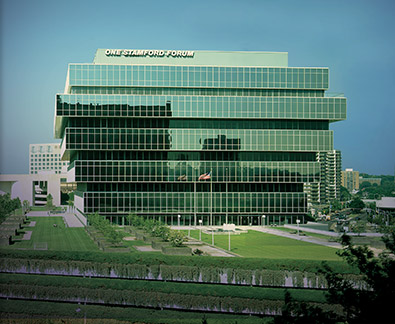
Purdue's headquarters is in this building in downtown Stamford.
Guns and love

A 19th Century view of the main building at the Springfield Arsenal (aka Armory), founded in 1777 and until its closing by the Pentagon, in 1868, the single most important facility for making firearms in America. It was very important in the Union victory in the Civil War, and in the 19th Century was the site of very important technology and engineering advances in the Industrial Revolution. The site is now a National Historic Site, the only one in western Massachusetts. The city became famous for the arsenal but soon will be more famous for a new and glitzy casino. Oh yes, Dr. Seuss was born in Springfield.
"This is the Arsenal {aka Armory}. From floor to ceiling,
Like a huge organ, rise the burnished arms;
But from their silent pipes no anthem pealing
Startles the villages with strange alarms.
Ah! what a sound will rise, how wild and dreary,
When the death-angel touches those swift keys!
What loud lament and dismal Miserere
Will mingle with their awful symphonies!
I hear even now the infinite fierce chorus,
The cries of agony, the endless groan,
Which, through the ages that have gone before us,
In long reverberations reach our own.
On helm and harness rings the Saxon hammer,
Through Cimbric forest roars the Norseman's song,
And loud, amid the universal clamor,
O'er distant deserts sounds the Tartar gong.
I hear the Florentine, who from his palace
Wheels out his battle-bell with dreadful din,
And Aztec priests upon their teocallis
Beat the wild war-drums made of serpent's skin;
The tumult of each sacked and burning village;
The shout that every prayer for mercy drowns;
The soldiers' revels in the midst of pillage;
The wail of famine in beleaguered towns;
The bursting shell, the gateway wrenched asunder,
The rattling musketry, the clashing blade;
And ever and anon, in tones of thunder
The diapason of the cannonade.
Is it, O man, with such discordant noises,
With such accursed instruments as these,
Thou drownest Nature's sweet and kindly voices,
And jarrest the celestial harmonies?
Were half the power, that fills the world with terror,
Were half the wealth bestowed on camps and courts,
Given to redeem the human mind from error,
There were no need of arsenals or forts:
The warrior's name would be a name abhorred!
And every nation, that should lift again
Its hand against a brother, on its forehead
Would wear forevermore the curse of Cain!
Down the dark future, through long generations,
The echoing sounds grow fainter and then cease;
And like a bell, with solemn, sweet vibrations,
I hear once more the voice of Christ say, "Peace!"
Peace! and no longer from its brazen portals
The blast of War's great organ shakes the skies!
But beautiful as songs of the immortals,
The holy melodies of love arise.''
-- "The Arsenal at Springfield,'' by Henry Wadsworth Longfellow (1807-1882).
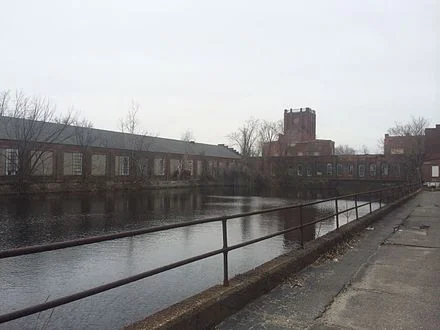
View of the Water Shops, in Springfield, in 2014. The Water Shops served as the epicenter for Springfield Armory firearms production.
Reduce the red tape

From Robert Whitcomb's "Digital Diary,'' in GoLocal24.com
The right of Rhode Island’s cities and towns to enact and enforce their own regulations in a multitude of areas greatly adds to the red tape and cost of doing business in the state, what with its 39 cities and towns.
And so it was good to learn that the “State Mobile Food Establishment Registration Act” was recently enacted. It will standardize the business registration process for trucks or carts that sell food, ice cream or lemonade by creating a state mobile food establishment registration, and would exempt such establishments from laws regulating peddlers.
Rhode Island’s multi-layered regulatory hurdles hinder business development. There are too many requirements. Consider that there are expensive licensing rules for hair braiders and sign-language interpreters! Get rid of them.
A reason for such licensing is to prop up prices charged by what are effectively guilds by restricting supply. Special-interest restraint of trade!
And for activities in which the public interest really requires regulation: Lawmakers and the governors should as much as possible unify and simplify regulations under state oversight after ascertaining that eliminating localities’ powers would not hurt the public. The localities are, after all, legal children of the state. The hotel and restaurant businesses, in particular, would be the sort of enterprises that would greatly benefit from having to adhere to fewer local regulations.
Obviously streamlining regulations will encourage more people to launch new businesses and expand existing ones.
An image for our time

"Crooked'' (acylic on laser-cut hardboard), by Jessica Sperandio, in the "Resilience and Resistance'' group show at Galatea Fine Art, Boston, Sept. 5-30.
Chris Powell: In Conn., Dems reject their record and Republicans won't learn

Hartford in 1877, as the nation came out of depression and the Industrial Revolution roared, especially in southern New England.
What does this week's primary election for governor say about Connecticut's Democratic Party?
First, it says that at least the party cannot rationalize Joe Ganim's corruption in office.
Second, it says that the party has come down with a bad case of schizophrenia, as Ned Lamont, having won about 80 percent of the vote, delivered an extemporaneous and overwrought if not hysterical acceptance speech admitting that the party's eight years in control of state government have laid Connecticut low and it desperately needs to change direction.
How does a party seek to keep power on a platform of repudiating its own record?
What does this week's primary election for governor say about Connecticut's Republican Party?
The victory of business executive Bob Stefanowski says that the party has declined to draw any conclusions from its four recent disastrous experiments with nominating for high office self-funding but unknown dilettantes whose ideology, ability, and character have never been tested in public. Each of those experiments produced damaging discoveries about the candidates in the closing days of their campaigns. Now it easily could happen again.
Behind every great fortune, the French novelist Balzac wrote, is a great crime. Of course that's not entirely true, but their recent record suggests that Connecticut's Republicans might do better to start believing it.
The Republican results also should teach all of Connecticut something. Stefanowski won with only 30 percent of the vote and the winner of the party's primary for lieutenant governor, state Sen. Joe Markley, may have won with just less than half. To prevent such impairments of democracy, when the field of candidates is large and the leader has not won a majority, state law should provide for runoff primaries and elections or what is called "ranked-choice" voting.
A second primary between the two top candidates for the Republican nomination for governor well might produce a different result. In any case a runoff system encourages consensus and discourages candidates who cannot win a majority and indeed may even be extreme.
Extremism is already the Democratic charge about Stefanowski, though Lamont himself has embraced a far-left agenda and has pledged obedience to the government employee unions.
PARTY ON, HARTFORD: The Democrats' subservience to the government class was exposed again the other day when the Hartford Courant reported that the Malloy administration's $500 million bailout for Hartford city government has squelched even the tiniest bit of pension reform there.
Prior to the bailout, Mayor Luke Bronin and the City Council planned to save money by disqualifying new, nonunion city employees from the city's defined-benefit pension plan. The new hires were to be offered a defined-contribution pension, a 401(k) plan.
Now that the bailout has been secured, city government is no longer inclined to economize with pensions. Council President Glendowlyn Thames says her colleagues are thinking: "These are city employees. We should be providing them with good pensions."
But since state government is reimbursing half of Hartford city government's budget every year and assuming all the city's long-term debt, the city's employees have become more the burden of all state taxpayers than Hartford's own burden. So thanks to the governor, Hartford, where nearly everyone is a Democrat, can party on.
Chris Powell is a columnist for the Journal Inquirer, in Manchester, Conn.
'Paint by number'

"Autumn in New England,'' by Maurice Prendergast.
"Toss in some wavy lines, an equal sign, and a squiggle,
then a lilac log, boulders with faces, a few phrases
like rock walls, twin marks from wagon wheels on granite.
The tell-tale lilacs give away the cellar hole:
magnetic lilacs, like nineteenth-century girls
in pinafores and blossom sprays, stationed
beside their no-longer houses. They look about to sing....
'By the middle of the nineteenth century, when de
forestation reached its peak, more than half
of New England's native forests'—according to Robert M. Thorson,
Stone by Stone— 'as much as 80 percent in the heavily settled
parts of southern New England—had been cut down,'
replaced with 'open space,' the autumn foliage
is paint-by-number and different tabs throughout
are half-finished murals of a single type of tree in a single time of year.''
-- From "Deconstructing New England,'' by Alexandria Peary
A first-class, brilliant New England eccentric

Architect, inventor and futurist Buckminster Fuller's geodesic dome for the 1967 Montreal World's Fair. Born in Milton, Mass., he spent much of his life in Massachusetts and Maine.
Buckminster Fuller {1895-1983} was down in Pennsylvania, then he'd come up and go to his island in Maine. He wanted to remain a New Englander. He taught from '48 to '49 and '50 at Black Mountain College. That's where he met Kenneth Snelson {sculptor and photographer). Fuller kind of stayed a Yankee right in the New England area. So it was pretty easy to get him to come on over, and we would have lectures at the Harvard Science Center.
-- The late Paul Laffoley (artist and architect)
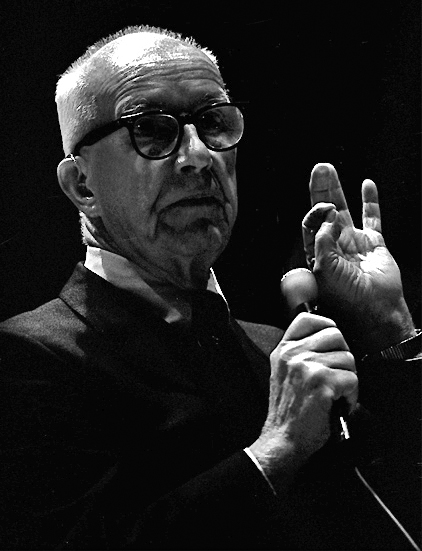
Buckminster Fuller in the 1960s.
"I am now close top 88 and I am confident that the only thing important about me is that I am an average healthy human. I am also a living case history of a thoroughly documented, half-century, search-and-research project designed to discover what, if anything, an unknown, moneyless individual, with a dependent wife and newborn child, might be able to do effectively on behalf of all humanity that could not be accomplished by great nations, great religions or private enterprise, no matter how rich or powerfully armed.''
— "Bucky'' Fuller, 1983
I heard Bucky's talk at my high school in 1964. It was incomprehensible but entertaining. A first-class New England eccentric!
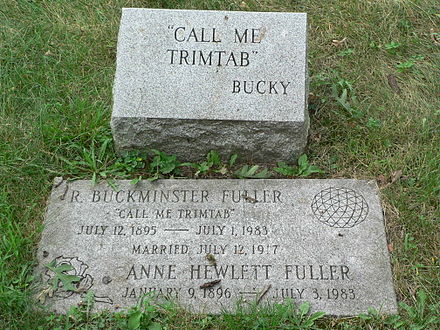
Graves of the Fullers in Cambridge, Mass., where rest many New England notables
Running out of time for proposed Providence skyscraper
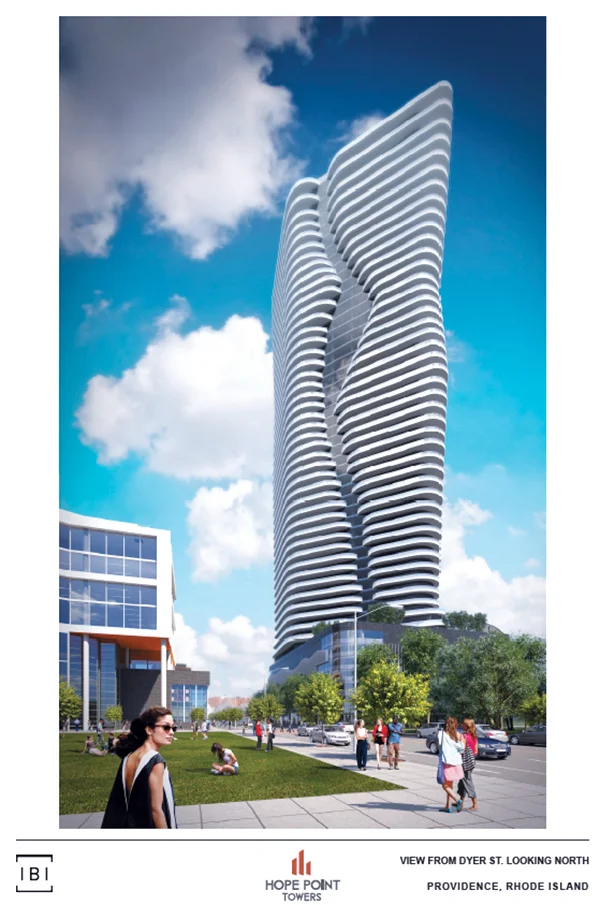
Jason Fane's proposed Hope Point Tower in Providence.
From Robert Whitcomb's "Digital Diary,'' in GoLocal24.com
If the Providence City Council decides to nix New York developer Jason Fane’s proposal for a 46-story skyscraper in the Route 195 relocation area, don’t expect a new proposal from him or indeed any proposal for the site any time soon. Interest rates are rising and while income-tax cuts targeted for the rich and companies are producing a sugar high in the economy (the stock-buyback craze is one sign of it), the economic recovery that began in 2009 is very old. A rough consensus is developing that a recession will start next year or in 2020, which would probably put the kibosh on new development in Providence for several years. Hope not!
Of course, Mr. Fane wouldn’t be facing much opposition to his tower if he built it in the large vacant lot downtown with the rest of the high-rises. But he has emphasized that he won’t consider that. Too bad!
I suspect that a lot of local real estate agents don’t like his plan because Mr. Fane’s group would grab some of the high-end business on Providence’s East Side and downtown. I have spoken to some residents of expensive houses and condos who have told me that they’d love to live in the Fane tower. (What a view down to Newport!) But they tend to keep their opinions quiet because of the intensity of the opposition.
But watch what you step on

"Beach Combing Zone'' (pastel), by Rachel Avenia, at Bobby Baker Fine Art, Cataumet (on Cape Cod) Mass.
Hospitals finally start to address their energy-hog problem
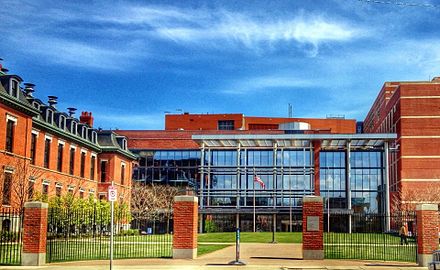
Boston Medical Center. it now has a gas-fired 2-megawatt cogeneration plant that traps and reuses heat, saving money and emissions, while supplying 41 percent of the hospital’s needs and acting as a backup for essential services if the municipal power grid goes out.
By JULIE APPLEBY
Hospitals are energy hogs.
With their 24/7 lighting, heating and water needs, they use up to five times more energy than a fancy hotel.
Executives at some systems view their facilities like hotel managers, adding amenities, upscale new lobbies and larger parking garages in an effort to attract patients and increase revenue. But some hospitals are revamping with a different goal in mind: becoming more energy-efficient, which can also boost the bottom line.
“We’re saving $1 [million] to $3 million a year in hard cash,” said Jeff Thompson, the former CEO of Gundersen Health System in La Crosse, Wis., the first hospital system in the U.S. to produce more energy than it consumed back in 2014. As an added benefit, he said, “we’re polluting a lot less.”
The health care sector — one of the nation’s largest industries — is responsible for nearly 10 percent of all greenhouse gas emissions — hundreds of millions of tons worth of carbon each year. Hospitals make up more than one-third of those emissions, according to a paper by researchers at Northeastern University and Yale.
Increasingly, though, health systems are paying attention:
Boston Medical Center analyzed its hospital for duplicative and underused space, then downsized while increasing patient capacity. Among other changes, it now has a gas-fired 2-megawatt cogeneration plant that traps and reuses heat, saving money and emissions, while supplying 41 percent of the hospital’s needs and acting as a backup for essential services if the municipal power grid goes out.
Health System in Wisconsin employs wind, wood chips, landfill-produced methane gas and even cow manure — to generate power, reporting more than a 95 percent drop in its emissions of carbon monoxide, particulate matter and mercury from 2008 to 2016
Theda Clark Medical Center, in Wisconsin, is saving nearly $800,000 a year — 30 percent of its energy costs — after making changes that included retrofitting lights, insulating pipes, taking the lights out of vending machines and turning off air exchangers in parts of its building after hours.
Kaiser Permanente aims to be “carbon-neutral” by 2020, mainly by incorporating solar energy at up to 100 of its hospitals and other facilities. One already in use — at its Richmond (Calif.) Medical Center — is credited with reducing electric bills by
While the environmental benefits are important, “what I’ve seen over the years is cost reductions are the prime motivator,” said Patrick Kallerman, research manager at the Bay Area Council Economic Institute, which released a report this spring outlining ways the hospital industry can help states such as California reach environmental goals by becoming more efficient.
Some of its recommendations are simple: replacing old lighting and windows. Others are more complex: powering down heating and cooling in areas not being used and updating ventilation standards first set back in Florence Nightingale’s day. Such tight standards “might not be necessary,” Kallerman said. Loosening them could help save money and energy.
When Bob Biggio was hired in 2011 to oversee Boston Medical Center’s facilities, hospital leaders were about to launch a broad redesign. Yet the hospital was also facing serious financial struggles. He put the move on hold while analyzing how the hospital was using its existing space, looking for unused or duplicative areas.
“My first impression with data I had gathered was our campus was about 400,000 square feet bigger than it needed to be, said Biggio. “A square foot you never have to build is most efficient of all.”
The new design is smaller but more efficient, handling 20 percent higher patient volume and eliminating the need for ambulance transportation between far-flung areas of the campus. It also cut power consumption by 42 percent from a 2011 baseline.
While the hospital sunk a lot of money into the renovation, the center was able to sell off some of its land to help offset the costs, leading to about a five-year return on investment, Biggio said.
“We are a safety-net hospital with a large Medicaid population,” he said. “So this is the last place people expect to see the type of investments and progress we’ve made.”
But how to sell that in the C-suite?
The environmental argument wasn’t how Thompson convinced executives at Gundersen.
“At no point did I mention climate change or polar bears,” said Thompson.
Instead, he focused on the organization’s mission to improve health — and the potential cost savings.
“There are multiple examples — at Gundersen and other places — where, if we’re thoughtful, we can improve the local economy, lower the cost of health care and decrease the pollution that is making people sick,” he said.
But hospitals’ energy efficiency efforts vary, with only about 10 percent attempting changes as dramatic as those done at Gundersen, estimated Alex Thorpe, a hospital energy expert at Optum Advisory Services, a consulting firm owned by UnitedHealth Group.
“About 50 percent are in the middle,” he added, perhaps because these investments are weighed against other capital needs.
“If you have a well-known doctor that wants a new cutting-edge piece of equipment, then it can be hard to make the business case [for investing in alternative energy],” said Thorpe.
Of the more than 5,000 hospitals in the country, about 1,100 are members of Practice Greenhealth, a nonprofit that promotes environmental stewardship. Fewer than 300 hospitals qualify as Energy Star facilities, an Environmental Protection Agency program that recognizes buildings that rank in the top quartile for energy conservation among their peers.
Greenhealth estimates its members average about a million dollars a year in savings, but it all depends what steps they take.
There are modest savings from such things as reducing the heating and air conditioning in operating rooms during hours they are not in use, with median annual cost savings of $45,398, a report from the group notes. Other energy reduction efforts net another median $53,599 in annual savings, while swapping older lighting for new LED bulbs in operating rooms saves another $3,329.
Individually, those savings are not even rounding errors in most hospitals’ total expenses, which are measured in the millions of dollars.
Still, within facility expenses, energy use accounts for 51 percent of spending, so even modest cuts are “significant,” said Kara Brooks, sustainability program manager for the American Society for Healthcare Engineering.
Ultimately, that may affect what hospitals charge insurers and patients.
“If hospitals can lower peak demand through energy efficiency efforts, that will directly impact their pricing,” said Thorpe.
Julie Appleby: jappleby@kff.org, @Julie_Appleby
Boeing and MIT announce Kendall Square project

At Kendall Square, in Cambridge.
From the New England Council (newenglandcouincil.com)
"Boeing Co. and the Massachusetts Institute of Technology (MIT) recently announced plans to open a new Boeing Aerospace & Autonomy Center in Cambridge’s Kendall Square neighborhood, making Boeing the first tenant of MIT’s long-planned Kendall Square Initiative. Under the new agreement, Boeing Co. will occupy about one-third of the 343,000-square-foot office building which will house the company’s recenlty-purchased subsidiary, Aurora Flight Sciences, a Virginia-based company that specializes in the design and construction of advanced unmanned systems and aerospace vehicles. The new center will focus on designing, building, and flying autonomous aircraft and developing enabling technologies.
The agreement builds on a century-long research relationship that Boeing and MIT established with the overarching goal of advancing aerospace innovation. Earlier this year, the company announced that it will serve as lead donor for a new $18 million wind tunnel on campus.
MIT Provost Martin Schmidt said, “It’s fitting that Boeing will join the Kendall/MIT innovation family. Our research interests have been intertwined for over 100 years, and we’ve worked together to advance world-changing aerospace technologies and systems. MIT’s Department of Aeronautics and Astronautics is the oldest program of its kind in the United States, and excels at its mission of developing new air transportation concepts, autonomous systems, and small satellites through an intensive focus on cutting-edge education and research. Boeing’s presence will create an unprecedented opportunity for new synergies in this industry.”
Todd McLeish: The mystery of the shearwater dieoff

Shearwater.
Via ecoRI News (ecori.org)
Aboard the University of Rhode Island research ship Endeavor during the first days of August, seabirds were abundant in the waters between Block Island and Martha’s Vineyard. The birds weren’t the focus of the trip — it was about providing local teachers with an opportunity to get hands-on science experience through the Rhode Island Teacher-At-Sea Program — but the birds couldn’t be ignored. They were constantly in view.
Most were shearwaters, long-winged birds that skim the surface of the waves as they search for marine organisms on which to feed. Last year at this time, however, many were unexpectedly dying and washing up on beaches throughout southern New England and Long Island, N.Y.
The population appears to be healthy this year, but scientists haven’t yet figured out the cause of last year’s die-off.
“We’re still trying to piece it together,” said seabird researcher David Wiley, research coordinator at the Stellwagen Bank National Marine Sanctuary, off Massachusetts. “We’re studying their livers to look at their toxicology to see if something killed them. And a team at Woods Hole is looking at birds caught as bycatch in gillnets. But we haven’t come up with anything definitive yet.”
Scientists speculate that the birds, which breed on islands in the South Atlantic and migrate to the East Coast in summer, arrived in local waters last year in such poor physical condition that they couldn’t survive. Whether that is because of a lack of food, an accumulation of toxins, or something else entirely is unknown.
“It could be something here [in the North Atlantic] as well,” Wiley said. “It could be a toxic algal bloom that’s caused the problem here. That’s another thing to look into. But right now, it’s all speculative.”
Although few birds have been found dead in the region this year, Wiley and a team of scientists hope to find some answers in a continuing study of great shearwaters, the most common of the shearwaters in the region, that began in 2013. Each year they capture 10 shearwaters and place satellite tracking tags on them to monitor their movements. The researchers hope to learn how and where the birds spend their time in the region.
To capture the birds, they toss bait into the water from a small boat, and then use a hand-held net to catch any birds that get close enough to reach. They weigh and measure the shearwaters, place a band around a leg, take blood and feather samples, and release them back into the wild.
So far their research has confirmed that the most important feeding area for the birds is in the Great South Channel, a deep-water site east of Chatham, Mass. The area is also an important commercial fishing destination, where hundreds of the birds are caught and drown in gillnets annually, mostly in August and September.
“Everybody is eating sand lance — the birds, the whales, the fish — so that’s where the fishermen go, too,” Wiley said. “Sand lance is the key to the southern Gulf of Maine.”
A tiny eel-like fish, sand lance are a favorite food of humpback whales, sharks, cod and other ocean predators. They spend their nights buried in the sand on the seafloor. Their cyclical population abundance drives changes in populations of the species that prey on them. And when sand lance numbers are high, conflicts arise between the whales, birds, fish, and fishermen.
The scientists are trying to figure out how to reduce the fishing bycatch of shearwaters, but they have had little success to date. The fishermen bait their nets to attract dogfish, and the baiting attracts the birds. If they don’t bait their nets, the nets must remain in the water longer as the fishermen wait for the fish to arrive, which increases the likelihood the nets will capture or entangle whales, porpoises, and other marine mammals.
Four years of data from 40 great shearwaters has confirmed that the birds move around a great deal, making it difficult to employ management strategies to protect them.
“Some static management measures like marine protected areas may not be as effective as they used to because the ocean is changing,” Wiley said. “We may be able to use our satellite tagged birds to look at where the hot spots are occurring in almost-real time. Then management can be as dynamic as the oceans themselves. We’re trying to get ahead of the curve to see if there are other ways of managing the ocean.”
University of Rhode Island doctoral student Anna Robuck is examining the birds from a different perspective. She is conducting toxicology tests to determine whether they are contaminated with any of a long list of chemical compounds, from long-banned pollutants such as DDT and PCBs to such industrial compounds as flame retardants and perfluorinated compounds, which are used as water repellents and in non-stick cookware and many other consumer products.
While she expected to find some of the contaminants in the birds’ tissues, including DDT, which is ubiquitous in the ocean, she was surprised to find some of the more than 4,000 perfluorinated compounds in the seabirds at similar concentrations to those found in gulls that live in Narragansett Bay.
“That was totally unexpected,” Robuck said. “The shearwaters live in the remote South Atlantic, so we weren’t sure we were going to be able to detect measurable concentrations, because we were uncertain that the compounds would be found in the oceanic environment. They’re found in surface water in Narragansett Bay at much higher concentrations than offshore, so we’re not sure why they’re in the seabirds.”
Birds in the bay are contaminated with a different set of perfluorinated compounds than those in offshore waters, which suggests to Robuck that the compounds are finding their way to the offshore environment via the atmosphere.
She isn’t convinced, however, that the contaminants have anything to do with the mass mortality of shearwaters last year.
“The contaminants aren’t lethal in the way we saw happening to the birds last year,” she said. “No way was it related to their contaminant burden. There are so many variables at play. I thought we’d test for something and figure it out pretty quick, but it’s turned into something much more complex.
“It’s probably an interplay of a lot of things — oceanographic conditions, food, stress from climate change. It’s a lot of stressors adding up. It’s really sad to see.”
Rhode Island resident and author Todd McLeish runs a wildlife blog.
Llewellyn King: Trump swims in a cesspool of vengeance

Treating the products of the Trump administration.
WEST WARWICK, R.I.
Just when you think President Trump couldn’t sink any lower, he astounds. He’s bewildering in his ability to sink and then sink further -- and all the while to claim success, rectitude and leadership.
This week’s plumbing of the sewers of conduct came in two Trump specials.
First, there was the unbecoming amount of presidential time spent on denigrating Omarosa Manigault Newman. He knew her well -- knew her propensity for infighting, exaggerating and lying -- when he hired her on at the White House.
The question is, what was a reality show contestant of no particular ability doing in the White House to begin with?
Whether the president fired her, or his chief of staff did, doesn’t matter. Clearly, there was merit in getting her out of there. That’s now more than clear, when we learn that she was taping conversations in the Situation Room, the sacred heart of the White House.
After a firing, there’s a kind of protocol: You don’t litigate the issue ex post facto, especially in public. You let it rest; those who have been fired anywhere are usually aggrieved and angry.
The executive who did the deed doesn’t then sink into verbal mud wrestling with the dismissed person. One doesn’t do that. But Donald Trump does do that -- with relish.
More egregious was his yanking the security clearance of former CIA chief John Brennan. This is vicious, petty, vengeful and strikes at the very basis of civil respect in America.
Security clearances are, at the least, a kind of badge, a medal, a recognition that you have served the country at the highest level of trust.
I’ve known four secretaries of defense, five secretaries of energy, three CIA directors and 12 national laboratory heads. I’ve seen how those now carrying the burden of office have consulted with those who had carried it.
Those who have security clearance, even if they aren’t called upon to use their knowledge often, are a kind of national reserve of expertise in sensitive matters, ready when needed. Others may need security clearance in defense contracting jobs when they leave their government service.
We don’t have civil honors as in Britain. Those with security clearances carry a little honor, a little recognition — and a lot of pride.
While Trump was bearing his teeth against the defenseless, like a hyaena afraid of losing its prey, big stuff at home and abroad was what one would’ve thought might have been of commanding interest to the president, including:
· A red tide was damaging the ocean life of Florida while hurting its tourism.
· California was burning up with the worst fires in history.
· The mayhem was continuing in Yemen.
· Turkey, a NATO member, was being driven into the arms of Russia, while its failing currency was roiling world markets.
· Russia was believed to be preparing to knock out the U.S. electric grid; and it was legitimizing its grasp on Crimea.
· China was seizing the South China Sea.
Against these, and other domestic and world crises, Trump was lost to bile and spite.
A friend, a lifetime Republican (small government, fiscal restraint, free trade, strong defense) suggested in conversation this week that the Trump legacy would cost us a generation of lost opportunity in the world. He said it would take that long to get back to old alliances and to the position of respect we have enjoyed in the world.
I disagreed. I think it could take 100 years, perhaps. The rub is one never returns to the status quo ante after upheaval. The earth moves, so to speak.
Consider two historical events with 100-year legacies. The first is the Congress of Vienna, in 1815, which mapped a peace in Europe that lasted nearly a century. The second is the ill-conceived Treaty of Versailles, in 1919, the peace document signed at the end of World War I. It led to World War II; and, to this day, it’s at the root of much of the trouble in the Middle East.
Tweeting isn’t communicating, settling scores isn’t governing, handing the world over to Russia and China isn’t what we expect of any president, even a petty one awash in bile.
Llewellyn King is executive producer and host of White House Chronicle, on PBS. His email is llewellynking1@gmail.com. He's based in Rhode Island and Washington, D.C.
A model governor in Mass.

Gov. Charles Duane Baker.
From Robert Whitcomb's "Digital Diary,'' in GoLocal24.com
The low-key Republican governor of a very Democratic state, Charlie Baker is close to a model chief executive. He rigorously oversees the administration of state government, with a sharp eye on personnel selection and oversight; after all, government is just a bunch of people. He doesn’t overpromise.
He makes his important decisions after much consultation with leaders of both parties and with cities and towns; he seeks consensus whenever possible. He tends to grant localities more say than many previous governors have, showing great respect for local knowledge. He knows how to strongly advocate his usually very pragmatic proposals, how to cut deals with the legislature, and when to give up. A former highly successful businessman, he brings a knowledge of private-sector efficiencies and innovation without confusing the responsibilities of government with those of companies, even as he’s always on the lookout for ways to privatize some services.
In another time and another national Republican Party, he’d be considered a potential presidential candidate.
Jill Richardson: Yes, Roundup is dangerous

Via OtherWords.org
The first thing I heard about glyphosate — the active ingredient in the popular weed killer Roundup — was that it was non-toxic. Whatever you wanted to say about other pesticides, many of which are poisonous to humans, glyphosate was safe.
It’s not controversial to claim that some pesticides are toxic to humans. After all, they were created to kill plants, insects and other living things. Some pesticides are so reliably toxic that people have used them to commit suicide. Others may cause cancer or other diseases if you’re exposed to them over time.
But glyphosate? There was nothing to say against it. It did its job, killing any plant it came into contact with, and then it broke down into harmless byproducts quickly. That was it.
A new court ruling calls this understanding of glyphosate’s “safety” into question.
Allegations that glyphosate caused cancer started years ago. When I first heard them, I was skeptical. After all, this was theflagship herbicide sold by Monsanto. It wasn’t just used by farmers but by homeowners and gardeners. You could buy it at Home Depot.
Of course all of the tree huggers wanted to take down glyphosate. It would be a powerful proof that they were right, pesticides are all toxic, and their opponents were wrong.
I didn’t blindly jump onto that bandwagon. This was something that could be examined cautiously, I hoped, with science.
When I heard about the recent court decision, I approached it with hesitance. I didn’t want to believe a story that may not be true.
But I also knew that California had listed glyphosate as a chemical “known to the State of California to cause cancer” a little over a year ago. There must be credible evidence that it does.
Germany is talking about banning glyphosate in the near future, and the European Union may consider doing so down the road.
The court found that glyphosate contributed substantially to the plaintiff’s cancer and awarded him $289 million in damages. It also found that glyphosate’s manufacturer, Monsanto, acted with “malice” by failing to warn consumers about the product’s risks.
Put another way, Monsanto knew that glyphosate was not safe. The company profited from the product’s sales while covering up its toxicity.
For me, this changes everything. It doesn’t take an in-depth understanding of the science to understand a cover up. If the company that made the product found out it wasn’t safe — if they believed their own evidence — and then chose to hide it, that’s something to worry about.
That’s like tobacco companies hiding their knowledge that cigarettes cause cancer for decades while millions of Americans continued to smoke — and die.
The glyphosate case illustrates larger issues. Our regulation of chemicals still isn’t where it needs to be.
Many chemicals on the market simply haven’t been evaluated for safety. Surely many of them are safe — but what about the ones that aren’t?
An Obama-era bill would have started requiring more chemicals to be tested and proven safe… and the Trump administration partially rolled that requirement back.
Arlene Blum, of the Green Science Policy Institute, offers a useful approach by highlighting six classes of chemicals most likely to cause harm. By focusing testing and enforcement on the chemicals with the highest risk, we could aim to strike the right balance between keeping ourselves safe and allowing useful chemicals onto the market.
We should no longer put a company’s right to make profits from selling chemicals above the public’s right to safety.
Jill Richardson writes about food and the environment for OtherWords.org.
'And alchemy'

Work by James Dye, in the show "Exploring the Myths of James Dye'' at the Worcester Art Museum, through Sept. 2.
"You couldn't have a culture without a story,'' he told the museum, which presents "several of the literary themes that drive Dye's graphic fictions: creation stories, dystopias and alchemy. ... Dye creates elaborate and imaginative India ink drawings informed by common global narratives.''