
Vox clamantis in deserto





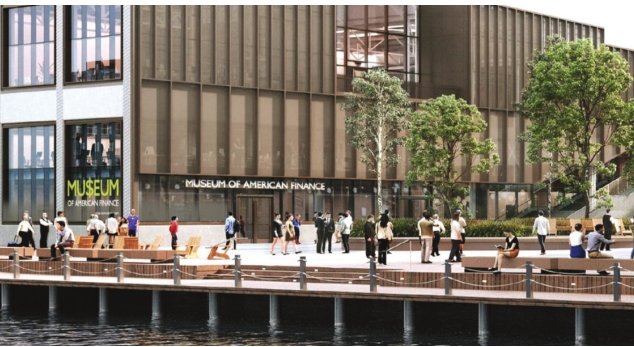
Dark and light on Monhegan

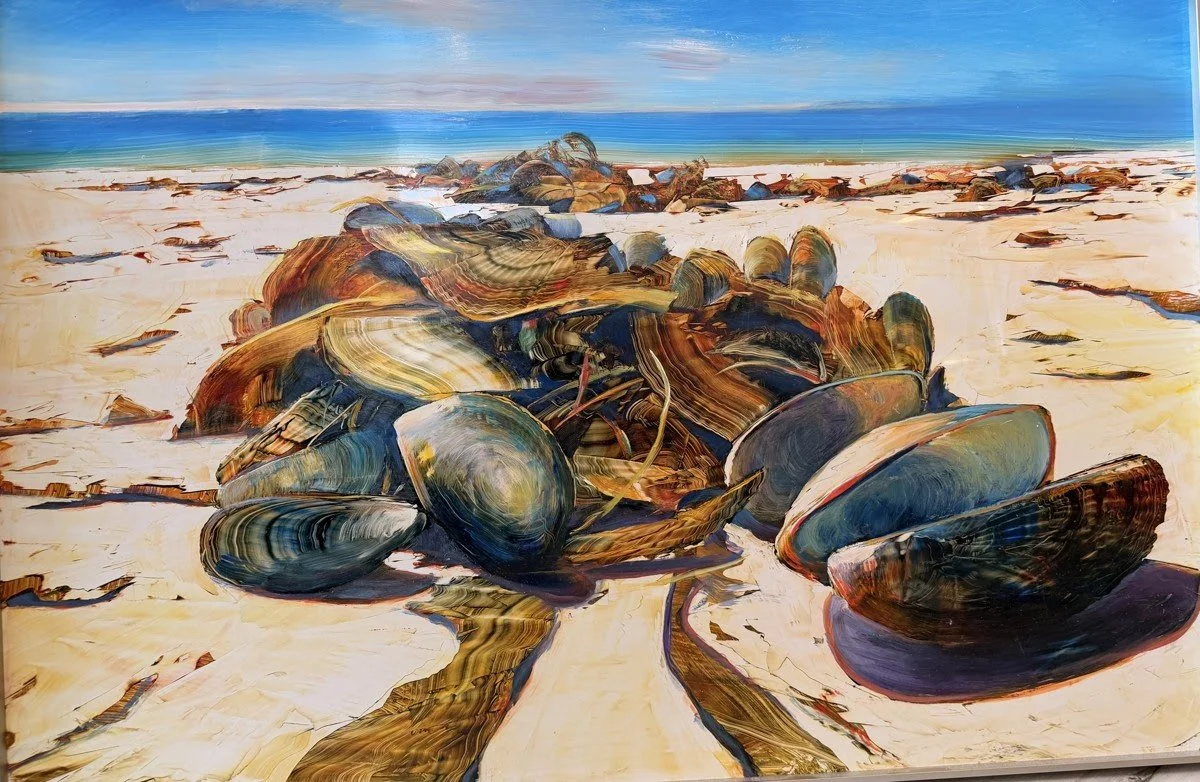
""Monhegan (Manana)" (mixed media on canvas), by Tom Hall, in his Aug. 11-Sept. 8 show at the Corey Daniels Gallery, Wells, Maine. The "Monhegan" referenced is an island about 12 miles off the Maine Coast that's renowned as a art center and fishermen's harbor. For a, well, cheerier look at it, see the picture below.

.
Profit off multiple addictions!

From Robert Whitcomb's "Digital Diary,'' in GoLocal24.com
Let’s jack up the addiction rates!
Now that Massachusetts regulators have agreed to let the new MGM Springfield “casino resort’’ serve booze until 4 a.m. to grab more state revenue, officials of Connecticut’s huge Mohegan Sun and Foxwoods casinos, worried about more intense competition for the gambling and drinking communities, seek the same privileges, as the race to the bottom continues.
'Sluggish bubbles'
"Summer has salted
our neighborhood to thirst;
tar that patches the wounds of roofs
heats to sluggish bubbles;
sun obligates
paint on car hoods to blotch.''
-- From "40 Ounce,'' by Marcus Jackson
Mid-summer blues

"Tangled Up in Blue" (paper and colored pencil), by Jane Lincoln, in her show "Entangle,'' at the Kingston Gallery, Boston, through Aug. 12.
TEN Kingston Associate, Jane Lincoln, Tangled Up in Blue, BFK Rives paper and colored pencil, 14 x 16 inches, 2018
TEN Kingston Associates: Entangle
July 5⎻August 12, 2018

Jill Richardson: Food-stamp recipients probably to lose right to use the stamps at farmers markets

Via OtherWords.org
People on food stamps, officially known as the Supplemental Nutrition Assistance Program (SNAP), receive their benefits on a card that can be read like a credit card. Crucial to allowing recipients to use food stamps at farmers markets are card readers.
The U.S. Department of Agriculture just canceled its contract with the company that makes the card readers. As a result, food stamp recipients will likely lose the ability to use food stamps at farmers markets.
I was all set to write about this terrible mix-up. But then I realized it’s not the part I really care about.
Of course, food stamp recipients should be able to shop at farmers markets. But it’s a tiny part of a much bigger issue.
The diets of food stamp recipients lie at the intersection of two issues: our food system and economic inequality.
On one hand, you have a system of food that uses industrial methods to produce a cheap and abundant but often unhealthy food supply. Healthier foods tend to cost more, whereas junk food is cheap. And low-income neighborhoods often lack outlets that sell healthy food in the first place.
The answer to this isn’t to pay farmers less. Farmers are struggling — and if anything, higher prices paid to farmers for food and fiber would benefit rural communities in much needed ways.
The other way to help the diets of low-income people is to reduce poverty and inequality. Ideally, this will require large scale social change.
For example, schools in Detroit are so bad that students are suing the state because they weren’t taught to read. How is a kid who graduates from a school like that, even the smartest and most motivated kid, able to keep up with one who graduated from school that actually teaches its students?
In my perfect world, we’d find a way to ensure all Americans have an excellent education, affordable health care (including mental health care), affordable housing, and safe cities in which they don’t have to fear that calling the police will result in their own victimization. Workers will be able to organize to defend their rights as well.
In that world, fewer people would live in poverty, and more could afford good food.
One quick and efficient way to help reduce poverty is to raise the minimum wage. The 1968 minimum wage would be equivalent to $10.90 in 2015 dollars. The national minimum wage is only $7.25. Workers have lost ground over the last 50 years.
Meanwhile, since the early 1970s, as workers’ wages have stagnated or grown only slowly, productivity more than doubled.
Workers today do more than they did five decades ago but they make less money. The profits for the increased productivity go to the top 1 percent.
Accepting food stamps at a farmers market is nice. No doubt it’s more than nice for those on food stamps who shop at farmers markets. That contracting snafu should be fixed.
But to really help all Americans access fresh, healthy food, we need to either fix the food system or address economic inequality. Or, better yet, both.
Jill Richardson is the author of Recipe for America: Why Our Food System Is Broken and What We Can Do to Fix It.
'Most Pretentious People'
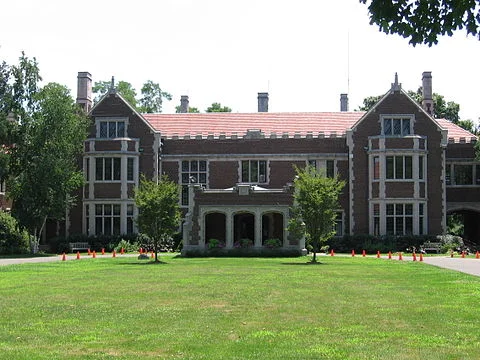
The Waveny Mansion, in New Canaan.
"I lived in a town called New Canaan, in Connecticut, where they are far too snobby to even mention celebrities. Many American towns are famous for things like, "See the World's Largest Ball of String!" I think my town's would probably have to be 'Most Pretentious People.'''
-- Katherine Heigl, Hollywood actress and producer
David Warsh: The two Putins

As shocking as anything that Donald Trump said in Helsinki last week was Vladimir Putin’s emphatic claim that “the Russian state has never interfered, and is not going to interfere, into internal American affairs, including election processes.”
Just as there are two NATOs, there are two Vladimir Putins. When U.S. policy didn’t change during his first eight years in office, Putin changed his own. Gradually he became an antagonist – and a demonstrable liar.
Much of what I know about the Russian president I owe to Steven Lee Myer’s biography, The New Tsar: The Rise and Reign of Vladimir Putin (Knopf, 2015), which, despite its tendentious title, is a first-rate book. During seven years in Moscow for The New York Times, Myers lost all sympathy with his subject, and, by the end of the book, regards him as a little more than a megalomaniac, returning to the presidency in 2012 “with no clear purpose other than the exercise of power for its own sake.” That much, I think, is pretty clearly mistaken. But the bulk of Myers’s sensitive and extensive reporting permits the reader to reach a conclusion independent of the author.
As an officer in the KGB in the 1980s, watching the Soviet Union begin to fall apart, Putin learned much about the virtues of credibility. He was, for instance, unusually candid in the campaign manifesto, “Russia at the Turn of the Millennium,” that he published on the eve of replacing Boris Yeltsin, at the end of 1999. Russia’s economy had shrunk by half in the 1990s, he wrote; it was a tenth the size of the United States, then a fifth the size of China. Fifteen years of robust growth would be required just to reach the level of Spain or Portugal.
Putin wrote:
"For the first time in the past two hundred [or] three hundred years, [Russia] is facing the real threat of slipping down into the second, and possibly even third rank of world states. We are running out of time to avoid this.''
Putin took office as a conciliator, eager for economic integration with the West. He was the first to offer assistance to the Bush administration after 9/11. He did not object to a US base in the former Soviet republic of Kyrgyzstan to support the invasion of Afghanistan. He journeyed to Texas to visit George W. Bush at his Crawford ranch.
A series of disappointments followed. NATO continued a second round of expansion, admitting seven nations, including Lithuania, Latvia and Estonia, former republics of the Soviet Union. Putin flew to Germany and France to join them in their opposition to the invasion of Iraq, without success. The U.S. quietly supported the Orange and Rose Revolutions – westernizing movements in Ukraine and Georgia, and bruited those nations eventual entry into NATO.
Perhaps the most decisive development came when Chechen hostage-taking left 400 dead in the north Caucasus city of Beslan in September 2004. Afterwards, Putin blamed the U.S. for failing to work closely with Russia in cracking down on Chechen rebels. All were terrorists in Moscow’s eyes; in Washington’s opinion, some were moderates with legitimate aspirations to independence.
Putin spoke out strongly in February 2007 in a speech to a security conference audience that included several American grandees. The New World Order with “one master, one sovereign,” was increasing tensions, not diminishing them. “Unilateral and frequently illegitimate actions” were causing more deaths than the bi-polar world that had existed before 1989, he said.
The next developments are familiar. A short war with Georgia in 2008 designed to emphasize its Finlandization in Moscow’s eyes. President Obama’s appointment of Hillary Clinton as secretary of state. The Arab Spring and NATO’s intervention to remove the Qaddafi regime in Libya. The beginnings of civil war in Syria. Putin’s decision to replace Dimitri Medvedev as president after the latter served a single term. Clinton’s support of election protests, and, above all, the events in Ukraine in 2014 that led to Russia’s annexation of the Crimean Peninsula.
Even then, Putin relied on the reputation he had built for candor, starting with “Russia at the Turn of the Millennium.” The emotionally charged speech to both houses of the Russian parliament announcing the annexation of the Crimean Peninsula was analyzed and annotated by the BBC. It stands up well as an act of persuasion to those who grant Moscow’s right to a Monroe Doctrine of its own. Even the pretense of the “little green men” who stage-managed the referendum by which Russia obtained the consent of the locals seems to fall within the penumbra of truth-telling. Nations aren’t expected to disclose orders of battle when going to war.
It was the downing of a Malaysian airliner by missile in eastern Ukraine that marked Putin’s departure from Western standards of credibility. The Russian government denied any role in the in incident, in which 298 persons perished, but investigators concluded that only a senior Russian military commander could have ordered the sophisticated anti-aircraft system deployed to Ukraine.
It was the same thing again last week, when Putin denied that the Kremlin had sponsored a massive campaign of digital theft and political tinkering with U.S. social media in 2016. The Washington Post reported July 21 that Clemson University researchers had discovered that Russian operatives had spun out 18,000 tweets, at the rate of a dozen a minute, on the eve of Wikileaks’ first disclosures of emails stolen from Clinton’s campaign manager.
It’s not that Russian interference changed the election. If any last-minute gambit was decisive, it was the incipient mutiny in the FBI’s New York office, for which former U.S. attorney and New York City Mayor Rudolph Giuliani served as the mouthpiece. It’s that the Russian invasion of digital discourse was a flagrant violation of previous norms. Presumably it arose from exasperation; undoubtedly it made matters worse. But there is no reason to think that it changed the result of the election. The fact remains that Trump won, 304 to 227 votes in the Electoral College. There will be another presidential election in little more than two years.
Apparently Trump hoped to return home from Helsinki with a written Russian promise that the government wouldn’t encourage or even allow such trespassing again, starting with the mid-term elections. “There was the idea that if Trump brought home such a guarantee, he would be seen as having scored a victory,” an unnamed Russian lawmaker told Demetri Sevastopulo and Kathrin Hille of the Financial Times. “But the proposed text amounted to an admission of guilt.”
Twenty-seven years after the end of the Soviet Union, Russia and the United States are once again foes. This time the valences are reversed. The U.S. is the expansionist power. It is Russia promulgating a doctrine of containment. Both nations are led by men who cannot be taken at their word. U.S. overreaching is not likely to continue indefinitely, any more than did Soviet behavior the last time around. But this much is already clear. Putin is a major figure in the history of his country. Trump is slowly being disowned by his.
David Warsh, a longtime columnist and an economic historian, is proprietor of economic principals.com. He's based in Somerville, Mass.
R.I. to encourage putting solar facilities on developed property

From ecoRI News (ecori.org)
The Rhode Island Office of Energy Resources has adopted a set of initiatives to encourage solar development on brownfields, rooftops, and carports.
Rhode Island’s rush to site renewable energy on open space and clear-cut forest to make room has become a contentious issue, with Cranston, Exeter and Hopkinton among the places where resident pushback has been strong.
“Making renewable energy more affordable and accessible has been a top priority of this administration, and today’s announcement builds on the progress we have made,” Office of Energy Resources (OER) commissioner Carol Grant said. “There is so much underutilized space — from parking garages, to rooftops, to former industrial complexes. By retrofitting these spaces with new solar panels, we will continue to lower our carbon footprint and to meet the growing demand for [renewable] energy.”
The initiatives announced July 19 were developed during the past year with input from various stakeholders, including municipal planners, environmentalists, farmers, government agencies, businesses, developers, and concerned residents.
The new initiatives are as follows:
Brownfields. Former industrial or commercial sites where future use is affected by environmental contamination are often ideal locations for renewable-energy projects. Starting this fall, renewable-energy projects that are sited on brownfields will be eligible for financial incentives from the Renewable Energy Fund. A million dollars will be earmarked specifically for this initiative, according to OER.
Rooftops. The state agency, in coordination with the Distributed Generation Board, is proposing an increase in the number of megawatts of capacity available for rooftop solar under the 2019 Renewable Energy Growth Program. Under this proposal, the cap would be raised 27 percent to nearly 9 megawatts, allowing more homeowners across the state to access the program starting in the spring 2019. This proposal is subject to review by the Distributed Generation Board and Public Utilities Commission in late 2018, according to OER.
Carports. OER has proposed that solar arrays installed over parking areas be made available for the first time under the Renewable Energy Growth Program. The proposal is also subject to the same review and approval process as the small-scale solar proposal.
More bridges to nowhere

"The Beauty of Broken Bridges'' (encaustic painting), by Nancy Whitcomb
So whatever happened to Trump's promises to start rebuilding America's collapsing infrastructure, which is about the worst in the Developed World?
Small-town excitement
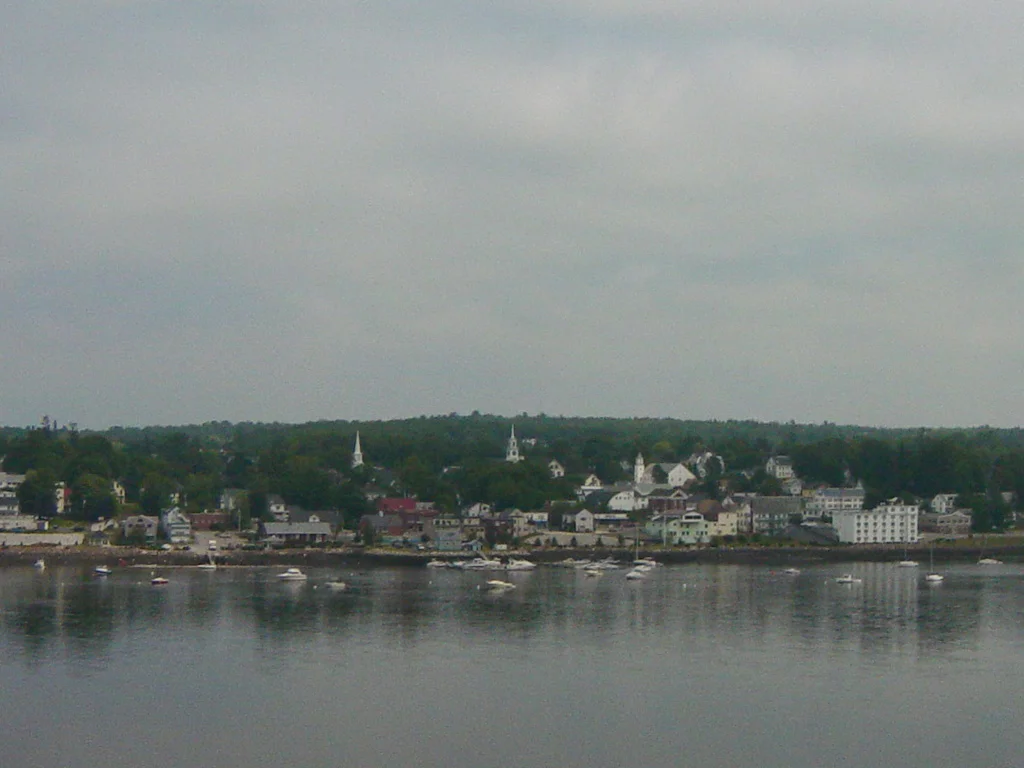
Bucksport, Maine.
"The Ecuadorian sailors arrive in Bucksport.
They stare at the American girls who stand
on the oil wharf in shorts and halters, eating
pistachio ice cream in the long Maine afternoons
as the sun drops behind the refinery....''
-- From "The Ecuadorian Sailors,'' by William Carpenter
A colorful guidebook -- and history -- about great New England houses and gardens
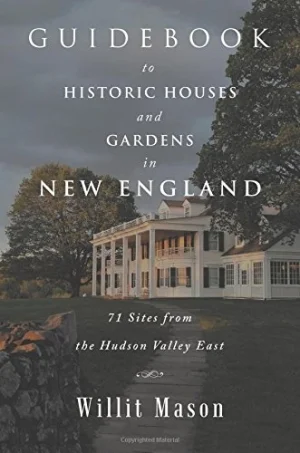
William (“Willit’’ ) Mason, M.D., has written has a delightful – and very handy -- book rich with photos and colorful anecdotes, called Guidebook to Historic Houses and Gardens in New England: 71 Sites from the Hudson Valley East (iUniverse, 240 pages. Paperback. $22.95). Oddly, given the cultural and historical richness of New England and the Hudson Valley, no one else has done a book quite like this before.
The blurb on the back of the book neatly summarizes his story.
“When Willit Mason retired in the summer of 2015, he and his wife decided to celebrate with a grand tour of the Berkshires and the Hudson Valley of New York.
While they intended to enjoy the area’s natural beauty, they also wanted to visit the numerous historic estates and gardens that lie along the Hudson River and the hills of the Berkshires.
But Mason could not find a guidebook highlighting the region’s houses and gardens, including their geographic context, strengths, and weaknesses. He had no way of knowing if one location offered a terrific horticultural experience with less historical value or vice versa.
Mason wrote this comprehensive guide of 71 historic New England houses and gardens to provide an overview of each site. Organized by region, it makes it easy to see as many historic houses and gardens in a limited time.
Filled with family histories, information on the architectural development of properties and overviews of gardens and their surroundings, this is a must-have guide for any New England traveler.’’
Dr. Mason noted of his tours: “Each visit has captured me in different ways, whether it be the scenic views, architecture of the houses, gardens and landscape architecture or collections of art. As we have learned from Downton Abbey, every house has its own personal story. And most of the original owners of the houses I visited in preparing the book have made significant contributions to American history.’’
To order a book, please go to www.willitmason.com
'Dimensional landscapes'
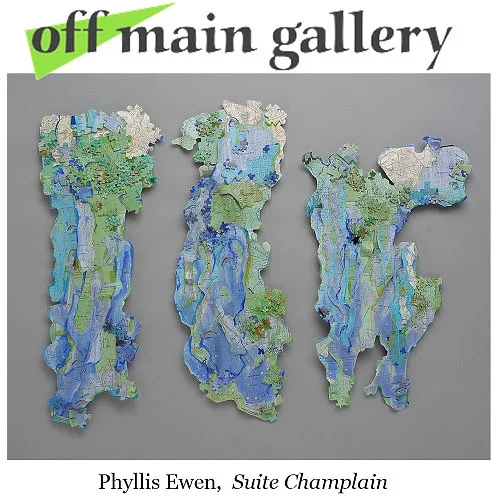
This image is from Ms. Ewen's "Flux & Flow'' show of "dimensional landscapes" on archival pigment prints at the Off Main Gallery, in Wellfleet, on the Lower Cape, through Aug. 9. The "Champlain'' is apparently a reference to Lake Champlain.
9
A poet finds grace on the Maine Coast

Cape Neddick Light (circa 1920), in York, Maine, where May Sarton lived in her last years, after moving from Nelson, N.H.
"As I think about it today in my 81st year, looking out at the sea from my desk, I realize that what I have found in Maine is more than courtesy and kindness. It is grace.''
-- The late poet May Sarton, in "I Was on my Way Home Anyway,'' in the March 1994 Yankee magazine.
York is a well-known summer resort town, with 18-hole golf clubs, four sandy beaches and Mount Agamenticus, a remarkably high hill (692 feet) considering its proximity to the sea. There's lots of "old money'' there, perhaps best seen at the exclusive York Harbor Reading Room club.

-- Photo by Fredlyfish
At the top of Mount Agamenticus, in York.

"York Harbor, Coast of Maine'' (1877), by Martin Johnson Heade.
Drive in peace

From Robert Whitcomb's "Digital Diary,'' in GoLocal24.com
As least anecdotally, Rhode Island’s new law banning drivers from talking into cell phones they’re holding while driving seems to be starting to work. I think that a lot of drivers will grow to like the law because it will encourage quiet time and reflection and let them enjoy the ride much more. There’s a false urgency about most cell phone calls. The vast majority of calls can wait!
The addicts will, of course, continue to take the risk of a $100 fine. Their brain chemistry, as with some of those who spend their days looking at social media, has been permanently rejiggered. For some reason, people in SUV’s seem particularly prone to cell-phone addiction. They seem to especially like to talk on cell phones while turning. And some just can’t stop texting while driving either!
Then there’s our over-reliance on GPS for directions. Google Maps, et al., are sometimes wrong! Old-fashioned printed maps are often more reliable but too many people seem to have forgotten how to use them. But then so many people in the
Don Pesci: Democratic kooks consider court-packing
In “History’s Bad Ideas Are an Inspiration for Progressives,” historian and columnist Victor Davis Hanson examines the dark side of progressivism.
Stymied by a Supreme Court that was a bit too traditionalist for his tastes – that is to say, a high court that faithfully interpreted the laws with reference to a real rather than a fictitious “living Constitution” -- President Franklin Roosevelt, Hanson notes, tried in 1937 to pack the court. His “convoluted proposal would have allowed Roosevelt to select a new—and additional justice—to the Supreme Court for every sitting judge who had reached 70 years, 6 months, and had not retired. And in theory, he could pack on 6 more judges, creating a 15-member court with a progressive majority.”
The effort to compromise the independence of the court by packing it with progressive judges failed ignominiously, in large part because the media of the day were constitutionally literate. Since then, the American media have declined. With the help of half-mad French philosophers, the American media have been convinced that any institution not born yesterday is hopelessly recherché. Texts, including the solid propositions of our founding documents, are to be wretched from their contexts and reformulated to satisfy the revolutionary ambitions of fake philosophers and politicians.
Faced today with a president considerably more conservative than his predecessor, the kook wing of the Democratic Party once again is considering court-packing. Donald Trump has nominated two Supreme Court justices viewed by progressive extremists as intolerably conservative. In fact, Neil Gorsuch, who has been approved, and Brett Kavanaugh, awaiting approval, are constitutional originalists in the manner of the late Justice Antonin Scalia. Kavanaugh, Trump’s most recent nominee to the high court, is viewed by many court watchers as a libertarian in the manner of Justice Anthony Kennedy, whom he will replace on the bench. The libertarian Cato Institute perhaps put it best when it described Kennedy’s jurisprudence as “a constant struggle to balance freedom and responsibility—ordered liberty, if you will."
Noting that appointments in due course occasionally disappoint those who believe that justices selected by conservative or liberal presidents will continue to maintain a steady ideological path on the court, Hanson lists the three most noxious principles of progressive irredentism.
First, progressives believe that only conservative justices should flip, while liberal justices should maintain an inflexible progressive course. Second, any and all judicial means that advance progressive decisions, however much they violate man and nature’s God, must advance the public good. And lastly, progressives believe, with all the fervency of a doctrinaire extremist, that it is proper to view the court as an instrument of social justice, prodding representative bodies to the left by means of decisions that, strict constitutionalists would say, have only a nodding acquaintance with historical constitutional interpretation.
Hewing to this last principle, the progressive re-drafters of the constitution tip their hats to a Marxist formulation: “The philosophers have only interpreted the world, in various ways. The point, however, is to change it,” said Karl Marx, words engraved as an epitaph on his tombstone. In much the same way, modern progressives hold that it is the business of progressives on the left to change laws made by representative assemblies through a radical, ahistorical re-interpretation of a shape-shifting Constitution.
Among progressives, nullification has become the new normal. Revisiting this socially disruptive idea can only bring down fire upon our heads. Jefferson Davis and other Southern secessionists embraced nullification until they were persuaded by President Abraham Lincoln’s generals to give it up, but not before the grounds of Shiloh and Gettysburg were soaked in blood. The operative principle of nullification is that the governor of a state, its lawmakers, or its municipal executives may nullify – declare inoperative -- federal laws at will and expect the federal government to wink at governors and state legislators who counsel lawbreaking on occasion for purportedly good reasons. But consider that In an assembly of states that calls itself a union, the presence of a sanctuary city is an act of uncivil defiance bordering on insurrection.
Sanctuary state proponents such as Connecticut Gov. Dannel Malloy and U.S. Sen. Richard Blumenthal in Connecticut are perfectly willing to accede to the proposition that the federal government does have the authority to make and enforce laws. Indeed, if Blumenthal were to contest this proposition, his office -- that of U.S. senator, which is constitutionally authorized to write laws to be executed by the executive department – would be rendered useless. In supporting sanctuary cities, Blumenthal is setting his face against both the executive department and Congress of which he is a member. In effect, Blumenthal is saying that federal laws may be vacated by governors and mayors of the states if the law in question is perceived as unjust.
Once his principle of abrogation is generally accepted, any municipal executive with the concurrence of a governor may defy any law written by Blumenthal and affirmed by Congress. One needn’t wonder whether Blumenthal or Malloy would assert their destructive operative principle if a conservative state government were to defy what has been called “settled law” in Roe v Wade and outlaw all forms of abortion.
Don Pesci is a Vernon, Conn.-based columnist.
Jenny Silverstone: Six big benefits of music education
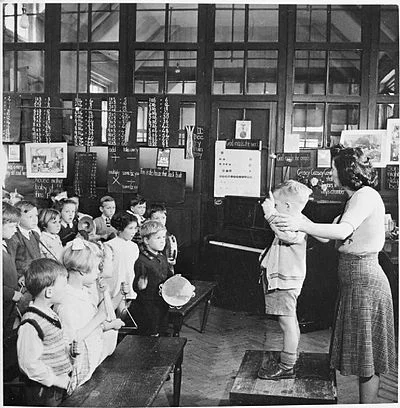
A teacher helps a young pupil conduct an ''orchestra'' during a music lesson at St Joseph's Elementary School, in Upper Norwood, England., in 1943. The boy is using drumsticks or xylophone beaters to conduct the rest of the class, who are playing tambourines, triangles and cymbals.
Via the New England Board of Higher Education (nebhe.org)
Today, children of all ages experience rigorous career preparation as part of their education. School systems strive to implement mandated standards to help students excel in standardized testing and gain necessary skills for future job opportunities.
In this worthwhile pursuit, many creative school programs such as art and music are deemed unnecessary and cut from the curriculum.
What many schools do not realize, however, is that programs such as music education can have major positive impacts on growth and development.
In fact, these six benefits of music education not only show how music can benefit children now, but how it goes hand-in-hand with their preparation for future endeavors.
Enhanced language capabilities
Would you like your child to have larger vocabulary and enhanced reading comprehension skills? Studies show consistent music education improves both areas. How does it work?
Emerging evidence suggests the area of the brain controlling both musical ability and language comprehension are more related than previously thought. Music education requires students to recognize and repeat pitch, tone or enunciation of words.
Especially in young children, music directly benefits the ability to learn words, speak them correctly, and process the many new sounds they hear from others.
Improved memory
Music education involves a high level of memorization. Students must be able to read music by sight, play the proper notes on their instrument or recall lyrics. This process benefits the overall memory center of the brain.
In one study, musicians outperformed non-musicians in auditory, visual, and memory tests.
Music is also easily stored in our memory. Have you ever had a song stuck in your head? You can use music to help children remember things. Examples include using common tunes to memorize facts, playing meditative music during study time, and using music resources when presenting materials.
Strengthened hand-eye coordination
Playing a musical instrument has long been known to enhance dexterity and hand-eye coordination.
When playing an instrument, a musician must be able to create the correct notes through the proper hand motions, whether it be hitting keys, closing valves or using another apparatus to produce sound. In addition, the musician is also required to read the sheet music and follow the conductor.
This opportunity to grow motor skills is especially significant in younger children. Even a basic introduction to an instrument, such as a hitting a triangle or learning a song on a recorder, can be beneficial.
Powerful study habits
As children grow and are exposed to more rigorous courses of study, time spent reviewing and retaining is essential to success. More and more time in the classroom is spent on introducing new subjects and ideas, requiring students to work at home to ensure they have grasped onto the necessary information.
When children are exposed to proper music education, they learn powerful study habits. Mastering their specific musical craft takes a concerted effort, consistent practice and patience. These disciplined habits translate into other areas of study.
Teamwork
Music is often thought of as a way to foster individual expression. While it definitely is that, music can also teach teamwork. No place is this more evident or powerful than in schools.
Students work together to create a cohesive, technically correct performance. Together, they form a community of like-minded individuals who can help each other reach goals. Many students find a sense of belonging in school music programs.
Mental processing & problem-solving heightened
In the end, one of the most useful benefits of music education is the increased ability to process situations and find solutions mentally. Those with musical training have been found to have higher levels of grey matter volume in their brains, which are directly tied to auditory processing and comprehension.
Surprisingly, one of the areas of life this is most important for is forming relationships. Musicians learn to listen to others, sense emotion,and react with greater depth and understanding.
Music education for kids
Music education is an important aspect of providing children with a well-rounded education. When allowed to work in harmony with other subjects and areas of study, music helps children grow in self-esteem, build essential skills and prepare for bright futures.
Jenny Silverstone is the primary author of Mom Loves Best, a research-driven parenting blog that covers important topics such as education, child safety and healthy childhood development milestones.
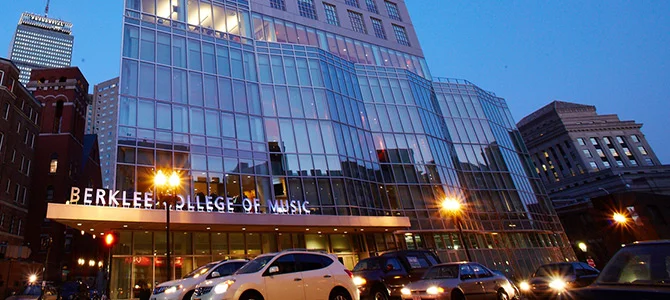
Berklee College of Music, in Boston. It's the largest independent college of contemporary music in the world.
Was this heart-stopper invented in Maine or on The Cape?

“The National Doughnut Dunking Association has always credited the invention of its pet provender to a Maine sea captain named Hanson Gregory….{In 1847) objecting to the soggy center in his mother fried cakes, {the Rockport native} is said to have remarked, ‘Why don’t you cut a hole in the middle where it doesn’t cook?’ …But now a Cape Cod historian places the event earlier by a good two hundred years. It seems that one day back in the seventeenth century a Nauset Indian playfully shot an arrow through a fried cake his squaw was making. The squaw, frightened, dropped the perforated patty into a kettle of boiling grease – and the result was the doughnut.’’
-- From The Gold Cook Book (1970), by Louis P. De Gouy
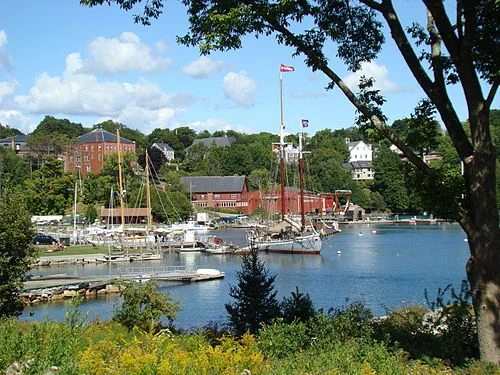
Rockport Harbor. In 2008, Forbes magazine named Rockport the prettiest town in America.
Subsidizing Republicans' religion racketeers
From Robert Whitcomb's "Digital Diary,'' in GoLocal24.com
Republican Party leaders, now glued to right-wing evangelicals, often allege that Democrats, atheists and “globalists’’ are on a campaign to somehow persecute “Christians’’ (including devout ones such as Trump…) in America. You hear this a lot from rich con-men televangelists and “conservative’’ cable-TV and radio performers. But in fact, organized religion has a hell of a deal in this country; it’s one of our most protected groups and helps to concoct public policy.
Not only do politicians cynically feel that they must suck up to religious extremists, no matter how ignorant, as long as they call themselves “Christians,’’ but more importantly, churches, including those that effectively operate as adjuncts of the GOP, don’t pay taxes. The rest of us have to make up the money, whatever we think of their politics, which we in effect subsidize.
Hit this link to see where some of TV evangelist-GOP operative Pat Robertson's millions went. Lots of suckers out there!
Through a screen, eerily

Photo from Peter C. Jones's show "Confluence,'' at KMR Arts, Washington Depot, Conn., through Sept. 8.
The gallery says:
"Peter C. Jones's photographs within 'Confluence' are an attempt to accurately depict life by the sea. Water is a source of calm, cleansing energy. This tranquil quality has long attracted people to the ocean’s shores. This affect is both spiritual and physical as the sounds, the smell and the image of the ocean convey a sense of peacefulness and balance. Human physiology is also deeply connected to the presence of water: it is the most abundant matter in the human body and the most abundant resource on the planet earth, necessary for survival.
''The images were made in a seaside cottage {in Little Compton, R.I.} that the artist and his wife rented every summer for many years. The sound of a screen door in the distance inspired the artist as he was searching for a way to convey the idea of summer. This led Jones to explore the transcendence of the sea through these photographs. As a counterpart to the constant transformation and movement of water, these photographs were made in the same location, from the same window, of the same ocean. Jones has intentionally avoided the depiction of rocks and whitecaps in order to highlight the simple elements of ocean, sky and screen.''
Washington Depot is in the Litchfield Hills, a mostly lovely southern extension of the Berkshires. Some of it looks rather like the English countryside.
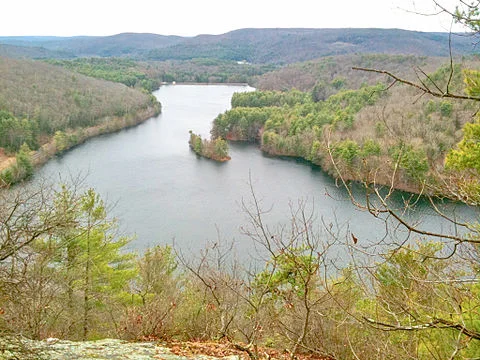
Lake McDonough, in the Litchfield Hills.
'Familiar as an old mistake'

"The Worship of Mammon,'' by Evelyn de Morgan.
"Time was when his half million drew
The breath of six per cent;
But soon the worm of what-was-not
Fed hard on his content;
And something crumbled in his brain
When his half million went.
Time passed, and filled along with his
The place of many more;
Time came, and hardly one of us
Had credence to restore,
From what appeared one day, the man
Whom we had known before.
The broken voice, the withered neck,
The coat worn out with care,
The cleanliness of indigence,
The brilliance of despair,
The fond imponderable dreams
Of affluence —all were there.
Poor Finzer, with his dreams and schemes,
Fares hard now in the race,
With heart and eye that have a task
When he looks in the face
Of one who might so easily
Have been in Finzer's place.
He comes unfailing for the loan
We give and then forget;
He comes, and probably for years
Will he be coming yet —
Familiar as an old mistake,
And futile as regret.''
-- "Bewick Finzer,'' by Edwin Arlington Robinson (1869-1935), Maine's most famous poet and a two-time winner of the Pulitzer Prize.