Vox clamantis in deserto



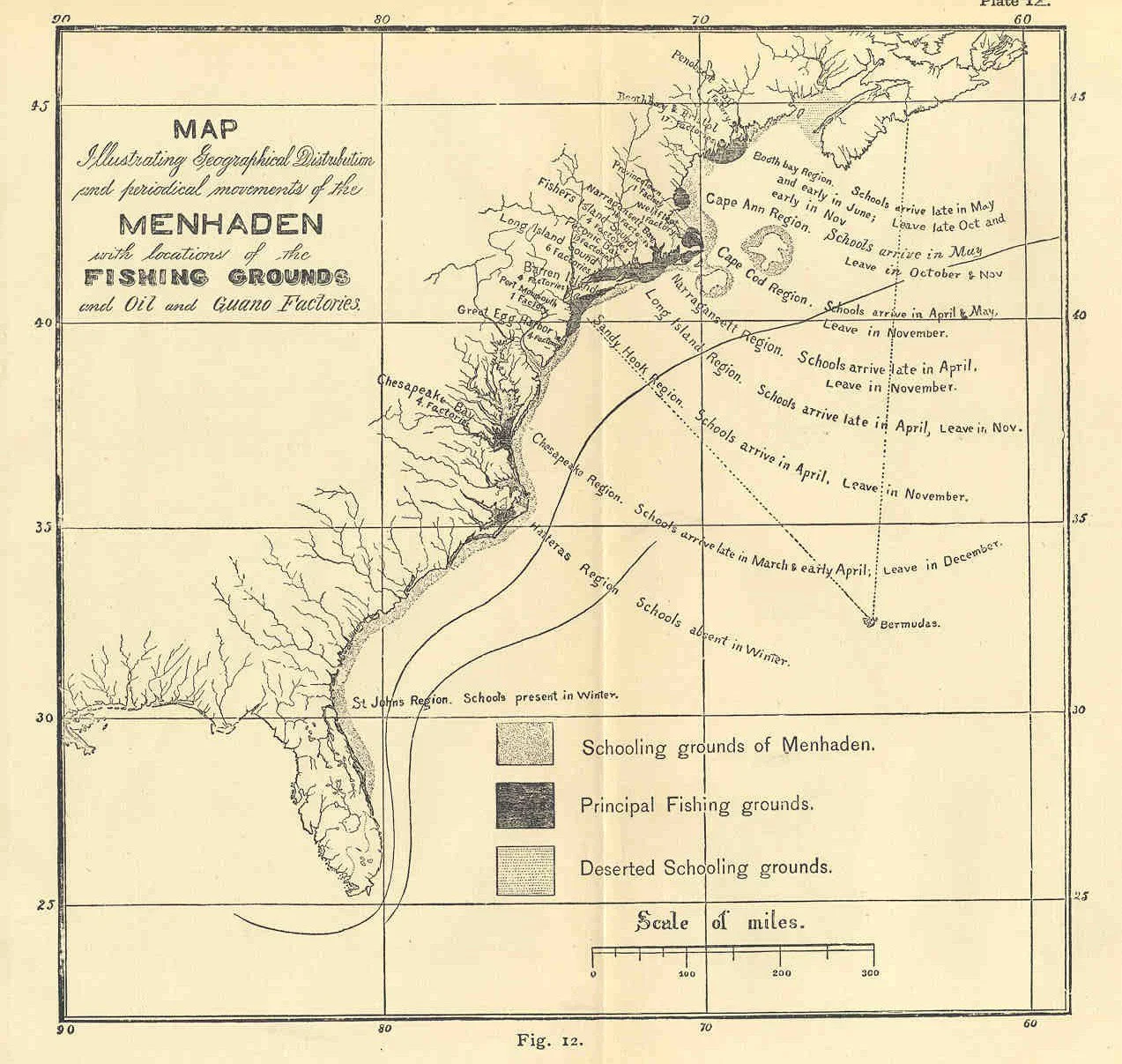

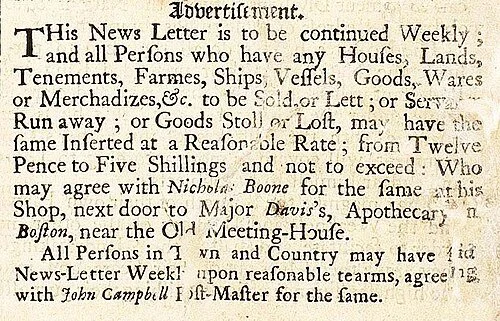
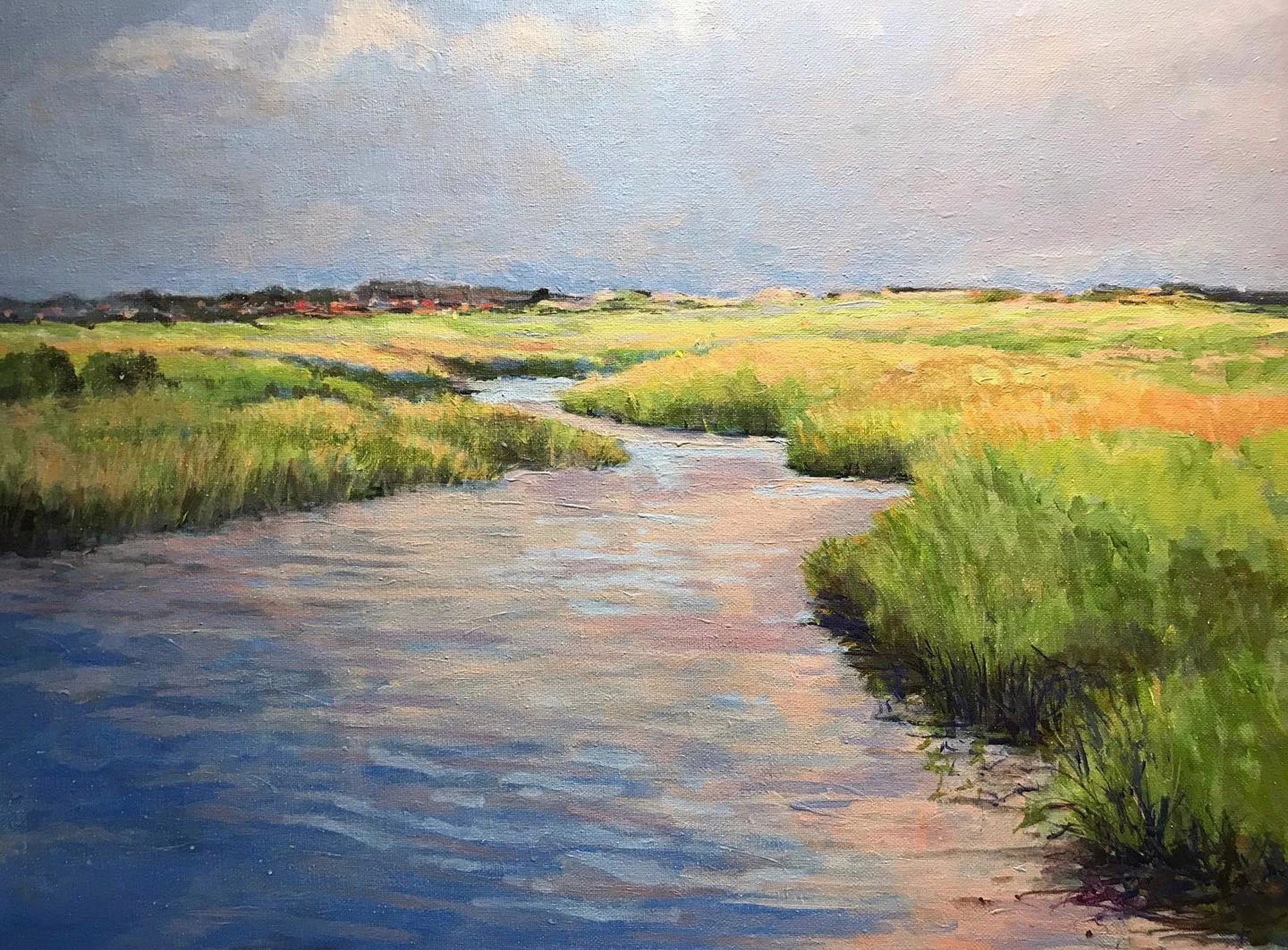
One summer afternoon
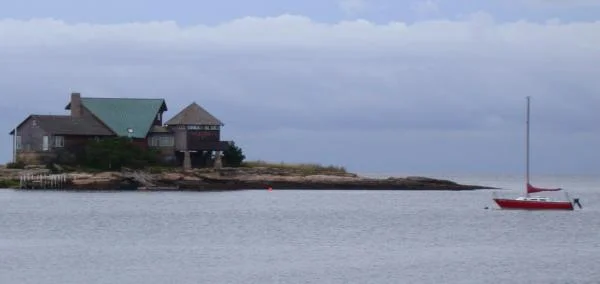
Long Island Sound at Guilford, Conn.
"I see it as it looked one afternoon
In August — by a fresh soft breeze o’erblown.
The swiftness of the tide, the light thereon,
A far-off sail, white as a crescent moon.
The shining waters with pale currents strewn,
The quiet fishing-smacks, the Eastern cove,
The semi-circle of its dark, green grove.
The luminous grasses, and the merry sun
In the grave sky; the sparkle far and wide,
Laughter of unseen children, cheerful chirp
Of crickets, and low lisp of rippling tide,
Light summer clouds fantastical as sleep
Changing unnoted while I gazed thereon.
All these fair sounds and sights I made my own.''
-- "Long Island Sound'' by Emma Lazarus
Tops for cantankerousness
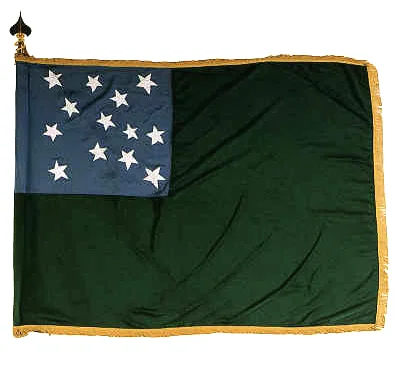
Flag of the Revolutionary War's Green Mountain Boys.
“I don’t know whether it was the climate, or the water, or what it was, but these Vermonters have always been the most cantankerous, independent folks in America. They just would never belong to anybody. England, France, New York, Massachusetts, New Hampshire would bargain and traffic and trade Vermont around; and then, just as they had got everything settled to everybody’s satisfaction, Vermont would gum up the trade by refusing to be traded.”
-- From The History of Vermont, by Will M. Cressey
To the breakwater

"Just Keep Swimming'' (oil on linen), by Philip Brou, in his show "Letting Yourself Go,'' at the Corey Daniels Gallery, Wells, Maine, starting July 7.

The meaning of trails
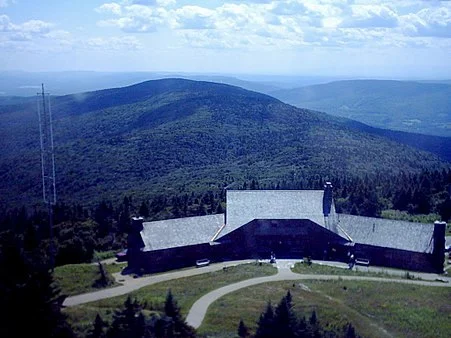
View of the top of Mt. Greylock, on the Appalachian Trail in the Berkshires, in western Massachusetts.
From Robert Whitcomb's "Digital Diary,'' in GoLocal24.com:
We’re in prime hiking season, and so I suggest reading On Trails: An Exploration (Simon & Schuster), by Robert Moor. As the promo for this beautiful travelogue says: “It’s a groundbreaking exploration of how trails help us understand the world – from tiny ant trails to hiking paths that span continents, from interstate highways to the Internet.’’
There’s lots of rich stuff about the Appalachian Trail, especially about Moor’s complex reactions to hiking it and its quirky creator. (I’ve spent some time on it; it’s grandeur, gloom, green and gray.) There’s plenty of science, philosophy and top-notch and often lyrical nature writing. And he addresses that central question: How do we choose a path through life?
The dead amongst the trees
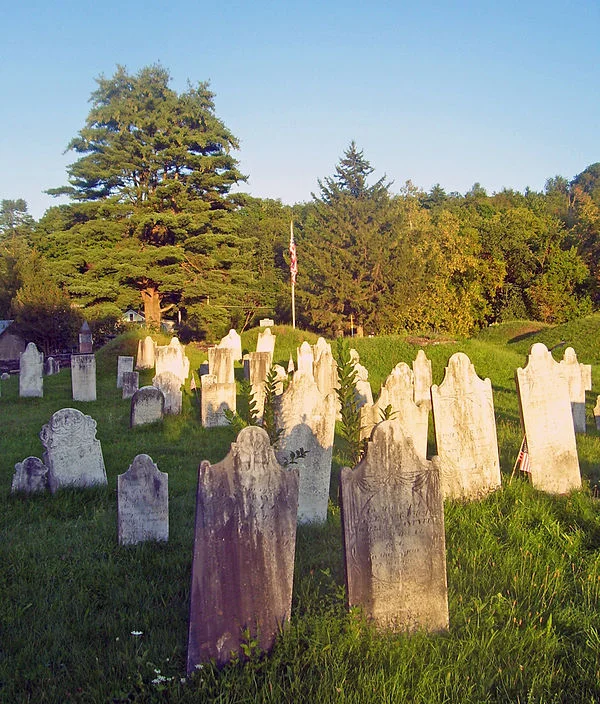
"In Maine the dead
melt into the forest
like Indians, or, rather,
in Maine the forests round the dead
until the dead are indistinguishably mingled
with trees; while underground,
roots and bones intertwine,
and above earth
the tilted gravestones, lichen-covered, too,
shine faintly out from among pines and birches....''-- From "Lost Graveyards,'' by the late Maine writer Elizabeth Coatsworth
Sunken cost

"American Infrastructure'' (encaustic and watercolor), by Nancy Spears Whitcomb.
Llewellyn King: Some GOP big shots push carbon tax

Call it a tax without tears. It is a proposal to address carbon pollution by replacing a raft of tax subsidies and regulatory requirements with a carbon tax.
What is surprising is who is pushing it: dyed-in-the-wool, rock-ribbed Republicans.
They are the top of the GOP: Every one of them has had an outstanding career in finance, industry or academia. They are men and women who contribute to Republican candidates regularly — and some of them quite generously.
These Republican grandees and party financiers have formed the Alliance for Market Solutions (AMS), which aims to educate conservative policymakers on the benefits of market-oriented solutions to climate change.
“A carbon tax, if the myriad of subsidies and regulations that policymakers now use to affect markets are stripped away, would lead to economic growth and achieve significant carbon pollution reductions,” says Alex Flint, executive director of AMS.
Well-known in Republican circles, he previously served as staff director of the Senate Committee on Energy and Natural Resources and as senior vice president of government affairs at the Nuclear Energy Institute.
The organization’s 10-member advisory board includes John Rowe, former chairman and CEO of Exelon Corp., the largest diversified utility in the United States, and Marvin Odum, former chairman and president of Shell Oil Co. and board member of the American Petroleum Institute.
What we need now, Rowe said, is “a new approach to energy tax and regulation that advances our strategic policy objectives and recognizes that the period of scarcity that began in the 1970s is over. We no longer need to subsidize energy production.”
Instead, we need policies that address “the next great energy challenge: carbon pollution,” he said.
Rowe and AMS allies believe that pairing a “revenue-neutral” carbon tax with a regulatory rollback would be good climate policy.
Flint explained: “A carbon tax would ideally be imposed upstream where carbon enters the economy. Costs would then be passed down the consumption chain through prices, which would impact decision-making and drive the use of cleaner fuels and new technologies across the economy.”
Studies by AMS estimate that a carbon tax would generate more than $1 trillion in additional revenue over the next decade, which lawmakers could use to reduce other, more distortionary taxes, or do things like make the 2017 tax reform permanent or even further reduce income taxes.
Rather than mounting a loud public-pressure campaign, Flint told me the members of the alliance — which also includes William Strong, chairman and managing director of Longford Capital Management, and Chris DeMuth, distinguished fellow at the Hudson Institute — began by meeting quietly with influential Republicans in small groups, going over the gains that would come from tax reform and emphasizing that the carbon tax does not have to be a one-size-fits-all solution, although it is a simple solution to a pressing problem.
Emphasis has been on Republicans who wield power behind the scenes and the tax writers in the House and the Senate. The reformers are getting a hearing, I am told.
The alliance has tried hard to get the facts and detailed analyses nailed down ahead of public discussion. They have done this in a new book, “Carbon Tax Policy: A Conservative Dialogue on Pro-Growth Opportunities,” edited by Alex Brill of the American Enterprise Institute.
The book is, you might say, the creed of the AMS. It is an eye-opening read by conservatives who want to limit government market-meddling and bring about sound policy through enlightened taxation.
On Twitter: @llewellynking2
Llewellyn King is executive producer and host of White House Chronicle, on PBS.
A 'farmhousey thing'
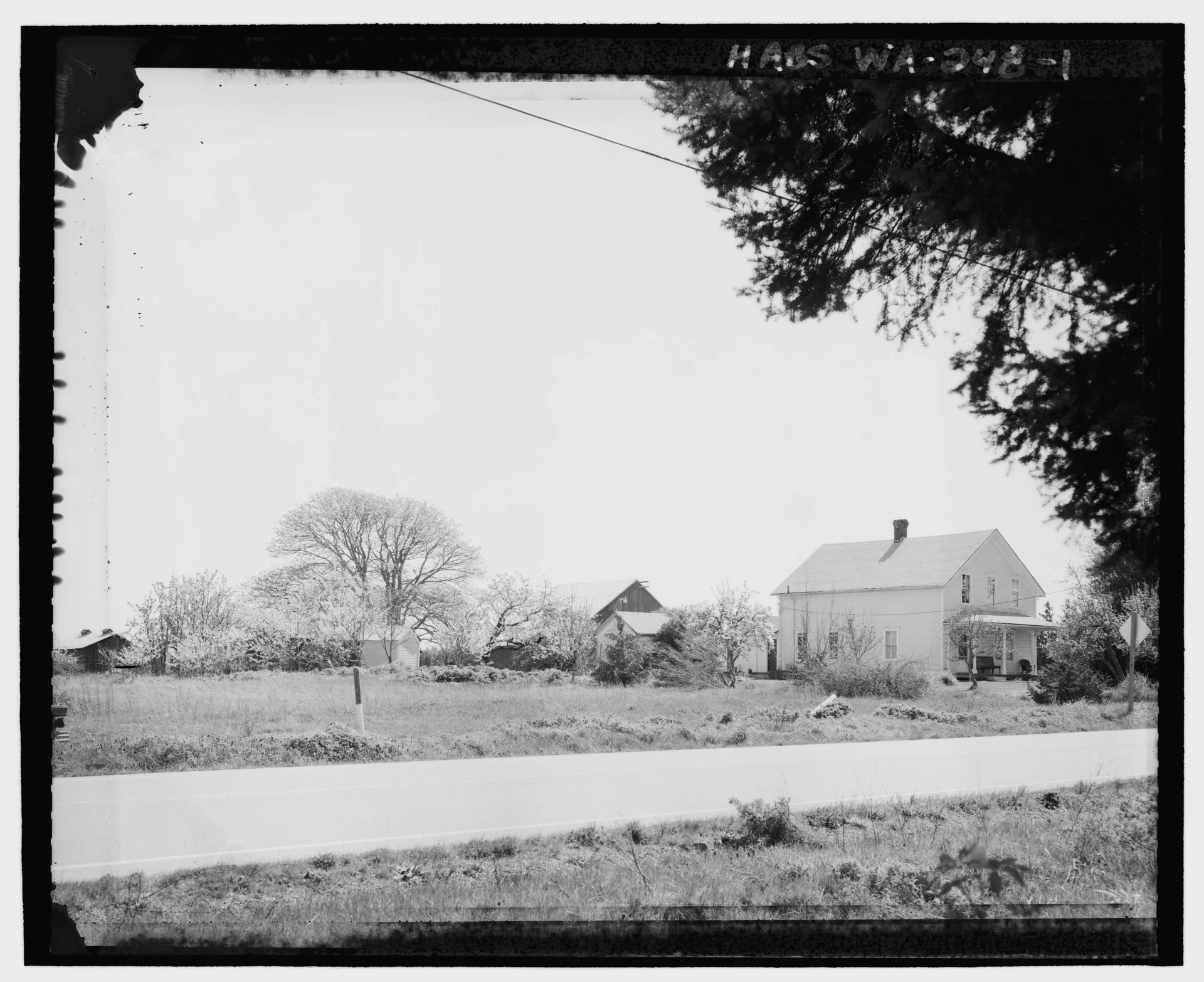
“Between Amherst {Mass.} and the Connecticut River lies a little bit of Iowa – some of New England’s more favored farmland. The summer and fall of 1982, Judith bicycled, alone and with Jonathan, down narrow roads between fields of asparagus and corn, and she saw the constructed landscape with new eyes, not just looking at houses but searching for ones that might serve as models for her own. She liked the old farmhouses best, their porches and white, clapboarded walls. 'This New England farmhouse thing,’ she called that style.''
-- From Tracy Kidder’s House (1985)
Easier to find in the fog

"Scaredy Cat'' (mixed media), by Keith MacLelland, in the group show "Close to Home,'' at Galatea Fine Art, Boston, July 5-29.
'Refined grandeur'
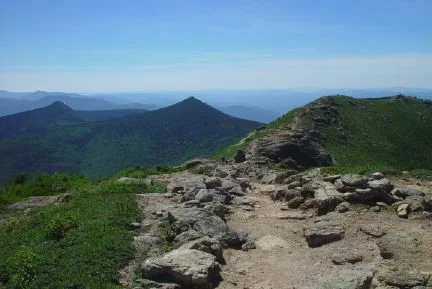
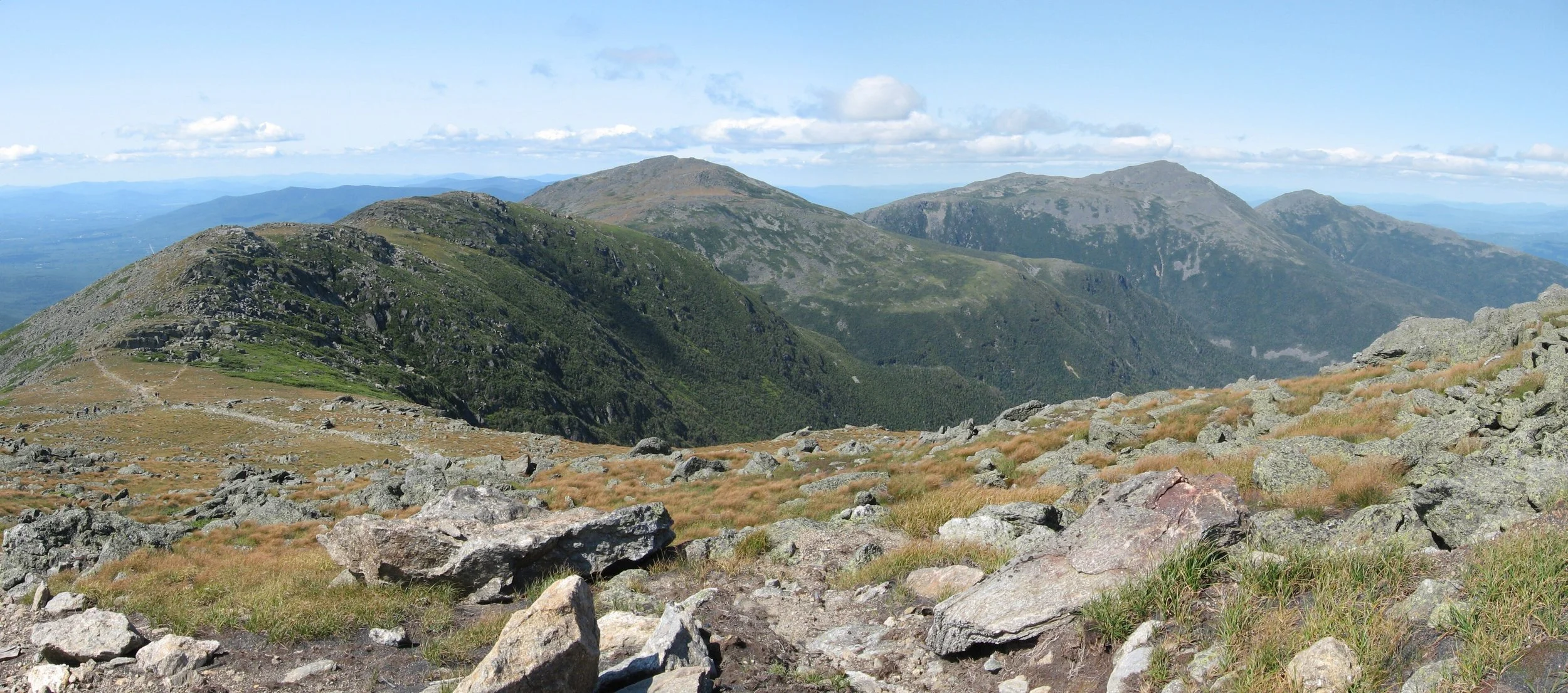
In the Franconia Ridge Trail, in the White Mountains.
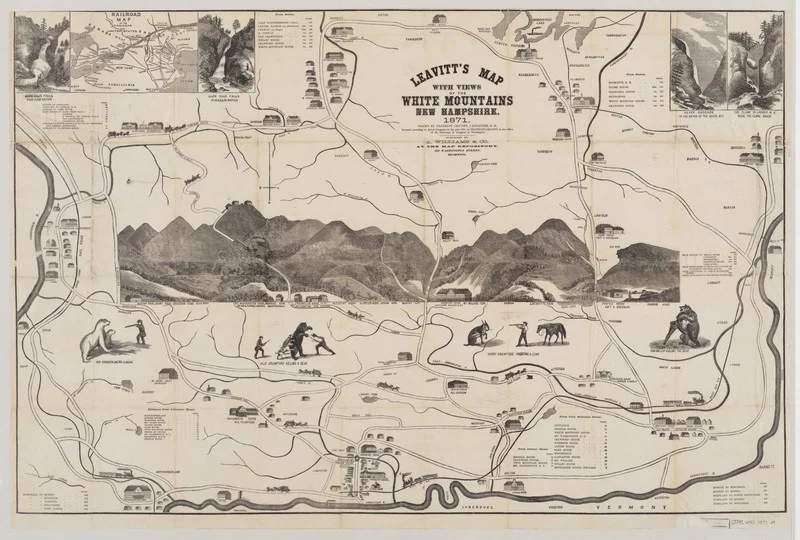
"A visit to New Hampshire supplies the most resources to a traveler, and confers the most benefit on the mind and taste, when it lifts him above mere appetite for wildness, ruggedness, and the feeling of mass and precipitous elevation, into a perception and love of the refined grandeur, the chaste sublimity, the airy majesty overlaid with tender and polished bloom, in which the landscape splendor of a noble mountain lies.''
-- Thomas Starr King (1824-1864), Unitarian minister
'When and where to stay'

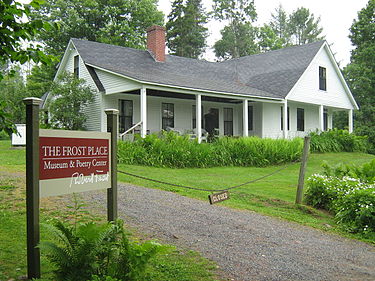
What had been Robert Frost's farmhouse, in Franconia, N.H., near the Franconia Range of the White Mountains .Frost and his family lived in the house from 1915 to 1920, and spent their summers there for nearly 20 years.
At Robert Frost’s farm, Franconia, New Hampshire
“When Robert Frost passed this stand of birch
each gray curl held his eye at word-point.
No rock but gave him pause. He’d reach to touch
it where it lay. Stones taught him to roam
by showing him where he’d been. Freedom
to go meant knowing when and where to stay.
-- From “Unlettered,’’ by Edward J. Ingebretsen
Private performance

"Elizabeth 2002'' (oil on board) by Arthur Cohen, at the Berta Walker Gallery, Provincetown.
You'll pay us to move to Vermont!
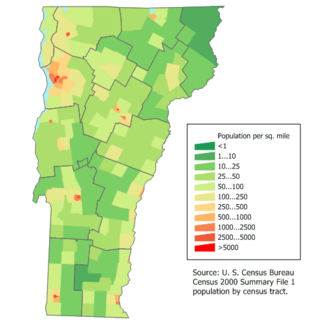
Population density in Vermont.
From Robert Whitcomb's "Digital Diary,'' in GoLocal24.com:
Something that used to surprise me a bit after the advent of the full-frontal Internet since the ‘90s is that the ability to work remotely has not hollowed out cities. Instead, big American cities have drawn increasing numbers of younger workers who are working on computers all day. You might think that more of them would want to live in beautiful countryside.
Such as in Vermont, which is trying to bribe some workers with up to $10,000 to move to the Green Mountain State, from which they’d work remotely for an out-of-state company. The Boston Globe reports:
“To qualify, workers must be employed full time with a company based outside Vermont, and move to the Green Mountain State on or after January 1, 2019. The worker must also perform most duties from a Vermont home office or co-working space. The state will then issue grants to newly minted Vermonters up to $5,000 per year for two years for things like moving expenses, Internet access, or a computer.’’
The offer sounds very much like a pilot plan, since it’s capped at only a total of $125,000 for 2019, with grants to be on a first-come, first-served basis.
The main idea, of course, is to draw in more young people, including those who might want to grow a business in the state. Vermont has long had among the lowest unemployment rates in America, but has for years been among the three or four states with the oldest population. Policymakers worry about how to ensure long-term economic growth and how to lure and keep a large enough percentage of younger people to pay taxes to maintain the state’s good social services.
I think that the joys of working remotely have been overstated. Most people want daily, in-person interactions with co-workers, and many, especially the young, prefer the energy of a big city to the most beautiful quiet landscape.
In any event, little Vermont can’t afford to pay many folks to move to Vermont. But some refugees from city jobs will find Burlington’s rather hip charms, and view of the Adirondacks across Lake Champlain, suffice for urbanity.
To read more, please hit this link.
Chris Powell: Back to the future with CTrail


Within living memory there was frequent passenger railroad service north and south out of Hartford, and the railroad company, the New York, New Haven, and Hartford, known simply as the New Haven, was as famous as any. Thanks to Hartford-born financier and monopolist John Pierpont Morgan Sr., the New Haven practically owned transportation in southern New England for the first half of the 20th Century, having acquired most of its competitors.
The line north of New Haven to Hartford and Springfield, Mass., was double-tracked to hasten the heavy traffic. But the New Haven was usually over-indebted, went bankrupt twice, was crippled by cars and highways in the 1950s and '60s, and was taken over by the government in 1970. One track north of New Haven was torn up to reduce maintenance costs. Since then the passenger service maintained on the line by the government railroad, Amtrak, has been only nominal.
Now Connecticut's Transportation Department hopes to revive passenger service frequent enough to serve commuters from Springfield to New Haven, connecting there to the Metro-North commuter railroad system, the busiest in the country, serving Grand Central Station in New York and the whole metropolitan area. Double track north of New Haven has been restored and the new trains (refurbished ones, actually) are running. This is thrilling as it shows that state government still can do something more than pay pensions to its employees, do something of potentially general benefit.
But it may be a long time before the new train service can be considered a success. For just like the old New Haven, the new service, dubbed CTrail, will lose money -- probably tens of millions of dollars per year -- and each passenger paying $8 per trip between Hartford and New Haven probably will be subsidized by state government by many times that amount for a long time. Busy as Metro-North is, fares still don't cover its costs and never will. State government pays tens of millions each year to keep the line running.
Of course highways cost money too and are vital to commerce and development. But a railroad can support commuters and development only if its stations have frequent trolley, subway, bus, or van service to connect them to their communities. Such systems are not yet in place for the new line, and when they are they will lose money too.
Ironically, at the outset the new rail service's biggest beneficiary may be the MGM casino under construction in Springfield, which more easily will siphon Connecticut and New York customers away from the Indian casinos in eastern Connecticut, costing the state still more money. State government has authorized the tribes to build a casino in East Windsor to intercept Springfield gambling traffic but the railroad doesn't go through East Windsor. No one seems to have thought of that when the site for the interceptor casino was chosen.
Even so, on the whole the new rail service will accentuate Connecticut's excellent position between New York and Boston, especially if, as is contemplated, Massachusetts extends its own commuter rail service from Boston and Worcester west to Springfield.
After all, nearly everyone in Connecticut goes to New York and Boston sometimes. Now it is easy again for people north of New Haven to go to New York by train and use the time not to stew in traffic but to read, work, or just relax or nap. (If only Metro-North and CTrail trains could be equipped with wireless internet service.)
So "puff-puff, toot-toot, off we go" -- just, please, not to another bankruptcy.
Chris Powell is a columnist for the Journal Inquirer, in Manchester, Conn.
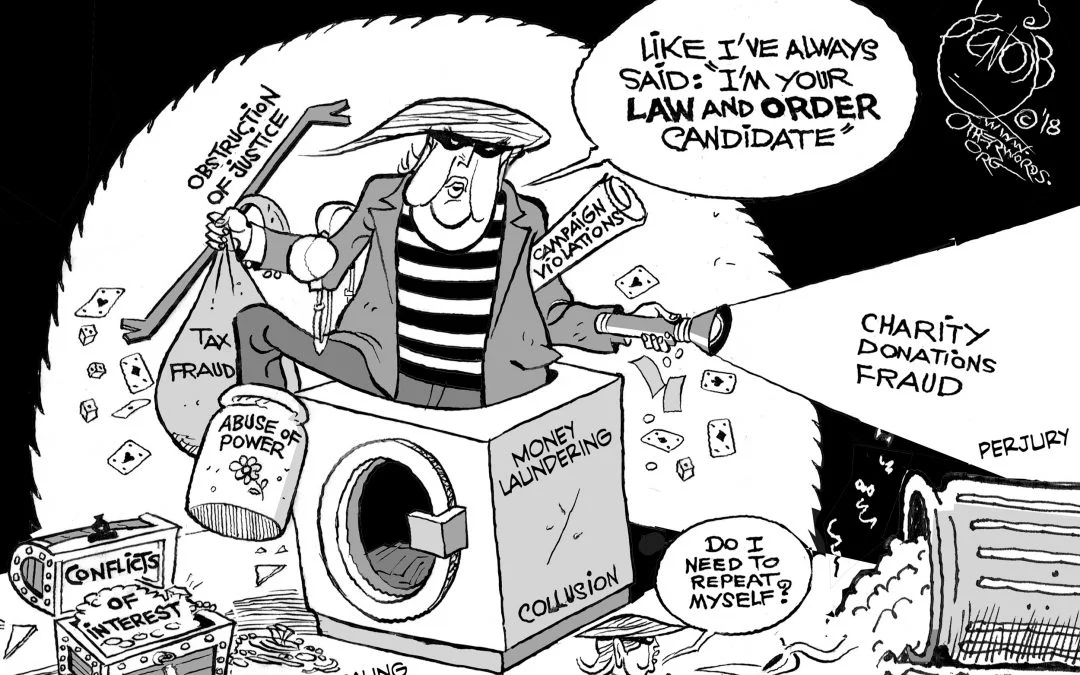
Lizet Ocampo: The truth about 'sanctuary cities'
Via OtherWords.org
In a recent White House meeting on “sanctuary cities,” President Trump called some undocumented immigrants “animals” — a disturbing new low even for someone who’s demonized immigrant communities from the beginning. The president painted a picture of “sadistic criminals” who are being given “safe harbor” through so-called sanctuary policies.
While Trump and his right-wing supporters would have people believe that “sanctuary cities” are places that allow lawlessness and where immigrants aren’t prosecuted for crimes, the reality is far different.
Here are the facts: the federal government can enforce immigration law anywhere. The term “sanctuary city” typically refers to a jurisdiction that wants to limit the use of local law enforcement resources to carry out federal law-enforcement work, especially when they’re asked to violate constitutional protections.
While these cities focus their resources on fighting local crime, they can still work with the federal government on immigration enforcement, since federal agents can issue a warrant. This is especially the case in situations where an undocumented person has carried out a serious crime — as opposed to someone who, for example, happens to have a broken taillight.
Experts note that undermining “sanctuary cities,” which are more accurately called “safe cities,” often isn’t good for anyone.
As two police chiefs from Storm Lake and Marshalltown, Iowa, recently explained: “We depend on residents, including immigrants, to come to us when they see something suspicious or potentially criminal. If they hear of a looming ‘crackdown’ that could affect their families and friends, they are less likely to come to us to report and prevent actual crimes.”
A law-enforcement association representing some of the largest cities in the country has similarly argued that asking local police to do the work of federal immigration officers would likely lead not only to more crime against immigrants, but also to more crime overall.
And a 2017 analysis from the University of California at San Diego found that “counties designated as ‘sanctuary’ areas by ICE typically experience significantly lower rates of all types of crime“ than comparable counties without such policies in place.
While ongoing police abuse against communities of color has underscored the urgent need for police reform and the rebuilding of deeply damaged community-police trust, further eroding trust by attempting to dismantle “safe cities” policies would be a significant step in the wrong direction.
Despite the facts, Trump and his administration want to scapegoat immigrants, appealing to fear and racism rather than actually looking at which policies are most effective.
Time and again, Trump entangles two separate issues — immigration and crime — by telling gruesome stories about crimes committed by immigrants that exploit the pain of victims’ families and aim to demonize entire communities. (When it comes to crime against immigrants however, the administration is mysteriously silent.)
The reality is that immigrants are actually less likely to commit crimes than people who were born here — and that immigrants who do commit crimes go through our criminal justice system, just like everyone else.
Especially as Trump’s administration is reaching new levels of cruelty by separating children and parents at our borders, we have to be vigilant in countering the use of any dehumanizing lies for political gain. We have to push our elected officials to stand up to Trump’s dangerous anti-immigrant agenda.
Our public policies should be grounded in our shared values and in sound data about what works and what doesn’t work in our communities — never in fear-mongering.
Lizet Ocampo is the political director of People For the American Way.
.

'Connecting Stories'
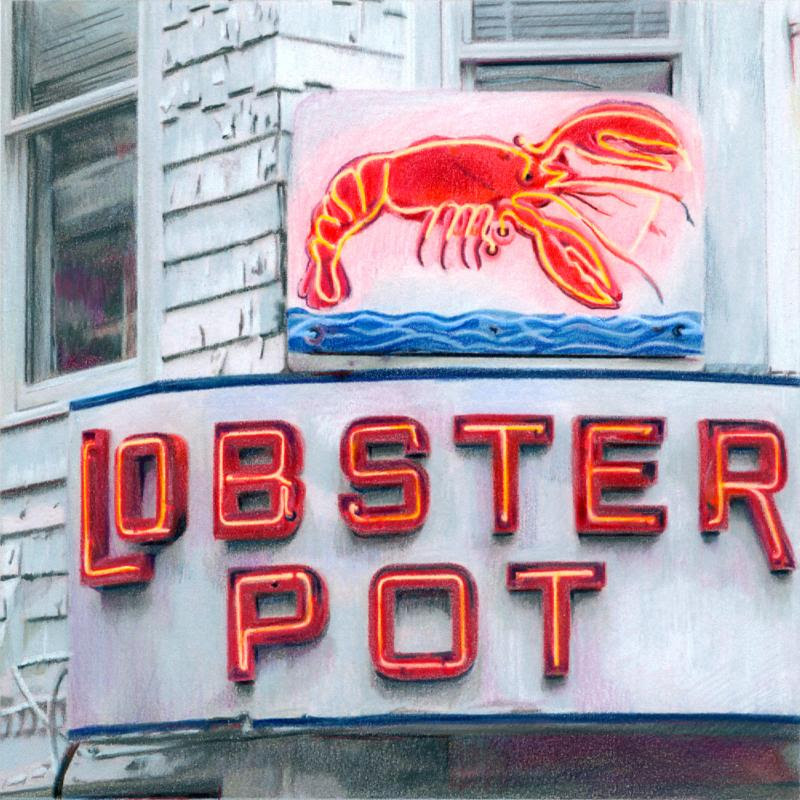
By printmaker and hand-made book artist Carol Strause FitzSimonds, in her joint show, "Connecting Stories,'' with Elena Obelenus, a ceramicist and printmaker, at the Providence Art Club through July 20.
But scare us more
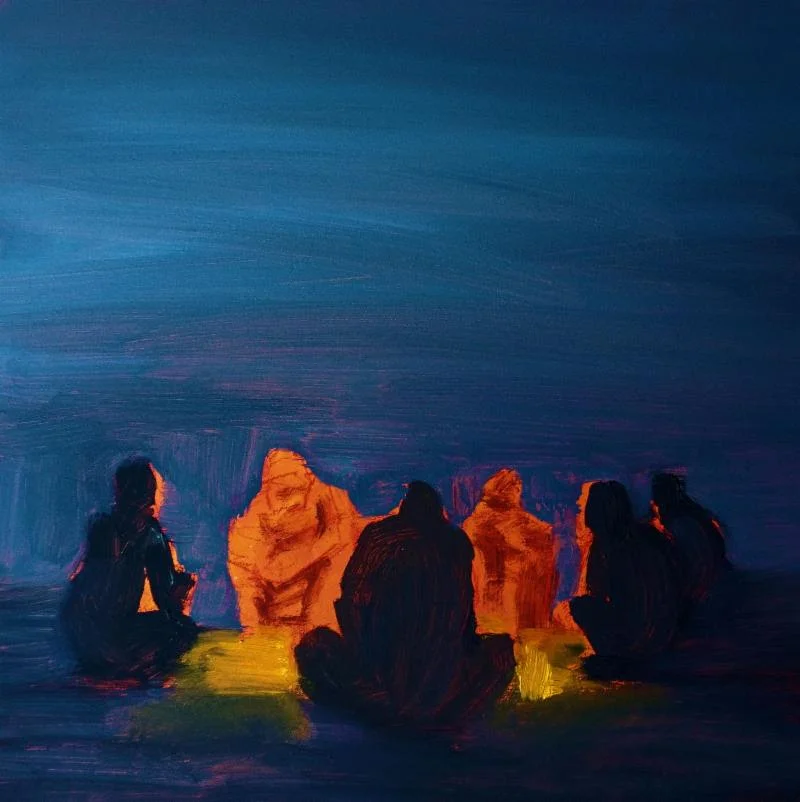
"Tell Us Again'' (oil on panel), by Colin McGuire, in the group show "Close to Home,'' at Galatea Fine Art, Boston.
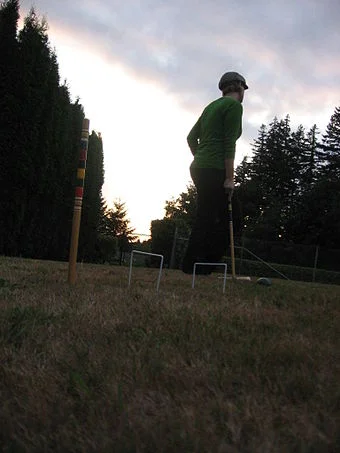
A summer twilight game

"We knock red yellow blue
twilight in and out of wickets
bent spines of invisible animals
we need to enter. The rhododendrons
are out of bounds….''
From "Croquet in Childhood, '' by Helena Minton