
Vox clamantis in deserto




Chris Powell: A tax increase called 'Passport to Parks'; must cute cows come first in Conn,?
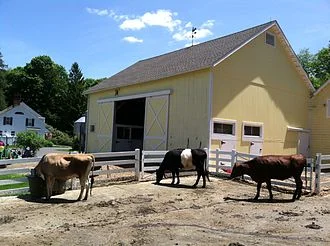
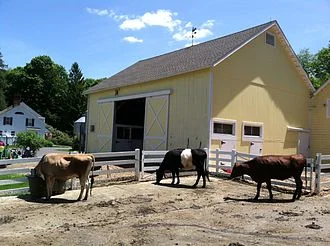
Dairy farm in Redding, Conn., now part of New York City exurbia.
Why all the celebration this week of "Passport to Parks," the new policy of free parking at state parks for vehicles with Connecticut license plates?
For the parking won't really be free at all. It has been extended to Connecticut drivers because last year the General Assembly and Gov. Dannel Malloy enacted a $10 increase in vehicle registration and renewal fees to finance the removal of parking charges for state-registered vehicles.
The state Department of Energy and Environmental Protection had been complaining that reductions to its budget were jeopardizing access to the parks. So the increase in vehicle registration fees has established a fund dedicated to park purposes.
But it's a fraud. For the governor and legislature seize supposedly dedicated funds and move them into the general fund whenever money runs short, and the higher registration fees are forcing all drivers, including hundreds of thousands of people who never use the parks, to pay even more for their upkeep while people who do use the parks are paying less.
Financing the parks with vehicle registration fees is worse than financing them with income, sales, and business taxes. For vehicle registration fees are less progressive than those taxes. That is, unlike those taxes, registration fees have no correlation with ability to pay and so they fall more heavily on the poor.
But legislators and the governor thought that raising vehicle registration fees was better politically than an ordinary tax increase because it would make a tax increase on people who don't use the parks look like an increase in services to [ITALICS] everyone. [END ITALICS]
And why the celebration this week of Governor Malloy's restoration of $1.4 million in state government subsidies to dairy farmers?
Yes, as the governor and Agriculture Commissioner Steven K. Reviczky said at Cushman Farms in Franklin as they announced renewal of the subsidies, Connecticut's dairy farmers work hard for little profit and milk prices can be volatile. But many businesses in the state are having difficulty. What makes dairy farms so critical?
Commissioner Reviczky cited the jobs provided by dairy farms and what he said the farms add to the state's "quality of life." But dairy farm jobs are few, and the contribution of dairy farms to quality of life is, at least for their neighbors, mainly muck and stink.
The manager of Cushman Farms, Jim Smith, argues that "the money doesn't stay at the farm very long. It goes back out into the economy. So this is more like a stimulus." But of course that could be said for any government subsidy. Most of the money would have been spent as well if state government had left it with taxpayers instead of transferring it to the dairy farmers.
The problems with the dairy industry in Connecticut are that its farms are on average too small ever to be competitive nationally, that the state just isn't rural enough anymore to allow for larger farms, and that any farm large enough to be competitive would have too many neighbors who wouldn't stand for it. These days neighbors complain about farms even where the farms long preceded housing.
Further, while state government this week was discovering $1.4 million to prop up a failing business model, it still faces, for example, an estimated $100 billion in unfunded pension liabilities and a waiting list of 2,000 mentally handicapped people living with elderly parents and seeking placement in group homes.
At a distance cows can be cute and scenic, but must they really come first?
Chris Powell is a columnist for the Journal Inquirer, in Manchester, Conn.
Thinking outside the frame

"Evaporation, flow study #7,'' by Patty Stone, at the Brookline (Mass.) Arts Center group show "Unframed,'' June 15-July 20. The show displays unframed art work on paper. The gallery says that "Each piece is purposely displayed directly on the gallery wall, allowing a more thorough exploration of each piece. 'Expanding and releasing the paper from its constraining structure often creates visual, as well as structural problems within the work,' said Elaine Sapochetti, one of the artists in the exhibition. 'Yet, challenging these restrictions also makes the development of the art endlessly exhilarating and the completed work always a surprise. Just as in life, pushing boundaries can frequently lead to new, complicated, exciting, and inspiring revelations."'
Lowell's literary 'Factory Girls'
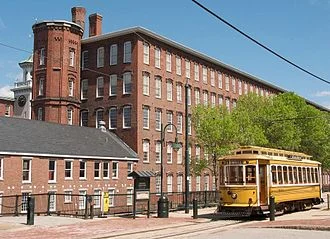
The Boott Cotton Mill Museum and Trolley, in Lowell.
"Overnight the brick town of Lowell {Mass.} rose on the Merrimack River, attracting hundreds of farmers' daughters with relatively high wages. For a generation the Lowell Factory Girls, with their neat dresses, proud deportment and literary weekly, were one of the wonders of America -- the first which Charles Dickens, arriving in New England, requested to see.''
-- From How New England Happened (1976), by Christina Tree.
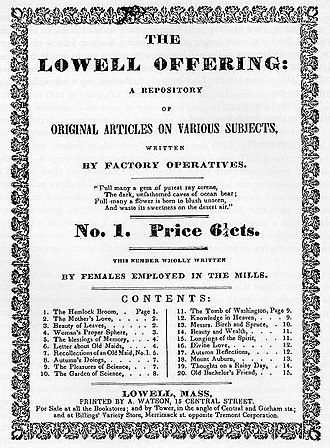
Literary journal by "Lowell Factory Girls''.
Dangerous neighborhood

"Turning Great Horn Owl'' (granite), by Andreas von Huene ,at the Mill Brook Gallery and Sculpture Garden, Concord, N.H.
Memories of my wet wealth

I wandered lonely as a star
That floats on high o'er vales and hills,
When all at once I saw a bar,
A host of golden liquid thrills,
And there inside for me to choose,
All manner of delightful booze.
I asked and so I did receive
A cocktail heavy on the gin,
A perfect lovely bright reprieve
For me to drown my sorrows in,
And then more drinks, so nice and fine,
All leading me to joy divine.
"The world is in a glass!" I said.
"What more could I desire than this?"
Sobriety's like being dead,
And alcohol is surely bliss."
I drank and drank but little thought
What wealth these drinks to me had brought.
For oft when on my couch I lie,
I know well what these drinks have brought.
They flash upon that inward eye,
Complete with all the joy I sought.
I always can revive my mood
Recalling times when I got stewed.
"Who Needs Daffodils,'' by Felicia Nimue Ackerman
A cat would be safer
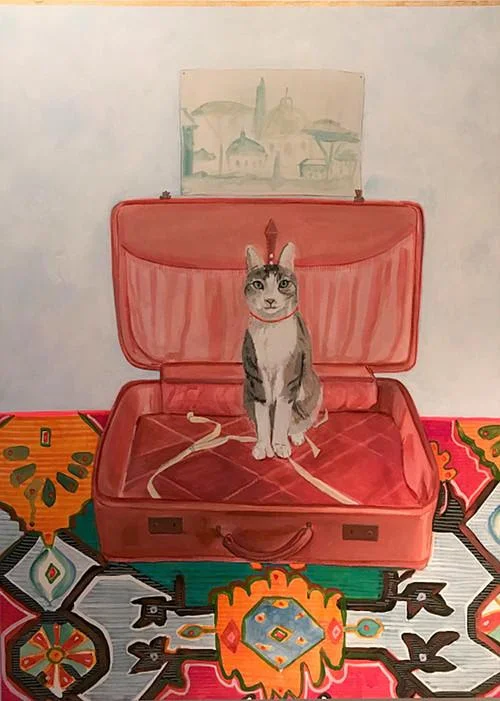
"One Day I'll Have a Cat and a Lover,'' by Candice Smith Corby, at the Fruitlands Museum, Harvard, Mass.
Harvard is an affluent rural town in Worcester County is about 25 miles west-northwest of Boston. It was settled as a farming community in 1658 and incorporated in 1732. It has hosted several eccentric communities, such as Harvard Shaker Village and the utopian Transcendentalist center Fruitlands, after which the museum is named.
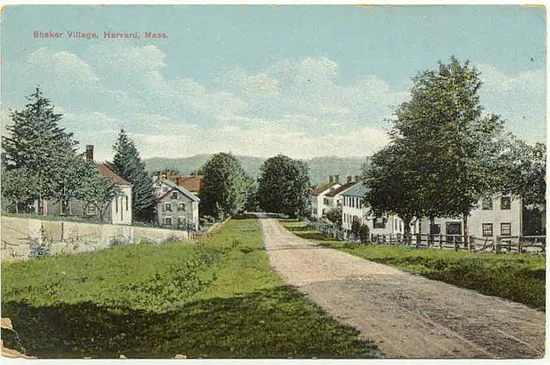
Harvard's Shaker Village in about 1905.
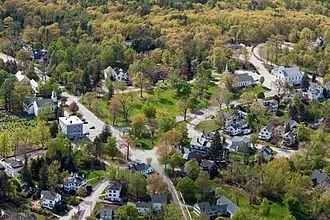
Harvard's common.

Llewellyn King: Upheaval at work
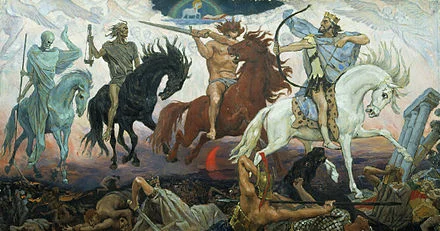
"The Four Horsemen of the Apocalypse'', by Victor Vasnetsov.
Pondering the future requires an extrapolation from a data point in the present. But different data points give very different futures. Beware of the prognosticators.
Take this as a data point: Stephen Entin, senior fellow at the Tax Foundation, a think tank devoted to tax studies since 1937, predicts that with an aging population and low birthrates, we’re going to need more immigrants to fill the federal and state coffers with their taxes. We’re also going to need hundreds of thousands of workers for health care and aged care in the years ahead, he says.
Or take this as a data point: Prof. Tom Kochan, of MIT's Sloan {business} School, fears that artificial intelligence will substitute for millions of employees. Retraining is possible, but can you see a long-haul truck driver pushing wheelchairs in an assisted-living facility? Not easily.
Upheaval in work is the most predictable aspect of the future.
It is, if you will, already arriving in the workplace. New techniques and new concepts of what is work are afoot.
The old concept is that a person leaves school, gets a job and signs on to the social/work contract — gets company-paid benefits and expects security and stability. The infrastructure of society pointed the way to employer-employee model.
The new concept is the gig economy, where contract work and freelancing rule. The work/social infrastructure where medical insurance, Social Security and retirement are part of the deal is dying. But a one has yet to emerge in concept and in law.
Business is in the throes of its own future adjustment. Take 3D printing, more correctly called additive manufacturing. What was novelty a decade ago is now a tool used in industrial plants across the country. Instead of taking a chunk of metal, say aluminum, and cutting and lathing it to make a part, which wasted most of the metal, there’s no waste with 3D printing.
Now to make a part, you print it from metal powder to a design lodged in a computer. The saving in material, shipping and manpower is enormous.
And additive manufacturing, just like everything else on the shop floor, can be automated. Machines can sinter — the term for 3D printing — through the night with only artificial intelligence supervision.
There’s a new existential worry in every large enterprise in the United States, from banking to manufacturing, from electricity generation to hospital management and from building crane operation to pharmaceutical design: cyber-vulnerability.
To paraphrase a line from several famous people about politics: You may not be interested in cyberwar, but cyberwar is interested in you.
I’ve interviewed widely on the subject, from top academics to some of the most successful cyber-security entrepreneurs, to National Security Agency sources. The story is the same everywhere: Nothing connected to computers is entirely safe; and if it’s safe today, will it be tomorrow? That plague, like the plagues of old, will, I’m assured, be with us for decades, if not centuries to come.
Cyber defenders build, cyber hackers build around. It’s a version of what one former secretary of defense, Harold Brown, said about the Soviet threat in the Cold War: “We build, they build.”
The changes are all around the home: Everything has changed since the day of the black AT&T phone, but you haven’t seen anything yet. Your packages may be delivered by drone, your phone service will be entirely mobile, and your life will be dictated by electronic secretarial aids. Alexa is just the beginning. With artificial intelligence, these robots will talk back to us and maybe argue, shudder the thought.
I pity the dogs. We had a dog that would be very upset if she heard my wife, a talk show regular, on the television when she was also elsewhere in the house. Dogs are sensitive to these things.
What if man’s best friend, eternal unquestioning companion, develops a strong affection for the electronic assistant and changes loyalties, especially if the gadget is feeding the dog? Will it be as Julius Caesar might have said, “Et tu, Fido?”
On Twitter: @llewellynking2
Llewellyn King is executive producer and host of White House Chronicle, on PBS.
Old houses and high water

Easton's Point, Newport
From Robert Whitcomb's "Digital Diary,'' in GoLocal24.com
The Point Association of Newport, the civic organization that represents the low-lying, flood-prone Easton’s Point neighborhood, famed for its 18th Century houses, is an exemplary model of local citizens trying to address rising seas by working with the city, the state, Rhode Island’s congressional delegation and others on mitigation of flooding.
Tom Hockaday, who chairs the association, told me that rising seas “have slowly bubbled up to a critical issue,’’ for which, of course, “no one has the total solution.’’
He wishes that “things would go faster’’ to address the threat, but, he says, “we have some time’’ to prepare even as with most difficult things, ‘’people will tend to wait until the last minute.’’
“The big questions are the cost, and who will take leadership.’’ (In the end, the primary leader must be the federal government.) In any case, he says, for now much of the association’s work involves communicating the seriousness of the developing coastal crisis.
Still, he said, house prices have not yet fallen in his pricey neighborhood, despite the more frequent flooding. People love the old houses and being by the sea and will put up with some risk to have them.
'Death looks gigantically down'

"The City" (graphite on paper), by Josefina Auslender, at Corey Daniels Gallery, Wells, Maine.
"LO! Death has reared himself a throne
In a strange city lying alone
Far down within the dim West,
Where the good and the bad and the worst and the best
Have gone to their eternal rest.
There shrines and palaces and towers
(Time-eaten towers that tremble not)
Resemble nothing that is ours.
Around, by lifting winds forgot,
Resignedly beneath the sky
The melancholy waters lie.
No rays from the holy heaven come down
On the long night-time of that town;
But light from out the lurid sea
Streams up the turrets silently,
Gleams up the pinnacles far and free:
Up domes, up spires, up kingly halls,
Up fanes, up Babylon-like walls,
Up shadowy long-forgotten bowers
Of sculptured ivy and stone flowers,
Up many and many a marvellous shrine
Whose wreathëd friezes intertwine
The viol, the violet, and the vine.
Resignedly beneath the sky
The melancholy waters lie.
So blend the turrets and shadows there
That all seem pendulous in air,
While from a proud tower in the town
Death looks gigantically down.
There open fanes and gaping graves
Yawn level with the luminous waves;
But not the riches there that lie
In each idol’s diamond eye,—
Not the gayly-jewelled dead,
Tempt the waters from their bed;
For no ripples curl, alas,
Along that wilderness of glass;
No swellings tell that winds may be
Upon some far-off happier sea;
No heavings hint that winds have been
On seas less hideously serene!
But lo, a stir is in the air!
The wave—there is a movement there!
As if the towers had thrust aside,
In slightly sinking, the dull tide;
As if their tops had feebly given
A void within the filmy Heaven!
The waves have now a redder glow,
The hours are breathing faint and low;
And when, amid no earthly moans,
Down, down that town shall settle hence,
Hell, rising from a thousand thrones,
Shall do it reverence.''
-- "The City in the Sea,'' by Edgar Allen Poe

Wells Beach in 1908.

Wells Beach in 2017.
A proper summer meeting

"Two Rooks and a Bishop" (oil on canvas), by Wendy Brusick, in the group show "Head Space,'' at ArtProv Gallery, Providence, June 8-July 21.
Jim Hightower: Don't be fooled by Trump's drug-price ploy

From OtherWords.org
President Trump is said to see himself as a sort of Teddy Roosevelt. TR, however, was known as a trust buster, while DT has become known as a trust hugger.
We recently saw the hugger in action when he held a PR event to ballyhoo 50 proposals to stop Big Pharma from gouging American consumers with monopolistic drug pricing.
People are rightly outraged that pill-peddling giants exploit patients who have life-threatening diseases and routinely jack up prices on common drugs by some 10 percent a year. As a presidential candidate, Trump jumped on this hot issue, accusing drug makers of “getting away with murder.”
So, now with typical modesty, he’s revealed his plan to stop the rip-offs, calling his 50 proposals the “most sweeping action in history to lower the price of prescription drugs for the American people.”
Yeah, “sweeping” — as in sweeping the problem under the White House rug.
Fifty is just a political number meant to puff-up Trump’s plan as something BIG. But as one congressional Democrat pointed out, all 50 amount to “a sugar-coated nothing pill.” Nowhere on that list of 50 things was Trump’s own campaign promise to use the purchasing power of Medicare to negotiate lower prices for seniors.
Far from feeling punished, Big Pharma itself felt it had gotten a warm presidential hug. Drug company stock prices went up immediately after the presidential speech.
It’s really no surprise that Trump is letting these corporate profiteers continue “getting away with murder.” After all, political posturing aside, he’s stacked his administration with drug industry executives like Alex Azar, a former Eli Lily honcho who is now Trump’s secretary of health.
How revealing that Azar was standing right behind the president at the White House media event, beaming and applauding as Trump announced… well, a lot of nothing.
Jim Hightower, an OtherWords columnist, is a radio commentator, writer, and public speaker. He’s also editor of the populist newsletter, The Hightower Lowdown
Cape fishermen worry about midwater trawling catching everything

A large trawler.
From ecoRI News (ecori.org)
CHATHAM, Mass.
Ted Ligenza, captain of the Reine Marie, has known for more than two decades that big changes are needed, ever since he first saw the impact of big midwater trawls working off the Cape Cod coast.
That day, according to the Cape Cod Commercial Fishermen’s Alliance, he figured he would just wait on his boat until the trawls pulled out, and then he would drop his hooks and lines on the bottom to pick up where he had left off. After all, midwater trawls are supposed to fish in the middle of the water column.
“I was soon to learn that if they are towing, nothing would be left there. They are basically catching everything,” he told the fishermen’s alliance. “We didn't realize how bad it was going to be.”
On June 19, Ligenza and others across Cape Cod are expected to testify to federal fisheries managers about how the local ecosystem has suffered from the prolonged presence of these industrial-scaled boats. They will be advocating for a buffer zone off the coast that protects the trawlers’ target, ocean herring, as well as river herring and other forage fish that are caught and discarded as bycatch.
The New England Fishery Management Council has scheduled the hearing at the Chatham Community Center, only a few miles from several herring runs that have seen populations decline. Industrial trawlers, often seen from Nauset Beach, are a familiar sight off the Cape Cod coast. Those concerned about the trawlers’ presence have noted how these ships break the local food web and remove so many baitfish that other species — cod, haddock, tuna and whales — also disappear.
Fishermen with the Cape Cod Commercial Fishermen’s Alliance first started speaking out against midwater trawling near shore more than a decade ago, and have been joined by a growing coalition in recent years. Public officials from every Cape Cod town, Barnstable County and the region’s Statehouse delegation all support a year-round buffer, as do many environmental, scientific and civic organizations.
Rhode Island fishermen have also been outspoken about out-of-state trawlers, about 150 feet long, fishing close to the Narragansett and Charlestown shoreline.
“Of all the issues facing us as a fishing community, protecting herring and forage fish might be the most important step we could take to rebuild our fishery and revitalize our waters,” said John Pappalardo, CEO of the fishermen's alliance. “A strong call to action would be an important message for federal managers to hear.”
The public hearing is scheduled for June 19, at the Chatham Community Center, 702 Main St., from 6-8 p.m. Public testimony is welcome.
'In the month of roses'

''White roses, tiny and old, flare among thorns
by the barn door.
For a hundred years
under the June elm, under the gaze
of seven generations,
they lived briefly
like this, in the month or roses....''
-- From "Old Roses,'' by Donald Hall, of New Hampshire.
Growing up with witches
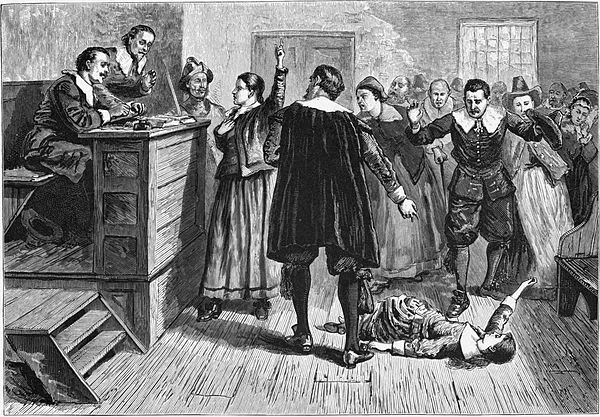
The central figure in this 1876 illustration of the Salem Witch Trials courtroom is usually identified as Mary Walcott.
"Without really analyzing it, I grew up in Massachusetts, so the Salem Witch Trials were always something that I was around. The average kindergartner probably doesn't know about it, except that in Massachusetts, you do, because they'll take you on field trips to see reenactments and stuff.''
-- Rob Zombie, a musician and writer
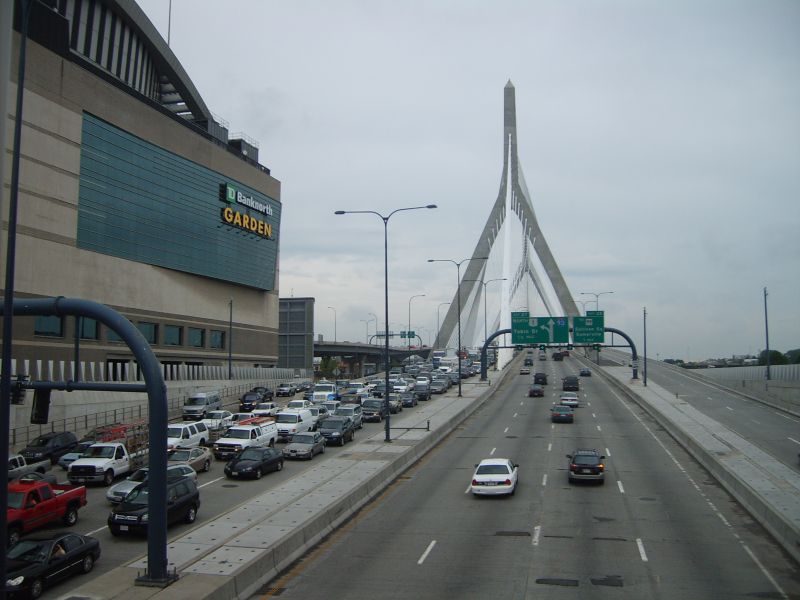
Is it time for congestion pricing on Boston area highways?
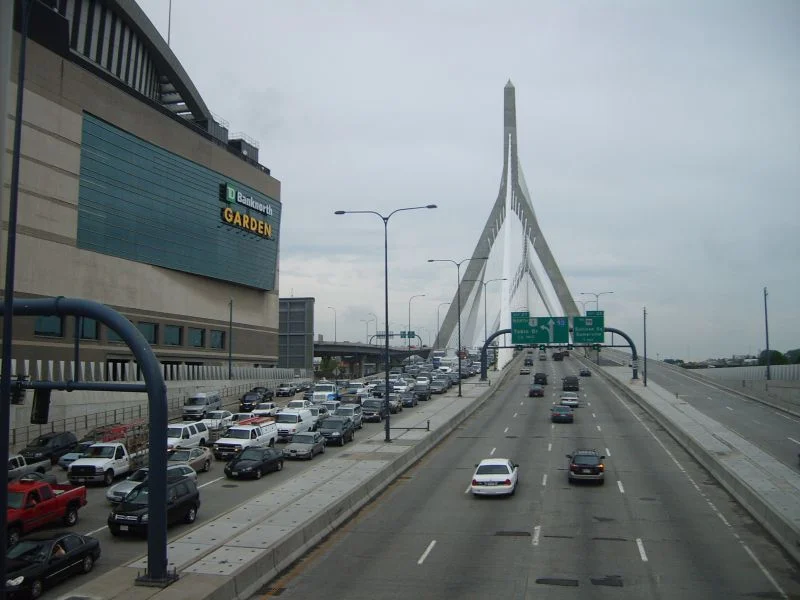
Traffic stopped on intown side coming off the Zakim Bridge and going by the TD Garden, in downtown Boston.
From Robert Whitcomb's "Digital Diary,'' in GoLocal24.com
Boston’s traffic congestion is legendary but who would have guessed that “as measured by the percentage of peak hour time spent in gridlock, Boston is the most congested city in America,’’ according to a report in A Better City? As James Aloisi, a former Massachusetts transportation secretary, noted in Commonwealth Magazine: That means that drivers in Metropolitan Boston spend “14 percent of our drive time not actually driving but stuck in traffic congestion.’’ This has a huge economic and environmental cost. INRIX, a data-collection company, estimates that the congestion costs the average driver $2,000 a year. This includes, Aloisi says, such direct costs as fuel and repairs and such indirect expenses as higher delivery costs. I would add the medical expenses related to stress.
The swelling number of Uber and Lyft cars are making it worse, as will the arrival of autonomous cars.
I agree with Mr. Aloisi that a very rational way to address this mess is to undermine the car-centric culture by adopting congestion pricing on major roads in the Boston area – an approach that some cities around the world are trying. This means tolling (with gantries) drivers at higher rates during rush hours, which would encourage many more people to take public transportation. This would also lead some employers and employees to adjust work schedules so that they commute when the roads are less crowded.
The money raised would go entirely to expand and otherwise improve mass transit, which of course would take many more people off the road. The technology – EZ-Pass, etc., exists. Some of the improvements could be accomplished fairly quickly, such as increasing the frequency of service on existing mass-transit lines and adding more train cars and buses.
Meanwhile, the MBTA has come up with a sort of reverse congestion pricing: It will offer a new $10 weekend pass that will let the agency’s commuter-rail passengers take unlimited weekend trips on the system this summer. The idea is to address commuter-rail underuse on weekends, and get more people who may have never, or very rarely, taken the train into the habit.
Of course, Boston’s congestion is nothing new, as I can attest from my experience as a summer-job commuter (working for a shipping company on the waterfront) from Cohasset in the late ’60s. The Southeast Expressway then was often called simply “The Distressway’’. (My father had a heart attack in 1975 commuting to Boston from the South Shore on that dreadful road; he was able to drive to a hospital but died soon thereafter. I decided early on I wouldn’t become a commuter from the suburbs and have always lived in cities since 1970.)
Of course, metro Boston’s current congestion is to some extent the result of its prosperity. But eventually, its growing reputation for hellish highways will cause many mid-level workers to leave the area. Still, imagine how terrible it would be without the MBTA and how better it could be if the MBTA were expanded.

William Morgan: Block the schlock in Route 195 relocation area
(Photos are by William Morgan.)
The relocation of Interstate 195 away from Fox Point was one of the reasons my wife and I chose to move to Providence. The old highway was still a scar marring the base of College Hill when we came here city shopping 20 years ago. That the city had decided to remove that relic of misguided transportation planning convinced us that Providence was an unusually smart and creative town–one with a clear-eyed sense of itself and proud of its rich heritage.
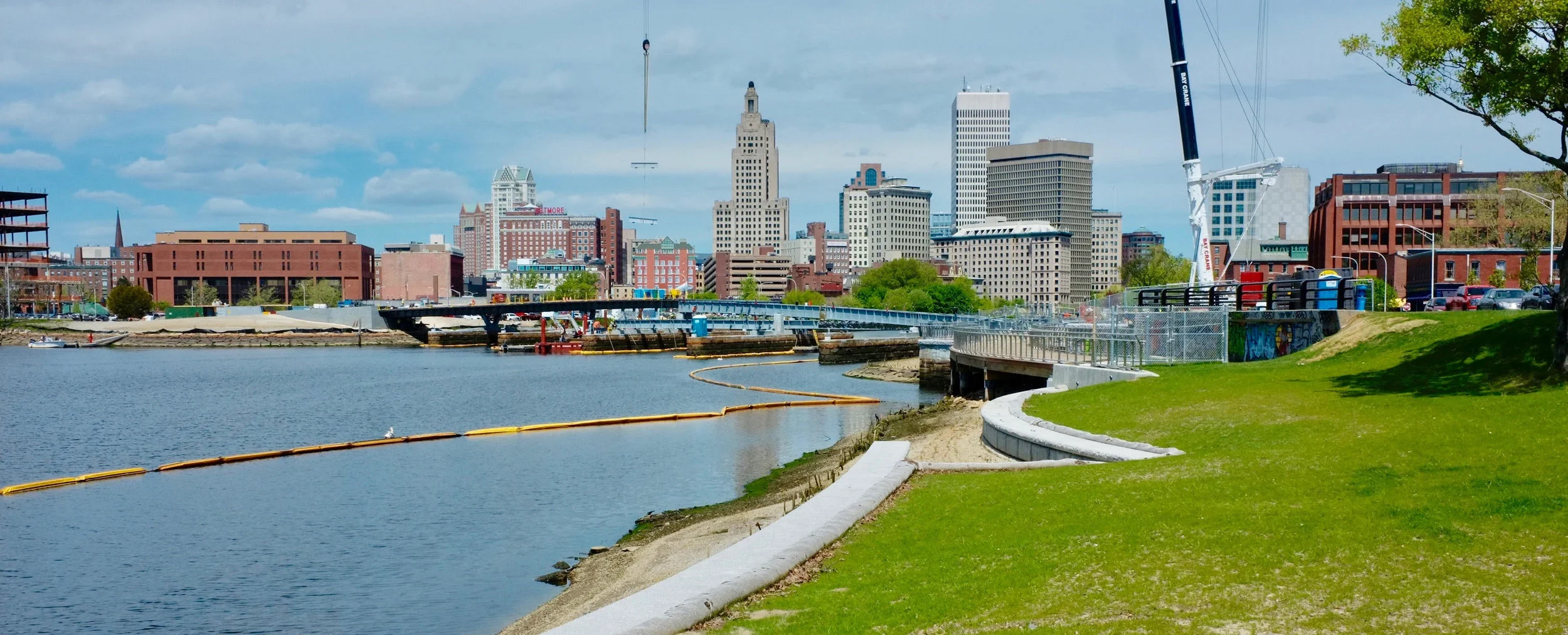
The Providence River where Interstate 195 used to cross.
Now, in a frenzy of construction, the reclaimed land is being developed and a pedestrian bridge will soon link both shores of the river. In early May the I-195 Commission held a public meeting to review three applications to develop the open space between Main, Canal and Wickenden Streets.
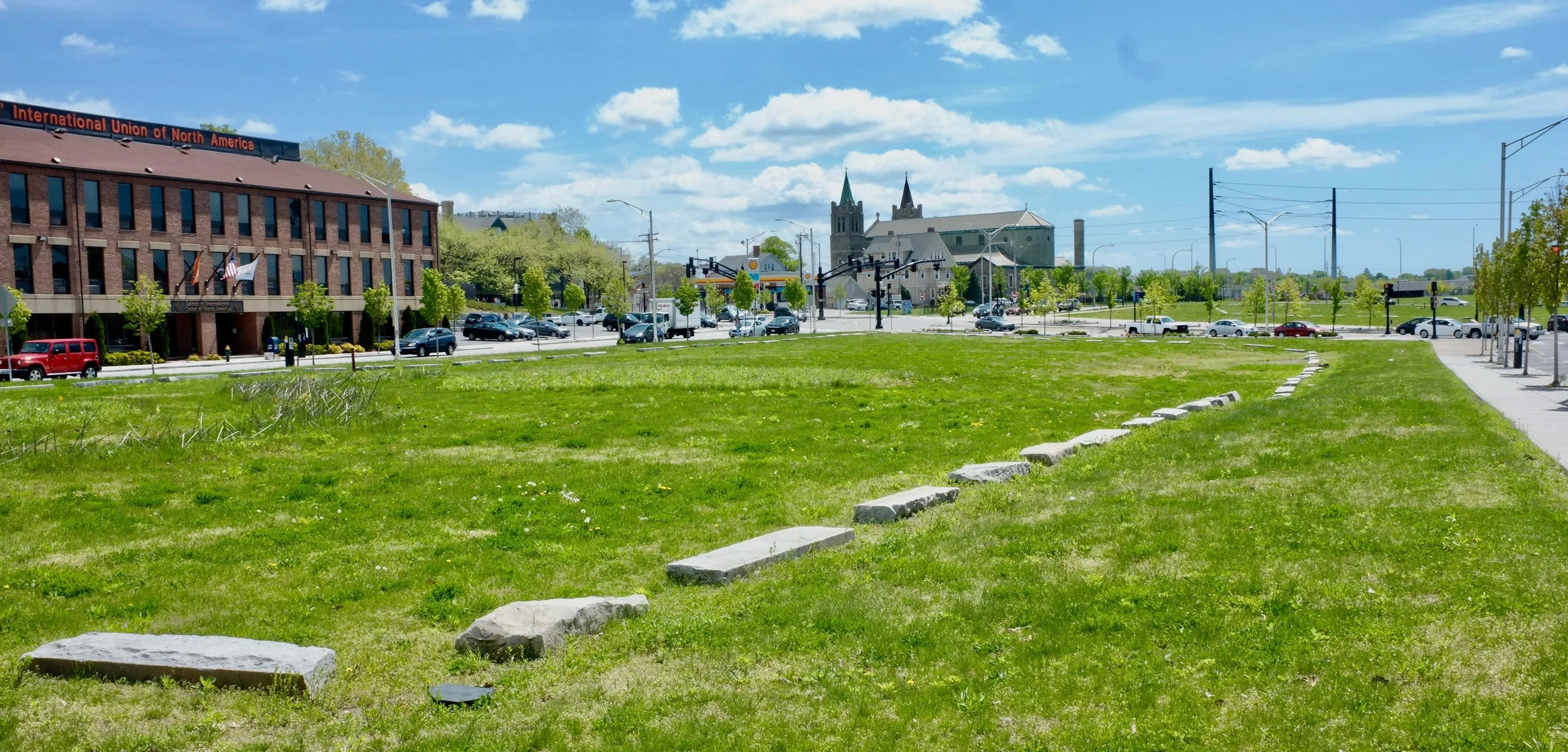
While the proposals varied in how many parcels they would cover, any construction here would have a tremendous impact. Given the most important undeveloped site on the East Side, one might expect that the city had solicited some of the world's most imaginative and respected designers. Alas, no. Two of the schemes are no better than the typical schlock found in any suburban office park.
The 160 luxury apartments of Post Road Residential were touted as having “distinctive amenities.” The Connecticut-based developers identified themselves as “the blue chip apartment developer in the northeast.” Despite such hyperbole, few of their completed apartments that Post Road illustrated made the heart race. Images of neighborhood details seemed disingenuous.
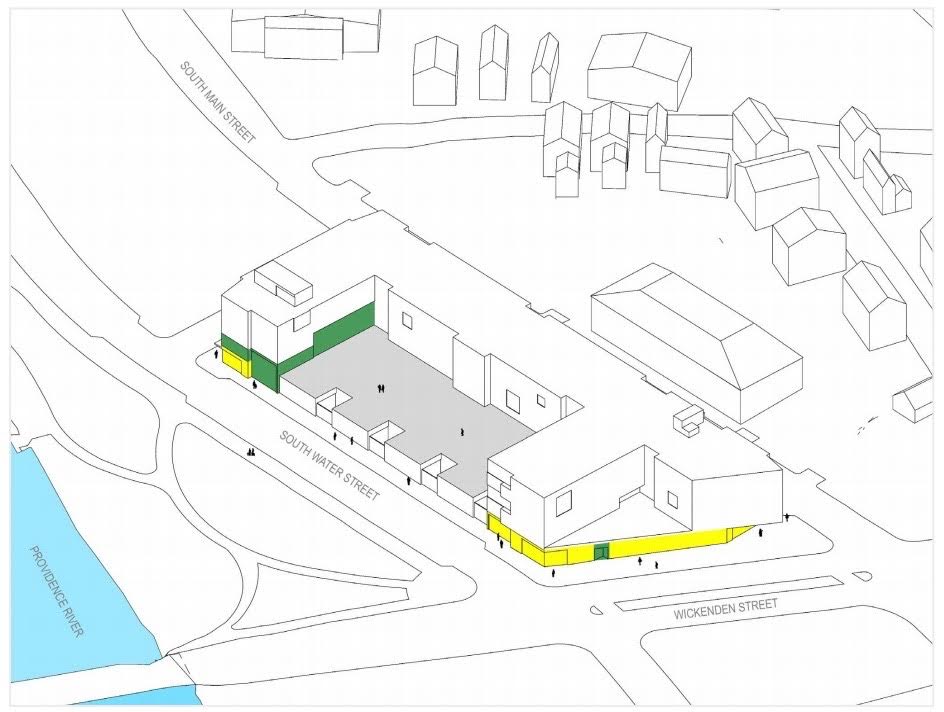
Schematic of Post Road Residential.
Bargmann Hendrie + Archpetype, Post Road’s architects, claim that their work is marked by “cost-effective design,” but this project has nothing to offer other than giving the developers a foothold in Rhode Island. Even the most build-anything-as-long-as-you-build-it diehards at the commission hearing could sense this was an also-ran entry.
The Carpionato Group went for an over-the-top sales pitch for The Row at College Hill, a scheme laced with clichés and too little in the way of good design. Carpionato president Kelly Coates declared that this would be a “lifestyle development – a catalyst for city and state” and would attract “the best of the best tenants.” But it was difficult to see beyond the box-store quality of this multi-parcel behemoth – a stepsibling of their Chapel View shopping center, in Cranston.

The Row at College Hill.
Lou Allevato, of Caprionato’s architecture firm HFA, declared, “We need to inspire with great architecture.” Yet there was none on offer. In a bit of hopefulness, HFA’s moniker is Creative Solutions Meaningful Places, a firm “focused on designing for the customer experience.” Headquartered in Bentonville, Ark., HFA designs for Walmart (which is based in Bentonville), Slim Chickens, 7-Eleven and Alex + Ani. In Providence this team has given us the Home Depot and University Market Place.
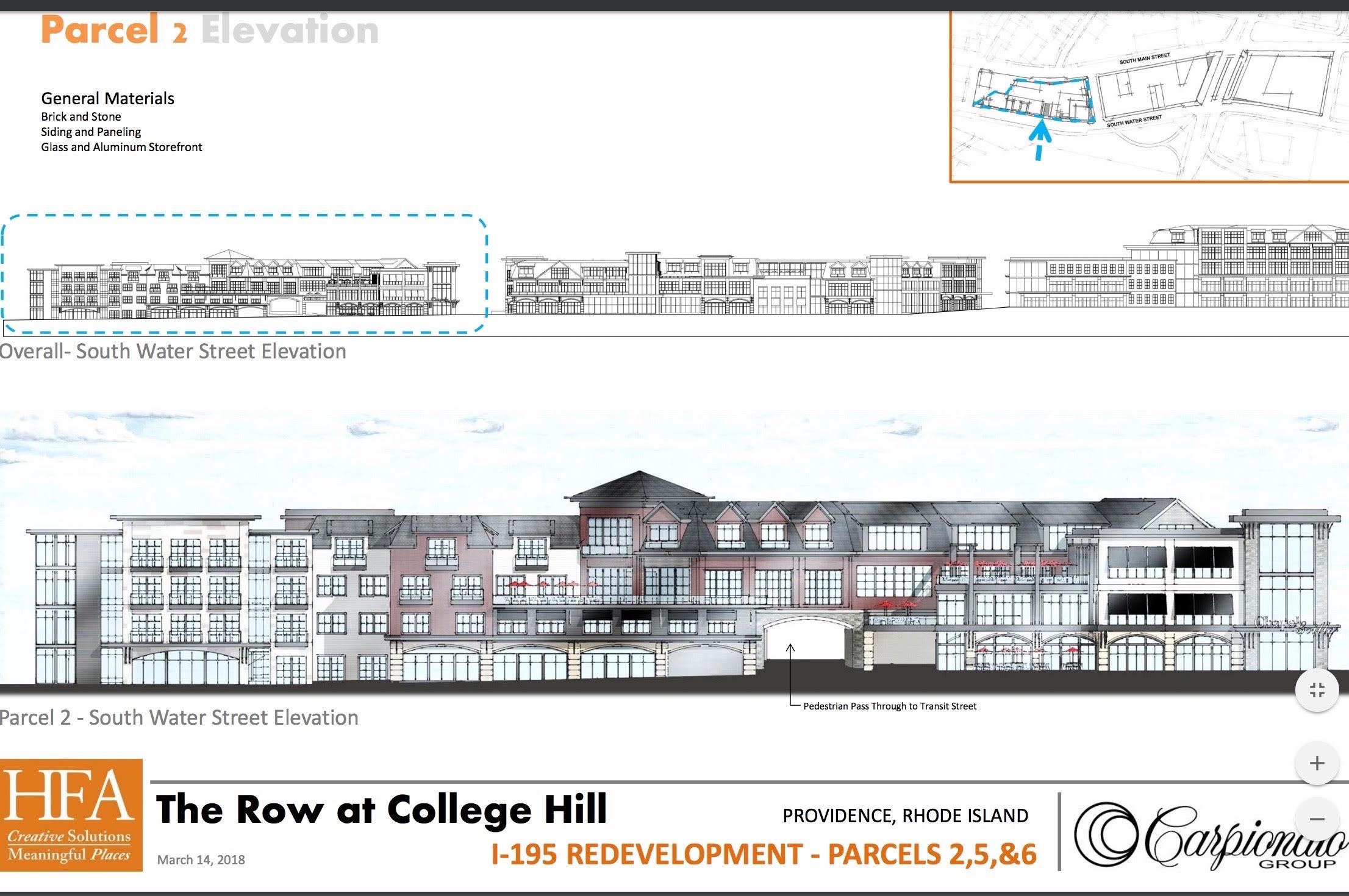
To be fair, the current Row at College Hill is a remake of the one originally proposed in 2013. That scheme was more thoughtful and urbanistically responsible. Instead of large blocks of building, the housing was broken up into several smaller units, the skyline was varied, and there was a communal courtyard in the center of the largest parcel. Although the new configuration of the Row apparently satisfies some neighborhood concerns, it would contribute far less to the cityscape.

The Row at College Hill, 2013 proposal.
Is this the level we aspire to for this near sacred plot of land? This place is part of our urban patrimony. It is where the Providence River joins Narragansett Bay. It has views of several bridges, as well as the iconic triple stacks of the power plant, and it is a strategic entrance to College Hill and Fox Point.
Rather than the tired mantra of “Jobs, Jobs, Jobs” and boasts of square footage inflicted on other cities, the Spencer Providence presentation was three dimensional, considering appearance as well as economics. The architect, James Piatt of Piatt Associates, made the balanced and provocative presentation.

Spencer Providence.
Based in Boston, the firm has a solid record as a builder of housing, schools, hotels and restaurants. Prior to establishing his own firm, the MIT-trained Piatt worked for the legendary urban developer James Rouse and with architect Benjamin Thompson on Faneuil Hall Market. The architect walked the audience through what the mixed-used village might actually feel like. His selection of historical images strongly suggests that Piatt understands Providence’s history, scale and unique vibe.
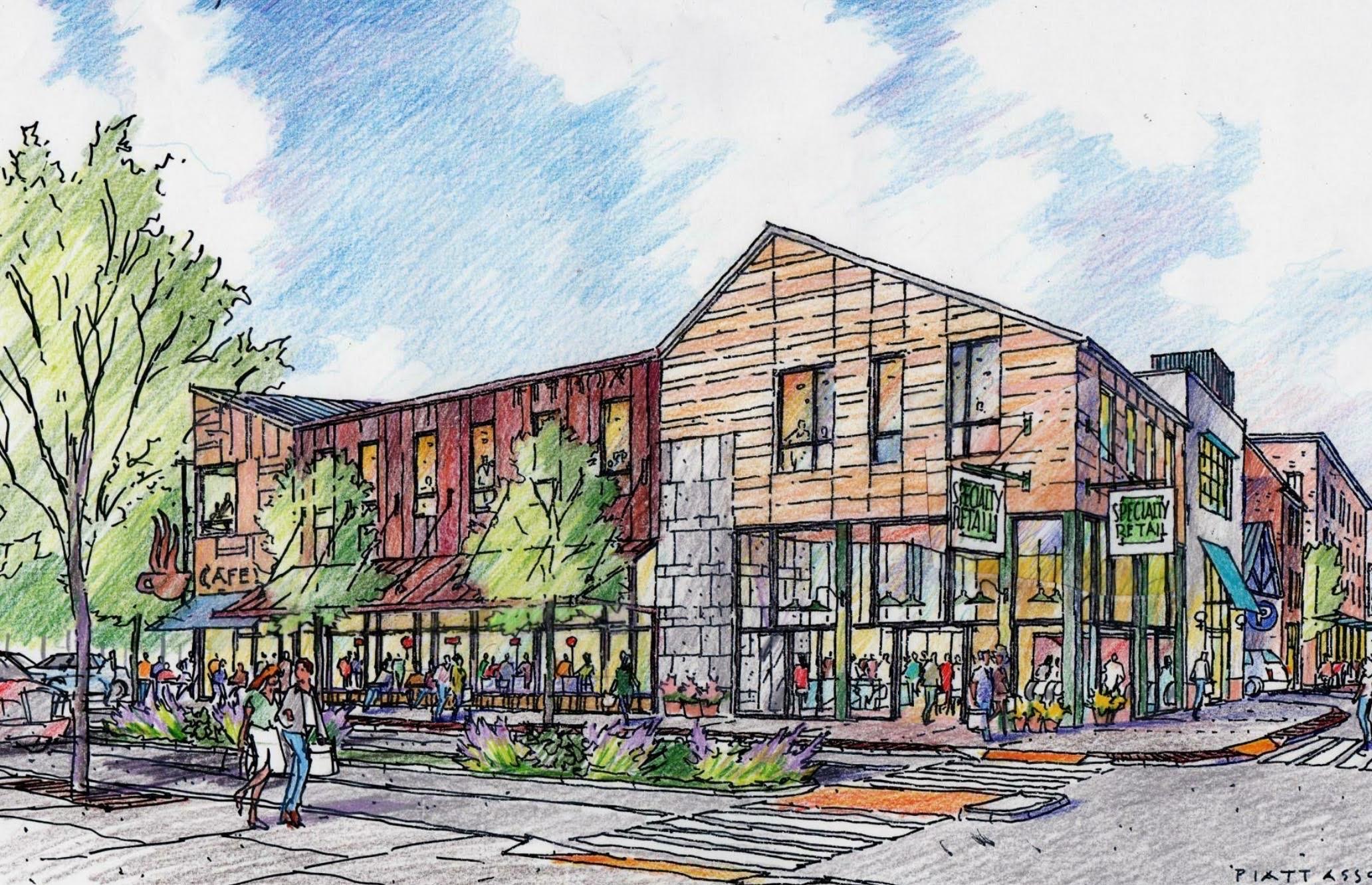
Spencer Providence.
As opposed to the monolithic blocks of suburban junk offered by Carpionato and Post Road, Piatt’s town houses, hotel and retail establishments are knitted in a multi-faceted tapestry of palettes, materials, and massing, offering the “kind of variety this neighborhood deserves.”
How unfortunate that the I-195 Commission does not have three equally good proposals to chose from. Whatever we build on this prime location will be with us, for better or worse, for a long time to come. Good design is a better investment, and there should be just as many jobs to build a notable piece of architecture as a turkey.
We need to ask when will Providence accept that truly inspiring and lasting development is more than mere real estate, union jobs and lowest-common-denominator building wrappers.
Willam Morgan is a Providence-based architectural historian and author.
Chris Powell: A city cop, now retiring, who didn't get cynical
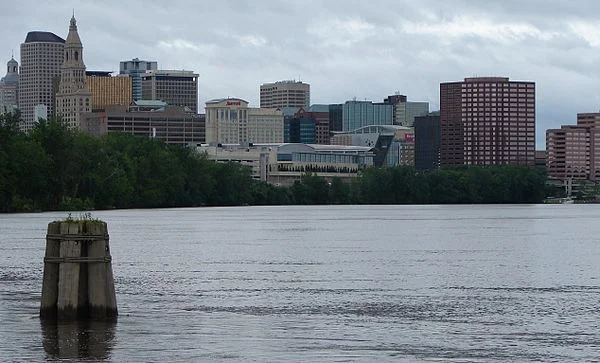
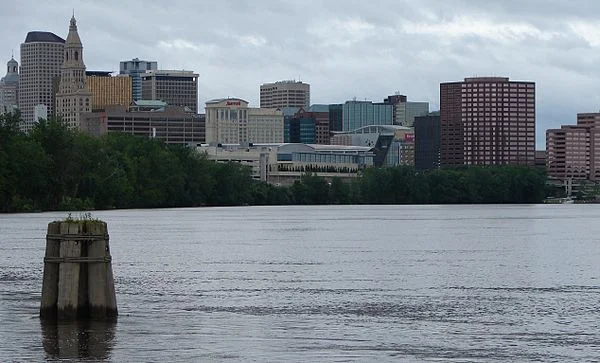
Hartford, from across the Connecticut River.
Hartford's deputy police chief, Brian Foley, the department's spokesman for the last five years, will retire this month, so the other day he went on Ray Dunaway's morning show on WTIC-AM1080 for a half hour to reflect on his 23 years with the department.
Foley recounted riding a bicycle on a neighborhood patrol beat, working in the homicide division, and then explaining the department to the public. He described his love for the city, his family's involvement in police work elsewhere, and his intention to stay connected with Hartford.
Less than an hour after Foley walked out of the studio, a fellow Hartford officer, Jill Kidik, was repeatedly stabbed in the neck and nearly murdered by a deranged woman at an apartment building downtown, a crime that horrified the whole state. (Miraculously Kidik is expected to recover fully.) That night a man was shot to death a few blocks away on Hartford's north side.
It was just another day in Connecticut's capital city, and because so much of the news coming out of Hartford is crime, Foley may have become the city's most recognized figure throughout the state. But the good news from Hartford has been the increasing accountability of the city's police.
This has been far more than the department's timely provision of incident information, the work that has made Foley famous. It also has been the department's striving to connect with the disadvantaged community it protects, a community full of people who are or have been on the wrong side of the law, a community suspicious of law enforcement and not terribly impressed with the law itself.
Such a community easily can engender rage in those assigned to police it. (Indeed, it is a bit of a wonder that the deranged woman who nearly murdered the Hartford officer the other day wasn't herself beaten to a pulp during the officer's rescue.) Sometimes that rage has burst out among Hartford officers on duty, but it is also a bit of a wonder that in recent years the Hartford department has been quick to identify misconduct and publicly discipline and dismiss officers.
Hartford Mayor Luke Bronin noted this in his comments on Foley's retirement. Foley, the mayor said, "has helped our department set a national standard for transparency, accountability, and engagement, and he has been deeply committed to the mission of building trust between our police department and the community."
Apart from being candid and accessible, Foley may have been even more remarkable as a police spokesman for his compassion for some of the young perpetrators whose arrests he answered for. He would acknowledge the handicaps imposed on them by their neglectful upbringing, handicaps worsened by their getting stuck in the criminal-justice system. He rooted for their rehabilitation, not their imprisonment.
Foley, a Tolland resident, didn't get cynical, but cops have to be forgiven for that. In an old episode of Law & Order the detective played by Jerry Orbach enters a squalid apartment with several other officers. No one else is inside except an abandoned and crying baby. Orbach asks, "How about if I just take him to Rikers (the New York City jail} now?"
Of course, the scene could have been shot in Hartford.
Chris Powell is a columnist for the Journal Inquirer, in Manchester, Conn.
'A myriad of shadings'

Robert Frost's writing cabin in Ripton, Vt.
"Except for the splashy displays of autumn, there is little that is exhibitionist or uncompromising about the Vermont landscape. It encourages moderation and common sense. The mountains are small and of human proportion. In summer -- Frost's time of year in Ripton -- the scenery, at first glance, is all green. But look closely at the lime-tinted undersides of the beech leaves, the pale yellow of the meadowsweet and the hobblebush, the black shades of the fir needles and the faintest intimation of white dotting the 'white pines.' Within this broad spectrum of green is actually a myriad of shadings and subtleties. Inspect and observe, then remain watchful, says the landscape.''
-- From a Sept. 1, 1991, New York Times article headlined "Robert Frost's Vermont''.
Naval War College a potent force in New England

Part of the U.S. Naval War College campus.

A "Newport Report'' article by Robert Whitcomb, from GoLocal24.com
Newport Mayor Harry Winthrop told me the other week:
“The City of Newport, the Navy and especially the Naval War College {founded in 1884} are
inextricably linked through our long history of association and
cooperation. We are partners in every sense of the word and the
economic impact of having such a prestigious institution in our
community is in the tens of millions of dollars annually.’’
The college’s founding president, Admiral Stephen Luce, described it:
“The War College is a place of original research on all questions related to war and to statesmanship connected with war, or the prevention of war.’’ This has come to mean that the institution addresses a very wide range of subjects beyond the purely military, such as geopolitics, diplomacy, economics, climate and the implications of accelerating technological change.
John Riendeau, who oversees the defense-industry sector for the Rhode Island Commerce Corporation, noted: “The War College gets the best and the brightest’’ of the military. He said the state doesn’t pull out the specific economic impact of the NWC from the total Navy impact on the state even as he cited its big “intangible’’ benefits to civic life in the region.
Rear Admiral Harley
I spoke with Rear Admiral Jeffrey Harley, the War College’s president, the other week in his office overlooking Narragansett Bay. He emphasized that it’s a graduate-level university, granting master’s degrees and a range of certificates. “We’re on par with Ivy League schools’’ in the quality of teaching and scholarship, he said.
For that matter, the NWC has relationships with such elite institutions as Brown, Harvard, Yale, MIT, the Fletcher School of Law and Diplomacy at Tufts, Princeton and King’s College, in London. This includes War College professors teaching as adjuncts in some of these schools. The War College is exploring possible joint Ph.D. programs with some of these schools, too. For its foreign students, the NWC has a partnership with Newport’s Salve Regina University in which such students get master’s degrees in a number of disciplines.
An example of local joint academic ventures is the NWC’s joint conference with and at Brown May 31-June 1 titled ‘‘2018 Women Peace and Security: Promoting Global Leadership’’.
The institution is moving toward adopting such traditional university/college practices as tenure for professors. And it wants Congress to allow copyright protection for professors’ work, which would be a selling point to recruit and keep more of the best scholars. Civilian institutions usually provide such protection. It’s all part of the drive, now led by Admiral Harley, to, in his words, “normalize’’ the institution to make it even more of a prestigious research university.
This complex institution is much more heterogeneous than most of the public realizes. Consider that a breakdown of the college’s current Senior Course, with 224 students (there are a total of 545 resident students this academic year) showed:
25 percent of the student body came from the Navy; 18 percent from the Army; 12 percent from the Air Force, and 2 percent from the Coast Guard. 21 percent were foreign students and 13 percent were civilians (usually mid- or high-level federal government employees). Many of the foreign students, as with the Americans, go on to become very high-level leaders in military and civilian life in their home nations. The faculty is a mix of military and civilian teachers.
Admiral Harley repeatedly cited the War College’s “giving back to the community.’’ This has included NWC personnel speaking at local schools and other venues, such as the Eight Bells Lecture Series at the Seamen’s Church Institute, in Newport; at such organizations as the Providence Committee on Foreign Relations, and campus tours for local high-school students. He emphasized: “We’re very integrated with the community.’’ (I asked him why there were fewer events on campus that local civilians could attend than I remember from years ago. He cited increased security concerns as “the new reality’’ in the post 9/11 world.)
More outreach: On May 8, the War College ran a program for 26 students of the Rogers High School (in Newport) Academy of Information Technology. The event featured a technology-oriented introduction to wargaming, including hands-on experience with two NWC games. Then there’s the 2018 Summer STEM Camp at the college for high school students. The July 15-20 in-residence program, called Starship Poseidon, is to “provide insight into career opportunities in science, technology, engineering and math.’’
Admiral Harley cited the NWC’s sending its foreign students to speak at local schools, noting that some students at the latter might otherwise have little opportunity to hear perspectives on international affairs. And many of the foreign students bring their families to live with them during their time at the War College; they, too, engage closely with the community. War College personnel and students meet with many community leaders.
Commander Gary Ross, a public-information specialist at the NWC, said there were about 4,000 War College alumni in southeastern New England. They bring great expertise in long-established and relatively new (such as cybersecurity) technological and managerial disciplines applicable to large and small, established and start-up business. Their presence provides rich opportunities to enhance civic life and economic development in southeastern New England.