
Vox clamantis in deserto





Sam Pizzigati: Greedy investors, not taxes, destroyed Toys "R" Us

A now closed Toys "R'' Us store in Waterbury, Conn.
From OtherWords.org
By the time that you read this, your favorite hangout as a kid may have gone kaput. Toys “R” Us, the iconic global retailer, recently announced its impending demise after over a six-decade run.
That sad news no doubt has many of us waxing nostalgic. All those aisles piled so high with games and action figures! For kids, a veritable miracle.
But this miracle, according to the economic orthodoxy that dominates our times, should never have happened.
Conservative pundits and politicians have been insisting for a generation now that entrepreneurs only start exciting new businesses when governments “back off.” So governments have backed off. At every level, they’ve deep-sixed regulations and cut taxes on rich people.
High taxes on high incomes, the reasoning goes, discourage entrepreneurship. No one with a great idea for a new business is going to start that business, conservatives argue, if Uncle Sam is just going to tax away the rewards.
The same goes for investors, they say. They’re not going to invest in “job-creating” enterprises if high taxes threaten to eat away at their potential earnings.
This conservative take on taxes totally muddies how our economy actually works. Case in point: the story of Charles Lazarus, the founder of Toys “R” Us.
Lazarus, a World War II veteran, noticed soon after the war that all his veteran friends were settling down and raising families. Products for kids, Lazarus figured, had a great future, and in 1948 the budding 25-year-old entrepreneur opened a storefront outlet for children’s furniture.
Lazarus soon added toys to his store’s selection and quickly saw their awesome sales potential. Parents, he realized, only buy a crib once. But they replace toys year after year. By 1957, Lazarus had opened his first toys-only store. By the mid-1960s, his one store had become a chain. Lazarus became a classic entrepreneurial success story.
All this success happened in an economic environment that bears little resemblance to ours. In America’s postwar years, high incomes faced high tax rates. Income over $200,000 for a single earner faced a 91 percent tax rate throughout the 1950s. In 1980, the year Ronald Reagan won the White House, America’s most affluent still faced a 70 percent top tax rate.
These high tax rates didn’t seem to undermine the entrepreneurial spirit of Charles Lazarus. He built his toy business right amid them. And Lazarus didn’t build that business out of the goodness of his heart, either. He saw himself as a businessman out to make a buck.
“If you’re going to be a success in life, you have to want it,” he would later tell Forbes. “I wanted it. I was poor. I wanted to be rich.”
But “rich” will always be relative. Yes, Lazarus did face high tax rates. But so did everyone else in his lofty income tax bracket. He remained, after taxes, rich by the standard of his day. He felt rewarded enough to exercise his entrepreneurial talents.
In the 1980s, America’s economic dynamics — and incentives — changed. By 1986, the tax rate on top-bracket income had sunk to 28 percent. America’s wealthiest now had opportunities to become wealthier than they had ever imagined. They rushed to seize those opportunities by any means necessary.
Those means eventually did Toys “R” us in. In 2005, private equity speculators bought the company and loaded it up with debt. Along the way, they extracted $470 million in fees. Last September, Toys “R” Us filed for bankruptcy. Now the company is closing its stores.
And Charles Lazarus? The 94-year-old died March 22, a week after the Toys “R” Us shutdown announcement.
Sam Pizzigati co-edits Inequality.org for the Institute for Policy Studies. His latest book, The Case for a Maximum Wage, will appear this spring.
Bravely on the river
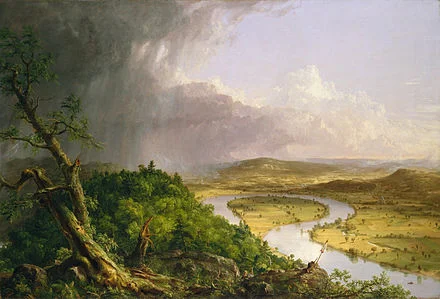
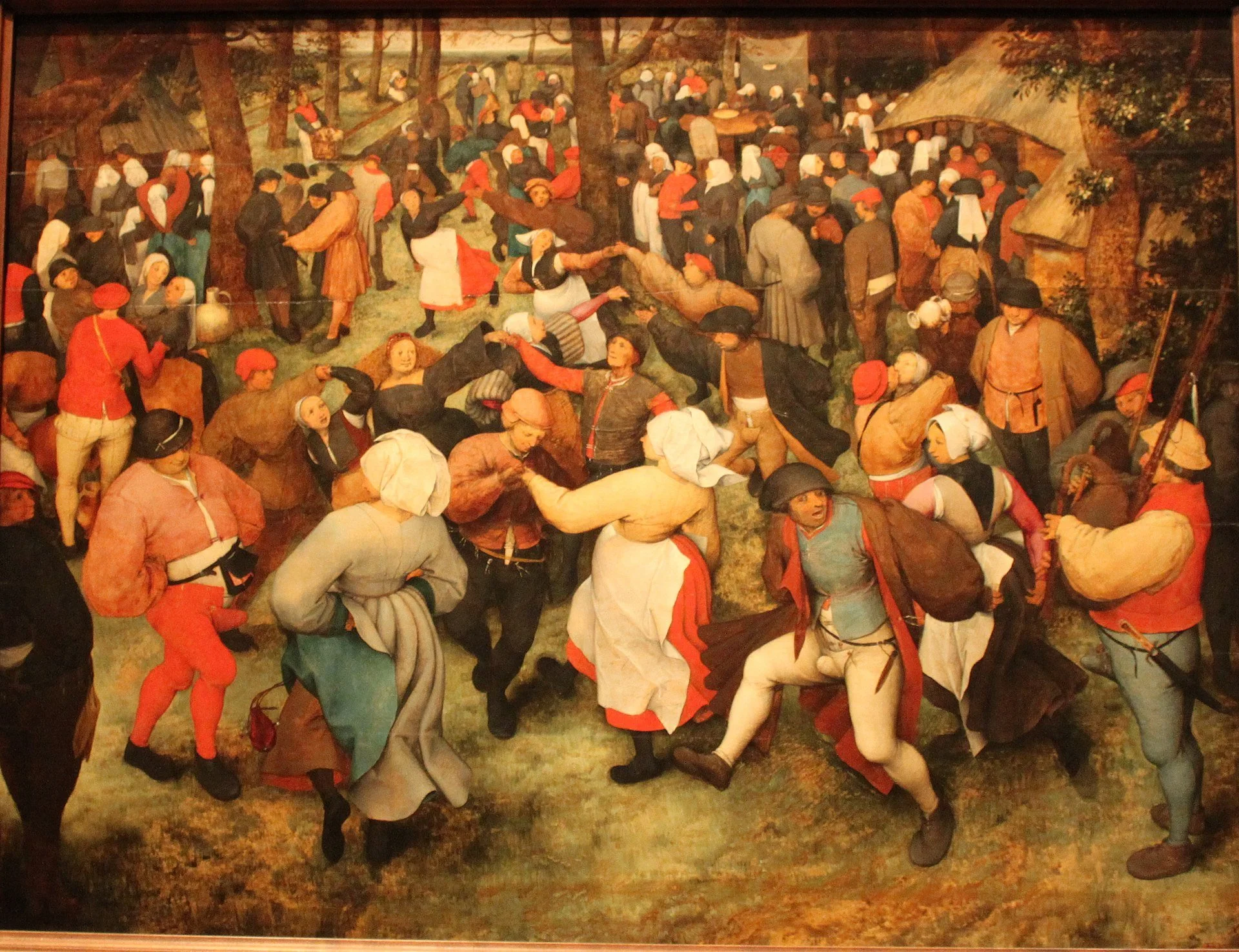
"The Oxbow'' of the Connecticut River, by Thomas Cole (1836).
"It is a wonder that Norwood {based on Northampton, Mass.} was ever allowed to venture so near to the low grounds of the Connecticut {River}; for it was early settled, not far from thirty years after the Pilgrims' landing. How the temptation to build up the top of the highest hill was resisted, we know not.''
-- Henry Ward Beecher in his novel Norwood: Or, Village Life in New England (1868).
Domestic debris

"Homes Without Names: Kitchen Table" (acrylic on molded Tyvek, found fabric and mixed media), by Susan Emmerson, in her show "Now That We Have Only This,'' at Kingston Gallery, Boston May 2-27.
David Haworth: Awaiting the booms on the Ulster-Republic of Ireland border

Anti "hard-border'' demonstration along the Ulster-Republic of Ireland border.
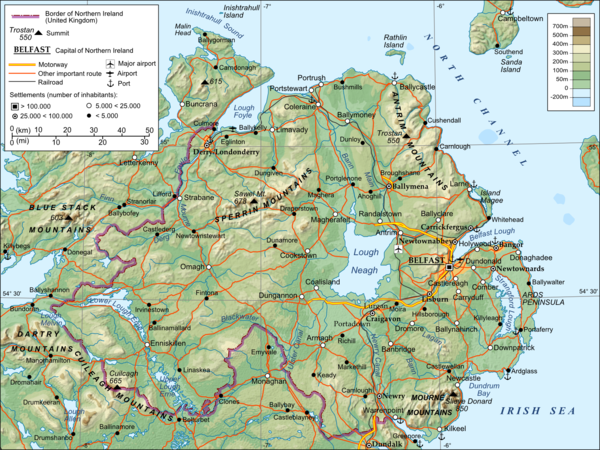
The convoluted border.
BRUSSELS
There’s a joke about a tourist in Ireland asking a local for directions, getting the response: “Well, if that’s your destination I wouldn’t start from here.”
It’s politically true of the island of Ireland just now as Britain extricates itself from the 28-member European Union after 45 years – the border between Northern Ireland (British) and the Republic (Irish) has become a make or break negotiation issue.
The E.U. has melted European borders so that one travels seamlessly across nations and cultures these days. There are no peaked caps to delay the surface traveler with inquiries, even searches.
On a ragged frontier there are lumps of Belgian land found in next-door Netherlands – and vice versa – which are curiosities, not causes for a fight.
Nowhere is free and easy transit more celebrated than in Ireland. The 310-mile border between the six counties of Ulster and the rest of the Irish landmass sees an estimated flow of up to 30,000 commuters every day.
The Center for Cross Border Studies (Yes!) reckons there are 30 million vehicle crossings annually -- and that’s counted traffic. But, imagine if you will, the rolling, verdant landscape whose hedgerows conceal hundreds of “unapproved roads” and pathways where the green line often slices farms and parishes.
“Frontierland” is not a sinister vacuum between two nations but the name of an amusement arcade on one of the main roads.
“We live in the shadow and the shelter of one another,” says the Irish Republic’s president, Michael D. Higgins.
For 95 years the border has been freely open for people.
And for goods since 1993.
Folklore about the misty days of smuggling is still relished on the Emerald Isle. As a child post World War II I traveled on the “Flying Enterprise” express between Belfast and Dublin; going north on this mere 87-mile route, Mom stuffed my rucksack with illegal silk stockings, Sweet Afton cigarettes and candy (my reward).
Customs officers never thought to examine a kid’s luggage – unlike international trains on the European continent. Back then, frontiers meant opening suitcases, showing tickets, passports, buying sandwiches, waiting for the locomotive change and the train car wheels to be tapped – all denying that the night train was a “Sleeper.”
With the prospect of the United Kingdom leaving the E.U., there are many Irish fears of what it will do to their current, diaphanous border.
Northern Ireland will be broken off like a biscuit from the rest of the island and two different customs regimes are likely.
“We have seen no evidence to suggest that, right now, an invisible border is possible,” barked the House of Commons committee on Northern Ireland Affairs, adding they had failed to find an electronic, rather than an infrastructural customs system, “anywhere in the world”.
But the political cost of red and white booms across roads, plus inevitable sheds and carparks for lorry inspection and customs officers, would be toxic: that’s for sure on the 20th anniversary of the Good Friday Agreement, which brought peace to bloodied Northern Ireland.
The Center for Border Studies warns commuters and traders “will inevitably experience significant change in the environment for cooperation and mobility due to customs controls, and the potential for an increase in both smuggling and other forms of organized crime.”
A European Commission official involved in the “Brexit” negotiations comments: “Frozen pizza without cheese will cross the border more easily; otherwise there will be rigorous checks. Every consignment that is animal-based will need to be examined.”
Bristling with negotiation “red lines”, British Prime Minister Theresa May is the Queen of Wishful Thinking; few others are upbeat about what will happen to the Northern Island border after Britain quits the E.U.
Will a fractious frontier return?
A “backstop” arrangement for Ireland and Northern Ireland to maintain the status quo even after Britain’s E.U. departure has been agreed if no other solution is found.
But an aide to former Prime Minister Tony Blair doesn’t think much of that. “Huge concrete slabs and checkpoints on the main roads could force Northern Island back into identity politics,” Ireland expert Jonathan Powell hints ominously. “The border issue could bring the entire Brexit negotiation crashing down.”
Brussels-based David Haworth writes for Inside Sources, where this piece first appeared. A seasoned reporter on European subjects, he has worked for the International Herald Tribune, the Irish Independent, the Irish Daily Mail & The Observer.
Enthusiastic about Vegas

"Las Vegas" (acrylic on paper), by Jessica Park, in her show "Enthusiasms: Personal Paintings by Jessica Park,'' at Bennington (Vt.) Museum, through May 26.
Park is an internationallly known artist on the autism spectrum.
Chris Powell: Trump's illegal attack on Syria; city supervision
Among Connecticut's members of Congress, only U.S. Sen. Chris Murphy seems to have a firm position on President Trump's attacking Syria without a declaration of war or other authorization from Congress. Murphy says the attack was not only unconstitutional but also unlikely to help end Syria’s civil war.
The other members of the delegation are straddling the issue, applauding Trump's attack while acknowledging the lack of authorization. That seems likely to be the end of the issue for them.
For not even Murphy is doing what any responsible member of Congress should do -- introduce legislation to forbid unauthorized attacks and filibustering everything else until the rule of law is restored.
Syria is no threat to the United States, and the Middle East, with its ethnic and religious hatreds and gangster politics, will always be barbarous. But if the chief executive of the United States is to be free to lob missiles at whoever offends him, this country will be no better. "Collusion" with Russia, trysts with porn stars, and treachery and corruption in government, the issues lately consuming Washington, are nothing compared to unilateral warmaking.
A few weeks ago Trump was musing about becoming president for life, a leader like Communist China's. Now he claims the power to wage war on his own. Thus he would overthrow the Constitution. Yet some people who purport to be appalled by him are clamoring to outlaw civilian possession of guns.
xxx
WHO MOST NEEDS SUPERVISION?: Gov. Dannel Malloy is dismissing complaints about his plan to have state government assume Hartford city government's $550 million debt while leaving other distressed cities, such as Bridgeport and New Haven, without any special financial assistance. Bridgeport Mayor Joe Ganim, a candidate for the Democratic nomination for governor, is making a campaign issue of this favoritism.
Rebuking Ganim, the governor notes that the assumption of Hartford's debt is conditioned on the city's submission to a state financial control board. But Bridgeport and New Haven also might be glad to submit to the board if state government would assume their debts too.
That isn't likely, since state government can't afford even Malloy's commitment to Hartford. Indeed, the governor's rationalization for the Hartford bailout is ridiculous because state government is even more insolvent than the city is and can't balance its own budget. With its tens of billions of dollars in long-term unfunded liabilities, state government needs a financial control board more than the cities do.
Financial control is the job of the governor and General Assembly. They have failed spectacularly. Their replacement is urgent.
xxx
HOW ETHICAL OF McDONALD: Interviewed by the Connecticut Law Tribune after the state Senate's rejection of his nomination for chief justice of the state Supreme Court, Associate Justice Andrew J. McDonald impugned as potentially bigoted every state legislator who voted against him.
“I do believe that my sexual orientation was a factor for some of those who opposed me," McDonald said. But he declined this writer's request to identify any such legislators, asserting through a spokeswoman that his position imposes "constraints on public commentary.”
That is, judicial ethics allow McDonald to smear his critics wholesale but exempt him from having to support the smear. Nice work if you can get it. Keeping it should be in question.
Chris Powell is a columnist for the Journal Inquirer in Manchester, Conn.
Let it be high if beautiful

From Robert Whitcomb's "Digital Diary,'' in GoLocal24.com
The Fane Organization wants to put up a 46-story skyscraper in downtown Providence. Some folks are outraged at its height. Not me. I wouldn’t mind if it were 90 stories if it had a superb design. Wouldn’t it be fine if people a ways down on Narragansett Bay could look north and see a gorgeous, glittering tower on the horizon announcing that there’s a real city there!
But unfortunately, based on what’s been shown so far, it’s likely that something banal, like a condo tower in Fort Lee, N.J., will go up
William Morgan: Yankee industry and architectural beauty in a rural setting
(All photos, except as indicated, by William Morgan)
Halfway between the suburban sprawl of North Attleboro, Mass., and the tired mill city of Woonsocket, R.I., lies the remains of a rural mill village, of the kind that once dotted the Rhode Island landscape.
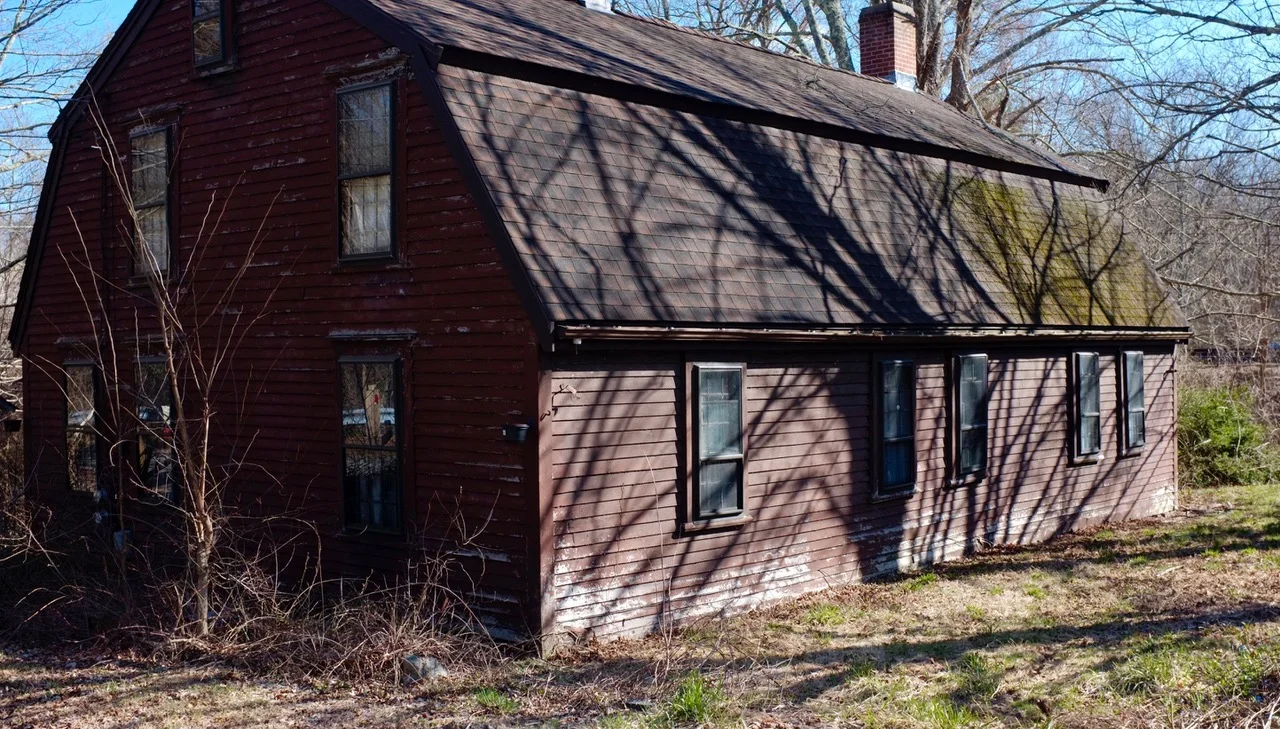
Almost 300 years ago, a saw mill was planted along the edge of Abbott Run. Amos Arnold, who gave his name to the small settlement, erected a grist mill here in the 1740s, as well as a gambrel-roofed house.
The road through the village was long ago bypassed by Route 120, while the bridge across the mill stream is closed to automobile traffic. While the once agricultural landscape of northern Rhode Island and nearby Massachusetts has fallen prey to thoughtless development, Arnold Mills offers a glimpse into the Yankee blend of industry within a rural setting.
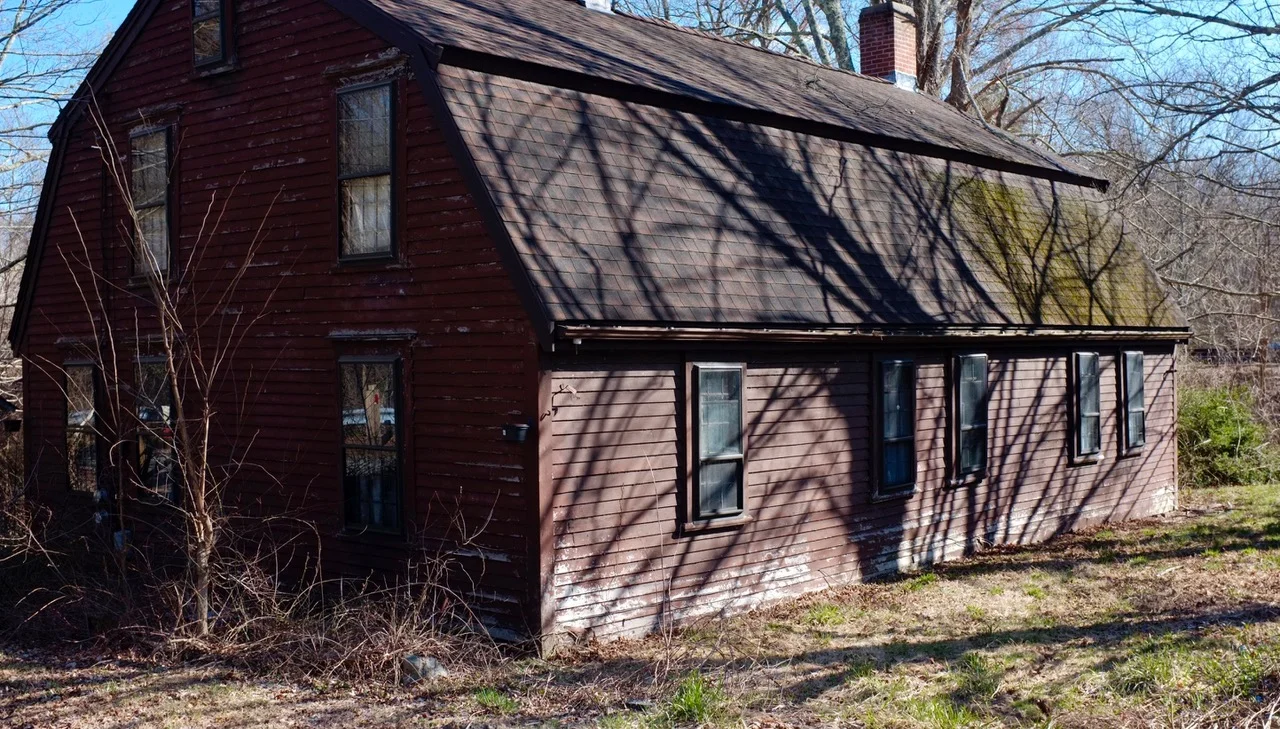
Amos Arnold house, Arnold Mills, Sneech Pond Road, Cumberland, R.I.
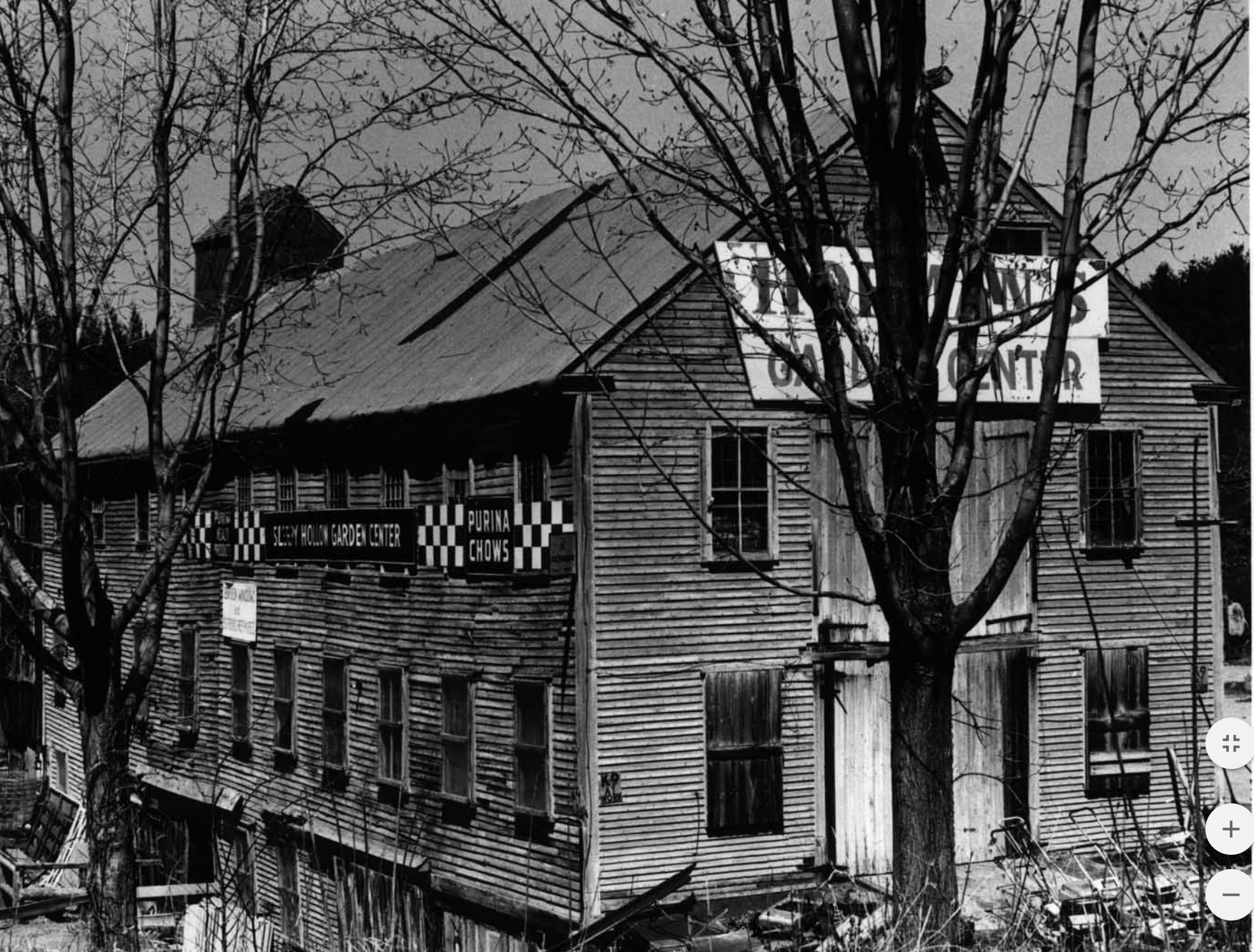
The Metcalf Mill, gone by c1963.
-- Photo: Rhode Island Historic Preservation Commission
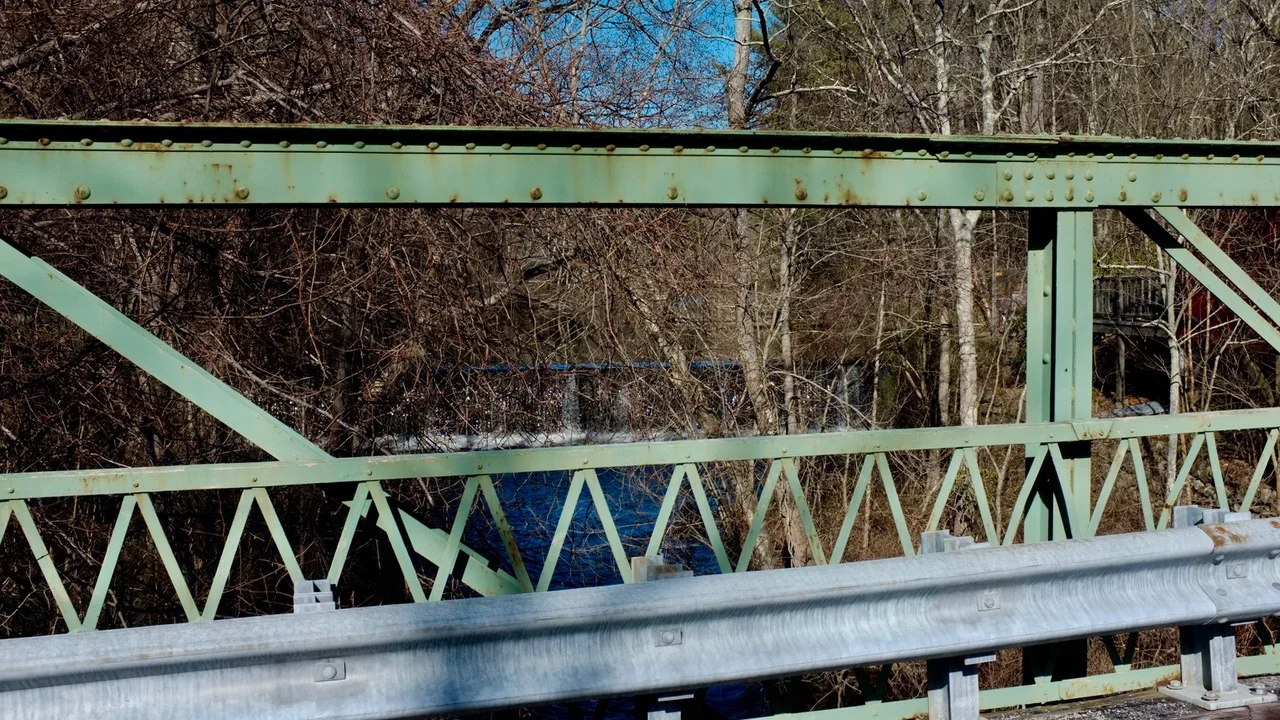
Abbott Run, with dam and mill pond beyond (now the Pawtucket Reservoir), the bridge is an early 20th-Century Pratt truss.
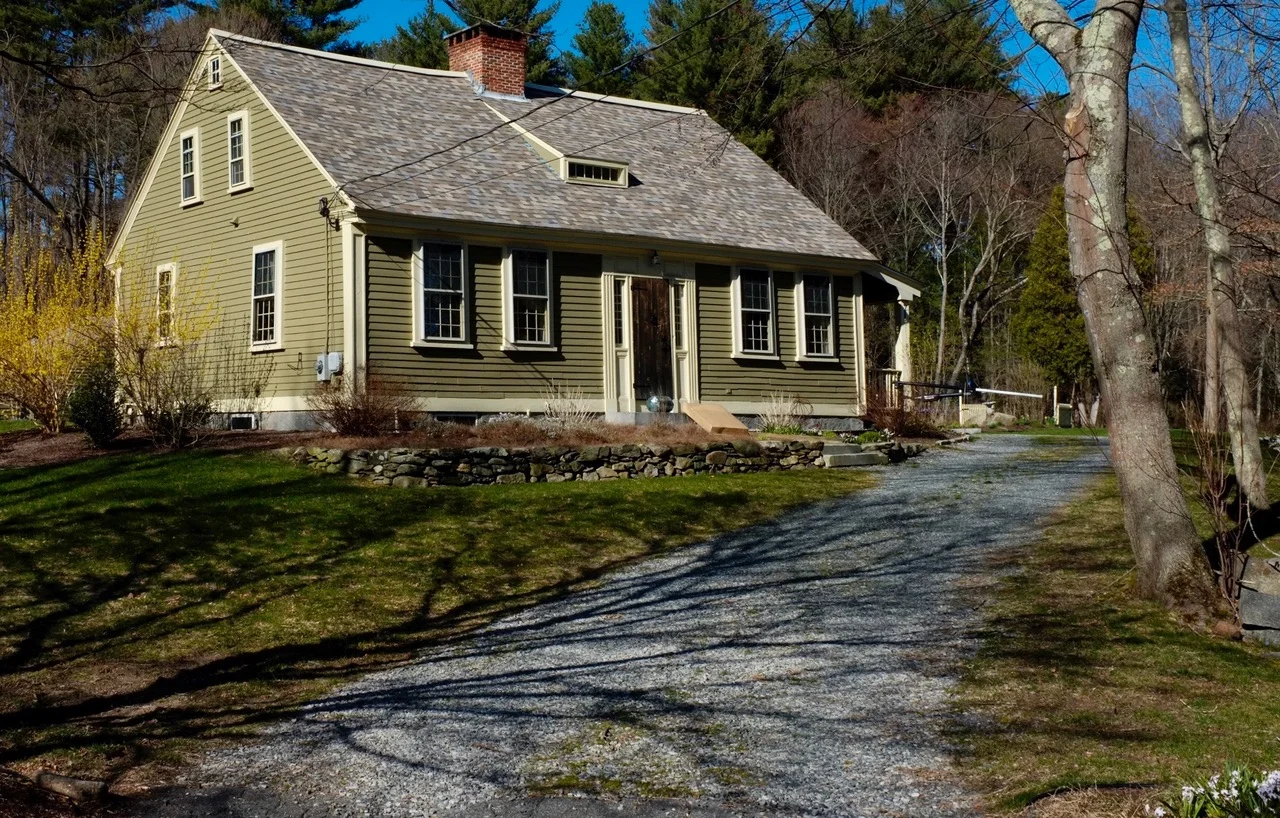
This Cape Cod cottage overlooking Abbott Run was built around 1800, but it got a Greek revival update in 1837.
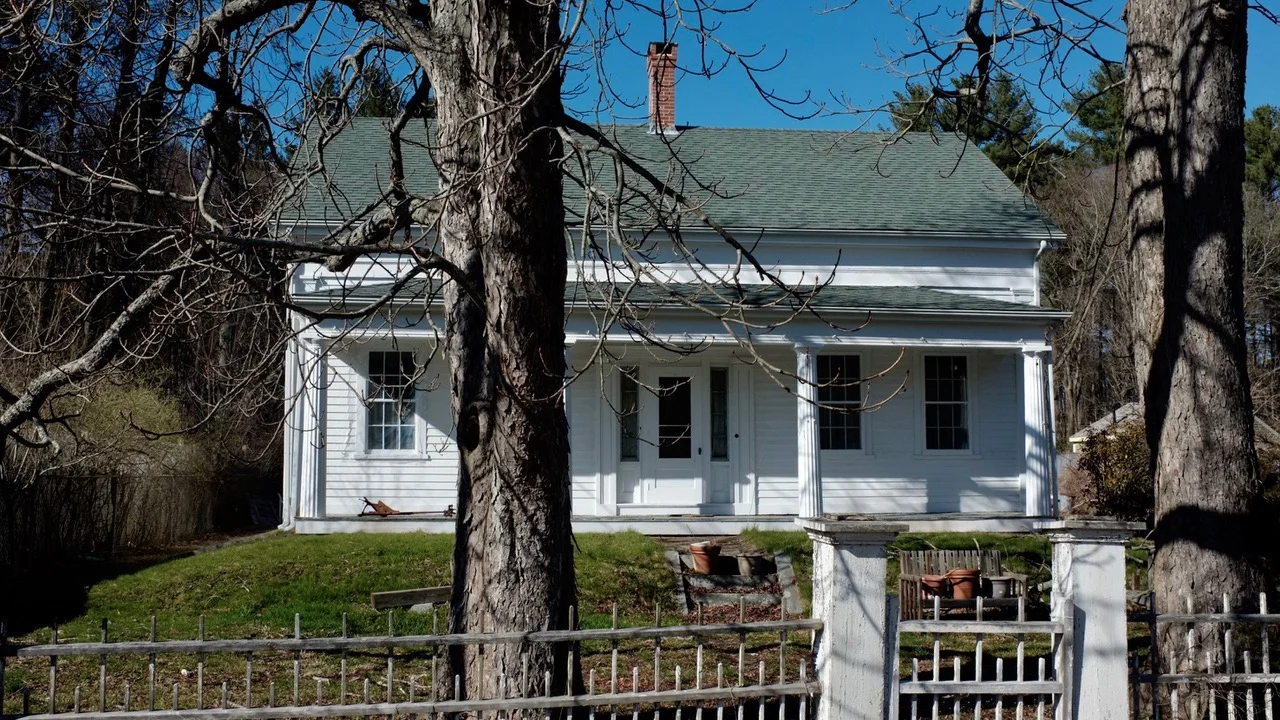
The Dr. Addison Knight House, 1847. Still the cottage form, but thoroughly Greek revival with its Doric columns, full entablature and doorway with sidelights.
William Morgan is a Providence-based architectural historian, journalist and book author.

Llewellyn King: How autos became much, much better over recent decades

Today’s cars are miraculous, marvelous. They are twice as good as they were just 30 years ago -- if you measure them by life expectancy, safety, reliability and comfort.
As William Gouse, an expert at SAE International, which coordinates and sets the standards for cars and trucks worldwide, said, it was just decades ago when we expected cars to start giving trouble at 70,000 to 80,000 miles on the odometer. Now we expect twice that and more even from cars, SUVs and light trucks. We also no longer expect flat tires and engines overheating.
Gouse told me in a television interview that not only is quality from an owner’s point of view far better, but safety is equally improved. You are more likely to survive a crash.
The story of the automotive evolution to excellence is a story of incremental improvement; of the technological equivalent of compound interest – a little bit more every year.
It is a story of how better technology and materials, government regulation and competition have entwined to produce a welcome result. Therefore, it is a tale that needs repeating elsewhere.
The technology got better because technology is getting better in everything, particularly the role of computers under the hood. The materials got lighter, stronger and more durable. The government has demanded better cars and trucks year after year: better mileage, better safety, better crash survivability and better emissions controls.
The government role is important because it has pushed through regulatory standards that the automotive engineers have risen to meet. There is a kind of gold standard demanded by the government for cars and trucks in the United States and it informs their production worldwide.
“Street legal” is the operative threshold that drives manufacturers worldwide to clear the American bar, otherwise their products cannot be sold here. World production must comply with U.S. standards in safety, emissions and equipment, such as reversing cameras, now standard on all new cars.
This de facto world standard will allow a car to be sold and operated in the United States. Some specialty cars made in other countries – for example, the beloved British Morgan sports car, complete with a wooden frame and a leather strap across the hood (bonnet in Britain) – can no longer be imported into the United States. While they are not for sale here, they are for sale elsewhere in the world.
The final driver for better cars and trucks is the consumer. Competition in the automotive world is brutal. Automobile manufacturers must take an annual market test, answering these questions: Will the new models sell? Did we bend the steel in appealing ways? Will our claims of “happiness behind the wheel” be ratified by the public? It is a test quite unlike that for any other product, except perhaps movies. Is it what the public wants?
Now new challenges and new excitements are afoot in the world of automobiles. The old order of the internal combustion engine -- so improved, so dependable and so much cleaner -- is going to begin to surrender its hegemony to the new order of the electric car.
Much that has been improved for today’s cars, like tires and brakes, is to be found in the electric car, but the drive train is something different. It is something that is itself evolving: better batteries, motors, designs and new expectations, primarily of range through battery improvement.
The arrival of the electric car is evolutionary, verging on revolutionary.
The big impediment: How will recharging catch up and become as painless as filling the tank is today? In time, it will happen. Gouse is hopeful that one day there will be easily available induction charging (charging without wires) so that at a stoplight or in a parking place, juice will flow from the local utility to your car.
The automobile has changed and way we live and given us a unique dimension: the freedom to go when we want to go in great comfort with our everyone and everything: family, music, telephone service and, when autonomous cars arrive, maybe workspace. The automotive future is an open road.
Llewellyn King is executive producer and host of White House Chronicle, on PBS. His e-mail is llewellynking1@gmail.com.
Flat-face fantasies

From Andrew Stevovich's show "Contemplating Figures,'' at Adelson Galleries, Boston, opening May 4.
Flowering reuse

"The Bridge of Flowers,'' in Shelburne Falls, Mass.
-- Photo by FFM784
From Robert Whitcomb's "Digital Diary,'' in GoLocal24.com
There’s a lot of abandoned infrastructure in New England. After all, we’re an old region. It’s always pleasant to see old structures reused in ingenious ways. Take the Bridge of Flowers, in Shelburne Falls, in western Massachusetts. This is a lovely arched concrete railroad span built in 1908 by the evocatively named Shelburne Falls & Colrain Street Railway Co.
The bridge was abandoned in 1927 because of the financial woes of the company and was quickly overgrown with weeds. But within a couple of years, local volunteers came up with the idea of carting soil onto the bridge and turning it into something that they named the Bridge of Flowers. It became a tourist attraction, with a great diversity of blooms through the growing season.
So important -- psychologically, sociologically and economically -- had the Bridge of Flowers become that when in the early ‘80s, the bridge required major repairs, locals came up with more than half a million dollars to fix it. Volunteers continue to plant and care for the plants
Heartening reuse. You could to say the same thing about bike paths on old railroad rights of way, although it would be better for the environment and economy if some of these old routes were instead passenger rail lines again. Even the famous East Bay Bike Path, in Rhode Island.
'A furtive look'

"An altered look about the hills;
A Tyrian light the village fills;
A wider sunrise in the dawn;
A deeper twilight on the lawn;
A print of a vermilion foot;
A purple finger on the slope;
A flippant fly upon the pane;
A spider at his trade again;
An added strut in chanticleer;
A flower expected everywhere;
An axe shrill singing in the woods;
Fern-odors on untraveled roads, —
All this, and more I cannot tell,
A furtive look you know as well,
And Nicodemus' mystery
Receives its annual reply.''
-- "Nature, Poem 9: April,'' by Emily Dickinson

UNH names UNC provost as next president
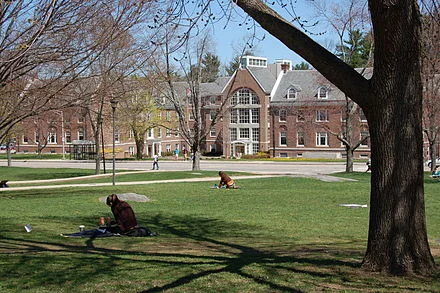
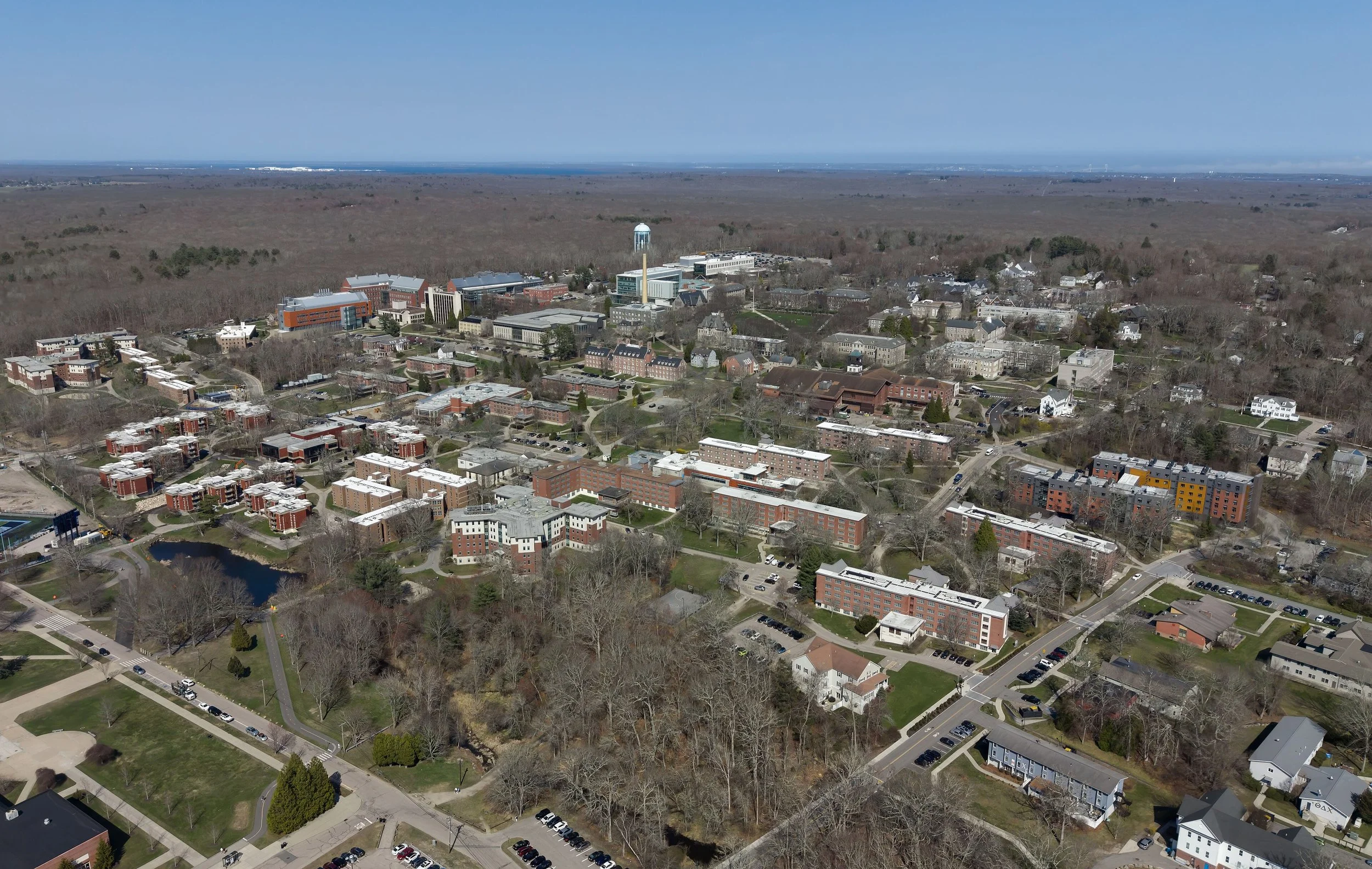
Congreve Hall at the University of New Hampshire's main campus, in Durham.
From the New England Council (newenglandcouncil.com)
"The University of New Hampshire (UNH), a New England Council member, has named James W. Dean as the institution’s 20th President. Dean has most recently served as vice chancellor and provost at the flagship University of North Carolina (UNC) at Chapel Hill, where he was also a professor of organizational behavior. Dean succeeds Mark W. Huddleston, who is retiring after 11 years at the helm of UNH, the Granite State’s largest public university.
"As UNC’s chief academic officer, Dean hired seven deans, bolstered faculty retention efforts, and led campus-wide efforts for the university’s 10-year review process for reaccreditation from the Southern Association of Colleges and Schools Commission., He also worked to strengthen student advising to better meet the needs of the diverse campus. Dean was selected after a national search and was approved by the University System of New Hampshire board of trustees by a unanimous vote. He starts in his new position on June 30, 2018.
"John Small, chairman of the University System board, said UNH is gaining an “experienced leader from one of the nation’s top public universities.” Dean said, “I am deeply honored to have the opportunity to serve as president of UNH at a time when all public universities need to rethink our efforts to support the public through teaching, research and engagement.”
Tree-killing Southern Pine Beetle moving into southern New England

Southern Pine Beetle.
From ecoRI News (ecori.org)
Pitch pine forests are at greater risk of attack from the Southern Pine Beetle than forests with a mix of tree species, according to recent research by Dartmouth College. The study shows that the composition of forests is more important than other factors when predicting where the destructive pest will strike next.
The research, published in Forest Ecology and Management, adds to understanding of the Southern Pine Beetle and confirms previous research from the beetle’s southern habitat on the importance of characteristics that increase forest susceptibility to the pest.
The research finding has important implications for forest managers who need to predict and prevent infestation by a pest that is already responsible for significant forest damage and that is continuing its climate-induced move northward, according to researchers.
“Knowing which tree stands may be most susceptible to this beetle is extremely important information for managers working to protect our forests,” said Carissa Aoki, a post-doctoral research associate at Dartmouth and lead author of the study. “This research not only tells us that preventative treatment such as thinning can be effective, but also helps prioritize tree stands for treatment based on structural characteristics."
Southern Pine Beetles have a hard reddish brown to black exoskeletons and measure about 0.12 inches, about the size of a grain of rice.
For the study, researchers focused on southern pine beetle infestations in the New Jersey Pinelands, a forested area that spans the southern and central portions of the state. The average coldest night of the winter in this region has warmed by about 7 degrees Fahrenheit in the past 50 years, creating favorable conditions for the Southern Pine Beetle to increase its range.
The last documented outbreak of Southern Pine Beetle in New Jersey occurred more than 80 years ago, but the mid-Atlantic states may see more regular outbreaks in the future. The northern New Jersey Pinelands, and pitch pine stands in the New England states with similar structural characteristics, are particularly at risk of infestation as the beetle continues to move northward, according to researchers.
As of 2014, a new outbreak was detected on New York’s Long Island, and scattered throughout Connecticut the following year. These beetles have additionally been trapped as far north as Rhode Island and Massachusetts, though large-scale tree mortality hasn’t yet occurred in these southern New England states.
“The northward movement of the southern pine beetle is just one example of how climate warming is permitting rapid range expansions,” said Matthew Ayres, a professor of biological sciences at Dartmouth. “We can expect many more cases because the warming continues. This might mean you can grow a cherry tree where you couldn’t before, but you and your plants can also expect a growing battery of pests that weren’t there before.”
The researchers found that Southern Pine Beetle infestations in both wetland and upland areas were far more likely to occur in pure conifer stands than mixed stands of oak and pine. While wetland conifer areas were especially affected, wetland mixed sites had fewer spots than expected.
While the study confirms some of what was previously known about the species, the finding in the Pinelands — that a high percentage of pine trees in a stand is a more important factor than moisture levels — is in contrast to previous research that indicated strong evidence for the connection between high moisture and stand susceptibility.
Researchers also found that stands of intermediate age — about 25 to 75 years for pitch pine — were disproportionately infested. Forest stands comprised of older, larger trees tended not to be very susceptible, while young trees are known not to be susceptible and weren’t sampled. The volume of trees in a stand and the percentage of each tree that is green were also found to contribute to stand susceptibility.
The results indicate that the same tactics that have been effective at limiting beetle impacts in the South could also be effective in newly occupied northern ranges. Those tactics include monitoring to detect population increases, rapid suppression of spots when they are still rare, and thinning of trees for prevention.
Southern Pine Beetle activity occurs in extremes — either very rare or through infestations that involve millions of pests. During episodic outbreaks, the beetles readily kill even the healthiest pines through synchronized attacks that overwhelm tree defenses.
“The Southern Pine Beetle is one of the most aggressive tree-killing insects in the world. Outbreaks tend to be self-sustaining because the more beetles there are, the better they succeed,” said Ayres, a co-author of the report and with 25 years of experience studying the beetle species.
Josh Hoxie: Debunking five big myths about U.S. taxes
From OtherWords.org
Tax Day has come and gone. Maybe you have a big bill from Uncle Sam or maybe you got a fat refund. Either way, it’s easy to get lost in the noise from pundits and politicians who thrive on the tax code’s complexity.
This is made even harder by the right-wing groups who are spending millions on television ads in support of the Trump tax cuts in the lead-up to the mid-term elections this November.
To draw a clear line between fact and fiction, here’s a set of commonly heard myths about our tax code.
Myth: The United States is a high tax country.
Reality: Among wealthy countries, the United States ranks 31 out of 35 for taxes as a proportion of GDP in 2016. Only Chile, Ireland, Mexico and Turkey collected a smaller percentage.
The average rate among wealthy countries was just over 34 percent of GDP, while the U.S. is just 26 percent, meaning that Americans could see their taxes go up 30 percent and still be below the average. This myth was repeated over and over to justify the Trump tax cuts, but it was false all along.
Myth: Corporations pay high taxes in the United States.
Reality: Corporate tax revenue made up just 2.2 percent of GDP in 2016, significantly less than the average wealthy country. The Trump tax cuts will likely make our corporate tax revenue the lowest among all developed countries.
Many profitable corporations already pay negative federal income taxes, meaning they get more in subsidies than they pay in taxes. In 2017, there were 15 such companies — including Amazon, Molson Coors, and Duke Energy.
Myth: Undocumented workers don’t pay taxes.
Reality: Undocumented immigrants pay an enormous amount of taxes — in fact, $11.7 billion in state and local taxes alone. That figure includes $7 billion in sales and excise taxes, $3.6 billion in property taxes, and $1.1 billion in income taxes.
All told, undocumented workers pay about 8 percent of their income in state and local taxes. Compare that to the wealthiest 1 percent, who pay just 5.4 percent. Those much-maligned immigrants pay a greater share of their income to support local communities than the wealthiest individuals in the country.
Myth: Cutting taxes for the rich trickles down and spurs economic growth.
Reality: Liar, liar, pants on fire. This stubborn myth, made famous by Arthur Laffer in the 1980s, gets repeatedly almost daily. The nonpartisan Congressional Research Service looked at every tax cut over the past 65 years and found zero correlation between tax cuts and economic growth.
Instead, they found that cutting taxes for the rich makes the rich richer. Go figure. The Institute for Taxation and Economic Policy looked at state tax cuts and came to the same conclusion.
Modern examples include the major tax cuts in Kansas pushed forward by Republican Gov. Sam Brownback. Not only did those fail to generate growth or pay for themselves, they cratered the state budget and created a fiscal crisis.
Myth: The Trump tax cuts help the middle class.
Reality: The Koch Brothers stand to see their pay go up by $27 million per week. Meanwhile, a secretary in Pennsylvania made famous by soon-to-be-former House Speaker Paul Ryan saw her take home pay go up by $1.50.
And that’s pretty much part and parcel of what the Trump tax cuts do. The wealthiest 5 percent of taxpayers get about half the benefits while the bottom 95 percent splits the other half.
Don’t get it twisted: The tax code heavily benefits the wealthiest households and most profitable corporations. Unfortunately, the Trump tax cuts only further shift favor in their direction. The first step to changing this dynamic is understanding it.
Josh Hoxie directs the Project on Taxation and Inequality at the Institute for Policy Studies.
Buying small colleges
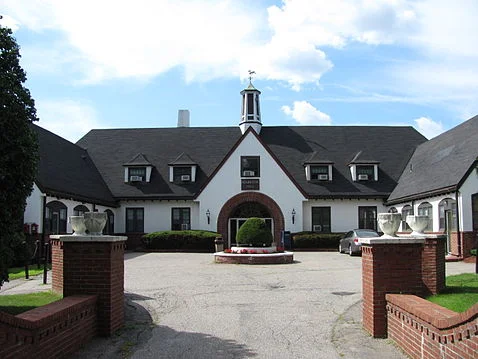
Holbrook Hall at Mount Ida College.
That the University of Massachusetts at Amherst is taking over the campus of tiny and bankrupt Mount Ida College, in Newton, is a sign or the times. The fact is that there are too many small private colleges in a time of a smaller cohort of college-age kids and ever more intense competition for student money. It’s probably tougher in New England than in most of the country because the region has a famed collection of very distinguished and well-endowed private colleges (most famously four of the eight Ivy League institutions and MIT) and generally improving, and expanding, state university systems to lure customers.
So now the flagship of the UMass system will get a physical site in Greater Boston. In the deal, UMass Amherst will assume $55 million to $70 million in debt from Mount Ida and then use the campus, which has dorms, labs, library and sports fields, as a place from which students can work on internships and engage in academic collaborations with other Boston-area colleges as well as with businesses. UMass Amherst also said that having the campus will boost fundraising by providing a site closer to rich alumni and others in the great wealth-creating machine centered in Boston, Cambridge and along Route 128. Understandably UMass Boston feels dissed.
Watch for more such takeovers of small colleges by larger ones. I’m glad they’ll still be used for education, though that might turn out to be mostly vocational.
In praise of stone walls
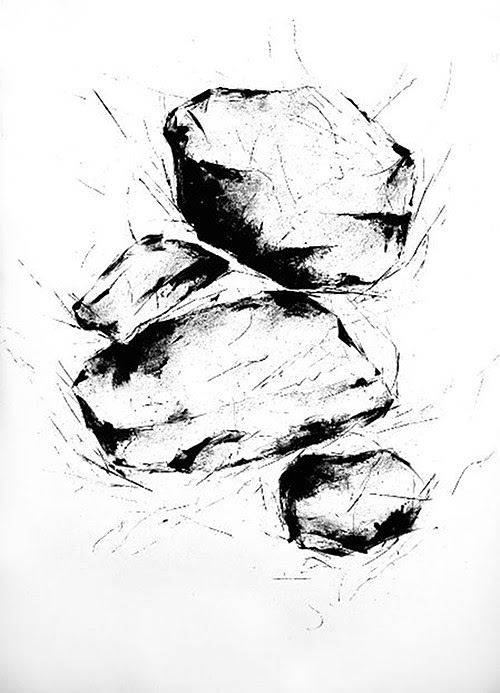
"Stonewall Series: No. 5" (gouache on paper), by Natalie MacKnight, in her show "Listening to the Wind,'' at 6 Bridges Gallery, Maynard, Mass., through May 26.
The gallery says:
"The exhibition show is a series of drawings and mixed media on paper in which the artist depicts the sense of peace and tranquility that she draws from nature. As a child, Macknight was fascinated by rocks and this grew into an appreciation for all the subtle aspects of nature that draw the eye. 'Listening to the Wind' celebrates nature in all its meditative strength and energy and invites the viewers to see what MacKnight sees in the natural world.''
Chris Powell: Pursuing war and trivia
For a few days, President Trump seemed to threaten to go to war against Syria and its ally, Russia, on his own, without congressional approval. If the president had bothered to ask for authorization, Congress might have been too busy.
For half the Senate was interrogating Mark Zuckerberg, the chief executive of Facebook, about the "social media" company's compromising of the privacy of its users, as if people shouldn't know that putting personal information on the Internet is how not to have any privacy at all.
Meanwhile, the rest of Congress seemed obsessed with perpetuating the special prosecutor's investigation of the president over his campaign's supposed "collusion" with Russia, an investigation that now has extended to a tryst Trump supposedly had with a pornography actress before he became president.
The Trump investigation is becoming reminiscent of the perpetual investigations of Bill Clinton when he was president. Does anyone remember the Whitewater "scandal" and Monica Lewinsky, the White House intern with whom Clinton had a tryst? His lying about it prompted his impeachment, though it too was much ado about nothing.
Like the Clinton investigations, the Trump investigation also is starting to evoke the assurance given to Soviet dictator Josef Stalin by the chief of his secret police, Lavrenti Beria: "Show me the man and I'll find you the crime." Will the special prosecutor find a crime committed by Trump before his unconstitutional bravado reduces the world to ash in a nuclear exchange? Will Congress look up in time to know what hit it?
xxx
AVOIDING FACEBOOK IS LIFE INSURANCE: At least Facebook has been a blessing to news organizations. Before Facebook, when news organizations needed to report an untimely death, they had to solicit a photograph from the decedent's family, an unpleasant and sometimes intrusive task.
But now news organizations need only to look up the decedent on Facebook, where they usually will find not only his photograph but also a full biography, often intimate. These days it seems that no one dies horribly without having neatly laid everything out for news organizations on Facebook.
Conversely, it seems that if you stay off Facebook and other "social media," the worst that will happen to you is that you'll die of old age in bed at home.
xxx
ESTY HAD TO KNOW BETTER: Connecticut Congresswoman Elizabeth Esty, who is ending her political career because she mishandled violence, threatening, and sexual harassment by her former chief of staff, Tony Baker, explains that she wrote a letter of recommendation for the creep to get him out of Washington and away from his former girlfriend. But of course that only risked inflicting him on new victims in his next job.
This doesn't mean that perpetrators of sexual harassment and worse should never be able to find work again. It means that they should not be able to get jobs by deception and omission -- not be able to get jobs until their misconduct is acknowledged and atoned for.
Esty isn't the only employer who concealed and passed along misconduct this way. The practice long has been common with sexual predators in business, government, education, and even churches. But no one should have known better about this than a member of Congress who often posed as a foe of sexual harassment.
Chris Powell is a columnist for the Journal Inquirer, in Manchester, Conn.
David Warsh: The pro-Trump mutiny in the FBI before the 2016 election
You didn’t have to be a news junkie to recognize that the FBI was deeply involved in determining the outcome of the 2016 election, or a statistical whiz to believe the law enforcement agency’s influence was greater than the Russian cyber-mischief that undoubtedly occurred.
Only yesterday, though, when a 35-page report by FBI Inspector General Michael Horowitz revealed that former Director James Comey and his former deputy, Andrew McCabe, contradicted each other about a critical Wall Street Journal background interview in October 2016 that McCabe had authorized, did the dimensions of the problem come clear.
McCabe was fired last month, a day before his planned retirement, for having confirmed the existence of an FBI investigation of the Clinton Foundation, and for having lied to investigators about his role in the affair. For all the detail it included, Horowitz’s report was completely unpersuasive – for all the background it left out. It seems clear that McCabe misled investigators. But then, the formal investigation of his role began the day President Trump fired FBI Director James Comey, when incentives within the FBI began to shift.
In the closing days of the presidential campaign, FBI leadership was caught between opposing factions: the Obama administration’s Department of Justice, on the one hand, to whose senior officials and prosecutors it reported; and an unknown number of its own rebellious agents on the other, eager to pursue an investigation of the Clinton Foundation, and who were abetted by retired agents, Congressional Republicans and the editorial page of The Wall Street Journal.
WSJ reporter Devlin Barrett, citing campaign-finance records, reported (subscription required) on Sept. 23, 2016 that Virginia Gov. Terry McAuliffe, a strong Clinton ally, had donated nearly as much as $675,000, through the political organization he controlled, to the 2015 Virginia state Senate campaign of pediatrician Jill McCabe. As associate deputy director, her husband was uninvolved in Clinton investigations at the time, but months after his wife’s defeat was promoted to deputy director.
The same day the story appeared, Barrett wrote an FBI spokesman to ask whether, in August 2016 McCabe had ordered agents investigating the Clinton Foundation to avoid drawing attention to the probe, or even to “stand down.” Barrett wrote, “[H]ow accurate are these descriptions? Anything else I should know?”
By the end of the week, McCabe authorized two aides to undertake a background interview in which they disclosed a testy confrontation with an unnamed senior Justice Department official in which McCabe had refused to halt the investigation, and thereby confirmed the existence of the investigation. Citing “people familiar with the matter,” Barrett wrote, in “FBI in Internal Feud over Hillary Clinton Probe” (subscription required), that no fewer than four field offices – New York, Washington D.C., Little Rock, and Los Angeles, were investigating foundation practices.
Two days later, Barrett disclosed further details (subscription required). But by then a furor had developed over Director Comey’s disclosure, three days before, that some new Hillary Clinton emails had been discovered which could be relevant to a previously closed investigation. (They turned out not to be.)
There is abundant evidence in news accounts that a low-key but aggressive mutiny was underway in the summer and autumn of 2016 among FBI field agents. It aimed at damaging Clinton’s candidacy and furthering that of Donald Trump. Comey and McCabe sought to control it, together and in separate ways. Implicit threats of further leaks probably played a role in forcing Comey to reveal the existence of the trove of recently discovered Clinton emails.
McCabe told the Inspector General that he had disclosed to his boss his decision to authorize the background session. Comey denied that he had. Inspector General Horowitz sided with Comey. His report took a narrow view of McCabe’s motivation, ascribing it to self- interest. The decision to respond to the leakers’ charges “served only to advance McCabe’s personal interest, and not the public interest, as required by FBI policy.”
I haven’t read the Comey book, A Higher Loyalty: Truth, Lies, and Leadership, but, from the early accounts, it seems clear that he chose not to surface the incipient mutiny that forced his deputy’s hand and, perhaps, his own. That’s understandable enough: Comey continues to seek to maintain discipline and preserve the apolitical reputation of the nation’s chief law-enforcement agency. Keep in mind the mutineers were a relative handful of highly-placed executives. They may have enjoyed a certain amount of tacit support, but the vast majority of the FBI’s 13,400 agents and 20,000 supporting staff went about their jobs with professional disinterest.
That means that the outsider who knows most about what happened inside the FBI in those few months before the election is reporter Barrett. In February last year, he left the WSJ for The Washington Post. There he has kept up a steady stream of scoops, most recently last weekend, a joint byline with Philip Bump,“Criminal investigation into Trump lawyer’s business dealings began months ago.”
The Post has many other reporters working on the story; so do The New York Times and the WSJ: Barrett is no one-man reincarnation of star reporters Bob Woodward and Carl Bernstein who took charge of the Watergate scandal nearly 50 years ago.
He is, however the author of the Rosetta Stone-like story through which the outcome of the 2016 election eventually will be deciphered. Like many others in the news trade, I was dumbfounded by the election of Donald Trump. Until this week I thought of it as essentially accidental – two bad candidates decided by the hangover from globalizationNow I am more interested than before in the thumbs upon the scale. Never mind however much is left of the Trump administration. Not until Barrett finally publishes his account will we be able to form a clear idea of how Trump’s victory came to be.
David Warsh is proprietor of economicprincipals.com, where this column first ran.