
Vox clamantis in deserto

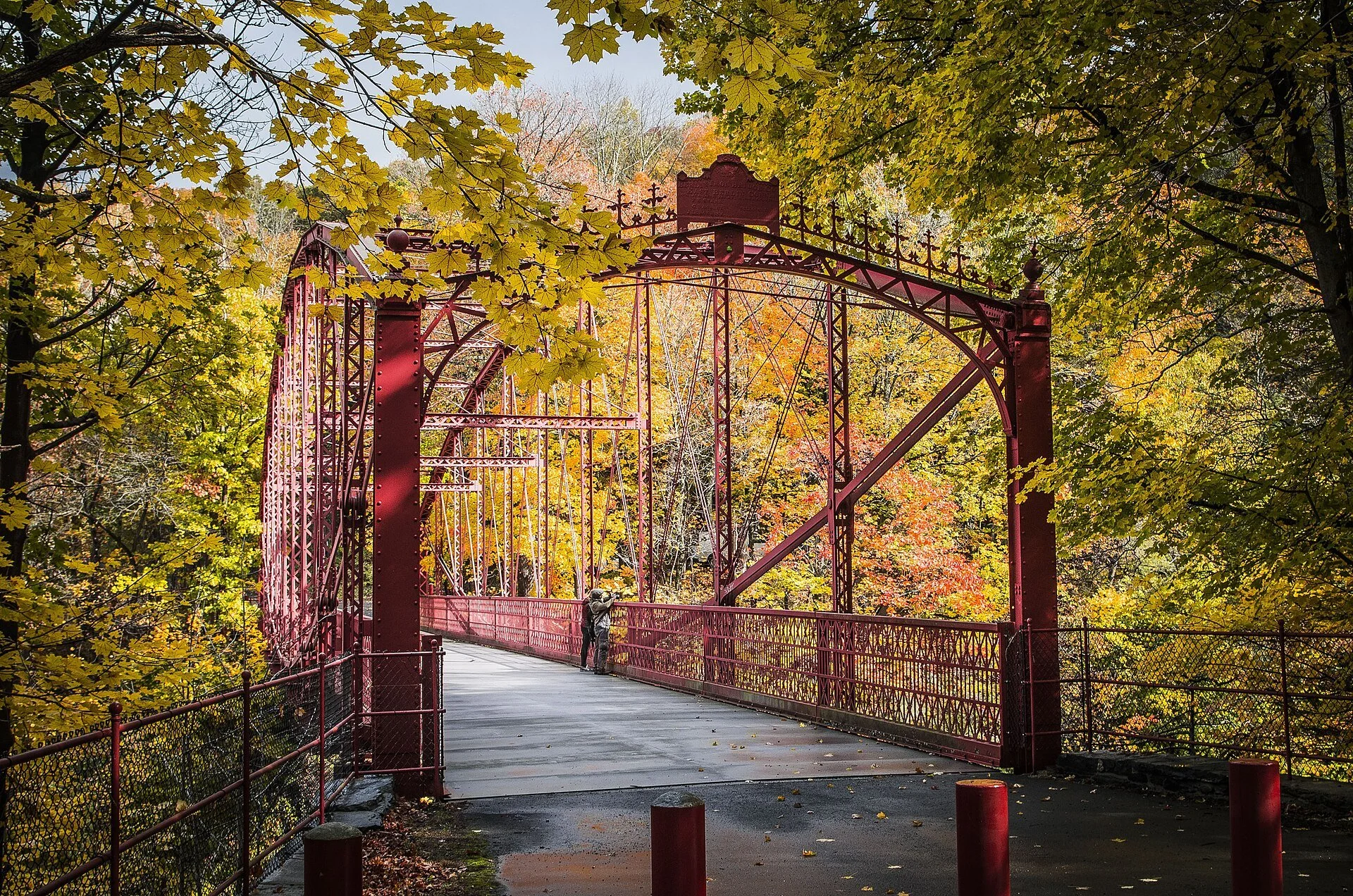




Icy hill towns

"Compared with towns near the Connecticut River, settlements in the hills just a dozen miles or so to the west and north of Amherst seem like outposts. On March 1, a month and a half before the groundbreaking, as a dank mist fell on Amherst, it rained ice up in the hills.''
-- From House, by Tracy Kidder
'Almost beggered themselves to serve others'
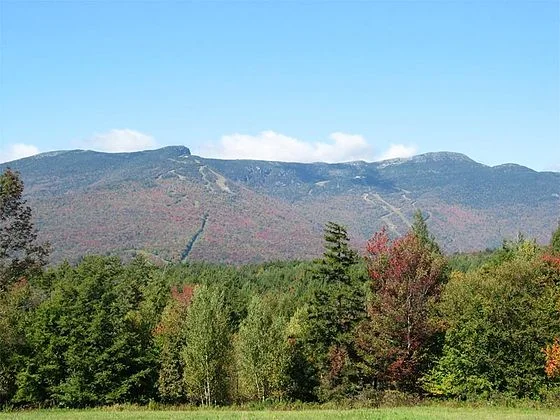
Mt. Mansfield, Vermont's highest peak, at 4,395 feet.
"Vermont is a state I love.
I could not look upon the peaks of Ascutney, Killington, Mansfield and Equinox without being moved in a way that no other scene could move me.
It was here that I first saw the light of day; here I received my bride; here my dead lie pillowed on the loving breast of our everlasting hills.
I love Vermont because of her hills and valleys, her scenery and invigorating climate, but most of all, because of her indomitable people. They are a race of pioneers who have almost beggared themselves to serve others. If the spirit of liberty should vanish in other parts of the union and support of our institutions should languish, it could all be replenished from the generous store held by the people of this brave little state of Vermont.''
-- President Calvin Coolidge, a Vermont native who later became Massachusetts governor, speaking on Sept. 21, 1928.
'Pompous joy betrays us'

Crocuses, the flowers most associated with March in New England.
"March is the month of expectation,
The things we do not know,
The Persons of Prognostication
Are coming now.
We try to sham becoming firmness,
But pompous joy
Betrays us, as his first betrothal
Betrays a boy."
-- Emily Dickinson, poem XLVIII
High Gothic Revival in the 'Quiet Corner'

The hilly rural and exurban northeast corner of Connecticut, often called the state's "Quiet Corner,'' has many lovely things to look at. One is the quirky Gothic Revival Roseland Cottage-Bowen House museum, in Woodstock, built in 1846 as a summer place for a rich family from New York City. We love its slightly crazy stained-glass windows, pointed arches and crockets, along with its spectacular gardens, with boxwood parterres and thousands of flowers.
Also on the property are such features as an aviary, a garden house, an old-fashioned bowling alley and an icehouse.
The place is open for tours June 1-Oct. 15. Check into it at: historicnewengland.org
Don Pesci: Progressive hope springs eternal in Conn. and Calif.
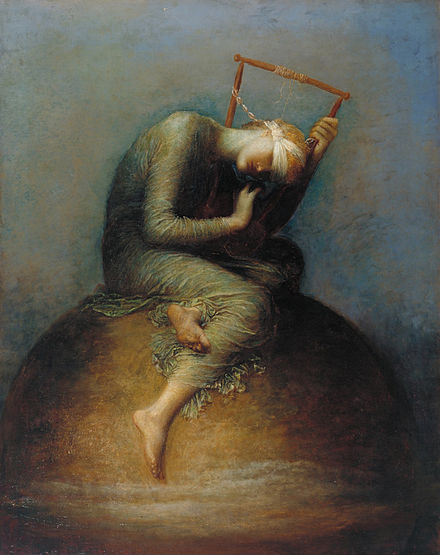
"Hope Remained,'' by George Frederic Watts.
“The best lack all conviction, while the worst
Are full of a passionate intensity” – William Butler Yeats
The Politico story came as a shock to no one: “California Democrats decline to endorse Feinstein.”
Connecticut has been blue roughly forever; ditto California, the political eagle’s nest of moderate Democrats turned progressive. Sen. Dianne Feinstein, long a Democrat moderate, did not convert quickly enough. Then too, progressives, full of a passionate intensity, find protestations of progressivism dripping from the lips of moderate, long-serving Democrat political fixtures sadly wanting. If tomorrow Feinstein said she was backing a recent move to withdraw California from the union – a prospect eagerly awaited by national conservatives -- no one on the progressive side of the political barricades in California would believe her. Lions want red meat, not well cured moderate puff pastries.
The same holds true in Connecticut, which is why nearly all of the seven members of Connecticut’s U.S. Congressional Delegation have been loud-barking progressives. U.S. Senators Chris Murphy and Dick Blumenthal want to abolish the Second Amendment – without abolishing the Second Amendment. They have fastened on the AR-15 and school shootings to pry loose the bolts attaching the amendment to the U.S. Constitution, about which progressives historically have cared little, progressivism being the doctrine that agitation rather than definition is crucial to maintaining democracy.
President Obama often reminded the country, in word and deed, that the Constitution really was a list of negative rights – “Congress shall make no law…” blah, blah, blah.’’ What was needed, however, was a Constitution of positive rights – “Congress shall support, say, Obamacare.” President Woodrow Wilson – the first Democrat progressive president, Teddy Roosevelt being a Republican – felt the same way. What the country needs are muscular chief executives like … well… Obama and Connecticut Gov. Dannel Malloy.
In both states, California and Connecticut, the progressive base has driven politics to the left. If there are any remaining moderate Democrats in Connecticut circa 2018, they are hiding behind the flower pots, cowering in fear from such as California state Senate leader Kevin de León, whom Democrat nomination delegates supported over Feinstein by a 54 percent to 37 percent margin.
“The outcome of today’s endorsement vote,” de León said, “is an astounding rejection of politics as usual, and it boosts our campaign’s momentum as we all stand shoulder-to-shoulder against a complacent status quo. California Democrats are hungry for new leadership that will fight for California values from the front lines, not equivocate on the sidelines.”
De Leon appealed to Democrat delegates as “an agent of change,” intimating that Feinstein was, as Politico put it, “a Washington power broker out of touch with progressive activists at home.”
Clearly, de Leon is the candidate of change, like Obama, that we progressives were waiting for: “I’m running for the U.S. Senate because the days of Democrats biding our time, biting our tongue, and trying to let it work the margins are over. I’m running because California’s greatness comes from paths of human audacity, not congressional seniority.” The full title of Obama’s passionately intense book is The Audacity of Hope: Thoughts on Reclaiming the American Dream. Progressivism, trickle up democracy, was the same dream that danced in the brains of Teddy Roosevelt, Woodrow Wilson, Franklin Roosevelt and Eugene Debs, a socialist candidate for president, a precursor of socialist presidential candidate Bernie Sanders.
California, de Leon neglects to mention, has been run by progressive Democrats for more than a half century. And the result? In San Francisco, “Software engineer Jenn Wong decided to start a project she calls Human Wasteland, which maps the city’s poop problem based on 311 calls from 2008-2015. Every call is listed as a poop emoji. The result is an overwhelming indictment of California’s approach to homelessness and lawlessness… San Francisco has joined Los Angeles and San Diego as three of the major cities that have caused Gov. Jerry Brown to declare a state of emergency due to a Hepatitis A epidemic currently brewing in each location.” The outbreak “was caused by strains of the 1B genetic subtype, which is rare in the United States and more commonly found in the Mediterranean and South Africa. It is spread through contact with feces, putting people with inadequate access to sanitation at highest risk.”
The political map in Connecticut is similar to that of California. Progressives are everywhere, taxes are high, businesses are fleeing, and government is broke, scurrying around in dark corners for tax crumbs. But in Connecticut, thanks in part to our inclement weather, a hepatitis A epidemic, 1B genetic subtype has been kept outside the gates. Here too, the best lack all conviction and the worst are full of a passionate intensity, but hope springs eternal in the progressive heart, especially in California and Connecticut. Maybe de Leon can make the trains run on time, and clean up the poop.
Don Pesci is a Vernon, Conn.-based columnist and a frequent contributor to New England Diary.
And now, 'Chappaquiddick,' the movie
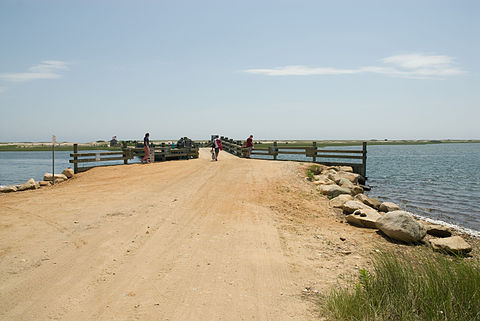
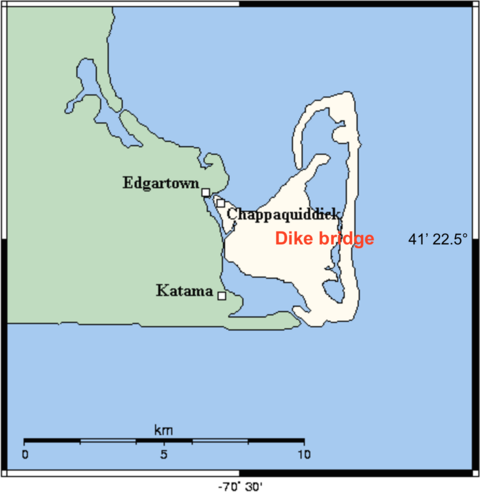
The Dike Bridge, off of which Edward Kennedy drove a car, drowning his passenger Mary Jo Kopechne The bridge didn't have a guardrail at the time of the 1969 accident.
Adapted from Robert Whitcomb's "Digital Diary,'' in GoLocal24.com:
I wonder how much interest there might still be in this infamous case:
Chappaquiddick, a new film about what happened after Sen. Edward M. Kennedy drove his car off the Dike Bridge on the eastern side of Martha Vineyard on July 1969. His passenger, Mary Jo Kopechne, drowned but Kennedy swam to safety. He pleaded guilty to leaving the scene of a crash, for which he got a suspended sentence. Many people at the time thought that was outrageously light. The word “Chappaquiddick” quickly became shorthand for the scandal, which may well have deprived Kennedy of the Democratic presidential nomination.
The movie will be shown March 15 and March 17 in the Martha’s Vineyard Film Festival before it opens nationally. I expect that it addresses the roles of power and privilege.
The moon landing, the rock festival called “Woodstock’’ and Chappaquiddick were the big U.S. stories of the summer of ’69, as the Vietnam War ground on. At the now long-dead Boston tabloid paper where I worked then in a summer job, Chappaquiddick was the big one, combining celebrity, power and salaciousness.
But the script, direction and acting would have to be mighty good to entice people under, say, 50 to see this movie about such a long-ago scandal.
Just wandering around

"Randomize'' (mixed media, dimensions variable), by Ted Ollier, in his show "Randomize,'' through April 1 at Bromfield Gallery, Boston. His artwork explores random walks.
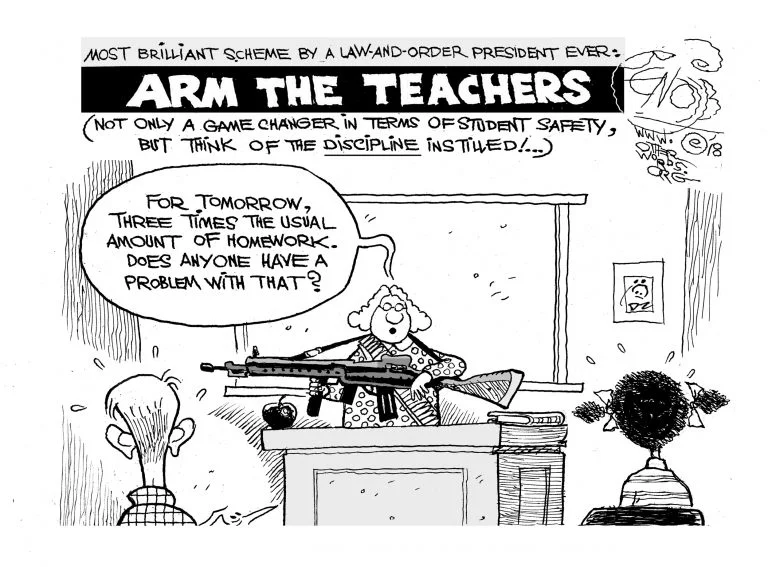
Josh Hoxie: The industrial-strength tax scam continues apace but citizens are waking up to it
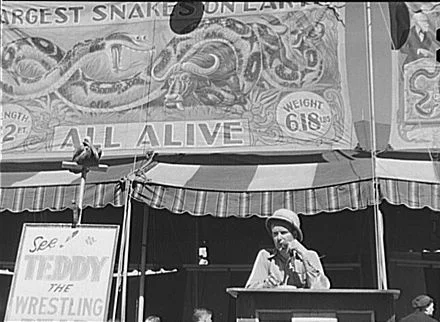
Carnival barker at the Vermont State Fair in 1941.
Via OtherWords.org
It’s no fun being scammed.
I distinctly remember looking for my first big city apartment and finding an ad that looked perfect. Beautiful picture, cheap rent, great location. It sounded too good to be true and, sadly, it was.
Just send a check in the mail, and don’t forget to send over your Social Security number, they said. We’ll mail you a key.
Fortunately, I didn’t take the bait. I’ve also managed to dodge the countless “Nigerian royalty” looking to make me rich via e-mail, and the endless robo-calls about lowering my utility bills.
Not everyone is so lucky. If there’s one constant of scams, it’s that given enough opportunities, they’ll get somebody to give up the goods.
Today, that somebody is the United States.
As their W-2s arrive in the mail, U.S. workers are starting to see the minimal impact of the new tax changes passed by Congress late last year. While the budget-busting package was a boon for millionaires, it means next to nothing for ordinary people.
Still, there’s a massive public relations campaign being waged right now by Republican donors backing the Trump tax cuts. Make the rich richer, they say, and we’ll all benefit.
And while you’re at it, they’ve got some swampland in Florida for sale.
The Koch Brothers alone will spend $20 million on ads selling the tax bill. This is a drop in the bucket compared to the $1.4 billion they stand to gain every year in tax breaks. It’s also a tiny fraction of their overall campaign spending on the 2018 midterms elections, which is projected to reach $400 million.
The Kochs have their work cut out for them. A new poll from Politico shows most workers report seeing no increase in their take home pay after the new tax laws took effect.
This is important.
The whole premise behind adding $1.5 trillion to the debt, giving massive handouts to the ultra-wealthy, and giving a tax break to the nation’s most profitable corporations was that working folks would also get a bit of cash.
Turns out, they’re not seeing that money. But the PR push is having an impact.
While majority of the American people never supported the bill, most polls have shown an uptick in support since December. The most recent poll — from GBA Strategies — found that 44 percent of voters oppose the law, compared to just 40 percent who support it.
The GBA study had another interesting finding: Voters are incredibly susceptible to messaging on this issue. That’s why the GOP donor class is spending unprecedented sums on ads.
The tax law is also getting a boost from corporations’ public relations departments, who are making splashy announcements about bonuses for their workers.
Many of those bonuses, it turns out, are being doled out to garner political support for the tax bill, not for the benefit of the business or as a thank you to workers. They’re also supposed to distract the public from the massive onslaught of layoffs that came in the wake of the tax cuts — from Walmart to Coca-Cola to Comcast and many more.
The Trump tax cuts are a scam, benefiting the wealthy at the expense of everyone else. If you happened to find yourself caught up in the scam, don’t blame yourself. The sales pitch was mighty impressive.
But also, don’t get scammed twice.
Josh Hoxie directs the Project on Taxation and Opportunity at the Institute for Policy Studies.
'Farewell gesture from winter'
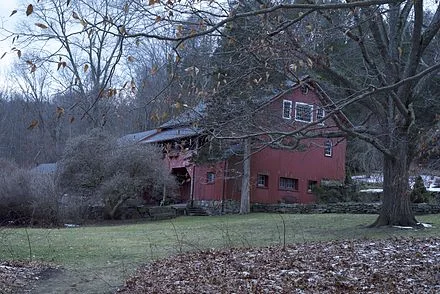
An Audubon Society nature center in Southbury, Conn.
"March brings many things, but not hurricanes. But yesterday it brought a storm and a temperature drop, a farewell gesture from winter. The pipes froze again in the back part of the house. And as I viewed the solidly frozen bath mat in my shower, I felt I could do without any record-breaking statistics.''
-- Gladys Taber, from her book The Stillmeadow Road
The late Ms. Taber wrote books about living in a 1690 farmhouse in the Stillmeadow section of Southbury, Conn.
From the Trust for Public Land:
"Long before Martha Stewart made the world safe for country chic, Gladys Taber ruled the rural roost in Connecticut. Her home base was Stillmeadow, an agricultural enclave in the southwest corner of Connecticut. Gladys Taber's 40-acre farm, her 17th-century farmhouse, the village of Southbury, and the surrounding countryside became her writerly muses, beginning in 1931, when she moved up from Manhattan, and continuing until her death at age 81 in 1980. She is buried here, too, in the graveyard of Southbury Congregational Church.
"Stillmeadow was the 'main character' in Taber's popular monthly columns in Ladies Home Journal and Everywoman's Family Circle magazines and later in more than 50 books set and written in Southbury. These writings not only established her as America's arbiter of all things authentically country, but her gentle musings on the simple life and her wholly ungentrified approach to the seasons, gardening, cooking, raising livestock, and breeding cocker spaniels helped the country get through the Great Depression--partly by following Taber's pragmatic example. In those years she answered between 7,000 and 8,000 fan letters annually.''
Have a ball in Brockton

Wheel vase, blue, purple, and opalescent white glaze, by Thomas Bezanson, a Benedectine monk, in his show "Brother Thomas: Seeking the Sublime,'' at the Fuller Craft Museum, Brockton, Mass. The show includes a range of his pottery, from tea bowls to vases.
Brockton in the late 19th Century and the first part of the 20th was one of the shoe-making capitals of the world. Eventually, however, most of its shoe companies closed or went south of abroad in search of cheap labor. The city has never fully recovered from this exit, although its proximity to the wealth of Boston has softened the blow. Several local cultural institutions, such as the Fuller, were founded by shoe moguls. The museum is in a surprisingly lovely park setting, whatever Brockton's gritty reputation.
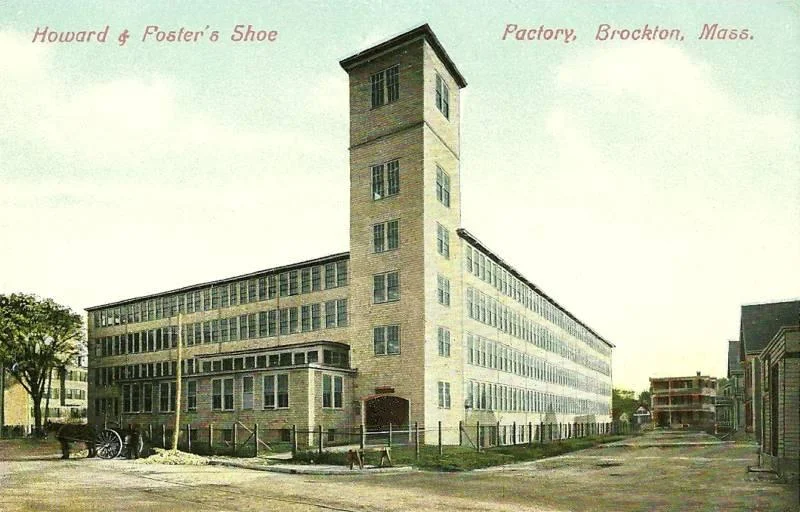
One of the Brockton area's many shoe factories in 1910.

Todd McLeish: Be careful -- salamanders, frogs on the march

A spotted salamander.
Via ecoRI News (ecori.org)
During last month’s warm spell, Emilie Holland saw and heard something she seldom detects this early in the year: the first movement of frogs and salamanders from their woodland wintering grounds to their springtime breeding pools. She observed wood frogs, spring peepers, spotted salamanders, and even a rare marbled salamander near her house not far from the Great Swamp Wildlife Management Area in South Kingstown, R.I.
“We often get pretty early activity here,” said Holland, an environmental scientist for the Rhode Island Department of Transportation and a board member of the Rhode Island Natural History Survey. “For whatever reason, the micro-climate is good for them. The problem is that my hot spot is along a road, and the frogs and salamanders are often crossing it.”
During the same warm days last month, other observers reported hearing spring peepers in North Kingstown and Cumberland, and seeing a red-backed salamander in Middletown.
According to amphibian expert Lou Perrotti, director of conservation at Roger Williams Park Zoo, frogs and salamanders don’t typically migrate to their breeding ponds until mid-March in most areas of the state. During the cold winter of 2015, when many ponds were still frozen until April, amphibian migration was delayed by almost a month. But it’s not unusual for rain showers during an especially warm period in late February to trigger an early migration.
“When that happens, the migration period tends to get extended,” Perrotti said. “A snowstorm or cold snap shuts things down for a while, and then it picks back up again. You don’t have the usual massive explosion of breeding activity all at once. It trickles along instead.”
What happens to the frogs in the ponds when the cold returns and the ponds freeze over again? Not much. Perrotti said the animals are adapted to survive such conditions for short periods of time. In fact, University of Rhode Island herpetologist Peter Paton said he commonly sees wood frogs and spotted salamanders swimming beneath the ice of local ponds in late winter. And wood frogs are uniquely adapted to freeze solid and thaw out later with no negative consequences.
The bigger concern, as Holland expressed, is that many frogs and salamanders must cross roads to reach their breeding ponds, and untold thousands of them get run over by vehicles each year in Rhode Island during those journeys.
“It’s a huge problem, one of the biggest threats to amphibians and reptiles in the area,” Perrotti said. “I’ve seen nights where there were hundreds of smashed wood frogs at just one site. Toads get hammered, too, because they typically have huge breeding explosions over a period of two or three nights. And gray tree frogs, too, which are pretty clumsy on the ground.”
Amphibian movement to and from their breeding ponds will likely continue through April – some species, such as green frogs, migrate later than others — but it typically happens at night when it’s raining. Perrotti and Holland recommend driving carefully at night along back roads in wetland areas during rain showers.
“It’s hard to avoid every frog in the road, especially if you catch it on a good night for migration when they’re everywhere,” Perrotti said.
One strategy that Perrotti said has been employed in western Massachusetts to avoid the problem of amphibian roadkill is the installation of what he calls “salamander tunnels” beneath roadways in areas where large numbers of frogs and salamanders migrate across roads. Barriers along the roadside funnel the animals toward the tunnel, which avoids much of the mortality.
The idea has been discussed in Rhode Island, but the cost is high and finding funding in municipal budgets is an impediment. Signage encouraging drivers to slow down at certain locations is another strategy that officials in the state have considered, though few have been installed to date.
Holland noted that homeowners with sump pumps should regularly check the system for amphibians that wander in and can’t escape.
“I’m constantly fishing salamanders and frogs out of mine,” she said. “People should monitor the sump in their basement and maybe they can keep a local breeding population healthy by not letting the adults die in a pitfall trap that they didn't even know they had.”
Those interested in learning more about local amphibians and participating in a related citizen science project should consider signing up for FrogWatch, a national program administered locally by Roger Williams Park Zoo. Volunteers attend a training program to learn the breeding calls of the various frog species that reside in Rhode Island, then visit a designated pond in the evening once a week from March through August to document breeding activity.
Rhode Island resident and author Todd McLeish runs a wildlife blog.
'Streets full of water'

Grand Canal, in Venice.
Adapted from Robert Whitcomb's "Digital Diary,'' in GoLocal24.com:
As the late great writer and comic actor Robert Benchley telegrammed after arriving in Venice: "Streets full of water. Advise.''
Barrington is one of the richest towns in Rhode Island. So it is particularly interesting to see how much of the town structures are under the threat of being flooded. With no more sea-level rise, 42.9 percent of residential and commercial buildings would be exposed to a “100-year’’ storm surge in the town, the Providence Business News reports, citing Rhode Island Coastal Resources Management Council data. A three-foot sea-level rise by 2050 would expose 56 percent of the structures in a 100-year storm. The PBN’s Feb. 16-22 article, headlined “Rising Waters: ‘We’re Pretty Vulnerable,’’ is well worth reading.
When you drive through Barrington, you’re struck by how very, very low it is. Almost Venetian. Of course, its marshy beauty, with ever-changing colors, is much of its appeal. But how far along is the planning to address the coming disaster there, including for the insurance industry?
Billy Graham: The king of the evangelical industry

Billy Graham with his son Franklin in 1994.
Adapted from Robert Whitcomb's "Digital Diary,'' in GoLocal24.com:
“Jesus said unto him, If thou wilt be perfect, go and sell that thou hast, and give to the poor, and thou shalt have treasure in heaven: and come and follow me.’’
-- Matthew 19:21
Later, maybe....
Billy Graham’s death last week at 99 brought back memories of hearing his stentorian voice on radio and TV over the decades. What a set of pipes! Loved it! That voice, his charm and charisma and his ability to curry favor with (and sometimes suck up to) the rich and powerful made him rich and for a long time one of the most famous Americans. He sometimes seemed to forget that Jesus is quoted as saying: “My kingdom is not of this world.’’
In his rather theatrically self-deprecatory way, he wallowed in luxury celebrityhood. And he used powerful politicians to promote himself and they used him to curry favor with the voters, especially white Southerners.
I found some of his biblical literalism idiotic, along with some of his theology, although who knows how much he really believed in himself. And he rephrased some of his views over the years to keep up with some social and political changes and avoid offending too many potential customers. (I still find the anti-Semitism he expressed in talking with Richard Nixon sickening, but maybe that was just more sucking up to curry favor with the powerful.)
I have always found people telling us what God thinks to be a bit, well, presumptuous. But it’s good for business from the millions who want certainty in this crazy world and are terrified by the prospect of death. As one wag put it, the Rev. Mr. Graham promised a nice condo in heaven.
Billy Graham was far from the richest man in the evangelical industry, but died with a net worth of $25 million. The lucrative family business continues: His son Franklin Graham runs an outfit called Samaritan’s Purse that for 2014, the most recent year for which I can find his compensation, paid him a salary of $622,252.
Franklin is also a devoted Republican, and a fan of that Christian gentleman Donald Trump. To think that Billy Graham used to rail against “wickedness, licentiousness and debauchery.” (I have long wondered, by the way, how many abortions the president may have had something to with….)
The best thing about Billy Graham was that he moved earlier than most of his fellow white peers in the evangelical biz to embrace integration and other elements of racial justice, which discomfited many of his Southern white followers. That took some courage. But then it was also good business: It expanded his customer base. He generally became less judgmental, more tolerant and increasingly ecumenical as he aged. Very admirable!
Meanwhile, it’s predictable that the Republican-controlled Congress would arrange for the preacher/businessman’s body to lie in honor in the Capitol Rotunda. Many, many other Americans, including scientists, physicians, inventors and, yes, politicians, did far more than the Rev. Mr. Graham to improve American lives. But many of those weren’t Republicans. This is all about appealing to the GOP base.
'Sadder and sadder until June'
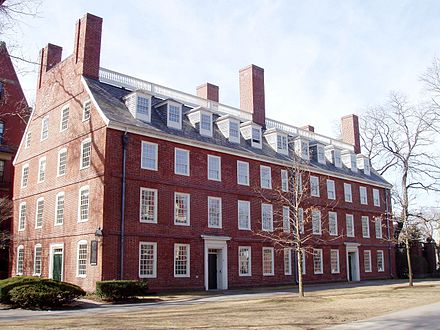
Massachusetts Hall at Harvard, probably in March.
“Springtime in Massachusetts is depressing for those who embrace a progressive view of history and experience. It does not gradually develop as spring is supposed to. Instead, the crocuses bloom and the grass grows, but the foliage is independent from the weather, which gets colder and colder and sadder and sadder until June when one day it becomes brutishly hot without warning...It was fitting, then, that the first people who chose to settle there were mentally suspect.”
― Rebecca Harrington, in her novel Penelope
'Trying to become the forest'

Thetford, Vt., in 1912. Note the beautiful elm trees, now long gone.
"This hill
crossed with broken pines and maples
lumpy with the burial mounds of
uprooted hemlocks (hurricane
of ’38) out of their
rotting hearts generations rise
trying once more to become
the forest....''
From "A Walk in March,'' by Grace Paley (1922-2007), the famed short-story writer. A native New Yorker, she moved to Thetford, Vt., in later life, where her second husband had a farmhouse. Thetford is a beautiful town on the Connecticut River, whose very fertile bottomlands still sustain some prosperous farmers. The town has drawn many celebrities to buy property there, in part because of the proximity of Dartmouth College, which is a few miles south on the New Hampshire side of the river.

'Mysteries of life'

The Chandler Gallery, in Cambridge, says: "One could argue that the way a story is told can be just as important as the story itself. Exploring those nuances is exactly what local artist Bill Porter intends for his new show 'Impart.'''
Porter has constructed "a stunning narrative between contrasting visuals that expresses themes of heritage, identity and the mysteries of life as seen through a child's eyes.''

James P. Freeman: Curling toward GOP victory

Curling in Toronto in 1909.
“Cry out full-throated and unsparingly,
Lift up your voice like a trumpet blast…”
--Isaiah 58:1a
If voters mean what they say -- constantly expressing dissatisfaction with the current hyper-partisan political class and calling for its removal -- they could convert hyper-pandemonic emotion into action by dismissing Massachusetts’s Elizabeth Warren in 2018. An able replacement would be Beth Lindstrom. She is the saucer that could cool the Senate’s tea. And, maybe, ferocious minority factions.
If this is, as we are reminded daily, the Year-of-The-Woman in American politics, Lindstrom, a moderate Republican, counters the argument that her party is comprised of old white men, tired and empty. And should she win her party’s nomination to unseat Warren this autumn, her candidacy removes one stone from the hand holding the political rocks that Warren likes to throw: the progressive granite of gender politics.
If you are Warren, you must hope that Lindstrom is not your challenger in November. For Lindstrom, personable and perspicacious, makes the improbable seem possible -- Warren’s wicked claw paralyzed; the screech silenced; the progressive oppression lifted.
For this column, appearing sturdy, cheerful and thoughtful over English Breakfast, fittingly, at a Boston hotel, the single biggest take-away is that Lindstrom is serious and compelling.
“A strong economy,” she says, is still the biggest issue for Massachusetts residents. Ever since Donald Trump won the presidency stock markets have anticipated the unbridling of America’s economic might. Higher wages, bigger bonuses and lower taxes (mere crumbs to likes of Warren and House Minority Leader Nancy Pelosi) are filtering into wallets and purses. A recent national poll found that the second and third most important issues to respondents were, respectively, the economy and taxes. (Healthcare ranked number one; a relative non-issue in Massachusetts since Romneycare in 2006.) This bodes well for Lindstrom’s focus on economics.
Though never elected to office, Lindstrom brings just enough public-sector experience (executive director of Massachusetts State Lottery (1997-1999); director of Consumer Affairs in Gov. Mitt Romney’s cabinet -- overseeing regulatory agencies including banking, telecommunications, energy, insurance and licensure (2003-2006)) and private-sector experience (a founder and owner of small businesses) to understand the complexities of modern government.
As President Calvin Coolidge noted nearly a century ago, “the chief business of the American people is business.” But today much of America’s business is government. Lindstrom’s skill-sets and her MBA degree, therefore, will come in handy as Trump steers his massive $1.5 trillion infrastructure initiative into a hybrid of public-private partnerships (with lots of still-unknowns).
In January, Lindstrom launched a Business Growth Tour, intended to “collaborate with Massachusetts business owners on the steps that can be taken to help them grow and expand.” Lowering costs and reducing regulation present a “fair opportunity,” she insists. Small business owners make a big voting bloc. In 2016, there were nearly 640,000 small businesses in Massachusetts. They employed 1.4 million workers, representing nearly 47 percent of all workers in the commonwealth. And nearly 90,000 of these businesses are minority-owned.
Warren, meanwhile, defends her questionable lineage, and her support of Dodd-Frank and the Consumer Financial Protection Bureau -- both saturated with excessive regulations. Do small-business proprietors think that there are too few regulations?
Perhaps unintentionally, Lindstrom’s presence is that of a restorer of Rockefeller Republicanism -- to frustrate today’s right-wing pathology; and repairer of the breach -- the chasm between professional politicians and everyday citizens. She speaks in tones of incrementalism, not extremism.
For the doubters -- those wondering if she knows how to win in liberal Massachusetts -- Lindstrom managed Scott Brown’s successful Senate campaign eight years ago. The inconceivable to the achievable.
Lindstrom senses a tremulous electorate in 2018, like what she felt in 2010. But today it’s harder to define; and it’s not yet articulated into a slogan. (In 2010, Brown ran to capture “the people’s seat.”) She may be forgiven for defining herself as an abstraction: “A common-sense Republican.” But what does that mean? Standard definition is yesterday’s technology and yesteryear’s candidacy. It will need some high-def refinement before Warren pounces. (In 2012, incumbent Brown called himself a “Scott Brown Republican,” letting Warren ill-define him.)
Her fractured party and its national leaders pose problems, too.
Sen. Rand Paul of Kentucky bemoans Republicans embracing Trump’s $1.5 trillion in new debts (reminiscent of Obama-era levels) and projections for unbalanced budgets for the next decade. Ironically, Rand joined Warren in opposing the recent “Bipartisan Budget Act of 2018,” which increases the debt ceiling and spending by hundreds of billions of dollars over the next two years. Lindstrom believes that the GOP must remain “the party of fiscal responsibility” and determine whether spending that is “necessary versus nice.” She favors congressional term-limits and a presidential line-item veto to force the government to think long-term, not each election cycle.
Like many Americans, she winces at the president’s “tone, temperament and tweeting” but thinks that more Americans will continue reaping the benefits of Trump’s economic policies by this year’s mid-terms. And, like many Americans, she supports his tax cuts; she expects that higher growth rates (not the paltry, so-called “new normal” touted after the Great Recession) will “temper higher debts and deficits.”
Talk of voters abandoning the GOP en masse in November may be premature. Just this month, a Politico/Morning Consult poll showed Trump’s approval rating equaling the percentage of voters who disapprove of his job performance (47 percent). And on a “generic congressional ballot” basis, the same poll found that the GOP now enjoys a one-point advantage over Democrats, as of Feb. 12. Will Americans reward his policies and ignore his personality this fall?\
Still, while Trump may be the elephant in the room, he is not on the ballot in 2018.
Fortunately for Lindstrom, Republican Gov. Charlie Baker will be on the ballot. Baker, like Lindstrom, is a moderate. And more importantly, he is also the most popular high-level politician in Massachusetts. A January WBUR poll found that 74 percent of Massachusetts voters approve of the job that Baker is doing. That means that he is more popular than Warren, and Lindstrom hopes that his coattails will carry Republican votes down ballot.
(Incidentally, the same poll found that: “The one somewhat positive number for Trump is that a plurality of Massachusetts voters (43 percent) say the president has been good for the overall economy.”)
For the next few months, Lindstrom looks to build her brand. Currently fewer than 8 percent of Massachusetts residents know who she is; Warren is recognized by nearly 95 percent of residents. That’s a challenge also facing her principal Republican opponents, state Rep. Geoff Diehl and former hedge-fund executive John Kingston. But all three Republicans are confident that they will meet April’s GOP state convention threshold to appear on September’s primary ballot. It’s still early.
Voters have been watching more Olympics than politics lately. Nevertheless, they may soon understand that Lindstrom’s campaign is analogous to the winter sport of curling, which requires resistance, patience and persistence to win. Whereas Diehl and Kingston are the two-man luge. Exciting and daring, certainly, but susceptible to crashing.
James P. Freeman, a former banker, is a New England-based writer and former columnist with The Cape Cod Times. His work has also appeared in The Providence Journal, newenglanddiary.com and nationalreview.com.
Soothing or spooky?

"Dreaming'' (oil and fabric), by Linda Klein, in her show "Family Matters,'' paintings based on her old drawings of children, at Bromfield Gallery, Boston, Feb. 28-April 1.
'only with spring'

"earth how often have
the
doting
fingers of
prurient philosophers pinched
and
poked
thee
, has the naughty thumb
of science prodded
thy
beauty, how
often have religions taken
thee upon their scraggy knees
squeezing and
buffeting thee that thou mightest conceive
gods
(but
true
to the incomparable
couch of death thy
rhythmic
lover
thou answerest
them only with
spring)''
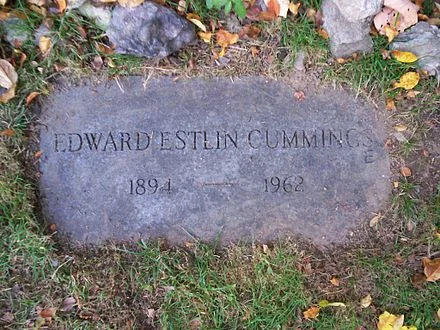
"Sweet Spontaneous,'' by E.E. Cummings, who, while he lived in Paris, New York, and elsewhere, remained at heart a quirky, ingenious and skeptical New Englander. He was born in Cambridge, Mass., and died in Madison, N.H. His remains are in Forest Hills Cemetery, Boston.
Thursday is the first day of meteorological spring 2018.