
Vox clamantis in deserto



Spare us more show-biz charisma
From Robert Whitcomb's "Digital Diary,'' in GoLocal24.com:
That Oprah Winfrey would be seriously considered as a presidential candidate is just another sign of the American decadence and decline demonstrated in the Electoral College having to present the Oval Office to a con man. But then in a country where fewer and fewer read seriously, ignorance of history and governmental operations is widening and most people get their public information from TV and social media sound and site bites, it’s no wonder that another “charismatic’’ TV celeb would be pushed forward. Perhaps Winfrey’s puffing of various medical and other con artists will block her candidacy, but in a decadent nation, don’t bet on it.
We can hope that successful – and honest -- chief executives, preferably a current state governor who knows how to make government work well, will be the presidential nominees in 2020. (Obama had far too little administrative experience. So did Lincoln, but he was a genius.)
Don’t government experience and knowledge, and judgment under the pressure of very big decisions affecting millions of people, count for much anymore when we’re filling America’s most important job? Have we become that superficial and silly?
Please spare us from another overdose of “charisma.’’
A fence with nothing to do
"Even the sky here in Connecticut has it,
That wry look of accomplished conspiracy,
The look of those who’ve gotten away

With a petty but regular white collar crime.
When I pick up my shirts at the laundry,
A black woman, putting down her Daily News,

Wonders why and how much longer our luck
Will hold.  'Months now and no kiss of the witch.'
The whole state overcast with such particulars.

For Emerson, a century ago and farther north,
Where the country has an ode’s jagged edges,
It was 'frolic architecture.' Frozen blue-

Print of extravagance, shapes of a shared life
Left knee-deep in transcendental drifts:
The isolate forms of snow are its hardest fact.

Down here, the plain tercets of provision do,
Their picket snow-fence peeling, gritty,
Holding nothing back, nothing in, nothing at all.''
-- From "A Winter Without Snow" (1945), by J.D. McClatchy.
'As you twist my arms'
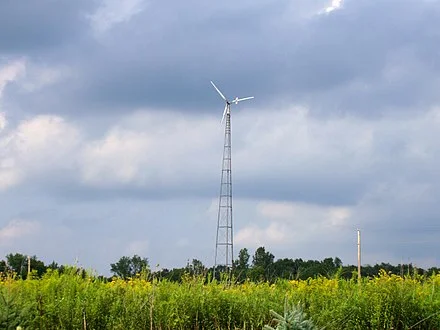
"You think I like to stand all day, all night,
all any kind of light, to be subject only
to wind? You are right. If seasons undo
me, you are my season. And you are the light
making off with its reflection as my stainless
steel fins spin.
On lawns, on lawns we stand,
we windmills make a statement. We turn air,
churn air, turning always on waiting for your
season. There is no lover more lover than the air.
You care, you care as you twist my arms
round, till my songs become popsicle.''
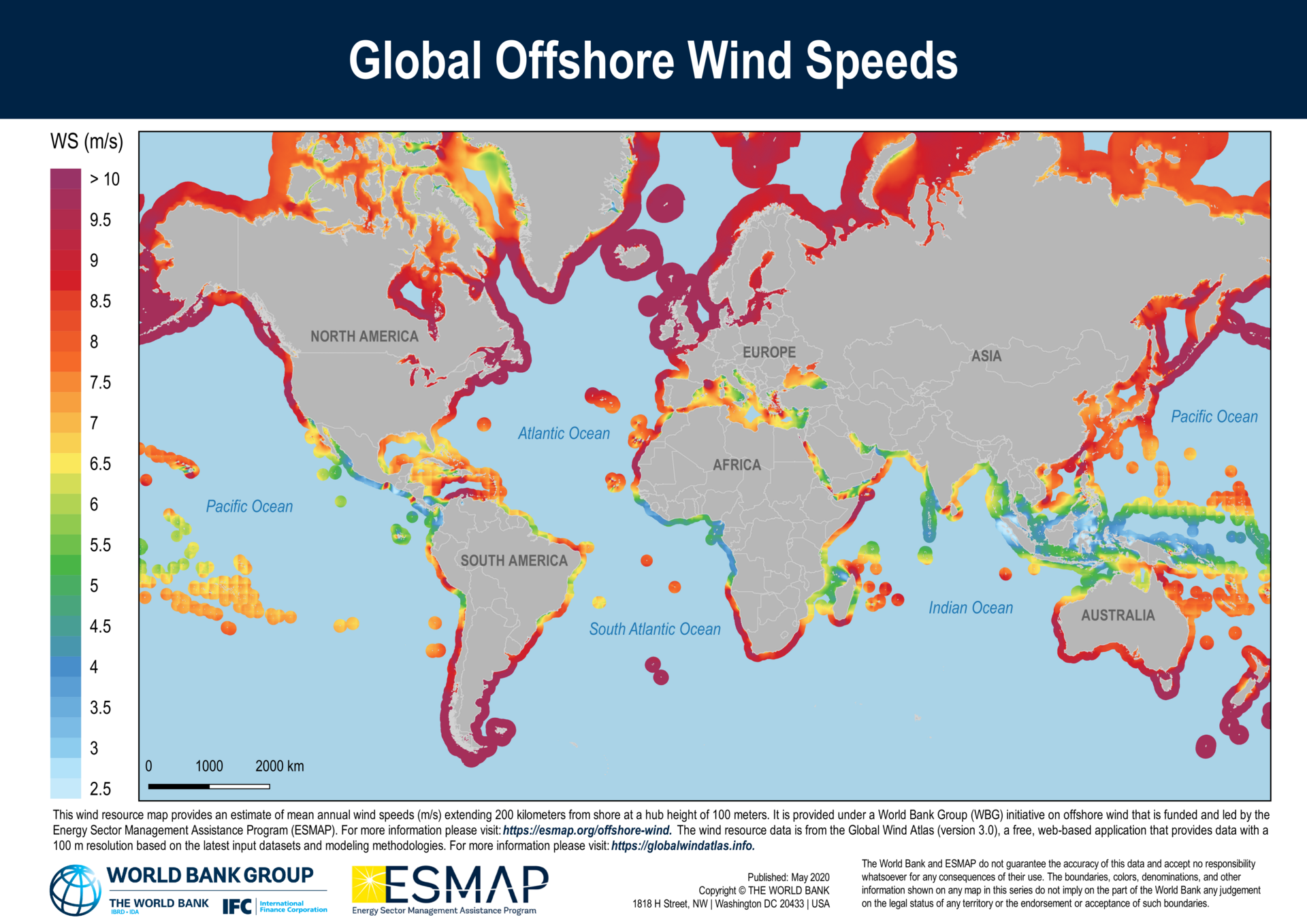
-- From "A Windmill Makes a Statement,'' by Cate Marvin
Island of the 'Stone Sloopers'
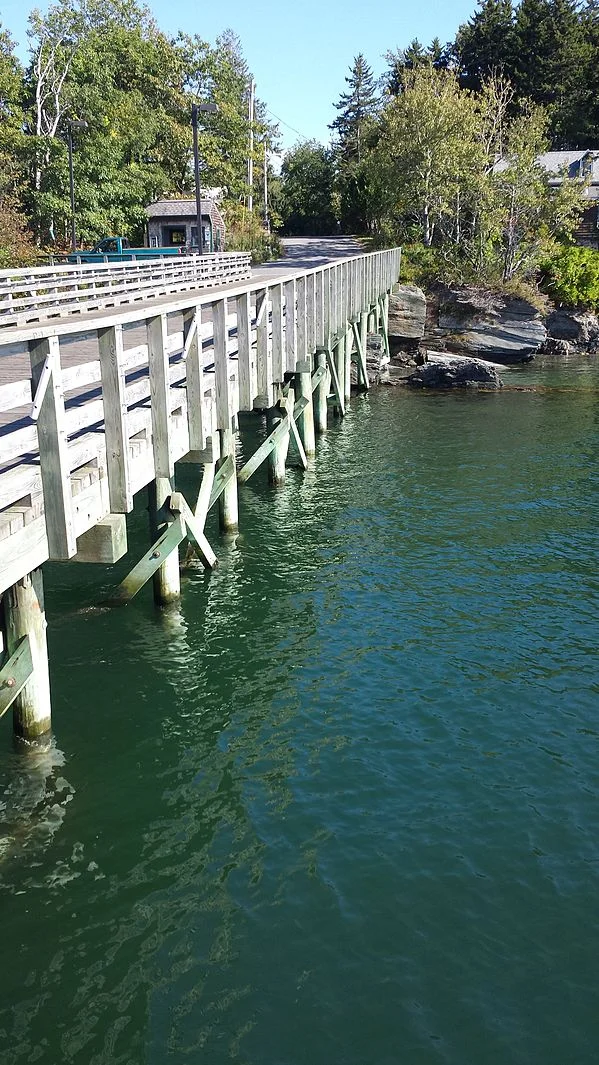
Landing place on Chebeague Island, in Casco Bay.
"Chebeague Island is the largest of the islands in Casco Bay, near Portland Maine. Everyone knew everybody else on the island, and if they were not related, they were friends, or at the very least knew everything there was to know about each other, including what they had in their stew pot at any given time. Most of the islanders, including the Kimberly family, were descendants of the “Stone Sloopers.” On Chebeague Island they built three wharves. The Stone Wharf, or Hamilton Landing as it was known, is still in use today. The one-masted sloops, sometimes known as Chebacco Boats, sailed along the rocky Maine coast transporting granite and stone from Maine’s coastal quarries, to east coast cities as far south as Chesapeake Bay. The Washington Monument and many of the governmental buildings in Washington, D.C., were built of granite brought up the Potomac River by the Stone Sloopers. During the 19th Century, they also supplied rock ballast for the sailing ships that came into New England ports. The Stone Sloopers are also remembered for building Greek revival homes, which can still be seen on the island.”
-- From Seawater One..., by Hank Bracker

LeeAnne Hall: Many have jobs BECAUSE they're on Medicaid
On Jan. 11, the Trump administration issued a cruel announcement: If you can’t find a job, don’t count on being able to get health care.
Under an unprecedented new policy, the administration will let states kick people off Medicaid for the crime of being unemployed. Instead of providing good jobs to struggling people, the administration is offering threats and tougher times.
Those hurt could include the Carrier plant workers from Indiana, whose jobs Trump promised to save when he was campaigning for the presidency. Last year, the company announced 600 layoffs.
Now the last of these employees are being pushed out the door. One worker says she’s “a lost paycheck away from homeless.”
Imagine telling her Medicaid won’t be there for her on top of everything else she’ll lose. The heartlessness is incomprehensible.
Still, her state’s governor is one of ten that’s jumping on the administration’s new proposal to require work or work-related activities. Kentucky’s plan has already been approved.
This is no way to treat people you claim to care about — especially when lawmakers can improve our lives with policies providing child care, paid family and medical leave, and living-wage jobs in a clean-energy economy, to say nothing of affordable health care for all.
Simple facts show that this work requirement isn’t about jobs. Most working-age adults who use Medicaid already work, and many of them have jobs thanks to Medicaid — not despite it.
That’s because Medicaid helps them get and stay healthy enough to work. After Ohio expanded Medicaid, three quarters of those who signed up said getting coverage helped them get work. In Michigan, more than two-thirds also said it helped better at a job they already had.
This policy is another blow for those facing racial or other discrimination on the job. It punishes people in job-scarce communities. It hurts people struggling to find work when they have a past criminal conviction.
And, while the administration says people with disabilities won’t be affected, that could be by only by the strictest definition of disability. Those who’ve been hurt on the job won’t necessarily be protected. Neither may many people struggling with addiction, mental health concerns, or physical conditions that make working difficult or impossible.
We can see from Kentucky’s plan what this could look like. New premiums for struggling families. Paperwork lockouts. A financial or health “literacy test” reminiscent of tests that barred African American people from voting. State officials say 90,000-95,000 people will lose their coverage.
Last year, Americans demanded we not go backwards on health care. Thousands of us showed up at town halls to block the GOP effort to repeal the Affordable Care Act and the gutting of Medicaid.
Everyone should get the care they need.
The expansion of Medicaid under the Affordable Care Act was a step in that direction. It gave many of us hope for the country we can be: one where a family’s fortunes don’t depend on the good graces of a giant corporation, and our lives don’t depend on the size of our wallet.
We still have a long way to go. Many are shut out of health care because of citizenship status, because coverage is still too expensive, or because our states refuse to expand Medicaid.
But the Trump administration and GOP Congress are moving us backward. This new Medicaid scheme is just part of it. There’s also the recent tax bill that will raise insurance premiums while giving huge cuts to corporations like Carrier — which, according to one employee facing layoffs, is “getting money hand over fist.”
Americans want health care expanded, not taken away. They can’t trick us with yet another scheme. Let’s raise our voices again and protect Medicaid.
LeeAnn Hall is the co-director of People’s Action and a member of the executive committee of Health Care for America Now. Distributed by OtherWords.org.
Todd McLeish: Climate change, plastics create rising tide of invasives
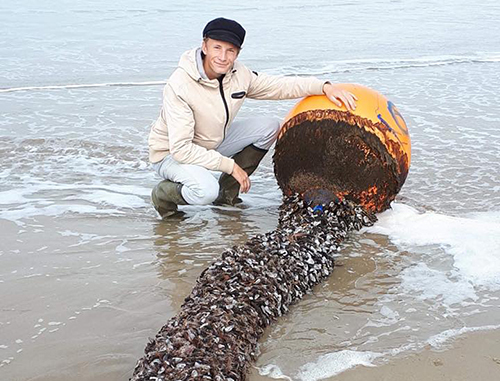
Aaron Fabrice found this Rhode Island-based buoy in early October along the Belgian coast.
-- Photo by Diederik D’Hert
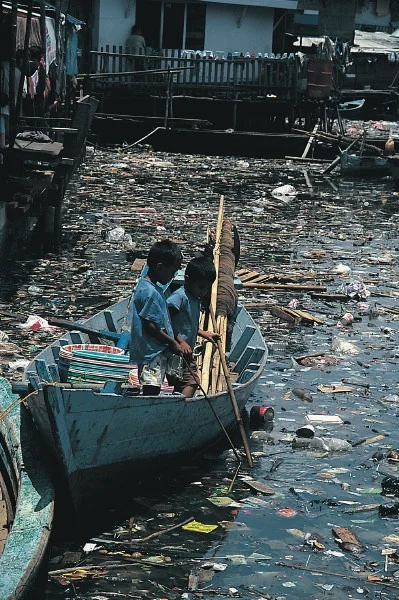
Marine plastic and other debris.
Via ecoRI News (ecori.org)
Aaron Fabrice found this Rhode Island-based buoy in early October along the coast of Belgium.
A large buoy that washed ashore on the coast of Belgium in October — trailing a 10-foot rope that was covered in hundreds of goose barnacles, crabs and shrimp — has been traced to an offshore lobster boat based in Point Judith, R.I.
The discovery of the buoy and attached marine life illustrates one of many ways that non-native marine life finds its way to distant shores. And one Massachusetts scientist believes it’s a vector for invasive species that will become more and more common as climate change produces increasingly severe storms that will toss sturdy plastic debris into the ocean.
Aaron Fabrice, 20, who describes himself as a beachcomber, citizen scientist, conservationist and nature guide, found the buoy Oct. 8 on a beach in the town of De Panne, on the northwest coast of Belgium. He said the discovery was “like a dream” as he and a friend counted 39 Columbus crabs, native to the Sargasso Sea near Bermuda, nestled between hundreds of goose barnacles. He claims it is “the largest observed stranding [of Columbus crabs] on the Belgian coast ever.”
Fabrice also found numerous skeleton shrimp on polyps on the barnacles, a species he said is commonly found attached to floating debris.
After collecting samples of the crabs for the Royal Belgian Institute for Natural Science, Fabrice posted photos of the buoy to beachcombing and lobstering message boards showing the unique combination of letters and numbers printed on it. Two months later, he learned that it belonged to Rhode Island lobsterman Roy Campanale Jr. of Narragansett, who acknowledged to Fabrice that he lost the buoy off his boat Mister Marco sometime in 2016.
“We did not expect that North American floating objects would wash up on our coast,” wrote Fabrice in an e-mail message. “Normally floating objects from North America wash up in Cornwall, U.K., or Brittany, France. There must have been an Atlantic seawater bubble coming through the channel in the North Sea.”
According to Jim Carlton, an ecologist at Williams College, in Williamstown, Mass., who studies marine invasive species, debris from North America shows up on the coast of Europe fairly regularly, and it’s often colonized by a wide variety of marine life. He said that goose barnacles and Columbus crabs are oceanic species that can’t live in the coastal zone, so they are unlikely to become established in Belgium and affect native species.
But, he added, it could be that there were species from North America that were buried within the barnacle-crab community.
Carlton has studied the transoceanic dispersal of marine life in great detail. Last fall he published a paper in the journal Science about the nearly 300 species of Asian marine life he and his colleagues found on debris along the West Coast that they traced to the 2011 earthquake and tsunami in Japan.
He said natural disasters provide a greater opportunity for the dispersal of species across the Pacific than ever before, because of all the plastic objects that make up modern daily life. Before plastic became ubiquitous, most storm-tossed marine debris consisted of wood, vegetation and other biodegradable materials that would disintegrate before they made it across the oceans.
“That got us thinking that the story of ocean rafting has shifted rather remarkably in the last half century,” Carlton said. “The plastic rafts at sea now are very enduring. They’re not degrading and dissolving. Animals can go on a much longer voyage now than they could have historically when they were drifting on a piece of vegetation.”
The implication is quite dramatic. Carlton believes that the tsunami-caused invasion of species from across the Pacific is only a hint of what is to come. As increasingly severe storms — the result of a changing climate — hammer coastlines around the world, more and more marine species will find their way across the oceans on plastic debris, ultimately causing a homogenization of the world’s coastlines.
“Imagine the amount of debris that came off the Caribbean islands during the hurricanes last fall — many hundreds if not thousands of buildings and all of their contents were swept into the ocean,” he said. “The climate models and evidence strongly suggest that we’re going to be entering a world of more of these cyclonic systems, making ocean rafting potentially one of the major new vectors for invasive species.”
Todd McLeish runs a wildlife blog. His next book about threatened wildlife, Return of the Sea Otter, will be published March 20.
Video and text:The man from Worcester who helped bring Modernism to America and then imploded
Scofield Thayer was a rich, brilliant and ultimately insane young man from Worcester who helped bring Modernism to America. Hit this link to learn more, and then plan to see the movie.
And see/hear this interview.

A memorable conflict
Here's a wonderful documentary film about Robert Frost. It's called A Lover's Quarrel With the World.
Llewellyn King: Longing for an outbreak of American civility
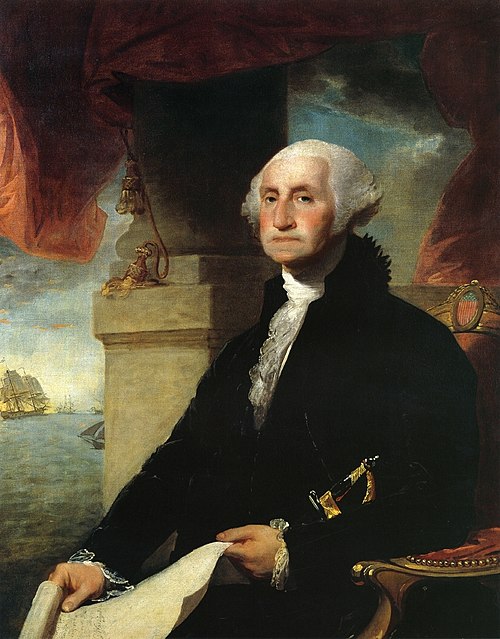
George Washington published a book called Rules of Civility and Decent Behaviour In Company and Conversation.
Little things mean a lot and manners mean a great deal. Fifty years after the Rev. Martin Luther King Jr. was assassinated, our national manners about race seems to be fraying.
After King was fatally shot, I was in the thick of the riots in Washington. The one thing I recall with great clarity is — even as shops were being looted and fires set — the rioters paused to be polite to me. Several times men, who were out to destroy or steal as much as they could, ushered me to safety and inquired if I was all right.
In those race riots, there were outbreaks of manners; of people seeing each other as people. Richard Harwood of The Washington Post noticed the same outbreak of politeness and wrote about it.
That is why it is distressing to see socially considerate language deteriorate. It means a deterioration in manners.
In these 50 years, we have come both a long way and not far enough. How we talk about things does matter.
Twenty years ago, while I was hanging out with some Irish television journalists in a bar in Dublin, they began attacking a local newscaster. Nothing unusual there: The writers and producers who write the words spoken on air often resent the newscasters who read them.
They are invariably paid much more than the people who prepare the broadcasts, reap the rewards of celebrity and can be a pain. Remember Ted Baxter in “The Mary Tyler Moore Show”?
In a final comment, one of the most senior of the journalists declared, “Let’s face it, he’s just a Protestant prick!” This remark gave me a start and made me glad that I was naturalized American. We might call someone names in America, but we would not drag in religious affiliation.
In Washington, at the venerable National Press Club, another little shocker. A Malaysian publisher, discussing the dominant position of the Chinese minority in his country, said in a voice so loud that other guests looked around, “The only straight thing about a Chinaman is his hair.” We would neither say nor think that.
A small thing, words and the related manners they codify, but they set the tone. We scatter the words and they grow into attitude and policy.
In my own negotiations — business negotiations, labor negotiations and news-story negotiations — manners have been an essential part of them. If you have publicly denigrated your opponent before you sit down, you will have traded a position on the high ground for one in the swamp.
So why is President Trump, who fancies himself the deal-maker in chief, the denigrator in chief? Dissing others is like lying; no one will believe anything that comes out of your mouth later. A veracity gap has a permanence about it.
The Bad, Sad News from Puerto Rico
I have had a lifelong interest in electricity. As a kid in Africa, I learned the difference between having it and not. It is the difference between living and subsisting, hope and hopelessness.
I read an alarming story in The Intercept, an online news publication, which says that despite more than 1,500 highly experienced emergency workers from the mainland in Puerto Rico, crews are sitting idle while the supplies, which would enable them to get on with the job of restoring power to about 1 million American citizens, are locked away in warehouses.
Yankee can-do is apparently not doing, owing to local incompetence and maybe corruption.
The Debate over Embassies: Don’t Lose Track of the Facts
Amid all the outrage and some endorsement of Trump’s moving the U.S. embassy from Tel Aviv to Jerusalem, the fact that the two cities are close to each other got lost. It is a distance of 50 miles and I have traveled it several times in, as I remember, about 40 minutes or less by taxi.
As for the new London embassy, it is on the London Underground in Nine Elms, an up-and-coming area in a dynamic and changing city.
It is not Ye Olde London: Just look at the skyline and marvel.
The Things They Say
“It’s not tyranny we desire; it’s just, limited, federal government.” — Alexander Hamilton.
Llewellyn King (llewellynking@gmail.com), host of White House Chronicle, on PBS, is a veteran publisher, editor, columnist and international business consultant.
Don Pesci: The menace of deculturation
The phrase is French -- La Trahison des clercs” -- meaning roughly "the treason of the intellectuals''. This particular phrase, launched by Julien Benda in 1927, could only have popped out of a French head. Benda’s beef was that the intellectuals of his day were placing the virtue of action above the necessity of lucid thinking. Opinion makers, Benda feared, were allowing political commitment to strangle thought. As Roger Kimball put it in a 1992 essay in the New Criterion, "Benda claimed, politics was THE ideal of disinterestedness, the universality of truth: such guiding principles were contemptuously deployed as masks when they were not jettisoned altogether. It was in this sense that he castigated the 'desire to abase the values of knowledge before the values of action.'”
When intellectuals abandon “the universality of truth” for political reasons, they are guilty of intellectual treason. During Benda’s own day, politicians were wearing convincing but false masks of intellectualism; think of Stalin in Russia, Hitler in Germany, Mussolini in Italy, and the choir of intellectuals who surrounded them. Suitably abased, knowledge yielded to political force blind to truth.
As viewed by Kimball, Benda’s warning has modern applications: “Those who for centuries had exhorted men, at least theoretically, to deaden the feeling of their differences … have now come to praise them, according to where the sermon is given, for their ‘fidelity to the French soul,’ ‘the immutability of their German consciousness,’ for the ‘fervor of their Italian hearts.’ In short, intellectuals began to immerse themselves in the unsettlingly practical and material world of political passions: precisely those passions, Benda observed, ‘owing to which men rise up against other men, the chief of which are racial passions, class passions and national passions.’ The ‘rift’ into which civilization had been wont to slip narrowed and threatened to close altogether.”
All around us today are pseudo-intellectuals, traitors to wisdom and common sense, fairly worshiping at the throne of some political genius, some over-powering political doctrine, some false devil of the utopian political imagination. Not content merely to divide people into warring groups, they grow violently disruptive, as did the Sturmabteilung of Hitler’s day. Who among us remembers that many of Hitler’s Brownshirts had been communists, or that Stalin was a “breaker of nations” because he had perfected the art of political division, or that Kim Jong-un’s father and grandfather were worshiped in North Korea as gods, as was Caligula in Rome, or that in Benda’s France, the most influential of the intellectuals – but for Camus and some few other heroic exceptions – were worshipers of political action, fellow travelers in Stalin’s bloody race to power? Such were the traitorous intellectuals then -- and now.
Yes – now. In America, atomization into irreducible classes – blacks, women, presumed oppressed groups, the underprivileged or, as the modern atomizers would have it, the white privileged and everyone else – have been justified by intellectuals in academia and the media because, without such divisions, a desired political action would be impossible. Such was the condition of Europe during the rise of fascism and communism, both offshoots of socialism. Mussolini defined fascism this way: “Everything in the state, nothing outside the state, nothing above the state.”
The omnipotent state will need men like gods to administer it. Nationalism in America rejected such politically opportune atomization and its attendant evils – the centralized state overseen by a strongman, the hawking of utopian socialism from every rooftop – and it was the embrace of tradition, what G. K. Chesterton used to call “the democracy of the dead,” that saved republican government here from the social revolutionists wreaking havoc everywhere in Europe, China, Russia, East Asia, and wherever else the totalitarian urge was not resisted..
These same anarchic disintegrative forces are now at work in the United States education. The anarchist is not a man who believes in nothing; he is a man, uprooted from his culture, who will believe in anything. Deculturation does not lead to an excess of liberty and freedom; it leads to a multiplicity of cults – and, of course, deculturated cult figures, every one of whom is worshiped as a minor deity or, perhaps nearly the same thing, a Hollywood celebrity.
Tradition gives a voice to the dead. Once viable traditions and supportive cultural forms – the family, the church, representative political parties, a responsible media, constitutional government -- have been destroyed, only the imperious voice of Caesar will be heard in the land, and his message is always the same: kneel before the throne of power, and power will lift you up.
Don Pesci is Vernon, Conn-based essayist,
Make a better airport with the same name
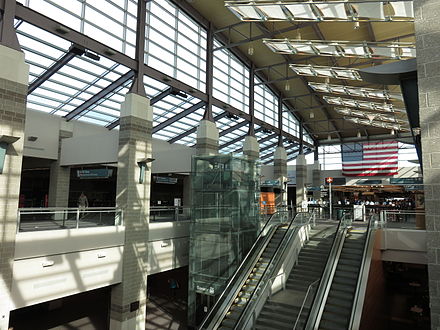
In the T.F. Green Airport terminal.
From Robert Whitcomb's "Digital Diary,'' in GoLocal24.com:
“Bad luck…always pursues people who change the names of their cities. Fortune is rightly malignant to those who break with the traditions and customs of the past….’’
-- Winston Churchill
The recent belated but much appreciated growth of T.F. Green Airport into a real international airport has been very happy news for southeastern New England. But this has led Warwick Mayor Scott Avedisian to suggest to The Providence Journal that the airport be renamed “Warwick International Airport’’ or, perhaps, “Rhode Island International Airport’’.
Bad ideas. Yes, the airport is in Warwick but Warwick is part of the two-state Metro Providence area. Most U.S. travelers outside New England have heard of Providence, R.I. ; few have heard of Warwick. And the airport not only serves the Ocean State but also large parts of Massachusetts as well as a slice of eastern Connecticut. (Of course, too many people get Providence mixed up with another quaint and quirky place – Provincetown – and even get “Rhode Island’’ mixed up with its neighbor “Long Island.’’)
In any case, the Green name should be kept. The airport is named after the late Rhode Island governor and then U.S. senator Theodore Francis Green (1867-1966!), who was a big public infrastructure proponent, from the WPA on. The appropriate new name for the airport would be “T.F. Green International Airport.’’ The name of Boston’s main airport – Logan International Airport – doesn’t include “Boston,’’ but that hasn’t caused any trouble that I know of. And few can identify Edward Lawrence Logan (1875-1939, a general and Massachusetts politician), after whom the huge facility is named. But that doesn’t matter. Name changes are generally not worth the confusion they cause.
I get a chuckle out of Mayor Avedisian’s desire to promote Warwick’s connection with the improved airport because he had long helped to put roadblocks in the way of extending the runway at Green to permit non-stop flights to the West Coast and into all of Western and Central Europe. He was responding to a small but very vocal group of people living near Green who didn’t want more airport noise and traffic and/or wanted more money from the state for their houses to be taken by eminent domain in order to allow for the very overdue longer runway. Hypocrisy makes the world go round!
Business travelers in particular have for decades sought those longer flights out of Green. With the runway extension finally completed last fall, I trust that we’ll get them soon. The FAA, for one, would like them in order to reduce congestion at Logan.
Meanwhile, let’s praise the fine work of airport chief Iftikhar Ahmad and his staff in building up Green.
xxx
It can only help that MeetingSource.com has ranked the Providence-Warwick area as one of the best mid-sized cities in America to host a convention. However, presumably using pre-runway-extension considerations, it complained about an inadequate number of direct flights in and out of Green. We hope that will no longer apply in a year, as Mr. Ahmad and his colleagues continue to promote the airport’s charms and conveniences.

William Morgan: On 'The Last of the Hill Farms'
David R. Godine is one of the great cultural resources of New England. For almost half a century, the Boston- and Jaffrey, N.H.-based publisher has been shepherding often regional, sometimes quirky, but always handsomely designed books to the shelves of discriminating readers. Success at Godine is measured not in sales, but in a belief in exceptional writers and the need to keep alive the craft of the making of beautiful books.
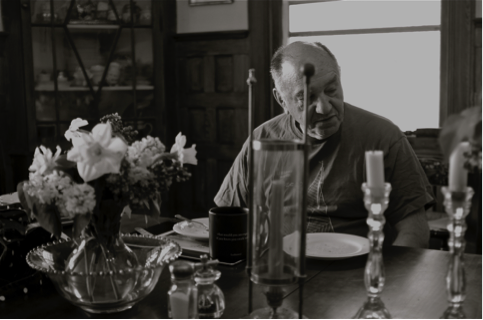
David R. Godine, photographed at Mountain View House in Dublin, N.H., onetime summer home of Mark Twain.
This has often meant rescuing classic works of literature and reprinting them, along with supporting writers, poets and illustrators. The Godine catalog reads as a Who’s Who of 20th-Century literature – John Banville, Anne Lindbergh, Noel Perrin, Lee Laurie, Dylan Thomas and two Nobel laureates for poetry, just to name a few.
Godine has also long been a patron of art photography, publishing the work of such noted photographers as Paul Caponigro, George Tice and Nicholas Nixon. To that list the publisher had just added a handsome volume of images of a disappearing rural way of life in the nether reaches of northern New England, The Last of the Hill Farms: Echoes of Vermont’s Past.
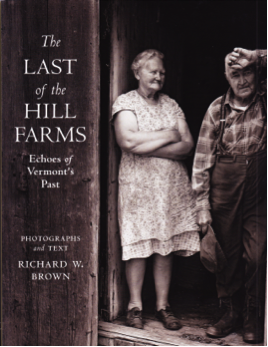
Photographer and writer Richard W. Brown, who moved to the village of Peacham in Caledonia County in 1971, is well known for dozens of books and his many contributions to Vermont Life magazine. That world of human interest and pretty scenery was in Kodachrome. But Brown was also quietly using an 8 by 10-inch view camera with black and white film to document the hardscrabble life of Vermonters beyond Burlington, Orvis, the ski areas and the flatlanders.
Brown’s work is in the noble tradition of American documentary photography, epitomized by Walker Evans and countless other artists working for the Farm, Security Administration during the Depression. (Brown was undoubtedly inspired by photographer Paul Strand, many of whose Yankee portraits were collected in the iconic book Time In New England, published in 1950.)
The four score photos in The Last of the Hill Farms are straightforward images (a bulky view camera imposes a certain discipline on its user). People are captured without artifice, with respect and love. But, like their Depression-era predecessors, these pictures depict poverty. These farmers are working a harsh and unforgiving land, and one wonders how long this sort of agriculture can endure. As former Vermont Life editor Tom Slayton writes in the foreword, “There is fatigue, even defeat written on some faces. Yet on others, toughness, dignity, an underpinning of wry, survivalist humor can be seen.”
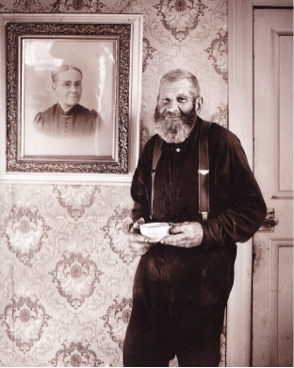
"Coffee with Grandmother,'' Quechee, 1977.
One picture is from 1987, but most are from the 1970s. Brown presumably got tired of lugging around his heavy equipment, or perhaps the state was becoming too gentrified. “By the time I took these photographs,” Brown writes, “there were only a few farms scattered along the back roads of each Vermont village – small families milking thirty or forty cows.”
The landscape has been neglected, barns need paint and houses need resuscitation. “Seemingly forgotten by the rush of progress, they aged with a poignant grace: spare, worn, yet to my eye hauntingly beautiful.” Brown’s sentiments walk a thin line between genuine sociological concern and picturesque tourism. (“Wrecked cars ands derelict tractors rusted away at the edges of field and tethered goats grazed on lawns. I thought it was the most beautiful thing I had ever seen.”)
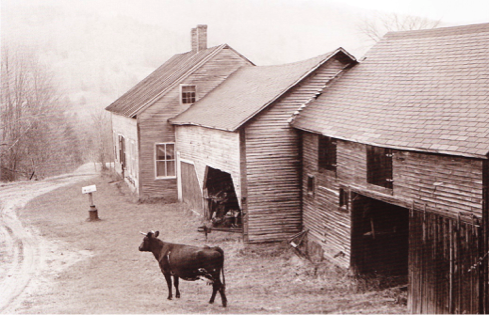
"Lost Heifer,'' Sheffield, 1972.
Some of the stories related in the text border on the mawkish, and depictions of horses, cows and barn cats are always in danger of veering toward the cute. Still, it is hard not to laugh at farmer Milo Persons being roused from a coma by a doctor whispering into his ear, “Milo, your cows are out.” And there is a whole lot of wisdom in one farmwife’s confession: “I don’t mind dying, but I am sure going to miss sugaring.”
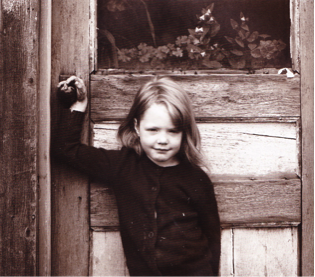
"Wanda, Walden,'' 1975.
“It was too good to last,” Brown laments. “But with my camera I could bear witness to this compelling world while it still lingered.” Richard Brown’s collected images – a timeless love letter to his adopted state – make a magnificent testament.
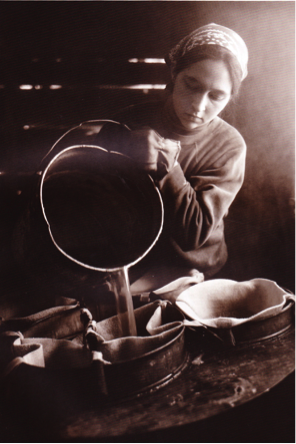
“Filtering Syrup” Barnet, 1977
William Morgan taught the history of photography at Princeton University, and is the author of A Simpler Way of Life: Old Farmhouses of New York & New England, among other books.
Genius in sound
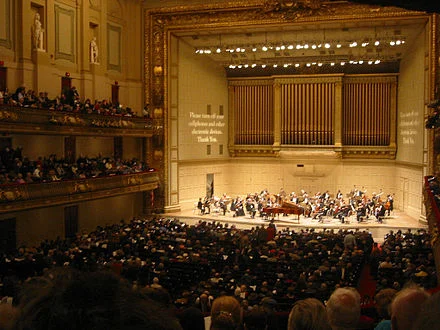
Symphony Hall in Boston, said to have the best acoustics of any major performance venue in America and to be one of the three best in the world.
"We did experiments with the Boston Symphony for many years where we measured the angles of incidence of sound arriving at the ears of the audience, then took the measurements back to MIT and analyzed them.''
-- Amar Bose
Mr. Bose was an American academic and entrepreneur. An electrical engineer and world-famous sound engineer, he was a professor at the Massachusetts Institute of Technology.. He was also the founder and chairman of Bose Corp.
'An imperial infliction'
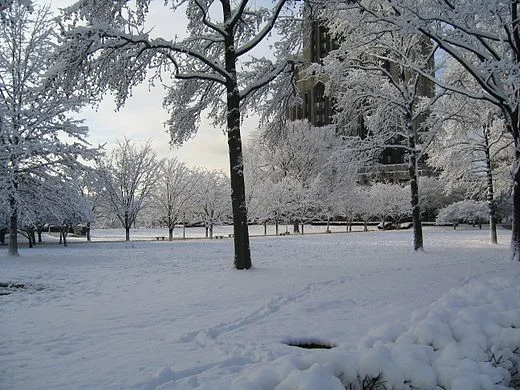
"There's a certain Slant of light,
Winter Afternoons –
That oppresses, like the Heft
Of Cathedral Tunes –
Heavenly Hurt, it gives us –
We can find no scar,
But internal difference –
Where the Meanings, are –
None may teach it – Any –
'Tis the seal Despair –
An imperial affliction
Sent us of the Air –
When it comes, the Landscape listens –
Shadows – hold their breath –
When it goes, 'tis like the Distance
On the look of Death –''
-- Emily Dickinson
Streets full of water, please advise

U.S. Courthouse on Fan Pier, on the Boston Waterfront.
Adapted from Robert Whitcomb's "Digital Diary,'' in GoLocal24.com:
realize that builders, property managers and city and state officials have taken steps to mitigate the effects of sea rise caused by man-made global warming in Boston’s newly glitzy Seaport District. But are companies, such as General Electric, that plan to move there having second thoughts after the Feb. 4 tidal surge, which put some waterfront streets under water? Then there’s the Back Bay, which is filled land and hardly above sea level, where some GE execs now live.
But apparently Amazon ain’t afraid:
It’s in talks to lease 500,000 square feet of office space in Boston’s Fort Point Channel neighborhood, on the waterfront, with an option to double the space also being discussed, reported The Boston Globe. This has, of course, intensified the idea that Boston might become the site of the retail behemoth’s ballyhooed “second headquarters.’’
To read more on Amazon and Boston please hit this link
I give credit to Massachusetts Gov. Charlie Baker and Rhode Island Gov. Gina Raimondo for raising awareness about, and planning responses to, sea-level rise, which may drown such areas as Newport’s Point neighborhood in the next few decades. And watch out Barrington, R.I., much of which is almost as low at Venice.
Frank Carini: Vertical farming for downtown Providence

Vertical farming of lettuce.
Via EcoRI News (ecori.org)
Two decades ago the installation of an award-winning art sculpture sparked WaterFire. This now-hugely popular event is a tourist attraction, destination event for locals and a vital piece of the city’s economy. The idea ignited the revival of the city’s riverfront and gave Waterplace Park its mojo.
A vertical farm could do the same for the I-195 land the city and state are so desperate to develop, at least according to Lisa Raiola, founder and visionary behind the Warren-based culinary incubator Hope & Main.
“It would be model for all of New England,” she told ecoRI News earlier this year. “It would be an urban living space with agriculture. It would attract funding and tourism ... a living-learning experiment that could be the future of local food.”
Such a multistory facility, complete with a family-attracting fish farm, would instantly become a curiosity to highway motorists — a billboard, sans an oversized head of a personal-injury lawyer.
Besides drawing more people into the city, such a development would grow local food, help local farmers and food producers, educate consumers, and would be a small step toward making Rhode Island more food secure.
The farm would generate tax dollars, create jobs and spur innovation. In fact, it would be much more than a farm and far more interesting than, say, privatized student housing. Such a complex could include unique urban office and living space, a brewery with space to grow hops, and local shops and restaurants. Chains need not apply. Visitors would come to tour the hanging gardens and stay to shop and dine. Build it with public transportation in mind, and make it pedestrian- and bicycle-friendly.
Growing the local economy requires 21st-century thinking, not stale ideas regurgitated from the past. Baseball stadium? Rhode Island already has a good one, packed with plenty of history. Student housing? Enough already.
Why are we spending so much time and effort trying to entice out-of-state companies to relocate here by offering them tax breaks? There are plenty of hard-working local businesses that could use a helping hand, and likely won’t pack up and move when another city or state inevitably offers a bigger and better tax deal.
We should be building our local economy by working with existing businesses, preferably ones who weren’t lured here by the promise of not having to pay their fair share of taxes.
Rather than wait for a Dallas-based developer to propose building more student housing, or some other company to consider handing over taxpayer money to build a private baseball stadium, why can’t state and local officials be proactive and sincerely work with those who have a true passion for local investment?
The I-195 Redevelopment District Commission and Gov. Gina Raimondo should be working with people like Raiola, Nat Harris and Leo Pollock at The Compost Plant, and David Dadekian, founder of EatDrinkRI. Dadekian wants to create something similar to New York City’s Chelsea Market or San Francisco’s Ferry Building Marketplace here in Providence.
The commission and city and state officials should be collaborating with Farm Fresh Rhode Island and the Southeastern Massachusetts Agricultural Partnership to develop the economic opportunities afforded by the relocation of Route 195.
A vertical farm would be the perfect centerpiece to promote local food. We should be putting more time and energy into making Providence the epicenter of New England food tourism, rather than having the city used as a storage center for liquified natural gas.
Job creation and employment opportunities are without a doubt vital, but do we need to continue to rely on the expansion of fossil fuels and the building of a misleadingly named Clear River Energy Center to put people to work? The 10-mile river that had its name stolen isn't going to benefit from another power plant built near its banks. These fossilized remains of the past aren’t clean, despite all the greenwashing.
The new Burrillville energy center, to be owned and operated by Chicago-based Invenergy LLC, promises to help “solve New England’s energy needs by creating a 900+-megawatt clean energy center in Rhode Island.” This facility will largely be powered by natural gas. Natural gas isn’t clean. Cleaner than coal perhaps, but hardly worth bragging about.
Put local builders to work constructing a food campus/tourism hub that incorporates a vertical farm and a marketplace for New England products and artisans. Power the facility with renewable energy — an array of rooftop solar panels would be eye-catching from the interstate — and infuse the area around this hub with 21st-century ideas and technology. Then boast about job creation. Building more pipeline miles shouldn’t be applauded.
While we have plenty of self-proclaimed “thought leaders,” what we’re really missing are ideas — like WaterFire. In 2005, the Providence Business News reported that WaterFire attracted more than 1.1 million visitors to Providence in 2004 and had a direct economic impact of $33.2 million that year, including some $2.5 million in sales tax from WaterFire events. It’s popularity and economic punch haven’t waned.
Vertical farming, like the local food movement in general, is a growing industry that needs to be better embraced by our local leaders. Vertical farming also addresses the issues of finite arable land and human population growth, by enabling more food to be produced with less resources used. A vertical farm in Japan, for example, with rows of thin soil bases controlled to the tiniest variable for temperature, humidity and light, allows the facility to harvest 10,000 heads of lettuce in a single day while using 40 percent less power and 99 percent less water than traditional farms, according to Foundation Earth.
Sky Greens, a Singapore vertical farming company, employs a growing system that allows plants to be rotated on recycled water-powered aluminum frames and exposed to water every eight hours. For densely populated places such Singapore, vertical farming addresses the issues of limited real estate and the high cost of this said real estate. For the record, Rhode Island is the second-most densely populated state.
In fact, vertical farming is so efficient that there is growing belief that this type of urban farming could move beyond a niche market and become a solution for food insecurity. Some even believe vertical farming could be the future of agriculture.
The Association for Vertical Farming claims crops require an average of 98 percent less water and 70 percent less fertilizer. There are, however, challenges. Maintenance costs for vertical farming are high. Hydroponic systems require nutrient replenishment, not all plants can be grown in such a system and pollination must be done by hand.
Just an idea. But it would be a refreshing — and needed — change to see Rhode Island's power brokers address job creation and economic development by investing their time and our money into ideas that address food security, climate change, the environment and the prosperity of future generations.
Frank Carini is the editor of ecoRI News.
Road from nowhere

"Car Culture" (oil on panel), by Sean Thomas, at Alpers Fine Art, Andover, Mass.