
Vox clamantis in deserto




The thaw and the catalogs

"There are two seasonal diversions that can ease the bite of any winter. One is the January thaw. The other is the seed catalogs."
-- Hal Borland
Between creation and collapse

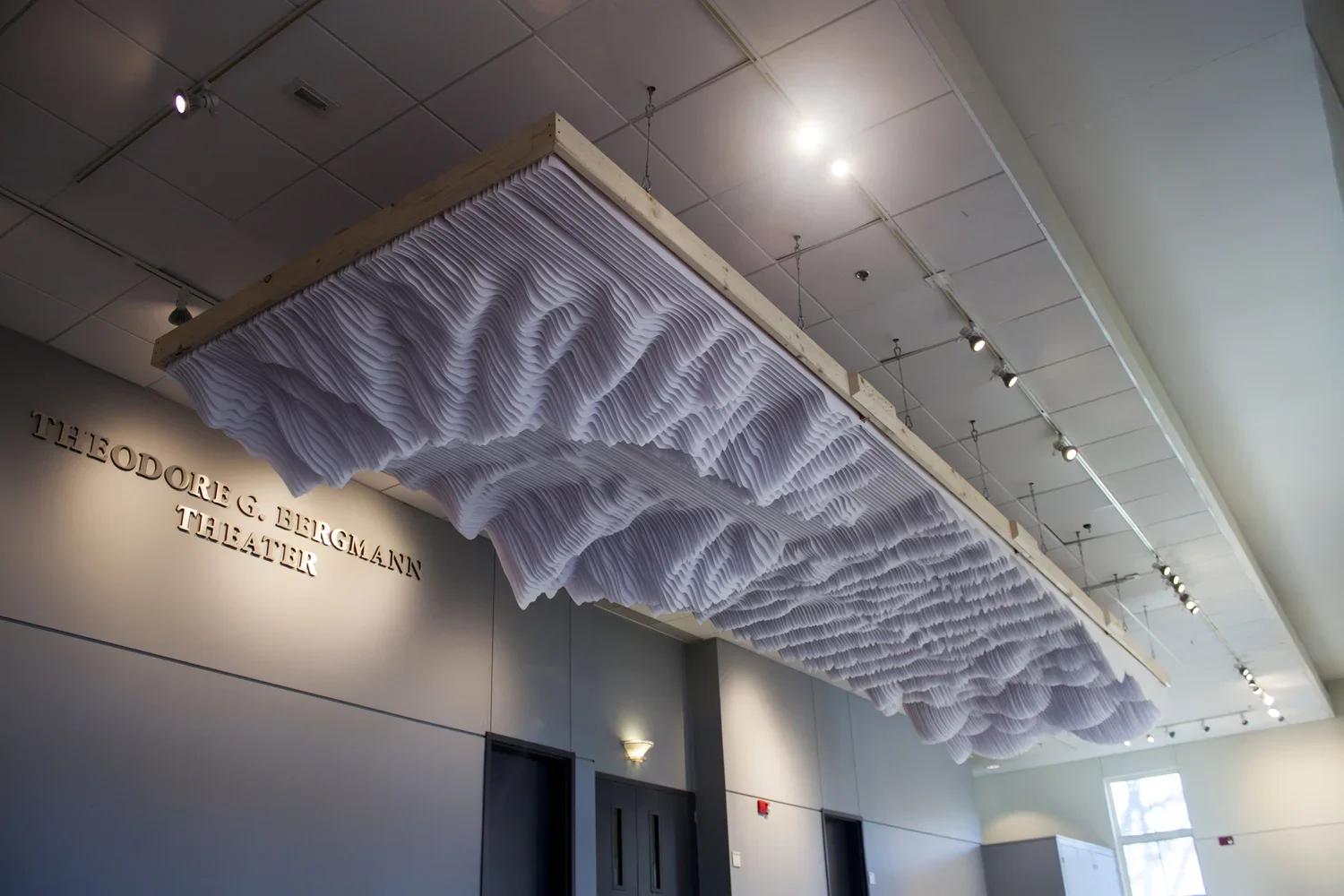
Work by Kirsten Reynolds in her show "Spin,'' through Jan. 28 at Boston Sculptors Gallery
The gallery says: "Poised between perpetual creation and imminent collapse, Kirsten Reynolds' large-scale, site-specific architectural installations activate the agency of uncertainty. Her work explores language, architecture and the body as related rational constructs that become flexible and emergent through humor, curiosity and wonder. The absurd architectural tableaus create a space between fact and fiction that the viewer can enter, becoming a participant in an irresolvable narrative.''
The 'Sacred Cod'
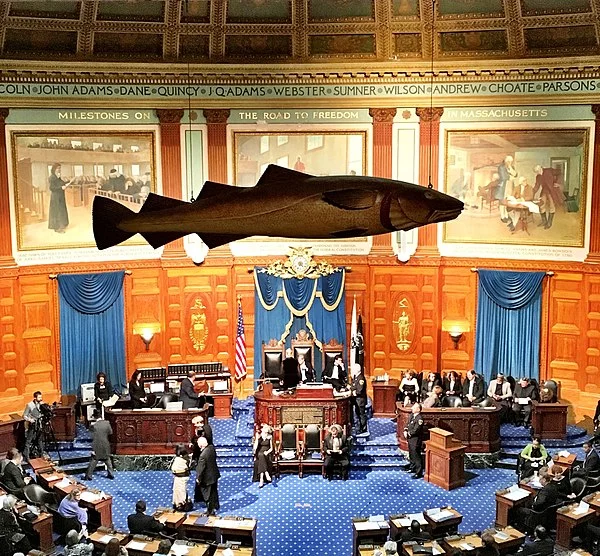
The "Sacred Cod'' hovers over the proceedings of the Massachusetts legislature.
"Generations of mariners have testified to the ocean's bounty -- in the 'Sacred Cod,' that marvelous and deceptively simple carving that hangs in Boston's State House.''
-- From The American Book of Great Historic Places (1957)
'

Joanna Detz: Climate change won't be televised

From ecoRI News (ecori.org)
They say that the revolution won’t be televised. And neither, apparently, will climate change.
But you can be sure that headline-grabbing extreme weather events will be. In the past few days, newscasts have been studded with scary militarized weather terms like Bomb Cyclone and Bombogenesis.
Snowstorm, anyone?
The literal media barrage of storm coverage in advance of the Jan. 4 snowstorm in New England sent the usual panicking crowds to the grocery stores, where the masses stripped the shelves of bread, milk and even broccoli before hunkering down, presumably to watch more storm coverage.
[Cut to the shot of the fur-hooded reporter squinting against the wind informing viewers that, “It’s really coming down out here.”]
The mainstream media, in general, do a great job of covering extreme weather events such as storms — it’s their bread and butter (and milk), so to speak.
But the challenge of contextualizing extreme weather events as part of a larger pattern of climate change continues to elude the news media. Perhaps it’s because climate change is a complex and slow-moving disaster, and one that’s difficult to distill into word cocktails that trigger clicks, hashtags, and retweets.
It could be the media is simply responding to what viewers want. It’s far easier to think about an impending snowstorm than it is the existential threat posed by human-made climate change. Ain’t no amount of bread and milk gonna fix that.
As I watch the falling snow — or is it the “bombing” snow? — I’m still waiting for the day that climate change will begin to inspire the same level of action, anxiety, and preparation that motivates the bread-and-milk crowd before a winter snowstorm.
So, here’s a thought. Let’s start by eliminating the hyperbole around weather terminology. Here are some suggested replacements:
Bomb Cyclone (n.) Snowstorm
Nor’easter (n.) Snowstorm
Bombogenesis (n.) Snowstorm
Snowmageddeon (n.) Snowstorm
Frankenstorm (n.) Snowstorm
As for Climate Change (n.), we need to come up with a far scarier term to get prime media placement and the accompanying attention of those bread-and-milk folks. Please send suggestions to jo@ecoRI.org, subject line: Triple Doppler Threat Tracker.
Joanna Detz is the executive director of ecoRI News.
PCFR: From rare earths to urban Mexico to India must deal with expansionist China
(Passing on this note from Hannah Hazelton, PCFR chairperson.)
To members and friends of the Providence Committee on Foreign Relations (thepcfr.org; pcfremail@gmail.com)
Just added: On April 25th Admiral Nirmal Kumar Verma of the Indian Navy will present a talk titled "China Moves Westward".
Wednesday, January 17th
China's Monopoly of Rare Earth Elements, with Victoria Bruce
American technological prowess used to be unrivaled. But because of globalization, and with the blessing of the U.S. government, once proprietary materials, components and technologies are increasingly commercialized outside the U.S. Nowhere is this more dangerous than in China's monopoly of rare earth elements --materials that are essential for many modern consumer goods, gadgets and weapons systems.
Bruce writes “the tsunami of science and tech companies rolling into China,” is well-known, but free market ideology has blinded us to the political consequences of allowing the Chinese to achieve international hegemony in global markets.
Victoria Bruce is an author with a background in science. Her previous books are No Apparent Danger (HarperCollins 2001), Hostage Nation (Knopf 2010) and Sellout (Bloomsbury Publishing 2017). She holds a master's degree in geology from the University of California, Riverside, where she lived on a volcano and researched the chemistry of volcanic hazards on Mount Rainer in Washington State. She has directed and produced four documentary films, earning the Alfred I. duPont-Columbia University Award for excellence in broadcast journalism.
Wednesday, February 21st
Socio-economic Effects of Palm Oil, with Dan Stechary
6:00, The Hope Club, 6 Benevolent Street, Providence
Palm oil is tainted by environmental destruction and poor working conditions but global production is soaring. As the highest-yielding vegetable oil crop, global production is soaring, and also the cause widespread deforestation over the last four decades. In 2004, a group of environmental non-profits and palm oil companies joined together to set up the Roundtable for Sustainable Palm Oil (RSPO). The roundtable sets out eight principles, citing 163 criteria, which are designed to prevent the worst aspects of palm oil cultivation: illegal deforestation, chemical pollution, greenhouse gas emissions, destruction of biodiversity, water loss, poor employment conditions etc. With nearly 3,600 members, it is the largest multi-stakeholder initiative of its kind.
Dan Strechary is the U.S. Representative of the RSPO. Based in New York, he is now responsible for outreach and engagement activities to members and stakeholder in the U.S., as well as formalizing the RSPO’s presence in this important market.
Thursday, March 8th
Veronica Herrera on Water and Politics: Clientelism and Reform in Urban Mexico
Veronica Herrera is an Assistant Professor of Political Science at the University of Connecticut. She received her Ph.D. in Political Science from the University of California, Berkeley and her B.A. from Swarthmore College. She studies comparative urban and subnational politics and environmental policymaking, with a focus on Latin America. She is the author of Water and Politics: Clientelism and Reform in Urban Mexico (University of Michigan Press, 2017). At the University of Connecticut, Professor Herrera teaches courses on Latin American politics, water and environmental politics, urban politics and policymaking, and qualitative research methods
April 25th
Admiral Nirmal Kumar Verma: China Moves Westward
Nirmal Kumar Verma is a retired Indian Navy admiral who served as the Chief of the Naval Staff of Indian Navy from 2009 to 2012. In November 2012, he was appointed as the Indian High Commissioner to Canada.
Date TBD:
Development in Post-Communist and Post-Conflict Countries, with Richard Farkas
Richard Farkas has been teaching at DePaul University for over 40 years. He holds an honorary degree from Corvinus University and has lectured in Russia, Poland, Hungary, and Croatia. His research compares strategies for political and economic development in post-Communist and post-conflict countries. Professor Farkas has consulted for some of the largest corporations in the U.S. and has appeared frequently on U.S. and international media.

'Salt for Life'

Attention people with heart disease and those who seek to avoid it:
Salt for Life® Sea Salt and Potassium Salt Blend has 75% less sodium than regular salt. It replaces that sodium with potassium salt, a necessary and often under-consumed nutrient.
For more information, please hit this link.
Empathy through metal
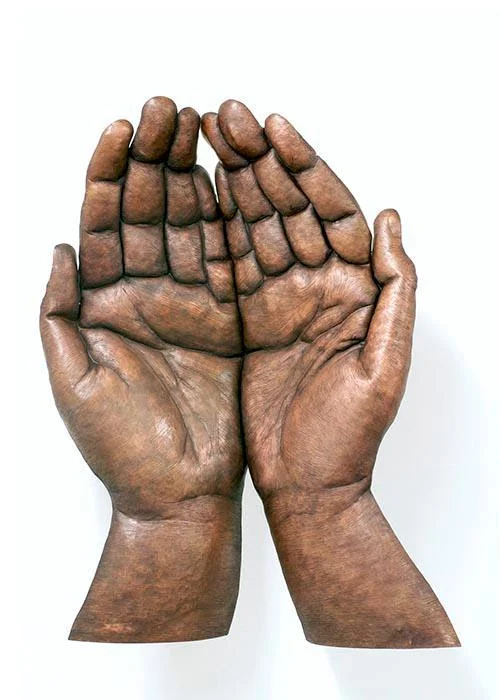
"Envelop'' ( copper with custom brass brackets, hand-formed from one sheet of copper, chased and etched), by Avery Lucas, in his show "Body of Work,'' through Jan. 28, at Bromfield Gallery, Boston. The gallery says he presents
"sculptures using materials including copper, sterling silver and stainless steel, which mimic skin and body as a way to trigger empathy. ''
Two jewels of New England art museums
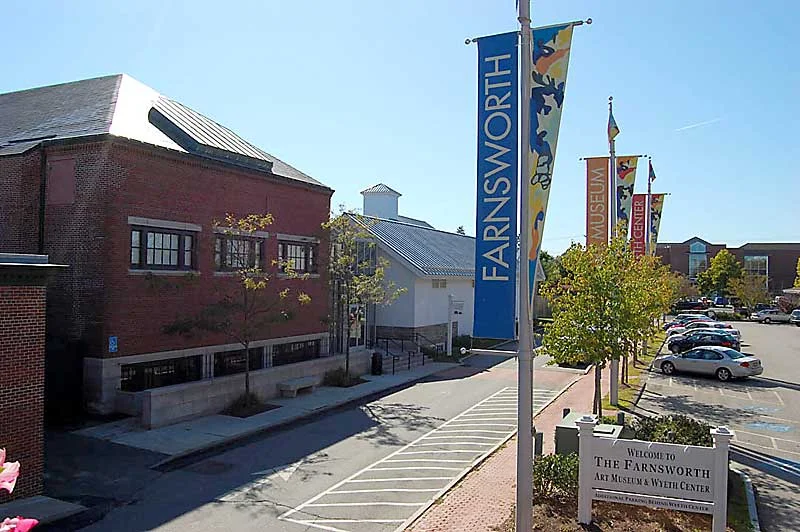
Farnsworth Art Museum, in Rockland, on the Maine coast.

The Florence Griswold Museum, in Old Lyme, Conn.

"Summer Evening'' (oil on canvas), by Childe Hassam, 1886. Collection of the Florence Griswold Museum.
New England has many small but distinguished art museums. One is the Farnsworth Art Museum (actually it's not that small), in the surprisingly important art mecca of Rockland, Maine. Among other works, it has paintings by Andrew Wyeth and his son Jamie -- who are famous for, among other things, their Maine-set paintings. Though the Wyeths were and are from Chadds Ford, Pa., they have long summered in the Pine Tree State.
Another jewel is the Florence Griswold Museum, in Old Lyme, Conn. The museum is in a gorgeous classical building that was once home to the Lyme Art Colony -- an important place for American Impressionist painters such as Childe Hassam. They liked being so close to New York, with the biggest art market in America, and on the generally beautiful coast of Long Island Sound,. Those who take Amtrak can confirm its beauty.
'Denying they have been'

"It sifts from leaden sieves,
It powders all the wood,
It fills with alabaster wool
The wrinkles of the road.
It makes an even face
Of mountain and of plain, —
Unbroken forehead from the east
Unto the east again.
It reaches to the fence,
It wraps it, rail by rail,
Till it is lost in fleeces;
It flings a crystal veil
On stump and stack and stem, —
The summer’s empty room,
Acres of seams where harvests were,
Recordless, but for them.
It ruffles wrists of posts,
As ankles of a queen, —
Then stills its artisans like ghosts,
Denying they have been.''
-- By Emily Dickinson
LLewellyn King: Address infrastructure crisis room by room?
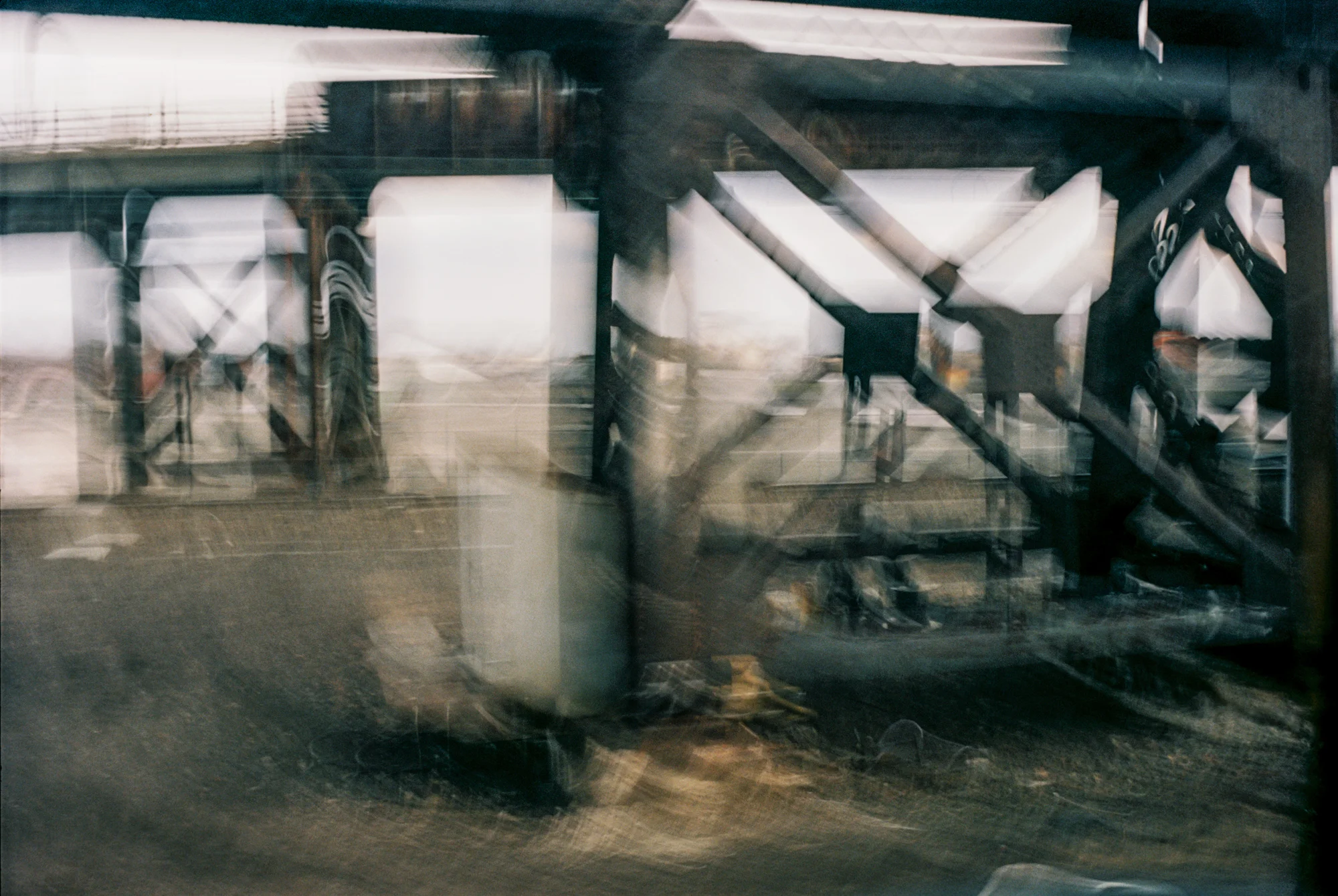
View from a moving train in Newark, N.J., in the "Peripheral Visions'' series of photographer Philip K. Howard, who is also chairman of the nonprofit reform organization Common Good (comongood.org) and a New York-based lawyer and civic leader. The group has done a great deal of work in proposing ways to address America's infrastructure crisis. Mr. King's photo Web site is www.philipkingphoto.com.
There is a shortage of long-distance truck drivers because of traffic jams. It is like this: Truck drivers are paid by the mile and if they are stuck in traffic for hours, they are not earning.
A different wage structure could be conceived and implemented. That would partly shift the traffic jam cost from the drivers to the owners, or to the consumers.
But trucking charges are calculated on distance and weight, so changes could be difficult, even near-impossible. What if the price of vegetables fluctuated like airline fares? It would mean chaos for the whole transportation chain. The solution, of course, is the infrastructure. Fix it.
That is what President Trump has promised to do in 2018. Chances are that in an election year something will be done, but not much.
Trump may have gotten the legislative order of his first and second years in office wrong: It may have been better to do infrastructure reform before trying to repeal Obamacare and overhauling taxes.
It is easy to talk about fixing the nation’s infrastructure and very difficult to do. Every project, every dollar is fraught with special interests.
At the core of the thinking of Trump and the GOP is that infrastructure revitalization can be achieved with public-private partnerships. Sounds good: the costs are shared and the federal budget is eased. In reality, of the huge number of infrastructure needs, very few are amenable to public-private partnership. Outside of toll roads, not all that much is immediately receptive to such partnerships, and they can take years to negotiate.
The quickest fix for the infrastructure is to increase the amount of funding through established channels, like the Highway Trust Fund and the Airport and Airway Trust Fund, also called the Aviation Trust Fund. These are the mechanisms that exist. It is the way that governments — federal, state and local — know what to do. It also is the “money solution” and likely to run into severe disfavor from fiscal conservatives.
The idea that all infrastructure, from airports to sea and river ports, to highways and bridges can be dealt with in one omnibus bill — the implication of Trump’s rhetoric — is fading. Think of it this way: An old mansion — as is U.S. infrastructure — is falling apart. Does the owner take on the whole upgrading job, from dry rot remediation to electrical rewiring to roof replacing? Or does he or she do it room by room?
In what is going to be a financially constrained year, as the consequences of the tax cut are digested, look for big hopes and small dollars. The deliverables in the time frame are few.
The midterm elections will dominate. Therefore, Republicans will push for privatizing the air- traffic-control system and initiating private-public partnerships in things where there will eventually be a revenue stream to justify the private investment — possibly seaports; possibly selling off federally owned properties, like some airports; and giving accelerated regulatory relief to projects like new pipelines and transmission lines, one of the most difficult infrastructure undertakings.
During his presidential campaign, Trump talked about new infrastructure funding of $1 trillion. Now the talk is in the low billions of dollars. To really understand such a climbdown, understand that a trillion is a thousand billion. Real money. Two billion dollars — which has been bandied about lately — is, well, you do the math, peanuts.
Over the holidays, it took a friend 10 hours to drive from Providence, R.I., to Newark, N.J., and 10 hours to drive back. The two cities are only 190 miles apart. Somewhere in that mess were untold numbers of truck drivers, trying to make a living and thinking about job alternatives.
One of the political motives for infrastructure overhaul has been jobs. But with near full employment and a chronic shortage of skilled workers, here is a question: Who would do the work? It is a question that does not require an answer because, in the time available, small things will come from Congress to ameliorate the infrastructure crisis and Trump will, as is his wont, couch withdrawal as victory.
The coming year will be a year of talking about infrastructure. But you cannot cross a bridge with mere words, let alone repair it.
Happy New Year!
On Twitter: @llewellynking2
Llewellyn King (llewellynking1@gmail.com) is executive producer and host of White House Chronicle, on PBS, as well as a veteran publisher, columnist and international business consultant.
Please get married, Mayor

-- Photo by Ldavis38
From Robert Whitcomb's "Digital Diary,'' in GoLiocal24.com:
Obviously this is a very personal matter but I can’t help saying that I wish that Providence Mayor Jorge Elorza would marry his girlfriend Stephanie Gonzalez, with whom he is having a baby. Marriage is obviously no panacea for society’s ills but the fact is the obligations associated with the institution are stabilizing forces for individuals and society, especially because they help to legally protect children. And parents’ failure to wed is correlated with high poverty rates, crime and other social function. You can see the effects of the rise of “illegitimacy’’ around America, especially in inner cities and in poor rural areas. I wish that the mayor and his girlfriend would set a good example for the citizenry –especially young people – and get married. You could look at marriage as the smallest unit of go vernment. Without it, you’re spawning anarchy.
'Mind of winter'

-- Photo by Petritap
"One must have a mind of winter
To regard the frost and the boughs
Of the pine-trees crusted with snow;
And have been cold a long time
To behold the junipers shagged with ice,
The spruces rough in the distant glitter
Of the January sun; and not to think
Of any misery in the sound of the wind,
In the sound of a few leaves,
Which is the sound of the land
Full of the same wind
That is blowing in the same bare place
For the listener, who listens in the snow,
And, nothing himself, beholds
Nothing that is not there and the nothing that is.''
-- "The Snow Man,'' by Wallace Stevens
Mr. Stevens was a Hartford insurance executive and famed Modernist poet.
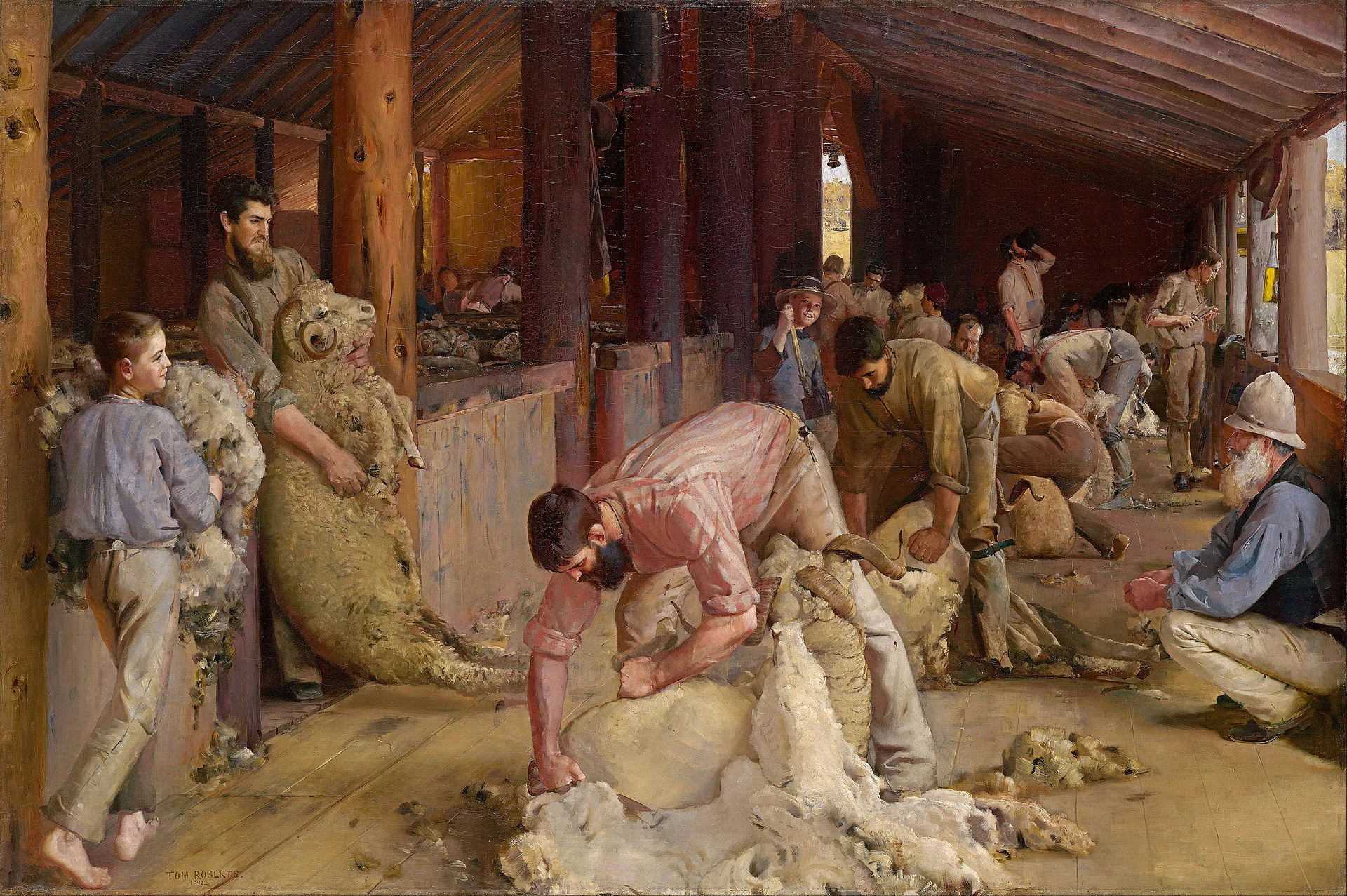
James P. Freeman: Bitcoin suckers ready to be sheared.
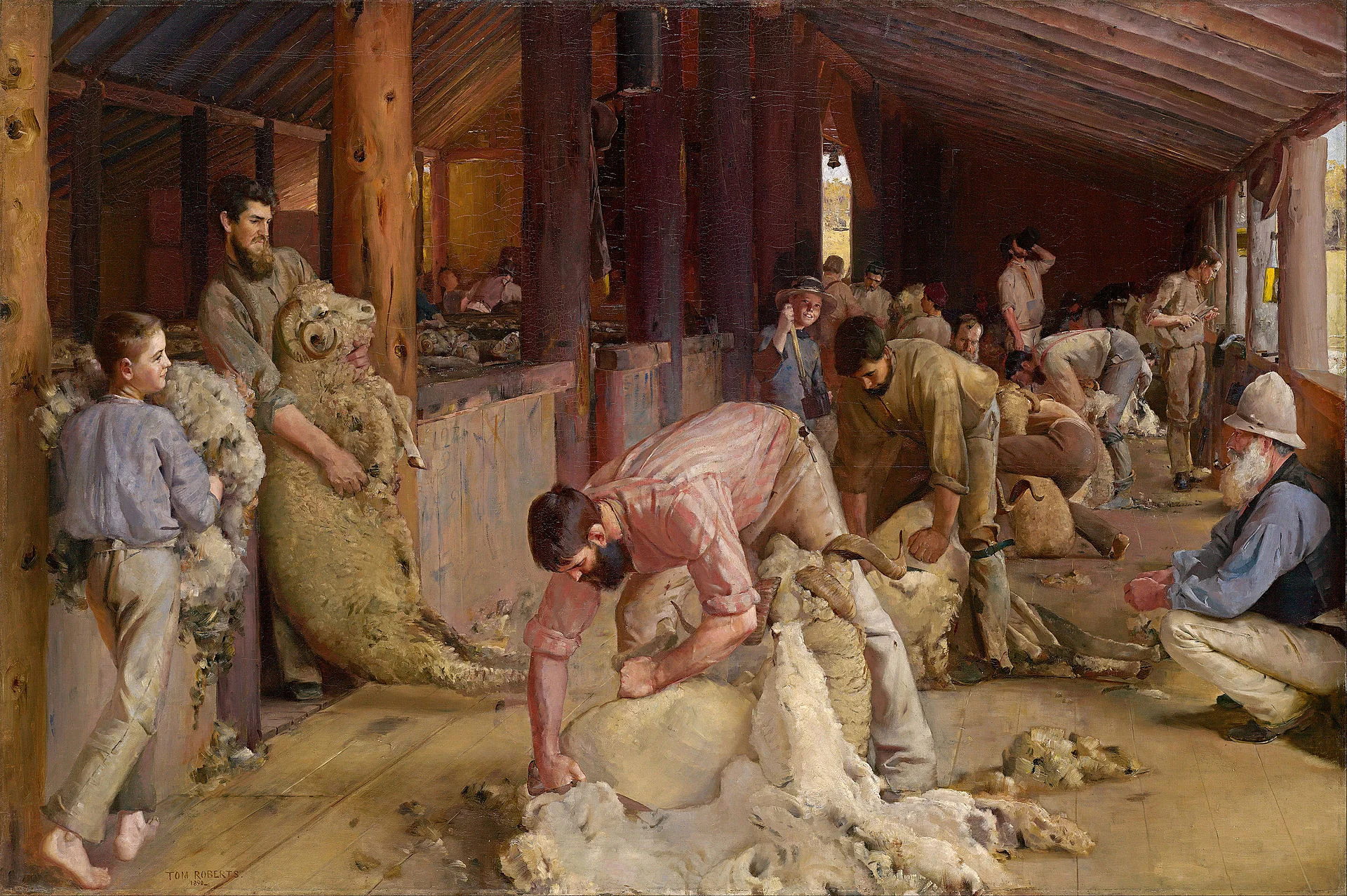
"Shearing the Rams,'' by Tom Roberts (1890).
“Faster than a speeding bullet.
More powerful than a locomotive.
Able to leap tall buildings in a single bound.
Look! Up in the sky. It's a bird. It's a plane. It's…”
--Introduction to the television series The Adventures of Superman
… Bitcoin.
No stable currency -- digital or fiat -- rises by nearly 2,000 percent in a 12-month period. But that is exactly what bitcoin, the supersonically hyped, so-called digital currency, did in 2017. It opened at $997.69 in January then peaked at $19,343.04 in mid-December. And, within a 24-hour period, on the last trading day of the year, Ripple, another digital currency, rose by a staggering 30 percent. For delirious speculators -- as sound financiers fully comprehend -- cryptocurrency is kryptonite. Buyer and seller, beware. And government too.
Today, there are 1,370 recognized (and mostly unregulated) cryptocurrencies traded over one hundred exchanges with a total market capitalization (total market value) having appreciated to over $604 billion. Japan accounts for between a third and half of all global bitcoin trade, making it today’s biggest player. Bitcoin represents over 41 percent of the crypto market, making it the largest and most popular digital currency. At least today.
When it first began “trading” in July 2010 -- if that is the right description -- it was listed for six cents, according to Coindesk, an information services company for the digital asset and blockchain technology community. But you can now buy a sandwich at Subway or book a trip with expedia.com using bitcoin.
Sensibly, there is more debate about bitcoin than actual commerce.
Conceptually, digital currency or digital cash probably began in the late 1980s. But it wasn’t until Oct. 31, 2008 -- amid the global financial meltdown and The Great Recession -- that a white paper written by still-unknown author or authors, under the pseudonym Satoshi Nakamoto, gave the world cryptocurrency’s intellectual underpinning. But it lacked plausible financial underpinning. And still does.
Nonetheless, “Bitcoin: A Peer-to-Peer Electronic Cash System” hatched a simple idea: “A purely peer-to-peer version of electronic cash would allow online payments to be sent directly from one party to another without going through a financial institution.” Crucially, without Internet technologies and other decentralizing innovations, bitcoin and its dueling alternatives (“alt-coins”) do not function. They are simply protocols. They are not currencies.
What the world needs now is not love. Instead, it needed, Nakamoto believed, “an electronic payment system based on cryptographic proof instead of trust.” A digital string of bits and bytes that supplants human nature. Well.
What emerged are mathematical formulas masquerading as currencies with no intrinsic value and no physical form.
In early 2009, the first bitcoin software was released, employing what is called “blockchain technology.” This allows digital information to be distributed but not copied. Through a web of computers these transactions (“broadcasts”) are ultimately validated and verified and then placed on a cloud ledger. Once verified, a given transaction is combined with other transactions to create a new block of data for the ledger. New blocks are added to the existing blocks in a way that is purportedly permanent and unalterable. All anonymously. And, supposedly, all securely. (Last year, hackers stole bitcoins worth (then) $65 million after attacking a major digital currency exchange (DCE).) In case of trouble you can’t call Interpol. Or Superman.
Theoretically, anything can be digitized, programmed and monitored. And there are obvious practical benefits in the new technology like verifying contracts and other records. But suddenly, like a blue-bolt of lightning appearing on a clear crisp day, without rhyme or reason, currencies were created out of these technical applications. Now, millions of people have created billions of dollars. Out of nothing. How fitting for the Millennial Generation. The Insta Generation. Instagram. Instacash.
Indeed, out of this irrational exuberance, (emphasis on the irrational) bitcoin.com claims that bitcoin is considered the “people’s money” born out of a “complex monetary system,” and based on “valid consent.” It relies upon the “consensus of math.” Furthermore, this nouveau financial utopia is “a stark contrast to the untrustworthy banking system we know of today.” Hence, bitcoin’s fantasy.
Some, with molten irony, call cryptocurrency the “next-gen gold.” The reasons for that analogy are two-fold: Bitcoins are virtually mined (in a computing resource-intensive process; nearly 10 U.S. households can be powered for one day by the electricity consumed for a single bitcoin transaction.) and, as the U.S. dollar replaced gold as the de-facto world’s reserve currency, some predict, likewise, a cryptocurrency will replace the U.S. dollar as the new reserve currency. Last month, Jeff Currie, global head of commodities research at Goldman Sachs, decried the hostility to Bitcoin, saying it’s “not much different than gold.”
Mining bitcoin is difficult and intentional; miners use hard drives, not hardhats. Only 21 million bitcoins can be mined. Approximately 80 percent are already in “circulation.” And barring any unforeseen problems, the last coin to be mined will be in 2140. Then again, what could possibly go wrong with a new all-digital highly unregulated decentralized speculative global currency, where one must be conversant in mempools and satoshis?
Many believe bitcoin and other cryptocurrencies are here to stay.
Adding a whiff of greater legitimacy to the whole enterprise, the Chicago Mercantile Exchange, (CME) the world’s largest futures exchange, launched its own bitcoin futures contract on Dec. 17. Next June, Goldman Sachs expects to open a trading desk that would “make markets” in the cryptocurrencies.
New York University professor of corporate finance Aswath Damodaran last October argued in a blogpost that bitcoin is not an asset but was, in fact, “a currency, and as such, you cannot value it or invest in it. You can only price it and trade it.” (He also calls it “Gold for Millennials.”)
And tech investor James Altucher recently told CNBC, “This is the greatest tectonic shift in money and wealth that we will see in our lifetimes." Bitcoin, he says, “solves the problem of infinite money printing, forgery, double-spending and anonymity.” But Altucher also acknowledges that 98 percent of cryptocurrencies are scams.
There are, fortunately, healthy skeptics regarding the remaining 2 percent. The adults in the room (digital safe space?) come from academia, financial services and the government. Their thoughts are telling and cautionary.
One is Nobel Laureate and Columbia University Prof Joseph Stiglitz. Last month on Bloomberg TV he said bitcoin “ought to be outlawed.” Additionally, “bitcoin is successful only because of its potential for circumvention, lack of oversight.” Perhaps more damning, Stiglitz concluded, “It doesn’t serve any socially useful purpose.” And when asked if this phenomenon is “smoke and mirrors,” his reply was swift: “precisely.” He did speak, though, of the benefits of a “digital economy.”
The most outspoken critic is JPMorganChase Chief Executive Officer Jamie Dimon. In September he called bitcoin “a fraud.” He also takes exception with this kind of non-fiat cryptocurrency, but he thinks that a dollar-based cryptocurrency is workable. Recently, he said of cryptocurrency, “Governments are going to crush it one day.” In a statement earlier this month, Dimon said he was open-minded about the uses of cryptocurrencies “if properly controlled and regulated.”
Because of its latent anonymity, criminals can use bitcoin to effect drug trade and other illicit activity (ransomware and money laundering) without easily tracing such activity back to them. As Dimon alluded, it is surprising that there is not greater government oversight with respect to control over and, more importantly, taxation of cryptocurrencies.
Just before bitcoin hit its (for now) all-time high, current Fed Chair Janet Yellen, at a press conference in Washington, cited the financial stability risks from it as “limited.” Thus far, the U.S. banking system does not have “significant exposure” to any potential “threats” from bitcoin, she said. Notably, Yellen said that bitcoin is a “highly speculative asset” and underscored that it “doesn’t constitute legal tender.” Currently, bitcoin and all the other cryptocurrencies are not subject to regulation by the central bank. Last January Yellen, like many not stricken by the mania, did recognize blockchain as an “important technology.”
Former Federal Reserve Chairman Alan Greenspan (he coined the phrase “irrational exuberance”) said in early December that bitcoin is “not a rational currency.” He likened bitcoin to the U.S. “Continental Currency,” introduced in 1775. It became worthless by 1782.
As for bitcoin in 2018, it might become the third massive asset bubble in this century, after the dot.com and housing bubbles, to burst in this young, disruptive century.
James P. Freeman is a former New York banker and now New England-based writer. This piece first appeared in New Boston Post, where he's a columnist. He's also a former columnist with The Cape Cod Times, His work has also appeared in The Providence Journal, newenglanddiary.com and the online service of the National Review.
Images inspired in Africa

"Mintaka," 2013 (inks on hand-burnished paper), by Tayo Heuser, in her show "Tayo Heuser: Paper Constructs,'' at the University of Massachusetts at Dartmouth, through Jan. 31.
The exhibition powerfully combines sculptural abstract work and large-scale abstract ink drawings on hand-made paper. Ms. Heuser, the daughter of a U.S. diplomat, was raised in Africa and exposed to the art of such nations as Tunisia, Libya and the Ivory Coast. Her compositions create geometrical patterns by using circles, diamonds and straight lines to reflect the aesthetics of multiple cultures. The hand-burnished paper is art in itself.
And now for tidal power
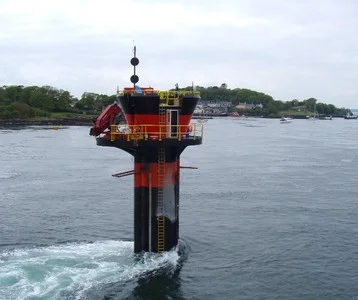
The world's first commercial-scale and grid-connected tidal stream generator – SeaGen – in Strangford Lough, Northern Ireland. The wake shows the tidal current’s power.
From Robert Whitcomb's "Digital Diary,'' in GoLocal24.com:
New England’s extreme cold in the past few days has led to surges in the price of natural gas, which will in turn boost electricity rates. That ought to remind New England how much we need to develop alternative sources of power.
Perhaps Associate Prof. Geoffrey Cowles of UMass Dartmouth, an oceanographer, and his colleague Princeton engineering Prof. Luigi Martinelli, can help. The National Science Foundation has awarded them a $300,000 grant to work in cooperation with Ocean Renewable Power Co., to assess the performance of tidal energy turbines and their interactions with the immediate marine environment. This might or might not become an important energy source for New England; it certainly deserves investigation. The more home-grown energy the better.
I ran into a neighbor the other week a who had recently put solar panels on one side of the roof. It cost $10,000 but now he and his wife have virtually no electric bill. They can run electric heaters to their heart’s content. Pretty alluring the past few days….
Pray for the January thaw
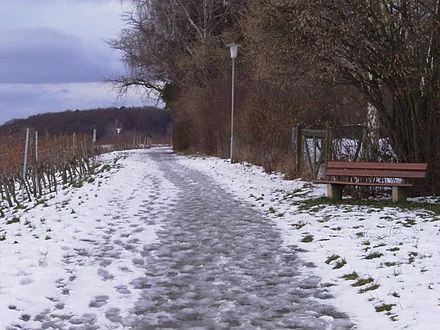
"{R}esearch has demonstrated that {New England's January} thaw is a reality and most frequently occurs between January 20 and 26. A secondary abnormal rise in temperature has been detected between January 7 and 10. Though the thaw does not come every year, it has put in an appearance often enough to establish its place as a singular factor of the New England climate.''
-- From The Country Journal New England Weather Book, by David Ludlum and the editor's of Blair & Ketchum's Country Journal {RIP}

Celtics, GE team up to promote STEM in Boston public schools
This from the New England Council (newenglandcouncil.com):
"The Boston Celtics and General Electric (GE) are joining forces to encourage curiosity in math and science in Boston public schools.''
"The GE Foundation, the corporation’s philantrropic arm, is teaming up with the Boston Celtics to engage students in STEM (Science Technology Engineering and Math) subjects in public schools throughout Boston. Mobile teaching labs will be placed near schools as part of GE’s 'Brilliant Career Play' initiative and will offer activities such as 3-D printing of basketball sneakers. This STEM initiative is part of a larger partnership between the Celtics and GE with the latter providing various services to the Celtics who have placed the GE logo on their jerseys.''
“'While we’re starting in Boston with nine schools, the plan is to take this mobile learning lab across the state,' said Ann R. Klee, who leads the GE Foundation. ''
'''We’re able to do that in partnership with the Celtics, and we’re really excited about what they bring to the table in terms of making science and math cool. By working with the Celtics, we’re going to have access to all these kids who love basketball, and now they’re going to realize they love math and science too.'''