
Vox clamantis in deserto





Strong women

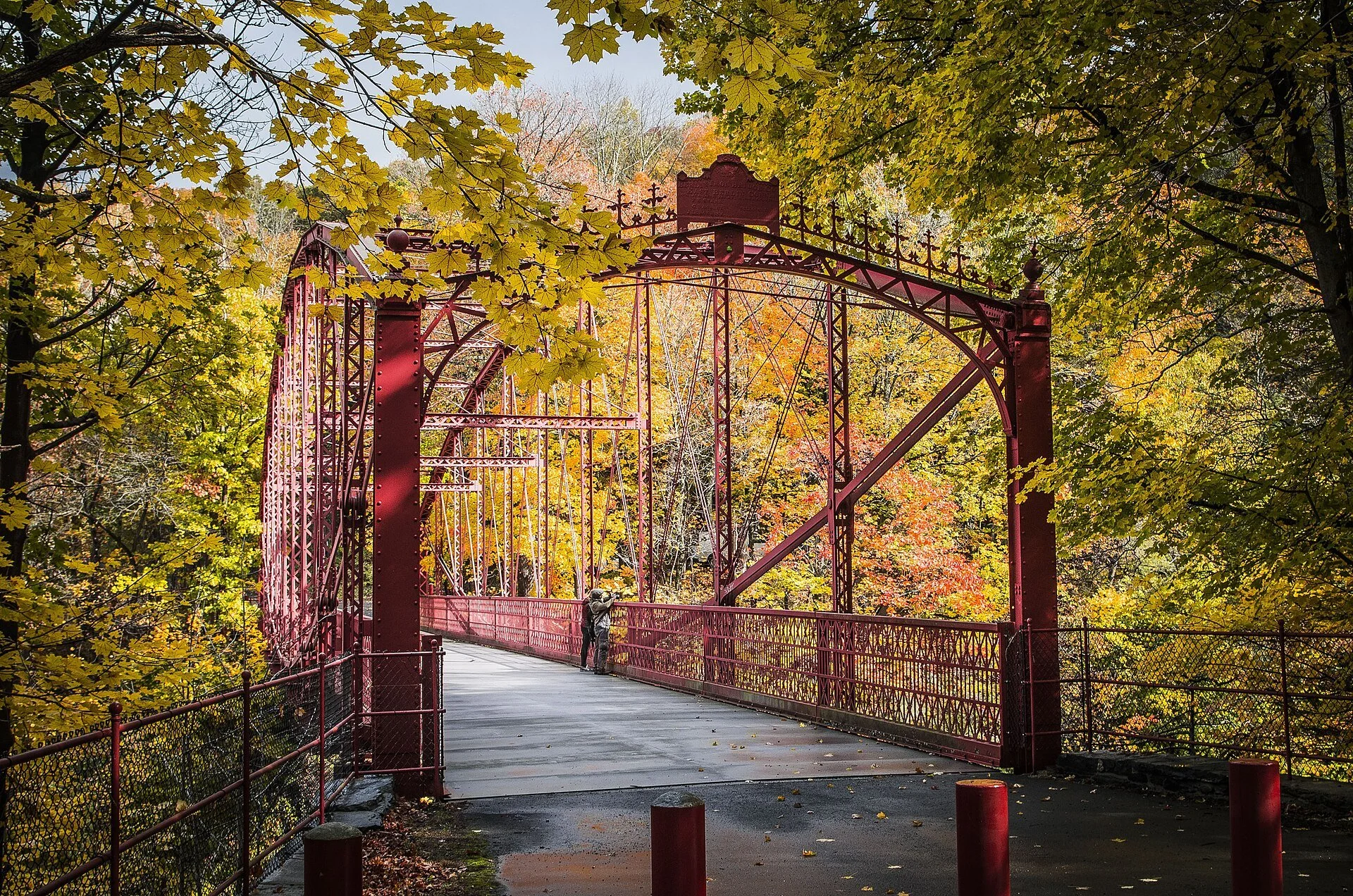
"A Weight Bearing Exercise'' (stoneware and steel rod), by Claudia Olds Goldie, in the group show "The Female Form: Go Figure,'' at the Christopher Brodigan Gallery at the Groton School, Groton, Mass., through Nov. 14. The womenshe sculpts aren't beautiful in a traditional sense but do have the beauty of their quiet dignity.
Maybe city managers can govern better than mayors
From Robert Whitcomb's "Digital Diary,'' in GoLocal24.com:
Worcester’s bonds are rated Aa3 while Providence’s are a much lower Baa1. Worcester is in most ways a considerably less important city than Providence, and with a smaller economic and institutional base.
So what explains the rating difference? I’d guess Providence’s continuing failure to get its pension and other employee costs under control is the biggest factor. That’s at least in part because Worcester has a city manager system, which encourages professional (“technocratic’’) administration with far more insulation from political and special-interest pressures (e.g., municipal unions) than you get in a traditional mayoral system like Providence’s. The lower the bond rating, the higher the interest rate that a city must pay and the higher the taxes to pay the bond interest.
Small-town N.H. place-lovers

"For more than a hundred years, anyone willing to leave this countryside has been rewarded for leaving it by more money, leisure, and creature comforts. A few may have stayed from fecklessness or lack of gumption; more have stayed from family feeling or homesickness; but most stay from love. I live among a population, extraordinary in our culture, that lives where it lives because it loves its place. We are self-selected place-lovers. There's no reason to live here except for love."
From Seasons at Eagle Pond, by Donald Hall, Wilmot, N.H.-based poet and essayist.

Chuck Collins: A guide to the coming tax heist
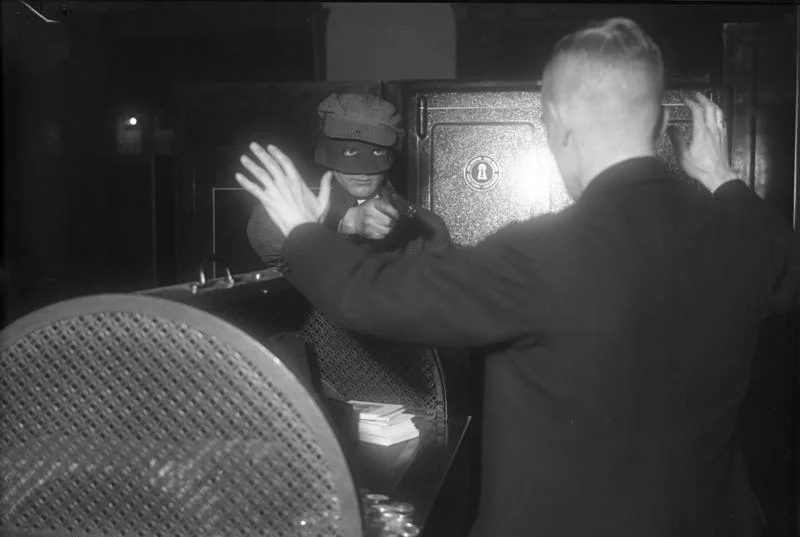
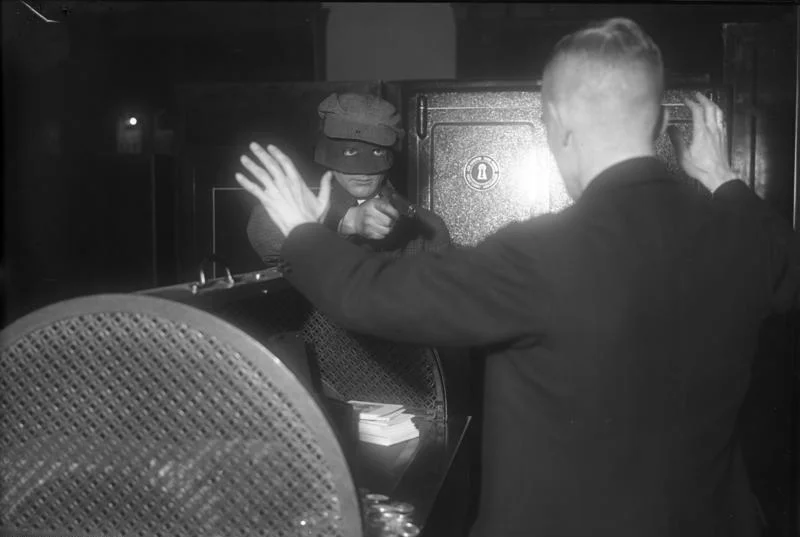
-- Bundesarchiv, Bild 102-12762 / CC-BY-SA 3.0
Via OtherWords.org
For 40 years, tax cutters in Congress have told us, “we have a tax cut for you.” And each time, they count on us to suspend all judgment.
In exchange, we’ve gotten staggering inequality, collapsing public infrastructure, a fraying safety net, and exploding deficits. Meanwhile, a small segment of the richest one tenth of 1 percent have become fabulously wealthy at the expense of everyone else.
Ready for more?
Now, Trump and congressional Republicans have rolled out a tax plan that the independent Tax Policy Center estimates will give 80 percent of the benefits to the richest 1 percent of taxpayers.
The good news is the majority aren’t falling for it this time around. Recent polls indicatethat over 62 percent of the public oppose additional tax cuts for the wealthy and 65 percent are against additional tax cuts to large corporations.
Here’s the independent thinker’s guide to the tax debate for people who aspire to be guided by facts, not magical thinking. When you hear congressional leaders utter these claims, take a closer look.
“Corporate tax cuts create jobs.”
You’ll hear that the U.S. has the “highest corporate taxes in the world.” While the legal rate is 35 percent, the effective rate — the percentage of income actually paid — is closer to 15 percent, thanks to loopholes and other deductions.
The Wall Street corporations pulling out their big lobbying guns have a lot of experience with lowering their tax bills this way, but they don’t use the extra cash to create jobs.
The evidence, as my Institute for Policy Studies colleague Sarah Anderson found, is that they more often buy back their stock, give their CEOs massive bonuses, pay their shareholders a bigger dividend, all the while continuing to lay off workers.
“Bringing back offshore profits will create jobs.”
Enormously profitable corporations such as Apple, Pfizer and General Electric have an estimated $2.64 trillion in taxable income stashed offshore. Republicans like to say that if we give them a tax amnesty, they’ll bring this money home and create jobs.
Any parent understands the folly of rewarding bad behavior. Yet that’s what we’re being asked to do.
When Congress passed a “repatriation tax holiday” in 2004, these same companies gave raises to their CEOs, raised dividends, bought back their stock, and — you guessed it — laid off workers. The biggest 15 corporations that got the amnesty brought back $150 billion while cutting their U.S. workforces by 21,000 between 2004 and 2007.
For decades now, those big corporations have made middle class taxpayers and small businesses pick up the slack for funding care for veterans, public infrastructure, cyber security, and hurricane mop-ups. Let’s not give them another tax break for their trouble.
“Tax cuts pay for themselves.”
Members of Congress who consider themselves hard-nosed deficit hawks when it comes to helping hurricane victims or increasing college aid for middle class families are quick to suspend basic principles of math when it comes to tax cuts for the rich.
The long discredited theory of “trickledown economics” — the idea that tax cuts for the 1 percent will create sufficient economic growth to pay for themselves — is rising up like zombies at Halloween. As the economist Ha Joon Chang observed, “Once you realize that trickle-down economics does not work, you will see the excessive tax cuts for the rich as what they are — a simple upward redistribution of income.”
“Abolishing the estate tax will help ordinary people.”
This is the biggest whopper of them all. The estate tax is only paid by families with wealth starting at $11 million and individuals with $5.5 million and up. There is no credible economic argument that this will have any positive impact on the economy, but it would be a huge boon for billionaire families like the Trumps.
This tax cut plan is an unprecedented money grab. Whether the heist happens, is entirely up to the rest of us.
Chuck Collins directs the Program on Inequality at the Institute for Policy Studies and co-edits Inequality.org.
Showing the fragility

A creation of David Katz in his show "Flextime,'' at the Museum of Art at the University of New Hampshire (in Durham), through Nov. 7. The show is a collaboration between the museum and 3S Artspace, in nearby Portsmouth.
In his site-specific works, sculptor and ceramicist Katz, in the museum's words, "exploits the properties of wet clay to create complex web-like installations that push and pull against architectural elements, constructed spaces, and scaffolding. As the clay dries, cracks develop, exposing the fragile nature of the structural systems.''
Chris Powell: Skip school for a few years, but keep pensions
As "Obamacare" long has been on the verge of repeal, financial collapse, or sabotage, people in Connecticut are afraid of losing their medical insurance while others are dealing with big premium increases caused by "Obamacare" itself.
But why should people complain about medical insurance when they still have the war in Afghanistan, which is entering its 17th pointless year?
Connecticut's nominally liberal congressional delegation doesn't complain about the war, apparently because the federal budget is full of money for military contractors in the state. Complaints about the war might get in the way of those contracts.
At least the employees of the military contractors have good medical insurance, even if the money spent on the war in one week might provide good insurance for everyone in Connecticut for a year or two.
As Connecticut's state government enters its fourth month without a budget, people here are also afraid that local school systems will be crippled by state government's failure to deliver the usual financial aid, depriving some schools of as much as half their money.
But why should people complain about schools when state employee jobs, salaries, benefits, and pensions have been guaranteed for years to come? What's a little education compared to the security of those who work for the government?
Indeed, since a Superior Court judge and the immediate past executive director of the state school superintendents association have acknowledged that Connecticut's lower education system operates by social promotion rather than academic achievement, and since, according to standardized test results, most of the state's high school seniors never master high school math and English, why not just cancel school for a few years and put the school money into the state employee and teacher pension funds until they are made sound?
Governor Malloy and the Democratic majority in the General Assembly have signified that state government's pension obligations have priority over every other public purpose, so how much is the mere pretense of education really worth?
SLOSSBERG'S BIG MISTAKE: What a mistake was made the other day by state Sen. Gayle Slossberg, D-Milford.
She accepted an invitation to address the college Democrats at the University of Connecticut to explain her vote for the Republican state budget, which sharply reduces spending on the state university system. Introducing herself, Slossberg said she began her involvement in public life as a member of a parent-teacher association seeking to remove from elementary school libraries books containing derogatory racial terms. She spoke one of them, the "N word."
Whereupon the college Democrats exploded in outrage, as if the word can't be discussed even in the context of its reprehensibility and as if the students did not understand Slossberg to be repudiating it.
Slossberg immediately apologized for giving offense, but it wasn't enough. The college Democrats distributed a statement about the incident, seeking to embarrass the senator in news reports throughout the state and causing her to issue a written apology as well.
Of course the age at which people should be prepared to discuss derogatory racial and ethnic terms is arguable, but at some point everyone should come across the "N word" in what may be the most profound and moving passage in American literature -- in Mark Twain's Huckleberry Finn, when the title character reflects on whether he should betray his friend, a runaway slave.
Slossberg's mistake wasn't to use the "N word" with those college Democrats. It was to assume they were adults.
Chris Powell is managing editor of the Journal Inquirer, in Manchester, Conn.
'She is tired'

"Beauty has a tarnished dress,
And a patchwork cloak of cloth
Dipped deep in mournfulness,
Striped like a moth.
Wet grass where it trails
Dyes it green along the hem;
She has seven silver veils
With cracked bells on them.
She is tired of all these--
Grey gauze, translucent lawn;
The broad cloak of Herakles.
Is tangled flame and fawn.
Water and light are wearing thin:
She has drawn above her head
The warm enormous lion skin
Rough red and gold.''
-- "October,'' by Elinor Wylie
Always a surplus of brutality
"Landing of Columbus '' (12 October 1492), by John Vanderlyn.
From Robert Whitcomb's "Digital Diary,'' in GoLocal24.com:
Columbus Day this year predictably included denunciations of the explorer and the colonialists who accompanied and followed him. Columbus, et al., were presented as world-historically brutal and are blamed for presiding over a huge genocide. This aroused a lot of backlash in southern New England, with its many proudItalian-Americans. (But I have always wondered why someone would be proud, or ashamed, of what a distant ancestor did.)
But members of Native American tribes were just as brutal to members of other tribes and to European usurpers. They just didn’t have the equipment (particularly guns) to defeat the far more technologically advanced Europeans, and, of course, their numbers rapidly declined after the European arrival because they didn't have immunity from the diseases brought over from Europe.
As for the African slaves brought over to the Americas by Europeans, we ought to remember that it was African chiefs who captured these poor souls and sold them to the Europeans. For that matter, slavery still exists in Africa.
People of all shades and nationalities are brutal.
'The prospect repays the ascent'

"View of the Connecticut River Oxbow from Mount Holyoke summit,'' painted by Thomas Cole in 1836.
"How high the hill might be. I l know not; for, different accounts make it 8, 12 & 16 hundred feet from the {Connecticut} river. The prospect repays the ascent and although the day was hot and hazy so as to preclude a distant prospect, yet all the broad meadows in the immediate vicinity of the mountain through which the Connecticut winds, make a beautiful picture seldom rivaled.''
-- Ralph Waldo Emerson on Mount Holyoke, in western Massachusetts, in 1823. Editor's note: The summit of the hill (or mountain) is 935 feet above sea level.

The current Mount Holyoke Summit House.
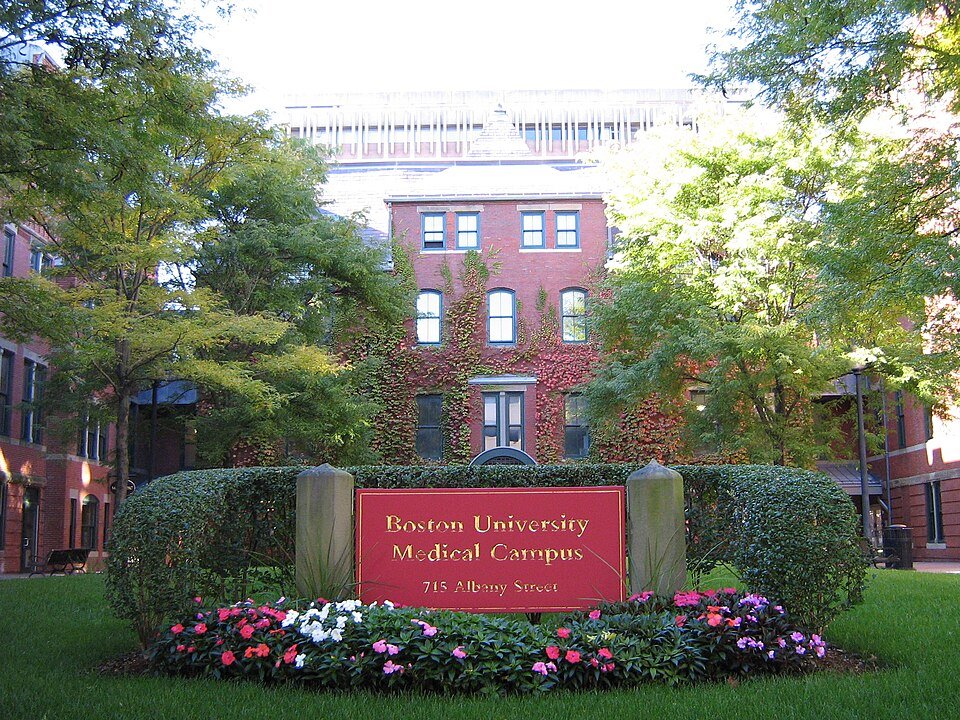
BU gets record $115 million gift

Center for Integrated Life Sciences & Engineering (CILSE) at BU.
This is from The New England Council (newenglandcouncil.com):
"Boston University (BU) has received a $115 million donation from alumnus Rajen Kilachand to further life science and engineering research. It's the biggest gift in the university's history so far.
"Kilachand is a member of BU’s Board of Trustees and graduated from the university in 1974 with a master’s degree from itsbusiness school. He has a history of gifts to the university and with his most recent gift came the recent opening of the Rajen Kilachand Center for Integrated Life Sciences & Engineering. The center fosters collaboration between disciplines and highlights research on issues such as climate change, Parkinson’s disease, and increasing the effectiveness of cancer treatments. At the building’s opening, BU announced the creation of a $100 million endowment made possible by Kilachand’s gift that will be available to students and faculty who wish to begin research in the life sciences or engineering. Access to the endowment’s funds will give BU an advantage in securing highly competitive federal research grants.
“The reputation of a great research university comes from the output of our faculty and students in research and scholarship,” says BU President Robert A. Brown. “Great universities are about the people, and the people are about the infrastructure you can supply and the environment you can give them to succeed. The Kilachand Center, in this area of life sciences and engineering, gives us the resources to attract those people and give them the resources to make an impact on the world.”
'Shyly among their valuables'
"Most days
the barn stands
across the street
from the washette,
high empty
windows staring into space
of another century.
Today, the barn's
on fire. People
roused from
the sleeping tenement
stand shyly among
their valuables:''
-- From "Fire in Enfield,'' by Wesley McNair, poet laureate of Maine
There's a system here!

"Well....That's One Way to Do It'' (oil on board), by Abba Cudney, in her show through January at the Providence Art Club.
From rotaries to roundabouts
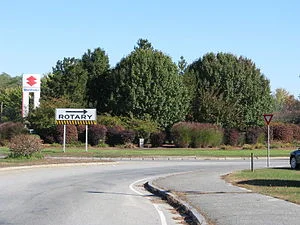
Entering rotary in Lowell, Mass.
From Robert Whitcomb's "Digital Diary,'' on GoLocal24.com:
New Englanders are familiar with “rotaries,’’ those confusing traffic circles infamous for creating confusion and accidents, albeit most of them minor. But now Massachusetts, which has more than 100 rotaries, is replacing them with “roundabouts” (a very English-sounding name).
As The Boston Globe reported: “The lack of organization on a rotary was both its beauty – cars could move quickly through them if the traffic was light, barely touching the brakes – and its chief problem, especially as traffic volumes swelled over the decades.’’ To read The Globe’s story, please hit this link:
https://www.bostonglobe.com/metro/2017/10/08/rotaries-disappear-favor-roundabouts/g8Znfv4XSyUokBSpEAyKaJ/story.html
So what’s the difference between a rotary and a roundabout? Here’s at least a partial explanation from City of Brooklyn Center:
“No lane changes occur within a roundabout. Except for vehicles that are turning right, entering a roundabout is a ‘crossing’ movement. A rotary is typically large, with entry speeds of 40 mph or higher. A roundabout is generally small; speeds are rarely more than 25 mph.’’
And from Northeastern University:
“Rotaries are typically a hundred to a few hundred feet across. Because the circle is so large, traffic moves very quickly. An important aspect is the tangential entries and exits. Speeds are 30-40 mph or higher because vehicles can drive straight onto the rotary with little or no deflection. The tangential entries also make it confusing for drivers.’’
“A modern day roundabout is very different from a rotary…. In a roundabout, the entering traffic approaches at a smaller angle than that of a rotary. Vehicles enter at an angle closer to 90 degrees. Drivers know they must yield before entering the roundabout. Because the diameter is smaller, and all cars must yield, the speed of traveling vehicles is approximately 25 mph or less.’’
“Another reason vehicles travel at slower speeds {in a roundabout} is that they are deflected. No vehicle can travel straight through the roundabout. All traffic is deflected around the center island and forced to only make right turns. This is much safer for vehicles as well as pedestrians and cyclists trying to cross.’’
Rotaries are traffic free-for-alls; roundabouts are a major organizational and safety improvement. The rotary is a bit of New England quaintness we can do without. Visitors to New England from elsewhere have often complained about rotaries, of which New England has the greatest density in America. Because it’s basically the oldest part of the country?
Martha Burk: Employees have 'religious' freedom, too
Via OtherWords.org
When Obamacare — aka, the Affordable Care Act — became law in 2010, it mandated coverage of birth control without co-payments.
Some employers didn’t like the rule, and Hobby Lobby hated it so much that the company filed a lawsuit to stop it. Company owners said they didn’t believe in contraception and claimed that covering it for female employees violated their religious freedom.
Understand, the Obama administration went to great lengths to exempt churches and church-related institutions from the rule, while still guaranteeing their female employees the right to birth control if they wanted it.
Then the Supreme Court stepped in, siding with Hobby Lobby and ruling that “closely held” corporations with religious objections could join religious employers in excluding birth control from their insurance plans.
Now the Trump administration has gone a giant step further. They’re now allowing any and all businesses, including publicly traded ones, to also cite “religious or moral objections” in denying their employees contraception coverage.
Wait a minute.
Corporations not only have religious freedom but now moral principles, too? I didn’t even know they went to church, and I’m pretty sure I’ve never seen one get down on its knees and pray.
On the other hand, I know women — who are actual people — have religious freedom under the Constitution, too. What about their right not to be forced to bow to their employers’ religious beliefs or highly suspect “moral” principles?
Massachusetts, California, and the ACLU have filed lawsuits to stop the rollback. Good luck. Besides Hobby Lobby, the conservative majority in the Supreme Court ruled years ago in the Citizens United case that corporations have constitutional rights, and they’ve consistently ruled in favor of their corporate buddies over women in employment discrimination cases.
On top of that, six of the nine justices are male, and most of them of rather conservative religious persuasions. The odds look to be stacked against women.
Expanding so-called corporate citizen rights deeper into health care could ultimately affect everybody, not just women.
Christian Scientists are opposed to all kinds of medical treatment, including for diabetes, cancer, and meningitis. Jehovah’s Witnesses don’t believe in blood transfusions. There are undoubtedly other religious taboos on medical procedures.
Enterprising businesses that want to save money could cite “religious freedom” to exclude virtually any medical treatment from their insurance plans. Surgery, antibiotics, immunizations — you name it.
Where will it end? We don’t know. Even if the lawsuits are ultimately successful, a decision could take years.
All I know is that I don’t want my neighborhood corporate citizen making my health care decisions.
Martha Burk is the director of the Corporate Accountability Project for the National Council of Women’s Organizations (NCWO) and the author of the book Your Voice, Your Vote.
Tim Faulkner: Kill your lawn and go native to help the environment

-- Photo by T.S. Eriksson
Via ecoRI News (ecori.org)
Fast fact: New England uses about 30 percent of its potable water on lawn care.
You probably know by now that the typical U.S. lawn with thick, green grass and manicured hedges is horrible for the environment.
In addition to pollution from mowers, trimmers and leaf blowers, chemically treated lawns wipe out all vegetation, worms, and insects, to grow a single species of grass. Those fertilizers derived from fossil fuels create toxic runoff, and contribute to a range of environmental and health problems such as asthma and cancer in humans and pets.
“Unfortunately, it’s a pretty disastrous landscape,” said horticulturist Mark Richardson, director of the botanic garden at the New England Wild Flower Society, based in Framingham, Mass.
Richardson describes the constant “mow-and-blow” maintenance required to maintain a traditional lawn as “soul-sucking.”
“I really feel our lawns and gardens should contribute to our society, and the best way to do that is to kill you lawn,” he said.
There are ways to replace the modern lawn. The University of Rhode Island-trained turf and wildflower expert suggests transitioning from the golf course-inspired carpet to a unique landscape, one with a rich ecosystem of natural grasses, wildflowers and shrubs. It doesn’t hurt that these living landscapes are also great for storing carbon and a haven for beneficial insects and pollinators.
Each process requires some upfront labor, but once done there is considerably less maintenance and watering for a habitat accustomed to temperamental New England weather.
Experiment. The simplest approach is to stop mowing and see what grows. “Sometimes a meadow shows up,” Richardson said.
He recommends dispersing seed packets of native wildflowers and grasses and planting a few perennial shrubs. Spot-treatment with pesticides may be necessary.
Solarization. The most effective approach to a natural landscape is to start with a blank slate. Removing or destroying the current lawn, invasive weeds and other undesirable vegetation is key. Thick, clear plastic sheeting left for six weeks creates sufficient heat to kill plants but not the beneficial microbes. Landscape fabric or cardboard covered with leaf litter or mulch can achieve similar results.
Mechanical. Lawns can also be removed with a sod cutter, which can be rented from an equipment supplier or hardware store. Smaller areas of turf can be removed with a pitchfork and shovel. The work can be done in one day, but there is a risk of losing soil while leaving behind weed remnants that may regrow.
Chemical. Chemicals can be the fastest method to kill grass. Some are safer than others. And organic isn't always safer than inorganic. Acetic acid, an organic pesticide that is a popular alternative to synthetic pesticides, is similar to a concentrated vinegar but also has health risks.
Start small. There's no need to covert an entire lawn at once. Start with a section and experiment with these different techniques and plantings. Converting a small area still saves water, time and money on lawn care.
What to plant. There’s plenty to chose from, and much of it depends on how the space will be used. There are grasses, such as Pennsylvania sedge, and fruit, such as wild strawberries, that are durable and can planted in walkable areas.
Purple lovegrass tolerates salt and drought, and offers vivid color.
Others plants are suitable for a mix of shade and sun, as well as a tolerance for drought. Some can be grown between stones and bricks in a walking path, or durable enough for a parking area, such as little bluestem.
For native plantings and where to buy them search the URI Native Plant Guide.
Search here for a list of landscape professionals in your area who can assist with the conversion process.
Tim Faulkner is on the staff of ecoRI News.
What would war with N. Korea look like?
To members and friends of the Providence Committee on Foreign Relations (thepcfr.org; pcfremail@gmail.com):
Harry J. Kazianis (Twitter link: @Grecianformula), director of Defense Studies at the Center for the National Interest, will speak on Wednesday, Nov. 1, on what a U.S. war with North Korea might look like.
He also serves as executive editor of the center's publishing arm, The National Interest, the largest online publication focusing on foreign-policy issues.
He is a well-known expert on national-security issues involving North Korea,
China, the broader Asia-Pacific as well as U.S. foreign policy in general. He is also a Fellow for National Security Affairs at the Potomac Foundation and a non-resident Senior Fellow at the University of Nottingham (UK). He holds a master’s degree in international affairs from Harvard University.
On Wednesday, Nov. 15, Maria Karangianis will speak on the refugee crisis in the eastern Mediterranean.
In May 2015, she traveled to the Greek Island of Lesbos, within sight of Turkey. At that time, hundreds of thousands of refugees were spilling onto the beaches in leaky boats, many of them dying, trying to find freedom from war-torn Syria. The people of the island, who have been nominated for a Nobel Peace Prize for their generosity, have faced an economic catastrophe with tourism, their main source of income. Maria is currently a Woodrow Wilson visiting fellow and has traveled across the United States speaking at colleges and universities. She is a former guest editor and former award-winning writer on the editorial board of The Boston Globe.
On Wednesday, Jan. 17, comes Victoria Bruce, author of Sellout: How Washington Gave Away America's Technological Soul, and One Man's Fight to Bring It Home. This is about, among other things, China’s monopolization of rare earths, which are essential in electronics.
On Wednesday, Feb. 21, comes Dan Strechay, the U.S. representative for outreach and engagement at the Roundtable on Sustainable Palm Oil (RSPO), who talk about the massive deforestation and socio-economic effects associated with producing palm oil in the Developing World and what to do about them.
Prior to joining the RSPO, he was the senior manager for Sustainability Communications for PepsiCo.
David Warsh: Nobelist Richard Thaler understands how crazy we are
“Frontman (noun): a performer, as a singer, who leads a musical group. More generally, a person who serves as the nominal head of an organization and who represents it publicly.’’ [Dictionary.com]
Richard Thaler is a rock star among economists. Don’t take my word for it. See his cameo appearance in the film The Big Short (2015), sitting next to singer Selena Gomez in a casino, explaining the logic of synthetic collateralized debt obligations.
Or read his 2015 autobiography, Misbehaving: The Making of Behavioral Economics, “laced with antic stories of spirited battles with the bastions of traditional economic thinking,” as the book jacket says. All Thaler’s gifts are on display in Misbehaving: he’s affable, witty, incisive, and more than a little bit pompous. Last week Thaler was recognized with the 2017 Nobel economics prize “for integrating economics with psychology.”
His story begins at the University of Rochester, and with Sherwin Rosen, an up-and-coming assistant professor who supervised Thaler’s thesis on some empirical evidence to be placed on the statistical value of years of life spent working in various professions. “We did not expect much of him,” Rosen told an interviewer many years later. Nevertheless, he helped Thaler publish a paper carved from the thesis in a National Bureau of Economic Research (NBER) conference volume.
A post-doc year spent at the NBER office at Stanford University, courtesy of health economist Victor Fuchs, proved eventful. There Thaler met Israeli psychologistsAmos Tversky and Daniel Kahneman for the first times, as well as, in Eugene, Ore., Baruch Fischoff and Paul Slovic, University of Oregon psychologists who had first sparked Thaler’s interest in the pair. Kahneman would share a Nobel Prize in 2002, after Tversky died unexpectedly, at 59, in 1996.
In his job talks, Thaler spoke, not about measurements of the value of a year of life, but rather about the ideas that would become “Toward a Positive Theory of Consumer Choice,” published in 1980 in the first issue of the Journal of Economic Behavior and Organization, and landed offers from Cornell and Duke. He took the job at Cornell.
At first life was hard. Editor Joseph Stiglitz commissioned him to write a quarterly column. “Anomalies,” for the new Journal of Economic Perspectives. Fuchs last week recalled the reception of Thaler’s ideas: “Ridicule, scorn, laughter, [he was] sometimes fortunate enough to get just plain criticism.” Thaler’s papers in those days were derided as “odd, under-demonstrated,” Tyler Cowen wrote last week; they seldom appeared in top journals. “We need some of that Wackonomics,” said Orley Ashenfelder,” editor of the American Economic Review, inviting him to give a talk to a conference on economics and the law.
Thaler kept at it, cheerful and relentless. A turning point came in 1985, at a conference at the University of Chicago organized by a psychologist, Robin Hogarth, and an economist, Melvin Reder. Thaler had gained tenure at Cornell; he had spent the year before working with Kahneman at the University of British Columbia. In Chicago, Thaler and Tversky were thrown up against the heavyweights of the rational-actor wing of the profession – University of Chicago Professors Robert Lucas, Merton Miller, Eurgen Fama and, by now, Sherwin Rosen.
At the end of the two-day conference, which featured a version of Kahneman’s and Tversky’sfamous paper “The Framing of Decisions and the Psychology of Choice,” many people attending had changed their minds: “No psychology, please, we are economists” was becoming a joke. Ten years later, Chicago’s Graduate School of Business hired Thaler. Miller, already a Nobel laureate, wouldn’t make eye contact with him. Rosen joked, “I knew him when he was an economist.” (About the same time, Cornell economist Robert Frank, Thaler’s long-time fellow-traveler in heterodoxy, declined an offer from Northwestern University, preferring to remain at Cornell.)
IfThaler’s getting the Nobel prize is seen as controversial, as Robert Shiller expects, it is not so much because some economists remain unconvinced that psychology has a place in economics, as Shiller wrote last week, as because so many have been convinced by people sother than Thaler. Both Misbehaving and the Nobel committee’s paper on the scientific background of the award are characterized by a certain lack of generosity towards others who contributed to the acceptance of the new view, including, say, Ariel Rubinstein, Colin Camerer, David Laibson, Matthew Rabin, George Lowenstein, Sendil Mullainathan,Andrei Shleifer and Ernst Fehr.
A case in point: the single most newsworthy piece of evidence in my memory was contributed by Brigitte Madrian and Dennis F. Shea, in 2001, in the Quarterly Journal of Economics. “The Power of Suggestion: Inertia in 401(k) Participation and Savings Behavior” quickly won the TIAA-CREF Paul A. Samuelson Award for outstanding scholarly writing on lifelong financial security. Thaler explains that he had broached its central idea– the advantages that automatic enrollment for employees of companies offering defined-contribution savings plans – in a short paper called “Psychology and Saving Behavior,” in 1994. But it was hard to “encourage take-up” of the idea, he writes, without proof that that it would actually work:
“The problem was solved by a colleague at Chicago, Brigitte Madrian, who now teaches at the Kennedy School of Government at Harvard. Brigitte wandered into my office one day to show me some interesting results she had obtained that were so strong that she could not believe them, even though she had crunched the numbers herself. A company that had tried automatic enrollment asked Brigitte if she would analyze the data. She worked with an employee of the company, Dennis Shea, to see whether automatic enrollment was effective.””
The results were stunning, at least to Brigitte, who had received traditional training as an economist [at the Massachusetts Institute of Technology]. She knew that the default option was a [supposedly irrelevant factor] and therefore should not matter. But she could see that it did.’’
In 2008, Thaler partnered with Harvard Law Prof. Cass Sunstein to turn a joint paper on “libertarian paternalism” into a book. Nudge: Improving Decisions about Health, Wealth, and Happiness sold relatively few copies for Yale University Press in that election year, but Penguin turned a paperback edition into a best-seller after Barack Obama became president. Sunstein went to the White House for four years as administrator of the Office of Information and Regulatory Affairs; Thaler became an informal adviser to British Prime Minister David Cameron’sBehavioural Insights Team, AKA “the Nudge unit.” “Choice architecture,” their coinage, entered the language.
Even before, the rest was gravy. Thaler was elected president of the American Economic Association in 2014; he was succeeded by Shiller, his fellow specialist in behavioral finance, even before Thaler’s autobiography appeared.
“The lunatics are running the asylum!” Thaler crowed. Misbehaving is dedicated to Stanford Professor Fuchs, of the NBER, and Eric Wanner, then of the Russell Sage Foundation, the two men who gave Thaler his big chances; and to George Lowenstein and Colin Camerer, economists whose work he found inspiring. Equally telling, in the acknowledgments he cites literary agent John Brockman and the “dream team” of other writers who read various drafts: Freakonomics co-author Stephen Dubner, Malcolm Gladwell and Michael Lewis.
To Lewis, Thaler is “the man who realized how crazy we are.” To journalist Lowenstein, he has changed “what had become a dry and out-of-touch discipline” into “behaviorism,” which is more relevant and more fun. Kahneman, meanwhile, famously said years ago that “the best thing about Thaler, what really makes him special, is that he’s lazy,” meaning, Kahneman quickly explained, that his friendonly tacklesproblemssufficiently interesting to overcome his native aversion to work. Thaler last week promised to try to spend the $1.1 million cash award that accompanies his prize “as irrationally as possible.”
xxx
Some years ago, I distinguished between museum prizes and history prizes in those given in the economic sciences. The year before, the Nobel committee had cited New York Times columnist Paul Krugman, as much on the basis of his ongoing work on the financial crisis, I suspected, as for the work on international trade he had done 30 years before. (We won’t know with any certainty until that year’s Nobel archives are opened in another 40 years). In 2010 they had chosen Peter Diamond, Dale Mortensen, and Christopher Pissarides for some loosely connected theoretical and empirical work on job search and unemployment. I wrote,
“History prizes identify major turning points in the way that economic problems are conceptualized. Often their award makes news. Museum prizes are more like exhibits or installations. They are designed to showcase technical economics’ relevance to one problem or another, and tell something of how the community has worked together to address it.’’
I was reading Making and Effacing Art: Modern American Art in a Culture of Museums, by Philip Fisher. I was struck by the use he made of Paul Valéry’s 1923 essay, “The Problem of Museums.” Valéry had written of their strange “organized disorder.” A museum was a room wherein 10 orchestras played simultaneously, he wrote, a room where from all sides works cry out for undivided attention. By definition, I thought, museums are the province of the humanities; by their nature, histories of science belong as much to science as to history. Museums exist to serve certain interests: collectors and galleries, on the one hand, critics and visitors on the other. Historians of science work mainly for one another, and, in this case, for the Royal Swedish Academy of Sciences, and for the Nobel Foundation and its funders, who pay the bills.
There is no such thing as a pure prize of one or another; always there are elements of both. But since 2008, the museum approach has dominated the economics awards. There was Krugman; then the political scientist Eleanor Ostrom and organization economist Oliver Williamson, cited for their work on governance, especially of common resources; followed in 2010 by Diamond, Mortensen and Pissarides. Alvin Roth and Lloyd Shapley shared the prize in 2012 for their work on matching and market design, as relevant as kidney transplants and school choice; Eugene Fama, Shiller and Lars Hansen, in 2013, for their differing opinions on why stock prices are what they are; Jean Tirole, in 2014, for his work on market power and regulation; Angus Deaton, in 2015, for his attention to global poverty, well-being and public health; and, this year, Thaler.
Only two awards seem to have been history of science prizes: Thomas Sargent and Christopher Sims, in 2011, for contributions to methods of studying business cycles; and Oliver Hart and Bengt Holmström, in 2016, for contributions to the theory of contracts.
One way to understand this year’s prize is as the psychologists muscling in on the economics prize. It was the psychologist Wanner who supported the 1993 conference volume on behavioral finance that put Thaler on the map. The problem with museum approach is that it may give a misleading impression of how economics moves forward. An alternative narrative might follow the trail of Sherwin Rosen’s landmark 1981 paper, “The Economics of Superstars,” one of those projects in mathematical reasoning on which Thaler’s adviser had begun working by the time the two parted company. The superstar skein probably would have been a candidate for a (history of science) Nobel prize in economics, if Rosen hadn’t died, at 62, in 2001.
David Warsh, a veteran columnist and economic historian, is proprietor of economicprincipals.com, where this essay first ran.
Don Pesci: The Fall of the House of Weinstein
Everyone in Hollywood wants to be a libertine -- like the Marquis de Sade, who also was an amateur revolutionist -- or perhaps they wish to emulate ex-Presidents John Kennedy and Bill Clinton. Kennedy was a tolerable Catholic because Catholic dogma did not live loudly in him, and the husband of Hillary Clinton was permitted indiscretions with cigars and interns because he was a hale fellow well met with a photographic memory, whereas ordinary politicians rely on Google and an expensive staff of brash know-it-alls.
To be an artist, after all, is to be in perpetual revolt against the usual pieties, conveniently listed in the Decalogue. Marriage among the Hollywood elite, for instance, is considered but a temporary interruption of multiple liaisons, and adultery, sex outside the boundaries of marriage -- “You shall not commit adultery” -- is rampant. Andy Rooney, whom everyone will admit was a nice guy, had eight wives, the same as Henry VIII, none of them executed. Ex-Connecticut Sen. and Gov. Lowell Weicker had only four. The second commandment – “You shall not make yourself an idol” -- is in Hollywood incompatible with Oscar Night.
Few are the Hollywood twinkling stars unwilling to rally round the partial-birth-abortion flagpole. A caricaturist neatly summed up the ethos of the Hollywood mega-stardom when he said about his own profession, “What is the point of having absolute power, if you are not prepared to abuse it?”
Hollywood is here used as a synecdoche to indicate anyone, short of convicted felons, who transcends the morality of the lower orders, plebeian ethics, common sense and, worst of all, bad manners. The trouble with bad manners, Bill Buckley used to say, is that they sometimes lead to murder – or reputational suicide, as is the case with Hollywood mogul Harvey Weinstein, whose fall from the starry heights was only a bit less dramatic than that of Icarus.
The New York Times is credited with bringing down Weinstein. On the other hand, former Times reporter Sharon Waxman has said that she had the goods on the serial molester as early as 2004. Her piece, Waxman said, had been gutted after Weinstein contacted the paper “to make his displeasure known.” The FBIdid put a wire on one complainant.
The prosecution fizzled out. The grapevine was full of lurid stories concerning Weinstein, but what happened in Hollywood stayed in Hollywood – until now.
Weinstein was politically connected. He contributed generously to liberal and progressive Democratic candidates: Hillary Clinton, then Running for President, white-hatted U.S. Sen. Dick Blumenthal, U.S. Sen. Chris Murphy, then and now running against the NRA, and other prominent Democrats.
During the 2012 election, President Obama attended a money-making fete at Weinstein’s lavish mansion. Fifty people attended the event, forking over $35,800 each. Weinstein praised the president extravagantly – “Leading with your heart is the utmost for this president. Fighting for Planned Parenthood and protecting women's rights, this president has fought the good fight. Recently in Aurora, we saw him put his arms around the people that needed him the most. You can make the case that he's the Paul Newman of American presidents" – and the money furnished by Weinstein, some now suppose, inoculated him against the charges now swirling above his head.
The House of Weinstein lies in ruins. Blumenthal has now given to some worthy cause, not Planned Parenthood, the campaign donations received from Weinstein, as have other politicos, all of them professing shock and dismay. Weinstein’s Connecticut mansion is up for sale, and his wife has indicated that a divorce may be in his near future. Weinstein will be recovering from culture shock at some place in Arizona that caters to men suffering from satyriasis, an occupational hazard of both the Hollywood and Washington. D.C., cults. Even the libertines in Hollywood are shocked.
Really, who knew?
Lots of people knew, but no one came forward -- because Weinstein had taken out a social- insurance policy that had effectively protected him from exposure. Why should a starlet speak out when she knows the groper had brushed cheeks with Obama and other large political constellations and by doing so she might lose her place in line on the stairway that leads to stardom and riches?
Poor Harvey, adversity now sits on his throne. It's an old story. Even the Psalms offer no solace – only wisdom: “The wicked, in the haughtiness of his countenance, does not seek Him. All his thoughts are, ‘There is no God.’ His ways prosper at all times; your judgments are on high, out of his sight. As for all his adversaries, he snorts at them. He says to himself, ‘I will not be moved. Throughout all generations I will not be in adversity.’”
Don Pesci is a Vernon, Conn.-based essayist.
Llewellyn King: Waiting for the knock on the door
Pity the “Eight Hundred Thousand.” Pity those who came here as the children of parents who moved illegally to the United States. Pity them for every day they walk in dread: Will they be deported if President Trump loses in his power play with Congress over their future? Them or the Wall.
They, these children, some adults now, live in a place uniquely dreadful as they go through each American day — the only days most of them know or can remember. Pity them as they go about their business of school or work, speaking the only language many of them know: English.
Pity them as they wonder if they will be forced, by brutal deportation, to start life over in country in which they may be truly aliens. Not so bad for those from Ireland or Australia, where they will be accommodated by enlightened governments, but those are the small minority.
Think, instead, of those who must go back to the poverty and war, the deprivation and violence, the sheer horror of a life so harsh we cannot with ease imagine it. That is what awaits them in much of Latin America, Africa and parts of Asia and the Middle East.
The illegals committed what is only a misdemeanor in law and tried to improve their own lives and dared to hope for work, food and shelter in the United States. They hoped for more for their dependent children. They shared the same motive that has always brought people to these shores: the dream of a better life.
Unwanted migration is a huge global problem. The desperate vote with their feet. Ironically, illegals have one of the qualities prized in our culture: enterprise. It is not easy to get here and it is not easy to live in the shadows.
But must the children of illegals also live in the shadows, fearing the knock on the door that ends their hope? Must the iniquity of the fathers, as it says in the Book of Exodus, be visited upon the children?
The administration has worked mightily to demonize all illegals, to brand them as murderers, rapists and job-snatchers despite study after study showing illegals to be more law-abiding than the citizen population. Yet Trump is set on deportations and triggering a season of fear in the migrant community.
The knock on the door is one of the terrifying sounds that echoes down through history, a knell of horror for the oppressed. When the state — whether it was the Roman state, the Inquisition state, the Nazi state, the Soviet state or the apartheid state — comes a-calling, it is a time of unmitigated fear.
To hold the “Eight Hundred Thousand” hostage to Trump’s other immigration demands is callous and supremely cruel. He has claimed sympathy for the children who are here through no fault of their own, but his subsequent actions belie that.
Is the president’s only motivation to undo, with pathological fervor, everything that President Obama did? Is the human cost to have no entry in his ledger?
If the deportations begin to include the Dreamers, then there will be shame aplenty to go around. Shame on the Republicans in Congress, who mutter privately against the Trump excesses but do not act, perhaps out of fear of Twitter ridicule. Shame on the evangelical churches, who preach family values but are silent on the tearing apart of parents and children, husbands and wives, mocking all that they profess to hold dear.
There is an economic case for considering the issue of illegals, who are here and contributing mightily. But the moral and human case for the children — these innocents who have adopted us — is prime. Time to adopt them.
To leave the “Eight Hundred Thousand” in limbo is to tear the cloth of our decency.
I get regular cascades of emails that ask: What is it they do not understand about “illegal”? I ask: What is it they do not understand about “innocent child”?
Llewellyn King is executive producer and host of White House Chronicle, on PBS.