
Vox clamantis in deserto




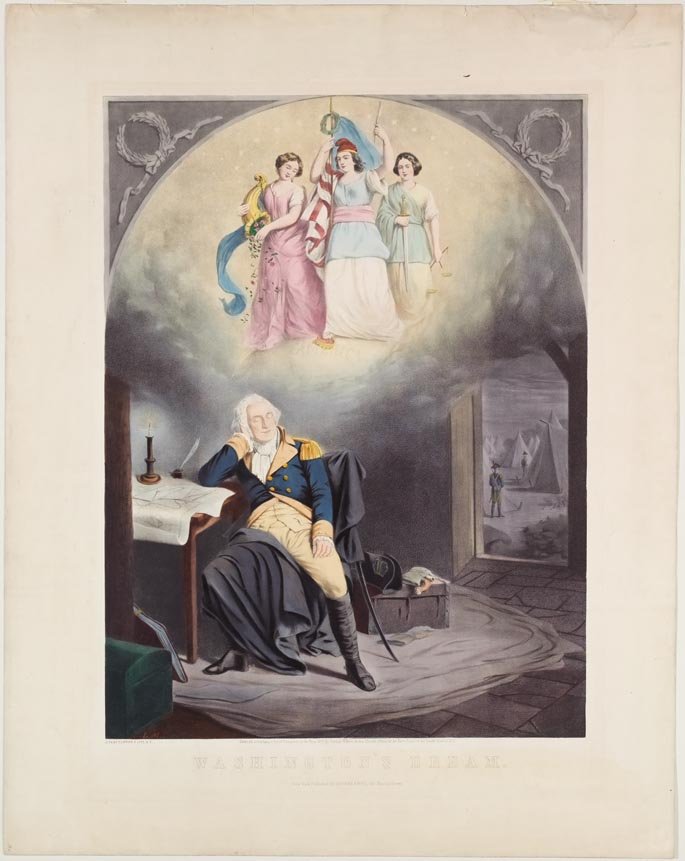
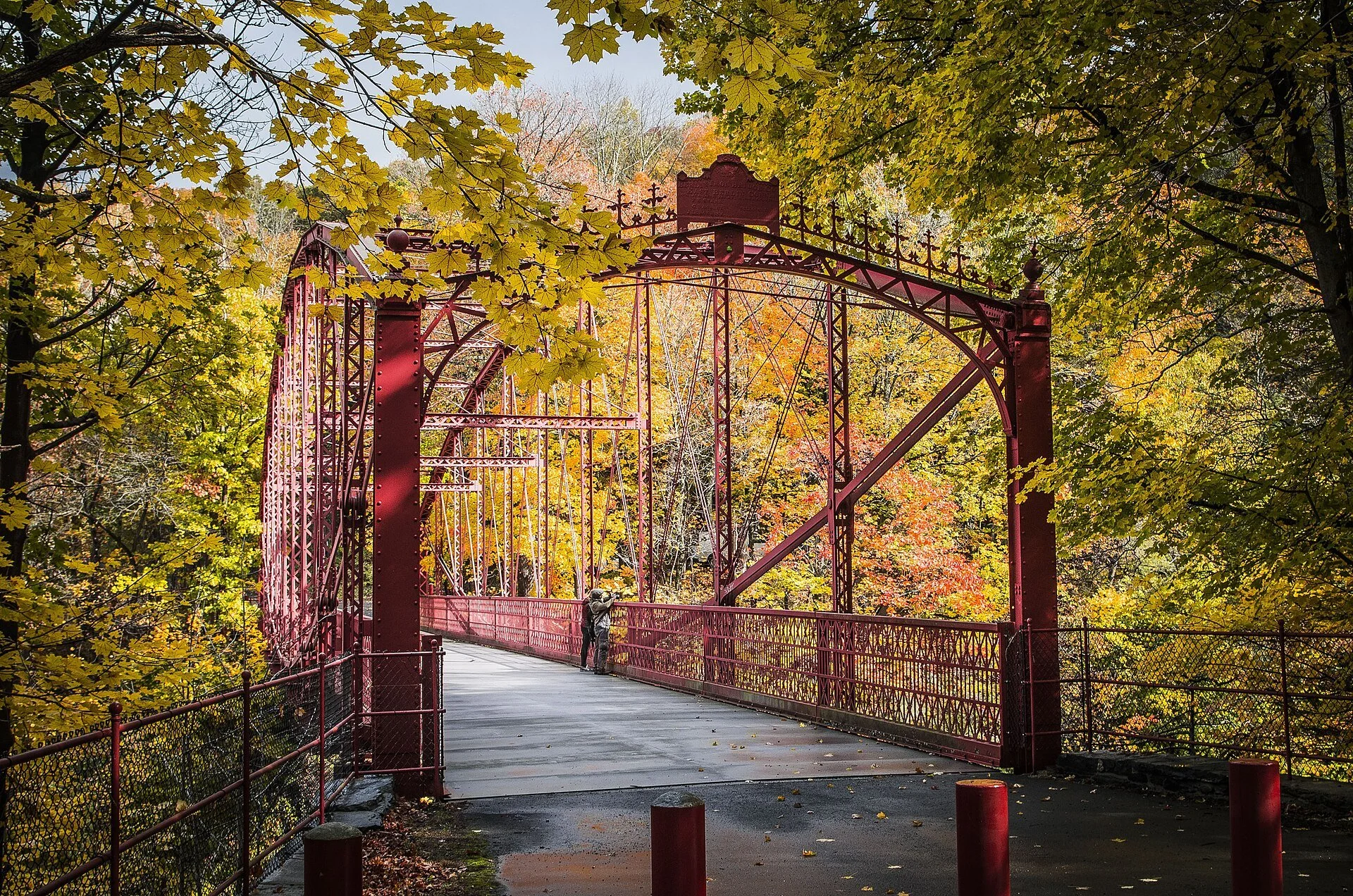
Ready to launch the season

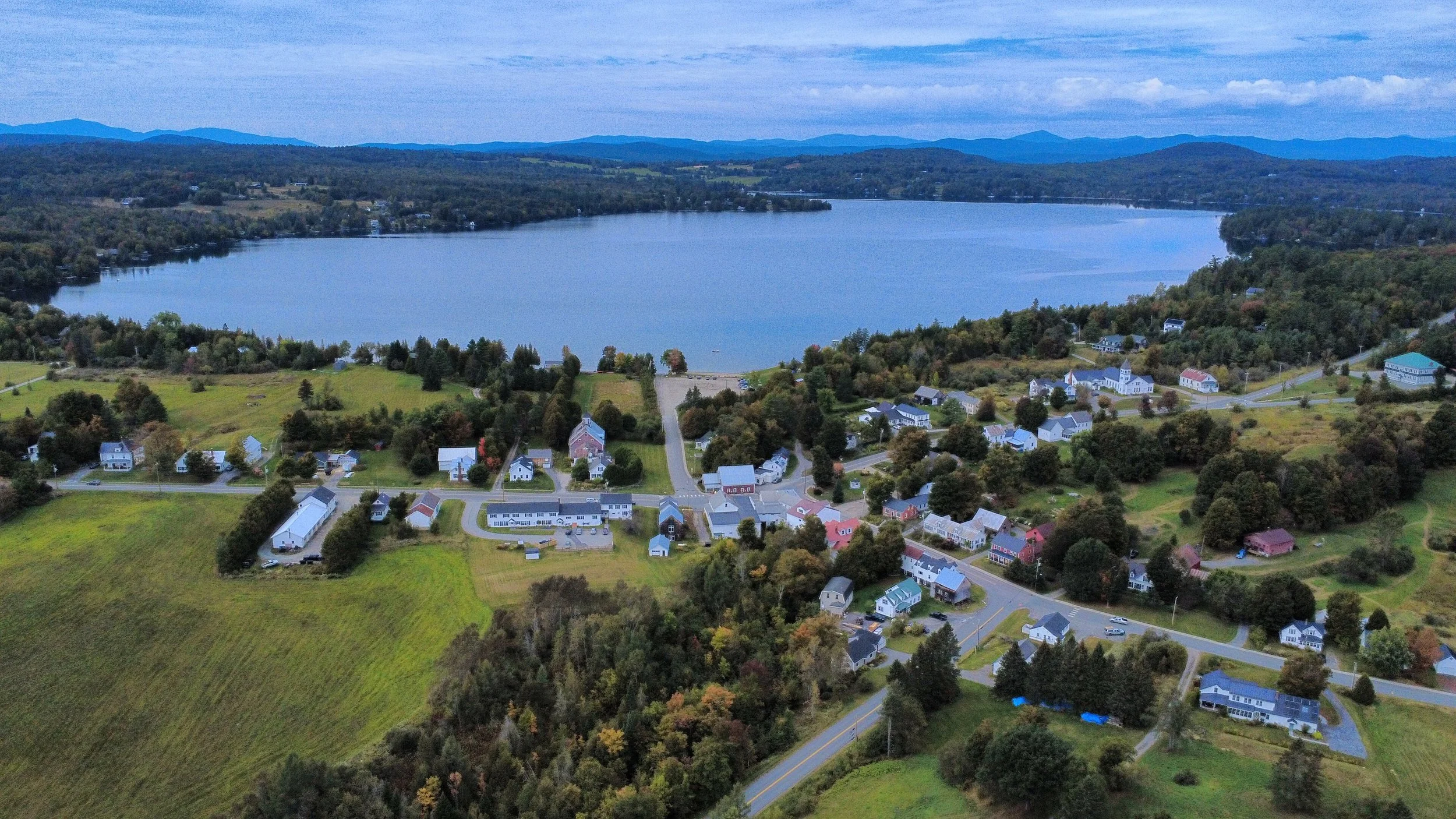
Boathouse in Westport, Mass., as summer beckons.
-- Photo by Lydia Davison Whitcomb
'Sullen silver'
"Eruptive lightnings flutter to and fro
Above the heights of immemorial hills;
Thirst-stricken air, dumb-throated, in its woe
Limply down-sagging, its limp body spills
Upon the earth. A panting silence fills
The empty vault of Night with shimmering bars
Of sullen silver, where the lake distils
Its misered bounty.—Hark! No whisper mars
The utter silence of the untranslated stars.''
-- "Summer Silence, '' by e.e. cummings
This morning at 6

"Foggy Day'' (oil on canvas), by Joseph Diggs, in his show "Life's Layers,'' at the Berta Walker Gallery, Provincetown, June 30-July 22.




Llewellyn King: Climate fears, population growth, surging cities pushing nuclear power abroad
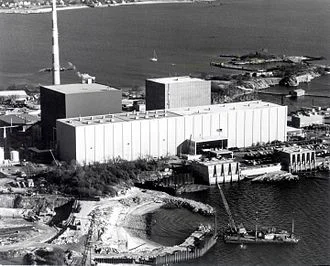
The Millstone Nuclear Power Station, in Waterford, Conn., on Long Island Sound.
The nuclear electric industry has sustained some mighty blows in the United States and Western Europe in recent years. It might be reeling, but it is not out and it is not going down for the count. Taken globally, things are good.
The need to curb carbon in the air to slow global warming, the need to service a growing world population and surging cities are impelling nuclear forward. At the annual summit meeting of the U.S. Nuclear Infrastructure Council (NIC) in Washington, this future was laid out with passion: Nuclear power is experiencing a growth spurt but not in the United States and Western Europe, except for Britain.
Nuclear demand is high where air pollution is at its worst and where economic activity is fast and furious — in Asia generally, and in China and India in particular.
Vijay Sazawal, president of IAEC Consulting, told the NIC meeting that India would be adding two reactors a year to its nuclear fleet moving forward. China and India are building half of the 60 new reactors under construction worldwide, according to Andrew Paterson of Verdigris Capital Group, which studies nuclear.
Paterson predicted that world electricity demand will double by 2050 and that most of the demand would come from the megacities of Asia, Africa and Latin America. He said, “By 2030, China will have 15 megacities (10 million or more people) and 150 cities with more than 1 million people.”
Wind and solar energy, the other carbon-free electricity sources, also will grow dramatically but will be constrained by their land needs. Big cities are ill-suited to roof-mounted solar, and windmills require large acreages of open land not found near megacities.
In the United States, the shadow of the Westinghouse bankruptcy is passing over the nuclear community. How could a once-proud and dominant company get its sums so wrong that it has been forced into bankruptcy? The collapse of the company — which was building two plants with four reactors in South Carolina and Georgia, four reactors in China, and was engaged in projects in the United Kingdom and India — will be studied in business schools for generations to come. Bad management, not bad nuclear, has brought Westinghouse and its parent Toshiba to its knees.
But nuclear believers are undaunted. Nuclear advocates have a kind of religious commitment to their technology, to their science and to the engineering that turns the science into power plants.
I have been writing about nuclear since 1970, and I have featured it on my television program, White House Chronicle, for more than 20 years. I can attest that there is something special in the passion of nuclear people for nuclear power. They have fervor wrapped in a passion for kind of energy utopia. They believe in the great gift that nuclear offers a populous world: a huge volume of electricity.
The kernel here, the core belief, the holy grail of nuclear is wrapped up in “energy density”: how a small amount of nuclear material can produce a giant amount of electricity in a plant that has few moving parts, aside from the conventional steam turbine. As designs have evolved and plants have become “passive” in their safety systems, the things that can go wrong have been largely eliminated.
To understand energy density think this way: The average wind turbine you see along the highway turns out 2 megawatts of electricity when there is wind, a trifling amount compared to the 1,600 megawatts a new nuclear plant produces continuously — and probably will produce for 100 years before it is retired.
Asia, choking on air pollution and with huge growth, needs nuclear. America is not gasping for new generation: demand is static and there is a natural gas glut. Also, there is land aplenty for solar and wind to be installed.
But U.S. nuclear creativity, even genius, will not rest. The United States is on the frontier, pioneering a generation of wholly new reactor concepts, mostly for small modular reactors and even big new reactors, which may first be built in China and India but, like so much else, will be “thought up in America.”
At nuclear conclaves like the NIC meeting, there is sadness that the U.S. market is stagnant. But there is incandescent hope for the future.
Llewellyn King (llewellynking1@gmail.com) is host and executive producer of White House Chronicle, on PBS, and a veteran media executive, columnist and international business executive as well as frequent contributor to New England Diary. This piece first ran in Inside Sources.
Felicia Nimue Ackerman: So lucky to be here
My daughter keeps telling me I am so lucky to be here.
She means instead of in her five-bedroom home,
Which always has space for another child
But not for a grandmother in a wheelchair.
I am so lucky to be here.
My room is yellow as the sun,
Which warms my face
When I roll out onto the porch
And endure people I have nothing in common with
Except age and abandonment.
For so long I dreaded being shut away from the world.
But I am so lucky to be here,
The best nursing home in Rhode Island,
Instead of where I would be if people knew
That what killed my unfaithful husband
Was not an accident.
-- Felicia Nimue Ackerman
Information (including pictures), please, on Stone House weddings, receptions
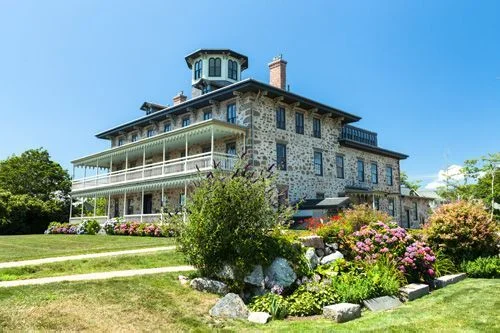
The Stone House, in Little Compton, R.I.
We're doing some historical research on the Stone House, an old inn in Little Compton, R.I. We'd appreciate any information from readers about their own weddings and/or wedding receptions held at the Stone House or such events involving their friends and/or relatives. Dates of the events -- and pictures! -- would be most appreciated. We'd guess that there have been weddings and/or wedding receptions there going back to the late Twenties, when there was a speakeasy in this lovely structure, built in 1854 as a private home.
Please email such information to:
rwhitcomb4@cox.net
For Grandma Moses to shear

"Sheep'' (acrylic on antique board), by Warren Kimble,'' in his show "Warren KImble: Folk Art 2017,'' at Brandon Artists Guild, Brandon, Vt. June 30-Aug. 29. The gallery says the show "shows Kimble in a current mood of nostalgia, creating his famous animal, barn and homestead scenes on antique wooden boards and other found objects.''
'Their no-longer houses'

"Toss in some wavy lines, an equal sign, and a squiggle,
then a lilac log, boulders with faces, a few phrases
like rock walls, twin marks from wagon wheels on granite.
The tell-tale lilacs give away the cellar hole:
magnetic lilacs, like nineteenth-century girls
in pinafores and blossom sprays, stationed
beside their no-longer houses. They look about to sing.''
-
-- From "Deconstructing New England, by Alexandria Peary
'The town has you'
"The town is an accumulation of three parts which, in sum, are greater than the sections. The town is the people who live there, the buildings which they have erected to den or do business in, and it is the land. The people are Scotch-English and French. There are others, of course - a smattering, like a fistful of pepper thrown in a pot of salt, but not many. This melting point never melted very much. The buildings are nearly all constructed of honest wood. Many of the older houses are saltboxes and most of the stores are false-fronted, although no one could have said why. ''
''.... The land is granite-bodied and covered with a thin, easily ruptured skin of topsoil. Farming it is a thankless, sweaty, miserable, crazy business. The harrow turns up great chunks of the granite underlayer and breaks on them. In May you take out your truck as soon as the ground is dry enough to support it, and you and your boys fill it up with rocks perhaps a dozen times before harrowing and dump them in the great weed-choked pile where you have dumped them since 1955, when you first took this tiger by the balls. And when you have picked them until the dirt won't come out from under your nails when you wash and your fingers feel huge and numb and oddly large-pored, you hitch your harow to your tractor and before you've broken two rows you bust one of the blades on a rock you missed....''
"....The land has got you, locked up solid got you, and the house, and the woman you fell in love with when you started high school (only she was a girl then, and you didn't know for shit about girls except you got one and hung on to her and she wrote your name all over her book covers and first you broke her in and then she broke you in and then neither one of you had to worry about that anymore), and the kids have got you, the kids that were started in the creaky double bed with the splintered headboard. You and she made the kids after the darkness fell - six kids, or seven, or ten. The bank has you, and the car dealership, and the Sears store in Lewiston, and John Deere in Brunswick. But most of all the town has you because you know it the way you know the shape of your wife's breast.''
-- Maine novelist Stephen King
Ban TV ads for prescription drugs

Adapted from Robert Whitcomb's "Digital Diary,'' in GoLocal24.com
As we seek to control healthcare costs, one place to look is on TV. There, especially on shows that appeal to an older demographic, such as the evening network news, you can see a Niagara of ads for new and expensive brand-name drugs that purport to be better than the meds that are on the market already – mostly much cheaper generics. Often the new pills are no better (or actually worse, with dangerous side-effects) than the current ones, although their ad copy is sexy.
People see these ads and then ask their overworked physicians for a prescription for these pricey pills. Some physicians cave in and write a script to move the patients out of their offices ASAP. Keep ‘em happy! We all get the bill in higher insurance premiums, and surging Medicaid and Medicare costs.
It has been a financial disaster except for the drug companies. And few consumers are competent to understand all the workings of these drugs hyped on the tube. Too often we confuse “new’’ with “better’’ – a confusion that the drug companies are pleased to promote.
Up to about 20 years ago, advertising on TV of prescription drugs was banned. That ban should be restored ASAP for the nation's physical and fiscal health.
Meanwhile, sometimes the old, cheap out-of-patent drugs may prevent or treat ailments they weren’t invented for. Consider trazadone, used to treat anxiety and depression, and often given to older people as a sleep aid. It turns out it may help prevent or slow dementia. If trials work out, this could turn out to be a huge benefit to America’s surging population of old folks and their families. And save vast sums of money.
Chris Powell: Sharia Law not an issue in Conn., so leave Muslims alone; state helps the hoaxers
Everybody knows that Islam is having a civil war between murderous totalitarians and people who just want to live and let live. Civilization's urgent agenda must be to help the good guys. But as Connecticut saw last weekend, some people are determined to insult and intimidate the good guys by suggesting that all followers of Islam are bad, which can only discourage the good guys and strengthen the bad guys.
Last weekend's demonstration of this came in Waterbury, where a group called ACT for America held a rally, purportedly to warn about sharia law, an Islamic religious code that is contrary to democracy in many respects. Waterbury seems to have been selected because it has a large Muslim community.
But no one in Connecticut is advocating replacing civil law with Sharia Law. In Connecticut Sharia is not an issue and is no more a threat to democracy than Christian or Jewish religious law, both of which also differ substantially from civil law but are not acknowledged by ACT for America as being just as incompatible with democracy as sharia is.
Nor does ACT for America acknowledge that Christianity and (much less so) Judaism had their own civil wars that devastated Europe and the Middle East for centuries before the live-and-let-live factions triumphed. Even in Connecticut, as late as the 1950s Protestants and Catholics nearly came to blows over whether civil law should provide public school bus transportation to Catholic schools.
Being 2,000 years younger than Judaism and six centuries younger than Christianity, Islam isn't done with its civil war yet. So Islam's good guys need support, not bullying and shunning. ACT for America says it wants religious freedom for all, but the group's harping on sharia law where there is no attempt to induce government to impose it smells like bigotry and hate.
State government helps the hoaxers
Former Fox News journalist Megyn Kelly, now running a news program on NBC, is catching criticism for planning an interview with radio talk show host Alex Jones, who is renowned for asserting that the Newtown school massacre in 2012 was a hoax. Maybe Kelly's questioning will undermine Jones as a hoaxer himself, or maybe it will just glorify him among the growing segment of the population that is inclined to consider everything official to be a lie.
But if government wants to help squelch hoaxes, it should reconsider what it has done to encourage them, as the General Assembly and Gov. Dannel Malloy did in response to the Newtown school massacre. That is, at the urging of the families of the murdered, legislators and the governor hurriedly enacted an exemption to Connecticut's Freedom of Information Act to obstruct disclosure of police photographs and videos depicting victims of homicide. Such images remain essential to refuting deniers of all sorts of atrocities, from the Holocaust to the Armenian genocide to the Rape of Nanking.
If applied nationally, Connecticut's law would conceal the Zapruder film of the assassination of President John F. Kennedy as well as the photographs taken during his autopsy, even as the circumstances of the president's murder remain very much in question. After the Newtown massacre Connecticut's black and Hispanic state legislators insisted on making the photo and video exemption apply to all homicide victims rather than limit it to the Newtown case.
Now those legislators are lamenting that, because Bridgeport police are not equipped with dashboard and body cameras, there are no photos or video of the fatal shooting by officers of a 15-year-old boy a month ago. But even if there were such images, the law those legislators insisted on enacting would obstruct any release to the public.
Chris Powell is managing editor of the Journal Inquirer, in Manchester, Conn.

We've a lot of common

"We Two Together'' (bronze resin), by Michael Alfano, in the "20th Annual Outdoor Sculpture Exhibit,'' at the Mill Brook Gallery & Sculpture Garden, Concord, N.H., Sept. 24-Oct. 27.

Jim Hightower: Donald Trump's relentless Twitter attacks on --- our allies
Via OtherWords.org
Donald Trump missed his opportunity to become a General Patton-style military commander and glorious war hero back in the Vietnam era. He surely would’ve been the greatest in history, to hear him tell it.
But, alas, he says some unspecified foot problem (or something or other) kept him from the privilege of actually getting to go fight in that war. Bad luck, I’m sure. But now that The Donald is the commander-in-chief for real, his inner warrior has been given a second chance to bloom, and this time he’s fully enlisted.
In recent weeks, President Trump has (1) escalated a running war of words against Chancellor Angela Merkel of Germany, (2) bombed the European leaders of NATO with explosive charges that they’re unworthy of his support, (3) launched a fierce new barrage of tough rhetoric in his extralegal offensive to ban all travel to the U.S. by anyone from six Muslim nations, and (4) opened an entirely new battlefront by attacking the mayor of London with one of his Twitter missiles.
In last year’s presidential campaign, Trump declared with typical modesty that “No one is bigger or better at the military than I am.”
Well, I’m certainly no expert on war, but if a president is going to pick a mess of foreign fights, wouldn’t it be better, strategically speaking, to pick on actual enemies, rather than on America’s allies? After all, there might come a time when we need friends to stand with us.
In a twist of historic irony, it looks like Boss Trump and his military team might need those European allies sooner than they figured. His national security chief and the Pentagon are pushing a new strategy for America’s long, horribly messy war in Afghanistan — but it depends on our NATO allies sending some of their troops into the fight.
Oops, how awkward for the impetuous tweeter-in-chief.
Jim Hightower is a radio commentator, writer, and public speaker. He’s also the editor of the populist newsletter, The Hightower Lowdown.
.
The decline of the summer job
Adapted from Robert Whitcomb's "Digital Diary,'' in GoLocal24.com
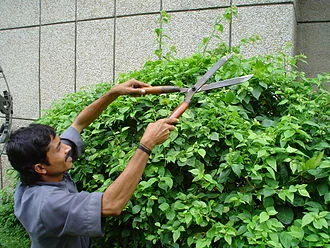
Getting a summer job used to be almost mandatory for teens as a way to build starter bank accounts and, sometimes, character. In my case, these jobs included such activities as mowing lawns, delivering newspapers, cutting back shrubs, painting fences, processing bills of lading at a trucking company on the Boston waterfront, working as a counselor at a camp for inner-city kids, waiting on tables and other, usually tedious, activities.
Things have changed a lot: The U.S. Bureau of Labor Statistics has reported that in July 2016 only 43 percent of those 16 to 19 were working or trying to get a job. In the late ‘80s the rate was nearly 70 percent. (I suspect that it was even higher than that in my time as summer worker – ’62-’69.)
But the refusal of successive Republican Congresses to raise the minimum wage, the arrival of illegal aliens to perform many jobs, especially yard work, house painting and other very physical labor, has discouraged many young people from even trying to get a job. And the days when you could pay for college with summer earnings alone are long gone.
At the same time, affluent parents now tend to encourage their teens to accumulate assorted extracurricular experiences, including travel, and to take summer courses to promote themselves in order to get into a “good college’’ rather than get a job. It used to be that well-off and even many rich parents would push their offspring to get summer jobs as a useful introduction to the world of work, where they’d learn how to deal with bosses and colleagues and to manage money.
You don’t hear much about character-building anymore. The results of its absence are all around and extend from the White House to your neighborhood.
A yard's geometry

"Sleepy and suburban at dusk,
I learn again the yard’s
geometry, edging around the garden
and the weedy knots of flowers, circling
trees and shrubs, giving
a wide berth to the berry patch,
heavy and sprawled out of its bounds.
Shoving such a machine
around a fairway of dandelions,
it is easy to feel absurd.
The average lawn, left alone
one hundred years, could become
a hardwood forest. An admirable project.''
-- From "Mowing,'' by Robert Wrigley
'Light Traces' at the Plumbing Museum

''Undersea Garden'' (archival pigment print), by Jenn Wood, in her joint show with Ian MacLellan entitled "Light Traces,'' at the Plumbing Museum, Watertown, Mass., June 22-Aug. 7. The Plumbing Museum is so named because of its origins with Charles Manoog, who collected such antiques as old bathtubs and rustic sinks.
Facebook vs. America's sense of community
Adapted from Robert Whitcomb's "Digital Diary'' in GoLocal24.com
Harvard College has withdrawn the acceptances of at least 10 young people because of their nasty postings on Facebook. As in so many ways, the Internet has made life worse, not better. Some civil libertarians, such as writer and Harvard Law Emeritus Prof. Alan Dershowitz, have criticized Harvard’s actions on the grounds of free speech. But Harvard is a private institution that has every right to let in whomever it wants into its community. In this case, it doesn’t want a bunch of young people who are crude and cruel or at least act as if they are.
These kids, smart and generally affluent, if lacking judgment, can apply elsewhere – assuming they can remove most traces of their comments, though that may be difficult, or get colleges to chalk it all up to youthful exuberance. Stuff on the Internet is as enduring as a manmade monster can be. Everything about us that anyone has ever entered on the Internet is there in some crevasse.
If only more people of all ages would spend much less time on social media and more time, well, outdoors, for example, or reading a book onpaper and thus while doing so not being constantly distracted by the gyrations of the Internet and especially of social media, which are engineered to be addictive.
Facebook CEO Mark Zuckerberg, the famous Harvard billionaire dropout, has done far more harm than good for civil society and democracy by creating echo chambers where people see and hear things mostly according to their long-held biases and their insular interests. Facebook is helping to destroy a broader sense of American community and the duties of civic engagement..
But the genie is out of the bottle!