
Vox clamantis in deserto


Winged art
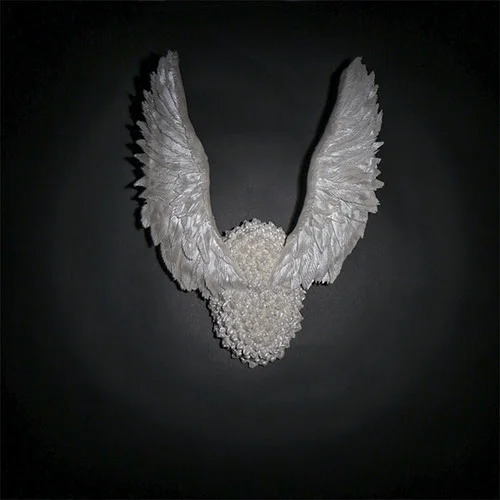
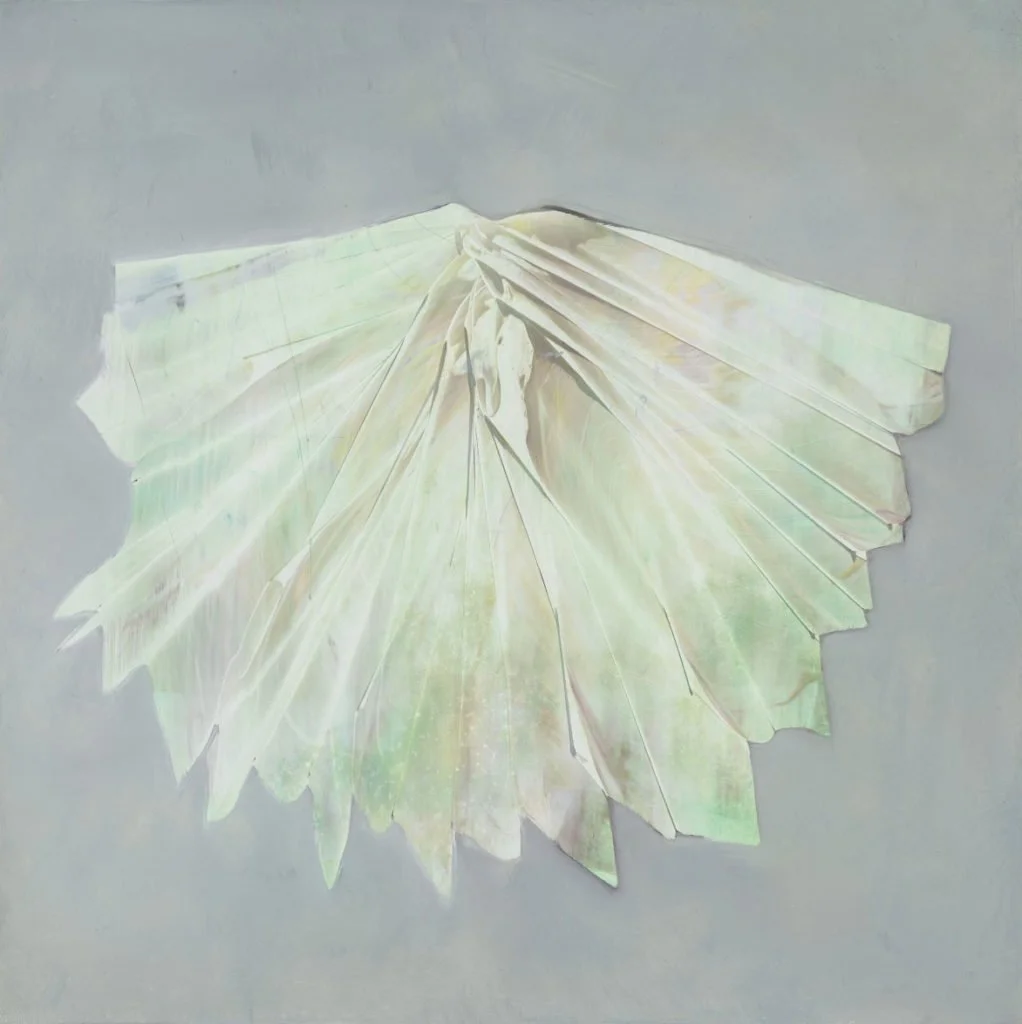
"Wings'' (mixed media ink jet print), by Mara Trachtenberg, in the joint show "Wings,'' with Uli Brahmst, at Hera Gallery, Wakefield, R.I., through May 5.
This show interpretes the wing motif, as idea and physical subject, in different media. Wings are symbols of flight, hope and freedom. Ancient myth has it that winged creatures can transverse the physical and cosmic realms --- through diverse realities.
New England needs interstate transfer compact for college students
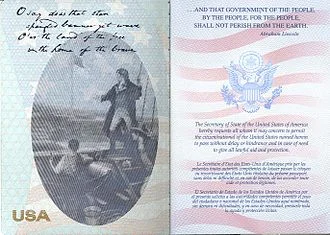
Stafford Peat, who asked the questions and put together this piece, is a senior consultant at the New England Board of Higher Education (NEBHE.org), on whose Web site this piece originated. Her questions are directed to Patricia A. Shea is director of Academic Leadership Initiatives at the Western Interstate Commission for Higher Education (WICHE) and Jane Sherman, the Passport State Coordinator at WICHE’s Interstate Passport Networ
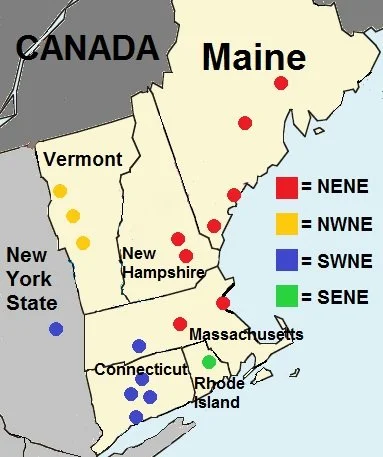
Students in New England take increasingly varied pathways to a degree. They are highly mobile and move among two-year colleges and four-year public and private higher education institutions (HEIs), among four-year and two-year colleges and back, and transfer in-state and out-of state. Four in 10 students who begin college at a New England institution transfer from one institution to another at least once in their academic careers.
While most stay in the state where they began college, 10 percent transfer to another New England state, and 13 percent transfer outside the region, according to the National Student Clearinghouse.
One result of this mobility is the loss of credits, time and money. Although many states in the region have initiated “transfer pathways,” the fact remains that, for New England college students, no interstate transfer compact crosses the six states’ borders.
In the West, a new transfer compact has emerged relying not on credit hours, but on the learning outcomes students have achieved in lower-division college courses. Under the leadership of the Western Interstate Commission for Higher Education (WICHE), Interstate Passport focuses on lower-division general education as the common denominator among most institutions. Students attending one institution can transfer courses to another institution in a cross-border “block,” rather than through individual course-by-course matches.
The Interstate Passport framework consists of nine knowledge and skill areas, including oral communication, written communication, natural sciences and critical thinking, among others. These areas are based on the Essential Learning Outcomes developed by the Association of American Colleges & Universities as part of its Liberal Education and America’s Promise (LEAP) initiative, and on research conducted by WICHE into the general education expectations of HEIs in the region. For each knowledge or skill area, the core of the program is made up of the Passport Learning Outcomes (PLOs).
How were the Passport Learning Outcomes developed?
For each of the nine knowledge and skill areas, two-year and four-year faculty members with expertise in that area from each of the seven original states (CA, HI, ND, OR, SD, UT, WY) comprised a team that met in-person and by conference call. Each team member also consulted systematically with other faculty members in that state, resulting in a lengthy and wide-ranging negotiation by which the Passport Learning Outcomes were agreed upon. In several areas, the interstate faculty teams’ deliberations were also informed by the recommendations of their respective professional academic associations.
The early results for the Interstate Passport program are beginning to come in. As of February 2017, 21 institutions in six states were formal members of the Interstate Passport Network. Institutions in an additional 10 states are exploring or preparing to apply for membership. A total of 9,082 student passports were issued in fall 2016—the first term they could be awarded.
Interview with Pat Shea and Jane Sherman
What are the benefits to students and states in being part of the Interstate Passport Network?
For students, lower-division general education (LDGE) transfers as a completed Block of courses, with all credits intact. Students know that ahead of time, which means fewer lost credits and no additional LDGE course requirements after transfer, resulting in greater motivation to continue, faster time to graduation, lower costs and fewer foregone earnings.
For institutions, more and faster completions mean improved accountability metrics. Aligning student learning outcomes, rather than course titles, descriptions or syllabi, means less arduous articulation arrangements and greater curricular autonomy for each institution or state. Offering a guarantee of completed LDGE to students from other Interstate Passport Network member institutions—i.e., institutions with aligned learning outcomes—will mean attracting more, and better prepared, transfer students.
What was the previous nature of interstate transfer among Western states?
Most states had done quite a bit of work to smooth transfer within their borders. But across state lines the story was very different. Too often students were required to complete additional general education requirements after transfer—sometimes only a few courses, sometimes many—when the specific disciplines, courses or numbers of credits didn’t match.
What is the biggest accomplishment so far of the Interstate Passport?
Without a doubt, the biggest accomplishment so far is the very real shift in focus from courses—titles, descriptions, syllabi and credits—to student learning outcomes with the level of proficiency that faculties expect of students who complete a quality general education program. Of course, at this stage, there is reassurance for the receiving institution in knowing that the Passport is undergirded by courses and credits at the sending institution, but there is no need to delve into each course or credit; the Passport is accepted as a whole.
Are there any states outside the West participating in the project?
Institutions in states in the Southern and Midwest regions are currently exploring the Interstate Passport, either as individual institutions or as part of a system or statewide effort developing their Passport Blocks. These states include Arkansas, Indiana, Kentucky, Ohio and Virginia.
How were they recruited?
Most of the current Interstate Passport states were initially reached through their regional Commissions and Compacts—WICHE, SREB and MHEC. Other interest has come through numerous conference presentations and articles in higher education publications.
Can you offer concrete examples of the “Blocks” of credits on which interstate transfer is based?
Lower-division general education programs tend to range between 30 to 40 total semester credits, with the majority at 32-38. And most cover very similar sets of disciplines. You can find a sampling of institution’s Passport Blocks at http://www.wiche.edu/passport/membership/network_members.
What lessons have been learned so far in the project to accomplish seamless transfer across state lines?
We have learned that arrangements to smooth transfer within states are highly varied—all are helpful, and none are problem-free. Very few states or institutions have worked on transfer across state lines.
The assignment of responsibilities–both formal and informal–for policy development and implementation for transfer also varies widely from state to state. Consequently, how each state approaches new initiatives has been unique.
On the other hand, there is a high level of agreement among faculty about what lower-division students should learn in general education, and faculty members find it highly rewarding to work on this program with faculty in their own and other states.
Overall, we have learned that the Interstate Passport—due to its focus on learning outcomes—appears to provide both an academic focus and a larger perspective on transfer of LDGE within which a great deal of organizational and curricular variation can be accommodated.
In addition to the current Interstate Passport Network of institutions, do you envision more states and institutions will join?
Yes, definitely. The more states and institutions that join the Interstate Passport Network, the greater the benefit to students and institutions.
If New England states or institutions were interested in joining the Interstate Passport Network, how would they join?
Project consultants are available at no cost to talk with or meet with interested institutions or states. Faculty members and administrators from early adopter states are also available to talk with their counterparts in other states. In order to join, institutions review the Passport Learning Outcomes for consistency with their own Lower Division General Education learning outcomes; identify their courses that allow their students to achieve the Outcomes; agree to both award the Passport to their students and recognize the Passport of transfer students whom they admit; track the retention and GPA of Passport holders for at least two terms after transfer; and advise students about the Interstate Passport.
All nonprofit, regionally accredited, public and private, two-and four-year institutions are eligible to apply at http://www.wiche.edu/passport/membership. For more information contact Stafford Peat at speat@nebhe.edu or Pat Shea at pshea@wiche.edu or 303.541.0302
Is there a fee or other costs to join the Interstate Passport Network?
So far, all the work of developing and implementing the Interstate Passport has been covered by multiple foundation and federal grants. In the future, there will be a modest annual fee, scaled to institutional size, to cover administrative costs of the Network.
Looking down the road, what is the future of the Interstate Passport Network?
Current member institutions and states envision a broad-based, nationwide network of two- and four-year institutions leading the way in a student-centered approach to transfer based on student learning outcomes. There is much interest in developing a Passport tailored to STEM majors, and eventually to other pathways as well, as resources become available.
Myth and magic in art
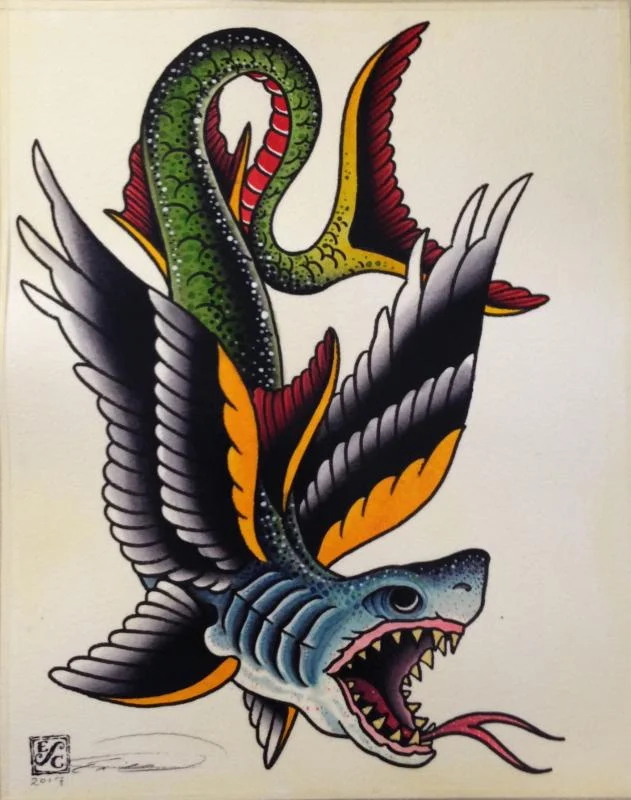
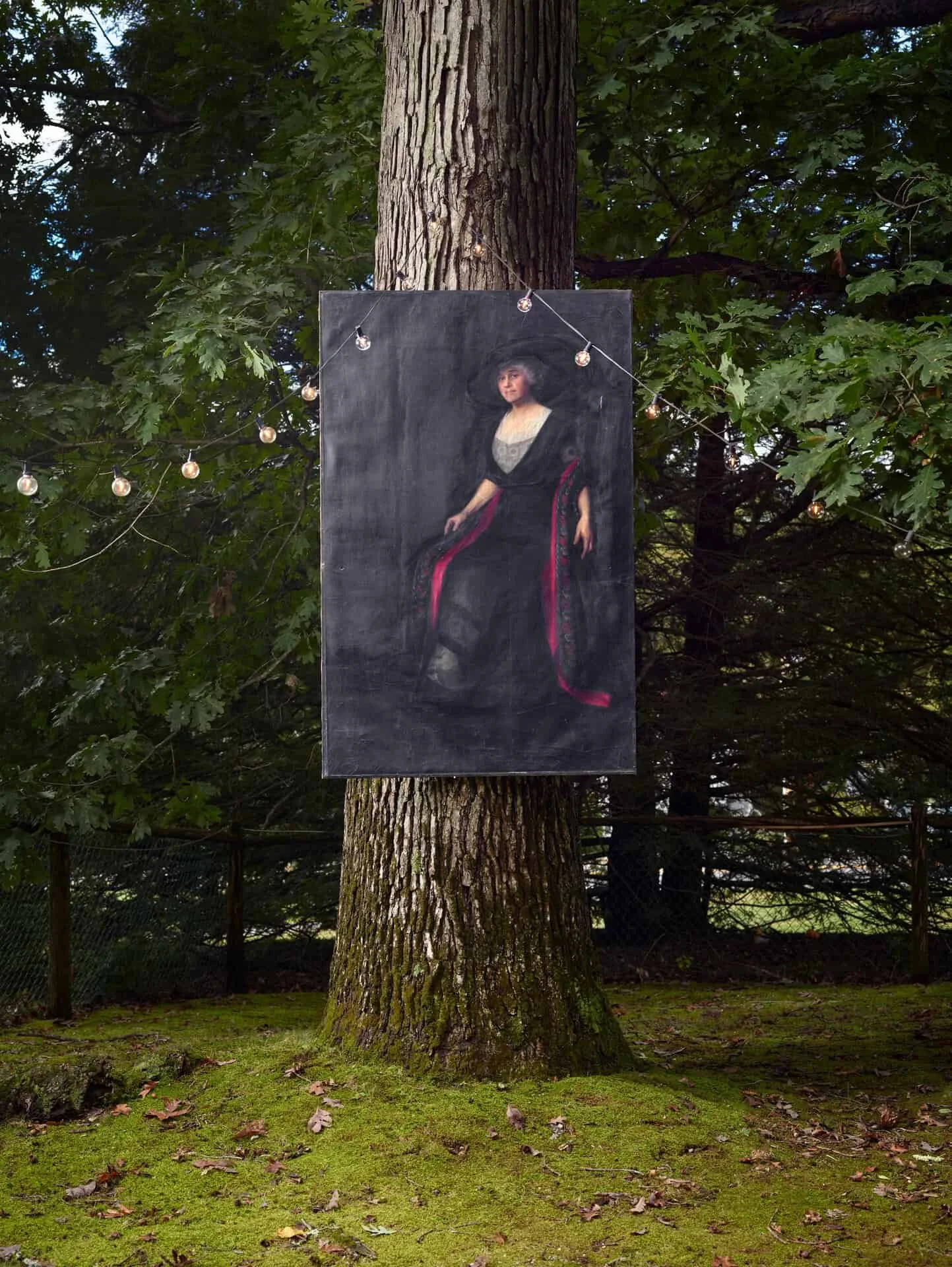
"Leviathan'' (watercolor), by Erik Schmidt, in the the group show "Myth & Magic: Brickbottom Artist Association Members' Exhibition, '' April 27-May 27 at the Brickbottom Gallery, Somerville, Mass.
The gallery says that "the universe and the beauty of creation form the foundation of
many works of art. This large and varied group explores myth and magic in painting, printmaking, photography, sculpture and mixed media.''
Green energy will triumph despite Trump
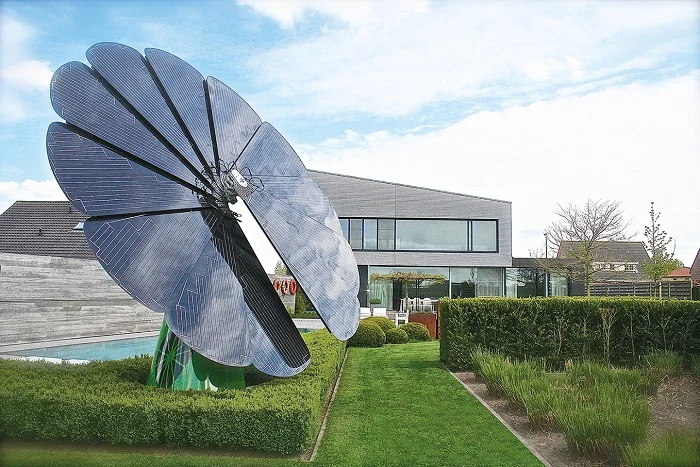
A Smartflower home solar-energy device. Smartflower's American operations are based in Boston.
Adapted froman item in Robert Whitcomb's "Digital Diary'' column in GoLocal24.com
President Trump’s rolling up of the Obama administration’s initiatives to slow global warming caused by burning fossil fuels will not only hurt the environment and public health. It will also harm the economy by slowing U.S. development of technology for clean energy – technology that our international trading partners are working on enthusiastically. A retreat toward more reliance on fossil fuel will make America less competitive. This technology development creates well-paying jobs. GE Chairman Jeff Immelt and other corporate leaders have been eloquent on this subject.
Mr. Trump has seemed quite obsessed with appealing to the dwindling number of people who mine coal or otherwise profit from this poisonous material, even as he also said he’d boost fracking for gas and oil, which would hurt the coal industry. Gas is providing an ever higher proportion of the energy to power electricity plants because it’s cheap and plentiful and far less polluting than coal.
But then, don’t look for coherence from Donald Trump or deep research by his followers. But it’s clear that what we can expect in his (first?) term is a modest increase in coal-mining, with more miners dying of black lung and cancer or in mine collapses, more environmental devastation of parts of Appalachia (poisoned streams, sheared-off mountaintops, etc.) and the continued transmission of mercury, sulfur dioxide and other poisons into the air from coal-fired plants.
But not for long. This filthy way of extracting and using energy is doomed, whatever Donald Trump’s appeals to the desperate and hidebound people of Coal Country.
In the not-too-distant future, most Americans will get their electricity from solar, wind and other nonpolluting energy generated close to where they live; the coal mines will all be shut and Appalachia will begin the long process of healing their ravaged land and building a diversified economy.
Politics at the dump
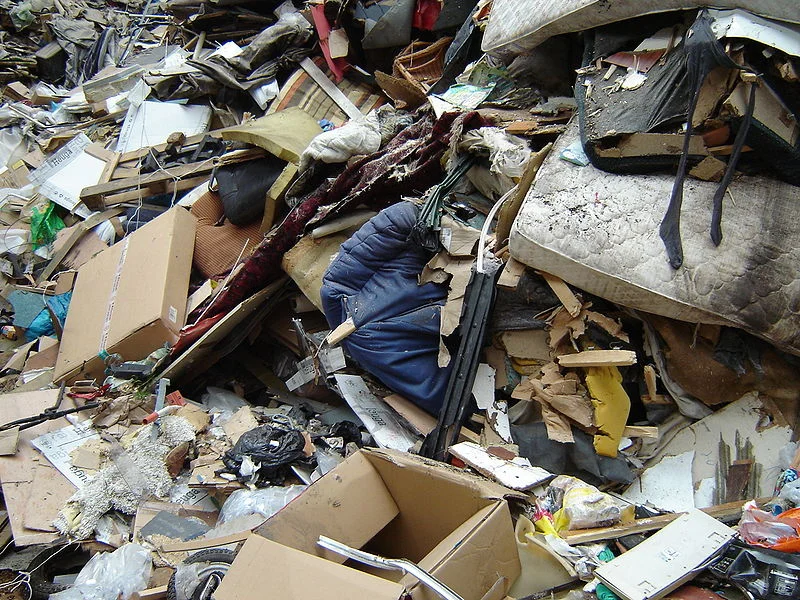
Where I grew up in{Norwich} Vermont, there is no municipal garbage removal. You have to bring your trash to the dump every weekend. Something like three hours on Saturday morning, the entire town goes in. It is actually a very efficient place to do politics. I would go to the garbage dump, get petitions signed, give out literature, talk to voters.
-- Robby Mook (Hillary Clinton's campaign manager in her 2016 presidential race.)
William Morgan: Appalachian Connecticut
"
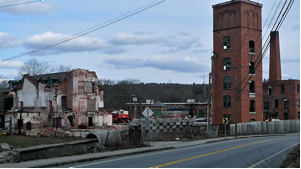
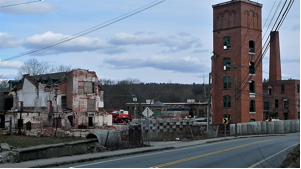
Sayles Mill, Dayville, c1882, being demolished.
Photos and commentary by William Morgan
Windham County, Connecticut's rural northeastern corner, has a reputation for classic Yankee countryside: stonewalls, dairy farms and such picturesque villagesas Woodstock, Pomfret and Canterbury. The mill towns of the Quinebaug Valley tell another story.
From Putnam down toward Norwich, once prosperous 19th-Century mills stand idle, or are being demolished. Attawaugan, one of six villages in the town of Killingly, is but a ghost of its Civil War-era manufacturing zenith.
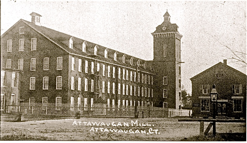
Built c1860, the Attawaugan Mill made curtains.
(Killingly Historical Society)

The mill stands, but is rented out to various tenants, and its fabric is far from original.
As was typical of the paternalistic mill owners of a century and a half ago, they provided their workers company housing. Small two-family frame cottages are found throughout the valley, but most were sold to residents decades ago, and their maintenance suggests subsistence living rather than inspired plutocratic patronage.
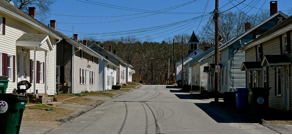
Church Street in Attawaugan. The houses fell victim to the vinyl-siding salesmen. The white preaching box of a church to the left lies fallow, held together by termites linking arms.
Connecticut may be one of the richest states in the country. But the towns of the Quinebaug Valley are the polar opposite of Gold Coast towns, such as Greenwich or New Canaan. Prosperity left here sometime after World War II. This area feels less like Norman Rockwell's New England and more like the Appalachian bits of upstate New York.
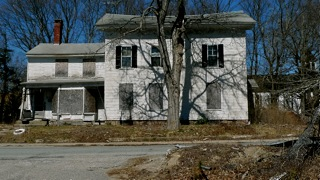
Abandoned house in Attawaugan; church is to the right.
Contact: Chris Powell
Office: 860-646-0500x307
Home: 860-646-7383
Cell: 860-305-4013
___________________________________________________
HIGHEST COURTS ARE ABOUT
POLITICAL POWER, NOT LAW
By CHRIS POWELL
Democrats and Republicans in the Senate did what they had to do last week with President Trump's nomination of Judge Neil Gorsuch to the Supreme Court. Republicans had to force Gorsuch through even at the cost of repealing the Senate's rule favoring bipartisanship with important presidential nominations, and Democrats had to oppose him though he was well qualified.
It was a fight to the death because the Supreme Court has been evenly divided politically since the death of Justice Antonin Scalia and because the court, the other federal appellate courts, and many state supreme courts have become super-legislatures as government has grown and as the political parties, with much encouragement from society, have sought to constitutionalize all major political issues, thereby pre-empting ordinary legislation.
So when they testify to the Senate, Democratic nominees for the Supreme Court pretend not to have any opinion on major pending controversies, and, once appointed, reliably vote the liberal line, just as Republican nominees, most recently Gorsuch, also say nothing meaningful and, once appointed, reliably vote the conservative line.
Liberal Democrats started this trend, first enlarging the government and then encouraging the court's ambition to control it. Conservative Republicans merely followed that lead. Now there may not be much left to do but start electing federal judges, as some states elect their judges. The partisan politics is often ugly and scary but at least it is more honest.
Not all is lost for liberals. Despite the conservative triumph with Gorsuch, many state supreme courts will remain bastions of liberal power, particularly Connecticut's, which, for example, in recent years has ruled that capital punishment is unconstitutional through specifically authorized by both state and federal constitutions and that the state constitution actually requires same-sex marriage though the state criminalized homosexuality long before and long after all the constitution's relevant provisions were adopted.
Constitutions were meant not just to establish governments but to limit them, since unlimited government needs no constitution. Over the centuries since Magna Carta, limiting government was considered the better part of Western political genius. But power isn't limited when courts take it for themselves, even at the encouragement of the president and Congress.
* * *
ATTACK WAS ACT OF TYRANT: What gave President Trump the authority to attack Syria last week? There was no declaration of war or other resolution by Congress, and no attack on the United States requiring immediate defeat and deterrence.
No, the president just saw an opportunity to look tough after an inaugural two months of buffoonery and incompetence and to impress the visiting Chinese premier with an implicit threat to China's increasingly troublesome ally, North Korea.
The president's pretext was another poison gas attack on civilians in Syria's civil war, an attack he laid to the regime of the Syrian dictator, Bashar Hassad. But nobody really knows who is responsible for what in Syria anymore, and even if the Assad regime is guilty of the latest atrocity, the civil war is not the particular responsibility of the United States, especially when more intervention risks confrontation with the regime's longtime sponsor, Russia.
Lobbing some cruise missiles into an air base in Syria from a safe distance in the Mediterranean isn't going to stop the war. While international negotiations haven't ended the war either, they stand a better chance. In any case, since there was no attack on this country, taking the United States into war without authorization from Congress was the act of a tyrant, no matter how odious the target.
-----
Chris Powell is managing editor of the Journal Inquirer in Manchester, Connecticut.
-END-
David Warsh: Standoff with Russian more perilous than you think
SOMERVILLE, Mass.
Hanging over Donald Trump’s meeting with Chinese President Xi Jinping last week was the warning of Graham Allison’s book Destined for War, Can America and China Avoid The Thucydides’ Trap? (Houghton Mifflin Harcourt, 2017). The book won’t be in stores for another month, but as long ago as 2013 Xi was talking about the metaphor, well before an early version of the Harvard government professor’s argument appeared in The Atlantic.
What has happened historically when a rising power threatens a ruling one? “It was the rise of Athens and the fear that this instilled in Sparta that made war inevitable,” Thucydides wrote in his History of the Peloponnesian War. In the 2,400 years since, Allison has found, 12 of 16 such cases have ended in war.
After boasting to the Financial Times, “If China is not going to solve North Korea, we will,” Trump reinforced the message by striking a Syrian airfield while Xi visited him in Florida. Do you wonder why Bashar Assad chose last week to attack a rebellious village with nerve gas? A senior White House official told The Wall Street Journal that the gesture was “bigger than Syria” – representative of how the American president wants to be seen by other leaders. “It is important that people understand this is a different administration [from that of Barack Obama].”
(Different in more ways than one, the spokesman might have added. Trump sought last week to reduce quarrelling among his most senior advisers. How must the president’s record-low favorability rankings in opinion polls complicate the way he is seen by other leaders?)
The defect in The Thucydides Trap is the faulty map it generates. The U.S. is facing not just a single rising power on the world stage, but a diminished and angry giant as well in the form of still-powerful Russia. It has become the habit of much of the U.S. media to tune out Russian President Vladimir Putin on grounds that he does not play by American rules. He murders journalists and opponents, it is said, conducts wars against his neighbors, controls the media, games elections, and has become “President for Life.” Just last week, a Russian court banned as “extremist” an image of the Russian president wearing lipstick, eye-shadow, and false eyelashes, The New York Times reported.
Why not also view Putin as a serious political leader with serious issues governing a nation seeking a new role in the world? One set of these has to do with shaping norms and rules of post-communist civil society. Another set concerns the nation’s economic prospects. Perhaps the most serious of all has to do with the maintenance of Russian’s defense policy – its nuclear deterrent force, in particular. In this respect, The Thucydides Trap misses the point pretty badly.
It’s been 30 years since I consulted an issue of Bulletin of the Atomic Scientists. The magazine was familiar reading in my youth, when the minute hand on its iconic doomsday clock was set a few minutes before midnight – two, or three, or seven, depending on the circumstances.
For a few years after 1991, when the Soviet Union dissolved into 15 independent states, the clock showed a comforting 17 minutes before the hour. The peril has been growing ever since. Earlier this year the editors moved the interval to two-and-a-half minutes – the most alarming warning since the high-peril year of 1984.
Last month, BAS authors Hans Kristensen, Matthew McKinzie, and Theodore Postol explained, The U.S. nuclear forces modernization program underway for 20 years has routinely been explained to the public as a means to preserve the safety and reliability of missile warheads. In fact, the program has included an adjustment that makes each refurbished warhead much more likely to destroy its target.
A new device, a “super-fuze,” has been quietly incorporated since 2009 into the Navy’s submarine–based missile warheads as part of a “life-extension” program. These “burst-height compensating” detonators make it up to three times more likely that its blast will destroy its target than their old “fixed–height” triggers.
Because the innovations in the super-fuze appear, to the non-technical eye, to be minor, policymakers outside of the U.S. government (and probably inside the government as well) have completely missed its revolutionary impact on military capabilities and its important implications for global security.
The result, the BAS authors estimated, is that the US today possesses something close to a first-strike capability. Already US nuclear submarines probably patrol with three times the number of enhanced warheads that would be required to destroy the entire fleet of Russian land-based missiles before they could be launched. Yes, the Russians have submarine-based missiles, too. And they are understood to be developing ultra-high-speed underwater missiles that could destroy American harbors.
But the very existence of the possibility of a pre-emptive strike will surely make Russian strategists jumpy, the BAS authors say. And since Russian commanders lack the same system of space-based infrared early-warning satellites as the U.S., they could expect only half as much time as the Americans have in which to decide whether or not they are facing a false alarm – fifteen minutes as opposed to half an hour. A slim margin for error in judgement has become much thinner.
When Science magazine polled experts about the BAS story, two of the most prominent judged the report to be “solid” or “true.” Thomas Karako, of the Center for Strategic and International Studies in Washington, was unpersuaded. He derided the “breathless exposé language” and dismissed the authors’ concerns about Russia’s discomfiture. You can make an early acquaintance with the March 1 BAS story here, if you like. A wider, fuller examination of the latest chapter in the story of the doomsday clock has only just begun.
David Warsh, a veteran journalist focusing on economic and political matters and an economic historian, is proprietor of economicprincipals.com, where this piece first ran.
'Neighborhood's coming back'
''With the warmer days the shops on Elmwood
Stay open later, still busy long after sundown.
It looks like the neighborhood’s coming back.
Gone are the boarded storefronts that you interpreted,
When you lived here, as an emblem of your private recession,
Your ship of state becalmed in the doldrums,
Your guiding stars obscured by fog. Now the cut-rate drugstore
Where you stocked your arsenal against migraine
Is an Asian emporium. ...''
-- From "Spring Letter,'' by Carl Dennis
Textile industry

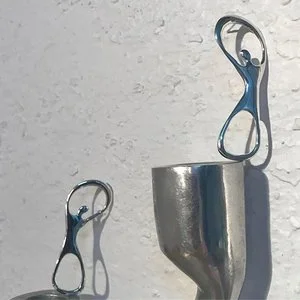
Top, "Wild Child'' (silk velvets, fake fur, chiffon); bottom "Red Leaf' '(crushed rayon velvet, crushed polyester stretch velvet, silk velvet, rayon velvet) by Beverly Semmes, in her show at Samson Projects, Boston through May 27.

Fighting global disease threats

The various influenza viruses in humans. Solid squares show the appearance of a new strain, causing recurring influenza pandemics. Broken lines indicate uncertain strain identifications.
To members and friends of the Providence Committee on Foreign Relations (thepcfr.org; pcfremail@gmail.com):
The next PCFR dinner meeting comes on Wednesday, April 19, with Dr. Rand Stoneburner, M.D., the distinguished international epidemiologist. Dr. Stoneburner, who has done extensive work with the World Health Organization, among other public health organizations, will talk about Zika, Ebola and the biggest threat – a global influenza pandemic. He’ll have some graphics.

Culling turkeys with crossbows?
By TIM FAULKNER
For ecoRI News (ecori.org)
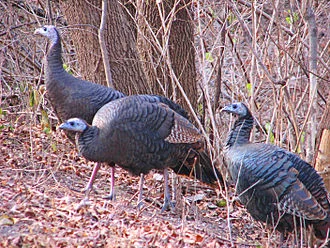
Wild turkeys can be found just about anywhere these days. Since the 1980s, these short-distance flyers have migrated from rural western Rhode Island to urban and suburban neighborhoods, where they dine from bird feeders and on handouts from humans.
“They get used to being fed by people, and they don’t fear people and then they don’t leave,” said Josh Beuth, wildlife biologist and head of the turkey program at the Rhode Island Department of Environmental Management (DEM).
Many of these well-fed birds feel comfortable around humans, as they roam backyards in Barrington and parking lots on Reservoir Avenue in Cranston.
Despite regular sightings, the number of wild turkeys in Rhode Island has fallen from its peak of about 6,000 in 2001 to some 3,000 today. Beuth said the drop-off isn’t likely due to hunting or development but an influx of predators such as coyotes, foxes and hawks that eat turkey chicks, called poults.
Eastern wild turkeys were reintroduced to Exeter in the early 1980s, as part of a DEM swap with Pennsylvania for snowshoe hare rabbits. Their numbers increased steadily as they discovered new territory with few predators. Predators, though, soon followed, so turkeys migrated to eastern Rhode Island. Today, wild turkeys can be found across the state, except on Block Island and Prudence Island. Tiverton currently has the highest wild turkey population, according to surveys and public sightings.
Hunters now want to expand turkey hunting to include crossbows. Currently, seasonal hunting is allowed with a shotgun or bow and arrow. For the second year, a bill was introduced in the General Assembly to allow hunting by crossbow. The bill changes state hunting laws to allow hunting of wild birds with a crossbow. If passed, the law would amend state hunting regulations to designate wild turkeys as the only wild bird to be hunted by crossbow.
Hunting-safety instructor Jack Peters of Riverside noted that crossbows are safer than shotguns, because they require less space than a firearm requires for discharging. Crossbows also allow elderly and disabled hunters greater access to hunting, he said.
“The crossbow is the ideal device for harvesting a turkey,” Peters said.
Despite the state's reduced turkey population, Beuth said the turkey broods are healthy and could withstand a loss of 200 birds in each of the two annual hunting seasons. Currently, only mature male turkeys can be hunted. In 2016, 122 turkeys were taken by hunters in Rhode Island.
New Hampshire is the only state in New England that allows wild turkey hunting by crossbow. Peters said crossbow hunting of turkey would draw more hunters, just as it did with deer hunting. Deer hunting with crossbows was approved four years ago to cull populations and curb the transmission of Lyme disease. While turkeys feed on some insects, but research is not conclusive that they eat Lyme-carrying ticks.
Peters said proceeds from hunting licenses support buying and protecting wildlife habitat. Hunting also brings in hundreds of million of dollars to the local economy, he said.
“A lot of people have become frustrated in the last few years because they can hunt deer with a crossbow but not turkey,” Peters said.
The kids will keep Greater Boston cooking
Population growth is slowing in Greater Boston, and expensive housing is said to be at least partly to blame. Housing analysts say that a big factor is the relatively low number of houses for sale in Boston’s inner suburbs. The fear is that this will send too many Millennials out the region, hurting economic growth.
I think that’s an exaggerated fear. Greater Boston’s huge and internationally prestigious higher-education complex and its quality of life will keep these younger adults coming. A bigger threat to the region’s prosperity may be President Trump’s anti-immigrant policies. Immigrants, most of them legal, have played a big role in eastern Massachusetts’s boom. Many of these immigrants are very well-educated and do a disproportionate percentage of the work in the Greater Boston’s powerful technology, engineering andhealth-care sectors.

'Flipping' in Mystic

''The Politics of a Glace (acrylic), by Lisa Lyman Adams, in the "Flipped '' show at the Mystic (Conn.) Museum of Art, through June 3.
"Flipped'' is an exhibition of works from the museum's permanent collection focused on women artists. Erika Neenan, a curatorial assistant at the museum, said that the title of the exhibition reflects the under-representation of women artists in major permanent art collections in the United States, where women account only 3-5 percent of total holdings. So "Flipped'' flips the numbers so that male artists account for only 4 percent of the work on display. Many of the museum's founders were women.
'Scarcely know that we were gone'
There will come soft rains and the smell of the ground,
And swallows circling with their shimmering sound;
And frogs in the pools singing at night,
And wild plum trees in tremulous white,
Robins will wear their feathery fire
Whistling their whims on a low fence-wire;
And not one will know of the war, not one
Will care at last when it is done.
Not one would mind, neither bird nor tree
If mankind perished utterly;
And Spring herself, when she woke at dawn,
Would scarcely know that we were gone.
-- Sara Teasdale, "There Will Come Soft Rains''
New PawSox stadium? Alluring but dubious economics for the state
Updated from Robert Whitcomb's "Digital Diary'' column in GoLocal24.com
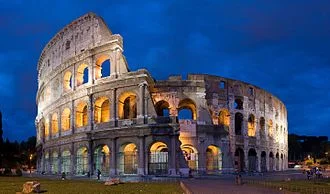
The Pawtucket Red Sox want the State of Rhode Island to cough up some money to help the Boston Red Sox farm team build a new stadium, either keeping it where McCoy Stadium is or somewhere else in the old mill town, perhaps at the site of the Mayan pyramid of the Apex store. Pawtucket is attractive because, among other things, it’s close to Massachusetts. (Actually, most of tiny Rhode Island is close to the Bay State. Indeed, many Rhode Islanders drive through parts of Massachusetts daily to get to parts of Rhode Island.)
The new -- and tough -- state Senate president, Dominick Ruggerio, who knows a lot about construction, likes the idea of a new stadium and having the state pay for some of this project, which would benefit some very rich people. Apparently Gov. Gina Raimondo also likes the idea, which might involve putting up a replica of Fenway Park.
Would it be worth it? Years ago, when I worked in the newspaper business, the line was that while only about 25 percent of daily newspaper readers read the sports pages regularly, that 25 percent is intensely interested in their teams andapt to buy the products advertised in the sports pages (especially car stuff). Should the state spend a lot of money to please the minority of people who are baseball enthusiasts, and in a time when tax revenues are falling behind projections?
And a new stadium in downtown Pawtucket would remove from the city a lot of land that could be used for a diversified mix of business and give it to one business that, of course, could up and leave.
Of course, there would be perhaps a couple of hundred temporary construction jobs to build a new stadium but only a few dozen permanent ones (if that) at a new stadium.
Still, having a shiny new stadium in a well-landscaped setting and access to public transit might raise some animal spirits in Greater Providence. I think it would be very dubious “economic development’’ from a macro viewpoint. But if it’s to be done, why not get a really exciting design for it and put it where many people could see it, including its very own “Green Monster,’’ from some distance away.
How about along the water in East Providence?
Back to nature
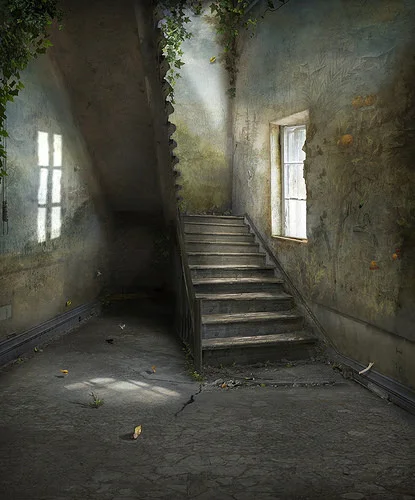
"Staircase'' (digital pigment print), by Suzanne Moxhay, in show "Interiors,'' at Wallace Anderson Gallery, Bridgewater, Mass., through April 14.
The show displays digital pigment prints inspired by the composite photographic images produced in the mid-19th Century and later in early movies. Ms. Moxhay uses images from a various vintage and contemporary sources.
Artscope notes that she "borrows from the photomontage process developed in the early days of filmmaking in which movie backdrops were matte painted on sheets of glass and then integrated with live-action.
"In her mysterious and memory filled images Moxhay seeks to achieve an ambiguous narrative where fact and fiction intermingle. To create the environments, she experiments with texture, surface, depth, space, scale, movement and architecture, to, 'involve the viewer in the construction of the image, and to make them question it."'
'The budding groves'
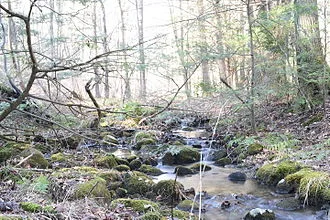
In Southbury, Conn.
It was an April morning: fresh and clear
The Rivulet, delighting in its strength,
Ran with a young man's speed; and yet the voice
Of waters which the winter had supplied
Was softened down into a vernal tone.
The spirit of enjoyment and desire,
And hopes and wishes, from all living things
Went circling, like a multitude of sounds.
The budding groves seemed eager to urge on
The steps of June; as if their various hues
Were only hindrances that stood between
Them and their object: but, meanwhile, prevailed
Such an entire contentment in the air
That every naked ash, and tardy tree
Yet leafless, showed as if the countenance
With which it looked on this delightful day
Were native to the summer.--Up the brook
I roamed in the confusion of my heart,
Alive to all things and forgetting all.
At length I to a sudden turning came
In this continuous glen, where down a rock
The Stream, so ardent in its course before,
Sent forth such sallies of glad sound, that all
Which I till then had heard, appeared the voice
Of common pleasure: beast and bird, the lamb,
The shepherd's dog, the linnet and the thrush
Vied with this waterfall, and made a song,
Which, while I listened, seemed like the wild growth
Or like some natural produce of the air,
That could not cease to be. Green leaves were here;
But 'twas the foliage of the rocks--the birch,
The yew, the holly, and the bright green thorn,
With hanging islands of resplendent furze:
And, on a summit, distant a short space,
By any who should look beyond the dell,
A single mountain-cottage might be seen.
I gazed and gazed, and to myself I said,
'Our thoughts at least are ours; and this wild nook,
My EMMA, I will dedicate to thee.'
----Soon did the spot become my other home,
My dwelling, and my out-of-doors abode.
And, of the Shepherds who have seen me there,
To whom I sometimes in our idle talk
Have told this fancy, two or three, perhaps,
Years after we are gone and in our graves,
When they have cause to speak of this wild place,
May call it by the name of EMMA'S DELL.
-- William Wordsworth, "April Morning''
Llewellyn King: The power of electricity to transform Africa
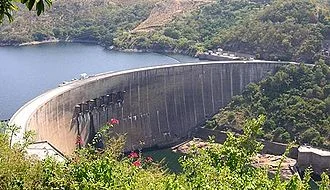
The Kariba Dam, between Zimbabwe and Zambia.
He is generic Africa Man. You can see him everywhere, walking barefoot across theSavannah and desert landscapes. He is on a mission that gets harder as time goes on.
His mission is to find enough wood -- a few dry sticks here, some roots there -- to make a fire for a hot meal and to bathe. He walks and walks, adding a stick and a piece of scrub wood to the bundle carried, in the traditional way, on his head.
Generic Africa Woman is busy, too. Her mission is to draw water. She carries a container on her head, filled with water from a distant well, to make dinner -- a meal of maize (corn) porridge with maybe a stew of some meat or even caterpillar – and to bathe.
African life is picturesque, but it is not pretty. Hardship is in daily attendance much of Africa, blighted from deforestation and polluted water.
Yet Western aid has not been easily delivered. Much of it has been stolen, some of it has been misapplied and some of it has led to aid dependency.
So, as an old Africa hand (I was born in what is now Zimbabwe, and left when I was 20 years old), I was elated to learn of a new and critical partnership just announced between the Edison Electric Institute (EEI) and the U.S. Department of State’s Power Africa initiative. Electricity anywhere is the gift that gives and gives, but especially when it begins to transform lives of hard struggle to ones that are less so.
When I was a boy, the opening of a power station or the building of a power line were events that brought forth celebration. Electricity signaled a better tomorrow.
When a village -- whether it is in Bolivia, India or Uganda -- is electrified, good things flow. A simple hotplate replaces days of firewood collection and those who can read can do so after the sun sets: hygiene improves, education is facilitated and expectations soar.
When the shantytowns that surround Johannesburg, South Africa, were electrified, the productivity of workers who flood into the city every day went up. Simply, they were saved from the drudgery of collecting animal droppings, wood scraps and other combustible stuff to burn.
The colonizers of Africa realized the need for electricity. Hence, in my part of the continent, two great dams were built on the Zambezi River: the Kariba, between Zimbabwe and Zambia, and the Cahora Bassa, in Mozambique.
As a very young reporter, I covered the construction of the Kariba Dam, and its near destruction by unusually heavy flooding, in 1957. It has been the backbone of electricity supply for Zimbabwe and Zambia for more than 50 years.
But in recent years the dam, holding back the world’s largest, man-made impoundment of water, has begun to show deterioration in the concave wall, but especially behind the wall. The outflow has been eroding the plunge pool and threatening the wall. Hundreds of millions of dollars have had to be raised internationally for remediation, which is yet to begin in earnest. If the dam should fail, about 4 million people would die downstream.
The dam also has been producing much less electricity than it had been previously due to multi-year drought in the region. Copper production in Zambia, a vital industry, has had to be curtailed because of severe electric shortages. Blackouts are routine throughout the region.
Electricity is also a problem in South Africa, the industrial and commercial giant of Africa. Delay in ordering new generation, political interference in the decision processes and other problems, stemming from the end of apartheid, have damaged the system. Blackouts are affecting South Africa’s competitive posture.
Now the government is being romanced by Russia, hoping to sell it a new nuclear plant on favorable terms. It would join the two-unit, 1,860-MW Koeberg Nuclear Power Station, which has been operating since 1984. Unfortunately emerging countries have a fascination with big, showy projects, like the national airlines and steel mills that have cost them so dearly in their post-colonial phase.
EEI and the State Department need to guide the countries of Africa to today’s energy solutions, not yesterday’s. Africa needs to turn to its most abundant resource: sunshine. In North Africa, Morocco is building the world’s largest solar installation. Way to go.
Llewellyn King is executive producer and host of White House Chronicle, on PBS, and a veteran publisher, editor, columnist and international business consultant. His e-mail is llewellynking1@gmail.com. He is based in Rhode Island and Washington, D.C.