
Vox clamantis in deserto
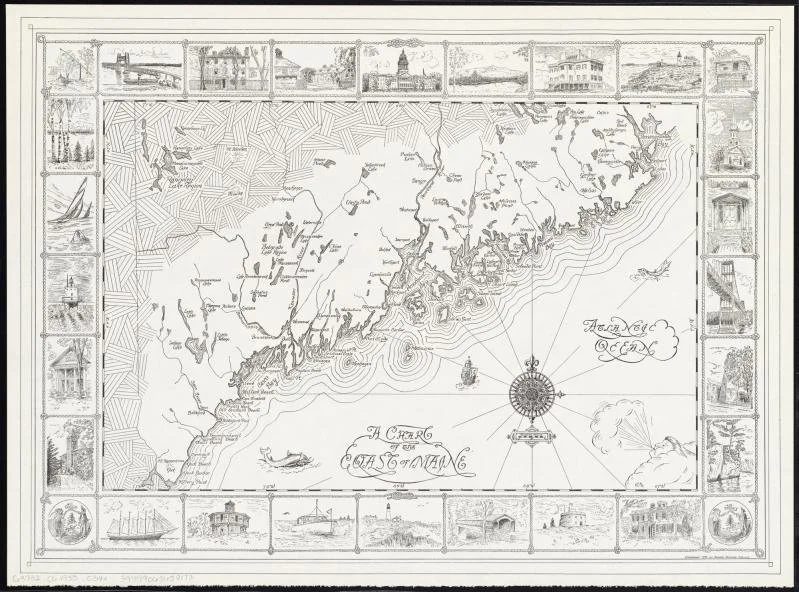






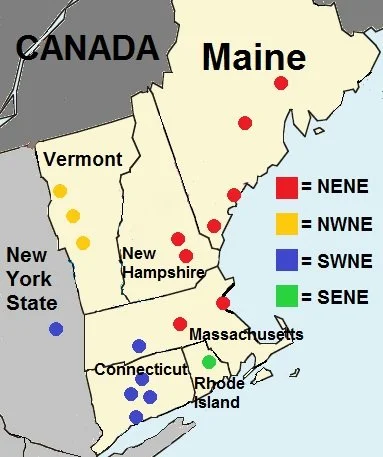


More than enough of it
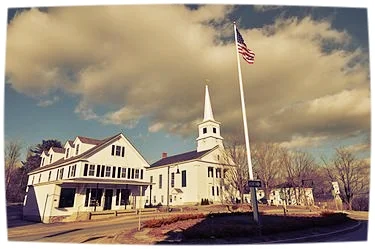
Not bustling midtown Dublin, N.H., in early spring (we think).
Adapted from Robert Whitcomb's "Digital Diary'' column in GoLocal24.com
“Yes, one of the brightest gems in the New England weather is the dazzling uncertainty of it. There is only one thing certain about it: You are certain there is going to be plenty of weather.”
-- Mark Twain lived many years in Connecticut but it was said that his favorite place in late life was Dublin, N.H. That's New England’s highest town and was once home of Beech Hill Farm, a famous drying-out clinic and retreat for mostly affluent alcoholics. It still hosts Yankee Publishing Inc., publisher of Yankee Magazine and the Old Farmer's Almanac.
And so we go into another spring, up and down weatherwise but trending the right way. First the flowers that can take freezing and thawing and refreezing – the crocuses and the snowdrops. Then the somewhat less hardy daffodils and the tulips.
It will be “Mud Time’’ for a few weeks in New England’s north country. And, of course, it’s pothole season!
A lot of folks are so impatient for spring that they strip down to shorts and T-shirts and wander around outside when it’s still in the forties, in a triumph of hope over experience.
Plant the radishes first!
The buds on the trees swell and then seem to almost explode on one afternoon in late April or early May—that is, except right along the coast, where the cold water delays the season as the warmed-up water delays winter late in the year. As visitors to Fenway Park know “Boston’s famous east wind’’ can drive down the temperature of a mid-April day by 20 degrees in 15 minutes.
Then comes that hot, humid day in late May or early June when the lushness is almost tropical. In New Hampshire when I lived there, it sometimes seemed as if winter ended one day and summer started the next.
Spring seems at once the real start of the year, at least of the natural year, as well as its ending, a feeling that for most people goes back to their memories of the school year’s approaching end.
This recalls the Rodgers & Hammerstein song "It Might as Well Be Spring,'' whose last lines are:
"I haven't seen a crocus or a rosebud or a robin on the wing
But I feel so gay in a melancholy way
That it might as well be Spring .
It might as well be spring….''
Warning! This uses the old-fashioned meaning of "gay''.
'Rising from and heading toward nowhere'
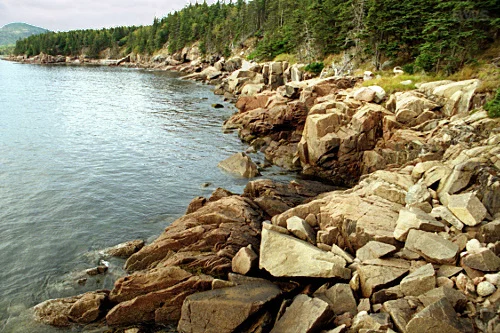
Along the shore of Acadia National Park, Maine
-- Photo by Brian W. Schaller
“They were walking along a roadway of great slabs of stone set down one after another, the beginning and end of which they could take in at a glance, a road rising from and heading toward nowhere now.
"'You can't get there from here,' William said, using a Down East accent. 'Anymore.' Maine, they thought of Maine, then. Evidently this truncated road could still carry them as far away and as long ago as that.”
-- Nancy Clark, from A Way From Home: A Novel

Don Pesci: These progressive Conn. pols are libertarian about two grim things
The Republican plan to abolish and replace Obamacare has now collapsed. After much huffing and puffing, Republicans pulled their replacement plan, such as it was, shook the dirt of medical-care reform from their feet, and vowed to move on to the next big issue -- tax reform. One imagines U.S. Rep. Rosa DeLauro (D.-Conn.), who made some frantically intemperate remarks in the House before the Republican replacement plane crashed and burned, was delighted.
U.S. Sen. Elizabeth Warren (D.-Mass.), move over: Mrs. DeLauro has now become the chief progressive maenad of Congress. She brought to her performance suitable demagogic props, a large sign that said “Get Old People,” the words arranged horizontally and the first letter of each word – G-O-P – in fierce bold script. C-Span captured the historic moment here. Mrs. DeLauro was not wearing her pussy hat at the time; so the members of the House were spared that indignity.
Seen from a progressive bubble, Obamacare is a crashing success. It is, in fact, a political success but a real-world wreck from within, and it has been so from the beginning. Obamacare has never been more than a program hardwired to fail that would lead, when it did fail, to universal health care, a nationwide government healthcare program palely imitating European models that would drive many insurance companies -- unable to compete with a tax-supported, progressive driven healthcare system – out of business.
Under a universal healthcare system one fourth of the economy in the United States would move from the private to the public sector, and insurance companies in Connecticut would become boutique providers serving rich people – mostly wealthy Republicans who, in DeLauro’s view, want to Get Old People (GOP). Mrs. DeLauro’s gerrymandered lair is Connecticut’s 1st District, an impregnable progressive fortress; so then, she need not fear that she will be undone politically by championing a lost cause.
And Obamacare is a lost cause. Even in her home state, insurance providers have pulled out of the program with their pants on fire; premiums have skyrocketed across the nation, and the coroner has been sent an e-mail.
The authors of the U.S. Constitution supposed that legislators would be unwilling to pass ruinous laws under which they themselves would suffer. How quaint! Barack Obama himself is now wealthy enough to buy retirement properties worth millions anywhere in the world the chooses to live, in or outside the United States; socialist Bernie Sanders owns three houses; millionaire Connecticut U.S. Sen. Dick Blumenthal had money enough to send his children to expensive private schools that many of Mrs. DeLauro’s constituents could never afford.
Politics has been good for Mrs. DeLauro and her millionaire husband, Stan Greenberg, both of whom own expensive property in the Washington Beltway, where they entertain similarly minded progressives in lavish splendor that might bring a blush to the cheek of the Great Gatsby.
It may strike some hearty rationalists as unseemly that two millionaire politicians who favor partial birth abortion and euthanasia – which clips life it its beginning and end – should profess such a touching concern for old people. Only on questions of life and death are Mrs. DeLauro and Mr. Blumenthal, the Senator from Planned Parenthood, excessively libertarian. Blumenthal, who never met a regulation he didn’t like, would leave Planned Parenthood – which makes most of its profits from abortion – as the only unregulated big business in America.
China still pursues a policy of forced abortion; in that totalitarian country women, liquidated as infants in the womb, are perceived as somehow less valuable than men. International Planned Parenthood has in fact been working hand in hand with the population control program in China, almost since its inception. China joined the International Planned Parenthood Federation (IPPF) in 1983.
In December of last year, Women’s Rights Without Frontiers wrote a letter to President Donald Trump calling for “a full-scale investigation of International Planned Parenthood to determine the exact nature of its operations in China… Transparency is demanded by the fact that IPPF receives taxpayer dollars from the United States and other nations as well. I believe it is impossible to partner so closely with the Chinese Communist Party’s forced abortion machine without being complicit in its atrocities. This is especially the case when this year we learned that the number of abortions in China is not 13 million, but a staggering 23 million a year.”
What a pity the group did not address its petition to Mrs. DeLauro, defender of the poor and oppressed, or Mr. Blumenthal who, as the Senator from Planned Parenthood, may possibly exercise more leverage with the IPPF than does Mr. Trump and the entire Republican Party which -- as we all know, thanks to Mrs. DeLauro’s campaign bumper-sticker outburst in the House – wishes to oppress if not euthanize their grandmothers.
Don Pesci (donpesci@att.net) is a political and cultural writer who lives in Vernon, Conn.

Moving through the claustrophobia

From the "Peripheral Visions'' collection of photographer, author (of the best-selling The Death of Common Sense, among other books) and civic leader Philip K. Howard.
Mr. Howard says that his images in this series "frame the repetitive patterns of daily landscapes that we feel but rarely consciously observe. Shot on 35mm film at slow shutter speeds to convey how most of us experience these moments, they are impressionistic, with large prints taking on a pointillistic quality.'' They seem tinctured with urban angst but also with aesthetic pleasure and even a kind of droll humor.
See his Web site: http://philipkingphoto.com/
Be patient

"Spring Field'' (on on panel), by Hannah Bureau, at Alpers Fine Art, Andover, Mass.
Mom & pop Vermont

Dan & Whit's general store, in Norwich, Vt.
"I represent a rural state and live in a small town {Norwich, Vt.}. Small merchants make up the majority of Vermont's small businesses and thread our state together. It is the mom-and-pop grocers, farm-supply stores, coffee shops, bookstores and barber shops where Vermonters connect, conduct business and check in on one another. ''
-- Congressman Peter Welch
Frank Carini: Human overpopulation's assault on the environment

Via ecoRI News (ecori.org)
Lost in the discussion about climate change — at least the snippets of it not drowned out by the air horns of special interests — is the issue of overpopulation, arguably the main reason that the planet is heating up, the oceans are acidifying and the atmosphere is wheezing.
Our sheer numbers are mostly a threat to, well, ourselves. The planet will recover; we won’t if we fail to take real action. Our most recent response — a full-on assault of women’s reproductive rights — doesn’t leave our children’s children much hope.
Sensing this blatant disregard for their future, a group of 21 kids, in 2015, filed a climate lawsuit against the federal government. It’s moving forward. In the lawsuit, the young plaintiffs have accused the federal government of violating their constitutional rights by knowing about the climate impacts of burning fossil fuels and supporting the development of fossil-fuel production anyway.
The residents of Burrillville, R.I., can relate.
Meanwhile, many of the adults elected to lead us forward act like spoiled brats. In the face of overwhelming scientific proof — never mind common sense — that human activities are changing the climate and punishing the natural resources that sustain us and all other life, they dismiss the importance of family planning and reproductive heath to push ideology.
Tom Price, current secretary of the Department of Health and Human Services, hates birth control. As a member of Congress, he voted to terminate the program that subsidizes contraception for low-income women. He voted against a law barring employers from firing women for using contraception. He rages against the Affordable Care Act (ACA) requirement that insurance plans cover contraception without a co-pay.
He told ThinkProgress in 2012 that there are no women who struggle to afford birth control and that the ACA’s contraceptive mandate is wrong. “Bring me one woman who has been left behind. Bring me one. There’s not one,” he is quoted. “The fact of the matter is, this is a trampling of religious freedom and religious liberty in this country.”
This widely shared heavenly worldview is helping trample the life out of this planet. It’s a big middle finger to the future.
Consider this staggering fact: human population grew from 1.6 billion to 6.1 billion during the course of the 20th Century, according to the United Nations Population Fund. It took 199,900 years for the population to reach 1.6 billion, and then, in a blink of a century, 4.5 billion more people were added.
The worldwide population, now at 7.4 billion, is projected to reach 9.7 billion by 2050. We need intelligent conversations — not intelligent design — about our population, to eschew escalating wars fought over natural resources and to avoid increased pain and suffering.
Human activity is causing the greatest mass extinction of species since the extinction of the dinosaurs 65 million years ago, at rates of 1,000 to 10,000 faster than normal. (Center for Biological Diversity)
Climate change, or if you prefer the label global warming, is really just about numbers — ours. It’s a simple math problem. But the issue of human population is never debated during presidential campaigns or discussed by cable TV’s talking heads.
Population, climate change and consumption are inextricably linked in their collective global environmental impact, according to the Sierra Club’s Global Population and Environment Program.
The Worldwatch Institute says the two overriding challenges facing mankind are to mitigate climate change and slow population growth.
“Success on these two fronts would make other challenges, such as reversing the deforestation of Earth, stabilizing water tables, and protecting plant and animal diversity, much more manageable,” according to the Washington, D.C.-based organization. “If we cannot stabilize climate and we cannot stabilize population, there is not an ecosystem on Earth that we can save.”
Addressing these two interconnected issues starts with improving the health of women and children, especially in developing nations. By reducing poverty and infant mortality, increasing female access to human rights, such as economic opportunity, education and health care — funding that the White House wants to cut because some of the organizations helping to improve the lives of poor women and girls also provide abortions — educating women about birth-control options and ensuring access to family planning services, women worldwide would have stronger voices.
Knowledge, after all, is power, but we seem determined to curtail education, as we relentlessly attack climate science and evolution, and spout rubbish about the Environmental Protection Agency generating “propaganda” and “brainwashing” children.
If he isn’t already, Sen. James Inhofe, R-Okla.., should be named as a defendant in the kids’ climate lawsuit. The senator who recently spewed that brainwashing garbage received $465,950 from the oil and gas industry during the past five years to help fatten his campaign coffers.
Humans continue the geo-engineering of the natural world to sustain our unsustainable numbers. The bough will eventually break.
More than two centuries ago, English scholar Thomas Malthus published ''An Essay on the Principle of Population''. In his writing he noted that human population tends to grow geometrically, while the resources available to support it tend to grow arithmetically. Under these conditions, he wrote that human population will inevitably outgrow the supply of food. He predicted that population growth would lead to degradation of the land, and eventually massive famine, disease and war.
Improvements in agriculture and the Industrial Revolution postponed the disaster Malthus thought was imminent, although much of what he predicted as happened, just not in one fell swoop.
Now, 219 years later, can we again tech our way out of the numerous impacts our rapidly growing population has and will create?
If so, it will likely come at the cost of diversity, and a considerable price has already been extracted. It also will likely expand the already-too-wide gap that separates the wealthy from the poor.
Simply discussing the issue of population is taboo, and many of the conversations that are held inevitably veer toward population control and China’s since-lax one-child policy.
Ignoring the problem won’t solve it. We need to have grown-up discussions about reproductive health. We need to address public health and population at all levels of government. After all, humans are the main force behind environmental pollution.
In the United States, at least, these vital conversations are muted by politicians who clap their tiny hands and get all giddy about rolling back laws enacted to protect public health and the environment. God forbid if the words “penis” or “vagina” are mentioned in a classroom.
A voluntary family-planning program in Iran helped drop the highest rate of population growth in the country’s history to replacement level a year faster than China’s compulsory one-child policy. The program subsidizes vasectomies, offers free condoms and affordable contraceptives, and supports countrywide education on sexual health and family planning.
Iran’s collection of spoiled brats, which, like here, consists mainly of older, whiny men, wants to defund the program.
It seems the “leaders” of these two countries have more in common than they know.
Frank Carini is the editor of ecoRI News.
State economies: How much do governors really matter?
From Robert Whitcomb's 'Digital Diary'' in GoLocal24.com:
The role of governors and states’ dominant political philosophy and policy in the economic success or lack thereof of these jurisdictions has always been exaggerated. Economies are very complicated. You see this in the list of states that haven't regained the jobs lost in the Great Recession. In New England, those are Rhode Island and Connecticut – both states mostly run by liberal Democrats. But the other states on the list --- Alabama, Michigan, Mississippi, New Mexico and Wyoming – are all run by Republicans.

David Warsh: A very big building and almost two decades of Trump-Russia ties

Trump World Tower.
Having spent the last six months preparing a history of Harvard University’s mission to Moscow in the 1990s and the scandal that ensued (to appear sometime this summer), I have often been reminded of William Faulkner’s line: “The past is never dead. It’s not even past.” This is as true of the Trump-Russia story as it is of the larger and more intricate realm of U.S.-Russia relations since the collapse of the Soviet Union.
Holman JenkinsJr., the least predictable columnist at The Wall Street Journal, noted last week that Watergate analogies in the Trump Russia controversy are beside the point. What is wanted, he wrote, is a Pentagon Papers-style history of U.S. policy, “an emptying out of the files” necessary to illuminate the “awkward, contradictory and humiliating straddles” of Western governments over the last 25years.
Alas, we are unlikely to get that kind of retrospective from WikiLeaks. What is required instead is a great deal of shoe-leather reporting. An especially good example was to be found 10 days ago in “The Rich Refugees Who Saved Trump,’’ by Caleb Melby and Keri Geiger, with Michael Smith, Alexander Sazenov and Polly Mosendz, writing in Bloomberg Businessweek (BBw).
When construction 0f Trump World Tower, at 845 United Nations Plaza, in midtown Manhattan was begin two decades ago as the tallest residential building in the country (90 stories), its most expensive floors attracted rich people getting their money out of what had been the Soviet Union.
Trump needed the big spenders. He was renegotiating $1.8 billion in junk bonds for his Atlantic City resorts, and the tower was built on a mountain of debt owed to German banks.
The story is the most plausible account I’ve yet seen of what Trump’s oldest son, Donald Jr., may have meant when he said, in 2008, “We see a lot of money pouring in from Russia.” In the earlier case reported by BBw, the deluge occurred at a most propitious time, in the late 1990s, when Trump’s business was stretched thin and under stress.
Trump broke ground on the building in October 1998, across the street from the United Nations headquarters. After several years of boisterous churn and at long last some growth, the Russian economy was in crisis. The ruble had collapsed in August; the government had defaulted on its domestic debt. Savvy Russians had scrambled to get their money out of the country. From the article:
“Real Estate provides a safe haven for overseas investors. It has few reporting requirements and is a preferred way to move cash of questionable provenance. Amid the turmoil, buyers found a dearth of available projects. Trump World Tower, opened in 2001, became a prominent depository of Russian money.
Others who bought units in the building, with its 72 constructed floors and 90 stories listed on its elevator panels, included New York Yankee shortstop Derek Jeter, Bill Gates, Harrison Ford, Sophia Loren, and Kellyanne Conway and her husband, according to Wikipedia. BBw reported:
“The very top floors remained unsold for years but a third of the units sold on floors 76 through 83 by 2004 involved people or limited liability corporations connected to Russia and neighboring states, a Bloomberg investigation shows. The reporting involved more than two dozen interviews and a review of hundreds of public records in New York.’’
Trump scholars gradually will determine how material was the sales boost in the complicated ups-and-downs of Trump’s financial position in those days. For an explication of some of the favors owed, which in one case went back to 1976, see the current article. This much is indelibly clear: the president has seen Russia as a prime source of revenue, if not investment, for 20 years. Again, BBw:
“Simultaneous with when the tower was going up, developer Gil Dezer and his father, Michael, were building a Trump-backed condo project in Sunny Isles Beach, Fla. “Russians love the Trump brand,” [Dezer] says, adding that Russians and Russian Americans bought some 200 of the 2,000 units in Trump buildings he built. They flooded into Trump projects from 2001 to 2007, helping Trump weather the real estate collapse, he says.’’
A similar situation, this one involving a troubled midtown Manhattan building owned by Trump’s son-in-law, Jared Kushner, and a billionaire Chinese would-be investor, was covered in some detail earlier this month by The New York Times and the WSJ. The next step is to follow Bloomberg’s team in tracing Trump’s dealings with Russians back in time.
My hunch is that Jenkins is right, that the 2016 campaign-collusion story will turn out to be a dead end. Much more interesting is the saga of the formation of Trump’s views of Russia over the last 25 years.
David Warsh is a veteran reporter and columnist, mostly in economic matters, and an economic historian. He’s also the proprietor of economicprincipals.com, where this essay first ran.
Global warming? Bring it on.
I live in New Hampshire. We're in favor of global warming. Eleven hundred more feet of sea-level rises? I've got beachfront property. You tell us up there, 'By the end of the century, New York City could be underwater,' and we say, 'Your point is?''
-- P.J. O'Rourke
Read more at: https://www.brainyquote.com/quotes/quotes/p/pjorour617291.html?src=t_new_hampshire
Orange orgy

"Fun & Dance/Red & Yellow,'' by Robert Henry, at the Residences at Seashore Point, Provincetown, Mass.
Chris Powell: Tolls another way to avoid tough decisions
According to the Democratic legislators who form the majority on the Connecticut General Assembly's Transportation Committee, the Nutmeg State needs to restore tolls on its Interstate Highways. The Democrats argue that state government's transportation fund is inadequate for the improvements needed, that all nearby states have imposed tolls, and that out-of-staters and truckers travel through Connecticut for free. Indeed, the Democrats predict that half the revenue from tolls would be paid by out-of-staters and truckers.
Of course, that means that the other half would come from state residents. But even as the Democrats tout the technology that would let tolls be collected by electronic means without slowing and endangering traffic as toll booths used to do, they do not propose programming such a new system to exempt Connecticut's residents from the tolls. That is, the Democrats are after Connecticut's money as much as the money from out of state and are using out-of-staters and truckers as political cover for another tax increase.
Ironically, even as the Transportation Committee was voting along party lines for tolls, Governor Malloy was announcing that a study had concluded that tourism is crucial to Connecticut because it contributes nearly $15 billion to the state's economy every year. No one explained how charging tolls helps tourism.
As a tax increase on state residents, tolls will serve mainly to relieve pressure on state government to economize generally. Thus tolls will help preserve all sorts of excesses, like the six minor paid holidays enjoyed by state and municipal employees (such as Columbus Day) that are not enjoyed by many people in the private sector, the thousands of state and municipal government salaries that exceed the governor's own, the binding arbitration of government employee union contracts, and welfare benefits for childbearing outside marriage.
Avoiding such structural changes is the dearest hope of many legislators.
At least the legislature's Education Committee has noticed one of those excesses: the law that forbids most municipal school systems from reducing their spending as student enrollment declines. Connecticut's school enrollment has been declining for years even as school spending has kept rising, for the law's objective has been to ensure that all savings from declining enrollment are paid as increases in compensation for members of teacher unions rather than returned to taxpayers.
But now that the governor proposes to slash state financial aid to most school systems and transfer the money to the worst-performing city school systems (as if any amount of money will ever improve education much for parentless children), legislators see a chance to serve the unions even while having to take something away from them.
That is, with the governor playing the bad cop with school aid, threatening mass layoffs and program eliminations in most towns, the legislature can play good cop by restoring some aid while letting towns keep the savings from declining enrollment. Teachers might lose only their raises instead of their jobs.
Neither the governor nor the Education Committee has yet addressed the latest Superior Court finding that state government's formula for school aid is unconstitutional because it is "irrational."
But that case will be on appeal to the state Supreme Court for a while, and maybe, having prompted, with its decision in Horton v. Meskill in 1977, 40 years of legislative tinkering with school-aid formulas only to accomplish nothing, the court at last will recognize that nothing about school aid formulas is rational because the only thing that matters much to a child's education is his home life.
Chris Powell is managing editor of the Journal Inquirer, in Manchester, Conn.
'Corrugated World'

"Black/White Houseplant,'' by James Grashow, in his show "Corrugated World: The Art of James Grashow,'' at the Flinn Gallery, Greenwich, Conn. The show features corrugated board sculptures and detailed woodcut prints.

Llewellyn King: America needs to fight the Trump folly of fighting science.

-- Photo by Zuzanna K. Filutowska
The man who popularized Greek-style yogurt, Hamdi Ulukaya, is probably one of the only, if not the only, billionaire of recent years who does not owe his fortune to the government. Jeff Bezos does, Bill Gates does, Mark Zuckerberg does, along with dozens of others who have amassed fortunes in the digital age.
They are smart men all who have exploited opportunities, which would not have existed but for the government’s presence in science. I applaud individuals who build on government discoveries to make their fortunes.
But government-backed science, which has brought us everything from GPS to the Internet, is in for a radical reversal, as laid out in the Trump administration’s budget proposal.
It was greeted with derision when it was released, with many hoping Congress will reverse it. However in the science community, in the halls of the National Science Foundation, in the facilities of the National Institutes of Health, and in the sprawling world of the Department of Energy’s national laboratories, there is fear and alarm.
There should be. There should be from the world of learning a great bellow of rage, too.
The Trump administration has declared essentially that the United States cannot afford to be wise, cannot afford to invent, cannot afford to cure or to minister and cannot afford to continue the rate of scientific evolution, which has made science of the post-World War II period so thrilling, benefiting countless people.
The administration has identified 62 programs for elimination or severe cutbacks. It has done this in a mixture of ignorance, indifference and delusion. The ignorance is that it does not seem to know how we got where we are; the indifference is part of a broad, anti-intellectual tilt on the political right; and the delusion is the hapless belief that science and engineering’s forward leap of 75 years will be carried on in the private sector.
The broad antipathy to science, to learning in all but the most general sense, is the mark of the Trump budget proposal.
But science, whether it is coming from ARPA-E, (Advanced Projects Research Research Agency-Energy) or the National Science Foundation’s watering of the tender shoots of invention, the Department of Energy’s world-leading contribution to the Human Genome Project, or the National Institutes of Health’s endless war against disease (especially the small and awful diseases like Myalgic Encephalomyelitis and the rarest cancers) is the future. Without it, the nation is gobbling its seed corn.
In the Trump administration, there is money to build a giant wall but no money to surge forward into the future.
To the administration, as indicated in its budget proposal, the sciences and the engineering which flows from them, is a luxury. It is not. It is the raw materials of peace and strength in this century and beyond.
To take just one of the follies implicit in the philistine budget, cutting funding for medical research will come just when there is need for more – research which if not funded by the government will not be done. New epidemics like bird flu, Zika and Ebola cry out for research.
Increasingly, the old paradigm that new drugs would come from the drug companies is broken. It now costs a drug company close to $2 billion to bring a new compound to market. That cost is reflected in new drug prices, as the companies struggle to recoup their investments before their drugs go off patent. Shareholder value does not encourage the taking of chances, but rather the buying up of the competition. And that is happening in the industry.
The world desperately needs a new generation of antibiotics. The drug companies are not developing them, and the bugs are mutating happily, developing resistance to the drugs that have held bacterial disease at bay since penicillin led the way 89 years ago.
Fighting the political folly that threatens science is the battle for America. In 50 years, without amply government-funded research and development, will we still be the incubator for invention, the shock troops against disease, the progenitors of a time of global abundance?
Our place in the world is not determined by our ideology, but by our invention. Sadly, the pace of invention is at stake, attacked by a particularly virulent and aberrant strain of governmental thinking.
Llewellyn King is executive producer and host of White House Chronicle, on PBS, and a frequent contributor to New England Diary. His e-mail is llewellynking1@gmail.com. This first ran in Inside Sources.
A higher order

"Between Acceptance and Desire'' (oil on canvas), by Tula Telfair, in the show "Invented Landscapes,'' at Heather Gaudio Fine Art, New Canaan, Conn., through March 25.
An eerie tension

Painting by Andrew Nixon in the grpup show "Between Stillness and Motion,'' at the Bristol (R.I.)) Art Museum through May 28.
How much can governors really help their states' economies?
From Robert Whitcomb's "Digital Diary'' column in GoLocal24.com
Rhode Island Gov. Gina Raimondo was understandably pleased when the state’s unemployment rate fell below the national average in January, to 4.7 percent, for the first time in almost 12 years. Meanwhile, some high-profile companies have moved to the state or expanded there and there’s quite a lot of newconstruction underway. To me, the best news has been that the big projects at the Route 195 relocation land are starting to get cooking and that rapidly growingUnited NaturalFoods Inc. is now based in Providence.
How much of this was due to Ms. Raimondo’s leadership? Economics has so many variables that it’s hard to say. For that matter, the Ocean State is so tiny it’s hard to say that there’s a “Rhode Island economy.’’ It’s part of the much bigger regional, national and international economies. And note that a shrinking state work force explains at least some of the recent jobless-rate drops.
I would say, however, that Ms. Raimondo’s knowledge of business and national connections as a former venture capitalist, her willingness to implement long-overdue reforms and her calm and intelligence have indeed inspired confidence in firms that might be candidates for moving to or expanding in the state. That she’s willing to get very able people from outside the state with fresh perspectives to join her administration rather than automatically pick well-connected Rhode Islanders (“I know aguy…’’) has also been good, although it has, along with her fancy education, gotten her labeled an “elitist,’’ which I don’t believe this daughter of middle-class Rhode Islanders considers herself. The more new people moving into Rhode Island the better, to dilute the parochialism that is at the root of many of its political and economic problems.
As in many states, her administration has had headaches with big computer systems (e.g., public benefits and the Division of Motor Vehicles). Could she have headed these headaches off by firing people faster who were charged with getting them going but didn’t succeed? Probably.
Hire Republican Ken Block, a brilliant systems guy, to oversee state computer systems? That would be exciting.
Ms. Raimondo has gotten a lot of flak from some people about what former Gov. Lincoln Chafee calls the “candy store’’ approach of using tax incentives to lure businesses. I share a lot of this dislike. It can create a race to the bottom as states compete to get sexy companies. As I’ve written here before, for long-term economic success, jurisdictions must focus on broad improvements, especially in education and infrastructure. The governor says she is focusing on those things but the $130 million in tax incentives so far in her term understandably get a lot of attention. And how do you make these companies stay?
Pretty much every state and large city play the tax-incentive game in varying degrees.
Of course, the governor thinks that attracting such big companiesas General Electric to set up new operations in the state signals to other companies that it’s now a good place to do business and, they find, a beautiful place to live for many.
She has had some success in changing the perception of out-of-staters about the Ocean State so that many have come to believe that the Rhode Island is finally, if slowly, fixing its business climate. The deeply embedded tribalism, negativity and cynicism in the state militate against her but I believe she’s making progress – two steps ahead, one step back.
Meanwhile, I’m sure that Rhode Islanders would like to see a updated list of companies that have decided to stay and grow in the state as a result of Raimondo administration policies.
On two big issues she’s been embroiled in: the car tax, about which she is less enthusiastic about cutting than some other politicians, and “free college’’ for two years:
Cutting or eliminating the car tax, as hated as it is, will have little or no effect on the state’s economy. And rather than “free college,’’ it might make far more sense to put some of the tax revenue to be spent on subsidizing students into creating a public-private vocational education system (including apprenticeships) like that which has been so successful in Germany. And even more important is pushing asideRhode Island special interests in order to adopt a K-12 public-education system with the rigor of Massachusetts’s, which has helped make the Bay State so prosperous in the past couple of decades.
'Minor Matterhorn' overlooking 'agricultural failure'

Mt. Chocorua.
"Written over the great New Hampshire region at least, and stamped, in particular, in the shadow of the admirable high-perched cone of Chocorua, which rears itself, all granite, over a huge interposing shoulder, quite with the allure of a minor Matterhorn -- everywhere legible was the hard little historic record of agricultural failure and defeat. It had to pass for the historic background, that traceable truth that a stout human experiment had been tried, had broken down. One was in presence, everywhere, of the refusal to consent to history, and of the consciousness, on the part of every site, that this precious compound is in no small degree being insolently made, on the other side of the continent, at the expense of such sites. The touching appeal of nature, as I have called it therefore, the 'Do something kind for me,' is not so much a 'Live upon me and thrive by me' as a 'Live with me, somehow, and let us make out together what we may do for each other -- something that is not merely estimable in more or less greasy greenbacks.'''
-- Henry James from his book The AmerIcan Scene (1907)

'My avocation and my vocation'

Out of the mud two strangers came
And caught me splitting wood in the yard,
And one of them put me off my aim
By hailing cheerily "Hit them hard!"
I knew pretty well why he had dropped behind
And let the other go on a way.
I knew pretty well what he had in mind:
He wanted to take my job for pay.
Good blocks of oak it was I split,
As large around as the chopping block;
And every piece I squarely hit
Fell splinterless as a cloven rock.
The blows that a life of self-control
Spares to strike for the common good,
That day, giving a loose my soul,
I spent on the unimportant wood.
The sun was warm but the wind was chill.
You know how it is with an April day
When the sun is out and the wind is still,
You're one month on in the middle of May.
But if you so much as dare to speak,
A cloud comes over the sunlit arch,
A wind comes off a frozen peak,
And you're two months back in the middle of March.
A bluebird comes tenderly up to alight
And turns to the wind to unruffle a plume,
His song so pitched as not to excite
A single flower as yet to bloom.
It is snowing a flake; and he half knew
Winter was only playing possum.
Except in color he isn't blue,
But he wouldn't advise a thing to blossom.
The water for which we may have to look
In summertime with a witching wand,
In every wheelrut's now a brook,
In every print of a hoof a pond.
Be glad of water, but don't forget
The lurking frost in the earth beneath
That will steal forth after the sun is set
And show on the water its crystal teeth.
The time when most I loved my task
The two must make me love it more
By coming with what they came to ask.
You'd think I never had felt before
The weight of an ax-head poised aloft,
The grip of earth on outspread feet,
The life of muscles rocking soft
And smooth and moist in vernal heat.
Out of the wood two hulking tramps
(From sleeping God knows where last night,
But not long since in the lumber camps).
They thought all chopping was theirs of right.
Men of the woods and lumberjacks,
The judged me by their appropriate tool.
Except as a fellow handled an ax
They had no way of knowing a fool.
Nothing on either side was said.
They knew they had but to stay their stay
And all their logic would fill my head:
As that I had no right to play
With what was another man's work for gain.
My right might be love but theirs was need.
And where the two exist in twain
Theirs was the better right -- agreed.
But yield who will to their separation,
My object in living is to unite
My avocation and my vocation
As my two eyes make one in sight.
Only where love and need are one,
And the work is play for mortal stakes,
Is the deed ever really done.
-- Robert Frost, "Two Tramps in Mud Time''