
Vox clamantis in deserto






Isaiah J. Poole: In Maine, fighting racism where many white workers also hurt
Since 2011, Maine’s bombastic Republican Gov. Paul LePage has given America a taste of what it might be like to live under a Donald Trump presidency.
Like Trump, LePage has made outrageous comments against immigrants and communities of color. They include telling the NAACP to “kiss my butt,” publicly complaining about “guys with the name D-Money, Smoothie, Shifty” selling drugs and impregnating “young, white” girls, and blaming “illegals” for spreading diseases like HIV — all while cutting funding to cities that offered health care and other assistance to undocumented immigrants.
After five years of LePage practicing an extreme form of wedge politics, people like Ben Chin are working to heal the resulting divisions in Maine.
Chin, the 31-year-old grandson of an undocumented Chinese immigrant, has been working with the Maine People’s Alliance to rally support from white working class neighborhoods for a series of progressive ballot measures this November.
Countering the racist and nativist appeals of candidates like LePage and Trump, their goal is to get people to reject the politics of scapegoating immigrants and people of color and to instead focus on the real causes of — and solutions to — their economic distress.
“We’re starting out a conversation in which we’re making it clear we’re on their side,” Chin said in a recent phone interview. “That’s the foundation that gets laid for whatever comes next.”
These conversations are based on the research and experience of a broad range of grassroots organizations that have been struggling to get working-class white voters across the nation to see beyond the color line.
Chin got a personal taste of division politics when he was racially caricatured during his 2015 run for mayor of Lewiston, Maine. During his campaign, a local businessman paid for billboards that said, “Don’t vote for Ho Chi Chin. Vote for more jobs not more welfare.”
Since then, Chin’s turned his political focus to ballot initiatives that include increasing the state’s minimum wage and levying a 3 percent tax on household incomes over $200,000 a year.
Chin and his fellow Maine People’s Alliance members don’t have a “silver bullet” set of talking points that disarms the people they encounter with racist or anti-immigrant attitudes. Instead, they focus on questions that get people to think about their economic anxieties in a deeper way.
One question they ask is, “Why do you think some people are poor and other people are rich?”
That opens up a discussion about the ways a small group of the wealthy and powerful are stacking the economic deck against ordinary people of all colors, with their black and brown neighbors feeling it the most because of America’s history of systemic racism.
Chin said he was particularly struck by a recent conversation with a voter in Auburn, Maine. The voter was undecided about whether to support a referendum that would increase the state’s wage to $12 an hour by 2020.
“One of his ideas was that ‘certain people’ were going to get a wage increase,” Chin said. “We tried to unpack that.”
They talked about his life experiences and whether he really believed that increasing the minimum wage was about helping some “certain” group of undeserving freeloaders.
Chin said that though this voter wasn’t a “raging justice activist” by the end of their conversation, he was more thoughtfully considering the minimum wage.
Conversations like these are happening in many states around the country this election season, as progressives grapple with the mainstreaming of racist and nativist appeals by Trump and other far-right politicians.
These types of empathetic conversations are the nemesis of the conservative-corporate elite who have engineered extreme wealth inequality and, for too many, the disappearance of the American dream.
The last thing that politicians who benefit from wedge politics want to see is working people across the nation transcending racial and cultural lines, and realizing those same politicians are the common source of their pain.
Isaiah J. Poole is the communications director at People’s Action (peoplesaction.org). Distributed by OtherWords.org.
Angel B. Perez: Race, class and 'uncomfortable learning'
Colleges and universities have a significant role to play in shaping the future of race and class relations in America. As exhibited in this year’s presidential election, race and class continue to divide us. Black Lives Matter movements, campus protests and police shootings are just a few examples of the proliferation of intolerance. It seems like we understand each other less each day. Higher education has a moral imperative to become the training ground for issues that students will face throughout their lives. Given the increasing diversity of higher education, there has never been a greater opportunity to address race and class.
According to the National Center for Education Statistics, 20.5 million students are expected to attend college this year. These students will be entering a postsecondary landscape unlike any other; 14.5% of students in college are Black and 16.5% Hispanic. While low-income students still enroll at lower rates, the U.S. Census Bureau reports that 46% of America’s traditional college-age people who are low-income are now enrolled in college. Colleges are beginning to reflect America’s diversity and this presents an opportunity for cultivating understanding.
Universities are microcosms of the world we inhabit. However, campus interactions can be more intense than those outside academia. For many, stepping through the doors of higher education could be the first time they are confronted with engaging difference. Low-income students will now be eating, working, living and playing with wealthy students. Students who grew up in predominantly white communities will now live in residence halls with students from all over the globe. While it’s an incredible opportunity for exchange, it’s also easy for misunderstandings to lead to conflict.
The first thing higher education must do is help students understand that life in college is challenging. What’s often lost in conversations about safe spaces and trigger points is the acknowledgement that college is where students go to leave their comfort zones. Being uncomfortable actually helps them grow. In fact, former Williams College Prof. Robert Gaudino, a political scientist and experiential educationalist, dedicated most of his career to helping students engage “uncomfortable learning.” He believed that putting students in uncomfortable situations and forced to confront their own beliefs, values and “habits of mind” was the key to their growth and success.
Confronting race and class in college is hard, but the results can be transformative. Recently, I hired a young African-American student as a research assistant. She told me about a powerful experience she had in college when called the “N” word by a white peer. Her outrage was evident, but given the small size of our institution, she ironically ended up in a class about race with this student. Through intentional class discussions and heated debates, the two have now reconciled and are friends. The young man acknowledged his own ignorance and has been transformed by the experience. While their journey was unpleasant, both students were forced to deal with the implications. The structure that college provided them created a space for them to turn anger, and bias into learning and mutual understanding.
Administration plays a significant role in setting the stage for dialogue. In fact, much of their work impacts issues of race and class each day. They can use the admissions and financial aid process to socially engineer a campus that represents the diversity of the nation. They can create orientation programs that cultivate cross-cultural interactions and engage students in conversations that challenge beliefs. The way colleges construct everything from their residential life policies to extracurricular activities, can have an impact on how students engage difference.
I recall my own experience as a first-generation low-income student who was placed in a dorm room with a wealthy, white male (the first I had ever met). We spent a year engaged in interactions about our differences. We both made so many assumptions about each other, (often wrongly so), but we learned so much because of the way the college provided a platform and support for us to do so.
Faculty also play a pivotal role in campus conversations. Addressing issues of race and class are often delegated to sociologists, anthropologists and historians, but campuswide change happens when all faculty see race and class as an opportunity for pedagogical engagement. Race and class are omnipresent and its realities don’t go away when a student walks through a classroom door. The willingness of faculty to incorporate these issues into curriculum and navigate conversations when they arise could also change how students engage difference.
Last semester, I taught a course with a mix of students of color and majority students, as well as low-income and wealthy students. One day, they were visibly upset about the fact that some students had written “Trump 2016” in chalk around campus. This created a lot of emotion for students of color and confusion for majority students. I immediately went “off script,” and moderated a difficult conversation. I passed over the day’s planned course content, but the issue was important. There was no solution, but the greatest gift of the conversation was when students on both sides of the argument admitted they had never thought of the issue from the other’s perspective.
As the demographics of the U.S. change, that of those who walk through the doors of higher education also shifts, and we have a moral imperative to socially construct the platform for students to learn how to engage difference. The 20.5 million students in higher education will impact our future. In his book The Uses of the University, Clark Kerr, former president of the University of California, reminds us that “as society goes, so goes the university.” He believed the university has a responsibility to meet the urgent demands of society. The deliberate creation of platforms that support students through cultivation of spaces and interactions about difference can shape our nation’s future. This is no small task, but society has spoken. It’s now higher education’s turn to respond.
Angel B. Perez is vice president of enrollment and student success at Trinity College.

Working at a protein factory

Franklyn E. Goucher, an Essex, Mass., clammer, digging on a sand flat in 1978, in the coming show "Kodachrome Memory: Nathan Benn's North Shore, 1978'' at the Cape Ann Museum, Gloucester, Mass., Dec. 27-Feb. 19. This show will display 30 photos taken by Mr. Benn while on assignment by the National Geographic Magazine on the North Shore in 1978. The National Geographic article was entitled ''Harboring Old Ways''.
'Tones of time'
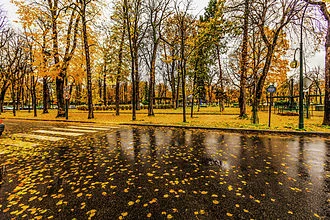
"How innocent were these Trees, that in
Mist-green May, blown by a prospering breeze,
Stood garlanded and gay;
Who now in sundown glow
Of serious color clad confront me with their show
As though resigned and sad,
Trees, who unwhispering stand umber, bronze, gold;
Pavilioning the land for one grown tired and old;
Elm, chestnut, aspen and pine, I am merged in you,
Who tell once more in tones of time,
Your foliaged farewell."
-- Siegfried Sassoon, "October Trees''
Time and space at Wheaton

Featured multimedia work by Judy Pfaff, in her show "Judy Pfaff: Drawings Thick and Thin at the Beard and Weil Galleries,'' at Wheaton College, Norton, Mass., through Nov. 11. The curator says that her work "creates new perspectives on time and space.''

Llewellyn King: Taking a wrecking ball to the U.S. and U.K.

On both sides of the Atlantic, political and business retaining walls are being torn down in the belief that they are of no structural importance. Messing with the political and business architecture is likely to have grave, and possibly terrible, effects on democracy and prosperity.
In the United States solid, political orthodoxy, which has served well for so long, is under attack in the Congress and on the hustings.
A more advanced attack is underway in Europe than the United States, but it is a harbinger nonetheless of bad things that can happen here. The commonalities outweigh the differences.
In Europe, Britain has embarked on one of the great, avoidable debacles of history: the decision to leave the European Union. It will destabilize Europe, almost certainly lead to a breakup of the United Kingdom, and leave the British Isles vulnerable and impoverished, clinging to the tatters of its “sovereignty.”
To bring about this state of affairs, the British had to take aim at the very architecture of the English Constitution: the collection of rules and precedents that has flowed since Magna Carta and is enshrined in the doctrine of parliamentary sovereignty.
Now the Conservative Party is bowing to the result of a referendum, a decisive result nonetheless, which will involve the withdrawal from Europe without a debate or vote in the House of Commons. A referendum in Britain — there have only ever been three, and all have been on Europe — denies representative government, created over the centuries, as the only system of government: the fundamental political architecture.
In the United States, the political architecture is under threat because we fail to revere it. A book by Richard Arenberg and Robert Dove, titled Defending the Filibuster: The Soul of the Senate, outlines one way that the structure is facing the wrecking ball. For 34 years, Arenberg worked in the Senate for such Democratic political giants as George Mitchell, Carl Levin and Paul Tsongas. Robert Dove served twice as Senate parliamentarian and was on Republican Leader Robert Dole’s staff. They argue that the political architecture in the Senate is under attack from the ceaseless, ugly partisanship and that the filibuster, a minority guarantee to a say, may be swept away.
Arenberg told me that the filibuster, always used sparingly and seldom invoked, has been abused in recent years to such an extent that a change in the Senate rules could sweep away this unique tool of whichever party is in the minority to be heard. If that happens, he said, a situation like the one in the House would prevail, where the majority holds sway without regard to the minority, more like a parliamentary system.
Other threats to the structure of American democracy abound. Many of them have been enunciated by Hedrick Smith, a distinguished documentary filmmaker and former New York Times correspondent, in his book Who Stole the American Dream? He points to gerrymandering and special interests and their money as threatening the retaining walls of the American democracy.
Worse, maybe, on both sides of the Atlantic, is the growing conservative rejection of trade as the basis not only of prosperity, but also of foreign-policy stability.
Brexit is the willing destruction of Britain’s largest trade arrangement and an equivalent reduction in its influence in Europe and, by extrapolation, in the world.
In the United States, Hillary Clinton has pusillanimously turned her back on the Trans-Pacific Partnership, a trade pact that she helped write. And Donald Trump has declared his intention to trash almost all our trade treaties, which, including the North American Free Trade Agreement, he claims have been written by idiots to favor our competitors.
Most worrying is the way the U.K.’s Conservative Party and Republicans, silenced by Trump’s candidacy, here have accepted this rejection of traditional conservative bedrock: prosperity through trade. Institutionally, they have been quiet, so quiet.
The threat to good governance in Europe and America, combined with the prevailing economic heresy, poses a serious threat to the West and must have its enemies in Moscow and Beijing doing a happy dance. They know that if you knock down enough retaining walls, the structure will be weakened to the point of collapse. The wrecking balls are already at work.
Llewellyn King (llewellynking2@gmail.com) is host and executive producer of White House Chronicle, on PBS, and a veteran publisher, columnist and international business consultant.
Remember Pearl Harbor
Sign up for a Nov. 13 viewing of the World War II Foundation's new movie about the Japanese attack on Pearl Harbor. Hit this link for details.

Nice scenery at Yale

''Yosemite Valley, Glacier Point Trail'' (1873), by Albert Bierstadt, in the show "Exploring the Incomparable Valley,'' at the Yale University Art Gallery, New Haven, through Dec. 31.
The show commemorates the 150 anniversary of the Peabody Museum of Natural History at Yale and the 100th anniversary of the National Park Service.
Will hospital merger mania continue?
Excerpted from Robert Whitcomb's "Digital Diary,'' in GoLocal24.
The collapse of affiliation talks between Care New England, the Rhode Island hospital chain, and Southcoast Health, in southeastern Massachusetts, as did the collapse of Lifespan and Care New England talks a few years back, raises the question of when we’ll see another hospital chain merger around here, given the inevitable turf battles.
With the drive for economies of scale and for sharing access to the best care and research, will the latest collapse lead to a big Boston-based chain coming in and taking over? Partners HealthCare, whose hospitals include Massachusetts General Hospital and Brigham & Women’s, might eye expansion in these parts because Massachusetts regulators think that it has gotten too big and powerful in Greater Boston. The Brown Medical School would presumably not like a Partners invasion because Partners is joined at the hip with the Harvard Medical School behemoth. Maybe given the size and executive salaries of hospitals these days, affiliating with the Harvard Business School would be appropriate.
Many hospital chains want to merge to strengthen their bargaining power with huge insurance companies. Maybe in 10 years, we’ll have “Medicare for all,’’ which will make much of this moot.
In the meantime, we have something to learn from those independent hospitals, such as South County Hospital, in southern Rhode Island, that have maintained their independence and high-quality care in the face of the massive disruption that that healthcare sector is now undergoing.

The 'Cauldron of Regeneration'

Bobbing for apples.
"Perhaps the most famous icon of the holiday is the jack-o-lantern. Various authorities attribute it to either Scottish or Irish origin. However, it seems clear that it was used as a lantern by people who traveled the road this night, the scary face to frighten away spirits or faeries who might otherwise lead one astray. Set on porches and in windows, they cast the same spell of protection over the household. (The American pumpkin seems to have forever superseded the European gourd as the jack-o-lantern of choice.) Bobbing for apples may well represent the remnants of a Pagan 'baptism' rite called a 'seining', according to some writers. The water-filled tub is a latter-day Cauldron of Regeneration, into which the novice's head is immersed. The fact that the participant in this folk game was usually blindfolded with hands tied behind the back also puts one in mind of a traditional Craft initiation ceremony."
-- Mike Nichols, “All Hallow's Eve’’
Family reunion
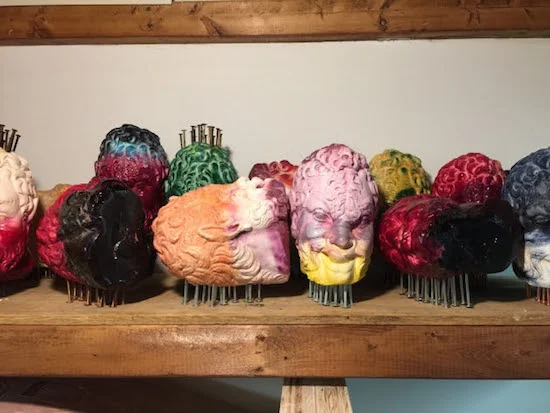
"School of love,'' by Steve Locke, a sculptor, in his show "school of love & Family Pictures,'' at the Gallery Kayafas, Boston, through Nov. 26.
Don Pesci: Apres le deluge, c'est Hillary?
The national elections at this point may remind poor battered voters of Oscar Wilde’s description of fox hunting: “The unspeakable in pursuit of the uneatable!”
Republicans, Victor Davis Hanson writes in National Review, will have much repair work to do after the election – whatever happens. National Review has not been hospitable to Donald Trump’s candidacy, but the election should awaken second thoughts among conservatives. In “Conservatives Should Vote For The Republican Nominee,” Hanson takes a birch switch to what Trump supporters might call disdainfully the Republican Party Establishment.
Here is the central premise in Hanson’s piece:
“Something has gone terribly wrong with the Republican Party, and it has nothing to do with the flaws of Donald Trump. Something like his tone and message would have to be invented if he did not exist. None of the other 16 primary candidates — the great majority of whom had far greater political expertise, more even temperaments, and more knowledge of issues than did Trump — shared Trump’s sense of outrage — or his ability to convey it — over what was wrong: The lives and concerns of the Republican establishment in the media and government no longer resembled those of half their supporters.
“The Beltway establishment grew more concerned about their sinecures in government and the media than about showing urgency in stopping Obamaism. When the Voz de Aztlan and the Wall Street Journal often share the same position on illegal immigration, or when Republicans of the Gang of Eight are as likely as their left-wing associates to disparage those who want federal immigration law enforced, the proverbial conservative masses feel they have lost their representation. How, under a supposedly obstructive, conservative-controlled House and Senate, did we reach $20 trillion in debt, institutionalize sanctuary cities, and put ourselves on track to a Navy of World War I size?”
In the reliably conservative Wall Street Journal opinion pages, Peggy Noonan, a longtime columnist and once a special assistant and speechwriter in the reliably conservative President Ronald Reagan administration, permits herself to wonder what a Trump campaign might have looked like if Trump had been sane.
On the Democratic side, an email tsunami threatens to capsize Clinton’s plush ground-game schooner. And she is –- perhaps more than Trump –- unspeakable and uneatable. After nearly a half century in politics, ambition scrambles the brain. White privilege may or may not be a political myth, but political privilege is the original sin of politics. Just ask Machiavelli, or Hanson, a classical historian and author of A War Like No Other: How the Athenians and Spartans Fought the Peloponnesian War.
Here in Connecticut, the sort of people whose business it is to gauge the correlation of political forces are dusting off their crystal balls. All the editorials nominating so-and-so- for such-and-such have already been written. It remains only to pull the pins on the editorial endorsements.
Their left-of-center sensitive data receptors tell them that Clinton has the edge, both nationally and here in the Land of Steady Habits, which has steadily voted Democratic progressives into office. Connecticut progressives, in turn, have steadily voted in favor of cosmetic and temporary spending cuts. Once returned to office, they will vote in favor of higher taxes for two reasons: 1) They wish to use politicians to advance a particular rather than a general good, usually involving public worker unions; and 2) Despite the inescapably obvious consequences following tax increases and burdensome regulations – i.e. job losses, anemic economic growth and the flight from Connecticut of wealth-producing entrepreneurial activity -- they are perversely convinced, mostly for ideological reasons, that Connecticut is suffering a revenue problem, not a spending problem.
Hanson’s recommendation to national Republicans that they should adjust their polity to changed circumstances is not likely to be adopted by Connecticut Democrats, our new Aristocrats. Demography, rather than a filial regard for democracy, is destiny, say the demographers, and Democrats outnumber Republicans in Connecticut by a two to one margin; unaffiliateds outnumber both Republicans and Democrats. And so – what has been must ever be. That is the operative principle of most politics, until the roof comes crashing down, at which point there will follow a peaceful, small “d”, democratic revolution.
The one thing we know for certain about democracy, G. K. Chesterton reminds us, is this: “Democracy means government by the uneducated, while aristocracy means government by the badly educated.” To this many journalists reply, yearning for an aristocracy of thought and manners, “Bunk.” They can be safely ignored. Chesterton was a superb journalist, and that is why he said “Journalism largely consists of saying 'Lord Jones is dead' to people who never knew that Lord Jones was alive.”
Don Pesci is a Vernon, Conn.-based political writer.

Brakes needed in bike-path push

Excerpted from Robert Whitcomb's"Digital Diary'' in GoLocal24.
Alex Marshall, writing recently in Governing.com, raised some cautionary notes about the bike-path mania in some cities.
The biggest one is whether it’s worth it to eat up a lane of car traffic to assign the space to bicyclists. Have cities adequately forecast the number of people who are likely to use bikes and maybe even give up their cars? We see a lot of dedicated bike lanes with very few bicyclists. Perhaps in a city with a lot of college students, such as Providence, adense and carefully planned network of bike lanes can make sense. But what would be the tradeoff against what might be heavier motor-vehicle traffic congestion created by removing lanes?
And safety would call for many bike lanes to have physical barriers separating them from car and truck traffic rather than just lines. Many of these lanes now are too dangerous, especially compared to Europe’s.
I learned in Europe, where I used to work, and rode a bike a few times in the Netherlands, that compared with the U.S., car and truck drivers there bear much more legal responsibility in crashes with bikes than do bicyclists. That’s simply because the former are driving fast, multi-ton machines. “It’s a standard sometimes known as ‘default liability,’’’ Mr. Marshall says. We need that in America. (I wonder how the coming of self-driving cars might affect all this.)
U.S. jurisdictions should look at their traffic laws and make adjustments.
Perhaps after a few years of adding bike paths, communities might very rationally decide to turn some of them back to cars, trucks, buses and install light rail. My own preference is for cities and states to focus on mass transit, not bike lanes. But, of course, they’re both admirable.
-- Robert Whitcomb

David Warsh: Let's stop the jingoism about Russia.

A propaganda war bubbled up in London last week as an antiquated Russian aircraft carrier steamed down the English Channel, on its way to the coast of Syria.

NatWest, a subsidiary of the Royal Bank of Scotland Group, which is mostly owned by the British government, announced that it planned to close the accounts of Russia Today, the Russian government’s news service and television network – presumably because RT publishes material critical of Britain and the U.S.
I read one or two RT items almost every day, via Johnson’s Russia List. In fact RT publishes a good deal of interesting material.
Meanwhile, The Economist prepared a scary Putinism cover, a special section, and a tough editorial: “How to contain Vladimir Putin’s deadly, dysfunctional empire”.
The Spectator countered with ''Stop the Stupid Sabre-Rattling against Russia.''
“It’s not their side that worries me; it’s ours,” wrote Rod Liddle, a Spectator columnist.
Moscow bureau chief Neil MacFarquhar, of The New York Times, heaped ridicule on that Russian aircraft carrier. Neoconservative stalwart Robert Kagan, in The Wall Street Journal, asked, "What can the next president do about Russia? ''
Send U.S. troops back to Europe? Retaliate for cyber-offenses?
This is jingoism. Let’s get the election over with. Then we can get back to business.

David Warsh, proprietor of economicprincipals.com, is a longtime economic historian and financial columnist.
Very New England raw material

From the show "Birches, Bark, and Beyond: Marja Lianko at Maud Morgan Arts,'' Cambridge, Mass., Oct. 31-Nov. 25. Her show features paintings and sculptures depicting, and in some cases made of, trees,or at least of their bark and branches.

Chris Powell: Newspaper archives increasingly important in criminal justice

Connecticut's Board of Pardons and Paroles, the Waterbury Republican-American reported the other day, is getting more generous with pardons, which erase criminal records maintained by government agencies and allow recipients to pretend that they never did anything wrong.

Among recent recipients of such pardons, the newspaper disclosed, were former police officers in Waterbury and Hartford who had been fired and convicted of fabricating evidence. Presumably now they can regain employment as officers, unless the departments to which they apply undertake background reviews broader than government records.
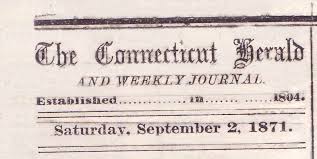
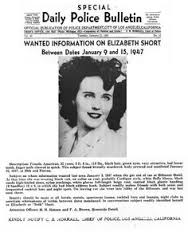
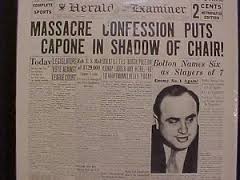
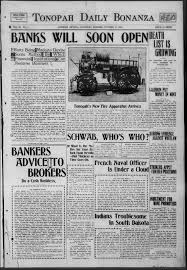
Any broader review will involve the archives of newspapers and other news organizations, which have become essential archives of criminal justice in Connecticut, since so many criminal charges, while justified, vanish from government archives because of plea bargaining and erasure laws as well as pardons.
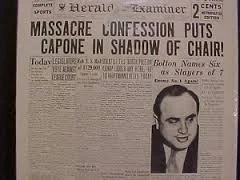
Overwhelmed, Connecticut's criminal-justice system fails to produce much accountability for criminals, crime victims, the wrongly accused, and the public. As a result, much of the limited accountability resulting from criminal justice here now resides not in government archives but in the archives of news organizations.
Because news organization archives now may be more complete than government's and because they are accessible on the internet, news organizations are being flooded with requests from people who want reports of their arrests or convictions suppressed. Of course such reports can impair people's employment and social relations -- but then they often should, as with crooked cops.
Such suppression is deception, the opposite of journalism.
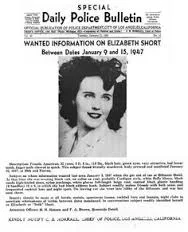
EVERYBODY AVOIDS TAXES: The furor over what appears to be Republican presidential candidate Donald Trump's avoidance of federal income taxes is hypocritical, for three reasons.
First, while Trump has refused to disclose his tax returns, tax avoidance is not tax evasion. Nearly everyone exploits legal deductions and exemptions to minimize taxes.
Second, while some deductions and exemptions are available only to the wealthy, Congress established them in the name of encouraging or discouraging certain economic activity. If deductions and exemptions are disgraceful, the disgrace falls not on the people who use them but on Congress for establishing them.

And third, contrary to the accusation of Democratic presidential candidate Hillary Clinton, Trump's tax avoidance has not really deprived the federal government of any money. That's because the federal government enjoys the power of money creation and thus doesn't need taxes for revenue and has not needed taxes for revenue since gold and silver were removed as circulating money decades ago.
Rather, as the president of the Federal Reserve Bank of New York, Beardsley Ruml, wrote in 1946, the purpose of federal taxes has become social control -- to determine who has money and why.
Trump has so much money on account of tax policies for which the Democratic Party is as responsible as the Republican Party.
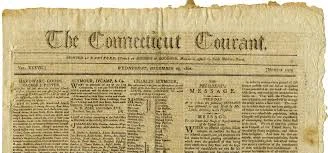
AUTOBIOGRAPHY, NOT MERE TALK: Trump and his apologists keep saying that the vile conversation he had with the host of a celebrity gossip television show 11 years ago, caught on tape and disclosed the other day, was just “locker-room talk” and “banter,” disgusting to others but of no significance.
Not so. For Trump was describing things he already had done. He even identified a married woman he had tried to seduce. Forgive or excuse him or not, conclude if you want that his character is less objectionable than Hillary Clinton's character or her policies, but what was captured on that tape was far more than talk. It was conduct and autobiography, and it has been confirmed by many women who, following disclosure of the tape, have detailed their awful experiences with Trump.
Chris Powell is managing editor of the Journal Inquirer, in Manchester, Conn.

Jim Hightower: Wells Fargo scandal exposes the moral rot in American big business

“Stumpf” is a German adjective for someone who’s obtuse, slow on the uptake, imperceptive, or to put it bluntly, stupid.
Ironically, it also happens to be the surname of Wells Fargo’s belatedly ousted CEO, who’s now mired in what might be the most shameful banking scandal yet. For seven years or so, John Stumpf has presided over a venal bank policy, pressuring Wells Fargo’s retailing employees into systematically stealing from particularly vulnerable, low-income customers of the bank.
During this time, he padded his own fortune with more than $100 million in personal pay. When this mass rip-off was recently exposed, Stumpf — the big boss getting the big bucks to be in charge — pleaded ignorance.
In an act of what Sen. Elizabeth Warren called “gutless leadership,” he publicly blamed the corrupt corporate culture on thousands of the bank’s low-level employees.
But the chief wasn’t the only stumpf at Wells Fargo. Where were its board members, who are empowered and duty-bound to set, monitor and assure ethical corporate behavior from the top down?
For seven years, this 15-member board of governance sat idle, apparently incurious about their corporation’s flagrant, widespread thievery, which involved setting up bogus and unasked-for accounts in the names of Wells Fargo retail customers even after a 2013 report by the Los Angeles Times exposed it.

Far from investigating and clamping down, the board kept shoving multimillion-dollar bonuses at Stumpf and other top executives.
Bear in mind that this is a powerhouse board, made up of top executives from other corporations, former government financial officials, and big time academics. And they are extremely well-paid to be diligent, getting up to $400,000 a year to keep Wells Fargo honest.
What’s at work here is the ethical rot that now consumes America’s entire corporate system — a stumpf system that steals from the many to further enrich the few, buying off the integrity and vigilance of those who run it.
OtherWords columnist Jim Hightower is a radio commentator, writer, and public speaker. He’s the editor of the populist newsletter, The Hightower Lowdown. Distributed by OtherWords.org.

Thomas Hook: Rural beasts moving in on exurbia



Photos and text from Thomas Hook, in Southbury, Conn., a frequent contributor to New England Diary
I was sitting in my den downstairs reading the newspaper when out of the corner of my eye I spotted something moving. Turning my head, I saw a black bear shambling towards our garage. He or she is a large animal (average size is 250-300 pounds). The bear was literally less than 10 feet away and the size, bulk and actuality of him astonished me.
My first thought was to get a picture. I ran upstairs, got my camera and looked out the window to where the bear might be but I couldn’t see it. I went out the front door and suddenly saw it coming out of our garage. I noticed both ears were tagged as it stared at me from 20 yards away. It quickly moved away into a copse of small trees in our front yard.
It was raining hard and the visibility wasn’t good and so when it suddenly appeared from the foliage (moving fast) all I got were two blurry shots, but get them I did! I would have taken another few but was interrupted by our 30-pound dog, Reggie, running out the door commencing to chase the bear into the woods. I furiously screamed for him to stop because one whack from the bear’s paw might have been the end of our dear little friend.
Reggie stopped 30 yards into the trees and came back, doubtless sensing how upset I was. My last glimpse of the bear was it looking back at me from down in the wetlands.
I got Reggie inside and then walked into the garage to inspect the damage (we’ve had bears visit us before). It only had time to open one can used for storing birdseed before it must have grown alarmed and shifted into flight mode.
With the bear now confirmedby the pictures, I now can look forward to photographing some of the other animals normally associated with truly rural areas, and nor our exurbia, that have eluded me but have been seen in the neighborhood either by me or others: moose, fisher cats and bobcats.

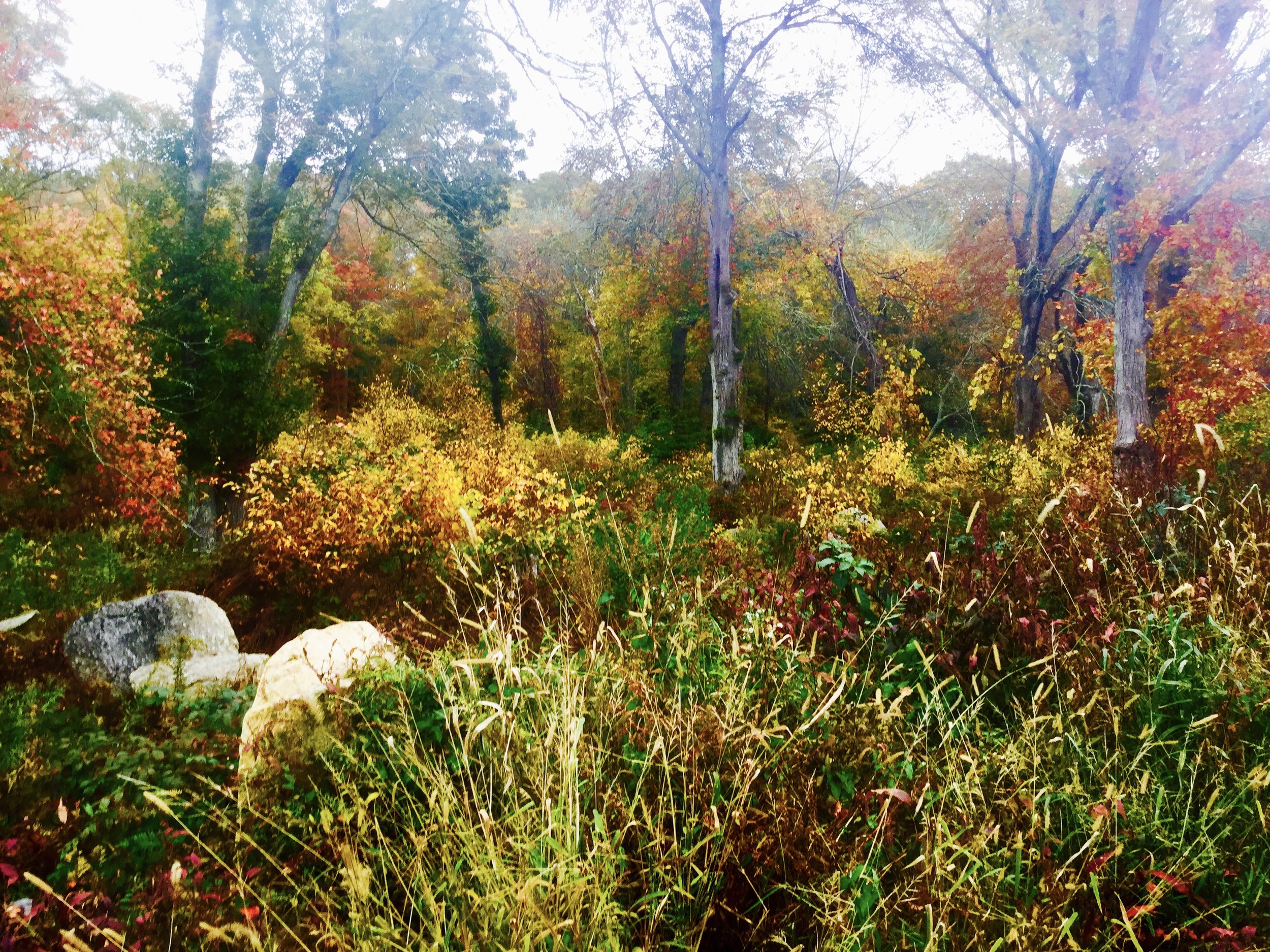
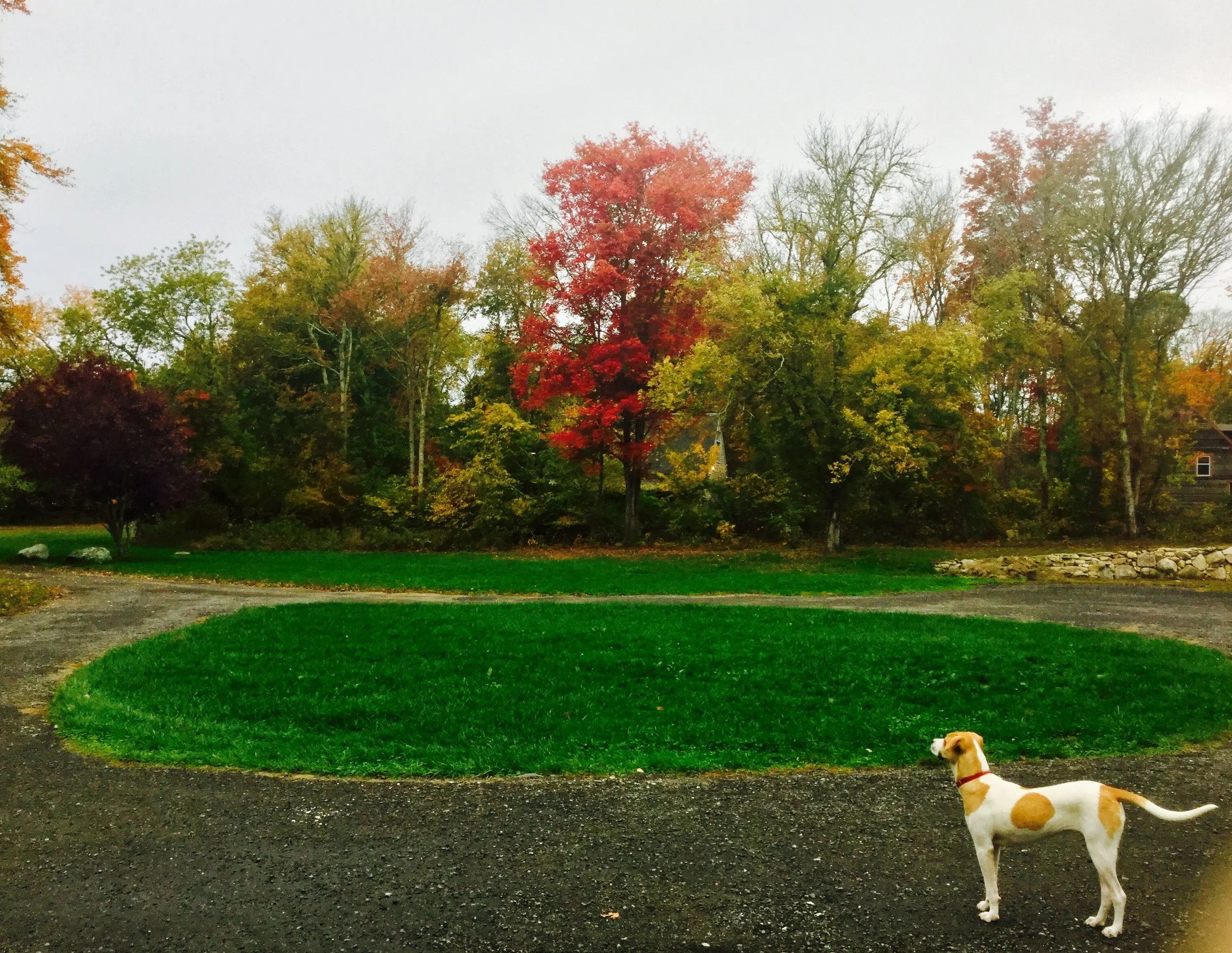
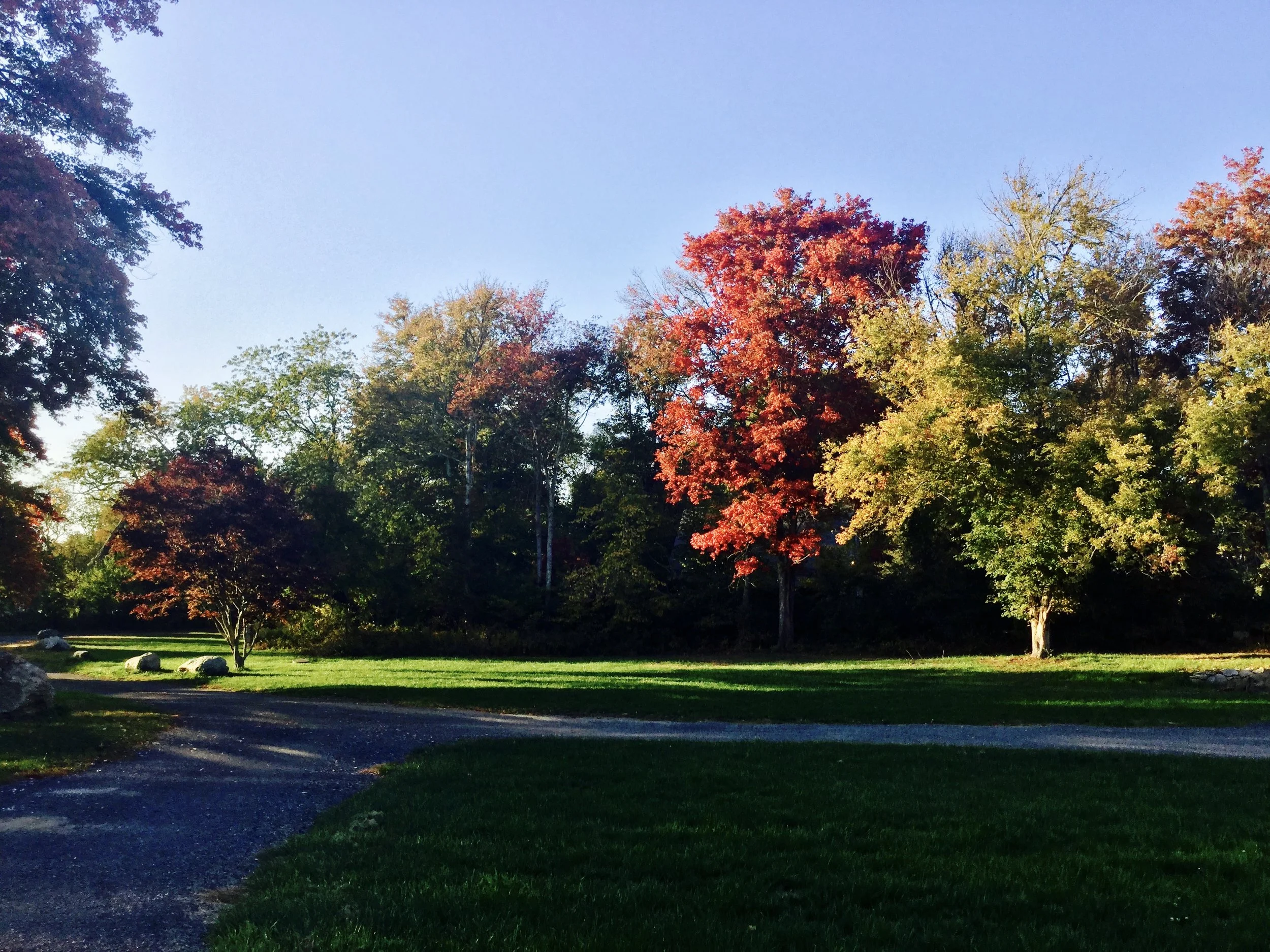
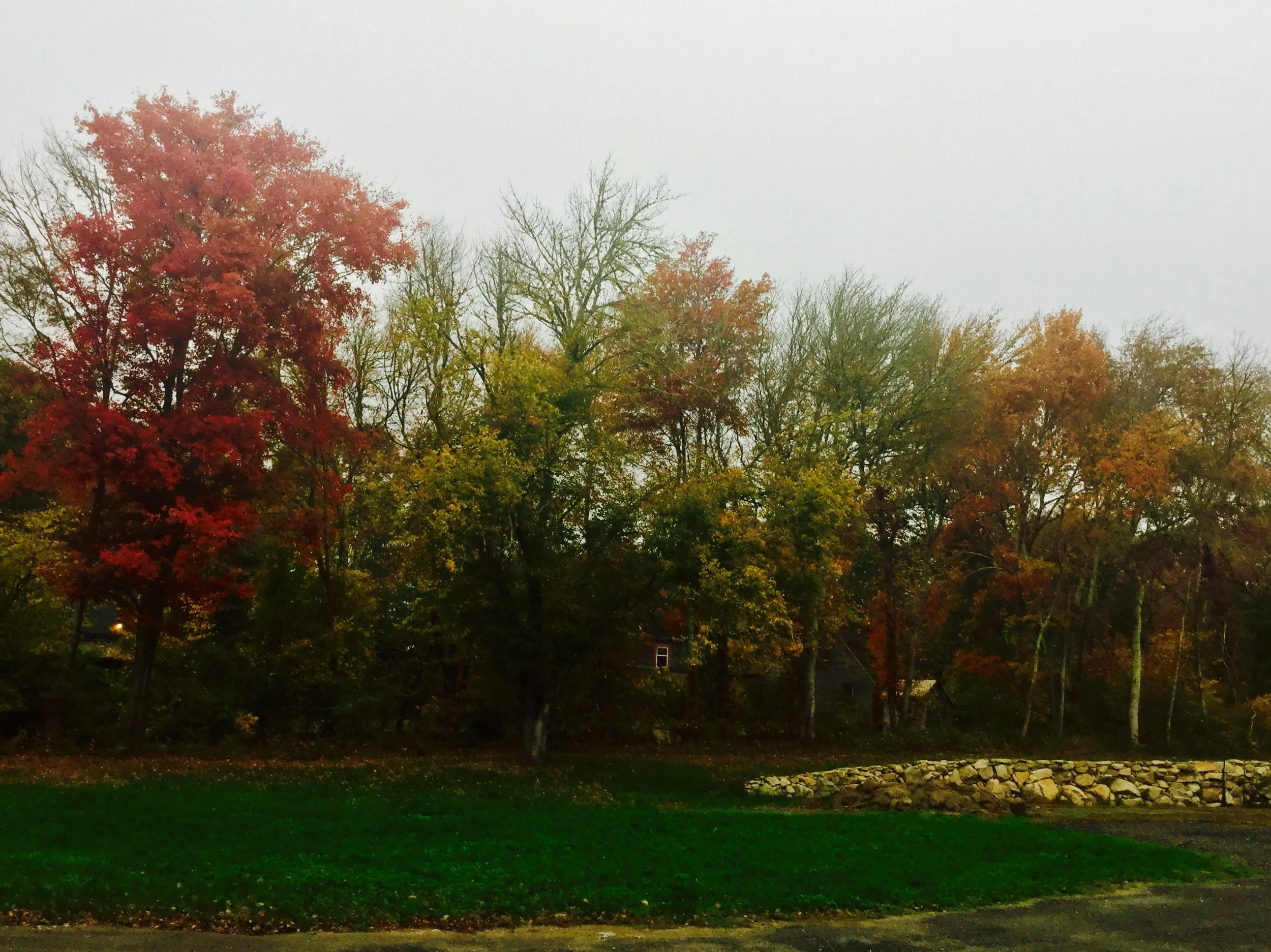
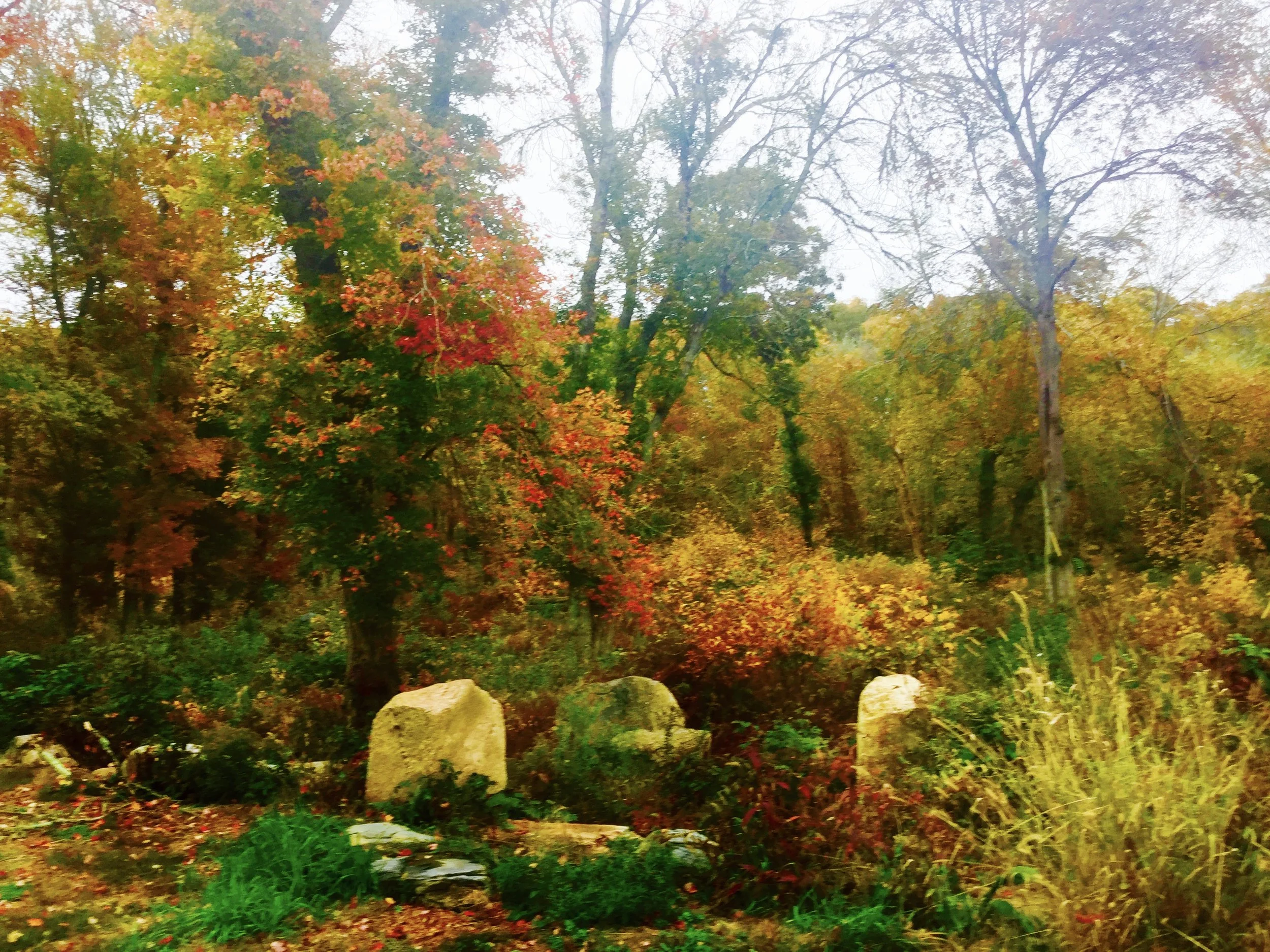
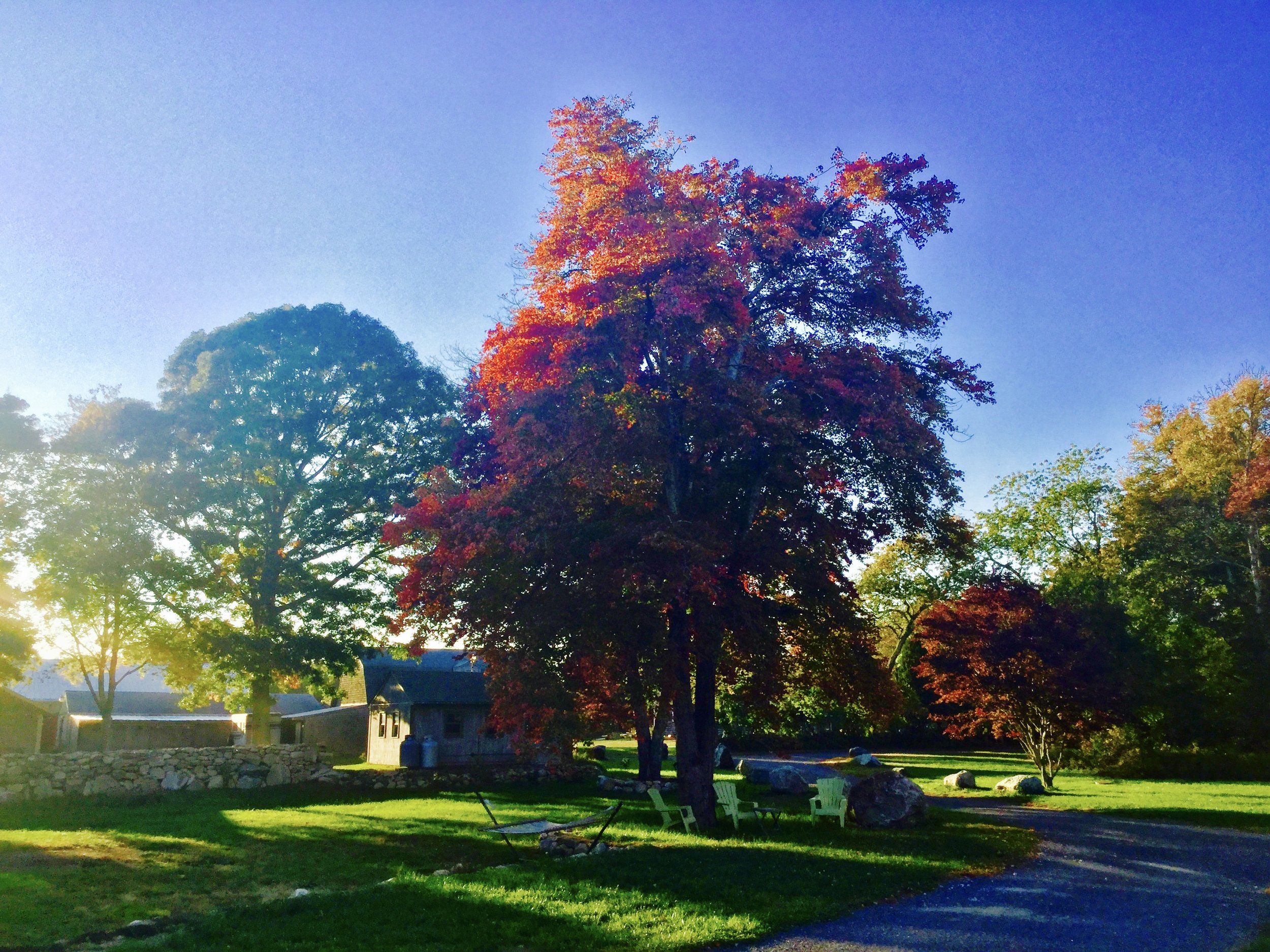
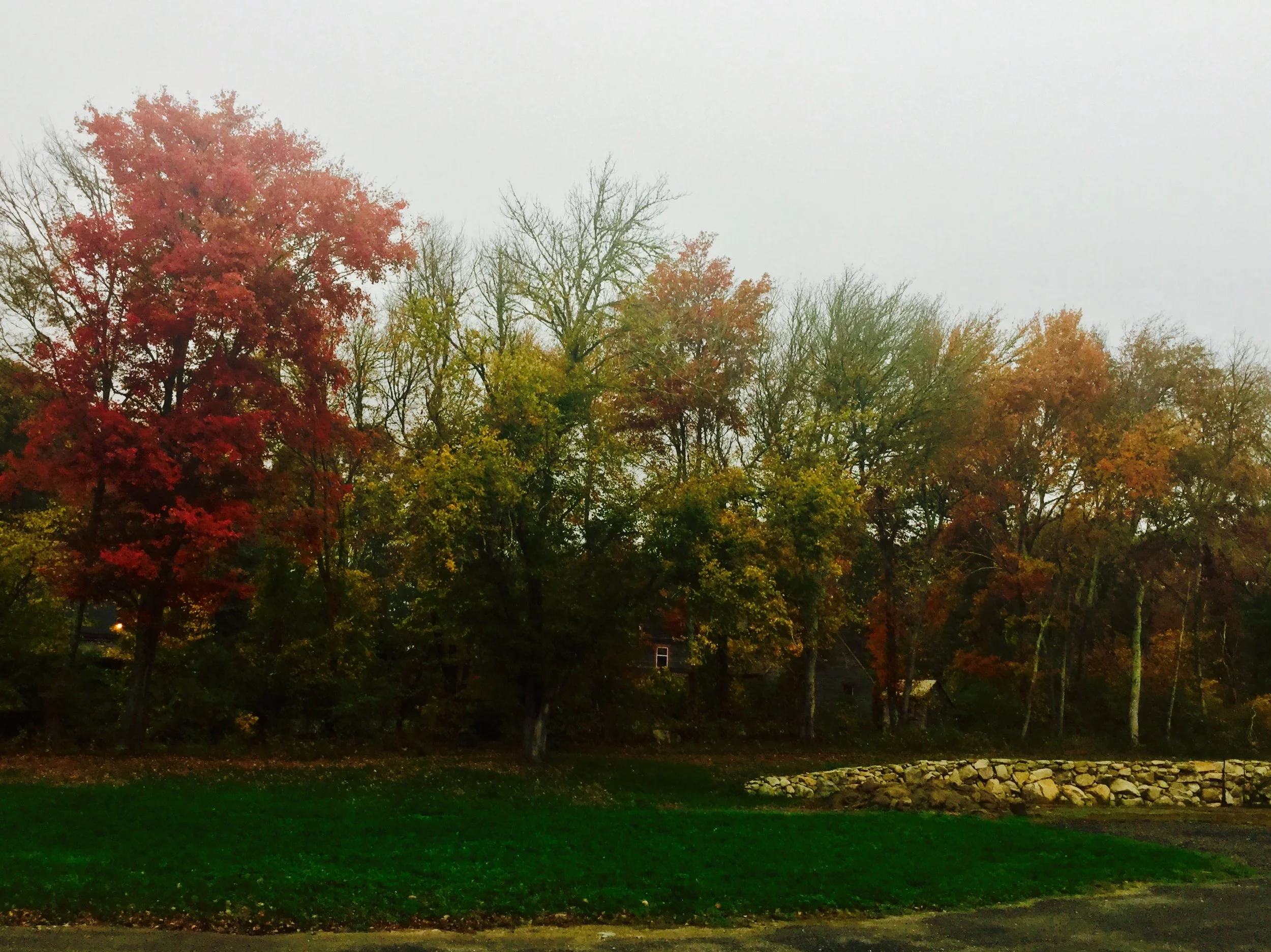
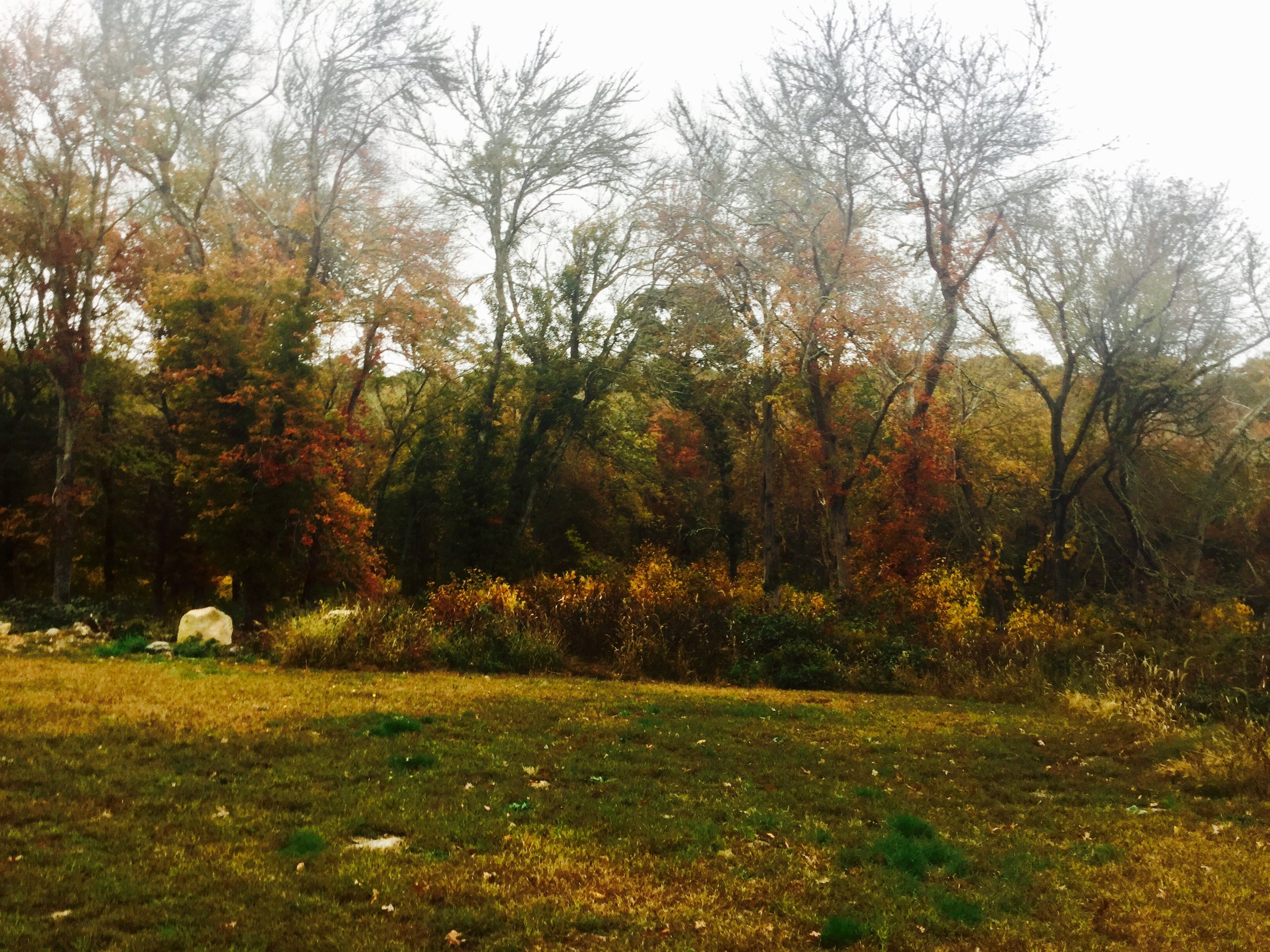
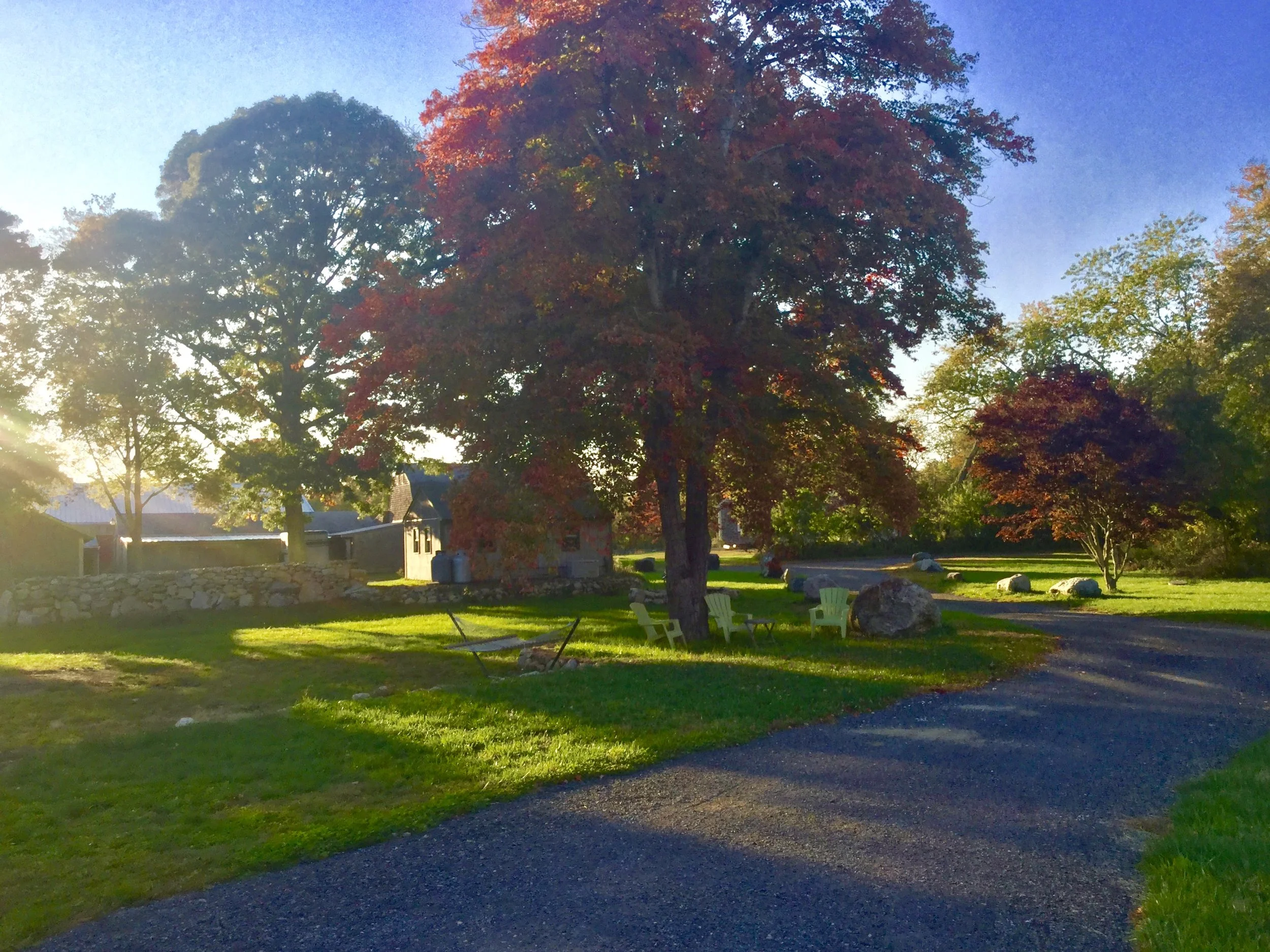
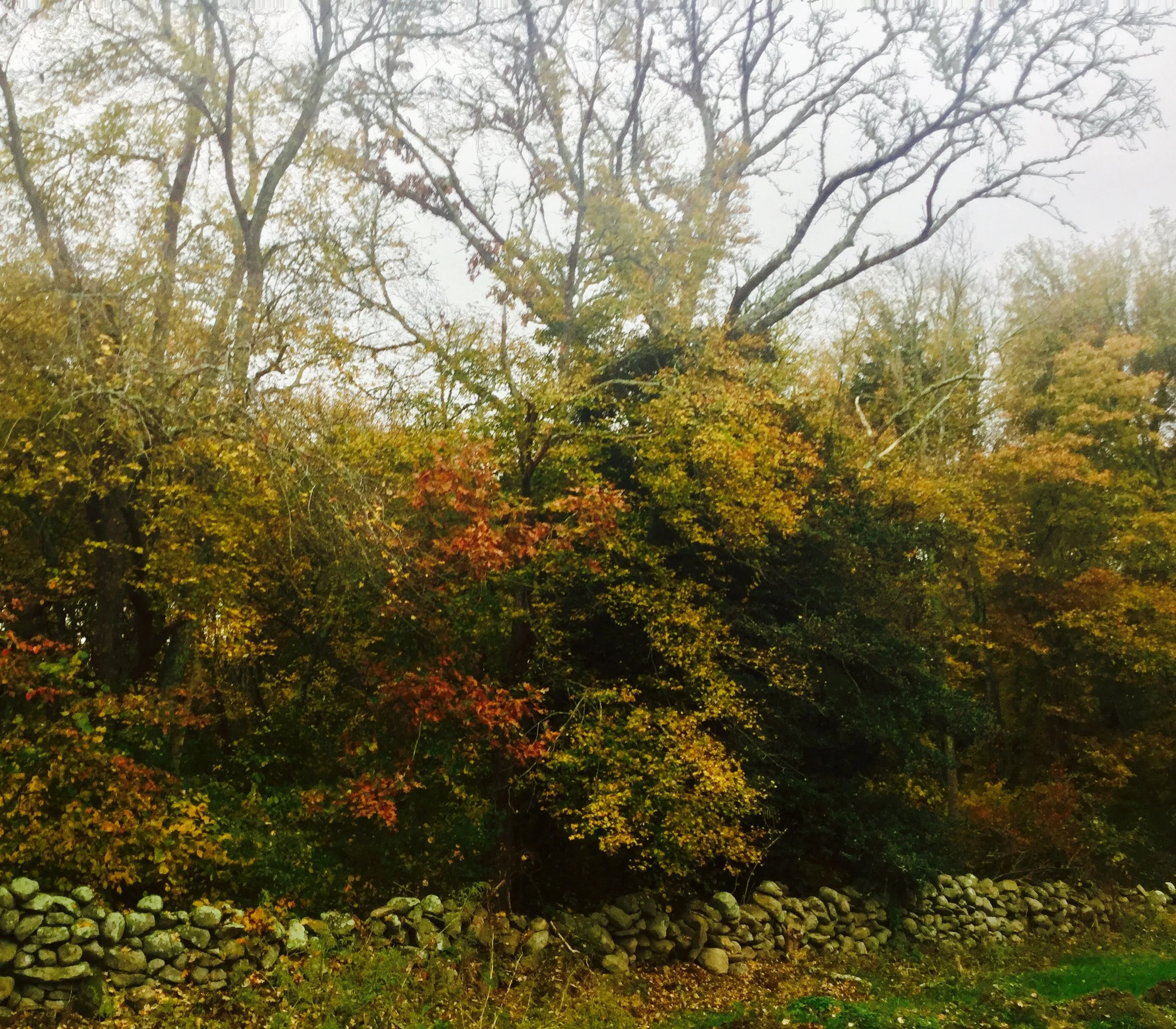
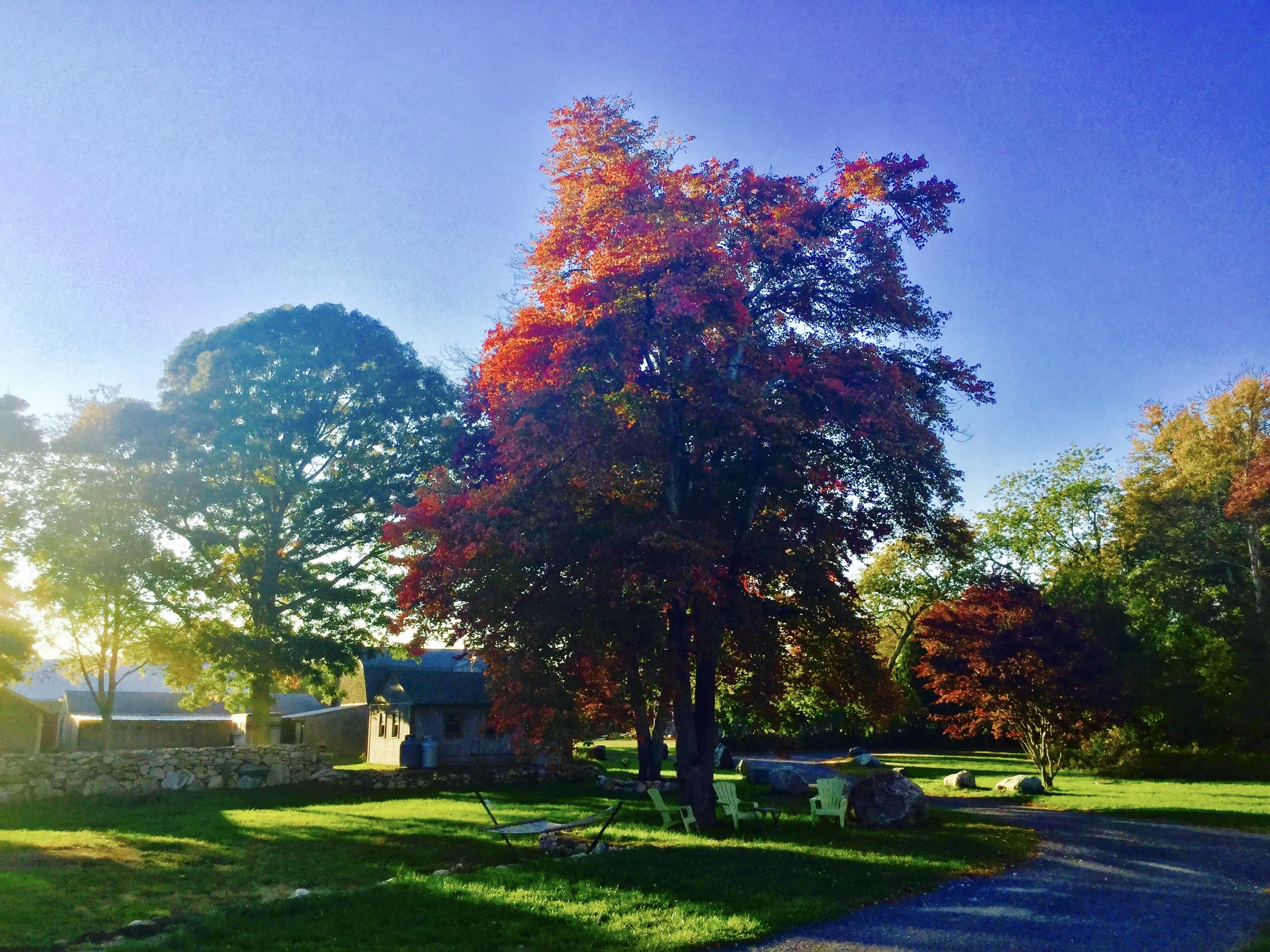
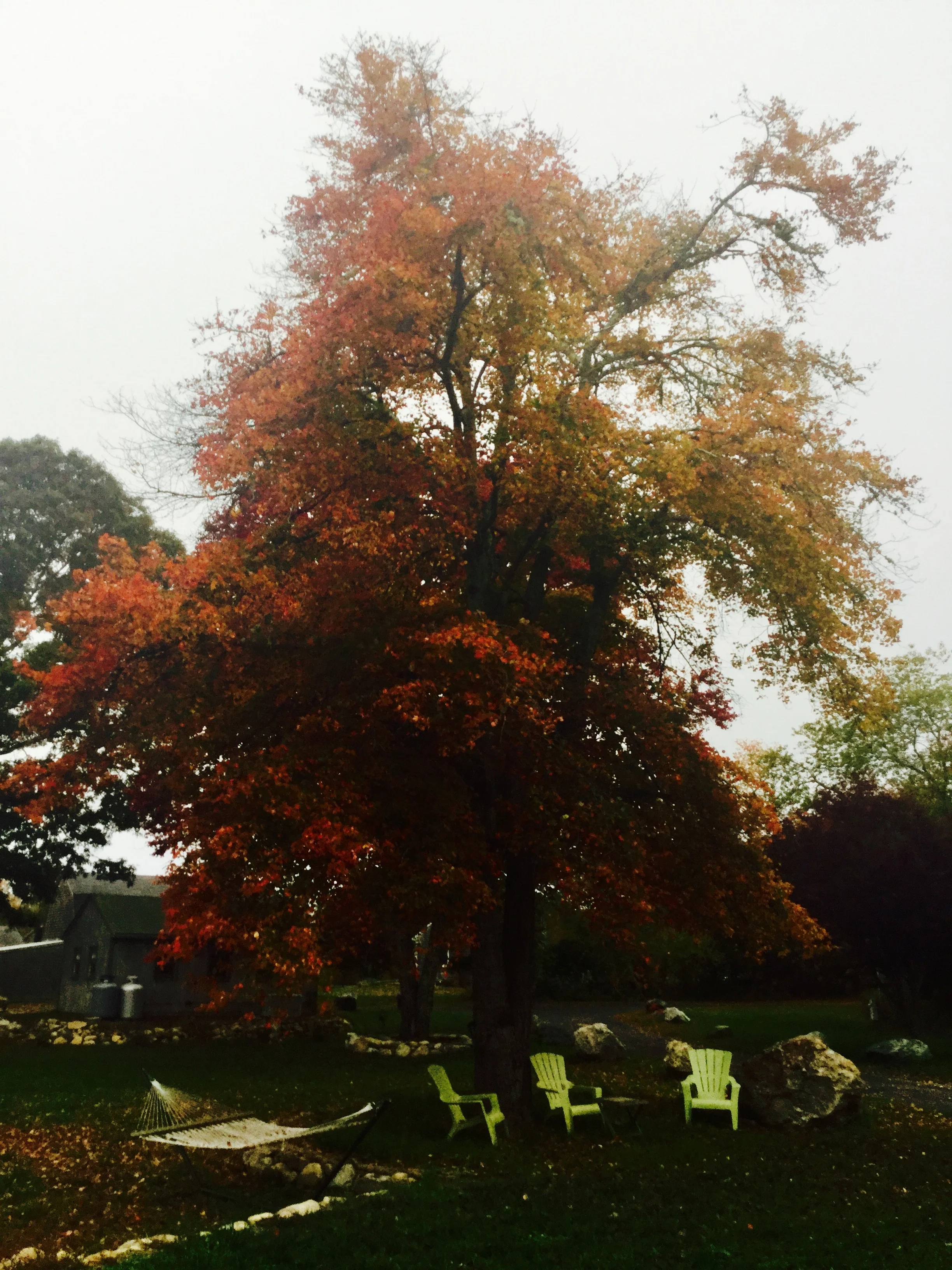
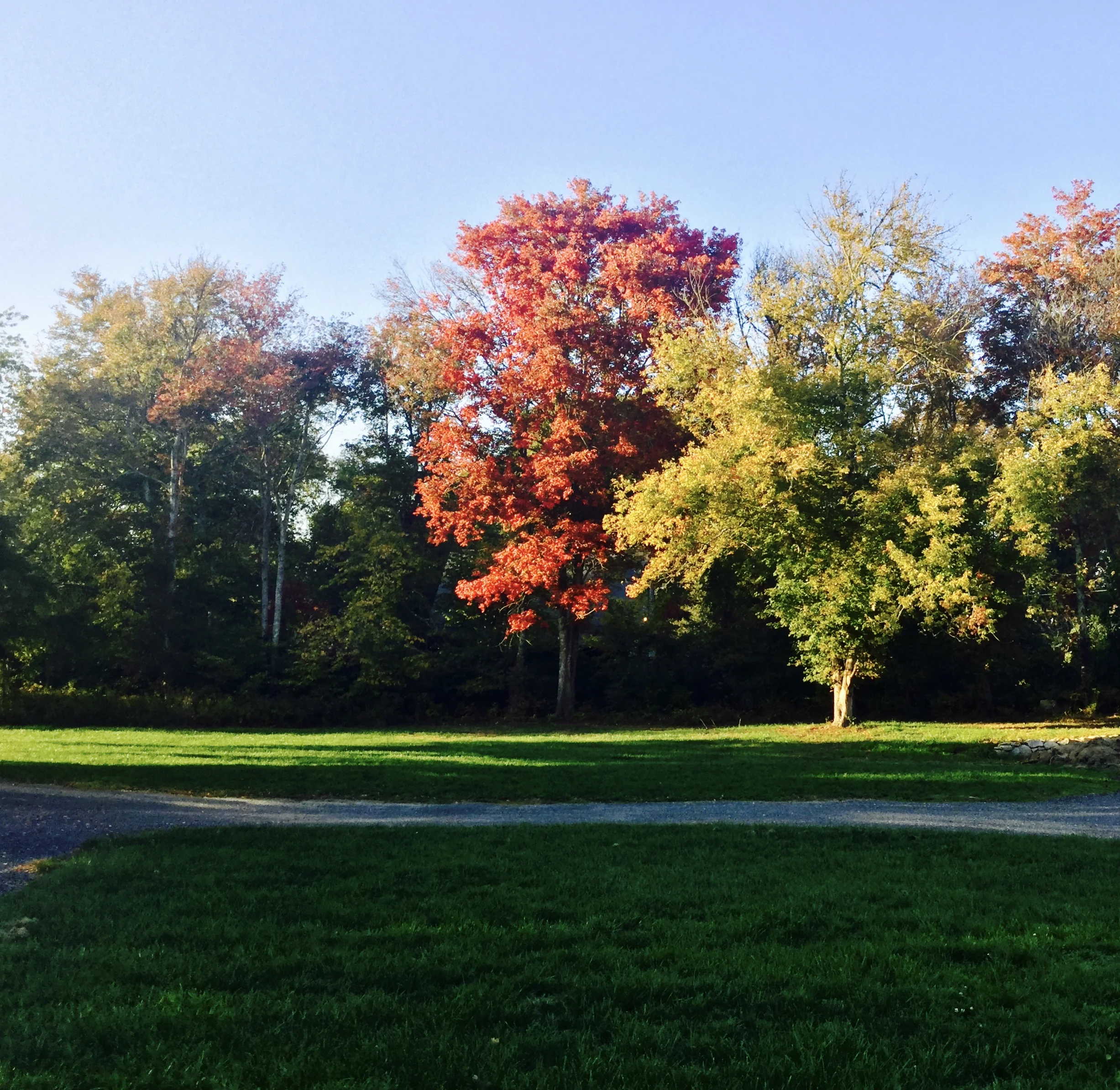
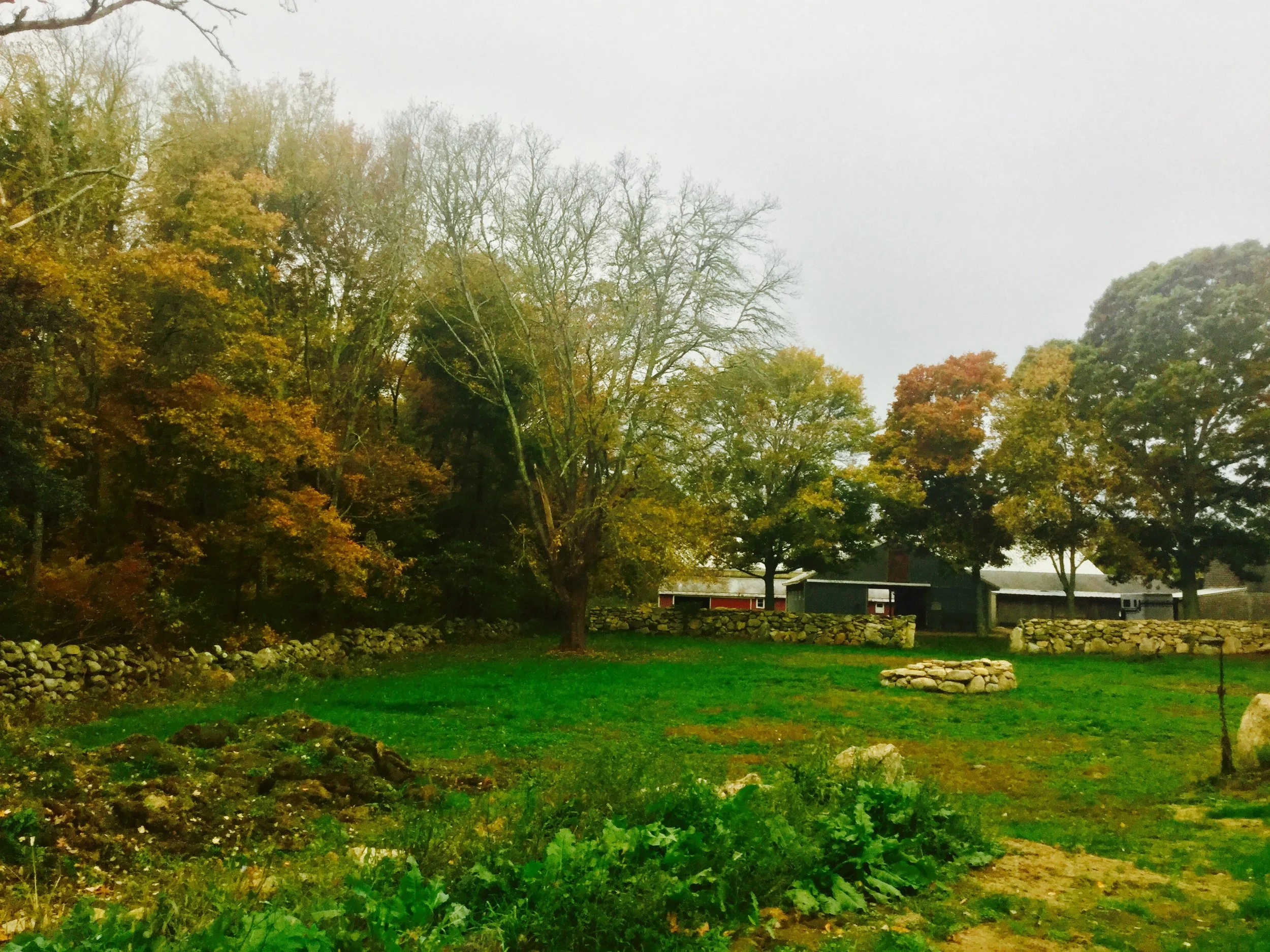
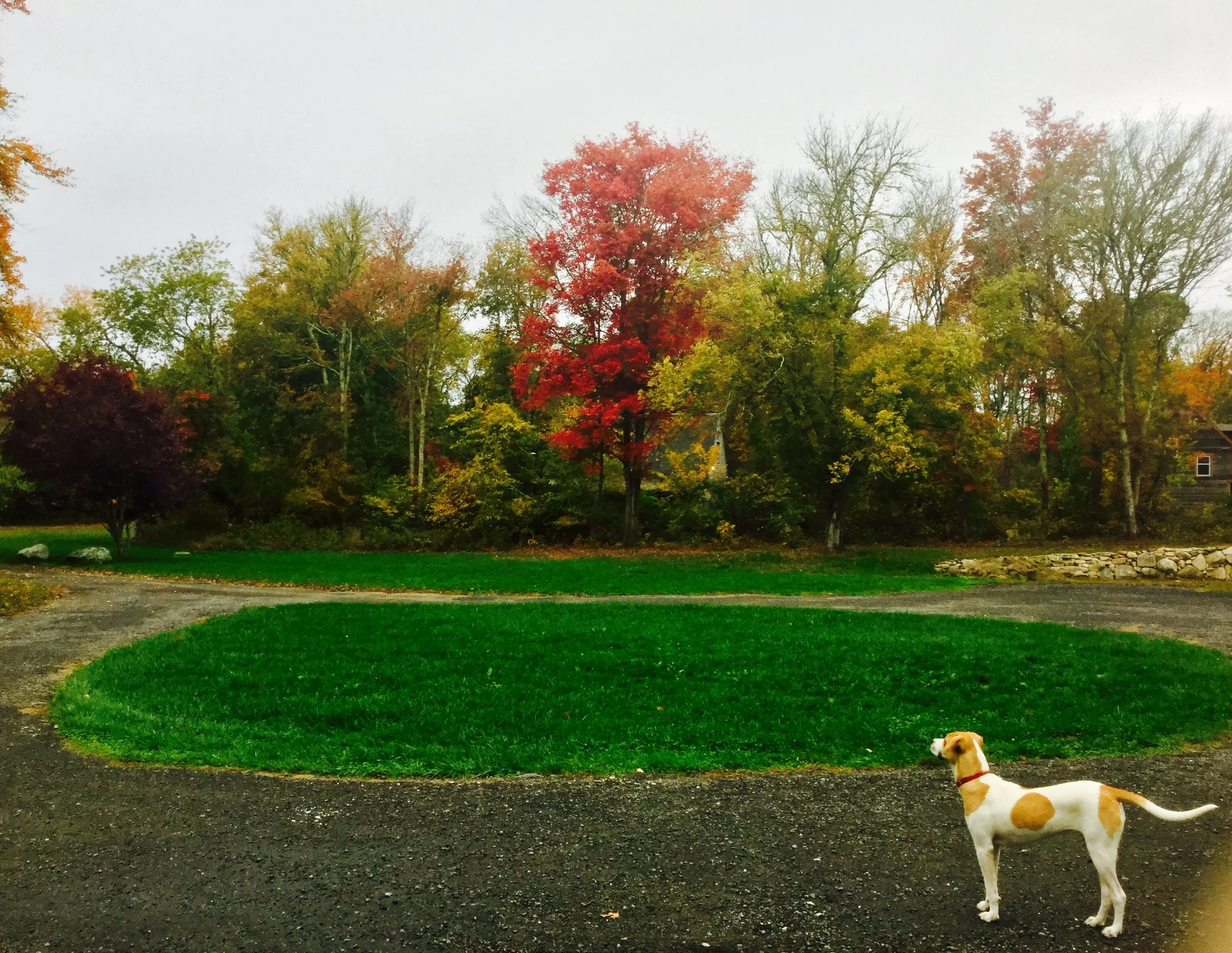
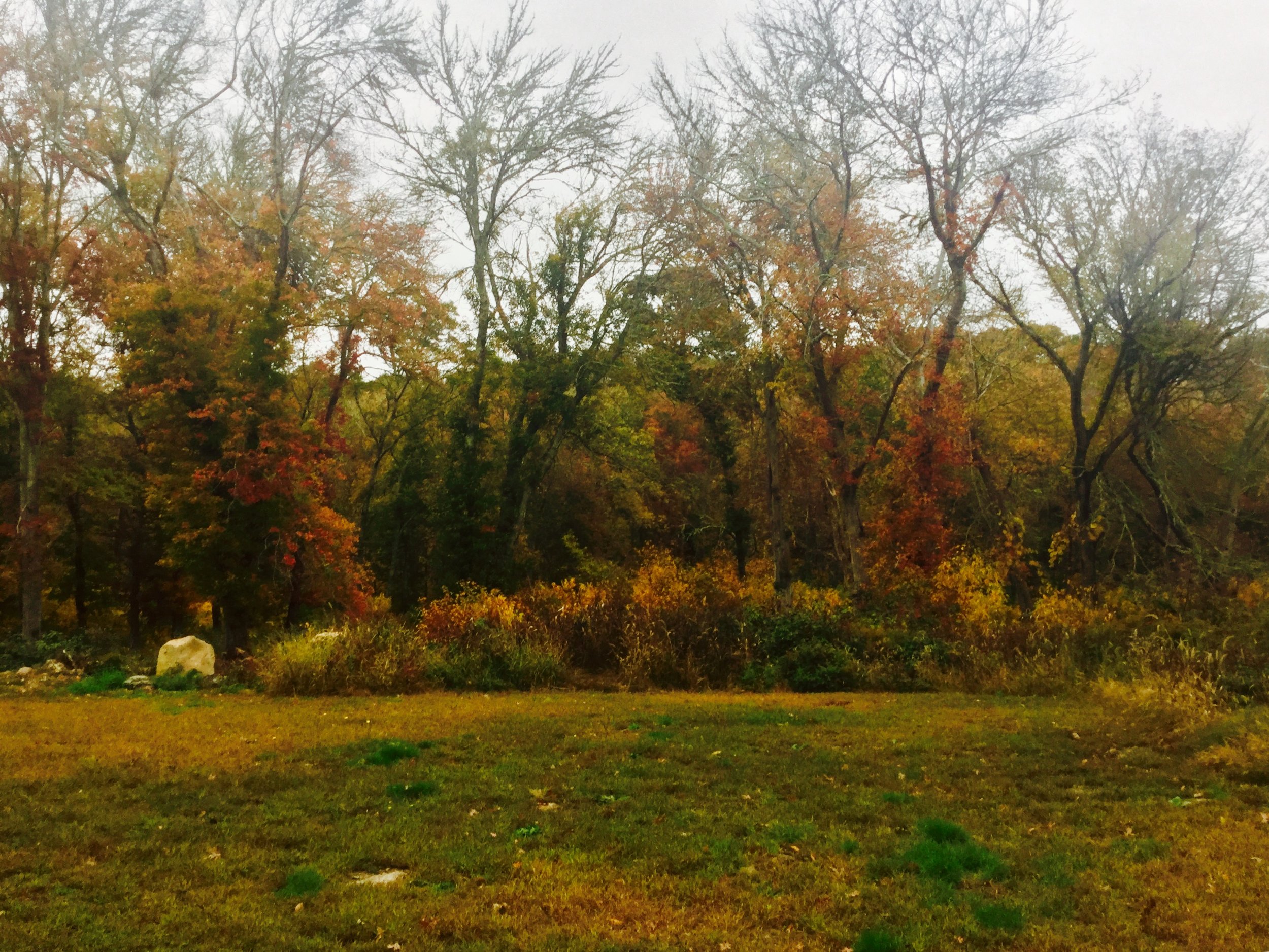
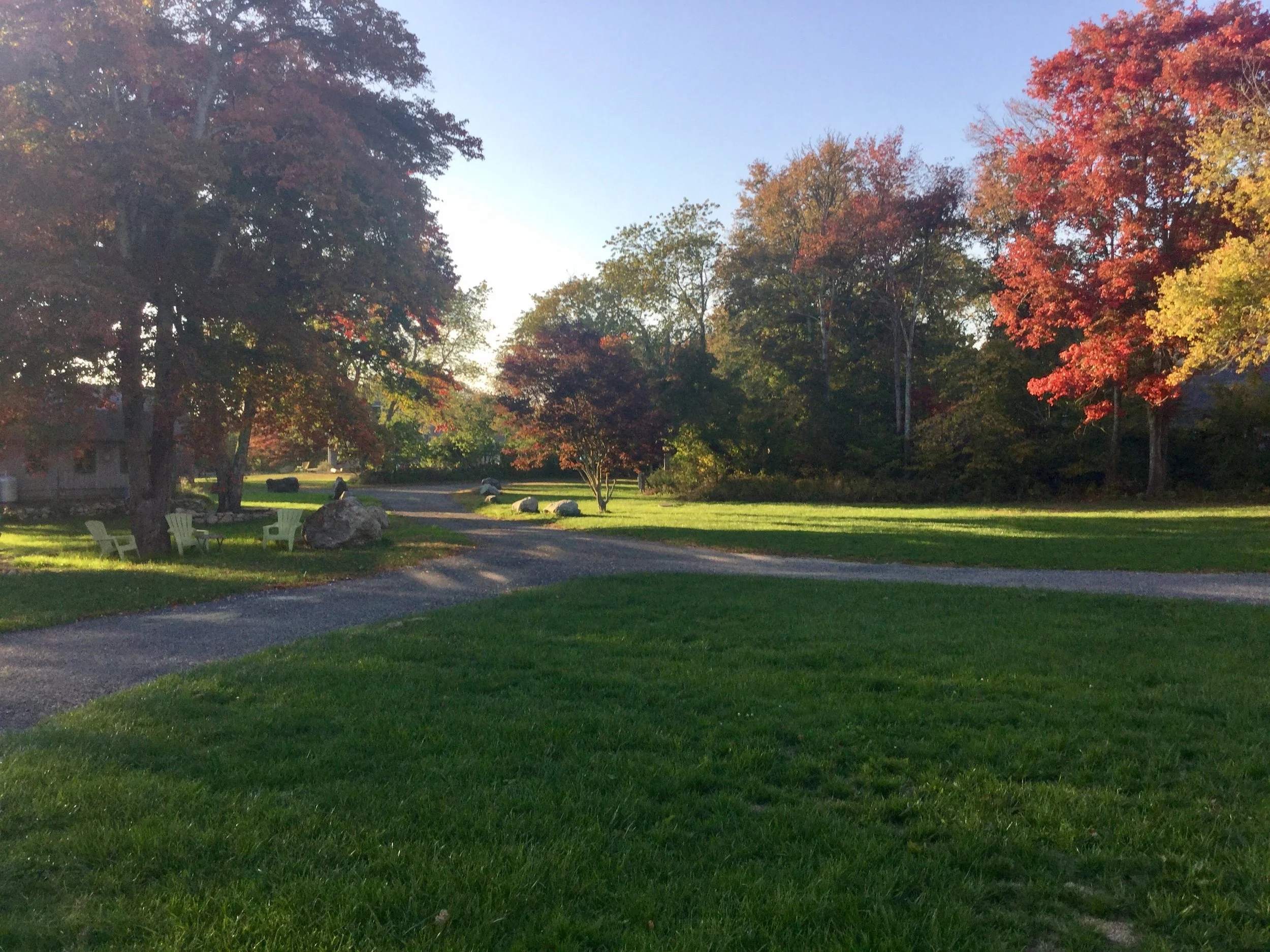
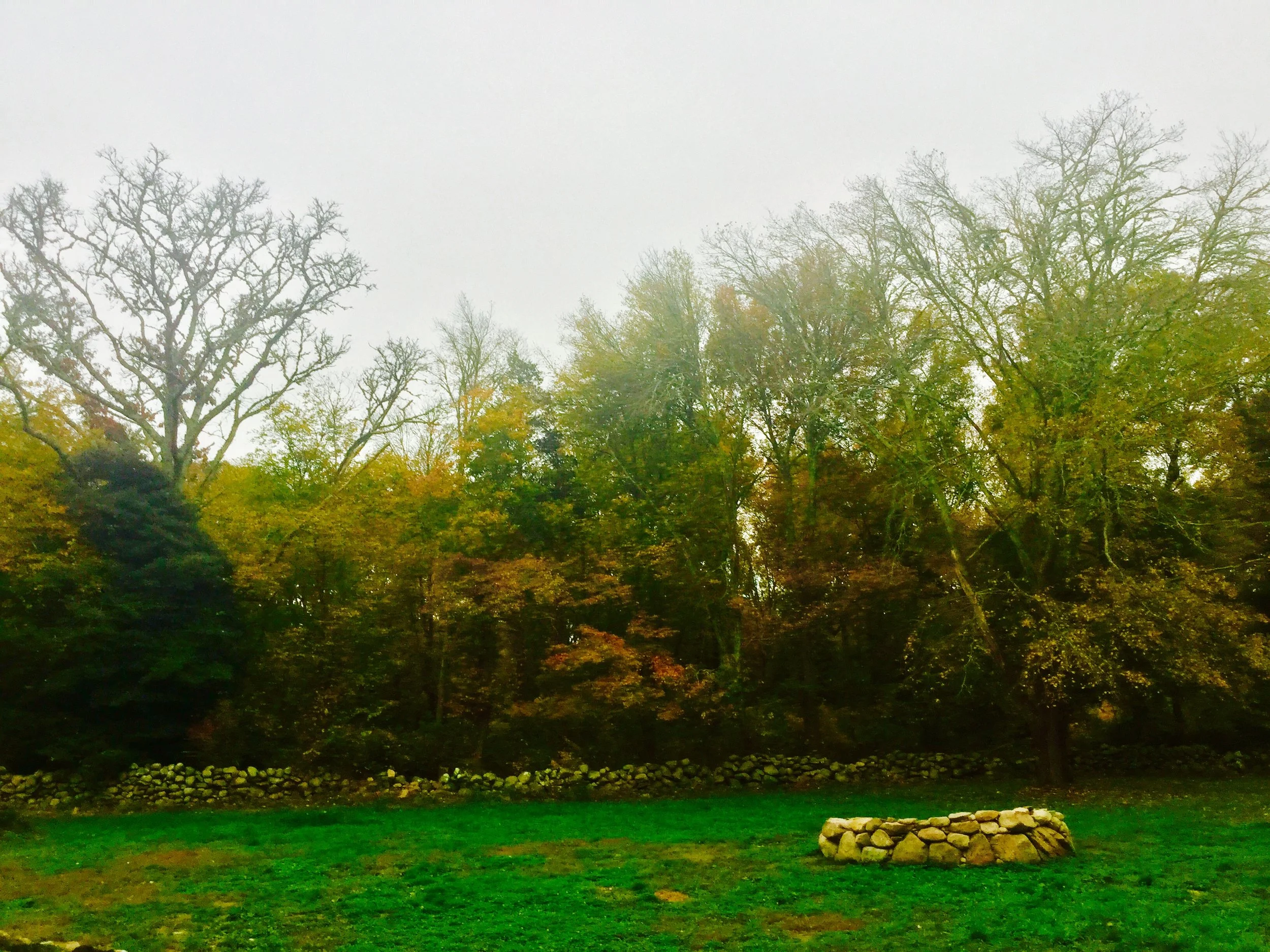
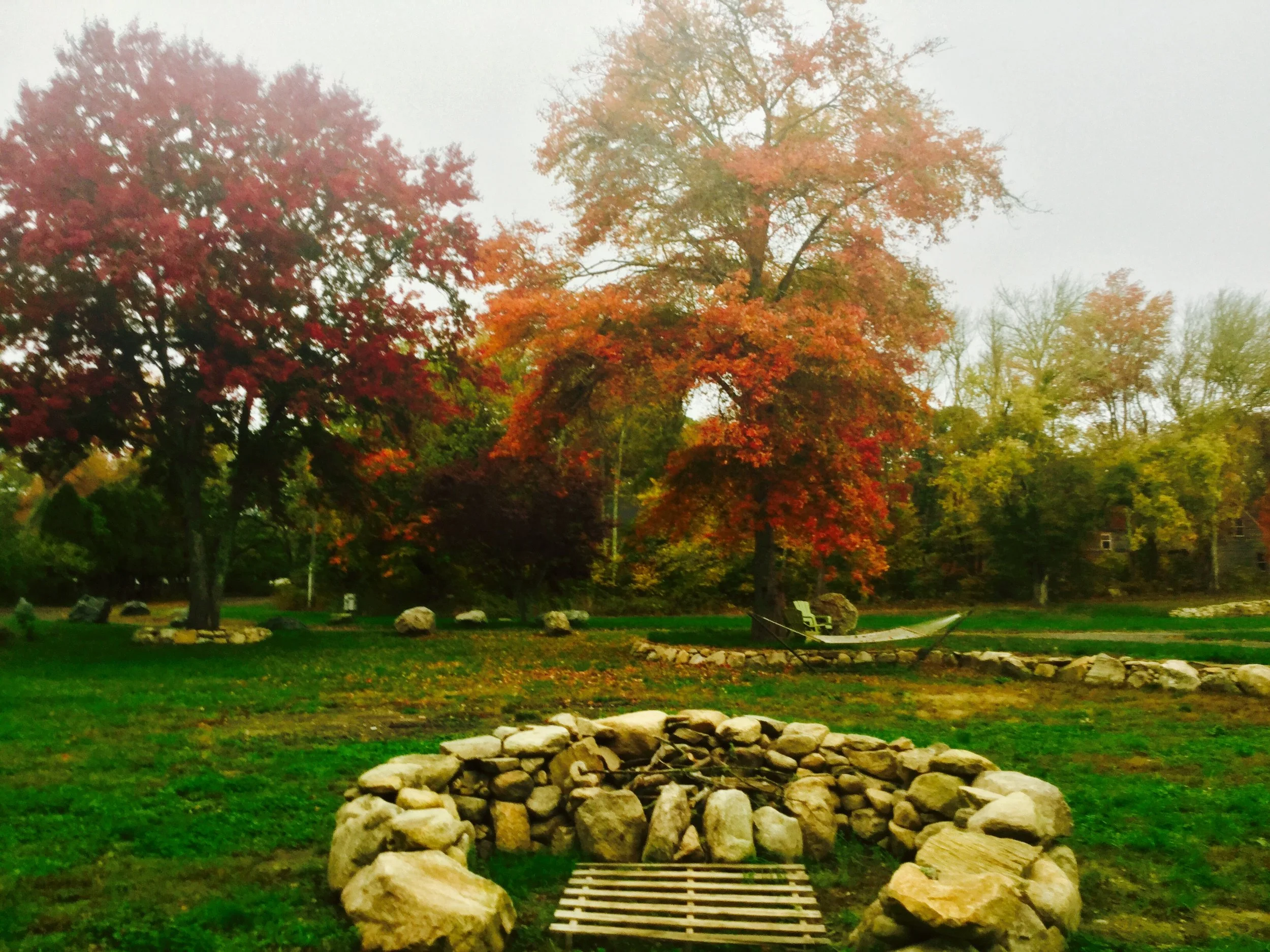
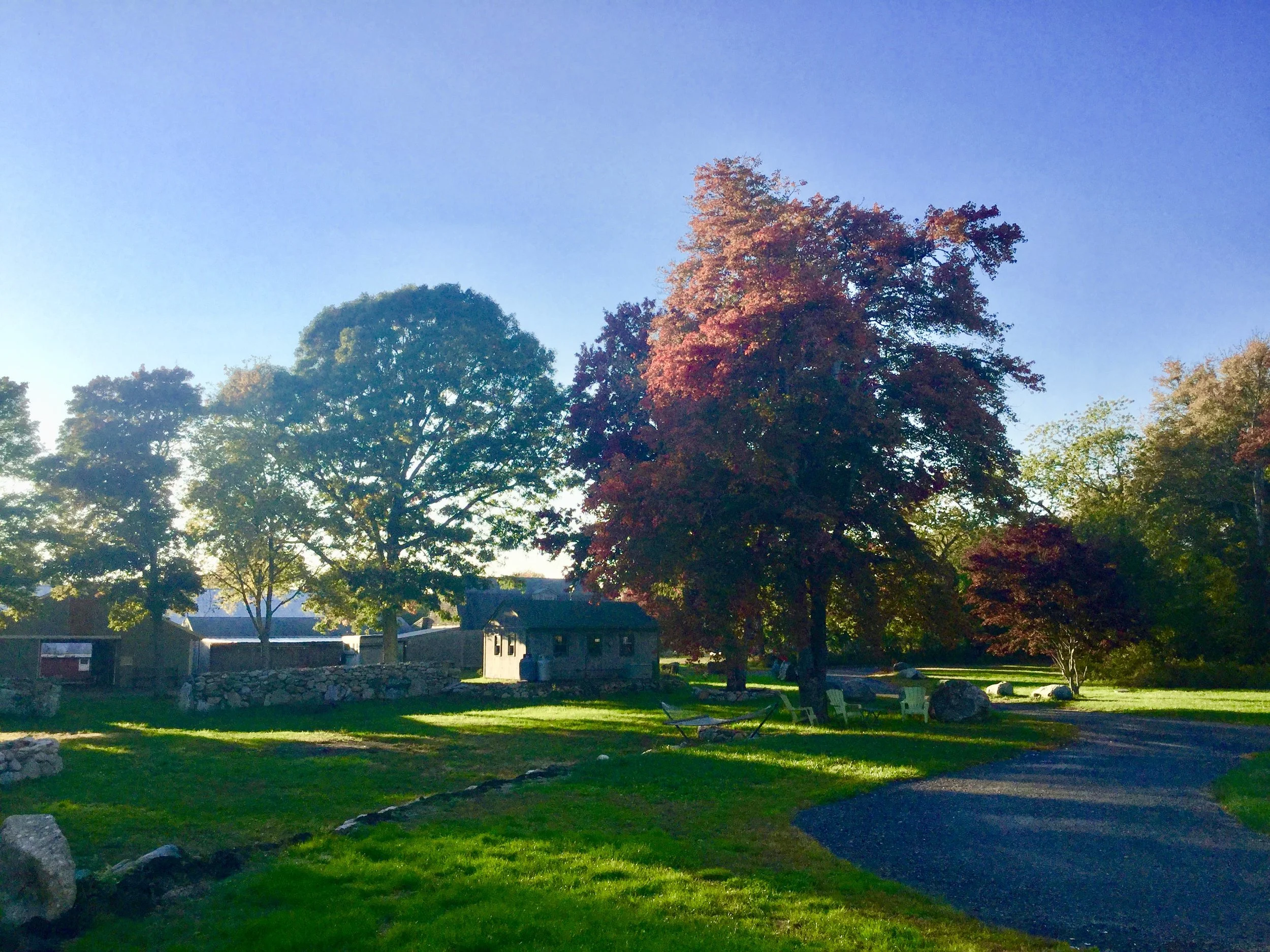
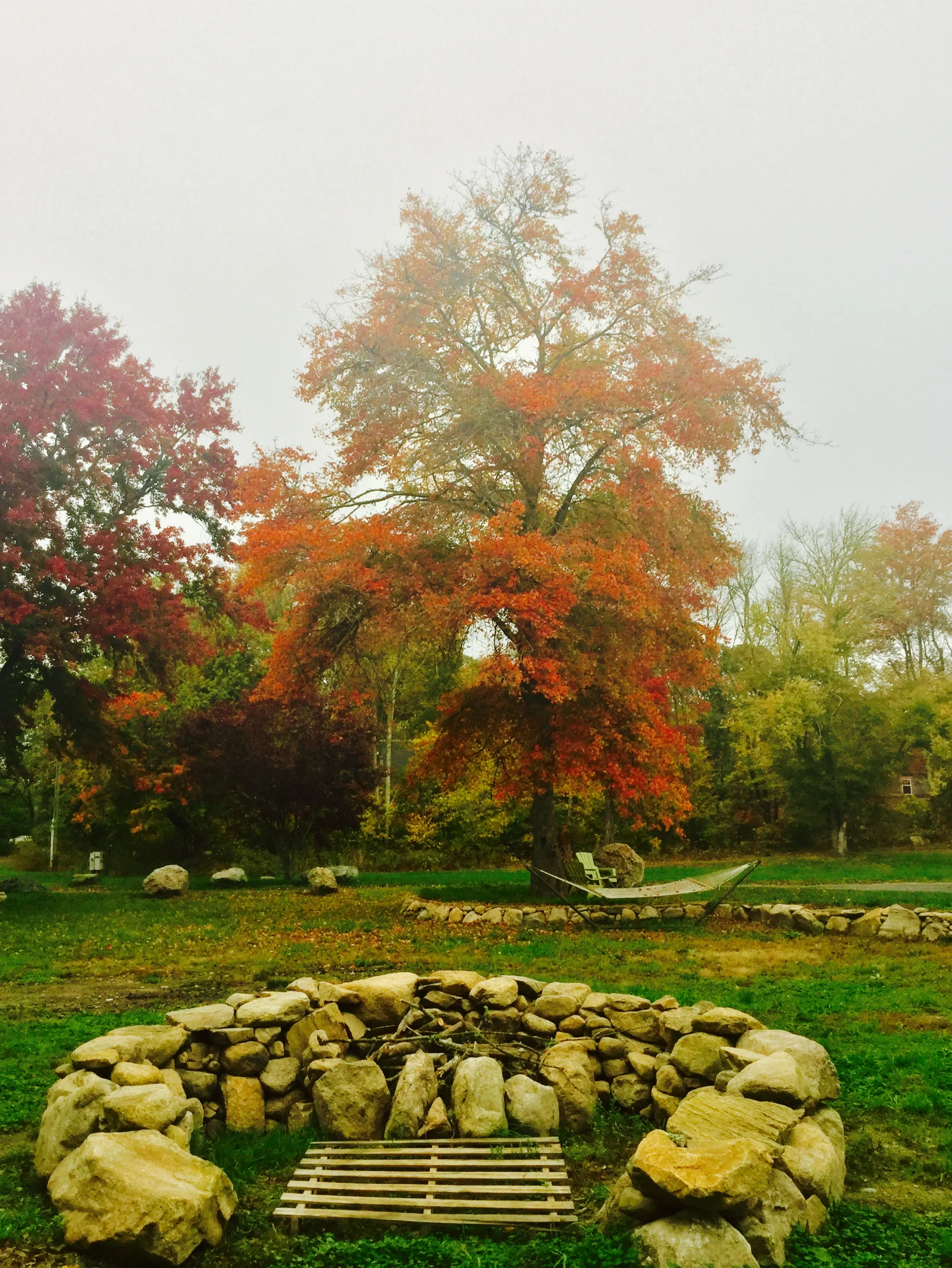
"No harvest joy is worth a dream? A little while and night shall come, A little while, then, let us dream..."
"Let misty autumn be our part!
The twilight of the year is sweet:
Where shadow and the darkness meet.."


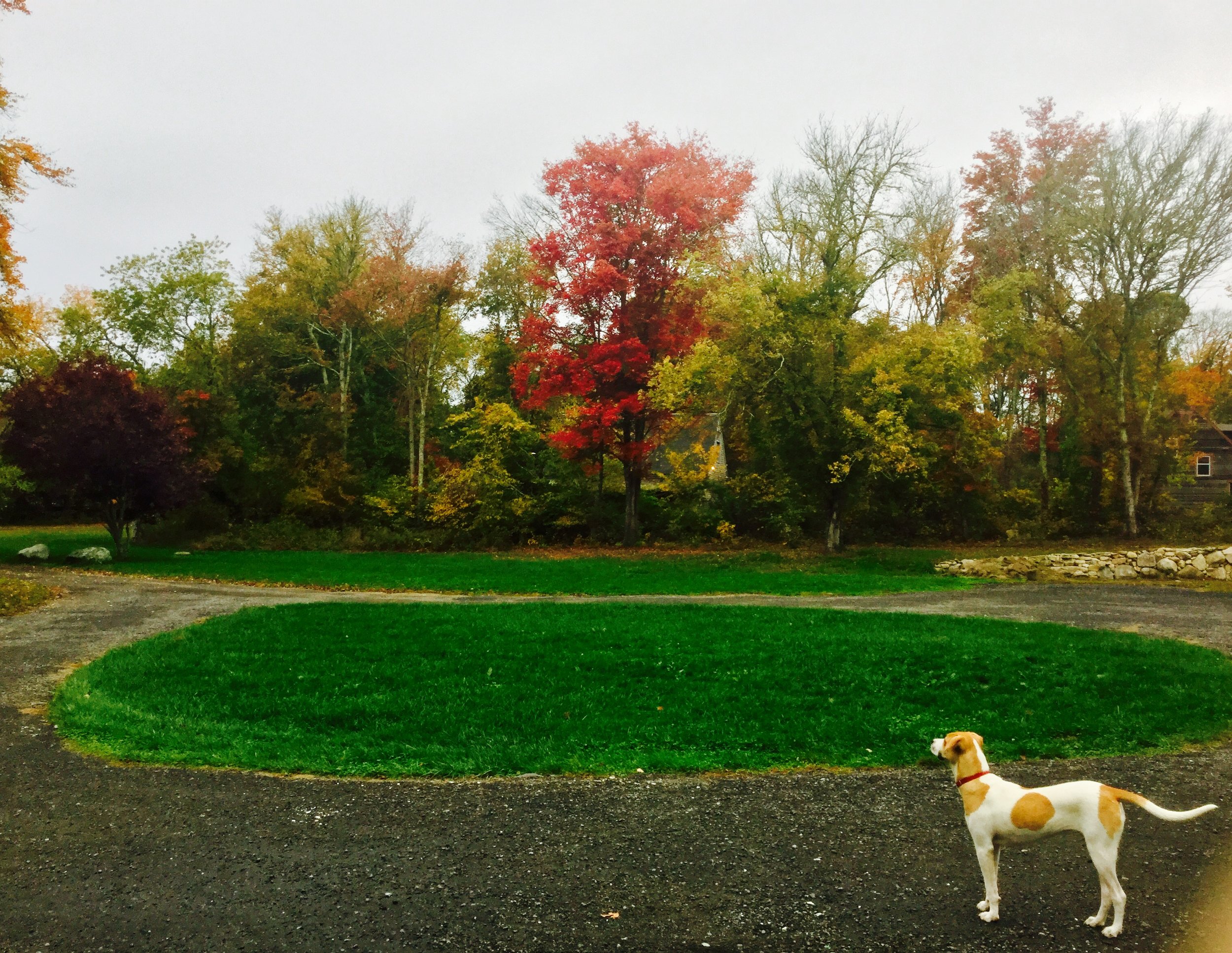
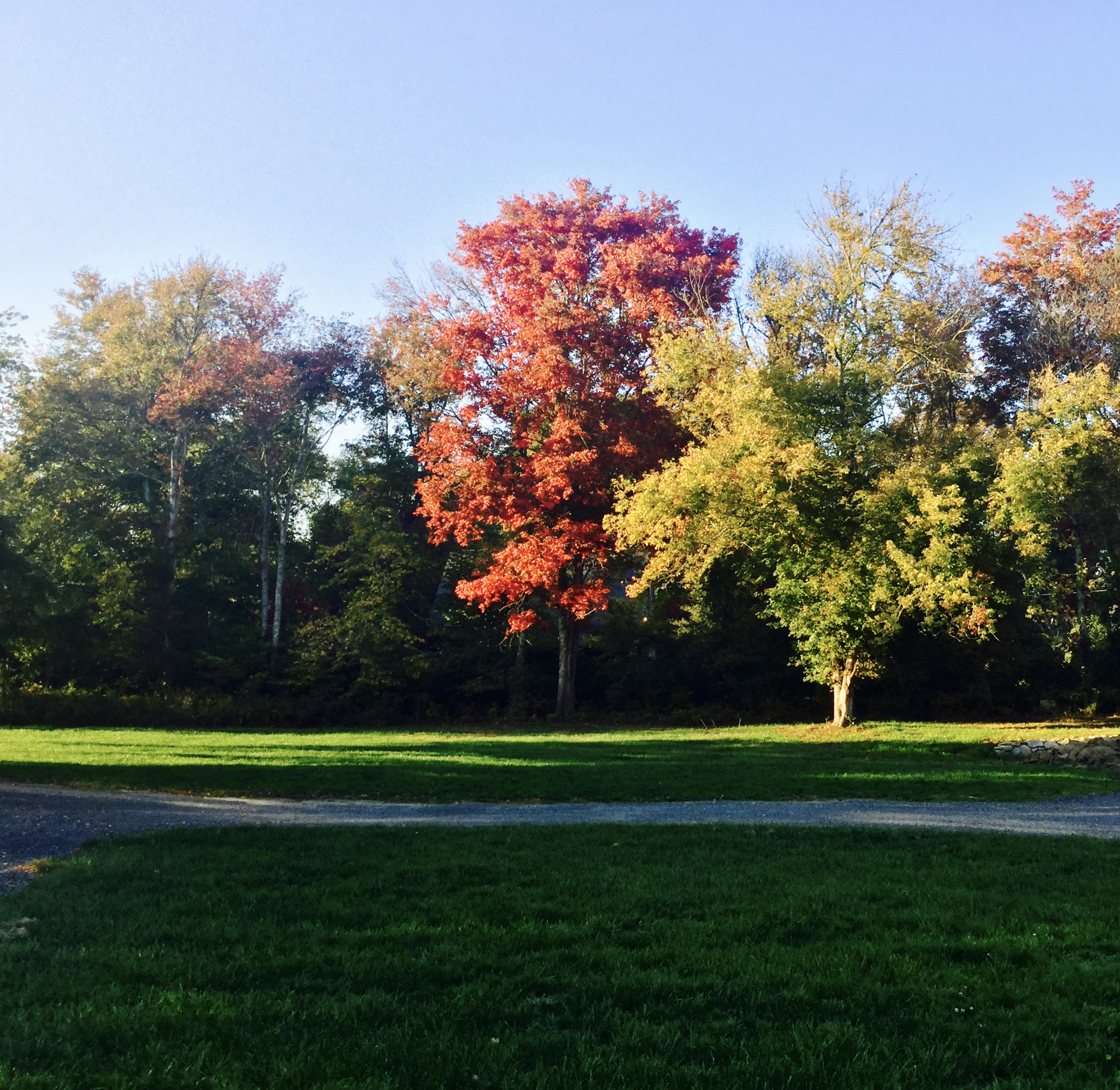
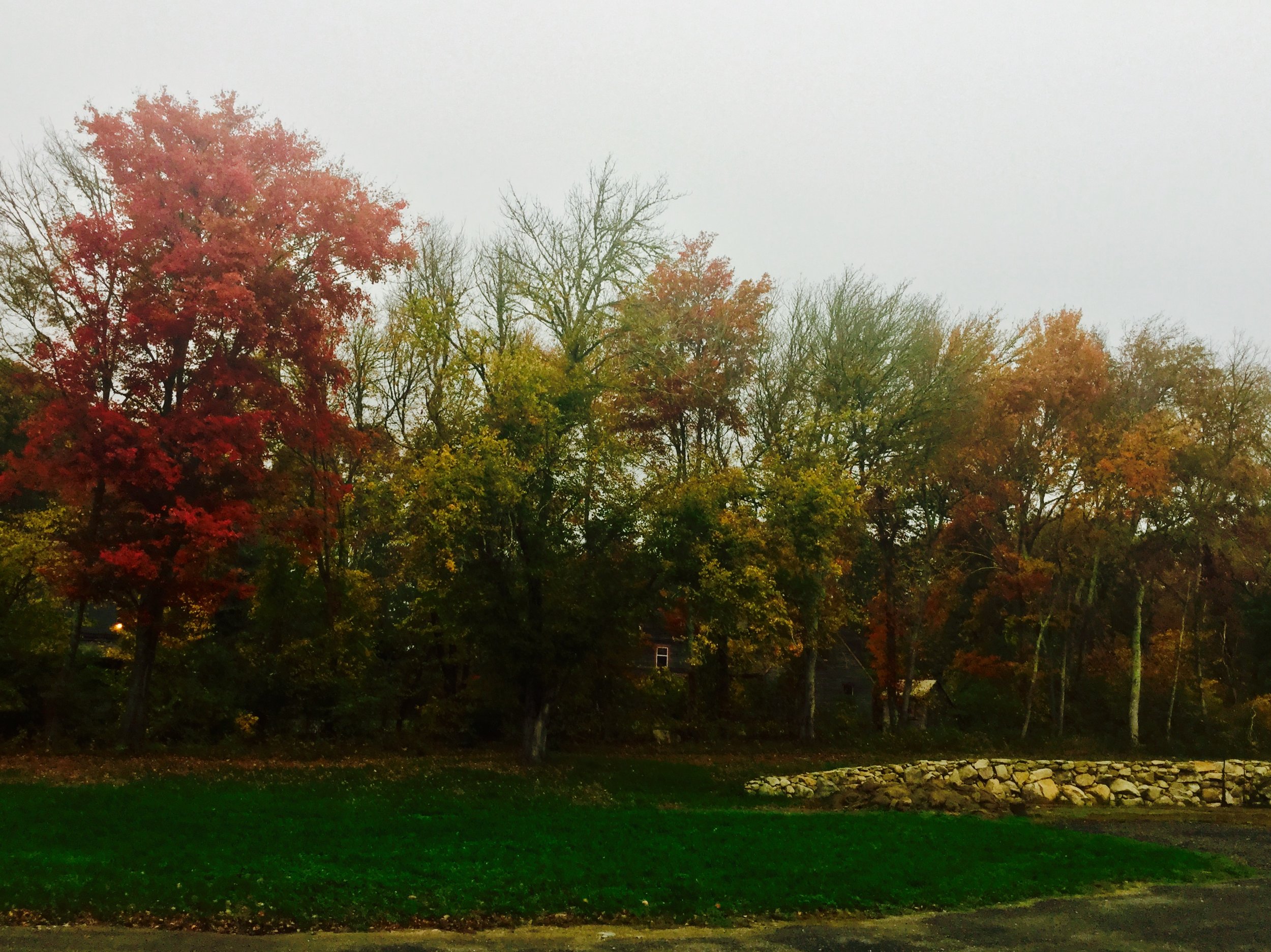


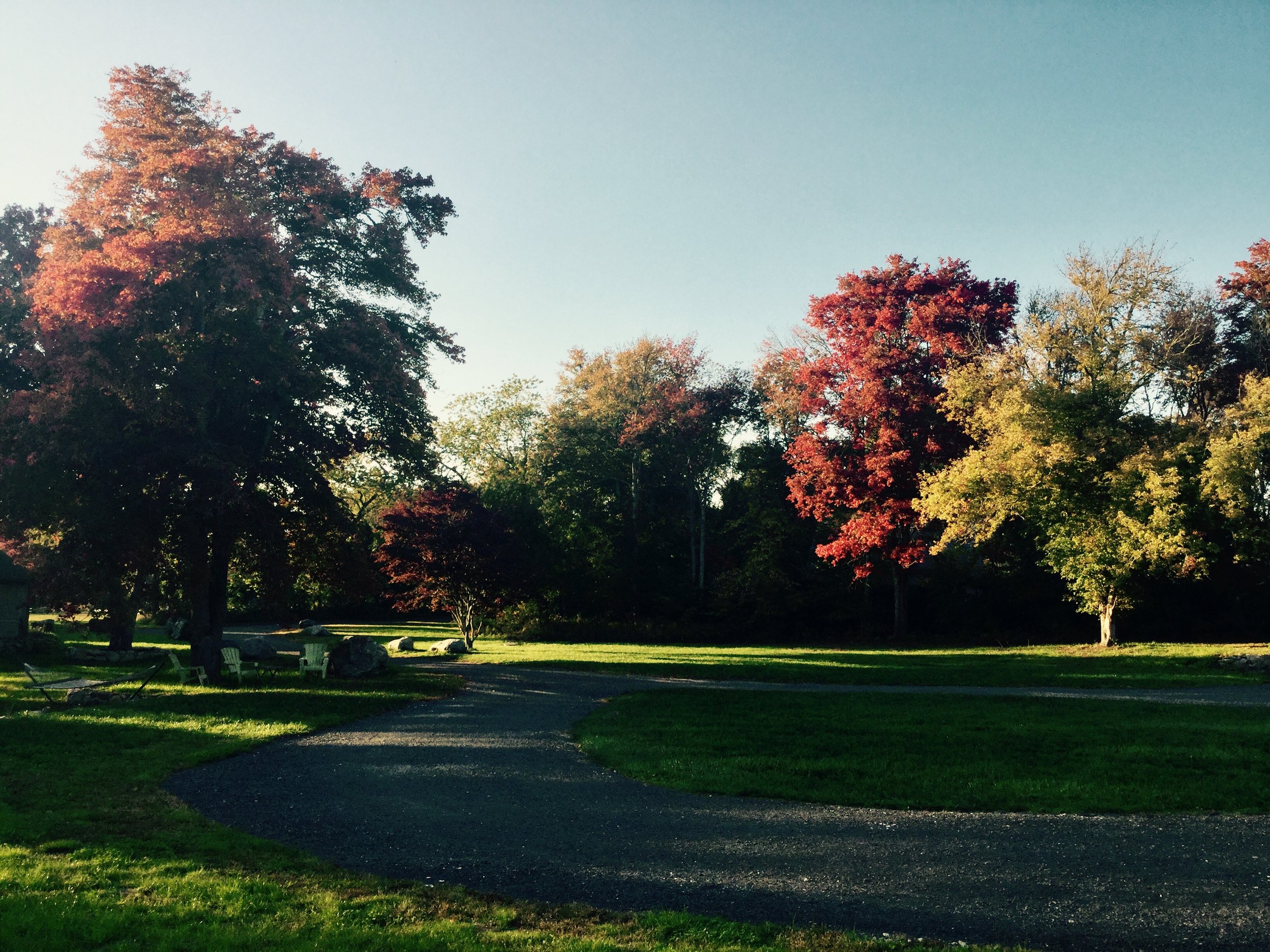

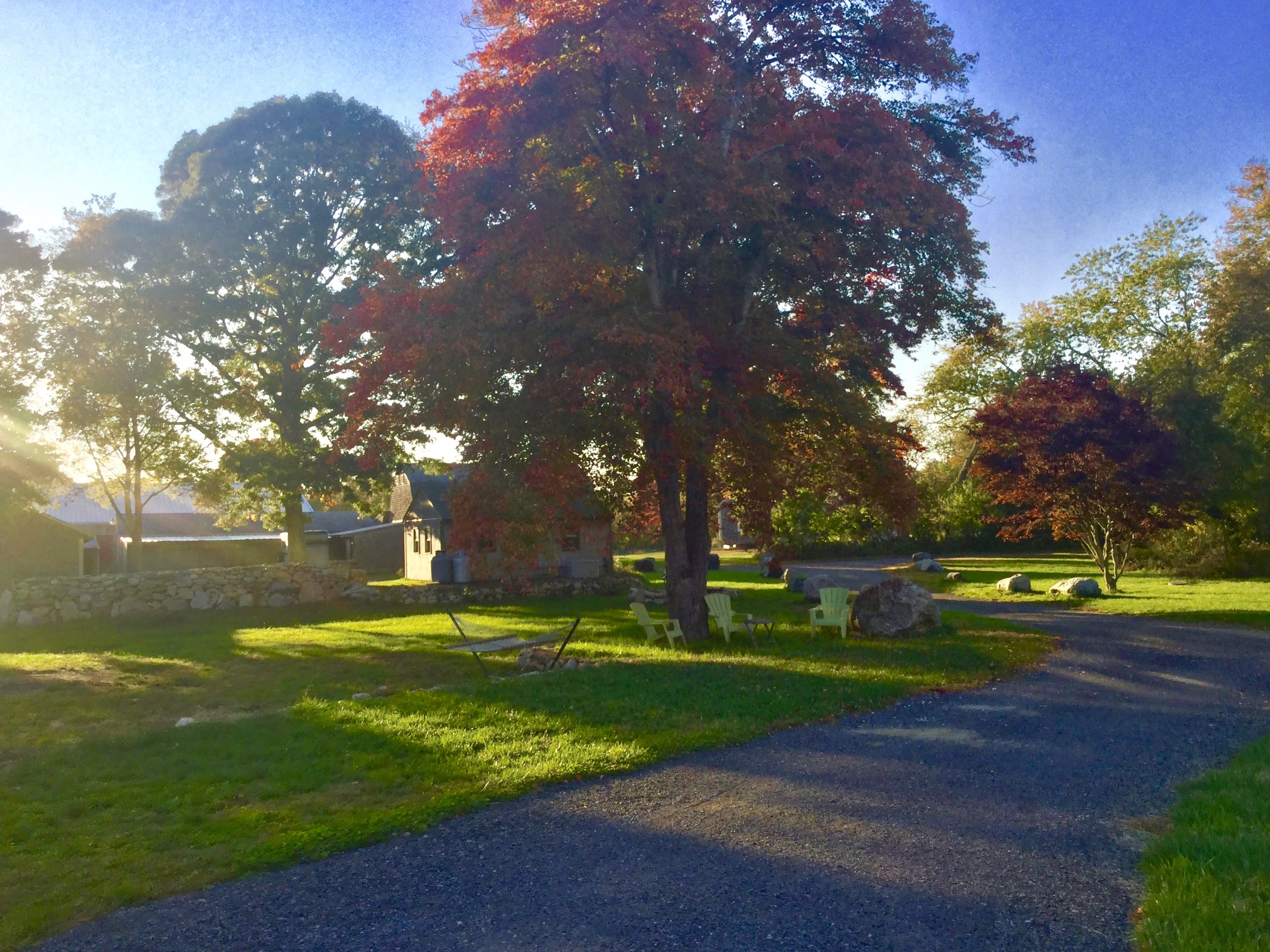
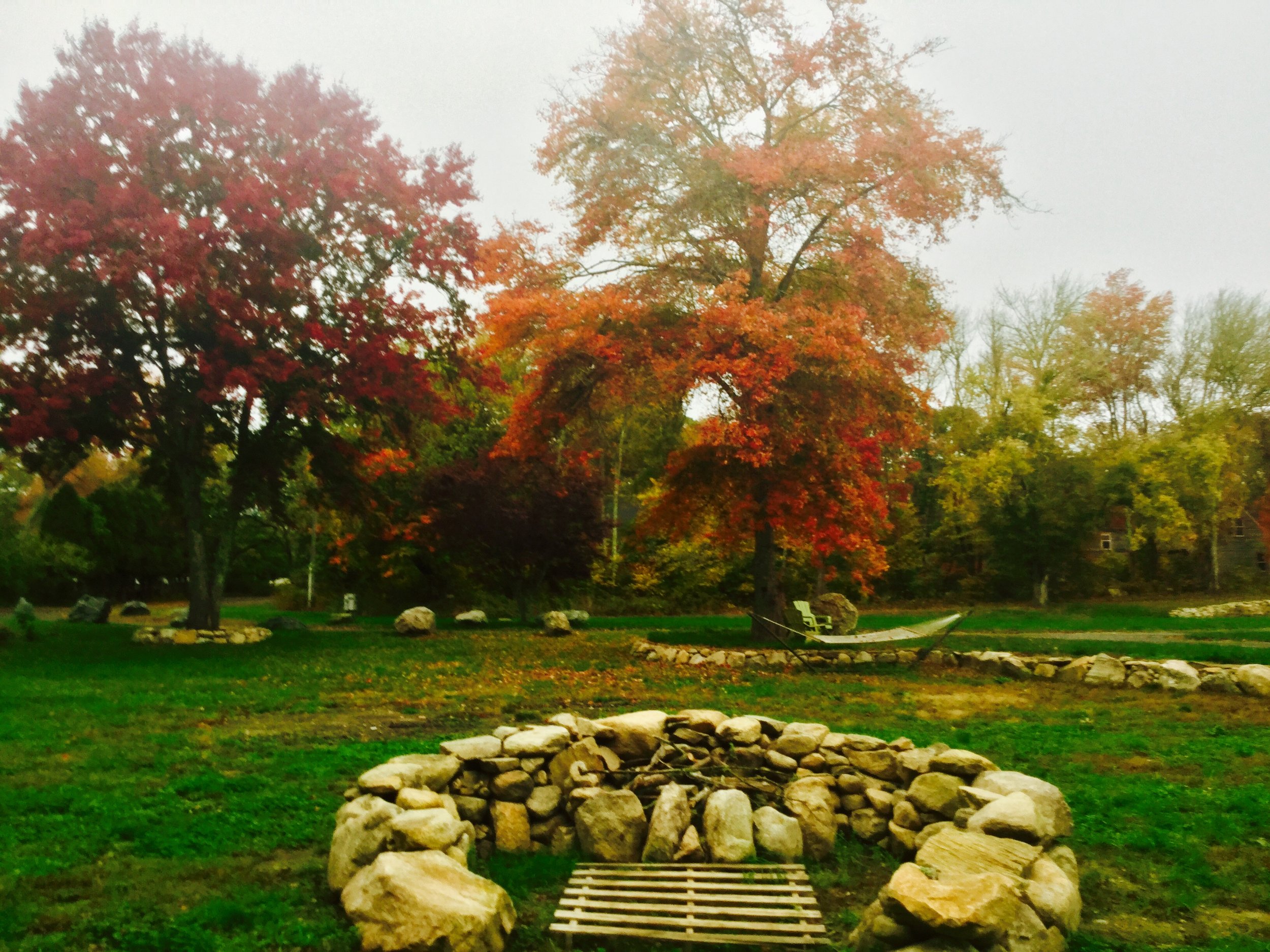

“AUTUMNAL"
Pale amber sunlight falls across
The reddening October trees,
That hardly sway before a breeze
As soft as summer: summer's loss
Seems little, dear! on days like these.
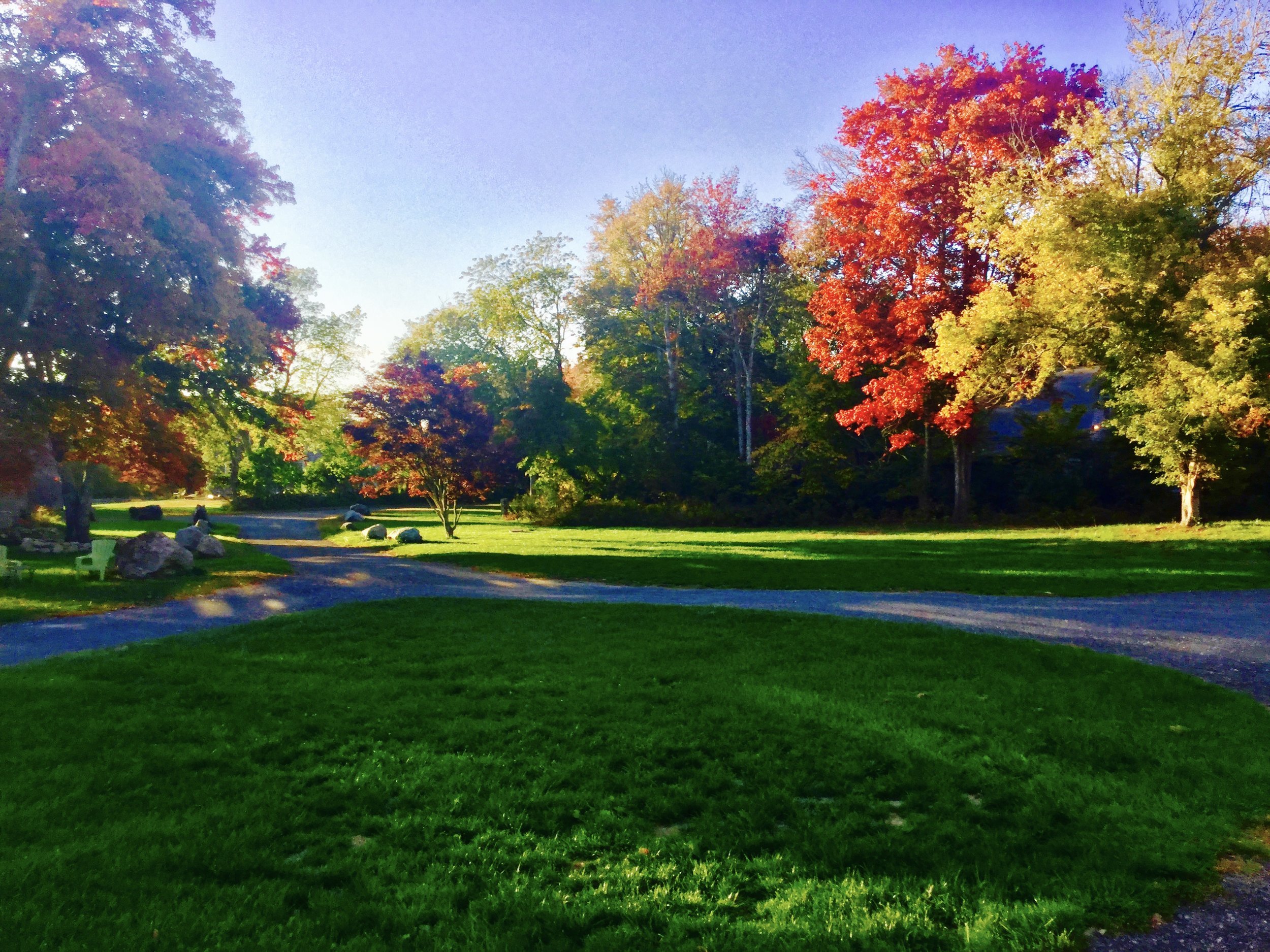
Let misty autumn be our part!
The twilight of the year is sweet:
Where shadow and the darkness meet
Our love, a twilight of the heart
Eludes a little time's deceit.

Are we not better and at home
In dreamful Autumn, we who deem
No harvest joy is worth a dream?
A little while and night shall come,
A little while, then, let us dream.

Beyond the pearled horizons lie
Winter and night: awaiting these
We garner this poor hour of ease,
Until love turn from us and die
Beneath the drear November trees.”
―By Ernest Dowson, from The Poems and Prose of Ernest Dowson



















Stump Trump
Election Expectation
It shouldn't be hard to defeat Donald Trump --
Where there's a real issue, he's easy to stump.
-- Felicia Nimue Ackerman