
Vox clamantis in deserto



Abandon all hope ye who enter here
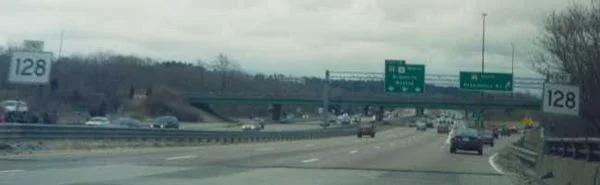
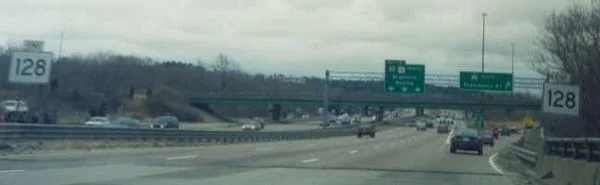
Route 128 in Canton, Mass.
Take cover! As part of a bridge project, Route 128 will be closed from the night of Nov. 4 through Nov. 6 in Needham, with trafficto be rerouted through local roads. Even though this will be on a weekend and with plenty of official warning, expect chaos! With all the whining about the MBTA, thank God that Greater Boston, unlike many U.S. metro areas, at least has a fairly dense mass-transit system to take pressure off the roads. If only it were denser.
-- Robert Whitcomb
When you spend too much time alone
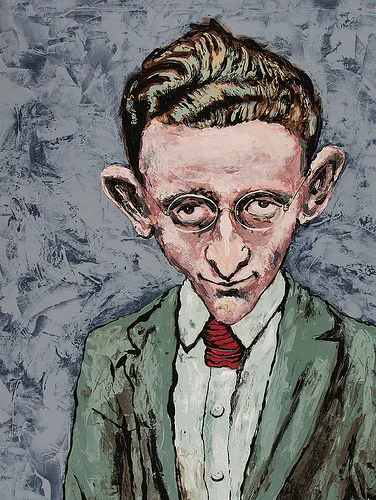
"Portrait of Sydney Skukerman'' (acrylic paint on paper), by Stephen Fischer, in his show "Stephen Fischer: Recent Work -- Portraits, Illustrations, Drawings,'' at the Wedeman Gallery at Lasell College, Auburndale, Mass.
'Younger in October'

"A child looking at ruins grows younger
but cold
and wants to wake to a new name
I have been younger in October
than in all the months of spring
walnut and may leaves the color
of shoulders at the end of summer
a month that has been to the mountain
and become light there
the long grass lies pointing uphill
even in death for a reason
that none of us knows
and the wren laughs in the early shade now
come again shining glance in your good time
naked air late morning
my love is for lightness
of touch foot feather
the day is yet one more yellow leaf
and without turning I kiss the light
by an old well on the last of the month
gathering wild rose hips
in the sun."
- W. S. Merwin, "The Love of October''
Don Pesci: Courant for Clinton: Do media endorsements matter?
The media have lost their moral pull. The approval rating of the lowest bottom-feeding politician is several fathoms higher than that of “the media,” according to a September 2016 Gallup Poll (http://www.gallup.com/poll/195542/americans-trust-mass-media-sinks-new-low.aspx)
The media, even less than the current Democratic and Republican presidential nominees, simply do not give a hoot about approval polls directed at them, which are worth pausing over none-the-less.
Since 1972, Gallup has been putting the following question on a yearly basis to the great unwashed, and the graph below traces the decline in media approval from 1997 to 2015:
Any politician – perhaps with the exception of Connecticut Gov. Dannel Malloy, whose current approval rating, according to the most recent Quinnipiac June 2016 poll, is 24 percent, near bottom in the nation – might be alarmed by the negative drift in approval since 1997 from 53 to 32 percent.
Consider The Hartford Courant’s recent endorsement of Hillary Clinton. Frequent readers of Courant endorsements will understand that the paper’s rather warm embrace of Mrs. Clinton was a forgone conclusion, even in April 2015, when she first announced her bid for the presidency.
The paper’s current endorsement was, so to speak, written in the stars, and her Republican opponent simply did not figure into the paper’s endorsement calculations. Possibly if Jeb Bush had emerged from the Republican Party primary rough and tumble as the nominee of his party, The Courant might have had a pang of conscience in delivering its endorsement to the badly tarnished Mrs. Clinton. The emergence of Donald Trump as an unexpected victor in the primary made the Clinton endorsement a slam-dunk. But the warmth radiating from the paper’s endorsement is inexplicable.
The Courant easily disposes of Mr. Trump in its editorial lead: “The problem with this election isn't that Donald Trump is racist. The problem is that we are.”
To be sure, the Courant here is not using the royal “we.” It would be a viperish untruth to conclude that the paper’s editorial board is a nest of racists. No, The Courant is subtly suggesting that what Mrs. Clinton has dubbed “the deplorables,” those who have in their heart of hearts endorsed Mr. Trump, are racists. This volatile charge lies like a scorpion’s sting in the paper’s larger proposition: We are all racists now; but most especially are those racists who, for whatever reason, will vote for the racist Republican nominee for president.
Well now, Courant simpaticos doubtless will argue, Mr. Trump, who has recklessly deployed hyperbole in his campaign, certainly has it coming to him.
But really, are all Americans racists – even those who deplore Mr. Trump’s reckless hyperbole?
Apparently so; it is difficult to put any other construction on the paper’s lead : “The problem with this election isn't that Donald Trump is racist. The problem is that we are.”
The Courant has turned a phrase made popular in 1888 by British politician William Vernon Harcourt (“We are all socialists now”) andlater deployed by Nobel economist Milton Friedman against the Keynesians (“We are all Keynesians now”) in a widely misunderstood 1966 Time Magazine article. Mr. Friedman was being sardonic, he later explained: “In one sense, we are all Keynesians now; in another, nobody is any longer a Keynesian.”
But The Courant is quite serious. The paper really does believe that “in one sense” we are all racists. And if this is true, how do we extricate ourselves from the coils of the racist serpent?
Easy: We do it by resting comfortably in the propositions put forth by Mrs. Clinton -- an unrepentant Keynesian, if not a socialist like Bernie Sanders -- whom the paper has fulsomely endorsed. An assent to Mrs. Clinton’s politics, however ruinous, marks our distance from the racist serpent. The Courant in its editorial does this with moral energy and dispatch and professes some misgivings that, considering Mrs. Clinton’s opposition, matter not at all.
Read the following with a jeweler’s eye. First come the obligatory disclaimers:
“Her track record as secretary of state is mixed. The aggressive policies that tried to force regime change in troubled parts of the world have had questionable results, arguably generating a backlash that helped fan the growth of the Islamic State. Even though she was not found personally culpable, the attacks at Benghazi happened on her watch. It is debatable whether the Middle East is any safer than it was before her tenure at the State Department.
“Mrs. Clinton has other flaws. She was wrong to use a private e-mail server in her home while working at State, and she took far too long to apologize for it. The Clinton Foundation has always been seen as a way to buy her influence, no matter how many firewalls are put up. She's taken large speaking fees that could make her feel beholden. She is too close to Wall Street. She can appear arrogant and distant — traits that do not serve a national leader well.”
This is followed by a crash of cymbals endorsement:
“But even with those flaws, Hillary Clinton and Donald Trump are not even in the same ballpark. Critics though she may have, Mrs. Clinton is a smart, compassionate leader. Mr. Trump is a showman whose act is regrettably playing well on Main Street.”
The attentive reader will notice the micron-thin dusting of disapproval.
The “aggressive policies” that “tried to force regime change” in various unmentioned parts of the world arguably have had “questionable results.”
Arguable indeed! Some would argue that the “aggressive” Middle East policies of the Obama-Clinton administration were not aggressive enough. Mr. Obama’s “lead from behind” posture in foreign policy was and is, in most important respects, an abdication of political responsibility. Some Middle East nations, formerly friendly to the United States, now making cooing sounds in the direction of Russian President Vladimir Putin, have reluctantly concluded that the Obama-Clinton “strategy” in the Middle East lacked spine and intellectual rigor. The word “tried” as used in The Courant endorsement points to a massive failure. And the “results” of the Obama-Clinton Middle East strategy, or lack of it, are not at all “questionable.”
Indeed, the murderous results of Mr. Obama’s withdrawal from Iraq, largely the result of a diplomatic failure, are painfully obvious. The inevitable consequences of Mrs. Clinton's Libyan policy -- let’s come, conquer and kill Muammar Gaddafi – are evident in the smoldering ruins of the American Embassy Compound in Benghazi, Libya. It is the Obama-Clinton Middle East policy, the absence of a long-range strategy in the Middle East, that failed. The obvious results of this failure were predictable.
It is quite true that Mrs. Clinton’s “flaws” are not in the same ballpark as those of Mr. Trump – because Mrs. Clinton’s disastrous term as Secretary of State reveals real-time ruinous consequences flowing like a rush of blood from her character flaws, the most prominent of which is a disposition to bend reality to campaign rhetoric and to substitute campaign promises for a cogent and responsible Middle East foreign policy.
“It is debatable,” The Courant avers in its Clinton encomium, “whether the Middle East is any safer than it was before her tenure at the State Department.”
Debatable? No, it is not at all debatable. The Middle East is soaked in the blood of martyrs, both Christian and peaceful Islamic martyrs, slaughtered by Islamic terrorists.
Homosexuality used to be “the love that dare not speak its name.” In the modern world, the name is now shouted approvingly as a boast and a challenge. We ought to be glad of it; it was entirely unnecessary to throw Oscar Wilde on the pyre prepared for him by the Marquis of Queensbury. But among those who tolerate the failed policies of Mr. Obama and Mrs. Clinton – on pain of being called racist -- Islamic terrorism, even when it strikes its deathblows at the marrow of the core beliefs of American culture, may be the last remaining sin that dare not speak its name -- among politicians on the left. The terrorists themselves, of course, never tire of shouting their terrorism from the rooftops.
We ought to thank Mr. Trump, among others, for blowing up this dangerous pretension. Islamic terrorists and ISIS especially, much more potent now than it was when Mr. Obama dubbed the terrorist group a “JV team,” continues to destroy Christian Churches, execute both priests and so called “pagans” – death to the kafir! -- uproots the structure of the modern feminist movement, defended aggressively by Mrs. Clinton, and throws gays to their deaths from rooftops, in accordance with Sharia law. Iran adopted the extreme punishment of execution for sodomy in its 1991 Constitution: “Sodomy is a crime, for which both partners are punished. The punishment is death if the participants are adults, of sound mind and consenting; the method of execution is for the Sharia judge to decide.”
It was the Obama-Clinton administration that fashioned a nuclear deal with Iran that a) will not prevent the country from developing nuclear weapons, and b) would not have been possible had not the Obama-Clinton administration paid billions of dollars in cash to a regime that hopes to become a hegemonic power in the Middle East, so that it may destroy Israel, whose prime minister, Benjamin Netanyahu, beseeched the Obama administration not to go forward with the deal. Mr. Netanyahu also warned the Congress – Sen. Dick Blumenthal in attendance – that its implementation would be a disaster for the West.
For all his pains, Mr. Netanyahu might have been Cassandra warning the Trojans concerning Greeks hidden in a wooden horse. Iran could easily buy with the cash transported to Iran in the dead of night in a modern Trojan horse any weaponry it wishes to purchase from America’s traditional enemies, Russia and China, to wreak havoc in Israel, making full use of its proxy Hamas terrorist forces in Lebanon – poor Lebanon, a country overmastered by the friends of Iran.
A few months back, this writer took a course in fresco at St. Michael's Institute for Religious Art at Enders Island, a stone’s throw from Mystic, Conn. The teacher, a master artist in fresco and Icon writing, was Lebanese. When I said to him, “Poor Lebanon,” he said, “Yes. The Muslim terrorists in Hamas march into villages and ask you your name. If it is a Christianized name – John, Mathew, Mark – they cut your head off in the public square. It sends a message.”
Sen. Dick Blumenthal and other members of Connecticut’s U.S. congressional delegation – all Democrats who endorsed the Obama-Clinton Iran deal, which ended a successful embargo and opened Iran to the usual corporations that do not scruple to march through blood to make a profit – should have a talk with him, or any of the other Christians who have suffered a Neronian persecution at the hands of terrorist Islam. But they won’t. Every one of them knows that the number of Syrian Christians among refugees fleeing Mohammed’s sword, blessings be upon him, and admitted into the United States is only three percent or less. Perhaps the Congressmen do not want their mercies to be read by Islamic terrorists as a crusader response.
Mrs. Clinton’s most glaring flaws may be seen most clearly in the smoking ruins of the American embassy in Benghazi, the terrorist attacks in Paris, the rapes of German, Belgian and Swedish women, the terrorist attacks in the United States by radicalized Muslims, Mr. Putin’s annexation of Crimea and his ardent defense of Bashir al Assad in Syria, where once Mr. Obama drew a “red line” that quickly disappeared when Mr. Assad, every bit as ruthless as his father, used chemical weapons on his opponents. And Mrs. Clinton’s narcissistic flaws peek out at us like grinning devils from her e-mails, purloined by hackers and containing, despite Mrs. Clinton’s false denials, top-secret treasures that would not have been shared with the world had Mrs. Clinton, fully schooled in security matters when she was a U.S. Senator, not put the safety of her country in jeopardy by using a private server.
“But even with those flaws,” The Courant's endorsement of Mrs. Clinton concludes, “Hillary Clinton and Donald Trump are not even in the same ballpark. Critics though she may have, Mrs. Clinton is a smart, compassionate leader. Mr. Trump is a showman whose act is regrettably playing well on Main Street.”
Bill Buckley thought that Mr. Trump was a deeply flawed vulgarian, and a video taped 11 years ago showing a younger Trump trash talking about his sexual prowess has proven Mr. Buckley right.
But given Mrs. Clinton’s record in defense of her vulgarian husband and her foreign policy as Secretary of State, neither of which can bear close scrutiny, one may agree with the paper that both are operating in different ballparks. There are no smoking embassy ruins atop Trump Towers, and Mr. Trump, despite his deeply offensive locker-room talk, never had sex in the White House with Monica Lewinsky, who even today is recovering from Mrs. Clinton’s psychological bite marks. (A search on The Courant's site for a report on Ms. Lewinski's recent visit to Connecticut, where she held a talk on bullying, produces no coverage of the event.) In this regard, Mr. Trump is a JV player; the Clintons are Big League. And if the editorial board of The Hartford Courant had its moral Geiger counter recalibrated, it might have noted in its editorial endorsement of Mrs. Clinton the differences in their ballparks.
Don Pesci is a Vernon, Conn.-based essayist on political and other matte
Don't let them block train-line improvement
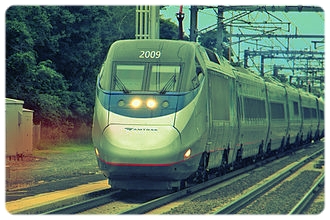
Excerpted from Digital Diary, in GoLocal24
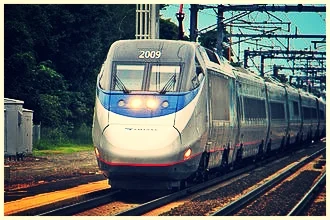
Let’s hope that the opposition of a few mostly affluent people near the Connecticut coast is not permitted to block construction of a long-needed 50-mile bypass (to reduce the number of curves and choke points) that would finally let Amtrak offer the high-speed train service common in much of the rest of the Developed World.
America’s decrepit transportation infrastructure and failure to install true high-speed rail has hurt the nation’s competitive position, kept far too many people on our crowded roads and hurt the environment (trains are much less polluting than cars and tracks take up much less space than highways).
The bypass would not only let Amtrak trains go much faster; it would allow a major improvement in commuter train service.
This improvement, of course, would be a boon for most everyone in southern New England.
-- Robert Whitcomb
The exit is more beautiful than the entry

From Mark Platais's one-man show at Francesca Anderson Fine Art, Lexington, Mass., through Oct. 29.
"October is nature's funeral month. Nature glories in death more than in life. The month of departure is more beautiful than the month of coming -- October than May. Every green thing loves to die in bright colors.''
-- Henry Ward Beecher
The TPP does NOT include China!
Excerpted from the "Digital Diary'' in the Sept. 29 GoLocalProv.
Many (most?) American politicians (including Hillary Clinton) now say that they oppose the Trans-Pacific Partnership (TPP) trade deal with Asia. They’re making a mistake.
While this is officially unstated, the deal is meant to, among other things, bolster the economies and security of some Asian nations so that they can defend themselves from an increasingly aggressive and expansionist China. Too many Americans think that the TPP includes China, which has used currencymanipulation, intellectual-property theft and other nasty strategies to hollow out parts of the U.S. economy. China is not part of the TPP
More business reporters please.
-- Robert Whitcomb
'A shadow history'

From Eileen Claveloux's series "Diasporan Portraits,'' Oct. 12-Nov. 9, at the Hampden Gallery, at the University of Massachusetts at Amherst.
In the series, each of her subjects is descended from a family with one or more ancestors among the 1.5 million who died in the Armenian Genocide under Turkish rule during World War I. "The Armenian Genocide has become a kind of shadow history, denied and mostly forgotten,'' says the gallery.
'So pleasant an effect'
"There is no season when such pleasant and sunny spots may be lighted on, and produce so pleasant an effect on the feelings, as now in October."
-- Nathaniel Hawthorne
David Warsh: Jeb Bush redux, at Harvard
When former Florida Gov. Jeb Bush announced his presidential candidacy in January 2015, I was enthusiastic, largely on foreign policy grounds. It seemed he might champion the sort of conservative internationalism that characterized his father’s one-term presidency. I didn’t pay much attention to his views of domestic policy, but Alec MaGillis’s New Yorker article about Bush’s enthusiasm for privatizing public education caught my eye. Before I had time to follow up, Donald Trump had elbowed him out the race.
Last week Bush came to Harvard to deliver its annual Godkin Lecture. That the occasion was announced just two days ahead of time came as something of a surprise. I went round to hear what the would-have-been candidate had to say.
The Godkin series is Harvard’s most most prestigious lecture in the social sciences. It was established in 1903, endowed by Andrew Carnegie, J.P. Morgan, and others, to explore the essentials of democratic government and the duties of the citizen, in memory ofEdwin Godkin, founder of The Nation magazine and for 20 years editor of The New York Post. Herbert Croly, Walter Lippmann, J. Robert Oppenheimer, C.P. Snow, Clark Kerr, Gunnar Myrdal, Paul Samuelson, George Will, Daniel Patrick Moynihan have been among the lecturers.
Bush’s presentation turned out not to be a lecture. It was billed as a “conversation,” but what the audience heard instead was an abbreviated stump speech, plus some back-and forth with Harvard Professors Paul E. Peterson and Roland Fryer.
“I was thinking about what I was going to talk about,” he said, “and I asked my mother, who is the boss of the Bush family, and she said, ‘Jeb, talk about 10 minutes, then get off and let people ask you questions.’”
He talked for 15 minutes about the desirability of a “bottom-up” society of individuals as opposed to a “top-down” society in which institutions were paramount, ending with a caIl for a “radical transformation” of public education. “A system that has 13,100 government-run, politicized, unionized monopolies as the governance model for educating millions of children of great diversity is not going to work….
“No other element of society is forcing people to go to a monopoly. We don’t have state-run grocery stores. Even the Medicaid program is basically privatized, where there are choices. . In schools, the most important thing we do, we’re stuck in this model that probably worked really well a hundred years ago….”
Perhaps Bush is planning to write a book. If so, the invitation to lecture was premature. He has promised to return to Cambridge periodically during the autumn term to work with students at the John F. Kennedy School of Government’s Program on Education Policy and Governance, led by Professor Peterson, a voucher enthusiast. Perhaps the Godkin invitation slipped between the cracks; Kennedy School Dean took over only in January.
More likely, the event was timed with a November 8 ballot initiative in mind. In Proposition 2, Massachusetts votes on whether the state should authorize more charter schools. Its backers call it an effort to support public education.
Whatever the case, Bush’s presidential candidacy is in the rear-view mirror. Future Republican leaders will come from the bottom up.
David Warsh is proprietor of economicprincipals.com and a longtime financial columnist and economic historian. He is based in the Boston area.
New England's greatest natural resource

![[#Beginning of Shooting Data Section]
Nikon D100
2004/05/08 10:48:19.9
RAW (12-bit) Lossless
Image Size: Large (3008 x 2000)
Lens: 70-300mm f/4-5.6 D
Focal Length: 270mm
Exposure Mode: Programmed Auto*
Metering Mode: Multi-Pattern
1/80 sec](https://images.squarespace-cdn.com/content/v1/561446cce4b094b629347f8d/1475629409394-EZWBRYSL6EDJN8N6FGFZ/fullsizeoutput_10d27.jpg)


Excerpted from the Digital Diary posted Sept. 29 in GoLocal24
"I love the fall. I love it because of the smells that you speak of; and also because things are dying, things that you don't have to take care of anymore, and the grass stops growing."
-- Mark Van Doren (1894-1972), American poet and scholar
Global warming doesn’t just mean rising sea levels, which threaten the New England coast, particularly the low, flatter section of it in southeastern New England. It also means more extremes in weather, from drought to floods.
Parts of New England, especially in the south, are now starting to resemble Greater Los Angeles--- green where watered by people, brown and dusty elsewhere. Reservoirs are way down, and well water in many places is threatened.
The states understandably don’t have comprehensive ways to monitor well-water supplies and the condition of aquifers, let alone know what to do whenmany wells go dry, except, of course, urge conservation.
Scientists have been predicting that weather would become more erratic with global warming, and that seems to happening. In temperate zones this probably means more droughts interspersed with stretches of very heavy rainfall.
Of course, New England has had droughts before. But they have tended not be accompanied by particularly high temperatures. (Long summer droughts in the ‘60s came along with frequent cool northwest winds.) That seems to be changing. Now we get more hot days (and remarkably warm nights – a better indication of global warming than daytime temperatures). Thus faster evaporation.
Natural-resource managers and the public need new plans to address the drought part of climate change. But at least New England will remain better watered, and have a milder climate, than most of the United States. Indeed, we may end up selling some of it to points south and west.
-- Robert Whitcomb

Power and changeability

"Wow'' *acrylic on canvas), by Mira Cantor, in her show "Inundated,'' at Kingston Gallery, Boston, through Oct 30.
The gallery says Ms. Cantor's "horizon and ocean waves serve as metaphors for processing contemporary issues regarding the landscape and sociology.
The shoreline's unique combination of vulnerability, changeability, and power from the persistent movement of the waves proves a consistent source of inspiration for Cantor. ''


The open-ended price of corporate extortion
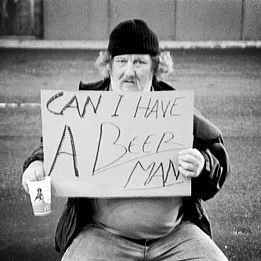
Now that the Connecticut General Assembly has overwhelmingly approved the $220 million extortion payment to Sikorsky Aircraft, Connecticut should expect similar extortion demands from other large and mobile employers, starting with the big insurance companies in the Hartford area.
That's because Sikorsky is not being paid to move or expand here but merely to stick around and keep doing what it would do anyway -- build military helicopters.
This surely is being noticed by all employers with large workforces in the state. They must be wondering how much they might induce state government to pay them just to stick around.
It will not require much effort for any large company to approach other states to get bids for relocation and then invite Governor Malloy to top the bids or risk losing the company.
Because the deal with Sikorsky invites similar extortion, it easily could cost another billion dollars before state government realizes that there is a distinction between extortion and economic development and between corporate welfare and good business conditions.
xxx
NO NEED FOR PROGRAM REVIEW: In the name of saving money, the General Assembly is eliminating the staff of its Program Review and Investigations Committee, the committee whose nominal purpose is to question government operations and policies for efficiency and effectiveness.
Dumb as this seems, it's the right thing to do, because nothing important ever comes from the committee's work. Its reviews are too limited and the legislature and the governor always lack the political courage to challenge the most expensive and mistaken premises of policy. The committee's real purpose long has been only pretense.
Besides, the legislature and the governor need no special study to realize that state government can never save money as long as state employee labor law and education and welfare law actually forbid it even as education and welfare policies mainly produce generation after generation of illiteracy and dependence on government.
Even as the legislature was liquidating the program review committee, the Connecticut Mirror reported that the legislature and the governor had countenanced the disintegration of a committee supposed to oversee construction projects at the University of Connecticut. The committee has not met for almost two years and the terms of some members have expired without new appointments.
A few days earlier the state auditors reported that UConn improperly diverted to expansion projects $50 million that had been appropriated for deferred maintenance and had improperly overpaid certain executives by hundreds of thousands of dollars. The governor and legislature didn't even shrug at the report. They ignored it in their rush to shower $220 million on Sikorsky.
PREPARING MORE VICTIMS: At least Hartford's 13th murder of the year was instructive.
The victim, an unemployed 26-year-old man, was shot 17 times near an elementary school. Police offered no motive, but the murdered man's mother told the Hartford Courant that his criminal record had kept him from getting a job. (The victim's father was not mentioned, but then as a matter of public policy few children in Hartford have fathers.)
His mother said the victim was "trying to turn his life around" and wanted to work to support his girlfriend and their two children. That is, he had not been supporting them, and indeed he and his girlfriend never had been in a position to do so but had children anyway in the confidence that government would pay for them.
Another feckless vigil was planned to protest violence in the city, as if, without complaint, policy wasn't already preparing the next victims.
Chris Powell is managing editor of the Journal Inquirer, in Manchester, Conn., and a longtime columnist.
·

'Silent under old trees'
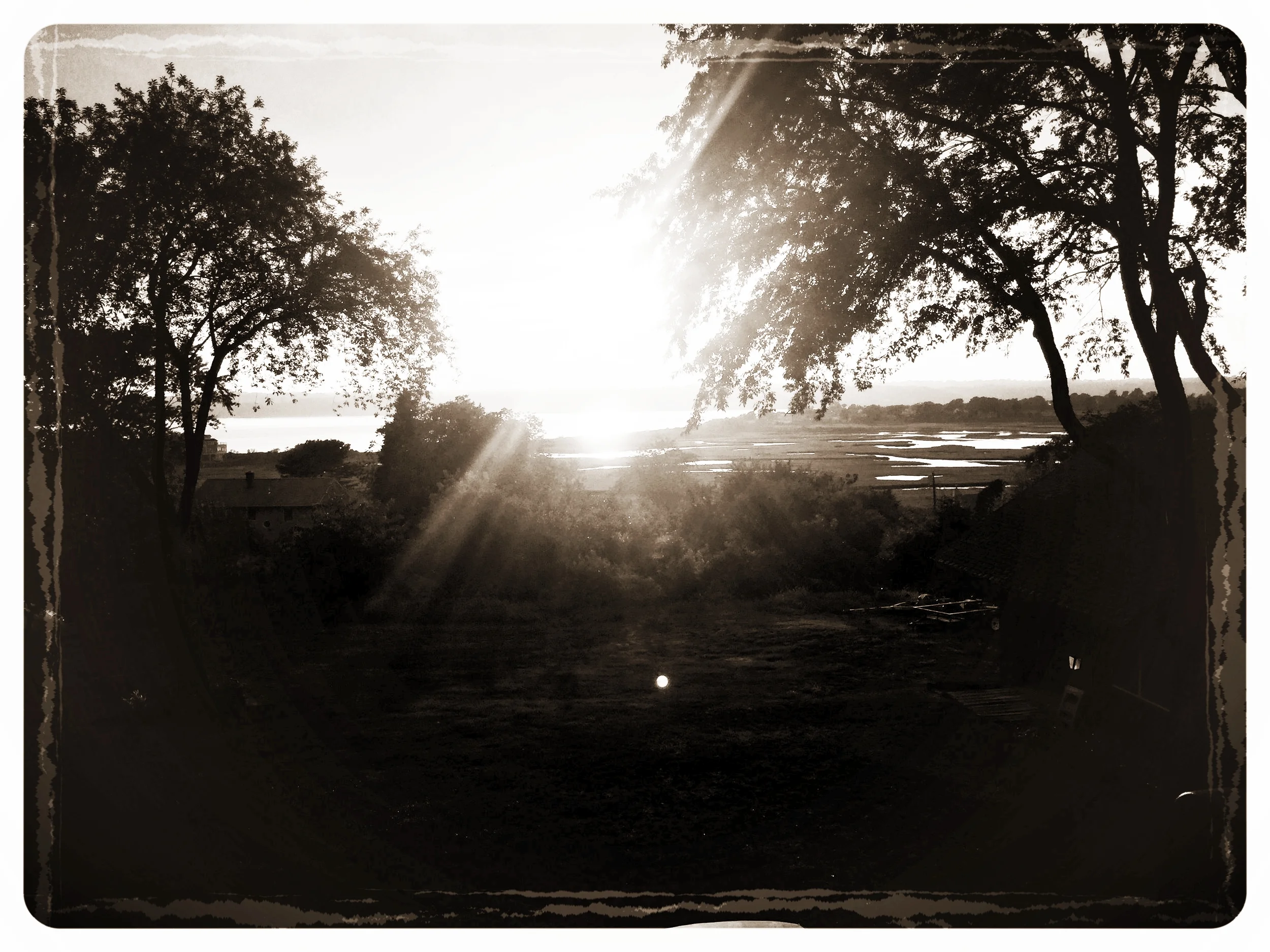
“But I remember more dearly autumn afternoons in bottoms that lay intensely silent under old great trees”
-- C. S. Lewis


Amidst kitsch and the drive to show off, a Quaker aesthetic still survives in the prepster Brigadoon
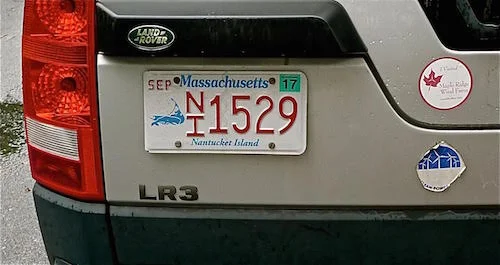
The Nantucket Island license plate appropriately displayed on a Land Rover, a classic off-road SUV for navigating Nantucket's cobblestone streets.
Can the precious island made wealthy by Quaker ship owners and whalers, but now the purview of Ralph Lauren-clad hedge-funders, stand any more cuteness? Would that the hauntingly beautiful island rebel against yet more trite merchandising of this demi-paradise of cedar shingles and windswept moors. Once, the ultimate status symbol was an over-the-sand permit for the bumper of a Jeep, or better yet, an old Land Rover. Now the Commonwealth of Massachusetts has offered another bit of snobbery with a special license plate.
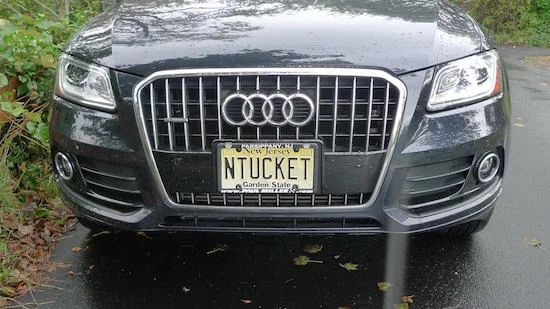
Even so, the new plate is not nearly as exclusive as the various out-of-state vanity plates that are seen on the island. Imagine the pride of the Mr and Mrs Gottrocks, summer residents from somewhere near the horse country of Morristown, N.J., constantly announcing their second domicile on their Audi "Afrika Korps" urban assault vehicle.
Clearly the appeal is for more than the 10,000 or so locals, and anyone across the state can get a Nantucket Island plate for their car. It is a desirable trinket for those who regard the Far Away Land as nirvana – a place of Nantucket baskets, Nantucket red khakis, red brick sidewalks, and more take offs and landings at the airport in the summer than Boston's Logan. $28 of the island plate's $40 fee does go to non-profits that help children, but one wonders if there were not another way to raise charitable contributions than a design that pimps the island's history
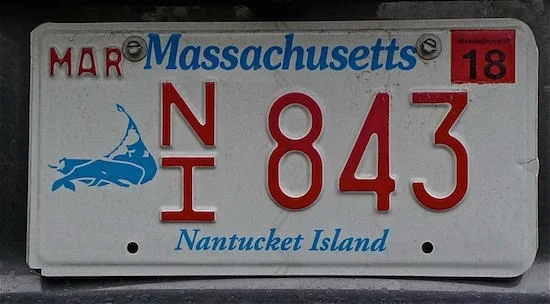
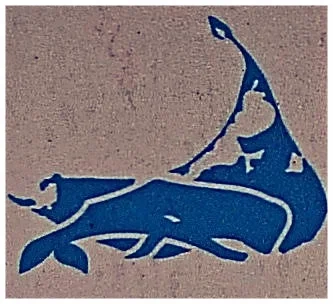
Massachusetts paid a Boston brand consulting firm in Boston to glop up a license plate with several fonts. Thank goodness, the identifying NI and numbers are embossed – other states would have offered a tableau of Moby Dick in full-on Nantucket sleigh-ride mode. But no kudos should go to Nantucket artist David Lazarus for his confusing and complicated logo of a sperm whale superimposed on a detailed map of the island.

Such silliness makes a mockery of the centuries-old Quaker aesthetic that gave Nantucket such a strong design identity,as in the house below.

William Morgan is a contributing editor at Design New England magazine and is the author of such books as Yankee Modern and The Abrams Guide to American House Styles.
Llewellyn King: Clinton, Trump bring back scary memories

The ghosts of presidents past are haunting me.
I look at Hillary Clinton and she morphs into Jimmy Carter: all facts and figures and no direction.
I look at Donald Trump and he morphs into George W. Bush: all intention without knowing how things work.
Carter was earnest to a fault. He loved to bore into the details even when he should have been thinking about big, directional issues. Former Energy Secretary James Schlesinger told me how Carter had gotten lost in the intricate scientific issues of catalytic converters at a White House meeting. Knowing how many great issues were awaiting Carter’s attention, Schlesinger was appalled.
Bush’s weakness was what could easily become Trump’s weakness: Bush simply didn’t know enough about, well, anything. He is not a stupid man; actually, he is very quick. But he did not come to the office with a well-stocked mind. That left him vulnerable to all kinds of agenda-driven experts, especially his vice president, Dick Cheney.
Bush simply had never been curious. Cheney, with a lot of knowledge and a hard edge, took foreign policy upon himself. Bush did not wrest it from him until it was too late.
Carter’s passion for detail worked well in forming the Camp David Accords, but was disastrous in leading the country forward.
As the result of a dinner party conversation with the journalist Rod MacLeish, Carter became fascinated with France’s constitution, known as the Constitution of the Fifth Republic. It combines presidential and parliamentary concepts.
MacLeish told me that the interest persisted until the very day of the announcement of the Camp David Accords, when Carter called him with more questions, ahead of CIA briefing on France’s constitution. MacLeish blurted out his surprise that the president would find time for this exercise on a day so critical to his presidency. Carter allowed that as he had scheduled a briefing on the constitution from the CIA later that day, he intended to be prepared for it. “That’s how I work, Rod,” he told MacLeish, as reported to me. Wow!
I doubt that Clinton would be that detail-compulsive, but she is a policy wonk and policy wonks get lost in policy, usually forgetting the ultimate purpose. Like Carter, Clinton seems to have no idea about how all the policy bits will fit into a grand scheme for the country in the years ahead.
Two other concerns about Clinton are her penchant for secrecy and her tendency to pettiness, demonstrated in her e-mails with Sidney Blumenthal. But overshadowing those are her inability to synthesize information into a course of action: Carter redux.
A Trump presidency would appear to be hugely vulnerable to having large parts of it taken over by surrogates simply because they knew more. The secretaries of state, defense and treasury could easily become fiefs, where the president was left out of major decisions.
More worrying ought to be whom Trump would put into these positions. He has made much of his potential Supreme Court nominees, but has given nary a hint about who would staff his administration.
The job hopefuls are all over Washington, burnishing their resumes and hoping that they will get on the short lists. The fear is that the very obvious players who surround Trump will make the decisions, led by ideologue Steve Bannon, assisted by those whose stars have dimmed: Newt Gingrich, Rudy Giuliani and Chris Christie.
Trump, like Bush, appears to lack curiosity and without curiosity, there cannot be a well-stocked mind. Nothing, but nothing, we have heard from Trump suggests wide knowledge or a thirst for it.
By contrast, Clinton clearly has a mind jammed with facts. But do they line up as a way forward or are they like Carter’s catalytic converter, a distraction? Is it to be a blind date with Trump or a reprise of a kind of factual gridlock, which we saw in Clinton’s failed healthcare plan?
The ghosts rattle me.
Llewellyn King is the host and executive producer of White House Chronicle, on PBS and a longtime publisher, editor, columnist and international business consultant. This first ran in InsideSources.
'Scent of a dying garden'

"I have come to a still, but not a deep center,
A point outside the glittering current;
My eyes stare at the bottom of a river,
At the irregular stones, iridescent sandgrains,
My mind moves in more than one place,
In a country half-land, half-water.
I am renewed by death, thought of my death,
The dry scent of a dying garden in September,
The wind fanning the ash of a low fire.
What I love is near at hand,
Always, in earth and air."
-- Theodore Roethke, "The Far Field''

Some more wet energy for New England?
Excerpted from Robert Whitcomb's Digital Diary column in GoLocal Prov.
The old line, at least since New Englanders stopped using waterpower to run most of its mills, has been that New England has little in the way of energy sources. That’s been changing for the past few years, with wind turbines and solar arrays popping up. For a while, of course, people held out hope that fracking for natural gas from relatively nearby places, particularly Pennsylvania, would conveniently help address environmental issues and help maintain the region’s energy stability.
But it turns out that the fracking process releases so much methane into the air that it will make global warming considerably worse, although of course it’s less obviously dirty than oil and coal.
An additional source of energy for New England is wave power. (Tidal power is also being worked on.) I used to write about wave power years back when I worked for The Providence Journal. Nine finalists for a U.S. Energy Department award of $1.5 million for wave-energy innovation have been having their technology tested at a Navy wave tank in Carderock, Md.
The DOE estimates that wave power that might be developed off U.S. coasts could provide almost a third of America’s annual electricity use. God knows that the New England’s coastal waters have heavy-duty waves, excluding the bays. Let’s hope that New England-linked companies, such as Sea Potential, with U.S. operations based in Bristol, succeed in getting a big hunk of this business, aided by our local research and development companies and universities. Of course launching these new sources of electricity will pose a challenge to maintaining the region’s electricity grid, which has been based on big gas, oil and nuclear plants.
xxx
The con men promoting casinos as “economic development’’ are relentless, as is the wishful thinking of locals who think that long-run prosperity (and low taxes) will come from hosting a casino in their community. A tour of most casino towns would disabuse them of this idea, an idea that becomes ever more misleading as the gambling market is fragmented by more casinos and the coming of heavy-duty gambling on the Internet.
It should not take a genius to figure out that casinos are parasites sucking money from households and local businesses and sending it to far-away investors. The way to create local wealth is to make, grow or invent stuff, not to get locals to spend their money in a casino. Perhaps this will become clearer to the people of Tiverton, now considering having a casino in that now mostly pretty town.
Tivertonians would do well to drive around some casino towns before they succumb to casino promoters' pitch.
-- Robert Whitcomb
![[#Beginning of Shooting Data Section]
Nikon D100
2004/05/08 10:48:19.9
RAW (12-bit) Lossless
Image Size: Large (3008 x 2000)
Lens: 70-300mm f/4-5.6 D
Focal Length: 270mm
Exposure Mode: Programmed Auto*
Metering Mode: Multi-Pattern
1/80 sec](https://images.squarespace-cdn.com/content/v1/561446cce4b094b629347f8d/1475386931853-1WW63UBH0LMA5X4J0LL6/fullsizeoutput_10d27.jpg)
James P. Freeman: Boston's role in the saga of U2
“I don’t mean to sound arrogant, but even at this stage, I do feel that we are meant to be one of the great groups”
-- Bono, as told to Rolling Stone, 1981
No one could have imagined the significance of that first gathering, held in a kitchen, over the north side of Dublin, on a Saturday… Sept. 25, 1976, to be precise. Equipped with makeshift instruments and make-believe invincibility -- admittedly with more ambition than ability -- four teenage friends, known simply as Paul, Dave, Larry and Adam, formed a collective that would eventually be called U2.
Forty years later, still friends and known universally as Bono, Edge, Larry and Adam, and still intact as a band, U2 remains rock music’s most enduring super group.
As Bruce Springsteen said in March, 2005 -- while recalling seeing U2 perform in the early 1980s -- during his marvelously reverential Rock and Roll Hall of Fame induction speech, “I was listening to the last band of whom I would be able to name all of its members. They had an exciting show and a big, beautiful sound. They lifted the roof.”
That sound has sold 157 million records worldwide and won 22 Grammy awards in America.
Still, after all these years, there is something uniquely appealing about U2 today. Certainly, there is the romantic idealism of their music (the “plangent sensuality” of Bono’s voice and “radiant lyricism” of The Edge’s guitar) along with their quest for social justice through global activism. But that only partially explains it. Perhaps most importantly, they embrace a transcendent spirituality that is captured in all their work.
“From the start,” reasons The Rolling Stone Files, “U2’s post-alienationist rock has stressed communion over segregation, compassion over blame, hope over despair.” Just this past week on the PBS program, Charlie Rose, Bono insisted that music is the “language of the spirit.” U2’s work is the “beautiful arc” of melodies and ideas. And in U2’s post-punk vernacular, their spirituality is “pure joy as an act of defiance.”
In many respects, U2 has been defined by defiance. They are the sound of defiance. Defying odds, critics, trends, tones, politics, celebrity and mortality.
Boston figured prominently in U2’s long history of melodies and ideas.
What were the odds that an aspiring, but largely unknown, deejay named Carter Alan from the progressive radio station WBCN-FM, would stumble across two nondescript import forty-five singles on a hot August day in 1980, at Kenmore Square’s New England Music City store, by an Irish outfit named U2? The singles were “A Day Without Me” (beginning with the line “Starting a landslide in my ego”) and “11 O’Clock Tick Tock.” Soon, an import copy of their first full album, Boy, would be featured on the station.
In his book, the wonderfully engaging Outside Is America, U2 in the U.S., Alan quotes U2’s then-manager, Paul McGuinness, after the band’s first Boston concert on December 13, 1980: “In fact, since you are already playing it [Boy], you can consider yourself to be the first American station to do so.” Their Boston debut -- and just seventh American performance -- occurred at the old Paradise Theater (now known as Paradise Rock Club) on Commonwealth Avenue, where 150 people attended to see U2 support a Detroit band known as Barooga. U2 played 10 songs total, including two encores and “11 O’Clock” was played twice.
Overall, according to U2gigs.com, a kind of Elias Book of Baseball Records for U2 geeks, the group has played 44 concerts in Massachusetts (Boston, Worcester, Foxboro, Somerville, and Amherst) from 1980 to 2015 (their last tour). Since 2005, they have played the venue now sporting the TD Garden name 15 times. The two most-performed songs in Boston are “Pride (In the Name of Love)” and “Sunday Bloody Sunday” (tied at 32 times each). Boston-proper ranks 6th in the top 25 played cities worldwide.
And what were the odds that the lead singer of U2 would give the Class Day Address at Harvard University on June 6, 2001?
With a charming irreverence -- often times silly and serious -- and inspired bravado, Bono spoke of his efforts at debt cancellation for the world’s poorest countries (Jubilee 2000), antiretroviral AIDS drugs for Africa, and the challenges faced by popstars and politicians with a cause (a “new level of ‘unhip’ for me”). There, he asked, “Isn’t ‘Love thy neighbor’ in the global village so inconvenient?”
He also raised this idea: “Civil Rights in America and Europe are bound to human rights in the rest of the world. The right to live like a human. But these thoughts are expensive – they’re going to cost us. Are we ready to pay the price? Is America still a great idea as well as a great country?”
On Charlie Rose, Bono also suggested that U2 is driven by forward movement. “We always think where we’re going,” he said. That is rare for any group of people in business for such a long time who might be more inclined to see where they have gone, not where they are going. Bono at times has intimated that U2 will end when they stop being relevant. So far, they have defied being irrelevant too.
What does the future hold for a band about to enter its fifth decade together?
The song “40” (named after Psalm 40, a song actually played live 400 times, surely a sign of grace over karma) contains a lyric that might lead the way.
“He set my feet upon a rock
“And made my footsteps firm
“Many will see
“Many will see and hear
“I will sing, sing a new song.
James P. Freeman is a New England-based writer and a former Cape Cod Times columnist.