
Vox clamantis in deserto

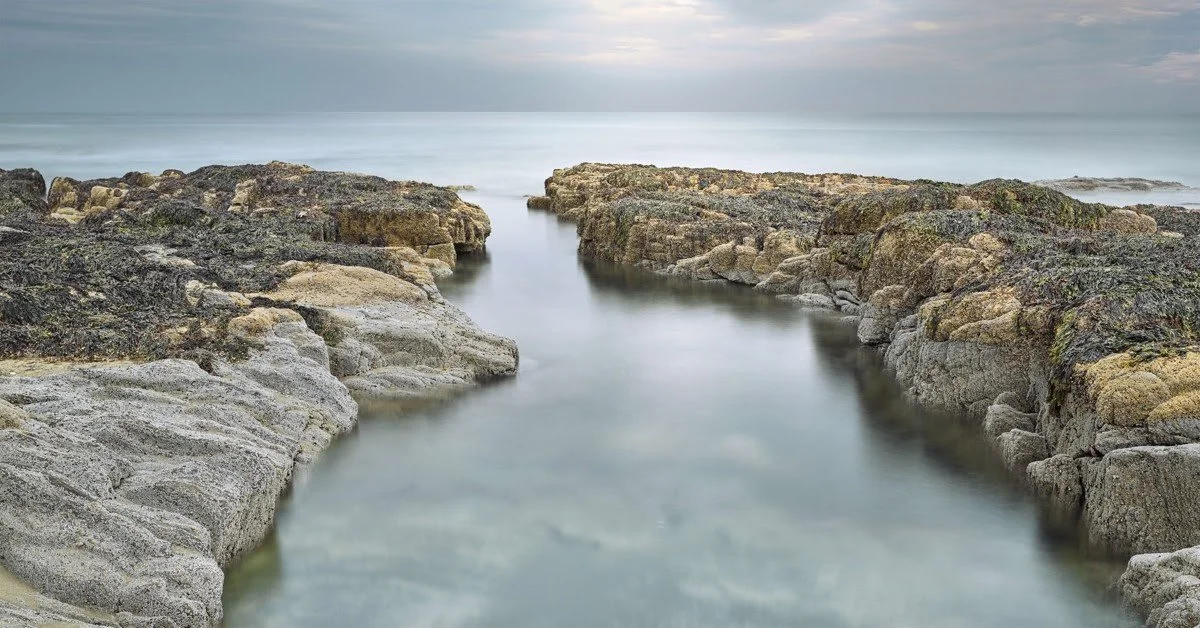



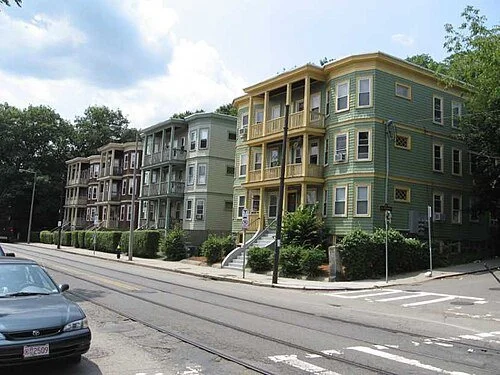
They thrive with global warming
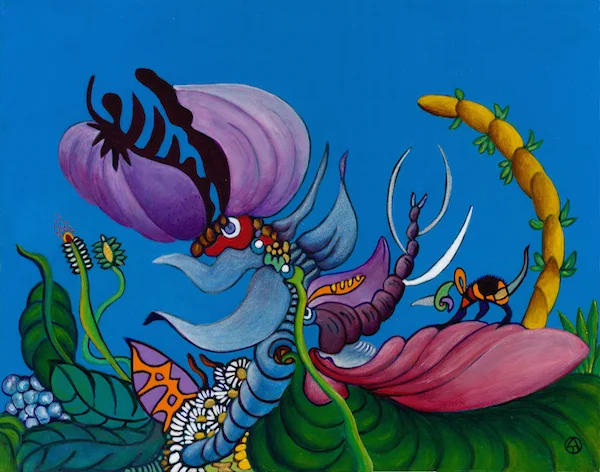
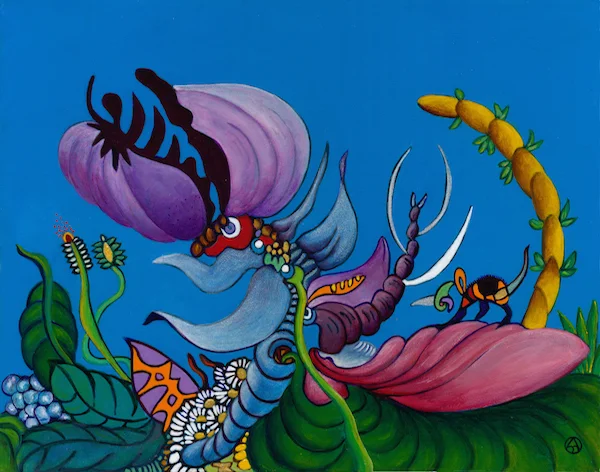
"In the Garden'' (acrylic on masonite) by Angela Mark, in her show "Despairing Beauty,'' at Galatea Fine Art, Boston Oct. 1-30.
A saint of suffering
Excerpted from the Sept. 8 Digital Diary in GoLocalProv
“It is not true that suffering ennobles the character; happiness does that sometimes, but suffering, for the most part, makes men petty and vindictive.”
-- W. Somerset Maugham
The late Mother Teresa has been made a saint. That’s the Catholic Church’s business, but a lot of us think wish that she had used her fame mostly to lobby for truly effective humanitarian aid by nongovernmental and governmental organizations in teeming places like Kolkata (formerly called Calcutta), which she encouraged to be even more teeming. The poor there need Medicins Sans Frontieres (MSF) a lot more than Mother Teresa’s sort of charity work, which included substandard medical care.
Where she probably did the most damage was in fighting artificial birth control in grossly overpopulated Kolkata. The out-of-control population there causes vast human suffering and environmental devastation but her Catholic theology told her, in effect, to encourage her impoverished clientele to have even more babies. She was an impressive promoter of certain kinds of selflessness and Catholicism but her stand against birth control and her glorification of suffering probably did more harm than good.
-- Robert Whitcomb
Genghis Khan Night at the PCFR
To members and friends of the Providence Committee on Foreign Relations (thepcfr.org; pcfremail@gmail.com)
The PCFR's next dinner comes fast, next Wednesday, Sept. 21, when our speaker will be:
Columbia University Prof. Morris Rossabi, one of the world’s greatest experts on Inner Asia and particularly Mongolia: a democracy stuck between the aggressive police states of Russia and China, Sept. 21. How does this faraway country do it? Professor Rossabi will be speaking to us very soon after returning from Mongolia and Korea; he may say a few things about the latest in North Korea’s threats to northeast Asia and beyond.
Prof. Rossabi is the author or editor of 20 books, including China and Inner Asia, Kublai Khan: His Life and Times, Voyager from Xanadu, Modern Mongolia, and China Among Equals. He has also written more than 100 articles or chapters in books and wrote all of the sections on Inner Asia in three separate volumes of the authoritative Cambridge History of China.
(Perhaps he’ll say some things about Genghis Khan, who DNA evidence suggest was an ancestor of many of us. He really got around Eurasia.)
Morris Rossabi has served as a board member of the Project on Central Eurasia and chair of the Board on Arts and Culture of the Soros Foundation. Professor Rossabi has collaborated on exhibitions at the Metropolitan Museum of Art, the Cleveland Museum of Art, and the Los Angeles County Museum of Art, and has served as a consultant to foundations, museums, universities, and the National Endowment for the Humanities. Having taught Chinese, Japanese, Mongolian, Central Asian, and Islamic history, he conducts research in a dozen languages. He is a member of the Council on Foreign Relations and is an advocate of international and cross-cultural education.

This is the cheapest room we can rent you tonight
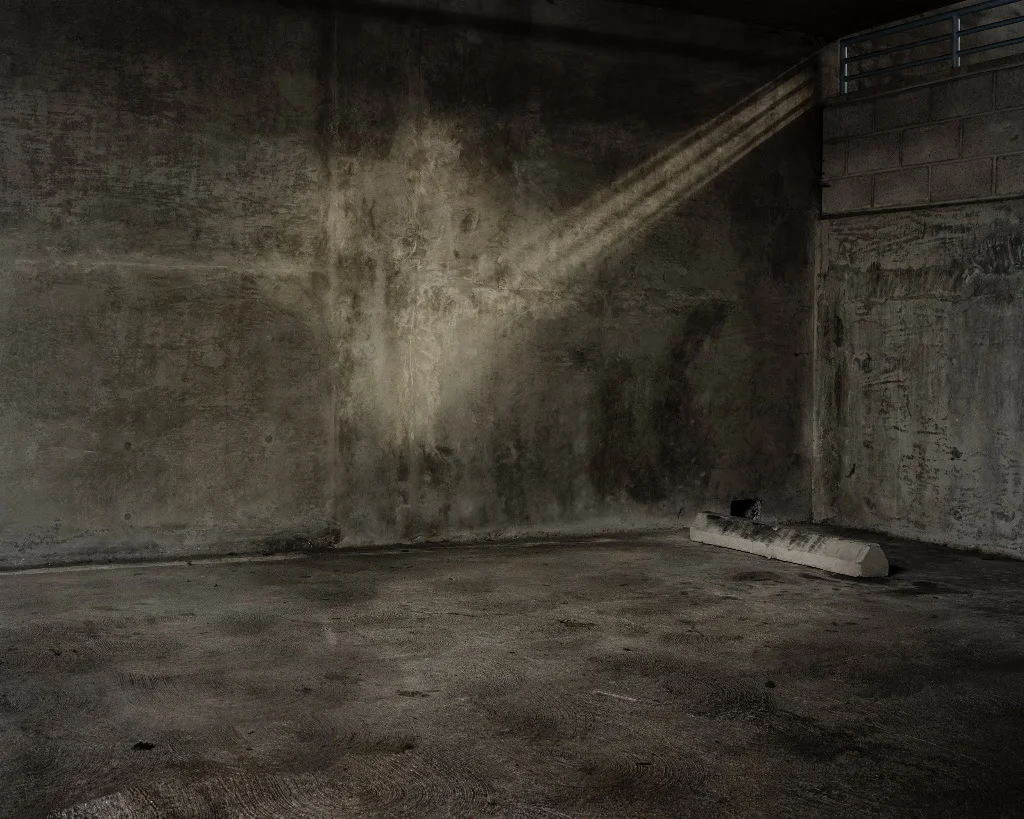
San Mateo 3 (archival pigment print), by Billie Mandle, in her show "San Mateo'' at Corey Daniels Gallery, Wells, Maine, Oct. 1- 31.
The artist explores spaces that "have been stripped of their coded signage and purpose, taking on an elusive, ethereal feed.''
James P. Freeman: Howard Johnson nationalized New England food
“There’s many a king on a gilded throne
But there’s only one king on an ice‐cream cone.
So we crown him today with friendly acclaim,
All over the country we’ll blazen his name.
With hot dogs barking in approbation,
He’s the man who believes he can feed the nation.”
n Howard Johnson’s (1940)
Like many like‐minded entrepreneurs, his dream was built on a simple idea with blazing clarity: “I figured that America really preferred good food nicely served,” and if it was made “as attractive as I knew how, easy to look at and hard to forget,” it would surely be successful, reasoned the founder of the eponymous restaurant, Howard Johnson, during The Great Depression.
Johnson, raised in Quincy, did indeed feed the nation and helped create the modern hospitality industry. But as widely reported just before Labor Day weekend, just one restaurant, in Lake George, N.Y., now bears the name “Howard Johnson’s. ‘’
With a prologue set firmly in New England, the spectacular rise and fall of this cultural icon is a quintessentially American story; it represents brilliantly the paradox of the creative destruction in democratic capitalism — in which the outdated is constantly replaced by new and better products and, ultimately, new and better processes. And with a delicious irony — being the very purveyors of disposable consumerism they helped to create — the epilogue also reflects today’s Baby Boomers’ sentimental nostalgia about a past they helped destroy, itself a gorgeous paradox of cultural progress.
But what a story it was. Much of it is recalled in his wonderfully reverential book, A History of Howard Johnson’s: How a Massachusetts Soda Fountain Became an American Icon, by Anthony Mitchell Sammarco.
It began as a store in Wollaston, Mass., in 1926. In the 1950s he pioneered efforts at freezing complete meals, which became staples in supermarkets. By 1969, at its corporate peak and prestige, a new restaurant was opening every nine days and a lodge every two weeks.
So large was this conglomerate that by 1975 the company had grown to 929 Howard Johnson’s restaurants, 32 Red Coach Grill restaurants, 63 Ground Round restaurants, and 536 motor lodges in 42 states, Puerto Rico and Canada. Successful entrepreneurs rely upon risk and luck and Johnson had a hunch. He rightly thought that Americans would be mobile with the advent of the automobile and with the creation of the Interstate Highway System (after the Great Depression and after World War II) they would be hungry too. And eventually tired.
As Sammarco notes, the “phenomenal growth” of Howard Johnson’s was “based on the application of two relatively new and untried concepts.” Johnson pioneered the retail franchise (where others bore start‐up costs) and also standardized the operations (branding, menus, décor). Howard Johnson’s restaurants and motor lodges became familiar terrain on roads from Maine to Florida and points west, such as the Pennsylvania Turnpike.
In many respects, Johnson nationalized New England. While the fried clam had been on Boston’s Parker House (hotel) menu beginning in 1865, Johnson introduced the fried clam strip (known as the “Tendersweet”) to America in 1951. Later, chef Jacques Pepin was brought in to prefect New England clam chowder. And, Sammarco writes, Johnson’s colonial‐style motor lodges “were attractive to nostalgic Americans,” and the architectural style was from a “melting pot of New England style that triggered the ‘old‐fashioned comfort’” with Americans.
But in the 1970s America experienced economic discontentment and dislocation because of its first great energy crisis and inflation. Travelers were driving less and flying more. Fast food chains such as McDonald’s and up‐scale hotels such as Marriott perfected the business model that Johnson had begun 40 years before. Many in the public came to see Howard Johnson’s as “dated” and “old‐fashioned” and its traditions uncool.
The bulk of the company was sold to a British conglomerate, Imperial Group Limited, in 1979.
Still, the story of Howard Johnson’s captures the rapid cultural changes of 20th‐Century America that continue to reverberate today. For many Boomers, their collective memory of “HoJo’s” is best remembered in faded family photographs taken over the years in the same rest stops along America’s highways and byways or Polaroids taken at the same restaurant for a sundae after a game or postcards sold in the lobbies of the same motor lodges during the ‘50s, ‘60s and ‘70s. It was a shared experience for which today’s generation can barely comprehend.
Today, for Millennials, there is no station wagon, no family road trip, no journey, no picture, no place like Howard Johnson’s; their idea of permanence and remembrance is a digital image “selfie” that disappears in 10 seconds on Snapchat.
Soon, service will mean a meal delivered by drone.
At the intersection of Routes 6A and 28 in Orleans still stands the structure that housed the first franchised Howard Johnson’s, in 1935 (about 25 miles from where the Pilgrims ate their first meal in the New World, in 1620). Since it was sold in 1979, it has changed names four times. Today it is painted in neutral browns and beiges. It looked and felt much better with the distinctive orange roof and turquoise blue shutters and 28 flavors, during an era that is by-gone, but not forgotten.
James P. Freeman, a New England essayist, is a former Cape Cod Times columnist and was formerly in the financial-services industry. This piece first ran in The New Boston Post.
Jim Hightower: Rapacious Trump's huge tax lies
An old saying asserts that falsehoods come in three escalating levels: Lies, damn lies and statistics. But now there’s an even higher category of lies: a Donald Trump speech.
Take his recent address on specific economic policies he’d push to benefit hard-hit working families, including an almost-hilarious discourse on the rank unfairness of the estate tax.
“No family will have to pay the death tax,” he solemnly pledged, adding that “American workers have paid taxes their whole lives, and they should not be taxed again at death.”
But workers aren’t taxed at death. The first $5.4 million of any deceased person’s estate is already exempt from this tax, meaning 99.8 percent of Americans pay absolutely zero. And the tiny percentage of families who do pay estate taxes are multimillionaires — not workers.
Of course, Trump knows this. He’s shamefully trying to deceive real workers into thinking he stands for them, when in fact it’s his own wealth he’s protecting.
In the same speech, he offered a new childcare tax break to help working families by allowing parents to fully deduct childcare costs from their taxes. With a tender personal touch, Trump said his daughter Ivanka urged him to provide this helping hand to hard working parents because “she feels so strongly about this.”
Another deception — 70 percent of American households don’t have enough yearly income to warrant itemizing deductions. So the Americans most in need of childcare help get nothing from Trump’s melodramatic posturing.
Once again, his generous tax benefits would only flow uphill to wealthy families like his, giving the richest Americans a government subsidy for purchasing platinum-level care for their kids.
As another old line goes: “Figures don’t lie, but liars do figure.”
Jim Hightower is a radio commentator, writer, and public speaker. He’s the editor of the populist newsletter, The Hightower Lowdown. This first ran on OtherWords.org.
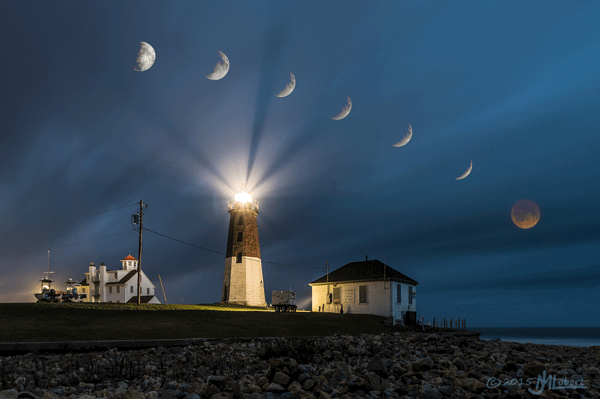
Welcoming and eerie
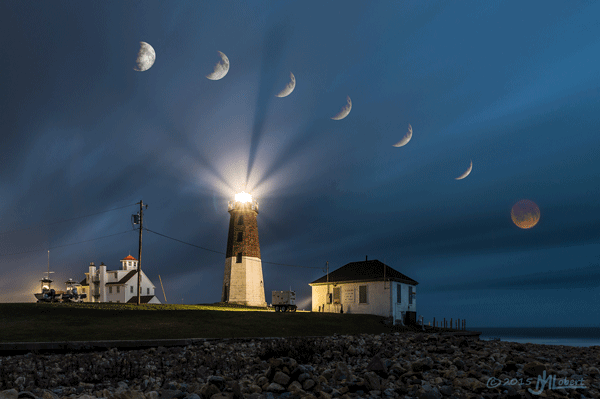
"Point Judith Blood Moon'' (photo), by Jurgen Lobert, in the show "Night Becomes Us: Photographs by the Greater Boston Night Photographers,'' at the Art Complex Museum, Duxbury, Mass., Sept. 18-Jan. 15.
Global warming lapping at our feet
Excerpted from the Sept. 8 GoLocalProv.com "Digital Diary'' column
Here’s an example of how a large part of the Republican Party has embraced ignorance and wishful thinking (and I am not just talking about its presidential nomination of a sociopath, against, sadly, a Democratic candidate with enough baggage to start a luggage company).
While senior military officials are urging the government to help them address global warming’s threats to national security, the GOP-controlled House, many members of which are proud ignoramuses about science, history and other increasingly ignored matters, are blocking a broad program to address the security threats posed by such effects of global warming as rising seas. These threats are already very visible in such places as Norfolk, Va., where officials at the world’s largest naval base are trying to protect the facilities from increasing flooding.
The New York Times, in a Sept. 3 story headlined “Flooding of Coast, Caused by Global Warming, Has Already Begun,’’ notes that “the Obama administration has been pushing federal agencies, including the Pentagon, to take more aggressive steps {to address rising seas}. But without action in Congress, experts say that these efforts fall far short of what is required.’’
But then, as retired Rear Admiral David Titley, a former Navy chief oceanographer who now runs a climate center at Pennsylvania State University, told The Times: “In the country, certainly in the Congress, it hasn’t really resonated --- the billions and perhaps trillions of dollars that we would need to spend if we want to live on the coast like we’re living today.’’
Visual yoga
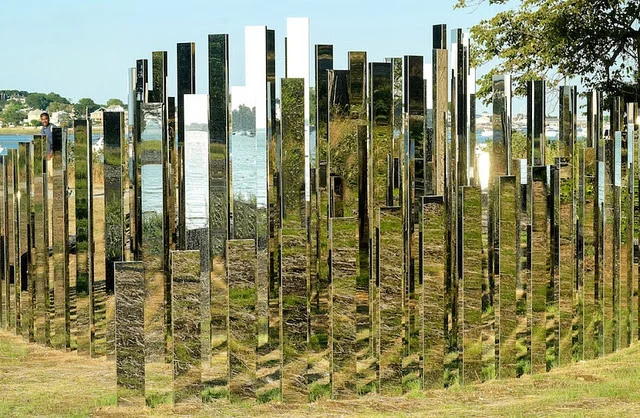
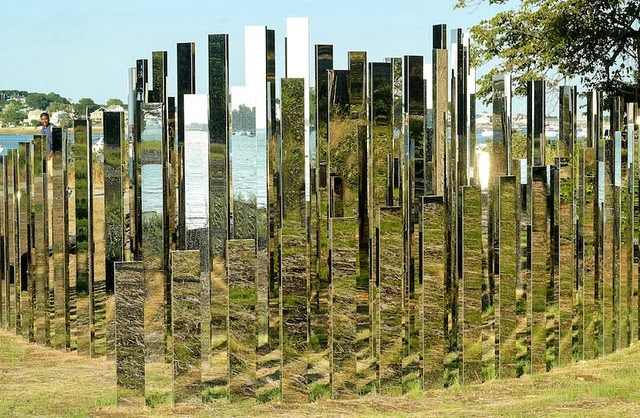
"A New End,'' installation by Jeppe Hein, at Trustees, in Boston, through Oct. 31.
The gallery says: "Jeppe Hein, from Copenhagen, creates pieces in which the viewer can interact. His pieces include mirrors, paths and even benches in parks that encourage the viewer to sit on or play on, discouraging the idea that art is for viewing purposes only. ...Jeppe Hein's piece... encourages interaction between piece and viewer.... {He} uses large-scale mirrors to create a reflective labyrinth spiral. The piece is meant to function as vehicle for thought, reflection and relaxation, similar to yoga or meditation.. ..'A New End' encourages healing … within oneself.''

Chris Powell: He won't stand for the country that made him rich
MANCHESTER, Conn.
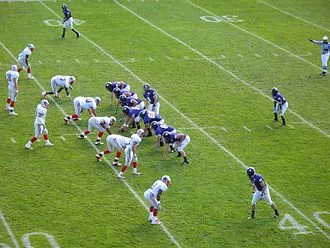
Good for President Obama for acknowledging that the quarterback of the San Francisco 49ers has a right to protest racial injustice by refusing to stand when the national anthem is played.
Thanks to a heroic decision of the Supreme Court during World War II, schoolchildren also have the right to refuse to salute the flag in class -- a right that actually proclaims the flag to be the flag most worth saluting.
But the quarterback, Colin Kaepernick, isn't necessarily persuasive. For of course the country isn't and never will be perfect; it will always be full of legitimate grievances, like Kaepernick's -- recent shootings of black people by police officers, several of which, captured on cellphone video, seem murderous.
The key questions are whether such shootings are policy or aberrations and whether the country remains worth supporting for its ideals and the rights it bestows on everyone -- worth supporting for its objectives of "liberty and justice for all."
"I am not going to stand up to show pride in a flag for a country that oppresses black people and people of color," Kaepernick said last month. "To me this is bigger than football and it would be selfish on my part to look the other way. There are bodies in the street and people getting paid leave and getting away with murder."
But "people getting paid leave" is only a matter of due process of law while they are being investigated. Further, since the criminal-justice system will always be imperfect, either because its participants are fallible or because proof is not always available, some people will always be "getting away with murder." They're not all white police officers. Some are black, like O.J. Simpson.
Kaepernick is black, and if this country is really so oppressive to black people, why does he stay? Obviously the country is not so oppressive to him, as he is being paid $114 million under a six-year contract with the 49ers, wealth that casts an ironic sheen on his indignation. That's because his own well-earned success, duplicated by many other members of minority groups, is no aberration. National policy, flawed as it may be, is to facilitate it.
Exercising them as he has done, Kaepernick at least has reminded people of their constitutional rights and thus of the country's greatness. But he still may be rebuked, since, as Robert Frost wrote:
No one of honest feeling would approve
A ruler who pretended not to love
A turbulence he had the better of.
INDIGNATION INDUSTRY IS ASKING FOR IT: Years ago the comedian Steve Martin apologized facetiously to the National Association of Colored People "for referring to its members as ‘colored people.'" The other day a host of ABC's Good Morning, America, Amy Robach, apologized seriously for having said "colored people" on the air in a report about casting practices in the movie industry.
For reasons that aren't clear, it is OK for the NAACP to perpetuate the phrase but insulting if not racist for anyone else to use it. It's also OK to say "people of color."
So what's the difference? Only fashion.
Robach may have been unaware of that fashion and she plainly meant no harm, but she was quickly condemned on "social media" and was intimidated. So she issued a statement calling her choice of words "a mistake" and "not a reflection of how I feel or speak in my everyday life," adding that she had intended to say "people of color."
The indignation industry may snicker at all the innocents it is intimidating, but if it wants to understand what has given rise to Donald Trump and other forms of angry reaction in politics and public life, it needs only to look in the mirror.
Chris Powell, an essayist on social, political and economic maters, is managing editor of the Journal Inquirer, in Manchester, Conn.
Robert Whitcomb: Transportation and other news
Excerpted from the Sept. 9 Digital Diary column in GoLocalProv.
Terrific transportation improvements in Boston in the last 20 years because of the Big Dig and the creation of the South Station intermodal transportation complex have helped make Greater Boston richer. A key element has been the expansion and uniting of train and bus service at South Station. (Linking that facility with North Station via a direct MBTA train line would help expand the progress.)
Yes, these projects are expensive, but, as with the improvements in subway service in New York under Mayors Rudy Giuliani and Michael Bloomberg, the economic benefits of more efficient and pleasant transportation are impressive.
Thus kudos to the Rhode Island Department of Transportation for working to create a sort of mini-version of the South Station public-transportation center in and around Providence’s Amtrak/MBTA station. The few bad things that happened with the revival of much of downtown Providence starting in the ‘80s included moving the train station up the hill to across from the State House and what was then called the Bonanza Bus Terminal way north of downtown to a gritty, windswept, pedestrian-unfriendly area next to Route 95. Stupid moves for a city that wants to be walkable.
Well, the train station is stuck where it is but building a bus station complex right next to it would make public transportation a lot easier in Providence, which would boost its economy and quality of life. That a lot of younger adults avoid driving and the number of old people who can’t or won’t drive is rapidly increasing, mean that the numbers who want to use public transportation can only swell.
As part of all this, there should be very frequent nonstop RIPTA shuttle buses to and from the new intermodal center to Green Airport, barring a big expansion in MBTA train service there from the Providence train station.
The RIDOT’s project will help pullmore businesses and shoppers to Providence from a large swath of southeastern Massachusetts and eastern Connecticut.
Full speed ahead on this project.
xxx
In other transportation news: My wife and I were on Block Island for a (bravely scheduled) wedding on Labor Day weekend, though not for as long as we had hoped. While we were able to take in a big outdoor pre-wedding picnic on a spectacular heath from which you can often see Montauk Point, we had to leave hours before the wedding, scheduled for late Sunday afternoon, because the ferry folks told us that the last trip for the next few days would leave soon because of concerns about Post-Tropical Storm Hermine. As it turned out, the trip, while a bit bouncy at the start as we moved out of the harbor, was pleasant enough.
There were on board a few somewhat oafish morning beer drinkers – a tribe traditionally associated with Interstate Navigation Co.’s ferries, but fewer than I remember from our first trips on the service, way back in the late ‘70s. None threw up.
The trip reminded us of how dependent islanders are on the weather: However high tech they are they are, they must obey Mother Nature more than most people. While this can be inconvenient, it’s also edifying (teaching patience and respect for, and sometimes fear of, Mother Nature) and adds some drama to programmed lives.
September has the best weather of the year, except when it has the worst, during those rare but memorable visits from hurricanes. By the way, there’s something exciting about the sexy term “tropical storm’’ up here that gets people’s attention. Thus even though Hermine was a post-tropical storm as she dawdled south of New England in the first part of this week, the National Weather Service kept using the phrase “Tropical Storm Warning’’ for the New England coastal areas being affected.
That’s because after Hurricane Sandy, in 2012, became an extra-tropical storm some people ignored the warnings as she slammed into the Jersey Shore. So the NWS decided to keep the ominous if misleading word “tropical’’ this time around, though Hermine by any other name (such as “gale’’) would be as windy.
A house on the edge of meaning and the void
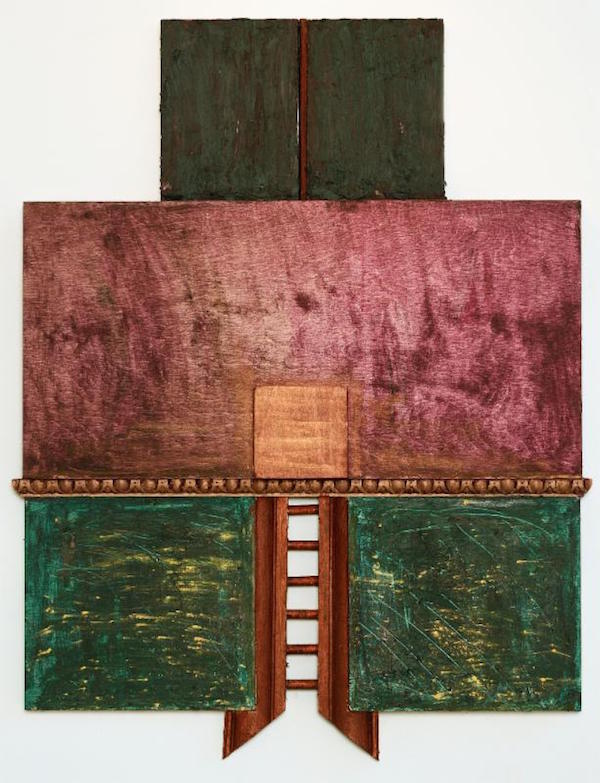
"Journey's End'' (oil/cold wax/molding on wood panels), by George Shaw, in the show George Shaw and Marjorie Kaye: The Poetics of Space,'' Oct. 8-29, at Atlantic Works Gallery, East Boston.
The gallery writes: "George Shaw and Marjorie Kaye will present unique approaches examining the lyrical dissection of space and surface.''
"George Shaw's paintings and constructions are on and made of wood panels, and consist of oil paint, oil pastel, dry pigment, wax medium, molding and found objects. This combination produces a balance between luminosity and saturation, with a focus on texture and the relationship between minimal objects and space. The background and foreground is interchangeable, creating illusive space, yet there are very distinct relationships between them.''
Mr. Shaw writes: "The physics of consciousness, in relation to modern quantum mechanics theory illustrates my intention in regards to my work. I am interested in what consciousness truly is and the physical connection between our consciousness and/or spirit and the universe; and that we are truly interrelated."
He says thatthe desire for an answer appears as a shelter, an anchor, a sanctuary: home.
"Gradually, in my works, a house-like shape emerged, and became an important element: a counter-point to a universe, poised on the knife edge of meaning and the precipice of the void."
In an endless summer
Summer Relief
It's ninety degrees and sticky as glue
We're stuck at a visit to icky Aunt Sue.
She thinks it's delightful to eat on her deck.
The fruit punch has ice cubes -- want one down your neck?
-- Felicia Nimue Ackerman
(This first ran in The Providence Journal)
William Morgan: The joy and curse of being the 'prettiest village in Maine'
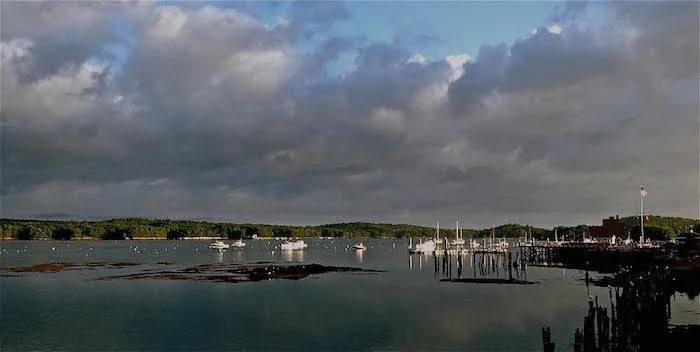
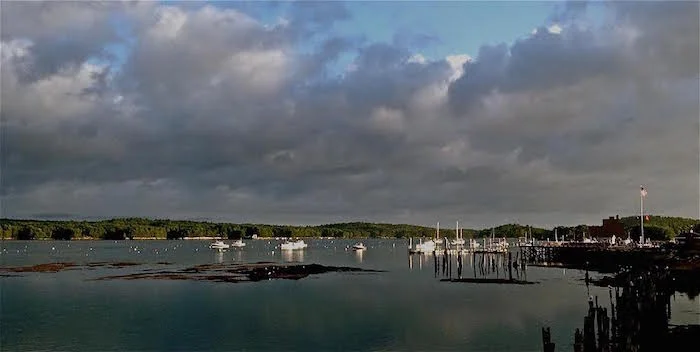
The Sheepscot River (William Morgan)
WISCASSET, Maine
This handsome village is mostly known for Red's Eats (famous lobster rolls; see photo below) and as a traffic bottleneck. U.S. Route 1 snakes through town, down a hill, and across the Sheepscot River. Years ago, Wiscasset voted down a by-pass, figuring that it would hurt downtown business. So huge trucks grind gears going up a long hill in the town.
Wiscasset was cursed by having been chosen decades ago by photographer Samuel Chamberlain as the "prettiest village in Maine'' (see photo below), in a book that featured a town from each of the New England states. A constant battle to live up to that, especially as signs on the town borders serve as constant reminders. (Sort of like being voted the Most Likely to Succeed in high school. Where are you now, oh promising youth?)
That old houses that make Wiscasset so attractive (along with the beautiful natural setting) were built during her greatest age, around the turn of the 19th Century, when its ships traveled the globe. Such wealth got frozen by Thomas Jefferson's Embargo and by "Mr. (James) Madison’s War" (of 1812). Wiscasset fortunes never fully recovered.
Since the wide Sheepscot River does not freeze over, a scheme was floated in the 1920s to connect Wiscasset by rail with Montreal and transform it into that city's winter port. It came to naught.
Traffic, tourists and a flat off-season economy aside, the town is still fabulous.
William Morgan is a Providence-based architectural historian and columnist.

Red's Eats
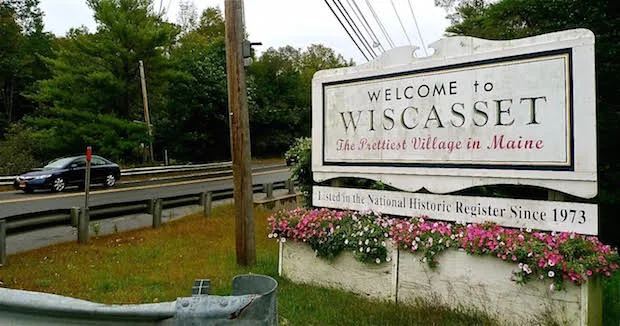
That fatal phrase.

No surprise: A house not necessarily a home in the '50s, or now

"It Was Getting Late,'' by Leslie Graff, in her show "Housed,'' at the Conant Gallery in Lawrence Academy, Groton, Mass., through Dec. 18.
The gallery notes say she creates "complicated imagery featuring women in stereotypical gender roles and dress, from the shoulders down.''
"House has a much colder connotation than home does...'housed' creates a feeling closer to being trapped than to being comforted.''
The picture certainly evokes the '50s or perhaps '60s. Note that she's reading the long-dead McCall's magazine.
Brexit bathos, followed by mysterious Mongolia
To members and friends of the Providence Committee on Foreign Relations (thepcfr.org; pcfremail@gmail.com), which meets at the Hope Club:
Our new season will open on Wednesday, Sept. 14. Our Web site, meanwhile, will be updated with news items fairly frequently. PCFR evenings start with drinks at 6 p.m., dinner by 6:50; the talk by dessert, and the evening ends at 9, except for those who would like to repair to the Hope Club’s lovely bar.
Meanwhile, we are working on a newelectronic system to make thespeakers’ remarks clearer everywhere in the room.
Mark Blyth, our first speaker, whom some of you have heard on NPR commenting on Brexit, will speak on Wednesday, Sept. 14, on Europe after Brexit.
Mark Blyth is Eastman Professor of Political Economy andProfessor of Political Science and International and Public Affairs at Brown.
He is an internationally celebrated political economist whose research focuses upon how uncertainty and randomness affect complex systems, particularly economic systems, and why people continue to believe stupid economic ideas despite buckets of evidence to the contrary. He is the author of several books, including Great Transformations: Economic Ideas and Institutional Change in the Twentieth Century (Cambridge: Cambridge University Press 2002, Austerity: The History of a Dangerous Idea (Oxford University Press 2013, and The Future of the Euro (with Matthias Matthijs) (Oxford University Press 2015).
Coming fast after that will be:
Prof. Morris Rossabi, probably the world’s greatest expert on Central Asia and particularly Mongolia: a democracystuck between the police states of Russia and China, Sept. 21. How does this faraway country do it? He’ll be speaking to us soon after returning from Mongolia and other points in Asia.
Then:
FormerU.S. Ambassador to Slovakia Tod Sedgwick, on thetense situation in Central Europe, Oct. 5.
Meanwhile, the World Affairs Council of Rhode Island and the PCFR are preparing a forum for Oct. 20 at the Hope Club on the foreign-policy visions and challenges of the U.S. presidential candidates. Stay tuned.
Naval War College Prof. James Holmes on the geopolitics of global warming, Nov. 15.
German General Consul Ralf Horlemann on the role of Germany in an E.U. without the U.Kand with an aggressive Russia pressing in from the east, Dec. 14.
Internationalepidemiologist Rand Stoneburner, M.D., on Zika and other burgeoning threats to world health, Jan. 18.
Indian Admiral Nirmal Verma, on military and geopolitical issues in South and Southeast Asia, Feb. 15.
Dr. Stephen Coen, director of the Mystic Aquarium, on the condition of the oceans, March 8.
Brazilian political economistand commentator Evodio Kaltenecker on April 5 to talk about the crises facing that huge nation.
James E. Griffin, an expert on ocean fishing and other aspects of the global food sector, will speak to us on Wednesday, May 17.
Joining us on Wednesday, June 14, will be Laura Freid, CEO of the Silk Road Project, founded and chaired by famed cellist Yo-Yo Ma in 1998, promoting collaboration among artists and institutions and studying the ebb and flow of ideas across nations and time. The project was first inspired by the cultural traditions of the historical Silk Road.

Llewellyn King: Nix wasteful, overrated college and get yourself a craft to make a good living

If Donald Trump becomes the next president of the United States – which is looking slightly more likely – he will, so to speak, hit the wall.
Yes, he will hit his wall: the beautiful, technological marvel he plans to build along the southern border to keep out people he thinks are going to harm the United States.
Yet the first thing he might have to do is to send recruiters into Mexico and beyond to find craftsmen to build his wall.
Mexico might not pay for the Trump wall, but Mexicans most certainly will build it. The reason: there is a critical labor shortage in the United States of skilled craftsmen and women.
There are still way too many unskilled people arguing over what the minimum wage should be for selling a hamburger and far too few who can swing a hammer, use a spirit level, lay a brick, connect a sewer line or wire a building.
These people, these yeomen in 21st-Century society, are in critically short supply. Known as the “crafts,” they are the people who build our bridges, water systems, power plants, submarines and other military materiel, and restore power after a storm.
Whether you are trying to build a new suburban house, a ship or a road, you need the crafts: people who work with tools and their bodies. Their brains, too, for it is not brainless work. Do not ever think that it is. The glass sheathing on those super tall, super skinny buildings in New York would not have gotten there, or stayed there, without people with brainpower.
The crafts shortage is not hypothetical: it is affecting new home construction and big projects, like new nuclear plants in South Carolina and Georgia.
Utilities have special programs to train people to climb poles, string lines, and become first responders after severe storms. These are secure jobs with benefits and retirement packages. Nice work if you can get it, and you can get it if you get round your local utility hiring office.
The political response to the crafts shortage is predictable. There are demands for trade schools, for special courses, for subsidized apprenticeships. As usual, money will be requested. It is not a money problem. It is a human-resource allocation problem.
There is simply too much social, I repeat, social value attached to a university education -- an education that often wastes time, while the students learn what they should have learned in high school.
A degree from one of the second- and third-tier universities is increasingly of little value in getting work. How many political scientists, communications executives, and marketing gurus does society need? An arts degree qualifies its recipient in today’s market to be an Uber driver or such.
Societal pressure says if you do not have a university degree, you are inferior. Everyone without a degree butts up against the mortar-board ceiling at some time.
Yet much of what passes for education is, in fact, the ability to pass tests. Test-passers move up the system and seek other test-passers to keep the game going.
But we are happy to entrust air traffic control, policing, ship piloting, EMT response and other life-saving jobs to people with only high school educations. All those welds on ships, nuclear plants and bridges, are the work of high school graduates and dropouts.
I am happy to report that one of my wife’s nephews has told his mother, an Ivy Leaguer no less, that rather than going through the warehouse-as-education system, he is going to be a welder. I hope he works on worthwhile things, like a bridge or a submarine, not on Trump’s silly wall.
Let the Mexicans have that as their jobs program -- which we will pay for. Believe me.
Llewellyn King is executive producer and host of White House Chronicle, on PBS. His e-mail is llewellynking1@gmail.com. He is also a Rhode Island- and Washington,D.C.-based publisher, columnist and international business consultant.
The joy of public browsing
Excerpted from the Sept. 1 "Digital Diary'' column in GoLocalProv.
The City of Cambridge, Mass., may force the famous Out of Town News business from its eccentric little building in the middle of Harvard Square in order to “repurpose’’ the building as a public space. (Waiting room with news-crawl screens, public bathrooms?) This may force the business, beloved by browsers looking for publications from around the world for so many years, to close.
The structure, actually a kiosk built in 1928, was built at Zero (!) Harvard Square, as an entrance building for the Harvard Square subway station. In 1981, it was moved slightly and renovated. Out of Town News, which opened at Harvard Square in 1955, has been in the kiosk since 1984.
The business is one of the centers of New England, a lively urban space where all sorts of people congregate – not just local academics. I hope that the business stays where it is, letting many thousands of patrons and visitors a year continueto get a sense of what’s going on around the world by reading on paper, still more congenial for many people than reading on a screen. And, unlike in your home or office staring at a screen, while browsing at an old-fashioned newsstand you might actually meet someone interesting.
Robert Whitcomb is New England Diary's overseer.
Native impression
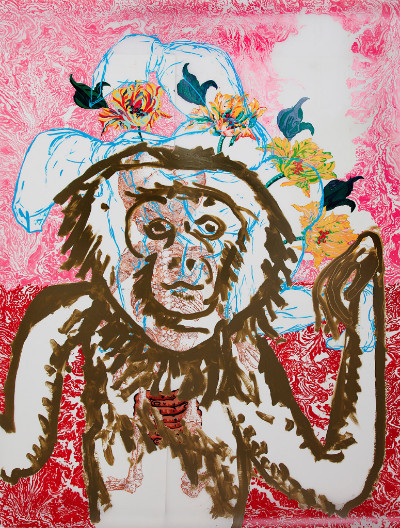
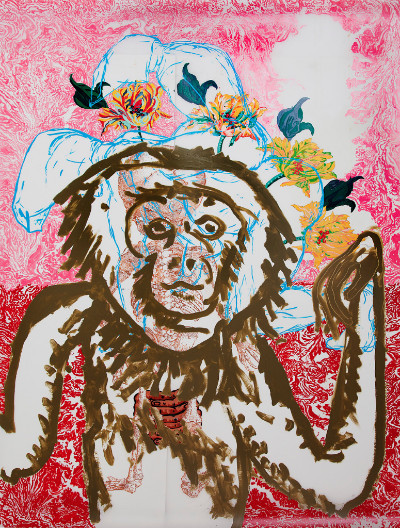
"Heart First'' (Dartmouth) (oil on mylar), in the show "In Our Own Words: Native Impression 2015-2016,'' at Cade Tompkins Projects, Providence, Sept. 10-Nov. 5.
It's a collaboration with Lucy Ganje chronicling the lives of native Americans in the Tribal Nations of North Dakota. These are works that Mr. Heyman created during an artist residency at Dartmouth College (which was created in the 1760s with the aim of educating Native American as well as "English youth.'')
After the hottest August ever
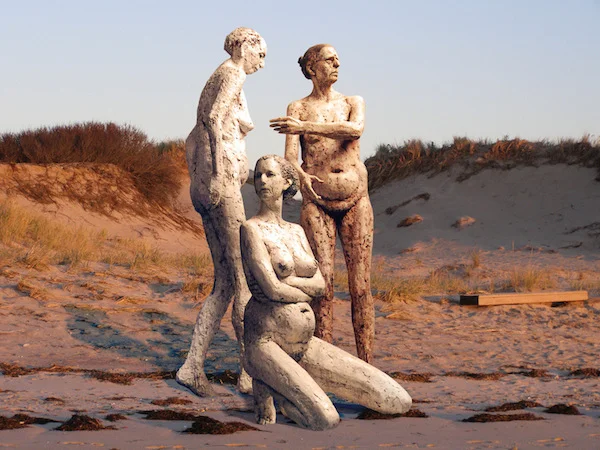
"Group at Sunset'' (giclee print), by Penelope Jencks, in her group show with Peter Watts and Selina Trieff at the Berta Walker Gallery, Wellfleet, Mass., through Sept. 19.