
Vox clamantis in deserto






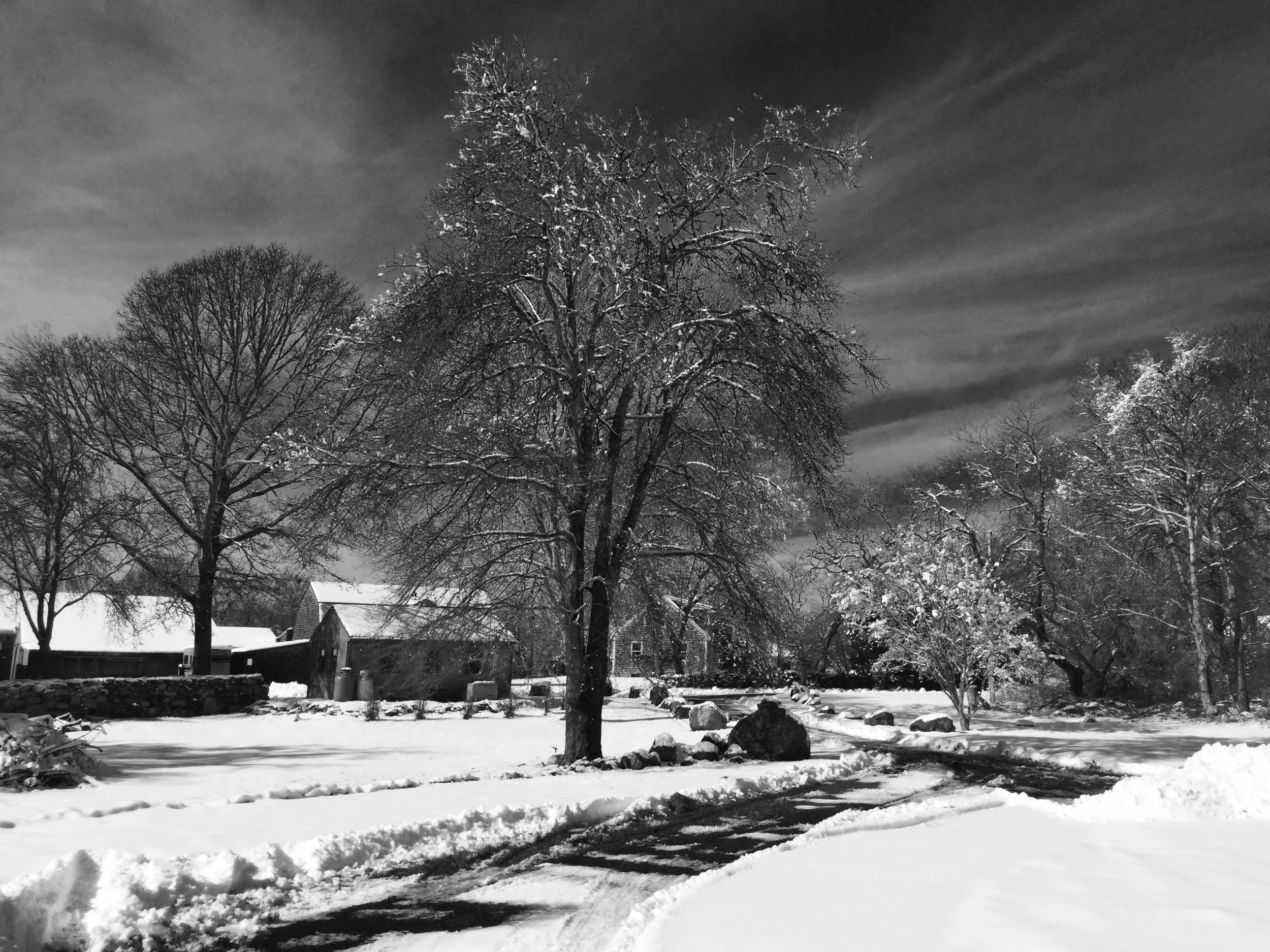
Touch of spring
About this time of year, you really start to notice the sunlight getting brighter and warmer on your face, whatever the air temperature. And car interiors warm up much faster in the sun than they did a mere month ago.
Heartening.
--- Robert Whitcomb
Chase Cryn Johannsen: Multigenerational debtors
In 2010, I wrote an essay, "The New Indentured Educated Class," for The New England Journal of Higher Education. This piece was pivotal in raising public awareness about a new group of Americans, an enormous group of us — educated and deeply in debt. At that point, few were talking about the student loan debt crisis, aside from me and a couple of others.
However, things have changed—politicians are not only openly acknowledging the crisis, but talking about it as a real issue in the 2016 presidential election. Newspapers publish articles on the topic daily. That's because outstanding student-loan debt is now a whopping $1.3 trillion, and over 43 million Americans carry that debt burden. I argue that almost every American is affected by this crisis. In the very least, it affects 1 in 4 Americans, and in ways that make life quite difficult, both financially and emotionally.
I often refer to just the borrowers with (or without) the degrees, but what about another set of borrowers who are part of the indentured educated class as well? I am referring to the parents of current borrowers, and for that matter, even the parents of future borrowers. Both groups—those who are parents of current borrowers and those who will be parents of future borrowers—face different dilemmas.
For the moment, let's focus on the parents of current borrowers. More specifically, I want to discuss the parents who took out loans to help their children attend school. I think about them quite often, as they are an understudied group of debtors. Moreover, a recent reader who commented on my previous NEJHE article, made me think even more about them, when she wrote the following:
"Please also address the issue of parent loans. Many parents took out student loans for our children's college expenses so our children would not be saddled by overwhelming debt. As a consequence, we find ourselves near retirement age, yet unable to retire because we are paying off six figure student loans for 25 years. Why not forgive the interest on student loans as a first step? Why should the government be profiting from its citizens?''
In fact, I want her and other parents, who have taken out loans for their children, to be aware that I do discuss the issue of parents as debtors in my forthcoming book (to be published in May 2016). It seems she is referring to Plus Loans. These are federal loans, through the Direct Loan program, that are available to eligible graduate students or parents with children who are undergraduates. Since these loans are part of the Direct Loan program, the U.S. Department of Education is the lender.
The current interest rate on these loans is 6.84 percent. (It's also worth noting that in the event that the borrower dies, these loans can become a tax liability for those who took out Plus Loans, as I wrote about in a relation to a specific death of a young man, and the National Consumer Law Center recently noted how they are an unfair burden in cases of borrowers with extreme disabilities.)
To credit President Obama, in his new as well as final budget plan, he proposes to "eliminate the taxation on all loans forgiven or canceled due to a Department of Education program, including disability and death discharges," the National Consumer Law Center announced Feb. 10, 2016. While this news is positive, it is unlikely that members of Congress will agree to eliminate taxation on these loans due to disability or death.
Many of the parents who have borrowed money on their children's behalf, such as this reader, are now nearing retirement age. But they find themselves in a difficult position, as they are unable to retire due to the loans they took out for their children's schooling. I think that this raises a lot of questions that only those in the Department of Education can answer. For starters, has the department considered steps, such as forgiving the interest on these loans in order to aid borrowers who find themselves unable to retire? In addition, how are these specific loans affecting the overall economy?
The last question is an important one. We have ample evidence that young graduates who are freshly out of college and heavily indebted are hurting the overall economy. These debtors are unable to buy homes, cars, and other major items that help spur our consumer-driven economy. Moreover, these educated debtors are putting off having families. The economic ramifications have been acknowledged by notable economists such as Joseph Stigtlitz and Paul Krugman.
But now you throw in the parents of these debtors. Many of them are debtors too. The complexity to the crisis is now multi-generational, something that certainly indicates a negative outcome for economic growth, especially as it relates to a middle-class America that is already on the brink of extinction.
So, what is to be done? That's the pressing question, and I leave it to the policymakers to provide us with some concrete answers.
Chase Cryn Johannsen is a freelance writer and founder and executive director of the nonprofit All Education Matters, which advocates for student-loan debtors. This originated in the Web site of the New England Journal of Higher Education, part of the New England Board of Higher Education (nebhe.org).
Charles Chieppo: Maine may be pacesetter against healthcare-price inflation
As consumers suffer sticker shock over rising-health-insurance premiums, insurers increasingly are responding with policies that aim to hold down premiums with narrower provider networks or much higher co-pays and/or deductibles.
According to the National Business Group on Health, 32 percent of American companies intended to offer only high-deductible plans to their employees last year. As out-of-pocket costs rise, so does consumer interest in the cost of the procedures they undergo.
Legislation pending in Maine would add it to the list of states requiring hospitals and other providers to share price information with prospective patients upon request. But the legislation goes further. It would make Maine the first state to let consumers and insurance companies split savings of more then $50 if the consumer can find a provider that offers the service at a cost that is lower than the regional average.
A similar shared-savings model is in place for state employees in neighboring New Hampshire. Few Maine legislators oppose price transparency, but there are concerns about the shared-savings provision.
Opponents argue that the full cost of most medical procedures is hard to determine in advance and that the financial incentives won't change consumer behavior. You are indeed unlikely to be able to get a cost estimate for a procedure as complex as openheart surgery, but one forthcoming study suggests that the savings that could be achieved from shopping around, at least for routine procedures, are far greater than expected.
The Pioneer Institute asked more than 40 hospitals in six metropolitan areas for the price of an MRI on the left knee without contrast. The prices ranged from $400 at a Los Angeles hospital to $4,544 at one in New York City. (I am affiliated with Pioneer as a senior fellow but had no involvement with the survey.)
It's hard to believe that consumers won't shop around for routine or elective procedures if they're paying a significant portion of the cost and the potential savings are that large. Indeed, the main point of the Pioneer survey is that it was very difficult for callers to get a complete price for the procedure despite state and federal health care price transparency laws.
The authors argue that it is the lack of access to price information that keeps consumers from shopping. The benefits from cost comparisons go beyond consumers' outofpocket savings.
Medical loss ratio laws require health insurers to pay out at least 80 percent of the money they receive in benefits, meaning that any savings the insurers realize from consumers shopping for lower prices will translate into premium relief.
That relief is sorely needed. The average annual premium and outofpocket costs for the nearly 60 percent of Americans covered by employer-sponsored health plans is more than $8,500. That number is expected to rise to between $13,000 and $18,000 by 2025 and could top $36,000, or about 45 percent of average household income, by 2035.
Price transparency and providing incentives for consumers to shop for better prices won't by themselves get healthcare costs under control. But faced with the prospect of families spending nearly half their income on healthcare just two decades hence, states should take action now to start bending the cost curve down. The kind of legislation that Maine is considering now could be an important first step.
Charles Chieppo (Charlie_Chieppo@hks.harvard.edu) is a research fellow at the Ash Center at Harvard's Kennedy School (and a friend of the overseer of this site). This piece originated at Web site of Governing magazine (governing.com).
Hilary Cosell: Sanders an egomaniacal spoiler
What is almost amusing about Bernie Sanders and his “revolution” is how
non-revolutionary he and his message are. He’s old school New Deal, he’s
Sixties revolution/protest, and he could be a character out of Clifford
Odet’s play Waiting for Lefty.
Sanders and Clinton are from basically the same era, the same formative
politics, the same up-against-the-wall, anti-establishment point of view.
But while Hillary Clinton’s graduation speech at Wellesley drew national
coverage, Bernie was – Where? Doing what? Apparently hanging out in
Vermont, starting up left-wing political parties that flamed out, eeking
out a living, and occupying not Wall Street or Main Street but his own head.
Meanwhile, Secretary Clinton went on to Yale Law School, worked for the
Senate Watergate Committee, went undercover in the South for civil rights,
worked for the Children’s Defense Fund…need one continue?
Since Sanders finally made it to the U.S. House and then the Senate, after a stretch as mayor of Burlington, Vt., what has he accomplished?
Almost nothing of note --- no important legislation enacted, no speeches on the floor of
Congress that made him a senator to “watch.” Clinton has been on the front
lines of the battle for health care, women’s rights, civil rights and so
much more -- and has won some battles --for as many decades as Sanders has been ineffective.
Even the description of him as anti-establishment could be amusing, except
that he takes this description, and himself, so seriously. So retro, so
Sixties, one can almost hear Bernie shouting through a bullhorn at a University of Chicago protest in 1965. God knows, many of us shouted and protested a great deal back then.
How dispiriting to watch college kids seemingly innocent of history cheer
him on, and pundits rave about his “authenticity.” Where has he been all
these years?
Why now, Bernie? At age 74? A one-termer, if you win. What’s motivating
you, besides your one-issue, income-inequality obsession? Where's your head
at? What's your thing? You remember the McGovern debacle in 1972 as well as I do.
Do you want to repeat it?
You’re an authentic, ego-driven spoiler.
Go, Hillary. You’ve earned it.
Hilary Cosell is a Connecticut-based writer.
Watching and being watched
"I stood beside a hill
Smooth with new-laid snow,
A single star looked out
From the cold evening glow.
There was no other creature
That saw what I could see--
I stood and watched the evening star
As long as it watched me."
-- Sara Teasdale, "February Twilight''
PCFR: Canada's new Trudeau, Hydro-Quebec, New England ports, etc.
Feb. 12, 2016
To members and friends of the Providence Committee on Foreign Relations (thepcfr.org; pcfremail@gmail.com. We update the Web site frequently with news and commentary. Information in how to join (not complicated) may be found on Web site -- again: thepcfr.org
It was good to see so many of youat our Jan. 12 meeting to hear international-cyber-security expert Allan Cytryn.
And besides the officially scheduled speakers below, note that we plan in the coming season to have speakers on New England ports (see bottom of this memo), the geopolitics and economics of global warming as well as a look at global ocean-fishing issues. Also refugee, economic, security and other matters involving Germany, probably with the German general consul speaking to us.
Speaking to us next, on Tuesday, Feb. 16, will be David Alward, the former premier of New Brunswick and now the consul general of Canada to New England.
He’ll talk about the implications of the recent change in Ottawa under Justin Trudeau, international security issues, such big trade matters as New England’s purchase of hydro-electric power from Canada and the idea of a common market encompassing Canada, the U.S. and Europe.
The international cities expert Greg Lindsay was to have joined us Feb. 16 but he must go to Scandinavia then. He’ll join us Wednesday, May 11.
As usual, the Feb. 16 dinner will be at the Hope Club, 6 Benevolent St., Providence. Drinks start at about 6, dinner by 7, then the talk and a Q&A and the evening ends by 9.
Please let us know whether you will join us Feb. 16 by replying to pcfremail@gmail.com or, in a crunch, calling (401) 523-3957. Thanks very much to those who have already let us know! The Hope Club needs good estimates no later than the day before a PCFR dinner.
Dues and dinner cost information may be found at: thepcfr.org. Other membership information may be found there, too.
On Tuesday, March 22, comes the very distinguished Andrew A. Michta, professor of National Security Affairs at the U.S. Naval War College and an adjunct fellow with the Center for Strategic and International Studies (Europe Program).
He’ll talk about European politics and security, including NATO, and has a special focus on Central Europe and the Baltic States. (I hope he talks about the Russian buildup in the enclave of Kalingrad.)
In 2013–2014, he was a senior fellow focusing on defense programming at the Center for European Policy Analysis in Washington, D.C. In 2011–2013, he was a senior transatlantic fellow at the German Marshall Fund of the United States (GMFUS) and the founding director of the GMFUS Warsaw office.
He is a member of the International Institute for Strategic Studies in London.
Columbia Prof. Morris Rossabi, who had been skedded for March and is one of the world’s greatest experts on Central Asia, is being rescheduled to September or October.
We have asked him to focus on Mongolia, whose ability to become a real democracy stuck between the great expansionist police states of China and Russia, has long fascinated us.
On Tuesday, April 12, celebrated author, TV documentary maker and former foreign correspondent Hedrick Smith will join us; he’ll talk about Russia, and the current state of America, too.
On Wednesday May 11, comes the aforementioned internationally known expert on cities around the world, Greg Lindsay.
Look at:
http://www.amazon.com/Aerotropolis-Way-Well-Live-Next/dp/0374100195/ref=sr_1_1?ie=UTF8&s=books&qid=1279805811&sr=8-1
He is a contributing writer for Fast Company, author of the forthcoming book Engineering Serendipity, and co-author of Aerotropolis: The Way We’ll Live Next. He is also a senior fellow of the New Cities Foundation — where he leads the Connected Mobility Initiative — a non-resident senior fellow of The Atlantic Council’s Strategic Foresight Initiative, a visiting scholar at New York University’s Rudin Center for Transportation Policy & Management, and a senior fellow of the World Policy Institute.
Theodore Sedgwick, former U.S. ambassador to Slovakia, who had been skedded for May, is being rescheduled to September. (We take July and August off.)
On Tuesday, June 7, Michael Soussan, former UN whistleblower; acclaimed author; widely published journalist; NYU writing professor, and women's rights advocate, will speak. His satirical memoir about global corruption, Backstabbing for Beginners: My Crash Course In International Diplomacy (Nation Books / Perseus) is being adapted for a feature film, starring Ben Kingsley and Josh Hutcherson
He will speak about the subject of his next book TRUTH TO POWER: how great minds changed the world. A brief history of thought leadership.
Evan Matthews, a key thought leader at the North Atlantic Ports Association and director of the Port of Davisville, has very kindly offered to talk to us on Wednesday, June 22, on changes in world shipping, including the widening of the Panama Canal and other changes of huge interest to New England ports. That would be two meetings in June. Can we have a show of hands on how many members can handle that? Or Evan could talk to usin the fall.
'Fleeting sensations'

"Pittsburgh, Carnival and Train'' (derail of a vintage chromogenic print), by Joel Meyerowitz in the show "Fragile Paper Timeships,'' at Mount Holyoke College Museum of Art, South Hadley, Mass., though May 29.
The gallery says:
"'Fragile Paper Timeships' features a selection of vintage chromogenic prints by the renowned photographer and explores his career following the publication of his influential book Cape Light in 1979.''
"In the following decade, Meyerowitz deepened his investigation of the descriptive power of the large-format view camera and learned, as he later reflected, 'to photograph without looking' and {to} trust his sensory reality. A master of color photography for more than four decades, Meyerowitz catches fleeting sensations in his images, rather than just objects of observations.''
'.
Save our wetlands

"Wetlands'' (oil on unstretched canvas), by Liz Garagas, at E2 at Coastal Living Gallery, North Kingstown, R.I., through Feb. 26.
McMansions at sea
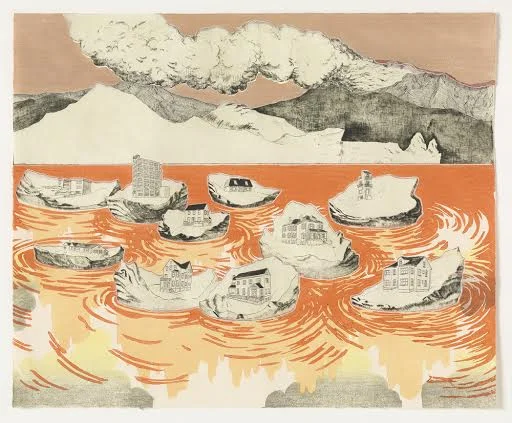
Work by Serena Perrone in the "Contemporary Mokuhanga'' show at Cade Tompkins Projects, Providence, though April 16. Mokuhanga is a traditional Japanese woodcut process.
Lesson in numbness
"Winter teaches us about detachment, numbness. But it’s a way to get through. From winter we learn silence and acceptance and the stillness thickens."
-- Gail Barison
It only looks dead
"The day is ending,
The night is descending;
The marsh is frozen,
The river dead.
"Through clouds like ashes
The red sun flashes
On village windows
That glimmer red."
-- Henry Wadsworth Longfellow, "Afternoon in February''

Behind language
"Hydrogen 1,'' by Sarah Hulsey, in her show "Schemata,'' at Chandler Gallery, Cambridge, Mass., through March 11.

"Hydrogen 1,'' by Sarah Hulsey, in her show "Schemata,'' at Chandler Gallery, Cambridge, Mass., through March 11.
““Hydrogen 1,’’ by Sarah Hulsey, in her show “Schemata,’’ at Chandler Gallery, Cambridge, Mass., through March 11. ”
She says that printmaking, with its emphasis on "repetition, seriality and discrete marks built into larger forms, lets her "visualize the complex systems behind language.''
The gallery says "just as atoms are the building blocks of matter, Hulsey constructs names of chemical elements from their phonemes, the building blocks of speed.''

Maybe we should have headed south after all
Oil by Ellen Granter, at Alpers Fine Art, Andover, Mass.

Oil by Ellen Granter, at Alpers Fine Art, Andover, Mass.

Only if you're a farmer
"Pond, through forest'' (oil on panel), by ROY PERKINSON, at Fountain Street Fine Art, Framingham.
"Winter is the time of promise because there is so little to do - or because you can now and then permit yourself the luxury of thinking so."
-- Stanley Crawford

"Pond, through forest'' (oil on panel), by ROY PERKINSON, at Fountain Street Fine Art, Framingham.
Janet Redman: Enacting TPP would be a perilous bet
via OtherWords.org
From her home in Berks County, Pa., Karen Feridun is helping stage a growing citizen pushback against the expansion of natural-gas extraction. But a far-reaching global deal recently signed halfway around the world may make her job much harder.
Feridun got involved in this fight over concerns that fracking waste laden with toxic chemicals that could end up in the sewage sludge that some Pennsylvania towns spread on local farm fields.
Figuring her best bet for keeping the state’s water, food, and communities safe was putting a stop to fracking, Feridun founded Berks Gas Truth. The group is now part of a statewide coalition calling for a halt to fracking in Pennsylvania.
The campaign got a boost when the Pennsylvania Supreme Court, after hearing a case brought by the Delaware Riverkeeper Network, ruled that local governments have the right to protect the public trust. The court also found that oil and gas companies must abide by municipal zoning and planning laws.
The decision was celebrated as a huge victory for local control. But, Feridun told me, “the Trans-Pacific Partnership could turn over the apple cart entirely.”
The day after we spoke, U.S. Trade Rep. Michael Frohman joined top officials from eleven other Pacific Rim nations in a New Zealand casino to sign the Trans-Pacific Partnership (TPP) — a sweeping “free trade” agreement aimed at opening national borders to the flow of goods, services, and finance.
The location couldn’t have been more symbolic. By entering into this deal, the Obama administration is playing roulette with America’s future.
The White House hopes to win greater access to raw materials, cheap labor, and burgeoning consumer markets in Asia for U.S. companies. What do we stand to lose? Nothing less than the ability to set rules and regulations that protect our families’ health, our jobs, and our environment.
The provision at the heart of this wager is something called an “investor-state” clause. It would let companies based in TPP partner countries sue governments over laws or regulations that curtail their profit-making potential.
It’s a risky bet. Here’s the White House’s simplistic calculus: The U.S. government has never lost an investor-state case.
The more we win, it seems, the bigger our next gamble. The TPP would be the largest free- trade agreement in history, covering about 40 percent of the global economy and giving additional countries the option to “dock” to the treaty later. It also adds thousands of companies that could potentially sue the United States in trade court.
Back in Berks County, the demand from newly opened overseas markets for U.S. gas may increase local pressure to frack. The TPP’s investor-state provisions would let foreign-owned gas companies challenge any statewide limits on the practice standing in their way.
If this sounds unlikely, look no further than our neighbors to the north. U.S. oil and gas company Lone Pine Resources is suing Canada using a similar clause in the North American Free Trade Agreement (NAFTA) when Quebec passed a moratorium to halt fracking under the St. Lawrence River.
Now, TransCanada — the Canadian company behind the hugely unpopular Keystone XL pipeline — is bringing a $15 billion claim against the United States for denying permits to build it. That’s exactly the kind of legal action that makes people like Karen Feridun fighting oil and gas projects nervous.
Even if Washington wins the TransCanada suit under NAFTA, the fear of spending millions of dollars fending off litigation under the much larger TPP could have a chilling effect on future efforts to keep oil, gas, and coal in the ground.
Luckily, as Feridun and her neighbors know, Congress hasn’t approved the Trans-Pacific Partnership yet. If lawmakers care about protecting good jobs, clean skies, safe water, and a stable climate in this hotly contested election year, they’d be wise not to gamble against the public interest.
Janet Redman directs the Climate Policy Program at the Institute for Policy Studies.

'An imperial affliction'








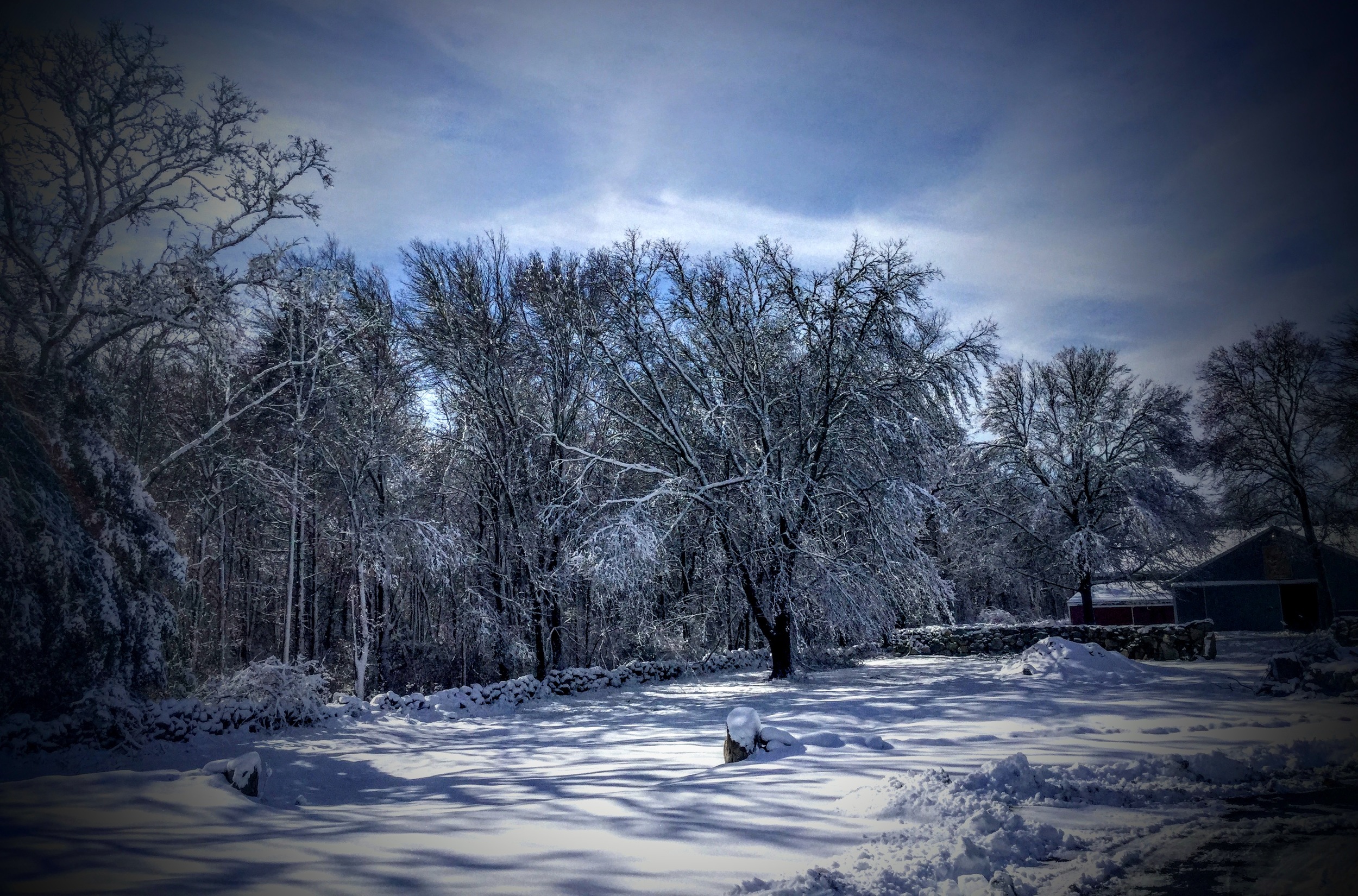
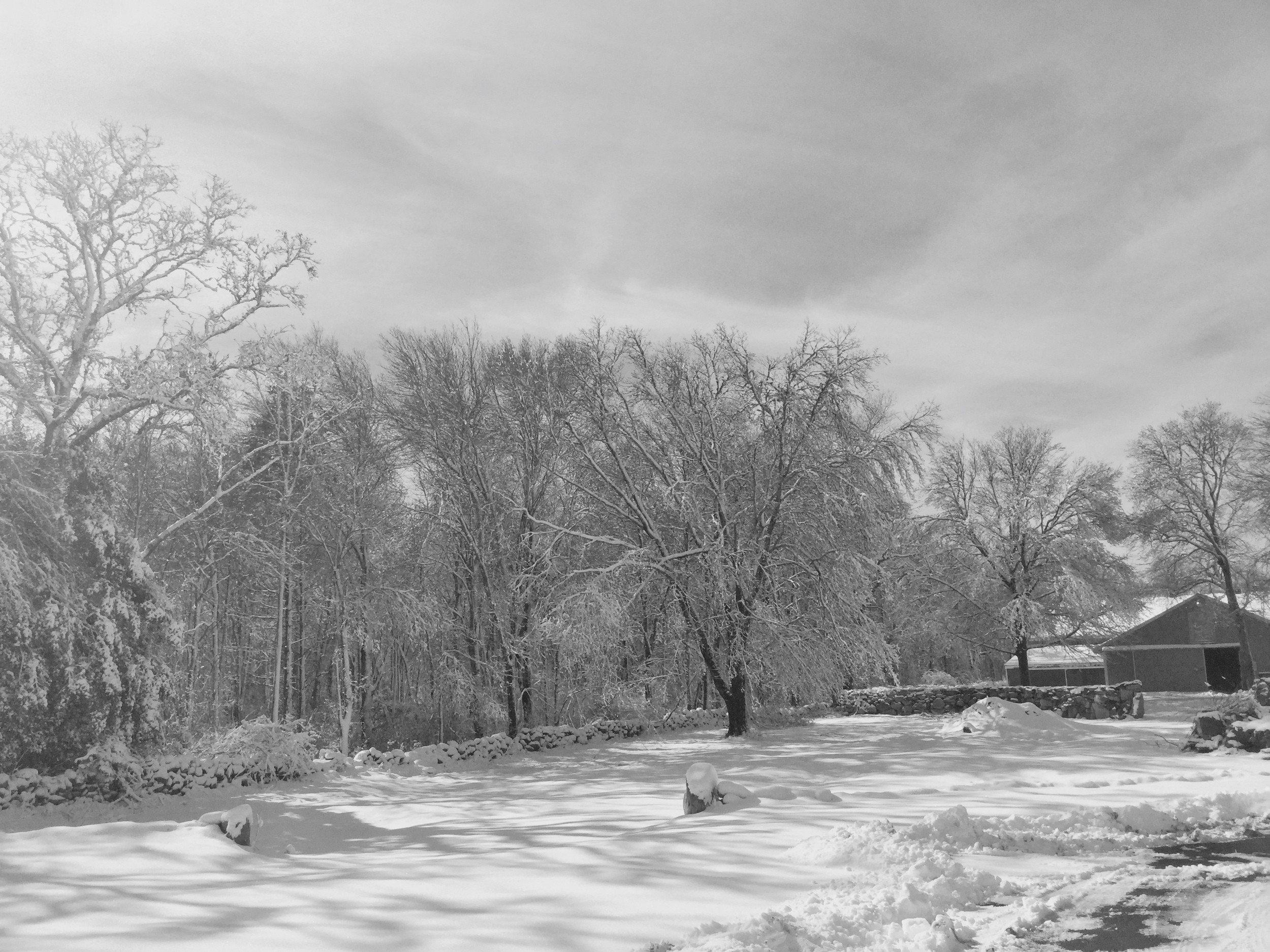


"There’s a certain slant of light,
On winter afternoons,
That oppresses, like the weight
Of cathedral tunes.
Heavenly hurt it gives us;
We can find no scar,
But internal difference
Where the meanings are.
None may teach it anything,
’T is the seal, despair,—
An imperial affliction
Sent us of the air.
When it comes, the landscape listens,
Shadows hold their breath;
When it goes, ’t is like the distance
On the look of death."
-- Emily Dickinson, #82

Altitude sickness
"Elevation'' (acryllic on canvas), by Diane Novetsky, in her show 'EARTHSHIFTER,'' at Galatea Fine Art, Boston, through Feb. 28. She says the name of the show refers to "the materiality of paint as well as the way I manipulate space on a two-dimensional surface...{as well as} my focus on the land, skies and waters of our dynamic yet fragile planet Earth.''

"Elevation'' (acryllic on canvas), by Diane Novetsky, in her show 'EARTHSHIFTER,'' at Galatea Fine Art, Boston, through Feb. 28. She says the name of the show refers to "the materiality of paint as well as the way I manipulate space on a two-dimensional surface...{as well as} my focus on the land, skies and waters of our dynamic yet fragile planet Earth.''
Llewellyn King: The sustaining knock on the door
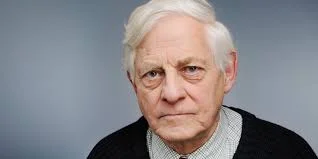
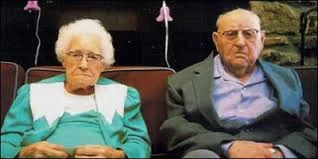
For some Americans today, tomorrow and the day after, on and on, a knock on the door is the high point of a lonely life. They are the old, infirm and shut-in; and they are a growing part of our aging society. Even though many of them have children and grandchildren, if you live alone and you are old, you know what it is to be all by yourself and lonely.
I think of them as the Alone Generation: people who suffer the privations of age and the dark place of loneliness.
The daily knock on the door comes from a volunteer for Meals on Wheels, and means a meal and little companionship. It is a public-private partnership that works: food for needy people.
That knock on the door comes a million times a day as Meals on Wheels volunteers fan out in their communities to deliver food. Some drive great distances in rural areas, some around their own neighborhoods.
The meals are tailored for the elderly, and often for diabetics. Sometimes they are delivered hot and ready to eat. Sometimes they need to be heated in a conventional or microwave oven. Sometimes they reflect regional tastes. All the meals are manna to the recipients.
According to Ellie Hollander, CEO of Meals on Wheels America, based in Arlington, Va., the average recipient is 75 years old or older, is usually a woman, takes at least six medications a day, suffers some physical impairment, and wants to live independently.
About a third of the organization’s funding comes from the federal government, and the other two-thirds comes from state and local governments and charities. There is a lot of volunteer labor.
Hollander says the money spent on keeping people at home is a national bargain: It keeps them out of expensive nursing homes, hospitals and other pricey warehousing.
You do not have to plunge into the statistics about aging – but Pennsylvania alone has over 2 million seniors, according to the Bipartisan Policy Center. Instead, just go to any rundown area of any town or city and you can see them asking grocery store employees about the price of everything, pulling wads of coupons out of their wallets before they hand over their money at the checkout, and struggling to carry their purchases.
My town in Rhode Island has an area called Arctic, which is home to a lot of old people. Their needs are palpable. I see them on the streets, in the drugstores and the grocery store. Some are bent over, nearly double. Others can walk only with canes and walkers. They stand in the cold without shelter, as they will this week, waiting for a bus that comes infrequently. Shopping is a burden without a car, and taxis are expensive. So my neighbors do things the hard way, the only way.
My neighbors are not derelicts. They have worked all their lives, many not in pensionable jobs. They live on Social Security and balance their spending between shelter, food, medicines, utilities and clothing. For them, and many millions of aged Americans, it is about staying alive.
There are studies and committees on the aging; the White House talks about it, Congress ruminates and appropriates a sliver of money. But the horrible truth is millions of old people, probably already undernourished and sick, choose daily between food and heat, food and medicine, food and rent or even clothes.
Retirement communities, assisted living centers, sunshine enclaves in Arizona, Florida and Nevada, are only part of the story of aging. Mostly age comes stealthily, creeping up on people in the communities where they have put down their roots.
I look at poor, old people everywhere and wonder what they were like when young; when they were full of love and joy and hope. I wonder how they make it now, staving off starving or freezing, or living with aching loneliness.
It is worth thinking about this when politicians attack “entitlements” and imply that those in need are there by choice.
The well-off avert their eyes and blame the old for not being better with money in their youth. Unfortunately, many never made enough money to save.
These winter days, as the snow piles up in much of America, fewer people will get that sustaining knock on the door.
Llewellyn King (lking@kingpublishing.com) is a long-time publisher, columnist and international business consultant. This first ran on InsideSources.com