
Vox clamantis in deserto





Chris Powell: One Democratic Party Enough for Connecticut?
Benighted as Connecticut's Republican Party may be in the eyes of some, it is
obligated to reject the advice given the other day by the state's former U.S.
senator and governor, Lowell P. Weicker Jr. Interviewed by Connecticut's Hearst
newspapers, Weicker said the party should let people vote in its nominating
primaries without regard to party membership, as the party did briefly in the
1980s when its Weicker faction led the party.
Of course no party is going to win elections without appealing to a majority of
voters. But not everyone's politics is as adaptable as Weicker's was over a long
career, in which he went from being a Goldwater and Nixon supporter, advocate of
the Vietnam War, and red baiter to hobnobbing with Cuban dictator Fidel Castro
and becoming the darling of government-dependent liberals when, as governor, he
filled their troughs with the proceeds of the personal income tax he imposed on
Connecticut, earning not just the liberals' forgiveness but their amnesia.
That is, some people want their political views and principles given expression
more than they want to win elections at the cost of having to give up their
views and principles. By letting people participate without regard to party
registration, open primaries prevent people of distinct views and principles
from even [ITALICS] having [END ITALICS] a party.
Indeed, when Weicker, as senator in the 1980s, sought to survive in increasingly
Democratic Connecticut by moving from political right to left and began to
alienate Republicans and risk being denied their renomination, his objective in
advocating open primaries was precisely to prevent Republicans from controlling
their own party. What may have been the most apt political cartoon drawn in
Connecticut during his years in politics depicted Weicker telling Castro
confidentially, "All you have to do is register Republican long enough to vote
in the primary."
Besides, Connecticut's Republican Party is not very conservative anyway, largely
indifferent to abortion, homosexuality, gun control, and the other social issues
on which the national party feeds and unwilling even to challenge the major
spending policies on which the state's Democratic Party feeds. That is,
Connecticut Republicans are often hard to distinguish from Democrats, and the
state won't gain political choice and change from more Weickerism, from
Republicans becoming still more like Democrats.
* * *
... Rising housing prices are not really good news ...
For the most part news stories treat an increase in housing prices as an
indicator of prosperity, something to be welcomed, as happened the other day
when the Greater Hartford Association of Realtors reported that the median
housing sale price in the Hartford area had risen by almost 1 percent over the
past year. That's because for many people homeownership constitutes the bulk of
their assets and a decline in housing prices can wipe out the heavily mortgaged.
But housing isn't only an investment; it is also a necessity of life, like food
and fuel. Only food and fuel producers would celebrate an increase in the price
of those necessities — and an increase in housing prices means more expense for
renters and more difficulty for them in becoming homeowners.
Of course real estate long has been highly cyclical, a boom-and-bust market,
made more mercurial by the Federal Reserve's manipulation of interest rates for
political purposes. The Fed's recent suppression of rates in the name of
stimulating the economy has worsened the country's housing situation, driving up
prices while depriving small savers of interest income without increasing
employment, wages, and the [ITALICS] ability [END ITALICS] to buy housing. Real
unemployment -- counting people who have withdrawn from the labor market, been
demoted to menial or part-time jobs, or claimed disability pensions -- is
several times the official unemployment rate.
Reducing the cost of living is pretty much the definition of rising living
standards and progress, so rising housing prices are as much a bad sign as a
good one.
-----
Chris Powell is managing editor of the Journal Inquirer in Manchester, Conn.
-END-
Mary-Pat Cormier: Liability of higher education institutions (HEIs) for off-campus housing risks is tricky,

Liability of higher education institutions (HEIs) for off-campus housing risks is tricky, focusing on the institution’s role in off-campus housing arrangements.
If an HEI “assumes a duty” to its students who rely on that duty, it must fulfill the duty with due care. This general rule applies to off-campus safety: For example, if the college offered a limited shuttle bus service to or from off-campus events where it was aware of drinking, it can be liable for injuries to its student struck off campus by a car driven by an intoxicated student returning from an off-campus party. By offering the shuttle service, the HEI assumed duties to students for safety while traveling between the campus and the parties.
In the off-campus housing context, the “assumed duty” theory was determinative in a 2006 Delaware Supreme Court case. A student was assaulted by the boyfriend of another student in the parking lot of off-campus housing. The housing was “offered” by the defendant university to the plaintiff who did not get into a residence. The case went forward on negligence and detrimental reliance claims, because the university “assumed” the duty to exercise reasonable care when it undertook to provide off-campus housing.
Likewise, in 2014, a New Jersey case involved a student injured by a broken window in off-campus housing that the defendant college “arranged.” The plaintiff relied on the duty of care owed by the HEI with respect to the off-campus housing it “arranged.” Therefore, it had a duty to warn the student of the defective window in the off-campus housing unit.
Where a court may “extend” a duty
Courts seem willing to “extend” duties to an HEI, related to off-campus housing, even where the institution has not “assumed” a duty.
In Massachusetts, a landlord near Boston College complained of slander and tortious interference by BC arising from alleged statements by BC to students. The court observed BC could have a duty regarding safety to a student living off campus, because it acted like it had a duty: 1) the college had an off-campus housing office (OCHO); 2) it had a Community Assistance Patrol between students and surrounding communities; 3) BC police responded to off-campus housing disturbances involving BC students; 4) the BC student handbook referred to students’ “responsible citizenship ... in local neighborhoods.”
A 2014 New Jersey case involved the liability of a private school for the violation of fire codes in off-campus housing. The school spun-off its dorms into a separate entity that the court concluded was little more than a legal fiction, and it found the school liable for the violations. The court suggested that a school may be responsible for statutory violations in off-campus housing, where there is a “mandate to liberally construe an Act to achieve the goal of fire safety.” A school may be liable for fire code violations off campus: 1) where there is some affiliation or relationship between the landlord and the school and 2) due to the nature of violated laws—i.e. fire/safety violations.
Risk management concerns
These cases demonstrate a continuum or spectrum of liability exposures for off-campus housing (Fig. 1). Risk management strategies for the liability spectrum, include:
- Language where the student waives any legal claims that they may have against the HEI arising out of off-campus housing issues, assumption of risk or limitation of liability to gross negligence in written information provided to students by an OCHO;
- Remove properties on OCHO list after written complaints—with or without investigation of complaints by the OCHO or other office of the HEI to determine whether the complaints are valid;
- Allow students to rate off-campus housing and landlords in OCHO database;
- Where a college is “arranging” or “offering” off-campus housing pursuant to a written agreement with a landlord, include indemnification, limitation of liability to gross negligence language in the contract, and “Additional Insured” status on landlord’s liability policies;
- Educate/empower students on basic landlord-tenant rights and code violations, including fire safety.
Regarding insurance, if a college or university has potential liability for off-campus housing (“assumed duty,” “offered” or “arranged”):
- Liability policies should contemplate losses taking place at those locations;
- Liability policies should respond to negligence claims, subject to exclusions, terms and conditions; whereas a breach of contract claim or a claim arising out of fire-code, housing-code, or building-code violation would likely not be covered by a liability insurance policy.
- If a school has reason to know of pre-existing hazardous conditions in off-campus housing, coverage could be barred.
- If the claim is related to a prior claim or act, there may be no coverage at all, depending on whether the insured knew of the prior matter or provided notice to the insurer.
For an HEI that owns or manages off-campus housing, these same concerns apply to liability policies. Plus, those properties are susceptible to “increase in hazard” theories, which could limit property coverage. (Generally, “increase in hazard” means that where there is an increase in hazard to insured property in the knowledge or control of the insured, insurance coverage will be suspended. If a loss occurs while that coverage is suspended, an insurance claim may be denied. If the hazard is cured, a loss after the reinstatement is covered. An increase in hazard will generally not be found if there has been merely a casual or temporary change in character of the premises. An insured’s negligence is not an increase in the hazard, unless it results in a change to the property, use, or occupancy.) Where there is an increase in hazard to insured property, which effects the safety of property–like increase in occupancy in the knowledge or control of the insured, coverage will be jeopardized.
Understanding where an HEI falls on the spectrum of liability exposures is essential to a risk-management strategy.
Mary-Pat Cormier is a partner in the Massachusetts law firm Bowditch & Dewey.
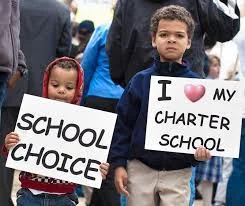
Charles Chieppo: Fighting charter-school success
Given the powerful, well-funded interests behind the plan, no one would describe it as the kind of grassroots effort the Founding Fathers had in mind when they dreamed of a dynamic democracy driven by engaged citizens. But you can't help but wonder if L.A.'s charter advocates arrived at their plan after studying Massachusetts's experience.

The Eli and Edythe Broad Foundation and other advocates have developed an ambitious plan to place nearly half of Los Angeles's public-school students in charter schools within eight years. To fund the nearly half-billion-dollar effort, backers plan to tap Broad and several other foundations, along with a number of area billionaires.
Given the powerful, well-funded interests behind the plan, no one would describe it as the kind of grassroots effort the Founding Fathers had in mind when they dreamed of a dynamic democracy driven by engaged citizens. But you can't help but wonder if L.A.'s charter advocates arrived at their plan after studying Massachusetts's experience.
Massachusetts Gov. Charlie Baker recently kicked off yet another battle to lift a state cap of 72 on the number of so-called commonwealth charter schools, which are independent of local school districts and more numerous than the in-district schools known as Horace Mann charters. About 3 percent of the state's public-school students now attend both types of charter schools, which are concentrated in urban areas.
The cap was last raised in 2010, driven largely by the prospect of $250 million from the Obama administration's "Race to the Top" grant program. A thriving charter sector was one of the criteria for receipt of the federal money.
Across the country, there is wide variation in the quality of charter schools. But few would disagree that Massachusetts' charters are the nation's best. One 2015 study, from Stanford University's Center for Research on Educational Outcomes, found that Boston charter schools are doing more to close the achievement gap than any other group of public schools in America. And a 2009 study commissioned by the Boston Foundation and conducted by Harvard and MIT researchers found that the academic impact of a year in a Boston charter school is roughly equivalent to a year spent in one of the city's elite public "exam schools."
And it isn't just Boston's charters. Massachusetts' K-12 public schools are the best-performing in the country, and across the state 18 charters finished first last year on state tests. That's a big part of the reason 37,000 state students are on charter-school waiting lists, a situation that Baker calls "a disgrace."
So why, given the outstanding performance of so many of Massachusetts' charter schools, is it always such a battle to allow more of them? Opposition from superintendents, school boards and teachers' unions is a very powerful thing in what is -- with the exception of Gov. Baker and Lt. Gov. Karyn Polito, who are Republicans -- a one-party state when it comes to officials who are elected statewide.
Opponents make a number of arguments, but the main one comes down to the claim that charters drain money from traditional public schools. In a sense, they do. In Massachusetts, the money follows the student; when a student chooses to go to a charter school, the per-pupil funding goes along with him or her.
But what opponents rarely mention is that districts are fully or partially reimbursed for six years for each student they lose. During the first year, they receive 100 percent of the funding they would have received had the student stayed, then 25 percent for each of the next five years. That fact makes the opponents' money argument dubious at best.
Sadly, dysfunction breeds dysfunction. The resistance that Massachusetts supporters encounter in trying to expand the number and availability of charter schools is familiar to charter advocates across the country. Plenty of that resistance exists in Los Angeles, so the L.A. advocates' effort to do an end-run around democratic processes surprises no one.
In the end, we all lose when promising school reforms are blocked by interests threatened by changes in the status quo. Families are denied educational opportunity, local economies become less competitive because the potential of thousands of students is never realized, and citizens' faith in government sinks even lower.
Charles Chieppo (Charlie_Chieppo@hks.harvard.edu) is a research fellow at the Ash Center of Harvard's Kennedy School and the principal of Chieppo Strategies, a public-policy writing and advocacy firm. This piece first ran in governing.com, the Web site of Governing magazine.
That old saw about...
"Unihemispheric Existence'' (detail) (steel, wood, gallery wall), by WILSON HARDING LAWRENCE, in the show "Nuanced: open-endedness, capaciousness and other provocative conditions of making,'' at the Dedee Shattuck Gallery, Westport, Mass., through Nov. 8.

"Unihemispheric Existence'' (detail) (steel, wood, gallery wall), by WILSON HARDING LAWRENCE, in the show "Nuanced: open-endedness, capaciousness and other provocative conditions of making,'' at the Dedee Shattuck Gallery, Westport, Mass., through Nov. 8.
Safer up here
"Humming II'' (mixed media and resin on panel), by SUSAN GOLDSMITH, at Lanoue Fine Art, Boston.

"Humming II'' (mixed media and resin on panel), by SUSAN GOLDSMITH, at Lanoue Fine Art, Boston.
Chris Powell: An immigration policy that might save America
Such a policy of generous, strict, controlled, careful, and patriotic immigration would safeguard the country and its culture, be generous to its illegal aliens, and advance the country's ideals as the universal nation.
Pope Francis told Congress last week that the United States should welcome migrants and refugees, as if the country's record in that respect wasn't already infinitely more liberal than that of Vatican City, over which the pope presides.
For while the United States has plenty of immigration law, lately it has had little immigration law enforcement. Most people caught entering the country illegally are given a summons to attend an immigration court proceeding and are waved through.
Of course three-quarters of them never show up in court. Instead in many instances they head for "sanctuary cities" like Hartford and New Haven, where local police are forbidden to assist enforcement of immigration law, and for "sanctuary states" like Connecticut, where illegal immigration is facilitated by the award of driver's licenses, city identification cards, and resident tuition discounts at public colleges.
This is nullification of federal immigration law and the nullifiers include President Obama, Governor Malloy and a majority of Connecticut's state legislators, as well as the people in charge of city government in Hartford and New Haven.
Of course this doesn't make any particular immigrant a bad person, but any country that cannot control its borders and enforce conditions for permanent residency and citizenship will not remain a country for long. Indeed, in New Haven, where the "sanctuary city" movement is an especially ideological one based at Yale University, it is sometimes admitted that the objective is indeed to erase the country's borders. As a practical matter that is treason.
So for the United States the primary question about immigration is whether the country wants to maintain itself as a republic with a distinctly democratic and secular political culture, the more so as immigrants from totalitarian and religiously fanatical cultures, immigrants who have little intention to assimilate into the cultures of their new countries, are extensively penetrating what used to consider itself as the West.
Europe is already fairly mocked as Eurabia, having accepted millions of Arabs who were economic rather than political refugees and who have formed separatist communities seeking to be governed by religious rather than secular law. By the European Union's own statistics, 80 percent of its migrants lately are not as generally imagined, refugees from the civil war in Syria, but economic migrants from throughout Africa and the Middle East. They have run welfare costs up and the wage base down.
In the United States organized labor has pretty much capitulated to uncontrolled immigration, though unlimited immigration here also undermines the wage base and weakens the economy when much of the money earned by immigrants is only sent out of the country to relatives abroad.
Organized labor can take such a position only because it strives to be politically correct and has come to represent mostly government employees, whose jobs and compensation are immune to immigration, rather than private-sector workers, whose jobs and compensation are not immune.
There is probably no compromise between the immigration law nullifiers and the angry and heartless people who want to deport the estimated 11 million illegal aliens in the country, including innocent young people who were brought here by their parents and know no other homeland and whose plight is partly the result of the U.S. government's own negligence with immigration enforcement.
But a political majority might be mustered behind the sort of immigration reform that moderates in Congress have long proposed:
*Strict border control, with no more waving illegals through, but with close tracking and prompt expulsion of visitors who overstay visas.
*Once strict border control is established to everyone's satisfaction for a year, grant eligibility for permanent residency to those who can demonstrate self-sufficiency, proficiency in English, knowledge of U.S. history, and devotion to a democratic and secular culture, and after five years make them eligible to apply for citizenship.
Such a policy of generous, strict, controlled, careful, and patriotic immigration would safeguard the country and its culture, be generous to its illegal aliens, and advance the country's ideals as the universal nation.
Call it a Lincolnian plan, as it was implied by Lincoln as he campaigned for the U.S. Senate in Illinois in July 1858, just after Independence Day.
We hold this annual celebration to remind ourselves of all the good done in this process of time, of how it was done and who did it, and how we are historically connected with it, and we go from these meetings in better humor with ourselves.
We feel more attached the one to the other, and more firmly bound to the country we inhabit. In every way we are better men in the age, and race, and country in which we live for these celebrations.
But after we have done all this we have not yet reached the whole. There is something else connected with it.
Besides these men descended by blood from our ancestors, we have among us perhaps half our people who are not descendants at all of these men. They are men who have come from Europe -- German, Irish, French, and Scandinavian -- who have come from Europe themselves or whose ancestors have come hither and settled here, finding themselves our equals in all things.
If they look back through this history to trace their connection with those days by blood, they find they have none. They cannot carry themselves back into that glorious epoch and make themselves feel that they are part of us.
But when they look through that old Declaration of Independence they find that those old men say, “We hold these truths to be self-evident, that all men are created equal,” and then they feel that that moral sentiment taught in that day evidences their relation to those men, that it is the father of all moral principle in them, and that they have a right to claim it as though they were blood of the blood and flesh of the flesh of the men who wrote that Declaration -- and so they are.
An immigration policy that offered citizenship to those who wanted not just to live here but to be fully American might give the country a better class of citizens than the native-born, so many of whom are ignorant about their country and take it for granted.
Chris Powell is managing editor of the Journal Inquirer, in Manchester, Conn.
Exploring a sweet but threatened industy
"Karl with Honeybears'' (oil on canvas), by DAVID PETTIBONE, at the Corey Daniels Gallery, Wells, Maine.

"Karl with Honeybears'' (oil on canvas), by DAVID PETTIBONE, at the Corey Daniels Gallery, Wells, Maine.
Mr. Pettibone's "Beekeeper'' series explores the beekeeping business, from "honey harvest to monoculture pollination to fighting the diseases that threaten our complex relationship with the honeybee and its very existence.''
Transnational art

"Arcology'' (detail; gouache and Lascaux acrylics on archival papers), by Ilona Anderson, in her show "Arcology,'' at Kingston Gallery, Boston, through Nov. 1.
The gallery says the ..."diverse and radiant conglomerate says as much about the potential for transnational understanding as it does for racial relations, both in her native South Africa and in the United States.''
Beautiful land, in a way
"Whale's Jaw, Dogtown,'' from the archives of the Cape Ann Museum, in Gloucester.

"Whale's Jaw, Dogtown,'' from the archives of the Cape Ann Museum, in Gloucester.
Dogtown is an abandoned inland settlement on Cape Ann. Once known as the Common Settlement and populated by respectable citizens, the area later known as Dogtown is divided between Gloucester and Rockport. It's in an area not well suited to agriculture, because of poor and very rocky soil. It's not all that great for building either. You need a lot of dynamite.
The boulders above, of course, came from what is now Canada in the last Ice Age.
The look of such landscapes is chilling, even in summer. The whaling reference is to be expected in coastal New England.
The quiet catboat
"Sailing Off Morris Island (Chatham, Cape Cod),'' by BOBBY BAKER (copyright Bobby Baker Fine Photography).

"Sailing Off Morris Island (Chatham, Cape Cod),'' by BOBBY BAKER (copyright Bobby Baker Fine Photography).
This is a catboat. I love catboats, with their comfort, especially their wide cockpits, and lack of pretension. Pure sailing pleasure, albeit without a lot of adrenaline involved, and with mediocre upwind performance.
Catboats have centerboards, which make them very handy along sandy coastlines such as Cape Cod and Long Island.
'When I was a boy, about half the boats in West Falmouth (Mass.) Harbor were catboats. There are far fewer now; they aren't sexy enough.
--- Robert Whitcomb
Paul A. Reyes: Jeb Bush has had freebies his whole life

The Republican Party has struggled for years to attract more voters of color. In a recent campaign appearance, candidate Jeb Bush offered yet another useful case study of how not to do it. At a campaign stop in South Carolina, the former Florida governor was asked how he’d win over African-American voters. “Our message is one of hope and aspiration,” he answered. So far, so good, right?
“It isn’t one of division and get in line and we’ll take care of you with free stuff. Our message is one that is uplifting — that says you can achieve earned success.”
Whoops.
With just two words — “free stuff” — Bush managed to insult millions of black Americans, completely misread what motivates black people to vote, and falsely imply that African Americans are the predominant consumers of vital social services.
First, the facts.
Bush’s suggestion that African-Americans vote for Democrats because of handouts is flat-out wrong. Data from the Joint Center for Political and Economic Studies shows that black voters increasingly preferred the Democratic Party over the course of the 20th Century as it stepped up its support for civil rights.
These days, more than 90 percent of African Americans vote for the Democratic Party’s presidential candidates because they believe Democrats pay more attention to their concerns. Consider that in the two GOP debates, there was only one question about the “Black Lives Matter” movement. When they do comment on it, Republican politicians feel much more at home criticizing that movement against police brutality than supporting it.
Bush is also incorrect to suggest that African-Americans want “free stuff” more than other Americans. A plurality of people on food stamps, for example, are white.
Moreover, government assistance programs exist because we’ve decided, as a country, to help our neediest fellow citizens. What Bush derides as “free stuff” — say, Medicaid, unemployment insurance, and school lunch subsidies — are a vital safety net for millions of the elderly, the poor, and children, regardless of race or ethnicity.
How sad that Bush, himself a Catholic, made his comments during the same week that Pope Francis was encouraging Americans to live up to their ideals and help the less fortunate.
Finally, Bush’s crass comment is especially ironic coming from a third-generation oligarch whose life has been defined by privilege.
Bush himself is a big fan of freebies. The New York Times has reported that, during his father’s 12 years in elected national office, Bush frequently sought (and obtained) favors for himself, his friends, and his business associates. Even now, about half of the money for Bush’s presidential campaign is coming from the Bush family donor network.
And what about those corporate tax breaks, oil subsidies and payouts to big agricultural companies Bush himself supports? Don’t those things count as “free stuff” for some of the richest people in our country?
It’s also the height of arrogance for Bush to imply that African Americans are strangers to “earned success.” African-Americans have been earning success for generations, despite the efforts of politicians like Bush — who purged Florida’s rolls of minority voters and abolished affirmative action at state universities.
If nothing else, this controversy shows why his candidacy has yet to take off as expected. His campaign gaffes have served up endless fodder for reporters, pundits, and comics alike.
Sound familiar?
As you may recall, Mitt Romney helped doom his own presidential aspirations by writing off the “47 percent” of the American people he said would never vote Republican because they were “dependent upon government.”
In Romney’s view, they’re people “who believe that they are victims, who believe the government has a responsibility to care for them, who believe that they are entitled to health care, to food, to housing, to you-name-it.”
Sorry, Jeb. The last thing that this country needs is another man of inherited wealth and power lecturing the rest of us about mooching.
But not touching

"Physicality'' (photography, oil, narrative text and resin on panel), by SHERRY KARVER, in her show "Objects of Affection,'' at Lanoue Gallery, Boston, through Oct. 31.
'Ground Cover'

"Multistory'' (plaster, wood paintings on panel), by JULIE GRAHAM, at Kingston Gallery, Boston, in its current show, "Ground Cover: Contemporary Abstraction Between Figure and Ground.''
Guaranteed worm in every ear of corn

Dick and Dot Wingate at their Studio Farm, in Voluntown, Conn. (David Smith/ecoRI News photo)
By DAVID SMITH/ecoRI News contributor
VOLUNTOWN, Conn.
Back in 1963 it seemed natural for Dick and Dot Wingate to start growing vegetables to feed their family, only now the family has grown to include many people who enjoy the fruits of their labor at two farmers markets in southeastern Connecticut.
Look for the small banner inside the tent that reads “Studio Farm.” It was a name for their 35-acre homestead that stuck. Sit on the back porch of their circa -1753 farmhouse and they might bring out a copy of an old newspaper to explain that monicker. In it there is an article about the farm and its former tenants from around 1916 — movie stars of the silent-film era led by actor and producer Joseph Byron Totten.
Look to the north from the porch and you’ll see a more than 100-year-old stone building that is now a barn. Look closer, and you’ll see bars on the window. It was once used as a “jail” for a Western film.
There also is a story about a secluded area out back shielded by a tall ledge that purportedly was once the site of a still that produced booze during Prohibition.
They might also tell you the story about one cold October day the same year they moved in when a bucket of ashes left on the porch started a fire that spread to the roof. The volunteer fire department saved the day and the house. Dick was at work as a shop teacher at Stonington High School when he got the news from a school official. He was told that his seven-month pregnant wife, Dot, and his two children, Mark and Belinda, were OK.
“I was surprised when I got home to see the house still standing,” recalled the 78-year-old.
Things are much calmer at the farm these days, well, except for the visits by a black bear. It seems the couple’s multitude of fruit trees, strawberry plants and blueberry bushes are too much for the local wildlife to ignore. The bear has left calling cards on the ground in the groves that provide clues to its diet.
Gardens surround the barn and two greenhouses. The more than two dozen fruit trees provide a variety of apples, pears and peaches.
The Wingates were certified organic farmers for nine years, but let that certification lapse, not because they have changed their farming methods. It was simply a matter of cost. The last time they were certified the price tag was $750.
The process involves a visit from a person from an independent certification group. Seed packets are reviewed to check and see if they are organic. Crop rotation and planting plans are studied, as well as the harvest numbers from the previous season. There also was a rule requiring fields be numbered so that if there was a problem with the crop it could be traced to a particular area.
“We can’t say we are organic,” Dick said, “but we can say that we are growing using organic standards.”
It’s not a question that comes up frequently. The couple said new customers ask whether they are organic growers, but their regular customers already know.
“So many people come to the farm and see the weeds,” said Dick, noting that using herbicide to control them isn’t an option. “People thank us for not using herbicides”
There are some organic sprays, made from various flowers, that are allowed, but they are contact sprays — meaning they must land on the bug — and aren’t very efficient.
The Wingates originally got the organic certification at the urging of their daughter Belinda Learned. When they tried to get into the Stonington Farmers Market, they were rebuffed because the group wanted an organic farm member. That was 13 years ago.
Family affair The Wingates are joined at the market in a field next to the Stonington Borough town dock by their daughter Belinda and her husband, Ed Learned, owners of the 105-acre Stonyledge Farm in North Stonington. The Learneds sell pasture-raised beef, pork, eggs and chicken, along with a few vegetables under the same tent.
If you visit their tent, you might see four generations of the family. The Wingates, Learneds and Belinda’s daughter, Marcia, and her children Bradley and Annalise.
Belinda also has three sons who operate the 115-acre Valley View Dairy on East Clark Falls Road in North Stonington. It’s about 1.5 miles from her farm.
The Learneds have a 98-foot-by-30-foot greenhouse. Dot starts the vegetables from seed in her greenhouse in February and, when the plants are ready to be transplanted, they are brought to this larger greenhouse to mature.
Dick said he never wanted teaching to be the sole source of their income. His starting salary was around $5,200. His wife would later work for 22 years in the Ledyard School district teaching business classes.
So, 20 years ago when they had extra vegetables, jams and fruit they would put it out front on a wooden stand at their farm, with a plastic container for people to leave money. They used that money to send their kids to an adventure camp in Massachusetts.
Then, 13 years ago, they got their foot in the door at farmers markets because of that organic certification. Dick said that years ago he used to spray his fruit trees to combat bugs, but that reading the label showed him that it contained some nasty stuff.
“Three to four years after I stopped spraying, I started to see praying mantis eggs on the raspberries,” he said. “I realized that I was killing beneficial insects as well as the bad bugs.”
The couple now grows about 36 varieties of tomatoes, including heirlooms. Tomatoes, and various types of lettuce, are Studio Farm’s big sellers.
“They don’t look perfect,” Dick said. “They are not spherical. I had one lady look them over and said that one had a split in it. She denied herself a great tasting meal.”
And sometimes there are years when worms can be found in the ears of corn they sell. So, like any good farmer, Dick sold this corn with the guarantee that each ear came with a worm. He recalled another farmer marketed his corn with the promise that each ear came with a “free fishing worm.”
Studio Farm also sells a mesclun mix, which features a variety of lettuces, arugula, dill, basil and spicy mustard leaves. They sell 9 ounces of the mesclun mix for $5 and 5 ounces of arugula for $4.
Dot, 77, said it usually takes her three hours on a Friday to put together just 12 packages for that weekend’s markets. The leaves have to be washed, sorted and packaged. It is one product that usually sells out.
And as far as the variety of jams they sell, Dot said they probably sell some 1,800 jars a season.
The youngest of the Wingates’ four children is Matthew. He is expected to retire from the National Oceanic and Atmospheric Administration (NOAA) in 18 months and has talked about returning and opening a farm store — a place for local farmers to bring their crops.
It’s a question of finding a good place with plenty of traffic, Dick said.
The Stonington Farmers Market is open every Saturday from 9 a.m.-noon until the first Saturday in November, when it moves to the Stonington Velvet Mill, 22 Bay View Ave., until the end of May. The Wingates and Learneds also sell their wares at the Denison Farmers Market, 120 Pequotsepos Road in Mystic, each Sunday from noon-3 p.m.
Concealment goes to school by Chris Powell
When a public school teacher is suspended amid investigation of a complaint that he molested a student, what are the urgent objectives of a school superintendent? In Stafford and indeed in most Connecticut towns those objectives include preventing the public from finding out.
When a public school teacher is suspended amid investigation of a complaint that he molested a student, what are the urgent objectives of a school superintendent? In Stafford and indeed in most Connecticut towns those objectives include preventing the public from finding out.
That's the lesson of the Journal Inquirer's freedom-of-information complaint against Stafford's school superintendent, Patricia A. Collin.
On Feb. 12, as part of its regular monthly inquiries to local government, the newspaper gave Collin a letter requesting access to records of disciplinary action taken with school employees since January. "This request," the letter said, "includes but is not limited to records involving reprimands, admonitions, suspensions, reductions in compensation, and dismissals."
The superintendent replied that the school system had no such records. But she was hiding one -- her Jan. 26 order suspending an elementary school teacher under investigation for sexually touching a girl in his class and abusing another student verbally.
The suspension became known in March when the teacher was arrested on charges o sexual assault, risk of injury, and disorderly conduct. So why had Collin refused to disclose the suspension?
The school system's lawyers offer a technical and contrived defense. As a suspension with pay, they argue, the teacher's suspension did not qualify as a "disciplinary" action, the term the newspaper's request used. Further, the lawyers argue, the newspaper's request for access to records of "suspensions" covered only "disciplinary" suspensions.
The lawyers claim that if the newspaper had asked for records of suspensions alone, the superintendent would have promptly produced her Jan. 26 order. Nevertheless, the teacher's case turned into serious disciplinary action. On April 30 the superintendent formally accused the teacher of misconduct and warned that he might be fired. He resigned in July and in August pleaded guilty to risk of injury, a felony.
So is a suspension with pay during an investigation a "disciplinary" action or not? Some courts have ruled that it is, and certainly such a suspension is often the prerequisite of disciplinary action. Connecticut's Freedom of Information Commission will decide and then maybe a court will.
But as for public administration, the important thing here is that the superintendent knew very well what the newspaper was looking for -- information about misconduct by school employees or allegations of misconduct that had prompted action such as the action the superintendent indeed had taken, the removal of a teacher from the classroom and indeed from all school property. Government agencies throughout the country often report or admit suspensions with pay when an employee's conduct is under review prior to any conclusion of misconduct, punishment, or arrest.
In fairness to Superintendent Collin it must be acknowledged that while Connecticut residents often think that they elect their school boards to supervise school operations, in fact most boards are determined not to know anything about school personnel, not even serious criminal matters. Most boards claim that they have to preserve their ignorance of employee conduct lest board members somehow be compromised if they have to decide appeals of disciplinary action.
There is absolutely no basis in Connecticut law for such a position. This is just the rationale superintendents use to intimidate the public's representatives out of doing their jobs so that superintendents can do their jobs without oversight, so that embarrassing and even criminal incidents can be concealed, and so that bad teachers can stay employed or move on to jobs in other schools.
Still they call it public education.
Chris Powell is managing editor of the Journal Inquirer, in Manchester, Conn.
'Katrina Then and Now'
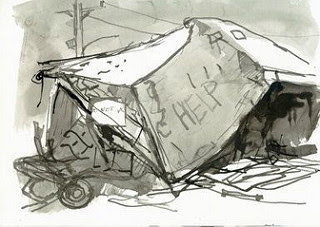
"New Orleans Sketchbook, March 1-17, 2007, Lower Ninth Ward,'' by JEFFREY MARSHALL, in the show "Katrina Then and Now: Artists as Witness,'' through Oct. 10, at Gerald Cantor Art Gallery, College of the Holy Cross, Worcester.
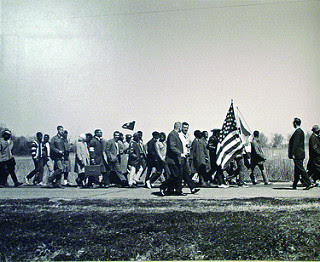
The march to Montgomery, 1965
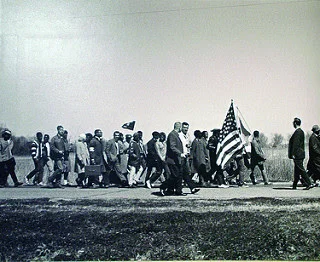
"Civil Rights Marchers Walking from Selma to Montgomery, Alabama, on Monday, March 23, 1965,'' photo by JAMES BARKER, in the show "Through the Lens of History: Selma & Civil Rights at the Grand Circle Gallery,'' Boston, through January.
Nancy Gaucher-Thomas: The centrality of art
Living in Rhode Island for the past 20 years has been a great experience for me. Accessibility is key. People, no matter what their socio-economic status, are accessible and available to offer their expertise and help in making Rhode Island a better place. This is the single greatest thing about our state.
Because of this accessibility, we have the potential to make things happen very quickly.
As an artist with a background in advertising, I see the possibilities and those possibilities are what keep me here. I see the enthusiasm in friends and colleagues as they speak about Rhode Island and why it is a special place. The resounding answer is always: Rhode Island has everything. It is a place rich in culture, steeped in history, with some of the best learning institutions in the world, and a true melting pot surrounded by beautiful sea and landscapes.
How important are the arts to Rhode Islanders? What can we say about the arts that hasn’t already been said? Do people really “get it”? Given my experience with many different arts organizations and artists, and the fact that Rhode Island’s population is heavily composed of people working in the various art sectors, I think they do get it.
Art can have amazing power to foster collaboration between different societies and cultures. Art can be a powerful way to bring communities together. Art is powerful in its simplicity. It can convey ideas across classes and cultures because of its lack of reliance on language. This makes it one of the most powerful tools of communication.
In fact, research proves that a greater focus on the arts in a city creates social cohesion and better civic engagement. Creation of community art helps citizens work together to create shared visions of their ideals, values and hopes for the future. The arts bring people together, all shapes and sizes, ethnic backgrounds, religions; there are no barriers. Artists think big, they have big ideas and can implement them with the help of other artists and creative types and organizations. Artists are quite often one step ahead of everyone else in seeing the big picture. Artists are enthusiastic about getting involved, collaborating with others to make an even bigger impact on how the state is seen and perceived.
Art is an important way to document our collective present so that future generations may have greater understanding of our ways of thinking, values and more. Reaching back into time, the cave paintings of prehistoric times provide one of the last few glimpses of how these people lived and of their religious and moral values. Art is a deceptively simple way to access cultures that might otherwise be forgotten.
Art has long been a tool of protest and an inciter of social change. Art also has the capacity to heal, as therapeutic art is now commonly used to alleviate psychological trauma.
As Rhode Island moves into a more defined outreach for tourism, as well as economic development, with an effort to welcome the biotech sector in a more unified way, we will see art take its place to inspire, promote and communicate as our state ventures forth, as it has since its founding, with creating new opportunities and inviting others to join in.
I am proud to play my part to encourage the bringing of art to the table at the beginning, middle and end of our processes. As the founder of the Art League of Rhode Island, I see such integration as the soul of our mission. As the founder, along with Rhode Island artist Gretchen Dow-Simpson, of the Fourth Annual Arts Marketplace: Pawtucket, I look forward to welcoming more than 50 artists from throughout the region this Sept. 26 and 27 to the Pawtucket Arts Armory (ArtsMarketplacePawtucket.com).
These artists and those who attend this free event from throughout the state and region will be participating in, and celebrating, our state’s focus on commerce, diversity, tourism and quality of life. We will celebrate the rol that creativity can play in Rhode Island's success, now and in our future.
Nancy Gaucher-Thomas is an artist from East Greenwich, R.I. She had help writing this piece from Gretchen Dow Simpson, an artist from Providence.

David Warsh: After '08 Close Call Can Bankers Avoid Another Depression?
SOMERVILLE, Mass. So much for the first two depressions, the one that happened in the 20th Century, and the other that didn’t happen in the 21st. What about that third depression? The presumptive one that threatens somewhere in the years ahead.
Avoiding the second disaster, when a full-blown systemic panic erupted in financial markets in September 2008 after 14 months of slowly growing apprehension, turned on understanding what precipitated and then exacerbated the first disaster, the Great Depression of the 1930s.
By the same token, much will depend on how the crisis of 2007-08 comes to be understood by politicians and policy-makers in the future.
The panic of ’08 wasn’t described as such at the time – it was all but invisible to outsiders, and understood by insiders only at the last possible moment.
It occurred in a collateral-based banking system that bankers and money-managers had hastily improvised to finance a 30-year boom often summarized as an era of “globalization.”
The logic of this so-called “shadow banking system” has slowly become visible only after the fact.
The panic was centered in a market that few outside the world of banking even knew to exist. Its very name – repo – was unfamiliar. The use of sale and repurchase agreements as short-term financing – some $10 trillion worth of overnight demand deposits for institutional money managers, insured by financial collateral – had grown so quickly since the 1980s that the Federal Reserve Board gave up measuring it in 2006.
The panic led to the first downturn in global output since the end of World War II, and the ensuing political consequences in the United States, Europe, and Russia have been intense.
But the banking panic itself was the more or less natural climax to a building spree that saw China’s entry into the world trading system, the collapse of the USSR, and many other less spectacular developments – all facilitated by an accompanying revolution in information and communications technology.
Gross world product statistics are hard to come by – the concept is too new – but however those years are understood, as one period of expansion of world trade or two, punctuated by the 1970s, growth since the trough of the Great Depression is unique in global history.
The much-ballyhooed subprime lending was only a proximate cause. It was a detonator attached to a debt bomb that fortunately didn’t explode, thanks to emergency lending by central banks, backed by their national treasuries, that alleviated the fear of irrational ruin.
Instead of Great Depression 2.0, the loans were mostly repaid.
But what had occurred was almost completely misinterpreted by both the Bush and Obama administrations. What happened is still not broadly understood, even among economists.
Let me briefly recapitulate the story I have been telling here since May – mainly an elaboration of the work of a handful of economists involved in the financial macroeconomics project of the National Bureau of Economic Research.
Panics We Will Always Have With Us
Banks have been a fixture of market economies since medieval times. Periodic panics have been a feature of banking since the seventeenth century, usually occurring at intervals of ten to twelve years. Panics are always the same: en masse demands by depositors – in modern parlance, by holders of bank debt – for cash.
Panics are a problem because the cash is not there – most of it has been lent out, many times over, in accordance with the principles of fractional banking, with only a certain amount kept in the till to cover ordinary rates of withdrawal.
In the 18th Century, Sir James Steuart argued for central banks and government charters. His rival Adam Smith advocated less invasive regulation, consisting of bank-capital and -reserve requirements and, having ignored Steuart, won the argument completely, as far as economists were concerned. Bankers were less persuaded. After the Panic of 1793, the Bank of England began lending to quell stampedes.
Panics continued in the 19th Century and, as banks grew larger and more numerous, became worse. After the Panic of 1866 shook the systems, former banker Walter Bagehot took leave from his job as editor of The Economist to set straight the directors of the Bank of England. In Lombard Street: A Description of the Money Market, he spelled out three basic rules for preventing them panics from getting out of hand: lend freely to institutions threatened by withdrawals, at a penalty rate, against good collateral. Thereafter, troubled banks sometimes closed, but panics in the United Kingdom ceased.
Panics continued in the United States. The National Banking Acts of 1863 and 1864 were supposed to stop them; they didn’t. There were panics in 1873, 1884 and 1893. At least the statutes created a national currency, backed by gold, and the Office of the Comptroller of the Currency to manage both the paper currency and the banks.
Since then, three especially notable panics have occurred in the U.S. in the last hundred years – in 1907, in 1930-33, and in 2007-8.
The 1907 panic began with a run on two New York City banks, then spread to the investment banks of their day – the new money trusts. The threatened firestorm was quelled only when the New York Clearing House issued loan certificates to stop the bank run and J.P. Morgan organized the rescue of the trusts.
The episode led, fairly directly, to the creation in 1913 of the Federal Reserve System – what turned out to be a dozen regional banks in major banking cities around the country, privately owned, including an especially powerful one in New York, and a seven-member board of governors in Washington, D.C., appointed by the president.
Legislators recognized that creating the Fed amounted to establishing a fourth branch of government, semi-independent of the rest, and a great deal of care and compromise went into the legislation. Under the leadership of Benjamin Strong, president of the Federal Reserve Bank of New York, who had served as Morgan’s deputy in resolving the 1907 crisis, and who enjoyed widespread confidence in both banking and government circles as a result, the Fed got off to a good start.
In the Panic of 1914, at the outbreak of World War I, banks were able to issue emergency currency under the Aldrich-Vreeland Act; the Fed was not yet functioning. The new central bank managed its policies adroitly enough in the short, sharp post-war recession of 1920-21 to gain a measure of self-confidence. In 1923, it began actively managing the ebb and flow of interest rates through “open market operations,” buying and selling government bonds for its own account.
Then Strong died, in 1928, leaving a political vacuum. That same year, disputatious leaders within the Fed, its governors in Washington and its operational center in New York, and their counterparts in the central banks of Britain, France and Germany, began to make a series of missteps that, cumulatively, may have led to the Great Depression. Investment banker Liquat Ahamed has argued as much in Lords of Finance: The Bankers Who Broke the World, drawing on many years of economic and historical research.
Starting in January 1928, the New York Fed stepped sharply on its brakes, hoping to dampen what it regarded as excessive stock market speculation. Instead the market surged, then crashed in October 1929. A sharp recession had begun.
A series of bank failures began, but the methods by which the industry had coped with such runs before the central bank was established were held in abeyance, awaiting intervention by the Fed. Instead of acting, the Fed tightened.
Twice more, in 1931, and in early 1933, waves of panic swept segments of the banking industry around the country with corresponding failures of hundreds of banks – everywhere but New York. (There was no deposit insurance in those days.)
Each time the Fed stood by, declining to lend or otherwise ease monetary stringency. Meanwhile Herbert Hoover set out to balance the federal budget. By March 1933, banks in many states had been closed by executive order.
Franklin Roosevelt defeated Hoover in a landslide in November 1932. The subsequent March, Roosevelt and a heavily Democratic Congress began the New Deal. (Inauguration of the new president was subsequently moved up to January.) With unemployment rates reaching 25 percent and remaining stubbornly high, the panics of the early ’30s were quickly forgotten. In any event, they had ceased.
Economists of all stripes offered prescriptions. Finally, in 1936, John Maynard Keynes, in The General Theory of Employment, Interest and Money, dramatically recast the matter. Because wages would inevitably be slow to fall, an economy could become trapped in a high-unemployment equilibrium for lengthy periods. Only government could intervene effectively, providing fiscal stimulus to create more jobs, returning a stalled economy to a full-employment equilibrium.
Keynesian ideas gradually conquered the economics profession, especially after they were restated by Sir John Hicks and Paul Samuelson in more traditional terms. Soon after World War II, the new doctrine was deployed in the industrial democracies of the West. Fiscal policy, meaning raising and lowering taxes periodically, and manipulating government spending in between, would be the key to managing, perhaps even ending, business cycles. The influence of money and banking were said to be slight.
Starting in 1948, Milton Friedman and Anna Schwartz, two young economists associated respectively with the University of Chicago and the NBER, began a long rearguard action against the dominant Keynesian orthodoxy. It reached a climax with the publication, in 1963, of A Monetary History of the United States, 1867-1960, a lengthy statistical study of the Fed’s conduct of monetary policy. Its centerpiece was a reinterpretation of the Great Depression.
The Fed, far from having been being powerless to affect the economy, Friedman and Schwartz argued, had turned “what might have been a garden-variety recession, though perhaps a fairly severe one, into a major catastrophe,” by permitting the quantity of money to decline by a third between 1929 and 1933.
Peter Temin, economic historian at the Massachusetts Institute of Technology, took the other side of the argument. Shocks produced by World War I were so severe that, exacerbated by commitments to an inflexible gold standard, a dozen years later, they caused the Depression. Central banks could scarcely have acted otherwise.
The argument raged throughout the ’70s. By the early ’80s, a young MIT graduate student named Ben Bernanke concluded that Friedman was basically correct: Monetary policy, especially emergency last-resort lending, was very important. He and others set out to persuade their peers. By a series of happy coincidences, Bernanke had been in office as chairman of the Fed just long enough to recognize the beginning of the panic for what they were in the summer of 2007. And so fifty years of economics inside baseball was swept away in a month of emergency lending in the autumn of 2008. Great Depression 2.0 was avoided. Friedman – or at least Bagehot – had been right.
This is a very different story than the one commonly told. More of that in a final episode next week.
Meanwhile, even this brief account raises an interesting question. How was it that the United States enjoyed that 75-year respite from panics – Gary Gorton calls it “the quiet period” – in the decades after 1934?
Why We Had the Quiet Years
With respect to banking, four measures stand out among the responses to the Crash of 1929 and the subsequent Great Depression:
* President Roosevelt explained very clearly the panic that had taken hold in the weeks before his inauguration in his first Fireside Chat, “The Banking Crisis,” and why he had declared a bank holiday to deal with it. He had taken the U.S. off the gold standard, too, but didn’t complicate matters by trying to explain why. As Gorton has pointed out, Roosevelt was careful not to blame the banks.
Some of our bankers had shown themselves either incompetent or dishonest in their handling of the people's funds. They had used the money entrusted to them in speculations and unwise loans. This was, of course, not true in the vast majority of our banks, but it was true in enough of them to shock the people for a time into a sense of insecurity and to put them into a frame of mind where they did not differentiate, but seemed to assume that the acts of a comparative few had tainted them all. It was the government's job to straighten out this situation and do it as quickly as possible. And the job is being performed.
* The Banking Act of 1933, known as the Glass-Steagall Act for its sponsors, Sen. Carter Glass (D-Virginia) and Rep. Henry Steagall (D-Alabama), tightly partitioned the banking system, relying mainly on strong charters for commercial banks of various sorts. Securities firms were prohibited from taking deposits; banks were prohibited from dealing or underwriting securities, or investing in them themselves. (The McFadden Act of 1927 already had prohibited interstate banking.)
* Congress established the Federal Deposit Insurance Corporation to oversee the deposit insurance provisions of the 1933 Banking Act . Small banks were covered as well as big ones, at the instance of Steagall, over the objections of Glass.
* Former Utah banker Marinner Eccles, as chairman of the Federal Reserve Board, re-engineered the governance of the Fed as part of the Banking Act of 1935, over the vigorous opposition of Carter Glass, who had been one of the architects of the original Federal Reserve Act. Eccles wrote later, “A more effective way of diffusing responsibility and encouraging inertia and indecision could not very well have been devised.”
Authority for monetary policy was re-assigned to the Board of Governors in Washington, in the form of a new 12-member Federal Open Market Committee, rather than left to the regional bank in New York. The power of the regional banks was reduced, and the appointment of their presidents made subject to the approval of the Board. Emergency lending powers were broadened to include what the governors considered “sound assets,” instead of previously eligible commercial paper, narrowly defined. The system remained privately owned, and required no Congressional appropriations (dividends from its portfolio of government bonds more than covered the cost of its operations), but its relationships with the Treasury Department and Congress remained somewhat ambiguous.
A fifth measure, the government’s entry into the mortgage business, has a cloudier history. The Federal Housing Act of 1934 set standards for construction and underwriting and insured loans made by banks and other lenders for home construction, but had relatively little effect until the Reconstruction Finance Corporation established the Federal National Mortgage Association (FNMA, or Fannie Mae) in1938, to buy mortgage loans from the banks and syndicate them to large investors looking for guaranteed returns. With that, plus the design of a new 30-year mortgage requiring a low down payment, the housing market finally took off. As chairman of the Fed, Eccles pleaded with bankers to create the secondary market themselves, but without success.
Lawyers immediately began looking for loopholes. By 1940 they had found several, resulting in the passage of the Investment Company Act, providing for federal oversight of mutual funds, then in their infancy. Eight years later, the first hedge fund found a way to open its doors without supervision under the 1940 Act – as a limited partnership of fewer than 100 investors.
By the 1970s, many financial firm were eager to enter businesses forbidden them by the New Deal reforms. The little-remembered Securities Acts Amendment of 1975 began the process of financial deregulation with the seemingly innocuous aim of ending the 180-year-old prohibition of price competition among members of the New York Stock Exchange. It was a response to an initiative undertaken by the Treasury Department in the midst of the Watergate scandals of the Nixon administration, and signed into law by President Gerald Ford, Deregulation continued apace under President Jimmy Carter, and swung into high gear with the election of President Ronal Reagan. It reached its apex with the repeal of the key provisions of the Glass-Steagall Act in 1999.
As of 1975, financial innovators had been encouraged to experiment as they pleased, subject mainly to the discipline of competition. The moment coincided with developments in academic finance that revealed whole new realms of possibility. Fed regulators scrutinized the new developments at intervals. Investment banker (and future Treasury Secretary) Nicholas Brady headed a commission that examined relationships among commodity and stock exchanges after the sharp break in share prices in 1987. Economist Sam Cross studied swaps for the Fed. New York Fed President Gerald Corrigan undertook a more wide-ranging study of derivatives. Objections, including those of Brooksley Born, chairman of the Commodity Futures Trading Commission from 1996-99, were swept aside.
An extensive new layer of regulation was put into place by the Sarbanes-Oxley Act of 2002, after the collapse of the dot.com bubble and the corporate scandals of 2001, Enron, WorldCom and Tyco International, but mostly these had to do with corporate accounting practices and disclosure. The vast new apparatus of global finance worked pretty well, until unmistakable signs of stress began to show in the summer of 2007.
It will be years before the outlines of the 75 years between 1933, the trough of the Great Depression, and early 2008, the peak of the more-or-less uninterrupted global expansion that began in ’33 (making allowances for World War II and the ‘70s, when the U.S. drifted while Japan and other Asian economies grew rapidly) come into focus.
Yet a few basic facts about the period are already clear. Innovation was crucial, in finance as in all other things, especially information and communications technologies. Competition between the industrial democracies and the communist nations was a considerable stimulant to development. Banking and economic growth were intimately related, perhaps especially after 1975. And the dominant narrative furnished by economic science, the history of the business cycle compiled by the NBER, while valuable, is of limited usefulness when it comes to interpreting the history of events. Additional yardsticks will be required.
The New New Deal – Not
How did the Practicals do this time, measured against the template they chose, the New Deal of Franklin Roosevelt? Not very well, I am sorry to say.
Certainly the Fed did much better than it had between 1928 and 1934. Decisions in its final years under Chairman Alan Greenspan will continue to be scrutinized. And no one doubts that Bernanke made a slow start after taking over in February 2006. But from summer of 2007, the Fed was on top at every juncture. The decision to let Lehman Brothers fail, is likely to be the chief topic of conversation in the stove-top league when his first-person account, The Courage to Act, appears next week. It will still be debated a hundred years from now.
If Lehman had somehow been salvaged, some other failure would have occurred. The panic happened in 2008. Bernanke, his team, and their counterparts abroad, were ready when it did.
The Bush administration, too, did far better than Hoover. Treasury Secretary Henry Paulson was not so good in the thundery months after August 2007, when he pursued a will-o’-the-wisp he called a “super SIV (structured investment vehicle”), modeled on the private-sector resolution of the hedge- fund bankruptcies that accompanied the Russia crisis of 1998. And it can’t be said that the planning for a “Break-the-Glass” reorganization act that Paulson ordered in April produced impressive results by the time it was rolled out as the Troubled Asset Relief Program in September 2008. But Paulson’s team improvised very well after that. Bernanke and Paulson, Bush’s major post-Katrina appointments, as well as the president himself, with the cooperation of the congressional leadership, steered the nation through its greatest financial peril in 75 years.
The panic was nearly over by the time Obama took office.
In retrospect, the Obama admiration seems to have been either coy or obtuse in its first few months. Former Treasury Secretary Lawrence Summers and Robert Rubin, the man he had succeeded in the job, formerly of Goldman Sachs and, by then, vice chairman of Citigroup, formally joined the Obama campaign on the Friday that the TARP was announced. (The connection to Rubin was soon severed.)
Summers, like the rest of the economics profession, began a journey of escape from the dogma he had learned in graduate school, which held that banking panics no longer occurred. Upon leaving office, in a conversation with columnist Martin Wolf, of the Financial Times, Summers hinted at how his thinking had changed when he told an audience at a meeting of the Institute for New Economic Thinking at Bretton Woods, N.H., in March 2011:
"I would have to say that the vast edifice in both its new Keynesian variety and its new classical variety of attempting to place micro foundations under macroeconomics was not something that informed the policy making process in any important way.''
Instead, Summers said, Walter Bagehot, Hyman Minsky, and, especially Charles Kindleberger had been among his guides to “the crisis we just went through.”
But Summers made little attempt that day to distinguish between the terrifying panic that occurred the September before Obama took office, and the recession that the Obama administration had inherited as a result. Nor did the accounts of Summers’s tenure subsequently published by journalists Noam Scheiber, Ron Suskind and Michael Grunwald make clear the extent to which the panic had been a surprise to Summers. Schooled to act boldly by his service in the Treasury Department during the crises of the ’90s, he did the best he could. At every juncture, Summers remained a crucial step behind Bernanke and Obama's first Treasury secretary, Timothy Geithner, the men he hoped desperately to replace.
The result was that Obama’s first address about the crisis, to a joint session of Congress, in February 2009, was memorable not so much for what the president said as for what he didn’t.
"I intend to hold these banks fully accountable for the assistance they receive, and this time they’ll have to fully demonstrate how taxpayer dollars result in more lending for the American taxpayer. This time, CEOs won’t be able to use taxpayer money to pad their paychecks or buy fancy drapes or disappear on a private jet.''
But there was no matter-of-fact discussion of the panic of the autumn before the election, in the manner of Franklin Roosevelt; no credit given to the Fed (and certainly none to the Bush administration); and not much optimism, either. The cost of inaction would be “an economy that sputters along not for months or years, perhaps a decade,” Obama said.
After an initial “stimulus” – as opposed to the “compensatory spending” of the New Deal – of the $819 billion American Recovery and Reinvestment Act, inaction is exactly what he got. The loss of the Democratic majority in the House in the Tea Party election of 2010 only made the impasse worse. Yet the economy recovered.
Congress? Many regulators and bankers contend that the thousand-page Dodd Frank Act complicated the task of a future panic rescue by compromising the independence of the Fed. Next time the Treasury secretary will be required to sign off on emergency lending.
Bank Regulators? Some economists, including Gorton, worry that by focusing on its new “liquidity coverage ratio” the Bank for International Settlements, by now the chief regulator of global banking, will have rendered the international system more fragile rather than less by immobilizing collateral.
Bankers? You know that the young ones among them are already looking for the Next New Thing.
Meanwhile, critics left and right in Congress are seeking legislation that would curb the power of the Fed to respond to future crises.
So there is plenty to worry about in the years ahead. Based on the experience of 2008, when a disastrous meltdown was avoided, there is also reason to hope that central bankers will once again cope. Remember, though – it was a close-run thing.
David Warsh, a long-time financial journalist and economic historian, is proprietor of economicprincipals.com.
"Three Visions of Gloucester"

From left, "Howard Blackburn''(detail, egg tempera on board), by Peter Vincent; "Pavilion Beach'' (detail, oil on canvas), by Jeff Weaver, and "Gloucester Reveries'' (detail, woodblock reduction print), by Dor Gorvett, in the "Three Visions of Gloucester'' show at the Cape Ann Museum through Feb. 28.