A_map_of_New_England,_being_the_first_that_ever_was_here_cut_..._places_(2675732378).jpg

Vox clamantis in deserto

Commentary Robert Whitcomb Commentary Robert Whitcomb

Jim Hightower: Holder to serve corporate masters even more directly

Novelist Thomas Wolfe famously wrote: “You can’t go home again.” But Eric Holder has proven him wrong.

Holder, who served as President  Obama’s attorney general until stepping down earlier this year, recently returned to his old home — Covington & Burling.

Where’s that? Well, it’s not actually a place, but a powerhouse Washington lobbying and lawyering outfit. It runs interference in Washington for such Wall Street heavyweights as Bank of America, Citigroup, JPMorgan Chase, and Wells Fargo — and it’s a place where Holder definitely feels at home.

After serving as a deputy attorney general in the 1990s, Holder was invited in 2001 to leave his government job and join the corporate covey of Covington & Burling lawyers. There, he happily hauled water for corporations until tapped to re-enter the government in 2009.

The most striking thing about Holder’s six-year run as America’s top lawyer was his ever-so-delicate treatment of the Wall Street banksters who crashed our economy in 2008.

Despite blatant cases of massive fraud and finagling, Holder failed to prosecute even one of the top Wall Streeters involved. Indeed, he kindly de-prioritized criminal prosecutions of mortgage fraud, and even publicly embraced the soft-on-corporate-crime notion that Wall Street banks are “too big to fail” and “too big to jail.”

It’s no surprise that Holder is once again spinning through the revolving door of government service to rejoin his corporate family at Covington & Burling. In fact, in his years away, the firm kept a primo corner office empty for him, awaiting his return home.

In a way, he never really left. But now his paycheck for serving corporate interests will be many millions of dollars a year. That should make this a happy homecoming.

Jim Hightower is a radio commentator, writer and public speaker.  This originated at OtherWords.org.

Read More
Commentary Robert Whitcomb Commentary Robert Whitcomb

Don Pesci: Understanding Trumpism

Many Republicans, most scornfully Kevin Williamson in National Review, find Donald Trump abhorrent because he is a Republican In Name Only (RINO). Mr. Trump seems to gravitate between the parties as circumstances dictate.
A Williamson piece on The Donald titled “Witless Ape Rides Escalator,” opens brusquely: “Donald Trump may be the man America needs. Having been through four bankruptcies, the ridiculous buffoon with the worst taste since Caligula is uniquely positioned to lead the most indebted organization in the history of the human race.”
Self-valuation sometimes rises to over-valuation. Mr. Trump, who claims whenever he mounts the political stump to be fabulously rich, values Trump Inc. at $8 billion. Others value Mr. Trump’s assets, the most expensive of which is the Trump brand, at about $4 billion, certainly not chump change.
For someone who has been conspicuously in the public eye during his meteoric rise to wealth and power, Mr. Trump has a remarkably thin political skin.  Some politicians, more used than Mr. Trump to the heat of political kitchens, are inclined to be less accommodating than others. Is it really necessary to observe the Reagan rule – speak not ill of other Republicans – when it is doubtful that a political opponent marching under the Republican banner might be an interloper? Mr. Trump, of course, gives as good as he gets – some would say with interest attached.
And it is this – the unscripted quality of Mr. Trump’s remarks on God and Man in the political universe – that endear him to frustrated anti-establishmentarian Republicans, the sort of people who would be inclined to vote against John Boehner as Speaker of the U.S. House; there is just now a move to replace Mr. Boehner with someone more fearsomely conservative.
Dave Bossie of Citizens United spoke for many conservatives when he said, “It was grassroots conservatives who put John Boehner in power, and we haven’t seen a positive conservative agenda for America as promised in the last several elections. Because of Boehner’s failure of leadership and a track record of broken promises, conservatives are ready for new leadership in the U.S. House now. Maybe newly empowered conservatives like Congressman Meadows will lead a revolt and finally take back the people’s House.”
Rep. Mark Meadows, of North Carolina. prepared a measure that would have removed Mr. Boehner as speaker. Mr. Boehner at first wanted the measure called immediately to embarrass Mr. Meadows. Mr. Boehner’s whips finding that support for their boss was shallow, the measure, which now will hang over Mr. Boehner’s head like a Damoclean Sword throughout the August recess, was not called for a vote.
Mr. Trump is the beneficiary of conservative frustration with Republican moderates in the Congress who will not move forward the conservative agenda. But that coin wears two faces. In 2016, the as yet unknown Republican nominee for president likely will be facing former Secretary of State Hillary Clinton.
The chatter just now is that Mrs. Clinton will have suffered by Election Day the death of a thousand cuts, mostly self-inflicted, but the memory of even recent times past is not very durable in the United States. Indeed, the Republican beef against Mr. Obama is that, a man of extraordinary rhetorical talents, he has been able to make the near past disappear before our eyes by conjuring up a bewitching but impossible future. Most Republicans feel that a win by Mrs. Clinton will result in an eight-year continuation of President  Obama’s ruinous reign. At the same time, it is true that the Republican Field BT (Before Trump) is extraordinarily talented.
To mention just one among many candidates, Carly Fiorina is, like Mr. Trump, a competent businesswoman and extraordinarily articulate. As a communicator, she has been compared favorably with Margaret Thatcher, a conservative revolutionist who, almost single handedly, changed  Britain from a socialist dystopia to a successful, economically competitive country. She did this by convincing the middle class in Britain that the socialists were bound sooner or later to run out of other people’s money.
Mr. Trump, whose real talent lies in advertising (mostly himself), is an ideological chameleon, full of a Babbit-like boosterism that occasionally may be mistaken for authenticity, quite like Mrs. Clinton, whom Mr. Trump has praised in the past.
God, it has been said, does not play dice with the universe. Neither should Republicans.
Don Pesci is a writer who lives in Vernon, Conn.
Read More
Commentary Robert Whitcomb Commentary Robert Whitcomb

Beach blues

Noonis2 "Beach #1'' (gouache on paper), by LISA NOONIS, at Alper's Fine Art, Andover, Mass.

Read More
Commentary Robert Whitcomb Commentary Robert Whitcomb

Artists on the edge

deldeoclamwarden "Clam Warden's Domain at Dawn'' (oil on canvas), by SALVATORE DEL DEO, in a show opening Aug. 14, at the Berta Walker Gallery, Provincetown.

He focuses on the Outer Cape's dunes,  clam flats, sea, solitude, shacks and fishermen in all weather, and his work speaks to their relationship with Provincetown's large and storied arts community, in all its moods,  fads, sociability and reclusiveness.

The somewhat weird effects of having a busy town like Provincetown so close to a wilderness of  vast dunes adds, we suspect,  to the area's allure to so many artists, more than a few of them very eccentric.

Read More
Commentary Robert Whitcomb Commentary Robert Whitcomb

Chris Powell: The thought police are prowling

MANCHESTER, Conn. Another college speech code was reported last week, this one at the University of New Hampshire. It was assembled two years ago by university staff and student groups purporting to represent women and racial and sexual minorities and was posted on the university's Internet site.

But when it was brought to his attention, the university's president, Mark Huddleston, purported not to have been aware of it and forcefully repudiated it, particularly for its assertion that "American" should not be used to mean citizens of the United States because doing so is disrespectful to residents of Central and South America.

"While individuals on our campus have every right to express themselves," Huddleston said, "the views expressed in this guide are not the policy of the University of New Hampshire. ... The only UNH policy on speech is that it is free and unfettered on our campuses. It is ironic that what was probably a well-meaning effort to be 'sensitive' proves offensive to many people, myself included."

Welcome, President Huddleston, to the political correctness that now permeates higher education in (North) America, even in the state whose license plates, bearing the state motto, simply yet eloquently rebuke all speech codes: "Live free or die."

That proscription of "American" in the UNH speech code is the least of it.

Also proscribed are "older people," "elders," "seniors," and "senior citizen," though the latter two are euphemisms of long standing. According to the speech code, "people of advanced age" is preferable, as if no one might take offense at that as well, and as if any euphemism could make people prefer to be 80 instead of 30.

"Poor" is to be replaced by "person who lacks advantages others have," and "people of size" is to replace "overweight," as if these euphemisms will make such people feel better too, as if such people are too stupid to notice euphemism, and as if the assumption of their stupidity wouldn't be more insulting than "poor" and "overweight."

Higher education in Connecticut came down with the PC plague early. Twenty-six years ago the University of Connecticut tried to ban "inconsiderate jokes" and "inappropriately directed laughter," proscriptions that were themselves laughed to death, though the Connecticut Civil Liberties Union, increasingly PC itself, failed to petition the Motor Vehicles Department, as it should have done, for creation of a license plate reading: "Laugh free or die."

But it's not all so funny, for in "1984" George Orwell described the impulse to control language as an impulse to control thought. Orwell imagined a new language for the totalitarian state of the future, a language he called Newspeak for an ideology he called "Ingsoc," shorthand for "English socialism."

"The purpose of Newspeak," Orwell wrote, "was not only to provide a medium of expression for the worldview and mental habits proper to the devotees of Ingsoc but to make all other modes of thought impossible. It was intended that when Newspeak had been adopted once and for all and Oldspeak forgotten, a heretical thought -- that is, a thought diverging from the principles of Ingsoc -- should be literally unthinkable. ... Newspeak was designed not to extend but to diminish the range of thought. ..."

A lexicographer who is developing Newspeak elaborates: "The whole literature of the past will have been destroyed. Chaucer, Shakespeare, Milton, Byron -- they'll exist only in Newspeak versions, not merely changed into something different but actually changed into something contradictory of what they used to be. ... The whole climate of thought will be different. In fact there will be no thought as we understand it now. Orthodoxy means not thinking -- not needing to think. Orthodoxy is unconsciousness."

And now that universities have overtaken churches in the orthodoxy business, they even award degrees for it.

Chris Powell is managing editor of the Journal Inquirer, in Manchester, Conn.

Read More
Commentary Robert Whitcomb Commentary Robert Whitcomb

Trump movie: A fun slide down America's decline

We got so much reaction to the press release sent us by the producer of Trump: What's the Deal? that we're republishing it here. Links to the trailer and the movie are below. You can see the whole movie for free. The trailer is very funny-- and of course fast-paced. Listening to the utterly unique voice of Peter Foges, the narrator, is quite an experience.

The movie is an often hilarious and often enraging look at  crony capitalism, runaway narcissism and materialism, much of it within a time capsule of '80s kitsch.

American civic life has been heading  ever deeper into the sewer, but it's sometimes a fun ride.


FOR IMMEDIATE RELEASE

For inquiries, please use:

press@trumpthemovie.com


DOCUMENTARY TRUMP SUPPRESSED TO BE RELEASED AFTER 25 YEARS


Trump: What’s the Deal? is an investigative documentary that was completed in 1991 --- but has never been seen by the national audience it was made for.  Trump took great pains to suppress the film, threatening networks, distributors, and the filmmakers.

Producer Libby Handros says: “Now that Trump is running for president, it’s time for the American people to meet the real Donald and learn how he does business. The old Trump and the new Trump? They're the same Trump.”

“While much has been written on Donald, few know how he built his business,” she explains. “This documentary, which we made at great personal cost over three years, is filled with vivid and dramatic commentary by Trump insiders and prominent outside observers, who expose how he operated as he rose to national prominence.”

NOT “SELF-MADE”

Trump has claimed to be a self-made billionaire. That’s the first myth this documentary punctures. Trump used his father's money and government connections in addition to taxpayer largesse to begin his empire.

“Donald is neither self-made nor anything like a true small-government conservative,” Handros says. “His father made huge profits off Federal Housing Authority loans, and with the help of his father’s friends in government, Donald used the same techniques to build what fortune he actually has.”

TRUMP’S “WEALTH.”

“We also launched one of the first investigations into Trump’s finances to reveal that he did not have nearly as much money as he says he did—a pattern of deception and aggrandizement that continues to this day,” Handros says. “Of all the damaging things we uncovered about Trump, that’s definitely the one that upsets him the most and led to him going after our film so hard.”

A HOST OF REVELATIONS

  • Trump’s mob-connected contractor used illegal immigrant labor, provided with no safety equipment, to demolish the building that stood in the way of Trump’s first signature building: Trump Tower.
  • Trump hired a company that specialized in psychological attacks and blackmail to move tenants out of a building he wanted demolished.
  • Trump was a major factor in the implosion of the United States Football League, and made a failed bid to “buy” Mike Tyson.
  • Trump was in bed with the Mafia to buy the land for his first casino, Trump Plaza; he had ongoing associations with known mob figures and drug dealers in Atlantic City.
  • Trump’s compulsion, then and now, to verbally abuse his wife and other family members as well as his colleagues and employees.
  • Trump bad-mouthed three top executives of his Atlantic City casinos after their death in a company helicopter crash, blaming them for the near collapse of his empire.
  • Trump’s manipulation and lying to the press… and their complicity in making him the force he is today.
  • Trump’s long battle to move the airport farther away from his mansion in Palm Beach.

And much, much more…

The film was a production of The Deadline Company and produced by Al Levin, an award-winning documentary film producer, (now deceased) and Libby Handros. When the film’s executive producer Ned Schnurman passed away, Handros inherited the piece.

Trump: What’s the Deal? was recently called “an unforgettable investigation into the mating of commerce, corruption and celebrity in America's latest Gilded Age. It explodes the Trump mythology and his presidential campaign with it.’’

To watch the trailer: https://www.youtube.com/watch?v=7Qy75pRQKMU

To watch the film: www.trumpthemovie.com

Read More
Commentary Robert Whitcomb Commentary Robert Whitcomb

There's nothing to it but to do it


"The Inconceivable Is Unknown,'' by Walter Pashko, in the show "Walter and Me,'' at  the South Shore  Art Walter & Me: For Reasons Unknown Opens at South Shore Art Center 
Me,'' at the South Shore Art Center, Cohasset, Mass., opening Sept. 18. 
Read More
Commentary Robert Whitcomb Commentary Robert Whitcomb

Marjorie Wood: Greedy CEOs pit Grandma against workers

Who will take care of grandma?

It’s a question we need to answer. As Baby Boomers grow older, the elderly population — seniors who are 80 and older — will increase almost 200 percent by 2050.

Our long-term-care system isn’t ready. Studies show that older Americans prefer home care over institutionalization. But because of low wages and poor working conditions, recruiting and retaining home health aides and personal care assistants is very difficult.

In the end, that means a lower quality of care and fewer home care workers for grandma.

Maybe the home-care industry just can’t afford to pay workers more?

Hardly. The industry has boomed over the past decade. According to the National Employment Law Project, its revenue increased 48 percent, while its CEO compensation ballooned by a whopping 150 percent.

In fact, home care today is a multibillion-dollar industry. Because of rising demand and skyrocketing revenues, Forbes called home health care one of the hottest franchises in the market.

Sadly, home-care workers haven’t shared in the industry’s prosperity. During the same period that revenue soared, average hourly wages for workers declined by 6 percent.

And that’s not the worst of it. Because of a “companionship exemption” to federal labor laws, more than 2 million home care workers today are excluded from minimum wage and overtime pay protections.

Ninety percent of them are women. More than half rely on public assistance to make ends meet.

The Department of Labor has tried to stop the industry from misusing the companionship exemption to pay home care workers less. It passed a new rule that was supposed to make these workers eligible for minimum wage and overtime pay this January.

But before the rule went into effect, several for-profit home-care associations — including the International Franchise Association — successfully sued the Department of Labor to prevent the change.

The industry is claiming that higher wages mean Grandma won’t be able to get the care she needs.

The truth?

Studies show that higher wages mean Grandma will be able to find and keep the best caregiver. And the 15 states that already provide minimum wage and overtime pay for home care workers prove that it’s feasible.

All told, Grandma will be more likely to get the care she needs when her caregivers can earn a living wage.

Marjorie Wood is a senior staff member of the Global Economy Project at the Institute for Policy Studies and the editor of inequality.org. This originated at OtherWords.org

Read More
Commentary Robert Whitcomb Commentary Robert Whitcomb

Economics lesson for stadium boosters

Read More
Commentary Robert Whitcomb Commentary Robert Whitcomb

A Mainiacal read

lobstershack "Lobster Shack, Maine,'' by C. DAVIS FOGG.

Read More
Commentary Robert Whitcomb Commentary Robert Whitcomb

Charles Chieppo: Can Mass. get its tax giveaways under control?

Read More
Commentary Robert Whitcomb Commentary Robert Whitcomb

(WASP) 'America Reflected'

  wyeth

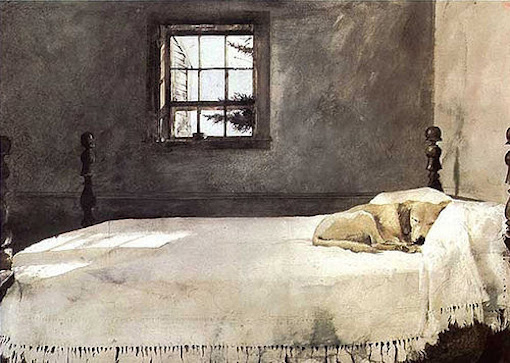
"Master Bedroom'' (watercolor, 1965), by ANDREW WYETH, in the show "The Wyeths: America Reflected,'' at Heritage Museums & Gardens, in Sandwich, Mass., though Sept. 27.

We once had a big print of this painting,  over the bed in our master bedroom. Soothing indeed.

The Heritage Museums says {T}his exhibit will focus on quintessential American themes: the meaning of America, the significance of place and family and the role of storytelling in art.'' That there are three generations of Wyeth artists being exhibited give the family element  here industrial strength.

But there's nothing particularly quintessentially American about the second two themes, which apply in all societies.

For decades, the productive and superbly professional and skilled Wyeths have evoked the once mostly WASP world of affluent Northeast exurbs and suburbs and slightly decayed but still charming summer  houses on the New England coast or in the region's mountains. Midcoast Maine in the summer is a center for them.


Read More
Commentary Robert Whitcomb Commentary Robert Whitcomb

Imperiled little bay with big impact

littlebay

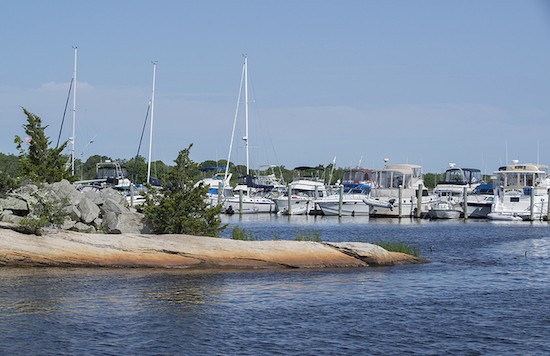
ABOARD THE ELIZABETH MORRIS — Little Narragansett Bay is quietly tucked away between its noisier neighbors — Narragansett Bay and Long Island Sound. But this watershed on the Rhode Island-Connecticut border plays a vital role in southern New England’s economy. Boats of all sizes, from yachts to canoes, dot the water, especially on summer weekends. Tourist visit the area to swim, fish, observe wildlife, dine and shop.

That that the 317-mile Little Narragansett Bay/Pawcatuck River watershed is stressed and impaired is cause for concern, both economically and environmentally.

“This is our economy,” David Prescott, Save The Bay’s South Country coastkeeper, said shortly into a July 16 tour of the watershed. “We have to make sure we protect it.”

Before the Elizabeth Morris departed Viking Marina in Westerly, R.I., Save The Bay’s executive director, Jonathan Stone, told the 20 or so journalists, elected officials and scientists on board that the watershed needs protection from development, population growth and climate change.

“This is an incredibly beautiful space,” Stone said. “Its habitat and aquatic life is very valuable. The watershed is economically important to the region. It’s one of the gems in this part of the world.”

Little Narragansett Bay doesn’t garner the same attention that Narragansett Bay and Long Island Sound do, but this important economic, environmental and recreational resource is threatened by many of the same concerns —  development pressures, human impacts and a changing climate. Because of its topography and shallow depths, it also faces different challenges.

The Pawcatuck River estuary has been studied for decades by state agencies, universities and environmental groups. While much has been done to clean up the pollution caused by industrial and manufacturing businesses, contaminated runoff from roads, roofs, lawns and farms remains a problem.

Prescott has been monitoring the watershed’s water quality and ecological health for the past seven years. He said Little Narragansett Bay is stressed by elevated bacteria levels, high nutrient loads, large, thick mats of macro-algae, poor flushing in shallow coves, and decreased dissolved oxygen levels. These stressors are threatening water quality, marine and coastal ecosystem health, and the region's recreational value, he noted.

Elevated bacteria readings have been documented in both wet and dry weather conditions in the upper estuary. Near the downtowns of Westerly and Pawcatuck, Conn., a number of outfall pipes directly discharge into the Pawcatuck River.

Save The Bay touted the recent invitation-only outing as a call to action, to urge local communities — and not just Westerly and Stonington, Conn. — and their residents to help mitigate pollution impacts. The Providence-based nonprofit also would like agencies and officials in both states to better enforce the environmental regulations that protect this shared natural resource.

The environmental group is pushing watershed municipalities along the coast and upstream to develop plans to better manage stormwater runoff, ensure septic systems are working properly and to closely monitor the watershed.

Much like the problems facing areas of Narragansett Bay and Long Island Sound, contaminated stormwater and combined sewer overflow washing into Little Narragansett Bay are causing parts of the bay to degrade. This runoff and overflow carries oil, gasoline and grease, lawn fertilizer, pet waste and bacteria. This pollution has closed part of Little Narragansett Bay to shellfishing since 1991.

Since 2007, when Save The Bay opened its South Coast Center in Westerly, it has been testing, in cooperation with the University of Rhode Island’s Watershed Watch program, in six locations in Little Narragansett Bay/Pawcatuck River, documenting water temperature, clarity, salinity, and nutrient, dissolved oxygen and pH levels.

While continued monitoring shows water quality is impaired and problems persist, scientists need more data to fully understand the bay and its watershed, Stone said.

Something stinks Much of the area in the watershed is built up and covered with impervious surfaces, which rushes stormwater pollution into Little Narragansett Bay. In fact, a third of Rhode Island’s runoff drains into the Pawcatuck River watershed, according to Prescott.

Thanks to large amounts of nitrogen, much of it from lawn fertilizers, contained in this runoff, thick mats of macroalgae — called “black ooze” or “black mayonnaise,” depending on whom you are speaking with — cover much of the bottom of Little Narragansett Bay between Watch Hill and Sandy Point.

This patchwork blanket of algae, which gives off a rotten-egg smell when a piece is pulled into a boat or some of it washes into shore, creates low-oxygen zones that suffocate eelgrass and iconic New England marine life such as oysters and scallops. In some places, this decaying organic matter is several feet thick and spreading, according to Prescott.

The University of Connecticut and the University of Rhode Island are both studying this algae formation, which shows no signs of disappearing.

“It’s not quite a dead zone, but it isn’t really what it should be,” Prescott said. “We don’t want to see Little Narragansett Bay any more impaired than it is now.”

Pollution from outfall pipes is helping to create conditions that allow a growing mat of bottom-dwelling macroalgae to snuff out other aquatic life in the watershed.

Royal flush This algae has always been at the bottom, but the amount of it is growing and impacting the natural flushing of the bay.

Exacerbating the bay’s flushing problem is the fact Sandy Point, a narrow island that was cut off from mainland Connecticut by the 1938 hurricane, is slowly moving to the north, creating a barrier that is impairing the bay’s ability to flush excess nutrients.

Erosion and more frequent and severe rains also are changing the currents, leading to poor flushing of the bay’s many shallow coves and the buildup of macroalgae.

A growing amount of the black mayo is washing up on the Borough of Stonington’s shore and having a huge impact on the oldest borough in Connecticut.

“This organic matter is decaying and smells awful,” Prescott said. “Residents have to keep their windows closed.”

Don’t feed the birds Prescott noted, on more than one occasion during the two-hour cruise, the water-quality problems created by the feeding waterfowl such as Canada geese and swans, whose waste contributes to increased bacteria/nutrient levels.

Up until about four years ago, hundreds of swans and Canada geese often congregated at the mouth of the Pawcatuck River, because an elderly Stonington resident was routinely feeding them. After local officials explained the negative impact all these birds were having on the river’s ecosystem, the woman stopped and most of the birds left.

Many of the swans and geese that remain are found on private lawns that stretch to the riverbank. Long, native grasses and other shoreline vegetation would help keep waterfowl from congregating and would better filter runoff pollutants.

In fact, according to Save The Bay, there are a number of individual actions that, combined with state and local programs, would help minimize watershed impacts. Land conservation, salt-marsh protection and pump-out programs are among the measures state agencies and local groups have taken to protect the watershed.

Among some of the environmentally friendly actions individuals can take include: replacing your cesspool, installing a rain garden, using a rain barrel, properly maintaining your septic system and/or fertilizing and mowing your lawn less.

“Having a lush, green lawn is part of our culture and it’s hard to make changes,” said Cindy Sabato, Save The Bay’s director of communications. “If you can’t or don’t want to replace your lawn with a rain garden or native bushes and shrubs, apply less fertilizer and don’t fertilize before it is expected to rain.”

Read More
Commentary Robert Whitcomb Commentary Robert Whitcomb

Spinning through summer

Crickets chirping at night, cicadas whining   in the afternoon's heat and the sunset noticeably earlier. We spin toward Labor Day.

Read More
Commentary Robert Whitcomb Commentary Robert Whitcomb

Naked came the summer

webster  

"Study for Webster House Provincetown,'' by E. AMBROSE WEBSTER, in "Summer Salon,'' at ACME Fine Art, Boston through Aug. 15.

Read More
Commentary Robert Whitcomb Commentary Robert Whitcomb

Chris Powell: Voters went where literacy did

MANCHESTER, Conn.

East Windsor's (Conn.) Democratic and Republican voter registrars asked the other day what may be the great question of public policy and life generally in Connecticut: Where have all the voters gone?

The registrars, Angelo Paul Sevarino and Linda Sinsigallo, put it in a letter published in the Journal Inquirer. They lamented that only 14 percent of East Windsor's voters participated in the recent town budget referendum.

"There is a growing disconnect between the individuals we elect to lead us and the electorate," Sevarino and Sinsigallo wrote. "Maybe it's the hectic schedule of today's parent. Maybe it's the changing family dynamic. Maybe it's just that too many of us are disillusioned with government and no longer believe that our vote matters."

Or maybe, as the philosophers of old might argue, it is simply the corruption of prosperity, the downslope of the rise and fall of civilizations, which rise from struggle to self-sufficiency to prosperity and greatness and then fall to self-satisfaction, entitlement, dependence, and financial and moral corruption.

Local budget referendums are actually the least of it. Adjusting voter participation in Connecticut for the 25 percent or so of the eligible adult population that doesn't even register to vote in the first place, participation in recent presidential elections has been only about 50 percent, in state elections only about 35 percent, and in municipal elections only about 15 percent.

Manchester provides an especially depressing example.

When it held its municipal election in October 1962, Manchester had a population of about 42,000 and about 12,500 people voted. In Manchester's most recent municipal election, in November 2013, only about 7,500 people voted, 5,000 fewer than in 1962, though the town's population had increased by 16,000 to 58,000. That is, over the last half century, as Manchester's population rose by about 38 percent, its municipal-election participation fell by about 40 percent, even after the voting age was lowered to 18.

Sevarino and Sinsigallo cite "the changing family dynamic." That may be a nice way of acknowledging that nearly half the children in Connecticut now are born outside marriage or do not live with both their parents, circumstances that correlate heavily with poverty, physical and mental illness, child neglect and abuse, educational failure, and crime. Two-parent households tend to have time for community participation. Single-parent households tend not to.

But the phenomenon of decline extends far beyond family disintegration. From half to two-thirds of Connecticut's high school seniors fail to master high school math or English or both but are given diplomas anyway and are even delivered at further public expense into remedial programs in college. Enforcement of educational standards now requires more political courage than society can muster.

Few high school graduates understand the country's history, government, and political system. They are largely oblivious to the struggles undertaken and sacrifices made through the ages to broaden democracy and facilitate the pursuit of happiness.

Government in Connecticut and across America has gotten far bigger than the civic virtue remaining available to manage it in the public interest.

This explains the explosion of corruption, as special interests take over not just education but market, business, and professional regulation and politics itself. Most of the diminishing number of people still paying attention are not really citizens at all but financial beneficiaries of thwarting the public interest.

Far more than the Internet, this collapse in civic engagement may explain the decline of newspapers. For no one in Connecticut can seriously engage with his geographic community without them; they remain the primary and often the only source of state and local news. But nobody needs them for keeping up with the Kardashians.

Chris Powell is managing editor of the Journal Inquirer, in Manchester, Conn.

Read More
Commentary Robert Whitcomb Commentary Robert Whitcomb

Good for sandy places -- Sahara or shore

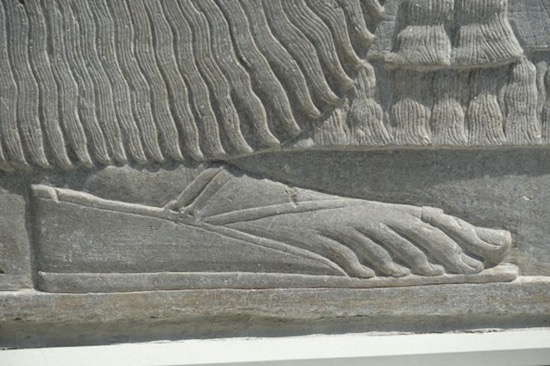
flipflops  


-- -- Photo by C. Davis Fogg

"Ancient flip-flops,'' at Bowdoin College Museum, Brunswick, Maine.

Read More
Commentary Robert Whitcomb Commentary Robert Whitcomb

Ethan Miller: The Millennials' financial-literacy crisis

Summer is a time of endings and beginnings. For most of the about  1.8 million people who just graduated from college, this season marks the end of at least 17 years of formal education and the launch of their careers.

My career started a little sooner than that. 

My first real job was as a student organizer during my senior year at American University, in Washington. Right before I graduated two years ago, when I filed my tax return, I was surprised to learn that I owed an extra $1,200 on the less than $13,000 I earned.

Why did I owe the  Internal Revenue Service so much? Because my employer misclassified me as an independent contractor, I owed self-employment taxes in addition to regular income taxes. And, because I had no idea I needed to pay these taxes every quarter, I owed a large lump sum that Tax Day.

It was a big wakeup call. As a 21-year-old soon-to-be college graduate majoring in economics, I was financially illiterate. Neither in college nor at  top-ranked Wootton High School, in Rockville, Md., did I learn how to manage my money beyond making sure I could budget for the basics.

When I talk to my friends about those tax troubles, I find that their grasp of personal finance is just as poor or worse. While we might feel ready to start our careers after graduation, we’re woefully unprepared to look out for ourselves in the economy.

And we aren’t alone. A recent Financial Industry Regulatory Authority (FINRA) study showed that less than a quarter of millennials could correctly answer at least four out of five questions on a basic financial literacy quiz.

As the lackluster recovery from the Great Recession lumbers forward, personal finance matters more than ever. Some 53 million Americans — one in three working people — are freelancers. And according to software company Intuit, 40 percent of the workforce will be freelancing or working as an independent contractor by 2020. That’s a pleasant way of saying they lack job stability.

In the so-called gig economy, juggling multiple part-time or temporary jobs to make ends meet is commonplace. Unless they qualify for health care subsidies, people working in this sector pay for medical insurance completely out of pocket. If they manage to save for retirement, they have to do it alone.

Many millennials are learning the rules of the game as we’re playing it. But we’re actually a lot like our elders. The FINRA study showed significant rates of financial illiteracy among Boomers and Gen Xers as well.

The difference is that our generation faces a job market that’s nothing like the one our parents faced. Combined with the $1.2 trillion of student-loan debt currently owed, that means we need more financial smarts if we’re going to thrive in today’s precarious economy.

More public K-12 school systems across the country need to follow the example of states like Virginia by prioritizing students’ financial literacy and requiring a course in personal finance regardless of whether they’re college-bound or not. Everyone needs to know enough of the basics to fend for themselves.

Of course, if our nation’s employers took the high road and paid fair wages, provided health care and retirement benefits, and gave regular, reliable schedules, we wouldn’t have to rely so much on our own wits to get by. But if our bosses won’t look out for us, we have to look out for ourselves.

Many Millennials are struggling to pay our bills now, much less build a solid future. Just as I’ve had to educate myself financially, my entire generation needs to get up to speed on how the economy works (or doesn’t), so we can join together to make it more sustainable for everyone.

Ethan Miller (Ethan99@gmail.com), is a labor-rights activist  and a New Economy Maryland Fellow with the Institute for Policy Studies.  This originated at OtherWords.org.

Read More
Commentary Robert Whitcomb Commentary Robert Whitcomb

Robert Whitcomb: Drawbacks of deregulation and DIY

  For years, deregulation and the Internet have been pulling us into a more decentralized and freelance economy, in which there’s wider consumer choice, albeit with stagnant pay and a decline in person-to-person service that forces us to do more tasks ourselves that were previously done by those dinosaurs called “employees’’.

Consider Uber. As I discovered when one of my daughters pulled out her iPhone a couple of years ago on a busy Manhattan street to summon an Uber driver, it’s sometimes faster to find one of these mobile freelancers than it is to find a regulated Yellow Cab in a big city.

But the cabs, being regulated, function as a public utility. They have to meet certain basic minimums of availability, cleanliness and safety that can’t be imposed on the likes of Uber, whose drivers are, of course, not obligated to provide services in the same way as cabbies. I don’t think that we want unregulated drivers to totally replace generally reliable and regulated cabbies.

Long before Uber, of course, there was the partial deregulation of the airlines. While this led initially to lower prices for many travelers, it has also made travel more chaotic and unpredictable. And deregulation, the “Hub-and-Spoke’’ system and relentless airline mergers mean that mid-size cities get shorted on flights.

While better electronics systems make planes less likely to crash these days than three decades ago, air travel itself is increasingly miserable.

In the old, tightly regulated days, figuring out airline schedules and fares was comparatively easy. Now it’s an ordeal, and conditions within airplanes are increasingly crowded and unhealthy. And as the airlines, like other businesses, seek to outsource service to computers so that they can lay off more people, addressing problems by communicating with customer-service humans gets tougher.

Then there’s the new do-it-yourself, deregulated and decentralized energy world. Consider that many affluent folks are saving money and reducing their carbon footprints by having solar panels installed on their roofs. Good in itself! But this takes business away from the utility companies, which could jeopardize the viability of the huge electric grids that utilities maintain. We’ll continue to need that grid to support modern society, with its ever-increasing supply of electronic devices.

Might not it be better if we put more focus on producing green electricity with huge solar-panel arrays and wind-turbine farms maintained by utilities that serve everyone – rich and poor?

xxx

The Obama administration has worked very hard to craft a deal with Iran to try to get it to at least postpone continued work on nuclear weapons.

But the administration’s effort will probably turn out to have been in vain. For one thing, the corrupt theocratic dictatorship that runs Iran will cheat and cheat as it evades inspections. It may receive technical help in this cheating from the likes of fellow police states Russia and China, two of the signatories to the nuclear deal, which will happily sell them militarily useful stuff.

Iran will almost certainly use the billions of dollars freed up by the ending of economic sanctions to increase its troublemaking. Iran’s regime seeks to dominate the Mideast – partly to protect and promote its fellow Shiites and partly because domination is fun and profitable for its leaders. And Tehran hasn’t really toned down its “Death to America and Israel’’ rhetoric.

Now we have made the mullahs more macho. No wonder Iran’s neighborhood is scared.

Some complain that America, as the first nuclear power, is hypocritical in trying to keep nuclear weapons out of the hands of other nations. That seeks to make an equivalence between a democratic nation like America and a dictatorship like Iran. And remember why we started our nuclear-weapons program in the first place – to defend ourselves from Germany’s mass-murdering Nazi regime, which was working hard to create an atomic bomb.

Some say that expanding trade with Iran will somehow make it kindlier. They said that about Germany before World War I and China now. Nations have other reasons besides economics to be nasty – for instance, paranoia, power for the sake of power and religion.

Robert Whitcomb (rwhitcomb51@gmail.com) oversees New England Diary. He's also a Fellow at the Pell Center, in Newport, and a partner at Cambridge Management Group (cmg625.com), a healthcare-sector consultancy. He used to be the editorial-page editor of The Providence Journal, the finance editor of the International Herald Tribune and an editor at The Wall Street Journal, among other jobs.



Read More
Commentary Robert Whitcomb Commentary Robert Whitcomb

B.I. wind farm and Lucky Sperm Club on Nantucket Sound

Why is construction starting on a wind farm off Block Island, R.I., while, despite 14 years of effort by Cape Wind developer Jim Gordon, nothing has gone up in Nantucket Sound?  And that's even with the Block Island project, Deepwater Wind, about three miles offshore while Cape Wind would be more than five miles offshore -- thus usually out of  sight from land in this hazy and windy region. Well, yes, the Block Island project is much smaller.

But the main  answer is  that Block Island project doesn't have as rich and ruthless a billionaire opponent as Bill Koch, from whose summer house in Osterville (which he only uses a very few weeks a year) you could see Cape Wind's turbines on a crystal-clear day. Mr. Koch, another member of the Lucky Sperm Club (his father founded the industrial empire from which Bill  Koch hugely benefits), has been willing to spend tens of millions of dollars to stop Cape Wind because he doesn't ever want to look at it.

He can take great pride in single-handedly stopping a project that would have provided about three-quarters of southeastern Massachusetts's electricity.

--- Robert Whitcomb

Read More