









A_map_of_New_England,_being_the_first_that_ever_was_here_cut_..._places_(2675732378).jpg

Vox clamantis in deserto

Commentary Robert Whitcomb Commentary Robert Whitcomb

Another woe from tough winter: road salt in steams and ponds


By ecoRI News staff

The salt and sand used to treat roadways during this snowy winter are likely to have a negative impact on the water quality in local lakes, ponds and streams this year.

“All that salt is going to lead to increased chloride in our waterways, which isn’t good for the critters that live in our streams and lakes,” said Elizabeth Herron, the University of Rhode Island’s Watershed Watch program coordinator. “It’s increasingly becoming an issue across the entire northern tier of states, and it’s liable to be very evident this year.”

The runoff of sand from roadways poses a different kind of problem. It creates what Herron calls “sand fans” in water bodies, changing the depth of lakes and providing habitat for invasive plants that prefer shallower water. Sand also can smother the eggs of bottom-dwelling creatures.

“The big storm events that we’ve been seeing in recent years are also generating more runoff and more chances for pollutants to get into lakes, streams and Narragansett Bay,” Herron said.

About 350 Watershed Watch volunteers monitor the water quality in 220 lakes, ponds, streams, bays and other water bodies in Rhode Island. They play a critical role in helping scientists understand the effect that weather and land use have on water quality.

Analysis of the 27 years of data collected by program volunteers has identified changes in water temperature, nutrients, bacteria, algae and other factors that affect the health of aquatic ecosystems.

“Temperature is a particularly important factor,” Watershed Watch director Linda Green said. “Things happen faster at higher temperatures, and certain plants and animals can’t survive when it’s too warm. And certain algae, especially the bad ones, love the high temperatures. So being able to document temperature trends may help us predict problems in the future.” Classroom training for new volunteers will take place at URI’s Kingston campus on March 25 at 6 p.m. and repeated March 29 at 1 p.m., with field training scheduled for Saturdays in April.

Volunteers come from all walks of life and are of all ages, occupations, educational backgrounds and interests. Each volunteer is matched to a specific location that they will be in charge of monitoring. Once a week on a day of their choice, volunteers monitor for water clarity and temperature. Every two weeks they also monitor algae concentrations and dissolved oxygen.

On several designated dates, volunteers collect water samples that are analyzed at URI for nutrients, acidity and bacteria. Many volunteers work in teams to share their monitoring duties.

Ponds, lakes and some saltwater sites are monitored at their deepest point, so access to a boat, canoe or kayak is necessary. But few river and stream sites require a boat.

“The water quality information collected by our volunteers is used by conservation organizations, policymakers, regulators, and state and local officials to make decisions that improve and protect the health of local waters,” Green said. “It is also used by the Rhode Island Health Department to study the connection between increased water temperatures and the health of Rhode Islanders.”

For more information or to register for the training sessions, contact Elizabeth Herron at 401-874-4552 or at emh@uri.edu.

Read More
Commentary Robert Whitcomb Commentary Robert Whitcomb

You shouldn't go home again

sigalempty  

From the ''Home Court Crawl'' series  (acrylic. graphite. archival digital prints), by LISA SIGAL, represented by Samson Gallery, Boston. She works to express the sensibilities of place, and looks for the soul of a home, including an abandoned one,

Read More
Commentary Robert Whitcomb Commentary Robert Whitcomb

Formidably farm-fresh

coxlocallygrown  

"Locally Grown" (photo of tableaux arranged by the artist), by JUDY ROBINSON-COX, at Alpers Fine Art, Andover, Mass.

Read More
Commentary Robert Whitcomb Commentary Robert Whitcomb

Social animals

stonecrowding  

"Crowding'' (photo modified in PhotoShop),by DAVID STONE, at Alpers Fine Art, Andover, Mass. He shot this from a balcony overlooking the front plaza of the Museum of Fine Arts, in Boston.


Read More
Commentary Robert Whitcomb Commentary Robert Whitcomb

Cold morning but snow melts

  The power of the sun even on a very cold morning is heartening as spring approaches. It was about 10 above  early this morning but a couple of hours later the snow and ice on the larger roads had melted and had slid off cars in the full sun on this brilliant day -- fastest on black cars, which makes them good to buy in New England. We could do a lot more with solar energy in little ways.

Read More
Commentary Robert Whitcomb Commentary Robert Whitcomb

The terror of spring

Read More
Commentary Robert Whitcomb Commentary Robert Whitcomb

Waiting to spring out at you

venon"The Skeleton in the Closet'' (hand-made quilt, bleached denim, leather, fabric), by BEN VENOM, at Samson Gallery, Boston, this month.

Read More
Commentary Robert Whitcomb Commentary Robert Whitcomb

Sarah Savage/Erin M. Graves: 'Financial capabilities' for college

BOSTON

Community colleges have traditionally responded to the financial needs of their students by removing or minimizing financial barriers to attending. Efforts to make community college tuition free fit with this philosophy. But where efforts to minimize or remove financial barriers to attending community college fall short is in empowering students to navigate the next financial crossroads they encounter, to make well-informed financial decisions that will decrease their vulnerability as students and to position them with the tools for achieving financial wellness as they progress through life.

Empowerment work that helps students manage their financial lives can be described as building their "financial capabilities." The intention of this work is to teach students effective money management, savings and planning techniques but also to provide opportunities to apply what students learn, which is critical to developing positive financial habits. More commonly referenced "financial literacy" remains relevant but is more often associated with knowledge transfer and skill development than application and behavior change. Empowerment work is intended to build students’ capacity.

While engaging with students in this way is new territory for most community colleges, it is an emerging area in which some institutions have already developed expertise and observed significant benefits. To illustrate, the Boston Fed’s Financial Capabilities Group describes the experiences and insights of eight community colleges from around the country in its new Community College Handbook, released as part of the group’s Community College Initiative.

The need to help students develop skills and confidence to manage their financial lives effectively, to provide real ways of doing this and to deliver services when students are most likely to have opportunities to put what they learn into practice is evident from the institutions’ experiences.

In one example, a financial aid staff member at a community college in Florida helped pilot a peer-to-peer effort over concern that while financial aid was relatively easy to come by, students lacked clear guidance on how the aid could best be utilized. The pilot began on a small scale, with three work-study students approaching peers leaving the financial aid office with their refunds, engaging them in discussions about plans for their refunds, and encouraging them to divide purchase decisions into “needs” versus “wants.”

This pilot grew to include a multicampus, well-funded Financial Learning Ambassador Program that delivered timely and tailored guidance on money management techniques through a peer-to-peer model. By identifying times when students are most likely to make financial decisions, staff and students implementing the program could ensure the relevancy and timeliness of content (e.g., demonstrating “shopping on a budget” and setting up resource tables around the time when financial aid refunds are dispersed).

Motivated by similar concerns for financial well-being, community colleges based in New Mexico and Baltimore County sought to address students’ financial needs beyond educational costs and identified comprehensive financial coaching as part of the solution. Staff at one institution observed that in addition to academic challenges, students were already struggling with day-to-day financial needs and therefore less able to plan for the future.

Likewise, many students attending community college in Baltimore County not only live below the poverty level but also lack tools to manage their finances. While one institution offers financial coaching as part of a comprehensive financial stability center model that bundles education and employment services, work and income supports, and financial and asset-building services, the other offers coaching only. The Handbook’s case studies go into depth on how the respective institutions decided which services to offer.

Two community colleges in Oregon and Arizona took a different approach. In an effort to address their students’ unmet financial needs and to help them develop positive financial habits, these institutions offer educational matched savings programs that match student savings at an established rate (e.g., 1 to 1 or greater). After meeting program milestones such as making a specified number of consecutive savings deposits and completing a certain number of hours of financial education classes or workshops, students can use their savings and matching funds to cover approved educational expenses such as tuition, fees, books, and supplies.

These programs have required concerted efforts by external partners, funders and institutional staff. In these cases, administrators and staff members committed to this level of collaboration because they saw the value in not only helping students pay for educational expenses but also to complete the program with much higher quality financial decision-making abilities than when they started.

These case studies along with others featured in the Boston Fed’s Handbook provide examples of new ways of responding to the financial challenges community college students face. The studies demonstrate how previous approaches to minimizing challenges—while well-intended—have not historically enhanced a student’s ability to independently overcome the next challenge they are likely to face.

The case studies describe just a handful of models for building students’ capacity for managing their financial lives. While we hope this might generate discussion and ideas among institutional personnel and potential partners, we also want to emphasize the need for more research to determine additional best practices. This is why the Boston Fed is evaluating a two-year multi-institutional pilot that combines educational matched savings programming, financial coaching and support systems to help students navigate the financial aid process.

We want to know if students who receive services demonstrate stronger educational outcomes, such as higher rates of persistence; and financial outcomes, such as improved decision-making surrounding paying for school and managing their financial lives, versus those who do not receive any services at all. We also want to understand the interplay of these outcomes and the extent to which a model of this kind could be scaled up.

In the meantime, we continue to advocate that community colleges commit to helping their students to manage their financial lives effectively. We have hosted a series of events that brought together expertsin-person and online, and we will be actively engaging community colleges in discussions tailored to their unique institutional contexts and student needs through on-site visits. One of our recent visits to an institution in Massachusetts, for instance, included a broad cross-section of institutional staff, faculty and students, and resulted in a rich discussion of possibilities for applying what we have learned to this institution’s unique context.

Institutions and the students they serve will be better positioned when students are knowledgeable, well-informed stewards of their financial lives and able to navigate financial systems as students, workforce participants, and members of society. The Resource Handbook is intended to make this case, demonstrate actual examples and observed benefits, provide insights into how to achieve effective delivery, and ultimately, to foster a shared belief of how working with students in this way is integral to their educational progress and future financial wellness.

Sarah Savage is community-affairs manager and Erin M. Graves is senior policy analyst in the Financial Capabilities Group at the Federal Reserve Bank of Boston. This piece originated on the Web site of the New England Board of Higher Education (nebhe.org).

Read More
Commentary Robert Whitcomb Commentary Robert Whitcomb

Swiping from Vermont's old quaintness pitch

Read More
Commentary Robert Whitcomb Commentary Robert Whitcomb

Pardon me

grahamintrusion  

"Intrusion" (mixed media on canvas on panel), by JULIE GRAHAM, in her show "Julie Graham: If it's not one thing...'', at Kingston Gallery, Boston, through March 29.

Read More
Commentary Robert Whitcomb Commentary Robert Whitcomb

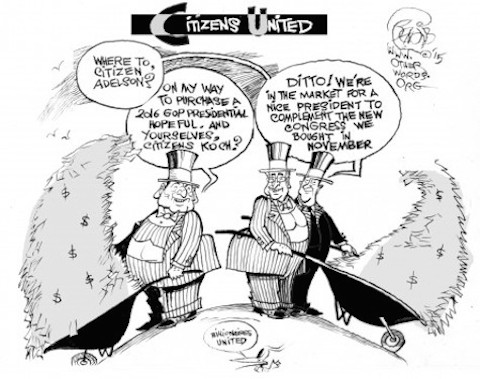
In the market

other

Read More
Commentary Robert Whitcomb Commentary Robert Whitcomb

Chris Powell: Connecticut's no-stakes testing

Connecticut's biggest and, after the liquor stores, most venal special interest, the Connecticut Education Association, the teachers union, is spending $250,000 on a television advertising campaign urging elimination of "high-stakes" testing of students in the state's public schools.

By "high-stakes testing" the union means any testing that might have consequences for students and especially for teachers. The union argues that there's now so much testing that it severely distracts from teaching and learning. The union wants to replace "high-stakes" testing with what it calls "progress tests" whose scoring would diminish right and wrong answers -- measures of knowledge -- and instead measure things like how students get along with others.

That is, tests would not be standardized, their results would not be comparable across schools and school systems, scoring would be arbitrary, teachers would be in charge of it and in charge of determining how the performance of their students was presented, test data would become meaningless or misleading, and what remains of accountability in public education in Connecticut would be destroyed.

Still, the union is right about "high-stakes" testing but for the wrong reason.

For despite the CEA's complaints, there really isn't that much federally or state-mandated standardized testing in Connecticut's schools, just one annual test for grades 3 through 8 and then just one test in high school. While high school also involves college admission tests, these are discretionary and not numerous anyway.

If a single "high-stakes" test every year is convulsing Connecticut's schools, it may be because students are not learning much. In 2010 a state study found that two-thirds of the freshmen in the state community college and university systems were being required to take remedial English or math or both. Last year a test of Connecticut high school seniors, the National Assessment of Educational Progress, reached a similar conclusion -- that half had not mastered high school English and two-thirds had not mastered high school math. Yet nearly everyone was given a high school diploma anyway.

That's because the unacknowledged policy of public education in Connecticut is never to hold students to standards but to promote them from grade to grade even if they fail to learn and to keep them in school even if they are disruptive or dangerous. (Educators lately have been celebrating a decline in arrests of students in school as if this equates to a decline in disruption rather than its acceptance.) Educators have decided that eliminating standards and dumbing down everything is better than hurting anyone's feelings, that awarding diplomas that are only embossed lies is better than education.

Students know this -- know that their learning has no bearing on their advancement in school, that their tests are polite fictions, and that they will be graduated no matter what they do short of manslaughter.

Teachers know this as well and don't want to be judged by the performance of their students when students themselves can't be judged by it. But teachers lack the courage to protest the destruction of standards. Instead with its new advertising campaign the CEA proposes concealment of the disaster.

Connecticut's "high-stakes" testing system should be scrapped not because it is too much of a burden on students and teachers, as the CEA pretends, and not because teachers object to serious and independent evaluation, but because it is a deception, implying standards that were discarded long ago.

Of course state and federal law will still require administering to students every year something posing as a test, but teachers could be assured, as students already are, that the results will not be held against them. Education in Connecticut then can remain what it has become, the problem of employers -- if any stick around. Chris Powell is managing editor of the Journal Inquirer, in Manchester, Conn.

Read More
Commentary Robert Whitcomb Commentary Robert Whitcomb

'Health-equity zones' for Rhode Island

  Rhode Island is creating "health-equity zones,'' reports The Providence Journal


“Health is not possible without community. Health-equity zones give communities the resources they need to focus on creating collaborations and building health through relationships,” said state Health Director Michael Fine, M.D.


Read More
Commentary Robert Whitcomb Commentary Robert Whitcomb

Mass. health-insurance transformation

Read More
Commentary Robert Whitcomb Commentary Robert Whitcomb

Maple tree tapping gone wrong

austinweeks Untitled pastel and charcoal work by SCOTT AUSTIN and KELLIE WEEKS, in show "Collaborative Dreamscapes by Scott Austin and Kellie Weeks,'' at Fountain Street Fine Art, Framingham, Mass.

Read More
Commentary Robert Whitcomb Commentary Robert Whitcomb

Katherine McFate: What we lose with privatized mail

Last year, the U.S. Postal Service delivered 1.4 billion packages for FedEx and UPS. In fact, it delivers the last mile for almost a third of FedEx packages. The 618,000 Postal Service workers also delivered nearly 66 billion pieces of first-class mail — that’s more than 100,000 pieces per carrier.

The Postal Service can reach all 150 million American households because it’s a publics ystem that we’ve been investing in for over 200 years. Our Constitution tasked the federal government with creating a national postal system and told the postmaster general to report to the president.

But in 1971, Congress made the service into an “independent agency” managed by a board of governors. And since then, it’s been under attack by politicians who never met a public program they liked.

Yes, the rise of UPS, FedEx, and the Internet has created new challenges for your local post office. But the purported “fiscal crisis” is a manufactured one.

In 2006, Congress required the Postal Service — known as USPS for short — to “pre-fund” 75 years of its retirees’ health benefits. This added $5.7 billion to its costs last year.

No other private company or federal agency has to pre-fund retirement health-care benefits. If they did, many corporations would run huge deficits or tumble into bankruptcy. Without these retiree health payments, USPS would actually turn a profit.

Using the deficit created by this requirement as an excuse, the USPS board of governors is closing distribution centers, cutting worker hours, eliminating delivery routes, and slashing jobs. Over the past five years, USPS has cut 94,000 positions.

The job loss alone is a travesty, but a bigger principle is at stake.

Our nation’s founders understood that a universal, affordable, and yes, public postal system helps knit us together as a nation. They recognized that commerce requires a common infrastructure and public institutions that belong to and benefit the entire country.

Instead of shrinking the Postal Service, we should build on it. That means, first of all, appreciating that the USPS can be much more than a delivery service.

In many small towns, the local post office continues to be a community hub, a place to meet neighbors and get news. And postal carriers don’t just deliver letters — they often keep an eye on the elderly and homebound, and alert first responders if things look amiss.

They could do even more. The Postal Service’s fleet of vehicles — the largest in the country — could be equipped to detect air pollutants and report potholes, water leaks, and other infrastructure repair needs.

Why stop there?

The USPS could raise tens of billions of dollars each year by reinstating post office savings accounts and banking services, which it efficiently provided for 55 years in the first half of the 20th century.

Customers received 2-percent interest on their savings accounts, and the post office loaned their money to community banks, which then made loans to local businesses. This virtuous circle benefitted the entire community. At its peak, 4 million Americans took advantage of these services, saving $36 billion in 2014 dollars.

Today, 34 million American families live in places without traditional banking services. High-interest payday lenders and check-cashing services charge low-wage working families in those communities an average of over $2,400 a year. Experts estimate that low-cost banking services could save American workers a trillion dollars a year.

Instead of selling off the assets we built together over two centuries, let’s invest in our Postal Service — a public system that has served our nation since its birth.

Katherine McFate is the president and  chief executive of the Center for Effective Government in Washington (foreffectivegov.org). This article was distributed via OtherWords.org. This article was distributed via OtherWords.org

Read More
Commentary Robert Whitcomb Commentary Robert Whitcomb

Local democracy in Vermont

  Town meeting day in Vermont, where citizens are heavily  engaged in their own governance and politics are generally very honest.


Read More
Commentary Robert Whitcomb Commentary Robert Whitcomb

David Warsh: The meaning of the Scott Walker phenomenon


SOMERVILLE, Mass.

Republican Party business interests and  centrists have rallied around Jeb Bush. Tea Party conservatives so far seem to prefer Wisconsin Gov. Scott Walker to the rest of the list of would-be contenders – Chris Christie, Ted Cruz, Mike Huckabee, Rand Paul, Rick Perry, Marco Rubio and Rick Santorum. The first state primary is still 11 months away.  But to understand the appeal of Bush and Walker to their respective constituencies, it helps to know something about the situation on the ground in Wisconsin.

Walker, 47, who rose from state legislator in 1993 to county executive for Milwaukee to governor, achieved national prominence in 2011, when he successfully campaigned to strip the state’s public unions of most of their collective bargaining rights.  He survived a recall election and, in 2014, won a second term.

Recently he picked a new fight with organized labor when he said he would sign “right-to-work” legislation on the verge of passage in the Republican-led legislature. The measure would deprive unions of their right to charge non-member workers the equivalent of dues.

Robert Samuels, of The Washington Post, spent time in the state recently and found the public unions reeling. Describing an ill-attended meeting in a union hall in a small town in central Wisconsin, his report began:

'The anti-union law passed here four years ago, which made Gov. Scott Walker a national Republican star and a possible presidential candidate, has turned out to be even more transformative than many had predicted.

'Walker had vowed that union power would shrink, workers would be judged on their merits, and local governments would save money. Unions had warned that workers would lose benefits and be forced to take on second jobs or find new careers.

'Many of those changes came to pass, but the once-thriving public sector unions were not just shrunken — they were crippled….

'The state branch of the National Education Association, once 100,000 strong, has seen its membership drop by a third. The American Federation of Teachers, which organized in the college system, saw a 50 percent decline. The 70,000-person membership in the state employees union has fallen by 70 percent.''

The story artfully hints at the disparities in job security, wages, and benefits that exist between union and non-union jobs.  Statistics are hard to come by, but where government workers fifty years ago routinely accepted lower levels of compensation in return for greater job security and reliable pension benefits, anecdotal evidence suggests that government salaries in recent decades have tended to equal and often surpass comparable private sector employment opportunities.

Samuels writes,

''While some union members have been energized by the fight, they say they notice a new, more vocal animosity toward them. It has been particularly pronounced in rural areas, where public-sector jobs were some of the most prized gigs in town.

''In King [Wis], population 1,700, [union steward Terry] Magnant said she couldn’t change a sign at the union hall without someone giving her the finger. Farther west, in Stanley, prison workers said they ditched their favorite pizza pub because the owner stood by while other customers called them 'leeches.'

''In Reedsburg, that tension surprised Ginny Bourgeois, 52, who clerks at a local Kwik Trip. The community had always been divided, defined as much by the factories manufacturing car parts as it was by cornfields now blanketed in snow. Still, it was a place where the community got together for spaghetti and corn feeds and filled bleachers to watch the Reedsburg Beavers play. Now, she said, people were fighting over politics at gas stations.

''Still, she felt unions needed to sacrifice.

'“Everyone knows teachers’ insurance was some of the best you could get,' Bourgeois added. 'They do fairly well around here, and they do a good job teaching. But everyone in this town has had to tighten their belts. They should too.'

''Judy Brey, a 58-year-old speech therapist who taught in the community for 22 years, said such sentiment hurt teachers’ morale. She said she grew up admiring her dad, who put six children through college on his union-supported job as a forester. 'I don’t make a lot, but we’ll be okay with retirement, ' she said he told her. That, she was taught, was the reward for public service in Wisconsin.

“'Now I’m always nervous that everyone will think they’re moochers,' Brey said.  'That I’m a moocher.”'

The history of the union movement can only be understood in the larger context of American business in the 20th Century – but it seldom is,   Even the broad outlines of the story of American business are not well understood.

Alfred Chandler, the great historian of business, who spent his last 40  years at  the Harvard Business School, worked tirelessly to demonstrate the importance for economic growth of giant corporations – not just in the US, but in Great Britain, Europe and Japan.  First in Structure and Strategy: Chapters in the History of American Industrial Enterprise (MIT, 1962), then in The Visible Hand: The Managerial Revolution in American Business, (Harvard, 1977) and finally in Scale and Scope: The Dynamics of Industrial Capitalism (Harvard, 1990), Chandler described and analyzed the stability that arose when industries became oligopolies, markets dominated by a handful of first-movers, each with substantial power to set prices, all determined to compete on other grounds.

But when the time came for an international conference in 1994 to celebrate what was clearly a triumph of empirical economics, Big Business and the Wealth of Nations (Cambridge, 1997), European unions were barely mentioned. and American unions had no place at all in the index. Moreover, it was already apparent that market conditions had changed dramatically since the 1970s  – that the twin forces of innovation and globalization were undermining familiar arrangements of enterprise that had begun taking shape more than a hundred years before.

No comparable economic history of the labor movement exists, though Atlantic Crossings: Social Politics in a Progressive Age (Harvard, 1998), by Daniel T. Rodgers, of Princeton University, made a very good start.  Steven Greenhouse, for 19 years a labor reporter for The New York Times, contributed The Big Squeeze: Tough Times for the American Worker (Knopf, 2008) before he retired earlier this year to begin another book. In the mid-1950s, 35 percent of American workers belonged to unions, Greenhouse writes; in 2008, the number was 12.1 percent and declining, just 7.5 percent in private sector unions — the lowest proportion since 1901.  But those numbers come toward the end of the book, not the beginning.

The story of the last 40 years has been one of pell-mell corporate  restructuring in industrial economies and newly industrializing ones around the world.  Call it what you like: deregulation, a Big Bang, the Leap Outward, Perestroika. Private unions have been intimately affected by the turmoil, public unions somewhat less so.

In the U.S., the   Employment Retirement Security Act of 1974, known as ERISA, spelled out rules under which companies could legally freeze their pension plans.  Few have hesitated to do so.

But no such measure was undertaken for public pensions.  As Mary Williams Walsh, the dean of pension reporters, wrote recently in The New York Times,  cracks have started to appear in the legal foundation of government pensions, the  doctrine of “vested rights:”

''First in Detroit, then in Stockton, Calif., now in New Jersey, judges and other top officials are challenging the widespread belief that public pensions are untouchable.''

Walker is clearly part of this evolution.  He should be seen to have begun doing something that needs to be done – albeit in an especially combative way.  Just as corporate restructuring called forth a gallery of types over the years – entrepreneurial geniuses and private equity kings, roll-up artists and spin-off wizards, merger mavens and makeover masters – so the restructuring of labor markets eventually will be seen to have produced a few basic sorts of innovative leaders.  Walker is one such example..

Among corporate chieftains, the lowest rung is reserved for those known as asset-strippers, a term of no great precision, except that the community knows one when it sees one —  raiders who borrow heavily and then sell off assets to pay down debt with no clearer goal than the accumulation of riches. My hunch is that is the category in which Walker will come to be placed – a political asset-stripper of uncommon ambition, who sought to convert a policy of smug confrontation to personal gain.

It’s Wisconsin, a state of sharply divergent traditions, not Indiana or Michigan; maybe it could not have been done any other way. But Scott Walker is very unlikely to become the Republican nominee, much less president of the United States.

David Warsh, a longtime financial journalist and  economic historian, is proprietor of economicprincipals.com

Read More
Commentary Robert Whitcomb Commentary Robert Whitcomb

William Morgan: Driving away design

ri3
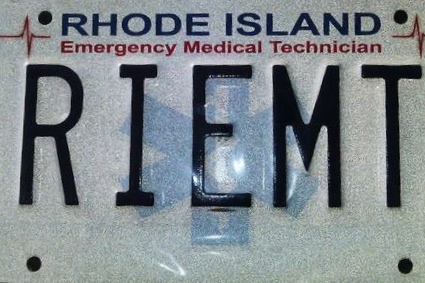
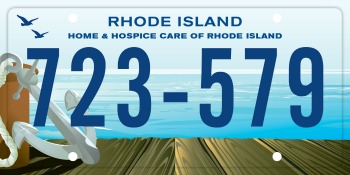
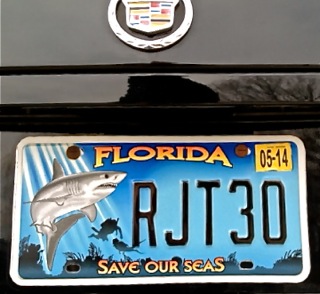
If we are to judge by license plate design, Rhode Island's visual identity is hurling towards the ugliest, tackiest, and most embarrassing car tags in the nation (admittedly, it will be hard to catch up with states like Florida). (See plates below.)
Not only is the handsome "Wave" plate going to be retired for a ho-hum bland "Beautiful" moniker. But the appearance of new charity plates threatens to make a complete joke of the simple identifier function of license plates.
Specialty plates are available to any group that can marshall enough of their supporters to make it worthwhile for the state to manufacture these curious bits of advertising. College alumni, veterans groups, bowling leagues, thinly veiled lobbyists, just about anyone who can gather up around a thousand true believers can apply for a plate. A fee goes to the group, and the DMV does not even have to design these cluttered travesties.
Who could argue that the hospice movement deserves less support. But what, pray tell, is the Home & Hospice Care plate telling us? Officially, the plate offers "an ocean theme." So, we have a dock (it looks like pressure-treated bile-green lumber), an anchor, a couple of birds (souls taking flight over Narragansett?), and an aqua horizon. Perhaps the anchor is to weigh down a body (the victim of a Mafia hit?).
All very confusing, rather than reassuring.The anchor appears in this bureaucratic blah plate, which will raise money for the a law-enforcement memorial. Has anyone noticed how "memorial" crazed we have become–do we need yet another one? Will the $20 fee per plate be enough to pay for the memorial's construction. Or is this another instance of a moniker that tends to protect the vehicle owner – know anyone with a Purple Heart or a Veterans tag who has been ticketed lately? Tugging at our heart strings, but also lowering the design bar another notch, is the Emergency Medical Technician plate.
Again, good people doing important work. Yet, the symbolism of the EKG line across the plate is more trite that clever.What do these plates say about Rhode Island? Not much, except there are a lot of groups who want to raise money and are willing to offend the visually literate among us.
Some might wonder why our capital city, Providence, is called "creative," or even if the Rhode Island School of Design even exists.
But the absolute worst of the state's charity plates is that for the Wildlife Rehabilitators of Rhode Island.Squirrels, deer, and raccoons are endangered? An owl, a generic blue bird, a fox, and an egret complete this septet of critters needing our extra dollars.

Who, you might well ask, designs these kindergarten-art advertisements? In this case, it was a Saunderstown veterinarian, avian surgeon and president of the Wildlife Rehabilitators, Dr. Meredith Bird.

William Morgan is a Providence-based author and architectural historian.


ri723
riwildlife
 floridaplate
Read More
Commentary Robert Whitcomb Commentary Robert Whitcomb

New England Diary on WADK

The overseer of newenglanddiary.com, Robert Whitcomb, regularly talks with his friend Bruce Newbury on Mr. Newbury's show, Talk of the Town, at 1540 A.M. at  9:30 to 10 in the morning  Tuesdays (if you're in Rhode Island) and on podcasts on WADK.com for anyone, anywhere, anytime. Sometimes they yak on other mornings, too, about the news -- mostly local but sometimes extending beyond  the Earth.

From Gordon Fox to the dwarf planet Ceres....

Read More