A_map_of_New_England,_being_the_first_that_ever_was_here_cut_..._places_(2675732378).jpg

Vox clamantis in deserto

Commentary Robert Whitcomb Commentary Robert Whitcomb

Downtown Boston street plan?

  martin

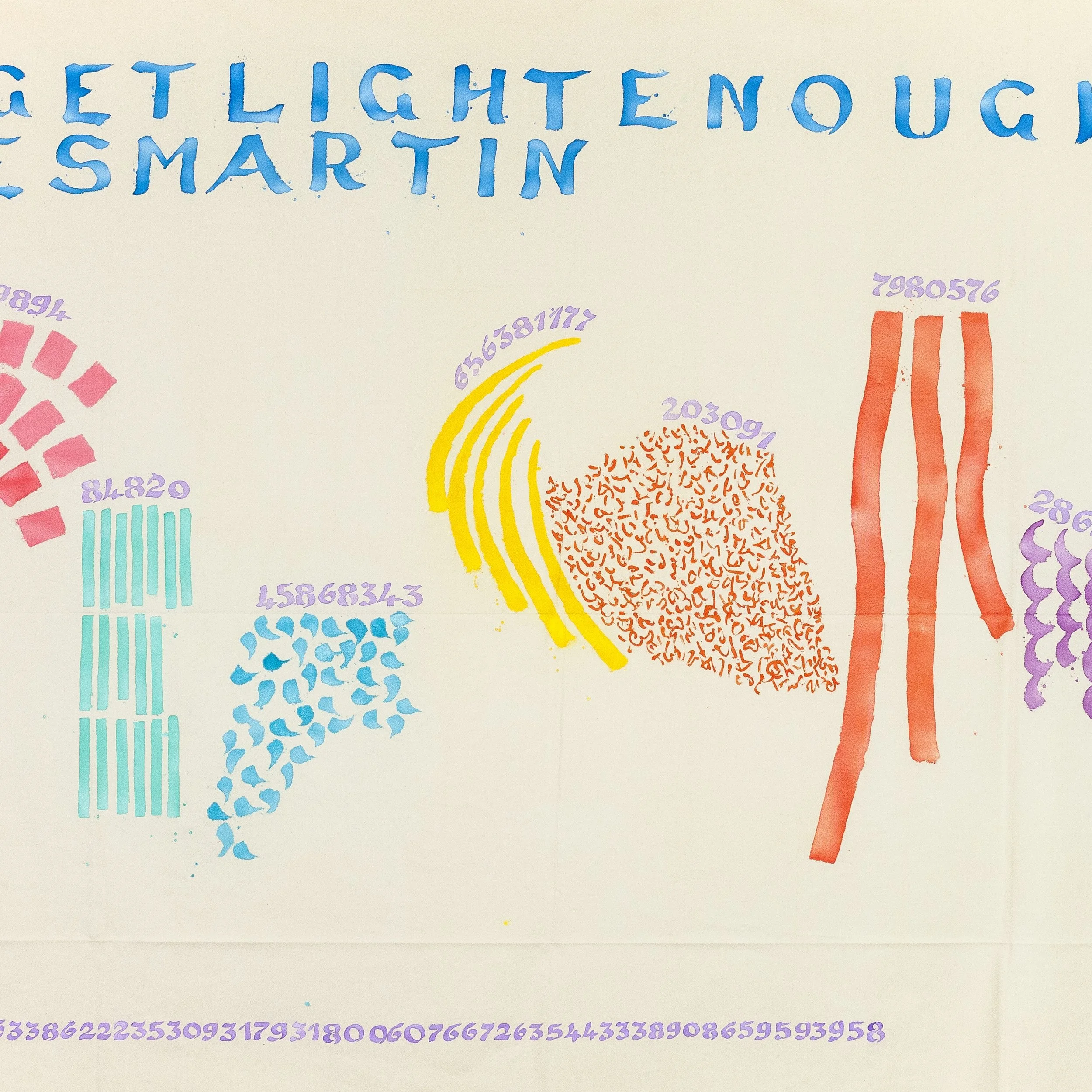
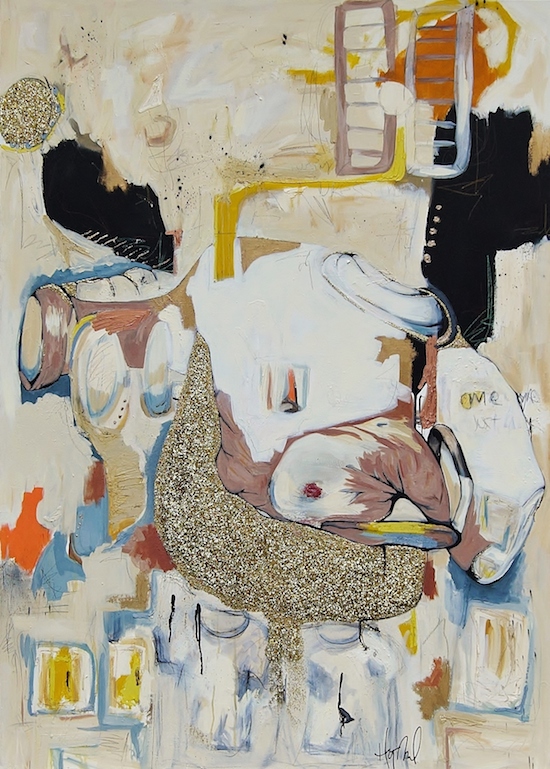
Untitled, by ROGER MARTIN, in the show "Bill of Lading; The Art & Poetry of Roger Martin,'' at the Cape Ann Museum, Gloucester, Mass., Feb. 14-May 10.


Read More
Commentary Robert Whitcomb Commentary Robert Whitcomb

Alone together

stevovich "Subway Riders'' (oil on linen), by ANDREW STEVOVICH, at the Adelson Galleries, Boston.


Read More
Commentary Robert Whitcomb Commentary Robert Whitcomb

French Muslims' ambivalence on free speech and tolerance

Read More
Commentary Robert Whitcomb Commentary Robert Whitcomb

More reforms for Gina Raimondo

I used to see Rhode Island Gov. Gina Raimondo (and her communications chief, Joy Fox)  a bit when Ms. Raimondo was the state treasurer, after her highly successful run as a venture capitalist. She got elected governor as a person willing to take on the challenges of structural reform  after having displayed this courageous willingness when she  embraced, as treasurer, the brutally difficult chore of pensi0n reform.  Runaway public pensions have threatened to effectively bankrupt Rhode Island and some of its cities and towns. (Some of the cities are still on the edge.) Now many of us hope very much that she'll join with Common Good and other reform organizations to push to eliminate obsolete laws and to review the  inefficient and costly "system'' of federal mandates on the states. The National Governors Association has a project along those lines.

Changes in these areas would make state governments more effective and cost-efficient and citizens' lives easier and more productive.

To get a sense of what I'm talking about, read Philip K. Howard's The Rule of Nobody. He runs Common Good and is an admirer of Governor Raimondo's work as treasurer.


Read More
Commentary Robert Whitcomb Commentary Robert Whitcomb

A photo-op that would have mattered greatly

It seems obvious to me that even if it had required 10,000 troops and police officers to surround him with security that President Obama, as the paramount leader of the Free World, should have flown to Paris and marched with the other leaders as a side of solidarity against Islamic terrorism. It would have been a photo-op with great resonance. --- Robert Whitcomb

Read More
Commentary Robert Whitcomb Commentary Robert Whitcomb

William Morgan: In bleakest winter

 bleak
Photo and commentary by WILLIAM MORGAN
A farm house in Berlin, Mass., in the apple-growing country west of Interstate 495 in Worcester County.
Despite the appearance of a thin veneer of wealth created by the odd equestrian stable, towns like Berlin are hardly prospering. Farming in a cold climate  with rocky soil is hard.
Come May, the orchard stock will  wear gorgeous blossoms. But, now in January, the scene is one of bleakness.
Read More
Commentary Robert Whitcomb Commentary Robert Whitcomb

Muslim cartoonist mourns Hebdo massacre

khalil-bendib-charlie-hebdo-600x451  


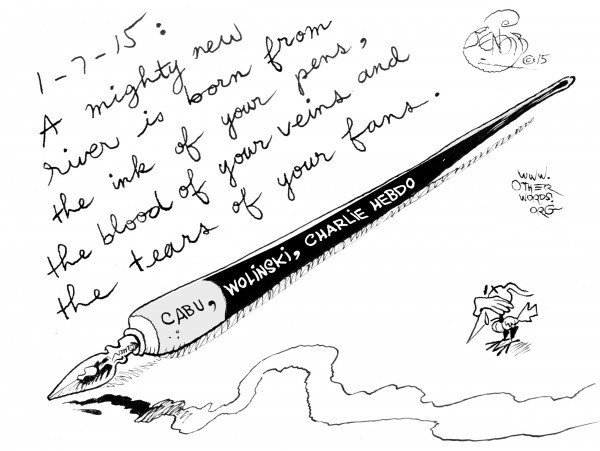
"A cartoonist mourns the Charlie Hebdo massacre,'' by KHALIL BENDIB,  who is Muslim. He did this for otherwords.org


Read More
Commentary Robert Whitcomb Commentary Robert Whitcomb

Neurological analogies

GIPS  

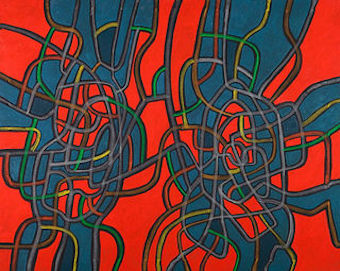
"Thicket of the Mind" (archival inkjet print), by TERRY GIPS, in his show at Galatea Fine Art, Boston, Feb. 4-28.

He says in his gallery notes:

I have been making art about tangled complexities; the process is like playing a game of chess between order and chaos, knowing and not knowing, remembering and forgetting.  I sometimes use grids to structure the chaos, wildness and randomness found in nature.  And I take notice of the parallels between these natural entanglements and those of the mind and the brain and hope that perhaps through these images I can catch a glimpse of the 500 trillion synapses, and the dendrites, axons, and nodes in my brain and nervous system.


Read More
Commentary Robert Whitcomb Commentary Robert Whitcomb

David Warsh: Too early to write history of the 2008 crash

President Obama claims credit for the recent spate of good economic news.   Senate Majority Leader Mitch McConnell says, “The uptick appears to coincide with the biggest political change of the Obama administration’s long tenure in Washington: the expectation of a new Republican Congress.” The argument illustrates an important but little-recognized fact of life. Whenever history is written in haste, political narrative tends to dominate the underlying economic story.  A case in point is Hall of Mirrors: The Great Depression, the Great Recession, and the Uses — and Misuses – of History,  by Barry Eichengreen, of the University of California at Berkeley.

Many people have noted the resemblance between  the “Roaring Twenties,” meaning 1923  to the stock market crash that began in October 1929; and the globalization of the 1980s and ’90s, including the Internet boom and the war years of the Early Twos, culminating in the financial crisis of 2008.

Eichengreen, an authority on the international monetary system — he is  the author of Golden Fetters: The Gold Standard and the Great Depression 1919-1939 (Oxford, 1996) and Exorbitant Privilege: The Rise and Fall of the Dollar and the Future of the International Monetary System (Oxford, 2011) — set out to compare the two crises.

The result is an entertaining chronicle of the two episodes that nevertheless fails to convince.

Eichengreen’s conclusion: that in 2008, the good was the enemy of the best. Central bankers might have prevented a Great Depression, he writes, but “their very success in preventing a 1930s-like economic collapse led to their failure to support a more vigorous recovery.”

If this sounds like the analogies that Obama’s advisers sought to draw  between his administration and that of Franklin Roosevelt in 1933, it is because it differs little from the politically-motivated story that they told.

The two chapters on the panic that began after Lehman Brothers was allowed to fail are especially disappointing.  Sale and repurchase agreements aren’t even mentioned, although a run on “repo” was at the center of events.

More to the point, there’s almost no hint that the worst phase of the crisis had been resolved by the time that Obama was elected.  Much remained to be done, of course, but George W. Bush, working with Congress, and two key appointees — Fed chairman Ben Bernanke and Treasury Secretary Henry Paulson  – stopped the run. Few other Republicans would have done so.

When Eichengreen gave his presidential address to the Economic History Association in 2011, there was reason to hope that he would produce a study employing several different lenses instead of just one.  His topic was a promising one: the use of analogies to shape policy.

Though the Great Depression had become “the dominant base case” in discussions of the 2008-9 crisis, he said, there were other analogies that illuminated various aspects of events:  the crisis of 1873, driven by an investment boom and bust that resembled that of 2007-8; or the 1907 crisis, in which the panic centered on the trust companies, the “shadow banks” of their day.

He didn’t deliver.  If I sound cranky it’s because I am.  It’s too soon to write the history of 2008.  Better to wait for Bernanke’s account of what happened, and the histories that will be written after.

It’s only natural for politicians like Obama and McConnell to construct simple stories of their own great deeds. We look to economists and historians to peer more deeply into past and present.

David Warsh, a longtime economic historian and financial journalist, is proprietor of economicprincipals.com.

Read More
Commentary Robert Whitcomb Commentary Robert Whitcomb

Chris Powell: Charlie Hebdo, multicultural immigration and Islamic killers

charlie5
One of the offending Charlie Hebdo cartoons.

Even the mass murder in Paris  last week, Islamic fanaticism's latest assault on liberty, may not be enough to awaken Europe. For the political correctness of the European Union's multiculturalism has already filled the continent with millions of Muslims from the Middle East and Africa who have no allegiance to the countries they now inhabit and only contempt for democratic secularism. Europe has become Eurabia.

Vile as it is, Islamic fanaticism is just 600 years behind what used to be Christian fanaticism, whose own wars devastated Europe for centuries before people began to suspect that God might not be worth such bloodshed and oppression and that government might best be separated from religion. The line between religious faith and superstition, bigotry, and murder is a thin one, because for the self-righteous, God is always available as absolute license.

That is what has made religion such a target for satire, including that of the French political weekly Charlie Hebdo, whose editors and cartoonists were massacred this week by those who see themselves as the soldiers of Islam, though the newspaper often ridiculed not just Moslems but Christians and Jews as well. It just has been a while since so many Christians and Jews rationalized murder in pursuit of religious imperialism.

The murder of the French journalists by the religious crazies will be a monument to the power of ridicule, a power Mark Twain may have described best: "For your race, in its poverty, has unquestionably one really effective weapon -- laughter. Power, money, persuasion, supplication, persecution -- these can lift at a colossal humbug, push it a little, weaken it a little, century by century; but only laughter can blow it to rags and atoms at a blast. Against the assault of laughter nothing can stand."

Yet of course this week it was the ridiculers who were blown away while their murderers shouted "God is great" and fear of more such attacks increased as the entire West, not just Europe, began to face the frightening consequences of a policy of uncontrolled immigration.

While the West halfheartedly wages war against the religious crazies in the Middle East, it has allowed entry to many people who, if they have not yet resolved to subvert democratic institutions, are enormously susceptible to such appeals.

The United States is lucky that, unlike Europe, most of its immigrants, legal and illegal, are only Central and South Americans of no particular ideology, merely economic refugees. But the terror attacks of Sept. 11, 2001, were largely the result of the failure of immigration law enforcement, a failure that has only worsened. Even now most illegal immigrants caught in the United States are not deported but only given summonses to appear in court -- and the Department of Homeland Security admits that 70 percent fail to report and simply disappear into the country, whereupon states like Connecticut make them eligible for driver's licenses and other benefits, exercising a liberal form of nullification of federal law.

Nullification is what a half century ago Southern states sought to do to to thwart federal civil rights law. That was disgraceful, but somehow liberal nullification has become respectable.

Admitting people who can show they want to live in a secular democracy, who appreciate the country's history and objectives, and who would assimilate into its culture is one thing. Such people likely would become better citizens than many of the native-born. But admitting anyone in the name of multiculturalism is treason.

For defending the country requires fearlessly defending the culture, as the journalists of Charlie Hebdo did, if only inadvertently, even at their most offensive -- especially at their most offensive.

France is being tested now. But our turn is coming.


Chris Powell is managing editor of the Journal Inquirer, in Manchester, C0nn.

Read More
Commentary Robert Whitcomb Commentary Robert Whitcomb

Watch where you step

stahl  

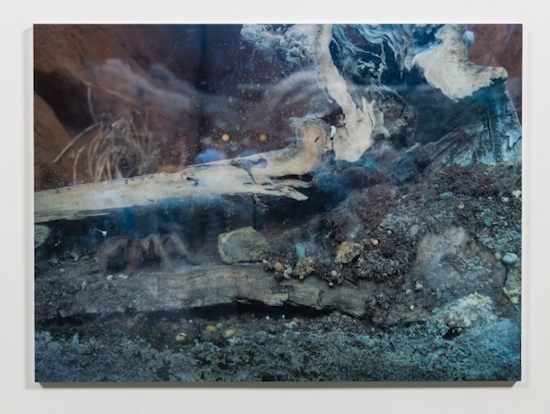
''What Lies Beneath'' (unique, inkjet print, aluminum, epoxy resin), by LUCIE STAHL, in the "esxatic photo'' show at Samson Gallery, Boston, through Feb. 28.

Read More
Commentary Robert Whitcomb Commentary Robert Whitcomb

Cheating in gut "sports ethics'' class at Dartmouth

Read More
Commentary Robert Whitcomb Commentary Robert Whitcomb

Llewellyn King: Islamic masses, leaders are enablers of barbarity

A dark shadow passed over Paris, the City of Light, on Jan. 7 .  Well-organized, well-trained killers murdered 13 people in the name of Allah. As Shakespeare said 500 years earlier, about the heinous murder of King Duncan by Macbeth, “O horror, horror, horror! Tongue nor heart cannot conceive nor name thee.”

Indeed, recent horrors in the name of Allah have been so gruesome it is impossible to conceive the mutilated reason, the perverted concept of God’s will, and the unvarnished rage that has subverted the once admired religion.

The killers are ruthless and depraved, but those who inspire them are evil and those who tolerate them are guilty.

In 2005, when a Danish newspaper published 12 cartoons depicting the Prophet Mohammed and riots were stirred up against the publishers, a meeting was arranged at a community room in the basement of The Washington Times. It was not organized by the newspaper but, as I recall, by an interfaith group. There were several fringe “let’s be nice” speakers before the main event.

The main event was the Danish ambassador and, to a lesser extent, myself. The ambassador spoke about life in Denmark and what the Danish government would do to understand and listen to the concerns of the Muslim community. My role was to defend and explain the Western concept of freedom of speech and the place satire. The overflow audience, which by dress and appearance was dominated by emigrants from Pakistan, was implacable.

I have spoken to some hostile audiences in my time, but this one was special: no compromise, no quarter. Nor interest in cultures other than their own. Ugly and insatiable rage came out in their questions.

They did not want to know about the values of the country that had given their brethren sanctuary, education, healthcare and a decent life. My audience only wanted to know why the blasphemers in Denmark and Norway (the cartoons were reprinted there) were not being punished. For good measure, they wanted to know why the American media was so committed to heresy against Islam. No thought that they had moved voluntarily to the United States and were enjoying three of its great freedoms: freedom to assemble, freedom of speech and freedom of religion.

They wanted absolute subjection of all Western values to the dictates of Islam. They had been fired up and they were angry, self-righteous and obdurate.

In 2009, I was invited to a conference of world religions in Astana, Kazakhstan. There were maybe 100 religions present, but at a featured session the conference degenerated into an Islamic diatribe against sexuality and the treatment of women (mostly in advertising) in the West. No dialogue. No discussion. Absolute certainty.

I mention this because of the reaction to the barbarity in Paris, and to a string of other barbarous murders across the world, from Muslims has been so muted.

Je Suis Charlie” said millions of people in dozens of countries in sympathy with the murdered journalists and with their fight for press freedom. From Muslim leaders in the West, including the Council on American-Islamic Relations in the United States, there were statements of condemnation but no sense of outrage. From the bulk of the followers of Islam there was nothing. There never is. Not when innocent children are shot in their schools, or when aid workers are beheaded, or when or when satirical journalists are executed. The Muslim multitudes have acquiesced to evil.

When will those who believe deeply in Islam take to the streets to denounce the excesses of the few? After the horror in Paris, British Muslims took to the BBC to mildly criticize the murders, but more to vigorously demand a better deal for Muslims in Britain.

The medieval certainty of the leadership of Islam is endorsed by the silence of its congregants. The silence of the millions gives a kind of absolution to the extremists, intoxicated with fervor and hate. It will all go on until the good Muslims stand up and are heard. The guilt of silence hangs over Islam.

Llewellyn King is executive producer and host of “White House Chronicle” on PBS. His e-mail is lking@kingpublishing.com.


Linda Gasparello Co-host and Gene
Read More
Commentary Robert Whitcomb Commentary Robert Whitcomb

Tough time for Connecticut's small hospitals

Read More
Commentary Robert Whitcomb Commentary Robert Whitcomb

Joseph W. Ambash: A stunning opening for union-organizing of private colleges

Editor's Note: New England, with its many private colleges and universities, could be much affected by this case. This came via the New England Journal of Higher Education (nebhe.org).
BOSTON

In a stunning and far-reaching decision, the National Labor Relations Board (NLRB) opened the door to union organizing among faculty at thousands of private-sector institutions, both secular and religious. The board’s majority decision in Pacific Lutheran University (12/16/14), issued in the face of powerful dissents, will inevitably spark controversy and ongoing litigation both about the legality of NLRB intrusion into the operation of religious institutions and the proper interpretation of the “managerial” status of faculty under the U.S. Supreme Court’s historic Yeshiva University decision.

Pacific Lutheran University case

The question before the NLRB in Pacific Lutheran University was whether a local of the Service Employees International Union could represent a unit of nontenure-eligible contingent faculty members employed by the university in Tacoma, WA. The university argued that, as a church-operated institution, it was exempt from NLRB jurisdiction and that its full-time contingent faculty were managerial employees excluded from representation under the Supreme Court’s 1980 decision in Yeshiva University.

In reviewing the decision of its regional director, the NLRB took the opportunity to solicit amicus briefs about the broad issues of jurisdiction over all religious institutions and the proper analysis of managerial status of all faculty at private higher education institutions. In its decision, the board articulated new, more stringent, standards that will make it difficult for religious institutions to claim exemption from the National Labor Relations Act and for all private institutions to claim that their faculty are exempt from union organizing. It held that the contingent faculty in question were entitled to organize.

Difficult new test

In Yeshiva, the Supreme Court ruled that the faculty of that institution were “managerial employees” excluded from collective bargaining because they “formulate and effectuate management policies by expressing and making operative the decisions of their employer.” Controversy had existed in applying the Yeshiva standards in the 34 years since that case was decided. Reviewing courts and others had criticized the NLRB for creating confusing standards that gave poor guidance to litigants. Despite these concerns, the overwhelming majority of private-sector institutions in the country have relied on the principles of this case to maintain union-free status among their faculty.

In the Pacific Lutheran case, the board stated its new rule as follows:

  1. Where a party asserts that university faculty are managerial employees, the board will examine the faculty’s participation in the following areas of decision-making: academic programs, enrollment management, finances, academic policy, and personnel policies and decisions, giving greater weight to the first three areas than the last two areas.
  1. The board will then determine, in the context of the university’s decision-making structure and the nature of the faculty’s employment relationship with the university, whether the faculty actually control or make effective recommendations over those areas. If they do, the board will find that they are managerial employees and, therefore, excluded from the act’s protections.
  1. The board interpreted the term “effective recommendations” to mean that those recommendations “must almost always be followed by the [college or university’s] administration,” and that they must “routinely become operative without independent review by the administration.”

In his thoughtful dissent, NLRB member Harry I. Johnson III pointed out the virtual impossibility of satisfying this new standard:

… by increasing the burden of proof for what the board considers to be “effective” recommendations, and by failing to consider the actual, diverse processes of university business operations and governance, the board has raised the bar for establishing managerial status of faculty to an unattainable height, one beyond the reach even of Arete̕̕̕.

Johnson pointed out that the new requirement, that to be effective, recommendations “must almost always be followed by the administration,” is an “overly onerous standard,” which will result in fewer board decisions conferring managerial status on faculty.” In addition, Johnson criticized the board majority’s holding that faculty recommendations are not effective if they are subject to independent review. He pointed out that discounting internal review “seems to utterly disregard the realities of decision- and policymaking in complex organizations.”

The dissent’s observations underscore the uphill battle nearly any college or university will have in demonstrating that its faculty are “managerial” and therefore not subject to collective bargaining.

Jurisdiction over religious institutions

The board also ruled that it will exercise jurisdiction over religious institutions–and hence allow faculty organizing—except where:

  1. The college or university first demonstrates that it holds itself out as providing a religious educational environment.
  1. Once that threshold requirement is met, the college or university must then show that it holds out the faculty members it seeks to organize as performing a religious function. This requires a showing by the college or university that it holds out those faculty as performing a specific role in creating or maintaining the university’s religious educational environment.

As Johnson pointed out in his dissent, the board’s new standard, which requires a religious university to prove that it “holds out” its faculty “as performing a specific role in creating and maintaining” its religious educational environment, necessarily involves the government in the process of evaluating religious beliefs and practices, thereby improperly intruding into the Religious Clauses of the First Amendment. This is particularly true because the majority decision requires a showing that faculty are required to serve a specific “religious function”—something that, of course, can vary widely from religion to religion. In Johnson’s view, if the Pacific Lutheran standard is eventually appealed to the D.C. Court of Appeals, it will be overturned.

Take-away for all private higher ed institutions

The NLRB’s decision—unless and until it is reversed or modified—will force nearly all private-sector institutions to reevaluate their vulnerability to union organizing among their faculty. For institutions that view their faculty as truly “managerial” and not subject to organizing, the decision injects a new era of uncertainty about the fundamental relationship between faculty and administration.

Institutions should audit their administrative structure to determine the extent to which their faculty (whether regular or contingent) make “effective recommendations” which are “almost always” followed by the administration, without review. This standard may be unattainable in the era of modern higher education. Institutions who wish to maintain union-free status among their faculty should also train their administrators how to respond to organizing activities by understanding how union organizing works under the National Labor Relations Act, recognizing organizing activities, and educating faculty to the pro’s and con’s of collective bargaining.

Religious universities likewise should audit their administrative structure to determine whether they “hold out” their faculty as serving specific religious functions.

All institutions should carefully monitor ongoing developments in this critical area.

Joseph W. Ambash is managing partner of the Boston office of Fisher & Phillips LLP, a national labor and employment firm representing management. He has extensive experience representing colleges and universities. He wrote this for the New England Journal of Higher Education, part of the New England Board of Higher Education (nebhe.org), on whose advisory board the overseer of New England Diary, Robert Whitcomb, once sat.

Read More
Commentary Robert Whitcomb Commentary Robert Whitcomb

Irreverence is the bedrock of humor

  sunflower

On the Charlie Hebdo massacre on Islamic terrrorists:

I share  the sadness of all France, and as an American writer, I stand with you in support of Freedom of Speech and Freedom of the Press!

Satire breaks through rigid, unquestioning thinking. Absolute irreverence is the bedrock of humor, and humor relaxes and opens the mind. How many of us as children found Mad Magazine a portal to new ways of seeing? The National Lampoon, George Orwell, Twain... Feel free to add to the list. Virtually every writer has, at one time or another, employed satire to help the reader see.

-- Charles Pinning

www.charlespinning.com

Read More
Commentary Robert Whitcomb Commentary Robert Whitcomb

More Islamic murders

  charlie

Photo by WILLIAM MORGAN

La Nouvelle Angleterre est Charlie.

Christophe Deloire, who runs  the Paris-based Reporters Without Borders, will no doubt address the latest Islamic terrorist murders of journalists when he speaks next Tuesday at the Providence Committee on Foreign Relations (thepcfr.org). (See link  to Charlie Hebdo cartoons  and to Reporters Without Borders petition below.)


Meanwhile, for those who say the problem is not Islam itself: A violent, bigoted and misogynistic strain of Islam goes right right back to Mohammed.  Read about it in the Koran and other Muslim writings, which  have plenty of savagery used as an excuse by today's Islamic murderers.  Indeed, Islam spread across much of the world through violence.

There are also peaceful, kindly and highly charitable strains of Islam -- most notably the Ismailis, part of Shia Islam. The vast majority of the violence is perpetrated by Sunni Muslims.

There's an old, violent and bigoted strain of Christianity, too, but nowhere near the strength  anymore of Islam's. The still besieged Jews,  whence came the other two religions, long ago cast off most of their Old Testament love of violence against their enemies.

Concessions to Islamic threats just embolden the terrorists further. The West must show more backbone in defending its values, which are so fundamentally more alluring than other cultures' that the West is where people still most want to come. Many Muslims risk life and limb to escape the corrupt dictatorships that characterize most of the Muslim world and move to Europe, where, sadly, some of the more perverse and deranged of these immigrants seek to destroy the very refuge that has protected them.

More profiling is needed at the borders, and considerably more controls on immigration from Muslim nations, lest Western culture be overwhelmed. As Llewellyn King noted of a group of Pakistanis in Washington: "They did not want to know about the values of the country that had given their brethren sanctuary, education, healthcare and a decent life.'' And freedom.


See  some Charlie Hebdo cartoons  in this link. They are  copyrighted so we can't just put whole cartoons up on this site.

Here is  a link to a Reporters Without Borders petition.


Read More
Commentary Robert Whitcomb Commentary Robert Whitcomb

Find the sex in this picture

norod A mixed-media painting of HILARY TAIT NOROD in her "Couplings'' show at Galatea Fine Art, Boston, through Jan. 31.

The gallery notes say that the show "will ignite questions of our own identity within the relationships we value most.''

Scary stuff!


Read More
Commentary Robert Whitcomb Commentary Robert Whitcomb

Don Pesci: The unmentionable 'F' word

VERNON, Conn.

Wander into the badlands of any large city in the U.S.,  shout out “Father” and nothing will stir. Fathers are rare in this environment; far rarer, shall we say, in the north end of Hartford than they are in posh New Canaan. What happened to them? Have they all fled to the Left Bank in Paris to become expatriate artists?
The problem is cultural, say most sociologists. Just as F. Scott Fitzgerald once said of the  very rich – “They are very different from you and me” – so is the underclass very different than the middle class or the upper class. No one pauses very long to entertain the question: Why are they different? That is one among many questions assiduously avoided whenever well intentioned liberals get together with equally well intentioned professors of raceology to discuss the equally absorbing question: Why can’t we have an honest discussion on race in America?
Answer: We can’t, among other reasons, because we shy from answering the all-important question posed two paragraphs above: Who killed fathers in the African-American community? Indeed, we refuse to acknowledge its importance. This question cannot be properly probed without mentioning the “U” word – underclass -- and its connection with households without fathers.
“Poverty” is the polite word most often used by polite liberals and more earnest progressives to describe the plight of the unmentionable underclass. And, no, people who discuss these things are not racist for having so brashly mentioned the unmentionable; namely, that there is an underclass under the noses of most well-intentioned liberals and that this underclass has become a permanent feature of modern day America.
Poverty in the United States has never been, with some rare exceptions, permanent; in fact the impermanence of poverty is what has driven the desperate poor to the United States since its founding. The boast engraved on the edestal of the Statute of Liberty -- “Give me your tired, your poor/ Your huddled masses yearning to breathe free,/ The  wretched refuse of your teeming shore./ Send these the homeless, tempest-tossed to me,/ I lift my lamp beside the golden door” – is a celebration of the impermanence of poverty. But an underclass has since become a permanent fixture of our social order; it is that very thing the huddled masses were hoping to escape in their desperate flight to America, where a steady advancement up the ladder of success was impeded by speed bumps rather than the fortress walls of a class system that in Europe kept the rich in splendor and the poor in rags, more or less permanently.
It seems ages ago that the late New York Sen. Daniel Patrick Moynihan  warned us all that the African-American family – dad, mom, kids -- was becoming an endangered species. Part of the problem was – and is – that the welfare system replaced Dad with a kind of sustenance that imprisoned people within the system; welfare clients were held in welfare cages on the periphery of poverty. The more they were helped, the more secure and inescapable their prisons became. A welfare state that was supposed to allow movement from temporary dependency to self-sufficiency became a more or less permanent holding cell, a purgatory whose doors, unlike the door mentioned in the Emma Lazarus poem, never opened upon more hopeful vistas.
How many fatherless children are there in our welfare system? Lots and lots and lots. For the most part, fatherlessness is a precondition for receiving welfare. And some of the younger “fathers” of children born out of wedlock – how ancient that word sounds – have never made it to the alter. Many of them are in prison. Brought up without fathers themselves, they drifted – like ships without rudders, blown here and there by every ill wind. Their children will drift also, unless they are made of very stern spiritual stuff.
Grandmothers and grandfathers, if they have been lucky enough to remain together, may help. Ministers, priests, rabbis, imams, social workers, other siblings and teachers may help. Still, the chance that a young African-American boy whose caretakers have relied on a social-welfare system that strives to “play father to the child” will be able to avoid the pitfalls that lead to gang affiliation, poor marks in school or a prison cell, is considerably more remote than would be the case if the boy were reared under the watchful eyes of a self-sufficient, responsible and employed father who would love and guide him down sure and well-marked paths.
Sons need fathers. And a society that cared for fathers and sons -- and its own welfare -- would not so perversely ignore the ruin at its door.
 
Don Pesci (donpesci@att.net) is a political writer who lives in Vernon, Conn.
Read More
Commentary Robert Whitcomb Commentary Robert Whitcomb

Kevin Profit for ecoRI News: A fragile underwater marvel and source of fish

From ecoRI News Cashes Ledge, 80 miles off the coast of Gloucester, Mass., is an oasis for sea life. The peaks and canyons of the 22-mile-long underwater mountain range create nutrient- and oxygen-rich currents that support diverse habitats throughout the 550-square-mile area.

At elevations where sunlight reaches the submerged peaks grows the largest continuous kelp forest — one of the most productive ocean ecosystem types — along the Atlantic Seaboard. Cashes Ledge is home to the depleted Atlantic wolffish, red cod, sea stars, anemones and rare sponges, and acts as a migratory pass for blue sharks, humpback and right whales, and bluefin tuna.

As a pristine example of a Gulf of Maine ecosystem, Cashes Ledge has been used by scientists as an open-sea research laboratory for decades. Relatively unimpaired by human activity or pollution, the area acts as a benchmark against which the health of the rest of the ocean is measured.

Since 2002, Cashes Ledge has been protected by the New England Fishery Management Council (NEFMC) from habitat-damaging fishing practices, such as bottom trawling and scallop dredging, in an effort to restore depleted fish stocks, including cod. Cod stocks are at historic lows — 3 percent of a sustainable level in the Gulf of Maine — because of decades of overfishing and high-risk fishery-management decisions, according to environmental groups such as the Conservation Law Foundation (CLF).

Bottom trawling at Cashes Ledge could also destroy entire sections of kelp forest and wipe out populations of sea anemones that would take more than 200 years to recover, according to the CLF.

Protected areas, such as the one surrounding Cashes Ledge, also have been shown to be more resilient to climate change, and provide sea life places to adapt to warming and acidifying waters.

The Magnuson-Stevens Act of 1996 required the NEFMC to identify essential fish habitat, minimize adverse effects caused by fishing as much as feasible considering economic and other factors, and find ways to enhance essential fish habitat. The act also requires that the council update and improve habitat programs every five years. The NEFMC’s habitat management plan was due for a five-year review in 2004, but is still incomplete. The plan, titled the “Omnibus Essential Fish Habitat Amendment 2,” is currently in draft form and is open for public comment until Jan. 8.

The current draft offers a range of possible conservation alternatives, each made up of one or more possible protected areas in a geographic region encompassing the Gulf of Maine, Georges Bank and southern New England. Each possible protected area was determined using multiple analyses, including the Swept Area Seabed Impact model, and other information such as analysis of juvenile groundfish distributions, combined with information about the current status of various stocks and their affinities for vulnerable habitat types.

After the public comment period closes, the NEFMC will consider each comment and then choose the alternatives that it believes will best protect essential fish habitat from the negative effects of fishing to the extent feasible considering economic and other factors.

The CLF, an organization that advocates for increased protection of ocean habitat in New England, claims that many of the alternatives in the draft Omnibus Habitat Amendment would reverse protections previously granted to vital areas in New England waters in favor of shortsighted fishing-industry interests. The groundfish and scallop industry, for example, is pushing to reduce the area currently protected around Cashes Ledge by 70 percent.

According to a September brief by the Pew Charitable Trusts titled “Risky Business: How denial and delay brought disaster to New England’s historic fishing grounds,” Georges Bank could lose 96 percent of its remaining protected area, despite cod populations being at only 8 percent of a sustainable level. The brief states, “Overall, if the NEFMC chose the smallest closed-area option for each subregion, the total area afforded year-round protection would drop by 71 percent to just 1,909 square nautical miles” — a reduction roughly the size of Connecticut.

According to Shelley, protected areas like Cashes Ledge are essential to the long-term health of New England’s fisheries. Older and larger fish are vital to the recovery of depleted populations, he said, because they experience greater reproductive success than their younger counterparts. Protected areas have been shown to contain more numerous and older fish than unprotected areas and become incubators for neighboring waters.

Shelley said California has experimented with habitat closures as a way of increasing fish stocks. He said fisherman initially opposed the closures, but many came around after experiencing an increase in catch along the edges of the protected areas.

In another example, cited in the Pew brief, “the biomass of scallops across the New England fishery region increased dramatically in association with the closures on Georges Bank. New Bedford, Massachusetts, has the highest fishing revenue in the nation because of scallops.”

Many New England fisherman want to reopen protected areas such as Cashes Ledge to fishing because there are more fish in them, but according to Shelley more abundant fish populations in closed areas prove the protections are working and should remain in place or be expanded. If the protected areas are reopened, he said, fisheries will revert back to depleted states.

More of New England’s waters need to be protected, not less, according to Shelley. He said the Omnibus Habitat Amendment isn’t going to provide that result.

“In this case, preserving the status quo is better than the preferred alternatives of the NEFMC,” Shelley said.

In early December, 138 marine scientists and academics signed a letter to National Oceanic and Atmospheric Administration (NOAA) fisheries officials expressing deep concern about any proposals from the NEFMC that would significantly reduce habitat protection. Signers include leading names in marine and fisheries biology such as Daniel Pauly, Callum Roberts and Sylvia Earle.

“In terms of area alone,” they wrote, “the Amendment offers no alternatives that would (expand) the overall area protected in the region. Given the current state of some of the managed fish populations, protecting more, not less, habitat would seem to be an alternative worthy of consideration.”

The letter suggests enacting more comprehensive fishing-gear restrictions in protected areas, instead of only prohibiting bottom-tending gear. It also contests the arguments in support of diminishing habitat protection.

“Under certain scenarios,” the signers wrote, “a smaller amount of diverse habitat may have greater ecological benefit than a larger amount of lower value (habitat). But we are not persuaded that there is sufficient evidence that this scenario can be applied here with a high degree of safety or certainty. The (amendment) does not make a strong case that the new network of (protected habitat) will be a net gain or even maintain the ecological status quo for the region as a whole.”

The letter concludes that reductions in habitat protection would be highly unwise and unsupportable by current science.

“Too often, NEFMC has ignored or downplayed scientific data in favor of the short-term economic interests of the fishing industry,” Peter Baker, director of Northeast U.S. ocean issues for The Pew Charitable Trusts, wrote in a recent blog post. “That’s the sort of decision-making that brought the region to its current state: a federally declared fishery disaster that has required tens of millions of taxpayer dollars in assistance. It’s time to start listening to the science.”

More of the waters and seafloor identified as important by scientists that cod need to spawn, feed and mature should be made off-limits, according to Baker.

“Habitat is where fish make more fish. And what New England needs now is more fish,” he wrote. “Unfortunately, New England’s regional fishery managers have proposed a plan that could actually result in the opposite, a dramatic reduction of habitat areas.”

To help the public focus their comments on the alternatives likely to be chosen, the NEFMC released its own preferred alternatives prior to the comment period. In most cases, the preferred alternatives are not the “worst-case-scenarios” many conservation groups cite to bolster their arguments.

The NEFMC has suggested maintaining one existing large closed areas in the western Gulf of Maine, and the eastern Gulf of Maine, currently unprotected, would stand to gain protections from the amendment. However, in most cases, the council’s preferred alternatives reduce the overall area currently protected.

Current closed areas on the left are generally larger than those preferred by the NEFMC on the right. The NEFMC didn’t selecte any preferred habitat alternatives in the Georges Bank or Great South Channel/Southern New England subregions, but its analysis does include these subregions and offers a variety of alternatives. (Omnibus Essental Fish Habitat Amendment 2 Public Hearing Documment)At a public hearing for the draft Omnibus Habitat Amendment in Warren, R.I., in early December, clam, lobster and scallop fishermen spoke out in favor of specific alternatives that would open areas currently closed to fishing, prevent areas currently open to fishing from becoming closed, and relaxed fishing-gear regulations to improve their catch.

One surf-clam fisherman said he had been operating in the same fishing grounds on the Nantucket Shoals for 35 years without negative impacts. He requested the Omnibus Habitat Amendment include an exemption for surf-clam fishing, including in closed areas, because of the relatively benign gear used by his fishery.

Jerry Elmer, of CLF Rhode Island, was the sole conservationist to testify at the hearing. “This fish habitat amendment should be viewed as an opportunity to enlarge protected habitat,” he said.

Jeremy Collie, professor of oceanography at the University of Rhode Island, testified in favor of alternatives that would continue year-round closures of the most vulnerable habitat on northern Georges Bank. He said it would be a mistake to allow bottom fishing in these areas.

In a follow up e-mail to ecoRI News, Collie wrote that he generally agrees with the options favored by the NEFMC and that he supports the council’s analysis showing that the favored alternatives will result in mostly neutral or positive economic and habitat impacts.

Written comments on the draft Omnibus Habitat Amendment can be submitted via e-mail to nmfs.gar.OA2.DEIS@noaa.gov, subject line: “OA2 DEIS Comments.”

Kevin Profit wrote this for EcoRI News.

Read More