A_map_of_New_England,_being_the_first_that_ever_was_here_cut_..._places_(2675732378).jpg

Vox clamantis in deserto

Commentary Robert Whitcomb Commentary Robert Whitcomb

Healthcare: Think old!

Read More
Commentary Robert Whitcomb Commentary Robert Whitcomb

Robert Whitcomb: Holiday cards: History at the micro level; ransoms cause killing

Every Christmas week I send “Happy New Year’’ cards to people who have just sent us holiday cards. If they took the time to send us cards then we should reply. Thus you can reconnect with a lot of people, if only once a year. In doing so, you stay in the fabric of a wider life than you might have without the card exchange. Going through them is a sort of forced review of recent history at the micro-level. And then there’s the reminder of mortality, as these cards report more and more deaths to you as the years roll by, along, of course, with the births. Then there’s the obituary by omission: Cards from certain people just stop coming. These pieces of brightly colored paper can be like those models of skulls that priests and scholars used to keep on their work tables to focus their minds.

Along with the cards comes the knee-jerk reaction to review the year past and make resolutions about the next. My central resolution is always, as Thoreau advised, to “Simplify, simplify.’’ (As a bachelor and grand moocher on friends and neighbors, it was easy for him.) But simplification is far from simple in 21st century America, and the machine upon which I’m typing this is one reason. It offers endless distraction.

“Distraction is the only thing that consoles us for our miseries,” Blaise Pascal wrote in the 17th century, “and yet it is itself the greatest of our miseries.” Peter Kreeft, a philosopher/theologian, wrote: “We want to complexify our lives. … We want to be harried and hassled and busy. Unconsciously, we want the very things we complain about. For if we had leisure, we would look at ourselves and listen to our hearts and see the great gaping hole in our hearts and be terrified, because that hole is so big that nothing but God can fill it.’’ (Or maybe luxurious leisure can fill it!)

Some people e-mail their holiday cards — to simplify and/or to save money. But these transmissions obviously lack the emotional weight and resonance of physical cards. (By the way, scientists say that reading on paper supports more memory of text than does reading on a screen.) And e-mails are too easy to delete. A really good paper card may be kept for years, perhaps in a scrapbook.

The Internet won’t destroy the paper-card business anytime soon.

xxx

The New York Times ran a piece Dec. 28 headlined “U.S. Policy of No Ransom Closes Off Other Options,’’ which I took as an implied defense of paying ransom to murderous groups such as the Islamic State in order to free kidnapped people from rich countries with big media.

Of course, these stories of Americans (such as New Hampshire’s James Foley) and other Westerners who go to the Mideast for humanitarian, journalistic and other reasons and then are kidnapped by the likes of IS are horrific. But the United States’ paying ransom to get them back will create many more such cases.

The basic problem with stories like The Times’s is that they divert attention from the broad duty of destroying a depraved group that would, with pleasure, kill millions of people if it could, to tragic individual human-interest stories. In this diversion, it puts many more people than the hostages in peril, whatever the heartwarming pictures of paid-for kidnap victims being reunited with their families.

David S. Cohen, U.S. Treasury undersecretary for terrorism and finance intelligence, nicely summarized where the ransom money goes: “[to] help fund the full range of [terrorists’] activities, including recruiting and indoctrinating new members, paying salaries, establishing training camps, acquiring weapons and communications gear, staging deadly attacks, and helping to support the next generation of violent extremist groups.’’

Why not just ship the Islamic State weapons or pay them their wages instead of paying ransom? Save time.

Paying ransom to terrorists kills. People know this, but …

Robert Whitcomb oversees New England Diary.

Read More
Commentary Robert Whitcomb Commentary Robert Whitcomb

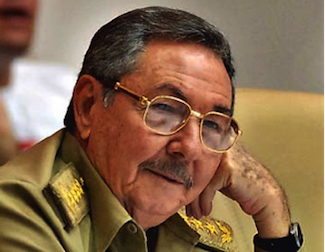
Jefferson Paris: Bernie in Havana

Editor’s Note: This two-act play takes off from the recent decision by President Obama to restore U.S. diplomatic relations with Cuba. Raul Castro, Fidel Castro’s brother, is president of the Council of State of Cuba. Bernard Sanders, who grew up in Brooklyn, N.Y., and is a self-described democratic socialist, is a U.S. senator from Vermont. The author is a resident of Vermont; Jefferson Parish is a nom de plume.  
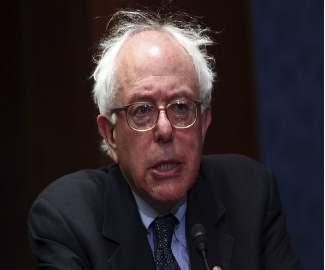
bernieraul


Scene one, Presidential office of Raul Castro, in Havana, Cuba, sometime in 2015.

Bernard Sanders enters, followed by an aide and two press photographers.

Sanders:  [In a 1950’s Brooklyn accent] Hello, Mr. President.

Castro: Hello Bernie, ah, Mr. Ambassador. This is an historic occasion.

Sanders:  Yes it is, Mr. President. Our president sends his regards and best wishes and asked me to say:

Buenos Dias, El Presidente.

Castro:  Very good! When you return you can tell him this for me:

Go Yankees!


                  [Castro chuckles at his joke.]

[The two men shake hands, as the press photographer records the occasion. They then sit.]

Sanders:  Mr. President…

Castro:  Please call me Raul. If you don’t mind I’ll call you Bernie.

Sanders:  Of course. Everyone does. Now Raul, our president…=

Castro:  Barack….

Sanders:  Yes, Barack and I believe it is in the best interest of our respective countries that the over-50-year-old U.S. trade embargo of Cuba be ended and free trade resume. But that requires approval by our Congress. And Congress needs some assurances from you.

Castro:  Can I offer you a cigar, Bernie?

Sanders:  Sure. But aren’t we in a smoke-free zone? Where I live in Vermont, you can’t even smoke in the city park.

Castro:  No problemo here, Bernie. I make the rules.

Sanders: OK. [He lights up, takes a puff, then looks at the cigar.] The red band is nice touch. Now, as I was saying, Congress needs some assurances….

Castro:  Such as….

Sanders: [Making sure that the photographer is filming, he removes a card from his pocket and begins reading.]

That Cuba will respect freedom of expression, religion and association; that American investors will be repaid for expropriated property; that people will be entitled to pursue life, liberty and pursuit of happiness; that you will allow political parties; that you will empty your prisons of political prisoners and renounce state-sponsored terrorism; that you will export rum and cigars to America; and that our hotels and casinos will be welcomed.

Castro: You ask for a lot, Bernie. You should be glad my brother is not     here. He’d send you a fastball high and tight and shout,

“Yanqui, go home!”

Sanders:  Actually, Raul, I grew up in Brooklyn and rooted for the Dodgers against the Yankees.

Castro:  Ah yes. Well my wife went to MIT and rooted for the Red Sox. But you didn’t actually want Yankees to go home, did you? [chuckling] Well, we do need some new trading partners with the oil business in the crapper, so let’s discuss this more in private, si?

Sanders:  Si, I mean yes, Raul. [Turning to his aide and the photographers] Will you excuse us? [They leave.]

Scene two. Same office but the two are now alone.

Castro:  Hey, Bernie, where did you learn the secret socialist handshake?

Sanders:  I read about it once in a book about Che, and a few years ago tried it out on Hugo at a meeting in Caracas with Joe Kennedy and his home-heating-oil company. It’s tricky to make each digit the same size and minimize the importance of the thumb. I don’t think that the press boys noticed.

Castro:  Do you want me to have them arrested and find out?

Sanders:  No, no [trying to smile]. Not today at least. Did you like my speech?

Castro:  Well, I admired the apparent conviction. It can’t have been easy for a socialist to say. But there’s an old Spanish idiom that translated goes something like this: “You fuck the chicken if you must.” Which reminds me, how did you get Barack to appoint you ambassador?

Sanders:  I learned long ago that the way to get what you want is to make yourself a pain somewhere else. I enjoyed being a senator but I wasn’t getting anywhere. So I started rumors about a presidential run of my own. Did you read about it?

Castro:  Sure. I get Burlington’s Seven Days. The Bernie Beat’s terrific.

Sanders:  Well, I was making the Clinton/Cuomo/Warren people nervous. They figured I couldn’t pass up this gig. The same thing happened in Vermont when I threatened to run for governor. Voila, I became a congressman!

Castro:  Nice. But aren’t people afraid you’ll give away the store down here?

Sanders:  Let me put it to you this way. [Taking another drag on his cigar.] We, that is, the CIA, have tons of money. I mean tons and tons and tons of it. Just look what we spent in Iraq and Afghanistan. If you’ll just relax on a few of the smaller things I talked about (like letting Caesar’s Palace into Havana and letting Catholics attend church regularly), money will go wherever you want it to…Cuba, the Caymans, Kremlin, Swiss banks, Vermont, wherever.

Castro:  But La Revolution? Fidel’s vision of compete equality? Che’s legacy?

Sanders:  [Looking around] Are we truly alone here, Raul?

Castro:   Si, senor. But this is the only place.

Sanders:  Now here’s the thing. You’ve got to look at the big picture. If you soft-pedal a few of these socialist ideas, for which we will pay you richly, I will work with you to push the big ideas to our country. We can go on a speaking tour. Havana may become like Miami, but America will become like your Cuba.

[He high-fives Raul.]

Castro: [Pausing for a while] Che would be impressed, El Bernardo. Is Barack on board?

Sanders: Si, El Presidente. It was his idea to begin. But he insists you open a golf course.

Castro:  I suppose we could do that. How else do we start?

Sanders:  In the north, in the snow, in Vermont in fact.

Castro:  Brrr. Would I have to go there?

Sanders:  No (though you’d be warmly received), but some of that money coming your way would. The idea is to make Vermont the model of the new U.S. free health care, complete income redistribution, more government programs. You know, socialism. We’re about half way there now; we just need some money to finish it. Then it is, “as Vermont goes, so goes the nation.”

Castro:  You’ve got quite a vision there, Bernie.

Sanders: My friends aren’t called Sanderistas for nothing!

Castro: But how am I going to back away from our revolutionary goals? My party will be sorely disappointed.

Sanders:  Not if you do what I did, Raul, and the steps are pretty simple.

One, blast the rich whenever and wherever you can. It matters less what you do than what you say you are going to do. That is the first rule of my politics.

Castro:  But we don’t have any rich here, except us.

Sanders:  Oh yeah. Then on to step two. Speak up for the little guy, whenever and wherever. Again, talking is more important than doing.

Castro:  We do that now.

Sanders: Third, always, always support the veterans. If you support the vets, you win over or at least neutralize the army. And with the army on your side, business won’t oppose you.

Castro:   We don’t have any business here either.

Sanders:  How lucky! But in sum, if you say Viva la Revolution over and over and make sure the vets get a pension, you’ll win every election and be able to do pretty much whatever you want. Get it?

Castro:  We don’t have real elections down here, Bernie. And I already do what I want. Nevertheless, I think all this is going to work out very well. Why don’t we have a swig of rum from my in-laws’ pre-revolution distillery to toast the people. And then we can call Hugo with the good news.

Sanders:  Okay,  but one more thing before I leave. I really like your hair. Who’s your barber?


#



Read More
Commentary Robert Whitcomb Commentary Robert Whitcomb

Trying to unfurnish old age

mello  


Painting and collage by SALLY MELLO, at the Art Complex Museum, in Duxbury, Mass. It's her grandmother's chair.

We too have  some old furniture, s0me of which we'd like t0 unload on  our adult children, but they have shown little interest in it. Will much of it end up in the dump, or as firewood? Such are the sorts of questions associated with old age.

Read More
Commentary Robert Whitcomb Commentary Robert Whitcomb

It will all be clear by spring

trump

"Bike Path'' (oil and mixed media on polymesh), by DOUG TRUMP, in the show "Invited Artists,'' at Mitchell Giddings Fine Arts, in Brattleboro, Vt., Jan. 8-March 1.


Read More
Commentary Robert Whitcomb Commentary Robert Whitcomb

In Boston, the start of the electric street car age

Read More
Commentary Robert Whitcomb Commentary Robert Whitcomb

Art by air

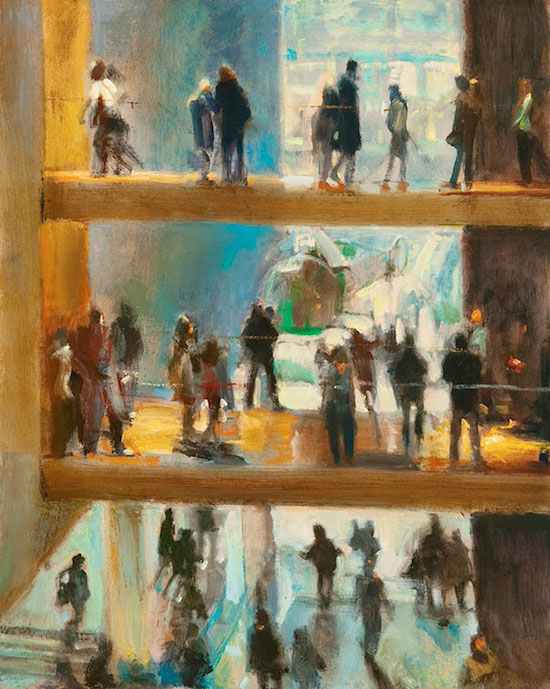
drumheller "Museum with Helicopter, Cooler Version'' (oil on Linen), by  GRANT DRUMHELLER, in the sh0w "A Department of Makers, University of New Hampshire Studio Gallery,''  at Kingston Gallery, Boston through Feb. 1.


Read More
Commentary Robert Whitcomb Commentary Robert Whitcomb

Llewellyn King: Some things you won't like in 2015

The new year demands predictions. As those demands must be satisfied, here are mine: President Obama will be blamed for everything, from pet obesity to sunspots.

Jim DeMint, president of The Heritage Foundation, will continue to solicit me for money and will write me ingratiating letters as one conservative to supposedly another. Things are terrible because of Obama, he will say. But if I send him five bucks, the day can be saved for America.

Sen. Al Franken (D-.Minn.) will ask me for money, five bucks, to save America from the likes of DeMint.

Amtrak — whose high-speed train between Washington, D.C. and Boston, Acela Express, is so expensive that only rich business people can afford to ride it — will seek a larger federal subsidy. At present, it stands at $1.3 billion. Ordinary people, whom Congress had in mind as riders, can’t afford the Acela’s astronomical and predatory fares. So it has become a service for business executives and corporate lawyers. (You can tell from the overheard cell phone conversations. A billable hour is a terrible thing to waste.)

The airlines will find new ways to discomfort you. Watch out for toilets that big and tall people can't sit on, seats that recline a 16th of an inch, and bad food that you’ll buy only if you’re off your medicine. Don’t change your ticket, bring a suitcase or seek a seat with legroom. There are fees for that kind of convenience and comfort. Don't ask for logic in routing: How about Providence to Washington, D.C., with two stops and a travel time of 10 hours and 20 minutes? An air travel Web site tried to tempt me with that “super-saver” fare. I reckon you could hitchhike it in about the same time.

If you thought it was difficult to reach any large company in 2014, it will be much worse in 2015. There are consultants out and about in America, teaching corporations how to avoid their customers. Gone are the days when you could expect customer service of some sort, albeit from Rajiv in Bangladesh. Amazon, always a pioneer, has produced the anti-consumer masterpiece. If you have a question about your Kindle, you have to give the company your credit card if you want it answered. It's the no-pay-no-help line.

Talking of the perils of being a customer, Bank of America refused to give me the phone number of the local branch where I have an account. When I finally got through to the manager, she said that Bank of America didn't give out the number because “the phone would be ringing off the hook.” I didn’t know people called the bank just to chat. No thought that those callers might be customers.

Just remember new the mantra of big business: “The customer is always wrong, a nuisance, and fitted for nothing better than hanging an hour on the phone with a simple inquiry.”

Next year the save-a-buck Congress will  ravage the Post Office. Sad, because it's the one place that still works, and where you can get a question answered promptly. That will not do. The Social Security Administration is efficient and polite, too. So Congress has its hatchet out.

Now that the Republicans have control of government, they'll be out to prove that government doesn’t work. I’m sure they will pull it off. The Democrats will be complaining — having snatched defeat from the jaws of victory in the midterms.

How can you lose an election when the economy is turning around? Ask Senator Franken when you send him your five bucks. Bet he won’t tell you. So I will. You turn your back on your president. That makes you look really bad, and looking really bad is a bad election strategy.

Happy New Year!

<EL10>

Llewellyn King (lking@kingpublishing.com) is executive producer and host of “White House Chronicle” on PBS.

Read More
Commentary Robert Whitcomb Commentary Robert Whitcomb

Better than a new coat of paint?

122-2 Sibley-Reflective-1  

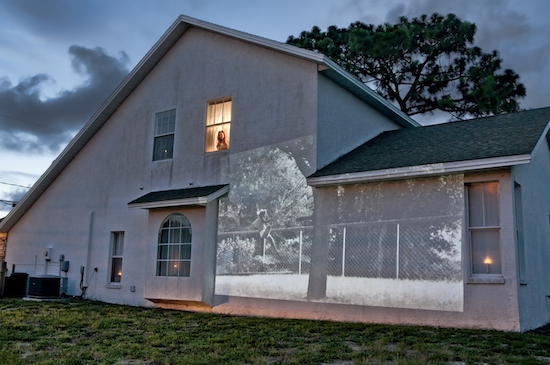
"Reflective'' (photo), by LISA SIBLEY, at Fountain Street Fine Art,  Framingham, in the "Visual Alchemy Show,'' Jan. 2-25.

Read More
Commentary Robert Whitcomb Commentary Robert Whitcomb

A few open hours

A fresh, still and cold start to 2015 in these parts -- for  few hours,  the new year seems wide open and clean, and full of happy possibilities. And then the duties, real and imagined, intervene.

Read More
Commentary Robert Whitcomb Commentary Robert Whitcomb

National Grid's sunny start to 2015

This is from our friends at the New England Council:
National Grid, a New England Council member, announced plans on Monday to install solar panels at 19 sites around Massachusetts. The expansion is one of the largest solar projects in the state, and is expected to generate enough electrical energy to power 3,200 homes a year.

The installations will be located on public and private land, and are expected to include about 50,000 solar panels with 16 megawatts of power capacity. This will be added to the existing 700 megawatts of capacity that exists throughout the state already, including at the solar facilities of Northeast Utilities, a fellow NEC member. The expansion of such facilities is promising to bill-payers; a recent Deutsche Bank report said that solar electricity prices are on track to match or even fall lower than average electricity prices in most states by 2016, assuming various government incentive programs remain in place. Construction of the project is expected to be completed by June 2015.

“Solar generation is an increasingly important piece of the energy picture for Massachusetts and the entire country,” said Edward White, vice president of Customer Strategy and Environmental, National Grid. “National Grid is proud to join the Commonwealth in taking a leadership role to develop this vital clean energy source. As our network and our customers’ expectations evolve, we anticipate more opportunities for our company to strategically invest in new energy sources and technologies on behalf of our customers.”

The state’s goal in 2007 was to build 250 megawatts of solar power capacity by 2017. It passed that mark last year and is now working towards a new goal of 1,600 megawatts by 2020. The New England Council applauds National Grid for its tremendous efforts toward meeting these goals and advancing clean energy in New England.

Read more in National Grid’s press release.

Read More
Commentary Robert Whitcomb Commentary Robert Whitcomb

Marjorie E. Wood: Port strike mirrors organized labor's early days

Port truckers in California walked off the job in November to protest their dismal working conditions. Required to lease trucks while paying insurance and maintenance costs, drivers often earn less than minimum wage.The strike came just days after big box retailers, manufacturers, and other supply chain stakeholders sent President Obama a letter warning that labor disputes could cause “a full shutdown of every West coast port.”Spearheaded by the National Retail Federation — whose members include large corporate retailers  such as WalMart — the letter stated that a shutdown would be “catastrophic,” costing the economy up to $2 billion a day. Over a hundred business associations who signed the letter requested “immediate action” by the federal government to prevent such losses. Though a shutdown did not happen, tensions remain as port truckers, dockworkers, and other workers step up their demands to be treated fairly during the peak holiday season.

This isn’t the first time in our nation’s history that a transportation strike has made big business anxious. In 1877, when thousands of railroad workers went on strike in a dozen American cities, businessmen pleaded with then-President Rutherford B. Hayes to intervene.

Businessmen had reason to worry. At the height of the 1877 strikes, more than half the freight on the nation’s railways stopped running.

Circumstances leading to the railroad strikes were not unlike our own today. Unregulated economic growth after the Civil War concentrated wealth in a few hands. Labor conditions deteriorated as big business sought ever greater profits. The first Gilded Age was born.

Then, as now, transportation workers held the strongest hand in demanding higher wages and better conditions. Unlike other workers, they could disrupt business as usual everywhere.

The railroad strikes showed how powerful workers could be when they united. Workers across all industries responded in solidarity when business and government tried to put down the railroad strikes.

After 1877, labor unions grew and more strikes ensued. Ultimately, this led to passage of the Fair Labor Standards Act, the bedrock of modern employment rights.

Over a hundred years later, port truck drivers are denied the very same employment rights that workers in the first Gilded Age fought so hard to achieve. In the last year, port truckers have gone on multiple strikes protesting their misclassified status as “independent contractors.” Nearly 70 percent of port truckers are denied protections and benefits due to misclassification, according to the National Employment Law Project

Port trucking was a secure, middle-class occupation until Congress first deregulated the trucking industry in 1980. Now, most port truckers lack basic labor rights, such as workers’ compensation, overtime pay, and even a guaranteed minimum wage.

Port truckers aren’t the only workers in this boat. They’re also an essential link in a supply chain that ends with low-wage retail workers at Walmart. If port truckers wage a protracted strike, it could reverberate throughout the entire national economy.

While their plight hasn’t commanded the widespread attention that the 19th century rail strikes did back then, port workers just might be the key to restoring basic labor rights for all Americans.

Marjorie E. Wood, a columnist for OtherWords.org, where this piece originated, is a senior economic-policy associate at the Institute for Policy Studies (IPS-dc.org) and the managing editor of Inequality.org.


Read More
Commentary Robert Whitcomb Commentary Robert Whitcomb

ecoRI: 'Nuisance' coastal flooding on the rise

By ecoRI News staff By 2050, much of U.S. coastal areas are likely to be threatened by 30 or more days of flooding annually because of dramatically accelerating impacts from sea-level rise, according to a new National Oceanic and Atmospheric Administration (NOAA) study.

The findings appear in a paper entitled “From the Extreme to the Mean: Acceleration and Tipping Points for Coastal Inundation due to Sea Level Rise” and follows an earlier study by the report’s co-author, William Sweet, Ph.D., a NOAA oceanographer.

Sweet and fellow NOAA scientist Joseph Park established a frequency-based benchmark for what they call “tipping points,” when so-called “nuisance flooding,” defined by NOAA as between 1 and 2 feet above local high tide, occurs 30 or more times a year.

“Coastal communities are beginning to experience sunny-day nuisance or urban flooding, much more so than in decades past,” Sweet said. “This is due to sea-level rise. Unfortunately, once impacts are noticed, they will become commonplace rather quickly. We find that in 30 to 40 years, even modest projections of global sea-level rise will increase instances of daily high-tide flooding to a point requiring an active, and potentially costly, response.”

Based on that standard, the NOAA team found that these tipping points will be met or exceeded by 2050 at most of the U.S. coastal areas studied, regardless of sea-level rise likely to occur this century. In their study, Sweet and Park used a 1.5- to 4-foot set of recent projections for global sea-level rise by 2100 — similar to the rise projections of the Intergovernmental Panel for Climate Change, but also accounting for local factors such as the settlement of land, known as subsidence.

Boston could start experiencing nuisance flooding by 2021, and Providence and New London, Conn., a decade later (NOAA) . These regional tipping points will be surpassed in the coming decades in areas with more frequent storms, according to the report. These tipping points also will be be exceeded in areas where local sea levels rise more than the global projection. This also includes coastal areas such as Louisiana where subsidence is causing land to sink below sea level.

NOAA tide gauges show the annual rate of daily floods reaching these levels has drastically increased and are now five to 10 times more likely today than they were 50 years ago.

“The importance of this research is that it draws attention to the largely neglected part of the frequency of these events,” said Earth’s Future editor Michael Ellis in accepting the paper for the online journal. “This frequency distribution includes a hazard level referred to as ‘nuisance‘ — occasionally costly to clean up, but never catastrophic or perhaps newsworthy.”

Ellis also noted that the authors use observational data to drive home the important point that nuisance floods, from inundating seas, will cross a tipping point over the next several decades and significantly earlier than the 2100 date that is generally regarded as a target date for damaging levels of sea-level rise.

He also said the paper raises the interesting question of what frequency of “nuisance” corresponds to a perception of “this is no longer a nuisance but a serious hazard due to its rapidly growing and cumulative impacts.”

The scientists base the projections on NOAA tidal stations where there is a 50-year or greater continuous record. The study doesn’t include the Miami area, as the NOAA tide stations in the area were destroyed by Hurricane Andrew in 1992 and a continuous 50-year data set for the area doesn’t exist.

Based on that criteria, the NOAA team is projecting that Boston; New York City; Philadelphia; Baltimore; Washington, D.C.; Norfolk, Va.; and Wilmington, N.C., will soon make, or are already being forced to make, decisions on how to mitigate these nuisance floods earlier than planned.

In the Gulf, NOAA forecasts earlier than anticipated floods for Galveston Bay and Port Isabel, Texas. Along the Pacific coast, these earlier impacts will be most visible in the San Diego/La Jolla and San Francisco Bay areas.

Mitigation decisions could range from retreating further inland to coastal fortification, or to a combination of “green” infrastructure using both natural resources such as dunes and wetland, along with “gray” manmade infrastructure such as seawalls and redesigned stormwater systems.

Read More
Commentary Robert Whitcomb Commentary Robert Whitcomb

Evolution of emergency medicine

Read More
Commentary Robert Whitcomb Commentary Robert Whitcomb

Chris Powell: 'The Talk' about cops, and enough Newtown already

MANCHESTER, Conn. Fathers of black teenage boys are writing resentfully about the formal talk they believe they must have with their sons about how to behave in the presence of police officers -- super-respectful and careful -- because police operate on hair triggers with young black men, considering them far more threatening than other people.

Call it a prejudice or a stereotype, but a visit to any criminal court or prison will show that it's not irrational. Young black men commit a hugely disproportionate amount of crime. Whatever is to blame for this, slavery or the welfare system, which denies fathers to children, it isn't the police. After teachers, police are just the first to get stuck with the consequences.

Any black boy who has a father to give him "The Talk" is luckier than most black boys -- indeed, luckier than most fatherless boys regardless of race. But necessary as it may be, "The Talk" should stress that while some police officers are racist, most are not, and that even those officers who are especially suspicious of young black men are responding to the racial disproportion in crime.

Of course this stereotyping of young black men isn't fair -- no fairer than the stereotyping of cops as racist predators.

But while there will always be misconduct by police, at least there is redress for it -- at police headquarters and in court -- and regardless of their occasional misconduct, the police are always more sinned against than sinning as nearly half the country's children grow up without two parents and without much idea about how they must behave.

* * *

About $45 million in government grants and charitable contributions, The Hartford Courant reports, have been bestowed on Newtown, social-service agencies, and survivors to remediate the consequences of the massacre of 20 students and six educators at Sandy Hook Elementary School two years ago. Can that astounding sum be questioned?

After all, it's hard to see how much more can be done by $45 million than could have been done by $26 million, which would have provided a million in compensation for every devastated family.

Meanwhile, murders and mayhem remain daily events in Connecticut's cities, particularly Hartford, Bridgeport and New Haven, without any organized financial compensation of the survivors or concern about civic trauma. Why the difference?

Part of it is that Newtown's victims were mostly innocent children. But the victims in the cities are all somebody's children, too, some of them also innocent, and even those who were not so innocent shouldn't have been murdered.

Newtown also may get so much sympathy and financial aid because such horrible things aren't supposed to happen in white middle-class towns to people who lived productively and  away from the underclass. No, horrible things are supposed to happen only to underclass people in the cities. It's not that underclass people deserve it but rather that they should expect it -- and indeed the rest of Connecticut takes city mayhem for granted, part of the normal order of things, as it long has been.

Yes, for the last half century government has appropriated billions in the name of remediating poverty in Connecticut's cities, far more than has been appropriated for Newtown. But little has been remediated. The cities are more of a mess than when that remediation began and as traumatized as Newtown, just less articulate about it.

But Newtown keeps getting not only cash it really doesn't need but also government studies that will never be able to track the massacre beyond the peculiar circumstances of a disturbed young man who in a few years had already gotten more professional attention than most city residents get in a lifetime.

Chris Powell is managing editor of the Journal Inquirer, in Manchester, Conn.

Read More
Commentary Robert Whitcomb Commentary Robert Whitcomb

Brighter days for Ocean State

Things are looking up in Rhode Island. Its economy is improving. A  tough, realistic, very smart and rather charismatic former venture capitalist, Gina Raimondo, will be the new governor and Providence will get a new mayor, Jorge Elorza, who seems honest and earnest and to have  new ideas for improving New England's second-largest city. Further, T.F. Green Airport's main runway will finally be extended, so as to bring in many more direct flights, including to Europe and the West Coast, and we have hopes that the under-used port at Quonset will get a boost.

A better business climate and a more upbeat (and thus more productive) citizenry in the Ocean State seem likely in 2015.


Read More
Commentary Robert Whitcomb Commentary Robert Whitcomb

Reich on America's healthcare tension

Read More
Commentary Robert Whitcomb Commentary Robert Whitcomb

Frank Robinson: As 2014 pulls away

 
006-1 Beisecker_Pineneedles-3
"Pine Needles'' (traditional analog photography) by KRISTI BEISECKER, in the "Visual Alchemy: Tangible Evidence of Experimentation, Discovery and Transformation'' show at Fountain Street Fine Art, Framingham, Mass., Jan. 2-25.

On the bus –

reading about Basho’s travels

on foot.


Strangely,

like Ulysses,

I always thought that home

was a place you could leave.


Unlike most arrivals –

the closer we get,

the less clear, the more unknown.


The amazing thing

is not that we will die,

but that we were alive.


They’re so polite today –

the perfect curve of the waves,

the smooth sheet of foam.


A hundred compromises accepted,

but some turned out better

than expected.


When you’re young,

you think you have choices.

When you’re old,

you think you chose.


It’s so strange,

to be so old and yet so strong,

so strong and yet so old.


Lying in bed,

deciding to make

the first decision of the day.


Tired from doing too much,

tired from doing too little,

but grateful for having the choice.


Which memories

should I sort through today —

what I did, or what I didn’t do?


At my age,

I should be thinking big thoughts,

getting ready.


The world is a patient teacher;

you can fail

as often as you like.


When I drop the leash,

she waits for me to pick it up.

The leash means freedom.


My body was once my slave,

but now,

rebellions are breaking out all over.


I can’t quite give up the idea

I might attract that pretty girl.


I wish

beauty were a kind of pill

that I could take every day

and never overdose.


I put off the moment

when I turn out the light

and admit the day is over.


How strange —

the one thing that lonely people want

is to be left alone.


Beauty —

so much is contained in the word,

implied, regretted, hoped for.


With my wife —

watching the wind

batter the trees.


Frank Robinson is retired director of the Johnson Museum of Art at Cornell University, former director of the Museum of Art at the Rhode Island School of Design and an art historian and poet. His end-of-the-year poems are a tradition.

Read More
Commentary Robert Whitcomb Commentary Robert Whitcomb

Having it done again

116-1 Wise_Shock-1  

"Shock" (digital photomontage), by PETER WISE, in the "Visual Alchemy'' show at Fountain Street Fine Art, Framingham, Mass., Jan. 2-25.

Read More
Commentary Robert Whitcomb Commentary Robert Whitcomb

Cryogenic coast

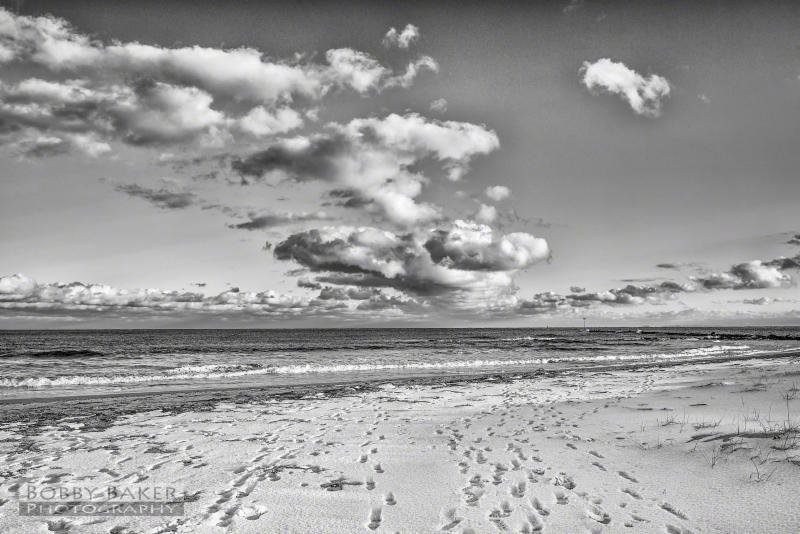
" Winter Portrait" | Hampton Beach State Park, New Hampshire      © Bobby Baker Photography
Read More